Aspen Simulation: Filtration, Membranes, and Dialysis By: Heather Allen, Zachary Fletcher, Trisha Ghosh, Evan Osborne, and Joe Saltzman How Do Semipermeable Membranes Work? A semipermeable membrane selectively permeates molecules or ions by
"Aspen Simulation: Filtration, Membranes, and" is the property of its rightful owner. Permission is granted to
download and print the materials on this website for personal, non-commercial use only, and to display it
on your personal computer provided you do not modify the materials and that you retain all copyright
notices contained in the materials. By downloading content from our website, you accept the terms of this
agreement.
Presentation Transcript
01
Aspen Simulation: Filtration, Membranes, and Dialysis By: Heather Allen, Zachary Fletcher, Trisha Ghosh, Evan Osborne, and Joe Saltzman<br>
02
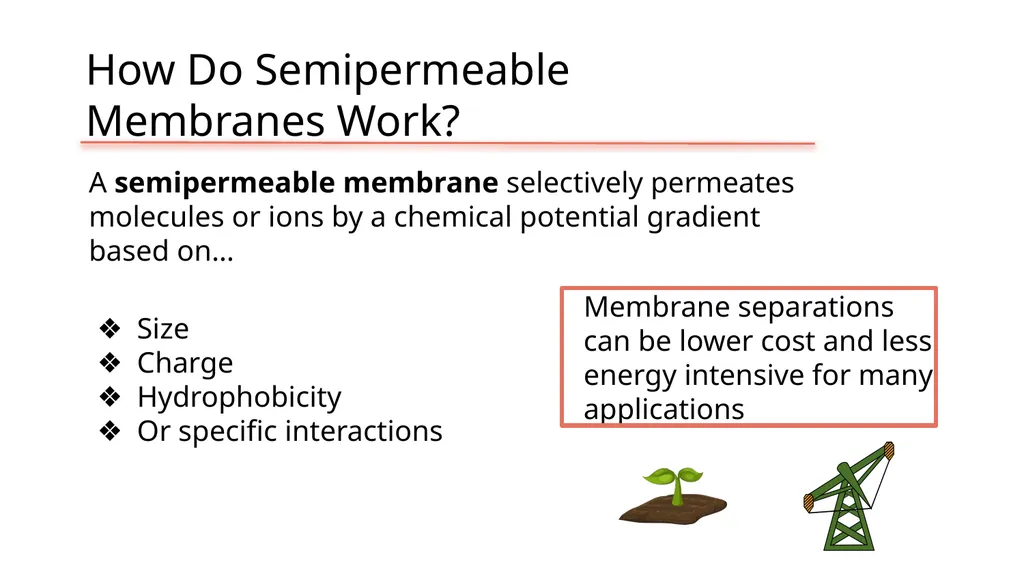
How Do Semipermeable Membranes Work? A semipermeable membrane selectively permeates molecules or ions by a chemical potential gradient based on… Size
Charge
Hydrophobicity
Or specific interactions Membrane separations can be lower cost and less energy intensive for many applications<br>
03
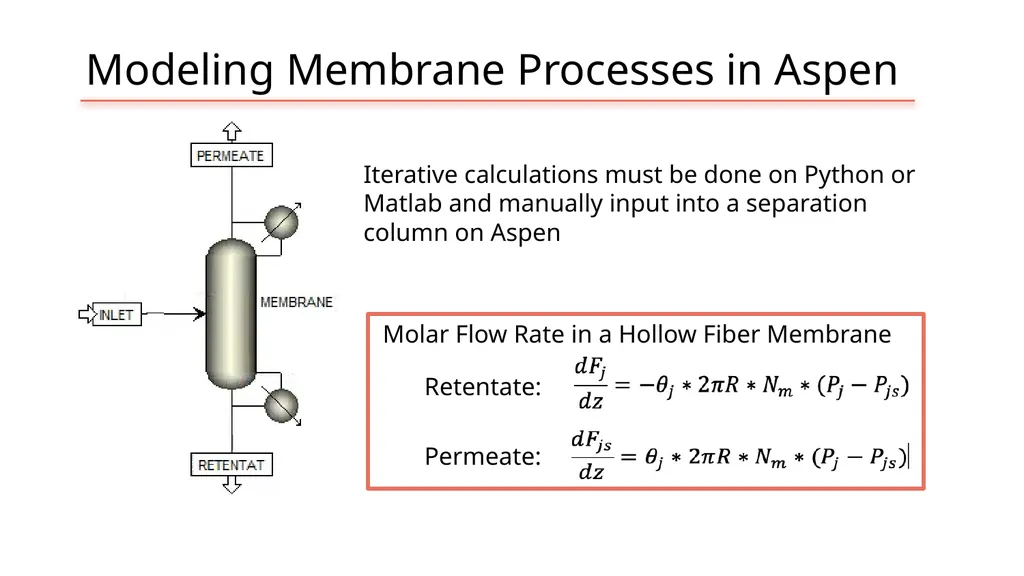
Modeling Membrane Processes in Aspen Iterative calculations must be done on Python or Matlab and manually input into a separation column on Aspen Molar Flow Rate in a Hollow Fiber Membrane Retentate: Permeate:<br>
04
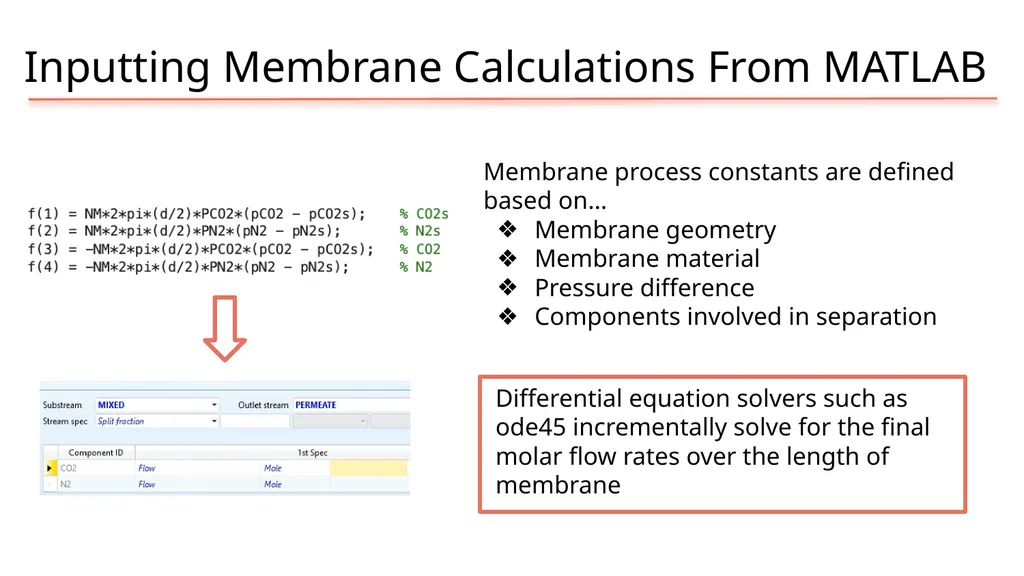
Inputting Membrane Calculations From MATLAB Membrane process constants are defined based on…
Membrane geometry
Membrane material
Pressure difference
Components involved in separation Differential equation solvers such as ode45 incrementally solve for the final molar flow rates over the length of membrane<br>
05
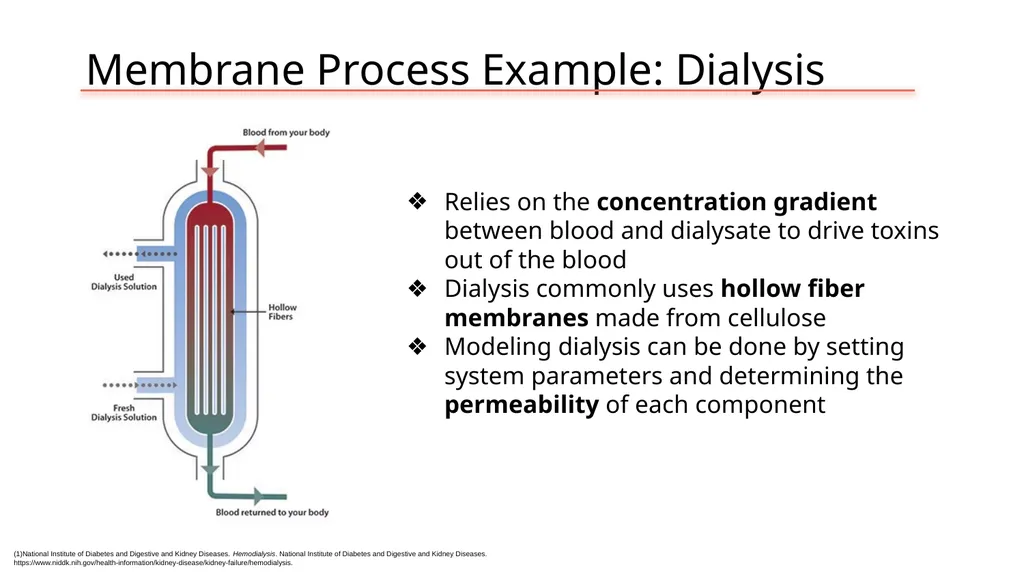
Membrane Process Example: Dialysis Relies on the concentration gradient between blood and dialysate to drive toxins out of the blood
Dialysis commonly uses hollow fiber membranes made from cellulose
Modeling dialysis can be done by setting system parameters and determining the permeability of each component (1)National Institute of Diabetes and Digestive and Kidney Diseases. Hemodialysis. National Institute of Diabetes and Digestive and Kidney Diseases. https://www.niddk.nih.gov/health-information/kidney-disease/kidney-failure/hemodialysis.
<br>
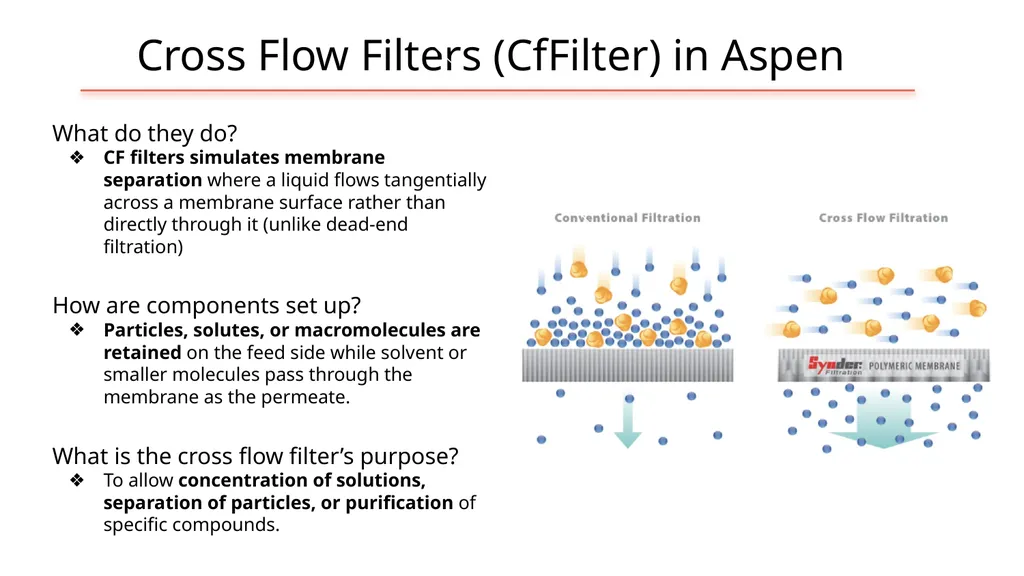
Cross Flow Filters (CfFilter) in Aspen What do they do?
CF filters simulates membrane separation where a liquid flows tangentially across a membrane surface rather than directly through it (unlike dead-end filtration)
How are components set up?
Particles, solutes, or macromolecules are retained on the feed side while solvent or smaller molecules pass through the membrane as the permeate.
What is the cross flow filter’s purpose?
To allow concentration of solutions, separation of particles, or purification of specific compounds.<br>
08
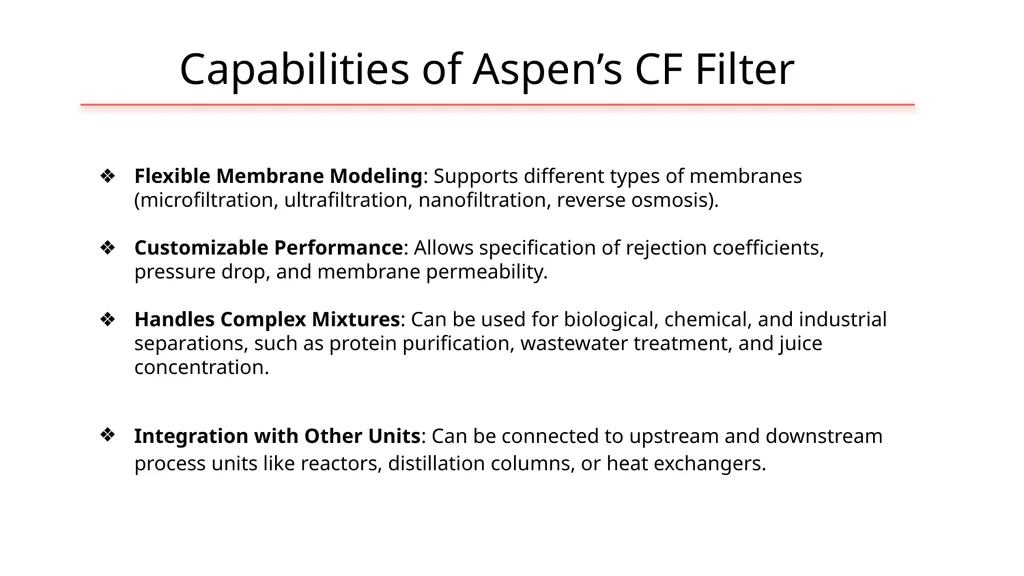
Capabilities of Aspen’s CF Filter Flexible Membrane Modeling: Supports different types of membranes (microfiltration, ultrafiltration, nanofiltration, reverse osmosis).
Customizable Performance: Allows specification of rejection coefficients, pressure drop, and membrane permeability.
Handles Complex Mixtures: Can be used for biological, chemical, and industrial separations, such as protein purification, wastewater treatment, and juice concentration.
Integration with Other Units: Can be connected to upstream and downstream process units like reactors, distillation columns, or heat exchangers.<br>
09
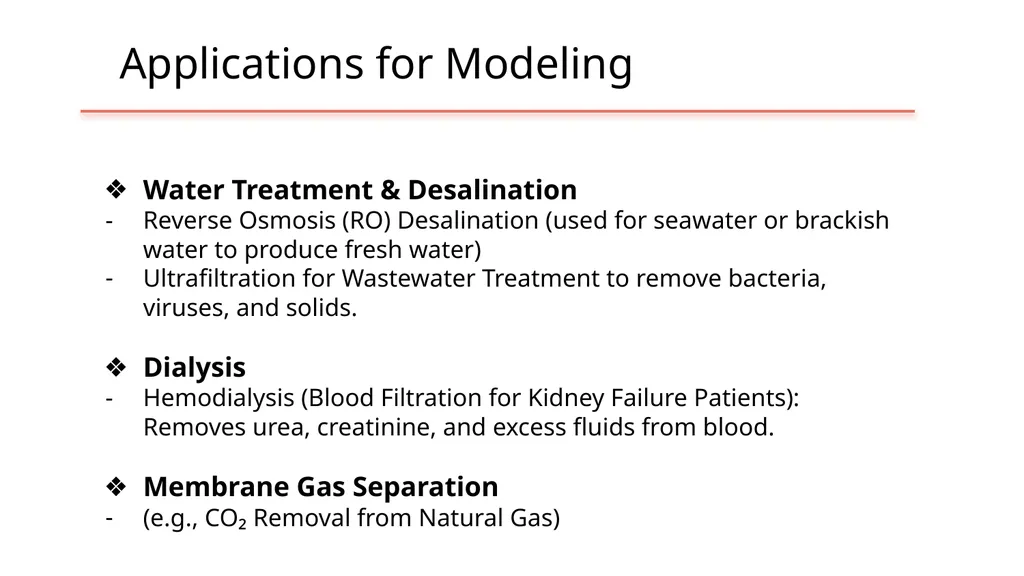
Applications for Modeling Water Treatment & Desalination
Reverse Osmosis (RO) Desalination (used for seawater or brackish water to produce fresh water)
Ultrafiltration for Wastewater Treatment to remove bacteria, viruses, and solids.
Dialysis
Hemodialysis (Blood Filtration for Kidney Failure Patients): Removes urea, creatinine, and excess fluids from blood.
Membrane Gas Separation
(e.g., CO₂ Removal from Natural Gas)<br>
10
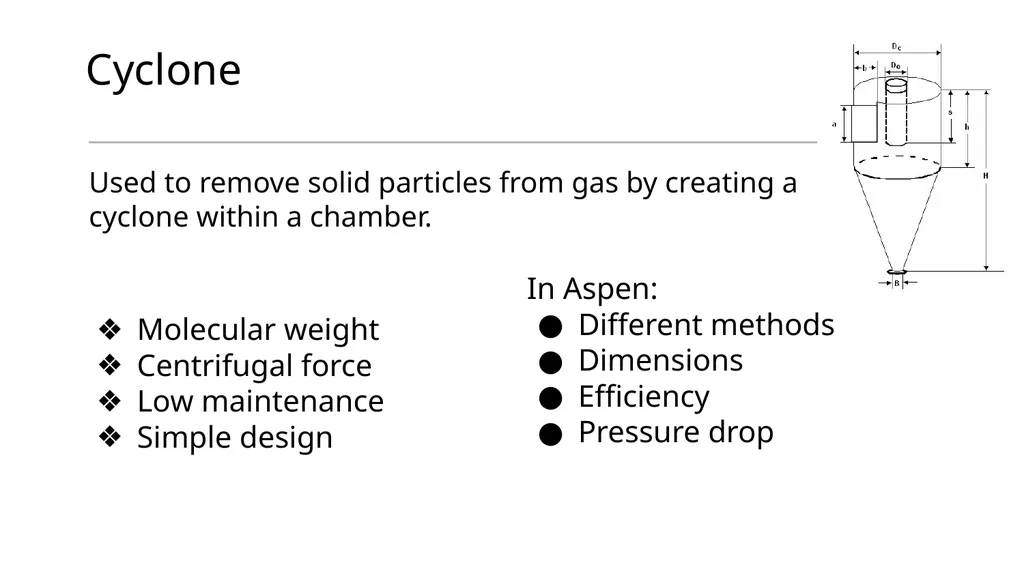
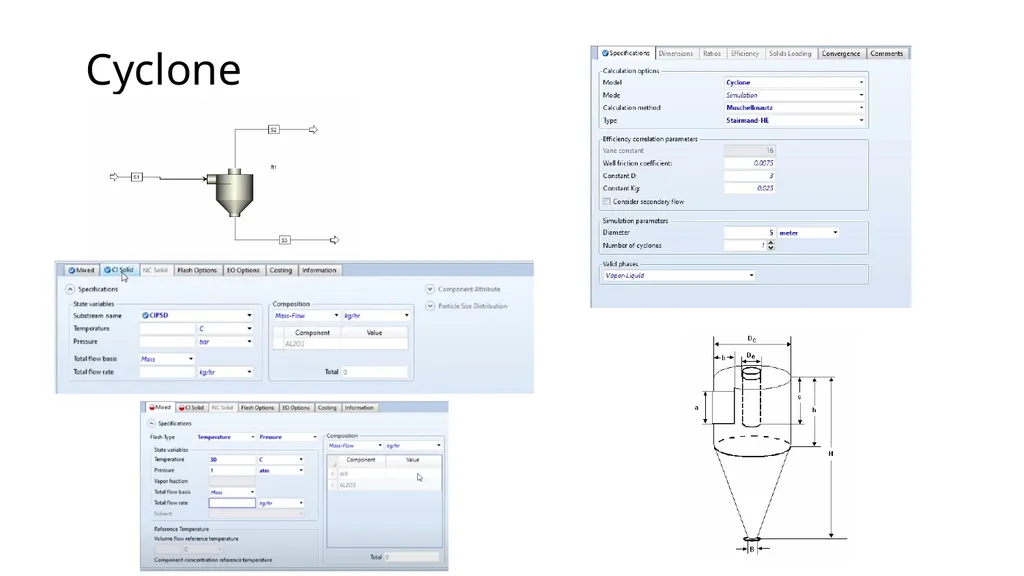
Cyclone Used to remove solid particles from gas by creating a cyclone within a chamber. Molecular weight
Centrifugal force
Low maintenance
Simple design In Aspen:
Different methods
Dimensions
Efficiency
Pressure drop<br>
11
Cyclone<br>
12
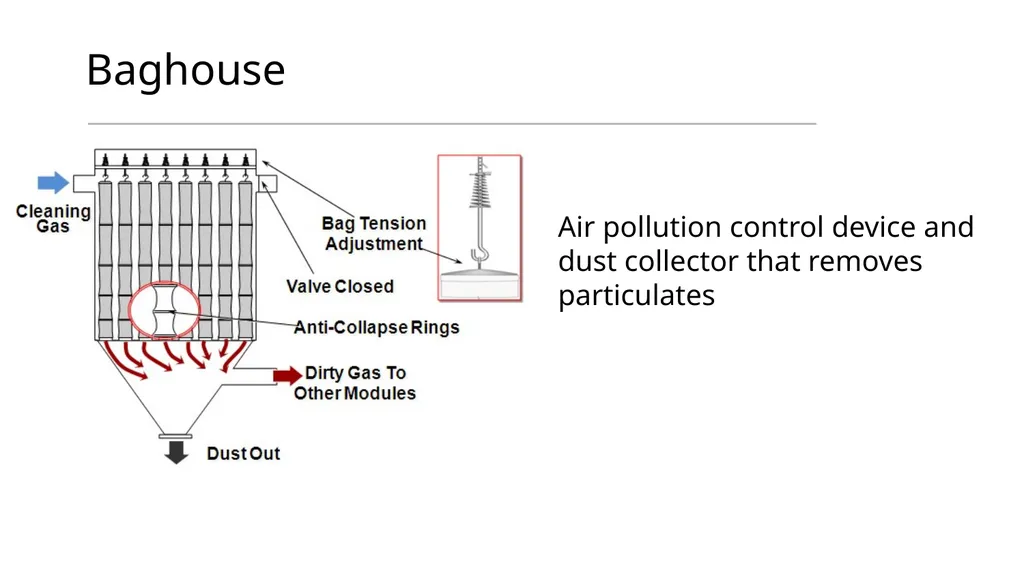
Baghouse Air pollution control device and dust collector that removes particulates<br>
13
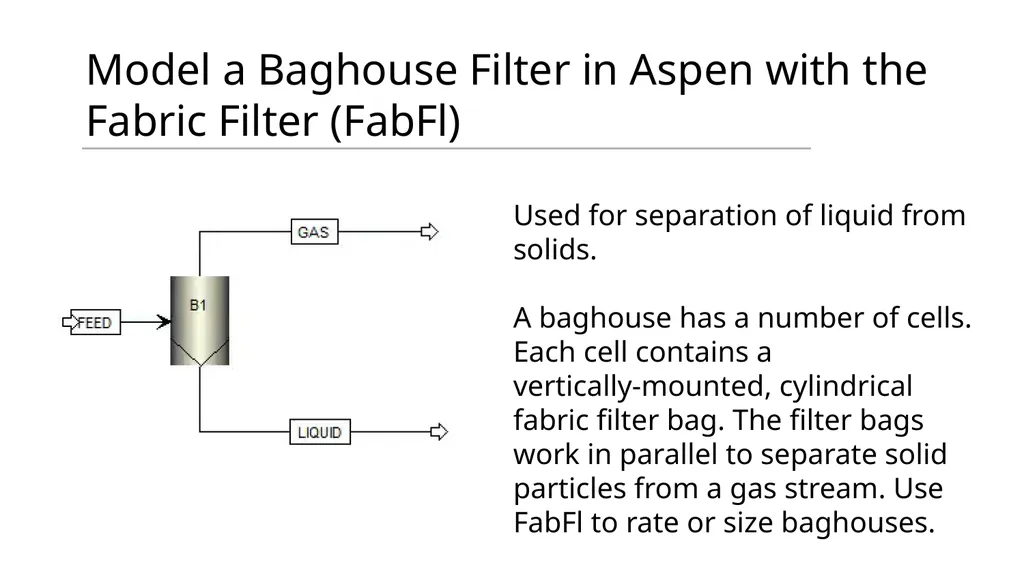
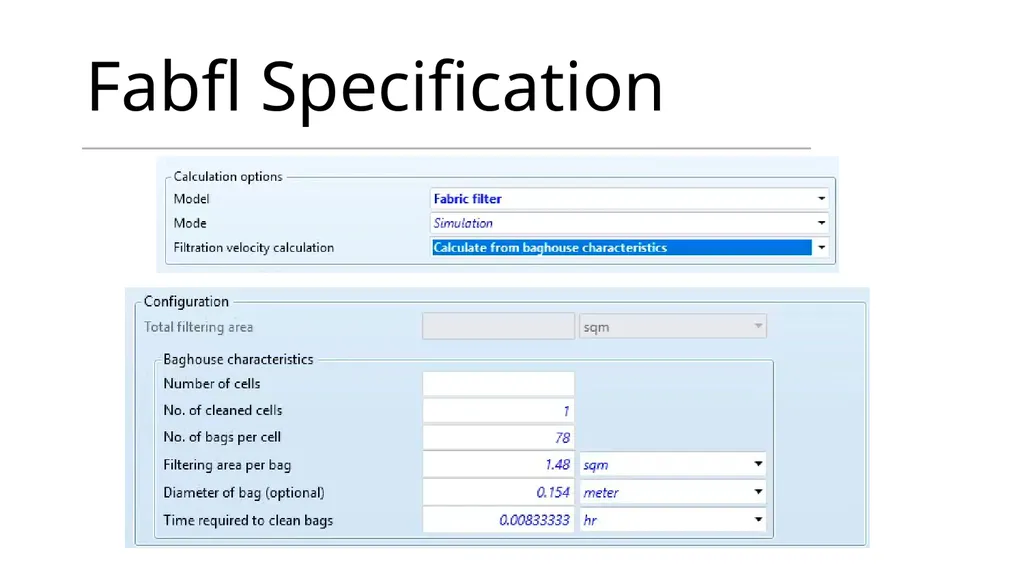
Model a Baghouse Filter in Aspen with the Fabric Filter (FabFl) Used for separation of liquid from solids.
A baghouse has a number of cells. Each cell contains a
vertically-mounted, cylindrical fabric filter bag. The filter bags
work in parallel to separate solid particles from a gas stream. Use
FabFl to rate or size baghouses.<br>