Authenticity in Generalist Social Work Practice Skills II Tammi Nelson, MSW, LCSW, LCAC Indiana University Bloomington Lecturer From Role Plays to Authenticity Role plays Practice specific skills from one class to the next Engage in the
"Authenticity in Generalist Social Work Practice" is the property of its rightful owner. Permission is granted to
download and print the materials on this website for personal, non-commercial use only, and to display it
on your personal computer provided you do not modify the materials and that you retain all copyright
notices contained in the materials. By downloading content from our website, you accept the terms of this
agreement.
Presentation Transcript
01
Authenticity in Generalist Social Work Practice Skills II Tammi Nelson, MSW, LCSW, LCAC
Indiana University Bloomington
Lecturer<br>
02
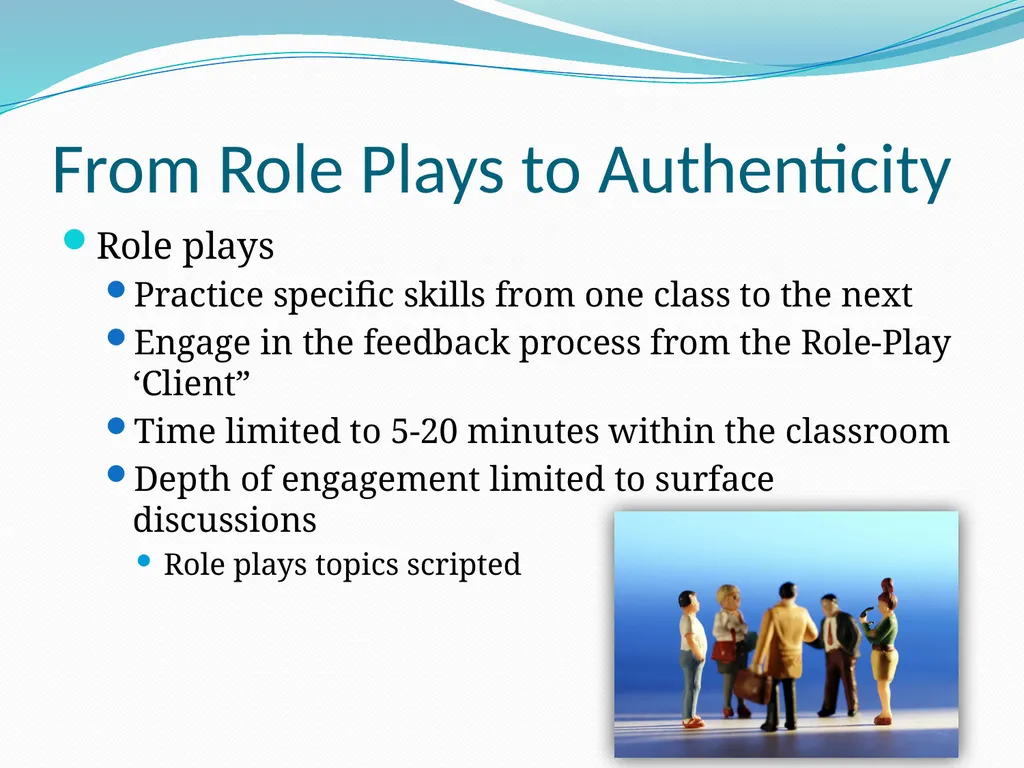
From Role Plays to Authenticity Role plays
Practice specific skills from one class to the next
Engage in the feedback process from the Role-Play ‘Client”
Time limited to 5-20 minutes within the classroom
Depth of engagement limited to surface discussions
Role plays topics scripted<br>
03
Role Plays to Authenticity Authentic experience
Practice specific skills in classroom Role plays
Apply skill in Peer-Client meetings as the benefit of use arises.
Feedback in class role plays applied to Peer-Client meetings
Peer-Client meetings conducted out-of-class
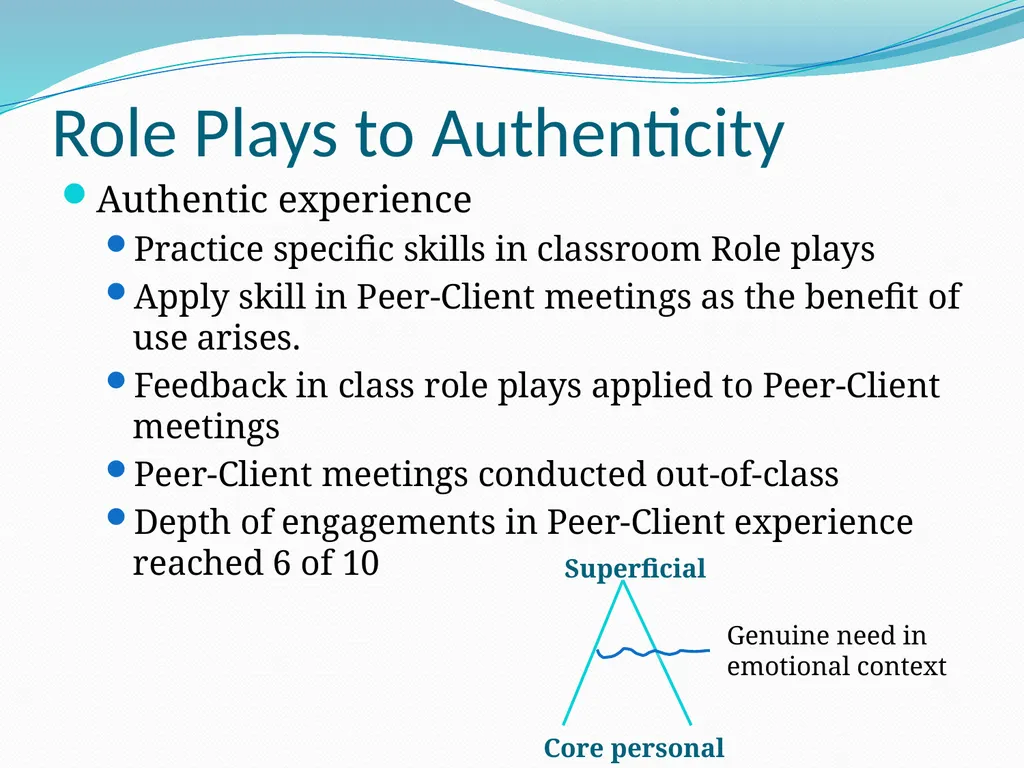
Depth of engagements in Peer-Client experience reached 6 of 10 Superficial Core personal Genuine need in emotional context<br>
04
Comparison 2013 to 2014 S331 Generalist Social Work Practice Skills I – Fall
S332 Generalist Social Work Practice Skills II – Spring
2013-2014 Academic Year
Teaching provided via lecture, classroom activities and homework
2014-2015 Academic Year
Teaching provided via lecture, classroom activities and homework in fall;
Peer-Client experience added in the Spring<br>
05
Fall to Spring All units were taught similarly from one year to the next
Addition to unit lessons in 2014 included application of the ethical decision making and case examples likely to occur in Peer-Client experience
Specific unit added to address Informed Consent, Confidentiality between peers, with instructor and for assignments
Students were provided Supervision by appointment and follow up process for grievances.<br>
06
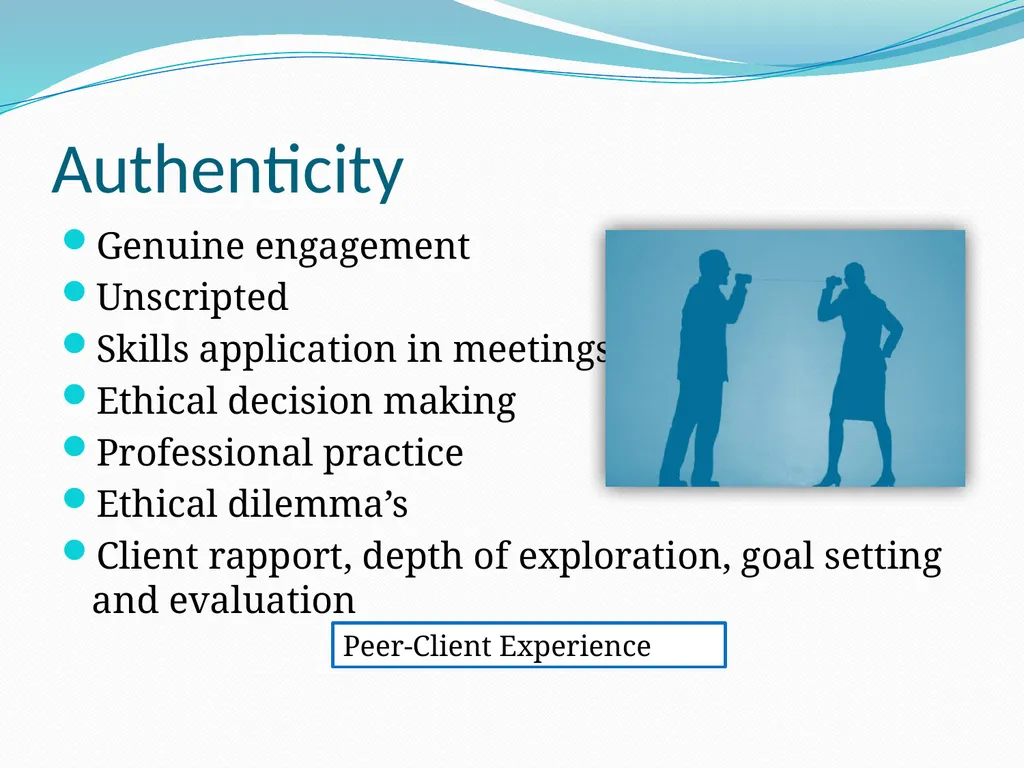
Authenticity Genuine engagement
Unscripted
Skills application in meetings
Ethical decision making
Professional practice
Ethical dilemma’s
Client rapport, depth of exploration, goal setting and evaluation Peer-Client Experience<br>
07
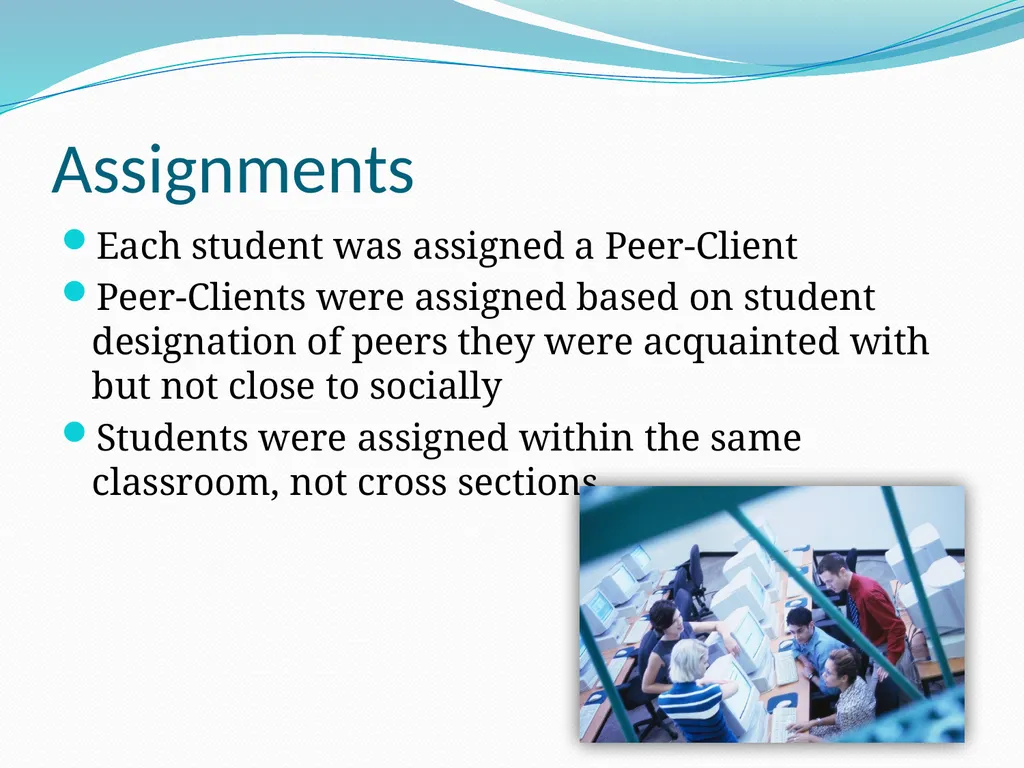
Assignments Each student was assigned a Peer-Client
Peer-Clients were assigned based on student designation of peers they were acquainted with but not close to socially
Students were assigned within the same classroom, not cross sections<br>
08
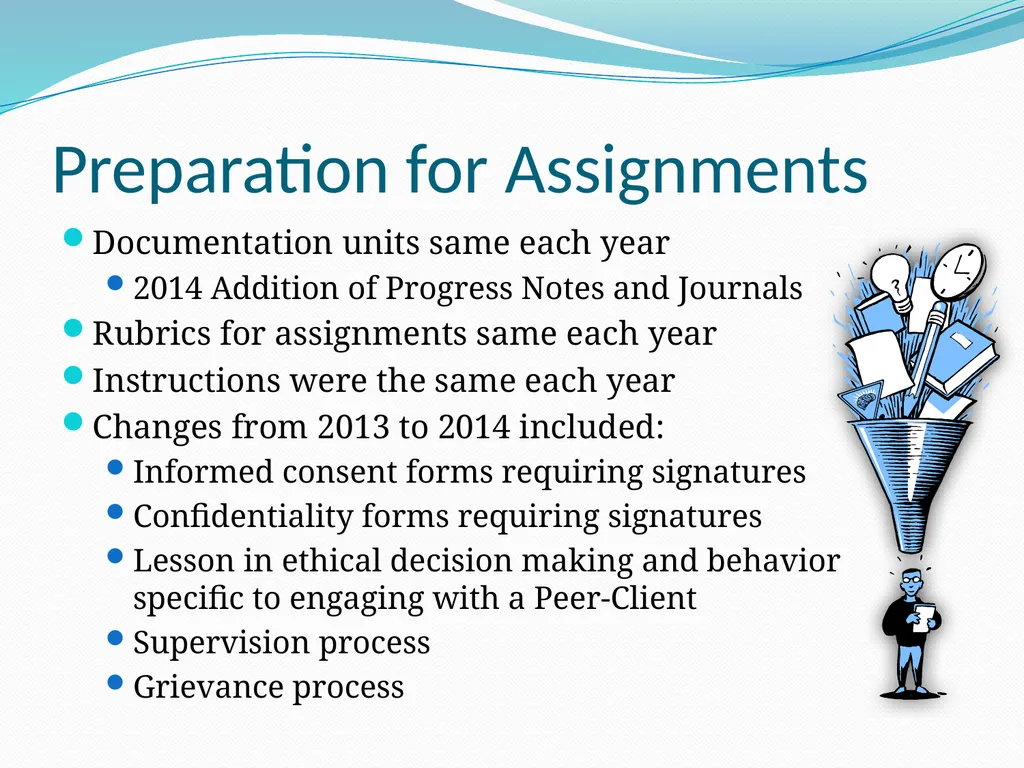
Preparation for Assignments Documentation units same each year
2014 Addition of Progress Notes and Journals
Rubrics for assignments same each year
Instructions were the same each year
Changes from 2013 to 2014 included:
Informed consent forms requiring signatures
Confidentiality forms requiring signatures
Lesson in ethical decision making and behavior specific to engaging with a Peer-Client
Supervision process
Grievance process<br>
09
Student Challenges Confidentiality and dual relationships
Client versus social relationships
Social considerations
Ethical considerations
Confidentiality with instructor
Student Time outside of class
Commitment to professionalism and responsibility to Peer-client<br>
10
Instructor Challenges Instructor knowledge and grading
Grading and feedback time increased for instructor
Instructor time for supervision
Identification of student crisis increased requiring instructor follow up<br>
11
Management of Challenges Supervision between student and instructor
Ethical decision making discussions in class
Identification of Students with ethical and professional challenges and greater supervision commitment
Each students assignment was confidential from instructor and not kept.
Room reservations for Peer-Client meetings
Assignment feedback to apply to ongoing Peer-Client meetings<br>
12
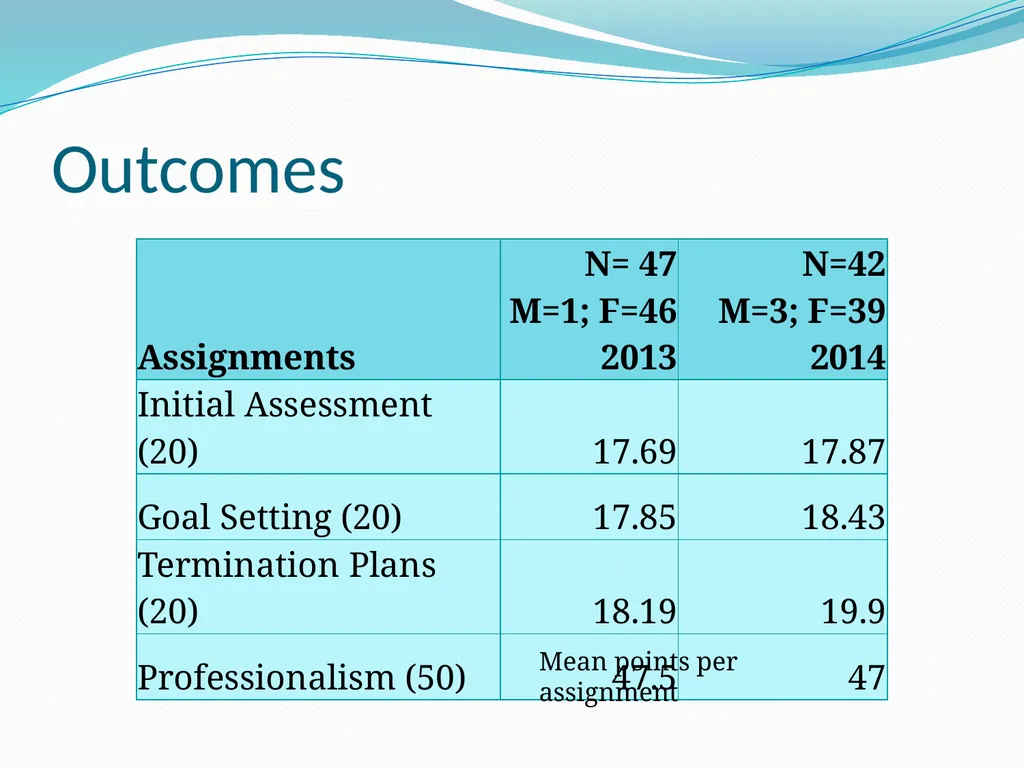
Outcomes Mean points per assignment<br>
13
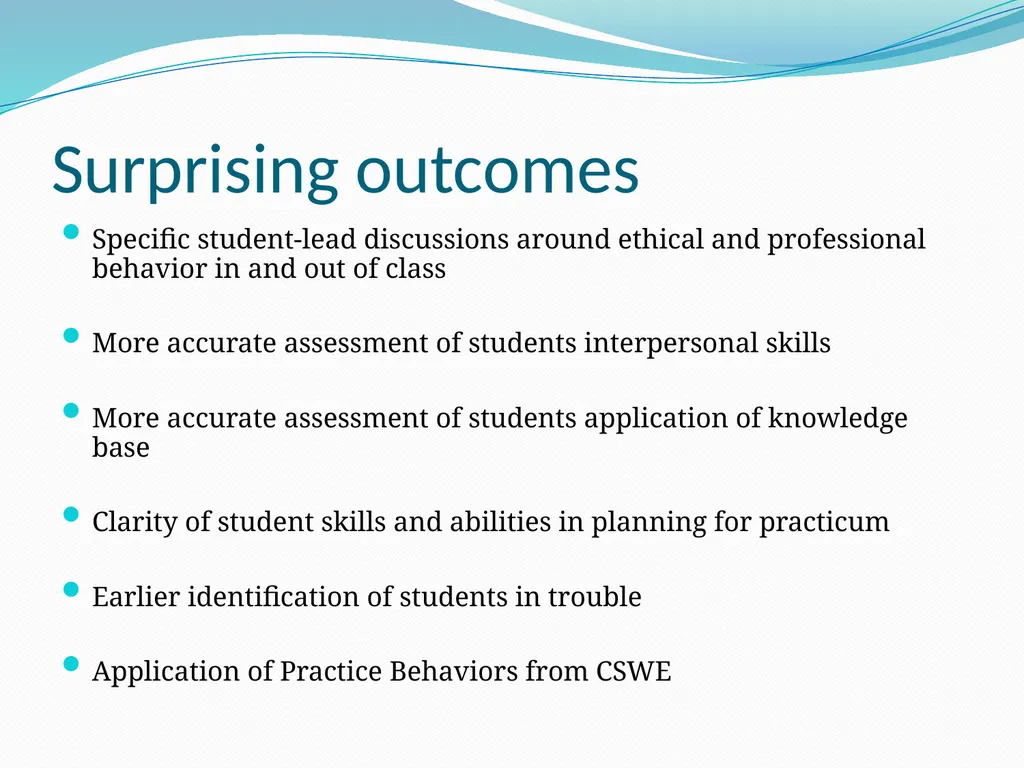
Surprising outcomes Specific student-lead discussions around ethical and professional behavior in and out of class
More accurate assessment of students interpersonal skills
More accurate assessment of students application of knowledge base
Clarity of student skills and abilities in planning for practicum
Earlier identification of students in trouble
Application of Practice Behaviors from CSWE<br>
14
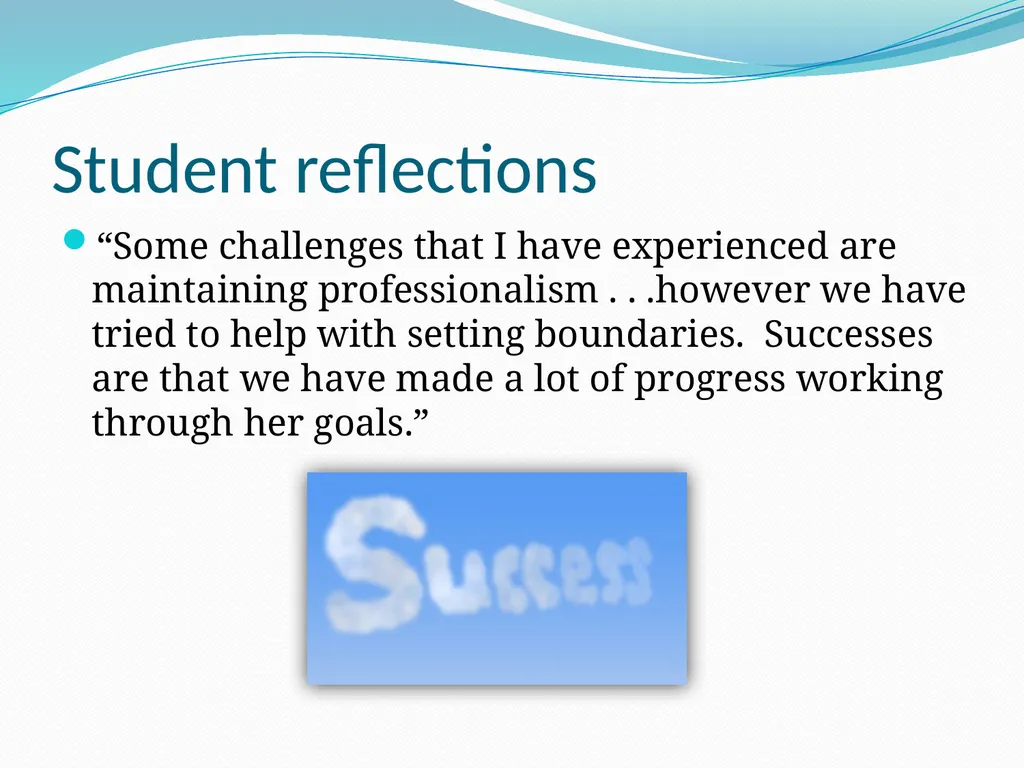
Student reflections “Some challenges that I have experienced are maintaining professionalism . . .however we have tried to help with setting boundaries. Successes are that we have made a lot of progress working through her goals.”<br>
15
“The past few weeks I have been more aware of what I am saying and making sure that I am not giving the client advice. This was difficult for me . . .”
“Even though the client may meet with you each week hoping to talk about something different, this experience taught me how to revisit past goals, and try to tie them into new ones that we were trying to set.”<br>
16
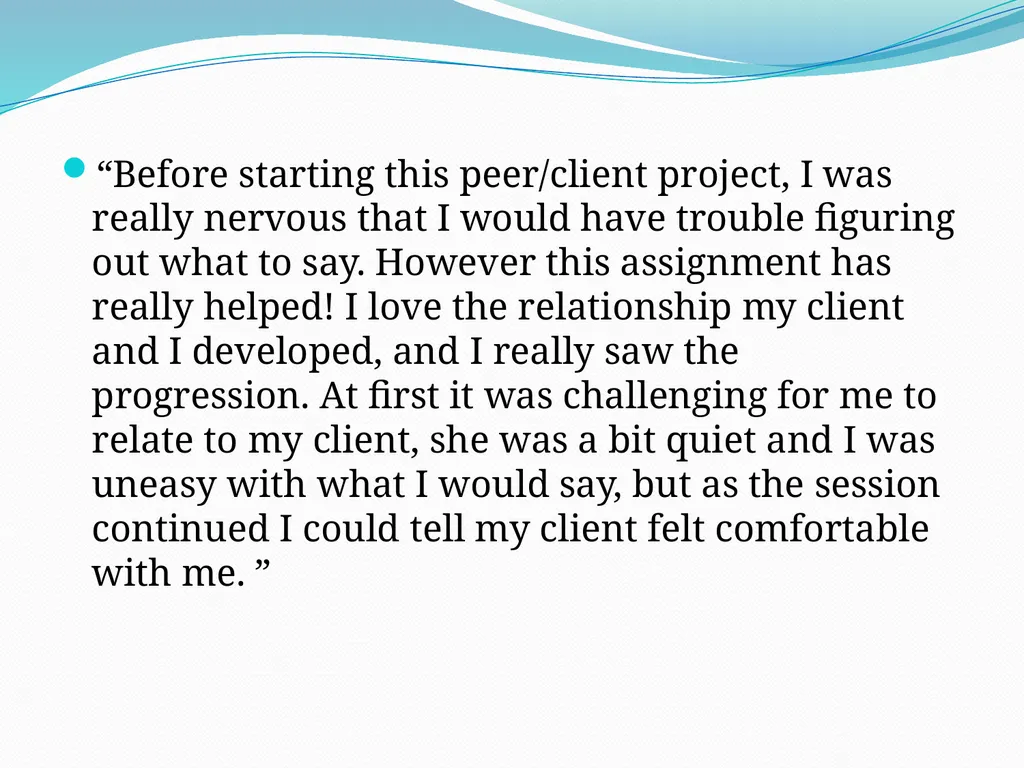
“Before starting this peer/client project, I was really nervous that I would have trouble figuring out what to say. However this assignment has really helped! I love the relationship my client and I developed, and I really saw the progression. At first it was challenging for me to relate to my client, she was a bit quiet and I was uneasy with what I would say, but as the session continued I could tell my client felt comfortable with me. ”<br>
17
“I think that this meeting was the most successful one that my client and I had. It finally felt like we were equals in this process and that my client was fully open with me. We were also able to address the origins of some of the constructs that she holds true in her life and this seemed very beneficial for her. We also addressed potential risk factors to her not maintaining her goals.”<br>
18
Planned changes Fall semester critical thinking challenges will increase.
Journals accompanying Progress Notes will address successes and challenges rather than a review of skills.
Fewer assignments, but greater feedback.<br>
19
Assessment of Practice Behaviors to provide feedback and student correction prior to practicum
Supervision with struggling students will be required
Peer-Client assignments will be cross-section only
Classroom reflections in skills and knowledge applications.<br>
20
Thank you Tammi Nelson
Indiana University Bloomington
School of Social Work
tamlnels@iupui.edux<br>