03
Please Be Aware Training involving Sexual Abuse Prevention, including our responsibilities as adults to protect our children, means that we will be talking about information that involves sexual situations or uncomfortable scenarios and we may use some terminology relative to parts of the human body
It’s very possible that at least one of you, in some capacity, has personally been impacted by child sexual abuse. It’s very important to be aware of the emotions this topic can stir up, please take care of yourself
Support and resources are available:
usaf@stopitnow.org
1-888-PREVENT
We strongly advise that children not be present for this session<br>
04
Ground Rules Again, take care of yourself
Participate to the extent you feel able and comfortable
Use “I” statements (speak only for you)
No such thing as a stupid question
Stay afterwards if you want to talk privately
Respect privacy<br>
05
HOPE
ADULTS ARE RESPONSIBLE
Learn about sex abuse
Plan for safety
Promote healthy sexuality development Recognize and respond
Develop confidence
Take action - speak up
Implement prevention focused, effective policies and procedures Key Concepts For Prevention<br>
06
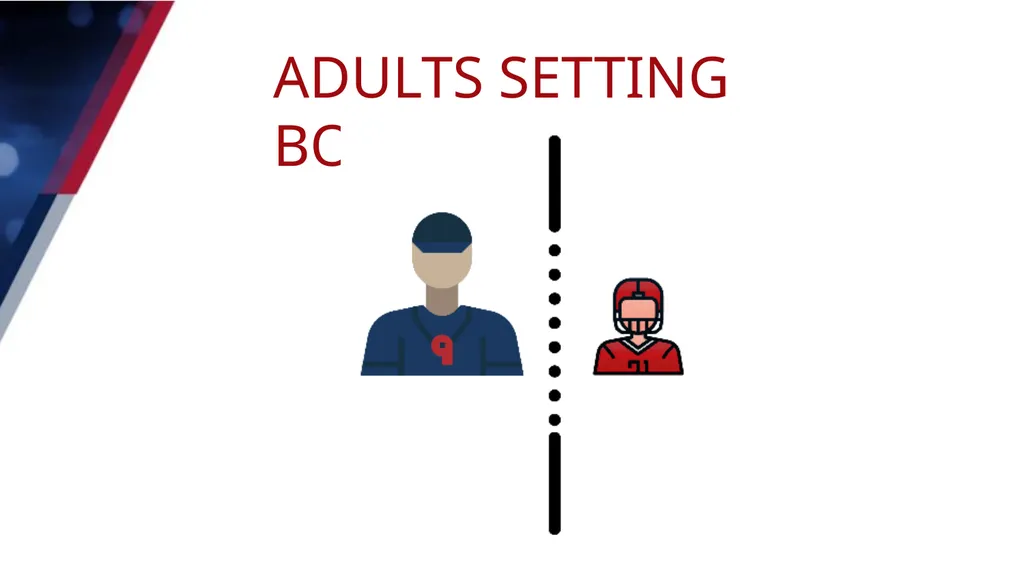
ADULTS SETTING BOUNDARIES<br>
07
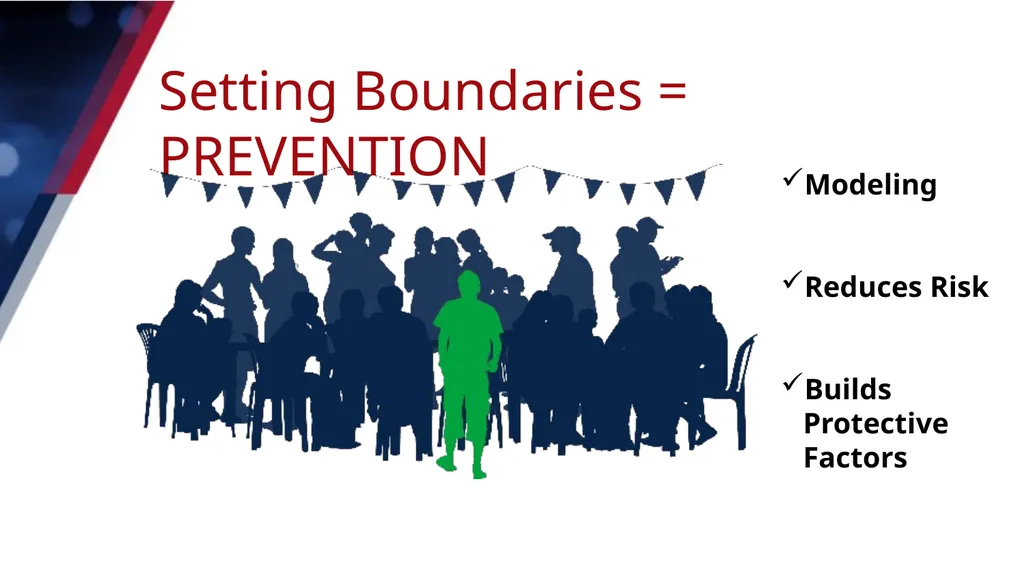
Setting Boundaries = PREVENTION Modeling
Reduces Risk
Builds
Protective
Factors<br>
08
What are you prepared to do if you see someone do or say something inappropriate in front of a child?<br>
09
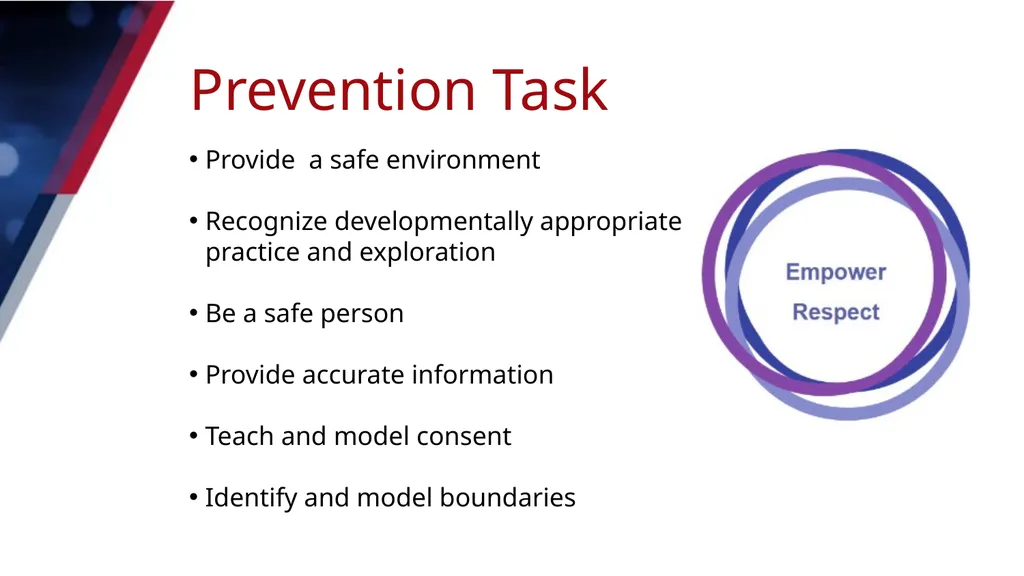
Prevention Task Provide a safe environment
Recognize developmentally appropriate practice and exploration
Be a safe person
Provide accurate information
Teach and model consent
Identify and model boundaries<br>
10
The Facts All sexual activity between an adult and a child is sexual abuse. Sexual abuse does not have to involve penetration, force, pain, or even touching. If an adult engages in any sexual behavior (looking, showing, or touching) with a child to meet the adult’s interest or sexual needs, it is sexual abuse.
Sexual touching between children can also be harmful, and in some cases abusive.<br>
11
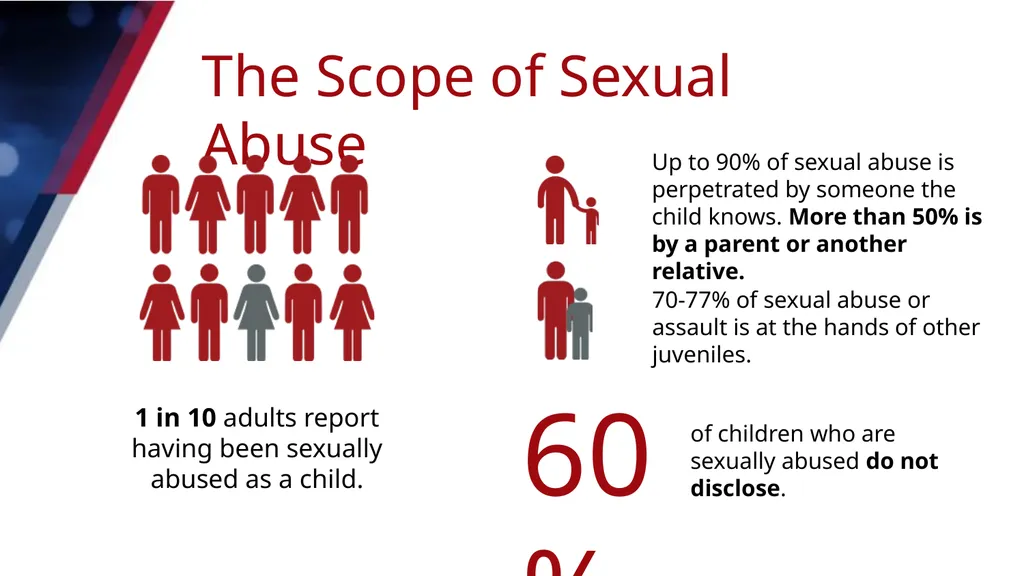
The Scope of Sexual Abuse 1 in 10 adults report having been sexually
abused as a child.<br>
12
What is the Safe Sport Act? On February 14, 2018, the Protecting Young Victims from Sexual Abuse and Safe Sport Authorization Act was signed into law
This is a law which establishes protection for young athletes
It requires youth sport organizations to develop and enforce policies, procedures, and provide training to prevent abuse and misconduct<br>
13
Safe Sport Policies Limit one-on-one interactions between minor athletes and adults at facilities/events that are not observable and interruptible
All adult members in regular contact with youth athletes complete abuse awareness training and go through background checks
All adults who interact with youth athletes are required to act as a mandated reporter, and youth sport organizations must provide a mechanism for communication without retaliation<br>
14
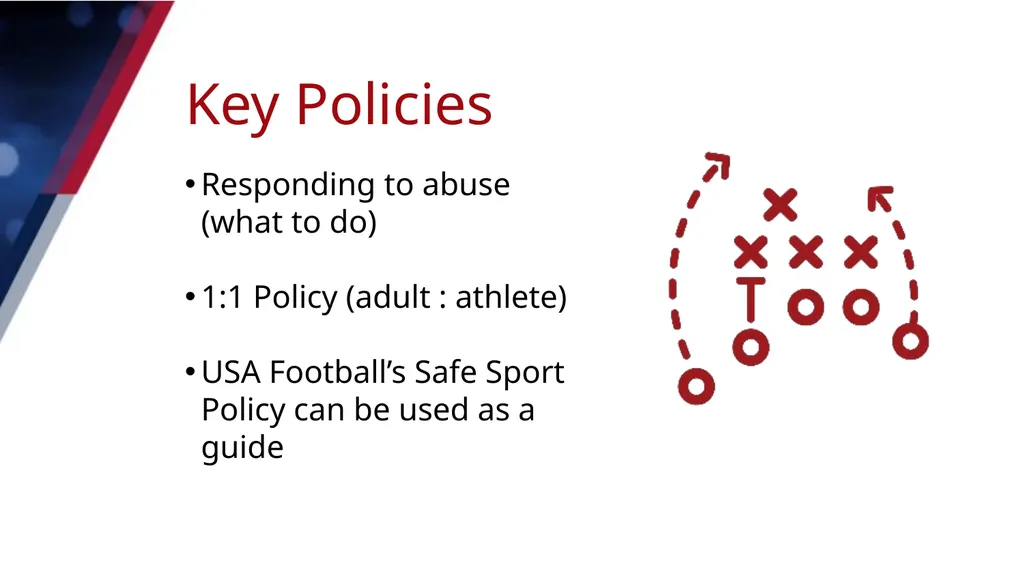
Key Policies Responding to abuse
(what to do)
1:1 Policy (adult : athlete)
USA Football’s Safe Sport Policy can be used as a guide<br>
15
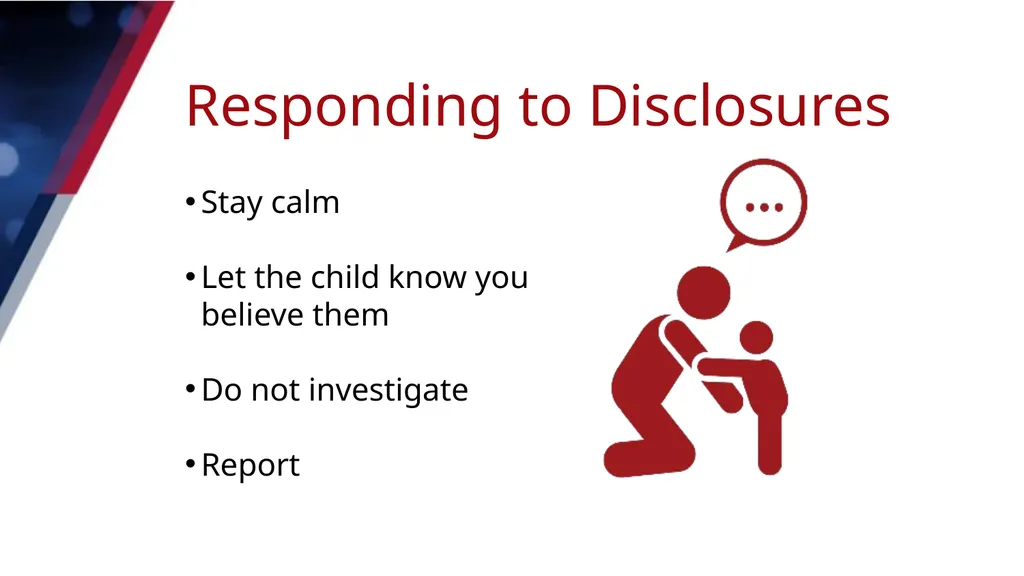
Responding to Disclosures Stay calm
Let the child know you believe them
Do not investigate
Report<br>
16
REPORTING The process
Why, When, Who
Childwelfare.gov
Childhelp (800.422.4453)
What happens next?
Report to your league
abuse@usafootball.com
Proof is not needed!<br>
17
Breaking Down Barriers Not sure what to do
“I could be wrong”
“Not my job”
Cultural norms
Fear of retaliation
Lack of information<br>
18
Sexual Misconduct Policy Types of sexual misconduct include:
Sexual assault
Sexual harassment
Sexual abuse
Any other sexual intimacies that exploit an athlete
Minors cannot consent to sexual activity with an adult, and all sexual interaction between an adult and a minor is strictly prohibited. <br>
19
What is Sexual Harassment? Sexual harassment is; sexual solicitation, physical advances, or verbal or nonverbal conduct that is sexual in nature, and
is unwelcome, offensive or creates a hostile environment, and the offending individual knows or is told this or
is sufficiently severe or intense to be harassing to a reasonable person in the context<br>
20
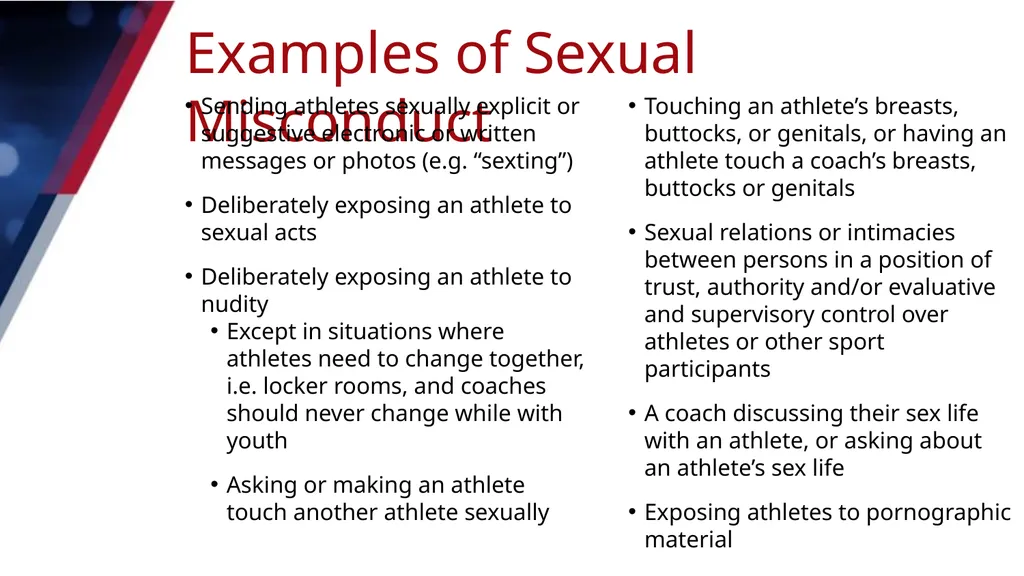
Examples of Sexual Misconduct Sending athletes sexually explicit or suggestive electronic or written messages or photos (e.g. “sexting”)
Deliberately exposing an athlete to sexual acts
Deliberately exposing an athlete to nudity
Except in situations where athletes need to change together, i.e. locker rooms, and coaches should never change while with youth
Asking or making an athlete touch another athlete sexually Touching an athlete’s breasts, buttocks, or genitals, or having an athlete touch a coach’s breasts, buttocks or genitals
Sexual relations or intimacies between persons in a position of trust, authority and/or evaluative and supervisory control over athletes or other sport participants
A coach discussing their sex life with an athlete, or asking about an athlete’s sex life
Exposing athletes to pornographic material<br>
21
Coach A said to an athlete, “You looked great on the field today – and I bet your girlfriend is going to get ‘lucky’ tonight too. How far have you gotten with her? I bet she’s an easy win, if you know what I mean!”
Coach B slapped an athlete’s buttocks “in jest” after telling them to hurry up and get onto the field.
Coach C huddles the team around their phone, showing athletes “who they’re playing for today” – and what they share with the athletes is a pornographic picture of a naked adult. Sexual Misconduct Policy Violations: On the Field<br>
22
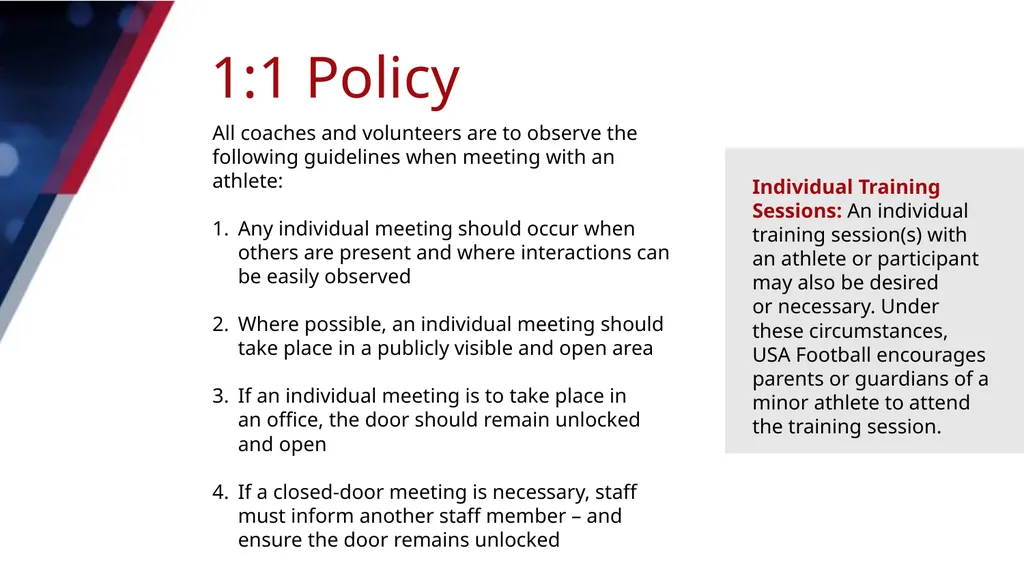
1:1 Policy All coaches and volunteers are to observe the following guidelines when meeting with an athlete:
Any individual meeting should occur when others are present and where interactions can be easily observed
Where possible, an individual meeting should take place in a publicly visible and open area
If an individual meeting is to take place in �an office, the door should remain unlocked �and open
If a closed-door meeting is necessary, staff must inform another staff member – and ensure the door remains unlocked <br>
23
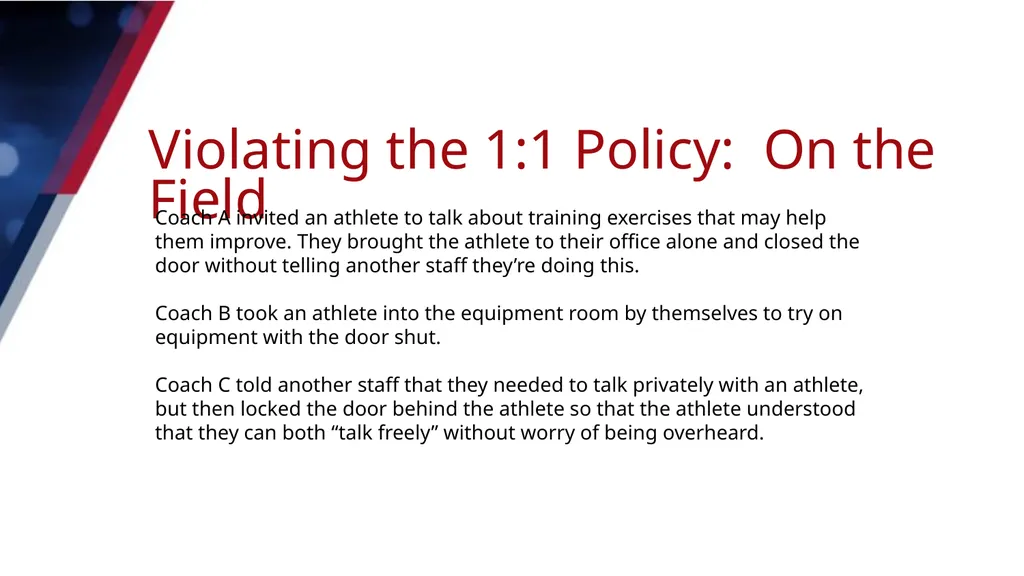
Violating the 1:1 Policy: On the Field Coach A invited an athlete to talk about training exercises that may help them improve. They brought the athlete to their office alone and closed the door without telling another staff they’re doing this.
Coach B took an athlete into the equipment room by themselves to try on equipment with the door shut.
Coach C told another staff that they needed to talk privately with an athlete, but then locked the door behind the athlete so that the athlete understood that they can both “talk freely” without worry of being overheard.<br>
24
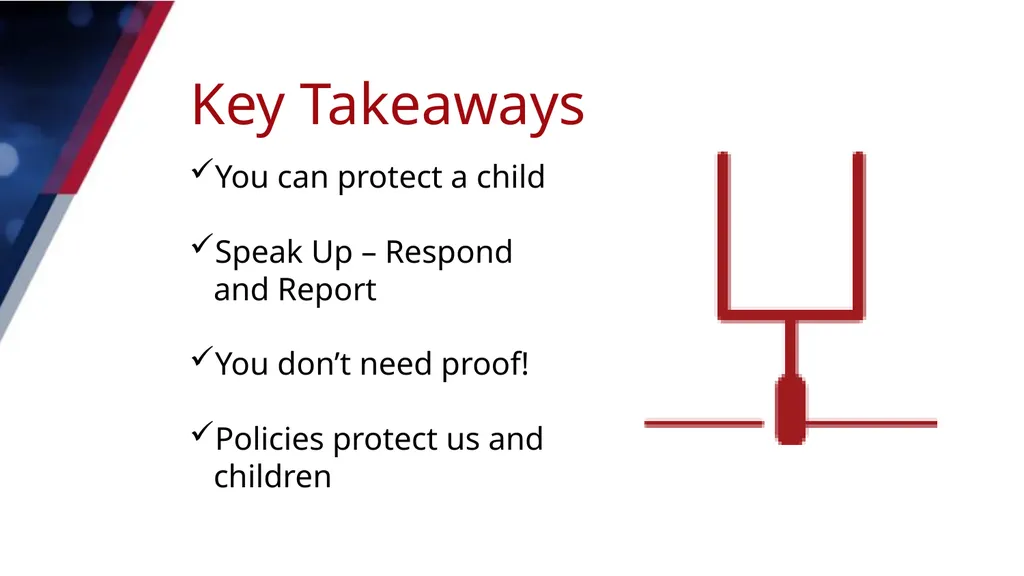
Key Takeaways You can protect a child
Speak Up – Respond
and Report
You don’t need proof!
Policies protect us and
children<br>
25
THANK YOU! Email
usaf@stopitnow.org
Visit
stopitnow.org/usaf
facebook.com/StopItNow
Call
Helpline: 1.888.PREVENT<br>