
AZOTURIA Dr Sonam Bhatt Asstt Prof Veterinary





Description: AZOTURIA Dr Sonam Bhatt Asstt Prof Veterinary Medicine BVC, Basu Exertional rhabdomyolysis Tying-up Cording-up Syndrome of Horses Paralytic myoglobinuria Monday Morning Disease Multifactorial myopathy Mainly affects draft horses Metabolic
Related Topics
Download Presentation
"AZOTURIA Dr Sonam Bhatt Asstt Prof Veterinary" is the property of its rightful owner. Permission is granted to download and print the materials on this website for personal, non-commercial use only, and to display it on your personal computer provided you do not modify the materials and that you retain all copyright notices contained in the materials. By downloading content from our website, you accept the terms of this agreement.
Presentation Transcript
slide1. AZOTURIA Dr Sonam Bhatt
Asstt Prof
Veterinary Medicine
BVC, Basu<br>
slide2. Exertional rhabdomyolysis
Tying-up
“Cording-up” Syndrome of Horses
Paralytic myoglobinuria
Monday Morning Disease<br>
slide3. Multifactorial myopathy
Mainly affects draft horses
Metabolic muscular disorder of horses
Clinically characterised by –
Stiffness in gait & reluctance to move
Lameness
Hardening of massive muscles
In severe cases ----myoglobinuria<br>
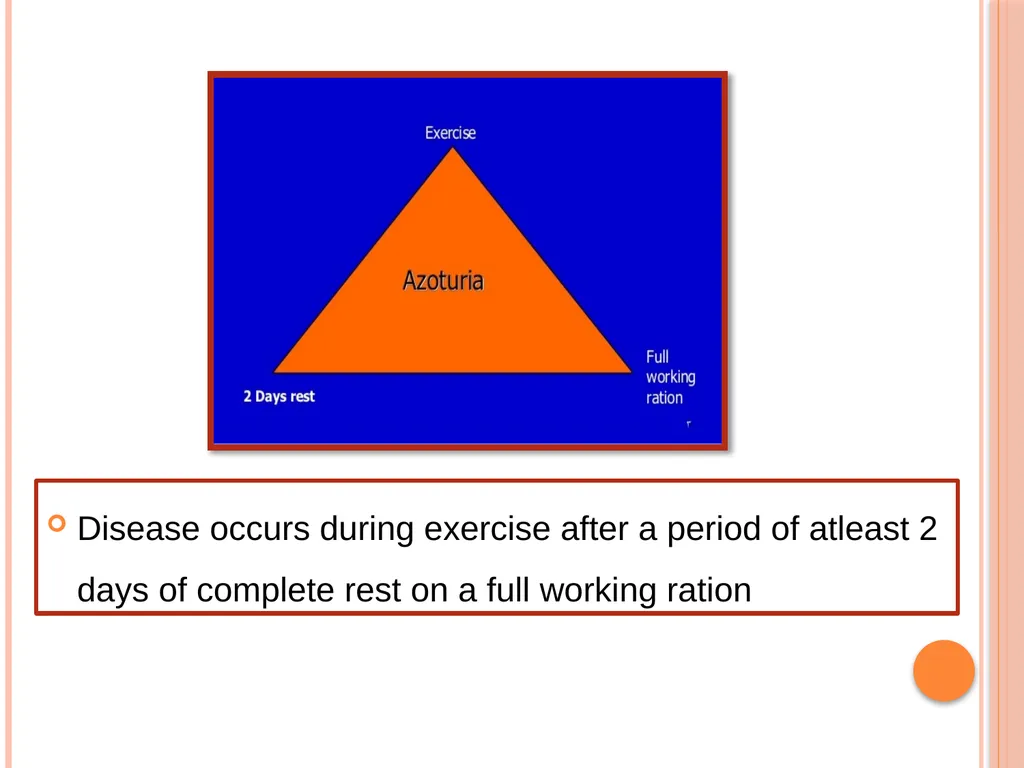
slide4. Disease occurs during exercise after a period of atleast 2 days of complete rest on a full working ration<br>
slide5. During exercise the large store of glycogen formed during the period of rest in the muscles metabolized to sarcolactic acid
2- Accumulation of lactic acid leads to:
a- Degeneration of the muscles and liberation of myoglobin (muscle haemoglobin)
b- Swelling of muscle because lactic acid is hydrophilic PATHOGENESIS<br>
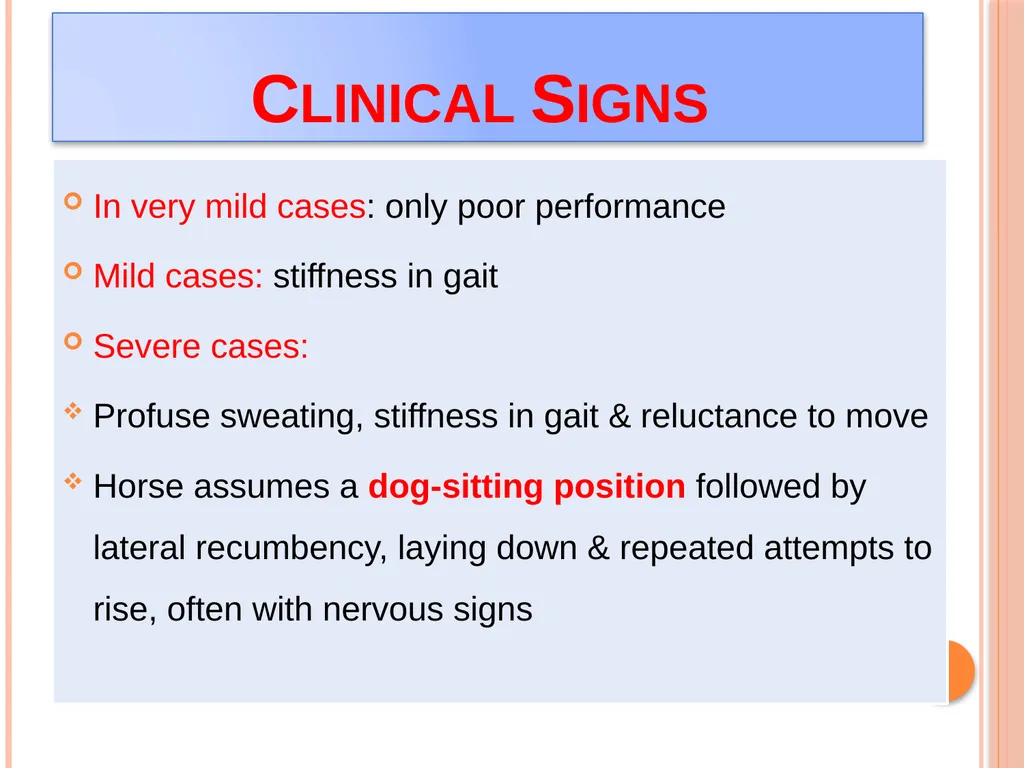
slide6. Clinical Signs In very mild cases: only poor performance
Mild cases: stiffness in gait
Severe cases:
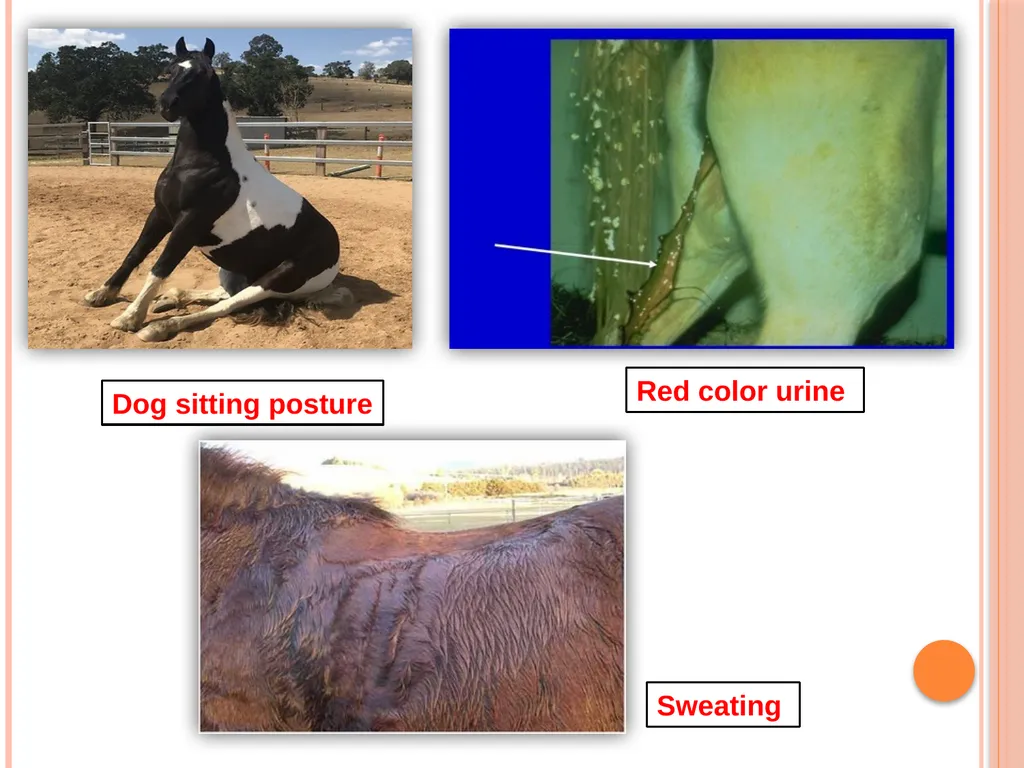
Profuse sweating, stiffness in gait & reluctance to move
Horse assumes a dog-sitting position followed by lateral recumbency, laying down & repeated attempts to rise, often with nervous signs<br>
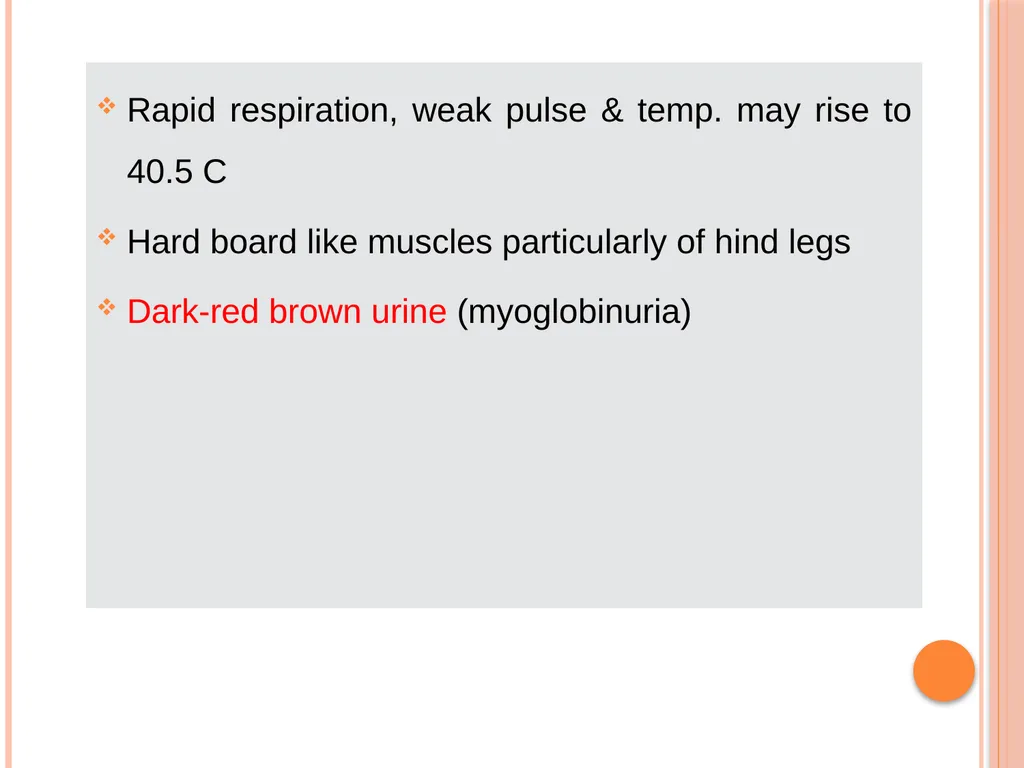
slide7. Rapid respiration, weak pulse & temp. may rise to 40.5 C
Hard board like muscles particularly of hind legs
Dark-red brown urine (myoglobinuria)<br>
slide8. Red color urine Dog sitting posture Sweating<br>
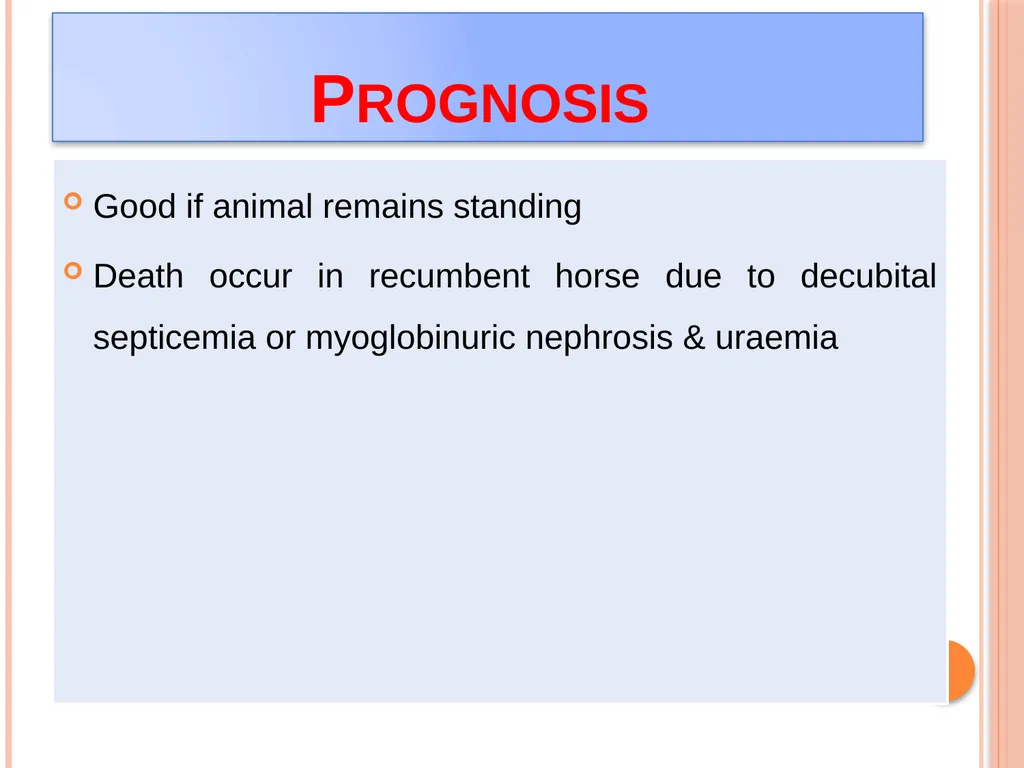
slide9. Prognosis Good if animal remains standing
Death occur in recumbent horse due to decubital septicemia or myoglobinuric nephrosis & uraemia<br>
slide10. DIAGNOSIS History
Clinical signs
Laboratory diagnosis:
Determination of muscle specific enzymes CPK & AST
Histopathology:
Hyaline degeneration of heavy muscles (Zenker’s necrosis), myonecrosis<br>
slide11. TREATMENT Animal should be kept as quiet as possible, and attempts should be made to keep it standing
Good nursing care & precautions taken to prevent development of decubital ulcers
Nervous, restless animals, or those showing evidence of pain, should be given sedatives such as chloral hydrate or tranquilizers<br>
slide12. Give Na bicarbonate IV or orally for alkalization of urine to minimise nephrotoxicity
I/V injection of large quantities of fluids and electrolytes to maintain high rate of urine flow to avoid renal tubule blockage and subsequent uraemia
I/M injection Thiamine daily to increase the tolerance of blood to lactic acid by increasing lactic acid metabolism<br>
slide13. NSAIDs such as Flunixin and Phenylbutazone may be used to control the pain
Antihistaminics, Vit. E & selenium may be useful<br>
Asstt Prof
Veterinary Medicine
BVC, Basu<br>
slide2. Exertional rhabdomyolysis
Tying-up
“Cording-up” Syndrome of Horses
Paralytic myoglobinuria
Monday Morning Disease<br>
slide3. Multifactorial myopathy
Mainly affects draft horses
Metabolic muscular disorder of horses
Clinically characterised by –
Stiffness in gait & reluctance to move
Lameness
Hardening of massive muscles
In severe cases ----myoglobinuria<br>
slide4. Disease occurs during exercise after a period of atleast 2 days of complete rest on a full working ration<br>
slide5. During exercise the large store of glycogen formed during the period of rest in the muscles metabolized to sarcolactic acid
2- Accumulation of lactic acid leads to:
a- Degeneration of the muscles and liberation of myoglobin (muscle haemoglobin)
b- Swelling of muscle because lactic acid is hydrophilic PATHOGENESIS<br>
slide6. Clinical Signs In very mild cases: only poor performance
Mild cases: stiffness in gait
Severe cases:
Profuse sweating, stiffness in gait & reluctance to move
Horse assumes a dog-sitting position followed by lateral recumbency, laying down & repeated attempts to rise, often with nervous signs<br>
slide7. Rapid respiration, weak pulse & temp. may rise to 40.5 C
Hard board like muscles particularly of hind legs
Dark-red brown urine (myoglobinuria)<br>
slide8. Red color urine Dog sitting posture Sweating<br>
slide9. Prognosis Good if animal remains standing
Death occur in recumbent horse due to decubital septicemia or myoglobinuric nephrosis & uraemia<br>
slide10. DIAGNOSIS History
Clinical signs
Laboratory diagnosis:
Determination of muscle specific enzymes CPK & AST
Histopathology:
Hyaline degeneration of heavy muscles (Zenker’s necrosis), myonecrosis<br>
slide11. TREATMENT Animal should be kept as quiet as possible, and attempts should be made to keep it standing
Good nursing care & precautions taken to prevent development of decubital ulcers
Nervous, restless animals, or those showing evidence of pain, should be given sedatives such as chloral hydrate or tranquilizers<br>
slide12. Give Na bicarbonate IV or orally for alkalization of urine to minimise nephrotoxicity
I/V injection of large quantities of fluids and electrolytes to maintain high rate of urine flow to avoid renal tubule blockage and subsequent uraemia
I/M injection Thiamine daily to increase the tolerance of blood to lactic acid by increasing lactic acid metabolism<br>
slide13. NSAIDs such as Flunixin and Phenylbutazone may be used to control the pain
Antihistaminics, Vit. E & selenium may be useful<br>