BACK SAFETY EHS Learning Objectives After
Description: BACK SAFETY EHS Learning Objectives After completing this lesson, you will know how to.. List some general causes of back injuries Describe what the power and danger zone is Describe some ways to reduced heavy lifting Demonstrate proper
Related Topics
Download Presentation
"BACK SAFETY EHS Learning Objectives After" is the property of its rightful owner. Permission is granted to download and print the materials on this website for personal, non-commercial use only, and to display it on your personal computer provided you do not modify the materials and that you retain all copyright notices contained in the materials. By downloading content from our website, you accept the terms of this agreement.
Presentation Transcript
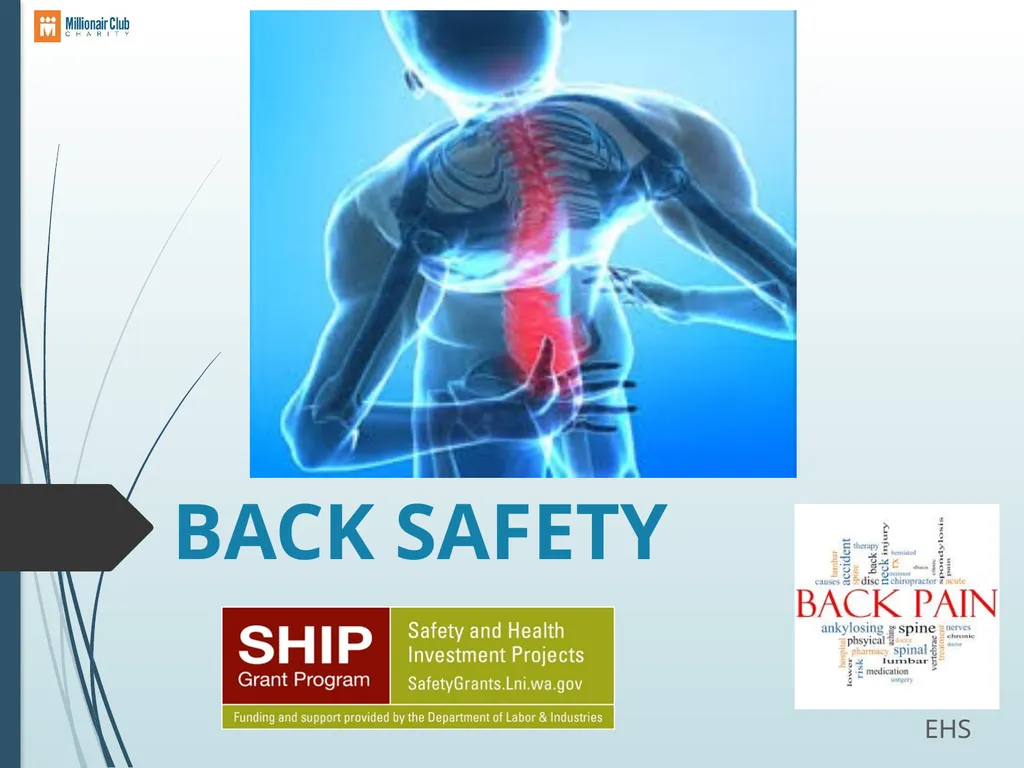
slide1. BACK SAFETY EHS<br>
slide2. Learning Objectives After completing this lesson, you will know how to…..
List some general causes of back injuries
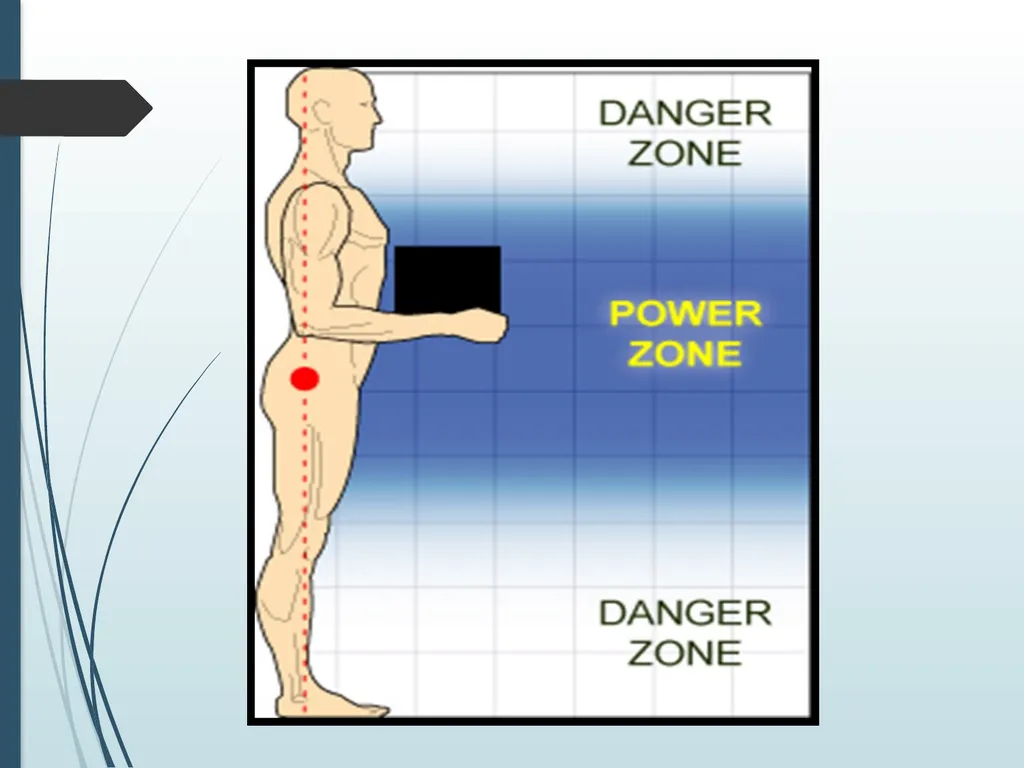
Describe what the power and danger zone is
Describe some ways to reduced heavy lifting
Demonstrate proper back lifting technique<br>
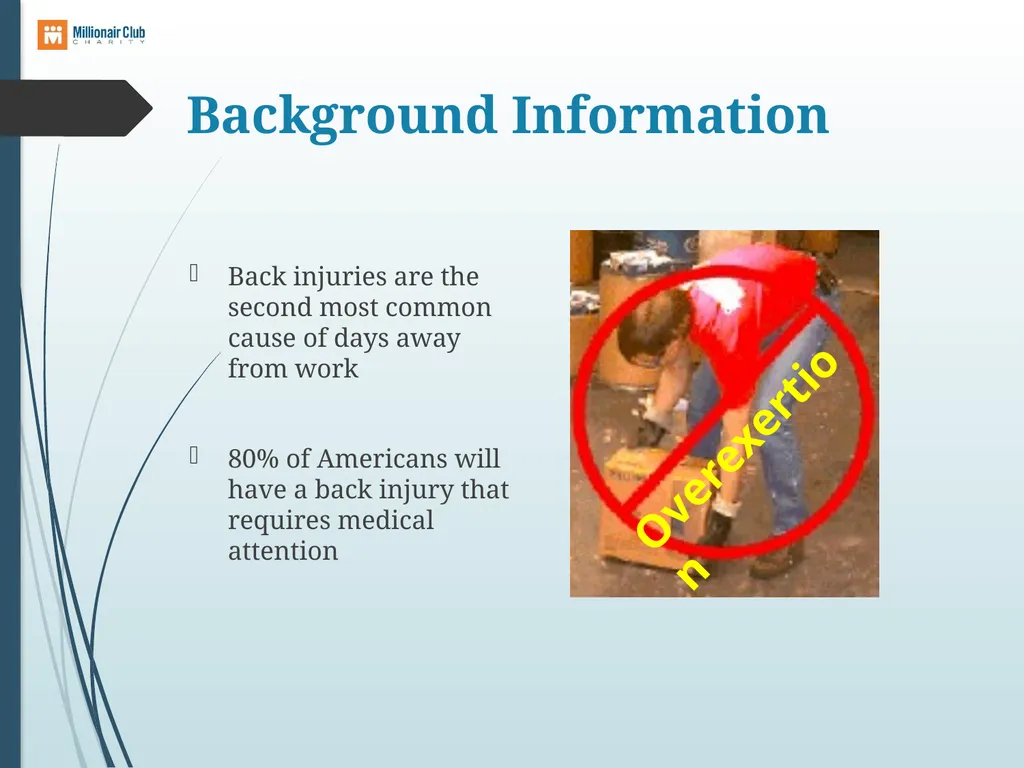
slide3. Background Information Back injuries are the second most common cause of days away from work
80% of Americans will have a back injury that requires medical attention Overexertion<br>
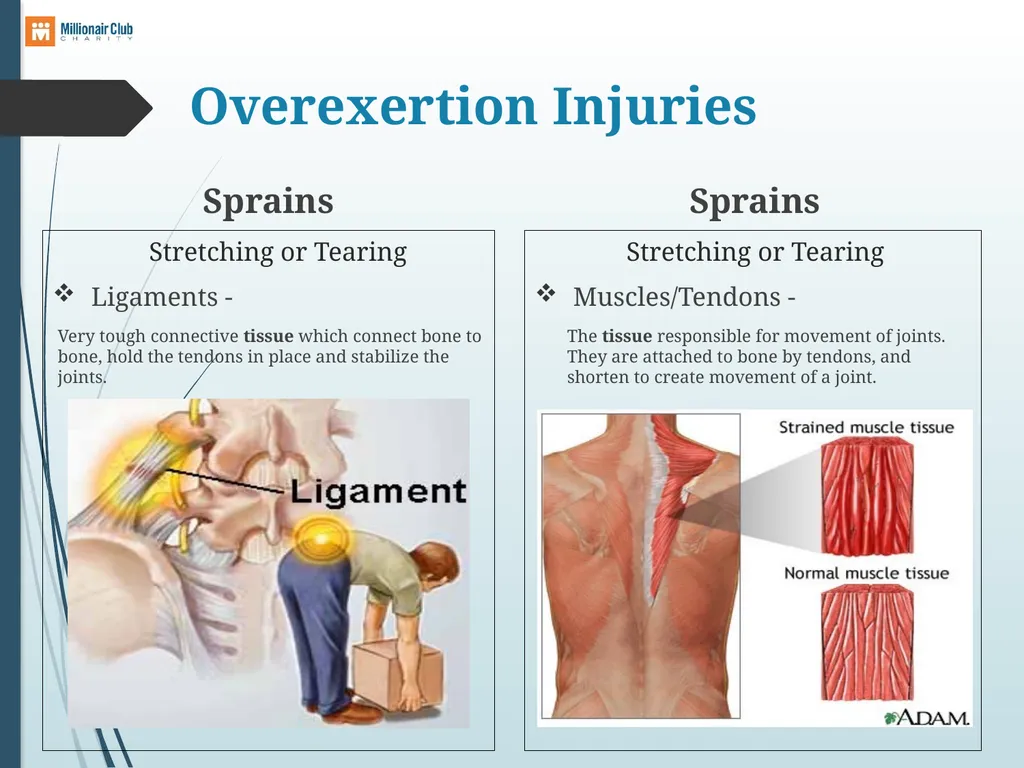
slide4. Overexertion Injuries Sprains Stretching or Tearing
Ligaments -
Very tough connective tissue which connect bone to bone, hold the tendons in place and stabilize the joints. Stretching or Tearing
Muscles/Tendons -
The tissue responsible for movement of joints. They are attached to bone by tendons, and shorten to create movement of a joint. Sprains<br>
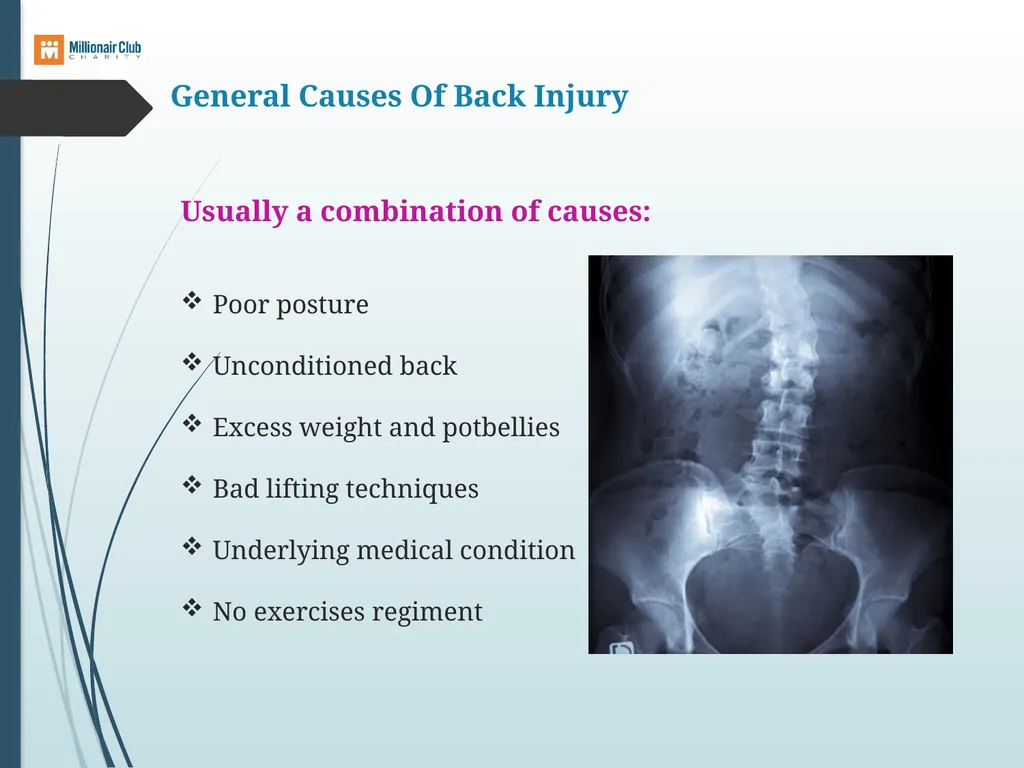
slide5. General Causes Of Back Injury Usually a combination of causes:
Poor posture
Unconditioned back
Excess weight and potbellies
Bad lifting techniques
Underlying medical condition
No exercises regiment<br>
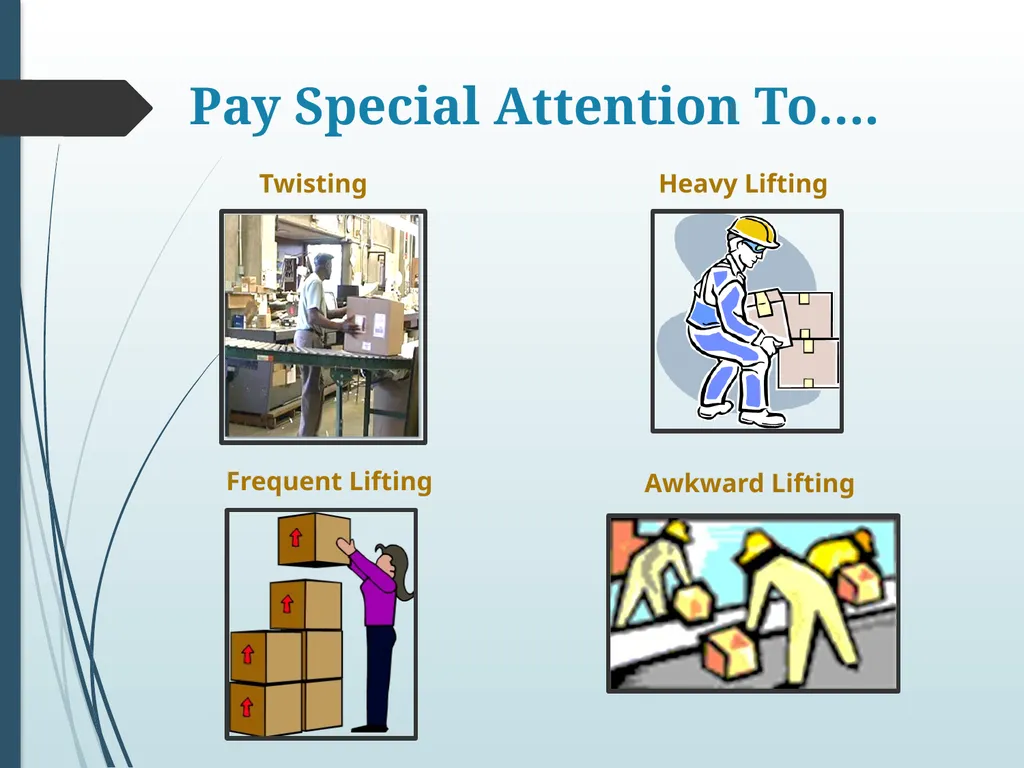
slide6. Twisting Heavy Lifting Awkward Lifting Frequent Lifting Pay Special Attention To….<br>
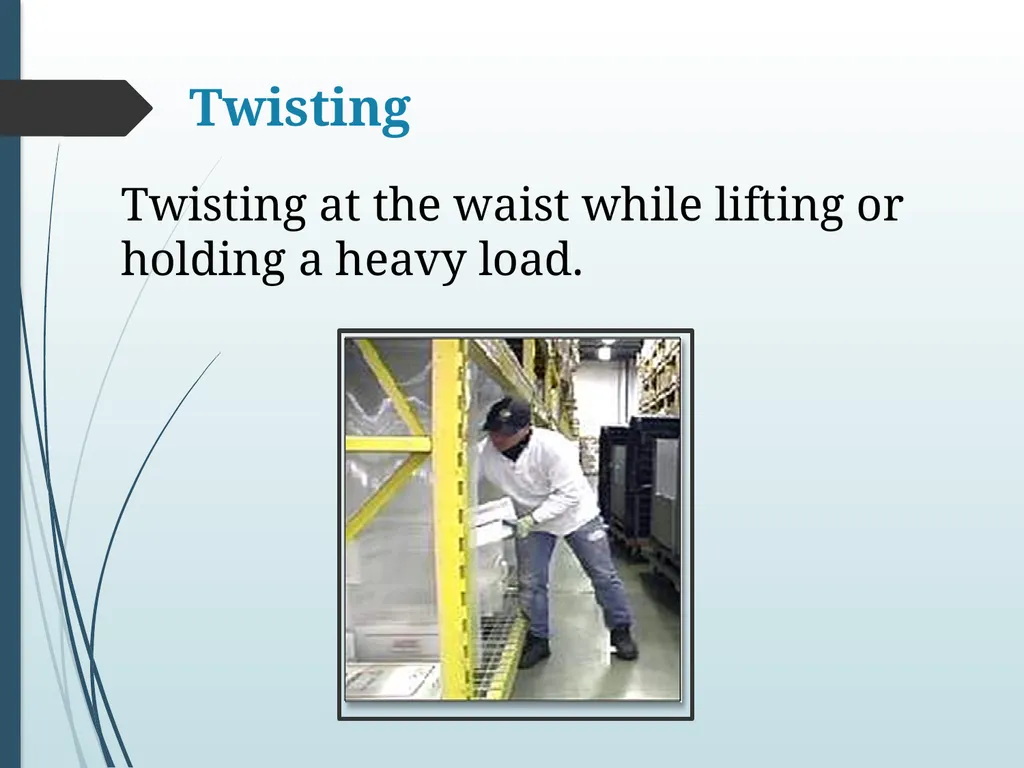
slide7. Twisting Twisting at the waist while lifting or holding a heavy load.<br>
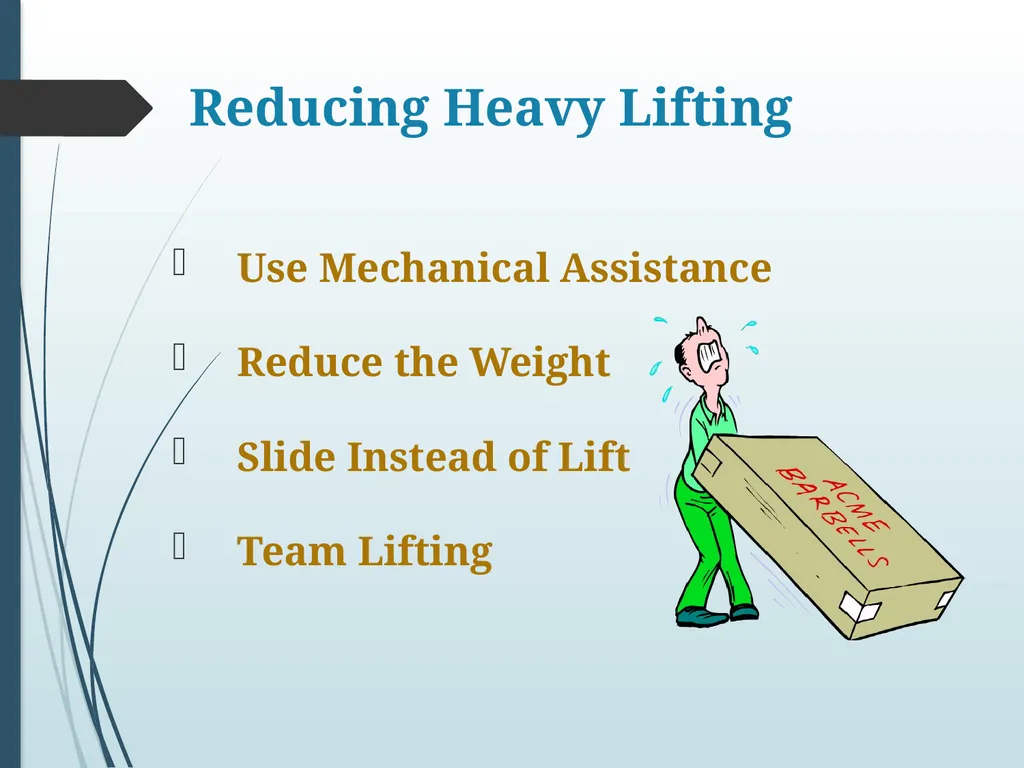
slide8. Use Mechanical Assistance
Reduce the Weight
Slide Instead of Lift
Team Lifting Reducing Heavy Lifting<br>
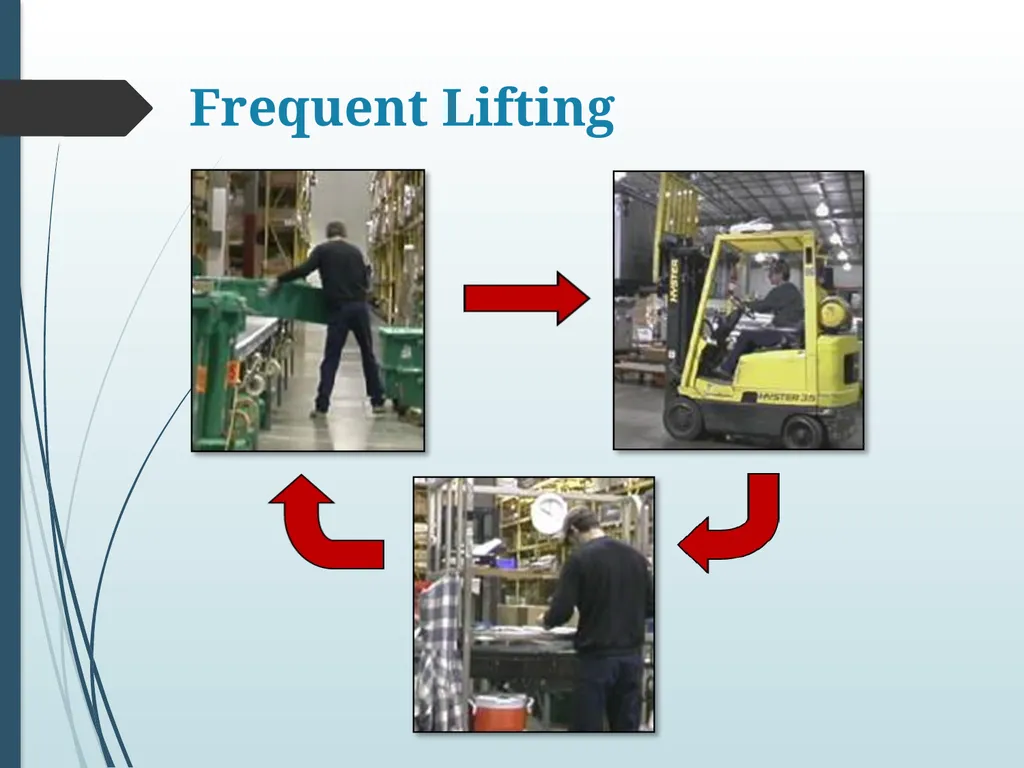
slide9. Frequent Lifting<br>
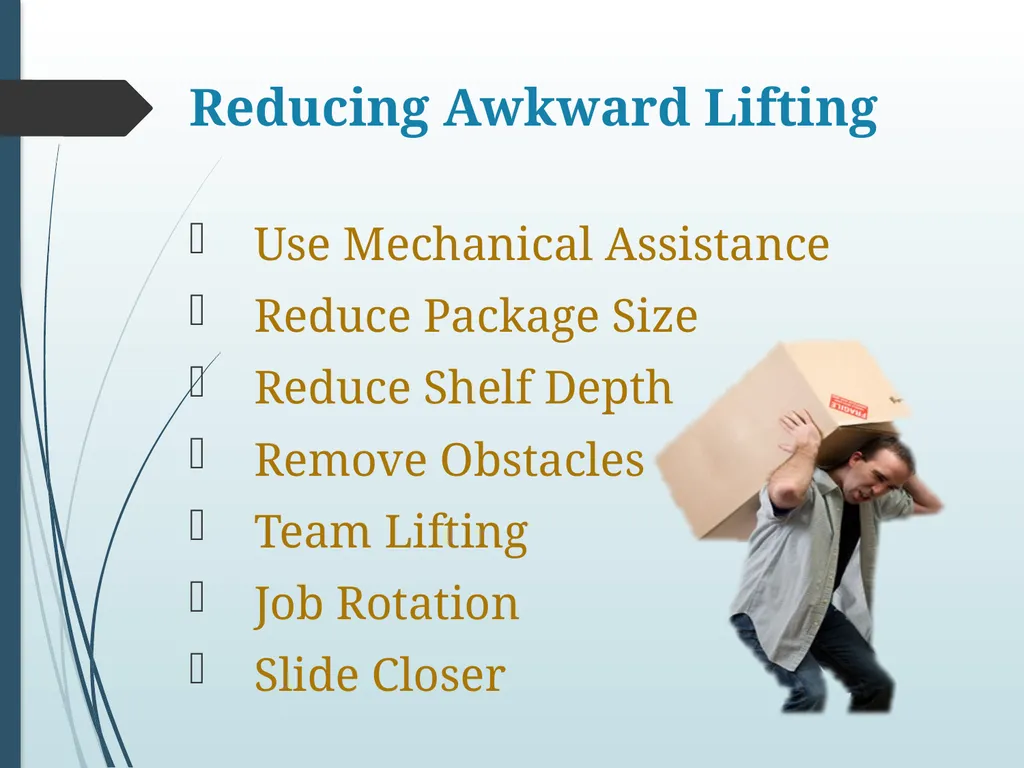
slide10. Use Mechanical Assistance
Reduce Package Size
Reduce Shelf Depth
Remove Obstacles
Team Lifting
Job Rotation
Slide Closer Reducing Awkward Lifting<br>
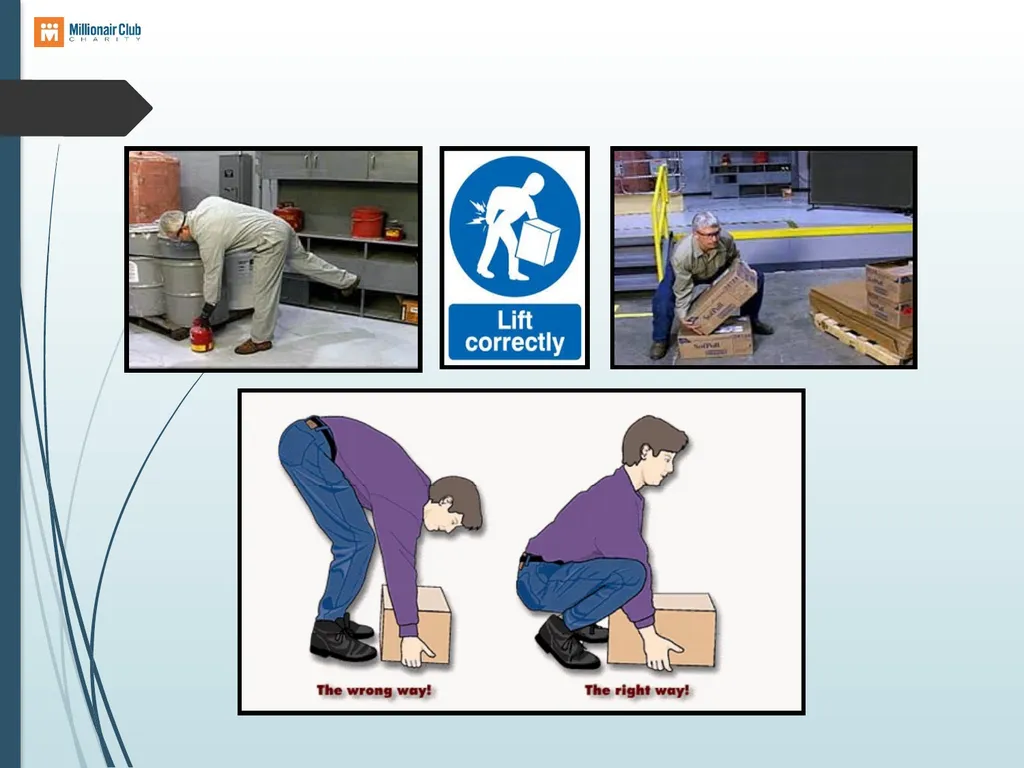
slide12. Safe Lifting https://www.youtube.com/watch?v=RuhroEh31i0<br>
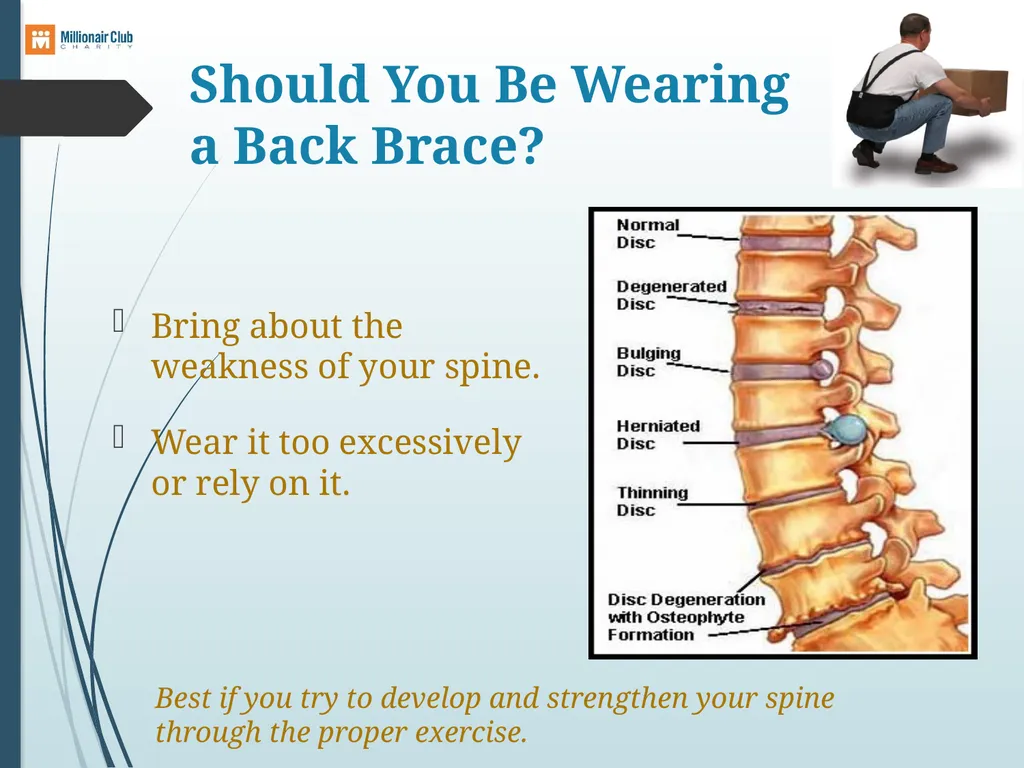
slide13. Should You Be Wearing a Back Brace? Bring about the weakness of your spine.
Wear it too excessively or rely on it. Best if you try to develop and strengthen your spine through the proper exercise.<br>
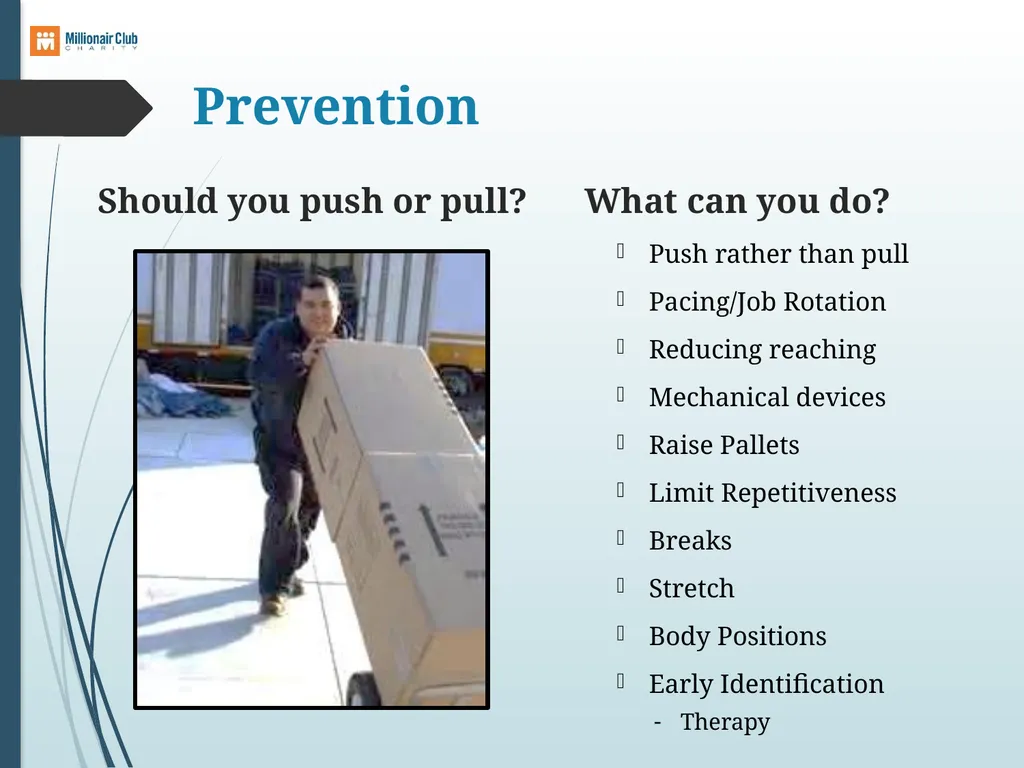
slide15. Prevention What can you do? Should you push or pull? Push rather than pull
Pacing/Job Rotation
Reducing reaching
Mechanical devices
Raise Pallets
Limit Repetitiveness
Breaks
Stretch
Body Positions
Early Identification
Therapy<br>
slide16. Lifting Practice<br>
slide17. 1. List some general causes of back injuries
2. Describe what the power and danger zone is
3. Describe some ways to reduced heavy lifting
4. Demonstrate proper back lifting techniques QUESTIONS? Learning Objectives<br>
slide2. Learning Objectives After completing this lesson, you will know how to…..
List some general causes of back injuries
Describe what the power and danger zone is
Describe some ways to reduced heavy lifting
Demonstrate proper back lifting technique<br>
slide3. Background Information Back injuries are the second most common cause of days away from work
80% of Americans will have a back injury that requires medical attention Overexertion<br>
slide4. Overexertion Injuries Sprains Stretching or Tearing
Ligaments -
Very tough connective tissue which connect bone to bone, hold the tendons in place and stabilize the joints. Stretching or Tearing
Muscles/Tendons -
The tissue responsible for movement of joints. They are attached to bone by tendons, and shorten to create movement of a joint. Sprains<br>
slide5. General Causes Of Back Injury Usually a combination of causes:
Poor posture
Unconditioned back
Excess weight and potbellies
Bad lifting techniques
Underlying medical condition
No exercises regiment<br>
slide6. Twisting Heavy Lifting Awkward Lifting Frequent Lifting Pay Special Attention To….<br>
slide7. Twisting Twisting at the waist while lifting or holding a heavy load.<br>
slide8. Use Mechanical Assistance
Reduce the Weight
Slide Instead of Lift
Team Lifting Reducing Heavy Lifting<br>
slide9. Frequent Lifting<br>
slide10. Use Mechanical Assistance
Reduce Package Size
Reduce Shelf Depth
Remove Obstacles
Team Lifting
Job Rotation
Slide Closer Reducing Awkward Lifting<br>
slide12. Safe Lifting https://www.youtube.com/watch?v=RuhroEh31i0<br>
slide13. Should You Be Wearing a Back Brace? Bring about the weakness of your spine.
Wear it too excessively or rely on it. Best if you try to develop and strengthen your spine through the proper exercise.<br>
slide15. Prevention What can you do? Should you push or pull? Push rather than pull
Pacing/Job Rotation
Reducing reaching
Mechanical devices
Raise Pallets
Limit Repetitiveness
Breaks
Stretch
Body Positions
Early Identification
Therapy<br>
slide16. Lifting Practice<br>
slide17. 1. List some general causes of back injuries
2. Describe what the power and danger zone is
3. Describe some ways to reduced heavy lifting
4. Demonstrate proper back lifting techniques QUESTIONS? Learning Objectives<br>