Balancing the Push and the Pull: NYC Community Health Workers Lived Experience on the Interdisciplinary HIV team Lori Hurley, PhD Fordham University Graduate School of Social Service NACHW Conference Chronic Disparities in HIV
"Balancing the Push and the Pull: NYC Community" is the property of its rightful owner. Permission is granted to
download and print the materials on this website for personal, non-commercial use only, and to display it
on your personal computer provided you do not modify the materials and that you retain all copyright
notices contained in the materials. By downloading content from our website, you accept the terms of this
agreement.
Presentation Transcript
01
Balancing the Push and the Pull: NYC Community Health Workers’ Lived Experience on the Interdisciplinary HIV team Lori Hurley, PhD
Fordham University Graduate School of Social Service
NACHW Conference<br>
02
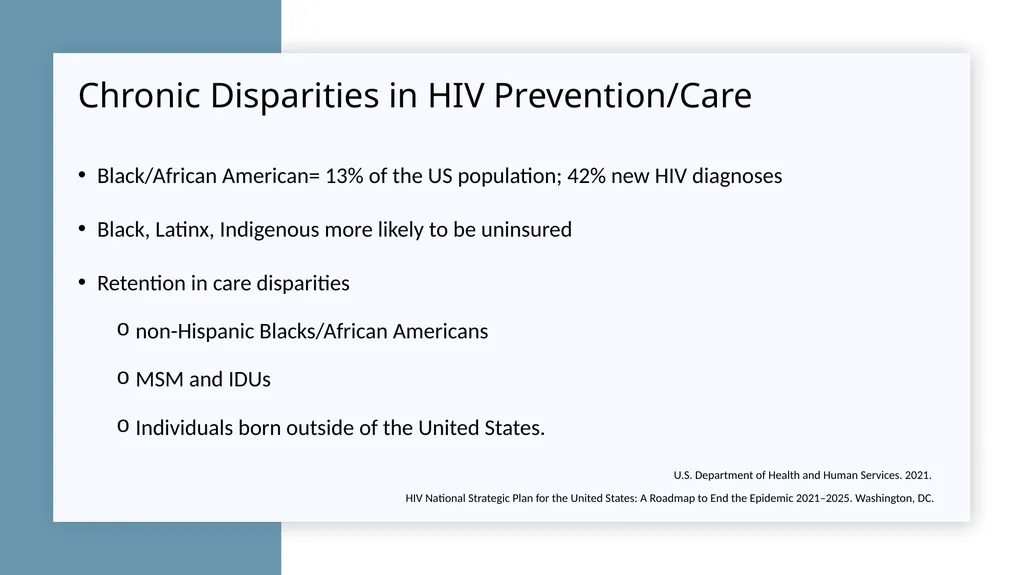
Chronic Disparities in HIV Prevention/Care Black/African American= 13% of the US population; 42% new HIV diagnoses
Black, Latinx, Indigenous more likely to be uninsured
Retention in care disparities
non-Hispanic Blacks/African Americans
MSM and IDUs
Individuals born outside of the United States.
U.S. Department of Health and Human Services. 2021.
HIV National Strategic Plan for the United States: A Roadmap to End the Epidemic 2021–2025. Washington, DC.<br>
03
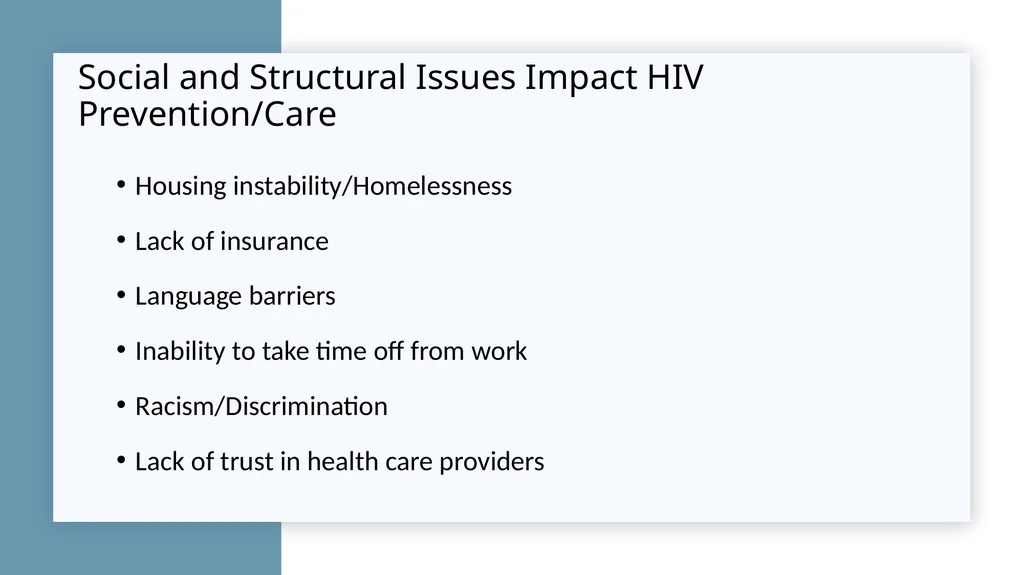
Social and Structural Issues Impact HIV Prevention/Care Housing instability/Homelessness
Lack of insurance
Language barriers
Inability to take time off from work
Racism/Discrimination
Lack of trust in health care providers<br>
04
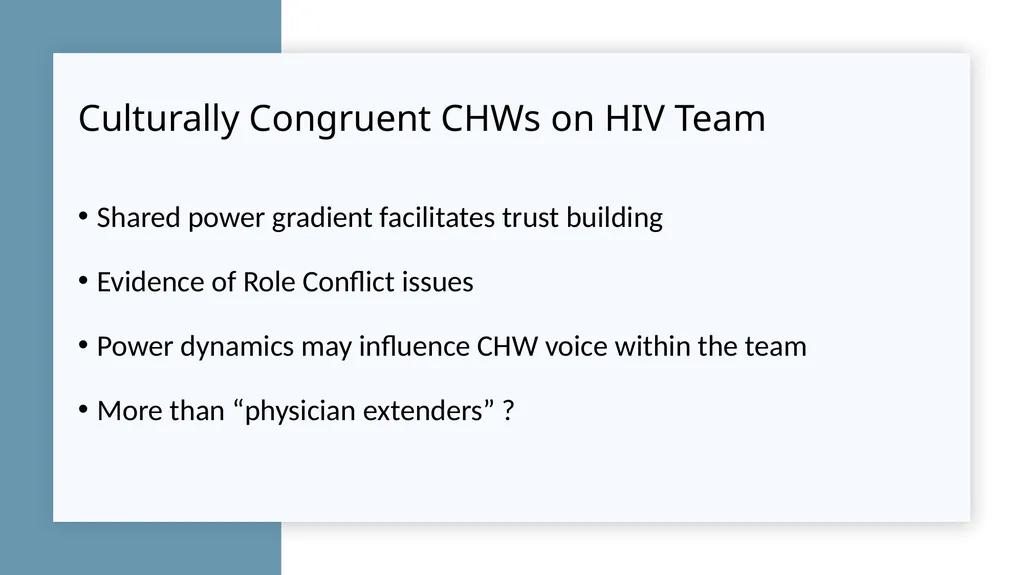
Culturally Congruent CHWs on HIV Team Shared power gradient facilitates trust building
Evidence of Role Conflict issues
Power dynamics may influence CHW voice within the team
More than “physician extenders” ?<br>
05
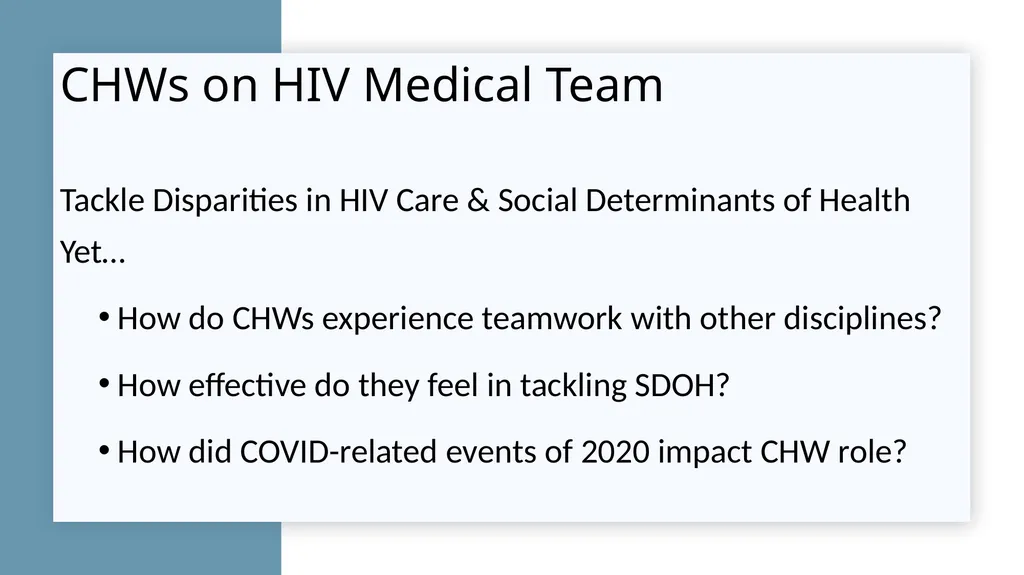
CHWs on HIV Medical Team Tackle Disparities in HIV Care & Social Determinants of Health
Yet…
How do CHWs experience teamwork with other disciplines?
How effective do they feel in tackling SDOH?
How did COVID-related events of 2020 impact CHW role?<br>
06
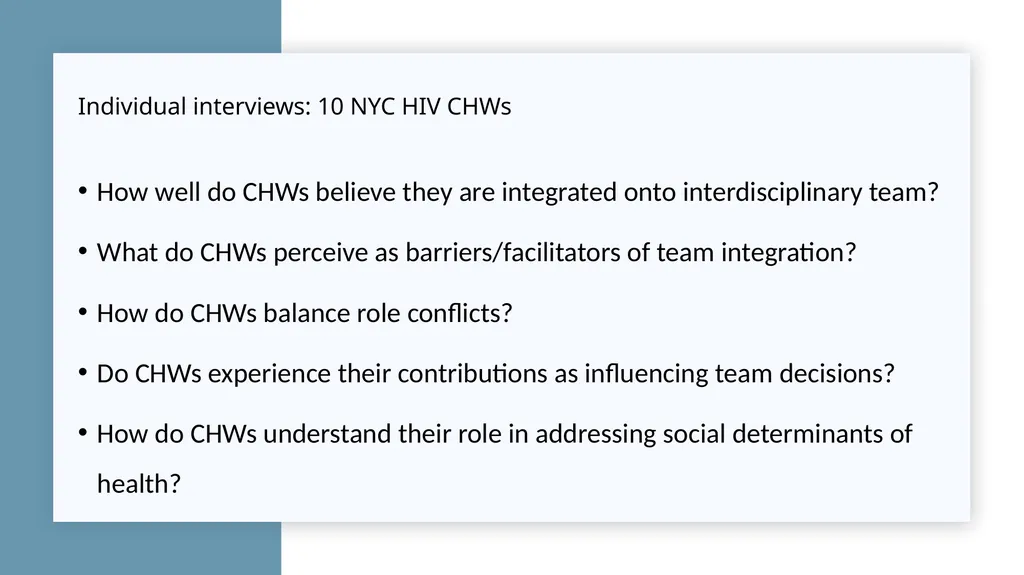
Individual interviews: 10 NYC HIV CHWs How well do CHWs believe they are integrated onto interdisciplinary team?
What do CHWs perceive as barriers/facilitators of team integration?
How do CHWs balance role conflicts?
Do CHWs experience their contributions as influencing team decisions?
How do CHWs understand their role in addressing social determinants of health?<br>
07
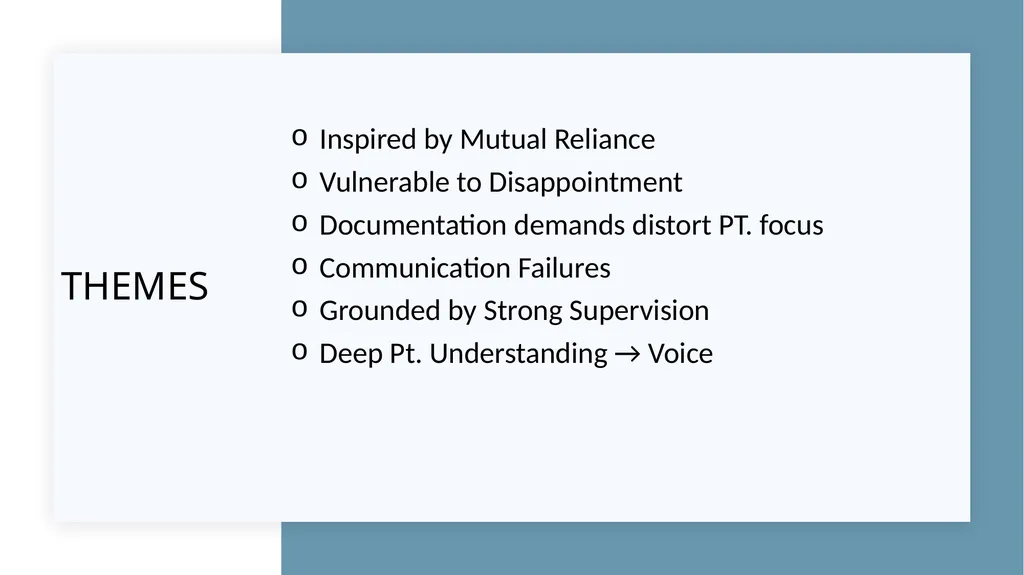
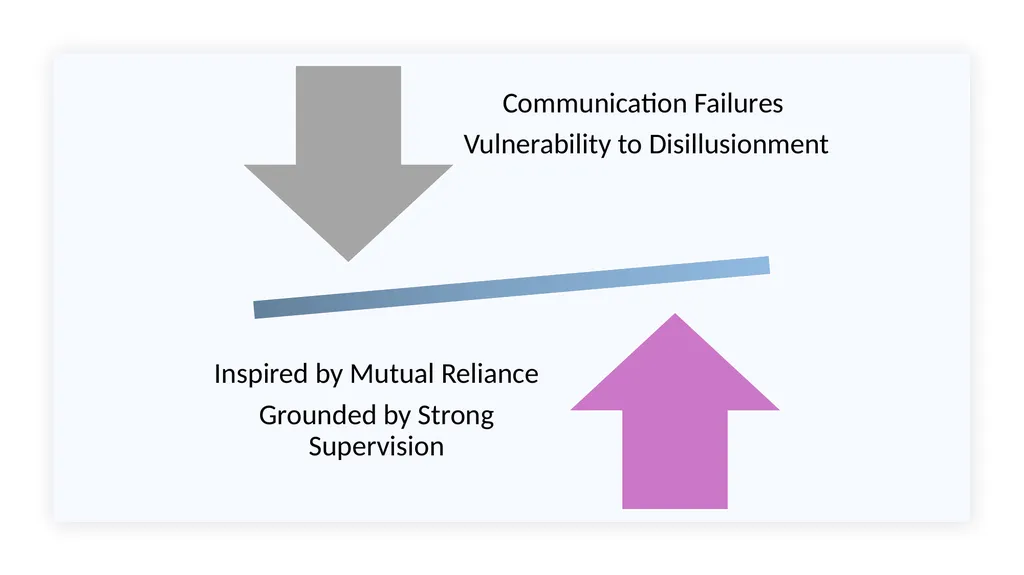
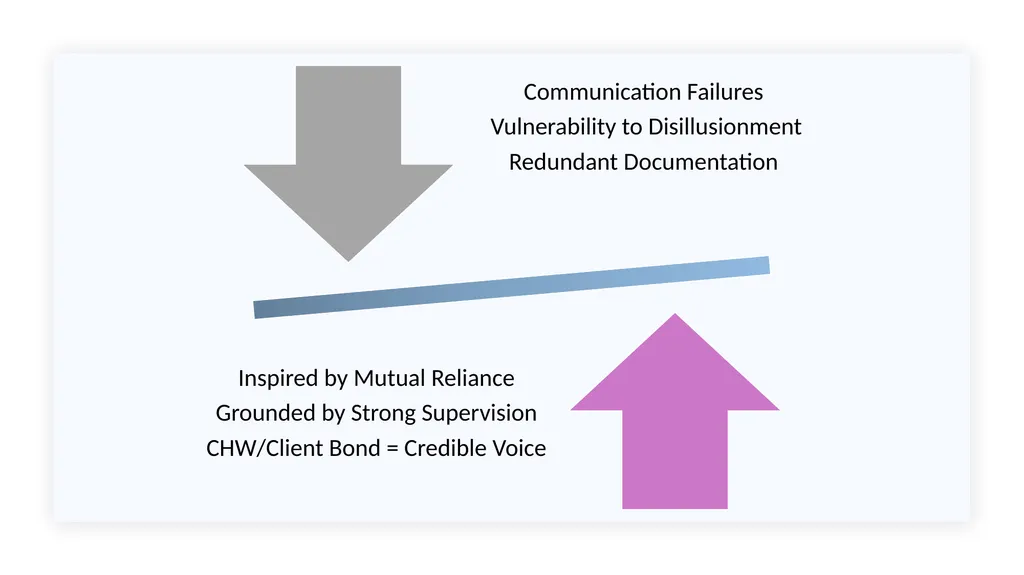
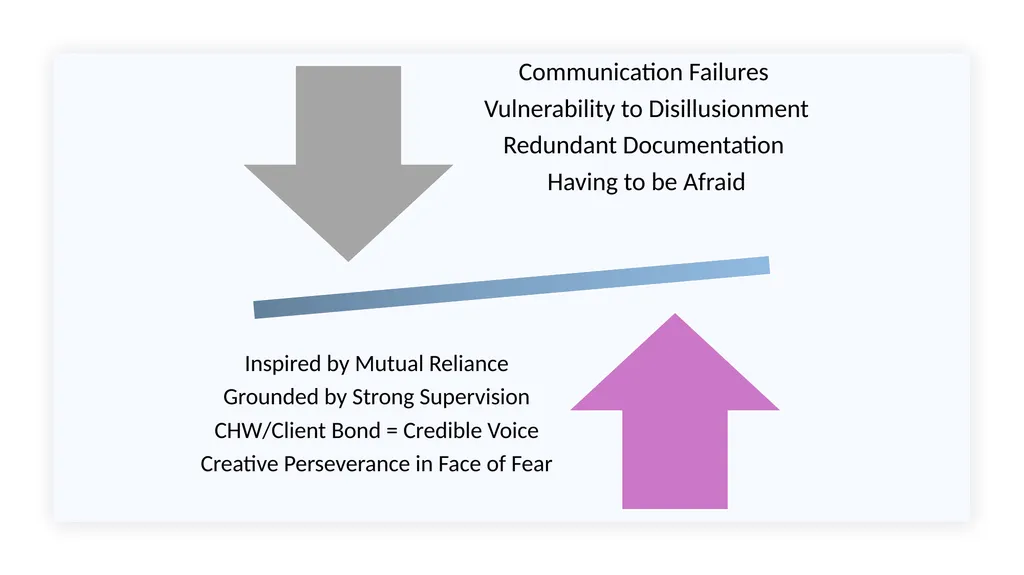
Themes Inspired by Mutual Reliance
Vulnerable to Disappointment
Documentation demands distort PT. focus
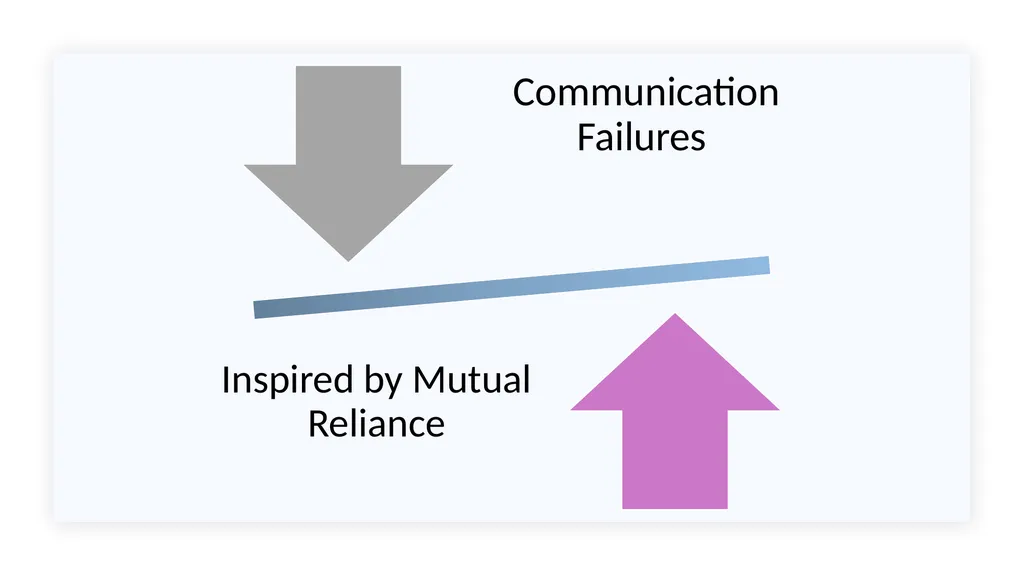
Communication Failures
Grounded by Strong Supervision
Deep Pt. Understanding → Voice<br>
08
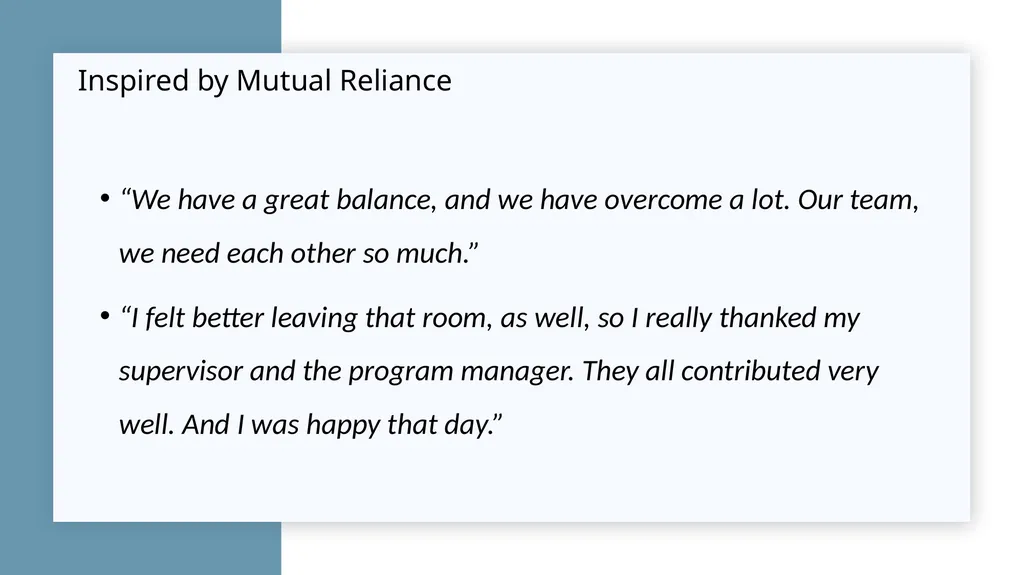
Inspired by Mutual Reliance “We have a great balance, and we have overcome a lot. Our team, we need each other so much.”
“I felt better leaving that room, as well, so I really thanked my supervisor and the program manager. They all contributed very well. And I was happy that day.”<br>
09
Communication Failures “I try to advocate for them during the session when I do go with them, but what about the times that I don't go with them? They don't get the services that they feel they need, because there's lack of communication.”<br>
10
Communication Failures “It was kind of sad for the frontline, because we can only do so much. We are asking for help and [the medical provider] is really not giving us the help that we need to help the patient.”
“I’ve come to understand that when you express an opinion about a policy, if it doesn’t align with the higher-ups, they'll change it and won't even discuss it with you.<br>
11
Grounded by Strong Supervision ‘This is nothing we can’t handle. I need you to stand strong.’
“Having a leader to make you feel those ‘roots’ is very, very empowering. It can definitely prolong a person in working in this field.”
“So, my client only agreed to stay because they had that good rapport with my supervisor.”<br>
12
Vulnerability to Disappointment “I initially felt I was doing something for my community. But in my experience, healthcare has turned into a numbers thing. We need to make sure we have the patient. It doesn't matter who they are, just grab them off the street.”<br>
13
Credible Voice via Deep Understanding of Client “When they don't feel like you’re focused on them, they drift. I have to make my clients feel like you are, right here, right now, my number one priority.”
“There's a reason behind everything. So now we have to dig in a little deeper.”
“A lot of providers that I work with want us to have the best interest for the patient and also to know our stuff.”
[During a medical visit], “I just jumped in, and I just took charge. I cut in and said ‘Listen’!”<br>
14
Documentation Demands “Having to take that time to document it and having to submit it in 3 different formats. It can be a little stressful. I really wanted this job to be something where I can have good connections with people who might need service. I think I am able to do that without the extra-ness.”<br>
15
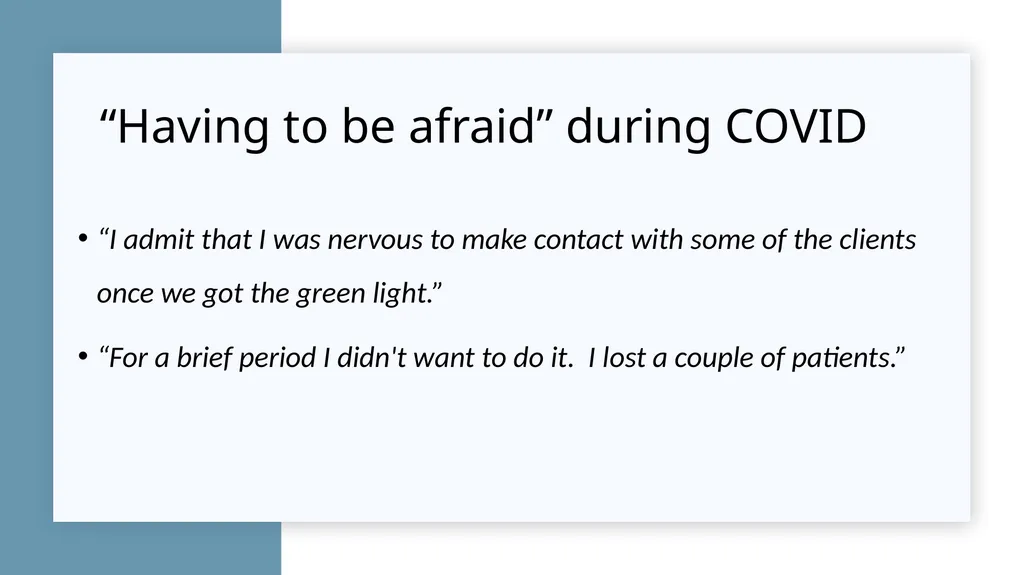
“Having to be afraid” during COVID “I admit that I was nervous to make contact with some of the clients once we got the green light.”
“For a brief period I didn't want to do it. I lost a couple of patients.”<br>
16
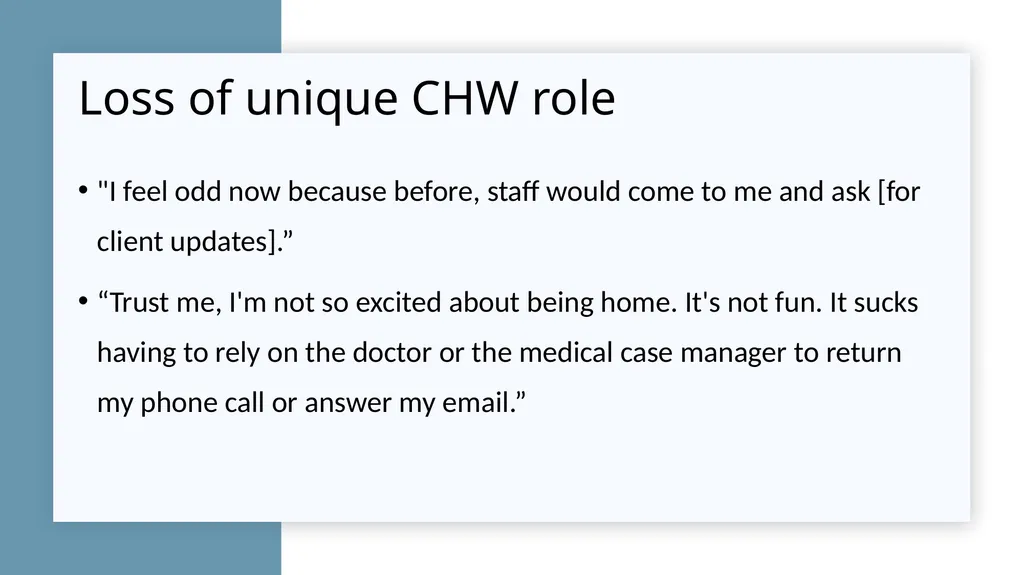
Loss of unique CHW role "I feel odd now because before, staff would come to me and ask [for client updates].”
“Trust me, I'm not so excited about being home. It's not fun. It sucks having to rely on the doctor or the medical case manager to return my phone call or answer my email.”<br>
17
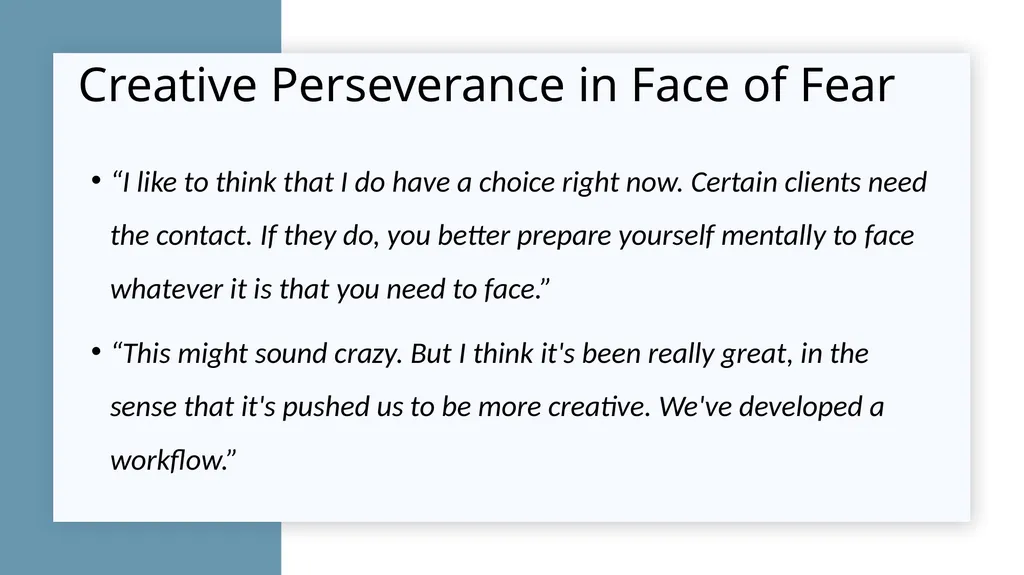
Creative Perseverance in Face of Fear “I like to think that I do have a choice right now. Certain clients need the contact. If they do, you better prepare yourself mentally to face whatever it is that you need to face.”
“This might sound crazy. But I think it's been really great, in the sense that it's pushed us to be more creative. We've developed a workflow.”<br>
18
Social determinants of health “They want me to move mountains, but I can only do molehills.”<br>
19
This is really hard “They’re rebuilding the Bronx & Manhattan. They have all these new apartments, but they only accept people with credit checks.
[Our clients] come straight from a shelter. They don't have good credit. A lot of them come out of prison and they don't have nowhere to live.”
“I had made connections with this organization [to provide legal assistance]. It took a very, very long time to get the linkage agreement. I still don't even know if we have it, that's how long it's been.”<br>
20
Implications & Discussion Study Limitations
CHW Work Practice
Policy<br>
21
What are the Implications for CHW Practice? Linkages between agencies that address SDOH and HIV healthcare organizations should be evaluated in terms of client outcomes
Supervisors & CHWs could share “best practices” with clinical providers to enhance understanding of unique CHW role<br>
22
Policy Implications Fund CHWs to partner with legal/advocacy organizations while remaining integrated with outpatient care
Use NACHW core competencies for HIV CHW training:
Ability to teach self-advocacy skills
Work in ways that increase community empowerment
Conduct community organizing<br>