Basic of Electronics Current Resistance Recap 2 Revision Electronics is a field of science in which we study about electric currents generated due to the movement of electric charges. A circuit made of electronic components and wires is
"Basic of Electronics Current & Resistance Recap 2" is the property of its rightful owner. Permission is granted to
download and print the materials on this website for personal, non-commercial use only, and to display it
on your personal computer provided you do not modify the materials and that you retain all copyright
notices contained in the materials. By downloading content from our website, you accept the terms of this
agreement.
Presentation Transcript
01
Basic of Electronics Current & Resistance<br>
02
Recap 2<br>
03
Revision Electronics is a field of science in which we study about electric currents generated due to the movement of electric charges.
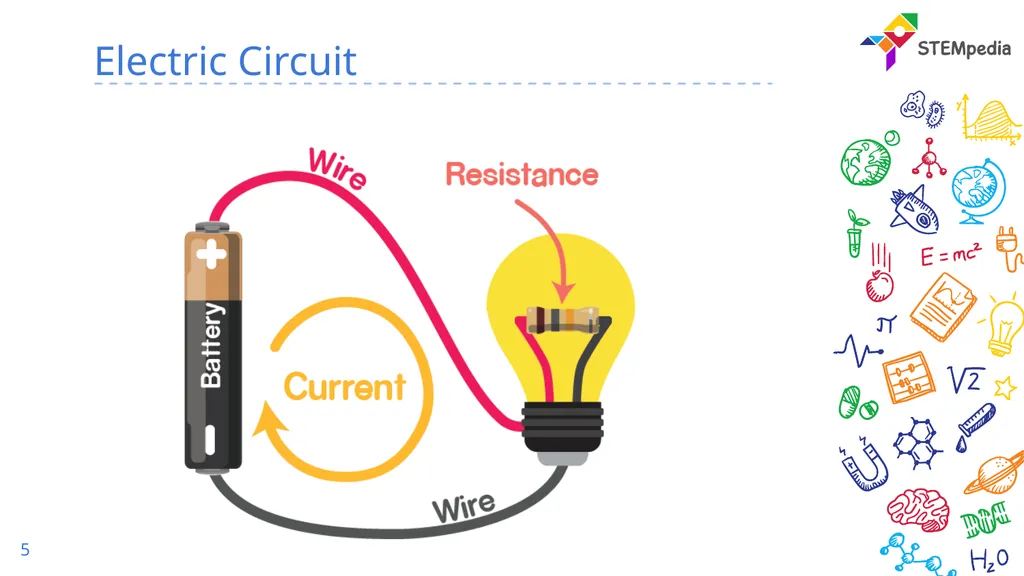
A circuit made of electronic components and wires is known as an electronic circuit.
Voltage is the force that a power source creates at its two ends. This force makes the charge flow around the circuit.
Battery is the power source of the circuit which provide voltage.
We measure the voltage using a device known as a voltmeter.
Polarity is the property of having two poles that have opposite physical properties – Positive & Negative 3<br>
04
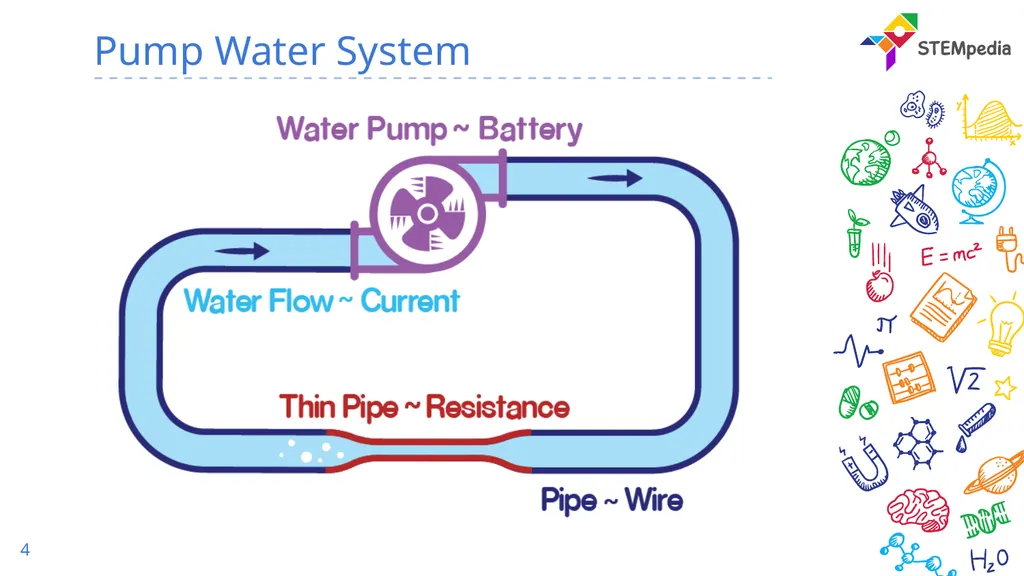
Pump Water System 4<br>
05
Electric Circuit 5<br>
06
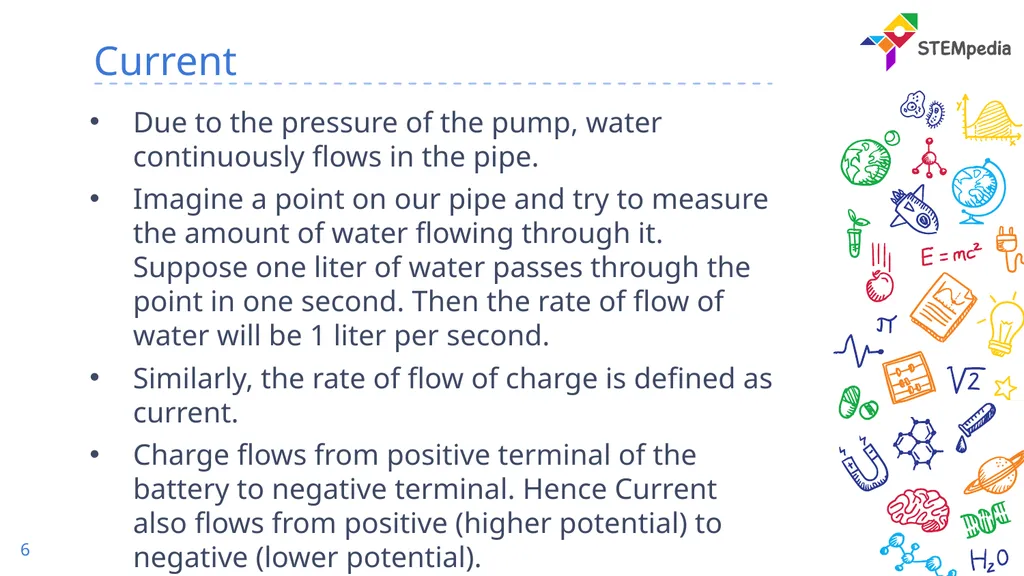
Current 6 Due to the pressure of the pump, water continuously flows in the pipe.
Imagine a point on our pipe and try to measure the amount of water flowing through it. Suppose one liter of water passes through the point in one second. Then the rate of flow of water will be 1 liter per second.
Similarly, the rate of flow of charge is defined as current.
Charge flows from positive terminal of the battery to negative terminal. Hence Current also flows from positive (higher potential) to negative (lower potential).
Current is measured in Amperes.<br>
07
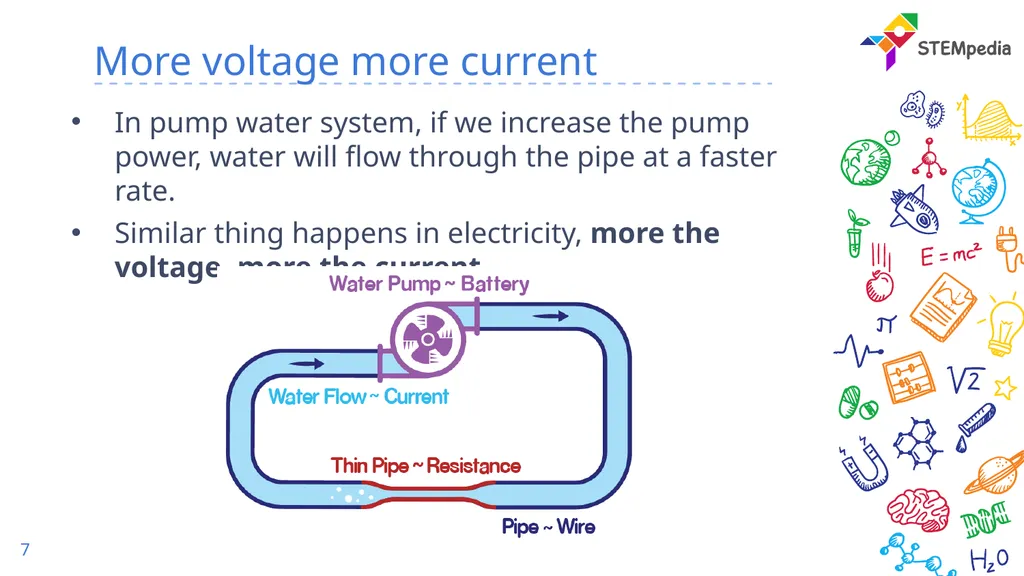
More voltage more current 7 In pump water system, if we increase the pump power, water will flow through the pipe at a faster rate.
Similar thing happens in electricity, more the voltage, more the current.<br>
08
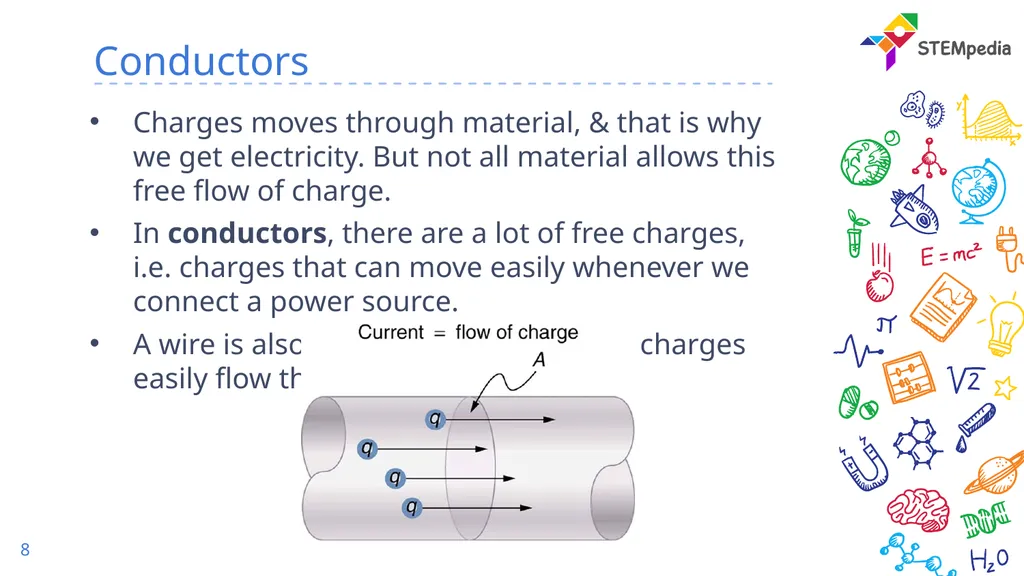
Conductors 8 Charges moves through material, & that is why we get electricity. But not all material allows this free flow of charge.
In conductors, there are a lot of free charges, i.e. charges that can move easily whenever we connect a power source.
A wire is also a conductor; that is why charges easily flow through it.<br>
09
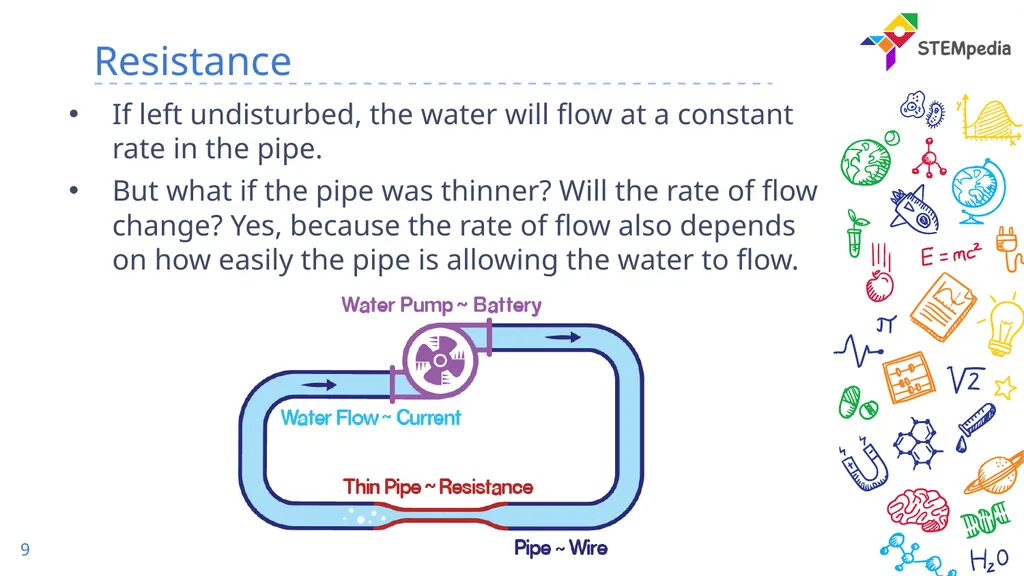
Resistance 9 If left undisturbed, the water will flow at a constant rate in the pipe.
But what if the pipe was thinner? Will the rate of flow change? Yes, because the rate of flow also depends on how easily the pipe is allowing the water to flow.<br>
10
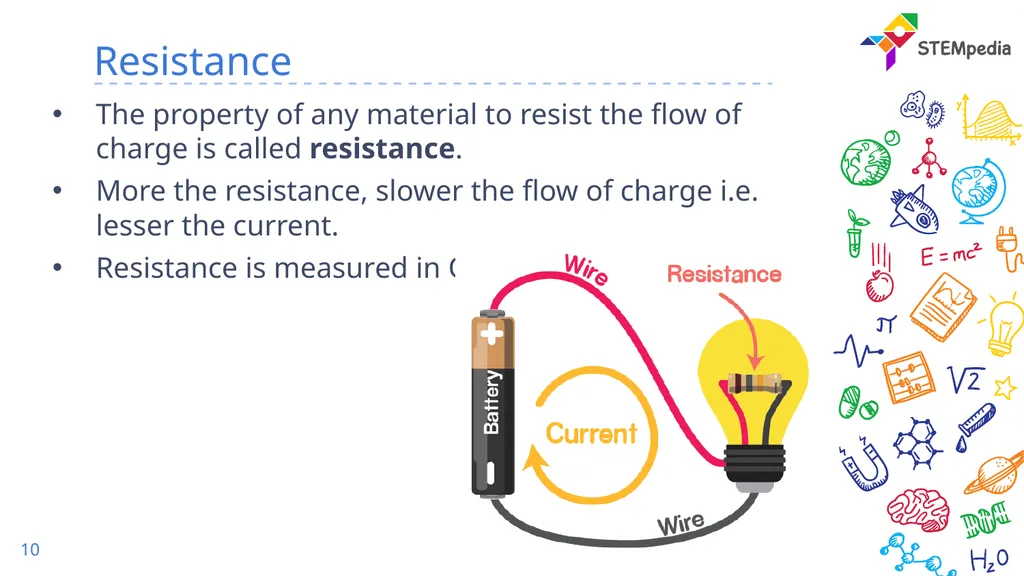
Resistance 10 The property of any material to resist the flow of charge is called resistance.
More the resistance, slower the flow of charge i.e. lesser the current.
Resistance is measured in Ohms.<br>
11
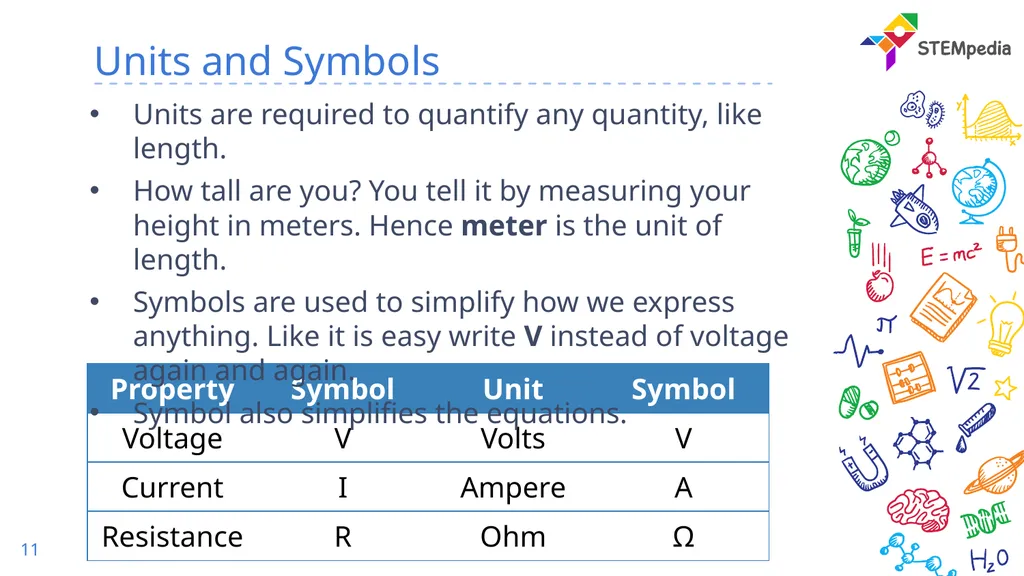
Units and Symbols 11 Units are required to quantify any quantity, like length.
How tall are you? You tell it by measuring your height in meters. Hence meter is the unit of length.
Symbols are used to simplify how we express anything. Like it is easy write V instead of voltage again and again.
Symbol also simplifies the equations.<br>
12
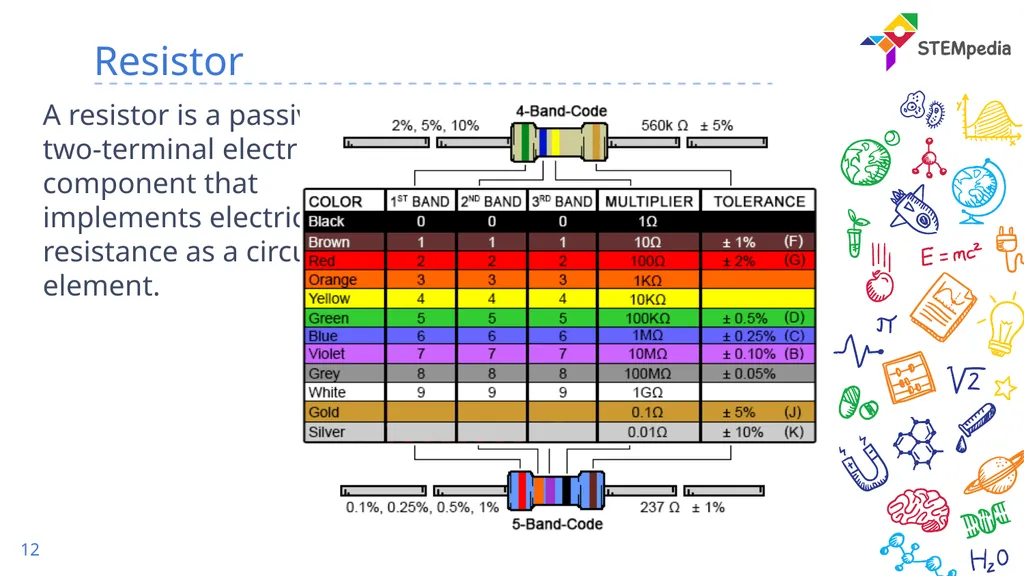
Resistor 12 A resistor is a passive two-terminal electrical component that implements electrical resistance as a circuit element.<br>
13
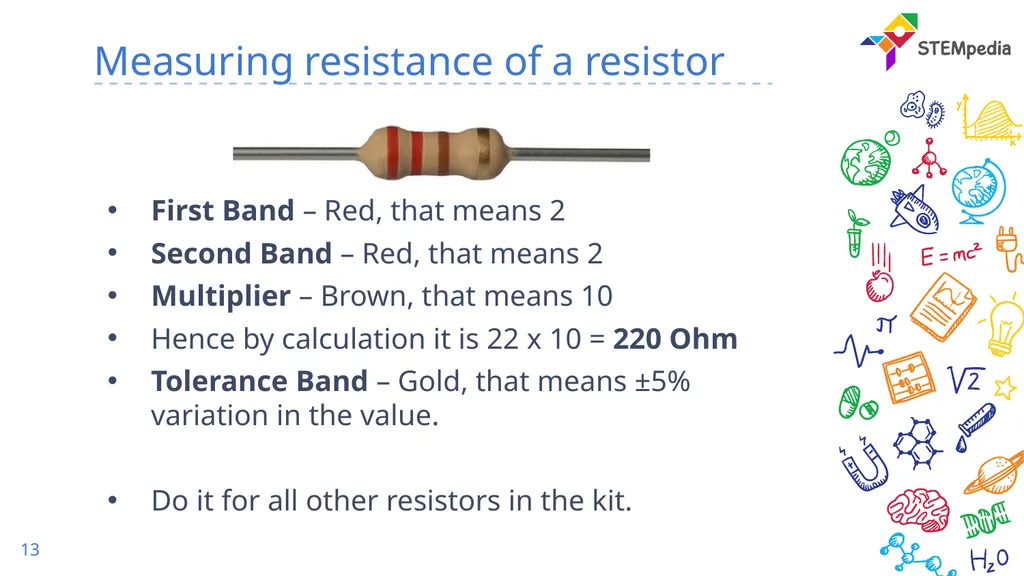
Measuring resistance of a resistor 13 First Band – Red, that means 2
Second Band – Red, that means 2
Multiplier – Brown, that means 10
Hence by calculation it is 22 x 10 = 220 Ohm
Tolerance Band – Gold, that means ±5% variation in the value.