Bias in Epidemiological Studies Outline Introduction Definition of Bias Importance of understanding bias in epidemiological research Overview of types of bias 2. Types of Bias Selection Bias Definition and examples How it occurs: improper
"Bias in Epidemiological Studies Outline" is the property of its rightful owner. Permission is granted to
download and print the materials on this website for personal, non-commercial use only, and to display it
on your personal computer provided you do not modify the materials and that you retain all copyright
notices contained in the materials. By downloading content from our website, you accept the terms of this
agreement.
Presentation Transcript
01
Bias in Epidemiological Studies<br>
02
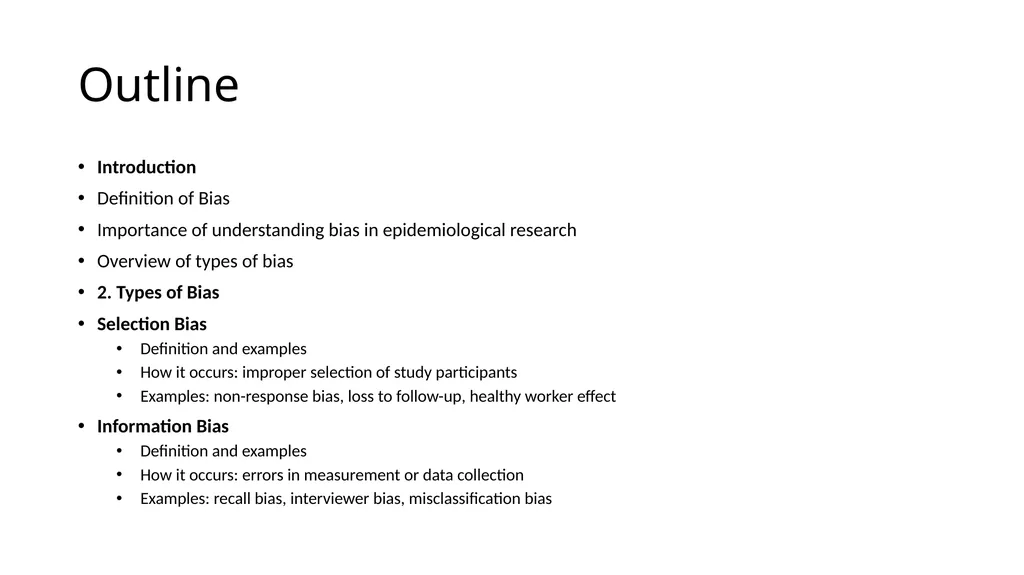
Outline Introduction
Definition of Bias
Importance of understanding bias in epidemiological research
Overview of types of bias
2. Types of Bias
Selection Bias
Definition and examples
How it occurs: improper selection of study participants
Examples: non-response bias, loss to follow-up, healthy worker effect
Information Bias
Definition and examples
How it occurs: errors in measurement or data collection
Examples: recall bias, interviewer bias, misclassification bias<br>
03
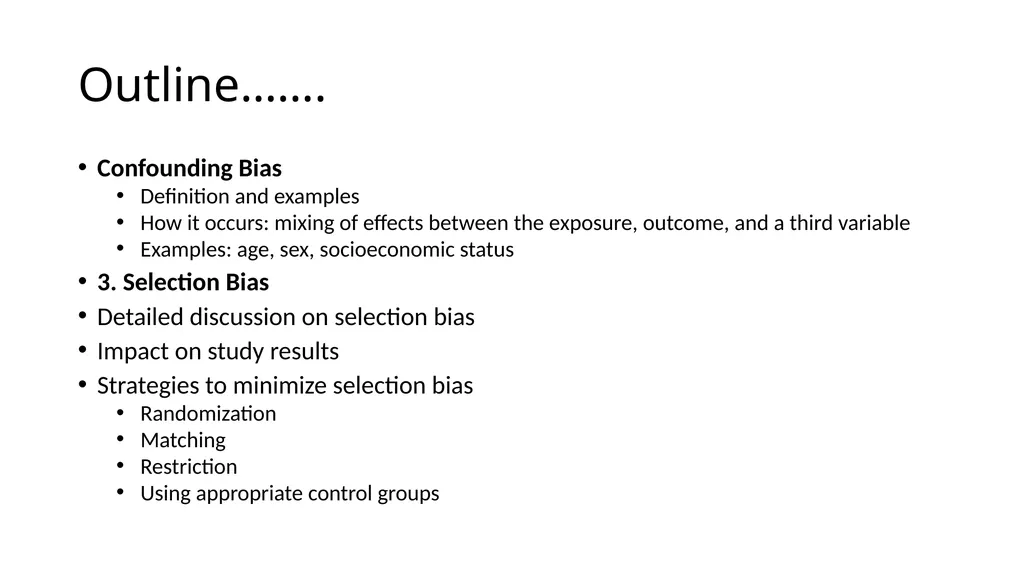
Outline……. Confounding Bias
Definition and examples
How it occurs: mixing of effects between the exposure, outcome, and a third variable
Examples: age, sex, socioeconomic status
3. Selection Bias
Detailed discussion on selection bias
Impact on study results
Strategies to minimize selection bias
Randomization
Matching
Restriction
Using appropriate control groups<br>
04
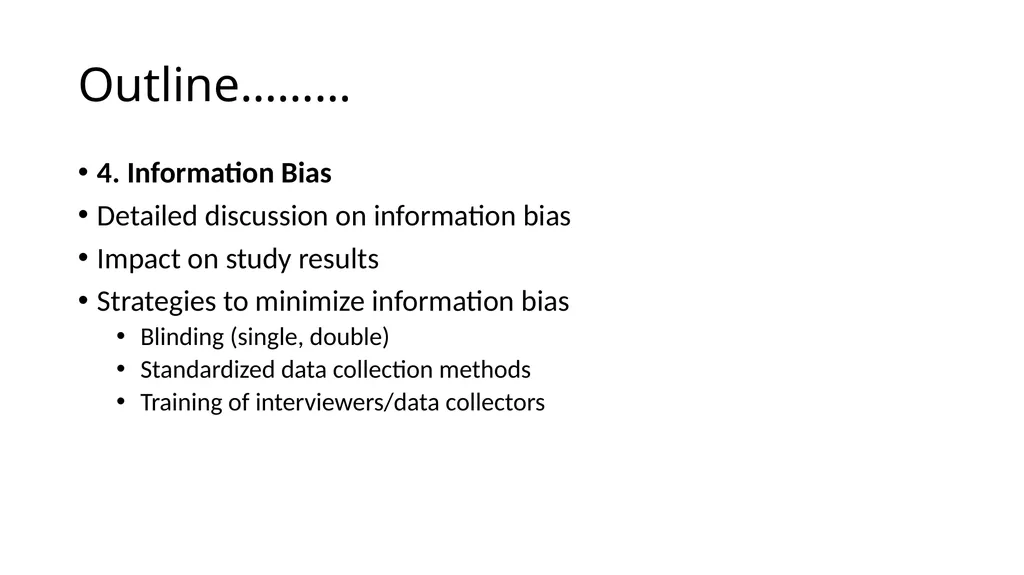
Outline……… 4. Information Bias
Detailed discussion on information bias
Impact on study results
Strategies to minimize information bias
Blinding (single, double)
Standardized data collection methods
Training of interviewers/data collectors<br>
05
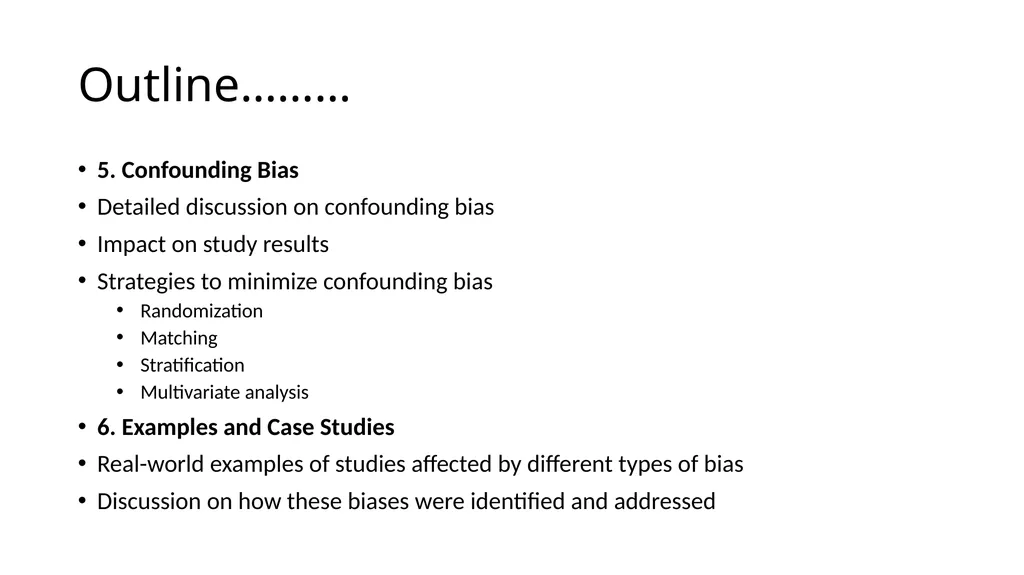
Outline……… 5. Confounding Bias
Detailed discussion on confounding bias
Impact on study results
Strategies to minimize confounding bias
Randomization
Matching
Stratification
Multivariate analysis
6. Examples and Case Studies
Real-world examples of studies affected by different types of bias
Discussion on how these biases were identified and addressed<br>
06
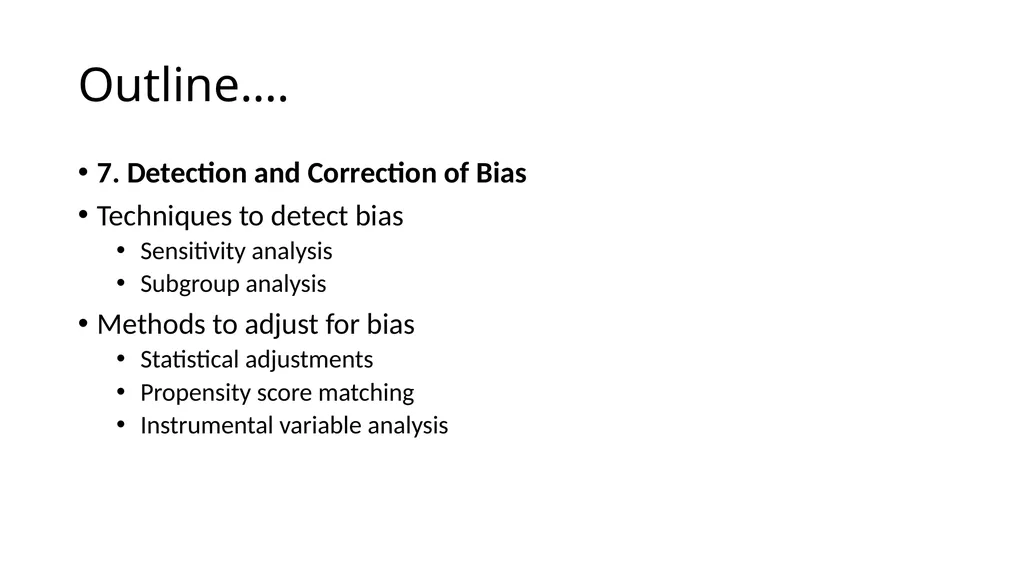
Outline…. 7. Detection and Correction of Bias
Techniques to detect bias
Sensitivity analysis
Subgroup analysis
Methods to adjust for bias
Statistical adjustments
Propensity score matching
Instrumental variable analysis<br>
07
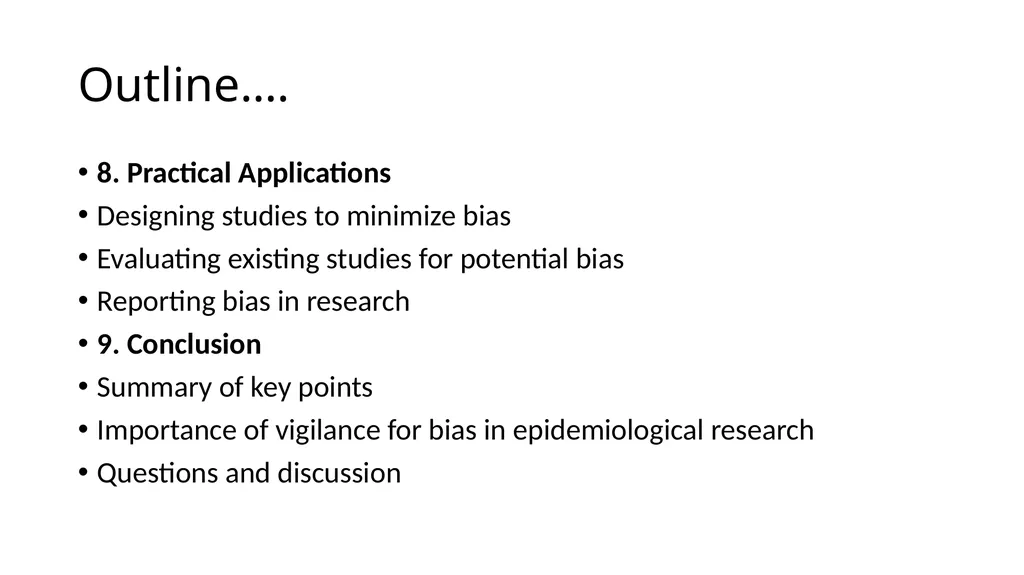
Outline…. 8. Practical Applications
Designing studies to minimize bias
Evaluating existing studies for potential bias
Reporting bias in research
9. Conclusion
Summary of key points
Importance of vigilance for bias in epidemiological research
Questions and discussion<br>
08
1. Introduction Bias in epidemiological studies refers to systematic errors that can affect the validity of study results. Understanding and addressing bias is crucial for ensuring the accuracy and reliability of epidemiological research findings.<br>
09
2. Types of Bias Selection Bias: Occurs when there is a systematic difference between those who are selected for the study and those who are not. For example, if a study on occupational health only includes currently employed individuals, it may miss those who left work due to health reasons, leading to a "healthy worker effect."<br>
10
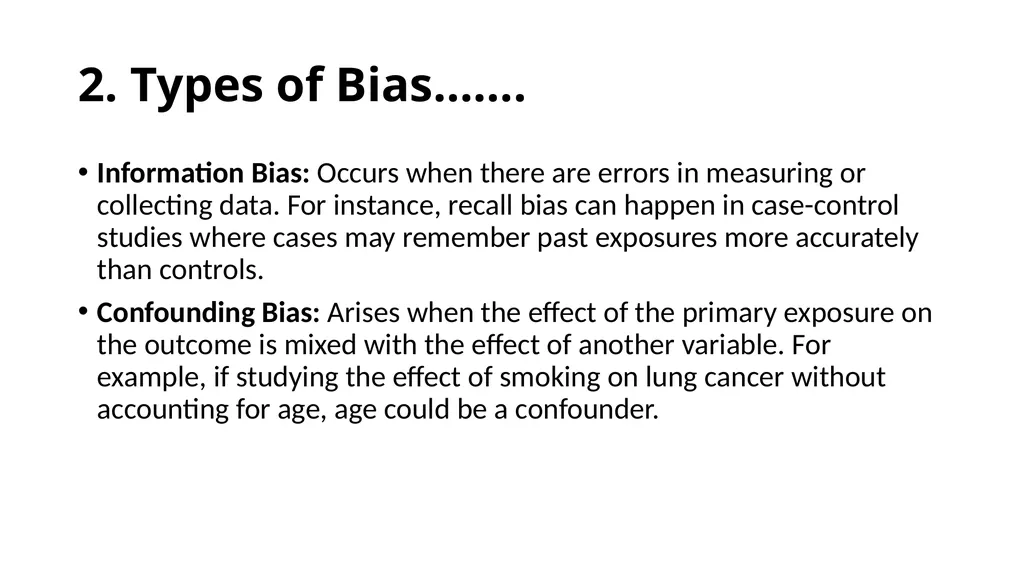
2. Types of Bias……. Information Bias: Occurs when there are errors in measuring or collecting data. For instance, recall bias can happen in case-control studies where cases may remember past exposures more accurately than controls.
Confounding Bias: Arises when the effect of the primary exposure on the outcome is mixed with the effect of another variable. For example, if studying the effect of smoking on lung cancer without accounting for age, age could be a confounder.<br>
11
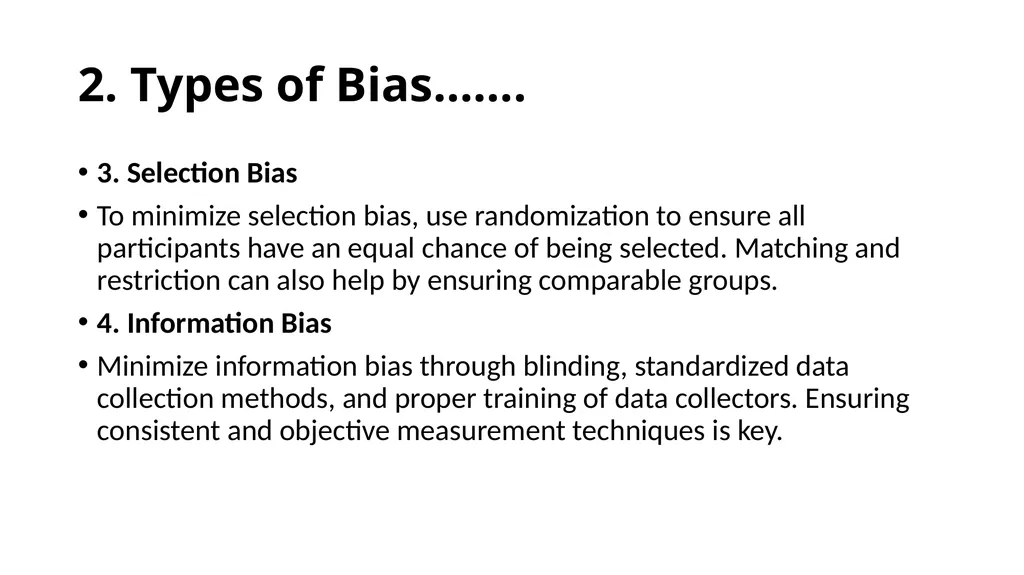
2. Types of Bias……. 3. Selection Bias
To minimize selection bias, use randomization to ensure all participants have an equal chance of being selected. Matching and restriction can also help by ensuring comparable groups.
4. Information Bias
Minimize information bias through blinding, standardized data collection methods, and proper training of data collectors. Ensuring consistent and objective measurement techniques is key.<br>
12
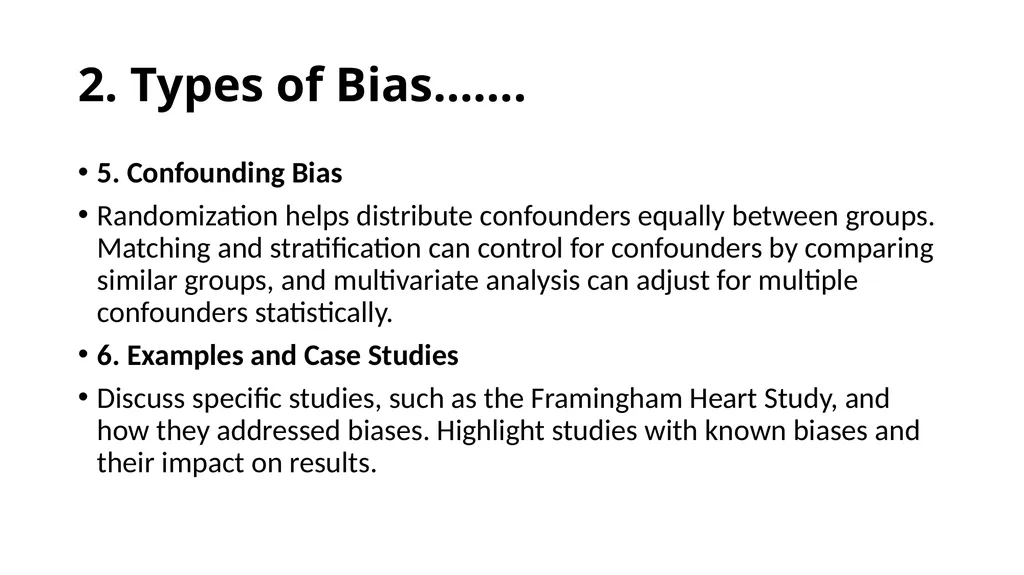
2. Types of Bias……. 5. Confounding Bias
Randomization helps distribute confounders equally between groups. Matching and stratification can control for confounders by comparing similar groups, and multivariate analysis can adjust for multiple confounders statistically.
6. Examples and Case Studies
Discuss specific studies, such as the Framingham Heart Study, and how they addressed biases. Highlight studies with known biases and their impact on results.<br>
13
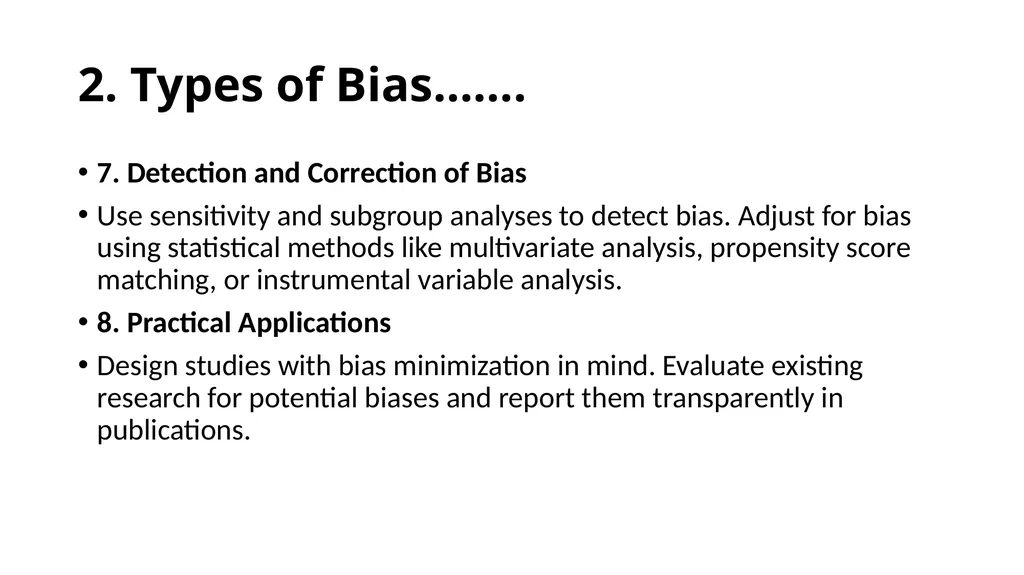
2. Types of Bias……. 7. Detection and Correction of Bias
Use sensitivity and subgroup analyses to detect bias. Adjust for bias using statistical methods like multivariate analysis, propensity score matching, or instrumental variable analysis.
8. Practical Applications
Design studies with bias minimization in mind. Evaluate existing research for potential biases and report them transparently in publications.<br>
14
9. Conclusion Bias is a critical concern in epidemiological research. By understanding its types, sources, and mitigation strategies, researchers can enhance the validity and reliability of their findings.<br>
15
Questions for Discussion What are some common sources of selection bias in cohort studies?
How can recall bias affect the results of a case-control study?
Discuss a real-world example where confounding was effectively controlled.<br>