Bihar Animal Sciences University Department of Animal Nutrition Course No. VMD-513 Nutrient Requirement and Feeding of Dogs Dr. Pankaj Kumar Singh Asstt. Professor (Animal Nutrition) Bihar Veterinary College, Patna E-mail:
"Bihar Animal Sciences University Department of" is the property of its rightful owner. Permission is granted to
download and print the materials on this website for personal, non-commercial use only, and to display it
on your personal computer provided you do not modify the materials and that you retain all copyright
notices contained in the materials. By downloading content from our website, you accept the terms of this
agreement.
Presentation Transcript
01
Bihar Animal Sciences University Department of Animal Nutrition Course No. VMD-513
Nutrient Requirement and Feeding of Dogs
Dr. Pankaj Kumar Singh Asstt. Professor (Animal Nutrition)
Bihar Veterinary College, Patna
E-mail: vetpank@gmail.com; 7909079625<br>
02
Nutrient Requirements 2 The requirements of various nutrients discussed here are as follows;
Energy
Protein
Carbohydrate
Fat
Water<br>
03
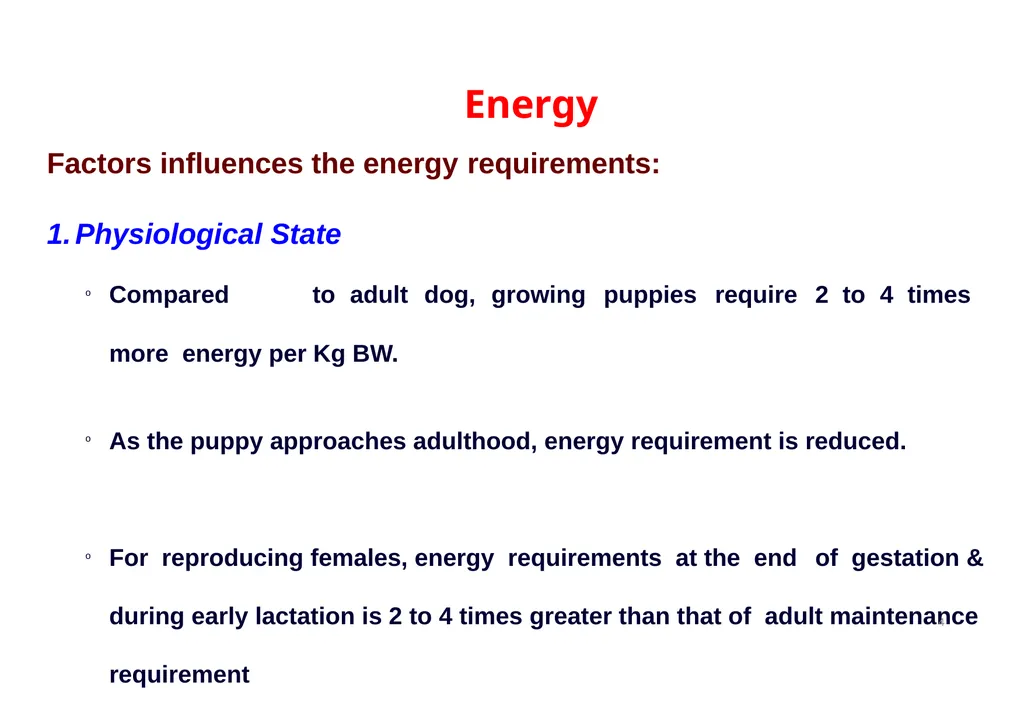
Energy Factors influences the energy requirements:
Physiological State
Compared to adult dog, growing puppies require 2 to 4 times more energy per Kg BW.
As the puppy approaches adulthood, energy requirement is reduced.
For reproducing females, energy requirements at the end of gestation & during early lactation is 2 to 4 times greater than that of adult maintenance requirement 4<br>
04
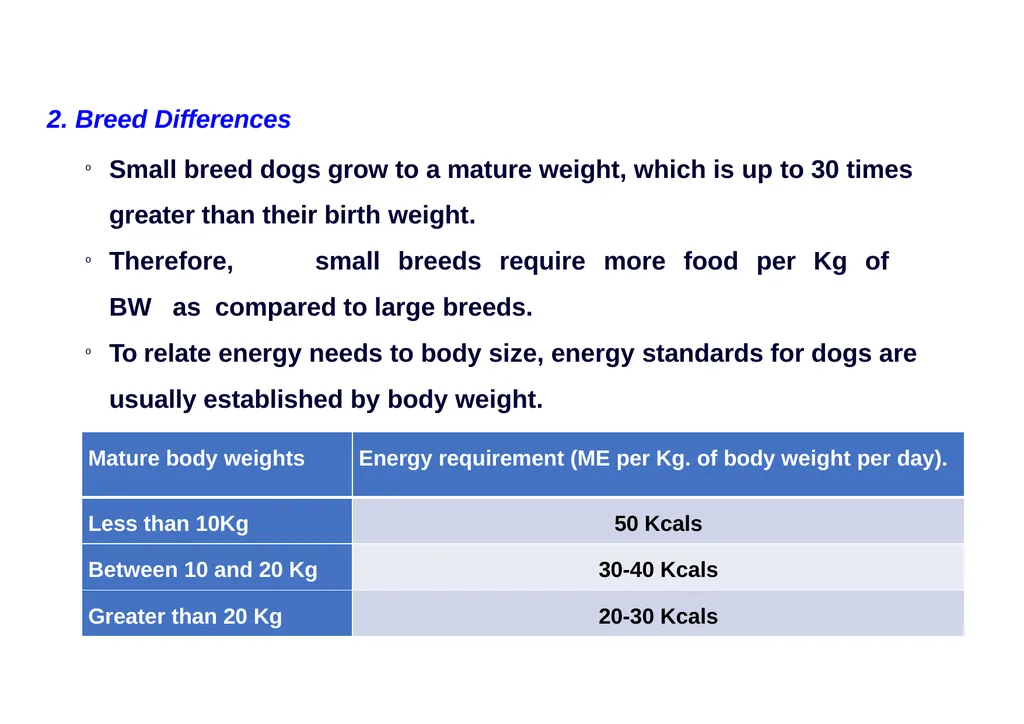
4 Breed Differences
Small breed dogs grow to a mature weight, which is up to 30 times greater than their birth weight.
Therefore, small breeds require more food per Kg of BW as compared to large breeds.
To relate energy needs to body size, energy standards for dogs are usually established by body weight.<br>
05
3. Environment 5 Dogs housed outdoors & exposed to extreme weather have changes in their caloric requirements.
During hot weather, energy needs decreases & less food may be required
During cold weather, energy needs increases to maintain body temperature & more food may be required.<br>
06
04-04-2020 Kaushalendra Kumar, BVC, BASU, Patna 6 Activity
During hard work, individual dogs energy requirements will be increased above that of maintenance.
Hard-working dogs require more energy intake per Kg of BW during the periods when they are training or working.
When the animal is not training or working, their energy requirement is lower and a maintenance-type food may be fed.
Feeding of high-calorie, nutrient dense foods to dogs, when they are not training or working could contribute to over weight.<br>
07
5. Regulation of feed intake 7 Animals eat to meet their energy needs and the intake of all nutrients is influenced by the amount of energy present in the diet.
The energy content of the diet generally limits the amount of food an animal will consume.<br>
08
Protein 11 Dietary proteins, digested in stomach & small intestine are broken down to form free amino acids, then absorbed into the blood stream.
Amino acids are distributed to all cells of the body, where they are utilized to build body tissue.
Out of the 20 amino acids involved in the synthesis of proteins in the
body only 10 of these are essential for dogs.
Essential amino acids include: arginine, histidine, isoleucine, leucine, lysine, methionine, phenylalanine, threonine , tryptophan & valine.<br>
09
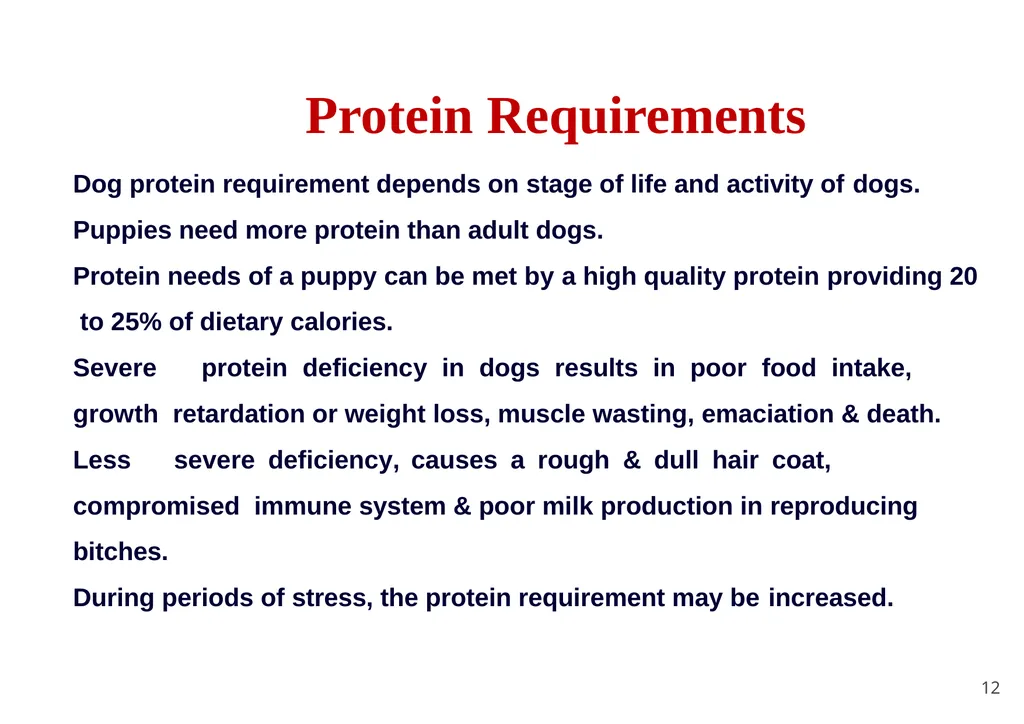
Protein Requirements 12 Dog protein requirement depends on stage of life and activity of dogs.
Puppies need more protein than adult dogs.
Protein needs of a puppy can be met by a high quality protein providing 20 to 25% of dietary calories.
Severe protein deficiency in dogs results in poor food intake, growth retardation or weight loss, muscle wasting, emaciation & death.
Less severe deficiency, causes a rough & dull hair coat, compromised immune system & poor milk production in reproducing bitches.
During periods of stress, the protein requirement may be increased.<br>
10
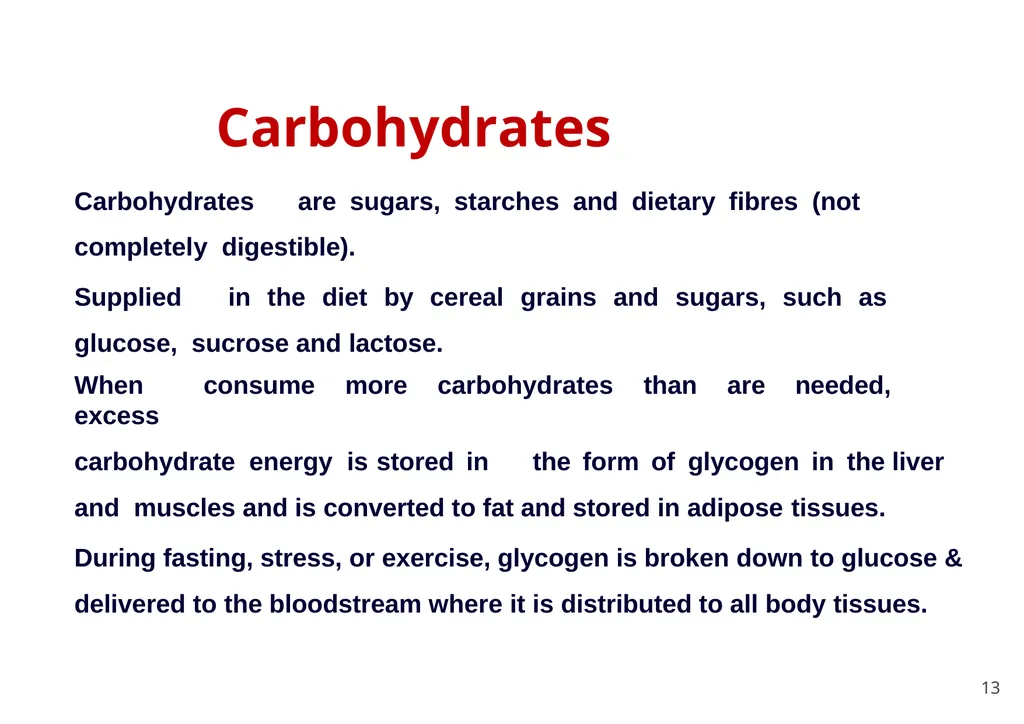
Carbohydrates 13 Carbohydrates are sugars, starches and dietary fibres (not completely digestible).
Supplied in the diet by cereal grains and sugars, such as glucose, sucrose and lactose.
When consume more carbohydrates than are needed, excess
carbohydrate energy is stored in the form of glycogen in the liver and muscles and is converted to fat and stored in adipose tissues.
During fasting, stress, or exercise, glycogen is broken down to glucose & delivered to the bloodstream where it is distributed to all body tissues.<br>
11
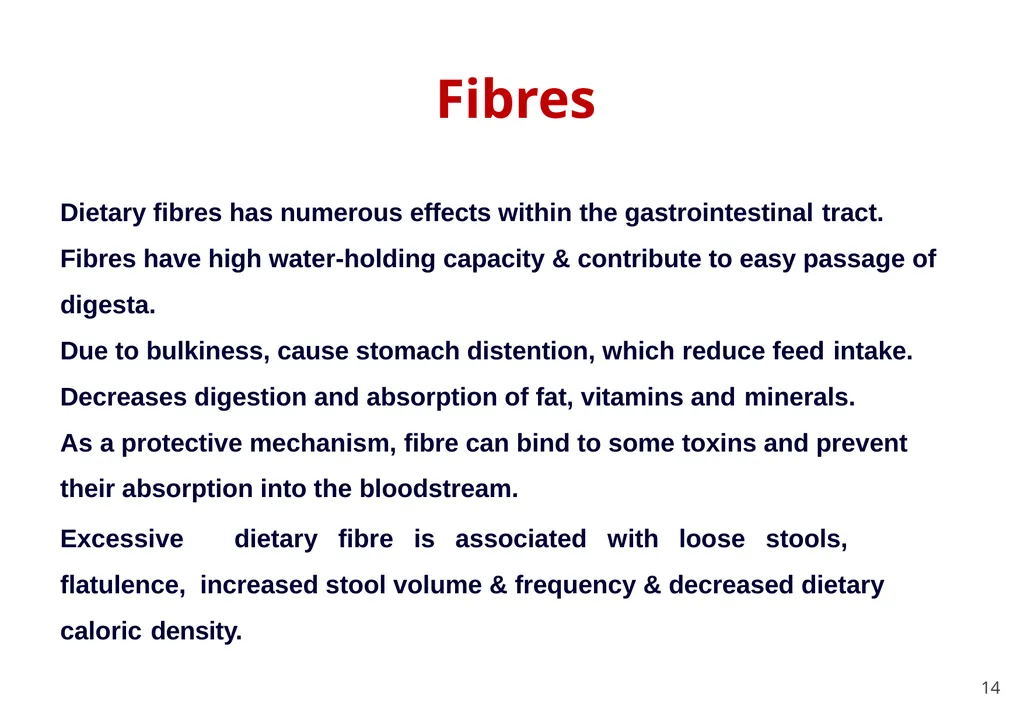
Fibres 14 Dietary fibres has numerous effects within the gastrointestinal tract.
Fibres have high water-holding capacity & contribute to easy passage of digesta.
Due to bulkiness, cause stomach distention, which reduce feed intake.
Decreases digestion and absorption of fat, vitamins and minerals.
As a protective mechanism, fibre can bind to some toxins and prevent their absorption into the bloodstream.
Excessive dietary fibre is associated with loose stools, flatulence, increased stool volume & frequency & decreased dietary caloric density.<br>
12
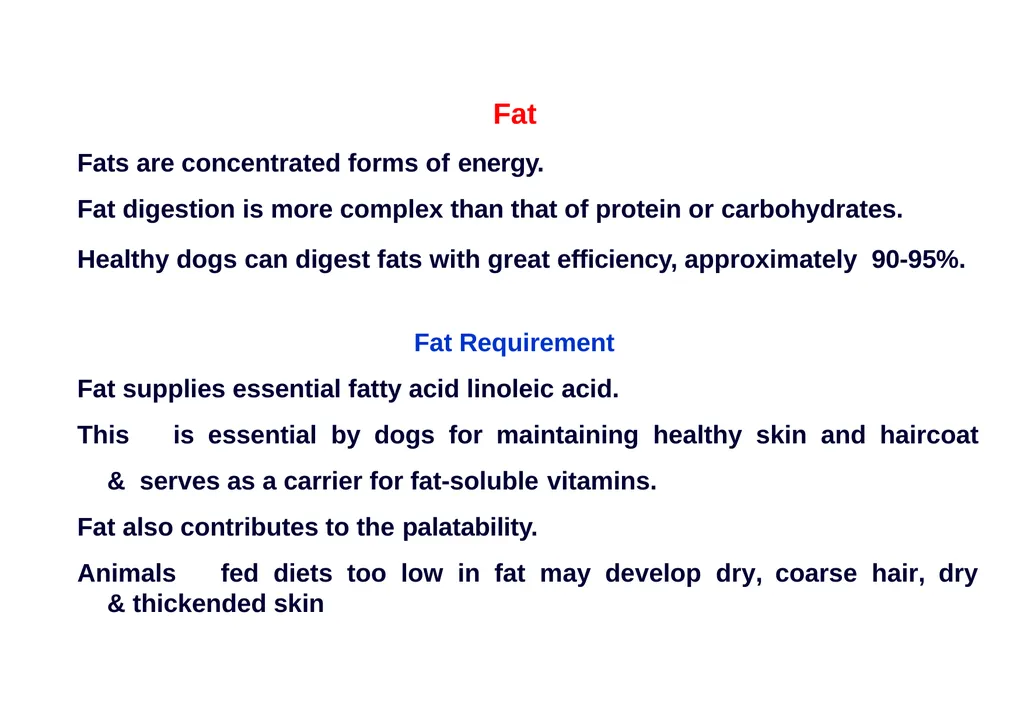
Fat
Fats are concentrated forms of energy.
Fat digestion is more complex than that of protein or carbohydrates.
Healthy dogs can digest fats with great efficiency, approximately 90-95%.
Fat Requirement
Fat supplies essential fatty acid linoleic acid.
This is essential by dogs for maintaining healthy skin and haircoat & serves as a carrier for fat-soluble vitamins.
Fat also contributes to the palatability.
Animals fed diets too low in fat may develop dry, coarse hair, dry & thickended skin<br>
13
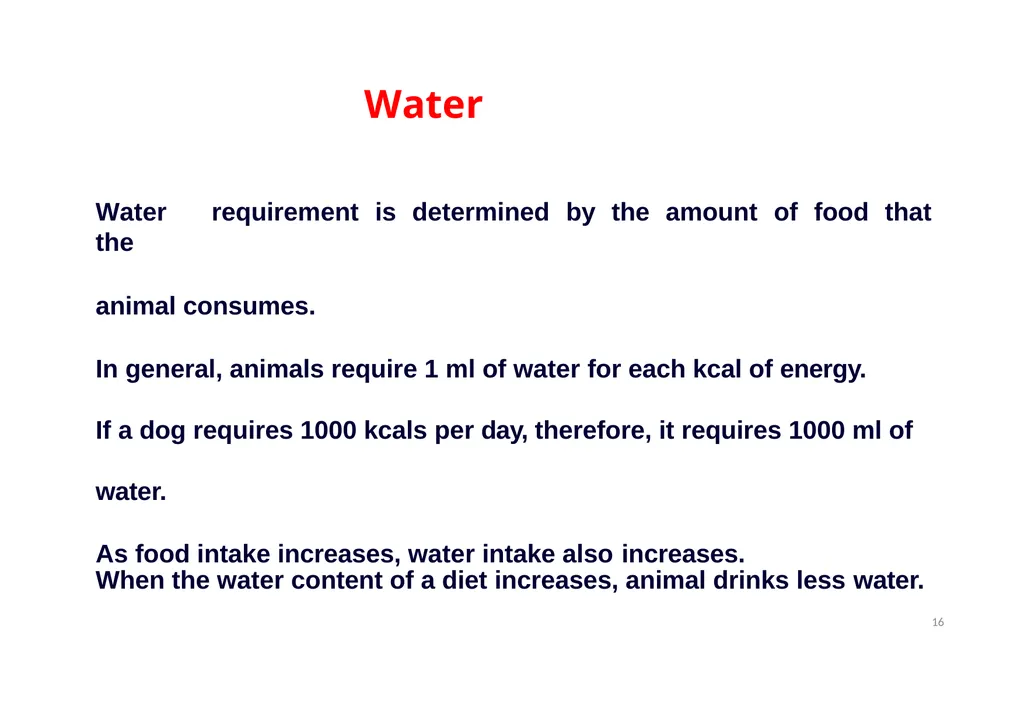
Water Water requirement is determined by the amount of food that the
animal consumes.
In general, animals require 1 ml of water for each kcal of energy.
If a dog requires 1000 kcals per day, therefore, it requires 1000 ml of water.
As food intake increases, water intake also increases. When the water content of a diet increases, animal drinks less water. 16<br>
14
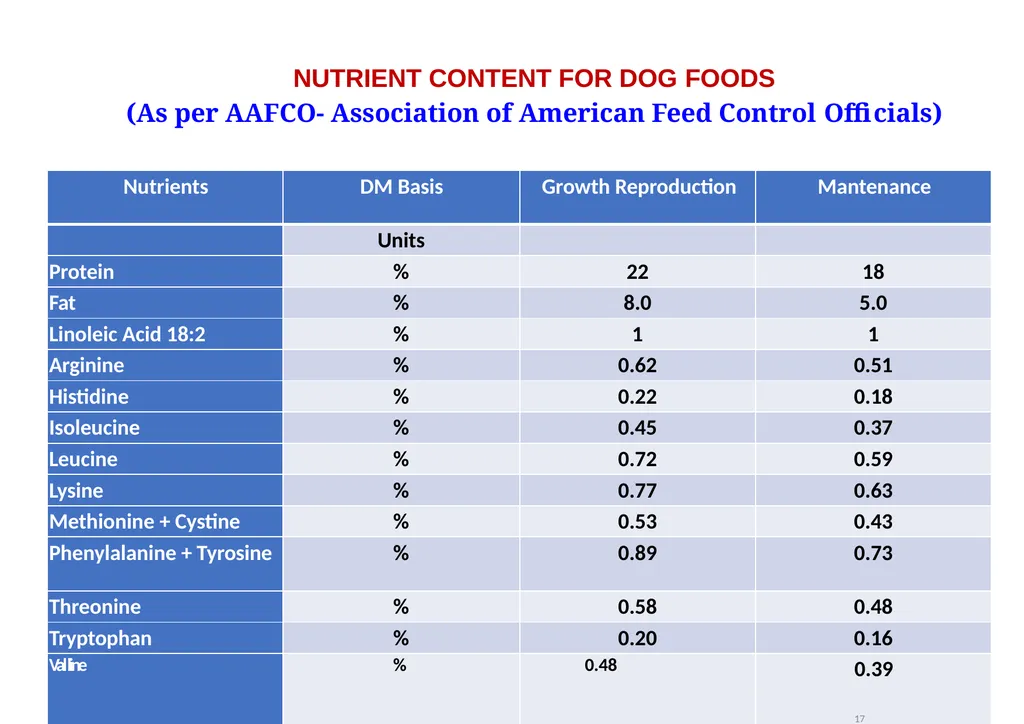
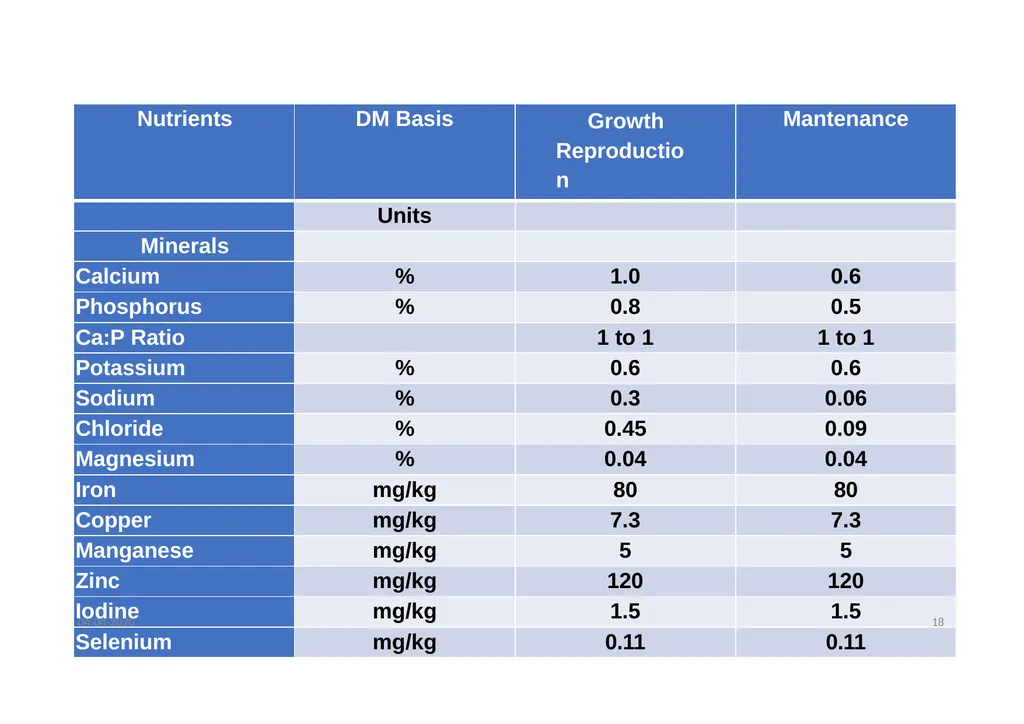
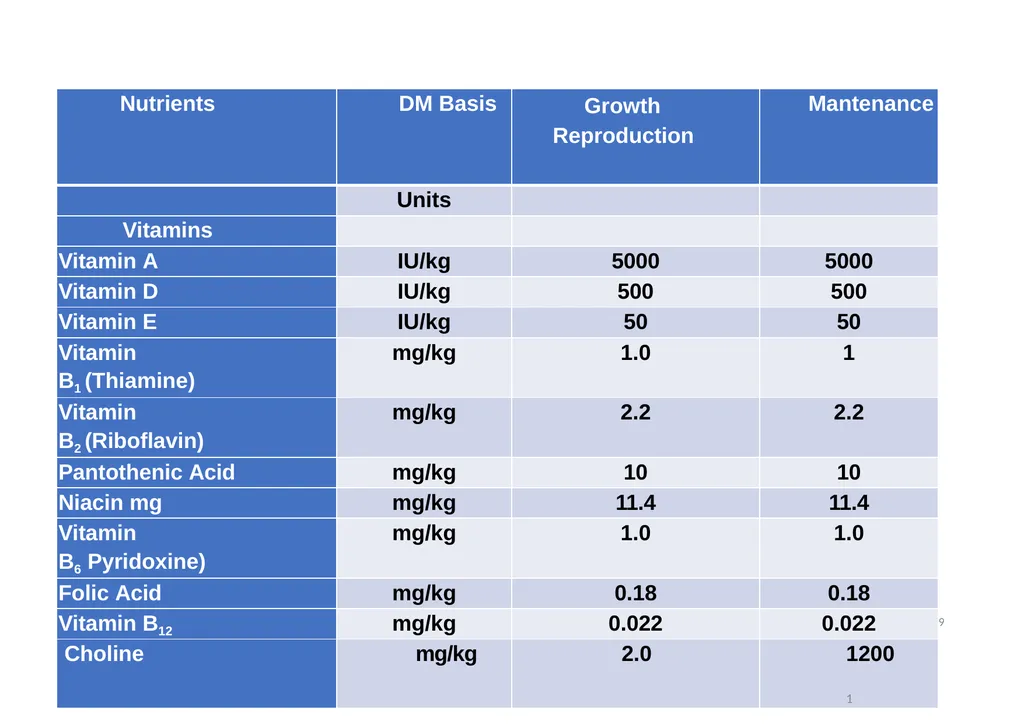
NUTRIENT CONTENT FOR DOG FOODS
(As per AAFCO- Association of American Feed Control Officials)<br>
15
04-04-2020 18<br>
16
9<br>
17
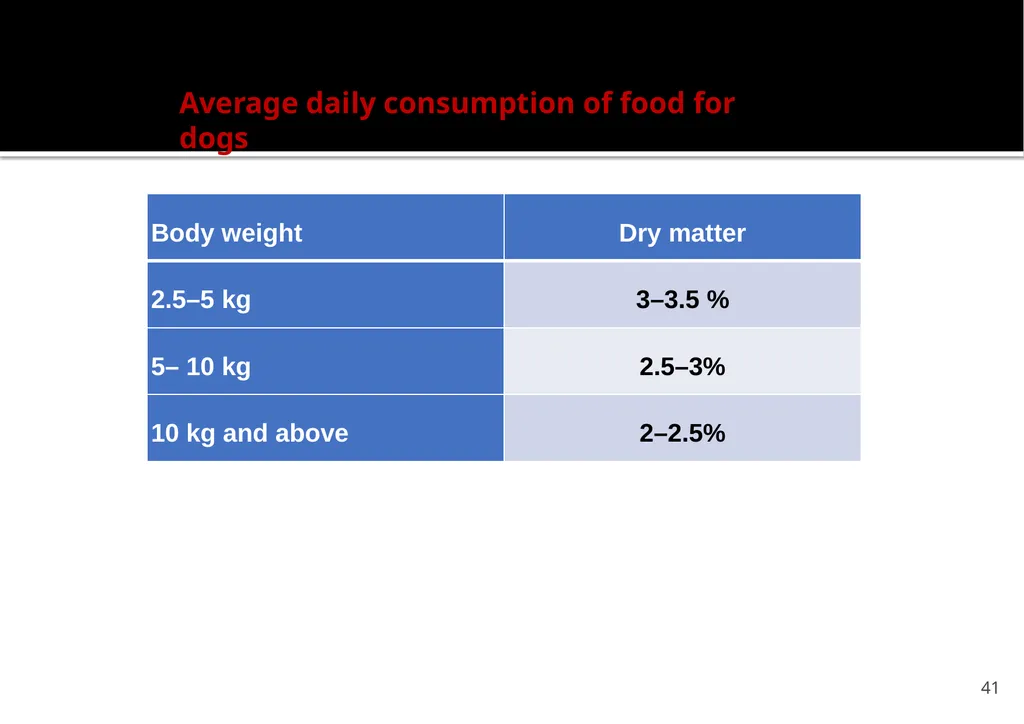
Average daily consumption of food for dogs 41<br>
18
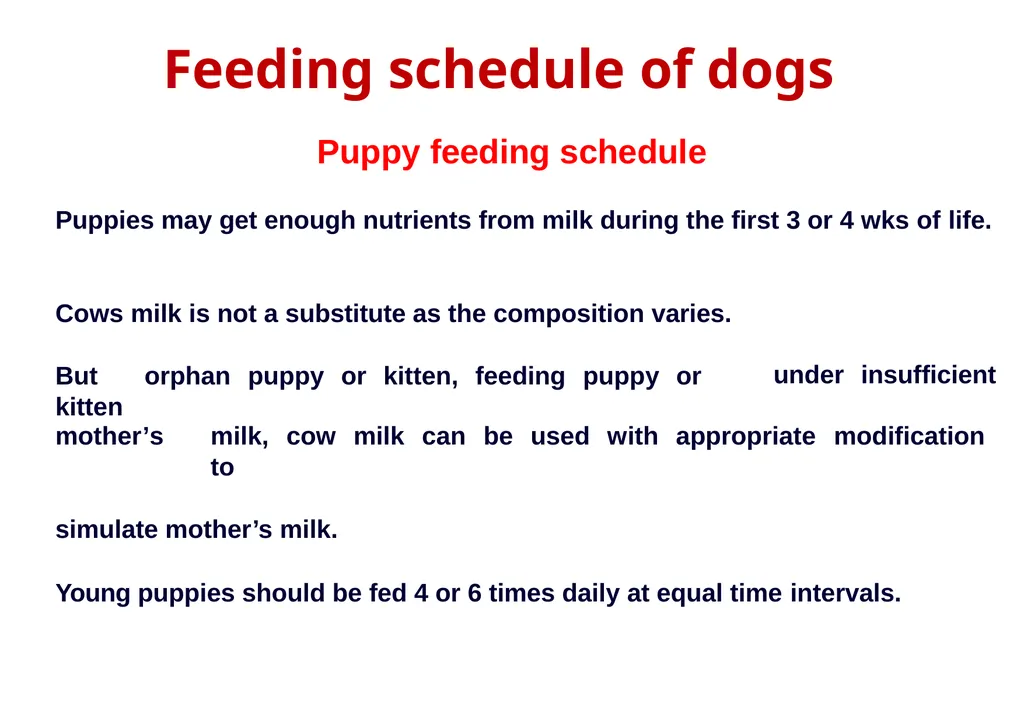
Feeding schedule of dogs Puppy feeding schedule
Puppies may get enough nutrients from milk during the first 3 or 4 wks of life. Cows milk is not a substitute as the composition varies.
But orphan puppy or kitten, feeding puppy or kitten under insufficient mother’s milk, cow milk can be used with appropriate modification to
simulate mother’s milk.
Young puppies should be fed 4 or 6 times daily at equal time intervals.<br>
19
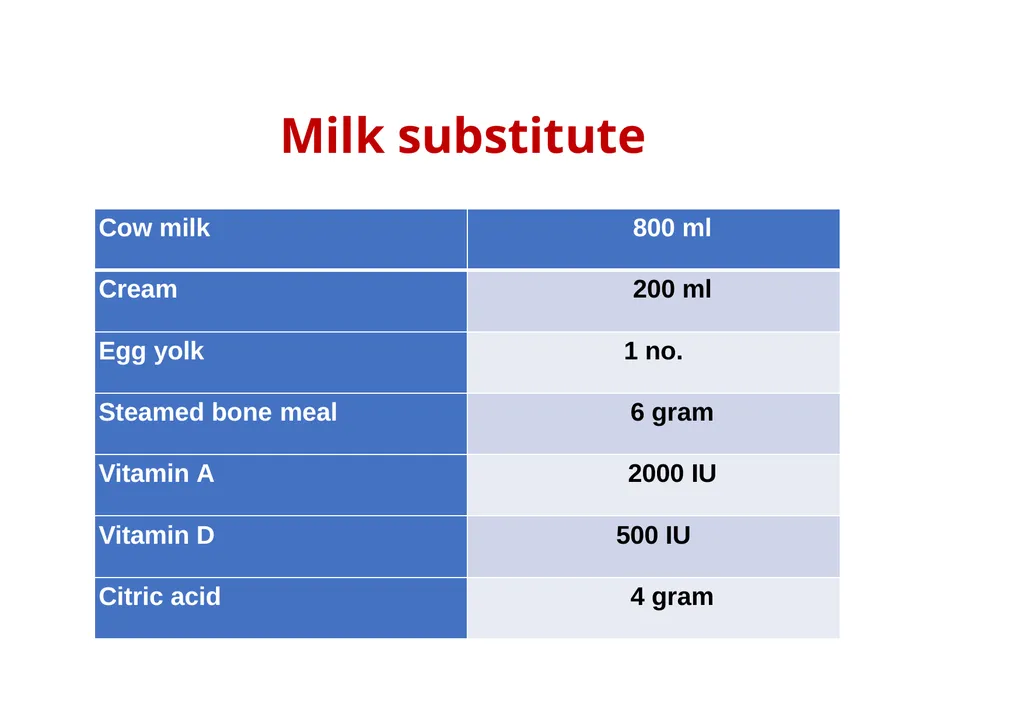
Milk substitute<br>
20
THANKS Discussions……………….………….. Questions, if any…………………??<br>