Biological Terms Biological Definitions Genomic
Description: Biological Terms Biological Definitions Genomic Sequences DNA and RNA can be represented practically by a very long sequence comprising of three identical letters, A (adenine), G (guanine), and T (thymine). The fourth letter in DNA is C
Related Topics
Download Presentation
"Biological Terms Biological Definitions Genomic" is the property of its rightful owner. Permission is granted to download and print the materials on this website for personal, non-commercial use only, and to display it on your personal computer provided you do not modify the materials and that you retain all copyright notices contained in the materials. By downloading content from our website, you accept the terms of this agreement.
Presentation Transcript
slide1. Biological Terms Biological Definitions<br>
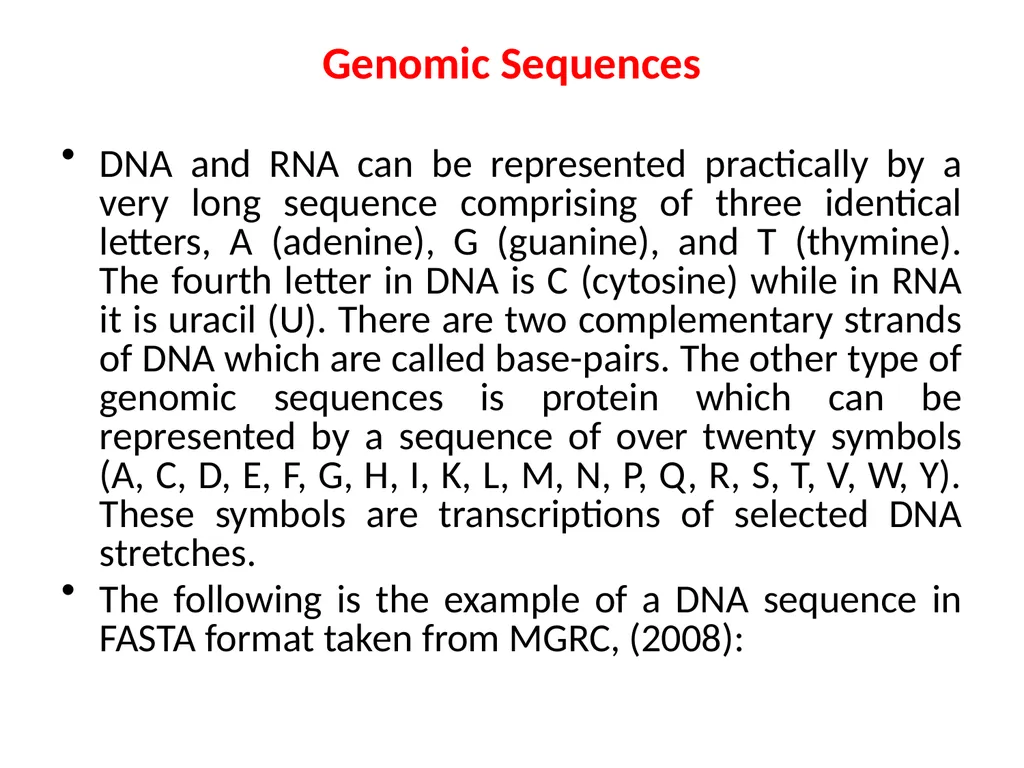
slide2. Genomic Sequences DNA and RNA can be represented practically by a very long sequence comprising of three identical letters, A (adenine), G (guanine), and T (thymine). The fourth letter in DNA is C (cytosine) while in RNA it is uracil (U). There are two complementary strands of DNA which are called base-pairs. The other type of genomic sequences is protein which can be represented by a sequence of over twenty symbols (A, C, D, E, F, G, H, I, K, L, M, N, P, Q, R, S, T, V, W, Y). These symbols are transcriptions of selected DNA stretches.
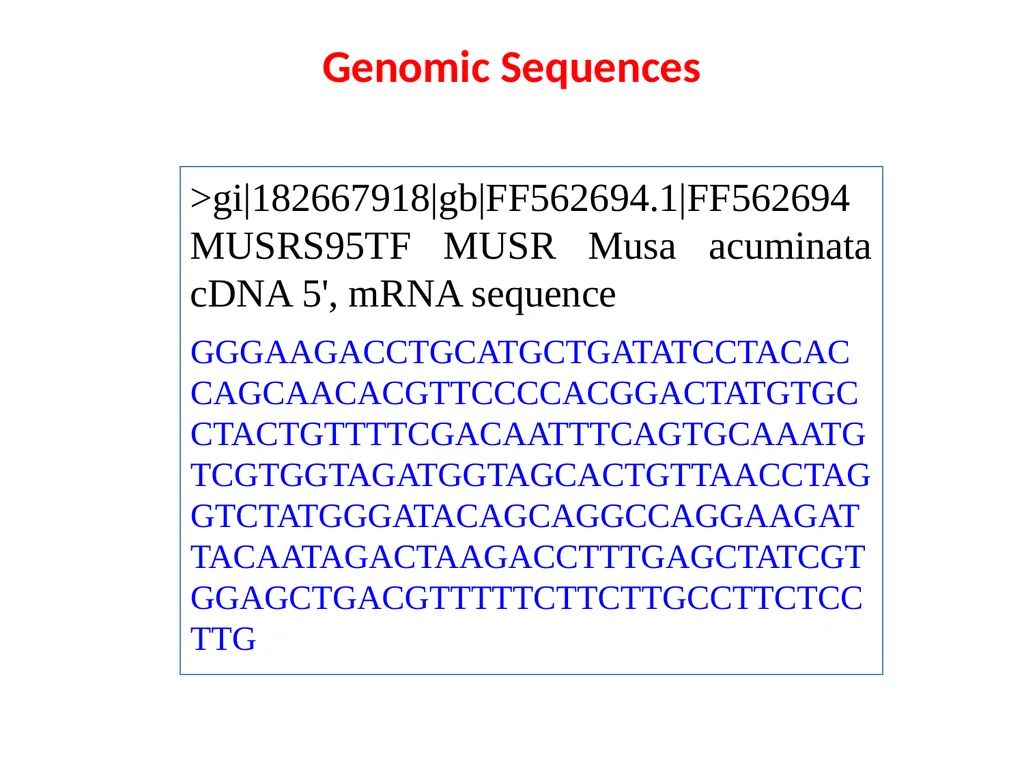
The following is the example of a DNA sequence in FASTA format taken from MGRC, (2008):<br>
slide3. Genomic Sequences >gi|182667918|gb|FF562694.1|FF562694 MUSRS95TF MUSR Musa acuminata cDNA 5', mRNA sequence
GGGAAGACCTGCATGCTGATATCCTACACCAGCAACACGTTCCCCACGGACTATGTGCCTACTGTTTTCGACAATTTCAGTGCAAATGTCGTGGTAGATGGTAGCACTGTTAACCTAGGTCTATGGGATACAGCAGGCCAGGAAGATTACAATAGACTAAGACCTTTGAGCTATCGTGGAGCTGACGTTTTTCTTCTTGCCTTCTCCTTG<br>
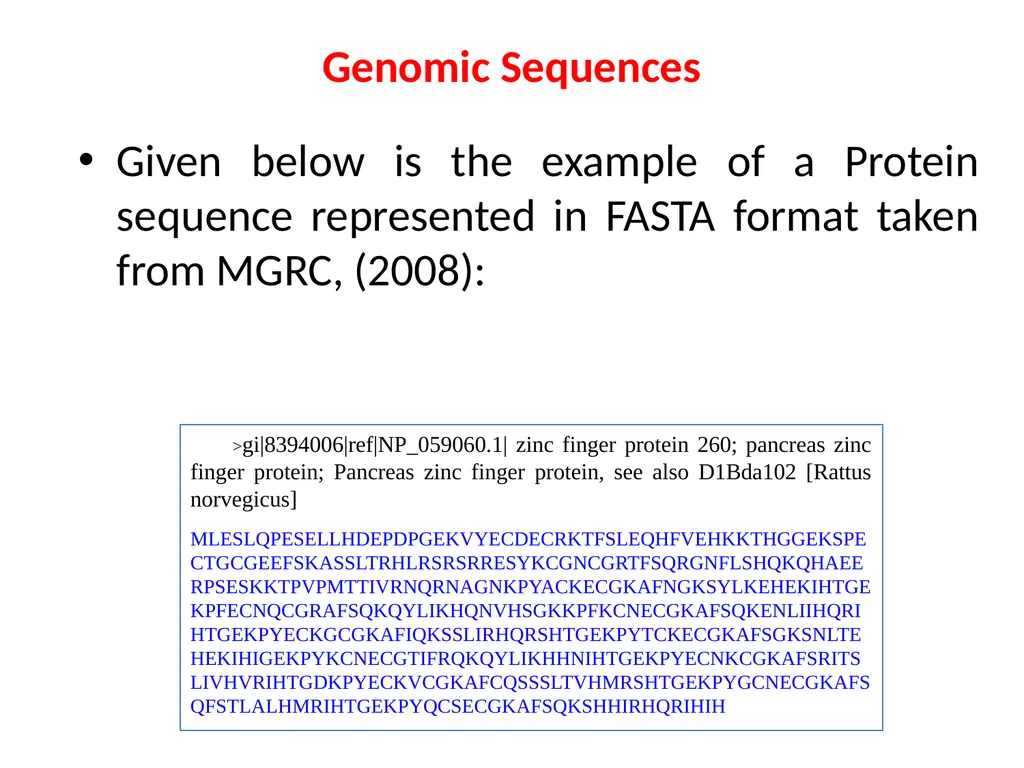
slide4. Genomic Sequences >gi|8394006|ref|NP_059060.1| zinc finger protein 260; pancreas zinc finger protein; Pancreas zinc finger protein, see also D1Bda102 [Rattus norvegicus]
MLESLQPESELLHDEPDPGEKVYECDECRKTFSLEQHFVEHKKTHGGEKSPECTGCGEEFSKASSLTRHLRSRSRRESYKCGNCGRTFSQRGNFLSHQKQHAEERPSESKKTPVPMTTIVRNQRNAGNKPYACKECGKAFNGKSYLKEHEKIHTGEKPFECNQCGRAFSQKQYLIKHQNVHSGKKPFKCNECGKAFSQKENLIIHQRIHTGEKPYECKGCGKAFIQKSSLIRHQRSHTGEKPYTCKECGKAFSGKSNLTEHEKIHIGEKPYKCNECGTIFRQKQYLIKHHNIHTGEKPYECNKCGKAFSRITSLIVHVRIHTGDKPYECKVCGKAFCQSSSLTVHMRSHTGEKPYGCNECGKAFSQFSTLALHMRIHTGEKPYQCSECGKAFSQKSHHIRHQRIHIH Given below is the example of a Protein sequence represented in FASTA format taken from MGRC, (2008):<br>
slide5. Genomic Databases The three most common resources of genomic databases are the US human genome initiative (GenBank), the DNA Data Bank of Japan (DDBJ), and the European Molecular Biology Laboratory (EMBL).<br>
slide6. Genomic Information Retrieval Genomic information retrieval (GIR) is an area of intersecting bioinformatics and information retrieval (IR). (i.e. combining bioinformatics with the methods of the information retrieval IR).<br>
slide7. Genomic Searching Approaches There are two common types of searching approaches that are used in genomic databases. They are the exhaustive searching, and indexed searching approaches.
Exhaustive SearchingÂ
Indexed Searching (Approximate Matching)<br>

slide2. Genomic Sequences DNA and RNA can be represented practically by a very long sequence comprising of three identical letters, A (adenine), G (guanine), and T (thymine). The fourth letter in DNA is C (cytosine) while in RNA it is uracil (U). There are two complementary strands of DNA which are called base-pairs. The other type of genomic sequences is protein which can be represented by a sequence of over twenty symbols (A, C, D, E, F, G, H, I, K, L, M, N, P, Q, R, S, T, V, W, Y). These symbols are transcriptions of selected DNA stretches.
The following is the example of a DNA sequence in FASTA format taken from MGRC, (2008):<br>
slide3. Genomic Sequences >gi|182667918|gb|FF562694.1|FF562694 MUSRS95TF MUSR Musa acuminata cDNA 5', mRNA sequence
GGGAAGACCTGCATGCTGATATCCTACACCAGCAACACGTTCCCCACGGACTATGTGCCTACTGTTTTCGACAATTTCAGTGCAAATGTCGTGGTAGATGGTAGCACTGTTAACCTAGGTCTATGGGATACAGCAGGCCAGGAAGATTACAATAGACTAAGACCTTTGAGCTATCGTGGAGCTGACGTTTTTCTTCTTGCCTTCTCCTTG<br>
slide4. Genomic Sequences >gi|8394006|ref|NP_059060.1| zinc finger protein 260; pancreas zinc finger protein; Pancreas zinc finger protein, see also D1Bda102 [Rattus norvegicus]
MLESLQPESELLHDEPDPGEKVYECDECRKTFSLEQHFVEHKKTHGGEKSPECTGCGEEFSKASSLTRHLRSRSRRESYKCGNCGRTFSQRGNFLSHQKQHAEERPSESKKTPVPMTTIVRNQRNAGNKPYACKECGKAFNGKSYLKEHEKIHTGEKPFECNQCGRAFSQKQYLIKHQNVHSGKKPFKCNECGKAFSQKENLIIHQRIHTGEKPYECKGCGKAFIQKSSLIRHQRSHTGEKPYTCKECGKAFSGKSNLTEHEKIHIGEKPYKCNECGTIFRQKQYLIKHHNIHTGEKPYECNKCGKAFSRITSLIVHVRIHTGDKPYECKVCGKAFCQSSSLTVHMRSHTGEKPYGCNECGKAFSQFSTLALHMRIHTGEKPYQCSECGKAFSQKSHHIRHQRIHIH Given below is the example of a Protein sequence represented in FASTA format taken from MGRC, (2008):<br>
slide5. Genomic Databases The three most common resources of genomic databases are the US human genome initiative (GenBank), the DNA Data Bank of Japan (DDBJ), and the European Molecular Biology Laboratory (EMBL).<br>
slide6. Genomic Information Retrieval Genomic information retrieval (GIR) is an area of intersecting bioinformatics and information retrieval (IR). (i.e. combining bioinformatics with the methods of the information retrieval IR).<br>
slide7. Genomic Searching Approaches There are two common types of searching approaches that are used in genomic databases. They are the exhaustive searching, and indexed searching approaches.
Exhaustive SearchingÂ
Indexed Searching (Approximate Matching)<br>