
Bioremediation / Fourth grade / Biology Dr. Kadhim
AS
Published · 12 slides · 0 views

1 / 1
Description
Bioremediation Fourth grade Biology Dr. Kadhim H.Zwain Dr. Afrah Fahad Dr Thana Noor Microbial Bioremediation Microorganisms play an important role in the maintenance of any ecosystem as they are more capable of rapid adaptive towards
Related Topics
Share
Embed code
Download this presentation From Below
"Bioremediation / Fourth grade / Biology Dr. Kadhim" is the property of its rightful owner. Permission is granted to download and print the materials on this website for personal, non-commercial use only, and to display it on your personal computer provided you do not modify the materials and that you retain all copyright notices contained in the materials. By downloading content from our website, you accept the terms of this agreement.
Presentation Transcript
01
Bioremediation / Fourth grade / Biology Dr. Kadhim H.Zwain Dr. Afrah Fahad & Dr Thana Noor Microbial Bioremediation
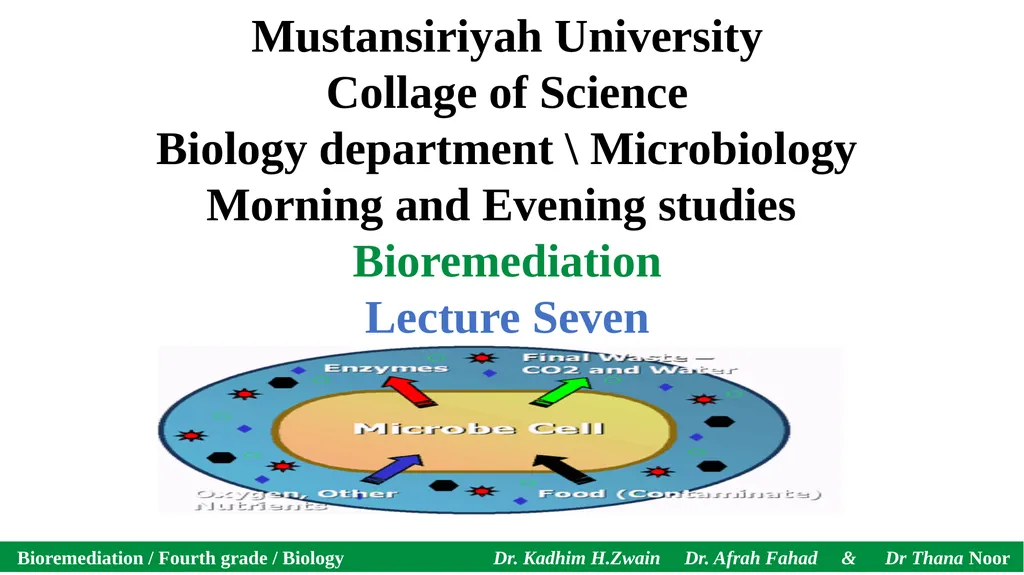
Microorganisms play an important role in the maintenance of any ecosystem as they are more capable of rapid adaptive towards environmental changes.
Microorganisms are ubiquitous, and they influence the entire biosphere. They play a major role in regulating biogeochemical cycles, from extreme environmental conditions like frozen environments, acidic lakes, hydrothermal vents, bottoms of deep oceans, to the small intestines of animals.
Microorganisms are responsible for carbon fixation, nitrogen fixation, methane metabolism, and sulfur metabolism, thus controlling the global biogeochemical cycling.
They produce diverse metabolic enzymes that can be employed for the safe removal of contaminants, which can be achieved either by direct destruction of the chemical or through transformation of the contaminants to a safer or lesser toxic intermediate.
Due to their versatility, microorganisms have provided a useful program to be used for an enhanced model of bioremediation of heavy metals, hydrocarbons, polyethylene, food wastes, etc.<br>
02
Bioremediation / Fourth grade / Biology Dr. Kadhim H.Zwain Dr. Afrah Fahad & Dr Thana Noor Pollution as major global problem
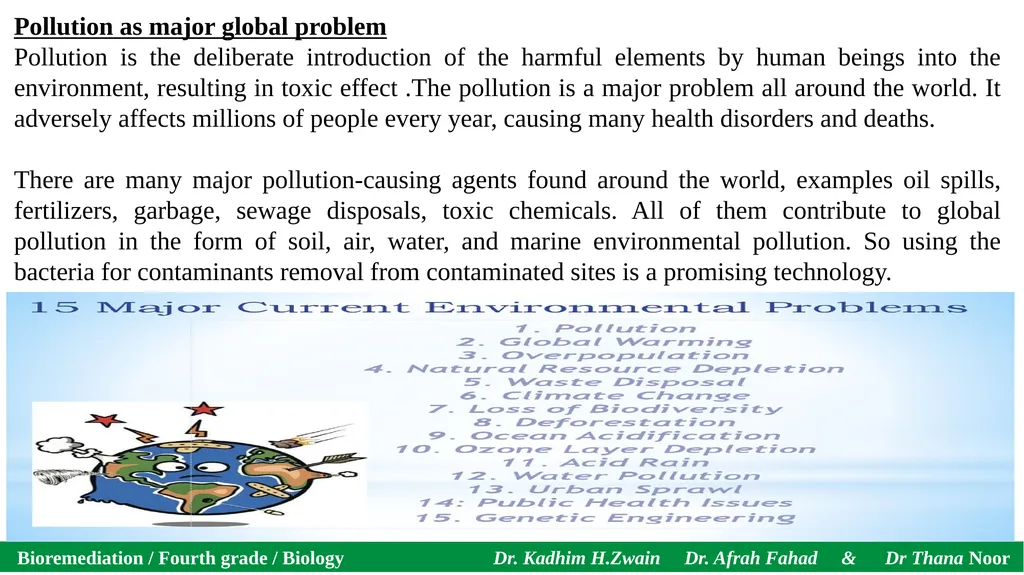
Pollution is the deliberate introduction of the harmful elements by human beings into the environment, resulting in toxic effect .The pollution is a major problem all around the world. It adversely affects millions of people every year, causing many health disorders and deaths.
There are many major pollution-causing agents found around the world, examples oil spills, fertilizers, garbage, sewage disposals, toxic chemicals. All of them contribute to global pollution in the form of soil, air, water, and marine environmental pollution. So using the bacteria for contaminants removal from contaminated sites is a promising technology.<br>
03
Bioremediation / Fourth grade / Biology Dr. Kadhim H.Zwain Dr. Afrah Fahad & Dr Thana Noor Adaptation of Microorganisms in Extreme Environmental Conditions
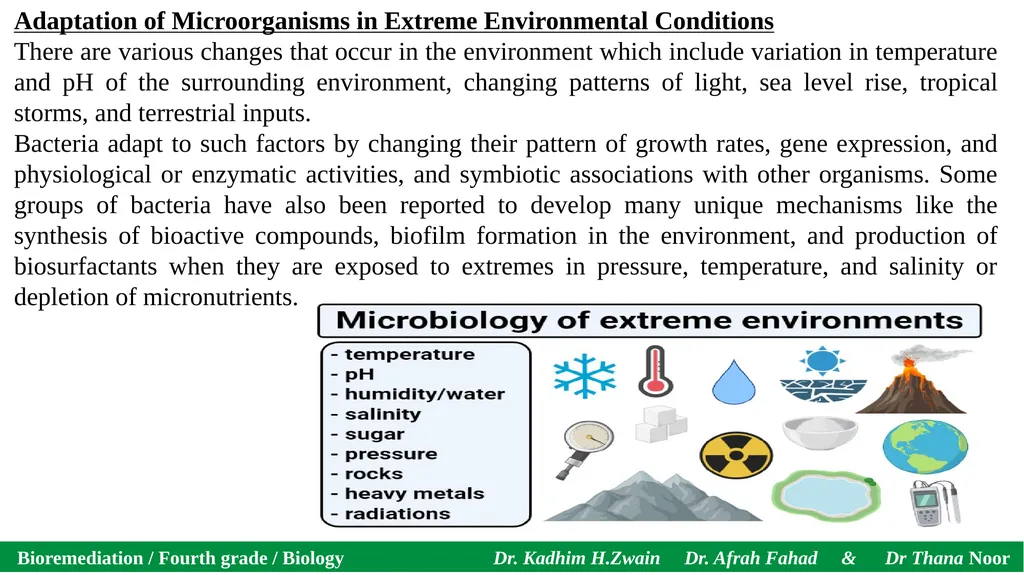
There are various changes that occur in the environment which include variation in temperature and pH of the surrounding environment, changing patterns of light, sea level rise, tropical storms, and terrestrial inputs.
Bacteria adapt to such factors by changing their pattern of growth rates, gene expression, and physiological or enzymatic activities, and symbiotic associations with other organisms. Some groups of bacteria have also been reported to develop many unique mechanisms like the synthesis of bioactive compounds, biofilm formation in the environment, and production of biosurfactants when they are exposed to extremes in pressure, temperature, and salinity or depletion of micronutrients.<br>
04
Bioremediation / Fourth grade / Biology Dr. Kadhim H.Zwain Dr. Afrah Fahad & Dr Thana Noor Characteristics of microorganisms suitable for remediation
There are many characteristic features of bacteria which make them suitable for application in bioremediation.
The marine bacteria considered as a model microorganism because of:
1) The unique characteristics of these bacteria
2) The marine environment is the largest habitat on Earth
3) Microorganisms present in the marine environment are responsible for more than 50% of the global primary production and nutrient cycling.
The marine bacteria characteristic which can be isolated from the marine water, sediments, and deep-sea hydrothermal vents.
1) They usually require sodium and potassium ions for their growth to maintain osmotic balance of their cytoplasm, 2) The production of indole from tryptophan
3) Oxidation of L-arabinose, mannitol, and lactose 4) Transport of substrates into the cell and producing nitrogen 5) Facultative psychrophilicity 6) Higher tolerance to pressure
7) Motile spore formers 8) β-aminoglutaric acid or β-glutamate, which is rare in nature, is present in higher amounts in marine sediments and is utilized by the marine bacteria as osmolytes.
9) The most unique feature of a photosynthetic marine bacterial genome is the presence of rhodopsin???(home work), which contains 2197 genes.<br>
05
Bioremediation / Fourth grade / Biology Dr. Kadhim H.Zwain Dr. Afrah Fahad & Dr Thana Noor Applications of Bacteria for Bioremediation
1) Removal of Heavy Metals
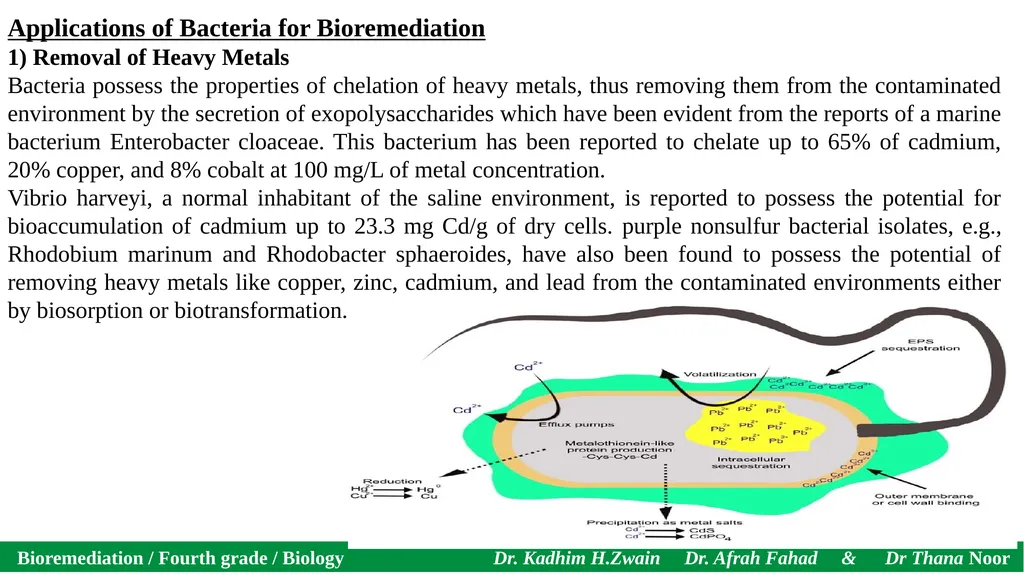
Bacteria possess the properties of chelation of heavy metals, thus removing them from the contaminated environment by the secretion of exopolysaccharides which have been evident from the reports of a marine bacterium Enterobacter cloaceae. This bacterium has been reported to chelate up to 65% of cadmium, 20% copper, and 8% cobalt at 100 mg/L of metal concentration.
Vibrio harveyi, a normal inhabitant of the saline environment, is reported to possess the potential for bioaccumulation of cadmium up to 23.3 mg Cd/g of dry cells. purple nonsulfur bacterial isolates, e.g., Rhodobium marinum and Rhodobacter sphaeroides, have also been found to possess the potential of removing heavy metals like copper, zinc, cadmium, and lead from the contaminated environments either by biosorption or biotransformation.<br>
06
Bioremediation / Fourth grade / Biology Dr. Kadhim H.Zwain Dr. Afrah Fahad & Dr Thana Noor 2) Degradation of Polyaromatic Hydrocarbons and Other Recalcitrants
Polyaromatic hydrocarbons (PAHs) are ubiquitous in nature and dangerous because their persistence, toxicity, mutagenicity, and carcinogenicity in nature.
However, many marine bacteria have the ability for bioremediation. for examples Achromobacter denitrificans, Bacillus cereus, Corynebacterium renale, Moraxella sp., Mycobacterium sp., Burkholderia cepacia, Pseudomonas fluorescens, Pseudomonas putida, , Rhodococcus sp., Streptomyces sp., and Vibrio sp. have been isolated from marine resources and are capable of degrading naphthalene by the process of mineralization.
3) Petroleum and Diesel Biodegradation
Crude oil is the most important organic pollutant in the environment. These organic pollutants can be degraded by the oil-eating microbes present in the environment which are used for their carbon and energy source.
Some of the important genera of bacteria that are capable of degrading oil include Acinetobacter, Marinococcus, Methylobacterium, Micrococcus, Nocardia, Planococcus, and Rhodococcus.<br>
07
Bioremediation / Fourth grade / Biology Dr. Kadhim H.Zwain Dr. Afrah Fahad & Dr Thana Noor 4) Degradation of Plastic
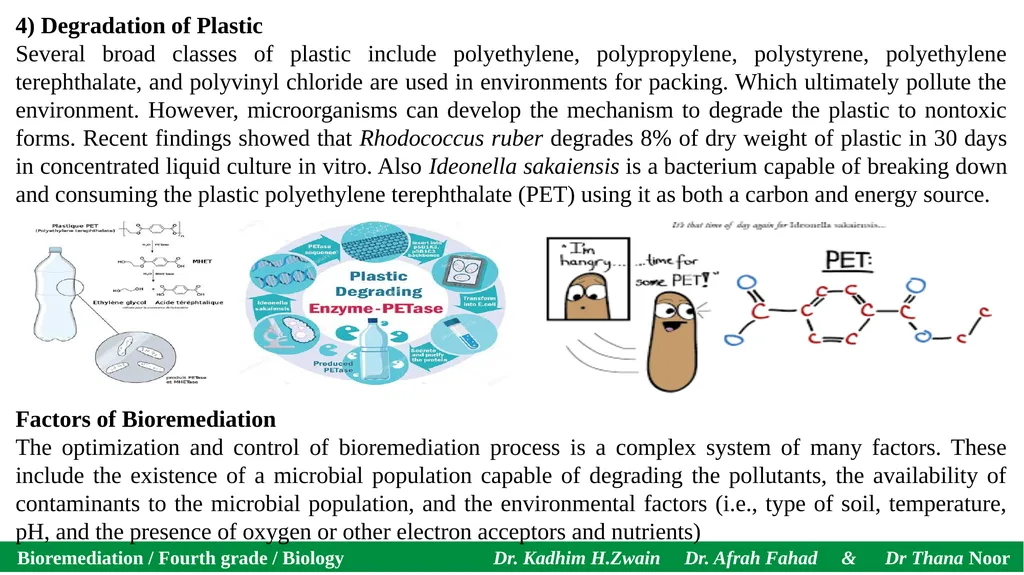
Several broad classes of plastic include polyethylene, polypropylene, polystyrene, polyethylene terephthalate, and polyvinyl chloride are used in environments for packing. Which ultimately pollute the environment. However, microorganisms can develop the mechanism to degrade the plastic to nontoxic forms. Recent findings showed that Rhodococcus ruber degrades 8% of dry weight of plastic in 30 days in concentrated liquid culture in vitro. Also Ideonella sakaiensis is a bacterium capable of breaking down and consuming the plastic polyethylene terephthalate (PET) using it as both a carbon and energy source.
Factors of Bioremediation
The optimization and control of bioremediation process is a complex system of many factors. These include the existence of a microbial population capable of degrading the pollutants, the availability of contaminants to the microbial population, and the environmental factors (i.e., type of soil, temperature, pH, and the presence of oxygen or other electron acceptors and nutrients)<br>
08
Bioremediation / Fourth grade / Biology Dr. Kadhim H.Zwain Dr. Afrah Fahad & Dr Thana Noor Microbial Bioremediation Strategies
1) In situ Bioremediation
In situ bioremediation is the application of a biological treatment to clean up hazardous compounds present in the environment. Some of the in situ bioremediation pattern are:
a)Biosparging: This involves the injection of air under pressure below the water table to increase ground water oxygen concentrations and to enhance the rate of biological degradation of contaminants by naturally occurring bacteria. Biosparging increases the mixing in the saturated zone and thereby increases the contact between soil and ground water.
b)Bioventing: Bioventing is a promising new technology that stimulates the natural in situ biodegradation of any aerobically degradable compounds by providing oxygen to the existing soil microorganisms.
c)Bioaugmentation: it is the introduction of a group of natural microbial strains or a genetically engineered strain to treat contaminated soil or water.
d) Biostimulation : is the process of adding electron acceptors, electron donors, or nutrients to stimulate naturally occurring microbial populations in the contaminated area.
e)Biopiling: This technology involve excavated soils are mixed with soil improvements, placed on a treatment area, and further bioremediated using forced aeration. The contaminants are reduced to carbon dioxide and water.<br>
09
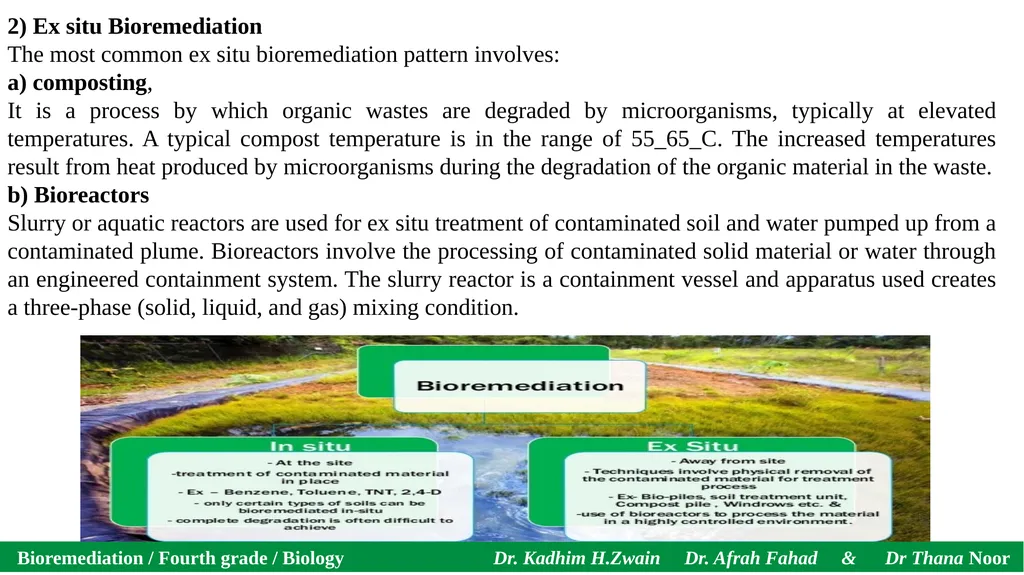
Bioremediation / Fourth grade / Biology Dr. Kadhim H.Zwain Dr. Afrah Fahad & Dr Thana Noor 2) Ex situ Bioremediation
The most common ex situ bioremediation pattern involves:
a) composting,
It is a process by which organic wastes are degraded by microorganisms, typically at elevated temperatures. A typical compost temperature is in the range of 55_65_C. The increased temperatures result from heat produced by microorganisms during the degradation of the organic material in the waste.
b) Bioreactors
Slurry or aquatic reactors are used for ex situ treatment of contaminated soil and water pumped up from a contaminated plume. Bioreactors involve the processing of contaminated solid material or water through an engineered containment system. The slurry reactor is a containment vessel and apparatus used creates a three-phase (solid, liquid, and gas) mixing condition.<br>
10
Bioremediation / Fourth grade / Biology Dr. Kadhim H.Zwain Dr. Afrah Fahad & Dr Thana Noor Improvement of the Strains by Genetic Manipulation for Enhanced Bioremediation
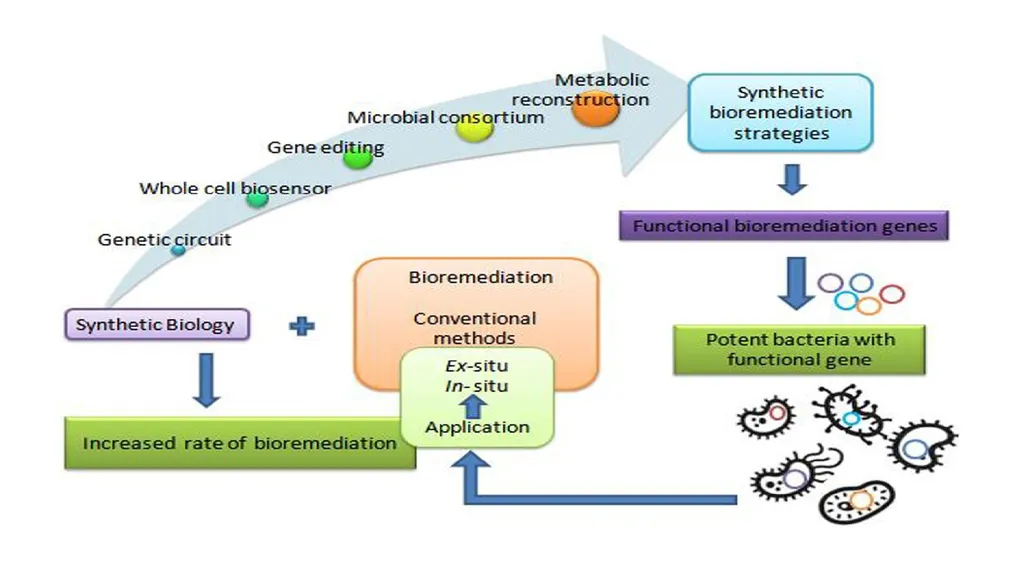
Microbial metabolic potential provides an effective mechanism for eliminating environmental pollutants. Pollution introduces some new substances to which bacteria have not been exposed before. Upon exposure, resistant bacteria slowly change their metabolic pathway to survive with the stress.
In order to increase the bioremediation potential and metabolic activity of any bacteria, insertion of certain functional genes into their genome is necessary.
This phenomenon (insertion of certain functional genes into their genome) can be achieved by
1) Insertion of new genes into the genomic complexion.
2) Insertion of new plasmid.
3) Alteration of metabolic pathways like transport and chemotaxis, and most importantly, adaption of features towards the environmental conditions.
For examples: a) Insertion of the bmtA gene coding for metallothionein into a suitable vector and its transformation into marine bacteria has been successfully employed in highly metal-contaminated environments.
b) Bacteria possessing plasmid with a merA gene, responsible for converting the toxic form of mercury to the nontoxic form, may be transformed into marine bacteria for better applications in field conditions of bioremediation of mercury.
c) Deinococcus radiodurans, the most radio-resistant organism, has been modified genetically to consume and digest toluene and the ionic form of mercury from nuclear wastes.<br>