Biosecurity Components – C&D and Biosecurity
Description: Biosecurity Components CD and Biosecurity AttirePPE Adapted from the FAD PRePNAHEMS Guidelines: Biosecurity (2016) Two common components of biosecurity plans Cleaning and disinfection (CD) Biosecurity attirepersonal protective
Related Topics
Download Presentation
"Biosecurity Components – C&D and Biosecurity" is the property of its rightful owner. Permission is granted to download and print the materials on this website for personal, non-commercial use only, and to display it on your personal computer provided you do not modify the materials and that you retain all copyright notices contained in the materials. By downloading content from our website, you accept the terms of this agreement.
Presentation Transcript
slide1. Biosecurity Components – C&D and Biosecurity Attire/PPE Adapted from the FAD PReP/NAHEMS Guidelines: Biosecurity (2016)<br>
slide2. Two common components of biosecurity plans
Cleaning and disinfection (C&D)
Biosecurity attire/personal protective equipment (PPE) USDA APHIS and CFSPH FAD PReP/NAHEMS Guidelines: Biosecurity - Components This Presentation<br>
slide3. Cleaning and Disinfection (C&D) USDA APHIS and CFSPH FAD PReP/NAHEMS Guidelines: Biosecurity - Components<br>
slide4. C&D in some form is conducted prior to crossing from dirty to clean areas
Perimeter Buffer Area
Remove all organic material
Personnel arrive clean, or clean footwear and don site-specific outerwear
Line of Separation (C&D Line)
Reduce, remove, inactivate, eliminate, or destroy pathogenic microorganisms USDA APHIS and CFSPH FAD PReP/NAHEMS Guidelines: Biosecurity - Components Cleaning and Disinfection (C&D)<br>
slide5. Physical
Sweep, scrape, heat, or ultra-violet light
Chemical
Detergents, sanitizers, disinfectants, or sterilants
Disinfectants are less effective in the presence of organic load
First clean to remove organic material USDA APHIS and CFSPH FAD PReP/NAHEMS Guidelines: Biosecurity - Components Cleaning/Disinfection Methods<br>
slide6. Dry clean – scrape, brush
Wash within the C&D area
Contain run-off
Observe all safety protocols
Use detergent on surfaces
Rinse with clean water
Allow to dry before disinfecting USDA APHIS and CFSPH FAD PReP/NAHEMS Guidelines: Biosecurity - Components Cleaning Process<br>
slide7. Efficacy of processes vary
Susceptibility of microorganisms vary
Other factors
Water hardness, chemical interactions and corrosion, organic material
Type of surface and material
Contact time
Practicality USDA APHIS and CFSPH FAD PReP/NAHEMS Guidelines: Biosecurity - Components Disinfecting<br>
slide8. Prepare fresh supply
Apply to all cleaned surfaces
Use high pressure sprayers with caution
Maintain appropriate contact time
Reapply if necessary
Rinse with clean water
Allow to dry USDA APHIS and CFSPH FAD PReP/NAHEMS Guidelines: Biosecurity - Components Disinfecting Process<br>
slide9. Acceptable for pathogen elimination in certain circumstances
Dry cleaning followed by heat
Used during HPAI 2014—2015 and 2016 outbreaks
Balance of time, temperature, and environmental factors
Ensure efficacy USDA APHIS and CFSPH FAD PReP/NAHEMS Guidelines: Biosecurity - Components Disinfection – Heat Treatment<br>
slide10. Biosecurity Attire/ Personal Protective Equipment (PPE) USDA APHIS and CFSPH FAD PReP/NAHEMS Guidelines: Biosecurity - Components<br>
slide11. Prevent disease exposure via contaminated street clothes
Leave street clothes on dirty side, or cover with clean outerwear
Disposable gloves and boots, reusable boots (C&D), change of clothes
Facility-provided outerwear
In preparation for crossing theLine of Separation USDA APHIS and CFSPH FAD PReP/NAHEMS Guidelines: Biosecurity - Components Biosecurity Attire<br>
slide12. PPE is standard in an FAD response
Barrier to protect the responder
Prevents spread of pathogens via clothing acting as a fomite
Disposable PPE is preferred USDA APHIS and CFSPH FAD PReP/NAHEMS Guidelines: Biosecurity - Components Personal Protective Equipment (PPE)<br>
slide13. Correct selection, use, C&D/disposal
Selection/level of protection based on risks, tasks, and pathogen
Proper sequence of donning/putting on and doffing/taking off is essential
Protect the wearer
Prevent spread of the hazard
Avoid cross contamination when doffing USDA APHIS and CFSPH FAD PReP/NAHEMS Guidelines: Biosecurity - Components PPE Selection and Use<br>
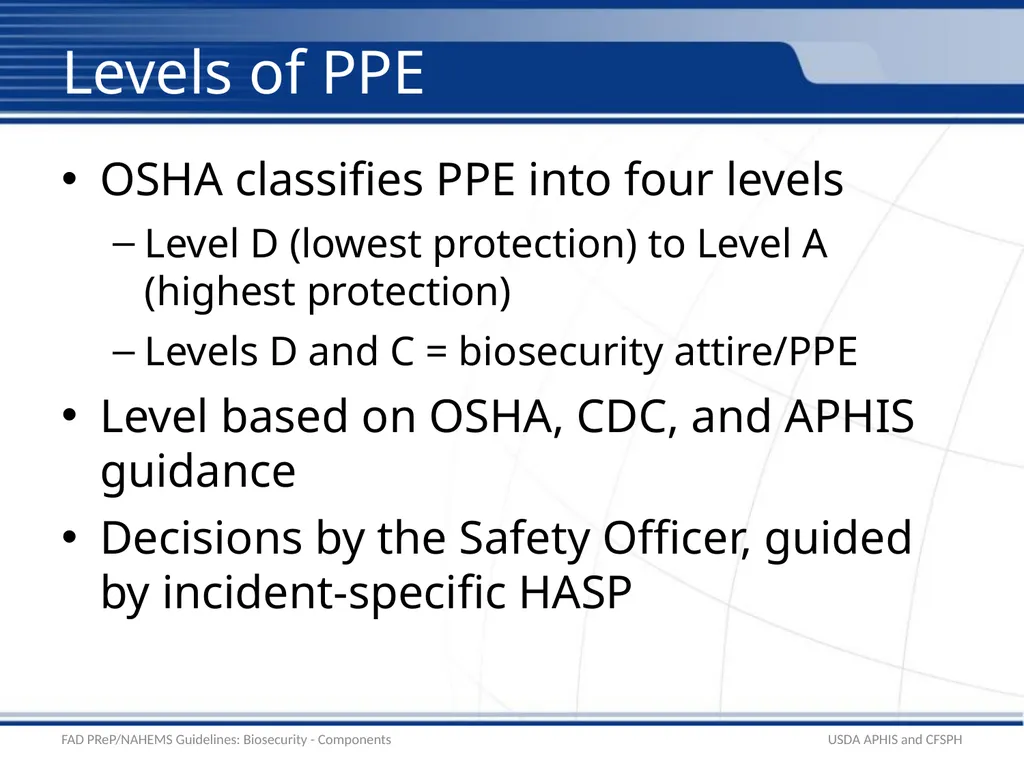
slide14. OSHA classifies PPE into four levels
Level D (lowest protection) to Level A (highest protection)
Levels D and C = biosecurity attire/PPE
Level based on OSHA, CDC, and APHIS guidance
Decisions by the Safety Officer, guided by incident-specific HASP USDA APHIS and CFSPH FAD PReP/NAHEMS Guidelines: Biosecurity - Components Levels of PPE<br>
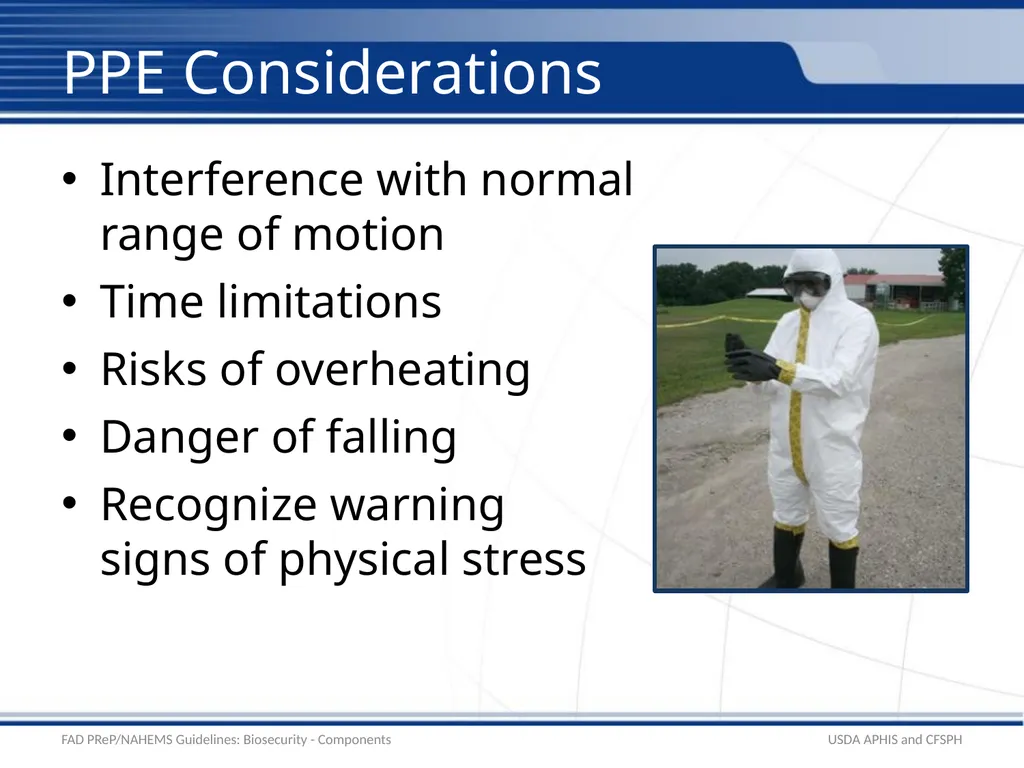
slide15. Interference with normal range of motion
Time limitations
Risks of overheating
Danger of falling
Recognize warning signs of physical stress USDA APHIS and CFSPH FAD PReP/NAHEMS Guidelines: Biosecurity - Components PPE Considerations<br>
slide16. Biosecurity tools for disease mitigation
C&D
Two separate steps
Prior to moving from dirty to clean
Contain/exclude
Environmental decontamination
Biosecurity attire/PPE
Avoid acting as a fomite USDA APHIS and CFSPH FAD PReP/NAHEMS Guidelines: Biosecurity - Components Conclusion<br>
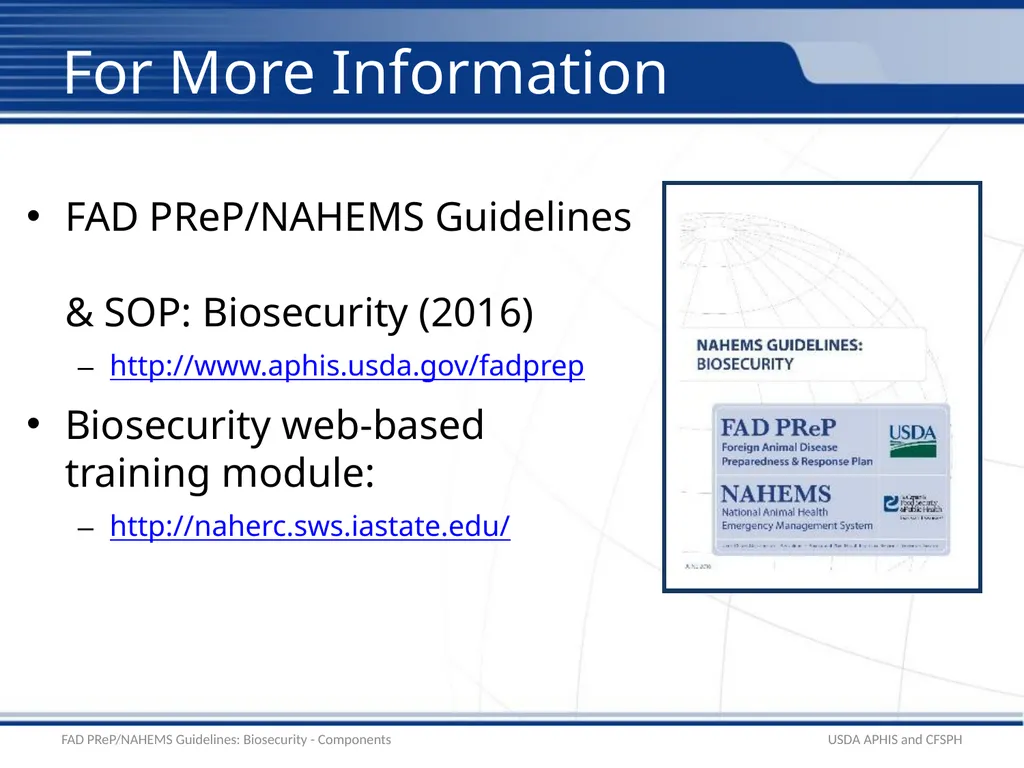
slide17. USDA APHIS and CFSPH FAD PReP/NAHEMS Guidelines: Biosecurity - Components For More Information FAD PReP/NAHEMS Guidelines & SOP: Biosecurity (2016)
http://www.aphis.usda.gov/fadprep
Biosecurity web-based training module:
http://naherc.sws.iastate.edu/<br>
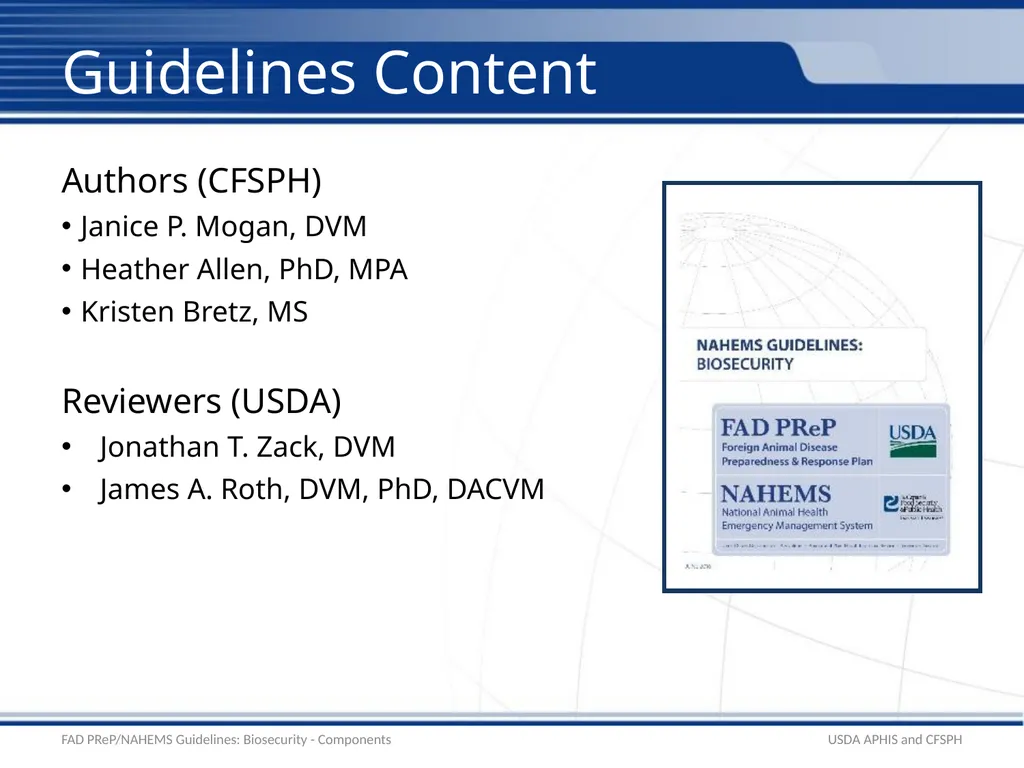
slide18. Authors (CFSPH)
Janice P. Mogan, DVM
Heather Allen, PhD, MPA
Kristen Bretz, MS
Reviewers (USDA)
Jonathan T. Zack, DVM
James A. Roth, DVM, PhD, DACVM USDA APHIS and CFSPH FAD PReP/NAHEMS Guidelines: Biosecurity - Components Guidelines Content<br>
slide19. Acknowledgments Development of this presentation was by the Center for Food Security and Public Health at Iowa State University through funding from the USDA APHIS Veterinary Services PPT Authors: Janice P. Mogan, DVM; Logan Kilburn Reviewer: Kristen Bretz, MS<br>
slide2. Two common components of biosecurity plans
Cleaning and disinfection (C&D)
Biosecurity attire/personal protective equipment (PPE) USDA APHIS and CFSPH FAD PReP/NAHEMS Guidelines: Biosecurity - Components This Presentation<br>
slide3. Cleaning and Disinfection (C&D) USDA APHIS and CFSPH FAD PReP/NAHEMS Guidelines: Biosecurity - Components<br>
slide4. C&D in some form is conducted prior to crossing from dirty to clean areas
Perimeter Buffer Area
Remove all organic material
Personnel arrive clean, or clean footwear and don site-specific outerwear
Line of Separation (C&D Line)
Reduce, remove, inactivate, eliminate, or destroy pathogenic microorganisms USDA APHIS and CFSPH FAD PReP/NAHEMS Guidelines: Biosecurity - Components Cleaning and Disinfection (C&D)<br>
slide5. Physical
Sweep, scrape, heat, or ultra-violet light
Chemical
Detergents, sanitizers, disinfectants, or sterilants
Disinfectants are less effective in the presence of organic load
First clean to remove organic material USDA APHIS and CFSPH FAD PReP/NAHEMS Guidelines: Biosecurity - Components Cleaning/Disinfection Methods<br>
slide6. Dry clean – scrape, brush
Wash within the C&D area
Contain run-off
Observe all safety protocols
Use detergent on surfaces
Rinse with clean water
Allow to dry before disinfecting USDA APHIS and CFSPH FAD PReP/NAHEMS Guidelines: Biosecurity - Components Cleaning Process<br>
slide7. Efficacy of processes vary
Susceptibility of microorganisms vary
Other factors
Water hardness, chemical interactions and corrosion, organic material
Type of surface and material
Contact time
Practicality USDA APHIS and CFSPH FAD PReP/NAHEMS Guidelines: Biosecurity - Components Disinfecting<br>
slide8. Prepare fresh supply
Apply to all cleaned surfaces
Use high pressure sprayers with caution
Maintain appropriate contact time
Reapply if necessary
Rinse with clean water
Allow to dry USDA APHIS and CFSPH FAD PReP/NAHEMS Guidelines: Biosecurity - Components Disinfecting Process<br>
slide9. Acceptable for pathogen elimination in certain circumstances
Dry cleaning followed by heat
Used during HPAI 2014—2015 and 2016 outbreaks
Balance of time, temperature, and environmental factors
Ensure efficacy USDA APHIS and CFSPH FAD PReP/NAHEMS Guidelines: Biosecurity - Components Disinfection – Heat Treatment<br>
slide10. Biosecurity Attire/ Personal Protective Equipment (PPE) USDA APHIS and CFSPH FAD PReP/NAHEMS Guidelines: Biosecurity - Components<br>
slide11. Prevent disease exposure via contaminated street clothes
Leave street clothes on dirty side, or cover with clean outerwear
Disposable gloves and boots, reusable boots (C&D), change of clothes
Facility-provided outerwear
In preparation for crossing theLine of Separation USDA APHIS and CFSPH FAD PReP/NAHEMS Guidelines: Biosecurity - Components Biosecurity Attire<br>
slide12. PPE is standard in an FAD response
Barrier to protect the responder
Prevents spread of pathogens via clothing acting as a fomite
Disposable PPE is preferred USDA APHIS and CFSPH FAD PReP/NAHEMS Guidelines: Biosecurity - Components Personal Protective Equipment (PPE)<br>
slide13. Correct selection, use, C&D/disposal
Selection/level of protection based on risks, tasks, and pathogen
Proper sequence of donning/putting on and doffing/taking off is essential
Protect the wearer
Prevent spread of the hazard
Avoid cross contamination when doffing USDA APHIS and CFSPH FAD PReP/NAHEMS Guidelines: Biosecurity - Components PPE Selection and Use<br>
slide14. OSHA classifies PPE into four levels
Level D (lowest protection) to Level A (highest protection)
Levels D and C = biosecurity attire/PPE
Level based on OSHA, CDC, and APHIS guidance
Decisions by the Safety Officer, guided by incident-specific HASP USDA APHIS and CFSPH FAD PReP/NAHEMS Guidelines: Biosecurity - Components Levels of PPE<br>
slide15. Interference with normal range of motion
Time limitations
Risks of overheating
Danger of falling
Recognize warning signs of physical stress USDA APHIS and CFSPH FAD PReP/NAHEMS Guidelines: Biosecurity - Components PPE Considerations<br>
slide16. Biosecurity tools for disease mitigation
C&D
Two separate steps
Prior to moving from dirty to clean
Contain/exclude
Environmental decontamination
Biosecurity attire/PPE
Avoid acting as a fomite USDA APHIS and CFSPH FAD PReP/NAHEMS Guidelines: Biosecurity - Components Conclusion<br>
slide17. USDA APHIS and CFSPH FAD PReP/NAHEMS Guidelines: Biosecurity - Components For More Information FAD PReP/NAHEMS Guidelines & SOP: Biosecurity (2016)
http://www.aphis.usda.gov/fadprep
Biosecurity web-based training module:
http://naherc.sws.iastate.edu/<br>
slide18. Authors (CFSPH)
Janice P. Mogan, DVM
Heather Allen, PhD, MPA
Kristen Bretz, MS
Reviewers (USDA)
Jonathan T. Zack, DVM
James A. Roth, DVM, PhD, DACVM USDA APHIS and CFSPH FAD PReP/NAHEMS Guidelines: Biosecurity - Components Guidelines Content<br>
slide19. Acknowledgments Development of this presentation was by the Center for Food Security and Public Health at Iowa State University through funding from the USDA APHIS Veterinary Services PPT Authors: Janice P. Mogan, DVM; Logan Kilburn Reviewer: Kristen Bretz, MS<br>