04
What is Polypharmacy? Our working definition
When the theoretical benefits of multiple medications are outweighed by the negative effect of the sheer number of medications, regardless of class of medication or “appropriateness” thereof.<br>
05
Polypharmacy is a stand-alone risk factor for morbidity and mortality Even when we control for other comorbidities and specific drug effects. 5<br>
06
6 What are the risks of Polypharmacy?.<br>
07
7 Decreased:
Cognitive function, ADL’s, Quality of Life
Increased:
ADE’s, Falls, Transfers to Acute Care
Which leads to:
Hospitalization Associated Disability<br>
08
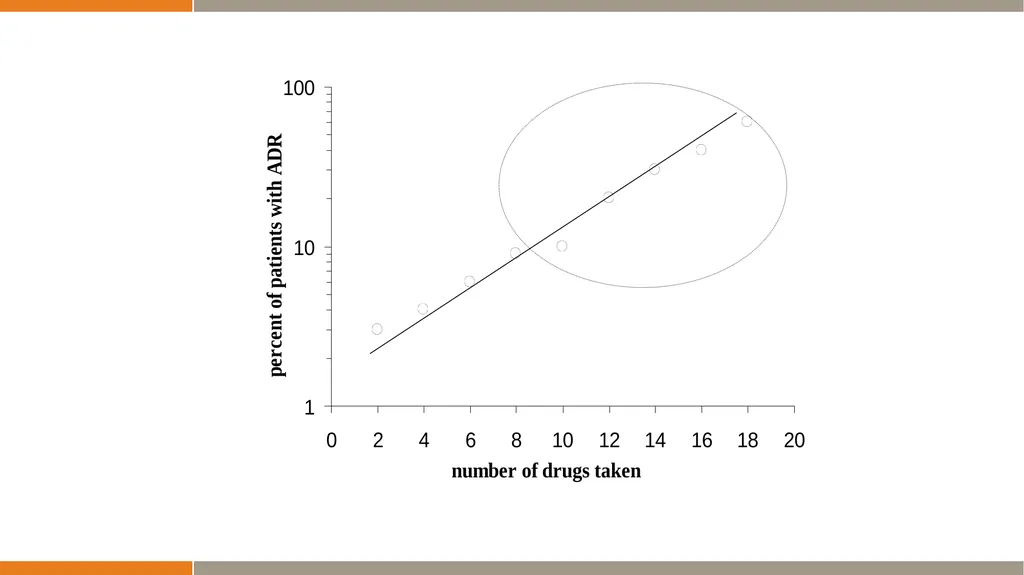
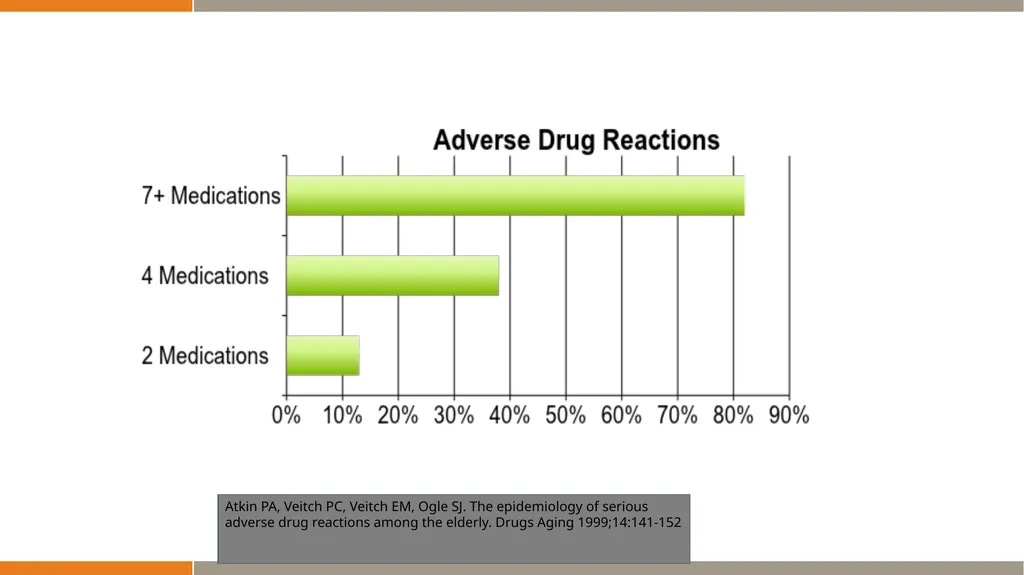
Adverse Drug Reactions The most consistent risk factor for adverse drug reactions is:
number of drugs being taken
Risk rises exponentially as the number of drugs increases.<br>
09
Atkin PA, Veitch PC, Veitch EM, Ogle SJ. The epidemiology of serious adverse drug reactions among the elderly. Drugs Aging 1999;14:141-152<br>
10
Accumulation of minor side effects = people could feel and function better!
Change in metabolism with aging
Drug-drug, drug disease, drug-nutrition interactions
Cycle of side effects, more tests, drug cascade-Let’s interrupt this negative cycle 12<br>
11
So, if common side effects of most medications include…. Fatigue, weakness, muscle aches
Anorexia, nausea, bloating, cramps, constipation, diarrhea
Dizziness, postural instability
Headaches 13<br>
12
Accumulation of minor side effects leads to feeling… 14 CRAPPY<br>
13
15 Hospitalization-Associated Disability Hospitalization is a sentinel event that often precipitates disability. This results in the subsequent inability to live independently and complete basic activities of daily living (ADLs). This hospitalization-associated disability occurs in approximately one-third of patients older than 70 years of age and may be triggered even when the illness that necessitated the hospitalization is successfully treated.<br>
14
16 What Is The Scope of the Problem?<br>
15
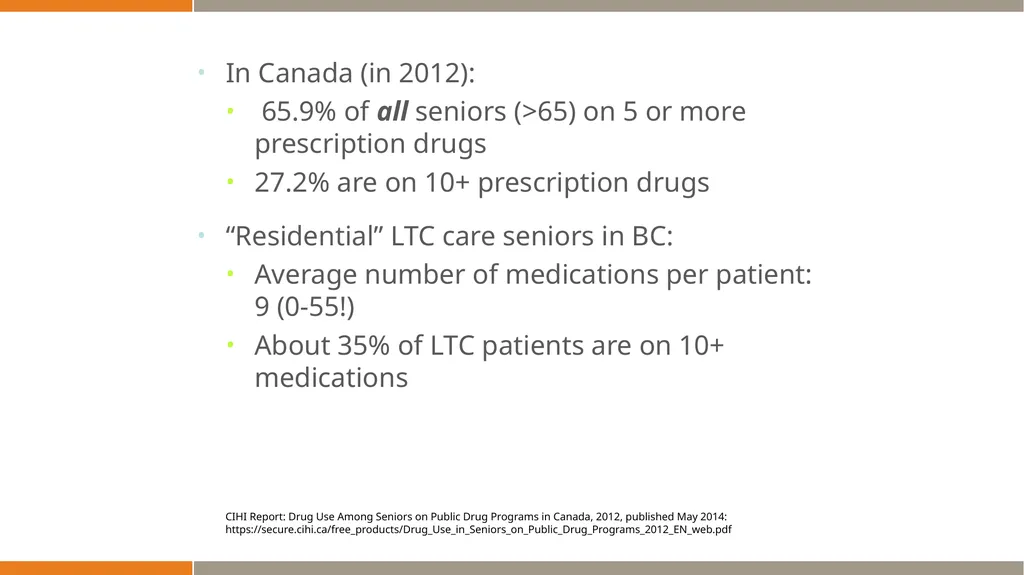
Seniors In Canada (in 2012):
65.9% of all seniors (>65) on 5 or more prescription drugs
27.2% are on 10+ prescription drugs
“Residential” LTC care seniors in BC:
Average number of medications per patient: 9 (0-55!)
About 35% of LTC patients are on 10+ medications CIHI Report: Drug Use Among Seniors on Public Drug Programs in Canada, 2012, published May 2014:
https://secure.cihi.ca/free_products/Drug_Use_in_Seniors_on_Public_Drug_Programs_2012_EN_web.pdf<br>
16
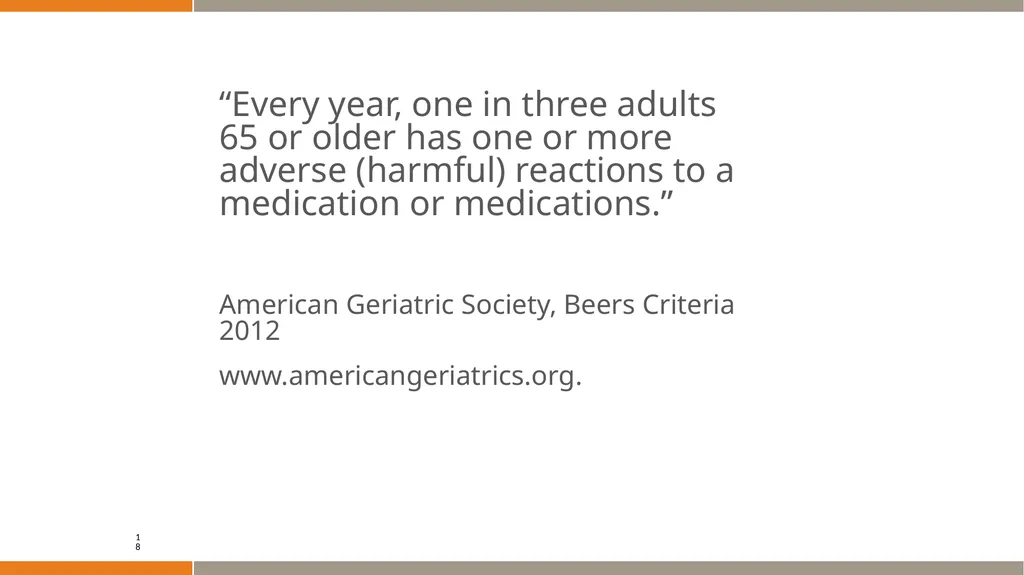
18 “Every year, one in three adults 65 or older has one or more adverse (harmful) reactions to a medication or medications.”
American Geriatric Society, Beers Criteria 2012
www.americangeriatrics.org.<br>
17
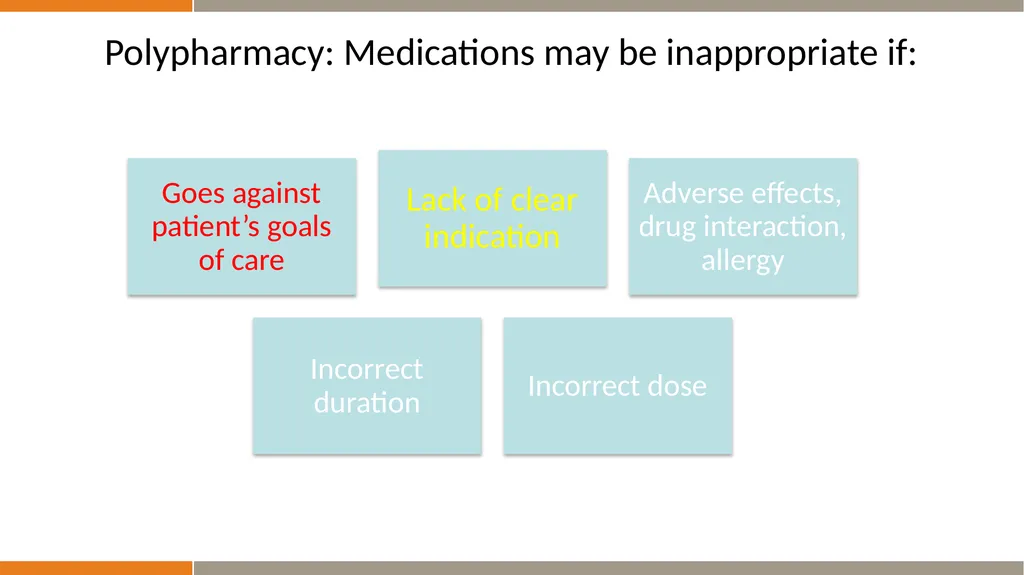
Polypharmacy: Medications may be inappropriate if:<br>
18
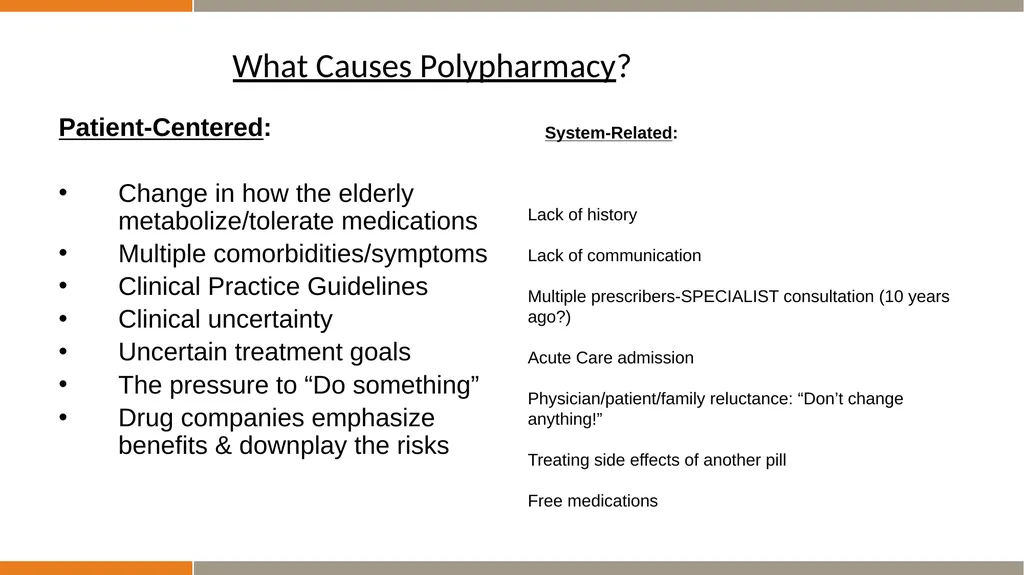
What Causes Polypharmacy? Patient-Centered:
Change in how the elderly metabolize/tolerate medications
Multiple comorbidities/symptoms
Clinical Practice Guidelines
Clinical uncertainty
Uncertain treatment goals
The pressure to “Do something”
Drug companies emphasize benefits & downplay the risks System-Related:
Lack of history
Lack of communication
Multiple prescribers-SPECIALIST consultation (10 years ago?)
Acute Care admission
Physician/patient/family reluctance: “Don’t change anything!”
Treating side effects of another pill
Free medications<br>
19
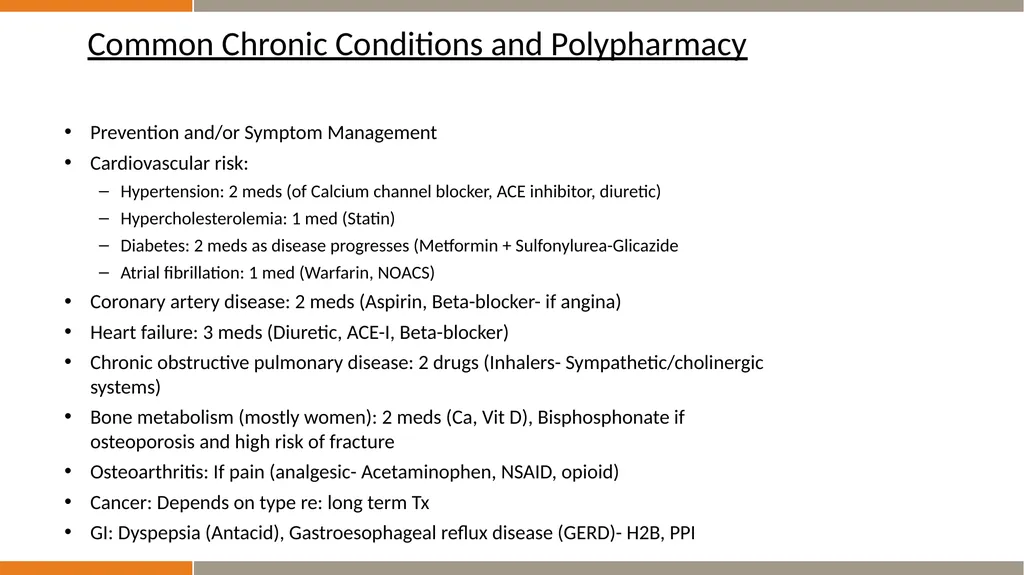
Common Chronic Conditions and Polypharmacy Prevention and/or Symptom Management
Cardiovascular risk:
Hypertension: 2 meds (of Calcium channel blocker, ACE inhibitor, diuretic)
Hypercholesterolemia: 1 med (Statin)
Diabetes: 2 meds as disease progresses (Metformin + Sulfonylurea-Glicazide
Atrial fibrillation: 1 med (Warfarin, NOACS)
Coronary artery disease: 2 meds (Aspirin, Beta-blocker- if angina)
Heart failure: 3 meds (Diuretic, ACE-I, Beta-blocker)
Chronic obstructive pulmonary disease: 2 drugs (Inhalers- Sympathetic/cholinergic systems)
Bone metabolism (mostly women): 2 meds (Ca, Vit D), Bisphosphonate if osteoporosis and high risk of fracture
Osteoarthritis: If pain (analgesic- Acetaminophen, NSAID, opioid)
Cancer: Depends on type re: long term Tx
GI: Dyspepsia (Antacid), Gastroesophageal reflux disease (GERD)- H2B, PPI<br>
20
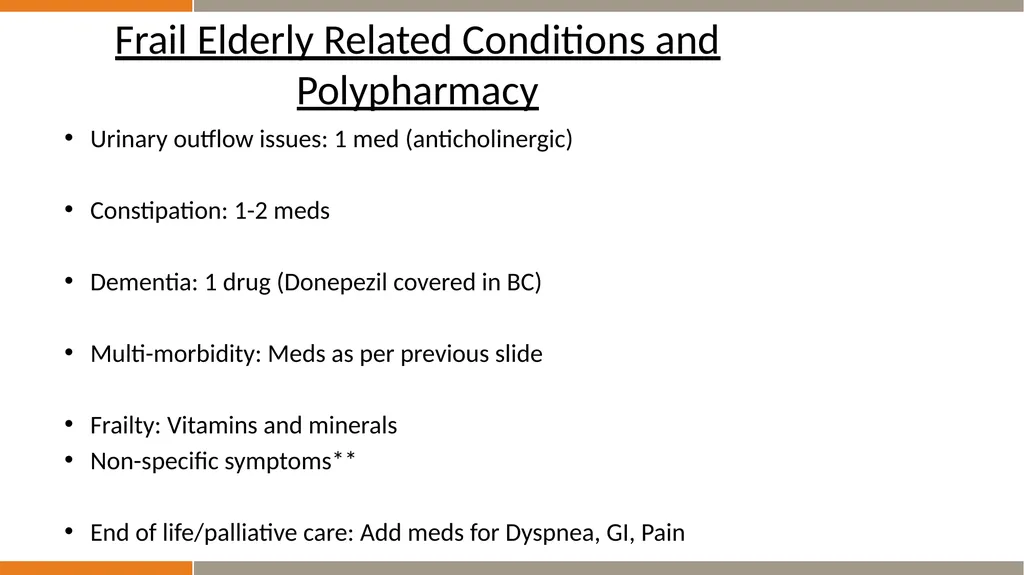
Frail Elderly Related Conditions and Polypharmacy Urinary outflow issues: 1 med (anticholinergic)
Constipation: 1-2 meds
Dementia: 1 drug (Donepezil covered in BC)
Multi-morbidity: Meds as per previous slide
Frailty: Vitamins and minerals
Non-specific symptoms**
End of life/palliative care: Add meds for Dyspnea, GI, Pain<br>
21
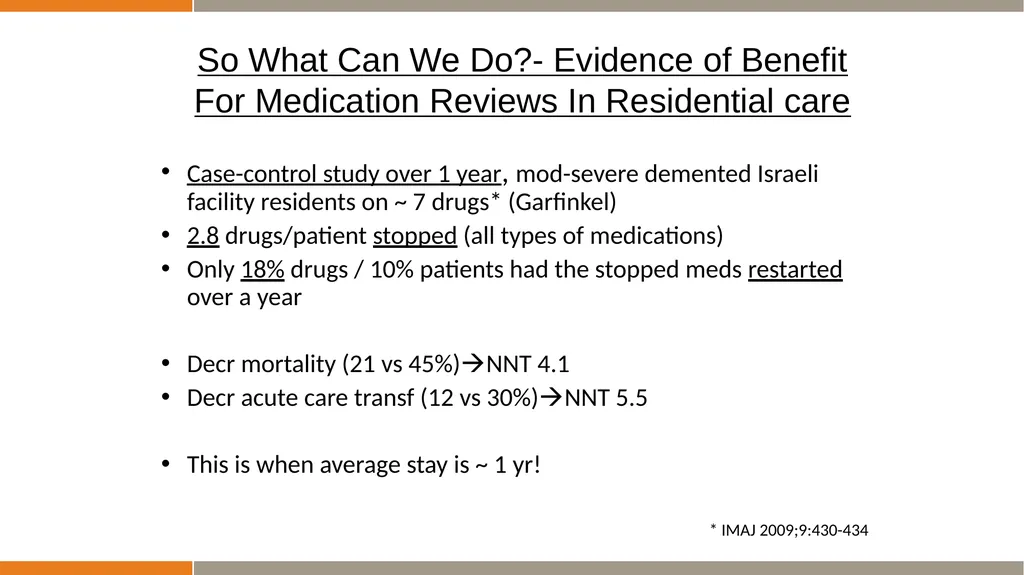
So What Can We Do?- Evidence of Benefit For Medication Reviews In Residential care Case-control study over 1 year, mod-severe demented Israeli facility residents on ~ 7 drugs* (Garfinkel)
2.8 drugs/patient stopped (all types of medications)
Only 18% drugs / 10% patients had the stopped meds restarted over a year
Decr mortality (21 vs 45%)NNT 4.1
Decr acute care transf (12 vs 30%)NNT 5.5
This is when average stay is ~ 1 yr!
* IMAJ 2009;9:430-434<br>
22
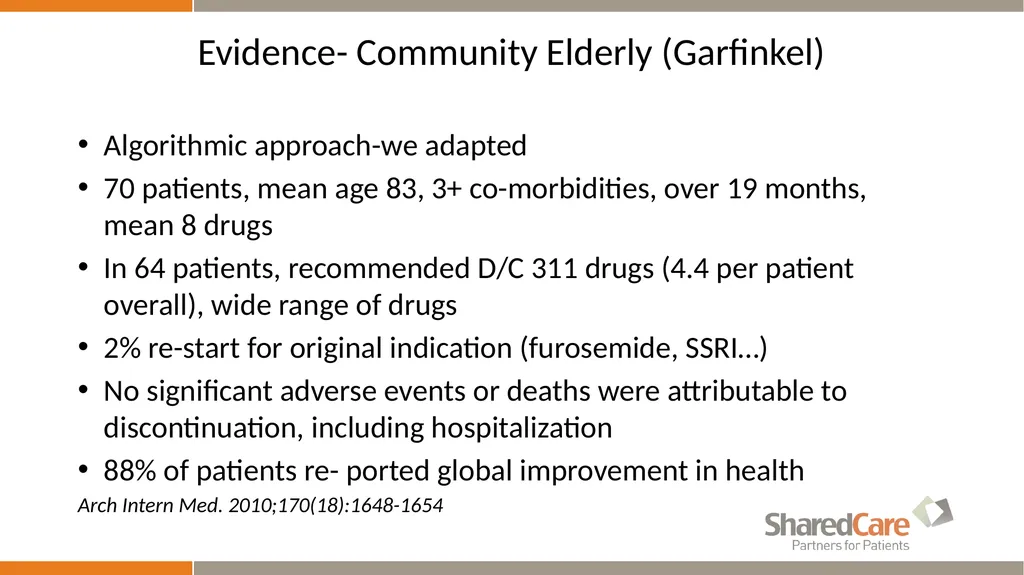
Evidence- Community Elderly (Garfinkel) Algorithmic approach-we adapted
70 patients, mean age 83, 3+ co-morbidities, over 19 months, mean 8 drugs
In 64 patients, recommended D/C 311 drugs (4.4 per patient overall), wide range of drugs
2% re-start for original indication (furosemide, SSRI…)
No significant adverse events or deaths were attributable to discontinuation, including hospitalization
88% of patients re- ported global improvement in health
Arch Intern Med. 2010;170(18):1648-1654<br>
23
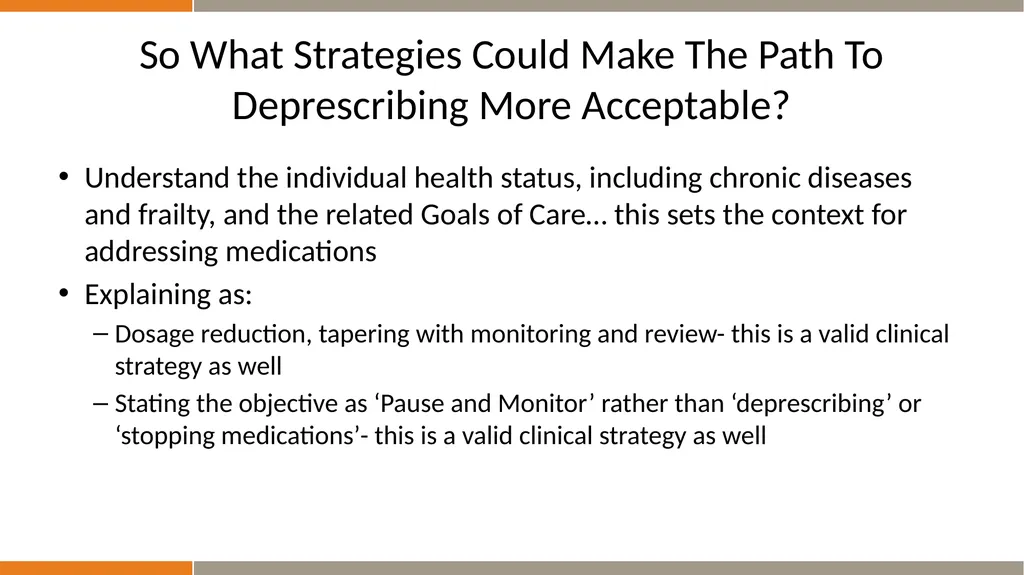
So What Strategies Could Make The Path To Deprescribing More Acceptable? Understand the individual health status, including chronic diseases and frailty, and the related Goals of Care… this sets the context for addressing medications
Explaining as:
Dosage reduction, tapering with monitoring and review- this is a valid clinical strategy as well
Stating the objective as ‘Pause and Monitor’ rather than ‘deprescribing’ or ‘stopping medications’- this is a valid clinical strategy as well<br>