
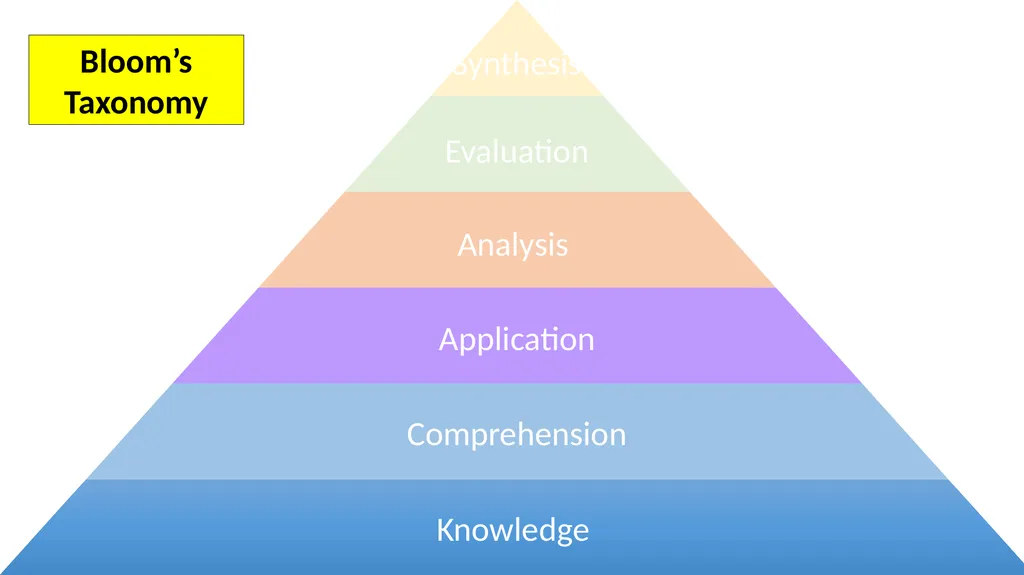
Bloom’s Taxonomy Definition Expansion Creation of

Published  . 0 views
↓ Download
Bloom’s Taxonomy Definition Expansion Creation of
1 / 1
Bloom’s Taxonomy Definition Expansion Creation of - slide 1 of 3 Bloom’s Taxonomy Definition Expansion Creation of - slide 2 of 3 Bloom’s Taxonomy Definition Expansion Creation of - slide 3 of 3
Description: Blooms Taxonomy Definition Expansion Creation of new ideas, predict, draw conclusions, relate knowledge across areas. Sample Verbs: Integrate, Plan, Create, Compose Compare Ideas, assess value of theories, make informed choices, recognized

Related Topics

Download Presentation

"Bloom’s Taxonomy Definition Expansion Creation of" is the property of its rightful owner. Permission is granted to download and print the materials on this website for personal, non-commercial use only, and to display it on your personal computer provided you do not modify the materials and that you retain all copyright notices contained in the materials. By downloading content from our website, you accept the terms of this agreement.

Presentation Transcript

slide1. Bloom’s Taxonomy<br>
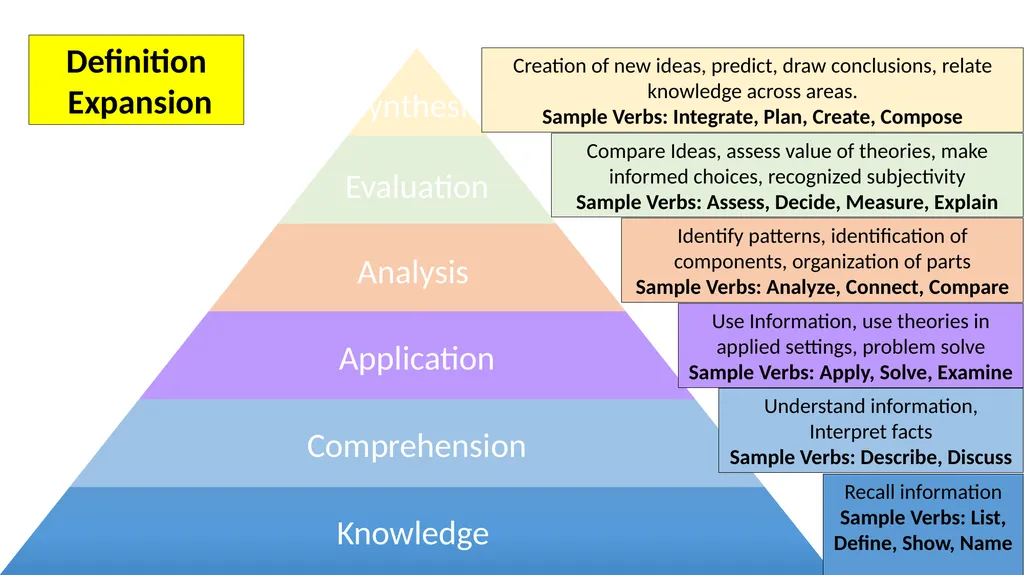
slide2. Definition
Expansion Creation of new ideas, predict, draw conclusions, relate knowledge across areas.
Sample Verbs: Integrate, Plan, Create, Compose Compare Ideas, assess value of theories, make informed choices, recognized subjectivity
Sample Verbs: Assess, Decide, Measure, Explain Identify patterns, identification of components, organization of parts
Sample Verbs: Analyze, Connect, Compare Use Information, use theories in applied settings, problem solve
Sample Verbs: Apply, Solve, Examine Understand information, Interpret facts
Sample Verbs: Describe, Discuss Recall information
Sample Verbs: List, Define, Show, Name<br>
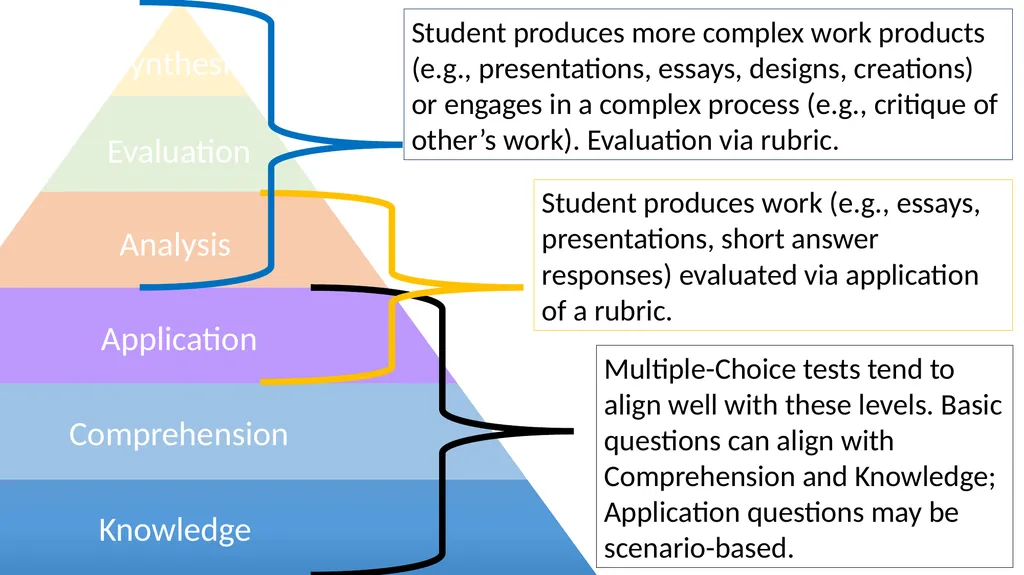
slide3. Multiple-Choice tests tend to align well with these levels. Basic questions can align with Comprehension and Knowledge; Application questions may be scenario-based. Student produces work (e.g., essays, presentations, short answer responses) evaluated via application of a rubric. Student produces more complex work products (e.g., presentations, essays, designs, creations) or engages in a complex process (e.g., critique of other’s work). Evaluation via rubric.<br>