Blow, Blow, Thou Winter Wind By William Shakespeare BA I ENGLISH (Compulsory) ENG CE101 Introduction Blow, Blow, Thou Winter Wind is a song sung by the character Amiens in William Shakespeares play As you like it written in1599. This
"Blow, Blow, Thou Winter Wind By William" is the property of its rightful owner. Permission is granted to
download and print the materials on this website for personal, non-commercial use only, and to display it
on your personal computer provided you do not modify the materials and that you retain all copyright
notices contained in the materials. By downloading content from our website, you accept the terms of this
agreement.
Presentation Transcript
01
Blow, Blow, Thou Winter Wind By William Shakespeare BA I ENGLISH (Compulsory)
ENG CE101<br>
02
Introduction Blow, Blow, Thou Winter Wind is a song sung by the character Amiens in William Shakespeare’s play “As you like it” written in1599.
This song describes the coldness of the world and the ingratitude of people.<br>
03
Shakespeare’s Biography Undoubtedly, one of the most wonderful authors in English literature, William Shakespeare was born in Stratford on Avon, a small town in England.
Although born in Stratford, he moved to London as a young man, and spent most of his life there.
His plays such as Romeo and Juliet continue to mesmerize the audiences even today.<br>
04
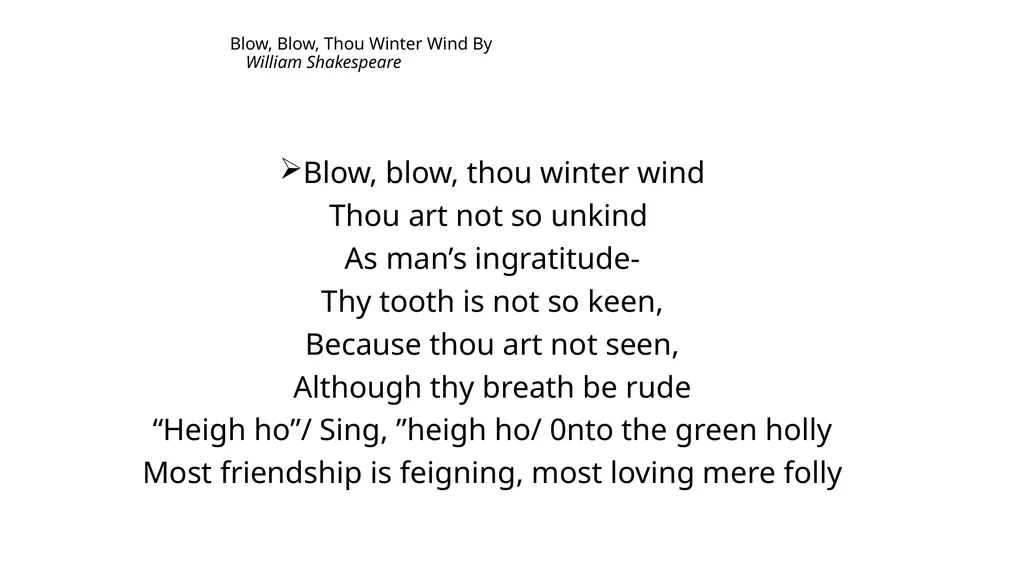
Blow, Blow, Thou Winter Wind By William Shakespeare Blow, blow, thou winter wind
Thou art not so unkind
As man’s ingratitude-
Thy tooth is not so keen,
Because thou art not seen,
Although thy breath be rude
“Heigh ho”/ Sing, ”heigh ho/ 0nto the green holly
Most friendship is feigning, most loving mere folly<br>
05
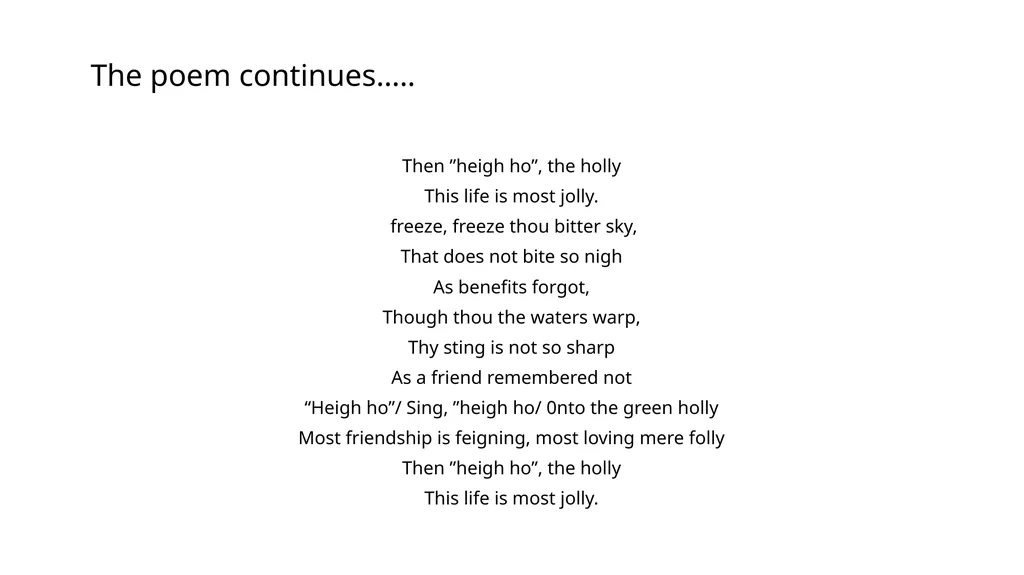
The poem continues….. Then ”heigh ho”, the holly
This life is most jolly.
freeze, freeze thou bitter sky,
That does not bite so nigh
As benefits forgot,
Though thou the waters warp,
Thy sting is not so sharp
As a friend remembered not
“Heigh ho”/ Sing, ”heigh ho/ 0nto the green holly
Most friendship is feigning, most loving mere folly
Then ”heigh ho”, the holly
This life is most jolly.<br>
06
Analysis of the Poem The winter has been personified to prove that not even the harshest or the bitterest winter can compare to the ingratitude present in the world. Shakespeare reveals his true meaning in the middle of the poem with the line “most friendship is feigning, most loving mere folly”.He uses the idea of a winter wind, which could be cold and painful, to communicate how much more painful the false love and friendship is.<br>
07
Conclusion Shakespeare compares the harsh, crude winter wind to man’s ingratitude and to turning ones back on a friend, both of which are seen as far worse than the biting wind.
This song shows that even the coldest and the most painful weather can’t be compared to the worst human sufferings.<br>