
Body fluids Body composition:- In the average
MJ
Published · 37 slides · 0 views
1 / 1







Description
Body fluids Body composition:- In the average young adult male, 18 of the body weight is protein and related substances, 7 is mineral and 15 is fat. The remaining 60 is water. The distribution of this water as follow: The intracellular
Related Topics
Share
Embed code
Download this presentation From Below
"Body fluids Body composition:- In the average" is the property of its rightful owner. Permission is granted to download and print the materials on this website for personal, non-commercial use only, and to display it on your personal computer provided you do not modify the materials and that you retain all copyright notices contained in the materials. By downloading content from our website, you accept the terms of this agreement.
Presentation Transcript
01
Body fluids Body composition:-
In the average young adult male, 18% of the body weight is protein and related substances, 7% is mineral and 15% is fat. The remaining 60% is water. The distribution of this water as follow:<br>
In the average young adult male, 18% of the body weight is protein and related substances, 7% is mineral and 15% is fat. The remaining 60% is water. The distribution of this water as follow:<br>
02
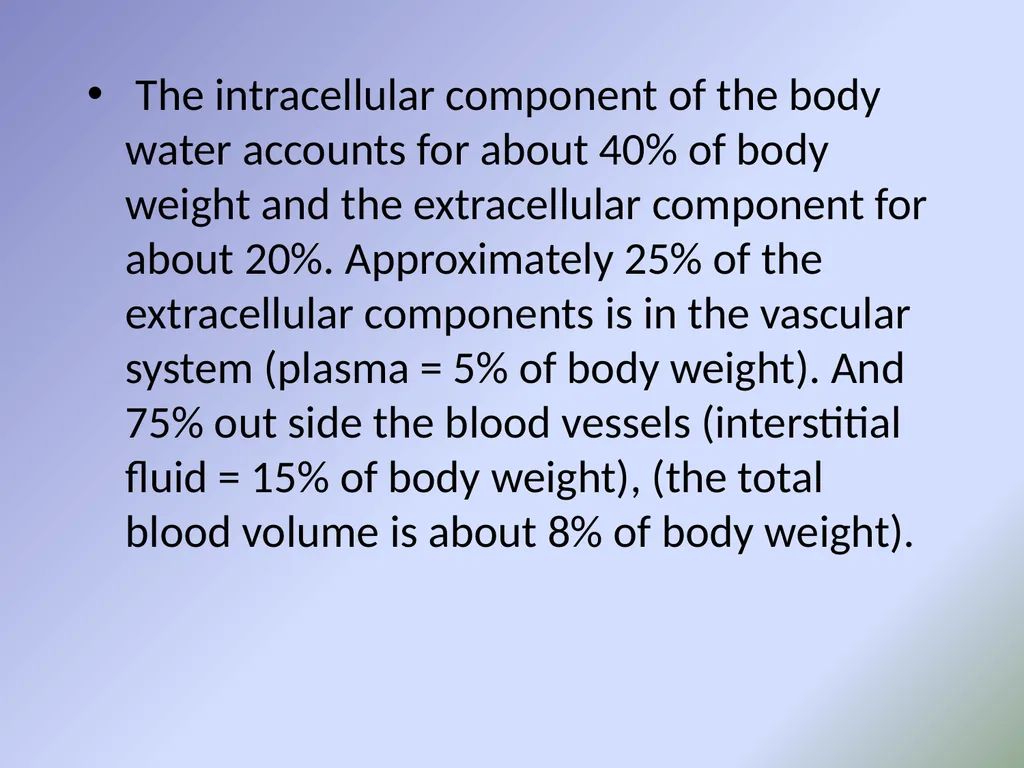
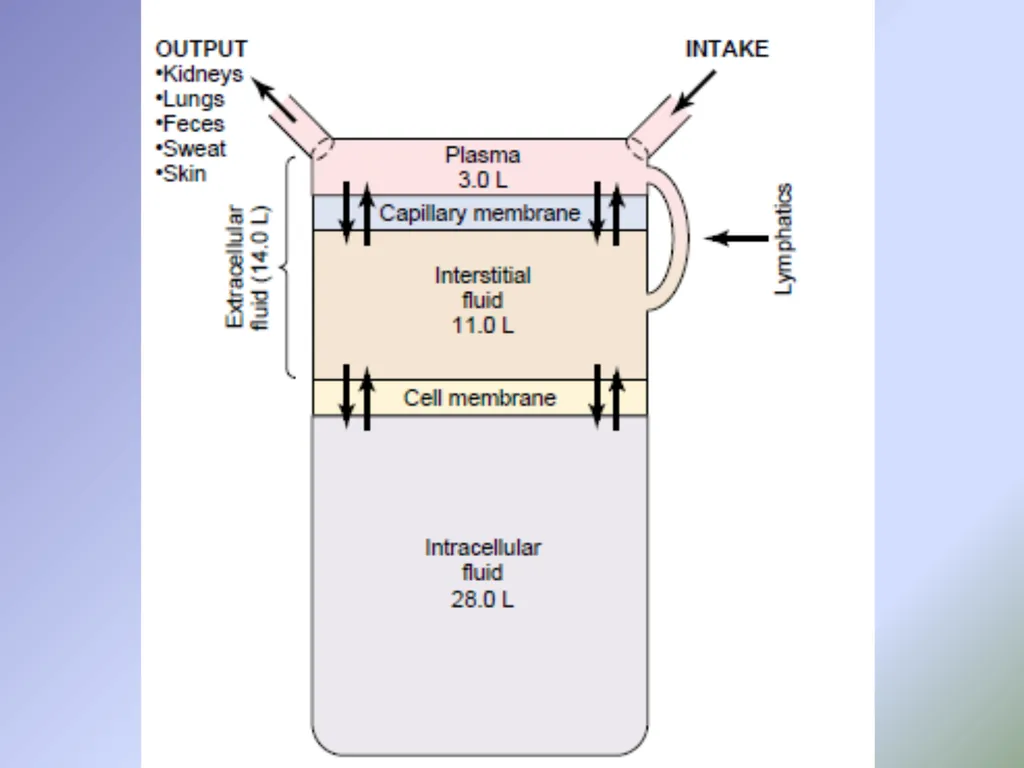
The intracellular component of the body water accounts for about 40% of body weight and the extracellular component for about 20%. Approximately 25% of the extracellular components is in the vascular system (plasma = 5% of body weight). And 75% out side the blood vessels (interstitial fluid = 15% of body weight), (the total blood volume is about 8% of body weight).<br>
03
Forces producing movement of substances between
Compartments
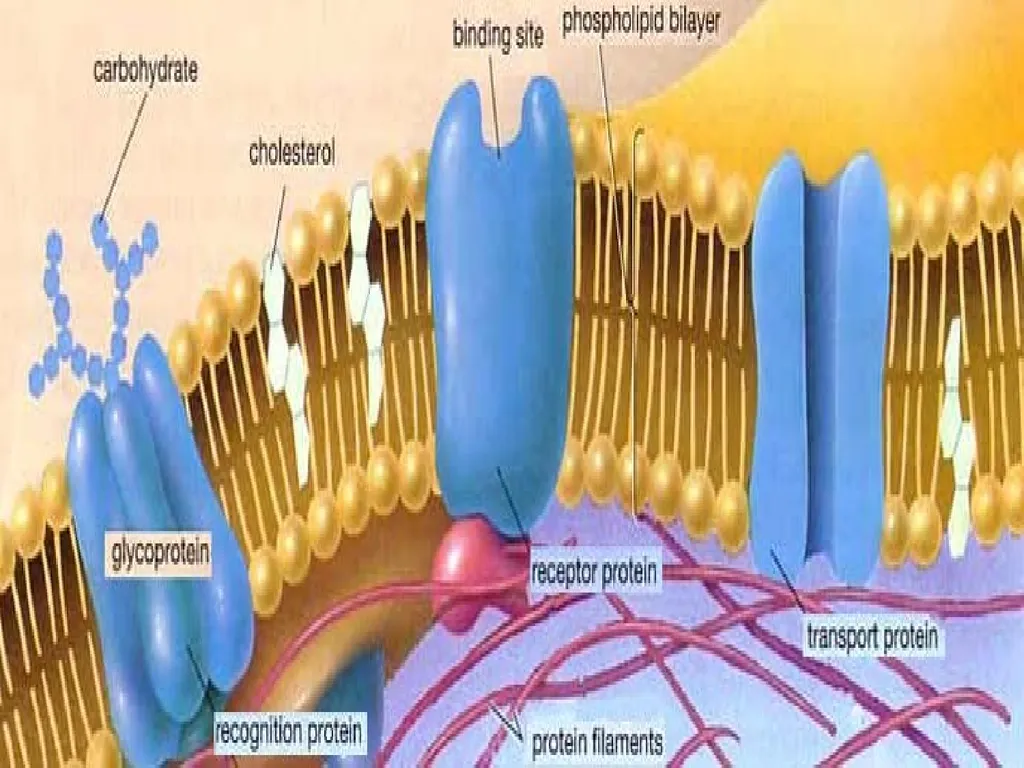
[1] Simple diffusion: In which the molecules or ions tend to spread from regions to another regions through the membrane lipid bilayer (for lipid soluble substances such as oxygen, nitrogen, CO2, and alcohol) or through cell membrane pore (Nonspecific “holes” in the lipid bilayer and include movement through the hydrophilic centers of protein complexes) or protein channel (for water and water soluble substances such as ions and glucose) until the concentration is uniform across the membrane. It does not require metabolic energy and therefore, it is passive. Diffusion from one region to another is affected by:<br>
Compartments
[1] Simple diffusion: In which the molecules or ions tend to spread from regions to another regions through the membrane lipid bilayer (for lipid soluble substances such as oxygen, nitrogen, CO2, and alcohol) or through cell membrane pore (Nonspecific “holes” in the lipid bilayer and include movement through the hydrophilic centers of protein complexes) or protein channel (for water and water soluble substances such as ions and glucose) until the concentration is uniform across the membrane. It does not require metabolic energy and therefore, it is passive. Diffusion from one region to another is affected by:<br>
04
(a) the concentration gradient
(b) the electrical gradient. Whenever there is a difference potential between 2 regions, positively charged ions move along this electrical gradient to the more negative charged region, negatively charged ions move in the opposite direction.
(c) the thickness of the boundary
(d) Temperature. Diffusion is driven by the kinetic energy of the particles, and temperature is a measure of that kinetic energy. The warmer a substance is, the more rapidly its particles diffuse. This is why sugar diffuses more quickly through hot tea than through iced tea.<br>
(b) the electrical gradient. Whenever there is a difference potential between 2 regions, positively charged ions move along this electrical gradient to the more negative charged region, negatively charged ions move in the opposite direction.
(c) the thickness of the boundary
(d) Temperature. Diffusion is driven by the kinetic energy of the particles, and temperature is a measure of that kinetic energy. The warmer a substance is, the more rapidly its particles diffuse. This is why sugar diffuses more quickly through hot tea than through iced tea.<br>
05
(e) Membrane permeability. Diffusion through a membrane depends on how permeable it is to the particles. Cells can adjust their permeability to such a substance by adding channel proteins to the membrane or taking them away.
[2] Solvent Drag: When solvent is moving in one direction across the cell membrane, the solvent tends to drag along some molecules of solute. This force is called solvent drag. In most situations in the body, its effects are very small.<br>
[2] Solvent Drag: When solvent is moving in one direction across the cell membrane, the solvent tends to drag along some molecules of solute. This force is called solvent drag. In most situations in the body, its effects are very small.<br>
06
[3] Filtration: Filtration is the process by which fluid forced through an epithelial layer or other barrier due to a difference in hydrostatic pressure on the two sides. Filtration is affected by
(a) the pressure gradient across the membrane,
(b) the surface area of the membrane,
(c) the diameter of the membrane pores,
(d) the size of the filtered molecules.
In physiology, the most important case of filtration is seen in the blood capillaries, where blood pressure forces fluid through gaps in the capillary wall. This is how water, salts, nutrients, and other solutes are transferred from the bloodstream to the tissue fluid and how the kidneys filter wastes from the blood. Capillaries hold back larger particles such as blood cells and proteins.<br>
(a) the pressure gradient across the membrane,
(b) the surface area of the membrane,
(c) the diameter of the membrane pores,
(d) the size of the filtered molecules.
In physiology, the most important case of filtration is seen in the blood capillaries, where blood pressure forces fluid through gaps in the capillary wall. This is how water, salts, nutrients, and other solutes are transferred from the bloodstream to the tissue fluid and how the kidneys filter wastes from the blood. Capillaries hold back larger particles such as blood cells and proteins.<br>
07
[4] Osmosis, Osmolarity and osmotic pressure of the body fluids:
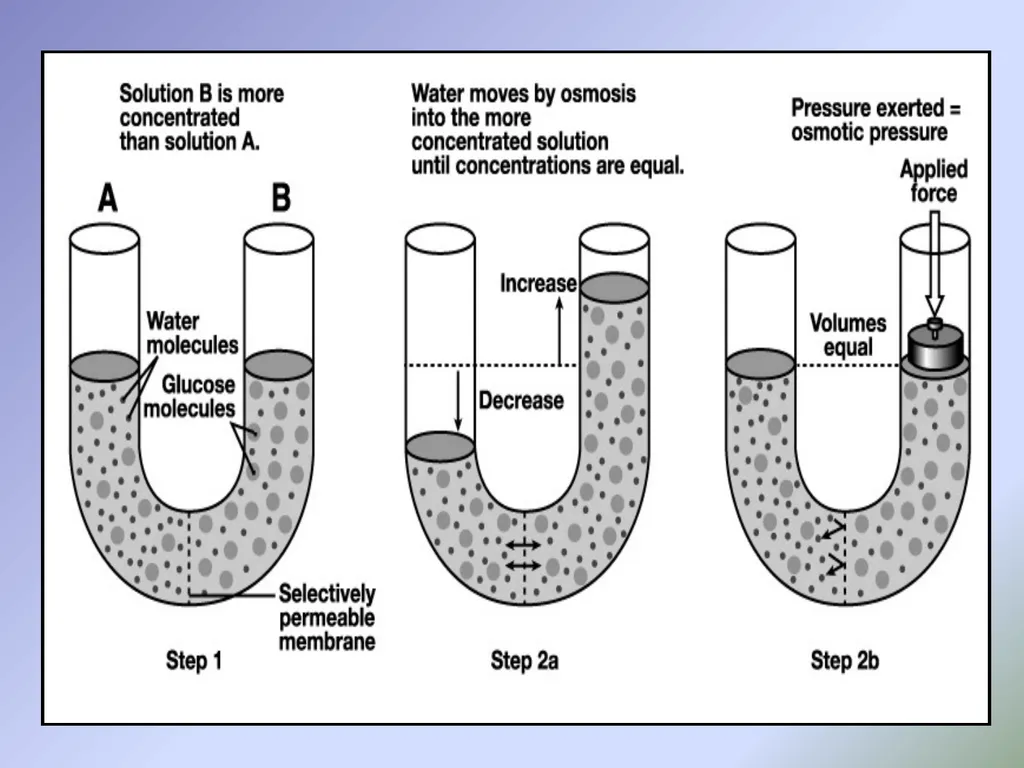
The Osmosis is the flow of water (solvent) molecules across a semipermeable membrane (through channel proteins, especially those called aquaporins) into a region in which there is a high concentration of a solute to which the membrane is impermeable. Cells can regulate the rate of osmosis by adding aquaporins to the plasma membrane or removing them. Certain cells of the kidneys, for example, install or take away aquaporins to regulate the rate of water loss from the body in the urine
The osmolarity is the concentration of osmotically active particles (the particles which attact water to it) in a solution.<br>
The Osmosis is the flow of water (solvent) molecules across a semipermeable membrane (through channel proteins, especially those called aquaporins) into a region in which there is a high concentration of a solute to which the membrane is impermeable. Cells can regulate the rate of osmosis by adding aquaporins to the plasma membrane or removing them. Certain cells of the kidneys, for example, install or take away aquaporins to regulate the rate of water loss from the body in the urine
The osmolarity is the concentration of osmotically active particles (the particles which attact water to it) in a solution.<br>
08
The osmotic pressure: is an attractive force of the solute particles that drives water molecules to move from solution of low concentration of solutes to solution of high concentration of solutes, The number of the solute particles determines the magnitude of the osmotic pressure of the solution in which it is dissolved. The term tonicity is used to describe the effective osmotic pressure solution relative to plasma in which the normal body cells can be placed without causing either swelling or shrinking. A solution with effective osmotic pressure as plasma is said to be isotonic which corresponds to 0.9 % solution of NaCl or a 5% glucose solution. Those solutions with greater pressure are hypertonic in which the normal body cells shrink when they are placed in it. Those solutions with lesser pressure are hypotonic in which the normal body cells swell when they are placed in it.<br>
09
If water is added to the extracellular fluid by injection into the blood stream, by injection beneath the skin, or by ingesting water followed by absorption from gastrointestinal tract into the blood, the water dilutes the extracelluar fluids, causing it to become hypotonic with respect to the interstitial and to the intracellular fluids, osmosis begins immediately at the capillary and cells membranes, with large amounts of water passing to the interstitial and to the interiors of the cells, within a few minutes the water becomes distributed almost evenly amongst all the extracelluar and intracellular fluid compartments, and all compartments will have the same osmolalities (i.e. the same tonicity). Excess water intake and dilution of extracelluar fluid called overhydration or water intoxication.<br>
10
If water is lost from the body by evaporation from the skin, evaporation from the lungs, or excretion of a very dilutes urine as in diabetes insipidus, or loss in feces as in diarrhea, the water will leave the extracellular fluid compartment causing this compartment to have a hypertonic fluid in respect to the fluids in the intracellular compartments. Osmosis begins immediately at the cell membrane with water passing to the interstitium and plasma and distributed uniformly between the three compartments, so that all the three compartments will have the same osmolalities. The overall effect is called dehydration.<br>
11
5] Nonionic diffusion: Some weak acids and bases are quite soluble in cell membranes in the undissociated form, whereas in the ionic form they cross membranes with difficulty. Consequently, if molecules of the undissociated substances diffuse from one side of the membrane to the other and then dissociate.<br>
12
[6] Carrier-mediated transport: It is the transport of substances across the cell membrane mediated by a carrier protein. This type of transport is characterized by the following:
[i] Stereo specificity: For example, D-glucose is transported by facilitated diffusion, but the L-isomer is not.
[ii] Saturation: The transport rate increases as the concentration of the solute increases, until the carriers are saturated (the transport maximum, or Tm).
[iii] Competition: Structurally related solutes compete for transport sites on carrier molecules. For example, galactose is a competitive inhibitor of glucose transport in the small intestine.<br>
[i] Stereo specificity: For example, D-glucose is transported by facilitated diffusion, but the L-isomer is not.
[ii] Saturation: The transport rate increases as the concentration of the solute increases, until the carriers are saturated (the transport maximum, or Tm).
[iii] Competition: Structurally related solutes compete for transport sites on carrier molecules. For example, galactose is a competitive inhibitor of glucose transport in the small intestine.<br>
13
Carrier-mediated transports are of two main types:
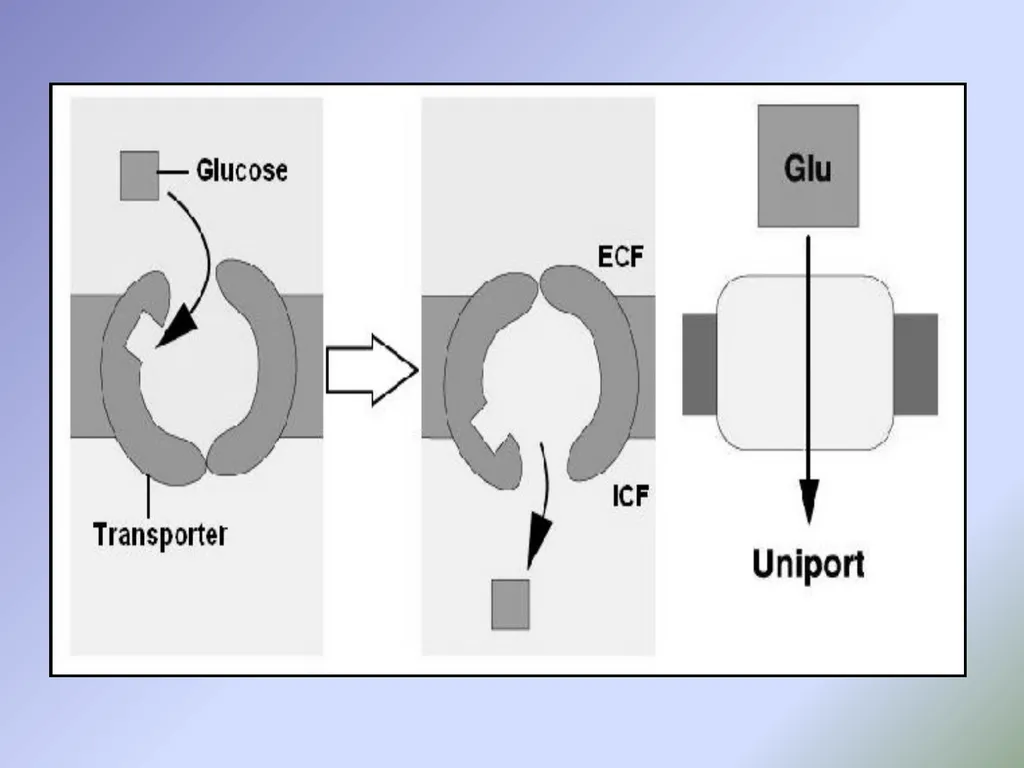
[A] Facilitated diffusion: When the carrier-mediated transport occurs according to electrochemical gradient and the energy is not required (passive), the process is called facilitated diffusion. It is also called a uniport transport. Example of facilitated diffusion is glucose transport in muscle and adipose cells is carrier-mediated, according to the electrochemical gradient, and is inhibited by sugars such as galactose. Therefore, it is categorized as facilitated diffusion. In diabetes mellitus, glucose uptake by the muscles and adipose cells is impaired because the carriers for facilitated diffusion of glucose require insulin.<br>
[A] Facilitated diffusion: When the carrier-mediated transport occurs according to electrochemical gradient and the energy is not required (passive), the process is called facilitated diffusion. It is also called a uniport transport. Example of facilitated diffusion is glucose transport in muscle and adipose cells is carrier-mediated, according to the electrochemical gradient, and is inhibited by sugars such as galactose. Therefore, it is categorized as facilitated diffusion. In diabetes mellitus, glucose uptake by the muscles and adipose cells is impaired because the carriers for facilitated diffusion of glucose require insulin.<br>
14
[B] Active transport: When the carrier-mdiated transport occurs against electrochemical gradient, the process requires energy and is referred to as active transport. Active transport can be divided into two types:
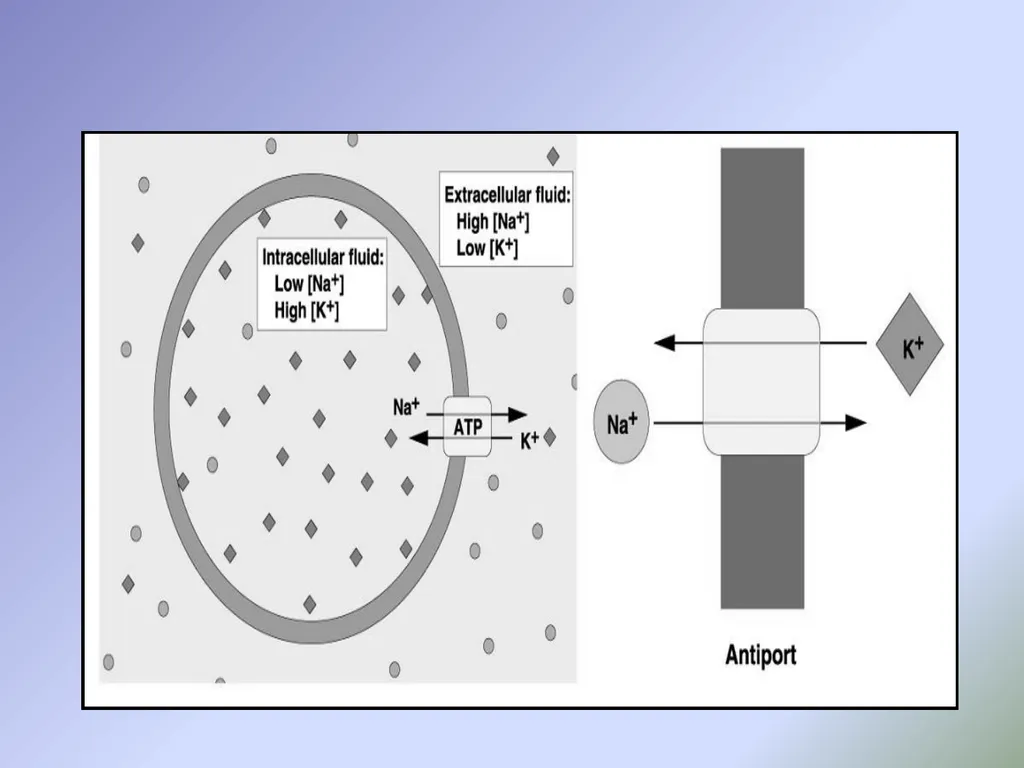
(i) Primary active transport: In which high energy phosphate compound, ATP, provides directly the energy required for the transport process. Such a transport are Na-K-ATPase pump, H-ATPase pump (proton pump), and Ca-ATPase pump.<br>
(i) Primary active transport: In which high energy phosphate compound, ATP, provides directly the energy required for the transport process. Such a transport are Na-K-ATPase pump, H-ATPase pump (proton pump), and Ca-ATPase pump.<br>
15
(ii) Secondary active transport: In which the transport of one substances (e.g. Na+) accodrding to electrochemical gradient provides the energy to transport another substance against its electrochemical gradient. The metabolic energy is not provided directly, but indirectly from the Na+ gradient, which is maintained across cell membranes by Na+-K+ ATPase pump. Thus, inhibition of Na+-K+ ATPase pump will decrease transport of Na+ out of cell, decrease the transmembrane Na+ gradient, and eventually inhibit secondary active transport.<br>
16
The direction of the carrier-mediated transport is:
[a] Uniport transport: If one transported substance is moving in one direction and without an associated transport of another substance (as in the facilitated diffusion of glucose).
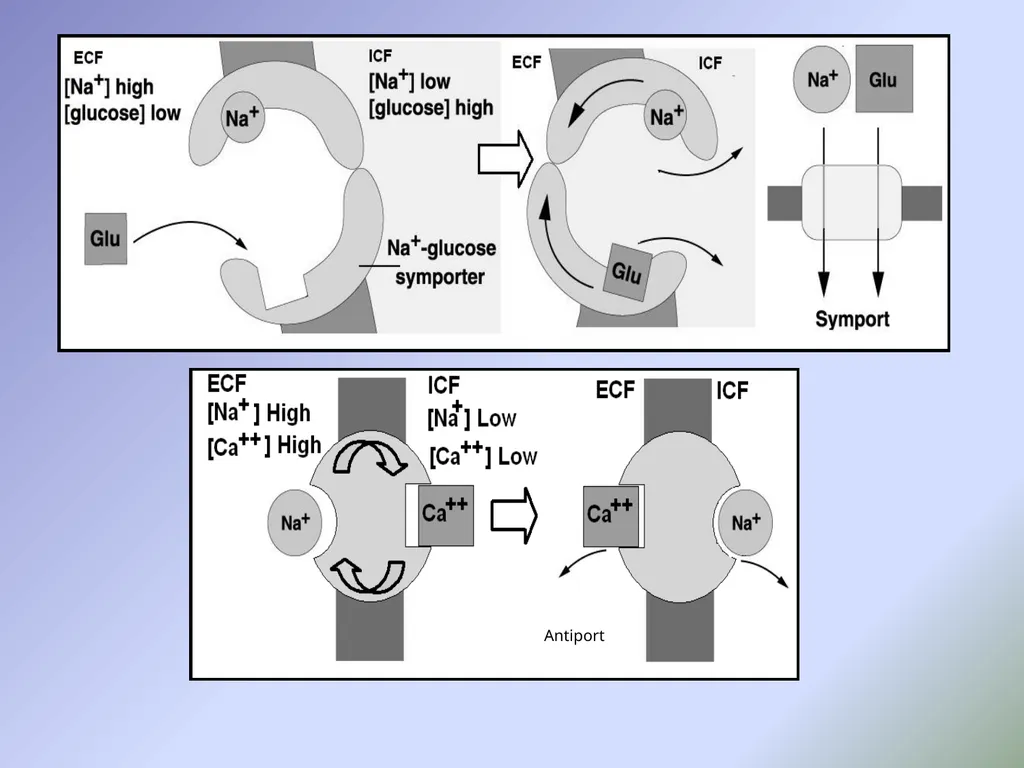
[b] Co-transport or symport: If two or more of the transported substances are moving in the same direction (as Na co-transport of glucose and amino acids, Na-K-2Cl co-transport).
[c] Counter-transport or antiport: If two or more of the transported substances are moving in the opposite direction (as Na-Ca counter-transport and Na-H counter transport).<br>
[a] Uniport transport: If one transported substance is moving in one direction and without an associated transport of another substance (as in the facilitated diffusion of glucose).
[b] Co-transport or symport: If two or more of the transported substances are moving in the same direction (as Na co-transport of glucose and amino acids, Na-K-2Cl co-transport).
[c] Counter-transport or antiport: If two or more of the transported substances are moving in the opposite direction (as Na-Ca counter-transport and Na-H counter transport).<br>
17
7. Transport of proteins and other large molecules: This may occur through endocytosis , phagocytosis and exocytosis processes.
Phagocytosis is the ingestion of large particles or microorganisms. An important function of macrophages in humans is to remove invading bacteria. The phagocytic vesicle (1 to 2 μm in diameter) is almost as large as the phagocytic cell itself. usually occurring only in specialized cells such as macrophages. Phagocytosis requires a specific stimulus. It occurs only after the extracellular particle has bound to the extracellular surface. The particle is then enveloped by expansion of the cell membrane around it.<br>
Phagocytosis is the ingestion of large particles or microorganisms. An important function of macrophages in humans is to remove invading bacteria. The phagocytic vesicle (1 to 2 μm in diameter) is almost as large as the phagocytic cell itself. usually occurring only in specialized cells such as macrophages. Phagocytosis requires a specific stimulus. It occurs only after the extracellular particle has bound to the extracellular surface. The particle is then enveloped by expansion of the cell membrane around it.<br>
18
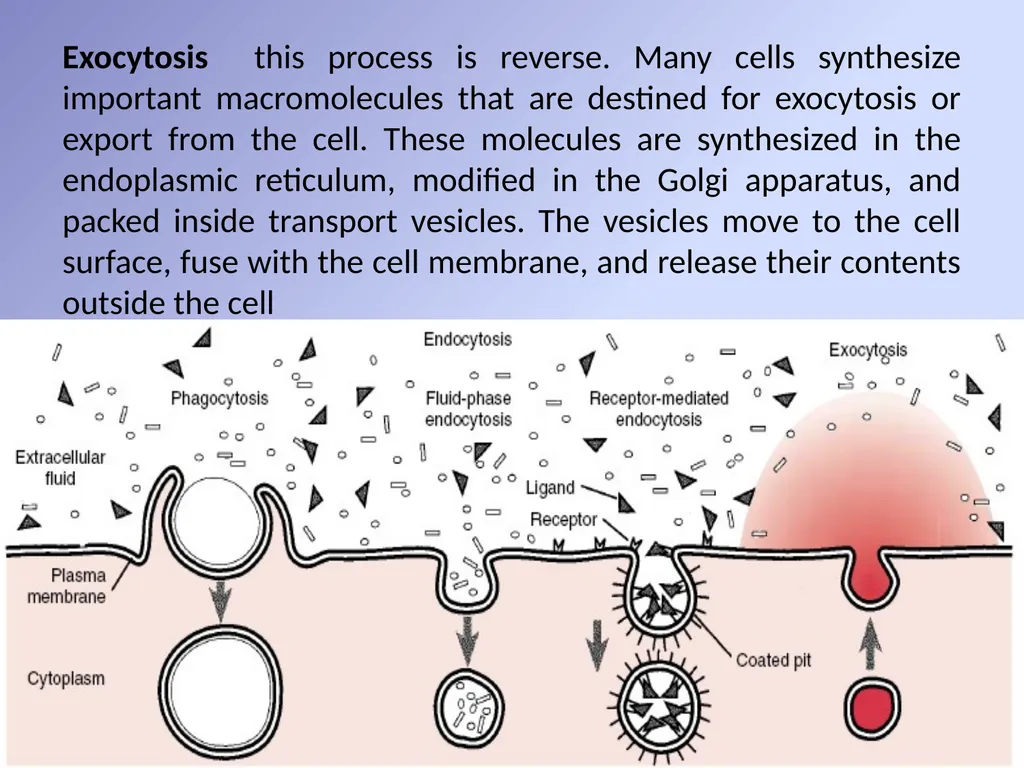
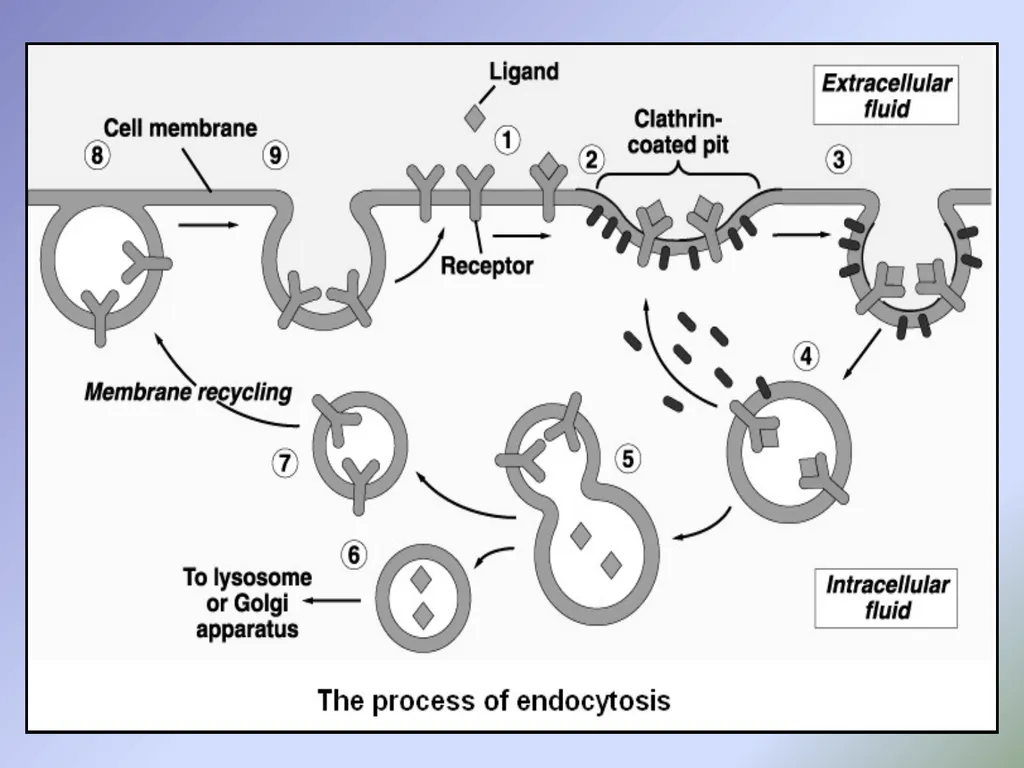
Endocytosis is a general term for the process in which a region of the plasma membrane is pinched off to form an endocytic vesicle inside the cell. During vesicle formation, some fluid, dissolved solutes, and particulate material from the extracellular medium are trapped inside the vesicle and internalized by the cell. Endocytosis produces much smaller endocytic vesicles (0.1 to 0.2 μm in diameter) than phagocytosis. It occurs in almost all cells and it occurs continually and specific stimuli are not required. In further contrast to phagocytosis, endocytosis originates with the formation of depressions in the cell membrane. The depressions pinch off within a few minutes after they form and give rise to endocytic vesicles inside the cell. Two main types of endocytosis can be distinguished<br>
19
[A] Fluid-phase endocytosis (pinocytosis or cell drinking) is the nonspecific uptake of the extracellular fluid and all its dissolved solutes. The material is trapped inside the endocytic vesicle as it is pinched off inside the cell.
[B] Receptor-mediated endocytosis (cell eating) is a more efficient process that uses receptors on the cell surface to bind specific molecules. These receptors accumulate at specific depressions known as coated pits, so named because the cytosolic surface of the membrane at this site is covered with a coat of several proteins. The coated pits pinch off continually to form endocytic vesicles, Receptor-mediated endocytosis is the mechanism by which cells take up a variety of important molecules, hormones, growth factors liproteins , such as transferrin (an iron carrier). Foreign substances, such as diphtheria toxin and certain viruses, also enter cells by this pathway.<br>
[B] Receptor-mediated endocytosis (cell eating) is a more efficient process that uses receptors on the cell surface to bind specific molecules. These receptors accumulate at specific depressions known as coated pits, so named because the cytosolic surface of the membrane at this site is covered with a coat of several proteins. The coated pits pinch off continually to form endocytic vesicles, Receptor-mediated endocytosis is the mechanism by which cells take up a variety of important molecules, hormones, growth factors liproteins , such as transferrin (an iron carrier). Foreign substances, such as diphtheria toxin and certain viruses, also enter cells by this pathway.<br>
20
Exocytosis this process is reverse. Many cells synthesize important macromolecules that are destined for exocytosis or export from the cell. These molecules are synthesized in the endoplasmic reticulum, modified in the Golgi apparatus, and packed inside transport vesicles. The vesicles move to the cell surface, fuse with the cell membrane, and release their contents outside the cell<br>
21
The primary factors (Starling forces) that determine fluid movement through the capillary membrane
[1] The capillary hydrostatic pressure, which tends to move or to filter the fluid outward through the capillary membrane.
[2] The interstitial fluid hydrostatic pressure, which tends to move fluid outward through the capillary membrane to the interstitial fluid<br>
[1] The capillary hydrostatic pressure, which tends to move or to filter the fluid outward through the capillary membrane.
[2] The interstitial fluid hydrostatic pressure, which tends to move fluid outward through the capillary membrane to the interstitial fluid<br>
22
[3] The plasma colloid osmotic pressure, which tends to cause osmosis of fluid inward through the membrane. The colloid osmotic (oncotic) pressure of normal human plasma averages approximately 25 mm Hg mainly is caused by the dissolved protein (60-80 g/L). About 75% of the total colloid osmotic pressure of the plasma result from the albumin fraction, 25% from globulin, and almost non from the fibrinogen. This is because albumin has a smaller M.W. than others, so there are more molecules per gm of albumin than molecules per gm of globulin. Moreover, albumin is more dissociated in plasma than globulin.<br>
23
[4] The interstitial fluid colloid osmotic pressure due to protein (1g/l) which tends to cause osmosis of fluid outward through the membrane. It is about 1 mm Hg.
[5] Capillary permeability: The capillary is completely permeable to small molecules and water, but is normally only slightly permeable to plasma protein. This permeability to colloids may be increased by a number of factors such as certain poisons, oxygen lack and bacterial toxins.
*Disturbance of water balance in which there is an excess of fluid in tissue spaces and serous cavities of the body is called edema. Edema is detectable clinically only when the interstitial fluid volume is increased by at least 10%.<br>
[5] Capillary permeability: The capillary is completely permeable to small molecules and water, but is normally only slightly permeable to plasma protein. This permeability to colloids may be increased by a number of factors such as certain poisons, oxygen lack and bacterial toxins.
*Disturbance of water balance in which there is an excess of fluid in tissue spaces and serous cavities of the body is called edema. Edema is detectable clinically only when the interstitial fluid volume is increased by at least 10%.<br>
24
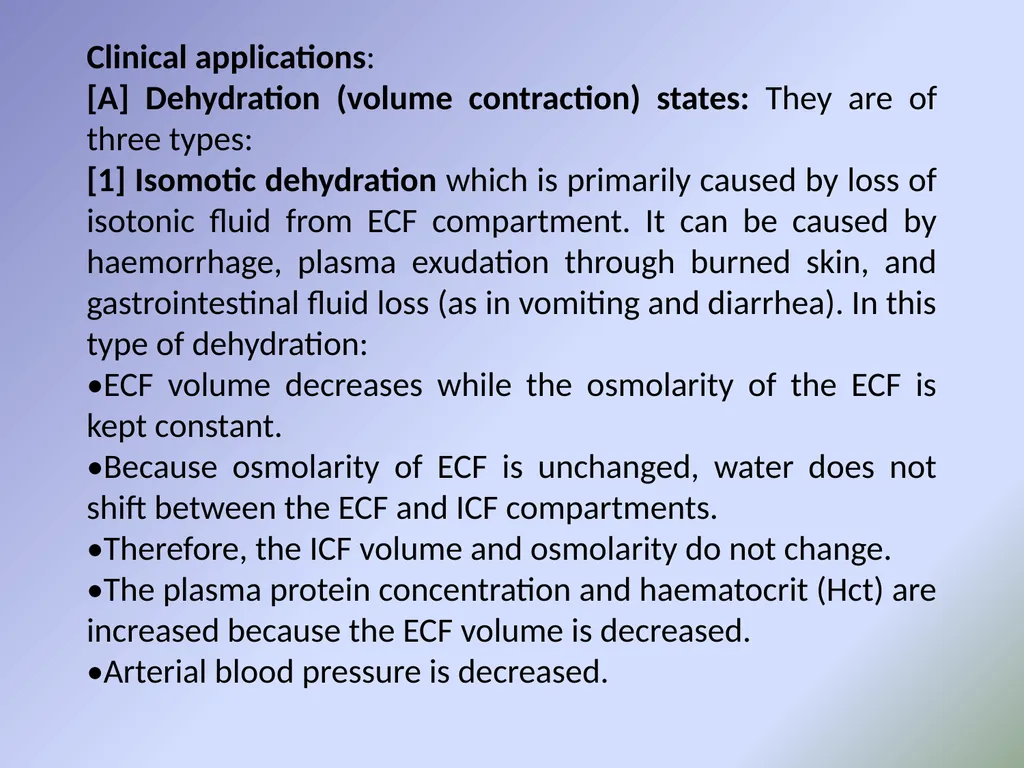
Clinical applications:
[A] Dehydration (volume contraction) states: They are of three types:
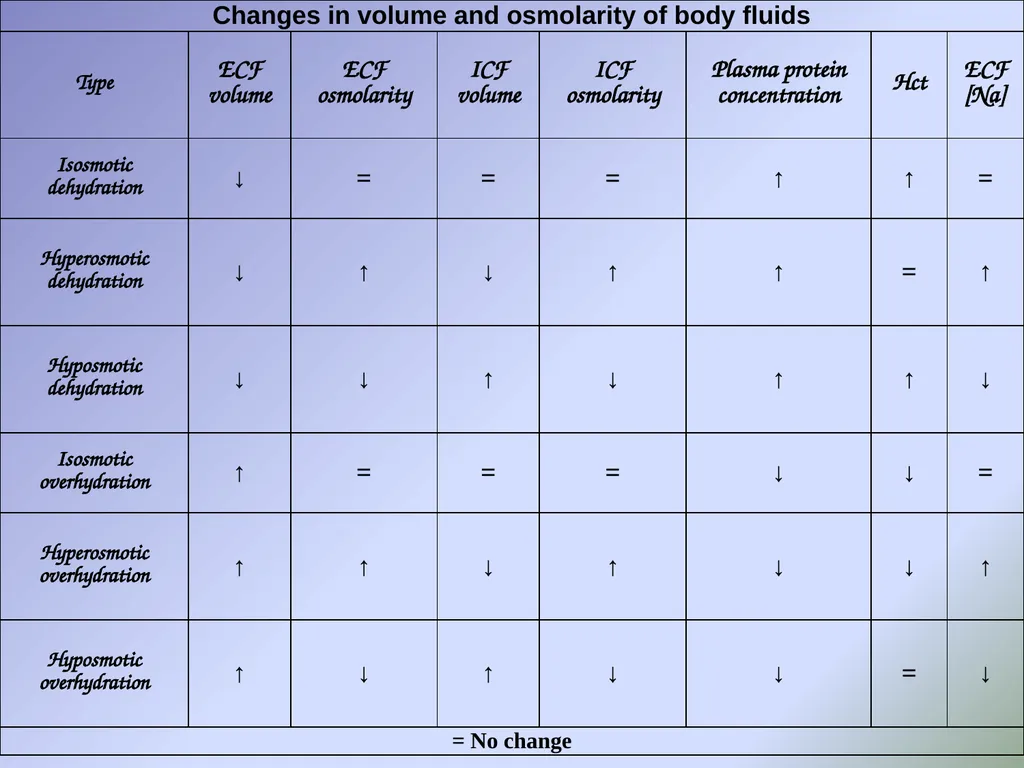
[1] Isomotic dehydration which is primarily caused by loss of isotonic fluid from ECF compartment. It can be caused by haemorrhage, plasma exudation through burned skin, and gastrointestinal fluid loss (as in vomiting and diarrhea). In this type of dehydration:
•ECF volume decreases while the osmolarity of the ECF is kept constant.
•Because osmolarity of ECF is unchanged, water does not shift between the ECF and ICF compartments.
•Therefore, the ICF volume and osmolarity do not change.
•The plasma protein concentration and haematocrit (Hct) are increased because the ECF volume is decreased.
•Arterial blood pressure is decreased.<br>
[A] Dehydration (volume contraction) states: They are of three types:
[1] Isomotic dehydration which is primarily caused by loss of isotonic fluid from ECF compartment. It can be caused by haemorrhage, plasma exudation through burned skin, and gastrointestinal fluid loss (as in vomiting and diarrhea). In this type of dehydration:
•ECF volume decreases while the osmolarity of the ECF is kept constant.
•Because osmolarity of ECF is unchanged, water does not shift between the ECF and ICF compartments.
•Therefore, the ICF volume and osmolarity do not change.
•The plasma protein concentration and haematocrit (Hct) are increased because the ECF volume is decreased.
•Arterial blood pressure is decreased.<br>
25
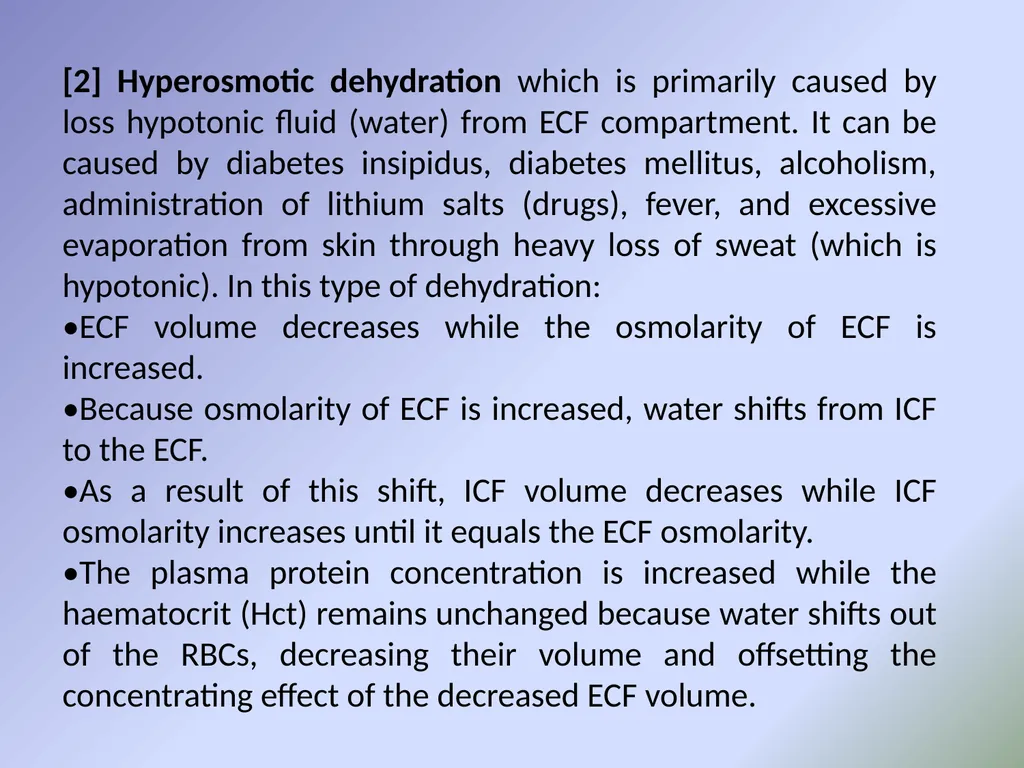
[2] Hyperosmotic dehydration which is primarily caused by loss hypotonic fluid (water) from ECF compartment. It can be caused by diabetes insipidus, diabetes mellitus, alcoholism, administration of lithium salts (drugs), fever, and excessive evaporation from skin through heavy loss of sweat (which is hypotonic). In this type of dehydration:
•ECF volume decreases while the osmolarity of ECF is increased.
•Because osmolarity of ECF is increased, water shifts from ICF to the ECF.
•As a result of this shift, ICF volume decreases while ICF osmolarity increases until it equals the ECF osmolarity.
•The plasma protein concentration is increased while the haematocrit (Hct) remains unchanged because water shifts out of the RBCs, decreasing their volume and offsetting the concentrating effect of the decreased ECF volume.<br>
•ECF volume decreases while the osmolarity of ECF is increased.
•Because osmolarity of ECF is increased, water shifts from ICF to the ECF.
•As a result of this shift, ICF volume decreases while ICF osmolarity increases until it equals the ECF osmolarity.
•The plasma protein concentration is increased while the haematocrit (Hct) remains unchanged because water shifts out of the RBCs, decreasing their volume and offsetting the concentrating effect of the decreased ECF volume.<br>
26
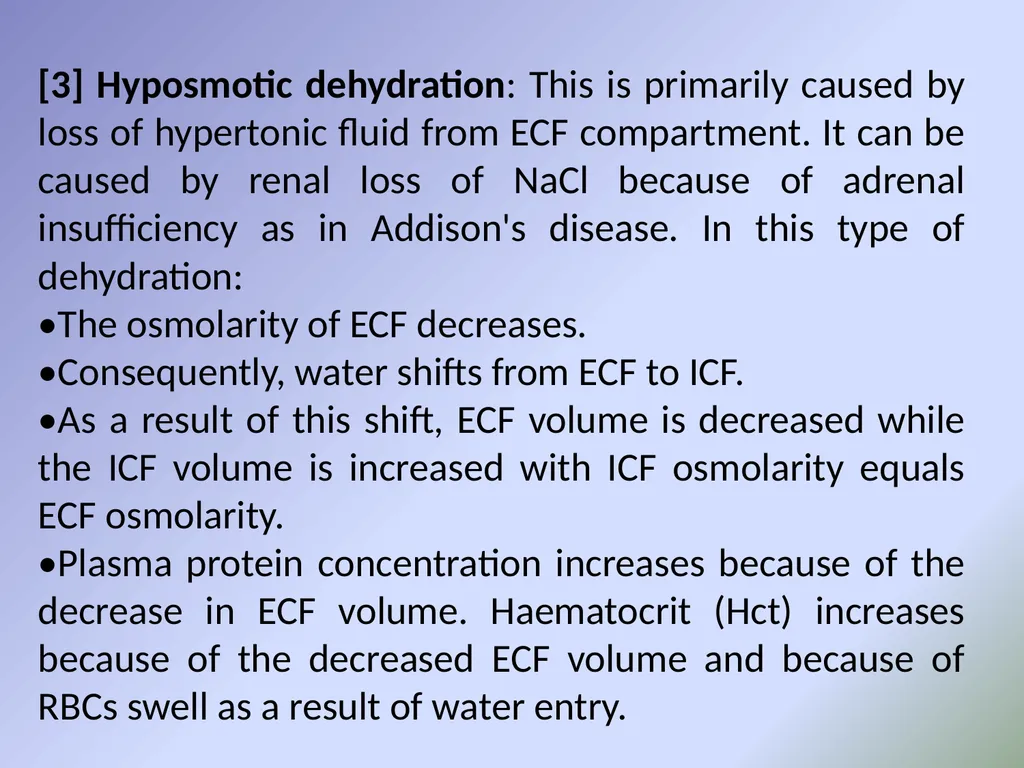
[3] Hyposmotic dehydration: This is primarily caused by loss of hypertonic fluid from ECF compartment. It can be caused by renal loss of NaCl because of adrenal insufficiency as in Addison's disease. In this type of dehydration:
•The osmolarity of ECF decreases.
•Consequently, water shifts from ECF to ICF.
•As a result of this shift, ECF volume is decreased while the ICF volume is increased with ICF osmolarity equals ECF osmolarity.
•Plasma protein concentration increases because of the decrease in ECF volume. Haematocrit (Hct) increases because of the decreased ECF volume and because of RBCs swell as a result of water entry.<br>
•The osmolarity of ECF decreases.
•Consequently, water shifts from ECF to ICF.
•As a result of this shift, ECF volume is decreased while the ICF volume is increased with ICF osmolarity equals ECF osmolarity.
•Plasma protein concentration increases because of the decrease in ECF volume. Haematocrit (Hct) increases because of the decreased ECF volume and because of RBCs swell as a result of water entry.<br>
27
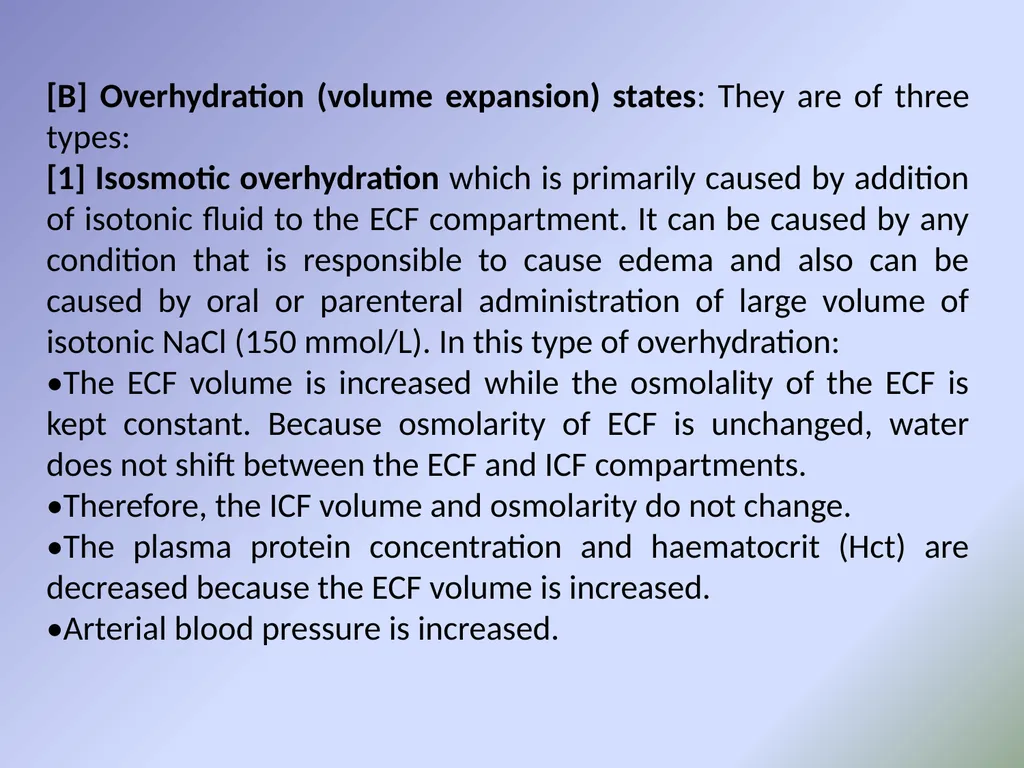
[B] Overhydration (volume expansion) states: They are of three types:
[1] Isosmotic overhydration which is primarily caused by addition of isotonic fluid to the ECF compartment. It can be caused by any condition that is responsible to cause edema and also can be caused by oral or parenteral administration of large volume of isotonic NaCl (150 mmol/L). In this type of overhydration:
•The ECF volume is increased while the osmolality of the ECF is kept constant. Because osmolarity of ECF is unchanged, water does not shift between the ECF and ICF compartments.
•Therefore, the ICF volume and osmolarity do not change.
•The plasma protein concentration and haematocrit (Hct) are decreased because the ECF volume is increased.
•Arterial blood pressure is increased.<br>
[1] Isosmotic overhydration which is primarily caused by addition of isotonic fluid to the ECF compartment. It can be caused by any condition that is responsible to cause edema and also can be caused by oral or parenteral administration of large volume of isotonic NaCl (150 mmol/L). In this type of overhydration:
•The ECF volume is increased while the osmolality of the ECF is kept constant. Because osmolarity of ECF is unchanged, water does not shift between the ECF and ICF compartments.
•Therefore, the ICF volume and osmolarity do not change.
•The plasma protein concentration and haematocrit (Hct) are decreased because the ECF volume is increased.
•Arterial blood pressure is increased.<br>
28
[2] Hyperosmotic overhydration which is primarily caused by addition of hypertonic fluid to the ECF compartment. It can be caused by oral or parenteral intake of large amounts of hypertonic fluid. In this type of overhydration:
•The ECF osmolarity is increased.
•Consequently, water shifts from ICF to ECF.
•As a result of this shift, ECF volume is increased while the ICF volume is decreased with ICF osmolarity equals ECF osmolarity.
•The plasma protein concentration and haematocrit (Hct) are decreased because of the increase in ECF volume.<br>
•The ECF osmolarity is increased.
•Consequently, water shifts from ICF to ECF.
•As a result of this shift, ECF volume is increased while the ICF volume is decreased with ICF osmolarity equals ECF osmolarity.
•The plasma protein concentration and haematocrit (Hct) are decreased because of the increase in ECF volume.<br>
29
[3] Hyposmotic overhydration which is primarily caused by addition of hypotonic fluid to the ECF compartment. It is caused by ingestion of a large volume of water or renal retention of water due to the syndrome of inappropriate antidiuretic hormone secretion (SIADH). In this type of overhydration:
•The volume of ECF increases because of water retention while ECF osmolarity is decreased.
•Consequently, water shifts from ECF to ICF.
•As a result of this shift, ICF volume increases and ICF osmolarity decreases until it equals ECF.<br>
•The volume of ECF increases because of water retention while ECF osmolarity is decreased.
•Consequently, water shifts from ECF to ICF.
•As a result of this shift, ICF volume increases and ICF osmolarity decreases until it equals ECF.<br>