
Boring, Drilling & Blasting, and Tunneling



Description: Boring, Drilling Blasting, and Tunneling RockSoil Excavation Modul-9 Drilling Creating a cavity in hard materials by means of impact andor abrasiongrinding The first practical drilling machine was employed in 1861 (Alps on Mt. Cenis
Related Topics
Download Presentation
"Boring, Drilling & Blasting, and Tunneling" is the property of its rightful owner. Permission is granted to download and print the materials on this website for personal, non-commercial use only, and to display it on your personal computer provided you do not modify the materials and that you retain all copyright notices contained in the materials. By downloading content from our website, you accept the terms of this agreement.
Presentation Transcript
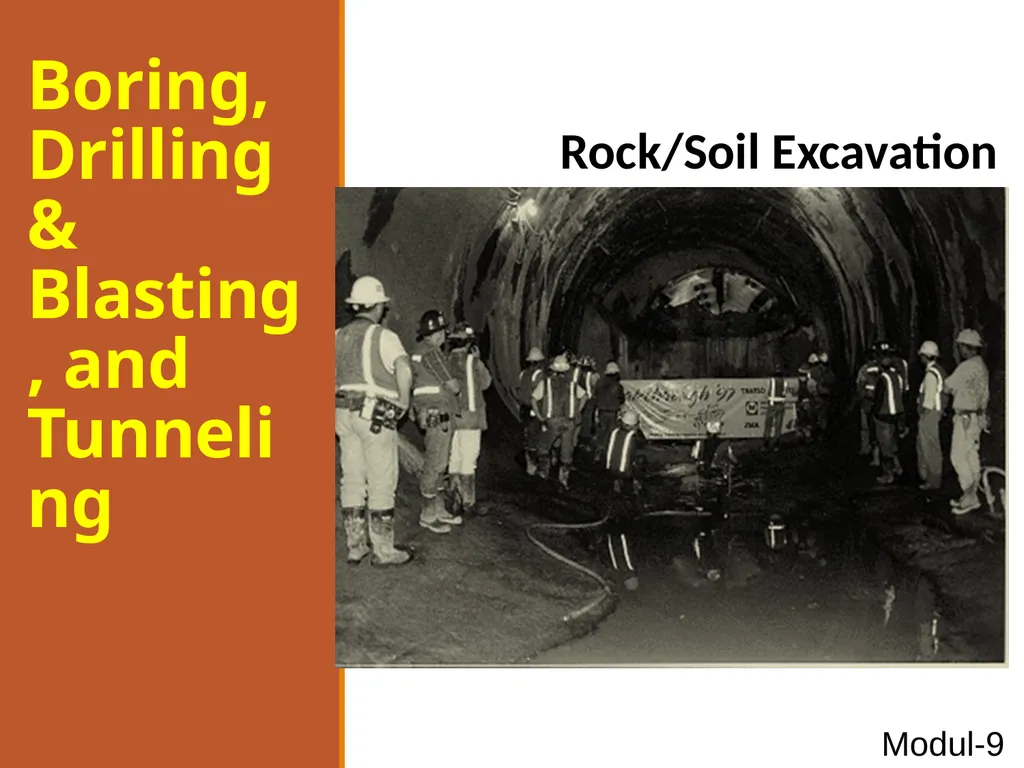
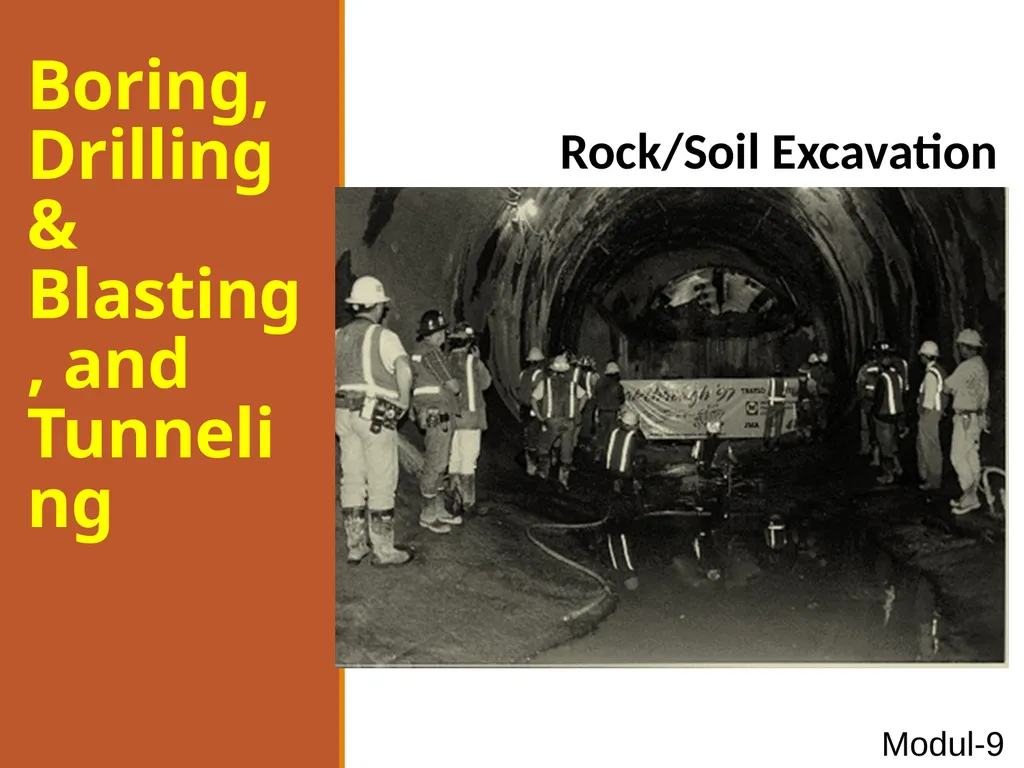
slide1. Boring, Drilling & Blasting, and Tunneling Rock/Soil Excavation Modul-9<br>
slide2. Drilling Creating a cavity in hard materials by means of impact and/or abrasion/grinding
The first practical drilling machine was employed in 1861 (Alps on Mt. Cenis tunnel)
Drilling often accompanied/followed by other means
installation of piping system for transporting material (water well or soil sample)
installation of made-made structure foundation
to help excavation by breaking hard medium blasting<br>
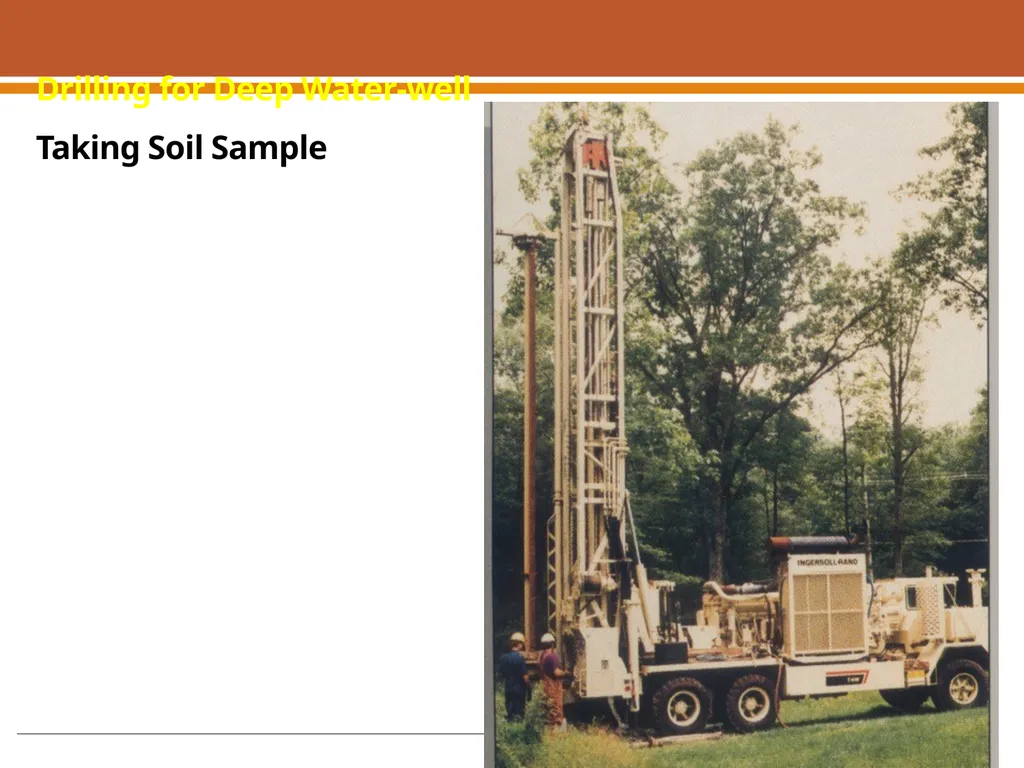
slide3. Drilling for Deep Water-well Taking Soil Sample<br>
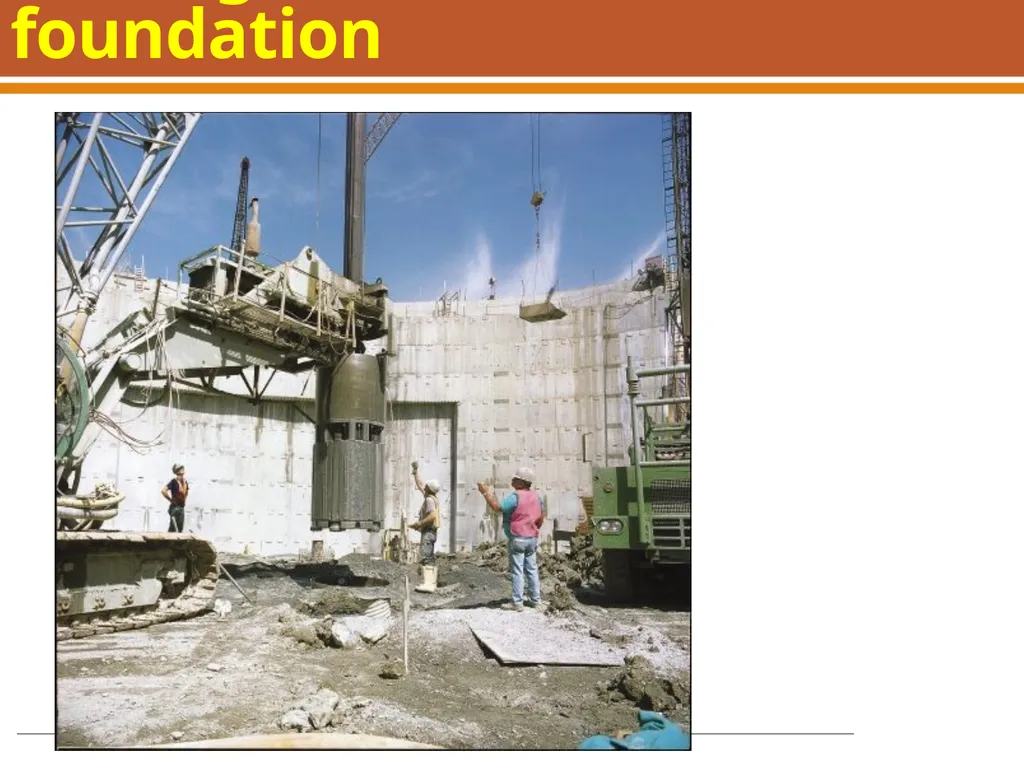
slide4. Drilling for bored-foundation<br>
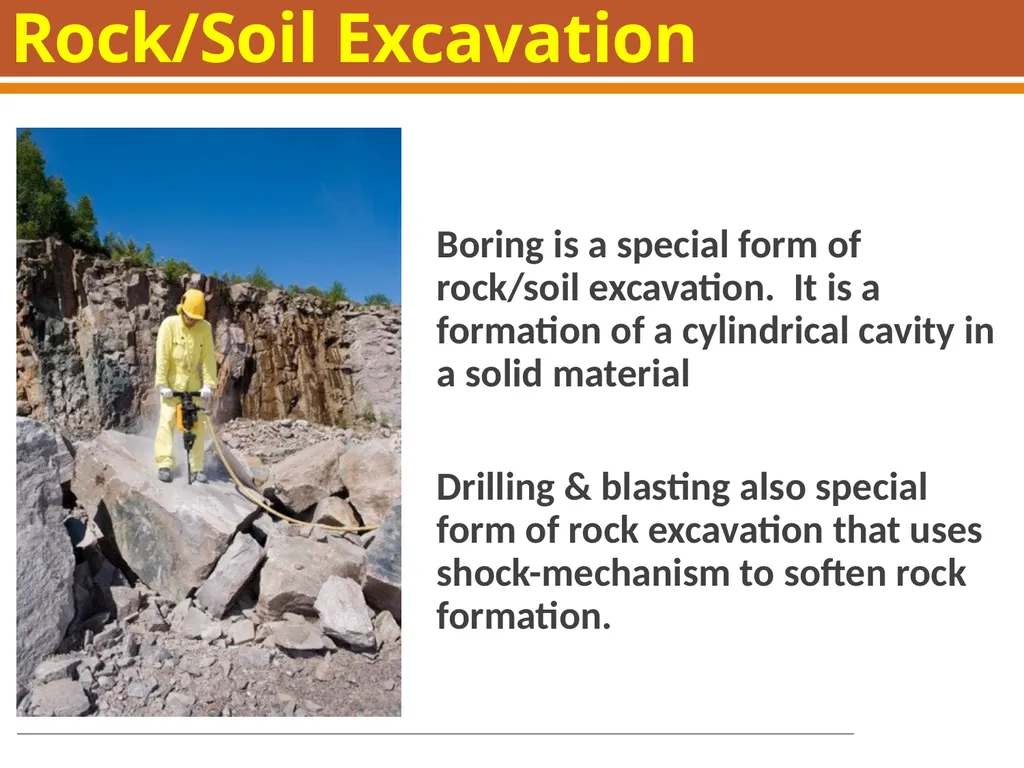
slide5. Rock/Soil Excavation Boring is a special form of rock/soil excavation. It is a formation of a cylindrical cavity in a solid material
Drilling & blasting also special form of rock excavation that uses shock-mechanism to soften rock formation.<br>
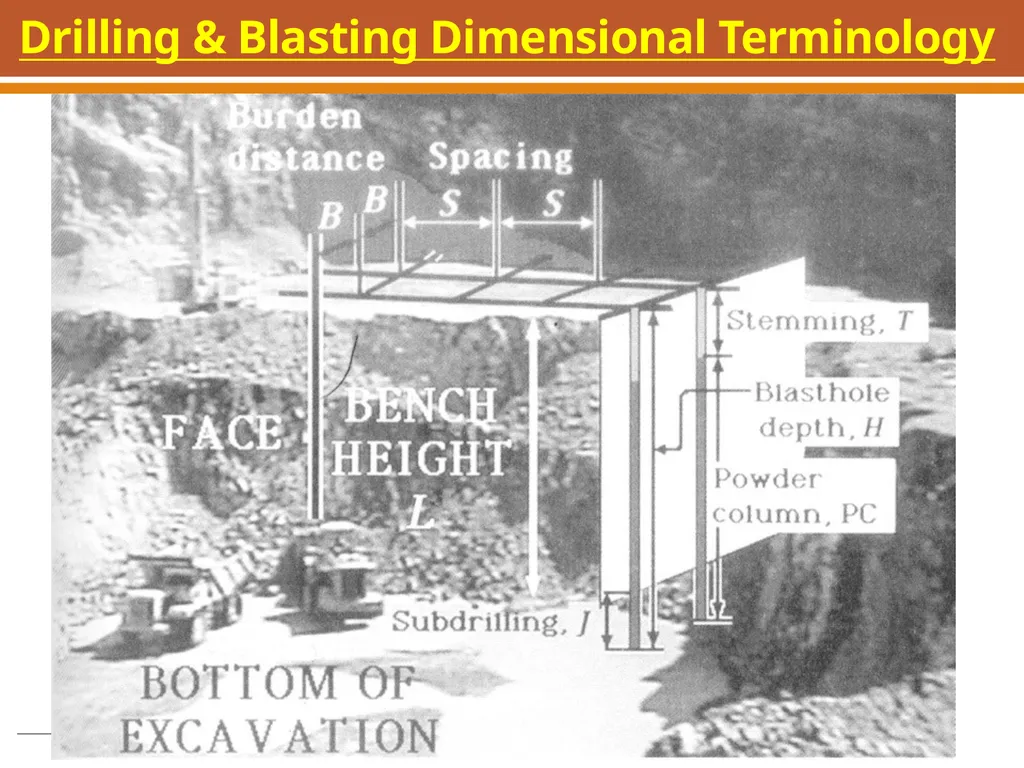
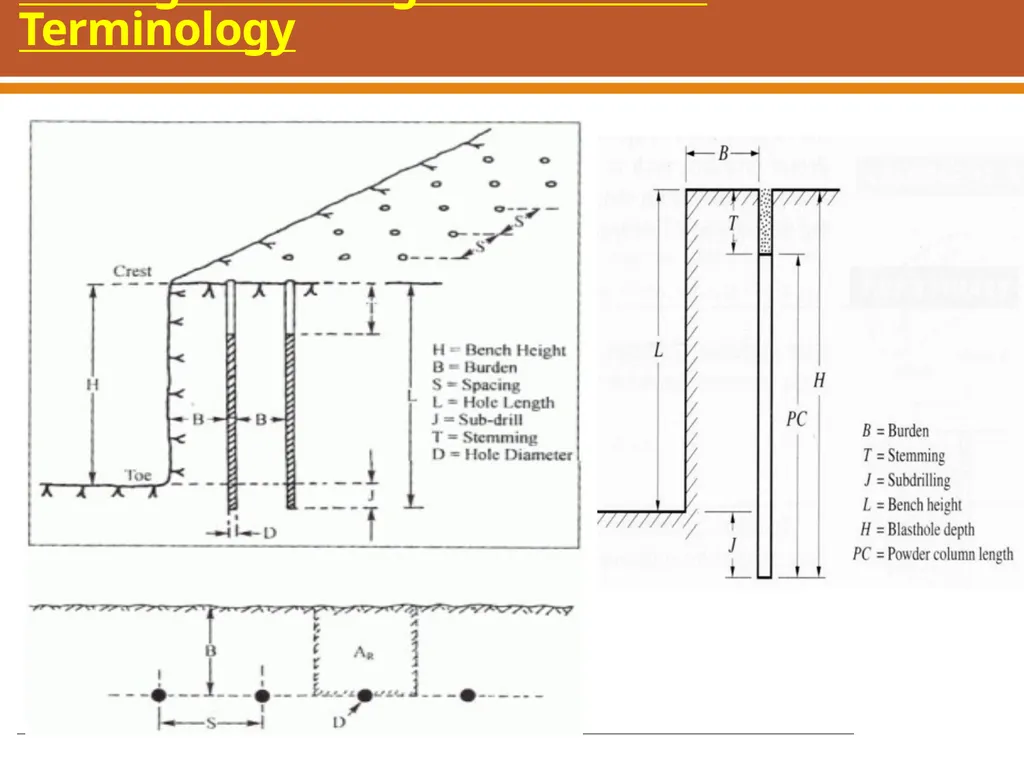
slide6. Drilling & Blasting Dimensional Terminology<br>
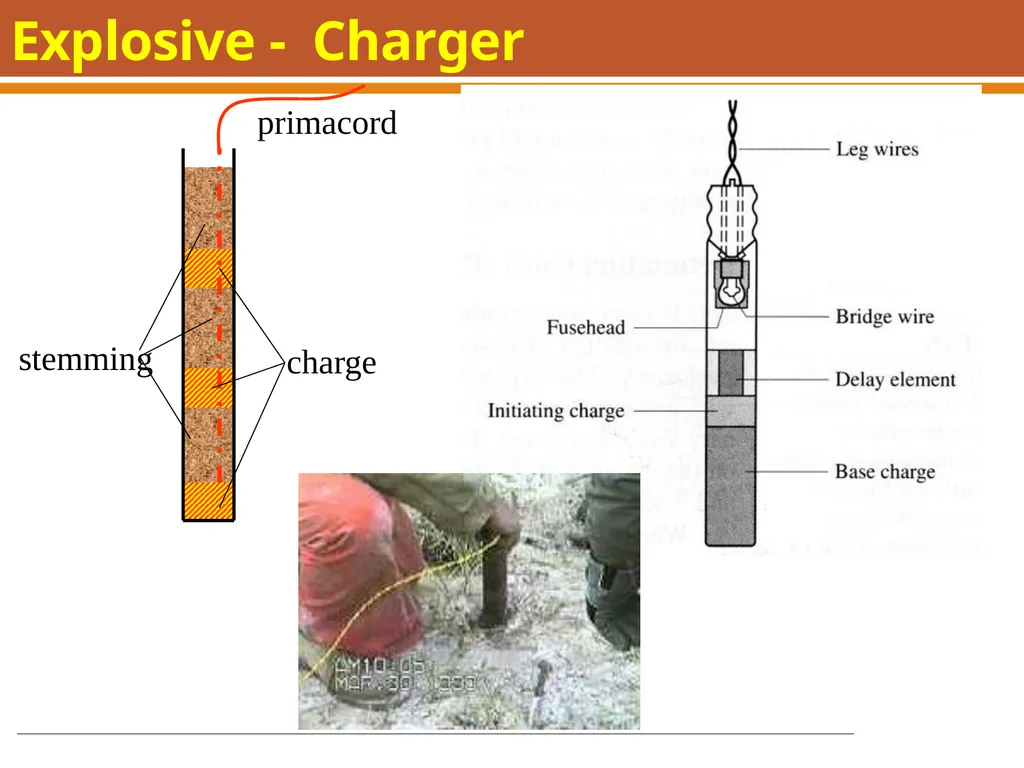
slide7. Blasting Terminologies Stemming
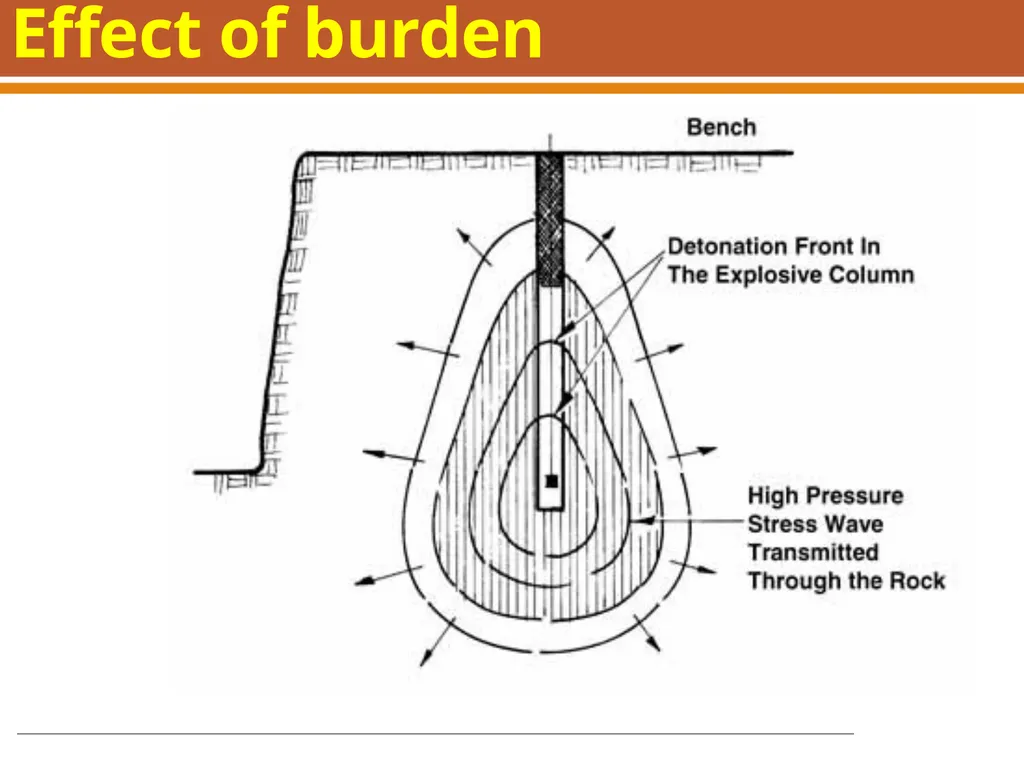
Filling between two explosive in a blast hole
Sometimes made of jelly
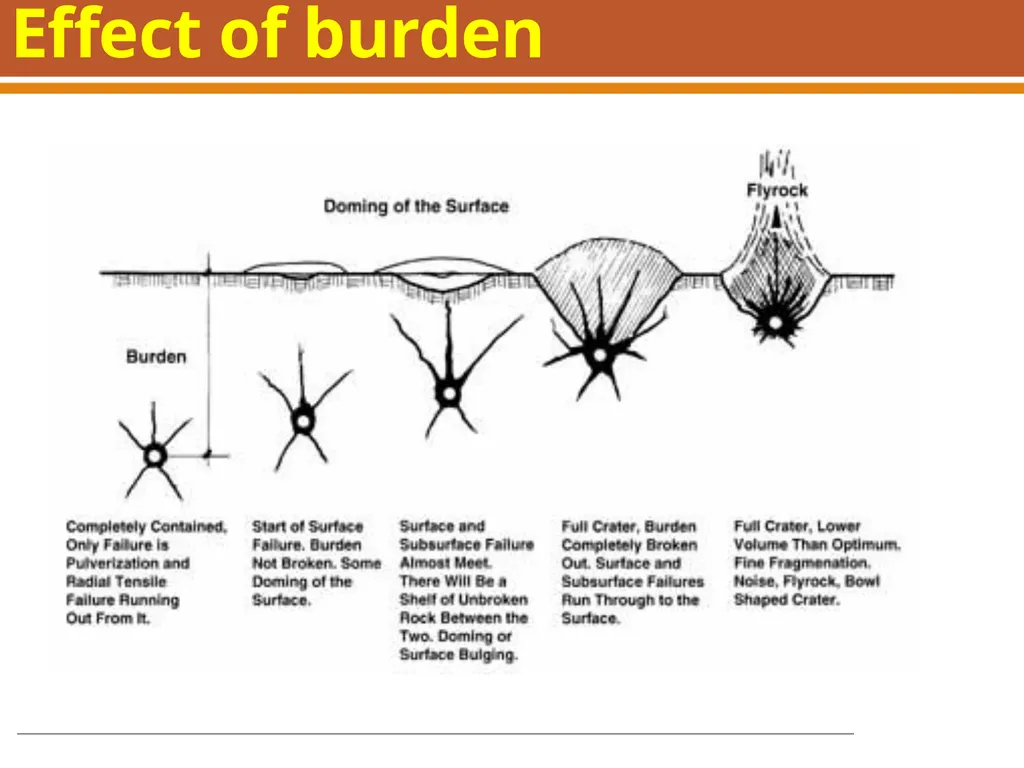
Burden
Amount of (thickness) of soil/rock to be removed (measured from the distance of blast hole to open face
Spacing
Distance between two adjacent blast hole
Bench & Face
Method of drill & blasting that uses partial progress
Alternative method: full-blast
Relief holes
Emptied hole (not filled with explosive) to increase the effectiveness of a blast mechanism<br>
slide8. Drilling & Blasting Dimensional Terminology<br>
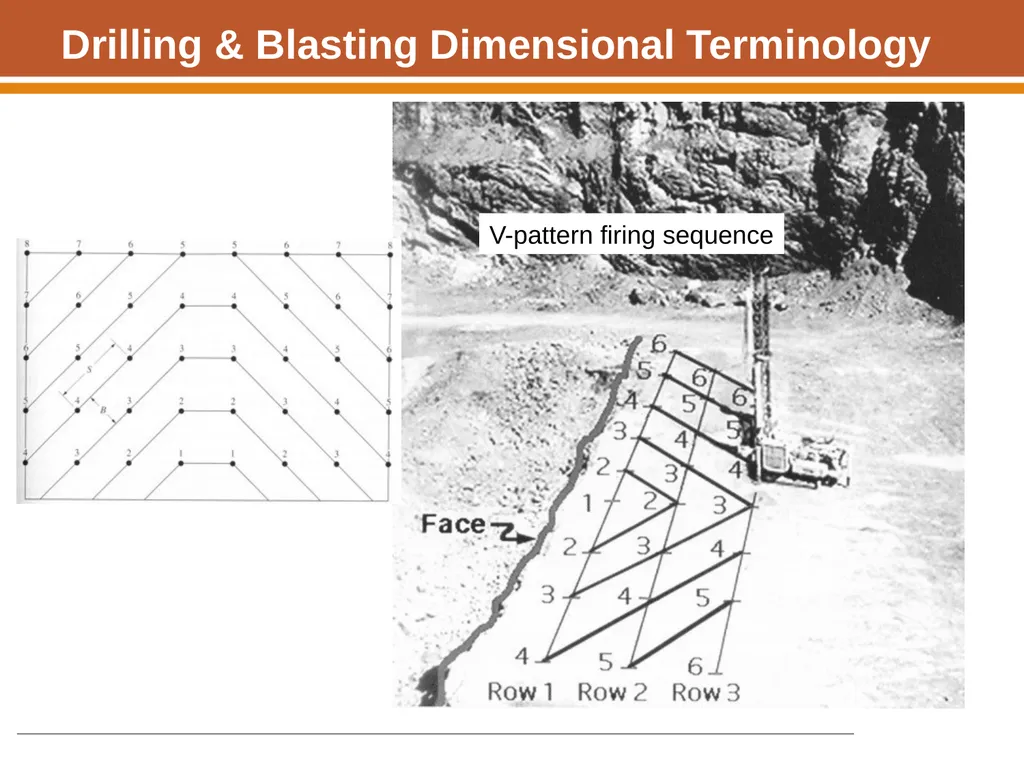
slide9. Drilling & Blasting Dimensional Terminology V-pattern firing sequence<br>
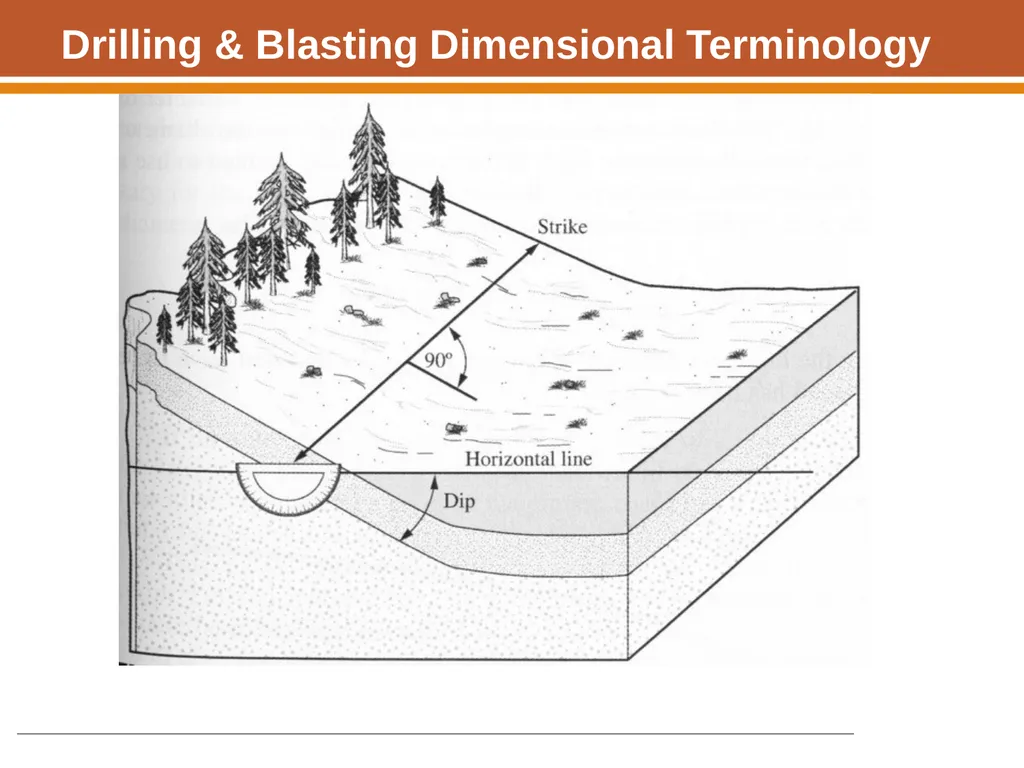
slide10. Drilling & Blasting Dimensional Terminology<br>
slide11. Drilling Glossary Terms<br>
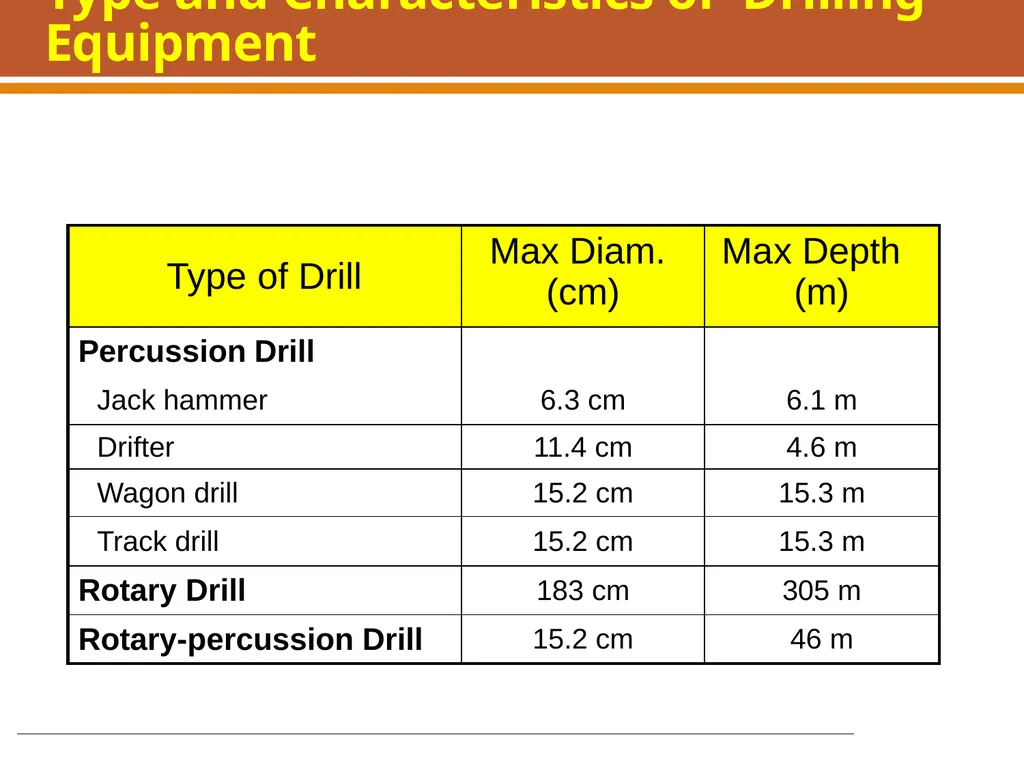
slide12. Type and Characteristics of Drilling Equipment<br>
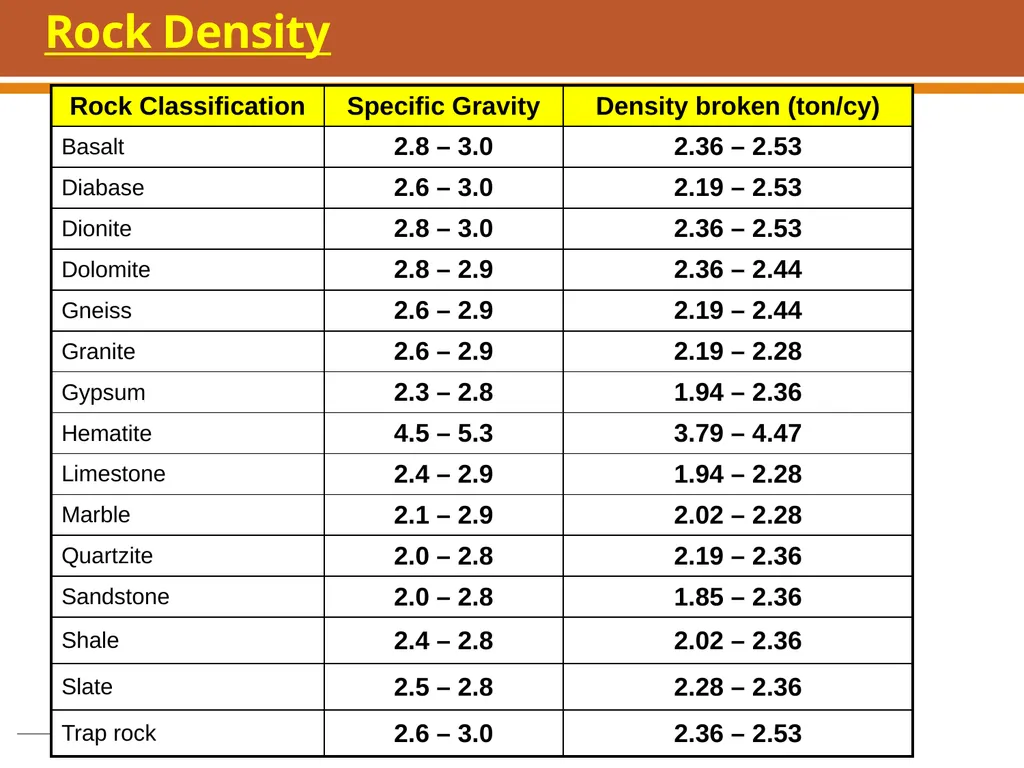
slide13. Rock Density<br>
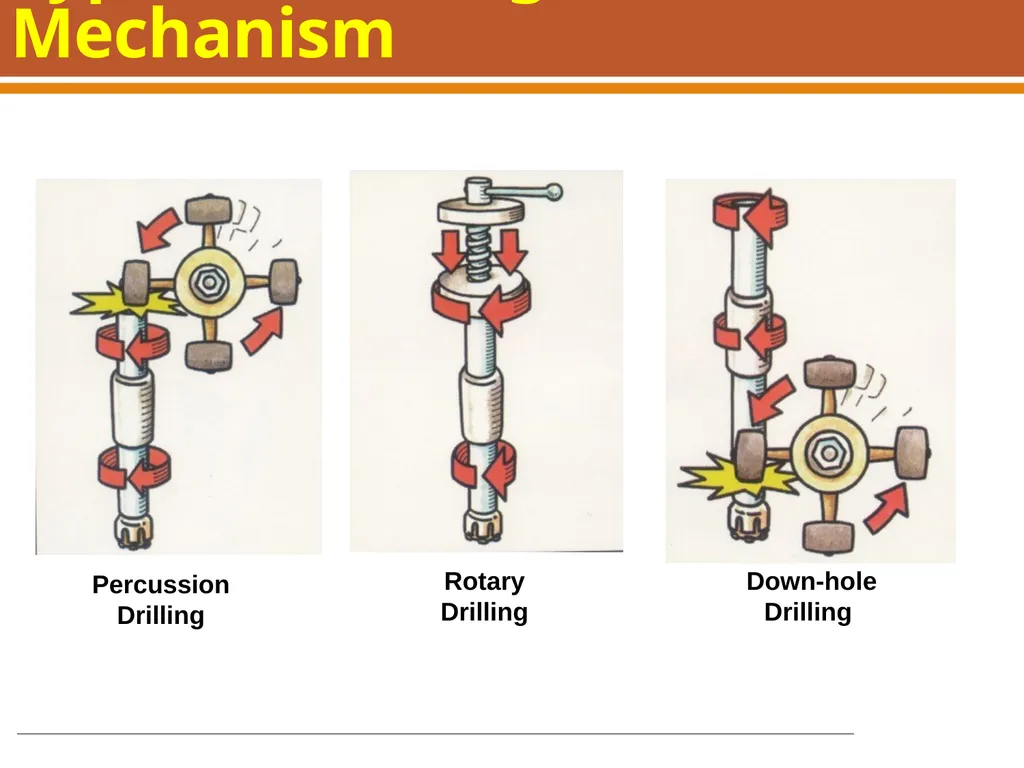
slide14. Types of Drilling Mechanism<br>
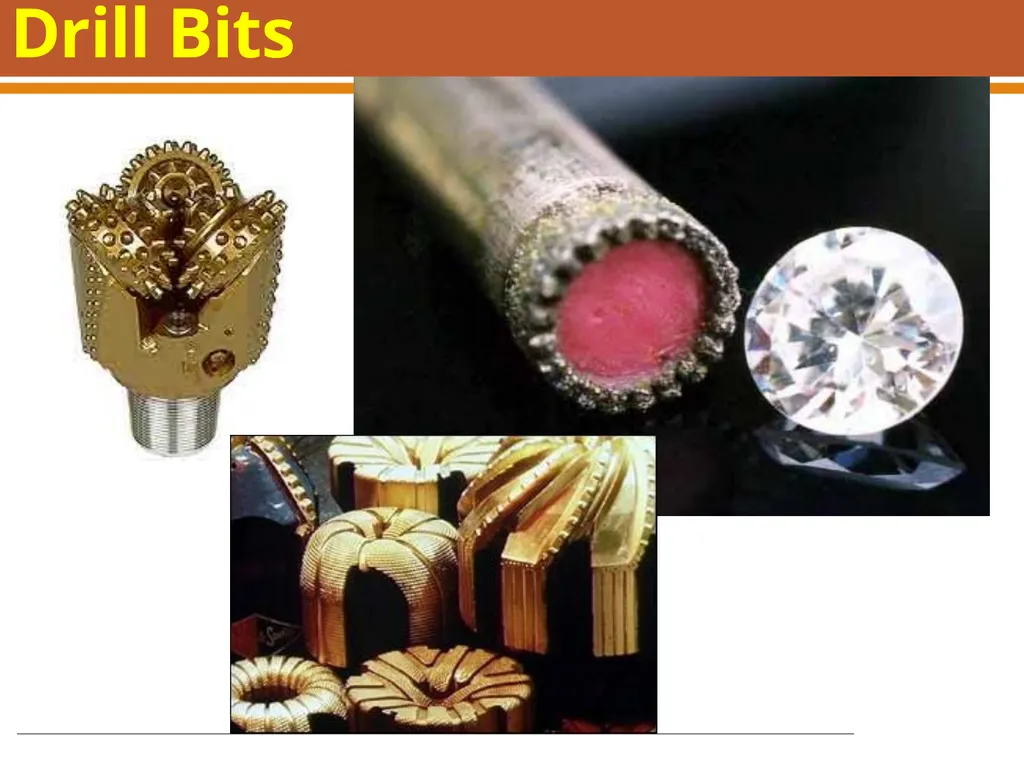
slide15. Drill Bits<br>
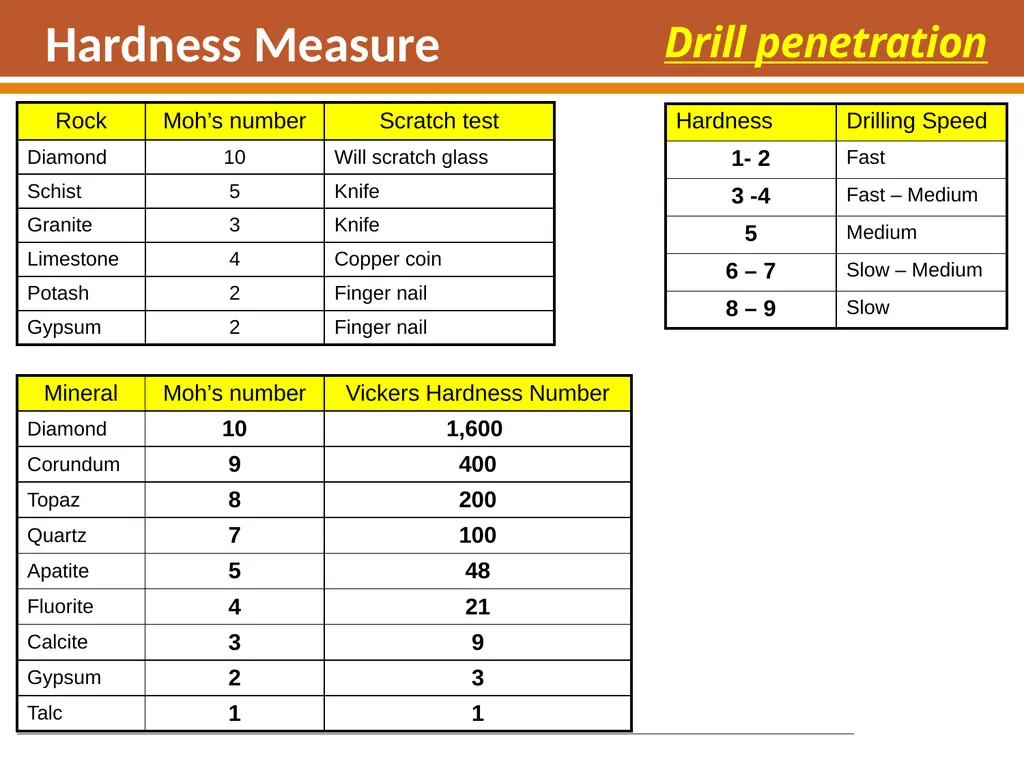
slide16. Drill penetration Hardness Measure<br>
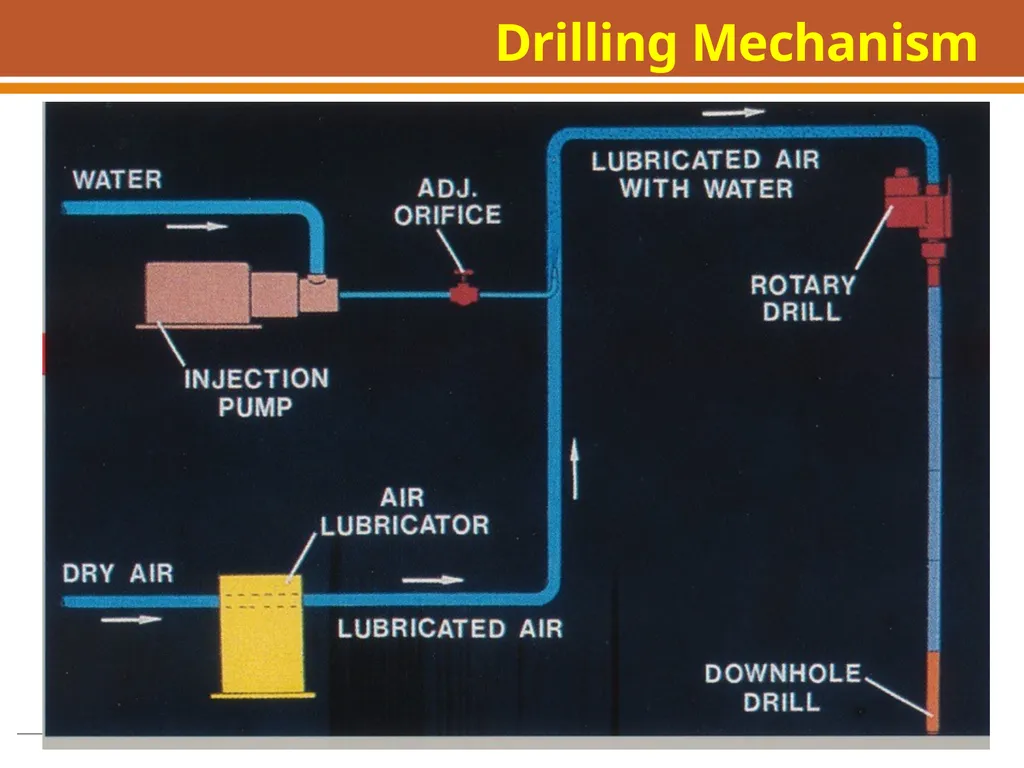
slide17. Drilling Mechanism<br>
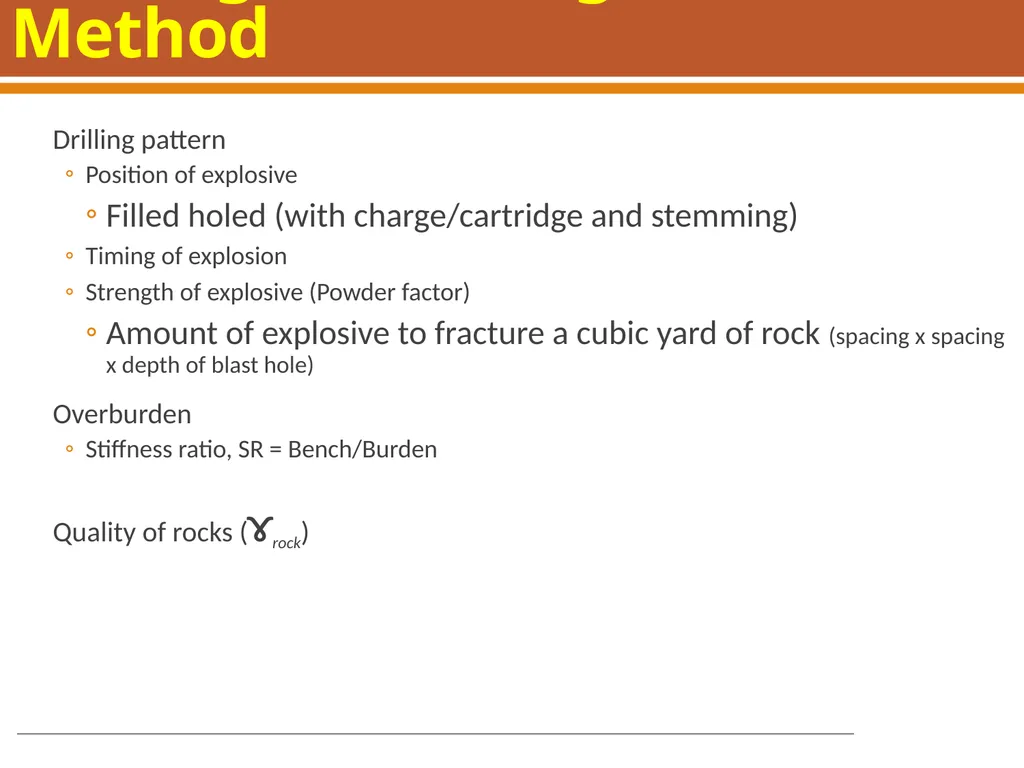
slide18. Drilling & Blasting Method Drilling pattern
Position of explosive
Filled holed (with charge/cartridge and stemming)
Timing of explosion
Strength of explosive (Powder factor)
Amount of explosive to fracture a cubic yard of rock (spacing x spacing x depth of blast hole)
Overburden
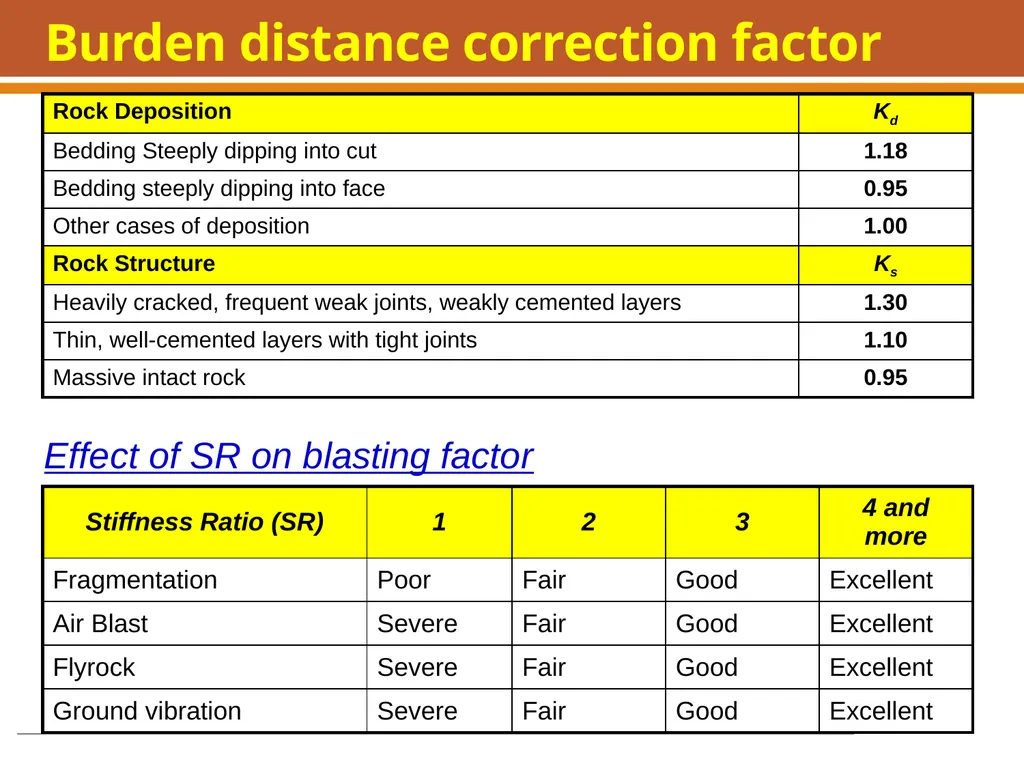
Stiffness ratio, SR = Bench/Burden
Quality of rocks (ɤrock)<br>
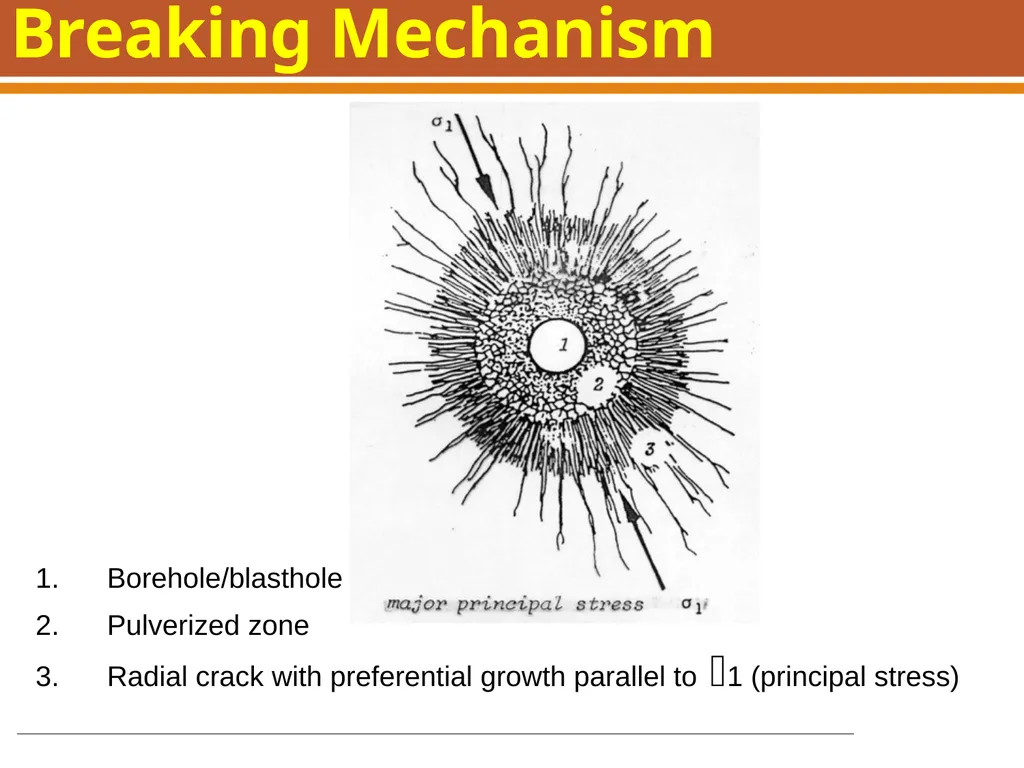
slide19. Breaking Mechanism Borehole/blasthole
Pulverized zone
Radial crack with preferential growth parallel to 1 (principal stress)<br>
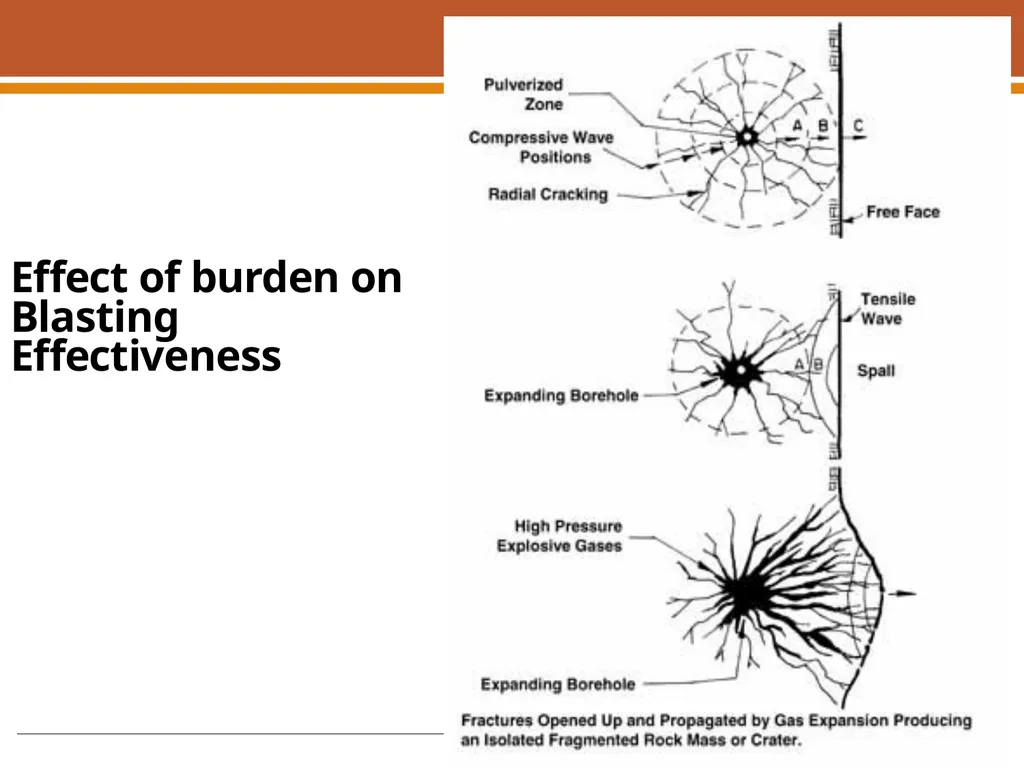
slide20. Effect of burden on Blasting Effectiveness<br>
slide21. Effect of burden<br>
slide22. Effect of burden<br>
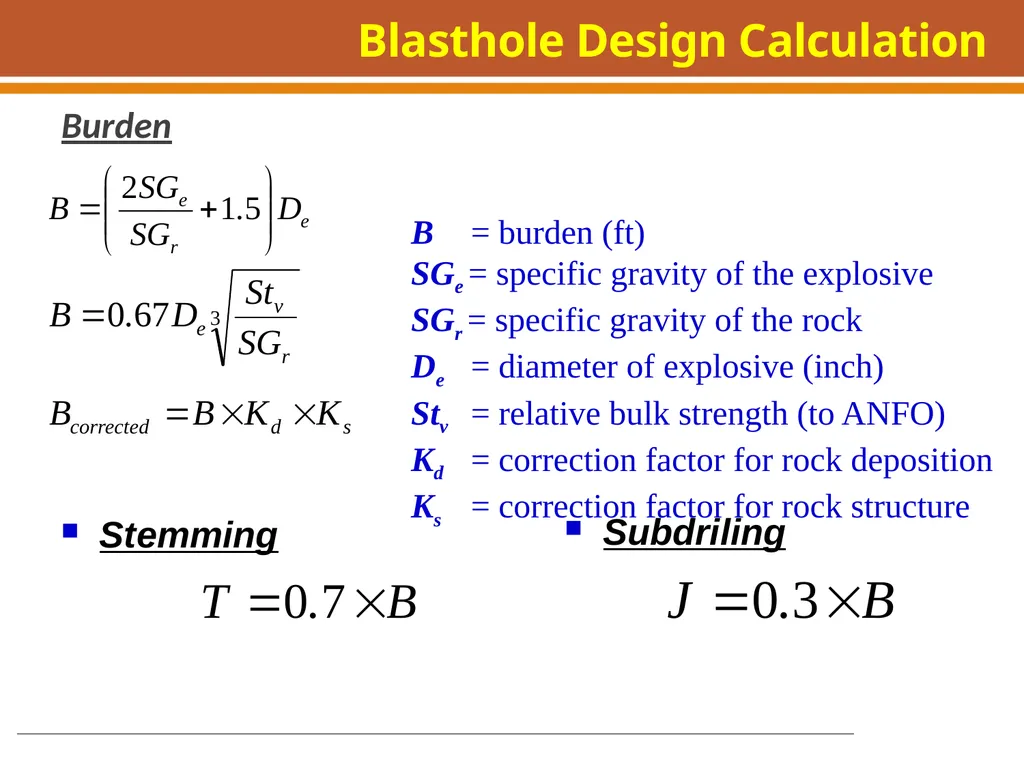
slide23. Blasthole Design Calculation Burden B = burden (ft)
SGe = specific gravity of the explosive
SGr = specific gravity of the rock
De = diameter of explosive (inch)
Stv = relative bulk strength (to ANFO)
Kd = correction factor for rock deposition
Ks = correction factor for rock structure<br>
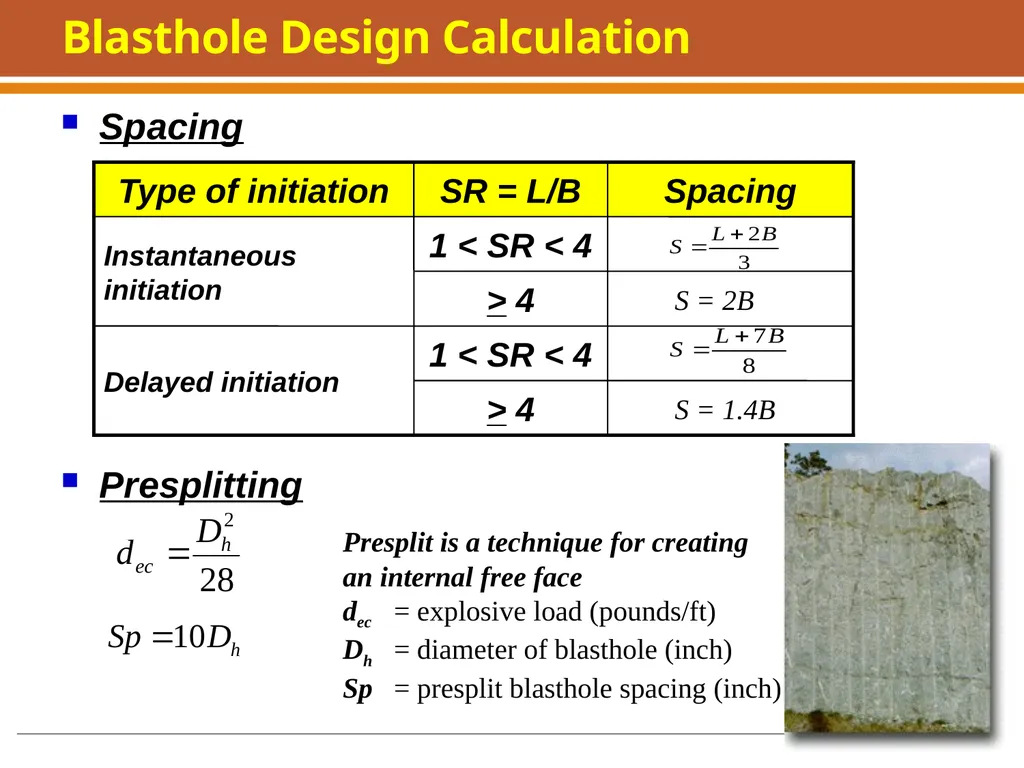
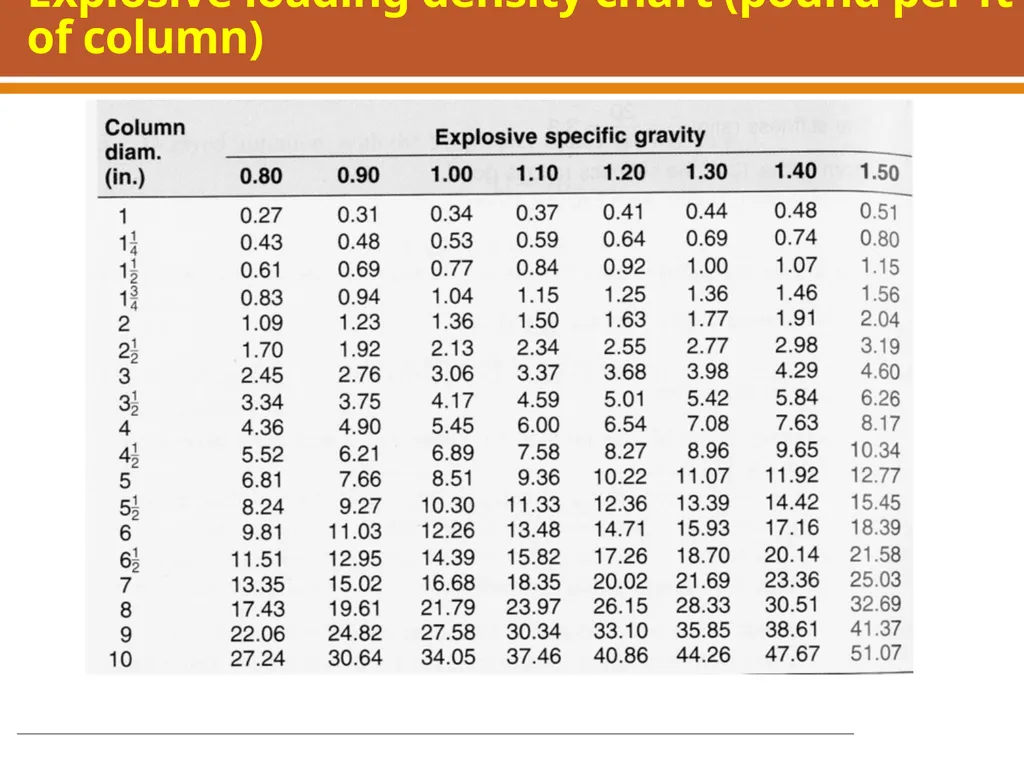
slide24. Blasthole Design Calculation Spacing Presplitting Presplit is a technique for creating an internal free face
dec = explosive load (pounds/ft)
Dh = diameter of blasthole (inch)
Sp = presplit blasthole spacing (inch)<br>
slide25. Burden distance correction factor Effect of SR on blasting factor<br>
slide26. Explosive loading density chart (pound per ft of column)<br>
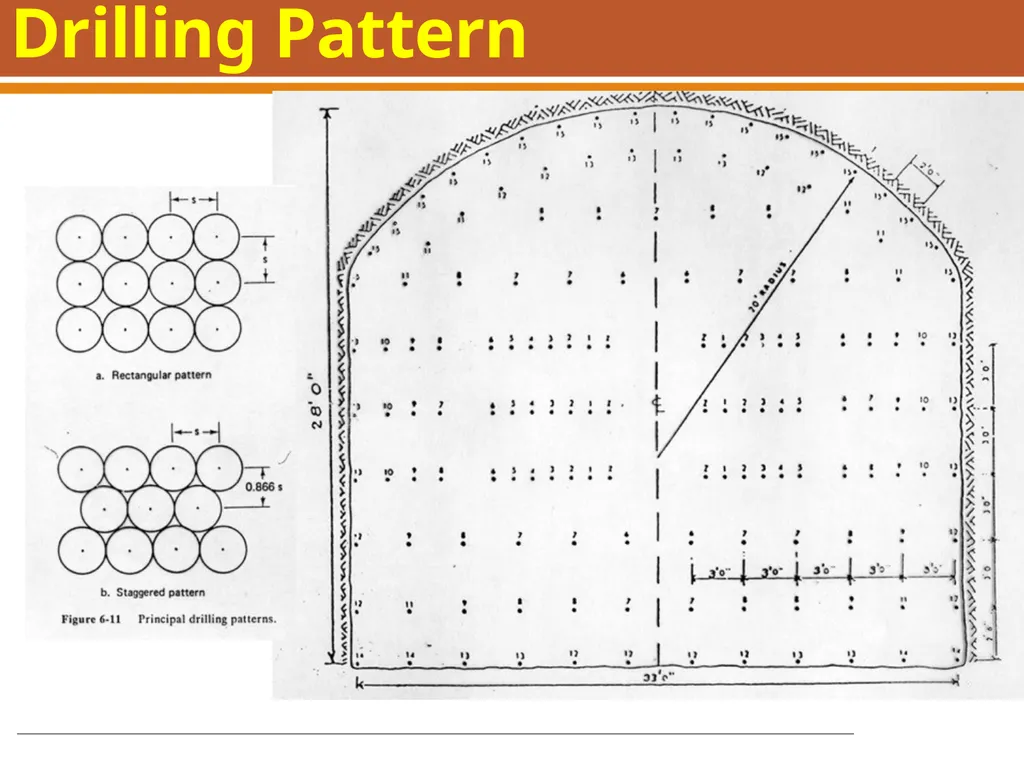
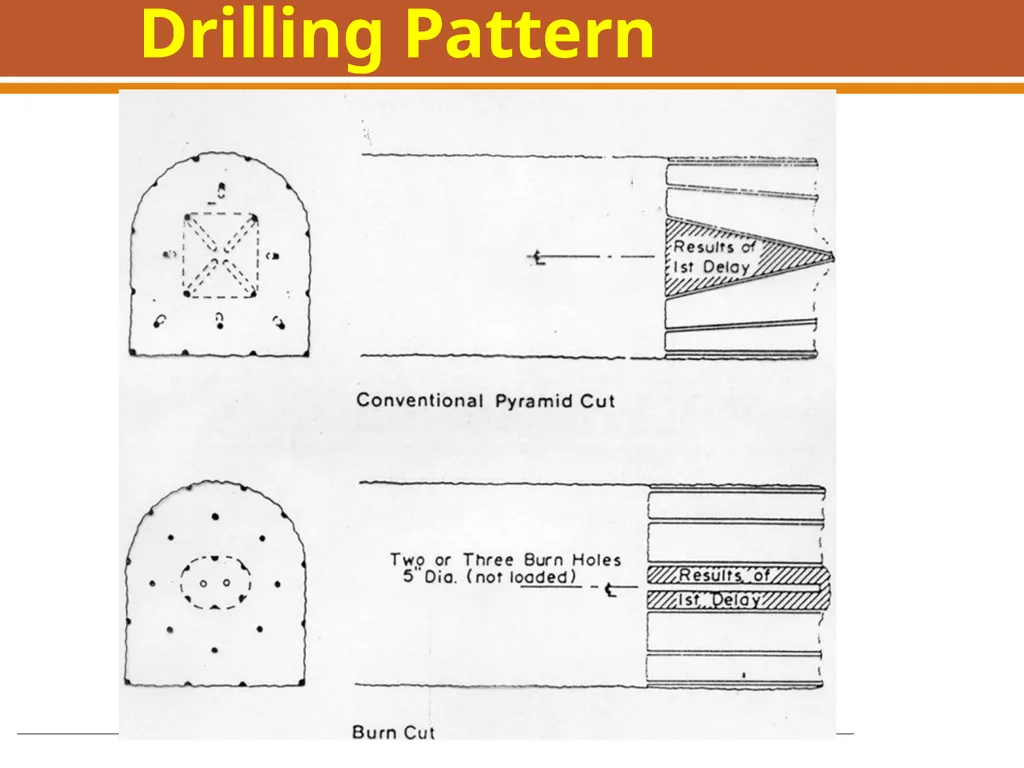
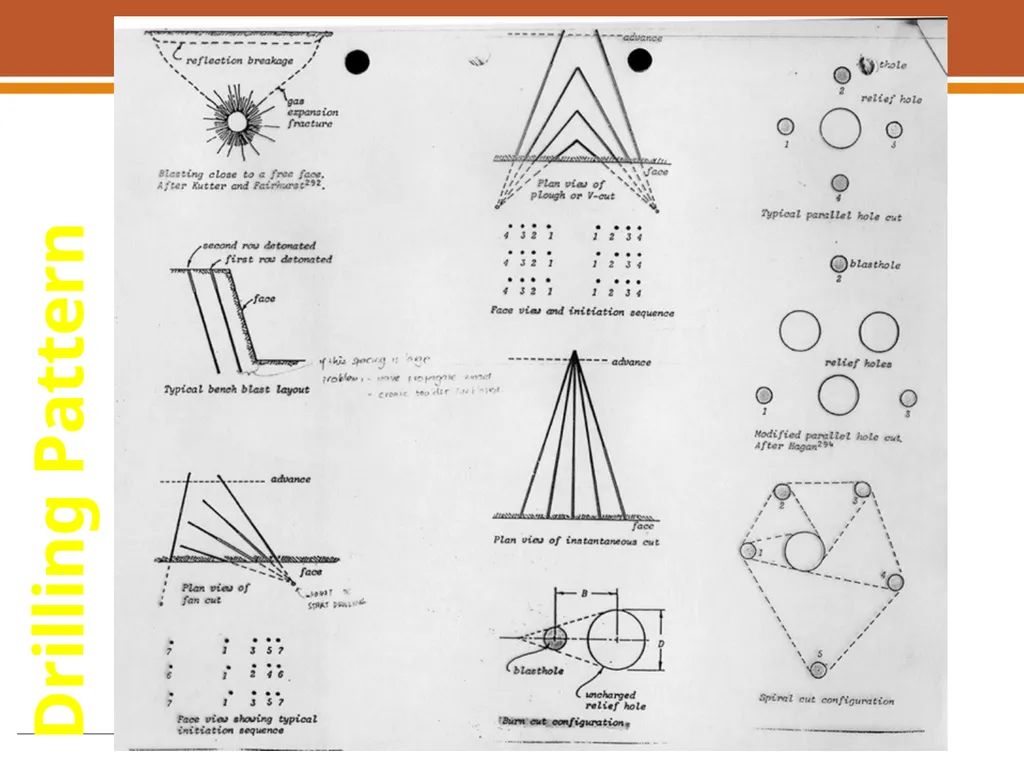
slide27. Drilling Pattern<br>
slide28. Drilling Pattern<br>
slide29. Drilling Pattern<br>
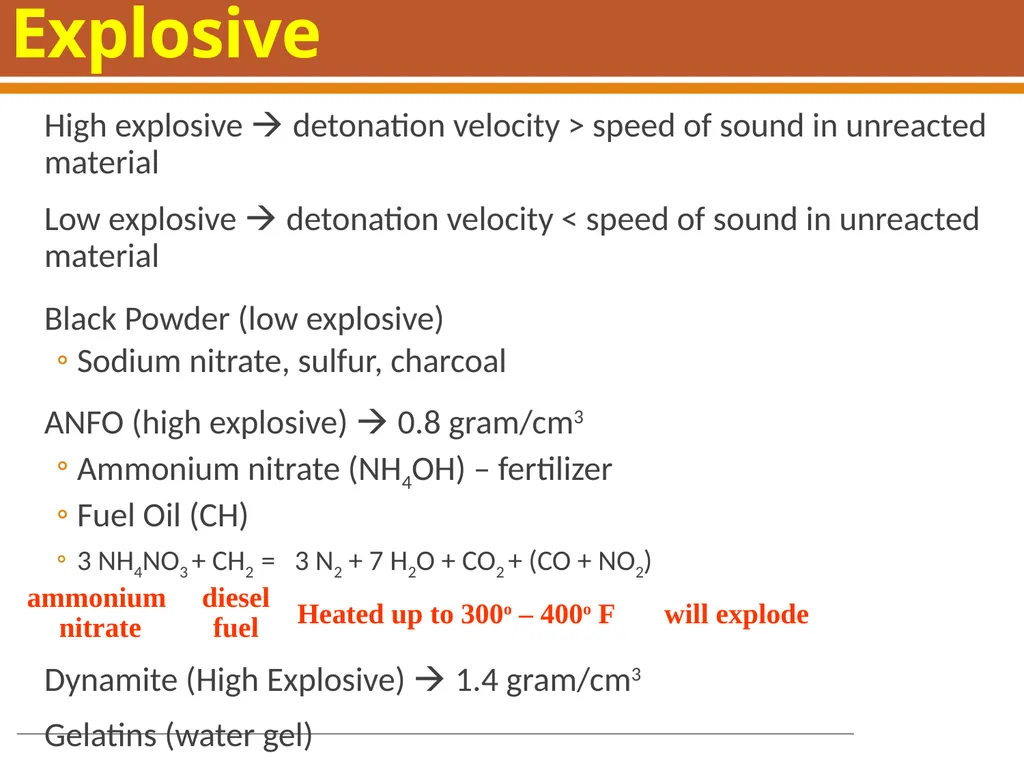
slide30. Explosive High explosive detonation velocity > speed of sound in unreacted material
Low explosive detonation velocity < speed of sound in unreacted material
Black Powder (low explosive)
Sodium nitrate, sulfur, charcoal
ANFO (high explosive) 0.8 gram/cm3
Ammonium nitrate (NH4OH) – fertilizer
Fuel Oil (CH)
3 NH4NO3 + CH2 = 3 N2 + 7 H2O + CO2 + (CO + NO2)
Dynamite (High Explosive) 1.4 gram/cm3
Gelatins (water gel)<br>
slide31. Explosive - Charger<br>
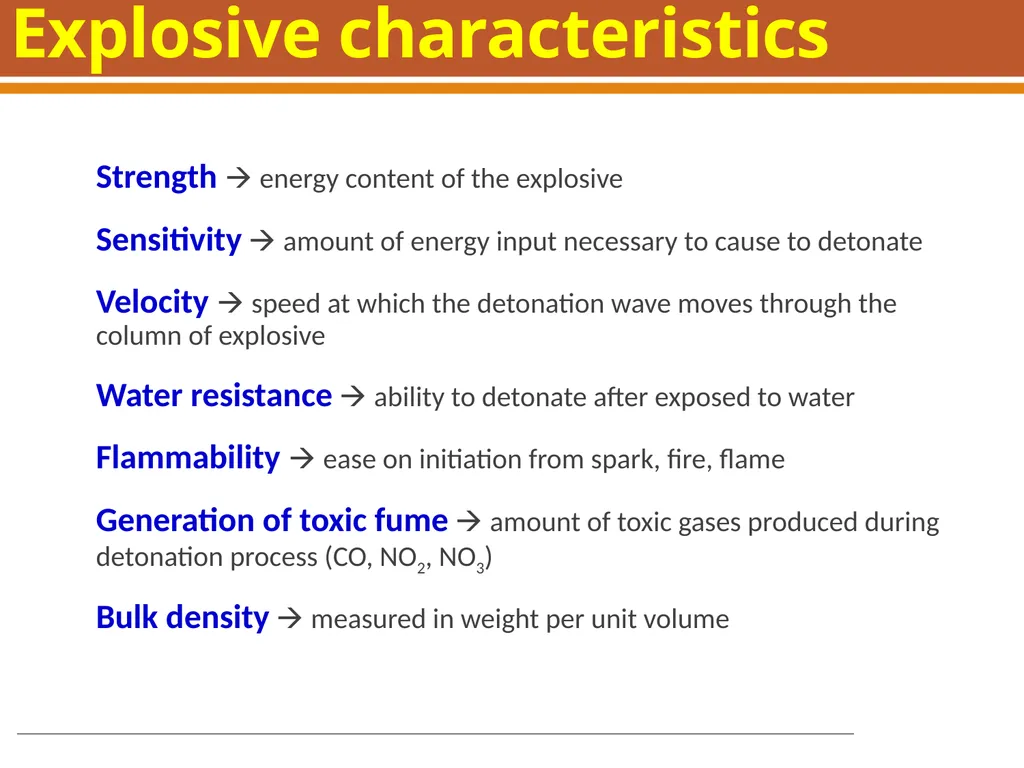
slide32. Explosive characteristics Strength energy content of the explosive
Sensitivity amount of energy input necessary to cause to detonate
Velocity speed at which the detonation wave moves through the column of explosive
Water resistance ability to detonate after exposed to water
Flammability ease on initiation from spark, fire, flame
Generation of toxic fume amount of toxic gases produced during detonation process (CO, NO2, NO3)
Bulk density measured in weight per unit volume<br>
slide33. Vibration mitigation Blasting may affect surrounding (sub) structures, e.g, building, utility lines
When explosive detonates, produces elastic wave within rock formation
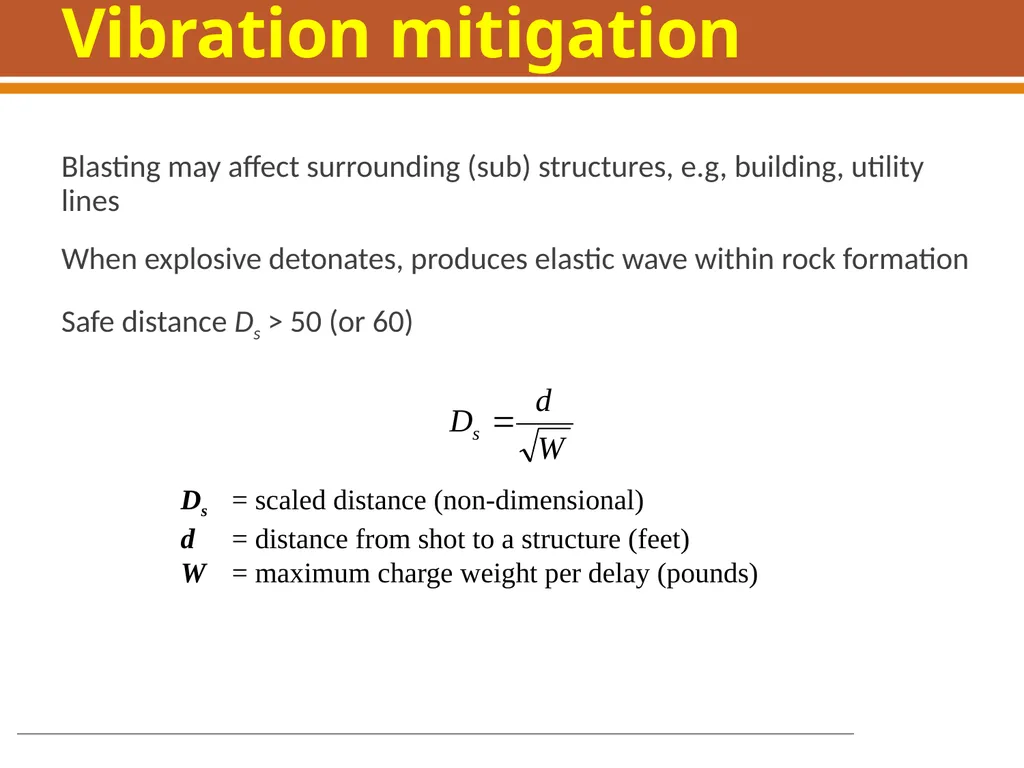
Safe distance Ds > 50 (or 60) Ds = scaled distance (non-dimensional)
d = distance from shot to a structure (feet)
W = maximum charge weight per delay (pounds)<br>
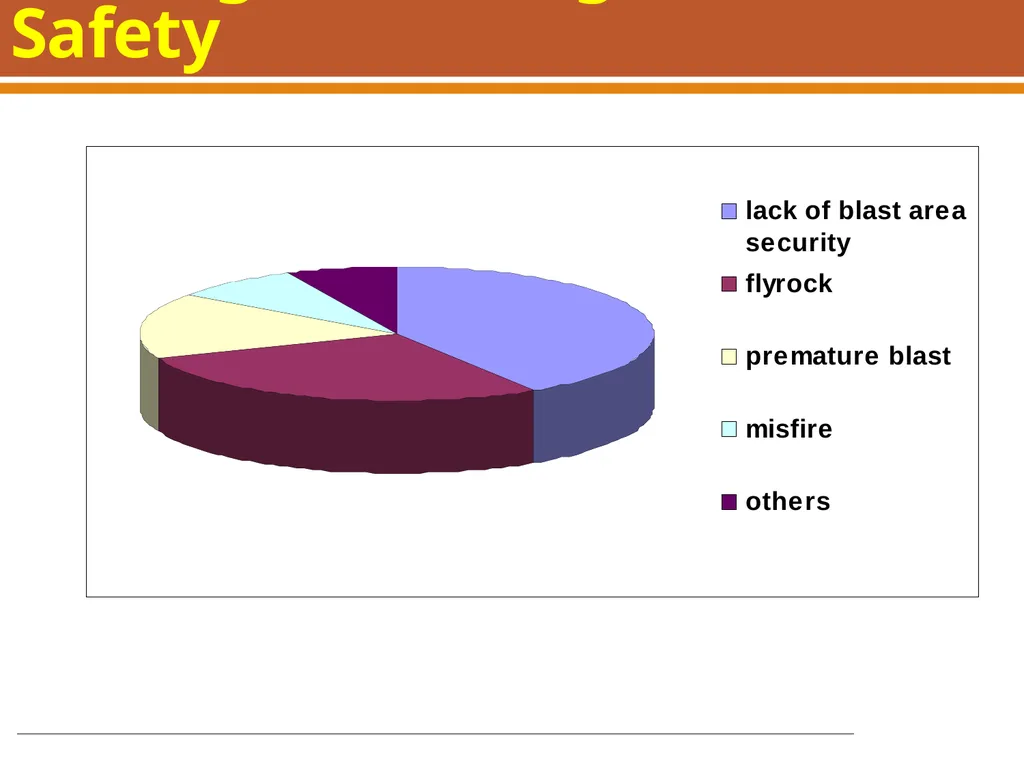
slide34. Drilling & Blasting Safety<br>
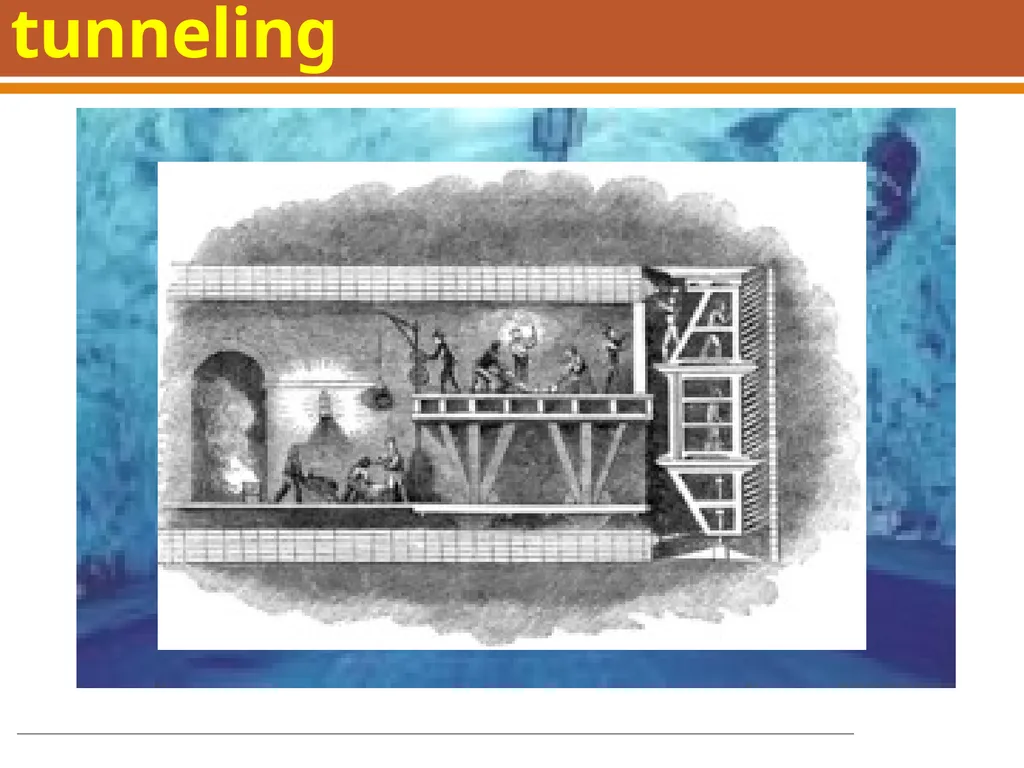
slide35. tunneling<br>
slide36. Tunnel application Roadways and railways
Under mountainous area
Underwater / undersea
Underground city
Waterways and powerhouse
Mining
Utility installation micro-tunneling<br>
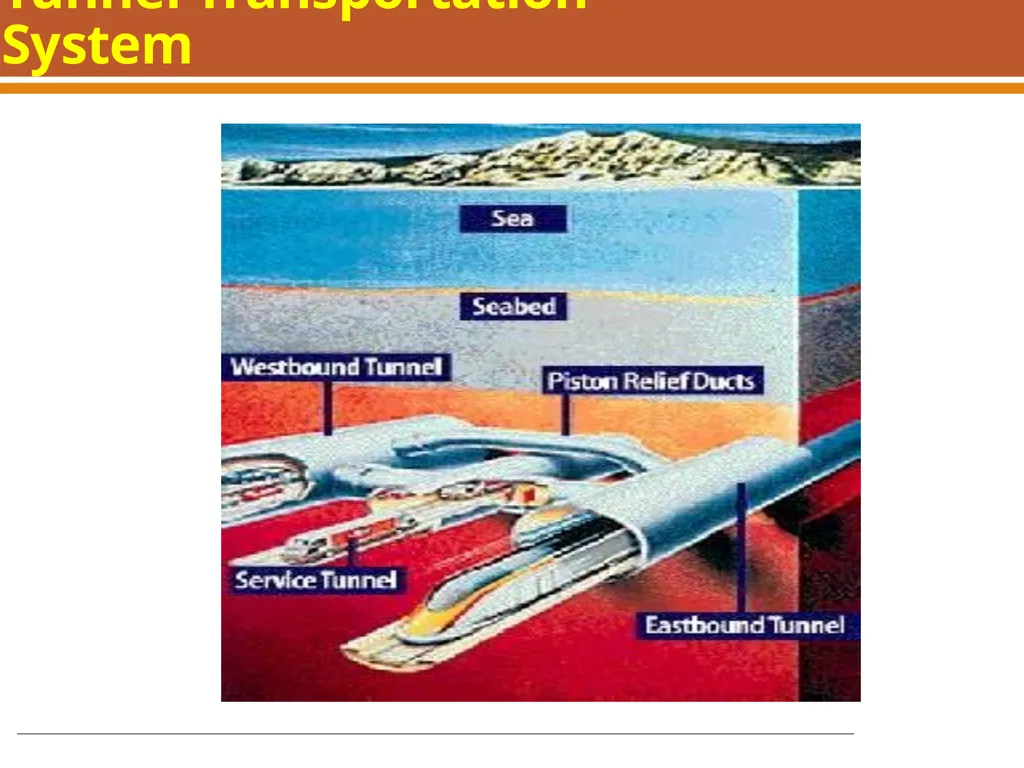
slide37. Tunnel Transportation System<br>
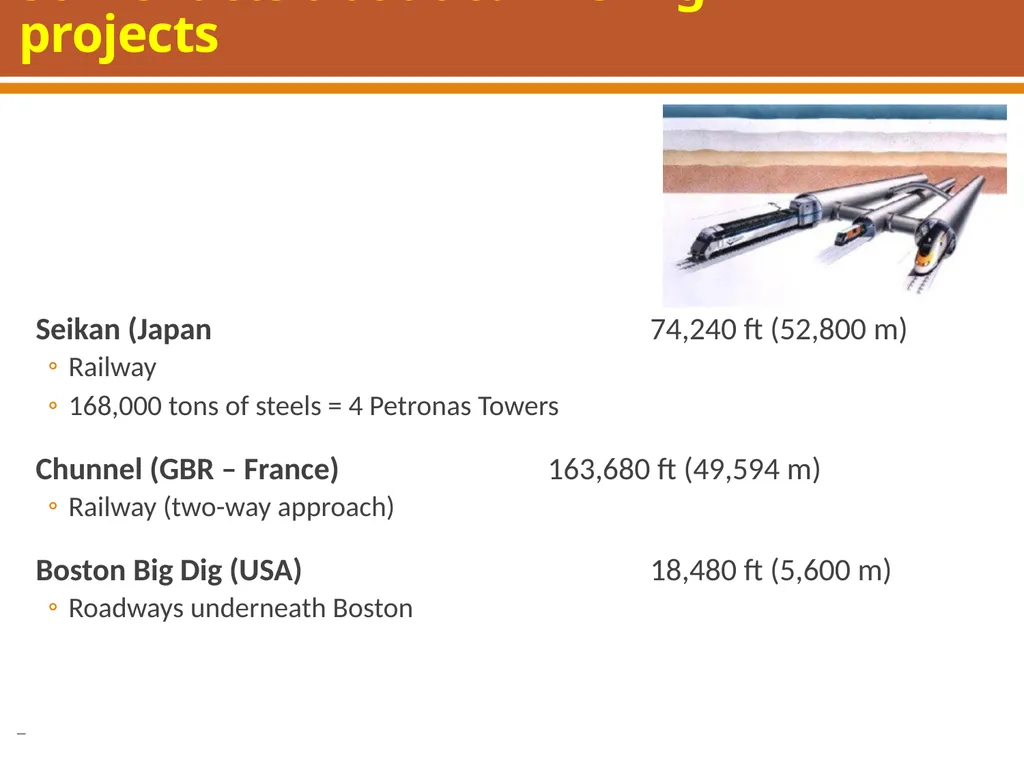
slide38. Some facts about tunneling projects Seikan (Japan 74,240 ft (52,800 m)
Railway
168,000 tons of steels = 4 Petronas Towers
Chunnel (GBR – France) 163,680 ft (49,594 m)
Railway (two-way approach)
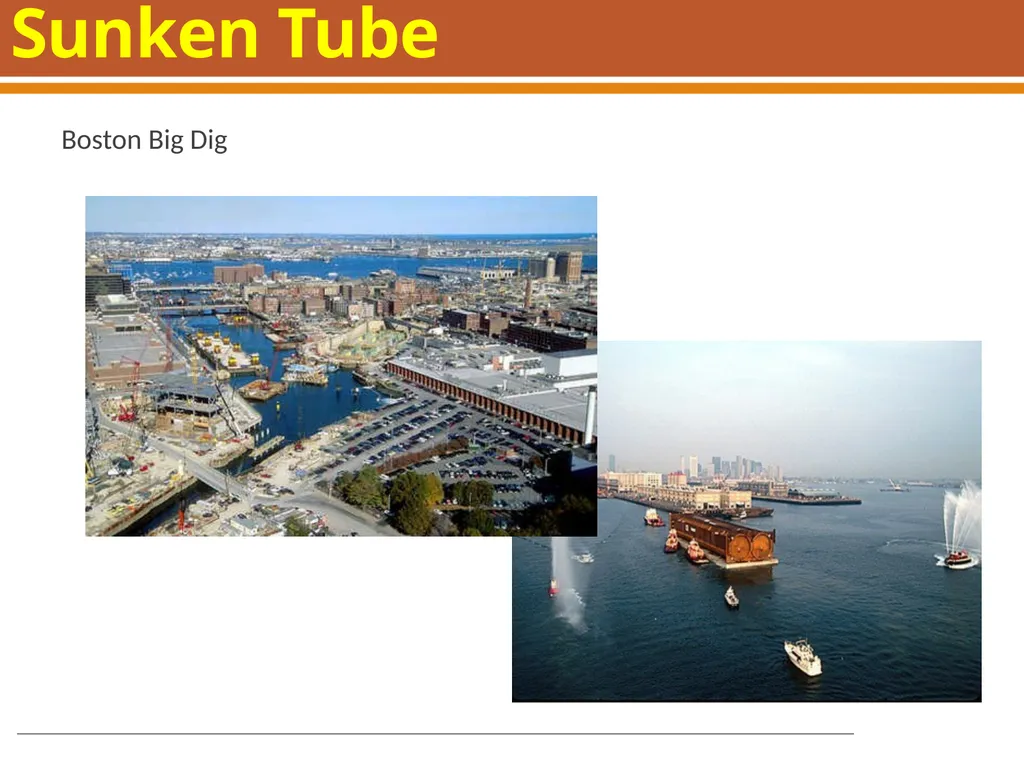
Boston Big Dig (USA) 18,480 ft (5,600 m)
Roadways underneath Boston<br>
slide39. Tunneling Methods Cut and Cover
Sunken Tube
Shielding
Drilling and Blasting
Tunnel Boring Machine<br>
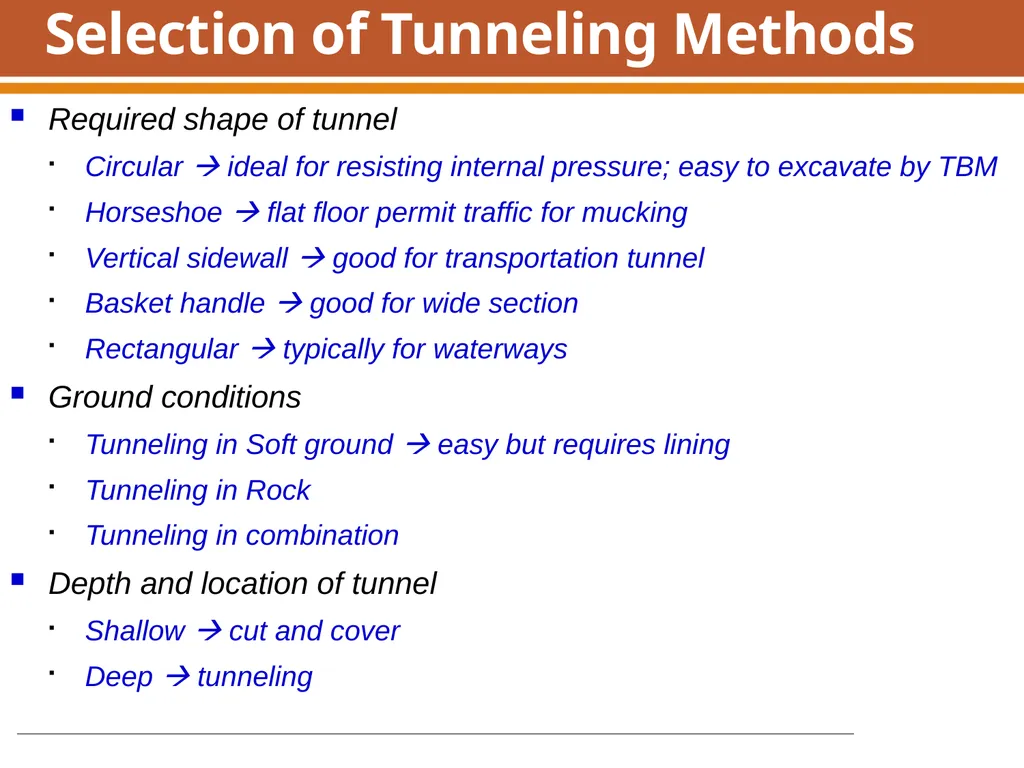
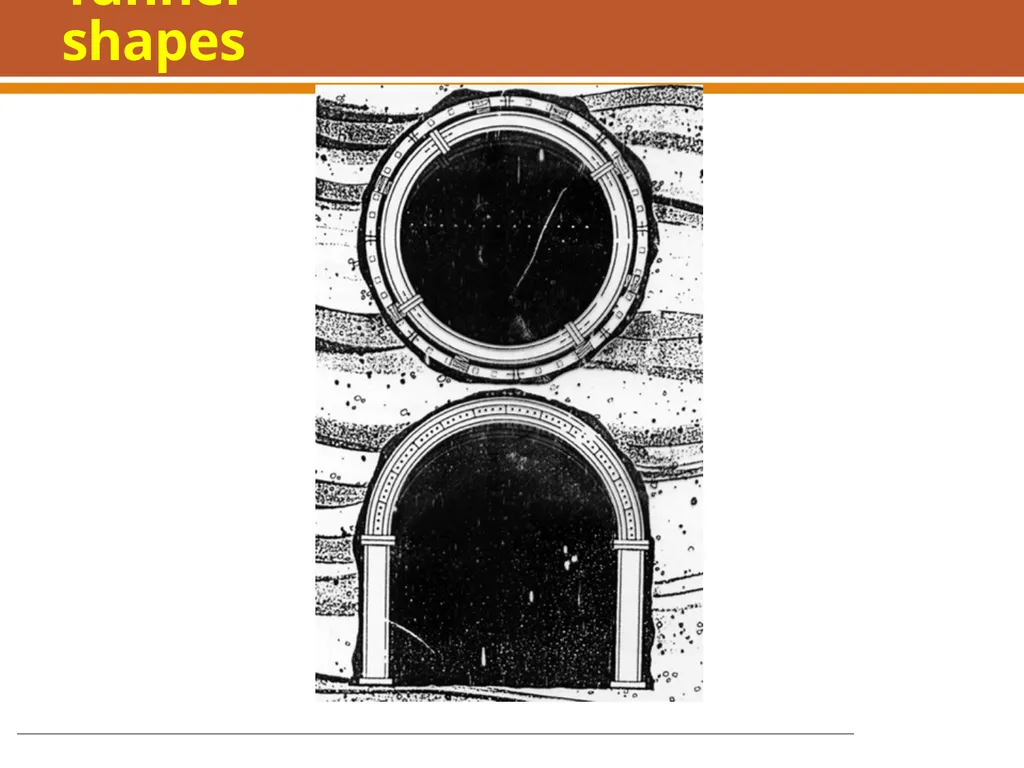
slide40. Selection of Tunneling Methods Required shape of tunnel
Circular ideal for resisting internal pressure; easy to excavate by TBM
Horseshoe flat floor permit traffic for mucking
Vertical sidewall good for transportation tunnel
Basket handle good for wide section
Rectangular typically for waterways
Ground conditions
Tunneling in Soft ground easy but requires lining
Tunneling in Rock
Tunneling in combination
Depth and location of tunnel
Shallow cut and cover
Deep tunneling<br>
slide41. Tunnel shapes<br>
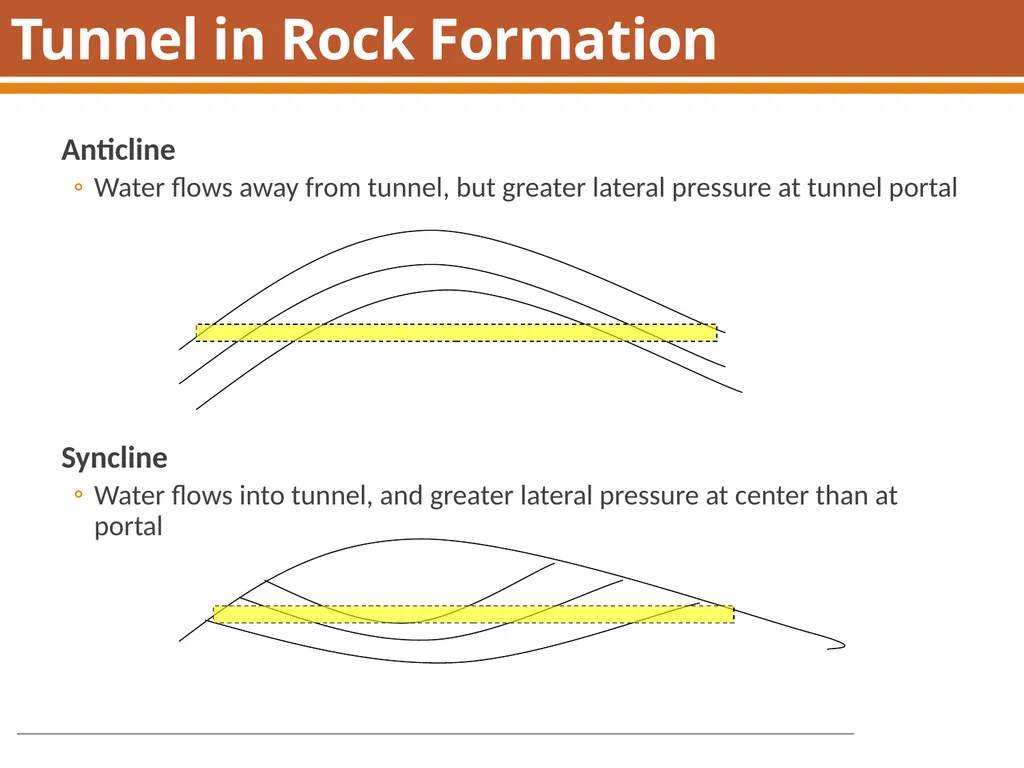
slide42. Tunnel in Rock Formation Anticline
Water flows away from tunnel, but greater lateral pressure at tunnel portal
Syncline
Water flows into tunnel, and greater lateral pressure at center than at portal<br>
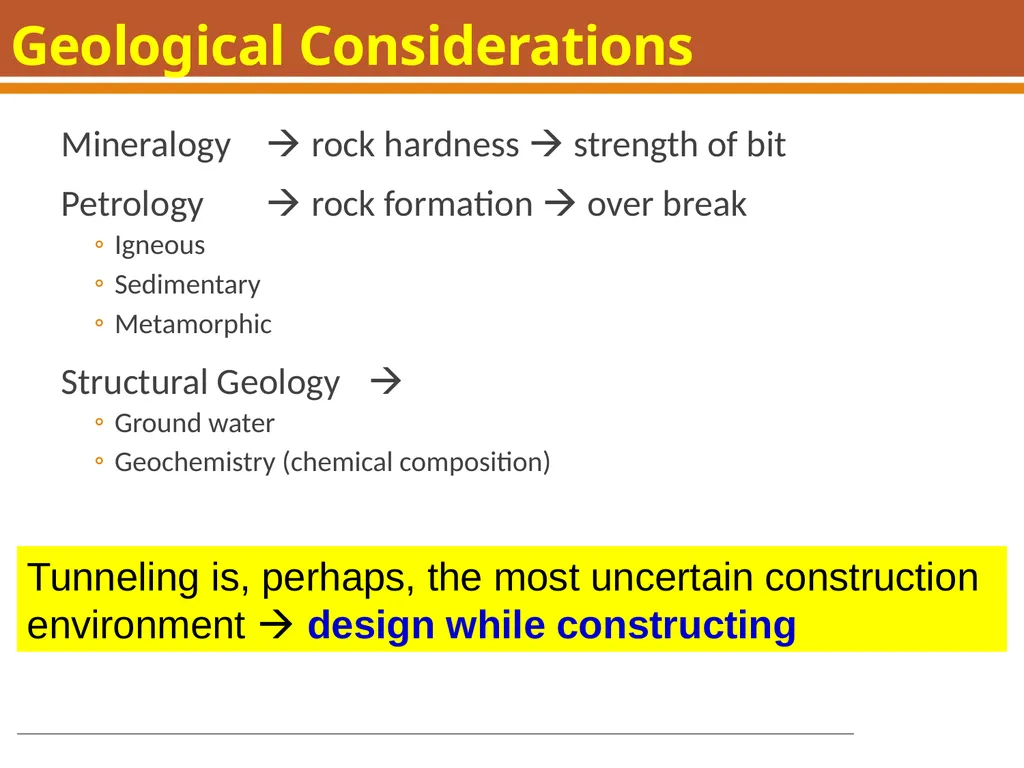
slide43. Geological Considerations Mineralogy rock hardness strength of bit
Petrology rock formation over break
Igneous
Sedimentary
Metamorphic
Structural Geology
Ground water
Geochemistry (chemical composition) Tunneling is, perhaps, the most uncertain construction environment design while constructing<br>
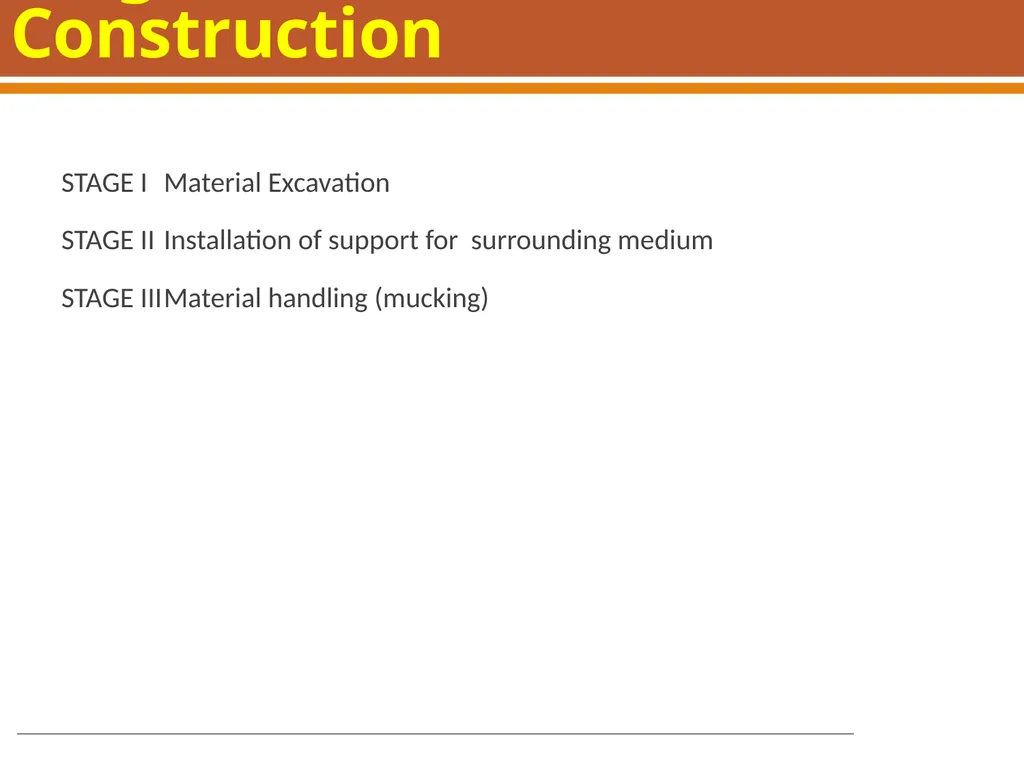
slide44. Stages in Tunnel Construction STAGE I Material Excavation
STAGE II Installation of support for surrounding medium
STAGE III Material handling (mucking)<br>
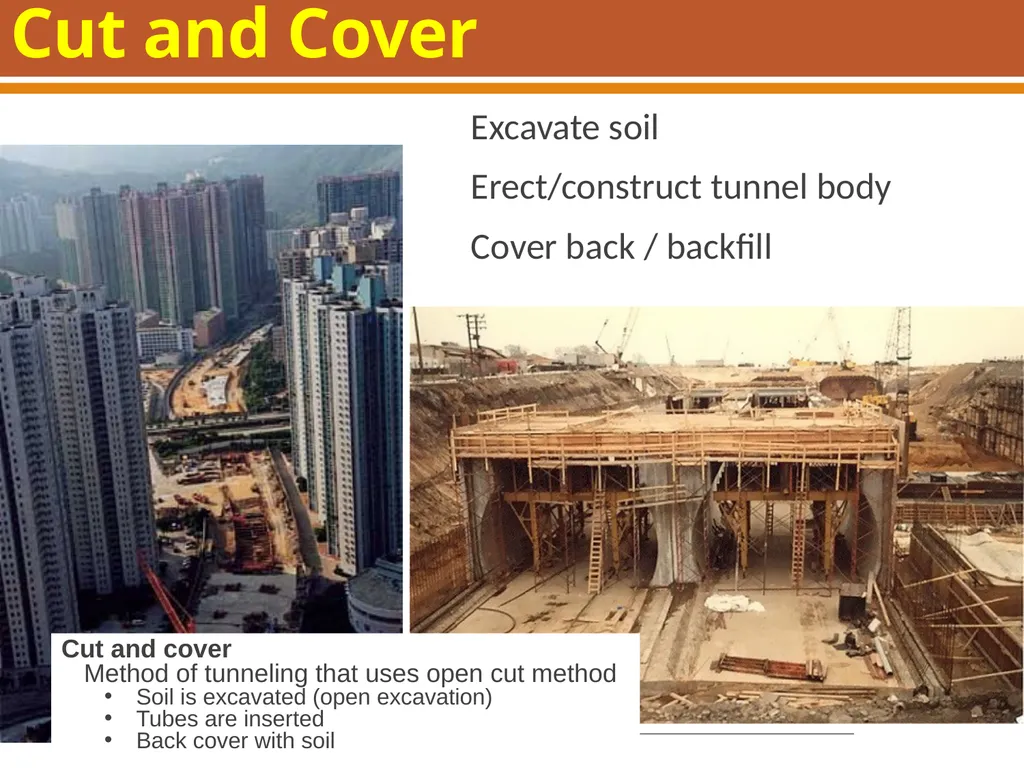
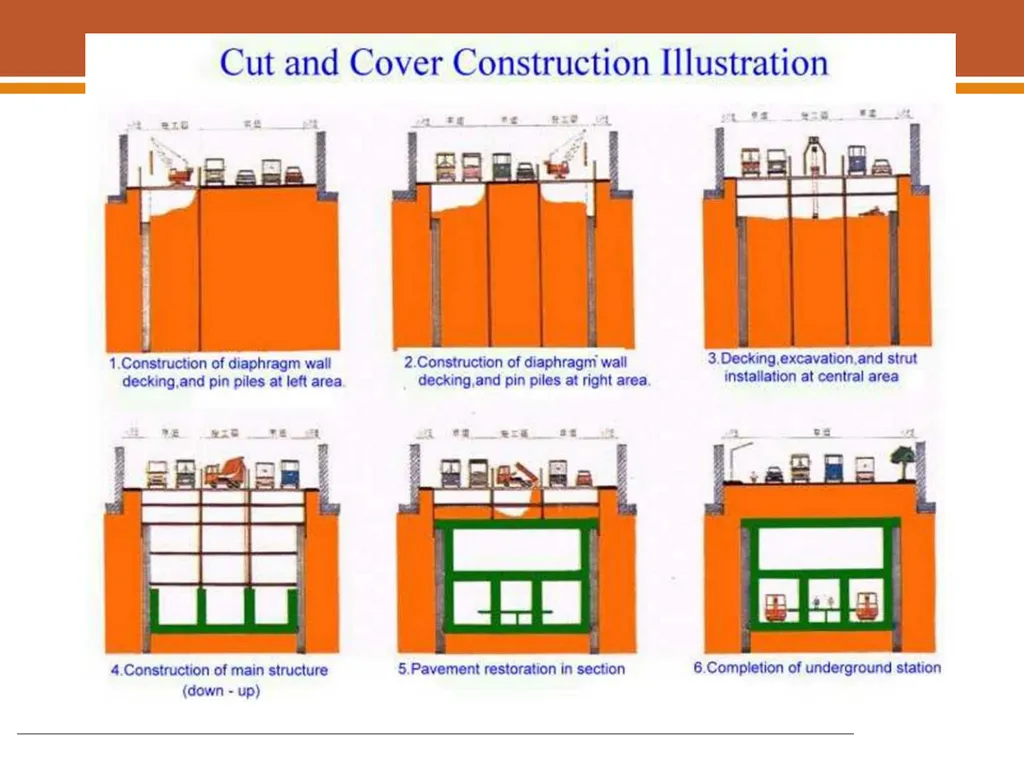
slide45. Cut and Cover Excavate soil
Erect/construct tunnel body
Cover back / backfill Cut and cover
Method of tunneling that uses open cut method
Soil is excavated (open excavation)
Tubes are inserted
Back cover with soil<br>
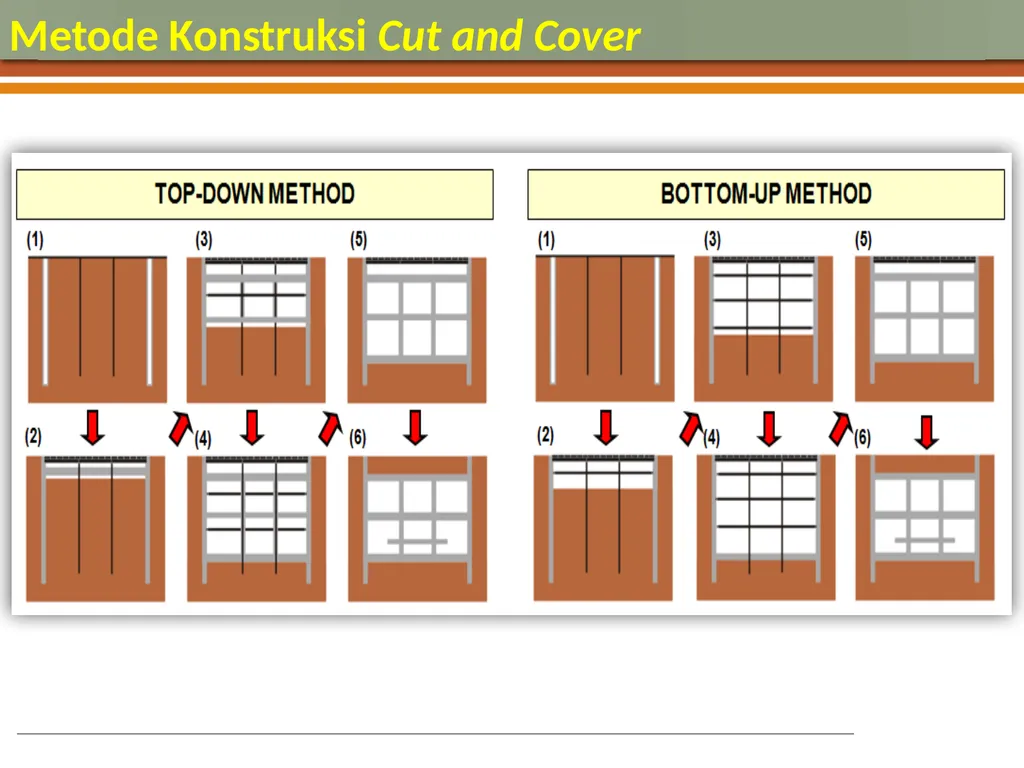
slide47. Metode Konstruksi Cut and Cover<br>
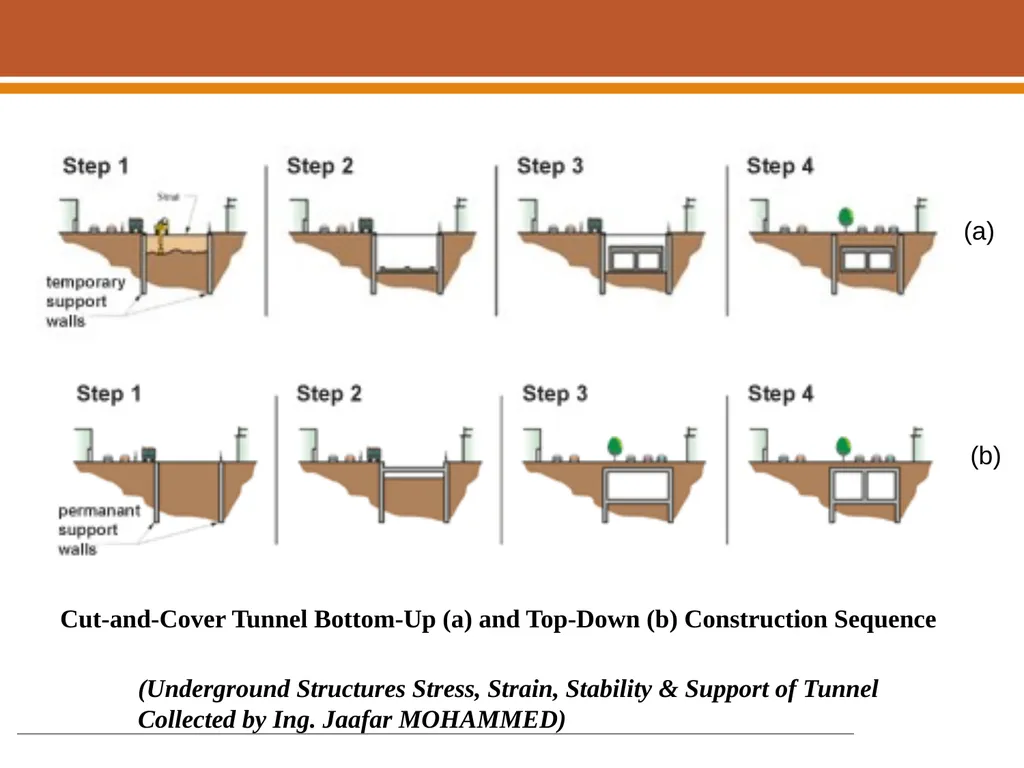
slide48. Cut-and-Cover Tunnel Bottom-Up (a) and Top-Down (b) Construction Sequence (a) (b) (Underground Structures Stress, Strain, Stability & Support of Tunnel Collected by Ing. Jaafar MOHAMMED)<br>
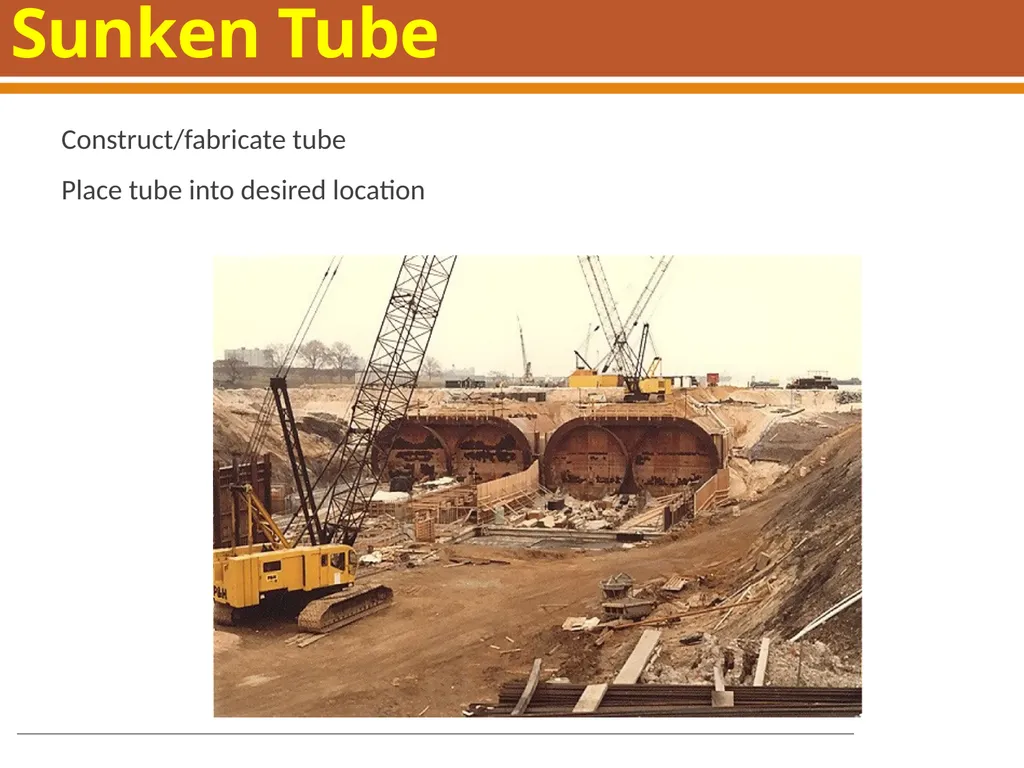
slide49. Sunken Tube Construct/fabricate tube
Place tube into desired location<br>
slide50. Sunken Tube Boston Big Dig<br>
slide51. Sunken Tube - Oresund Floating Tunnel<br>
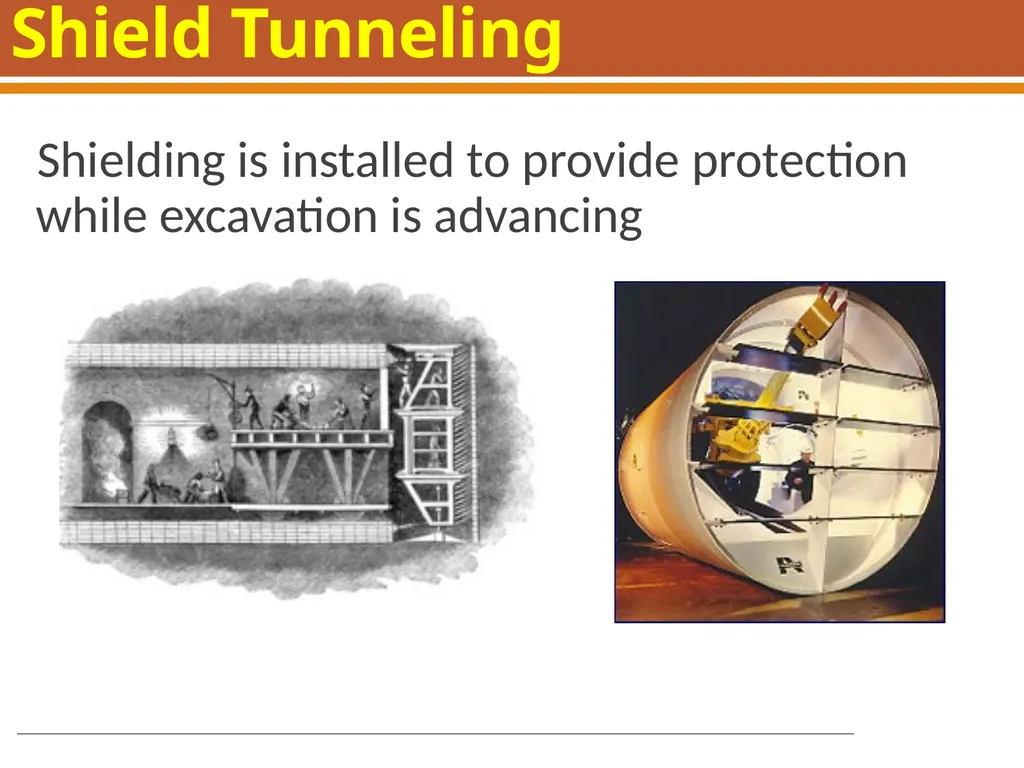
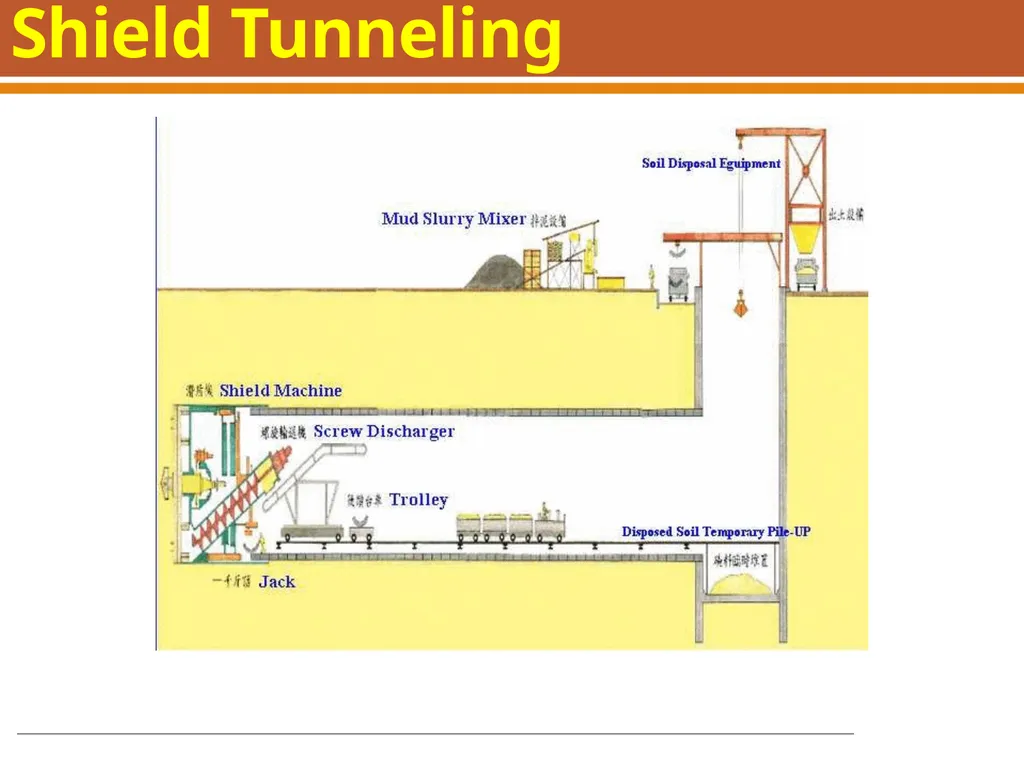
slide52. Shield Tunneling Shielding is installed to provide protection while excavation is advancing<br>
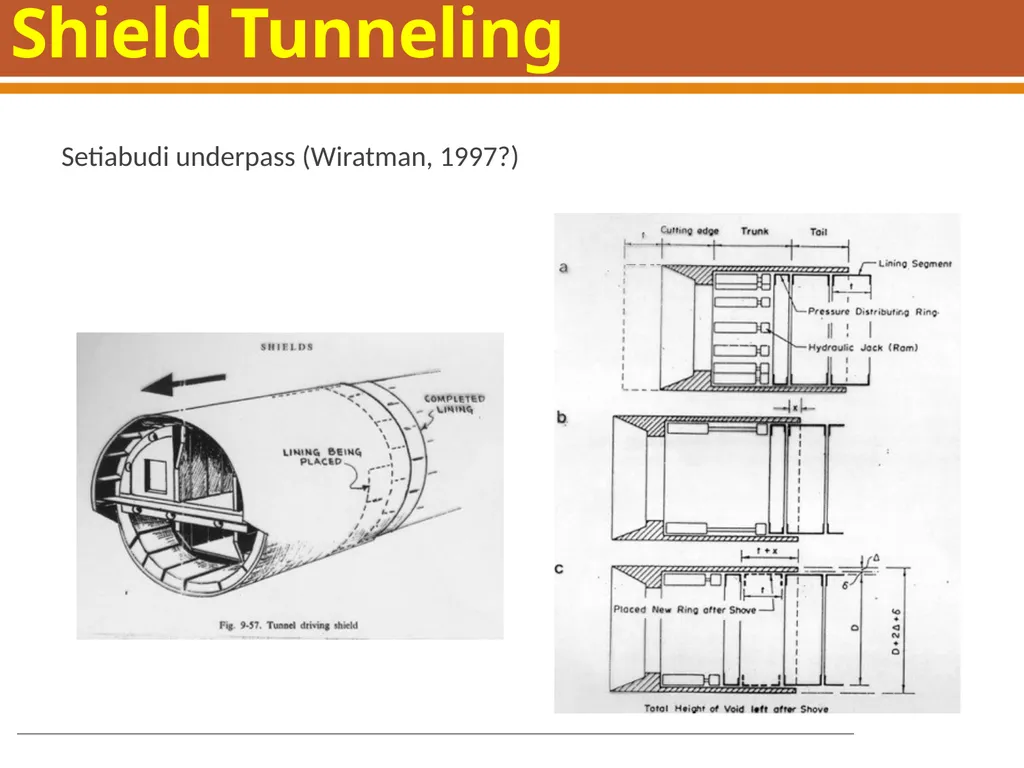
slide53. Shield Tunneling Setiabudi underpass (Wiratman, 1997?)<br>
slide54. Shield Tunneling<br>
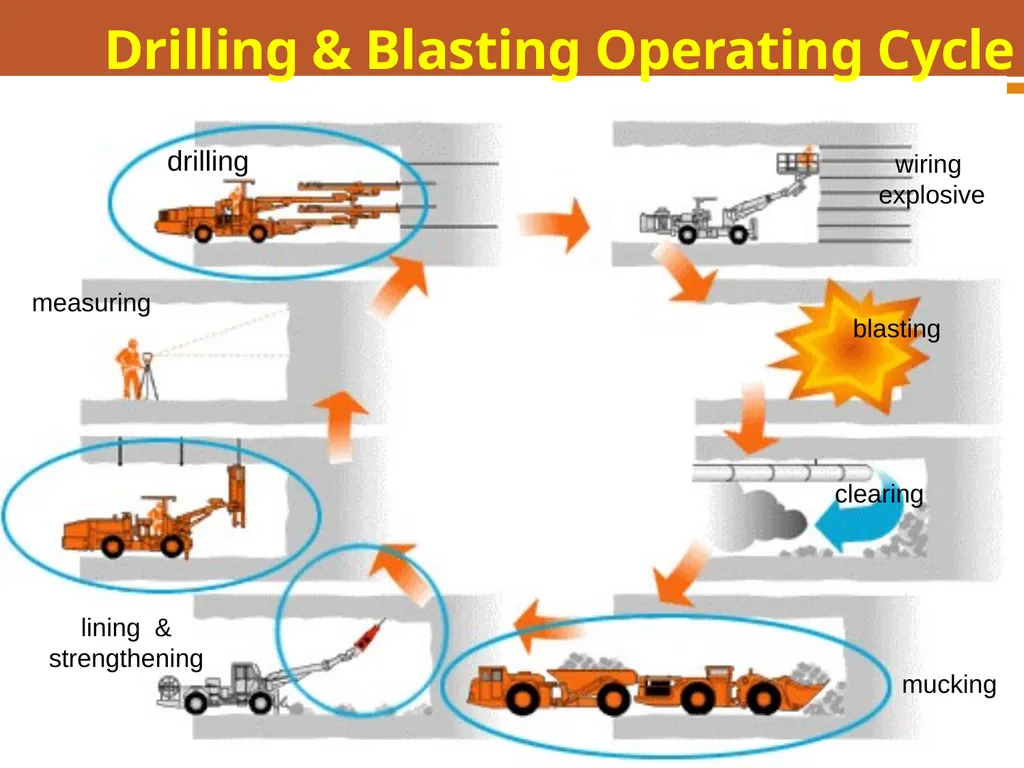
slide55. Drill & Blast in Tunneling Drilling & blasting is part of the excavation
Highly depends on rock formation
Support depends on hanging time
Face & bench method
Full blast method<br>
slide56. Drilling & Blasting Operating Cycle<br>
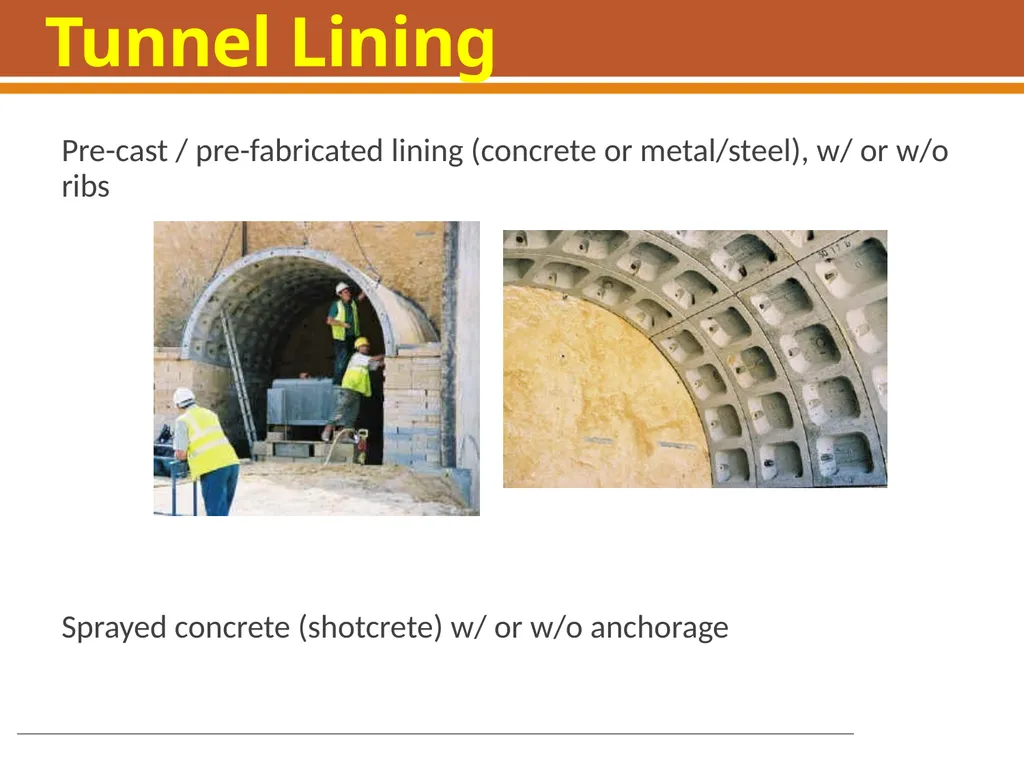
slide57. Tunnel Lining Pre-cast / pre-fabricated lining (concrete or metal/steel), w/ or w/o ribs
Sprayed concrete (shotcrete) w/ or w/o anchorage<br>
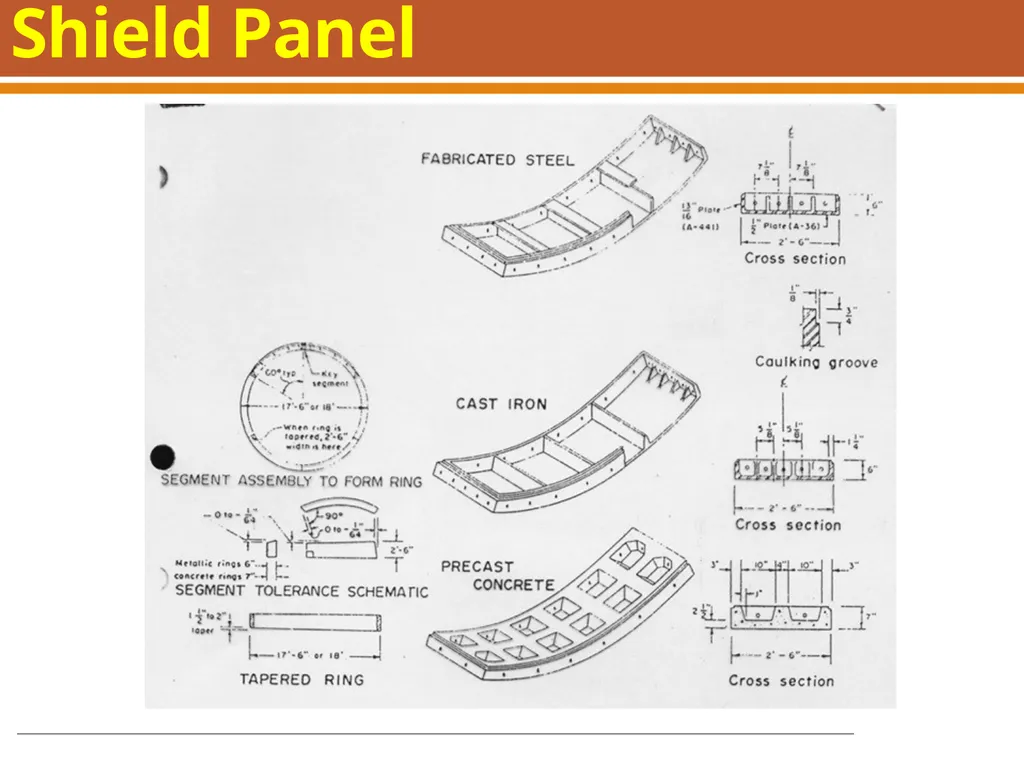
slide58. Shield Panel<br>
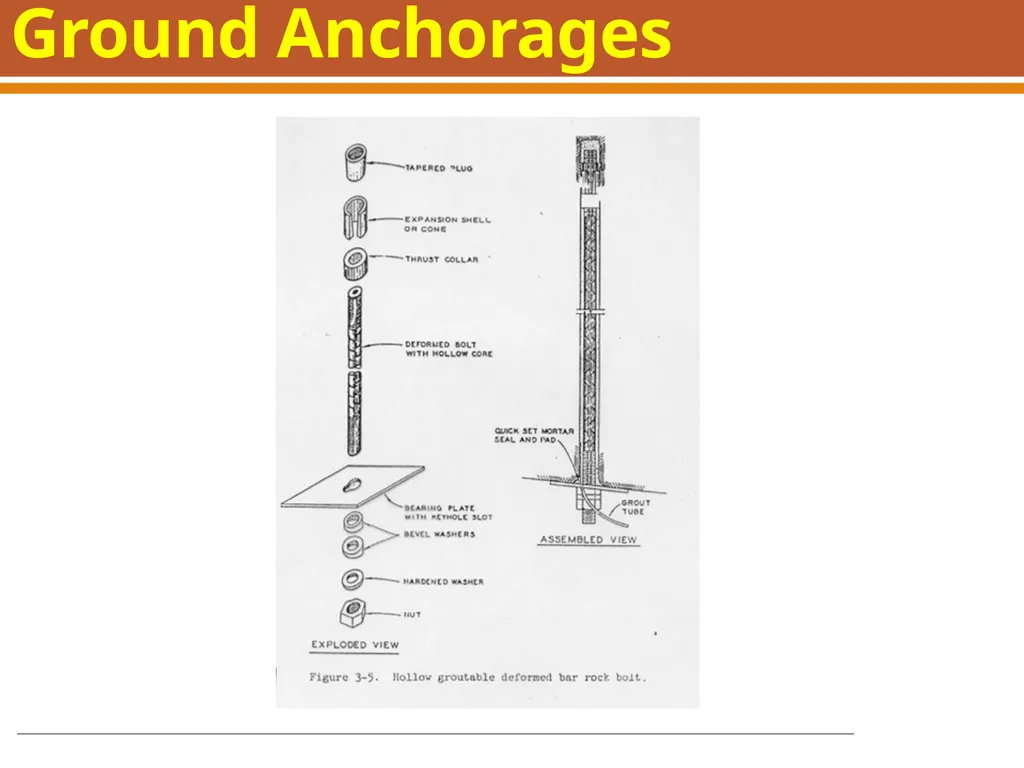
slide59. Ground Anchorages<br>
slide60. Boring (horizontal drilling) For soft soil tunneling
Tunnel boring machine (TBM)
NATM (New Austrian Tunneling Method)
Micro-tunneling
Directional drilling<br>
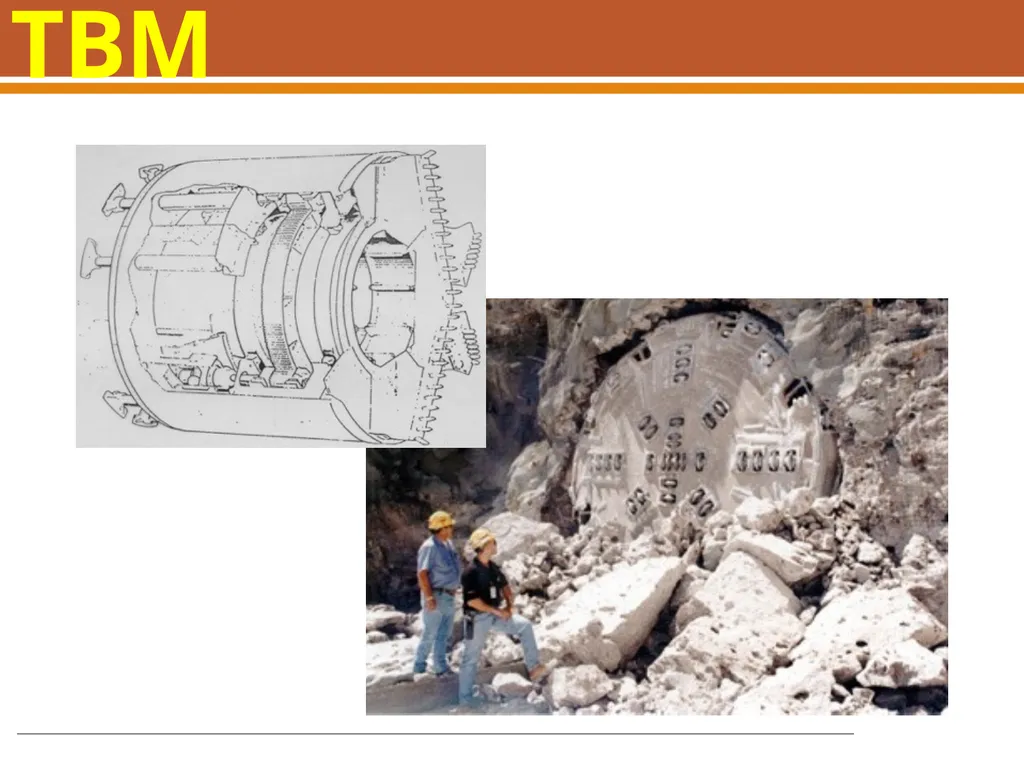
slide61. TBM<br>
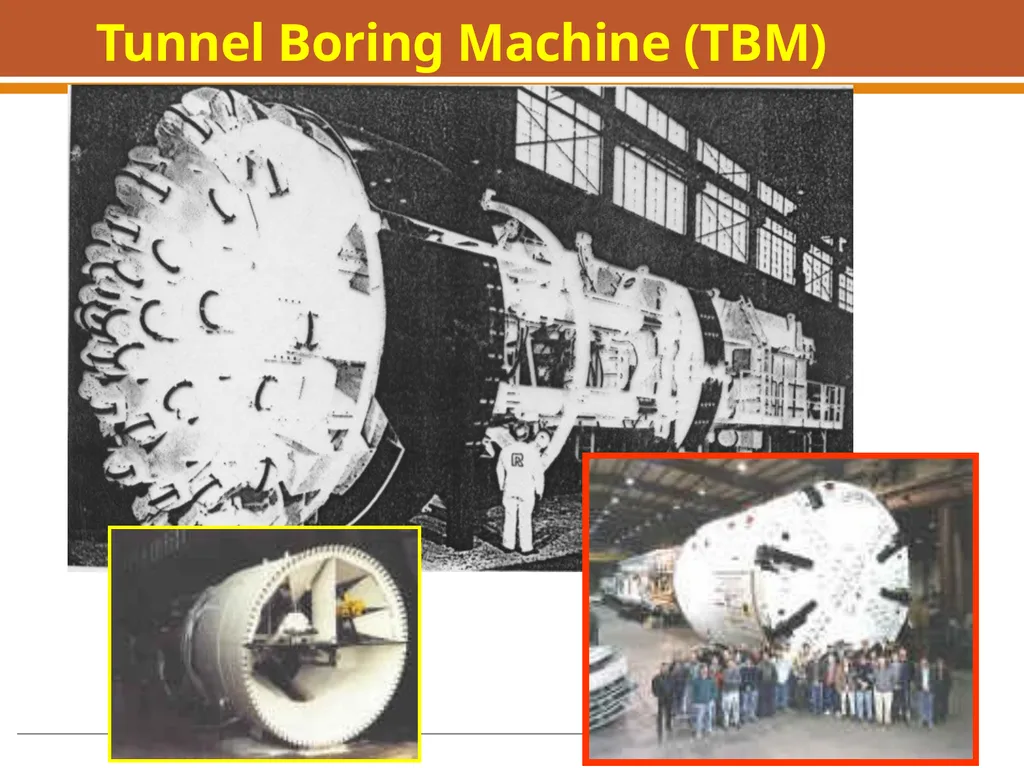
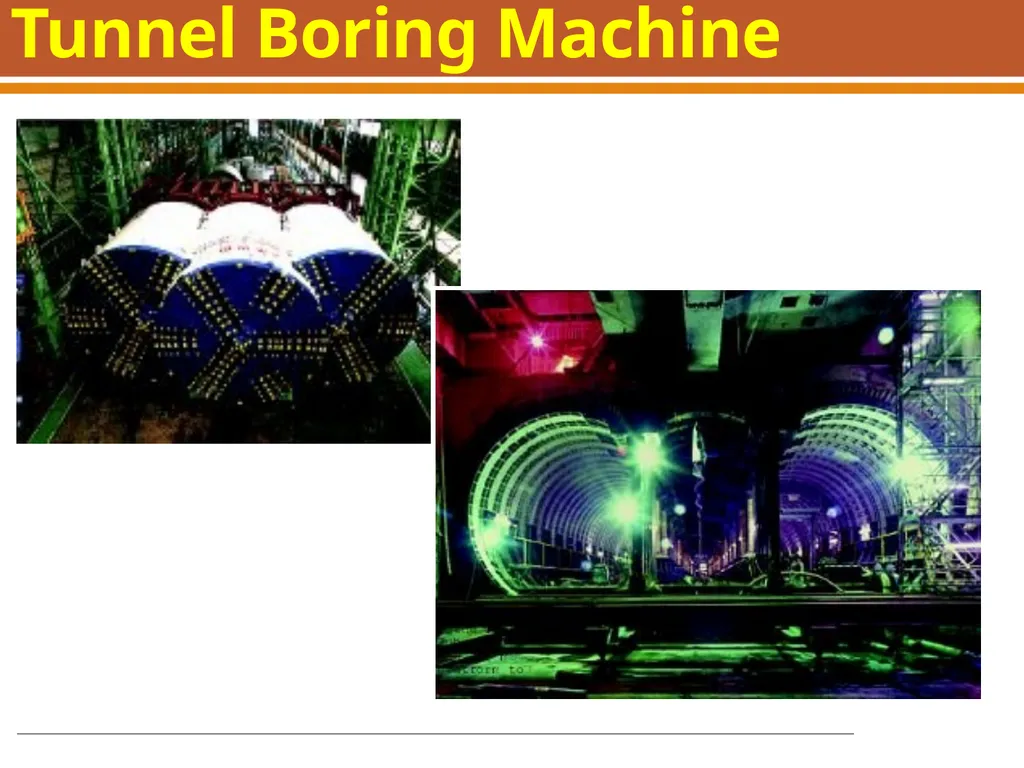
slide62. Tunnel Boring Machine (TBM)<br>
slide63. Tunnel Boring Machine<br>
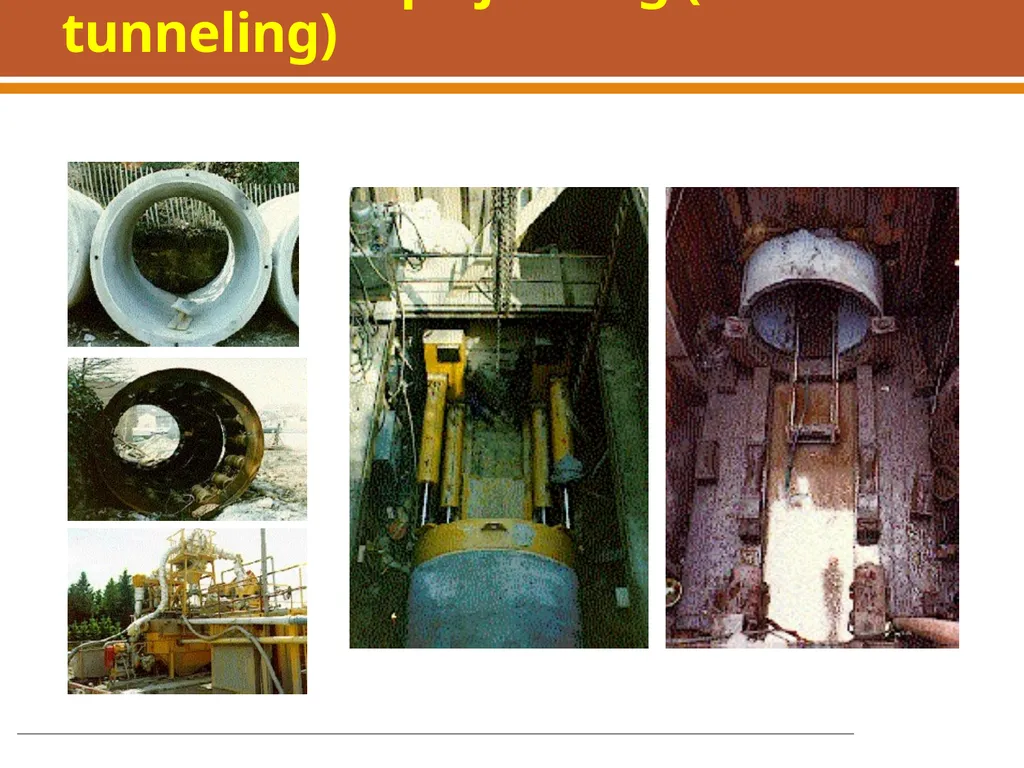
slide64. Horizontal Pipe jacking (micro-tunneling)<br>
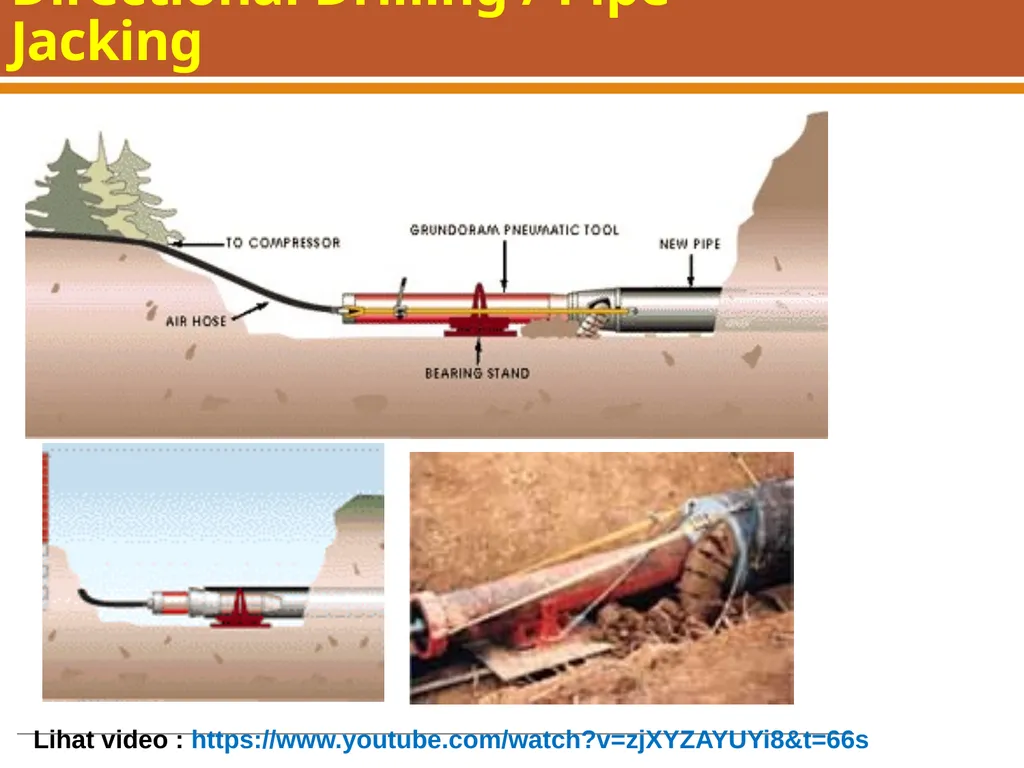
slide65. Directional Drilling / Pipe Jacking Lihat video : https://www.youtube.com/watch?v=zjXYZAYUYi8&t=66s<br>
slide66. Choosing Tunneling Method Advantage of D&B over TBM
Less prefect geotechnical data is required
Can be for any shape
(relatively) lower cost
Good for tunneling of < 5,000 ft
Disadvantage of D&B over TBM
Cyclic operation (time for each round) is longer
Overbreak up to 20%
Blast vibration More information on: http//en.wikipedia.org/wiki/Tunnel_boring_machine<br>
slide2. Drilling Creating a cavity in hard materials by means of impact and/or abrasion/grinding
The first practical drilling machine was employed in 1861 (Alps on Mt. Cenis tunnel)
Drilling often accompanied/followed by other means
installation of piping system for transporting material (water well or soil sample)
installation of made-made structure foundation
to help excavation by breaking hard medium blasting<br>
slide3. Drilling for Deep Water-well Taking Soil Sample<br>
slide4. Drilling for bored-foundation<br>
slide5. Rock/Soil Excavation Boring is a special form of rock/soil excavation. It is a formation of a cylindrical cavity in a solid material
Drilling & blasting also special form of rock excavation that uses shock-mechanism to soften rock formation.<br>
slide6. Drilling & Blasting Dimensional Terminology<br>
slide7. Blasting Terminologies Stemming
Filling between two explosive in a blast hole
Sometimes made of jelly
Burden
Amount of (thickness) of soil/rock to be removed (measured from the distance of blast hole to open face
Spacing
Distance between two adjacent blast hole
Bench & Face
Method of drill & blasting that uses partial progress
Alternative method: full-blast
Relief holes
Emptied hole (not filled with explosive) to increase the effectiveness of a blast mechanism<br>
slide8. Drilling & Blasting Dimensional Terminology<br>
slide9. Drilling & Blasting Dimensional Terminology V-pattern firing sequence<br>
slide10. Drilling & Blasting Dimensional Terminology<br>
slide11. Drilling Glossary Terms<br>
slide12. Type and Characteristics of Drilling Equipment<br>
slide13. Rock Density<br>
slide14. Types of Drilling Mechanism<br>
slide15. Drill Bits<br>
slide16. Drill penetration Hardness Measure<br>
slide17. Drilling Mechanism<br>
slide18. Drilling & Blasting Method Drilling pattern
Position of explosive
Filled holed (with charge/cartridge and stemming)
Timing of explosion
Strength of explosive (Powder factor)
Amount of explosive to fracture a cubic yard of rock (spacing x spacing x depth of blast hole)
Overburden
Stiffness ratio, SR = Bench/Burden
Quality of rocks (ɤrock)<br>
slide19. Breaking Mechanism Borehole/blasthole
Pulverized zone
Radial crack with preferential growth parallel to 1 (principal stress)<br>
slide20. Effect of burden on Blasting Effectiveness<br>
slide21. Effect of burden<br>
slide22. Effect of burden<br>
slide23. Blasthole Design Calculation Burden B = burden (ft)
SGe = specific gravity of the explosive
SGr = specific gravity of the rock
De = diameter of explosive (inch)
Stv = relative bulk strength (to ANFO)
Kd = correction factor for rock deposition
Ks = correction factor for rock structure<br>
slide24. Blasthole Design Calculation Spacing Presplitting Presplit is a technique for creating an internal free face
dec = explosive load (pounds/ft)
Dh = diameter of blasthole (inch)
Sp = presplit blasthole spacing (inch)<br>
slide25. Burden distance correction factor Effect of SR on blasting factor<br>
slide26. Explosive loading density chart (pound per ft of column)<br>
slide27. Drilling Pattern<br>
slide28. Drilling Pattern<br>
slide29. Drilling Pattern<br>
slide30. Explosive High explosive detonation velocity > speed of sound in unreacted material
Low explosive detonation velocity < speed of sound in unreacted material
Black Powder (low explosive)
Sodium nitrate, sulfur, charcoal
ANFO (high explosive) 0.8 gram/cm3
Ammonium nitrate (NH4OH) – fertilizer
Fuel Oil (CH)
3 NH4NO3 + CH2 = 3 N2 + 7 H2O + CO2 + (CO + NO2)
Dynamite (High Explosive) 1.4 gram/cm3
Gelatins (water gel)<br>
slide31. Explosive - Charger<br>
slide32. Explosive characteristics Strength energy content of the explosive
Sensitivity amount of energy input necessary to cause to detonate
Velocity speed at which the detonation wave moves through the column of explosive
Water resistance ability to detonate after exposed to water
Flammability ease on initiation from spark, fire, flame
Generation of toxic fume amount of toxic gases produced during detonation process (CO, NO2, NO3)
Bulk density measured in weight per unit volume<br>
slide33. Vibration mitigation Blasting may affect surrounding (sub) structures, e.g, building, utility lines
When explosive detonates, produces elastic wave within rock formation
Safe distance Ds > 50 (or 60) Ds = scaled distance (non-dimensional)
d = distance from shot to a structure (feet)
W = maximum charge weight per delay (pounds)<br>
slide34. Drilling & Blasting Safety<br>
slide35. tunneling<br>
slide36. Tunnel application Roadways and railways
Under mountainous area
Underwater / undersea
Underground city
Waterways and powerhouse
Mining
Utility installation micro-tunneling<br>
slide37. Tunnel Transportation System<br>
slide38. Some facts about tunneling projects Seikan (Japan 74,240 ft (52,800 m)
Railway
168,000 tons of steels = 4 Petronas Towers
Chunnel (GBR – France) 163,680 ft (49,594 m)
Railway (two-way approach)
Boston Big Dig (USA) 18,480 ft (5,600 m)
Roadways underneath Boston<br>
slide39. Tunneling Methods Cut and Cover
Sunken Tube
Shielding
Drilling and Blasting
Tunnel Boring Machine<br>
slide40. Selection of Tunneling Methods Required shape of tunnel
Circular ideal for resisting internal pressure; easy to excavate by TBM
Horseshoe flat floor permit traffic for mucking
Vertical sidewall good for transportation tunnel
Basket handle good for wide section
Rectangular typically for waterways
Ground conditions
Tunneling in Soft ground easy but requires lining
Tunneling in Rock
Tunneling in combination
Depth and location of tunnel
Shallow cut and cover
Deep tunneling<br>
slide41. Tunnel shapes<br>
slide42. Tunnel in Rock Formation Anticline
Water flows away from tunnel, but greater lateral pressure at tunnel portal
Syncline
Water flows into tunnel, and greater lateral pressure at center than at portal<br>
slide43. Geological Considerations Mineralogy rock hardness strength of bit
Petrology rock formation over break
Igneous
Sedimentary
Metamorphic
Structural Geology
Ground water
Geochemistry (chemical composition) Tunneling is, perhaps, the most uncertain construction environment design while constructing<br>
slide44. Stages in Tunnel Construction STAGE I Material Excavation
STAGE II Installation of support for surrounding medium
STAGE III Material handling (mucking)<br>
slide45. Cut and Cover Excavate soil
Erect/construct tunnel body
Cover back / backfill Cut and cover
Method of tunneling that uses open cut method
Soil is excavated (open excavation)
Tubes are inserted
Back cover with soil<br>
slide47. Metode Konstruksi Cut and Cover<br>
slide48. Cut-and-Cover Tunnel Bottom-Up (a) and Top-Down (b) Construction Sequence (a) (b) (Underground Structures Stress, Strain, Stability & Support of Tunnel Collected by Ing. Jaafar MOHAMMED)<br>
slide49. Sunken Tube Construct/fabricate tube
Place tube into desired location<br>
slide50. Sunken Tube Boston Big Dig<br>
slide51. Sunken Tube - Oresund Floating Tunnel<br>
slide52. Shield Tunneling Shielding is installed to provide protection while excavation is advancing<br>
slide53. Shield Tunneling Setiabudi underpass (Wiratman, 1997?)<br>
slide54. Shield Tunneling<br>
slide55. Drill & Blast in Tunneling Drilling & blasting is part of the excavation
Highly depends on rock formation
Support depends on hanging time
Face & bench method
Full blast method<br>
slide56. Drilling & Blasting Operating Cycle<br>
slide57. Tunnel Lining Pre-cast / pre-fabricated lining (concrete or metal/steel), w/ or w/o ribs
Sprayed concrete (shotcrete) w/ or w/o anchorage<br>
slide58. Shield Panel<br>
slide59. Ground Anchorages<br>
slide60. Boring (horizontal drilling) For soft soil tunneling
Tunnel boring machine (TBM)
NATM (New Austrian Tunneling Method)
Micro-tunneling
Directional drilling<br>
slide61. TBM<br>
slide62. Tunnel Boring Machine (TBM)<br>
slide63. Tunnel Boring Machine<br>
slide64. Horizontal Pipe jacking (micro-tunneling)<br>
slide65. Directional Drilling / Pipe Jacking Lihat video : https://www.youtube.com/watch?v=zjXYZAYUYi8&t=66s<br>
slide66. Choosing Tunneling Method Advantage of D&B over TBM
Less prefect geotechnical data is required
Can be for any shape
(relatively) lower cost
Good for tunneling of < 5,000 ft
Disadvantage of D&B over TBM
Cyclic operation (time for each round) is longer
Overbreak up to 20%
Blast vibration More information on: http//en.wikipedia.org/wiki/Tunnel_boring_machine<br>