
Budget Cycle Entry In Salary Planner Self Service
MS
Published · 31 slides · 0 views

1 / 1


Description
Budget Cycle Entry In Salary Planner Self Service Banner Login to Self Service Banner; select Employee. 2 Select Salary Planner. 3 Select Edit Scenario. 4 Choose appropriate Extract ID and Scenario; University Budget will provide you with
Related Topics
Share
Embed code
Download this presentation From Below
"Budget Cycle Entry In Salary Planner Self Service" is the property of its rightful owner. Permission is granted to download and print the materials on this website for personal, non-commercial use only, and to display it on your personal computer provided you do not modify the materials and that you retain all copyright notices contained in the materials. By downloading content from our website, you accept the terms of this agreement.
Presentation Transcript
01
Budget Cycle Entry
In Salary Planner Self Service Banner<br>
02
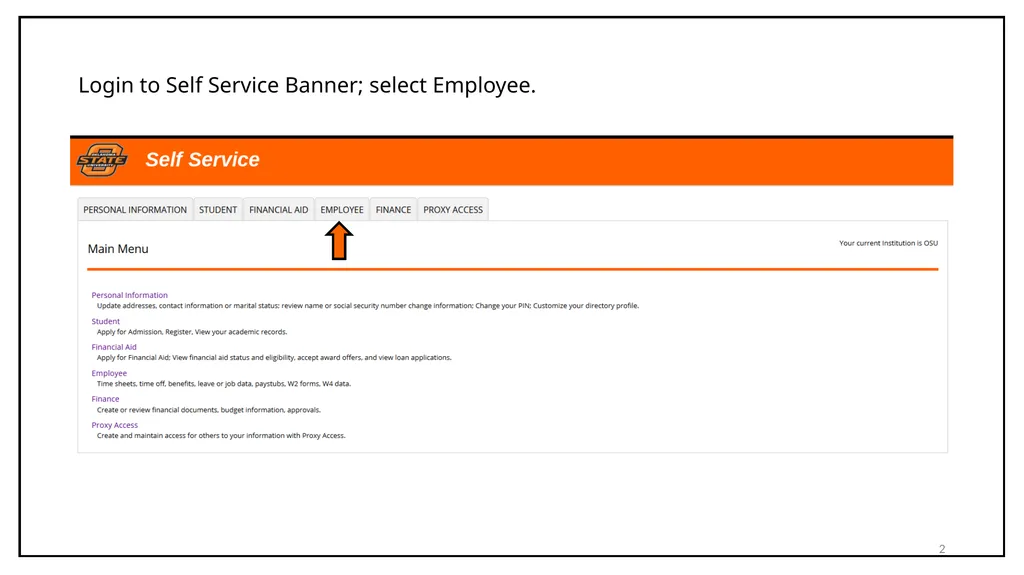
Login to Self Service Banner; select Employee. 2<br>
03
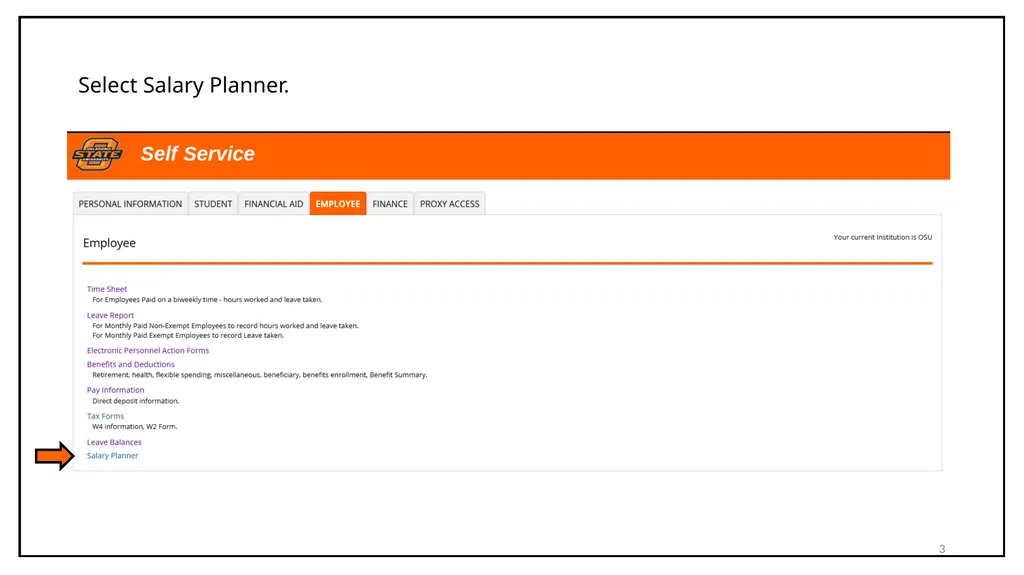
Select Salary Planner. 3<br>
04
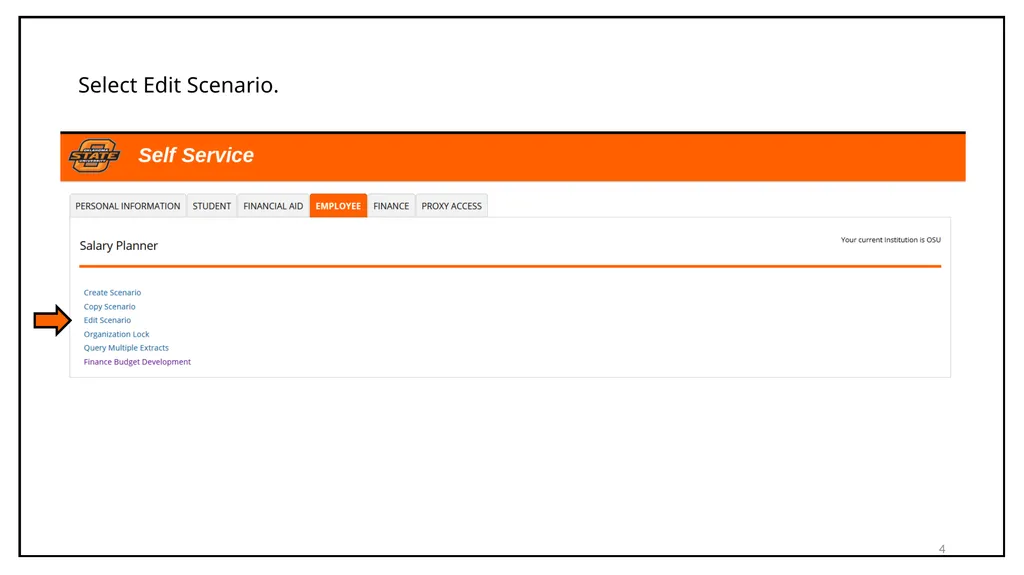
Select Edit Scenario. 4<br>
05
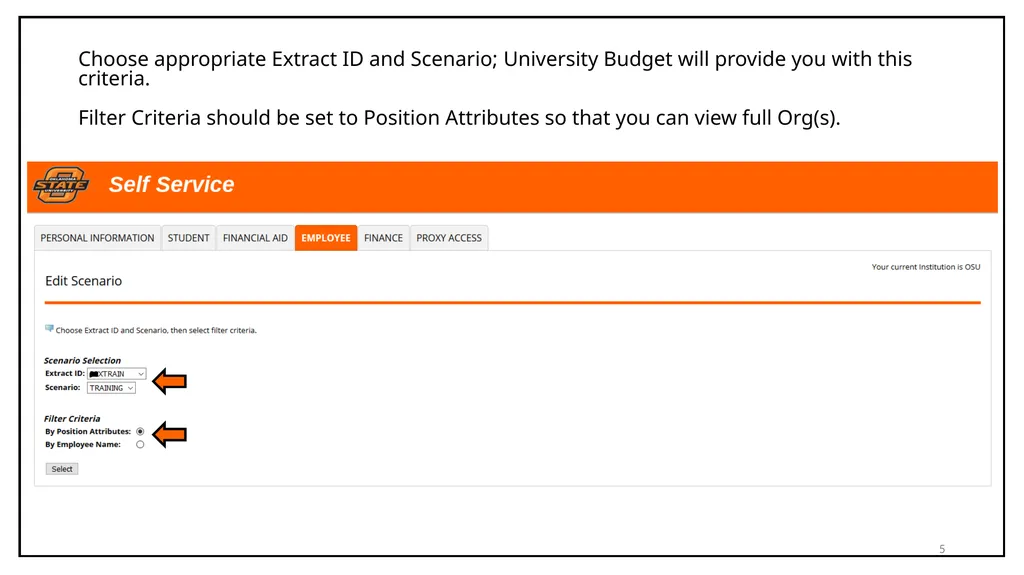
Choose appropriate Extract ID and Scenario; University Budget will provide you with this criteria.
Filter Criteria should be set to Position Attributes so that you can view full Org(s). 5<br>
06
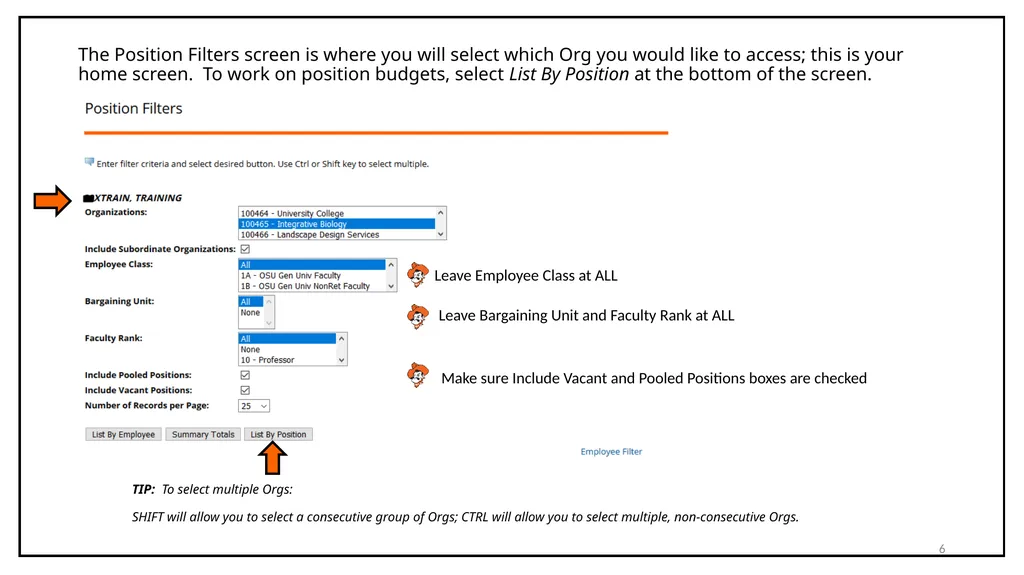
The Position Filters screen is where you will select which Org you would like to access; this is your home screen. To work on position budgets, select List By Position at the bottom of the screen. TIP: To select multiple Orgs:
SHIFT will allow you to select a consecutive group of Orgs; CTRL will allow you to select multiple, non-consecutive Orgs. Leave Employee Class at ALL Make sure Include Vacant and Pooled Positions boxes are checked Leave Bargaining Unit and Faculty Rank at ALL 6<br>
SHIFT will allow you to select a consecutive group of Orgs; CTRL will allow you to select multiple, non-consecutive Orgs. Leave Employee Class at ALL Make sure Include Vacant and Pooled Positions boxes are checked Leave Bargaining Unit and Faculty Rank at ALL 6<br>
07
For the Budget Cycle, ONLY the Position Budget and Distribution will be loaded into the new fiscal year. Position Distribution is the Fund(s)/Account(s) from which a person will be paid for the full year (includes future funding changes) as a percentage of total salary. 7<br>
08
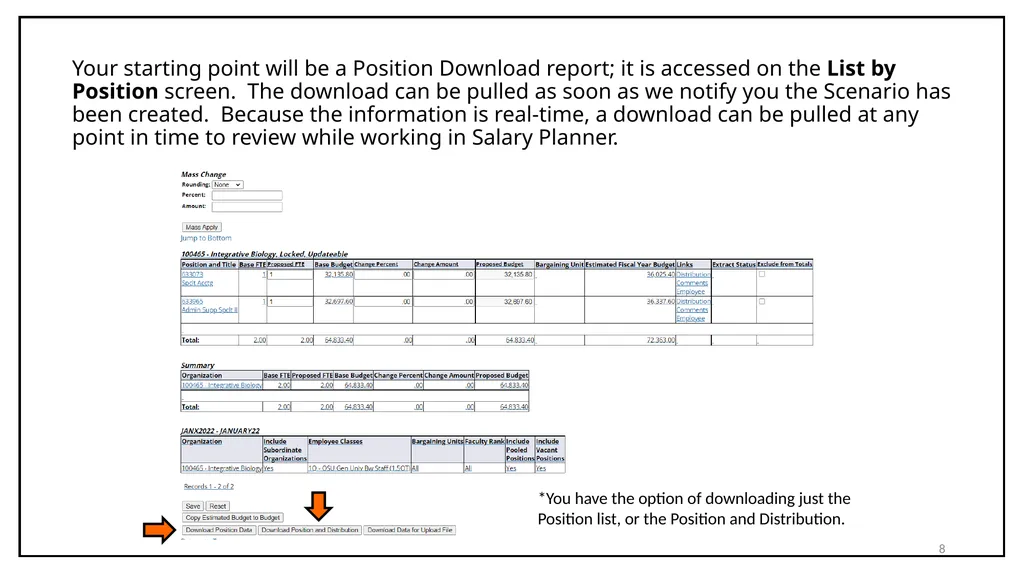
Your starting point will be a Position Download report; it is accessed on the List by Position screen. The download can be pulled as soon as we notify you the Scenario has been created. Because the information is real-time, a download can be pulled at any point in time to review while working in Salary Planner. *You have the option of downloading just the Position list, or the Position and Distribution. 8<br>
09
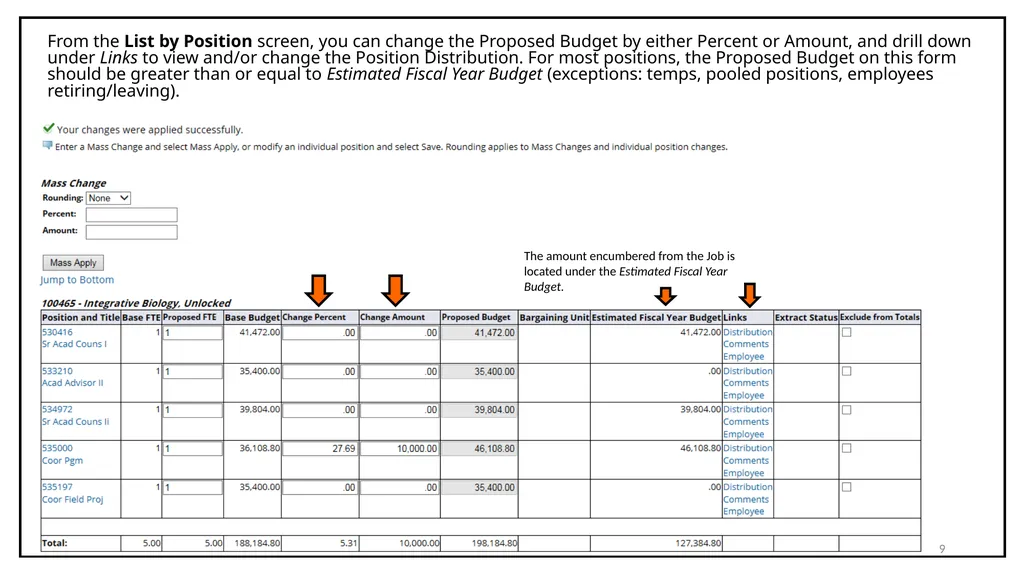
From the List by Position screen, you can change the Proposed Budget by either Percent or Amount, and drill down under Links to view and/or change the Position Distribution. For most positions, the Proposed Budget on this form should be greater than or equal to Estimated Fiscal Year Budget (exceptions: temps, pooled positions, employees retiring/leaving). The amount encumbered from the Job is located under the Estimated Fiscal Year Budget. 9<br>
10
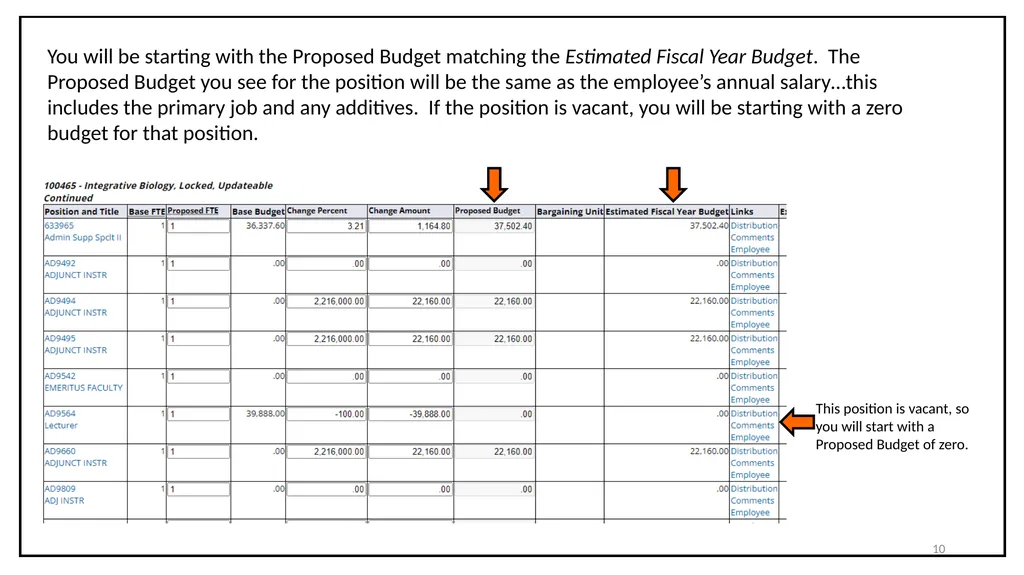
You will be starting with the Proposed Budget matching the Estimated Fiscal Year Budget. The Proposed Budget you see for the position will be the same as the employee’s annual salary…this includes the primary job and any additives. If the position is vacant, you will be starting with a zero budget for that position. This position is vacant, so you will start with a Proposed Budget of zero. 10<br>
11
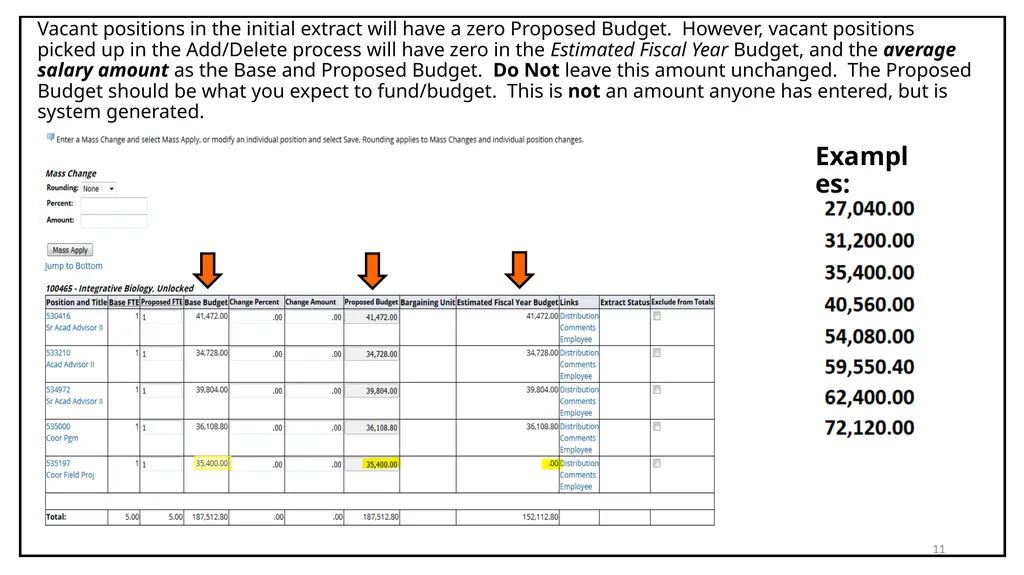
Vacant positions in the initial extract will have a zero Proposed Budget. However, vacant positions picked up in the Add/Delete process will have zero in the Estimated Fiscal Year Budget, and the average salary amount as the Base and Proposed Budget. Do Not leave this amount unchanged. The Proposed Budget should be what you expect to fund/budget. This is not an amount anyone has entered, but is system generated. Examples: 11<br>
12
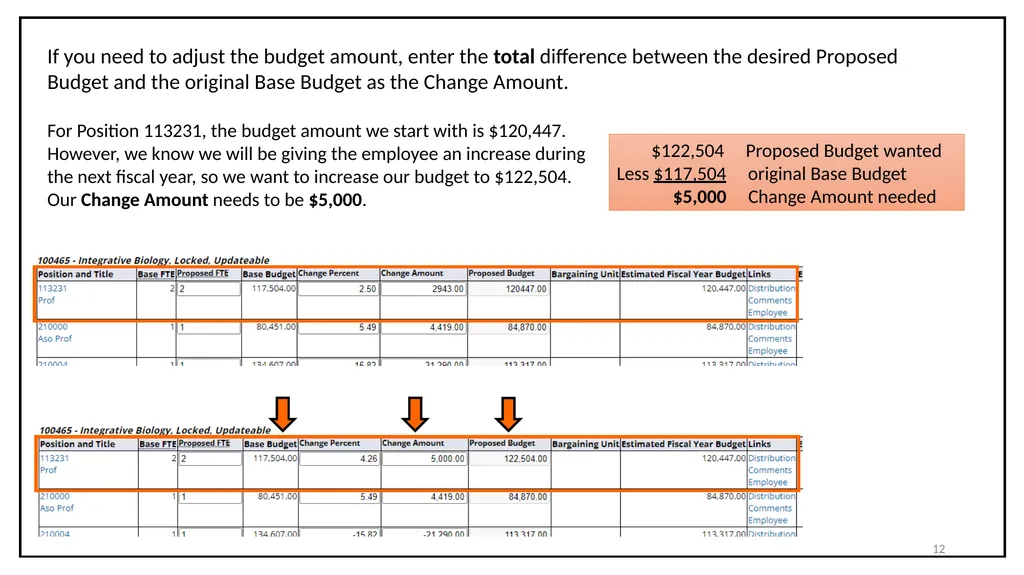
If you need to adjust the budget amount, enter the total difference between the desired Proposed Budget and the original Base Budget as the Change Amount. For Position 113231, the budget amount we start with is $120,447. However, we know we will be giving the employee an increase during the next fiscal year, so we want to increase our budget to $122,504. Our Change Amount needs to be $5,000. $122,504 Proposed Budget wanted
Less $117,504 original Base Budget
$5,000 Change Amount needed 12<br>
Less $117,504 original Base Budget
$5,000 Change Amount needed 12<br>
13
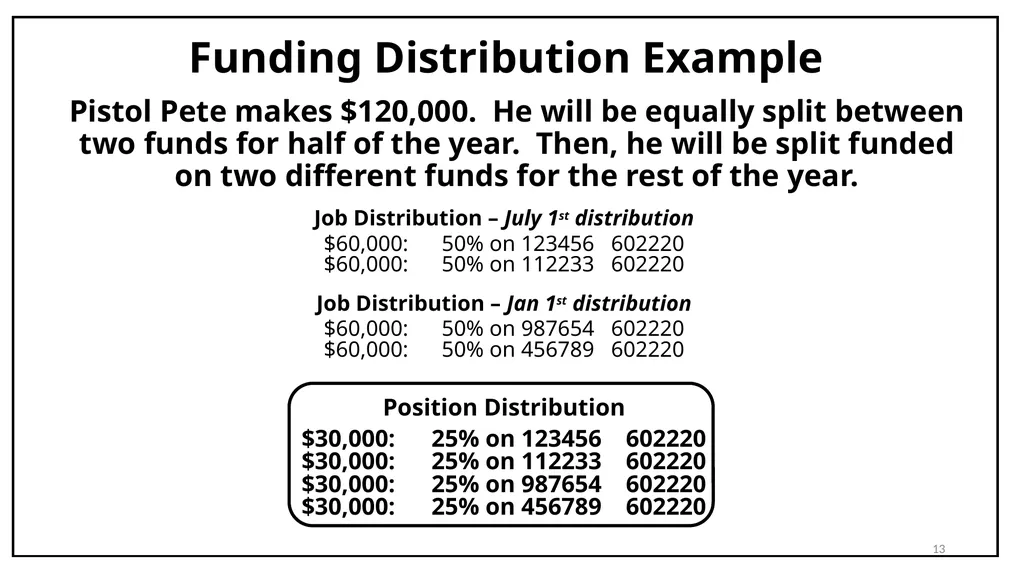
Funding Distribution Example Job Distribution – July 1st distribution
$60,000: 50% on 123456 602220
$60,000: 50% on 112233 602220
Job Distribution – Jan 1st distribution
$60,000: 50% on 987654 602220
$60,000: 50% on 456789 602220
Position Distribution
$30,000: 25% on 123456 602220
$30,000: 25% on 112233 602220
$30,000: 25% on 987654 602220
$30,000: 25% on 456789 602220 Pistol Pete makes $120,000. He will be equally split between two funds for half of the year. Then, he will be split funded on two different funds for the rest of the year. 13<br>
$60,000: 50% on 123456 602220
$60,000: 50% on 112233 602220
Job Distribution – Jan 1st distribution
$60,000: 50% on 987654 602220
$60,000: 50% on 456789 602220
Position Distribution
$30,000: 25% on 123456 602220
$30,000: 25% on 112233 602220
$30,000: 25% on 987654 602220
$30,000: 25% on 456789 602220 Pistol Pete makes $120,000. He will be equally split between two funds for half of the year. Then, he will be split funded on two different funds for the rest of the year. 13<br>
14
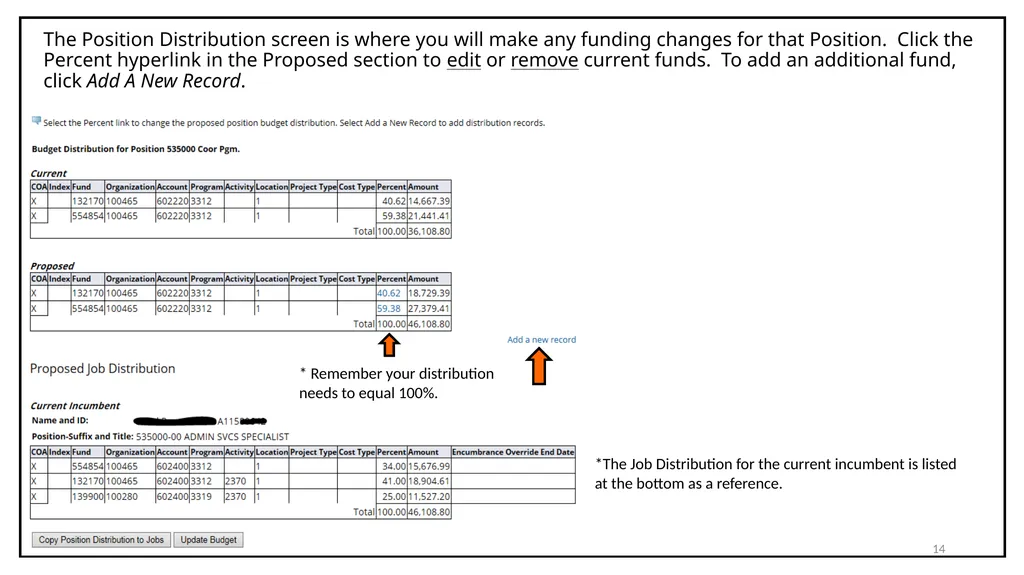
The Position Distribution screen is where you will make any funding changes for that Position. Click the Percent hyperlink in the Proposed section to edit or remove current funds. To add an additional fund, click Add A New Record. * Remember your distribution needs to equal 100%. *The Job Distribution for the current incumbent is listed at the bottom as a reference. 14<br>
15
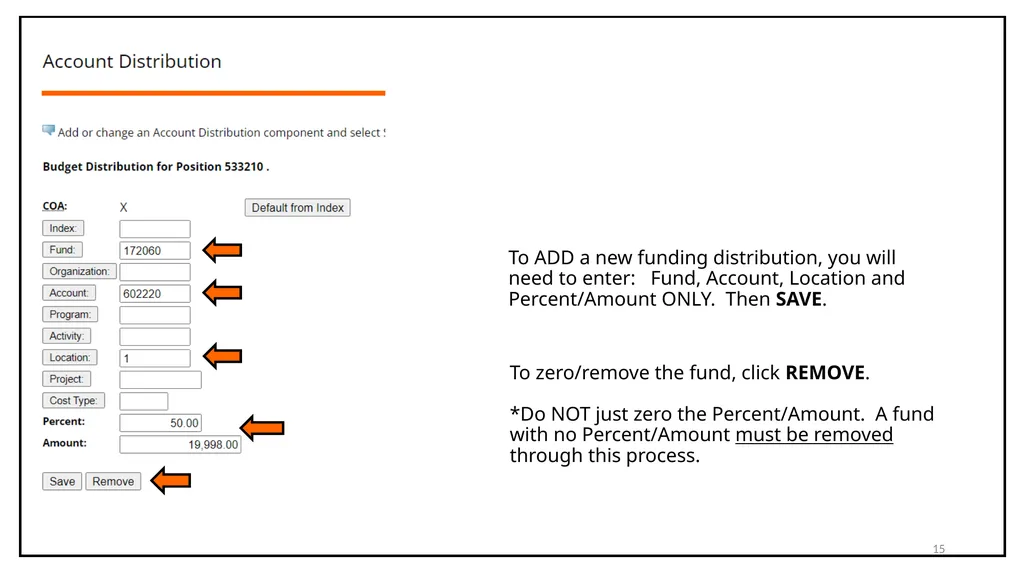
To ADD a new funding distribution, you will need to enter: Fund, Account, Location and Percent/Amount ONLY. Then SAVE. To zero/remove the fund, click REMOVE.
*Do NOT just zero the Percent/Amount. A fund with no Percent/Amount must be removed through this process. 15<br>
16
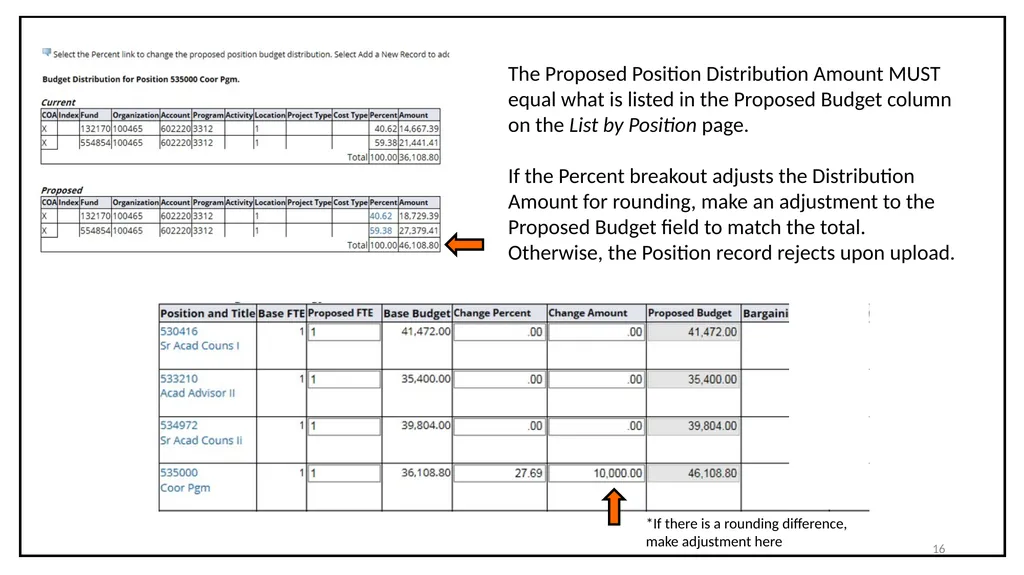
The Proposed Position Distribution Amount MUST equal what is listed in the Proposed Budget column on the List by Position page.
If the Percent breakout adjusts the Distribution Amount for rounding, make an adjustment to the Proposed Budget field to match the total. Otherwise, the Position record rejects upon upload. *If there is a rounding difference, make adjustment here 16<br>
If the Percent breakout adjusts the Distribution Amount for rounding, make an adjustment to the Proposed Budget field to match the total. Otherwise, the Position record rejects upon upload. *If there is a rounding difference, make adjustment here 16<br>
17
Jobs Jobs will not be uploaded from Salary Planner. However, you may still want to review them for correctness. It will also help you when budgeting the Position (reminder: The Job Proposed Salary feeds the Estimated Fiscal Year Budget field on the List by Positions).
We ask that you do not make changes to Jobs. If you do make changes for budgeting purposes, just remember these will not be loaded. Adjusting for Termination of Jobs If you have an employee whose Job has a termination date ON or AFTER July 1, the Position budget can be adjusted to reflect the amount you expect to pay the current (and new employee if refilling the Position) for the full year. This is the amount you will budget in Budget Development. 17<br>
We ask that you do not make changes to Jobs. If you do make changes for budgeting purposes, just remember these will not be loaded. Adjusting for Termination of Jobs If you have an employee whose Job has a termination date ON or AFTER July 1, the Position budget can be adjusted to reflect the amount you expect to pay the current (and new employee if refilling the Position) for the full year. This is the amount you will budget in Budget Development. 17<br>
18
If you want to look at the Job information for a Position, use the Employee link to the right. This will take you to a screen showing the employee(s) in that Position. 18<br>
19
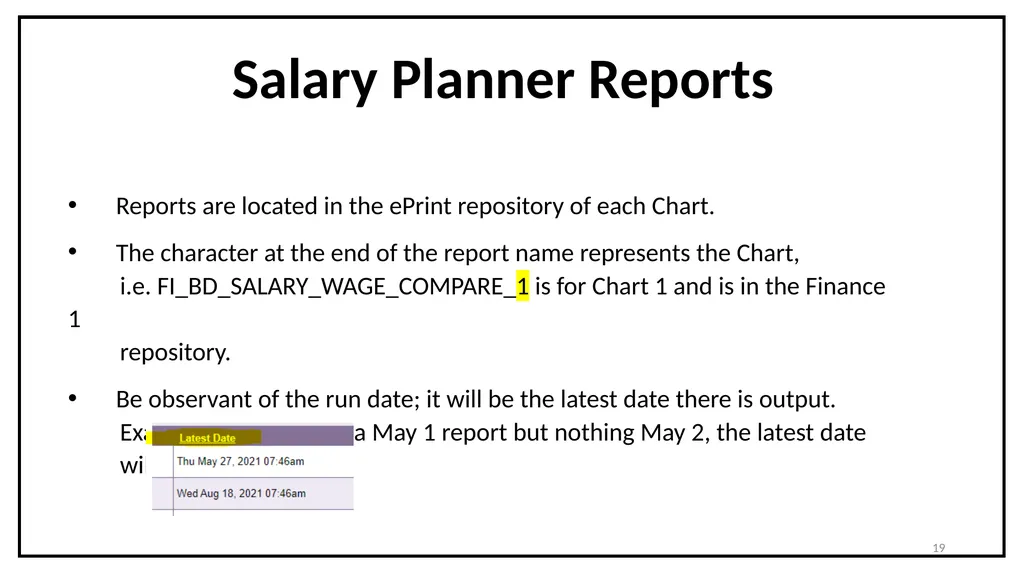
Salary Planner Reports Reports are located in the ePrint repository of each Chart.
The character at the end of the report name represents the Chart,
i.e. FI_BD_SALARY_WAGE_COMPARE_1 is for Chart 1 and is in the Finance 1
repository.
Be observant of the run date; it will be the latest date there is output.
Example: If there was a May 1 report but nothing May 2, the latest date
will be May 1. 19<br>
The character at the end of the report name represents the Chart,
i.e. FI_BD_SALARY_WAGE_COMPARE_1 is for Chart 1 and is in the Finance 1
repository.
Be observant of the run date; it will be the latest date there is output.
Example: If there was a May 1 report but nothing May 2, the latest date
will be May 1. 19<br>
20
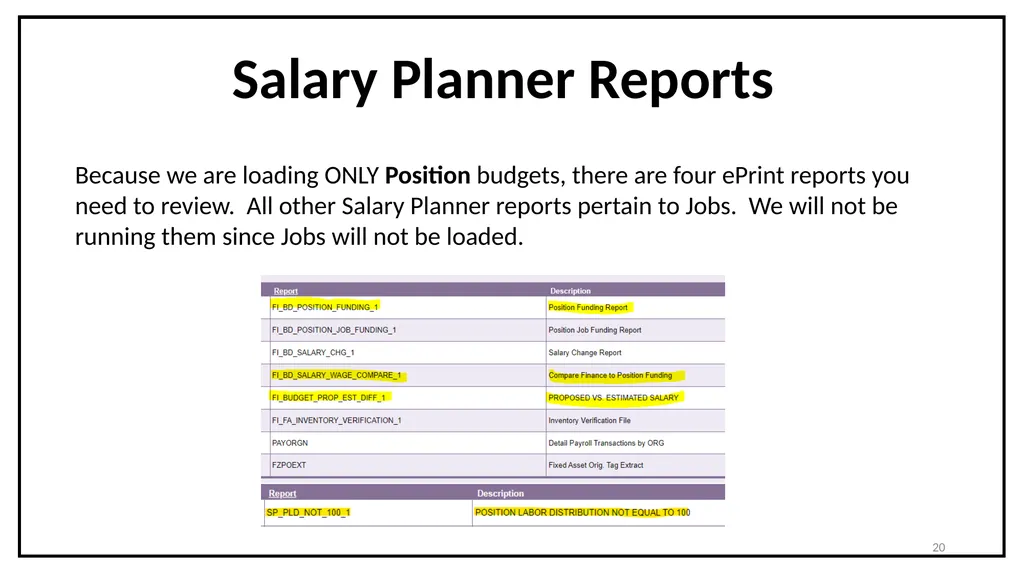
Salary Planner Reports Because we are loading ONLY Position budgets, there are four ePrint reports you need to review. All other Salary Planner reports pertain to Jobs. We will not be running them since Jobs will not be loaded. 20<br>
21
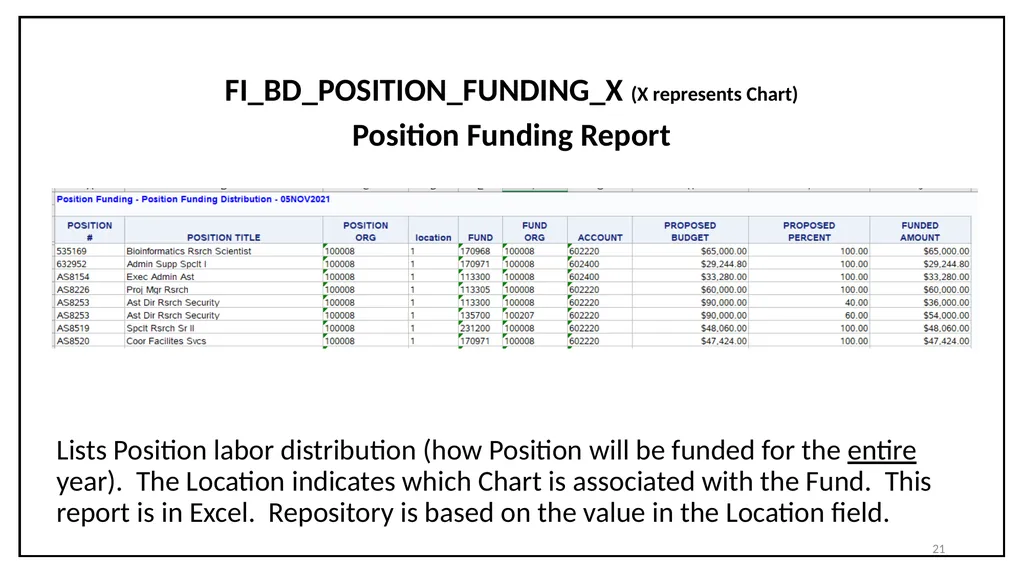
FI_BD_POSITION_FUNDING_X (X represents Chart)
Position Funding Report
Lists Position labor distribution (how Position will be funded for the entire year). The Location indicates which Chart is associated with the Fund. This report is in Excel. Repository is based on the value in the Location field. 21<br>
Position Funding Report
Lists Position labor distribution (how Position will be funded for the entire year). The Location indicates which Chart is associated with the Fund. This report is in Excel. Repository is based on the value in the Location field. 21<br>
22
FI_BD_POSITION_FUNDING_X (X represents Chart)
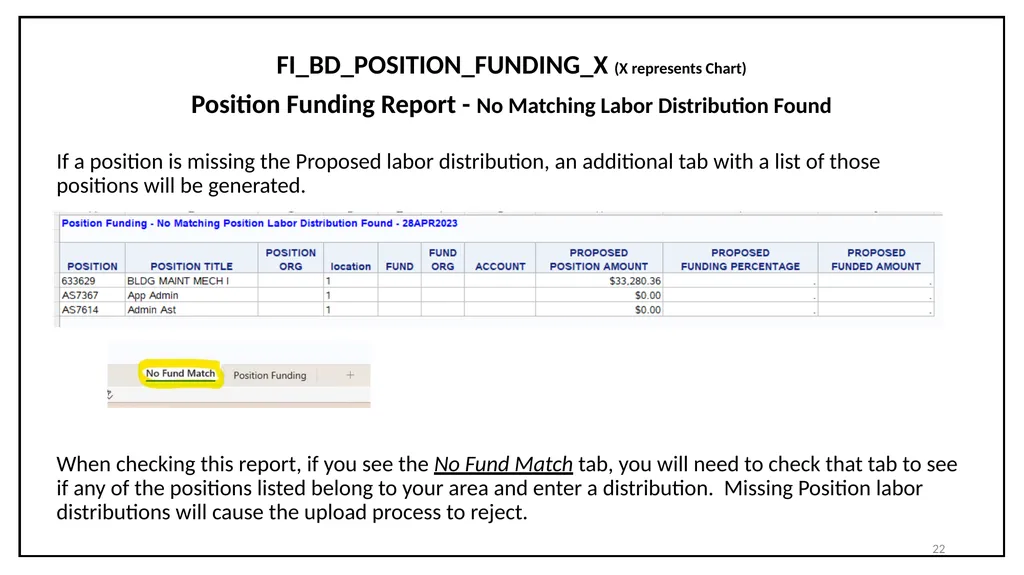
Position Funding Report - No Matching Labor Distribution Found
If a position is missing the Proposed labor distribution, an additional tab with a list of those positions will be generated.
When checking this report, if you see the No Fund Match tab, you will need to check that tab to see if any of the positions listed belong to your area and enter a distribution. Missing Position labor distributions will cause the upload process to reject. 22<br>
Position Funding Report - No Matching Labor Distribution Found
If a position is missing the Proposed labor distribution, an additional tab with a list of those positions will be generated.
When checking this report, if you see the No Fund Match tab, you will need to check that tab to see if any of the positions listed belong to your area and enter a distribution. Missing Position labor distributions will cause the upload process to reject. 22<br>
23
FI_BD_SALARY_WAGE_COMPARE_X
Compare Finance to Position Funding
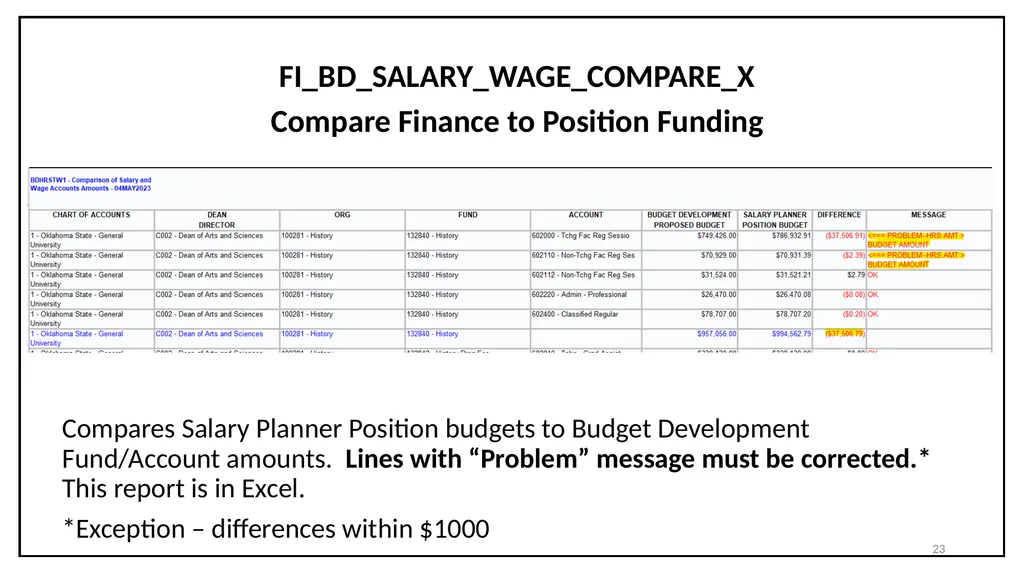
Compares Salary Planner Position budgets to Budget Development Fund/Account amounts. Lines with “Problem” message must be corrected.* This report is in Excel.
*Exception – differences within $1000 23<br>
Compare Finance to Position Funding
Compares Salary Planner Position budgets to Budget Development Fund/Account amounts. Lines with “Problem” message must be corrected.* This report is in Excel.
*Exception – differences within $1000 23<br>
24
FI_BD_SALARY_WAGE_COMPARE_X
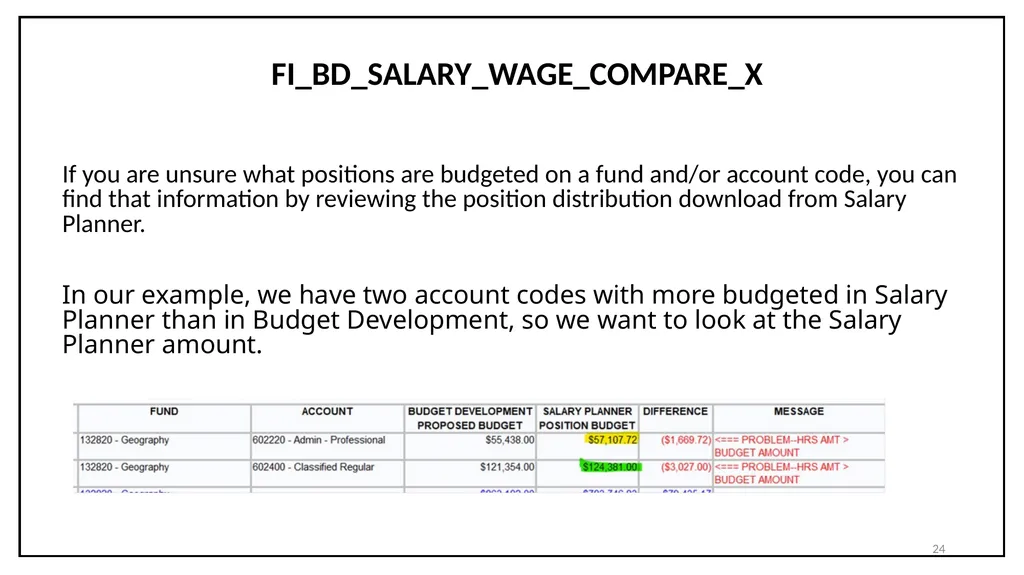
If you are unsure what positions are budgeted on a fund and/or account code, you can find that information by reviewing the position distribution download from Salary Planner.
In our example, we have two account codes with more budgeted in Salary Planner than in Budget Development, so we want to look at the Salary Planner amount. 24<br>
If you are unsure what positions are budgeted on a fund and/or account code, you can find that information by reviewing the position distribution download from Salary Planner.
In our example, we have two account codes with more budgeted in Salary Planner than in Budget Development, so we want to look at the Salary Planner amount. 24<br>
25
FI_BD_SALARY_WAGE_COMPARE_X
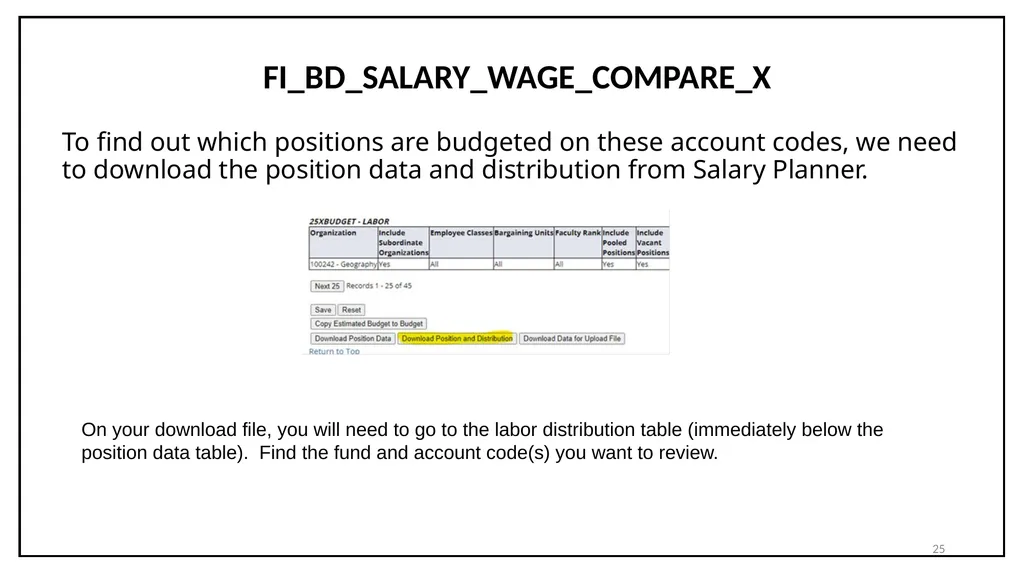
To find out which positions are budgeted on these account codes, we need to download the position data and distribution from Salary Planner. On your download file, you will need to go to the labor distribution table (immediately below the position data table). Find the fund and account code(s) you want to review. 25<br>
To find out which positions are budgeted on these account codes, we need to download the position data and distribution from Salary Planner. On your download file, you will need to go to the labor distribution table (immediately below the position data table). Find the fund and account code(s) you want to review. 25<br>
26
FI_BD_SALARY_WAGE_COMPARE_X
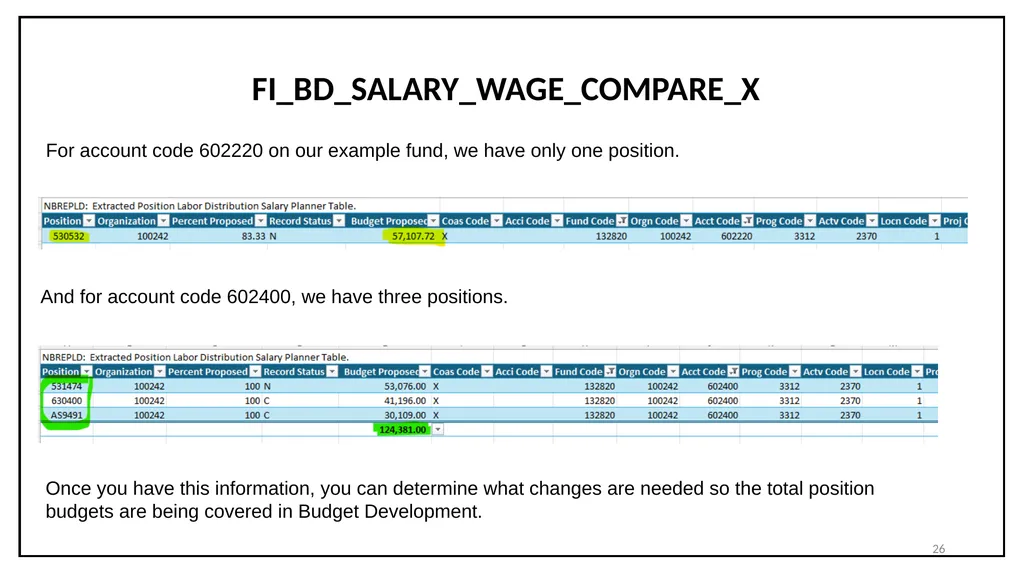
For account code 602220 on our example fund, we have only one position. And for account code 602400, we have three positions. Once you have this information, you can determine what changes are needed so the total position budgets are being covered in Budget Development. 26<br>
For account code 602220 on our example fund, we have only one position. And for account code 602400, we have three positions. Once you have this information, you can determine what changes are needed so the total position budgets are being covered in Budget Development. 26<br>
27
FI_BD_BUDGET_PROP_EST_DIFF_X
Proposed vs. Estimated Salary
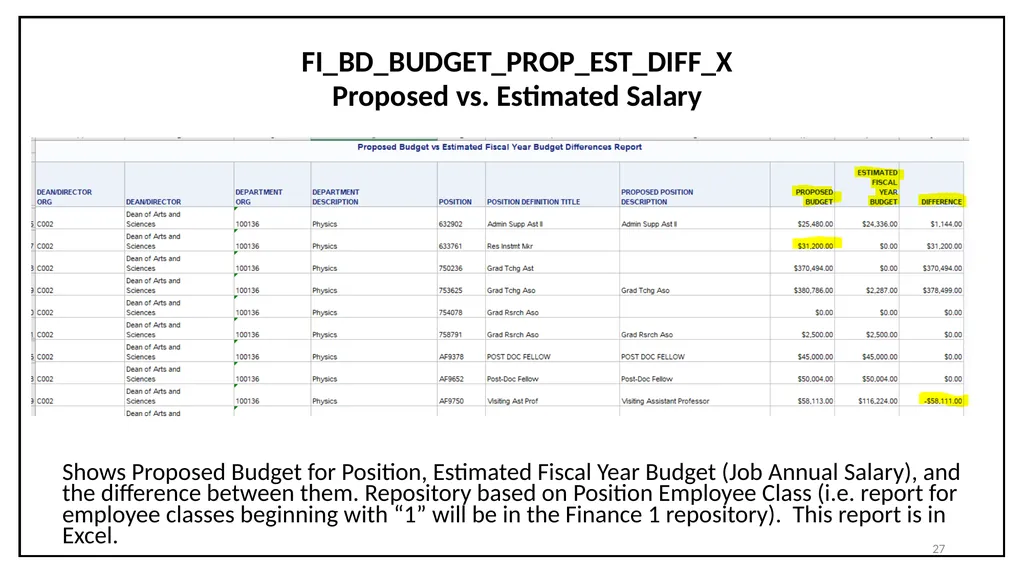
Shows Proposed Budget for Position, Estimated Fiscal Year Budget (Job Annual Salary), and the difference between them. Repository based on Position Employee Class (i.e. report for employee classes beginning with “1” will be in the Finance 1 repository). This report is in Excel. 27<br>
Proposed vs. Estimated Salary
Shows Proposed Budget for Position, Estimated Fiscal Year Budget (Job Annual Salary), and the difference between them. Repository based on Position Employee Class (i.e. report for employee classes beginning with “1” will be in the Finance 1 repository). This report is in Excel. 27<br>
28
SP_PLD_NOT_100_X
Position Labor Distribution Not Equal to 100
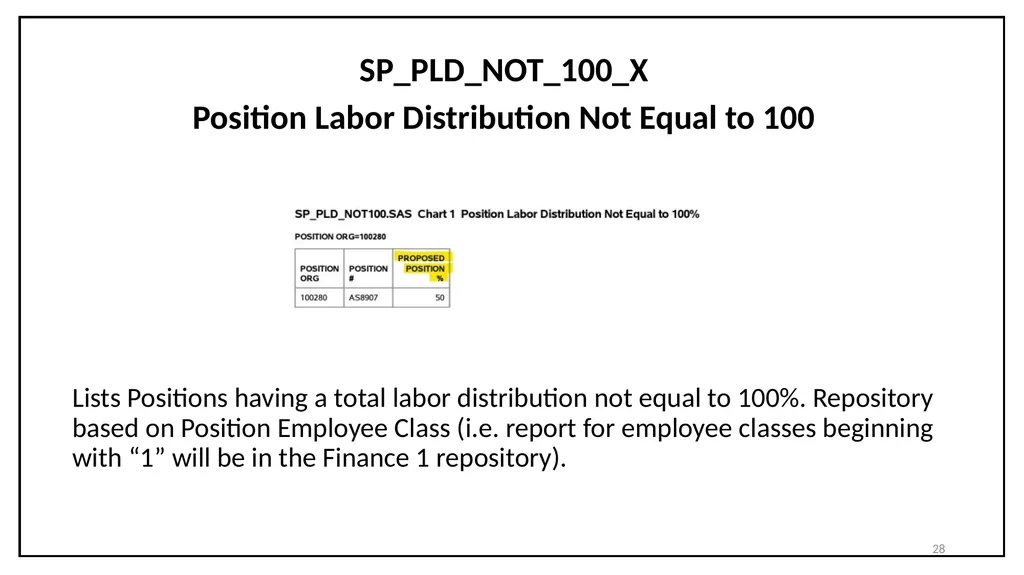
Lists Positions having a total labor distribution not equal to 100%. Repository based on Position Employee Class (i.e. report for employee classes beginning with “1” will be in the Finance 1 repository). 28<br>
Position Labor Distribution Not Equal to 100
Lists Positions having a total labor distribution not equal to 100%. Repository based on Position Employee Class (i.e. report for employee classes beginning with “1” will be in the Finance 1 repository). 28<br>
29
Reminders
Position Distribution is how you expect to fund the Position for the entire year.
Click SAVE any time you leave a screen to ensure your changes will hold.
The minus “-” must be in front of the amount keyed if reducing a field.
To undo a rate change entry on change amount/percentage fields, replace your initial change with a $0. 29<br>
Position Distribution is how you expect to fund the Position for the entire year.
Click SAVE any time you leave a screen to ensure your changes will hold.
The minus “-” must be in front of the amount keyed if reducing a field.
To undo a rate change entry on change amount/percentage fields, replace your initial change with a $0. 29<br>
30
Reminders
Job changes made in Salary Planner will not be loaded and might require an EPAF be submitted. If changes to FTE or Salary have been made via EPAF after the working extract is pulled, for Position budgeting purposes you may choose to update the Job in Salary Planner, but it will not be loaded.
There should never be a 0% on the position labor distribution. If the fund will not be used the next year, you should remove the line on the Account Distribution screen.
Biweekly students are not included in the Salary Planner extract. 30<br>
Job changes made in Salary Planner will not be loaded and might require an EPAF be submitted. If changes to FTE or Salary have been made via EPAF after the working extract is pulled, for Position budgeting purposes you may choose to update the Job in Salary Planner, but it will not be loaded.
There should never be a 0% on the position labor distribution. If the fund will not be used the next year, you should remove the line on the Account Distribution screen.
Biweekly students are not included in the Salary Planner extract. 30<br>
31
If you have questions,
please email us at
sysbdgt@okstate.edu 31<br>
please email us at
sysbdgt@okstate.edu 31<br>