Budget issues drivingaffecting treatment choice: Community involvement in the London ARV tender 201112 Simon Collins www.i-Base.info Background 1 In the UK, drug prices are negotiated locally and regionally with companies, not
"Budget issues driving/affecting treatment choice:" is the property of its rightful owner. Permission is granted to
download and print the materials on this website for personal, non-commercial use only, and to display it
on your personal computer provided you do not modify the materials and that you retain all copyright
notices contained in the materials. By downloading content from our website, you accept the terms of this
agreement.
Presentation Transcript
01
Budget issues driving/affecting treatment choice: Community involvement in the London ARV tender 2011/12 Simon Collins
www.i-Base.info<br>
02
Background 1 • In the UK, drug prices are negotiated locally and regionally with companies, not nationally
• In London, for at least ten years, health trusts and hospitals have collaborated for drug purchasing
• Outcomes included lower prices and greater equity of prescribing across London
• Oversaw careful use of highest cost ARVs – usually for people with drug resistance<br>
03
Background 2 • Coordinating London-wide services also included New-Fill clinics for lipoatrophy minimising need for people to switch clinics
• From 2010, central government flat-lined NHS budgets – no increase for inflation. London HIV services had to find £8m savings from drug costs over 2 years
• Incentive was to be able to retain savings each year for local HIV services (specialist pharmacy, support nurses etc)<br>
04
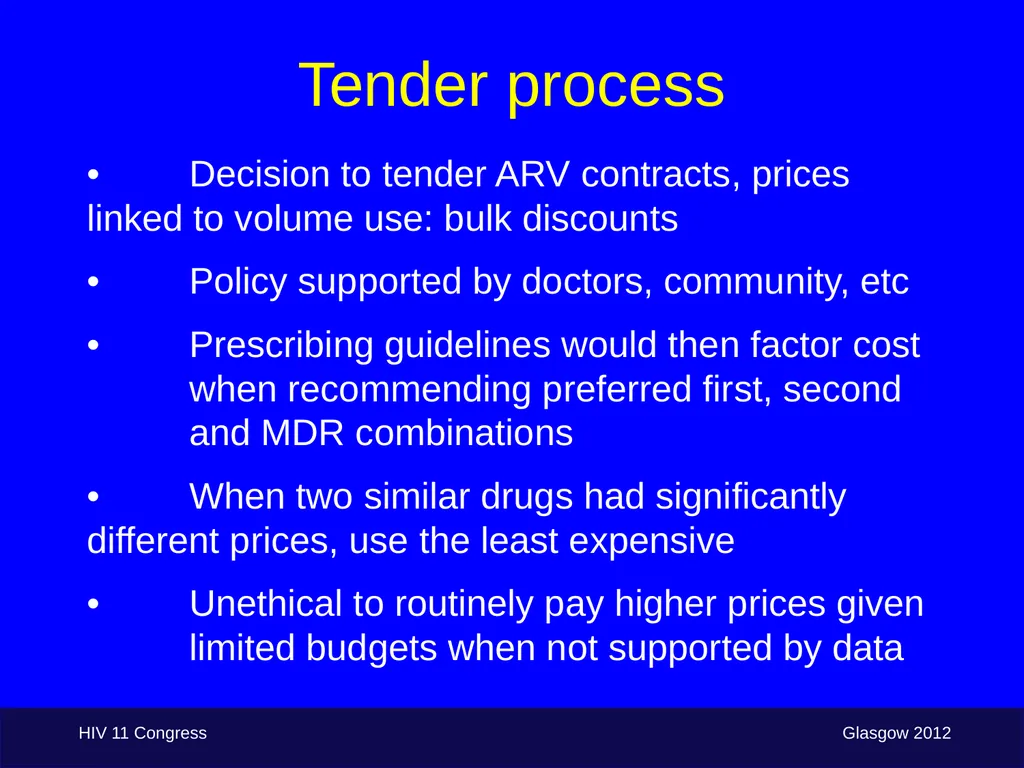
Tender process • Decision to tender ARV contracts, prices linked to volume use: bulk discounts
• Policy supported by doctors, community, etc
• Prescribing guidelines would then factor cost when recommending preferred first, second and MDR combinations
• When two similar drugs had significantly different prices, use the least expensive
• Unethical to routinely pay higher prices given limited budgets when not supported by data<br>
05
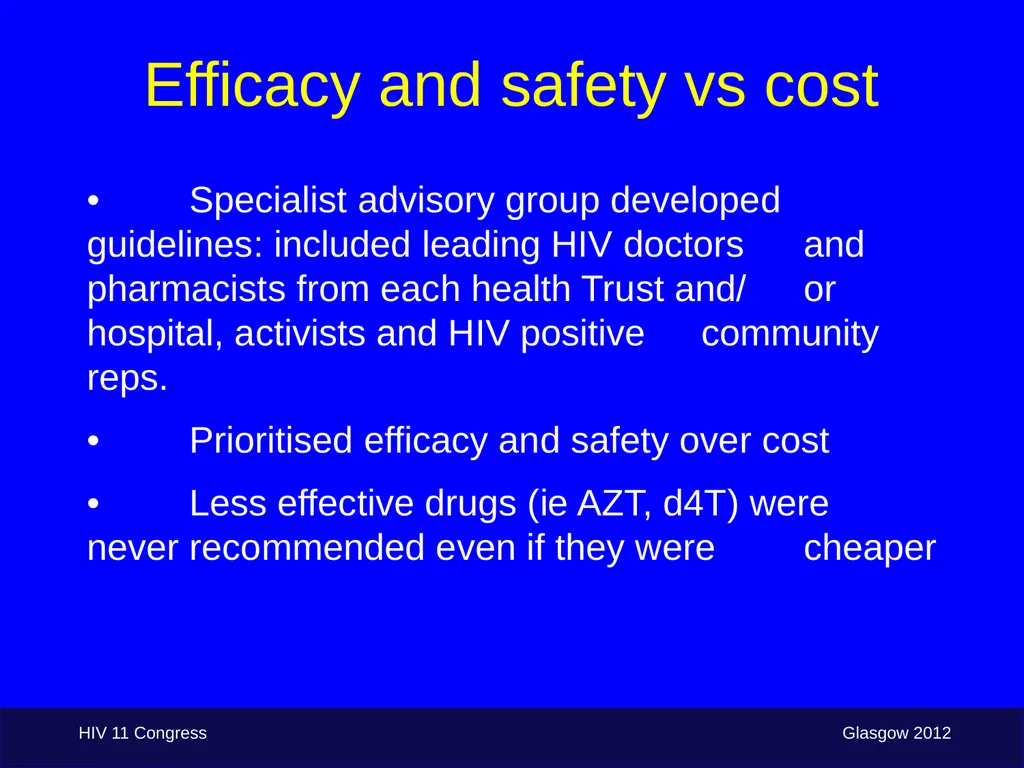
Efficacy and safety vs cost • Specialist advisory group developed guidelines: included leading HIV doctors and pharmacists from each health Trust and/ or hospital, activists and HIV positive community reps.
• Prioritised efficacy and safety over cost
• Less effective drugs (ie AZT, d4T) were never recommended even if they were cheaper<br>
06
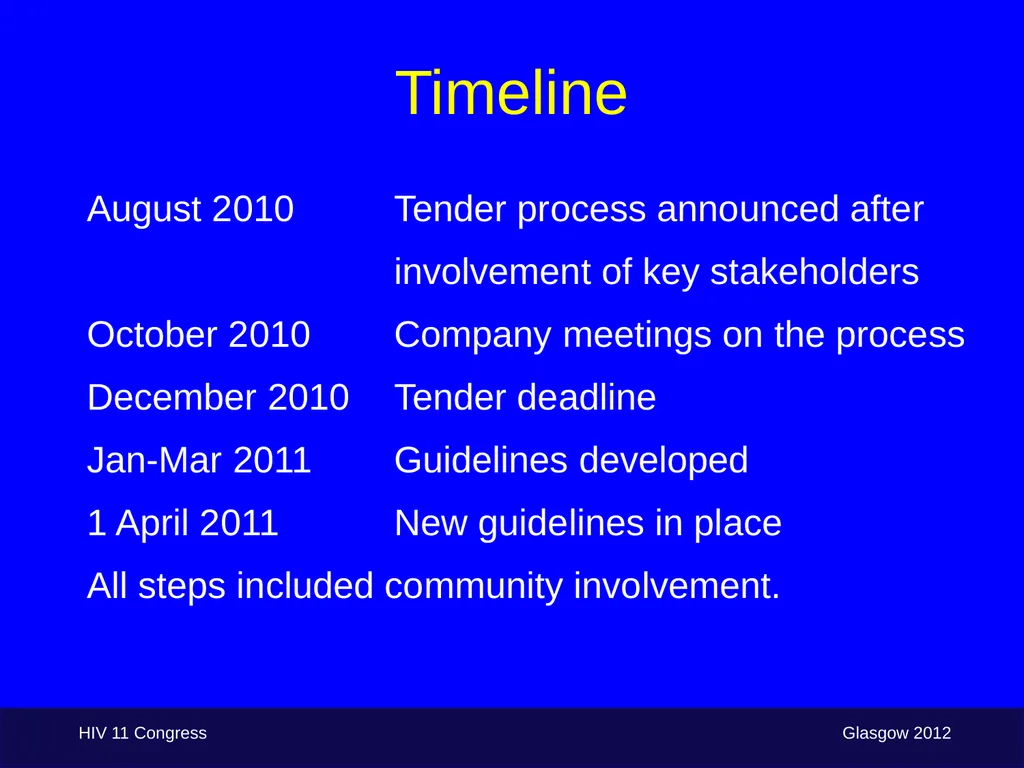
Timeline August 2010 Tender process announced after
involvement of key stakeholders
October 2010 Company meetings on the process
December 2010 Tender deadline
Jan-Mar 2011 Guidelines developed
1 April 2011 New guidelines in place
All steps included community involvement.<br>
07
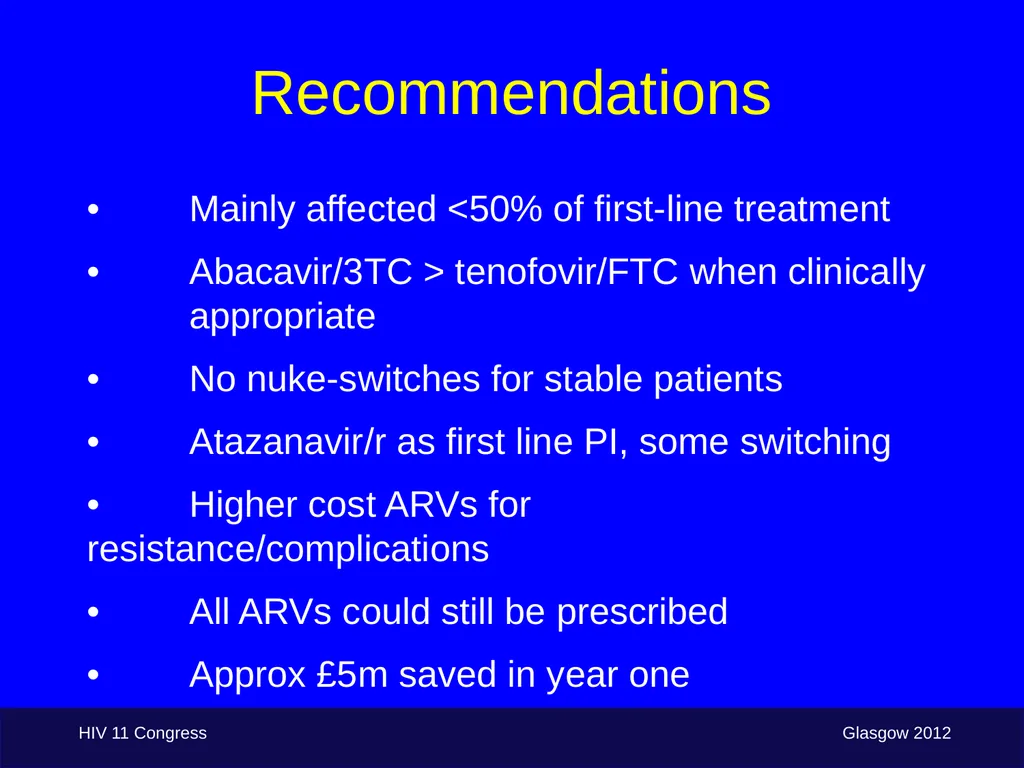
Recommendations • Mainly affected <50% of first-line treatment
• Abacavir/3TC > tenofovir/FTC when clinically appropriate
• No nuke-switches for stable patients
• Atazanavir/r as first line PI, some switching
• Higher cost ARVs for resistance/complications
• All ARVs could still be prescribed
• Approx £5m saved in year one<br>
08
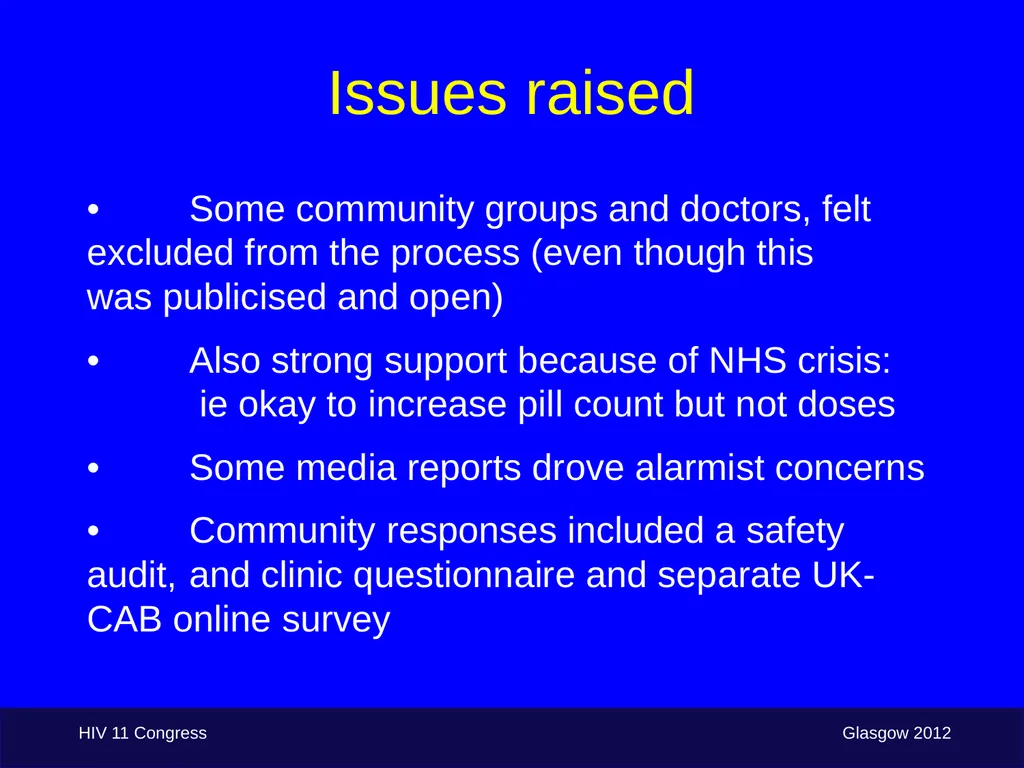
Issues raised • Some community groups and doctors, felt excluded from the process (even though this was publicised and open)
• Also strong support because of NHS crisis: ie okay to increase pill count but not doses
• Some media reports drove alarmist concerns
• Community responses included a safety audit, and clinic questionnaire and separate UK- CAB online survey<br>
09
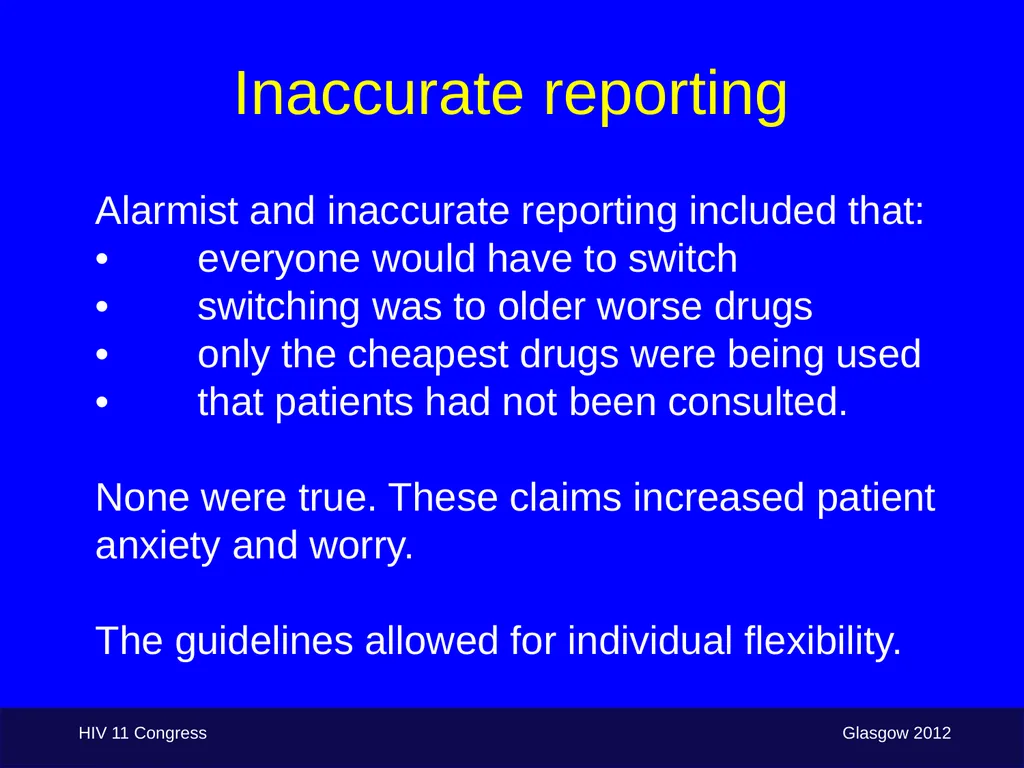
Inaccurate reporting Alarmist and inaccurate reporting included that:
• everyone would have to switch
• switching was to older worse drugs
• only the cheapest drugs were being used
• that patients had not been consulted.
None were true. These claims increased patient anxiety and worry.
The guidelines allowed for individual flexibility.<br>
10
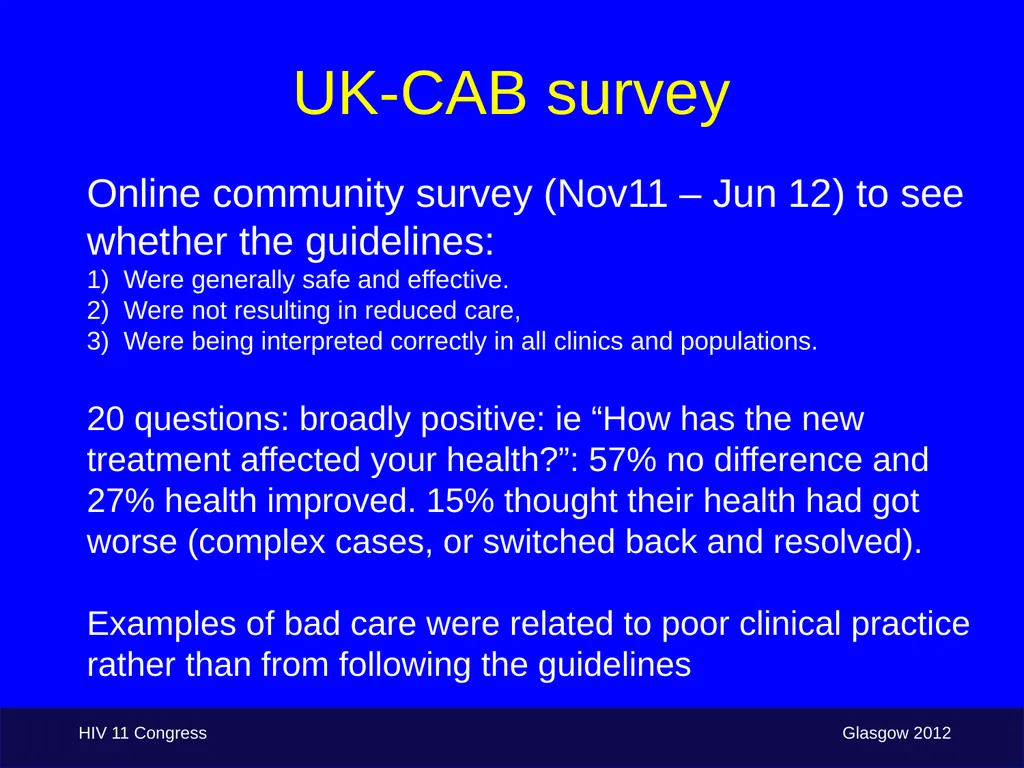
UK-CAB survey Online community survey (Nov11 – Jun 12) to see whether the guidelines:
1) Were generally safe and effective.
2) Were not resulting in reduced care,
3) Were being interpreted correctly in all clinics and populations.
20 questions: broadly positive: ie “How has the new treatment affected your health?”: 57% no difference and 27% health improved. 15% thought their health had got worse (complex cases, or switched back and resolved).
Examples of bad care were related to poor clinical practice rather than from following the guidelines<br>
11
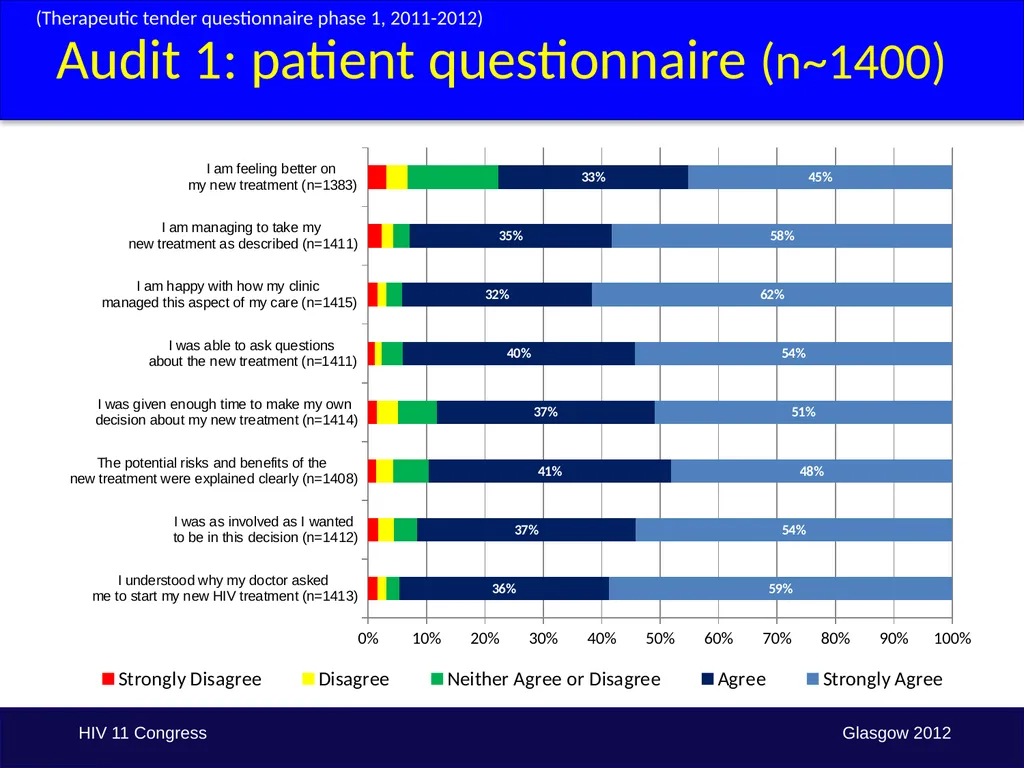
Audit 1: patient questionnaire (n~1400) HIV 11 Congress Glasgow 2012 (Therapeutic tender questionnaire phase 1, 2011-2012)<br>
12
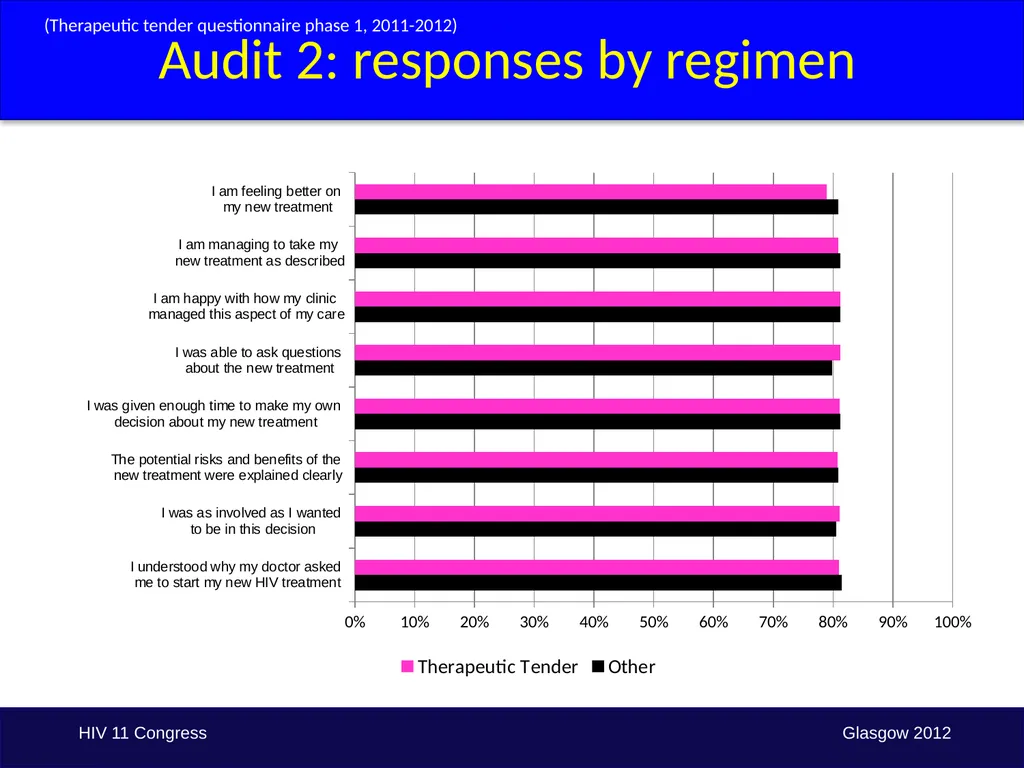
Audit 2: responses by regimen HIV 11 Congress Glasgow 2012 (Therapeutic tender questionnaire phase 1, 2011-2012)<br>
13
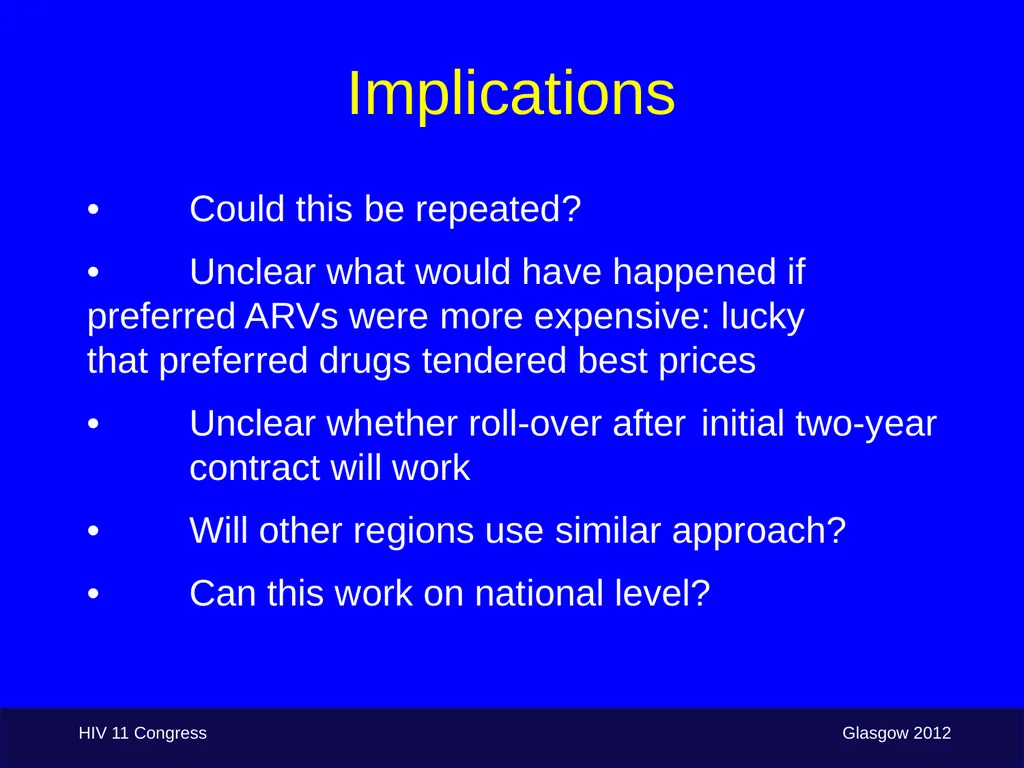
Implications • Could this be repeated?
• Unclear what would have happened if preferred ARVs were more expensive: lucky that preferred drugs tendered best prices
• Unclear whether roll-over after initial two-year contract will work
• Will other regions use similar approach?
• Can this work on national level?<br>
14
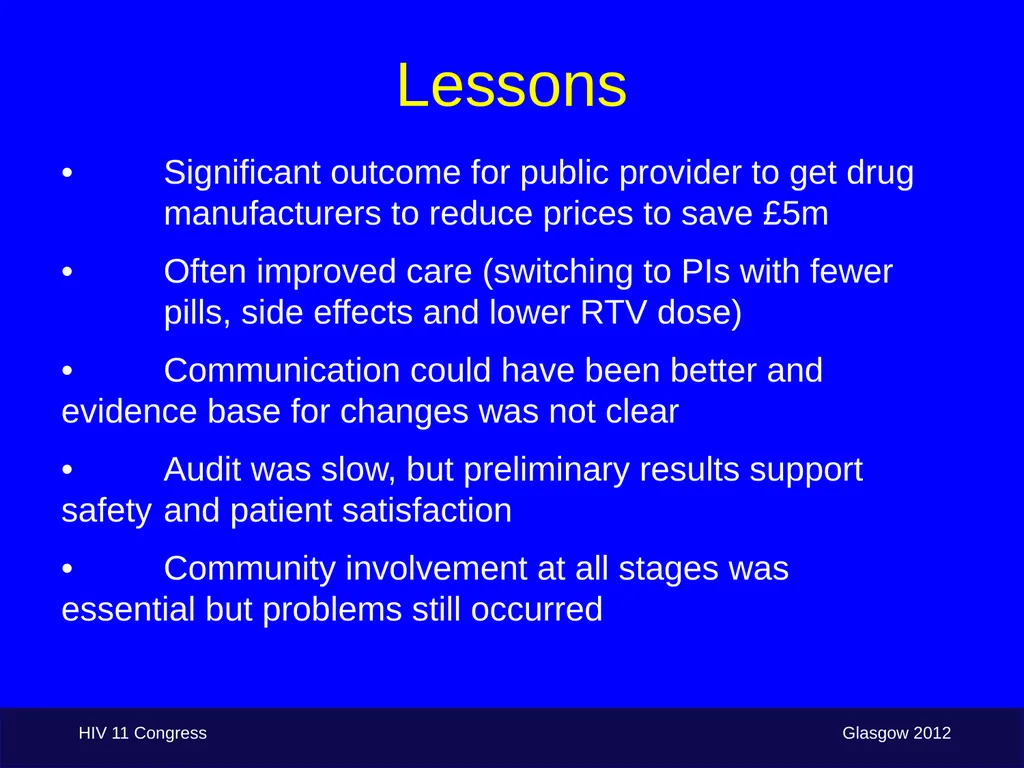
Lessons • Significant outcome for public provider to get drug manufacturers to reduce prices to save £5m
• Often improved care (switching to PIs with fewer pills, side effects and lower RTV dose)
• Communication could have been better and evidence base for changes was not clear
• Audit was slow, but preliminary results support safety and patient satisfaction
• Community involvement at all stages was essential but problems still occurred<br>
15
Further information London HIV commissioners
www.londonscg.nhs.uk/
Community reports: i-Base.info & aidsmap.com
Community survey: www.UKCAB.net
Open access paper: Maintaining cost-effective access to ARV therapy through a collaborative approach to drug procurement, consensus treatment guidelines and regular audit: the experience of London HIV commissioners and providers.
Foreman C et al. Sex Transm Infect 2012;88:112-115
http://sti.bmj.com/content/88/2/112.full<br>
16
Future questions • Unclear what would have happened if preferred ARVs were more expensive
• Can this be repeated?
• Will this work on national level?<br>
17
Thanks • Memory Sachikonye, UK-CAB
• Brian West, EATG
• Gus Cairns, NAM
• Claire Foreman, London Consortium<br>