04
Agenda for Today’s Webinar Importance of and understanding parents
Engaging Parents
Navigating conflict – bridge over troubled waters
Tips and resources<br>
05
Who has joined us survey Years as a state coordinator
Less than 2
2-5 years
5-10 years
10-15 year
More than 15 years
Not the state coordinator<br>
06
Parent Contacts Survey How many direct contacts with parents do you have during the year?
never
rarely
occasionally
frequently<br>
07
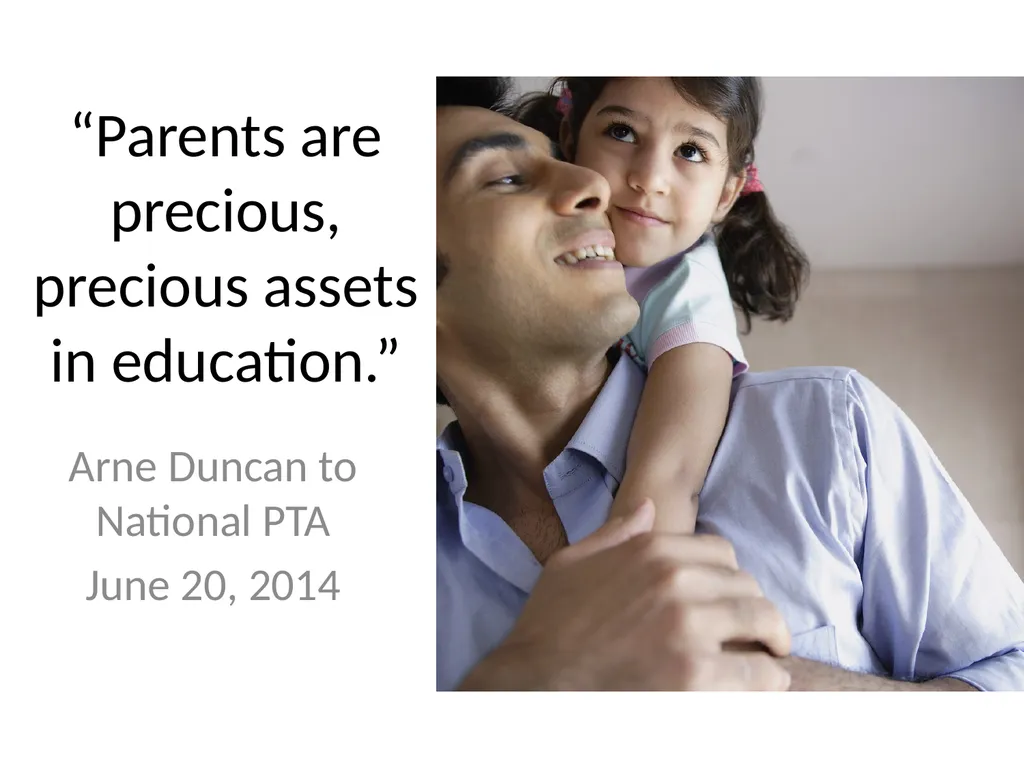
“Parents are precious, precious assets in education.” Arne Duncan to National PTA
June 20, 2014<br>
08
Understanding Parents<br>
09
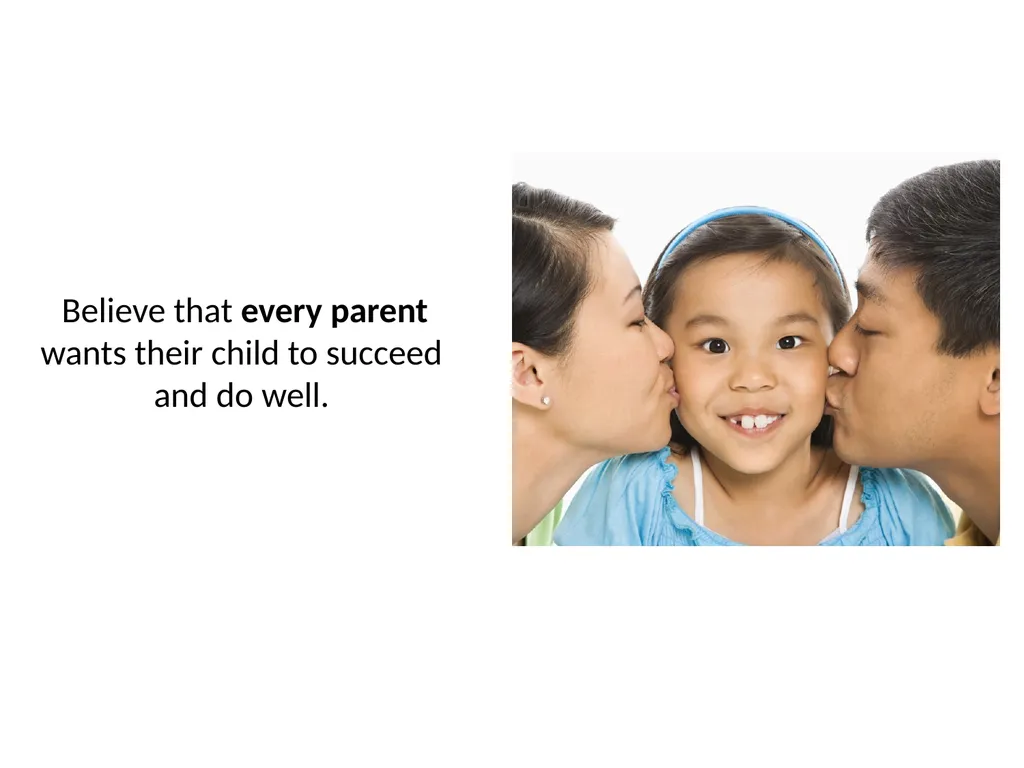
Believe that every parent wants their child to succeed and do well.<br>
10
It is unrealistic to treat parents as one group. The needs and issues are very different. Working parents
Single parents
Surrogate parents (foster parents, guardians, grandparents, etc.)
Non-English speaking parents
Parents with overwhelming personal stressors<br>
11
Education may Not be given a high priority
Be feared and resented due to personal experiences that were not positive
Be viewed as a babysitter
Be viewed as an unavoidable/necessary chore
Be viewed as NOT a family domain<br>
12
Trauma-Informed Care:�Working with Homeless Families<br>
13
Insert survey : How familiar with trauma informed care are you? Heard of it
Had some training
Had extensive training
Use it in practice<br>
14
What is Trauma and What Does it Have to Do with Homelessness? A traumatic event is sudden and unexpected, and perceived as dangerous.
Threat of physical harm
Actual physical harm
Leads to intense fear
Overwhelms our immediate ability to cope 14<br>
15
What is Trauma and What Does it Have to Do with Homelessness? Traumatic experiences have several key components:
Threat to one’s physical or mental well-being
Intense feelings of helplessness, terror, and lack of control
Catastrophic responses
Trauma survivors’ world view also impacts how they access and receive services. 15<br>
16
Trauma-Informed Care DEFINED:
a strengths-based framework that is grounded in an understanding of and responsiveness to the impact of trauma
emphasizes physical, psychological, and emotional safety for both providers and survivors
creates opportunities for survivors to rebuild a sense of control and empowerment
(Hopper et al., 2010) 16<br>
17
What is the impact of trauma on service delivery? Lack of trust in providers
Inappropriate responses
Difficulty asking for and accepting help
Few coping and problem-solving skills
Difficulty sustaining long-term relationships 17<br>
18
Common Trauma Triggers Sense of being ignored or not heard
Sense of being disrespected
Sense of being views as wrong or incompetent
Feeling of being threatened or pushed against a wall
Perception of being denied what is deserved or having things taken away
One too many requests
Being touched<br>
19
Trauma Responses Flight
Fight
Freeze<br>
21
Type In Chat Box: What do you believe is a main key to working with parents? What do you always keep in mind?
Ex. I always try to…..<br>
22
Building Blocks Mutual Respect
Trust
Use of language<br>
23
Communication 101 Communication Skills
Constructive Assertiveness
Empathic Responding
Problem Solving
Critical Skills for working with
Students
Parents
Colleagues<br>
24
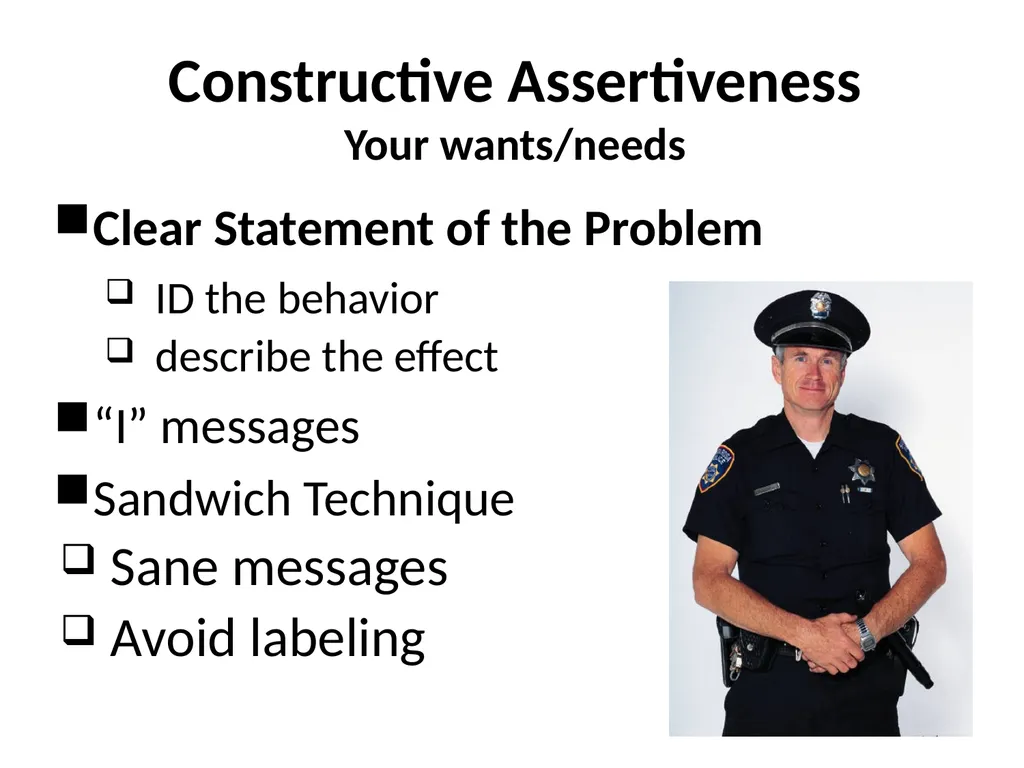
Constructive Assertiveness�Your wants/needs Clear Statement of the Problem
ID the behavior
describe the effect
“I” messages
Sandwich Technique
Sane messages
Avoid labeling<br>
25
Constructive Assertiveness�(continued) Body Language
eye contact
posture & body orientation
congruent facial expression
Obtain Compliance/cooperation<br>
26
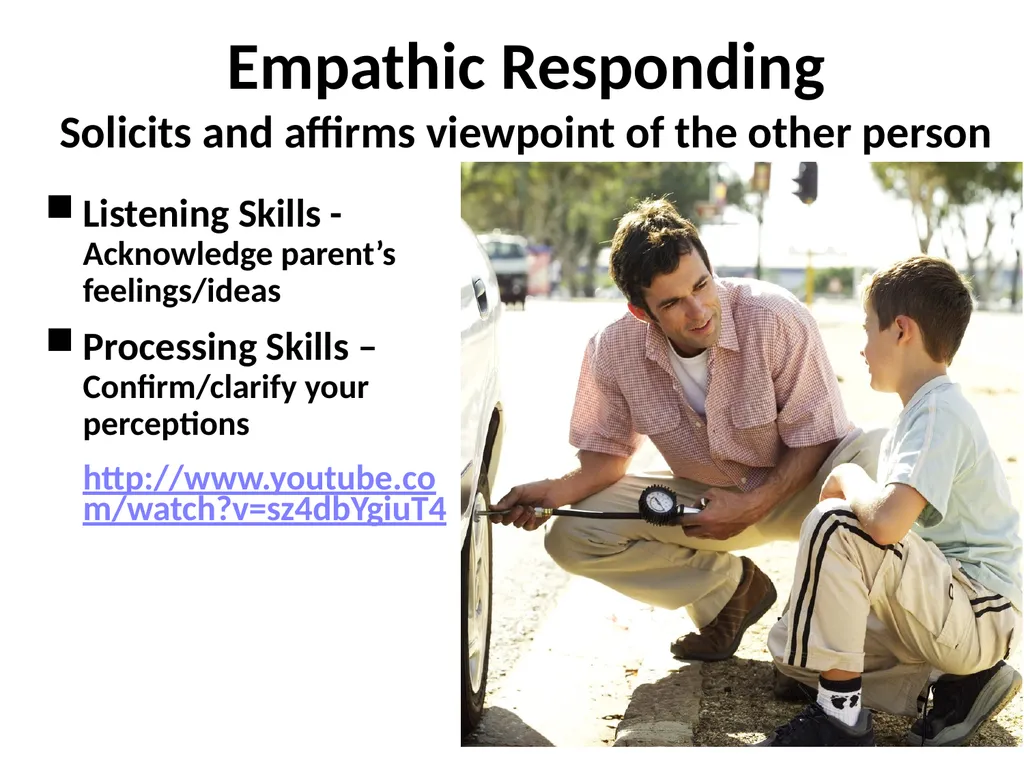
Empathic Responding�Solicits and affirms viewpoint of the other person Listening Skills - Acknowledge parent’s feelings/ideas
Processing Skills – Confirm/clarify your perceptions
http://www.youtube.com/watch?v=sz4dbYgiuT4<br>
27
Four Powerful Phrases (Diffusers) Nevertheless,…
Probably so,…
I understand,…
I’m sorry, …<br>
28
Another communication consideration: HALT:
Hungry
Angry
Low
Tired<br>
29
Email Tips Maintain a professional demeanor: When writing an email, be cordial and respectful.
Use a Business writing style: Keep your email message short and to the point.
Do not assume your recipient is the only one who will read the email.
Never write anything that you wouldn’t mind reading on the front page of your local newspaper.
Treat the subject line as an information transmittal tool.
Before broadcasting your disagreement in an email let the e-mail “rest” in the draft box for several hours or days if possible.
Reply to emails.
Always do a spell/grammar check.<br>
30
Some More Reminders For liaisons<br>
31
Use a Strength-Based Approach Identify and nurture their strengths
Help parents identify their own strengths
Organize resources and strategies that help them build on these strengths
Arrange partnership activities to help them build competence and confidence through use of these strengths<br>
32
Use a Strength-Based Approach Involve the family in identifying key needs they feel should be addressed.
Build trust with homeless families through well-designed partnership efforts.
On-going communication plans and opportunities are needed to build the involvement of homeless families in their children’s education. 32<br>
33
Evaluating Meaningful Communication Are we responsive to the stressors families are experiencing?
What steps have we taken to encourage ongoing communication with homeless families?
Are we engaging families in setting the agenda for our engagement activities?
What specific steps have we taken to help homeless families feel invited and important in our schools?
What are we doing to continually evaluate and improve our communication strategies?<br>
34
Addressing Conflict<br>
35
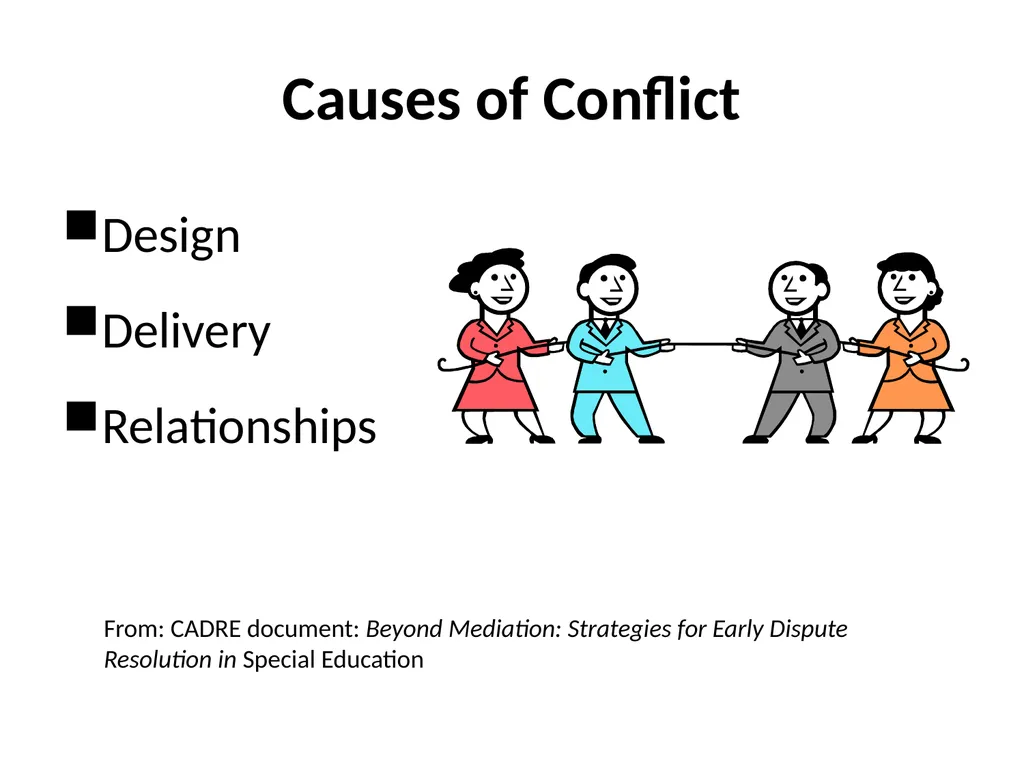
Causes of Conflict Design
Delivery
Relationships From: CADRE document: Beyond Mediation: Strategies for Early Dispute Resolution in Special Education<br>
36
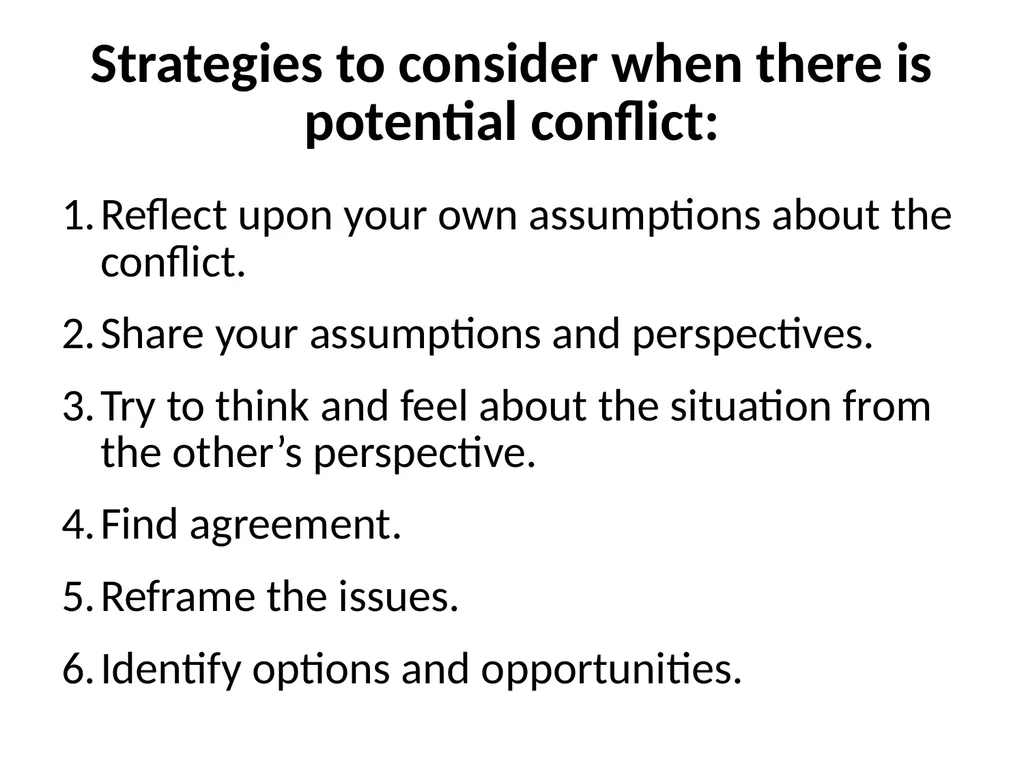
Strategies to consider when there is potential conflict: Reflect upon your own assumptions about the conflict.
Share your assumptions and perspectives.
Try to think and feel about the situation from the other’s perspective.
Find agreement.
Reframe the issues.
Identify options and opportunities.<br>
37
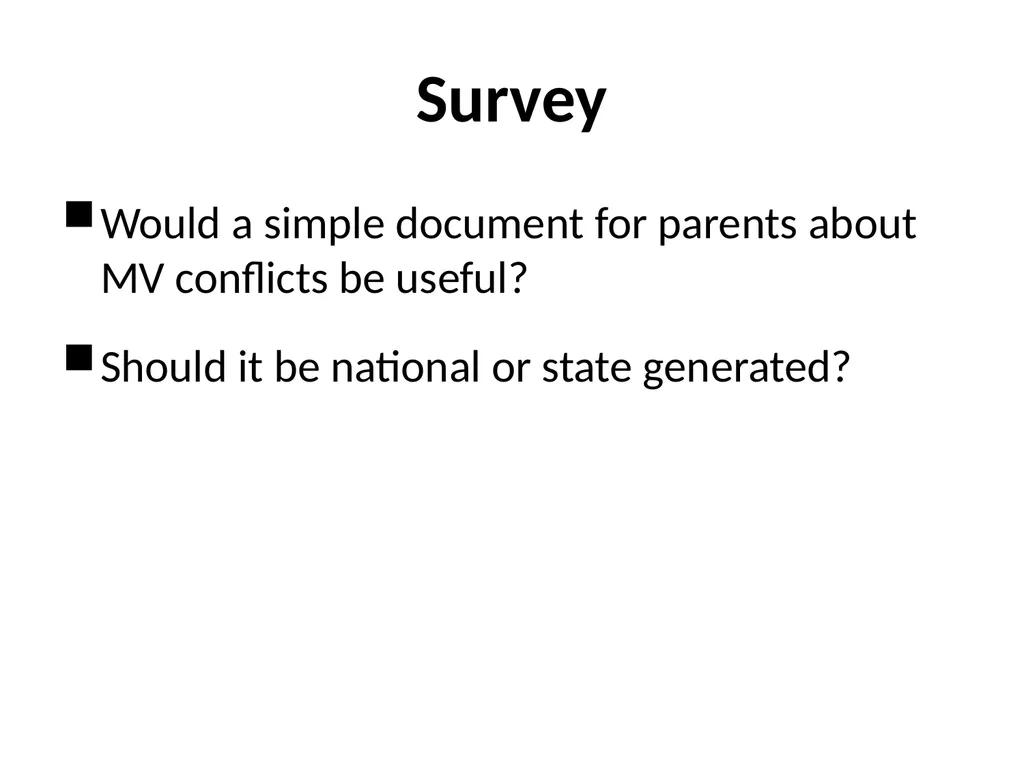
Survey Would a simple document for parents about MV conflicts be useful?
Should it be national or state generated?<br>
38
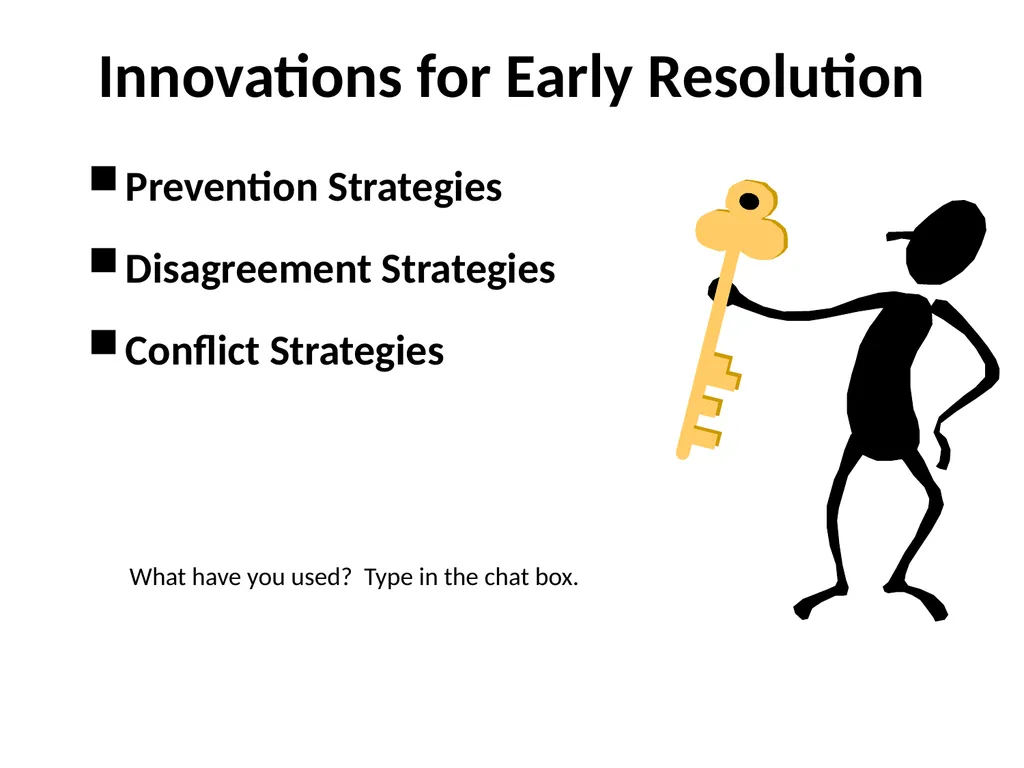
Innovations for Early Resolution Prevention Strategies
Disagreement Strategies
Conflict Strategies What have you used? Type in the chat box.<br>
39
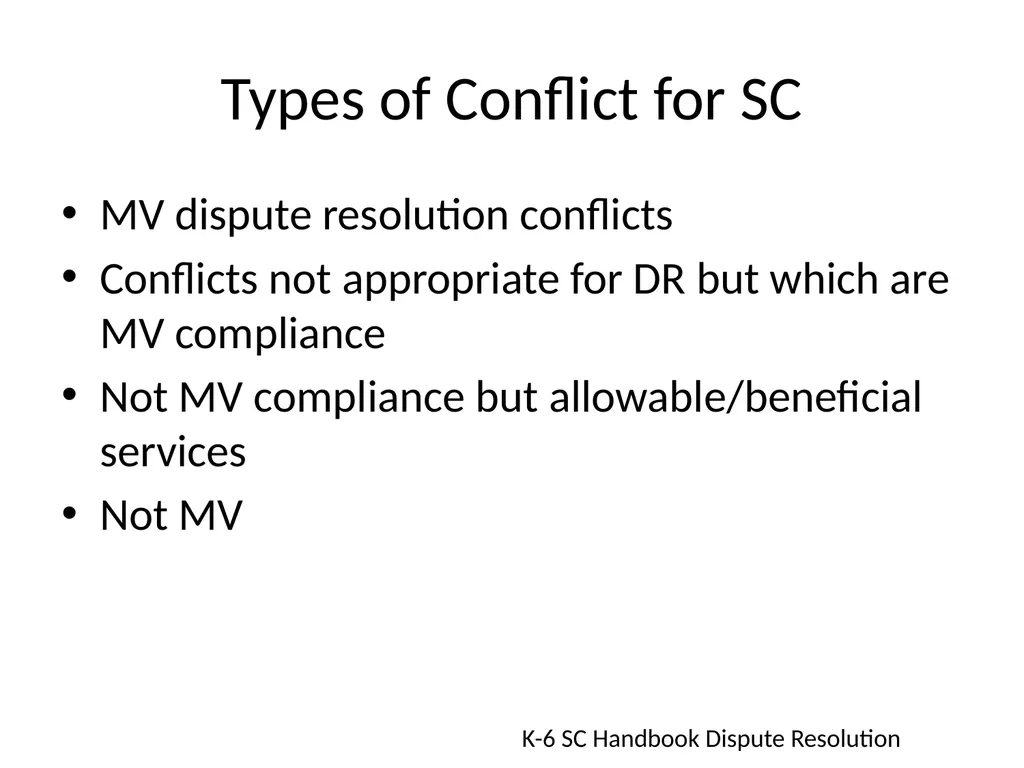
Types of Conflict for SC MV dispute resolution conflicts
Conflicts not appropriate for DR but which are MV compliance
Not MV compliance but allowable/beneficial services
Not MV K-6 SC Handbook Dispute Resolution<br>
40
Your thoughts and Questions Chat with us<br>
41
Valuable Resources<br>
42
NCHE Homeless Liaison Toolkit Chapter 10:
Working with Parents
http://center.serve.org/nche/downloads/toolkit2/ch10.pdf<br>
43
NCHE �Parent Involvement Web Page http://center.serve.org/nche/ibt/parent_inv.php<br>
44
NCHE State Coordinator Handbook Section K:
Dispute Resolution
http://center.serve.org/nche/downloads/handbook2/k.pdf.pdf<br>
45
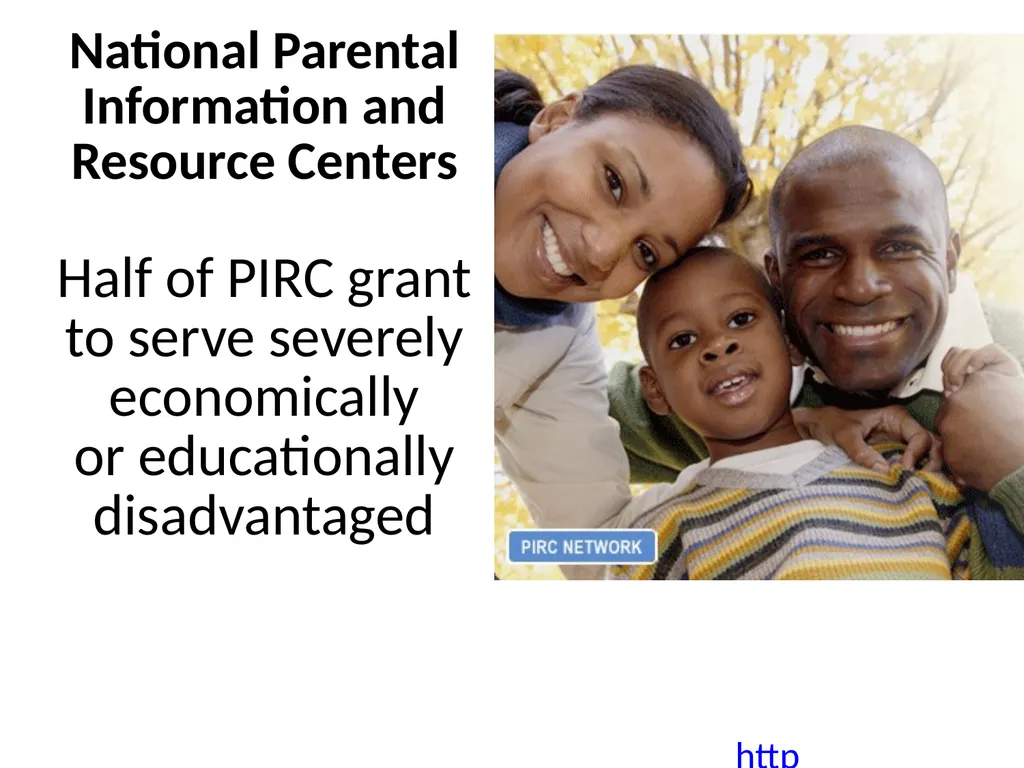
National Parental Information and Resource Centers��Half of PIRC grant�to serve severely�economically�or educationally�disadvantaged http://www.nationalpirc.org/<br>
46
Trauma-Informed Schools/Services National Center on Family Homelessness, American Institutes for Research
Trauma Informed Care Resources (including Self Care)
http://www.familyhomelessness.org/
http://www.familyhomelessness.org/tic_curriculum.php?p=ss#
http://www.familyhomelessness.org/tic_resources.php?p=ss
Substance Abuse and Mental Health Services Administration (SAMHSA)
Best Practices for Providers: Trauma Informed Care
http://www.mentalhealth.samhsa.gov/nctic<br>
47
Parent Training and Information Centers (PTIC) For students
with Disabilities
In every state
http://www.parentcenterhub.org/find-your-center/<br>
48
The National Center on Dispute Resolution in Special Education "Encouraging the use of mediation and other collaborative strategies to resolve�disagreements about special education and early intervention programs."
http://www.directionservice.org/cadre/index.cfm<br>
49
Tip Sheet for Webinar Attachment<br>
50
Other resources????<br>
51
We build too many walls and not enough bridges. Isaac Newton<br>