Building connections: Using analogies and metaphors in information literacy instruction Kathy Snediker Reference Instruction Librarian University of South Carolina Image by stockarch - stockarch.com PROSAIC :: MUNDANE A. obdurate :
"Building connections: Using analogies and" is the property of its rightful owner. Permission is granted to
download and print the materials on this website for personal, non-commercial use only, and to display it
on your personal computer provided you do not modify the materials and that you retain all copyright
notices contained in the materials. By downloading content from our website, you accept the terms of this
agreement.
Presentation Transcript
01
Building connections: Using analogies and metaphors in information literacy instruction Kathy Snediker
Reference & Instruction Librarian
University of South Carolina Image by stockarch - stockarch.com<br>
02
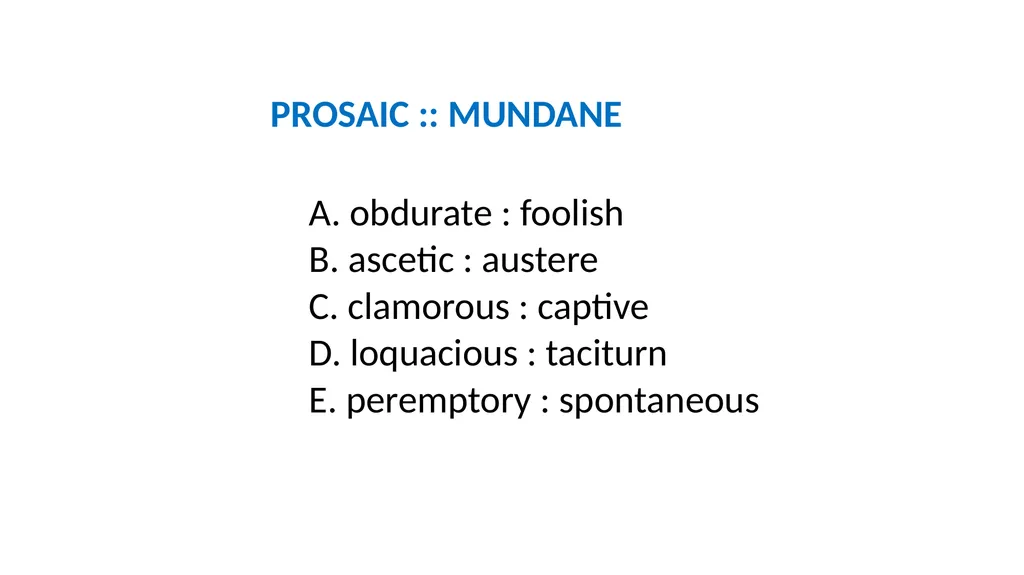
PROSAIC :: MUNDANE
A. obdurate : foolish
B. ascetic : austere
C. clamorous : captive
D. loquacious : taciturn
E. peremptory : spontaneous<br>
03
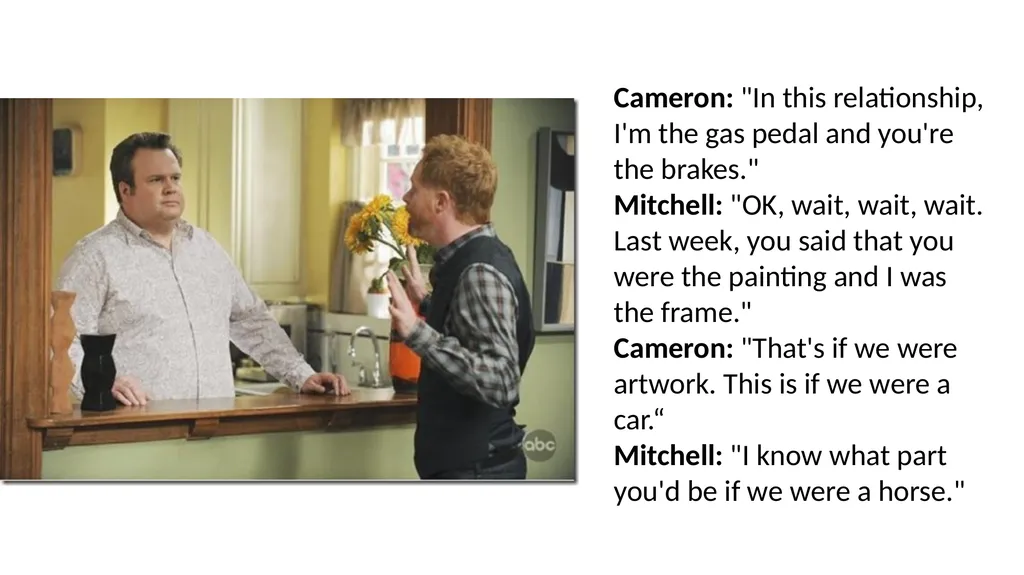
Cameron: "In this relationship, I'm the gas pedal and you're the brakes." Mitchell: "OK, wait, wait, wait. Last week, you said that you were the painting and I was the frame." Cameron: "That's if we were artwork. This is if we were a car.“
Mitchell: "I know what part you'd be if we were a horse."<br>
04
“A plus” by Ludwig at https://flic.kr/p/ecYqYi under CC: by-nc-nd/2.0 Why analogies work
Benefits in instruction
Qualities of good analogies<br>
05
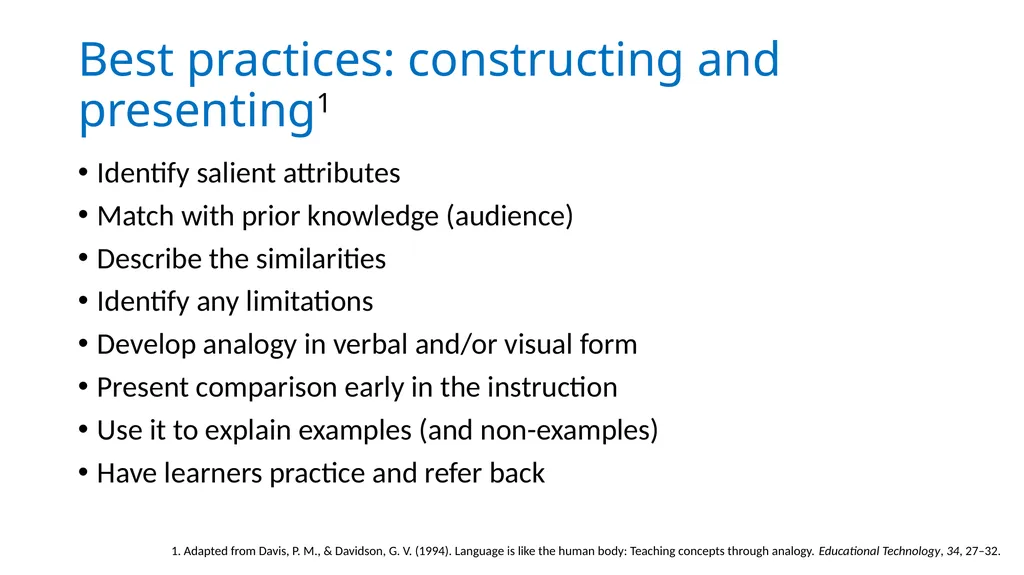
Best practices: constructing and presenting1 Identify salient attributes
Match with prior knowledge (audience)
Describe the similarities
Identify any limitations
Develop analogy in verbal and/or visual form
Present comparison early in the instruction
Use it to explain examples (and non-examples)
Have learners practice and refer back 1. Adapted from Davis, P. M., & Davidson, G. V. (1994). Language is like the human body: Teaching concepts through analogy. Educational Technology, 34, 27–32.<br>
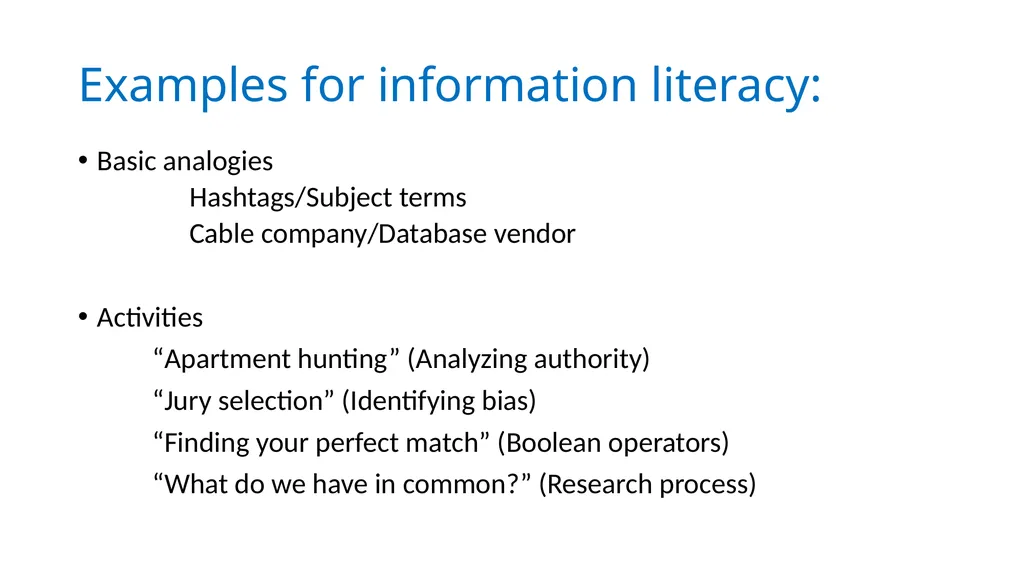
Activities
“Apartment hunting” (Analyzing authority)
“Jury selection” (Identifying bias)
“Finding your perfect match” (Boolean operators)
“What do we have in common?” (Research process) Examples for information literacy:<br>
08
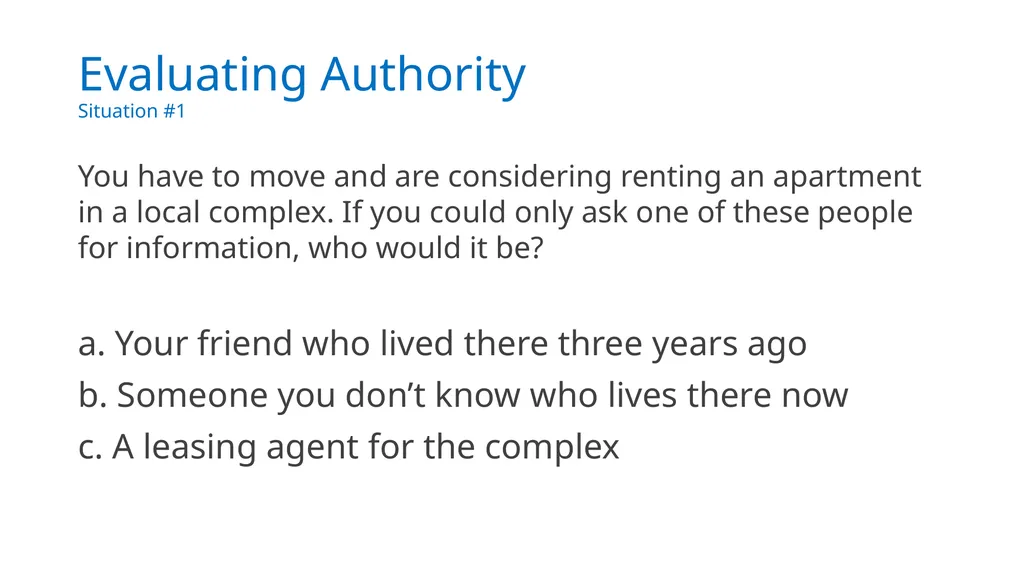
Evaluating Authority Situation #1 You have to move and are considering renting an apartment in a local complex. If you could only ask one of these people for information, who would it be?
a. Your friend who lived there three years ago
b. Someone you don’t know who lives there now
c. A leasing agent for the complex<br>
09
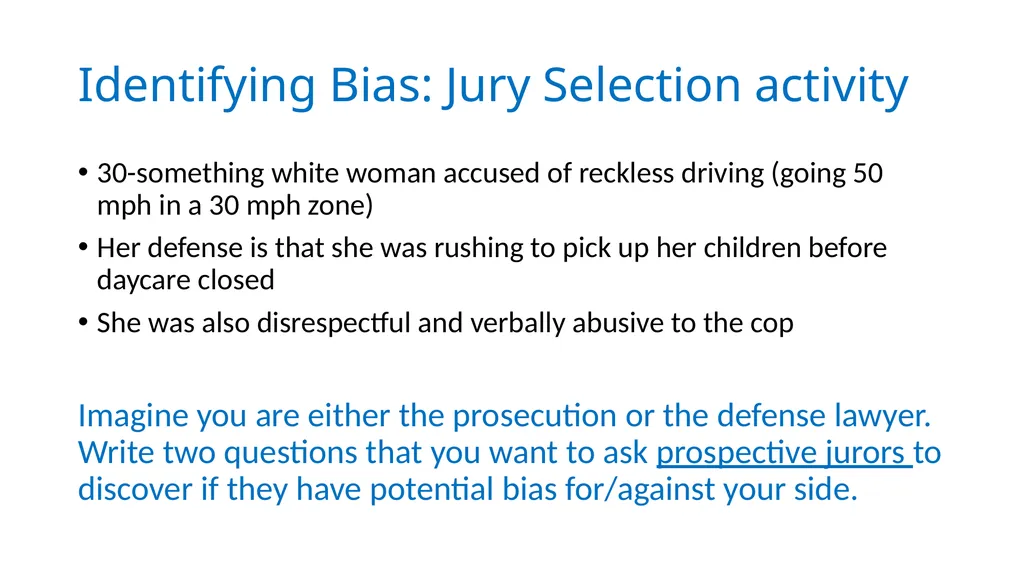
Identifying Bias: Jury Selection activity 30-something white woman accused of reckless driving (going 50 mph in a 30 mph zone)
Her defense is that she was rushing to pick up her children before daycare closed
She was also disrespectful and verbally abusive to the cop
Imagine you are either the prosecution or the defense lawyer. Write two questions that you want to ask prospective jurors to discover if they have potential bias for/against your side.<br>
10
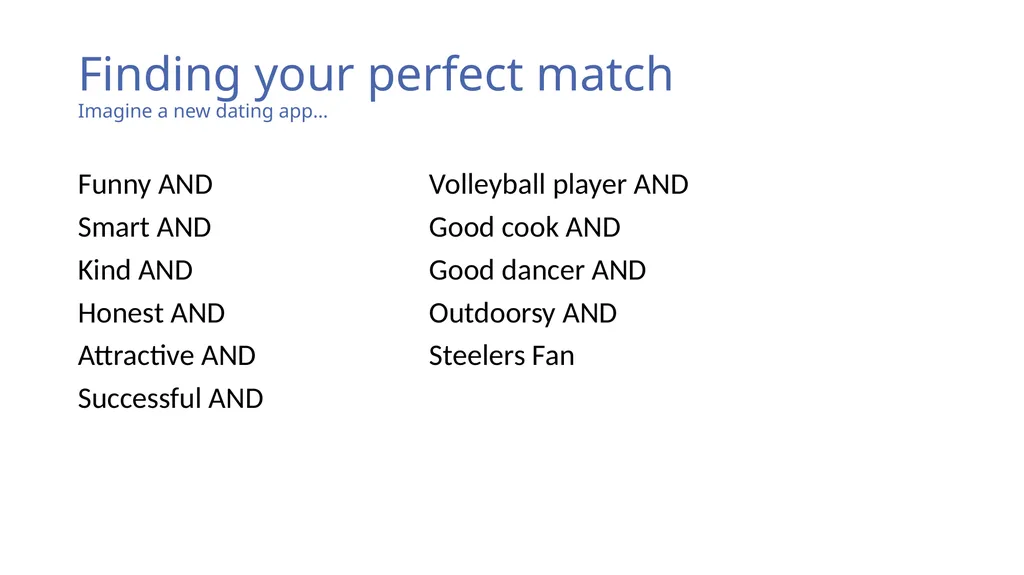
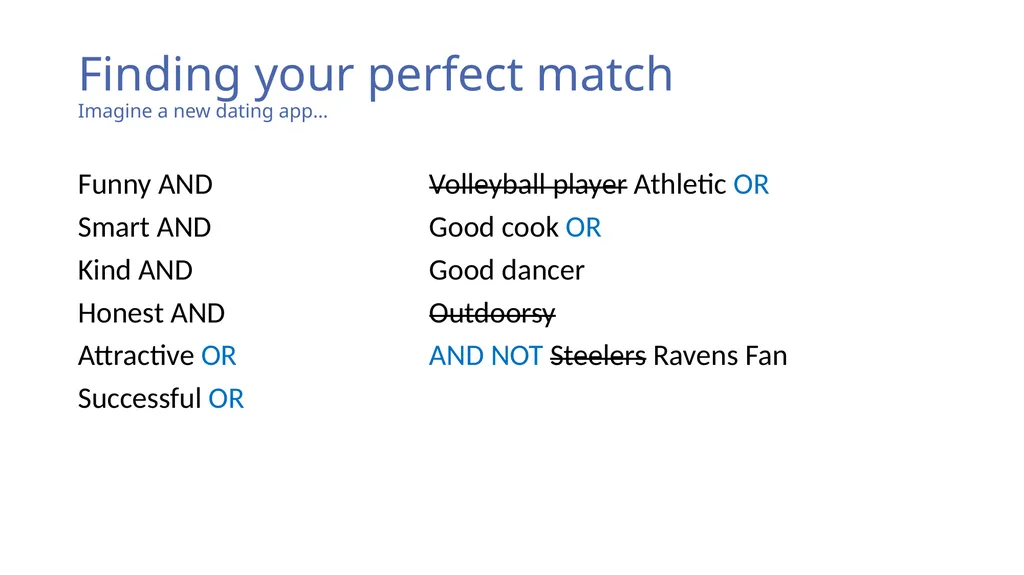
Finding your perfect match Imagine a new dating app… Funny AND
Smart AND
Kind AND
Honest AND
Attractive AND
Successful AND Volleyball player AND
Good cook AND
Good dancer AND
Outdoorsy AND
Steelers Fan<br>
11
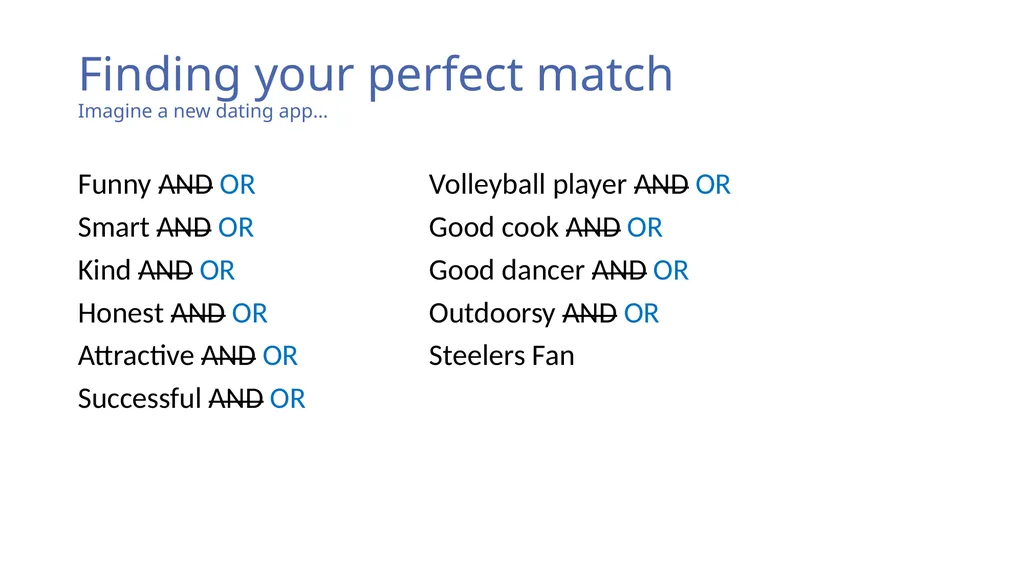
Finding your perfect match Imagine a new dating app… Funny AND OR
Smart AND OR
Kind AND OR
Honest AND OR
Attractive AND OR
Successful AND OR Volleyball player AND OR
Good cook AND OR
Good dancer AND OR
Outdoorsy AND OR
Steelers Fan<br>
12
Finding your perfect match Imagine a new dating app… Funny AND
Smart AND
Kind AND
Honest AND
Attractive OR
Successful OR Volleyball player Athletic OR
Good cook OR
Good dancer
Outdoorsy
AND NOT Steelers Ravens Fan<br>
13
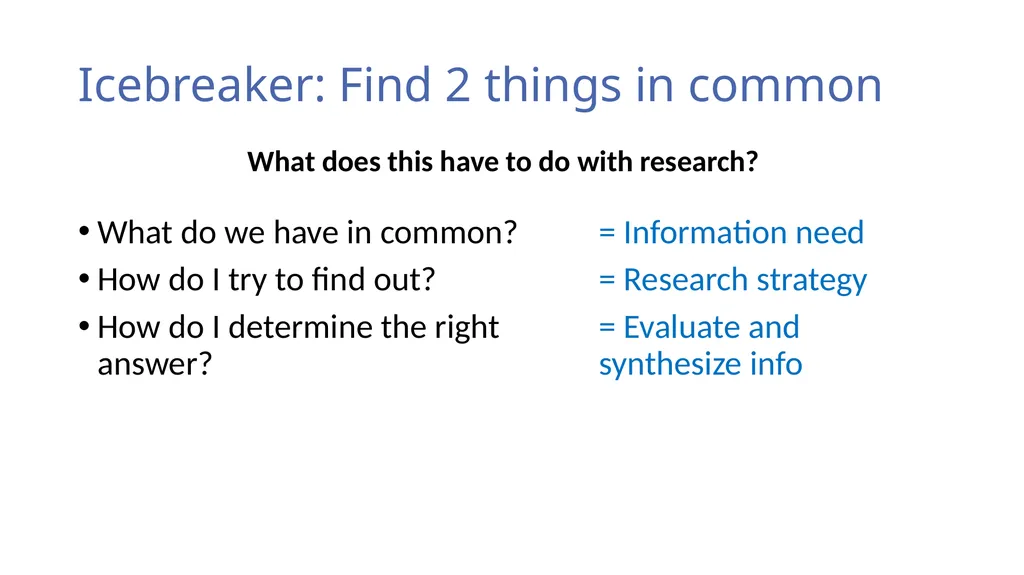
Icebreaker: Find 2 things in common What does this have to do with research? What do we have in common?
How do I try to find out?
How do I determine the right answer? = Information need
= Research strategy
= Evaluate and synthesize info<br>
14
Questions? Other examples?<br>
15
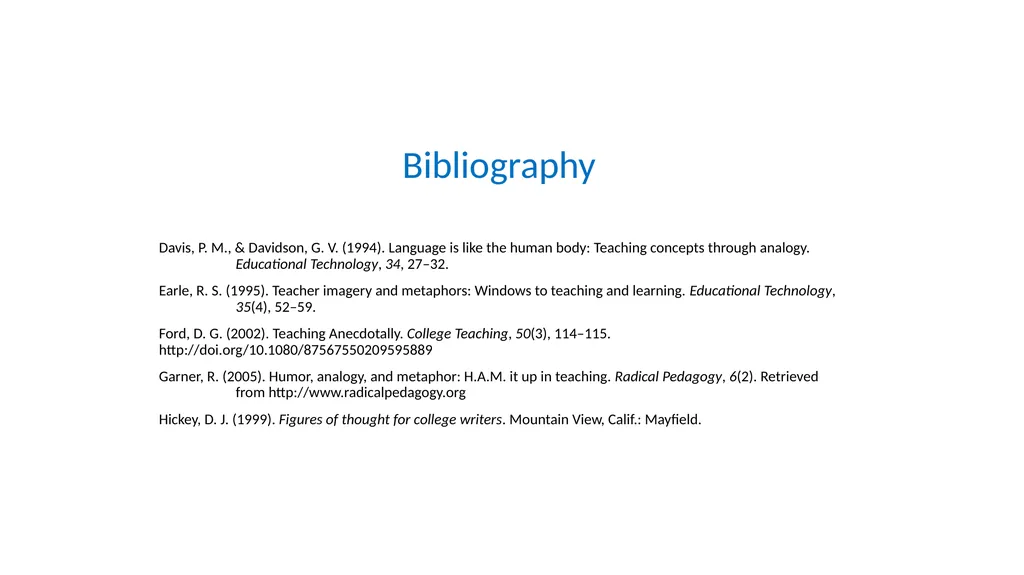
Bibliography
Davis, P. M., & Davidson, G. V. (1994). Language is like the human body: Teaching concepts through analogy. Educational Technology, 34, 27–32.
Earle, R. S. (1995). Teacher imagery and metaphors: Windows to teaching and learning. Educational Technology, 35(4), 52–59.
Ford, D. G. (2002). Teaching Anecdotally. College Teaching, 50(3), 114–115. http://doi.org/10.1080/87567550209595889
Garner, R. (2005). Humor, analogy, and metaphor: H.A.M. it up in teaching. Radical Pedagogy, 6(2). Retrieved from http://www.radicalpedagogy.org
Hickey, D. J. (1999). Figures of thought for college writers. Mountain View, Calif.: Mayfield.<br>