
Building the Team Skills for Advisers Session


Description: Building the Team Skills for Advisers Session Objectives Identify ways in which high-performing teams operate to accomplish objectives efficiently. Understand the differences in personalities between individuals. Describe and define
Related Topics
Download Presentation
"Building the Team Skills for Advisers Session" is the property of its rightful owner. Permission is granted to download and print the materials on this website for personal, non-commercial use only, and to display it on your personal computer provided you do not modify the materials and that you retain all copyright notices contained in the materials. By downloading content from our website, you accept the terms of this agreement.
Presentation Transcript
slide1. Building the Team Skills for Advisers<br>
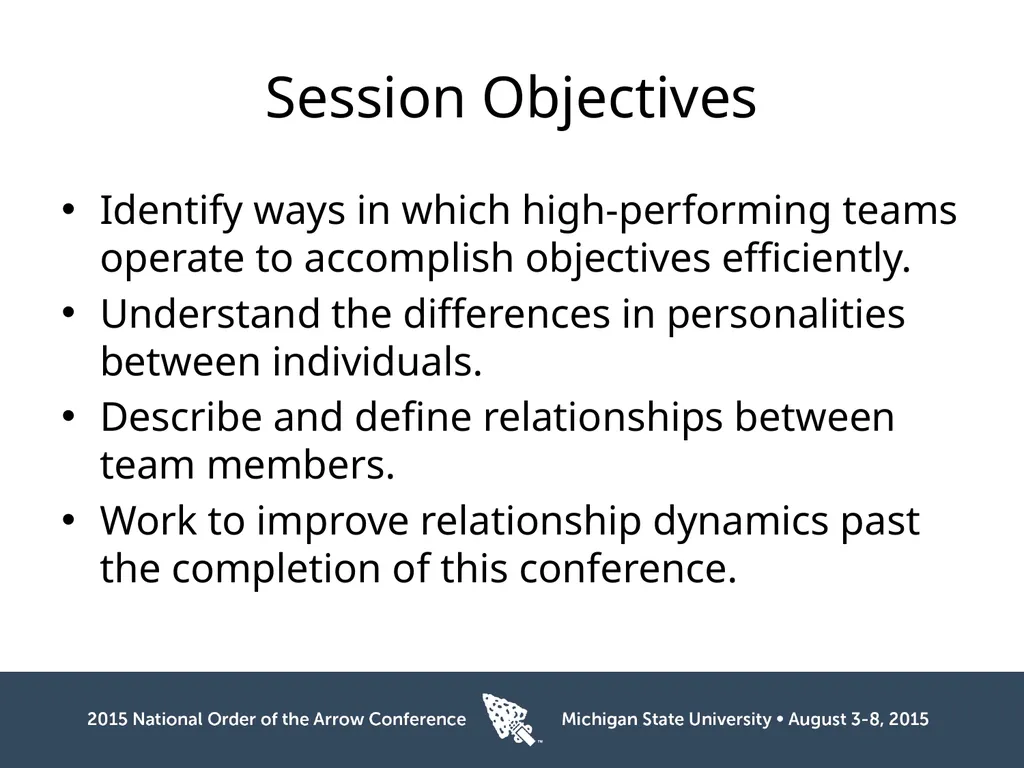
slide2. Session Objectives Identify ways in which high-performing teams operate to accomplish objectives efficiently.
Understand the differences in personalities between individuals.
Describe and define relationships between team members.
Work to improve relationship dynamics past the completion of this conference.<br>
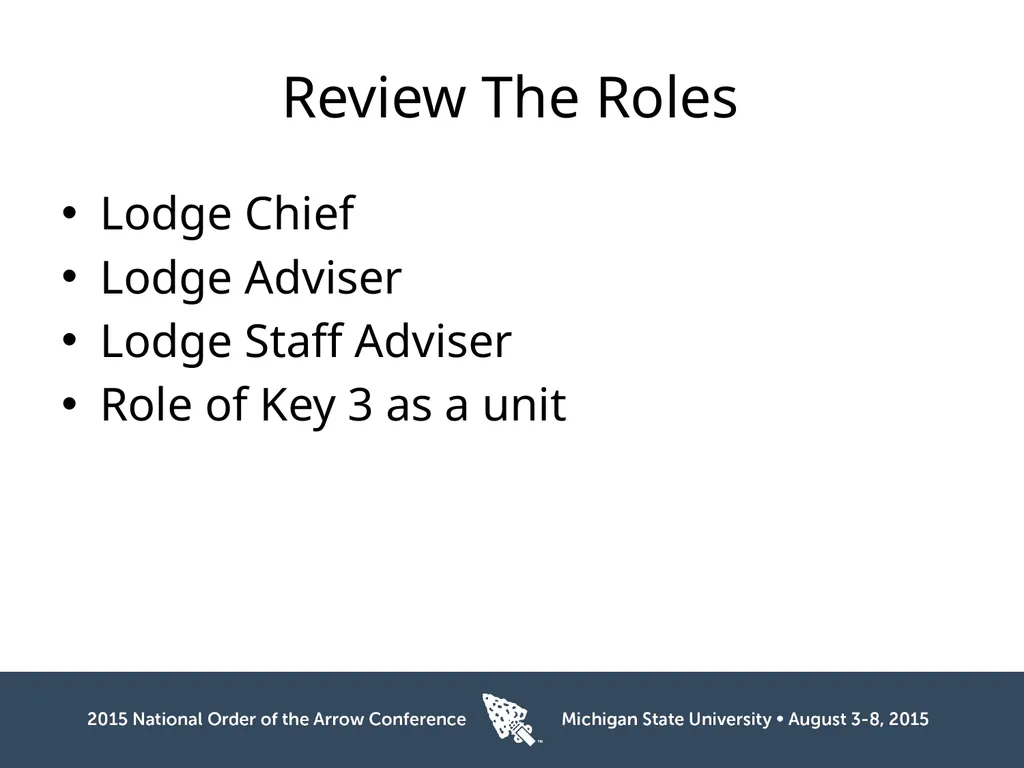
slide3. Review The Roles Lodge Chief
Lodge Adviser
Lodge Staff Adviser
Role of Key 3 as a unit<br>
slide4. Where Are We Now? The Good, The Bad, and The Ugly<br>
slide5. What Are Your Goals? What makes a team stellar?<br>
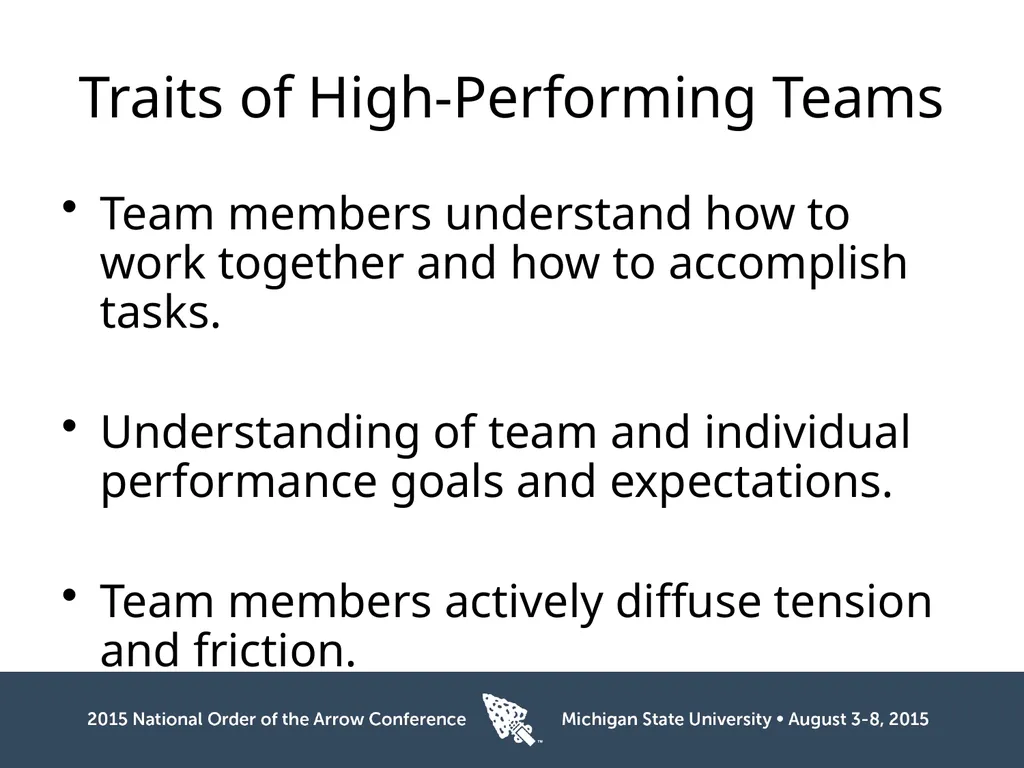
slide6. Traits of High-Performing Teams Team members understand how to work together and how to accomplish tasks.
Understanding of team and individual performance goals and expectations.
Team members actively diffuse tension and friction.<br>
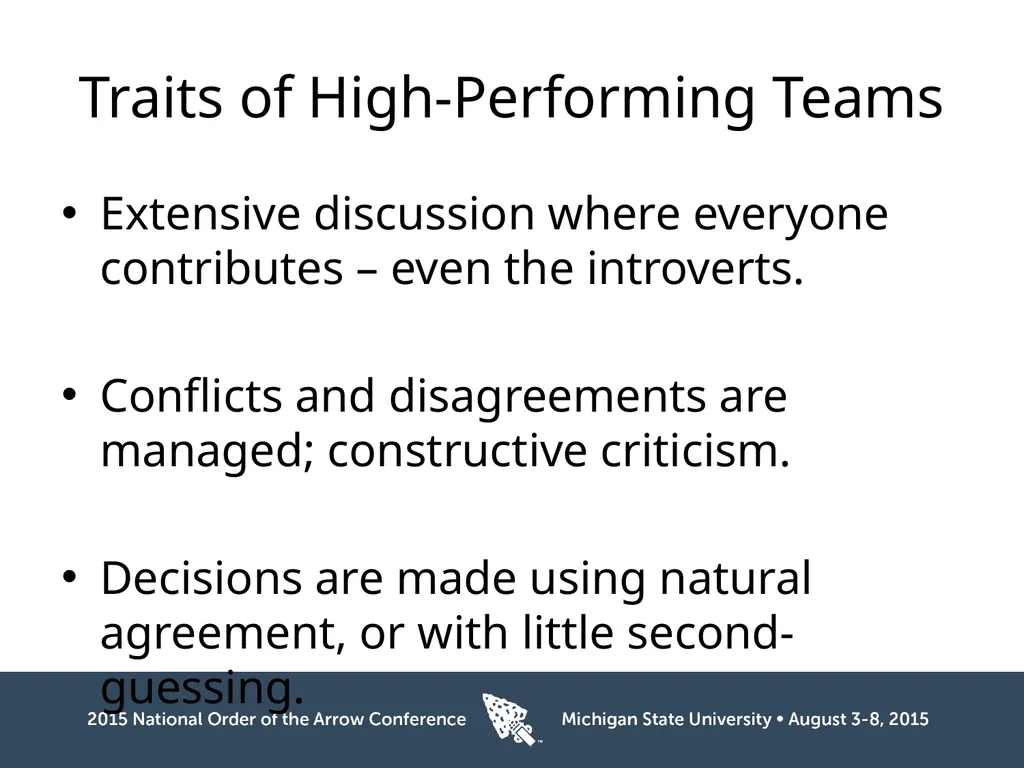
slide7. Traits of High-Performing Teams Extensive discussion where everyone contributes – even the introverts.
Conflicts and disagreements are managed; constructive criticism.
Decisions are made using natural agreement, or with little second-guessing.<br>
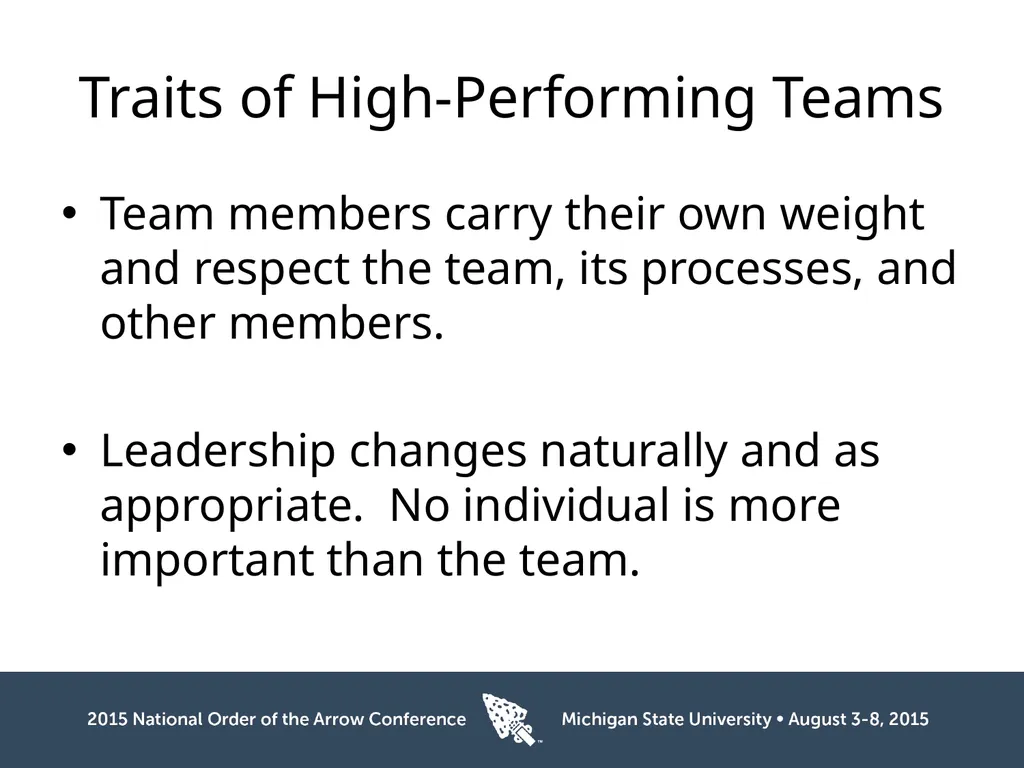
slide8. Traits of High-Performing Teams Team members carry their own weight and respect the team, its processes, and other members.
Leadership changes naturally and as appropriate. No individual is more important than the team.<br>
slide9. Traits of High-Performing Teams Team members share common goals and purpose.
TRUST – team members trust each other!<br>
slide10. Applying It Back Home Understanding Yourself<br>
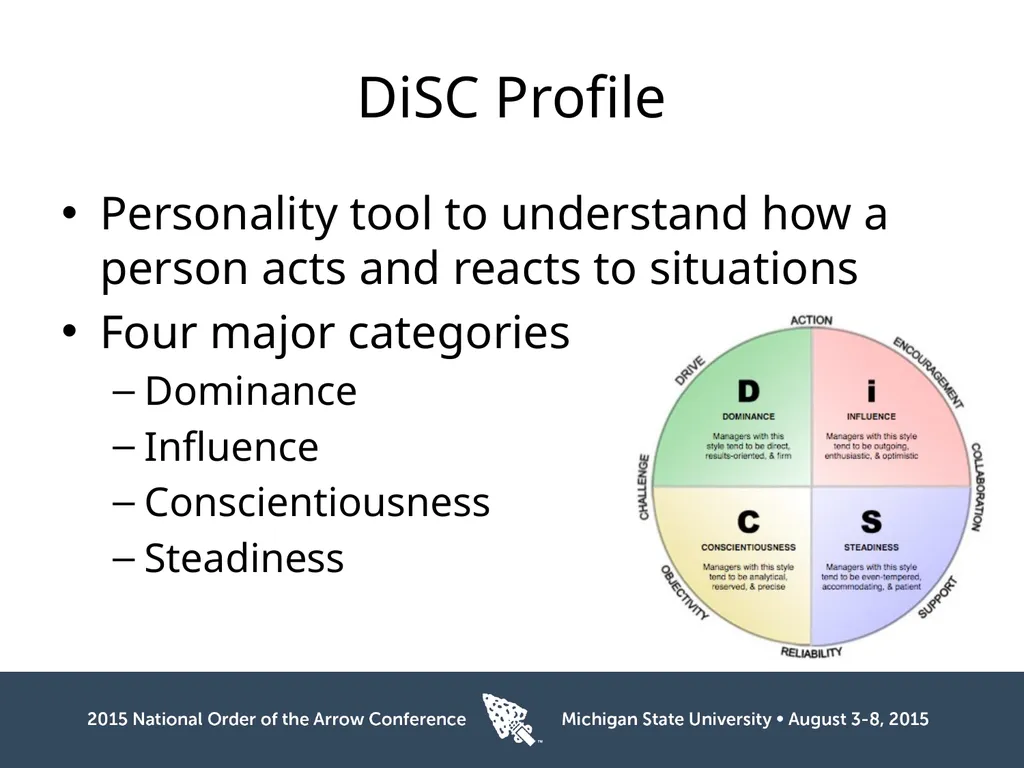
slide11. DiSC Profile Personality tool to understand how a person acts and reacts to situations
Four major categories
Dominance
Influence
Conscientiousness
Steadiness<br>
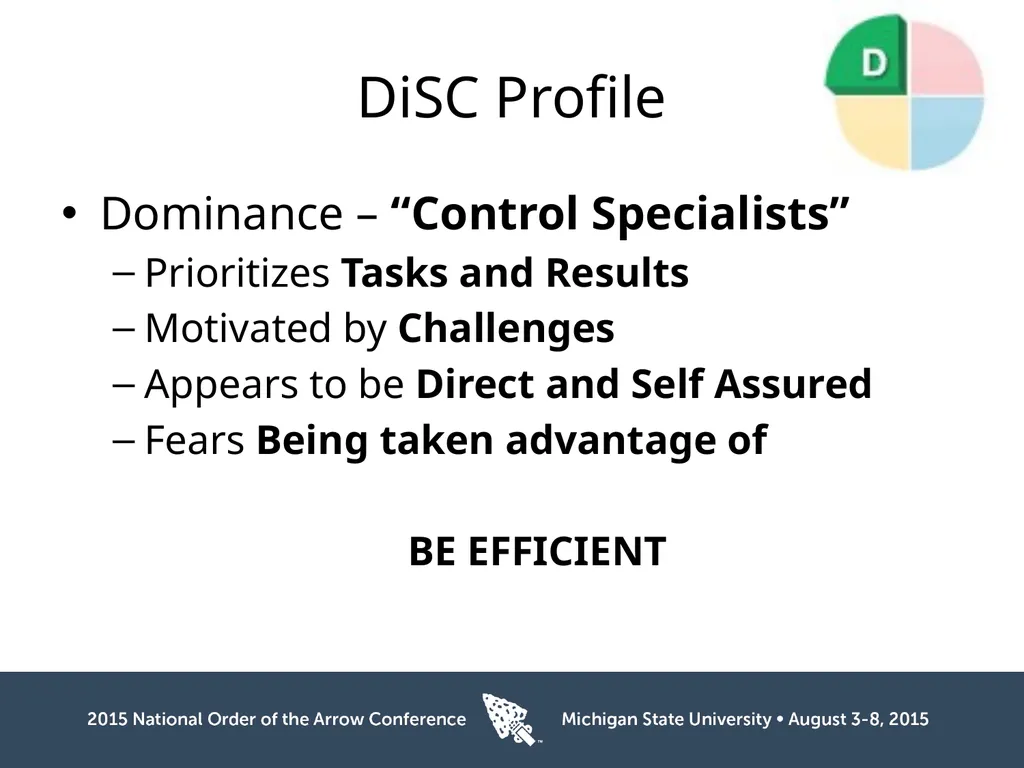
slide12. DiSC Profile Dominance – “Control Specialists”
Prioritizes Tasks and Results
Motivated by Challenges
Appears to be Direct and Self Assured
Fears Being taken advantage of
BE EFFICIENT<br>
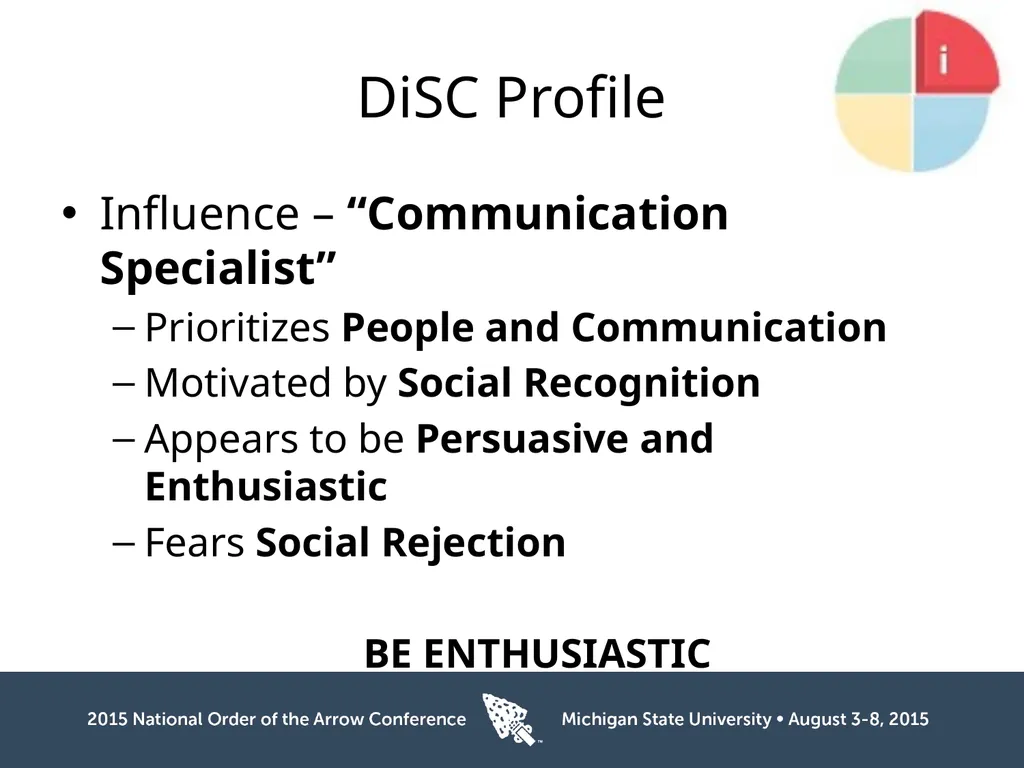
slide13. DiSC Profile Influence – “Communication Specialist”
Prioritizes People and Communication
Motivated by Social Recognition
Appears to be Persuasive and Enthusiastic
Fears Social Rejection
BE ENTHUSIASTIC<br>
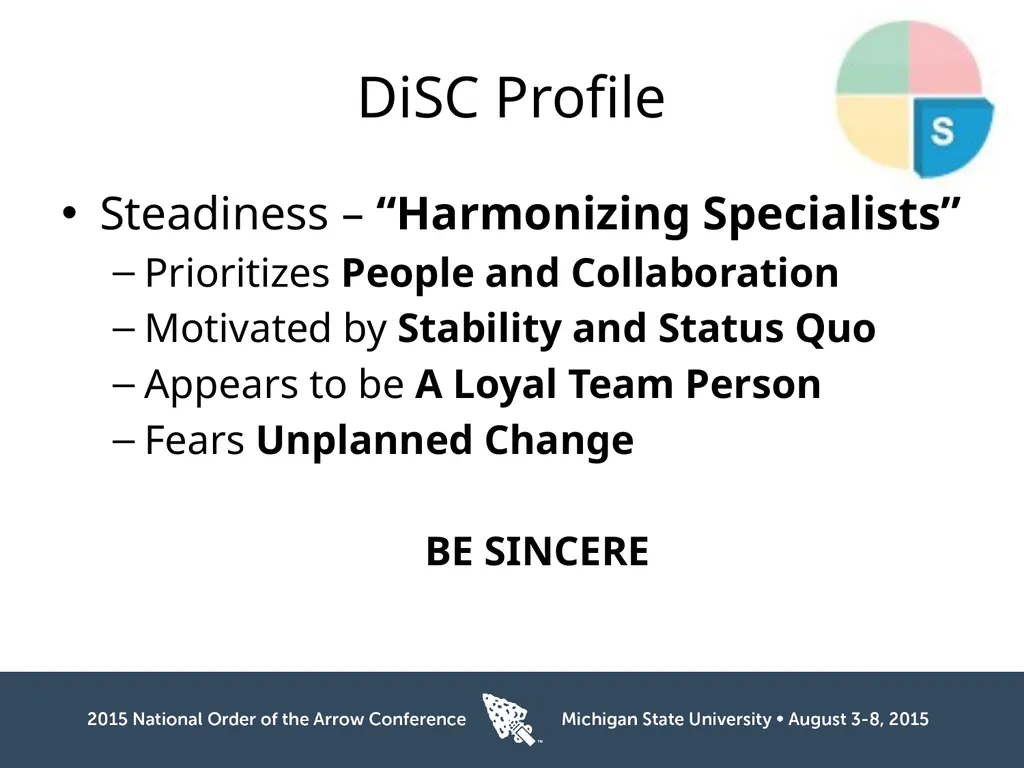
slide14. DiSC Profile Steadiness – “Harmonizing Specialists”
Prioritizes People and Collaboration
Motivated by Stability and Status Quo
Appears to be A Loyal Team Person
Fears Unplanned Change
BE SINCERE<br>
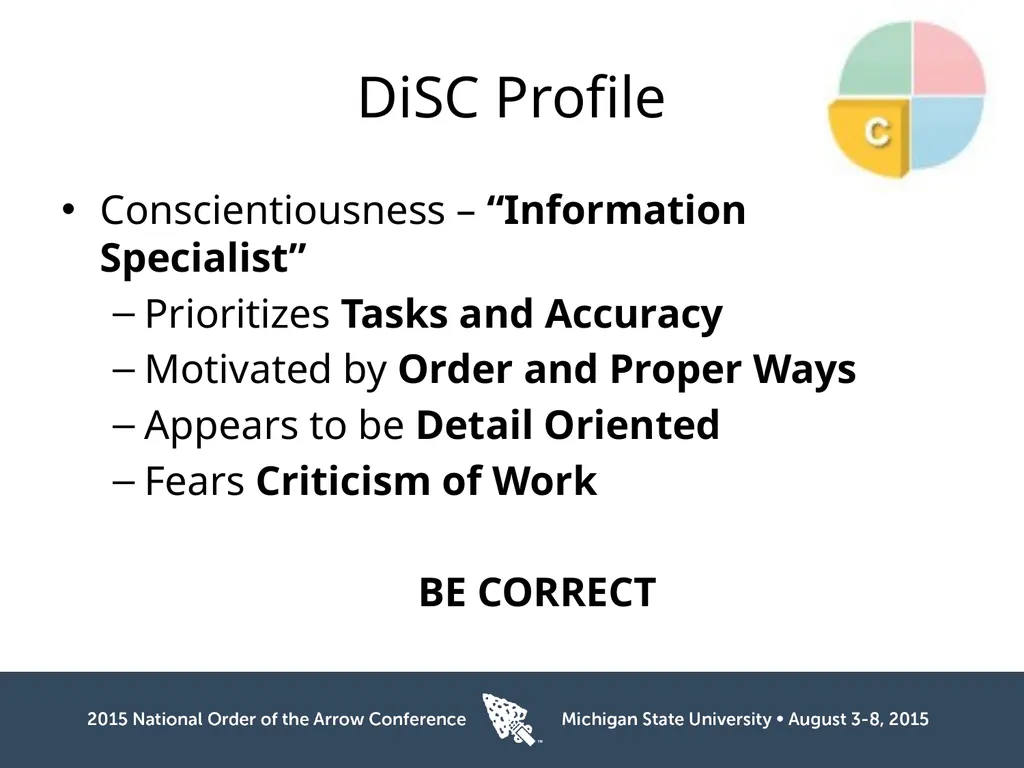
slide15. DiSC Profile Conscientiousness – “Information Specialist”
Prioritizes Tasks and Accuracy
Motivated by Order and Proper Ways
Appears to be Detail Oriented
Fears Criticism of Work
BE CORRECT<br>
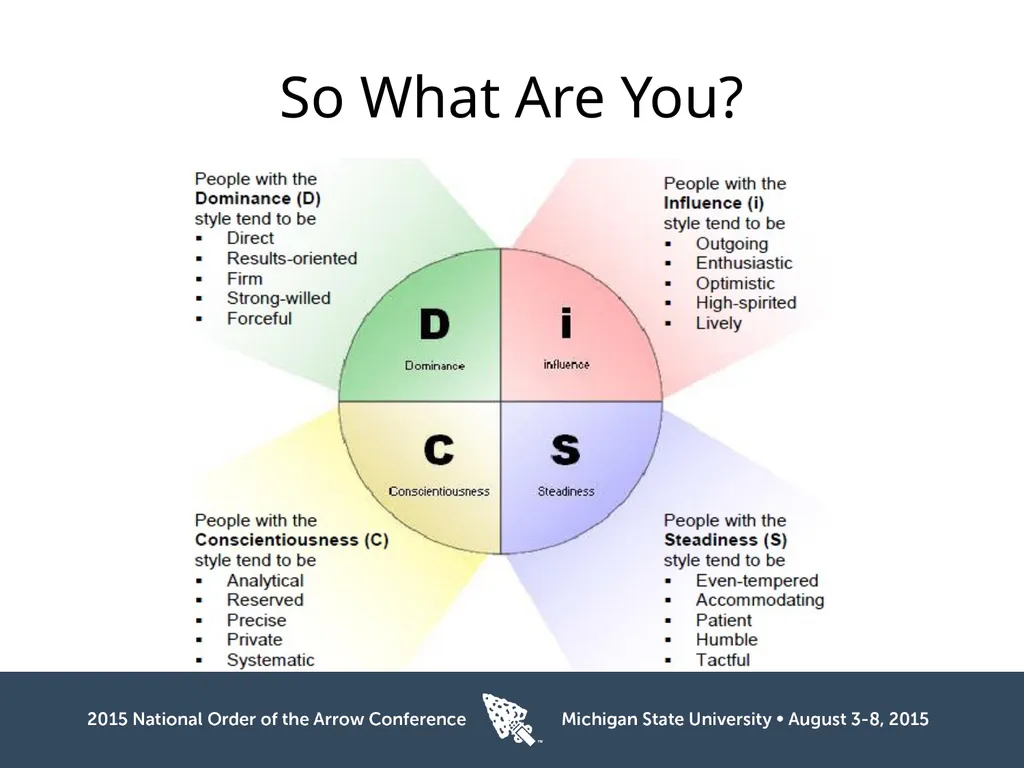
slide16. So What Are You?<br>
slide17. Assessment Time 3
minutes<br>
slide18. Assessment Time 2
minutes<br>
slide19. Assessment Time 1
minute<br>
slide20. Many Hands Make Light Work But Where Do We Find More Hands?<br>
slide21. What Are We Looking For? Motivated to demonstrate skills and make a difference, accountable to shared team goals
Diverse knowledge and skills
Establish a purpose, mission – ensure all understand and accept it as their own
Understand that personal responsibilities are for the greater good of the team<br>
slide22. What Are We Looking For? All members openly and publicly commit to team
Select a leader who is highly motivated to the goals and mission and is able to fill in gaps left by other team members
Communicate in private with team members having difficulty committing or producing for team<br>
slide23. Potential Sources for new Teammates What units have past officers & committee chairmen?
Consider all units: what once-active Lodge members are now raising children?
Your thoughts?<br>
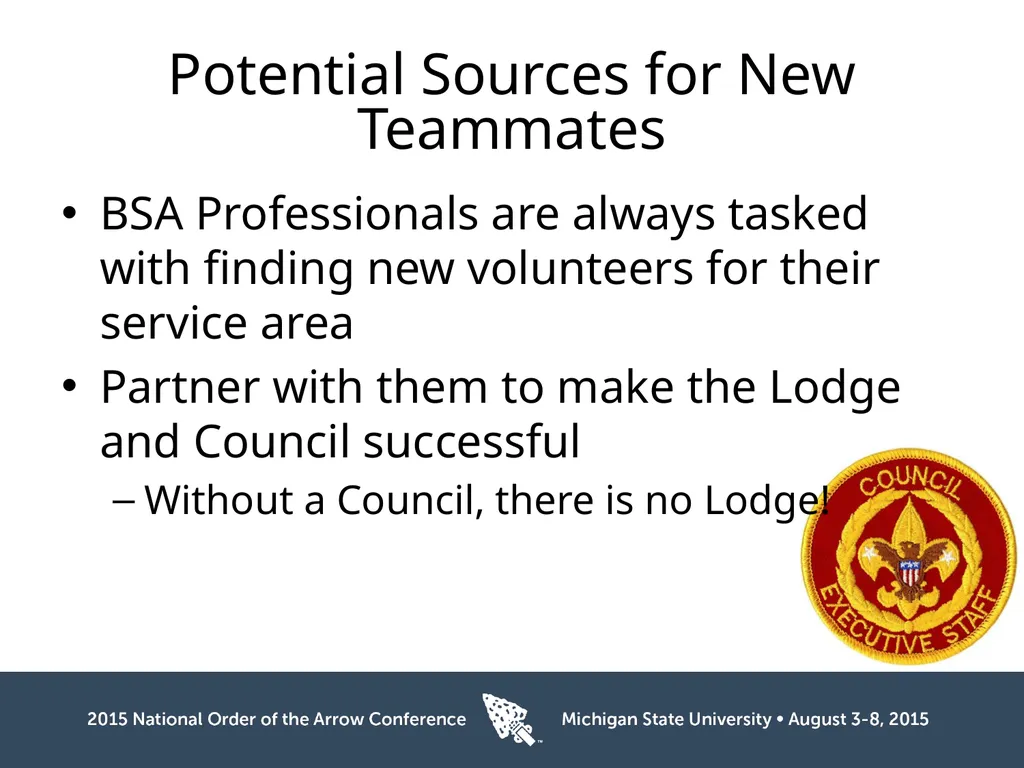
slide24. Potential Sources for New Teammates BSA Professionals are always tasked with finding new volunteers for their service area
Partner with them to make the Lodge and Council successful
Without a Council, there is no Lodge!<br>
slide25. However You have to be able to work with them and through them to accomplish the tasks at hand.
They have to be able to forge friendships with the rest of the team and feel welcome.
How do we ensure this happens?<br>
slide26. Applying It Back Home Understanding Others<br>
slide27. Understanding Others “Any fool can know. The point is to understand.” ― Albert Einstein
“Everything that irritates us about others can lead us to an understanding of ourselves.” ― Carl Jung<br>
slide28. Understanding Others DiSC can bring understanding to scenario
What makes it work?
What makes it fail?
What can we change to make it better?
High-performing teams understand their players, their situation, and use their resources effectively.<br>
slide29. Educate yourself on what you are searching for
Understand yourself to understand others
“You are the straw that stirs the drink.” - Reggie Jackson<br>
slide30. Matt Lacy
Kittan Lodge
Twin Rivers Council #364
Albany, NY
matthew.lacy@scouting.org
(518) 400-2040<br>
slide31. For Training Resources and More Information Visit: http://training.oa-bsa.org/noac2015<br>
slide2. Session Objectives Identify ways in which high-performing teams operate to accomplish objectives efficiently.
Understand the differences in personalities between individuals.
Describe and define relationships between team members.
Work to improve relationship dynamics past the completion of this conference.<br>
slide3. Review The Roles Lodge Chief
Lodge Adviser
Lodge Staff Adviser
Role of Key 3 as a unit<br>
slide4. Where Are We Now? The Good, The Bad, and The Ugly<br>
slide5. What Are Your Goals? What makes a team stellar?<br>
slide6. Traits of High-Performing Teams Team members understand how to work together and how to accomplish tasks.
Understanding of team and individual performance goals and expectations.
Team members actively diffuse tension and friction.<br>
slide7. Traits of High-Performing Teams Extensive discussion where everyone contributes – even the introverts.
Conflicts and disagreements are managed; constructive criticism.
Decisions are made using natural agreement, or with little second-guessing.<br>
slide8. Traits of High-Performing Teams Team members carry their own weight and respect the team, its processes, and other members.
Leadership changes naturally and as appropriate. No individual is more important than the team.<br>
slide9. Traits of High-Performing Teams Team members share common goals and purpose.
TRUST – team members trust each other!<br>
slide10. Applying It Back Home Understanding Yourself<br>
slide11. DiSC Profile Personality tool to understand how a person acts and reacts to situations
Four major categories
Dominance
Influence
Conscientiousness
Steadiness<br>
slide12. DiSC Profile Dominance – “Control Specialists”
Prioritizes Tasks and Results
Motivated by Challenges
Appears to be Direct and Self Assured
Fears Being taken advantage of
BE EFFICIENT<br>
slide13. DiSC Profile Influence – “Communication Specialist”
Prioritizes People and Communication
Motivated by Social Recognition
Appears to be Persuasive and Enthusiastic
Fears Social Rejection
BE ENTHUSIASTIC<br>
slide14. DiSC Profile Steadiness – “Harmonizing Specialists”
Prioritizes People and Collaboration
Motivated by Stability and Status Quo
Appears to be A Loyal Team Person
Fears Unplanned Change
BE SINCERE<br>
slide15. DiSC Profile Conscientiousness – “Information Specialist”
Prioritizes Tasks and Accuracy
Motivated by Order and Proper Ways
Appears to be Detail Oriented
Fears Criticism of Work
BE CORRECT<br>
slide16. So What Are You?<br>
slide17. Assessment Time 3
minutes<br>
slide18. Assessment Time 2
minutes<br>
slide19. Assessment Time 1
minute<br>
slide20. Many Hands Make Light Work But Where Do We Find More Hands?<br>
slide21. What Are We Looking For? Motivated to demonstrate skills and make a difference, accountable to shared team goals
Diverse knowledge and skills
Establish a purpose, mission – ensure all understand and accept it as their own
Understand that personal responsibilities are for the greater good of the team<br>
slide22. What Are We Looking For? All members openly and publicly commit to team
Select a leader who is highly motivated to the goals and mission and is able to fill in gaps left by other team members
Communicate in private with team members having difficulty committing or producing for team<br>
slide23. Potential Sources for new Teammates What units have past officers & committee chairmen?
Consider all units: what once-active Lodge members are now raising children?
Your thoughts?<br>
slide24. Potential Sources for New Teammates BSA Professionals are always tasked with finding new volunteers for their service area
Partner with them to make the Lodge and Council successful
Without a Council, there is no Lodge!<br>
slide25. However You have to be able to work with them and through them to accomplish the tasks at hand.
They have to be able to forge friendships with the rest of the team and feel welcome.
How do we ensure this happens?<br>
slide26. Applying It Back Home Understanding Others<br>
slide27. Understanding Others “Any fool can know. The point is to understand.” ― Albert Einstein
“Everything that irritates us about others can lead us to an understanding of ourselves.” ― Carl Jung<br>
slide28. Understanding Others DiSC can bring understanding to scenario
What makes it work?
What makes it fail?
What can we change to make it better?
High-performing teams understand their players, their situation, and use their resources effectively.<br>
slide29. Educate yourself on what you are searching for
Understand yourself to understand others
“You are the straw that stirs the drink.” - Reggie Jackson<br>
slide30. Matt Lacy
Kittan Lodge
Twin Rivers Council #364
Albany, NY
matthew.lacy@scouting.org
(518) 400-2040<br>
slide31. For Training Resources and More Information Visit: http://training.oa-bsa.org/noac2015<br>