
Business continuity A PROGRAM NOT A POLICY What

Description: Business continuity A PROGRAM NOT A POLICY What Types of Loss are included Your Plan should be broad enough to consider: Workplace Passenger Violence Cyber Attack Natural Disaster Fire (fleet, OTR, facility, etc.) Fleet destruction
Related Topics
Download Presentation
"Business continuity A PROGRAM NOT A POLICY What" is the property of its rightful owner. Permission is granted to download and print the materials on this website for personal, non-commercial use only, and to display it on your personal computer provided you do not modify the materials and that you retain all copyright notices contained in the materials. By downloading content from our website, you accept the terms of this agreement.
Presentation Transcript
slide1. Business continuity A PROGRAM NOT A POLICY<br>
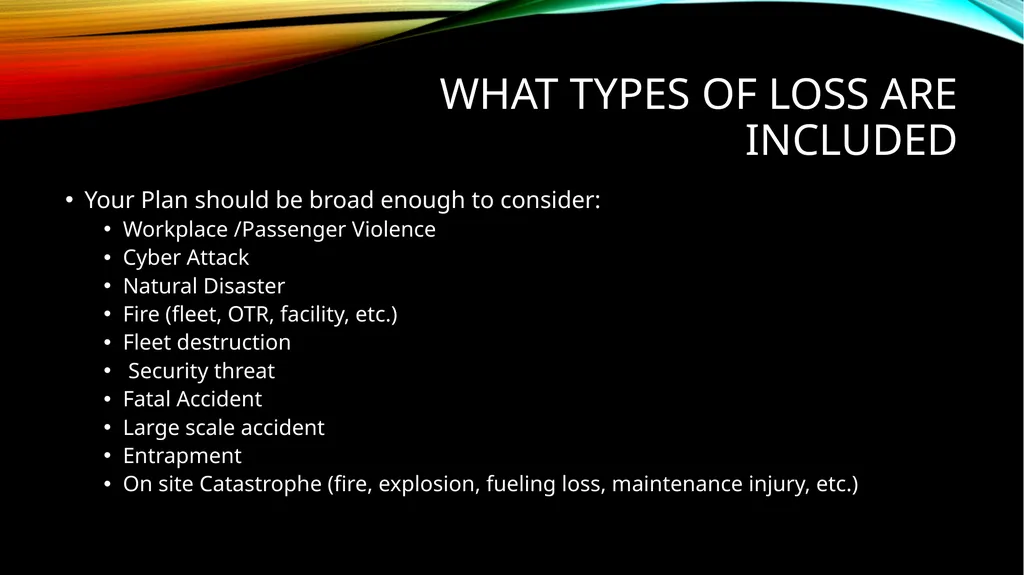
slide2. What Types of Loss are included Your Plan should be broad enough to consider:
Workplace /Passenger Violence
Cyber Attack
Natural Disaster
Fire (fleet, OTR, facility, etc.)
Fleet destruction
Security threat
Fatal Accident
Large scale accident
Entrapment
On site Catastrophe (fire, explosion, fueling loss, maintenance injury, etc.)<br>
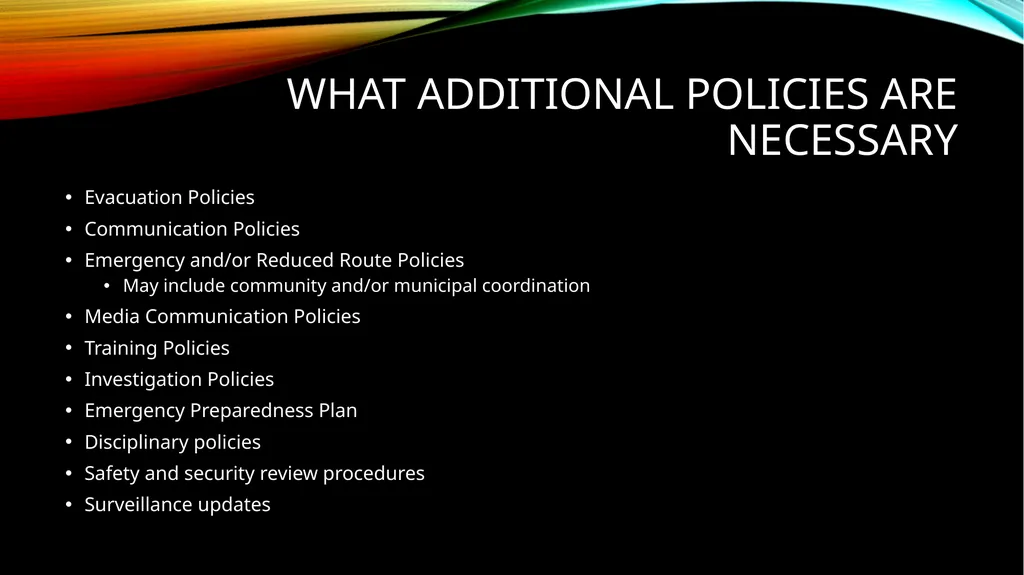
slide3. What additional Policies are necessary Evacuation Policies
Communication Policies
Emergency and/or Reduced Route Policies
May include community and/or municipal coordination
Media Communication Policies
Training Policies
Investigation Policies
Emergency Preparedness Plan
Disciplinary policies
Safety and security review procedures
Surveillance updates<br>
slide4. Hazardous material storage
Fire Prevention
PPE updates
Vehicle inspections
Vehicle Readiness
Emergency Readiness
Blankets, first aid kits, flares, etc.<br>
slide5. AGENCY PARTICIPATION IN STATE OR LOCAL DISASTER PLANS? Do you have an agreement with any government agencies?
Have you trained for your role with the municipal government?
Do you have a contingency for providing primary service during an emergency?
Are you prepared to house and/or transport disaster victims?
Are your drivers trained for dealing with disaster victims
How will you manage your workforce, if called upon?<br>
slide6. COmmunications A critical appendix in this plan is the “phone tree”
Key personnel must have the communication chain available at all times
Employees must have training on what to do if their contact person is not available
Contingency plans for communication with third parties and/or board members must be in place during periods of absence
Media relations must be carefully managed! Many media companies are available- this should be included in your plan<br>
slide7. What is the role of SUPERVISORS, DiSPATCHERS AND MIDDLE MANAGEMENT? Expectations of personnel must be made clear
Certain incidents may trigger staff interaction more than others
Designate a specific person to talk to the media so that you have a concerted statement
Understand who is directing staff during all forms of emergencies and ensure those persons have proper training
Designate staff who will communicate with police and/or emergency providers<br>
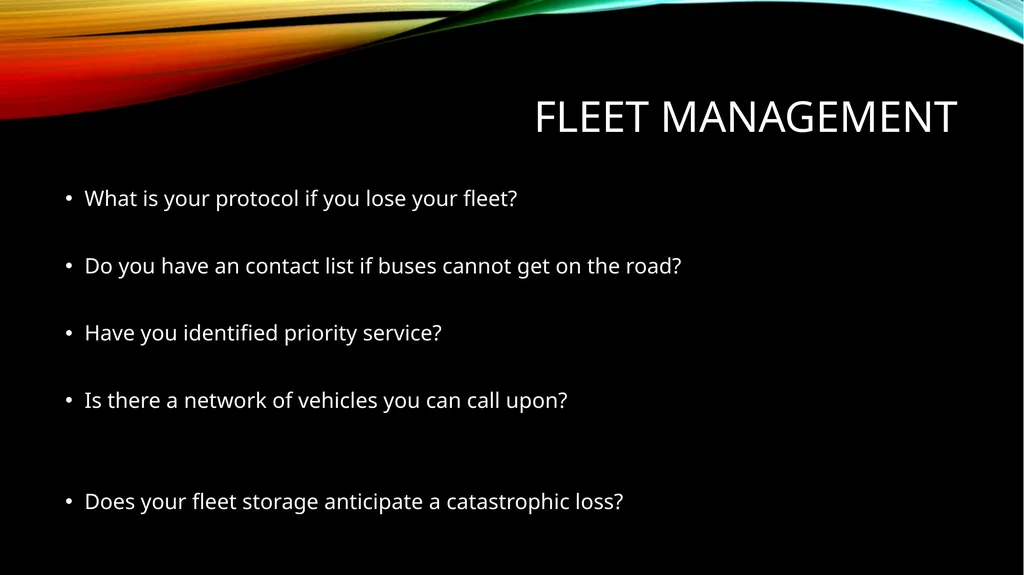
slide8. Fleet Management What is your protocol if you lose your fleet?
Do you have an contact list if buses cannot get on the road?
Have you identified priority service?
Is there a network of vehicles you can call upon?
Does your fleet storage anticipate a catastrophic loss?<br>
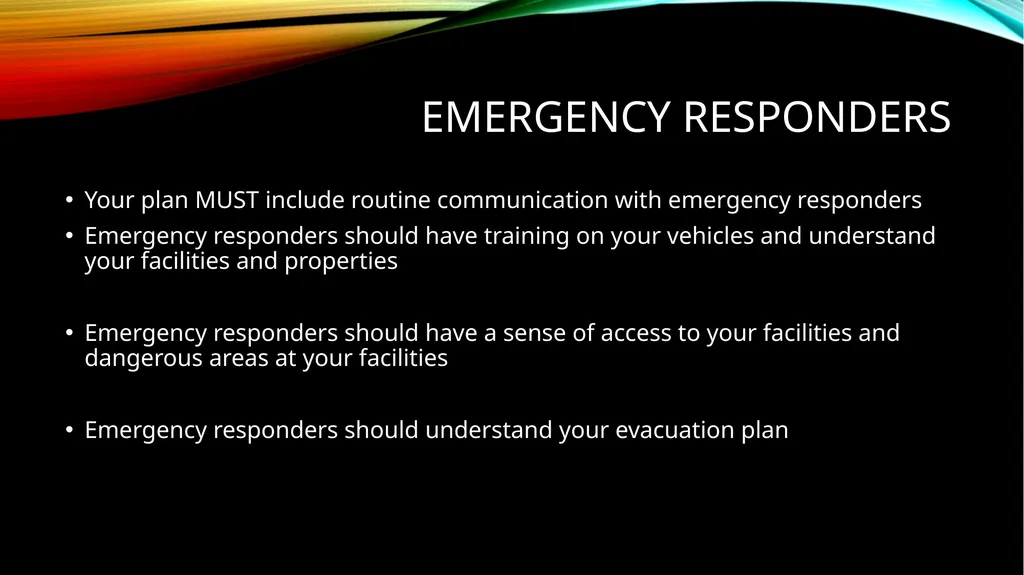
slide9. Emergency Responders Your plan MUST include routine communication with emergency responders
Emergency responders should have training on your vehicles and understand your facilities and properties
Emergency responders should have a sense of access to your facilities and dangerous areas at your facilities
Emergency responders should understand your evacuation plan<br>
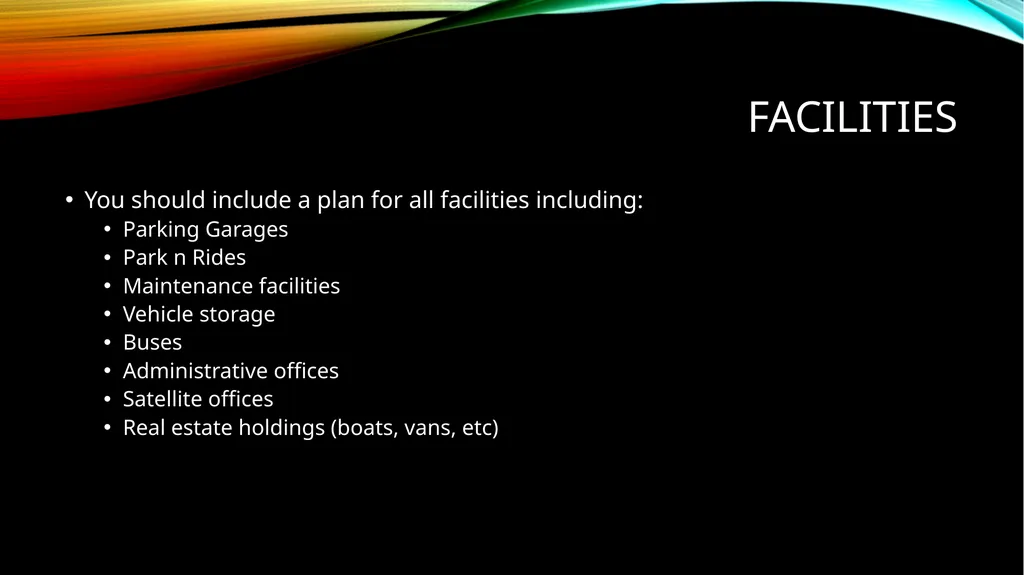
slide10. Facilities You should include a plan for all facilities including:
Parking Garages
Park n Rides
Maintenance facilities
Vehicle storage
Buses
Administrative offices
Satellite offices
Real estate holdings (boats, vans, etc)<br>
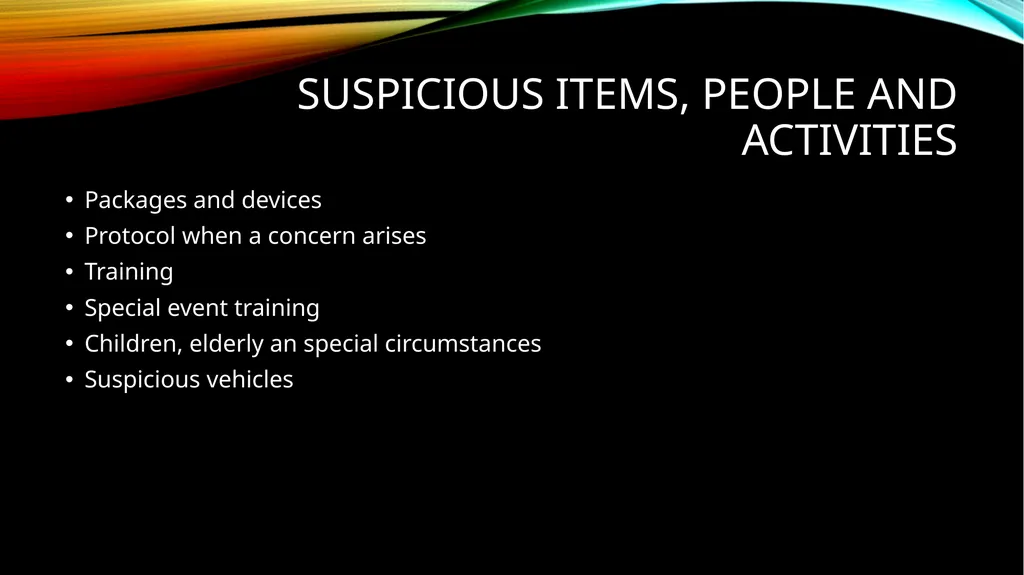
slide11. Suspicious Items, People and Activities Packages and devices
Protocol when a concern arises
Training
Special event training
Children, elderly an special circumstances
Suspicious vehicles<br>
slide12. Long Distance disasters Be prepared for an emergency that occurs well beyond your base of operations
Long distance disasters are difficult because of unfamiliar media, unfamiliar emergency responders and the inability to perform a quick investigation and/or assessment
Plan for a response for various travel distance benchmarks (3 hours away, 5 hours away, etc.)<br>
slide13. Claims Management Do you have a trained accident person on staff or on call?
Contact with your counsel?
Contact with claims adjusters?
Training of key personnel to manage claims including dispatchers, supervisors and drivers?
Training of on-site personnel including maintenance staff and administrative personnel
Counseling and EAP on call<br>
slide14. Cyber Security Catastrophic loss can be administrative in addition to physical harm
Data breaches can affect employees and the community
Virus and data corruption can be critical<br>
slide15. Contact information Jill E. Nagy Summers Nagy Law Offices Jnagy@summersnagy.com 610-939-9866<br>
slide2. What Types of Loss are included Your Plan should be broad enough to consider:
Workplace /Passenger Violence
Cyber Attack
Natural Disaster
Fire (fleet, OTR, facility, etc.)
Fleet destruction
Security threat
Fatal Accident
Large scale accident
Entrapment
On site Catastrophe (fire, explosion, fueling loss, maintenance injury, etc.)<br>
slide3. What additional Policies are necessary Evacuation Policies
Communication Policies
Emergency and/or Reduced Route Policies
May include community and/or municipal coordination
Media Communication Policies
Training Policies
Investigation Policies
Emergency Preparedness Plan
Disciplinary policies
Safety and security review procedures
Surveillance updates<br>
slide4. Hazardous material storage
Fire Prevention
PPE updates
Vehicle inspections
Vehicle Readiness
Emergency Readiness
Blankets, first aid kits, flares, etc.<br>
slide5. AGENCY PARTICIPATION IN STATE OR LOCAL DISASTER PLANS? Do you have an agreement with any government agencies?
Have you trained for your role with the municipal government?
Do you have a contingency for providing primary service during an emergency?
Are you prepared to house and/or transport disaster victims?
Are your drivers trained for dealing with disaster victims
How will you manage your workforce, if called upon?<br>
slide6. COmmunications A critical appendix in this plan is the “phone tree”
Key personnel must have the communication chain available at all times
Employees must have training on what to do if their contact person is not available
Contingency plans for communication with third parties and/or board members must be in place during periods of absence
Media relations must be carefully managed! Many media companies are available- this should be included in your plan<br>
slide7. What is the role of SUPERVISORS, DiSPATCHERS AND MIDDLE MANAGEMENT? Expectations of personnel must be made clear
Certain incidents may trigger staff interaction more than others
Designate a specific person to talk to the media so that you have a concerted statement
Understand who is directing staff during all forms of emergencies and ensure those persons have proper training
Designate staff who will communicate with police and/or emergency providers<br>
slide8. Fleet Management What is your protocol if you lose your fleet?
Do you have an contact list if buses cannot get on the road?
Have you identified priority service?
Is there a network of vehicles you can call upon?
Does your fleet storage anticipate a catastrophic loss?<br>
slide9. Emergency Responders Your plan MUST include routine communication with emergency responders
Emergency responders should have training on your vehicles and understand your facilities and properties
Emergency responders should have a sense of access to your facilities and dangerous areas at your facilities
Emergency responders should understand your evacuation plan<br>
slide10. Facilities You should include a plan for all facilities including:
Parking Garages
Park n Rides
Maintenance facilities
Vehicle storage
Buses
Administrative offices
Satellite offices
Real estate holdings (boats, vans, etc)<br>
slide11. Suspicious Items, People and Activities Packages and devices
Protocol when a concern arises
Training
Special event training
Children, elderly an special circumstances
Suspicious vehicles<br>
slide12. Long Distance disasters Be prepared for an emergency that occurs well beyond your base of operations
Long distance disasters are difficult because of unfamiliar media, unfamiliar emergency responders and the inability to perform a quick investigation and/or assessment
Plan for a response for various travel distance benchmarks (3 hours away, 5 hours away, etc.)<br>
slide13. Claims Management Do you have a trained accident person on staff or on call?
Contact with your counsel?
Contact with claims adjusters?
Training of key personnel to manage claims including dispatchers, supervisors and drivers?
Training of on-site personnel including maintenance staff and administrative personnel
Counseling and EAP on call<br>
slide14. Cyber Security Catastrophic loss can be administrative in addition to physical harm
Data breaches can affect employees and the community
Virus and data corruption can be critical<br>
slide15. Contact information Jill E. Nagy Summers Nagy Law Offices Jnagy@summersnagy.com 610-939-9866<br>