04
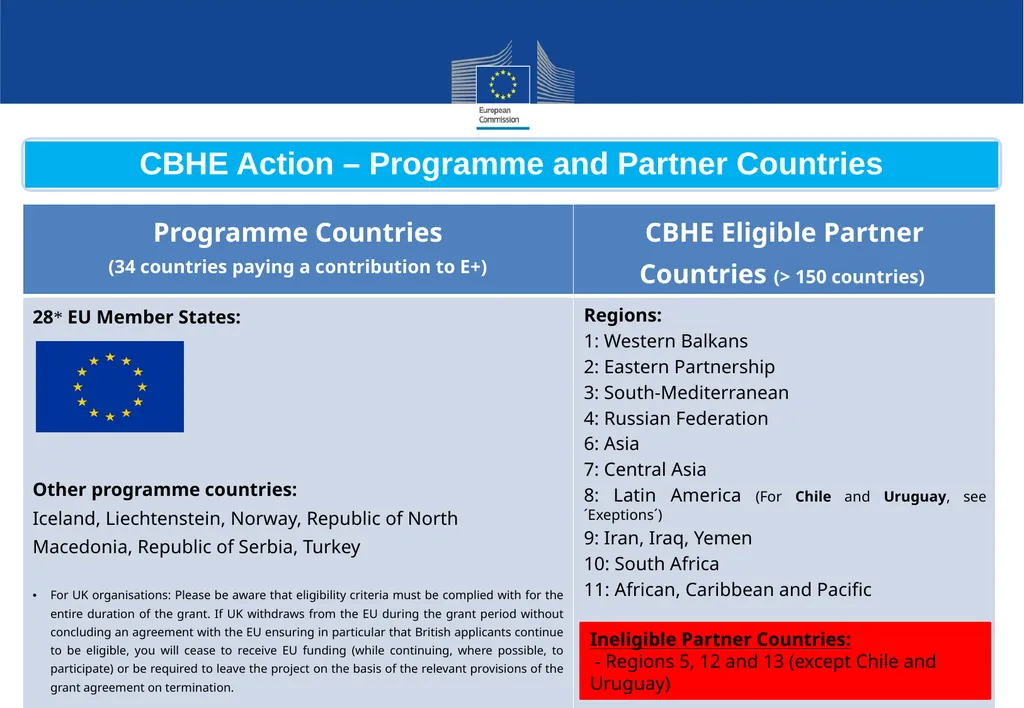
Regions:
1: Western Balkans
2: Eastern Partnership
3: South-Mediterranean
4: Russian Federation
6: Asia
7: Central Asia
8: Latin America (For Chile and Uruguay, see ´Exeptions´)
9: Iran, Iraq, Yemen
10: South Africa
11: African, Caribbean and Pacific Ineligible Partner Countries:
- Regions 5, 12 and 13 (except Chile and Uruguay)<br>
05
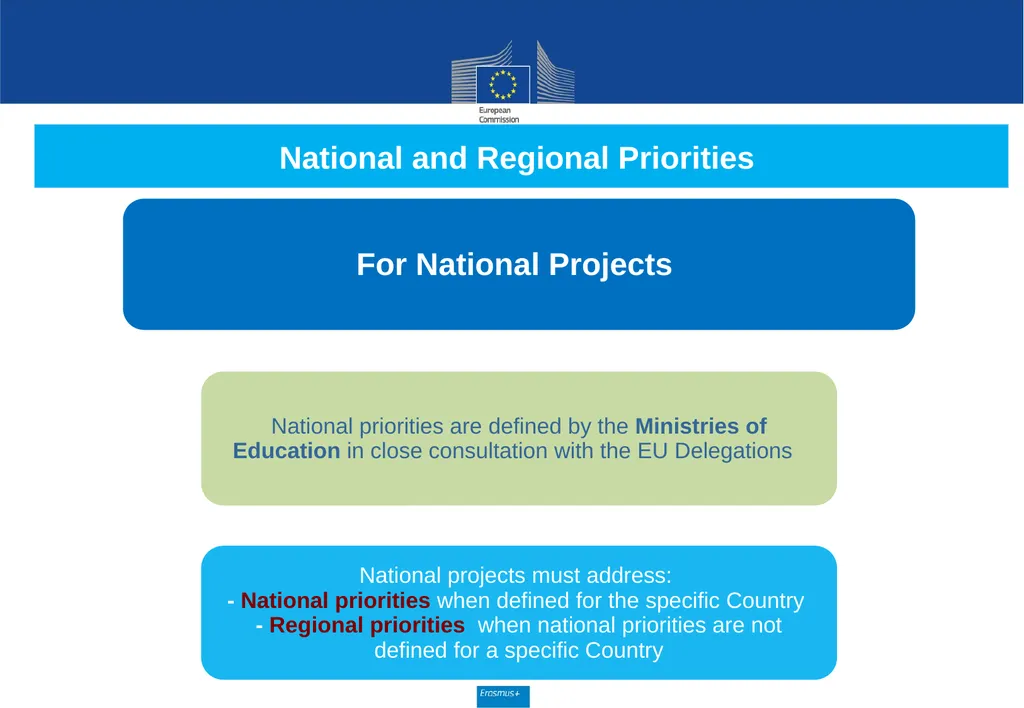
National and Regional Priorities<br>
06
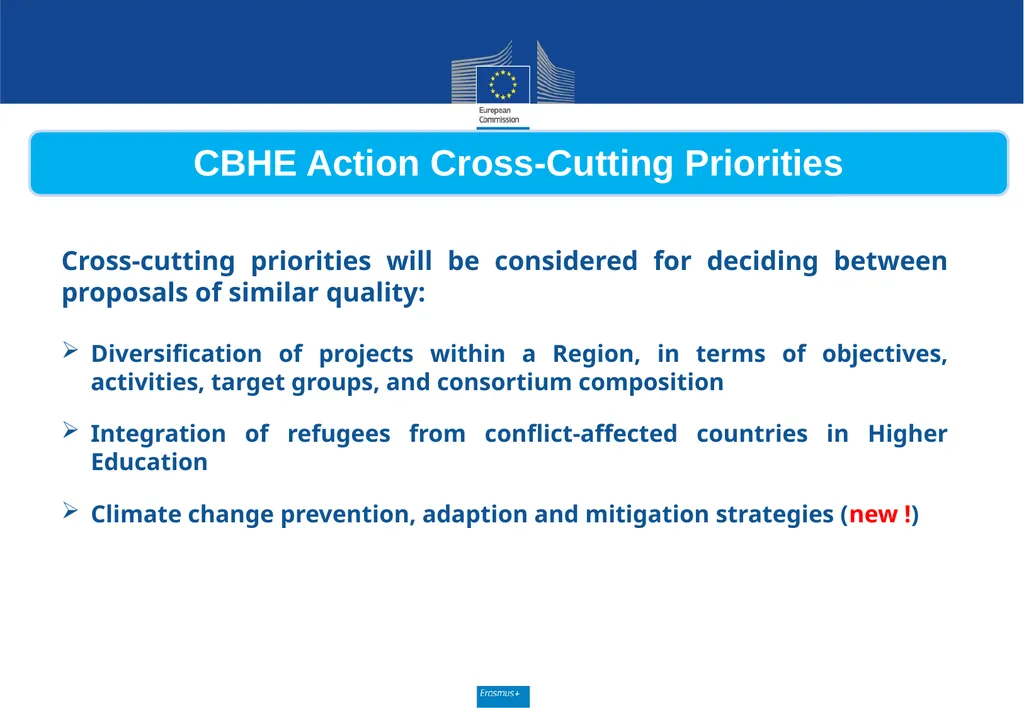
CBHE Action Cross-Cutting Priorities Cross-cutting priorities will be considered for deciding between proposals of similar quality:
Diversification of projects within a Region, in terms of objectives, activities, target groups, and consortium composition
Integration of refugees from conflict-affected countries in Higher Education
Climate change prevention, adaption and mitigation strategies (new !)<br>
07
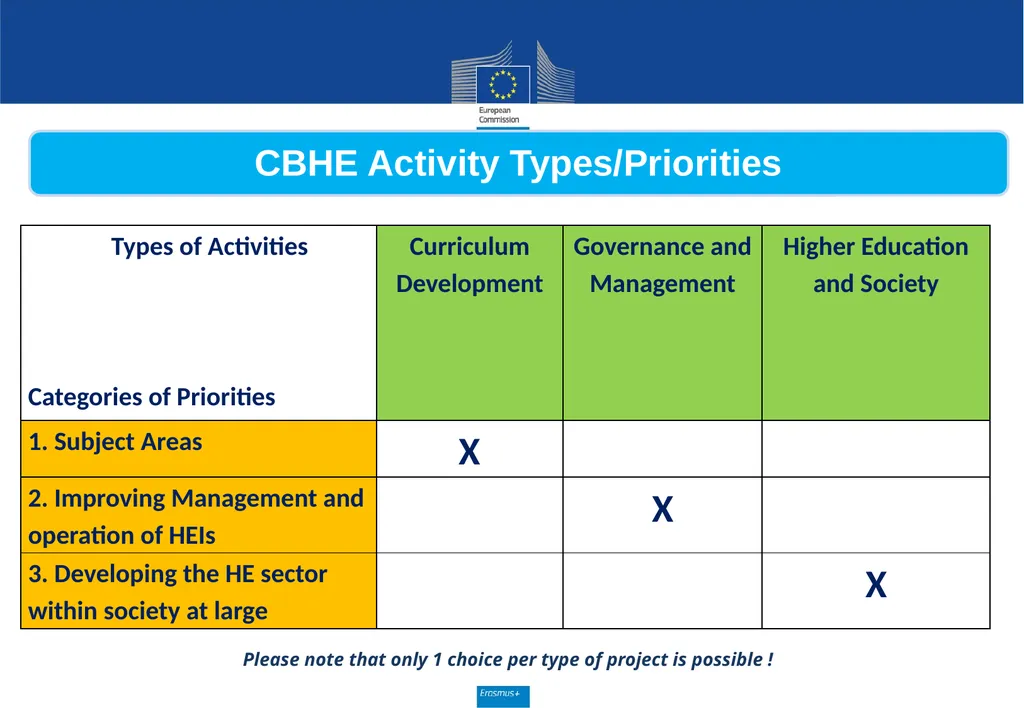
Please note that only 1 choice per type of project is possible ! CBHE Activity Types/Priorities<br>
08
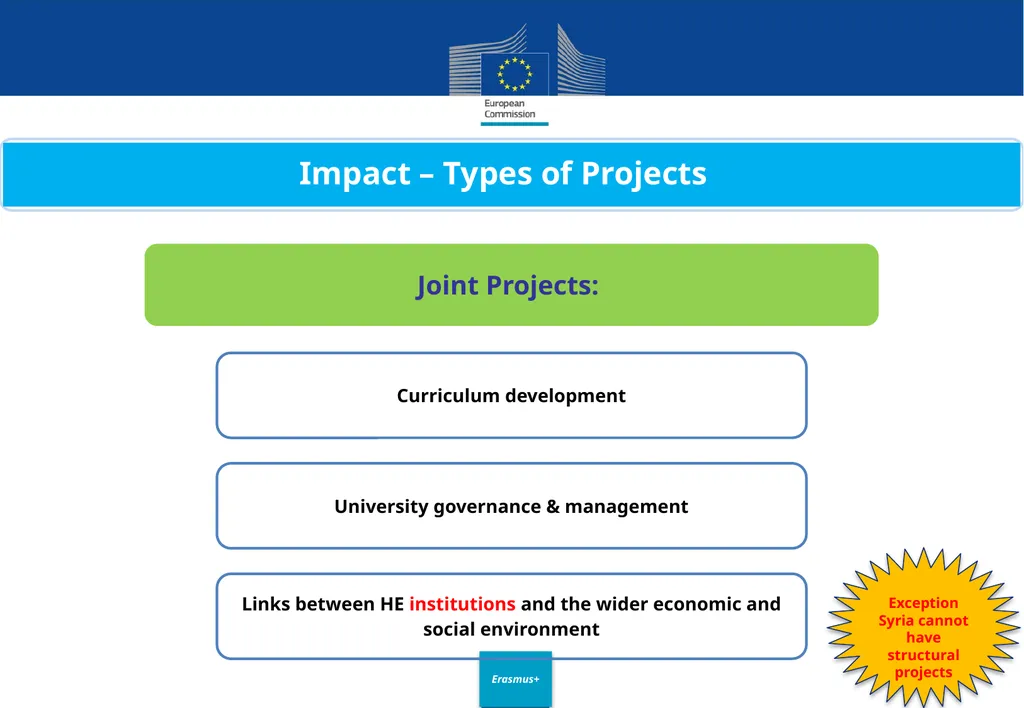
Exception
Syria cannot have structural projects<br>
09
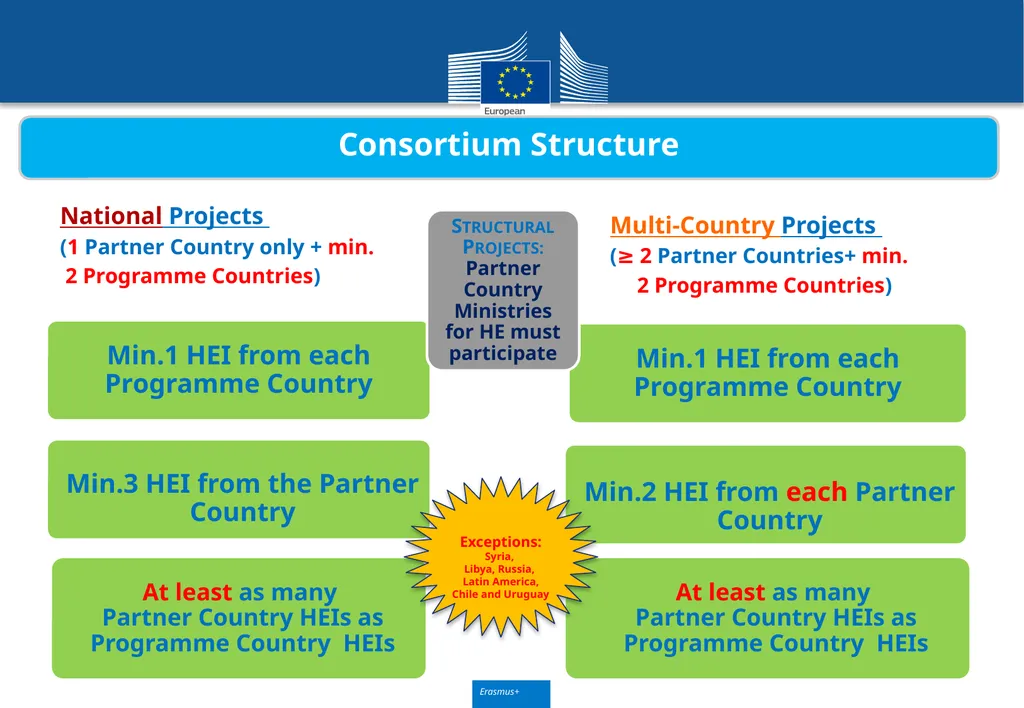
9 National Projects
(1 Partner Country only + min.
2 Programme Countries) Multi-Country Projects
(≥ 2 Partner Countries+ min.
2 Programme Countries) Exceptions:
Syria,
Libya, Russia, Latin America,
Chile and Uruguay Consortium Structure<br>
10
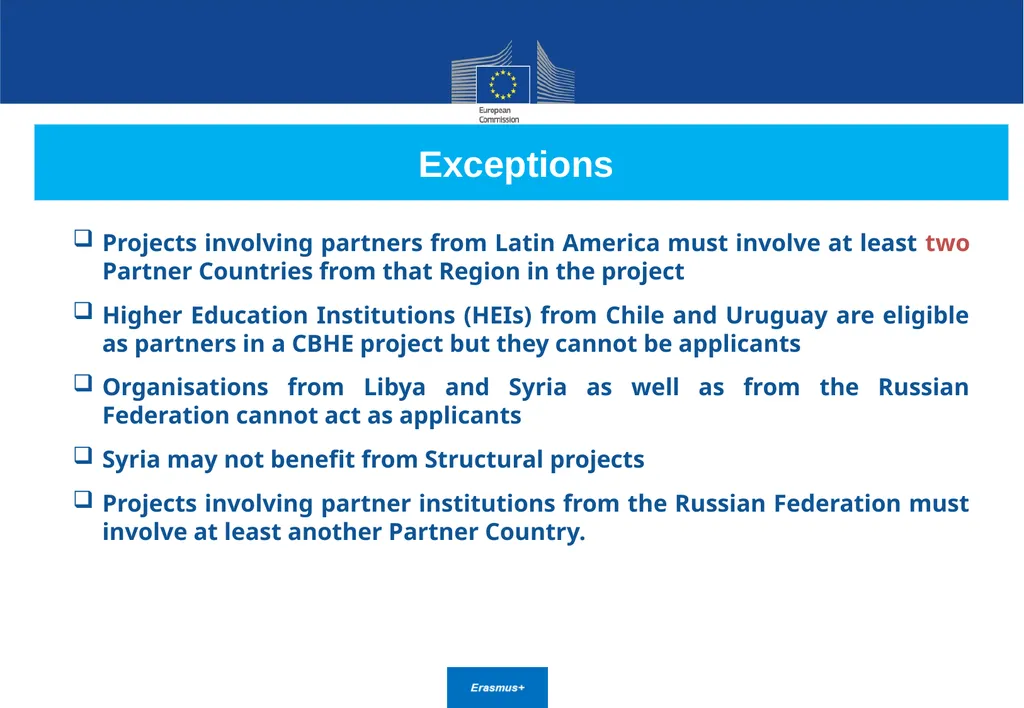
Projects involving partners from Latin America must involve at least two Partner Countries from that Region in the project
Higher Education Institutions (HEIs) from Chile and Uruguay are eligible as partners in a CBHE project but they cannot be applicants
Organisations from Libya and Syria as well as from the Russian Federation cannot act as applicants
Syria may not benefit from Structural projects
Projects involving partner institutions from the Russian Federation must involve at least another Partner Country. Exceptions<br>
11
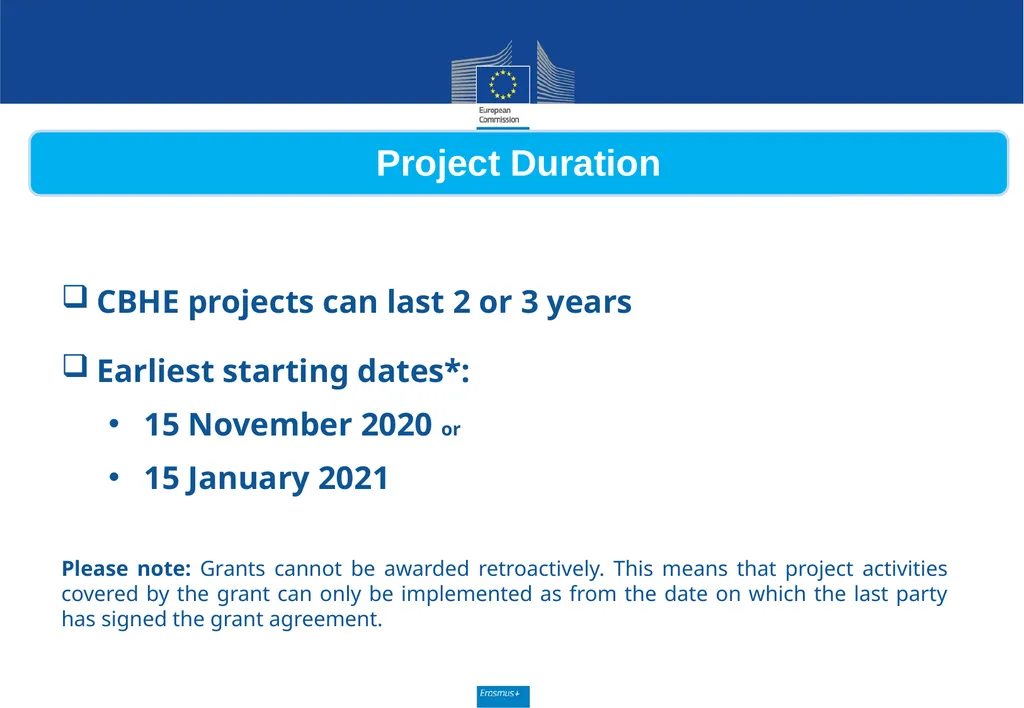
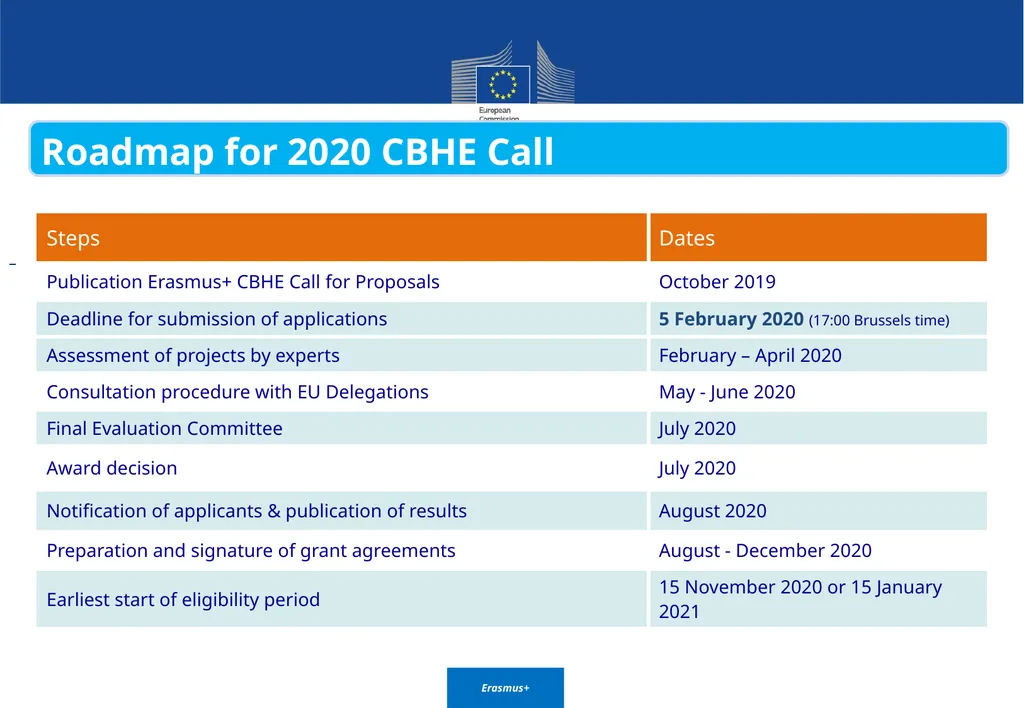
Project Duration CBHE projects can last 2 or 3 years
Earliest starting dates*:
15 November 2020 or
15 January 2021
Please note: Grants cannot be awarded retroactively. This means that project activities covered by the grant can only be implemented as from the date on which the last party has signed the grant agreement.<br>
13
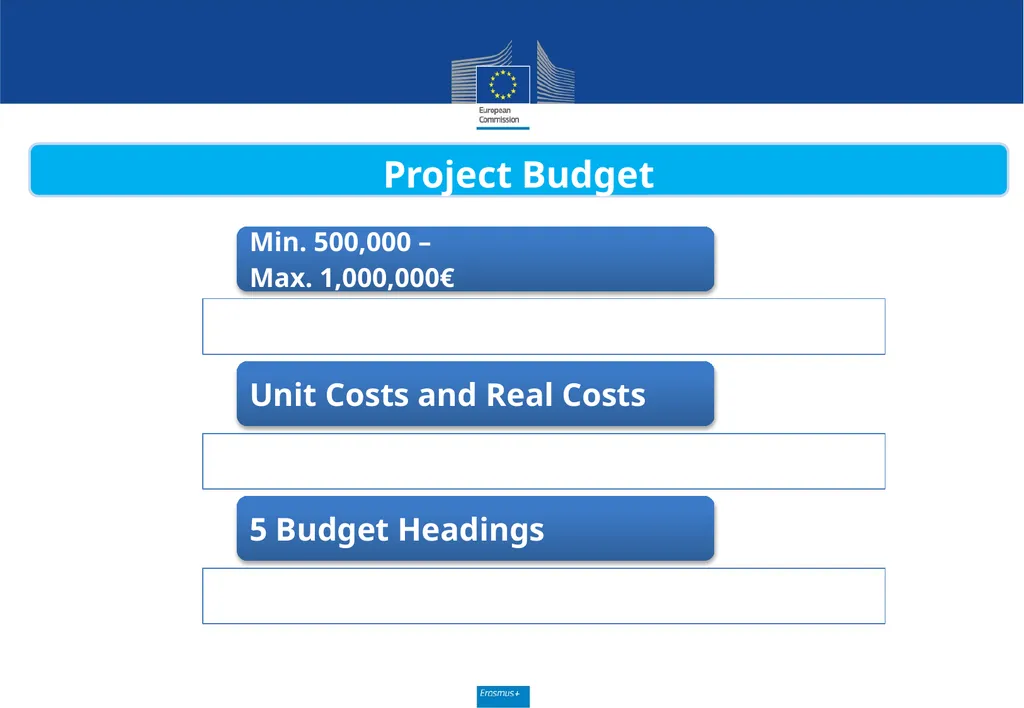
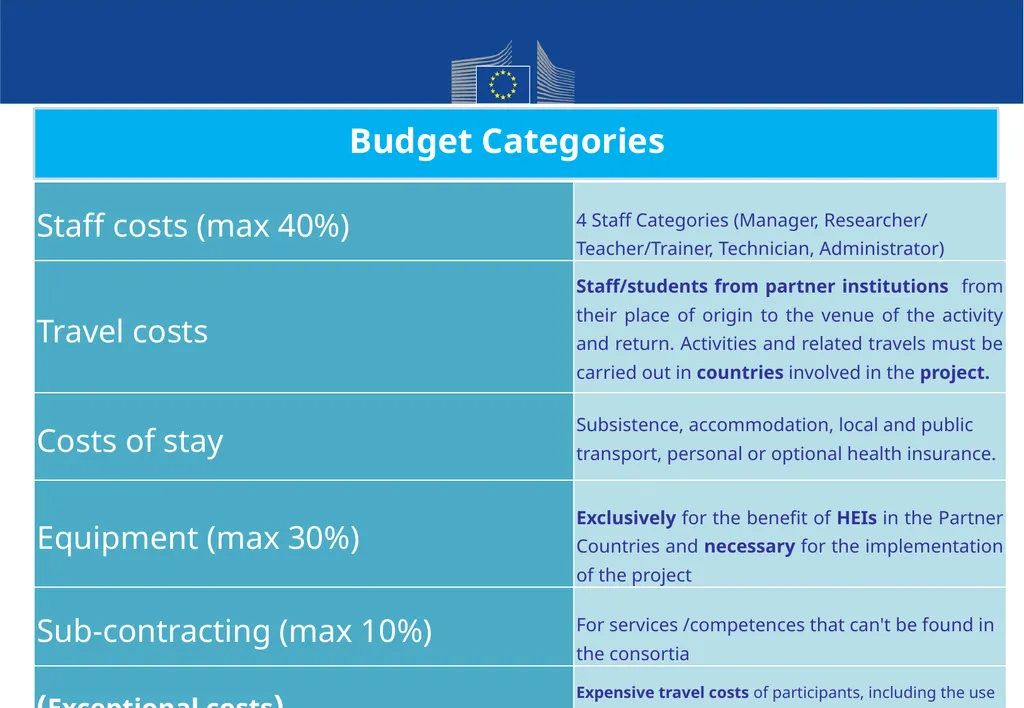
13 Budget Categories<br>
14
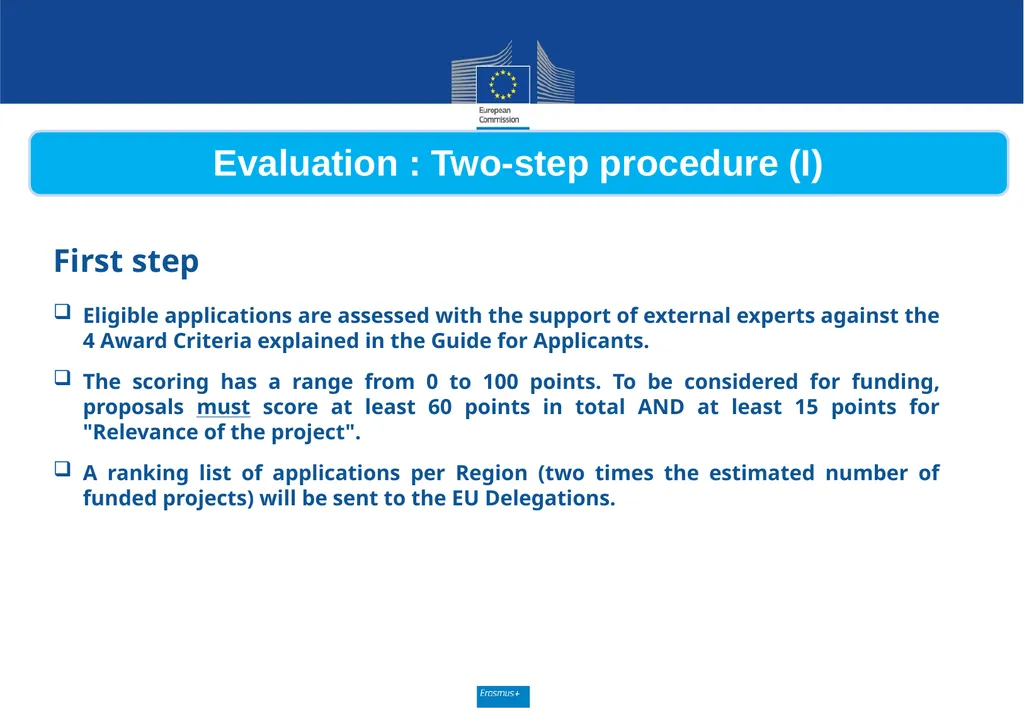
Evaluation : Two-step procedure (I) First step
Eligible applications are assessed with the support of external experts against the 4 Award Criteria explained in the Guide for Applicants.
The scoring has a range from 0 to 100 points. To be considered for funding, proposals must score at least 60 points in total AND at least 15 points for "Relevance of the project".
A ranking list of applications per Region (two times the estimated number of funded projects) will be sent to the EU Delegations.<br>
15
Evaluation : Award Criteria<br>
16
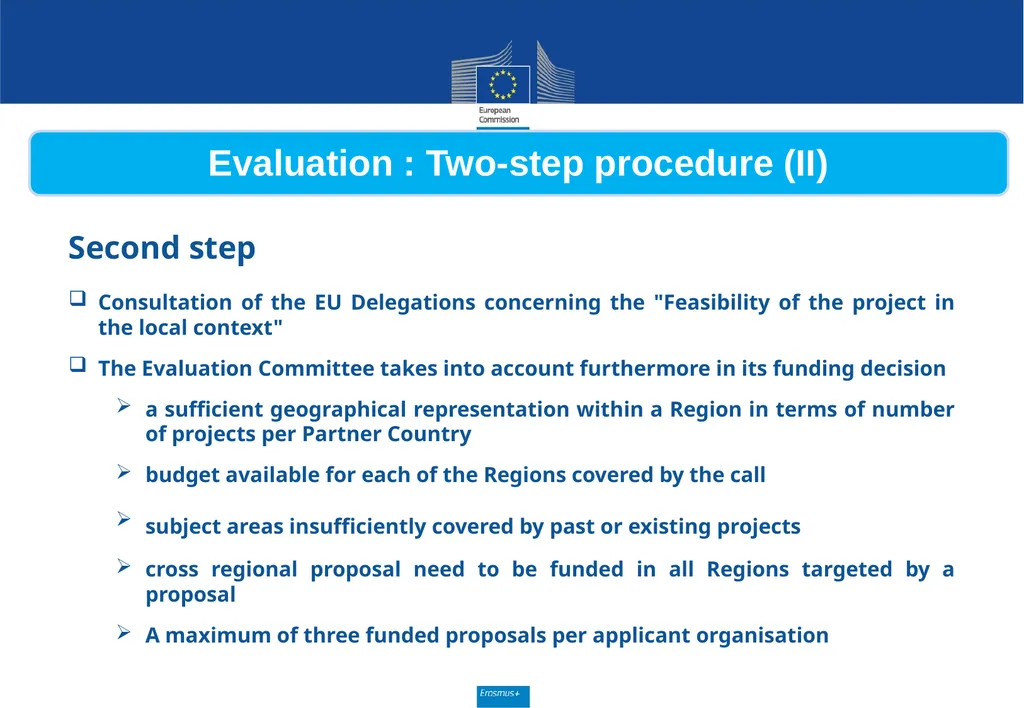
Evaluation : Two-step procedure (II) Second step
Consultation of the EU Delegations concerning the "Feasibility of the project in the local context"
The Evaluation Committee takes into account furthermore in its funding decision
a sufficient geographical representation within a Region in terms of number of projects per Partner Country
budget available for each of the Regions covered by the call
subject areas insufficiently covered by past or existing projects
cross regional proposal need to be funded in all Regions targeted by a proposal
A maximum of three funded proposals per applicant organisation<br>
17
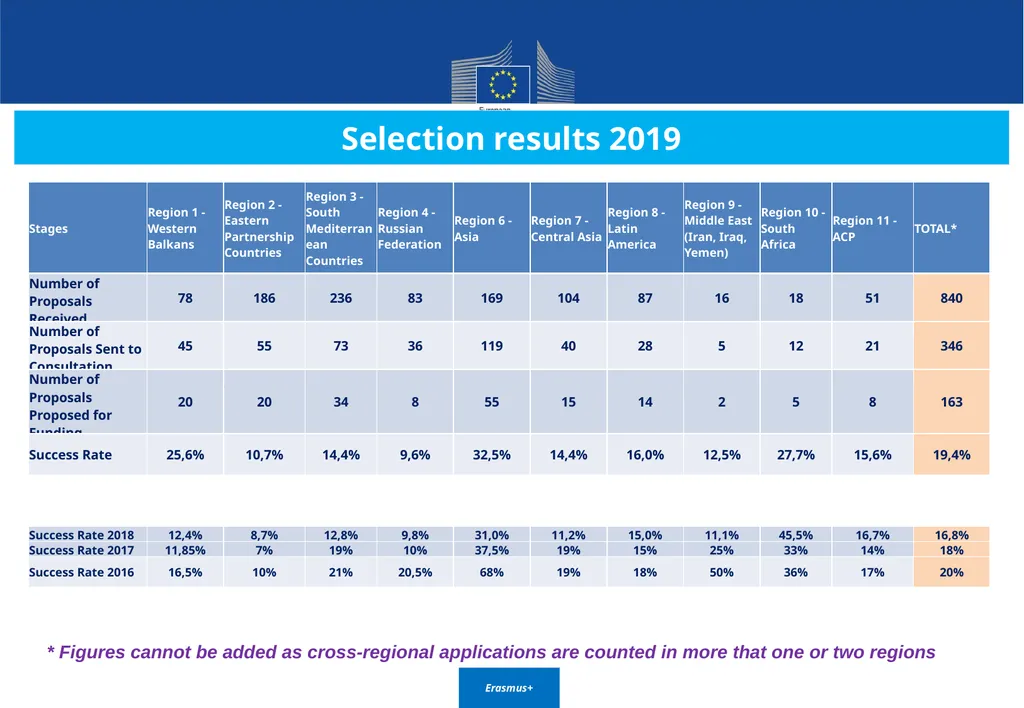
Erasmus+ * Figures cannot be added as cross-regional applications are counted in more that one or two regions Selection results 2019<br>
18
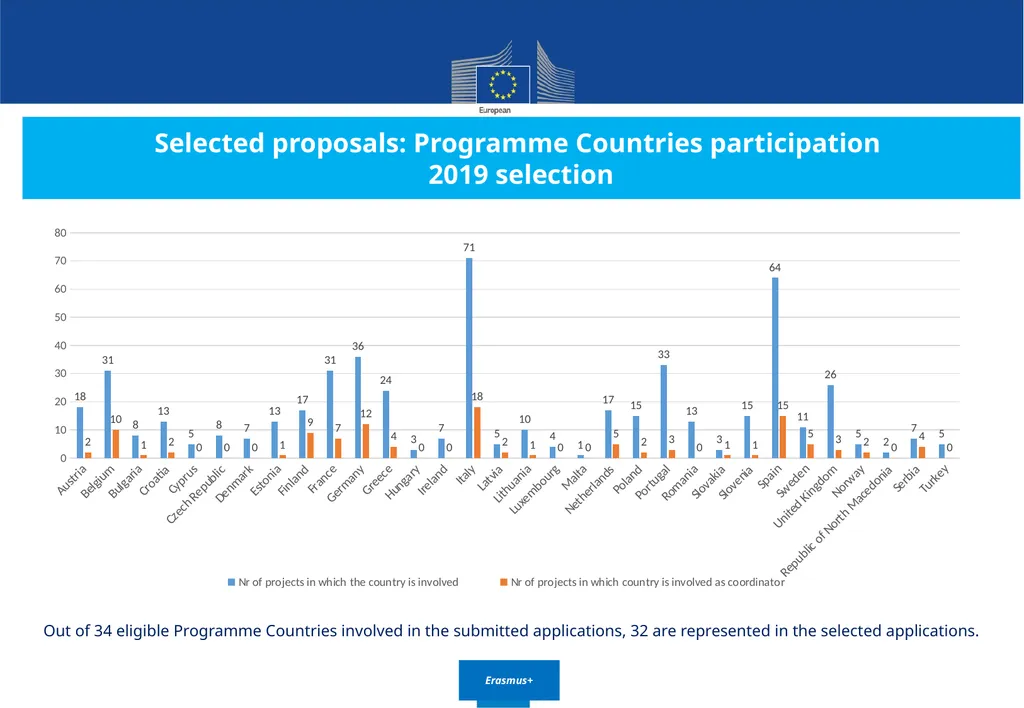
Erasmus+ Selected proposals: Programme Countries participation
2019 selection Out of 34 eligible Programme Countries involved in the submitted applications, 32 are represented in the selected applications.<br>
19
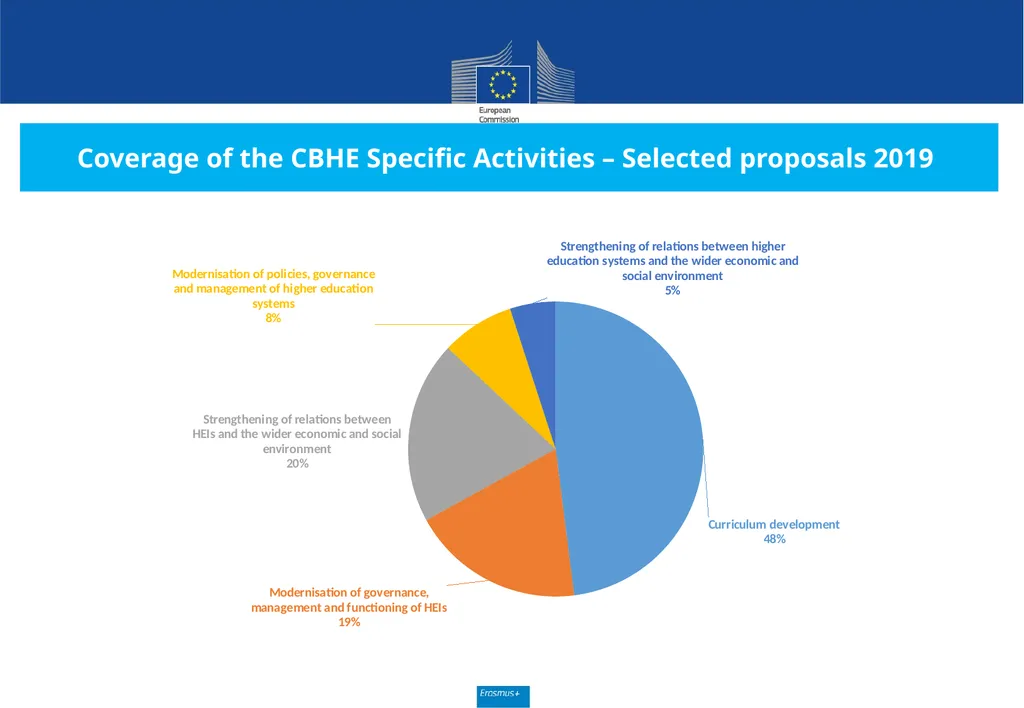
Coverage of the CBHE Specific Activities – Selected proposals 2019<br>
20
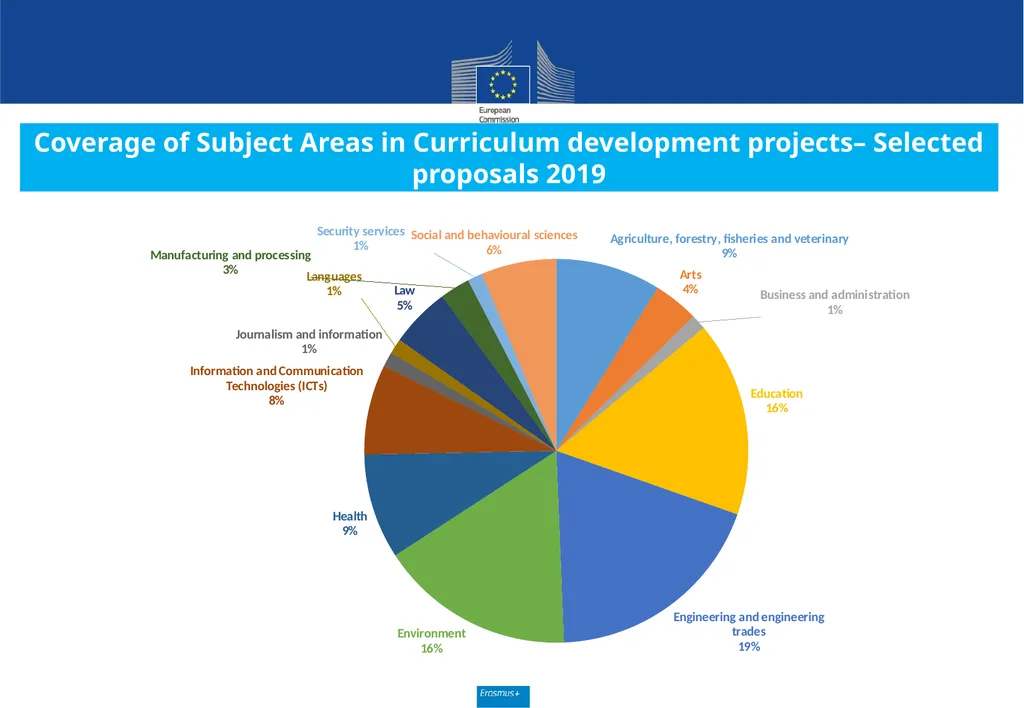
Coverage of Subject Areas in Curriculum development projects– Selected proposals 2019<br>
21
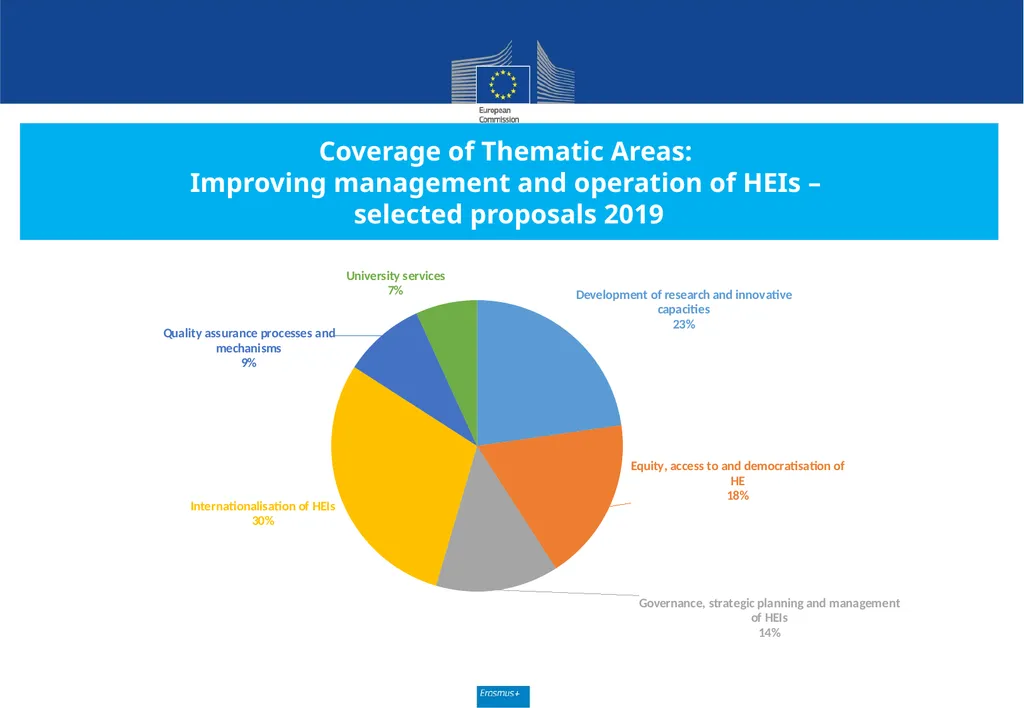
Coverage of Thematic Areas: �Improving management and operation of HEIs – �selected proposals 2019<br>
22
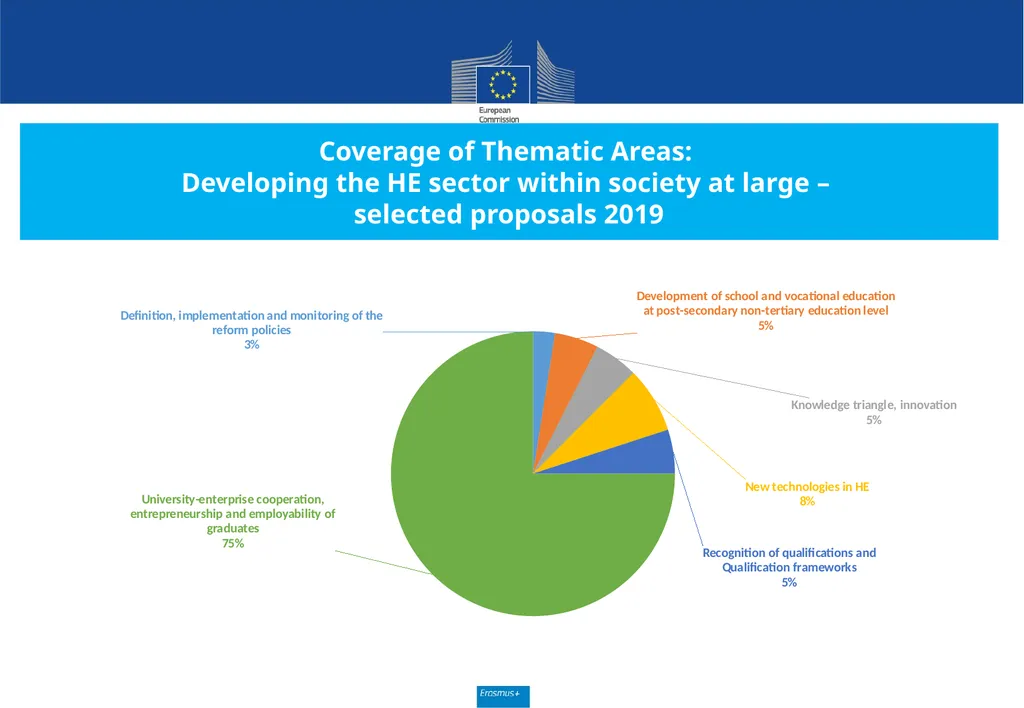
Coverage of Thematic Areas: �Developing the HE sector within society at large – �selected proposals 2019<br>
23
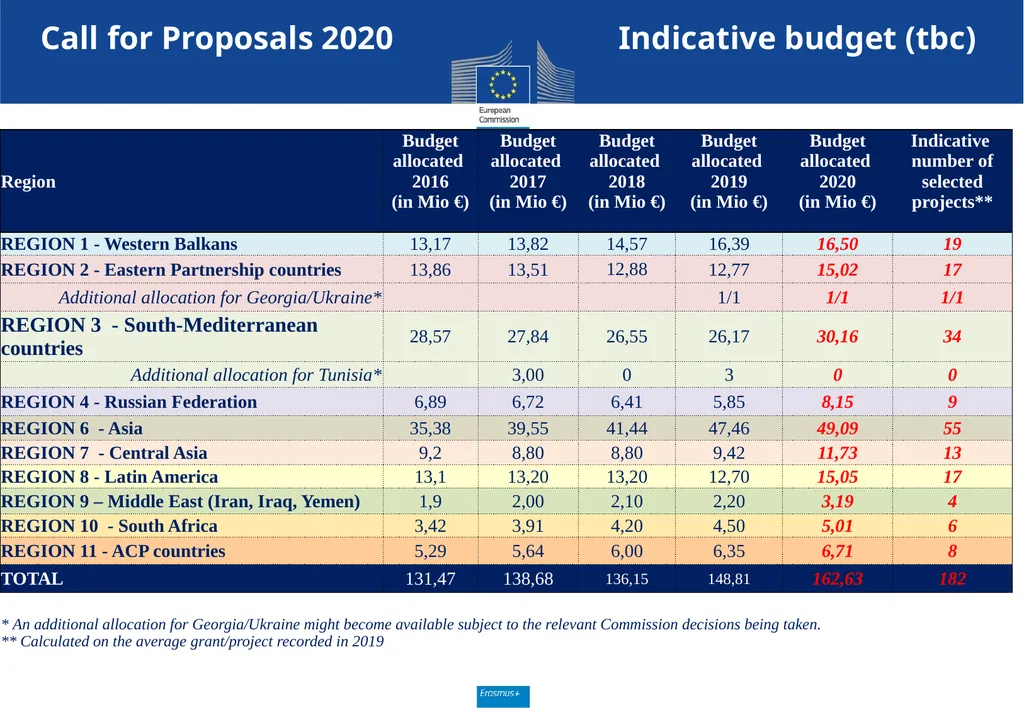
Indicative budget (tbc) Call for Proposals 2020<br>
24
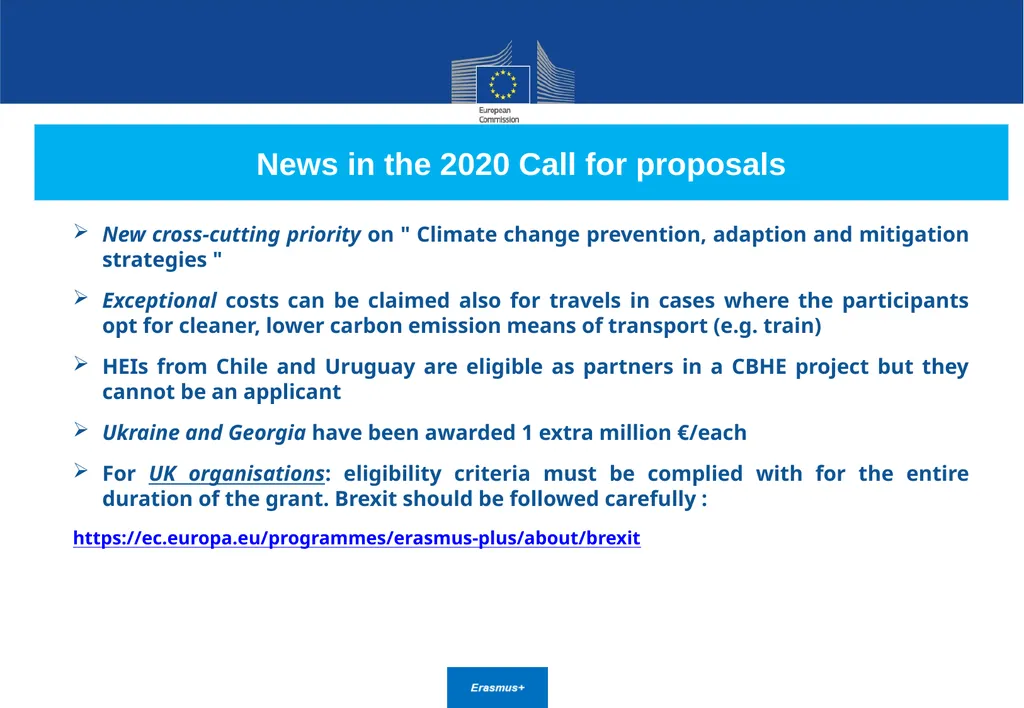
New cross-cutting priority on " Climate change prevention, adaption and mitigation strategies "
Exceptional costs can be claimed also for travels in cases where the participants opt for cleaner, lower carbon emission means of transport (e.g. train)
HEIs from Chile and Uruguay are eligible as partners in a CBHE project but they cannot be an applicant
Ukraine and Georgia have been awarded 1 extra million €/each
For UK organisations: eligibility criteria must be complied with for the entire duration of the grant. Brexit should be followed carefully :
https://ec.europa.eu/programmes/erasmus-plus/about/brexit News in the 2020 Call for proposals<br>
25
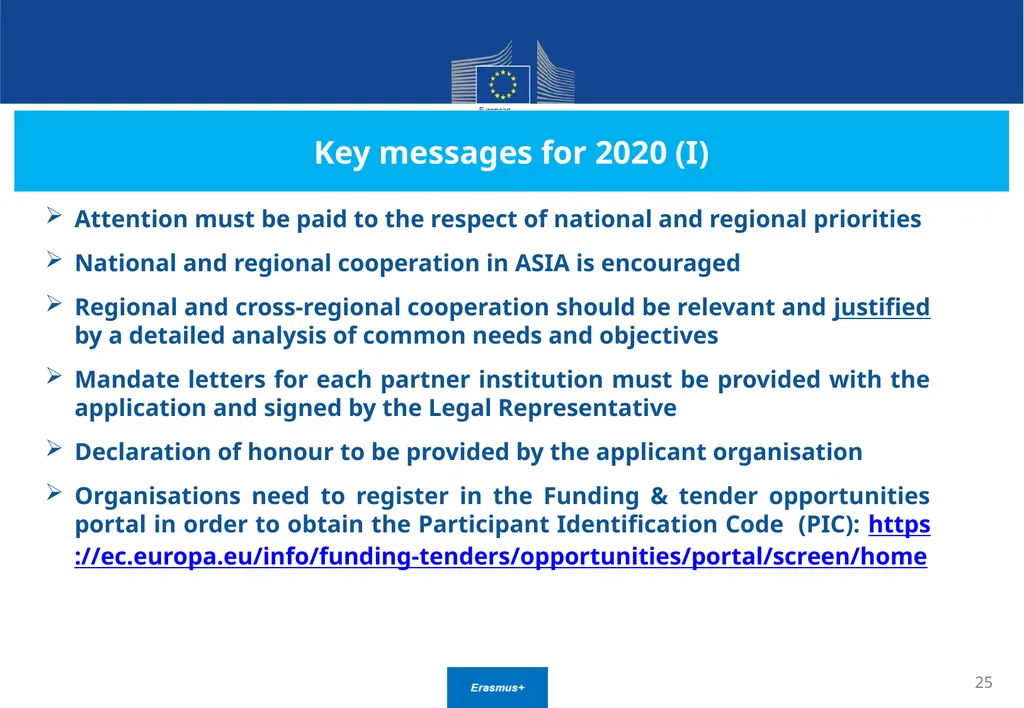
25 Attention must be paid to the respect of national and regional priorities
National and regional cooperation in ASIA is encouraged
Regional and cross-regional cooperation should be relevant and justified by a detailed analysis of common needs and objectives
Mandate letters for each partner institution must be provided with the application and signed by the Legal Representative
Declaration of honour to be provided by the applicant organisation
Organisations need to register in the Funding & tender opportunities portal in order to obtain the Participant Identification Code (PIC): https://ec.europa.eu/info/funding-tenders/opportunities/portal/screen/home Key messages for 2020 (I)<br>
26
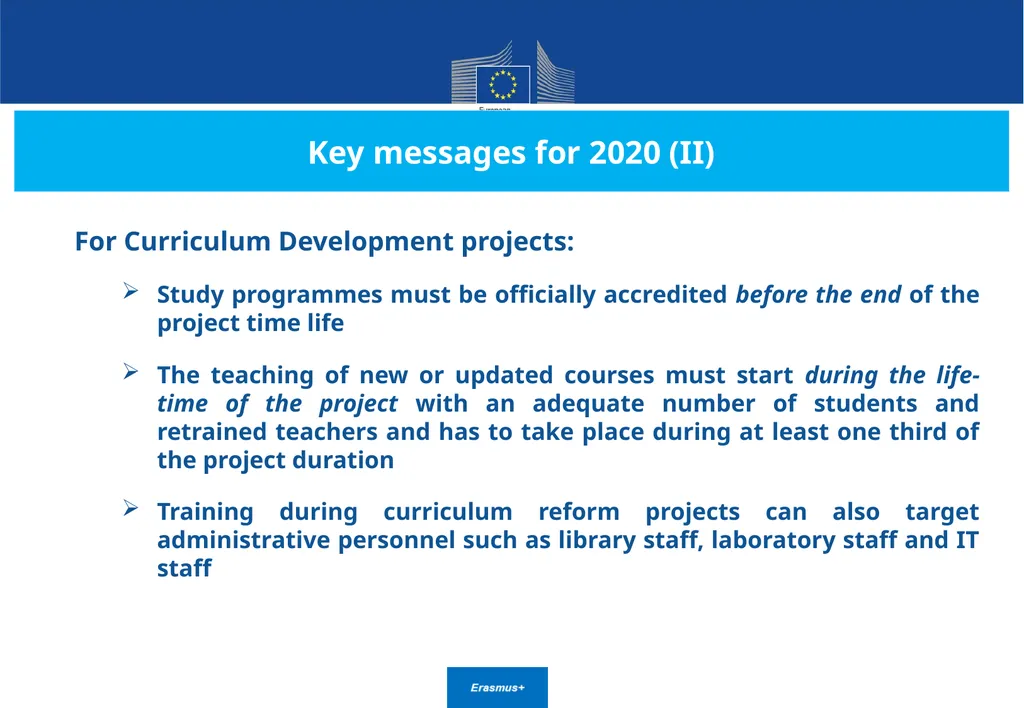
For Curriculum Development projects:
Study programmes must be officially accredited before the end of the project time life
The teaching of new or updated courses must start during the life-time of the project with an adequate number of students and retrained teachers and has to take place during at least one third of the project duration
Training during curriculum reform projects can also target administrative personnel such as library staff, laboratory staff and IT staff Key messages for 2020 (II)<br>
27
Erasmus+ Roadmap for 2020 CBHE Call<br>
28
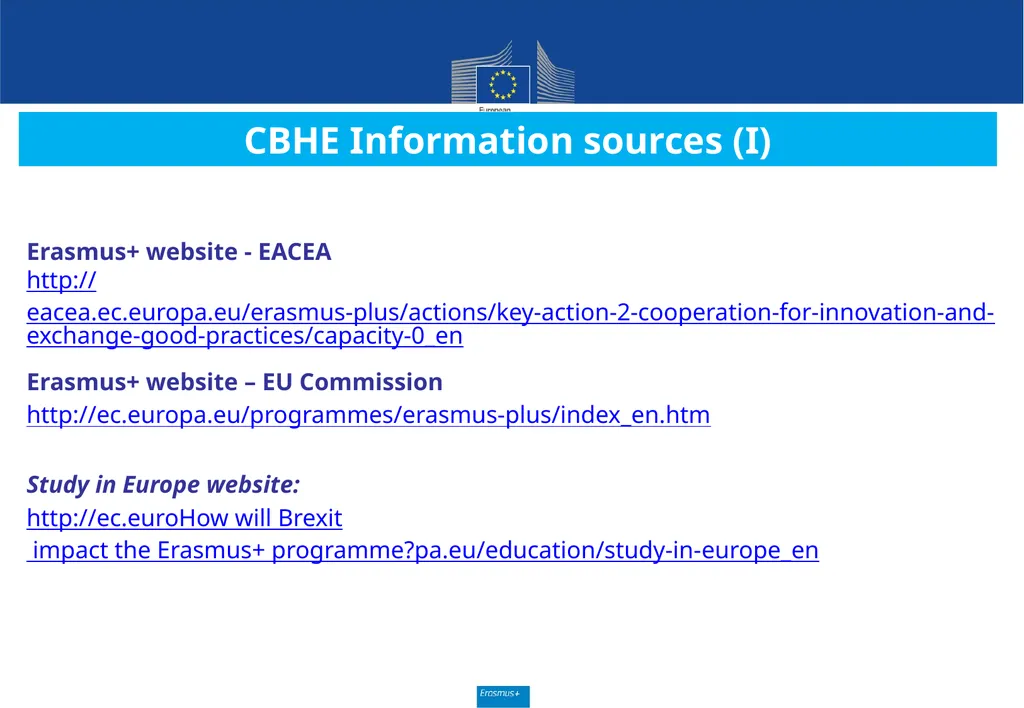
CBHE Information sources (I) Erasmus+ website - EACEA
http://eacea.ec.europa.eu/erasmus-plus/actions/key-action-2-cooperation-for-innovation-and-exchange-good-practices/capacity-0_en
Erasmus+ website – EU Commission
http://ec.europa.eu/programmes/erasmus-plus/index_en.htm
Study in Europe website:
http://ec.euroHow will Brexit impact the Erasmus+ programme?pa.eu/education/study-in-europe_en<br>
29
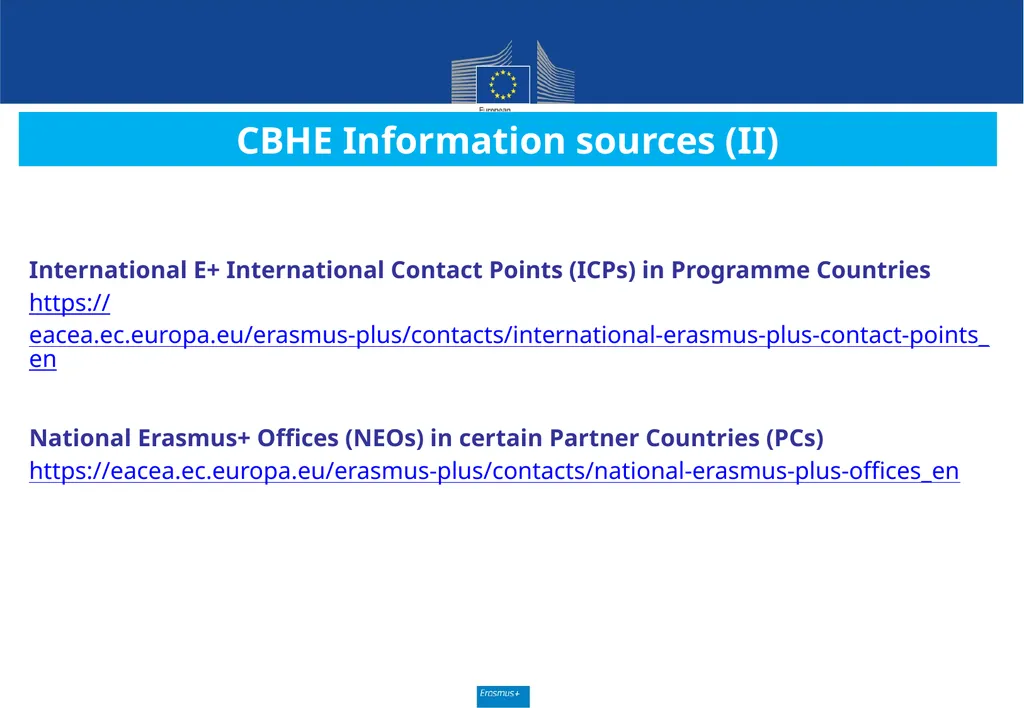
CBHE Information sources (II) International E+ International Contact Points (ICPs) in Programme Countries
https://eacea.ec.europa.eu/erasmus-plus/contacts/international-erasmus-plus-contact-points_en
National Erasmus+ Offices (NEOs) in certain Partner Countries (PCs)
https://eacea.ec.europa.eu/erasmus-plus/contacts/national-erasmus-plus-offices_en<br>