Catching and selling fish Catching fish Fish can
Description: Catching and selling fish Catching fish Fish can be found in freshwater (rivers and lakes) or saltwater (seas and oceans). Fish can be caught in the wild or farmed. Fish can be caught in many different ways, using rods, lines or nets.
Related Topics
Download Presentation
"Catching and selling fish Catching fish Fish can" is the property of its rightful owner. Permission is granted to download and print the materials on this website for personal, non-commercial use only, and to display it on your personal computer provided you do not modify the materials and that you retain all copyright notices contained in the materials. By downloading content from our website, you accept the terms of this agreement.
Presentation Transcript
slide1. Catching and selling fish<br>
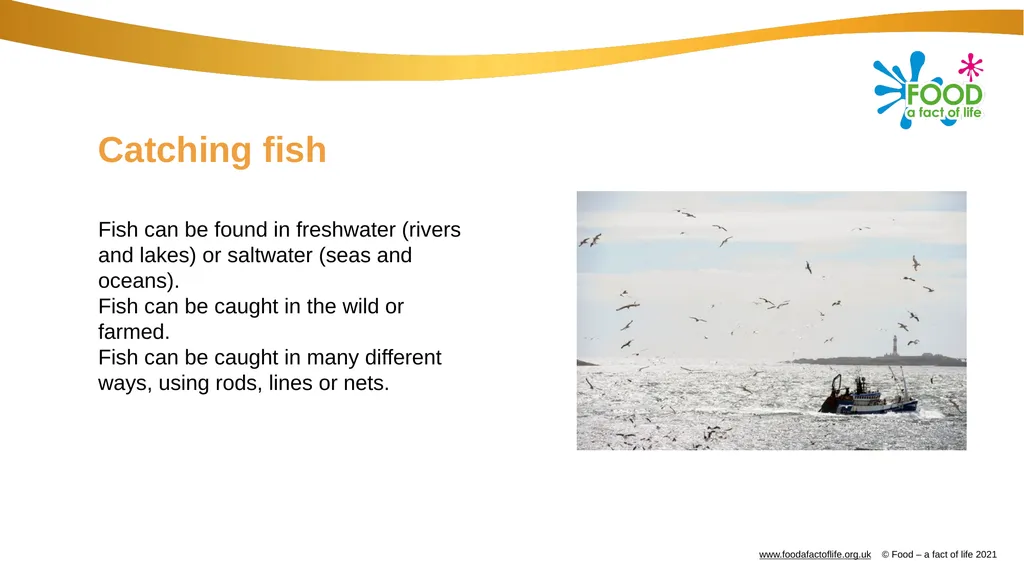
slide2. Catching fish Fish can be found in freshwater (rivers and lakes) or saltwater (seas and oceans).
Fish can be caught in the wild or farmed.
Fish can be caught in many different ways, using rods, lines or nets.<br>
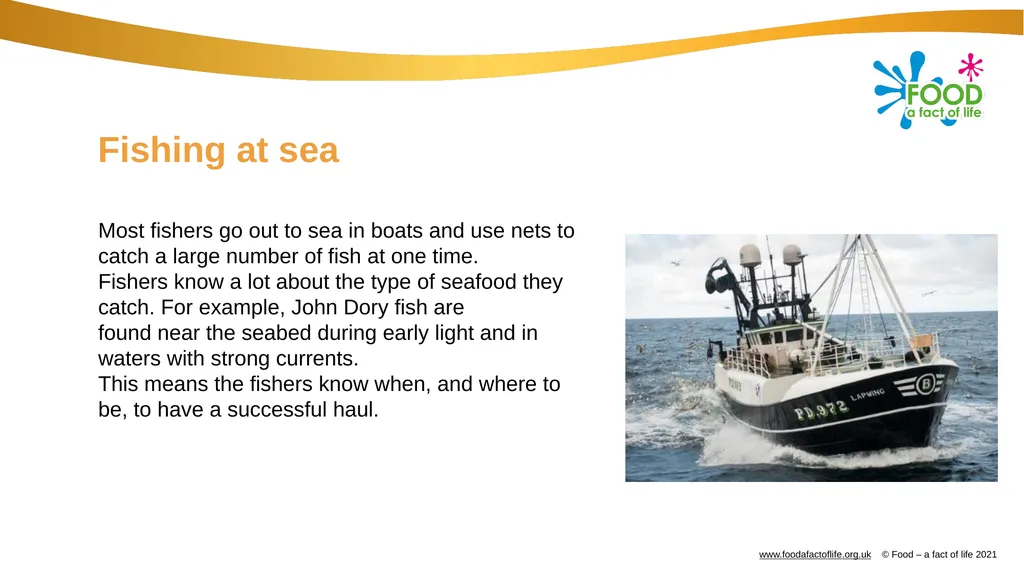
slide3. Fishing at sea Most fishers go out to sea in boats and use nets to catch a large number of fish at one time.
Fishers know a lot about the type of seafood they catch. For example, John Dory fish are found near the seabed during early light and in waters with strong currents.Â
This means the fishers know when, and where to be, to have a successful haul.<br>
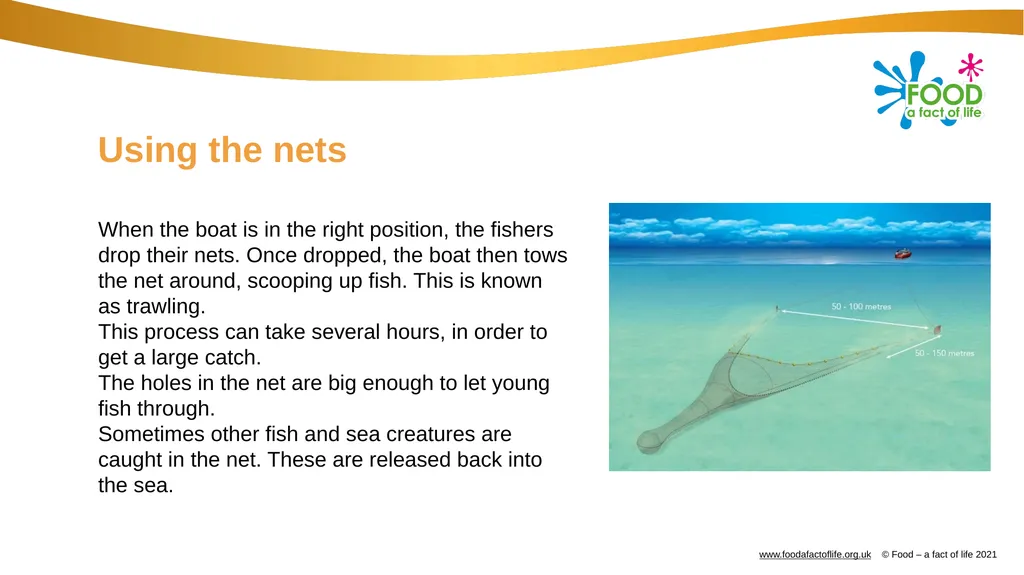
slide4. Using the nets When the boat is in the right position, the fishers drop their nets. Once dropped, the boat then tows the net around, scooping up fish. This is known as trawling.
This process can take several hours, in order to get a large catch.
The holes in the net are big enough to let young fish through.
Sometimes other fish and sea creatures are caught in the net. These are released back into the sea.<br>
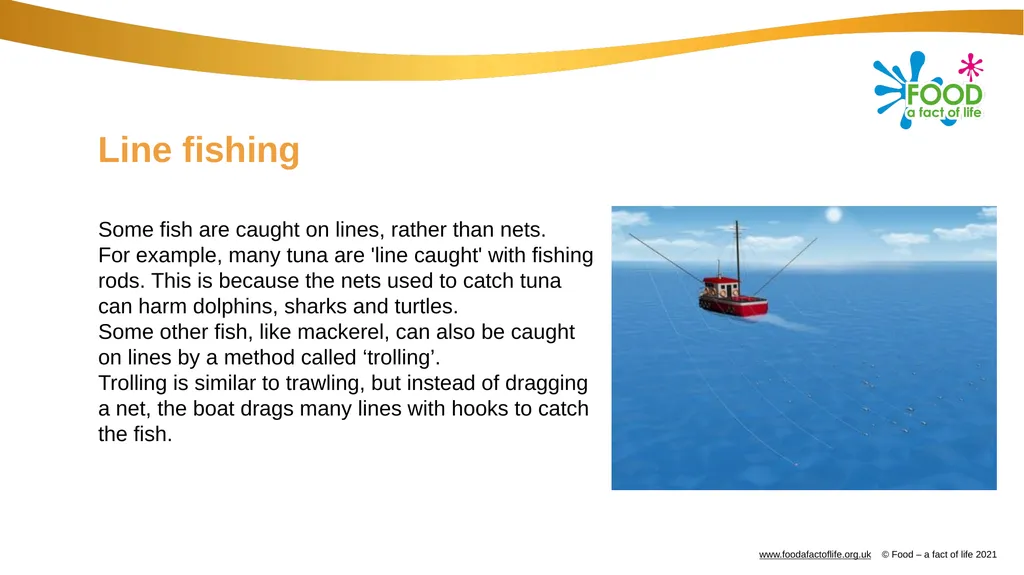
slide5. Line fishing Some fish are caught on lines, rather than nets.
For example, many tuna are 'line caught' with fishing rods. This is because the nets used to catch tuna can harm dolphins, sharks and turtles.Â
Some other fish, like mackerel, can also be caught on lines by a method called ‘trolling’.
Trolling is similar to trawling, but instead of dragging a net, the boat drags many lines with hooks to catch the fish.<br>
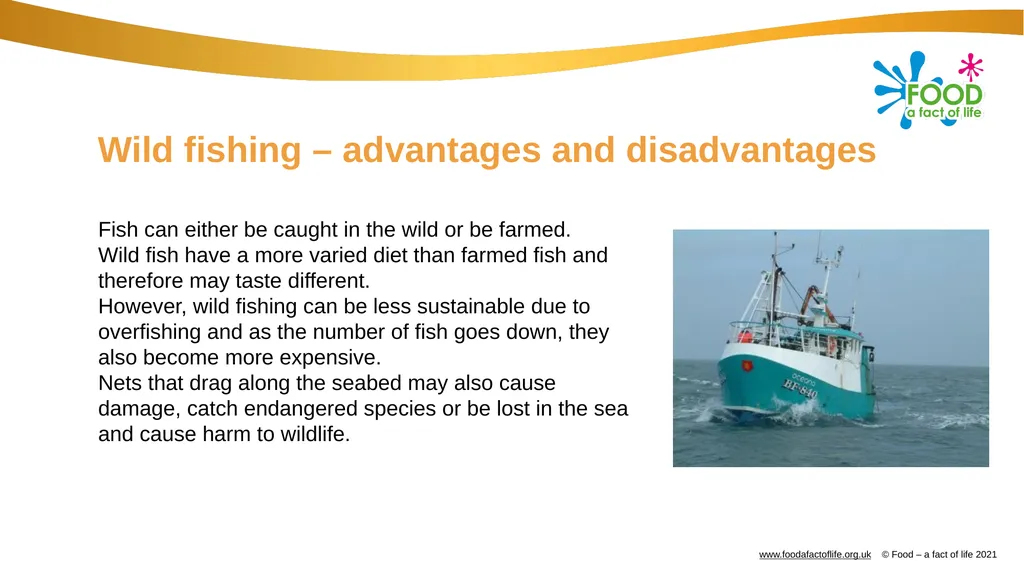
slide6. Wild fishing – advantages and disadvantages Fish can either be caught in the wild or be farmed.
Wild fish have a more varied diet than farmed fish and therefore may taste different.Â
However, wild fishing can be less sustainable due to overfishing and as the number of fish goes down, they also become more expensive.
Nets that drag along the seabed may also cause damage, catch endangered species or be lost in the sea and cause harm to wildlife.<br>
slide7. Farming fish – advantages and disadvantages Farming fish can have several advantages. If managed well it:
prevents wild fish from being overfished;
can provide fish to communities where wild fish is scarce;
can allow for fish farmed that are hard to catch.
However, if managed poorly, there can also be disadvantages, such as:
disease can be more common if many fish are kept close together;
farmed fish may harm wild fish if they escape;
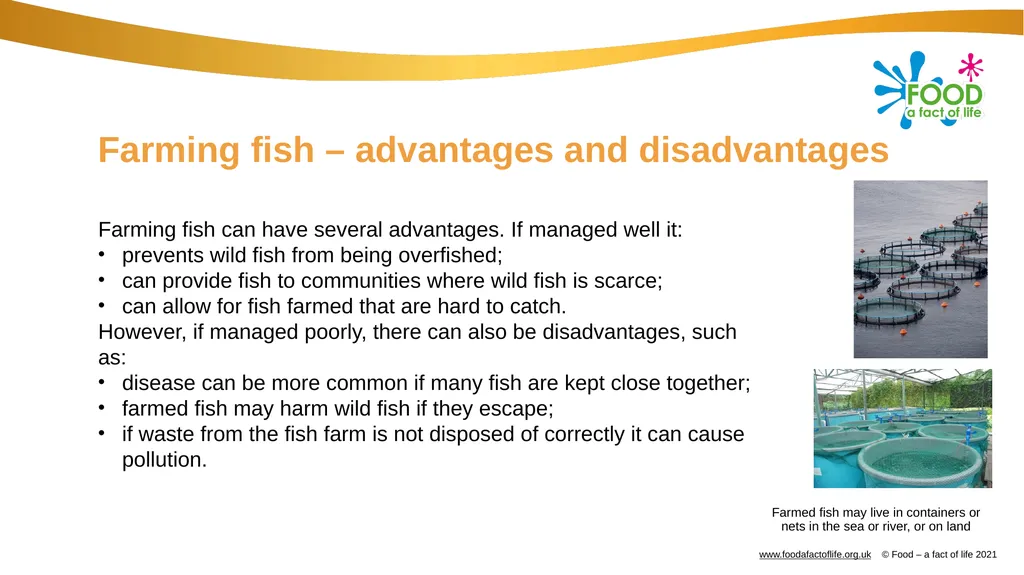
if waste from the fish farm is not disposed of correctly it can cause pollution. Farmed fish may live in containers or nets in the sea or river, or on land<br>
slide8. Harvesting and/or farming shellfish Most shellfish do not move around as much as fish. They are often harvested from where they live, and they can be easily farmed.
Cockles live under the sand on beaches and can be picked out by hand or by using tools, such as rakes.
Winkles are usually picked from the rocks they live on.
Whelks are caught in pots that contain bait.
Oysters and mussels are often farmed. Mussels are grown on ropes in water and oysters in baskets or beds. This picture shows an oyster farm. Each of these suspended baskets contains growing oysters<br>
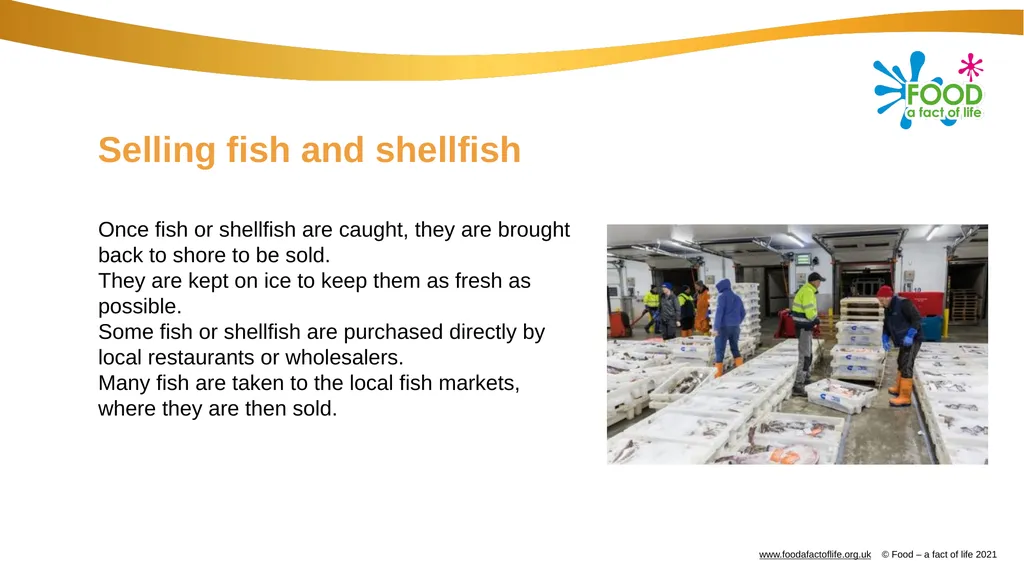
slide9. Selling fish and shellfish Once fish or shellfish are caught, they are brought back to shore to be sold.
They are kept on ice to keep them as fresh as possible.
Some fish or shellfish are purchased directly by local restaurants or wholesalers.
Many fish are taken to the local fish markets, where they are then sold.<br>
slide10. Sustainability Because of the popularity of some fish, the numbers of some species have decreased.
Cod and haddock numbers have declined because too many of them have been caught. This means that fishers are only allowed to catch a certain amount each year.
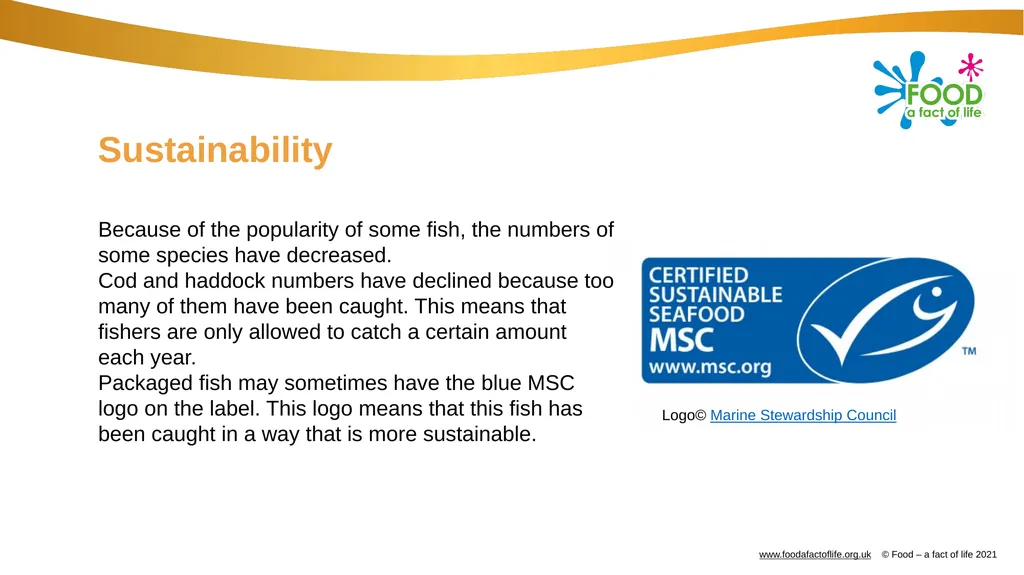
Packaged fish may sometimes have the blue MSC logo on the label. This logo means that this fish has been caught in a way that is more sustainable. Logo© Marine Stewardship Council<br>
slide11. Catching and selling fish For further information, go to:
www.foodafactoflife.org.uk This resource meets the Guidelines for producers and users of school education resources about food.<br>

slide2. Catching fish Fish can be found in freshwater (rivers and lakes) or saltwater (seas and oceans).
Fish can be caught in the wild or farmed.
Fish can be caught in many different ways, using rods, lines or nets.<br>
slide3. Fishing at sea Most fishers go out to sea in boats and use nets to catch a large number of fish at one time.
Fishers know a lot about the type of seafood they catch. For example, John Dory fish are found near the seabed during early light and in waters with strong currents.Â
This means the fishers know when, and where to be, to have a successful haul.<br>
slide4. Using the nets When the boat is in the right position, the fishers drop their nets. Once dropped, the boat then tows the net around, scooping up fish. This is known as trawling.
This process can take several hours, in order to get a large catch.
The holes in the net are big enough to let young fish through.
Sometimes other fish and sea creatures are caught in the net. These are released back into the sea.<br>
slide5. Line fishing Some fish are caught on lines, rather than nets.
For example, many tuna are 'line caught' with fishing rods. This is because the nets used to catch tuna can harm dolphins, sharks and turtles.Â
Some other fish, like mackerel, can also be caught on lines by a method called ‘trolling’.
Trolling is similar to trawling, but instead of dragging a net, the boat drags many lines with hooks to catch the fish.<br>
slide6. Wild fishing – advantages and disadvantages Fish can either be caught in the wild or be farmed.
Wild fish have a more varied diet than farmed fish and therefore may taste different.Â
However, wild fishing can be less sustainable due to overfishing and as the number of fish goes down, they also become more expensive.
Nets that drag along the seabed may also cause damage, catch endangered species or be lost in the sea and cause harm to wildlife.<br>
slide7. Farming fish – advantages and disadvantages Farming fish can have several advantages. If managed well it:
prevents wild fish from being overfished;
can provide fish to communities where wild fish is scarce;
can allow for fish farmed that are hard to catch.
However, if managed poorly, there can also be disadvantages, such as:
disease can be more common if many fish are kept close together;
farmed fish may harm wild fish if they escape;
if waste from the fish farm is not disposed of correctly it can cause pollution. Farmed fish may live in containers or nets in the sea or river, or on land<br>
slide8. Harvesting and/or farming shellfish Most shellfish do not move around as much as fish. They are often harvested from where they live, and they can be easily farmed.
Cockles live under the sand on beaches and can be picked out by hand or by using tools, such as rakes.
Winkles are usually picked from the rocks they live on.
Whelks are caught in pots that contain bait.
Oysters and mussels are often farmed. Mussels are grown on ropes in water and oysters in baskets or beds. This picture shows an oyster farm. Each of these suspended baskets contains growing oysters<br>
slide9. Selling fish and shellfish Once fish or shellfish are caught, they are brought back to shore to be sold.
They are kept on ice to keep them as fresh as possible.
Some fish or shellfish are purchased directly by local restaurants or wholesalers.
Many fish are taken to the local fish markets, where they are then sold.<br>
slide10. Sustainability Because of the popularity of some fish, the numbers of some species have decreased.
Cod and haddock numbers have declined because too many of them have been caught. This means that fishers are only allowed to catch a certain amount each year.
Packaged fish may sometimes have the blue MSC logo on the label. This logo means that this fish has been caught in a way that is more sustainable. Logo© Marine Stewardship Council<br>
slide11. Catching and selling fish For further information, go to:
www.foodafactoflife.org.uk This resource meets the Guidelines for producers and users of school education resources about food.<br>