
CELL SIGNALLING “Cell signalling is the process by

Description: CELL SIGNALLING Cell signalling is the process by which cells communicate with other cells within their body or with the external environment. Cell signalling occurs by several distinct pathways. Multicellular organisms need cell
Related Topics
Download Presentation
"CELL SIGNALLING “Cell signalling is the process by" is the property of its rightful owner. Permission is granted to download and print the materials on this website for personal, non-commercial use only, and to display it on your personal computer provided you do not modify the materials and that you retain all copyright notices contained in the materials. By downloading content from our website, you accept the terms of this agreement.
Presentation Transcript
slide1. CELL SIGNALLING<br>
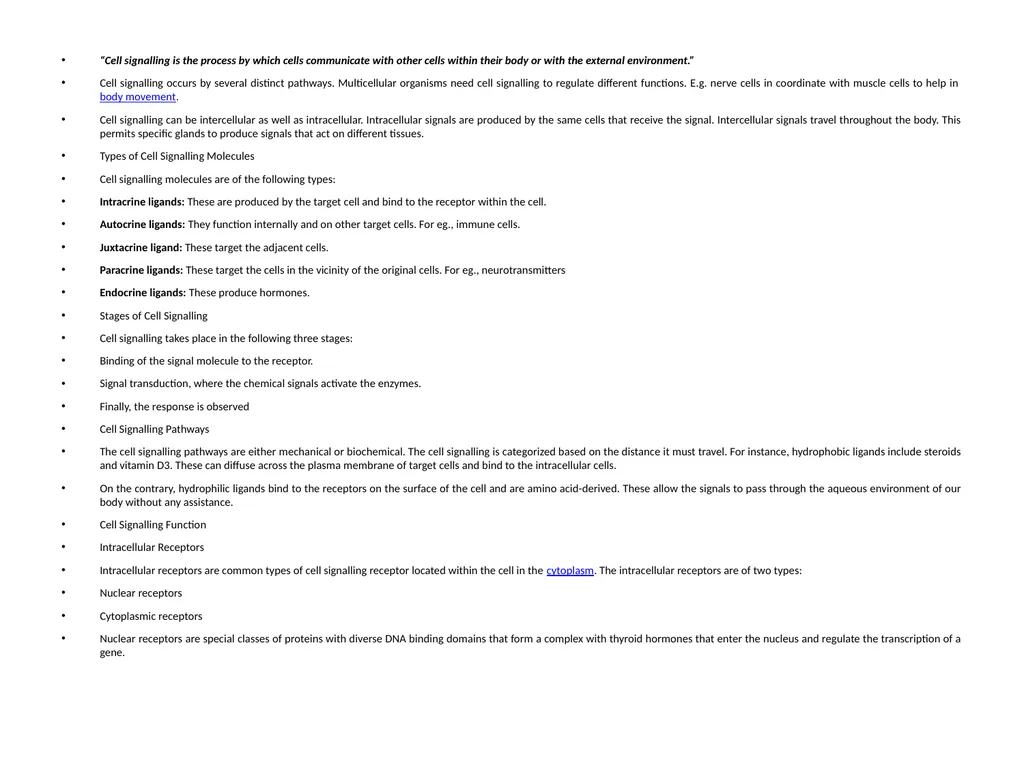
slide2. “Cell signalling is the process by which cells communicate with other cells within their body or with the external environment.”
Cell signalling occurs by several distinct pathways. Multicellular organisms need cell signalling to regulate different functions. E.g. nerve cells in coordinate with muscle cells to help in body movement.
Cell signalling can be intercellular as well as intracellular. Intracellular signals are produced by the same cells that receive the signal. Intercellular signals travel throughout the body. This permits specific glands to produce signals that act on different tissues.
Types of Cell Signalling Molecules
Cell signalling molecules are of the following types:
Intracrine ligands: These are produced by the target cell and bind to the receptor within the cell.
Autocrine ligands: They function internally and on other target cells. For eg., immune cells.
Juxtacrine ligand: These target the adjacent cells.
Paracrine ligands: These target the cells in the vicinity of the original cells. For eg., neurotransmitters
Endocrine ligands: These produce hormones.
Stages of Cell Signalling
Cell signalling takes place in the following three stages:
Binding of the signal molecule to the receptor.
Signal transduction, where the chemical signals activate the enzymes.
Finally, the response is observed
Cell Signalling Pathways
The cell signalling pathways are either mechanical or biochemical. The cell signalling is categorized based on the distance it must travel. For instance, hydrophobic ligands include steroids and vitamin D3. These can diffuse across the plasma membrane of target cells and bind to the intracellular cells.
On the contrary, hydrophilic ligands bind to the receptors on the surface of the cell and are amino acid-derived. These allow the signals to pass through the aqueous environment of our body without any assistance.
Cell Signalling Function
Intracellular Receptors
Intracellular receptors are common types of cell signalling receptor located within the cell in the cytoplasm. The intracellular receptors are of two types:
Nuclear receptors
Cytoplasmic receptors
Nuclear receptors are special classes of proteins with diverse DNA binding domains that form a complex with thyroid hormones that enter the nucleus and regulate the transcription of a gene.<br>
slide3. Ligand Gated Ion Channels
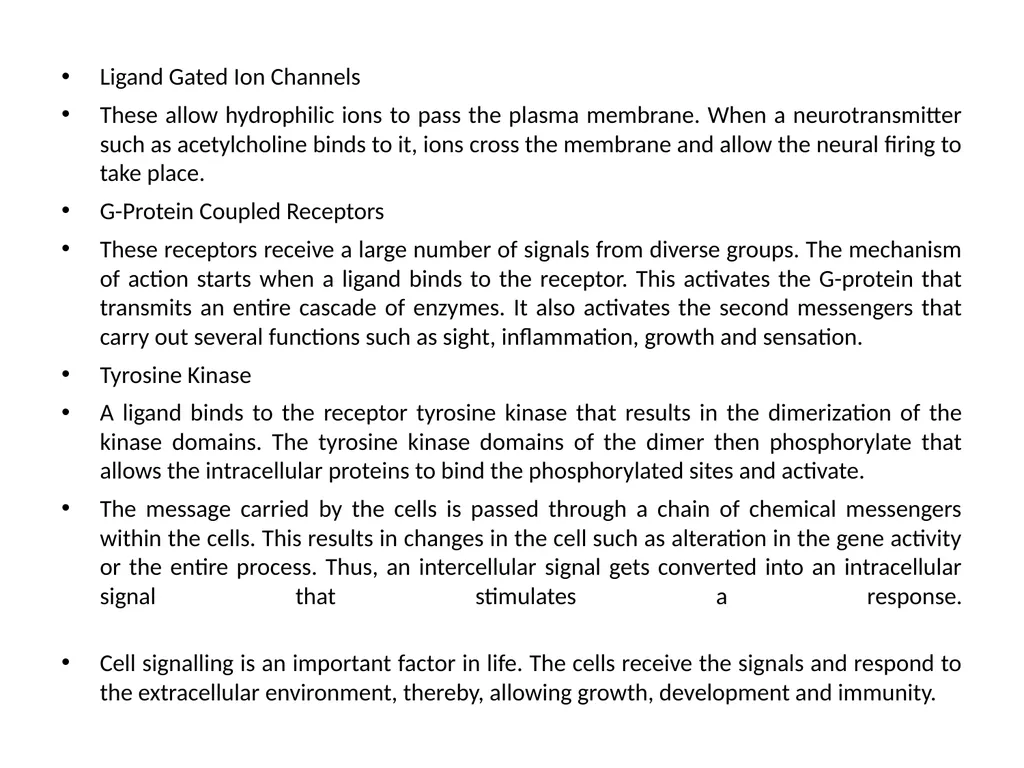
These allow hydrophilic ions to pass the plasma membrane. When a neurotransmitter such as acetylcholine binds to it, ions cross the membrane and allow the neural firing to take place.
G-Protein Coupled Receptors
These receptors receive a large number of signals from diverse groups. The mechanism of action starts when a ligand binds to the receptor. This activates the G-protein that transmits an entire cascade of enzymes. It also activates the second messengers that carry out several functions such as sight, inflammation, growth and sensation.
Tyrosine Kinase
A ligand binds to the receptor tyrosine kinase that results in the dimerization of the kinase domains. The tyrosine kinase domains of the dimer then phosphorylate that allows the intracellular proteins to bind the phosphorylated sites and activate.
The message carried by the cells is passed through a chain of chemical messengers within the cells. This results in changes in the cell such as alteration in the gene activity or the entire process. Thus, an intercellular signal gets converted into an intracellular signal that stimulates a response.
Cell signalling is an important factor in life. The cells receive the signals and respond to the extracellular environment, thereby, allowing growth, development and immunity.<br>
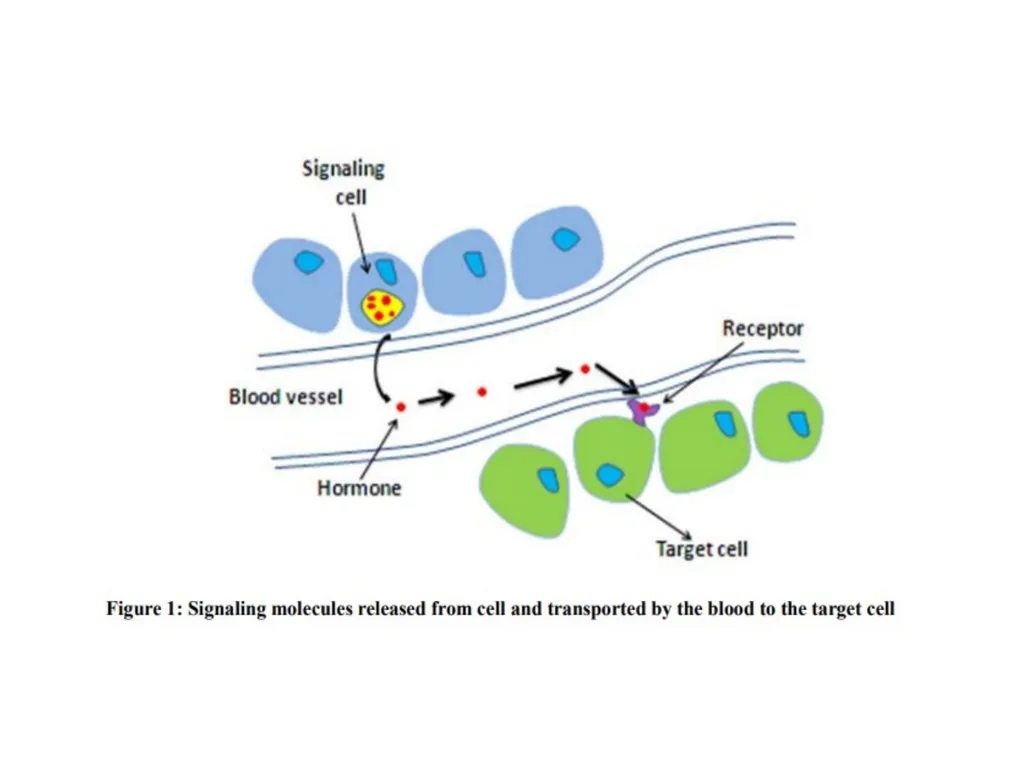
slide4. As living organisms we are constantly receiving and interpreting signals from our environment. These signals can be light, heat, odours, touch or sound. The cells of our bodies are also constantly receiving signals from other cells. These signals are important to keep cells alive and functioning as well as to stimulate important events such as cell division and differentiation. In animals, rapid responses to the changes in the environment are mediated primarily by the nervous system and by hormones including small peptides, small nonpeptide molecules such as the catecholamines (Dopamine, epinephrine, norepinephrine). We have already studied role of hormones like epinephrine, ACTH and norepinephrine etc in signaling events. We shall discuss downstream process when signaling molecule interacts with receptor. We shall also talk about various secondary messengers involved in signaling process. These signaling molecules are released from the cells and they travel through the blood to their specific target cells. Some molecules are transported long distances by the blood while others have more of local effects. Certain membrane-bound proteins on one cell can directly signal an adjacent cell.<br>
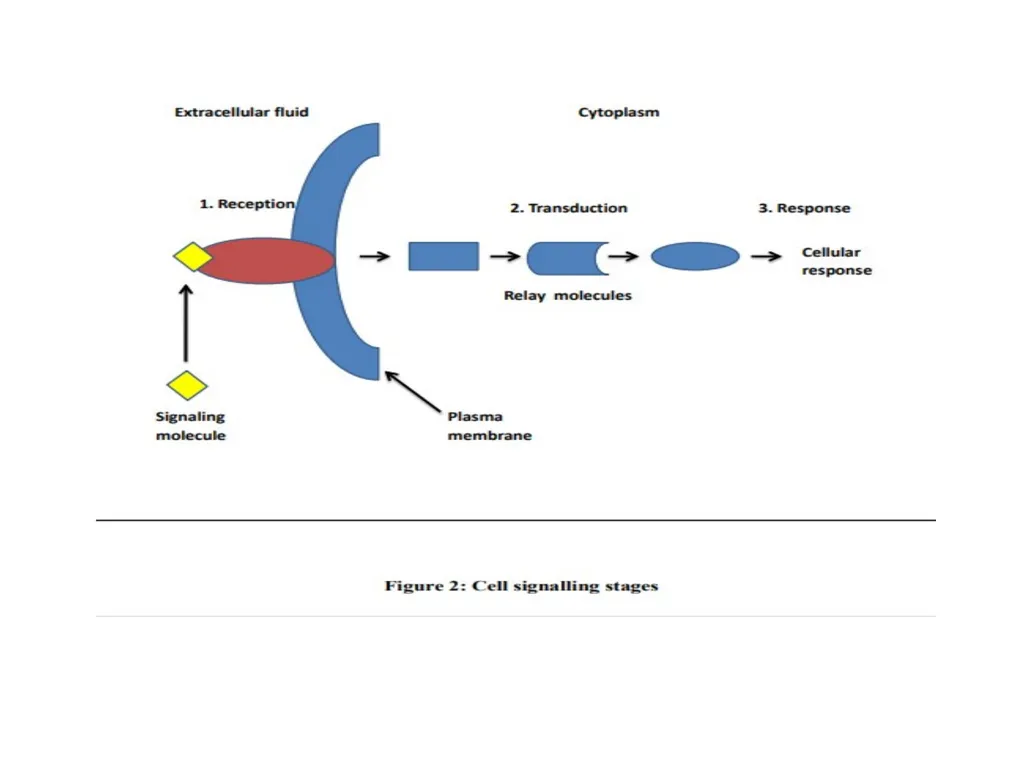
slide6. Cell signaling can be divided into 3 stages: 1. Reception: A cell detects a signaling molecule from the outside of the cell. A signal is detected when the ligand binds to a receptor protein on the surface of the cell or inside the cell. 2. Transduction: When the signaling molecule binds to the receptor, it changes the receptor protein. This change initiates the process of transduction. Each relay molecule in the signal transduction pathway changes the next molecule in the pathway. 3. Response: Finally, the signal triggers a specific cellular response<br>
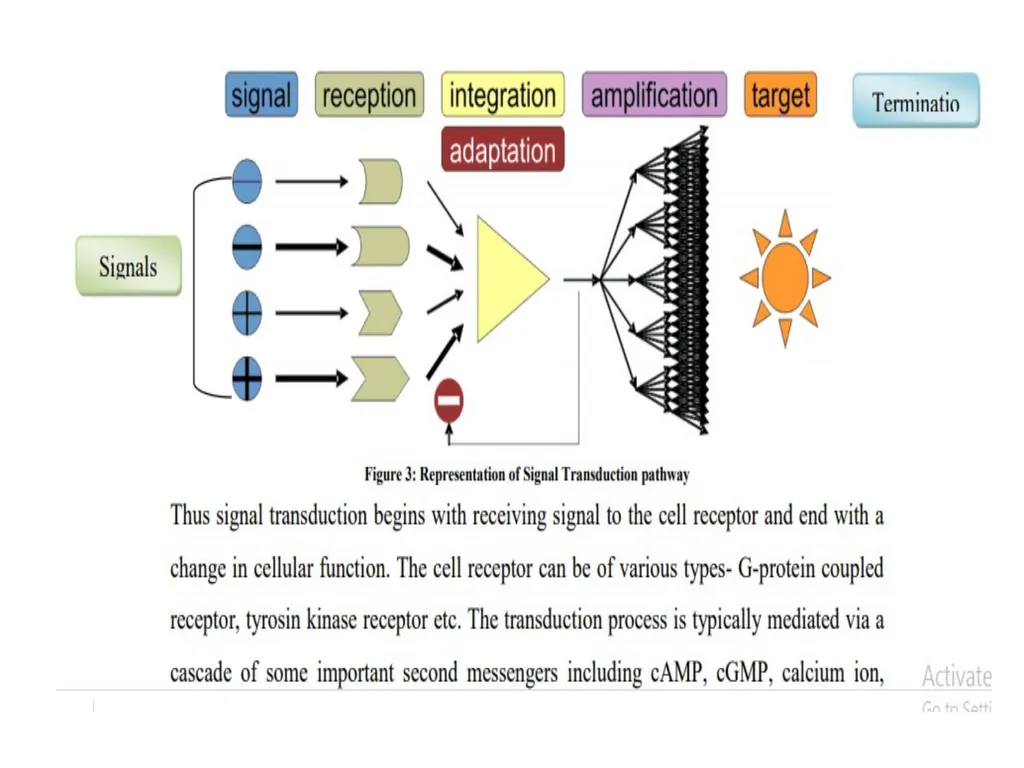
slide8. Signal Transduction: Signal transduction is phenomenon which involves in the transfer of signal from extracellular to intracellular environment through the cell surface receptor protein that stimulate intracellular target enzymes, which may be either directly linked or indirectly coupled to receptors by G proteins. These intracellular enzymes serve as downstream signalling elements that propagate and amplify the signal initiated by ligand binding. Thus, signal transduction pathway allows cells to respond to extracellular environmental signals. These signals can be physical and chemical such as light, oxygen, nutrient, hormones. Figure 3 represents the signal transduction pathway. Signal transduction is the combination of following phenomenon: 1. Signal reception 2. Integration 3. Amplification 4. A target that is affected 5. Termination<br>
slide10. Thus signal transduction begins with receiving signal to the cell receptor and end with a change in cellular function. The cell receptor can be of various types- G-protein coupled receptor, tyrosin kinase receptor etc. The transduction process is typically mediated via a cascade of some important second messengers including cAMP, cGMP, calcium ion, inositol 1, 4, 5-trisphosphate, (IP3), and diacylglycerol (DAG). Second messengers are intracellular molecules that change in concentration in response to environmental signals and involve in conveying information inside the cell.<br>
slide11. Signal transduction pathways act similar to molecular circuit. This pathway depends on following factors during transformation of signal from extracellular environment to intracellular. 1. Signal reception by cell membrane receptor: Some non polar signaling molecules such as estrogens and other steroid hormones are able to cross the bilipid membrane and hence make entry inside the cell. Once inside the cell, these molecules can bind to proteins that interact directly with DNA and involve in regulation of gene transcription. Thus, a chemical signal enters the cell and directly alters gene-expression patterns. However, most of signalling molecules are too large and too polar so they are unable to cross the membrane, hence there is no appropriate transport system. In this case these signaling<br>
slide12. molecules transmit signals through cell surface receptor protein without crossing the cell membrane. We will discuss about cell receptors in upcoming lecture notes. These receptors are intrinsic membrane protein which consist both extracellular and intracellular domain. A binding site present in extracellular domain specifically recognizes the signaling molecule (i.e. well known as ligand). Such binding sites are analogous to enzyme active sites except that no catalysis takes place within them. When these signal molecules comes and bind to binding site on receptor protein in extracellular region then some conformational change occurs in tertiary and quaternary structure of the receptor which results in the drastic change in the intracellular domain of the receptor. These structural changes are not sufficient to yield an appropriate response, because they are restricted to a small number of receptor molecules in the cell membrane. The information embodied by the presence of the ligand, often called the primary messenger, must be transduced into other forms that can alter the biochemistry of the cell.<br>
slide13. 2. Second messengers: Second messengers act as the intermediate molecule that relay signals from receptors on cell surface to target molecule inside cells, in cytoplasm or nucleus. The use of second messengers has several consequences: a) The second messengers are able to diffuse frequently into other compartment of the cell such as nucleus where they can influence gene expression and other process. b) Generation of second messengers leads to amplification of signal. Each signaling molecule is involved in the generation of several second messengers in the cell. Thus, a low concentration of signal in the environment, even as little as a single molecule, can yield a large intracellular signal and response c) Since common second messengers generate in different signaling pathway, thus the coordination of signal transduction is driven by interaction between these pathways. Multiple signaling pathways create both opportunities and potential problems. Interactions between signaling pathways enables the cell to process and interpret multiple inputs differently in different contexts leading to cross-talk. Cross talk between second messengers cause oscillation of various second messengers and also creates biostability between two steady states. Thus cross talk more precisely involves<br>
slide14. in regulation of cell activity than individual independent pathways without cross talk. However, inappropriate cross-talk can cause second messengers to be misinterpreted. 3. Protein phosphorylation: Protein phosphorylation is most common route for transferring information coming through second messenger which involve elicit responses by activating protein kinases. Protein phosphorylation is a posttranslational modification of proteins by phosphorylation at serine, threonine or tyrosine residues by a protein kinase by the addition of a covalently bound phosphate group from ATP.<br>
slide15. 4. Signal termination by protein phosphatase: Signal termination is final step of signal transduction. The well known route for signal termination is by protein phosphatase enzyme. The signalling process must be terminated after signaling process has been initiated and the information has been transduced to affect other cellular processes, because without such termination cells lose their responsiveness to new signals. Additionally, if termination fails in signaling processes, it may lead to uncontrolled cell growth and thus increases the risk of cancer.<br>
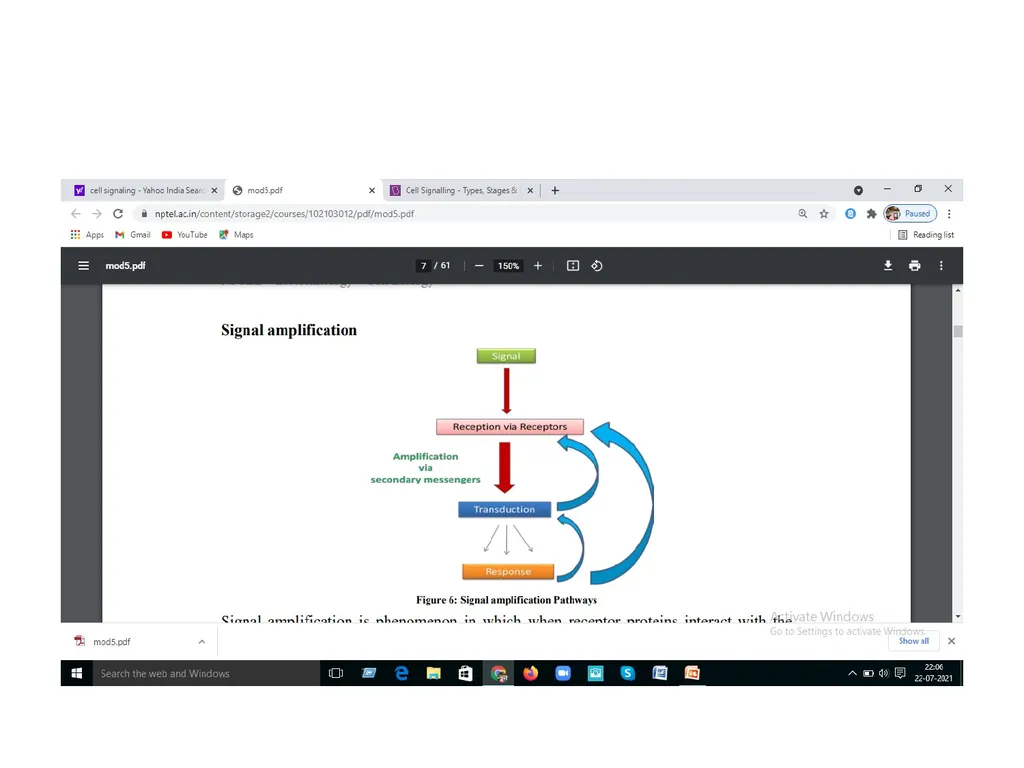
slide17. Signal amplification is phenomenon in which when receptor proteins interact with the signal molecules at the surface of the cell, in most cases signals are relayed to the cytoplasm or the nucleus by second messengers which influences the activity of one or more enzymes or genes inside the cell. However, most signalling molecules are found in such a low concentration that their effect in cytoplasm would be minimal unless the signal was amplified. Therefore, most enzymes linked and G-protein linked receptor use a chain of other protein messenger to amplify the signal as it is being relayed. Thus in case of protein kinase one cell surface receptor activates many G protein molecules. Each G protein activates many adenylyl cyclases. Each cyclic AMP in turn will activate protein kinase which then activates several molecules of a specific enzyme.<br>
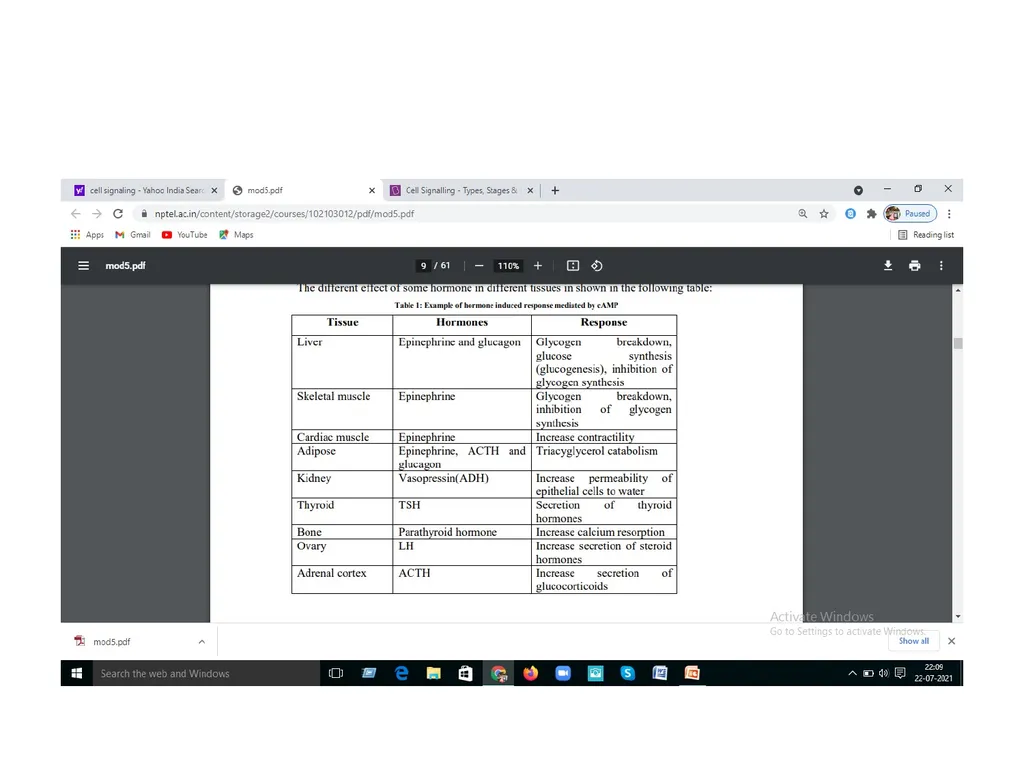
slide18. For example, the binding of a single molecule (such as glycogen or epinephrine) at the cell surface can activate many effector G proteins and an adenylyl cyclase each of which can produce a large number of cAMP messengers in a short period of time. Thus, the production of a second messenger provides a mechanism to greatly amplify the signal generated from the original message. There are many steps in the reaction cascade, amplification of the signal via cAMP molecules which activate protein kinase K which involve in phosphorylation of Ser, Thr and tyrosine of target protein. PKA is tertameric protein which is made up of two catalytic and two regulatory subunits. Binding of cAMP to the regulatory subunits induces a conformational change that leads to dissociation of the catalytic subunits, which elicit formation of enzymatically active form of protein kinase A, are now able to phosphorylate Ser and Thr residues on their target proteins. In signal amplification, each PKA catalytic subunit phosphorylates a large number of phosphorylase kinase molecules, which in turn phosphorylate an even larger number of glycogen phosphorylase molecules, which in turn can catalyze the formation of a much larger number of glucose phosphates. Thus, what begins as a hardly noticeable stimulus at the cell surface is rapidly transformed into a major mobilization of glucose within the cell.<br>
slide2. “Cell signalling is the process by which cells communicate with other cells within their body or with the external environment.”
Cell signalling occurs by several distinct pathways. Multicellular organisms need cell signalling to regulate different functions. E.g. nerve cells in coordinate with muscle cells to help in body movement.
Cell signalling can be intercellular as well as intracellular. Intracellular signals are produced by the same cells that receive the signal. Intercellular signals travel throughout the body. This permits specific glands to produce signals that act on different tissues.
Types of Cell Signalling Molecules
Cell signalling molecules are of the following types:
Intracrine ligands: These are produced by the target cell and bind to the receptor within the cell.
Autocrine ligands: They function internally and on other target cells. For eg., immune cells.
Juxtacrine ligand: These target the adjacent cells.
Paracrine ligands: These target the cells in the vicinity of the original cells. For eg., neurotransmitters
Endocrine ligands: These produce hormones.
Stages of Cell Signalling
Cell signalling takes place in the following three stages:
Binding of the signal molecule to the receptor.
Signal transduction, where the chemical signals activate the enzymes.
Finally, the response is observed
Cell Signalling Pathways
The cell signalling pathways are either mechanical or biochemical. The cell signalling is categorized based on the distance it must travel. For instance, hydrophobic ligands include steroids and vitamin D3. These can diffuse across the plasma membrane of target cells and bind to the intracellular cells.
On the contrary, hydrophilic ligands bind to the receptors on the surface of the cell and are amino acid-derived. These allow the signals to pass through the aqueous environment of our body without any assistance.
Cell Signalling Function
Intracellular Receptors
Intracellular receptors are common types of cell signalling receptor located within the cell in the cytoplasm. The intracellular receptors are of two types:
Nuclear receptors
Cytoplasmic receptors
Nuclear receptors are special classes of proteins with diverse DNA binding domains that form a complex with thyroid hormones that enter the nucleus and regulate the transcription of a gene.<br>
slide3. Ligand Gated Ion Channels
These allow hydrophilic ions to pass the plasma membrane. When a neurotransmitter such as acetylcholine binds to it, ions cross the membrane and allow the neural firing to take place.
G-Protein Coupled Receptors
These receptors receive a large number of signals from diverse groups. The mechanism of action starts when a ligand binds to the receptor. This activates the G-protein that transmits an entire cascade of enzymes. It also activates the second messengers that carry out several functions such as sight, inflammation, growth and sensation.
Tyrosine Kinase
A ligand binds to the receptor tyrosine kinase that results in the dimerization of the kinase domains. The tyrosine kinase domains of the dimer then phosphorylate that allows the intracellular proteins to bind the phosphorylated sites and activate.
The message carried by the cells is passed through a chain of chemical messengers within the cells. This results in changes in the cell such as alteration in the gene activity or the entire process. Thus, an intercellular signal gets converted into an intracellular signal that stimulates a response.
Cell signalling is an important factor in life. The cells receive the signals and respond to the extracellular environment, thereby, allowing growth, development and immunity.<br>
slide4. As living organisms we are constantly receiving and interpreting signals from our environment. These signals can be light, heat, odours, touch or sound. The cells of our bodies are also constantly receiving signals from other cells. These signals are important to keep cells alive and functioning as well as to stimulate important events such as cell division and differentiation. In animals, rapid responses to the changes in the environment are mediated primarily by the nervous system and by hormones including small peptides, small nonpeptide molecules such as the catecholamines (Dopamine, epinephrine, norepinephrine). We have already studied role of hormones like epinephrine, ACTH and norepinephrine etc in signaling events. We shall discuss downstream process when signaling molecule interacts with receptor. We shall also talk about various secondary messengers involved in signaling process. These signaling molecules are released from the cells and they travel through the blood to their specific target cells. Some molecules are transported long distances by the blood while others have more of local effects. Certain membrane-bound proteins on one cell can directly signal an adjacent cell.<br>
slide6. Cell signaling can be divided into 3 stages: 1. Reception: A cell detects a signaling molecule from the outside of the cell. A signal is detected when the ligand binds to a receptor protein on the surface of the cell or inside the cell. 2. Transduction: When the signaling molecule binds to the receptor, it changes the receptor protein. This change initiates the process of transduction. Each relay molecule in the signal transduction pathway changes the next molecule in the pathway. 3. Response: Finally, the signal triggers a specific cellular response<br>
slide8. Signal Transduction: Signal transduction is phenomenon which involves in the transfer of signal from extracellular to intracellular environment through the cell surface receptor protein that stimulate intracellular target enzymes, which may be either directly linked or indirectly coupled to receptors by G proteins. These intracellular enzymes serve as downstream signalling elements that propagate and amplify the signal initiated by ligand binding. Thus, signal transduction pathway allows cells to respond to extracellular environmental signals. These signals can be physical and chemical such as light, oxygen, nutrient, hormones. Figure 3 represents the signal transduction pathway. Signal transduction is the combination of following phenomenon: 1. Signal reception 2. Integration 3. Amplification 4. A target that is affected 5. Termination<br>
slide10. Thus signal transduction begins with receiving signal to the cell receptor and end with a change in cellular function. The cell receptor can be of various types- G-protein coupled receptor, tyrosin kinase receptor etc. The transduction process is typically mediated via a cascade of some important second messengers including cAMP, cGMP, calcium ion, inositol 1, 4, 5-trisphosphate, (IP3), and diacylglycerol (DAG). Second messengers are intracellular molecules that change in concentration in response to environmental signals and involve in conveying information inside the cell.<br>
slide11. Signal transduction pathways act similar to molecular circuit. This pathway depends on following factors during transformation of signal from extracellular environment to intracellular. 1. Signal reception by cell membrane receptor: Some non polar signaling molecules such as estrogens and other steroid hormones are able to cross the bilipid membrane and hence make entry inside the cell. Once inside the cell, these molecules can bind to proteins that interact directly with DNA and involve in regulation of gene transcription. Thus, a chemical signal enters the cell and directly alters gene-expression patterns. However, most of signalling molecules are too large and too polar so they are unable to cross the membrane, hence there is no appropriate transport system. In this case these signaling<br>
slide12. molecules transmit signals through cell surface receptor protein without crossing the cell membrane. We will discuss about cell receptors in upcoming lecture notes. These receptors are intrinsic membrane protein which consist both extracellular and intracellular domain. A binding site present in extracellular domain specifically recognizes the signaling molecule (i.e. well known as ligand). Such binding sites are analogous to enzyme active sites except that no catalysis takes place within them. When these signal molecules comes and bind to binding site on receptor protein in extracellular region then some conformational change occurs in tertiary and quaternary structure of the receptor which results in the drastic change in the intracellular domain of the receptor. These structural changes are not sufficient to yield an appropriate response, because they are restricted to a small number of receptor molecules in the cell membrane. The information embodied by the presence of the ligand, often called the primary messenger, must be transduced into other forms that can alter the biochemistry of the cell.<br>
slide13. 2. Second messengers: Second messengers act as the intermediate molecule that relay signals from receptors on cell surface to target molecule inside cells, in cytoplasm or nucleus. The use of second messengers has several consequences: a) The second messengers are able to diffuse frequently into other compartment of the cell such as nucleus where they can influence gene expression and other process. b) Generation of second messengers leads to amplification of signal. Each signaling molecule is involved in the generation of several second messengers in the cell. Thus, a low concentration of signal in the environment, even as little as a single molecule, can yield a large intracellular signal and response c) Since common second messengers generate in different signaling pathway, thus the coordination of signal transduction is driven by interaction between these pathways. Multiple signaling pathways create both opportunities and potential problems. Interactions between signaling pathways enables the cell to process and interpret multiple inputs differently in different contexts leading to cross-talk. Cross talk between second messengers cause oscillation of various second messengers and also creates biostability between two steady states. Thus cross talk more precisely involves<br>
slide14. in regulation of cell activity than individual independent pathways without cross talk. However, inappropriate cross-talk can cause second messengers to be misinterpreted. 3. Protein phosphorylation: Protein phosphorylation is most common route for transferring information coming through second messenger which involve elicit responses by activating protein kinases. Protein phosphorylation is a posttranslational modification of proteins by phosphorylation at serine, threonine or tyrosine residues by a protein kinase by the addition of a covalently bound phosphate group from ATP.<br>
slide15. 4. Signal termination by protein phosphatase: Signal termination is final step of signal transduction. The well known route for signal termination is by protein phosphatase enzyme. The signalling process must be terminated after signaling process has been initiated and the information has been transduced to affect other cellular processes, because without such termination cells lose their responsiveness to new signals. Additionally, if termination fails in signaling processes, it may lead to uncontrolled cell growth and thus increases the risk of cancer.<br>
slide17. Signal amplification is phenomenon in which when receptor proteins interact with the signal molecules at the surface of the cell, in most cases signals are relayed to the cytoplasm or the nucleus by second messengers which influences the activity of one or more enzymes or genes inside the cell. However, most signalling molecules are found in such a low concentration that their effect in cytoplasm would be minimal unless the signal was amplified. Therefore, most enzymes linked and G-protein linked receptor use a chain of other protein messenger to amplify the signal as it is being relayed. Thus in case of protein kinase one cell surface receptor activates many G protein molecules. Each G protein activates many adenylyl cyclases. Each cyclic AMP in turn will activate protein kinase which then activates several molecules of a specific enzyme.<br>
slide18. For example, the binding of a single molecule (such as glycogen or epinephrine) at the cell surface can activate many effector G proteins and an adenylyl cyclase each of which can produce a large number of cAMP messengers in a short period of time. Thus, the production of a second messenger provides a mechanism to greatly amplify the signal generated from the original message. There are many steps in the reaction cascade, amplification of the signal via cAMP molecules which activate protein kinase K which involve in phosphorylation of Ser, Thr and tyrosine of target protein. PKA is tertameric protein which is made up of two catalytic and two regulatory subunits. Binding of cAMP to the regulatory subunits induces a conformational change that leads to dissociation of the catalytic subunits, which elicit formation of enzymatically active form of protein kinase A, are now able to phosphorylate Ser and Thr residues on their target proteins. In signal amplification, each PKA catalytic subunit phosphorylates a large number of phosphorylase kinase molecules, which in turn phosphorylate an even larger number of glycogen phosphorylase molecules, which in turn can catalyze the formation of a much larger number of glucose phosphates. Thus, what begins as a hardly noticeable stimulus at the cell surface is rapidly transformed into a major mobilization of glucose within the cell.<br>