CERN Complex Emotional and Relational Needs Personality Disorders HTC What are personality disorders? ACEs are associated with personality disorders Abuse, Neglect, and other stressful family environments impact a childs emotional and
"CERN Complex Emotional and Relational Needs" is the property of its rightful owner. Permission is granted to
download and print the materials on this website for personal, non-commercial use only, and to display it
on your personal computer provided you do not modify the materials and that you retain all copyright
notices contained in the materials. By downloading content from our website, you accept the terms of this
agreement.
Presentation Transcript
01
CERN Complex Emotional and Relational Needs ‘Personality Disorders’ HTC<br>
02
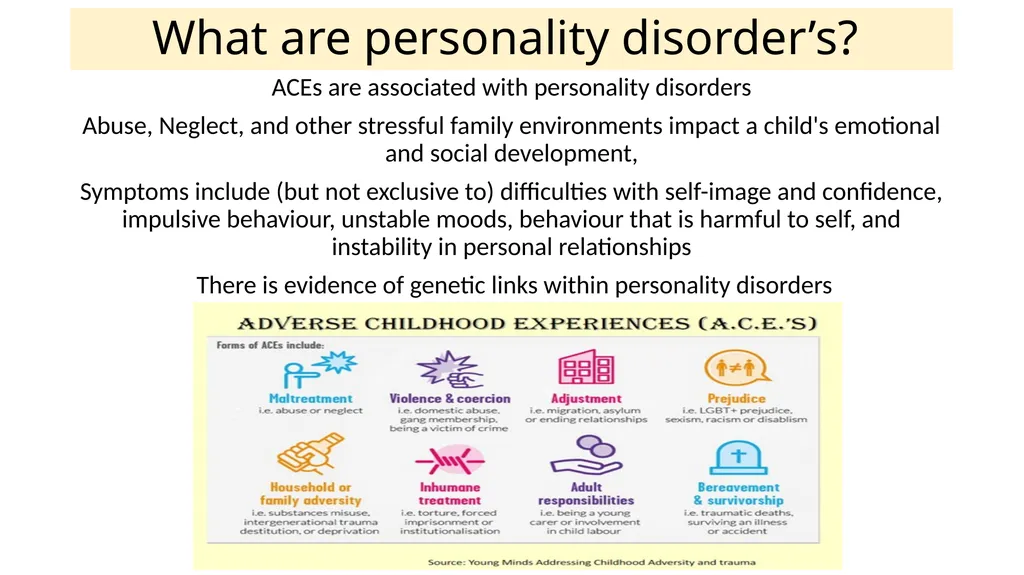
What are personality disorder’s? ACEs are associated with personality disorders
Abuse, Neglect, and other stressful family environments impact a child's emotional and social development,
Symptoms include (but not exclusive to) difficulties with self-image and confidence, impulsive behaviour, unstable moods, behaviour that is harmful to self, and instability in personal relationships
There is evidence of genetic links within personality disorders<br>
Symptoms presenting in adolescence and early adulthood
Rarely diagnosed in someone under 18
DSM-5 now allows this diagnosis if the features have been present for at least one year.
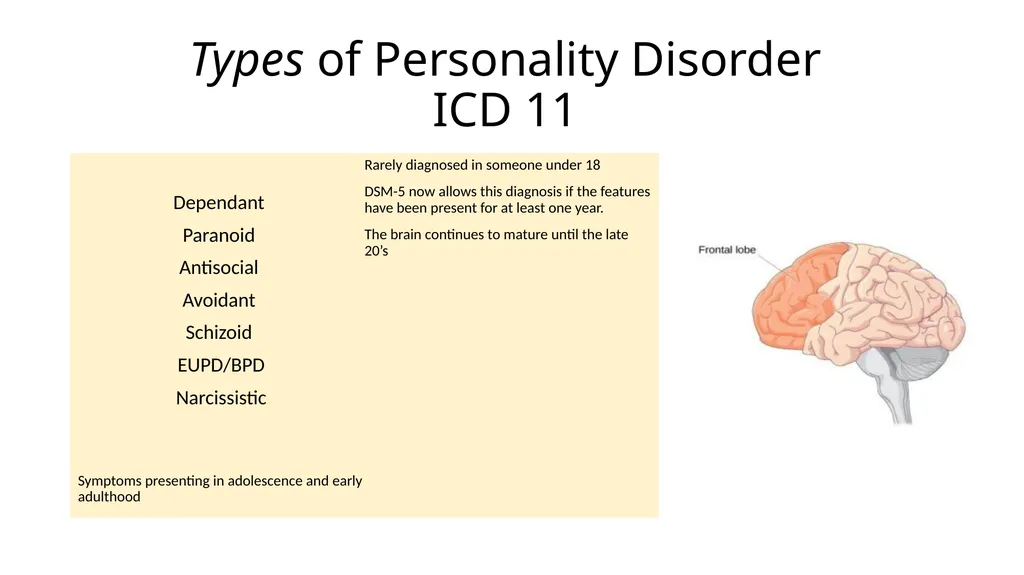
The brain continues to mature until the late 20’s<br>
04
Frontal lobe Development Movement: Controls voluntary movement
Language: Controls expressive language
Executive functions: Controls planning, organizing, problem solving, and more
Social skills: Helps you understand and interact with others
Personality: Controls how you behave and interact with others
Emotions: Controls emotional regulation and impulse control
Short-term memory: Helps you remember things<br>
05
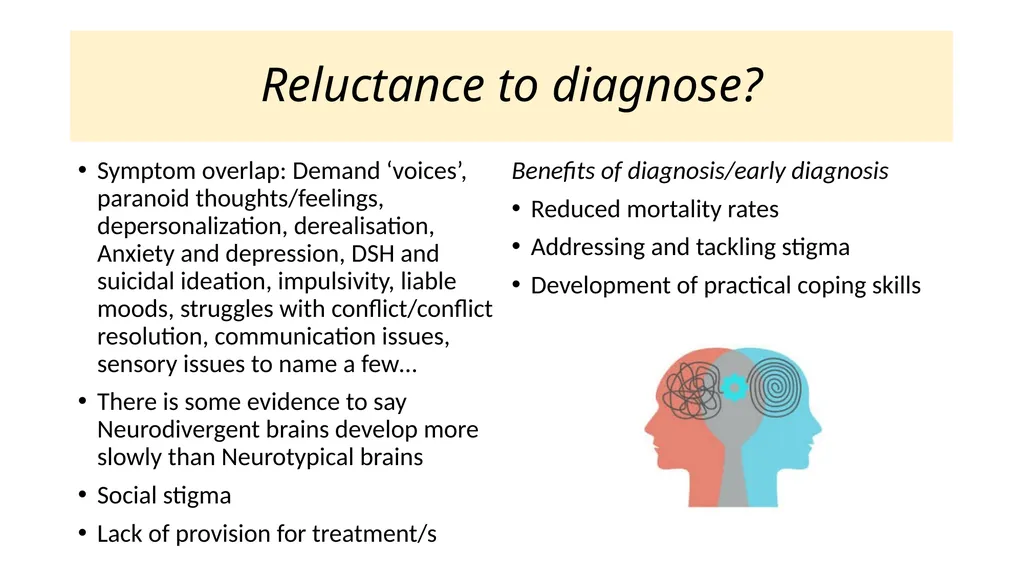
Reluctance to diagnose? Symptom overlap: Demand ‘voices’, paranoid thoughts/feelings, depersonalization, derealisation, Anxiety and depression, DSH and suicidal ideation, impulsivity, liable moods, struggles with conflict/conflict resolution, communication issues, sensory issues to name a few…
There is some evidence to say Neurodivergent brains develop more slowly than Neurotypical brains
Social stigma
Lack of provision for treatment/s
Benefits of diagnosis/early diagnosis
Reduced mortality rates
Addressing and tackling stigma
Development of practical coping skills<br>
06
Treatment DBT
CBT
CAT
Psychodynamic therapy
Mentalisation Therapy
Schema therapy
Care planning/risk assessment in primary care
Peer support/lived experience: NHS is actively trying to incorporate more lived experience and peer support into the pathway. There is a lack of funding.
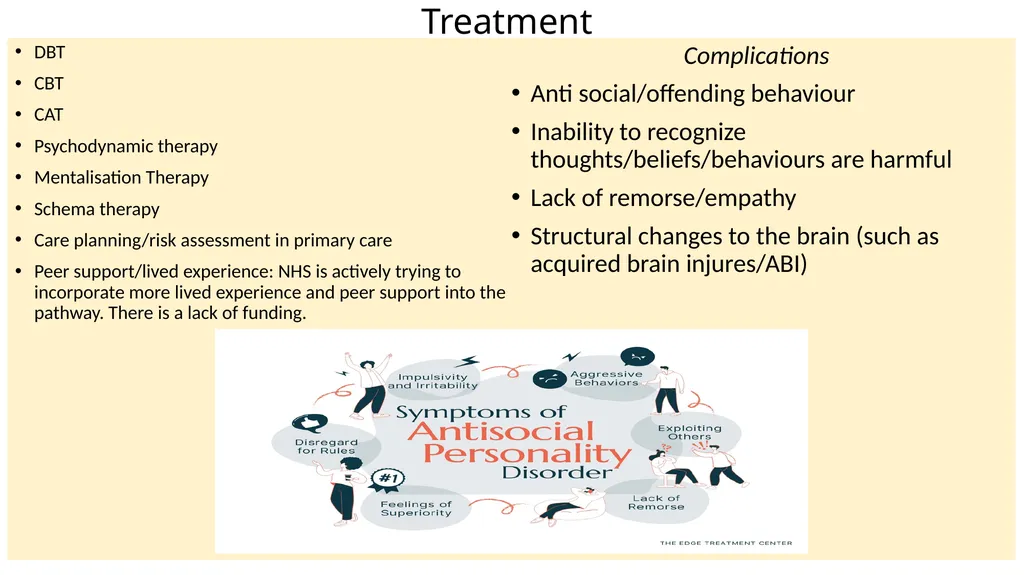
Complications
Anti social/offending behaviour
Inability to recognize thoughts/beliefs/behaviours are harmful
Lack of remorse/empathy
Structural changes to the brain (such as acquired brain injures/ABI)<br>
07
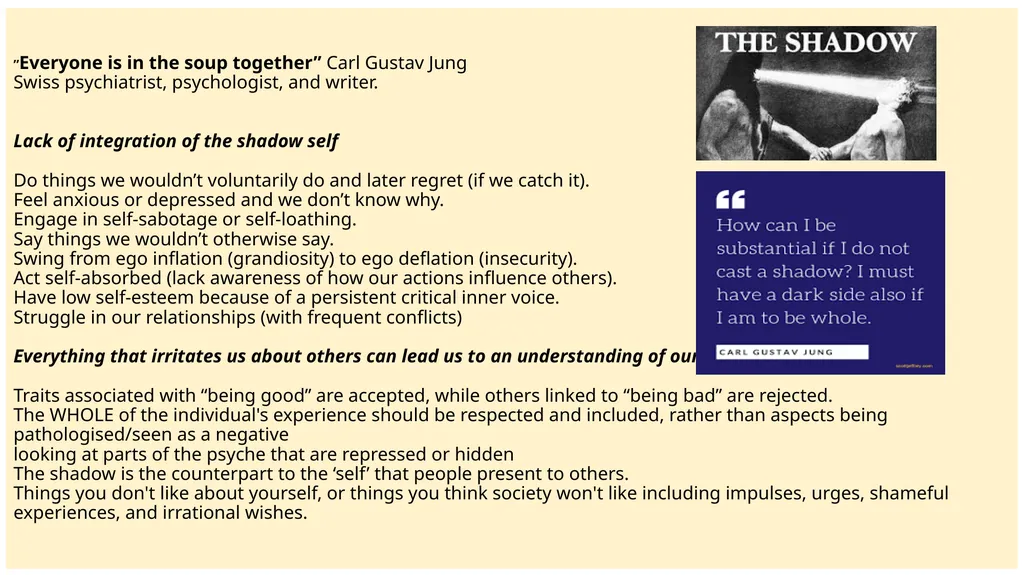
”Everyone is in the soup together” Carl Gustav Jung Swiss psychiatrist, psychologist, and writer. Lack of integration of the shadow self Do things we wouldn’t voluntarily do and later regret (if we catch it). Feel anxious or depressed and we don’t know why. Engage in self-sabotage or self-loathing. Say things we wouldn’t otherwise say. Swing from ego inflation (grandiosity) to ego deflation (insecurity). Act self-absorbed (lack awareness of how our actions influence others). Have low self-esteem because of a persistent critical inner voice. Struggle in our relationships (with frequent conflicts) Everything that irritates us about others can lead us to an understanding of ourselves. Traits associated with “being good” are accepted, while others linked to “being bad” are rejected. The WHOLE of the individual's experience should be respected and included, rather than aspects being pathologised/seen as a negative looking at parts of the psyche that are repressed or hidden The shadow is the counterpart to the ‘self’ that people present to others. Things you don't like about yourself, or things you think society won't like including impulses, urges, shameful experiences, and irrational wishes.<br>
08
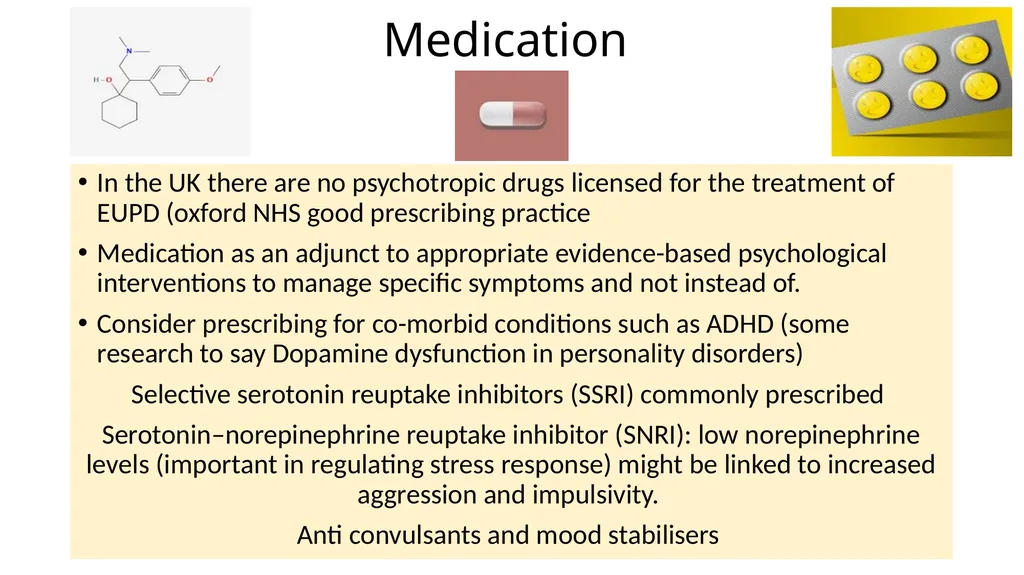
Medication In the UK there are no psychotropic drugs licensed for the treatment of EUPD (oxford NHS good prescribing practice
Medication as an adjunct to appropriate evidence-based psychological interventions to manage specific symptoms and not instead of.
Consider prescribing for co-morbid conditions such as ADHD (some research to say Dopamine dysfunction in personality disorders)
Selective serotonin reuptake inhibitors (SSRI) commonly prescribed
Serotonin–norepinephrine reuptake inhibitor (SNRI): low norepinephrine levels (important in regulating stress response) might be linked to increased aggression and impulsivity.
Anti convulsants and mood stabilisers<br>