
Challenges in Scientific Publications as Observed
TA
Published · 36 slides · 0 views
1 / 1





Description
Challenges in Scientific Publications as Observed by the Emerging Transformations of Artificial Intelligence Kaiser Jamil Professor and Head of Department Bhagwan Mahavir Medical Research Centre, Hyderabad, India First a little bit about
Related Topics
Share
Embed code
Download this presentation From Below
"Challenges in Scientific Publications as Observed" is the property of its rightful owner. Permission is granted to download and print the materials on this website for personal, non-commercial use only, and to display it on your personal computer provided you do not modify the materials and that you retain all copyright notices contained in the materials. By downloading content from our website, you accept the terms of this agreement.
Presentation Transcript
01
Challenges in Scientific Publications as Observed by the Emerging Transformations of Artificial Intelligence Kaiser Jamil
Professor and Head of Department Bhagwan Mahavir Medical Research Centre, Hyderabad, India<br>
Professor and Head of Department Bhagwan Mahavir Medical Research Centre, Hyderabad, India<br>
02
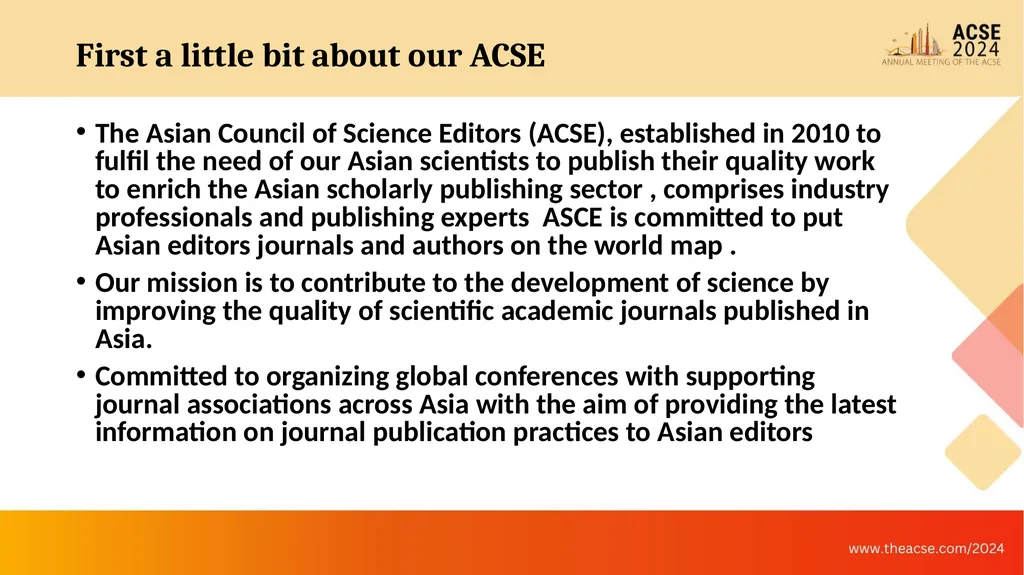
First a little bit about our ACSE The Asian Council of Science Editors (ACSE), established in 2010 to fulfil the need of our Asian scientists to publish their quality work to enrich the Asian scholarly publishing sector , comprises industry professionals and publishing experts ASCE is committed to put Asian editors journals and authors on the world map .
Our mission is to contribute to the development of science by improving the quality of scientific academic journals published in Asia.
Committed to organizing global conferences with supporting journal associations across Asia with the aim of providing the latest information on journal publication practices to Asian editors<br>
Our mission is to contribute to the development of science by improving the quality of scientific academic journals published in Asia.
Committed to organizing global conferences with supporting journal associations across Asia with the aim of providing the latest information on journal publication practices to Asian editors<br>
03
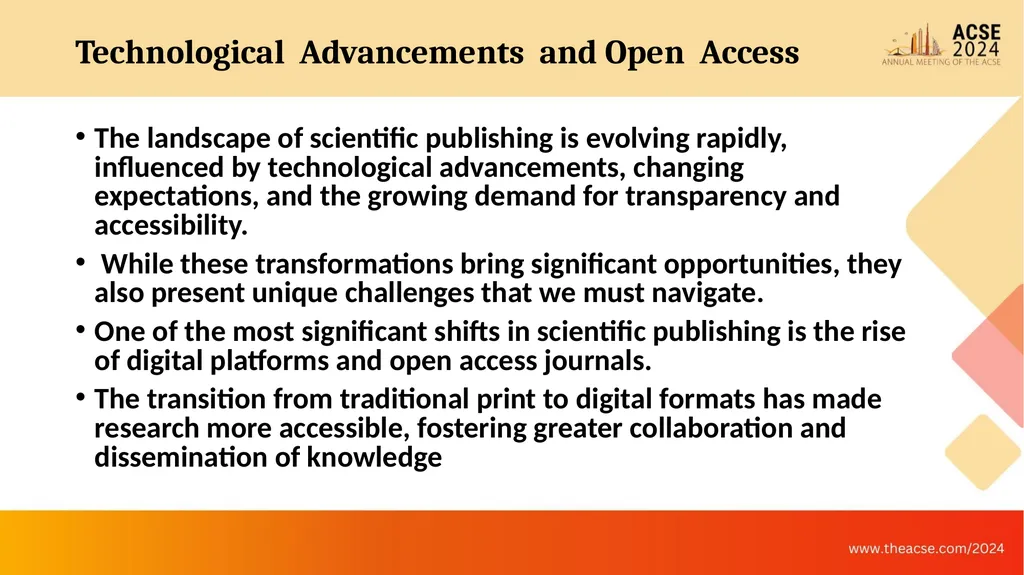
Technological Advancements and Open Access The landscape of scientific publishing is evolving rapidly, influenced by technological advancements, changing expectations, and the growing demand for transparency and accessibility.
While these transformations bring significant opportunities, they also present unique challenges that we must navigate.
One of the most significant shifts in scientific publishing is the rise of digital platforms and open access journals.
The transition from traditional print to digital formats has made research more accessible, fostering greater collaboration and dissemination of knowledge<br>
While these transformations bring significant opportunities, they also present unique challenges that we must navigate.
One of the most significant shifts in scientific publishing is the rise of digital platforms and open access journals.
The transition from traditional print to digital formats has made research more accessible, fostering greater collaboration and dissemination of knowledge<br>
04
Challenges The transition from traditional print to digital formats has made research more accessible, fostering greater collaboration and dissemination of knowledge
This shift also brings challenges.
The proliferation of predatory journals, which exploit the open access model for profit without proper peer review, undermines the credibility of scientific literature.
As researchers, we must remain vigilant, ensuring that our work is published in reputable journals that adhere to rigorous peer review standards.<br>
This shift also brings challenges.
The proliferation of predatory journals, which exploit the open access model for profit without proper peer review, undermines the credibility of scientific literature.
As researchers, we must remain vigilant, ensuring that our work is published in reputable journals that adhere to rigorous peer review standards.<br>
05
Peer Reviewed Journals As of recent estimates, there are over 30,000 active peer-reviewed journals globally.
These journals cover a wide range of disciplines, from medicine and engineering to social sciences and humanities.<br>
These journals cover a wide range of disciplines, from medicine and engineering to social sciences and humanities.<br>
06
Predatory Journals The number of predatory journals has been a growing concern in the academic community.
As of recent estimates, there are around 15,000 predatory journals
These journals often engage in unethical practices such as charging high fees without providing proper editorial services or peer review, and they can significantly undermine the quality and credibility of scientific research1.
It’s important for researchers to be vigilant and discerning when choosing where to publish their work to avoid these predatory practices<br>
As of recent estimates, there are around 15,000 predatory journals
These journals often engage in unethical practices such as charging high fees without providing proper editorial services or peer review, and they can significantly undermine the quality and credibility of scientific research1.
It’s important for researchers to be vigilant and discerning when choosing where to publish their work to avoid these predatory practices<br>
07
Directory of Open Access Journals (DOAJ) The DOAJ is a comprehensive index of open access journals from around the world.
It aims to increase the visibility and ease of use of open access scientific and scholarly journals, thereby promoting their increased usage and impact.
Here are some key points about DOAJ:
Coverage: It includes over 20,000 journals from 134 countries, covering a wide range of disciplines<br>
It aims to increase the visibility and ease of use of open access scientific and scholarly journals, thereby promoting their increased usage and impact.
Here are some key points about DOAJ:
Coverage: It includes over 20,000 journals from 134 countries, covering a wide range of disciplines<br>
08
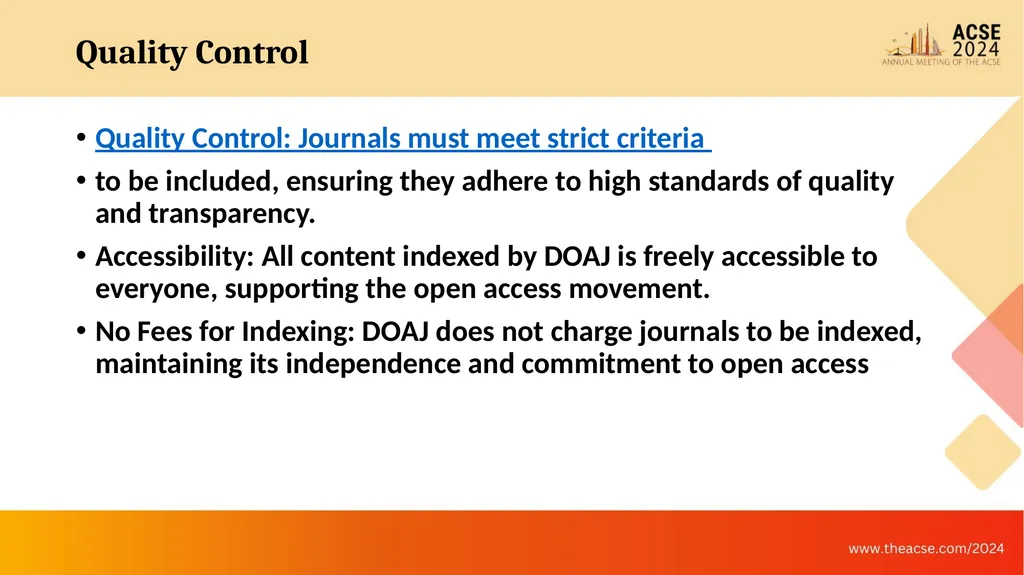
Quality Control Quality Control: Journals must meet strict criteria
to be included, ensuring they adhere to high standards of quality and transparency.
Accessibility: All content indexed by DOAJ is freely accessible to everyone, supporting the open access movement.
No Fees for Indexing: DOAJ does not charge journals to be indexed, maintaining its independence and commitment to open access<br>
to be included, ensuring they adhere to high standards of quality and transparency.
Accessibility: All content indexed by DOAJ is freely accessible to everyone, supporting the open access movement.
No Fees for Indexing: DOAJ does not charge journals to be indexed, maintaining its independence and commitment to open access<br>
09
JCR, Managed by Clarivate Analytics Journal Citation Reports, managed by Clarivate Analytics, provides
a systematic and objective means to evaluate the world’s leading journals. It offers a variety of metrics to help researchers identify the most impactful journals in their fields
Impact Factor: JCR is best known for its Journal Impact Factor (JIF), which measures the average number of citations to articles published in a journal2.
Coverage: It includes journals from a wide range of disciplines, providing comprehensive coverage of the most influential research2.
Open Access Data: JCR also provides data on open access articles, helping to increase transparency around how these articles contribute to a journal’s citations2.
Citable Items: It counts all materials indexed as articles or reviews in Web of Science as citable items, representing the scholarly contribution of a journal<br>
a systematic and objective means to evaluate the world’s leading journals. It offers a variety of metrics to help researchers identify the most impactful journals in their fields
Impact Factor: JCR is best known for its Journal Impact Factor (JIF), which measures the average number of citations to articles published in a journal2.
Coverage: It includes journals from a wide range of disciplines, providing comprehensive coverage of the most influential research2.
Open Access Data: JCR also provides data on open access articles, helping to increase transparency around how these articles contribute to a journal’s citations2.
Citable Items: It counts all materials indexed as articles or reviews in Web of Science as citable items, representing the scholarly contribution of a journal<br>
10
Both DOAJ and JCR play crucial roles in the academic publishing landscape, helping researchers find reputable journals and understand their impact.<br>
11
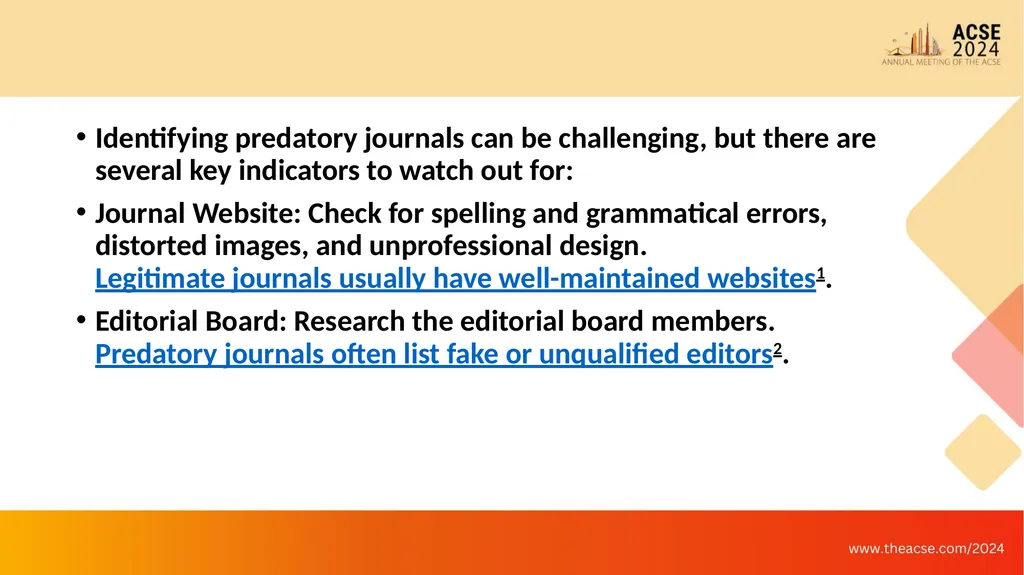
Identifying predatory journals can be challenging, but there are several key indicators to watch out for:
Journal Website: Check for spelling and grammatical errors, distorted images, and unprofessional design. Legitimate journals usually have well-maintained websites1.
Editorial Board: Research the editorial board members. Predatory journals often list fake or unqualified editors2.<br>
Journal Website: Check for spelling and grammatical errors, distorted images, and unprofessional design. Legitimate journals usually have well-maintained websites1.
Editorial Board: Research the editorial board members. Predatory journals often list fake or unqualified editors2.<br>
12
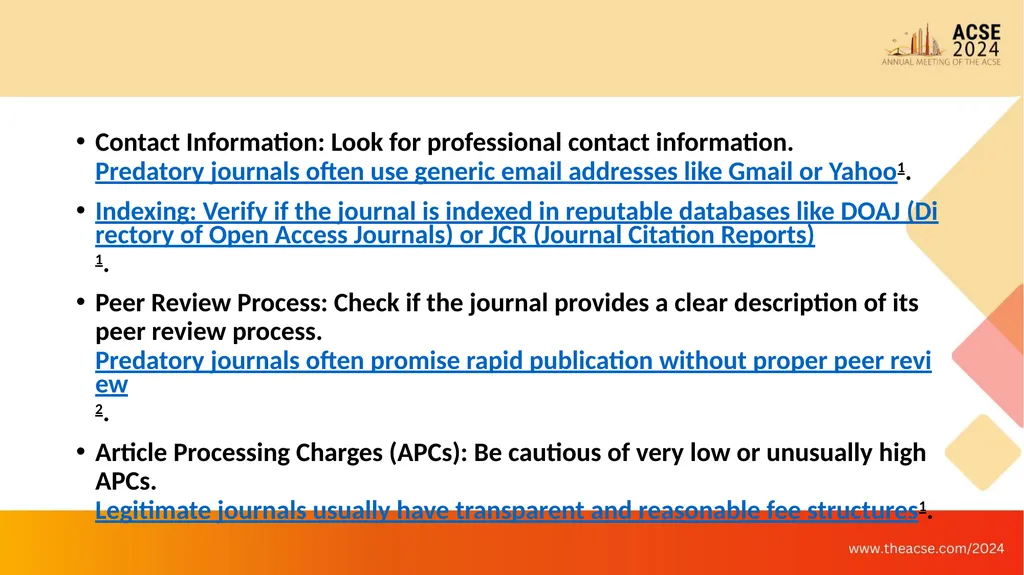
Contact Information: Look for professional contact information. Predatory journals often use generic email addresses like Gmail or Yahoo1.
Indexing: Verify if the journal is indexed in reputable databases like DOAJ (Directory of Open Access Journals) or JCR (Journal Citation Reports)1.
Peer Review Process: Check if the journal provides a clear description of its peer review process. Predatory journals often promise rapid publication without proper peer review2.
Article Processing Charges (APCs): Be cautious of very low or unusually high APCs. Legitimate journals usually have transparent and reasonable fee structures1.<br>
Indexing: Verify if the journal is indexed in reputable databases like DOAJ (Directory of Open Access Journals) or JCR (Journal Citation Reports)1.
Peer Review Process: Check if the journal provides a clear description of its peer review process. Predatory journals often promise rapid publication without proper peer review2.
Article Processing Charges (APCs): Be cautious of very low or unusually high APCs. Legitimate journals usually have transparent and reasonable fee structures1.<br>
13
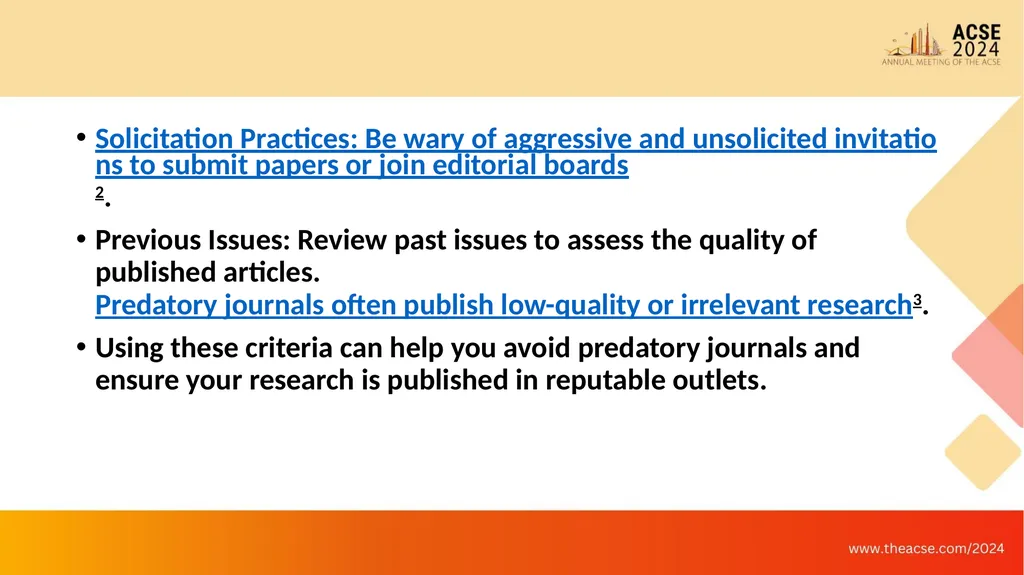
Solicitation Practices: Be wary of aggressive and unsolicited invitations to submit papers or join editorial boards2.
Previous Issues: Review past issues to assess the quality of published articles. Predatory journals often publish low-quality or irrelevant research3.
Using these criteria can help you avoid predatory journals and ensure your research is published in reputable outlets.<br>
Previous Issues: Review past issues to assess the quality of published articles. Predatory journals often publish low-quality or irrelevant research3.
Using these criteria can help you avoid predatory journals and ensure your research is published in reputable outlets.<br>
14
When it comes to AI-driven journals, the field is growing rapidly.
For instance, the Scopus database, which is one of the largest abstract and citation databases, includes 323 journals specifically focused on artificial intelligence
This number is part of a broader trend where AI is increasingly being integrated into various research domains, not just as a subject of study but also as a tool to assist in the peer review process<br>
For instance, the Scopus database, which is one of the largest abstract and citation databases, includes 323 journals specifically focused on artificial intelligence
This number is part of a broader trend where AI is increasingly being integrated into various research domains, not just as a subject of study but also as a tool to assist in the peer review process<br>
15
Interdisciplinary Research and Collaboration The increasing complexity of scientific problems requires interdisciplinary approaches and collaboration across fields.
While this is a positive development, it also poses challenges in terms of communication and coordination.
Different disciplines have varying methodologies, terminologies, and publication norms, which can create barriers to effective collaboration.
Developing common frameworks and fostering interdisciplinary training can help bridge these gaps, facilitating more robust and innovative research.<br>
While this is a positive development, it also poses challenges in terms of communication and coordination.
Different disciplines have varying methodologies, terminologies, and publication norms, which can create barriers to effective collaboration.
Developing common frameworks and fostering interdisciplinary training can help bridge these gaps, facilitating more robust and innovative research.<br>
16
The Evolving Landscape of Scientific Publishing and the
Transformative Role of Artificial Intelligence Artificial intelligence (AI) is the practice of designing computer systems to make intelligent decisions based on context rather than direct input. It is important to understand that AI systems always behave according to rules that have been programmed.
AI represents a branch of computer science that aims to create machines capable of performing tasks that typically require human intelligence.
These smart devices can be trained using machine learning techniques and algorithms. These devices can process large volumes of information quickly, suggest possible solutions to problems, and possibly make autonomous decisions.<br>
Transformative Role of Artificial Intelligence Artificial intelligence (AI) is the practice of designing computer systems to make intelligent decisions based on context rather than direct input. It is important to understand that AI systems always behave according to rules that have been programmed.
AI represents a branch of computer science that aims to create machines capable of performing tasks that typically require human intelligence.
These smart devices can be trained using machine learning techniques and algorithms. These devices can process large volumes of information quickly, suggest possible solutions to problems, and possibly make autonomous decisions.<br>
17
History - and Robots for Human Assistance The first time artificial intelligence was used in scientific research and development was in the 1940s when AI pioneer Alan Turing developed a computer program to help crack the Enigma code during World War II. Ever since then, AI has been gradually making its way into more and more scientific fields.
Today, AI is used in several scientific fields and as human support robots.
The potential applications of AI in scientific research and development are vast and only beginning to be explored. With every successful use case, AI is helping scientists make faster and better discoveries, which will have a broad and positive impact on multiple aspects of society.<br>
Today, AI is used in several scientific fields and as human support robots.
The potential applications of AI in scientific research and development are vast and only beginning to be explored. With every successful use case, AI is helping scientists make faster and better discoveries, which will have a broad and positive impact on multiple aspects of society.<br>
18
As with any new technology, there are ethical concerns around AI in scientific research & development.
Some of the most common ethical concerns include the use of AI to create weapons, using AI to make decisions that will affect the wellbeing of humans, and AI bias seeping into scientific methodologies.<br>
Some of the most common ethical concerns include the use of AI to create weapons, using AI to make decisions that will affect the wellbeing of humans, and AI bias seeping into scientific methodologies.<br>
19
These matters grow more concerning as AI takes on more decision-making roles.
AI not only replicates human biases—it confers on these biases a kind of scientific credibility,
these predictions and judgments have an objective status when there is proven evidence of bias in some AI-driven decisions.<br>
AI not only replicates human biases—it confers on these biases a kind of scientific credibility,
these predictions and judgments have an objective status when there is proven evidence of bias in some AI-driven decisions.<br>
20
AI Safety Standard- and Ethics “The Rome Call for AI Ethics” created in 2020—with signatories as diverse as Microsoft, IBM, and the Vatican—has been described as the “gold standard” in AI practices.
Reportedly, the G7 leaders have looked to it as the model for an AI code of conduct.
Experience has shown, however, that such self-regulation, while commendable, is too often insufficient.<br>
Reportedly, the G7 leaders have looked to it as the model for an AI code of conduct.
Experience has shown, however, that such self-regulation, while commendable, is too often insufficient.<br>
21
Support Tools AI tools offer efficiency gains and support in scientific writing, but human expertise remains essential.
Researchers should strike a balance between leveraging AI and maintaining quality in their work.<br>
Researchers should strike a balance between leveraging AI and maintaining quality in their work.<br>
22
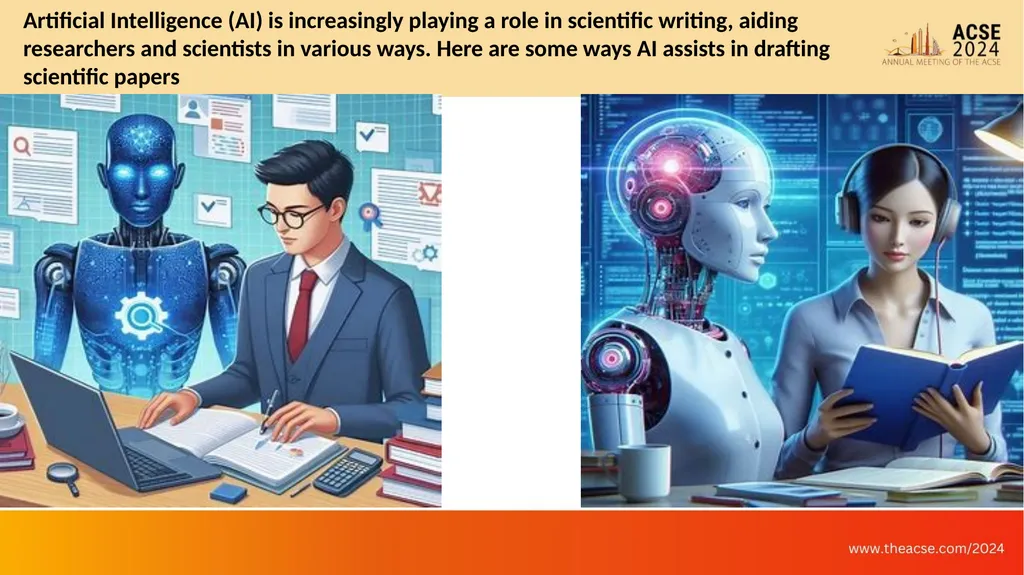
Artificial Intelligence (AI) is increasingly playing a role in scientific writing, aiding researchers and scientists in various ways. Here are some ways AI assists in drafting scientific papers<br>
23
Assisting in Publishing Artificial Intelligence (AI) is increasingly playing a role in scientific writing, aiding researchers and scientists in various ways. Here are some ways AI assists in drafting scientific papers
Automating Routine Tasks:
AI enhances productivity by automating routine tasks such as formatting, referencing, and proofreading.
AI tools can analyze vast amounts of literature and recommend relevant research papers.
This assists researchers in staying up-to-date with the latest findings and identifying gaps in existing knowledge2<br>
Automating Routine Tasks:
AI enhances productivity by automating routine tasks such as formatting, referencing, and proofreading.
AI tools can analyze vast amounts of literature and recommend relevant research papers.
This assists researchers in staying up-to-date with the latest findings and identifying gaps in existing knowledge2<br>
24
Ethical Implications of AI in Scientific Publishing The potential risks and concerns
Originality vs. AI-generated content
Plagiarism detection challenges
Maintaining authenticity in scholarly communication<br>
Originality vs. AI-generated content
Plagiarism detection challenges
Maintaining authenticity in scholarly communication<br>
25
Addressing Ethical Concerns About AI<br>
26
AI tools analyze vast amounts of literature and recommend relevant research papers by using natural language processing (NLP) techniques.
These tools scan through text, identify patterns, key terms, and relationships between concepts to understand the content of each paper.
They then compare this information with a user’s query or interest areas to find and suggest papers that are most relevant to the user’s needs.<br>
These tools scan through text, identify patterns, key terms, and relationships between concepts to understand the content of each paper.
They then compare this information with a user’s query or interest areas to find and suggest papers that are most relevant to the user’s needs.<br>
27
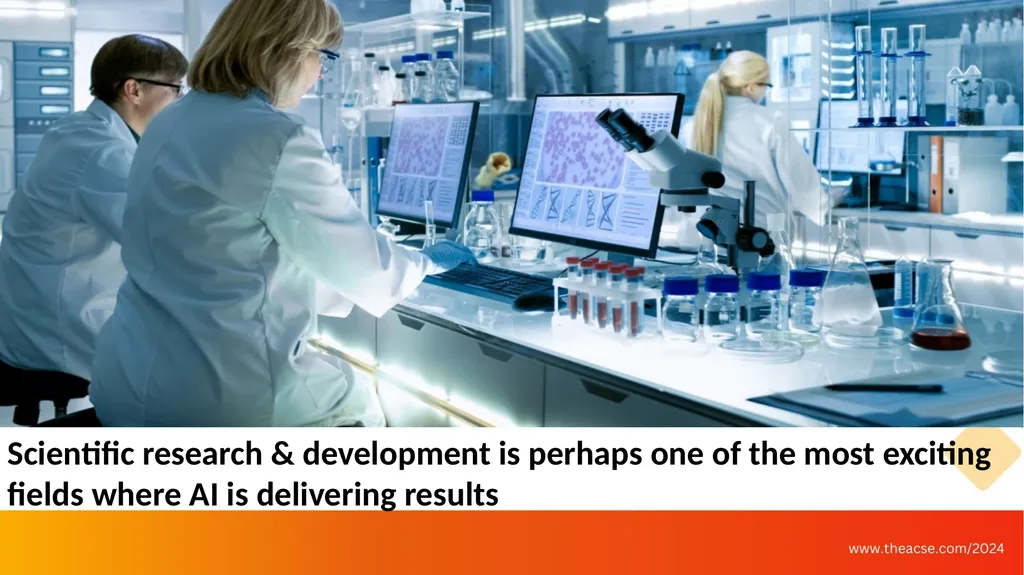
Scientific research & development is perhaps one of the most exciting fields where AI is delivering results<br>
28
Integrating AI in Publishing The integration of artificial intelligence (AI) in research and publishing is both a promising opportunity and a challenge. AI can assist in data analysis, literature reviews, and even in the peer review process.
However, the use of AI also raises questions about the accuracy, bias, and ethical implications of automated systems.
As we embrace these technologies, we must ensure they are used responsibly and transparently, complementing rather than replacing human judgment.<br>
However, the use of AI also raises questions about the accuracy, bias, and ethical implications of automated systems.
As we embrace these technologies, we must ensure they are used responsibly and transparently, complementing rather than replacing human judgment.<br>
29
Opportunities In conclusion, the emerging transformations in scientific publishing present both challenges and opportunities.
By recognizing and addressing these challenges, we can ensure that the dissemination of scientific knowledge remains rigorous, ethical, and impactful.
Let us embrace these changes with a commitment to excellence and integrity, advancing our field and ultimately improving scientific publications.<br>
By recognizing and addressing these challenges, we can ensure that the dissemination of scientific knowledge remains rigorous, ethical, and impactful.
Let us embrace these changes with a commitment to excellence and integrity, advancing our field and ultimately improving scientific publications.<br>
30
The future of AI replaces tedious or dangerous tasks, the human workforce is liberated to focus on tasks for which they are more equipped, such as those requiring creativity and empathy.<br>
31
References Carobene, A., Padoan, A., Cabitza, F., Banfi, G., & Plebani, M. (2023). Rising adoption of artificial intelligence in scientific publishing: evaluating the role, risks, and ethical implications in paper drafting and review process Clinical Chemistry and Laboratory Medicine (CCLM), 1.
The Alan Turing Institute. (2024). The Ethical Implications of AI in Scientific Publishing2.
Soravideo AI. (2024). The Emergence of AI in Academic and Scientific Writing3.<br>
The Alan Turing Institute. (2024). The Ethical Implications of AI in Scientific Publishing2.
Soravideo AI. (2024). The Emergence of AI in Academic and Scientific Writing3.<br>
32
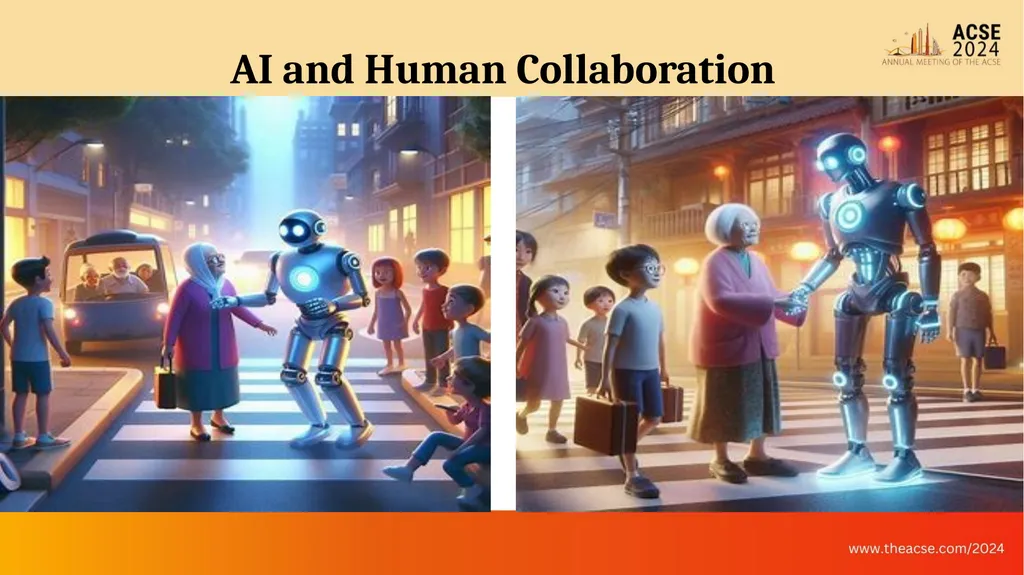
AI and Human Collaboration<br>