Chapter 1: New Perspectives On Marketing in the
Description: Chapter 1: New Perspectives On Marketing in the Service Economy Overview of Chapter 1 Why Study Services? What are Services? Marketing Challenges Posed by Services Extended Marketing Mix Required for Services Integration of Marketing with
Related Topics
Download Presentation
"Chapter 1: New Perspectives On Marketing in the" is the property of its rightful owner. Permission is granted to download and print the materials on this website for personal, non-commercial use only, and to display it on your personal computer provided you do not modify the materials and that you retain all copyright notices contained in the materials. By downloading content from our website, you accept the terms of this agreement.
Presentation Transcript
slide1. Chapter 1:
New Perspectives On
Marketing in the
Service Economy<br>
slide2. Overview of Chapter 1 Why Study Services?
What are Services?
Marketing Challenges Posed by Services
Extended Marketing Mix Required for Services
Integration of Marketing with Other Management Functions
Developing Effective Service Marketing Strategies<br>
slide3. Why Study Services?<br>
slide4. Why Study Services? Services dominate most economies and are growing rapidly:
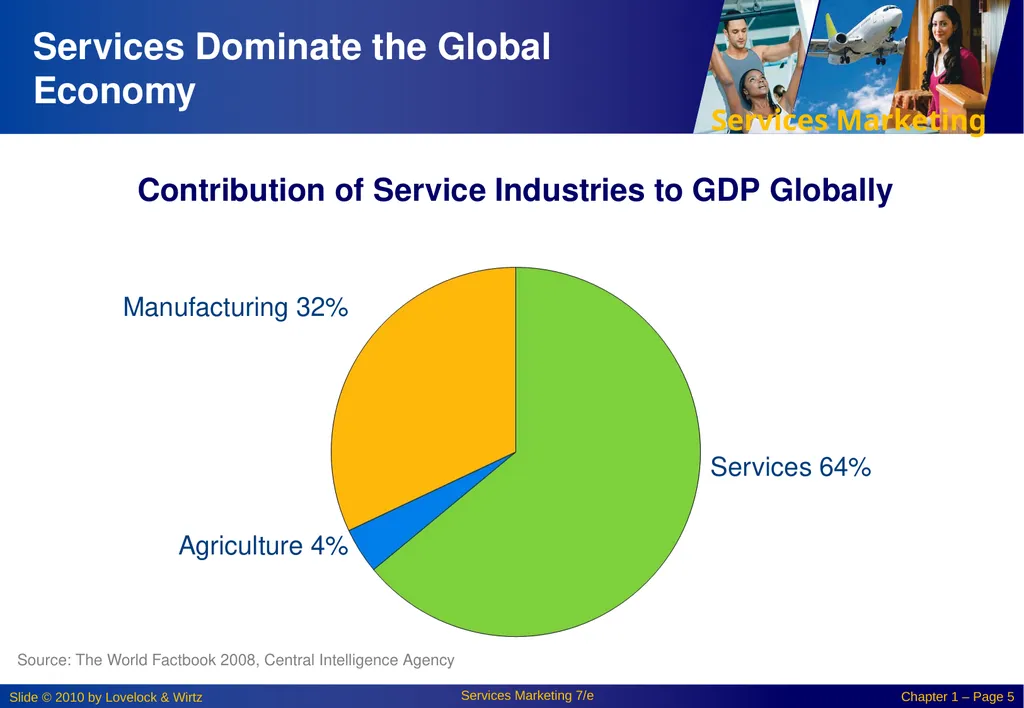
Services account for more than 60% of GDP worldwide
Almost all economies have a substantial service sector
Most new employment is provided by services
Strongest growth area for marketing
Understanding services offers you a personal competitive advantage<br>
slide5. Services Dominate the Global Economy Contribution of Service Industries to GDP Globally Source: The World Factbook 2008, Central Intelligence Agency Services 64% Agriculture 4% Manufacturing 32%<br>
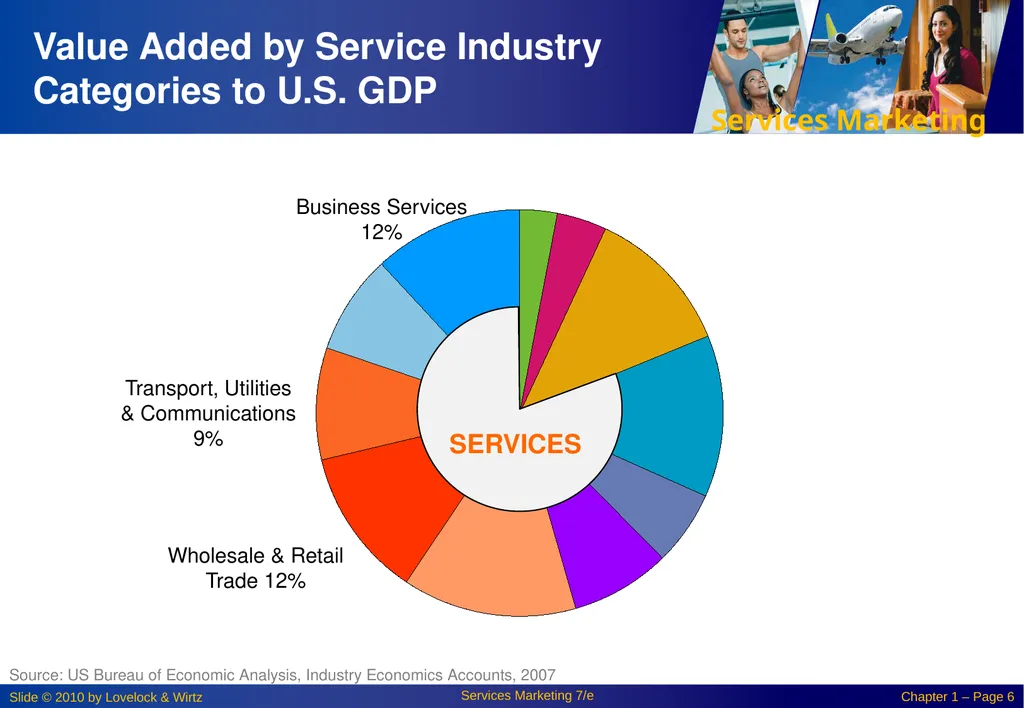
slide6. SERVICES Business Services 12% Transport, Utilities & Communications
9% Wholesale & Retail Trade 12% Source: US Bureau of Economic Analysis, Industry Economics Accounts, 2007 Value Added by Service Industry Categories to U.S. GDP<br>
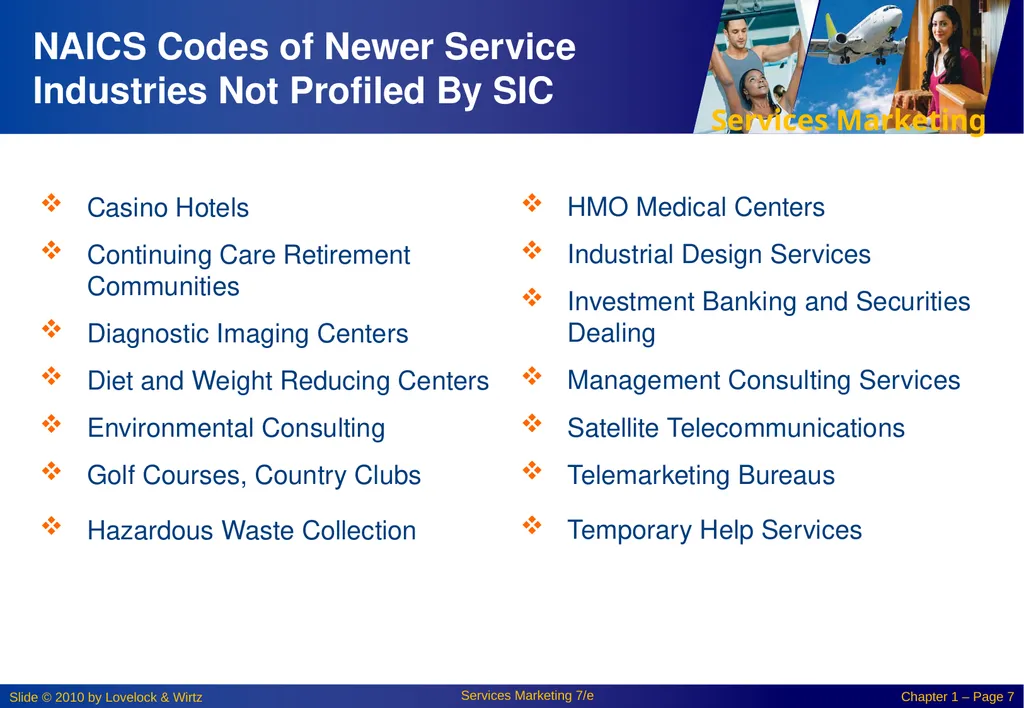
slide7. HMO Medical Centers
Industrial Design Services
Investment Banking and Securities Dealing
Management Consulting Services
Satellite Telecommunications
Telemarketing Bureaus
Temporary Help Services Casino Hotels
Continuing Care Retirement Communities
Diagnostic Imaging Centers
Diet and Weight Reducing Centers
Environmental Consulting
Golf Courses, Country Clubs
Hazardous Waste Collection NAICS Codes of Newer ServiceIndustries Not Profiled By SIC<br>
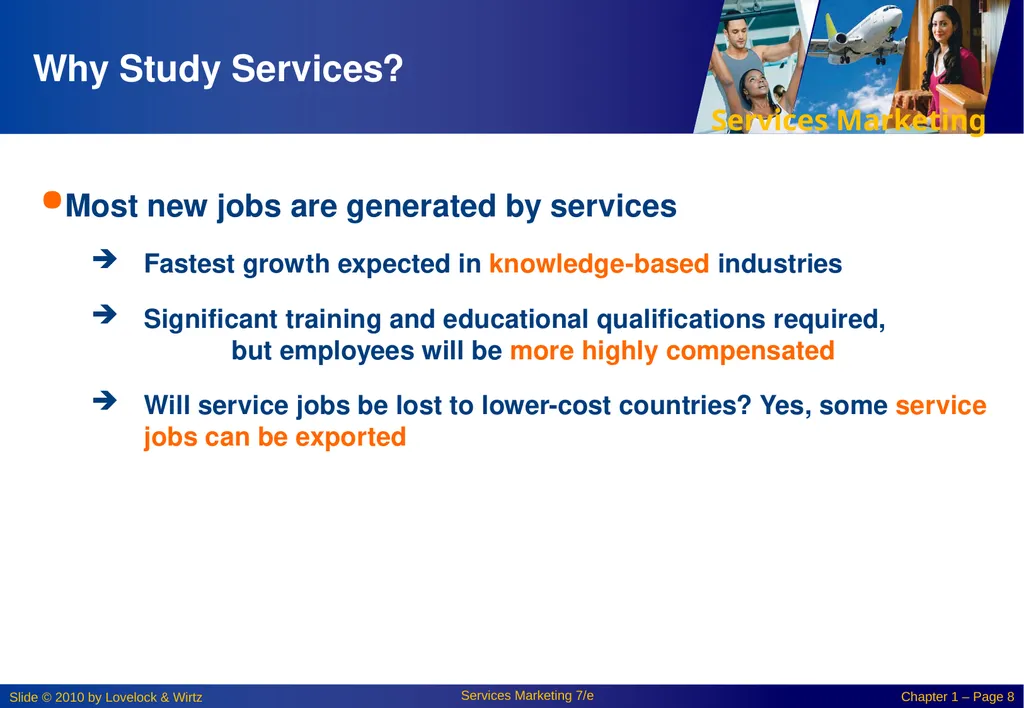
slide8. Why Study Services? Most new jobs are generated by services
Fastest growth expected in knowledge-based industries
Significant training and educational qualifications required, but employees will be more highly compensated
Will service jobs be lost to lower-cost countries? Yes, some service jobs can be exported<br>
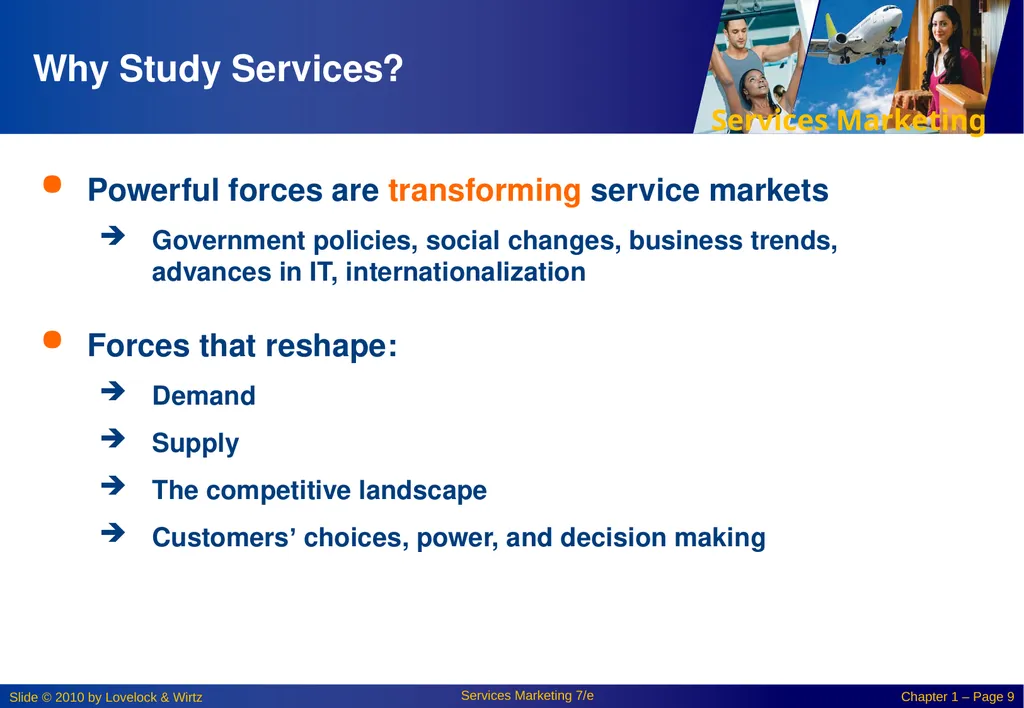
slide9. Why Study Services? Powerful forces are transforming service markets
Government policies, social changes, business trends, advances in IT, internationalization
Forces that reshape:
Demand
Supply
The competitive landscape
Customers’ choices, power, and decision making<br>
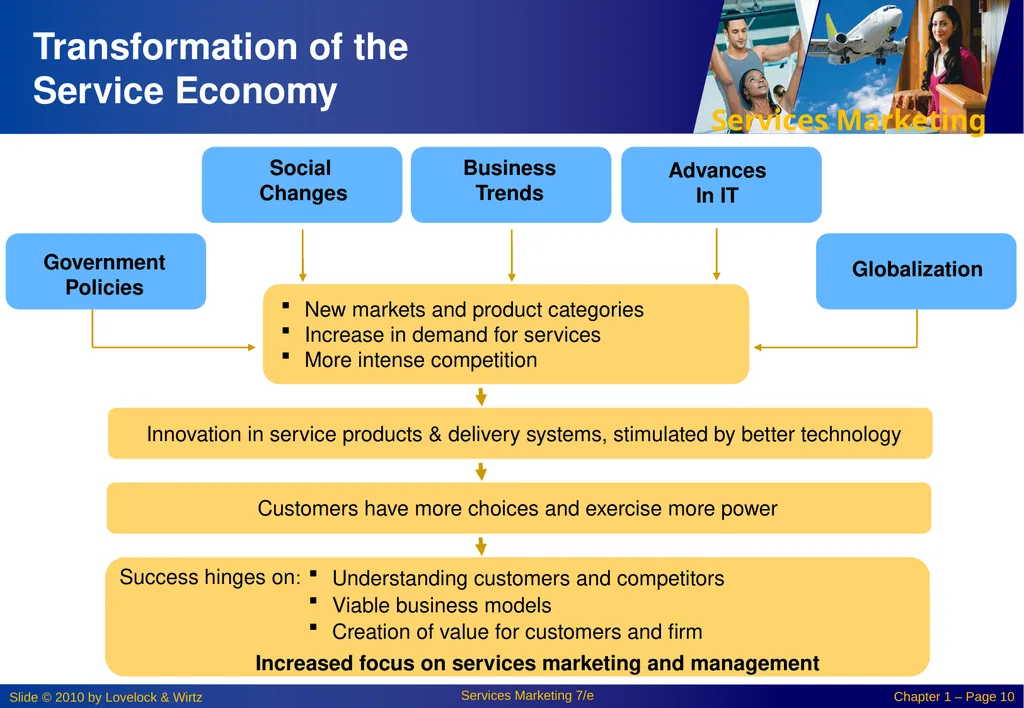
slide10. Transformation of the Service Economy Success hinges on: Increased focus on services marketing and management<br>
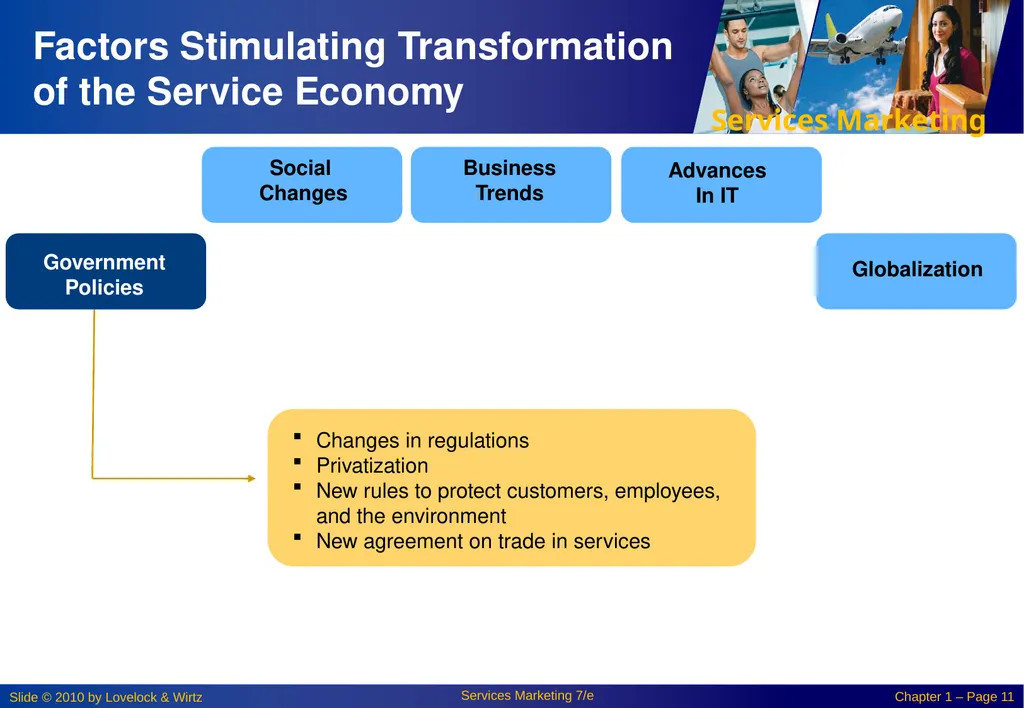
slide11. Factors Stimulating Transformation of the Service Economy<br>
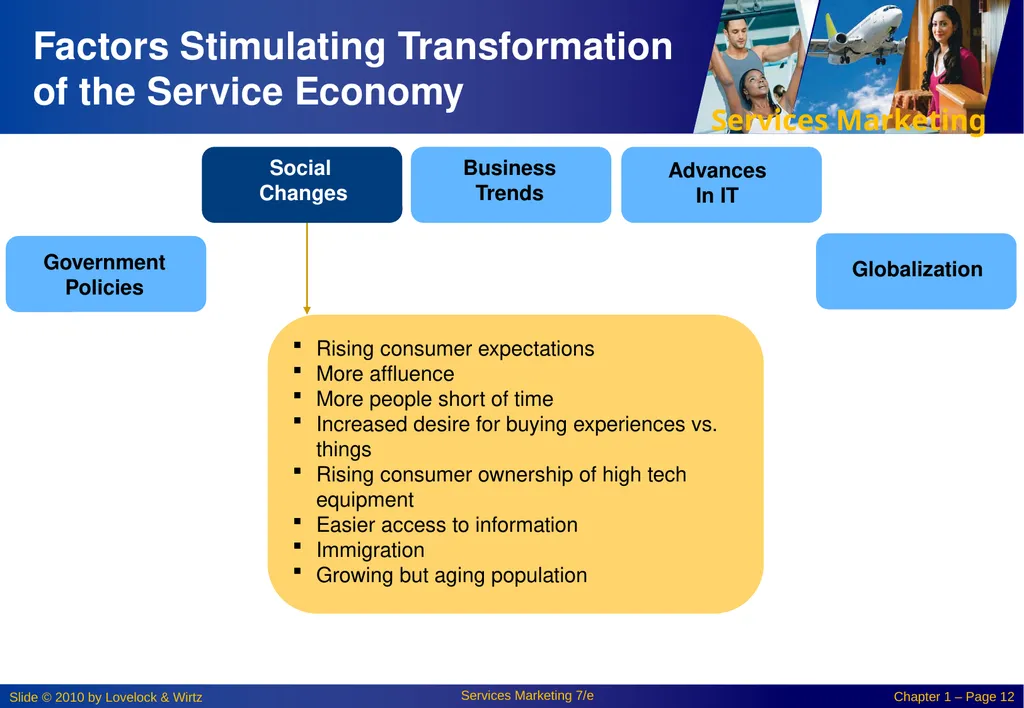
slide12. Factors Stimulating Transformation of the Service Economy Rising consumer expectations
More affluence
More people short of time
Increased desire for buying experiences vs. things
Rising consumer ownership of high tech equipment
Easier access to information
Immigration
Growing but aging population Government
Policies<br>
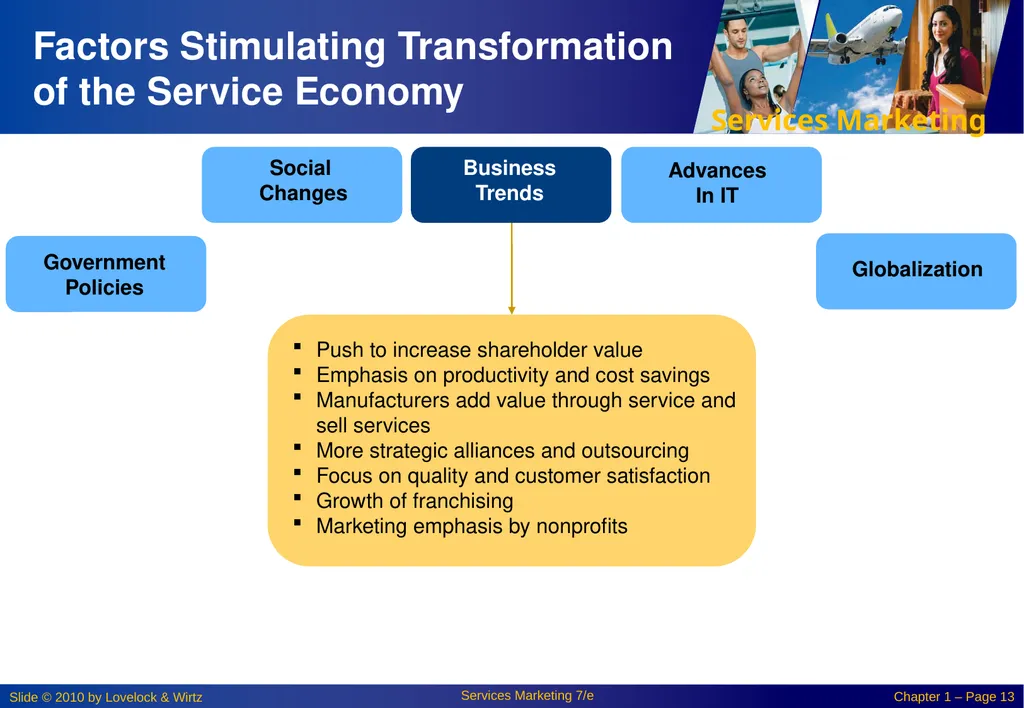
slide13. Factors Stimulating Transformation of the Service Economy Push to increase shareholder value
Emphasis on productivity and cost savings
Manufacturers add value through service and sell services
More strategic alliances and outsourcing
Focus on quality and customer satisfaction
Growth of franchising
Marketing emphasis by nonprofits Government
Policies<br>
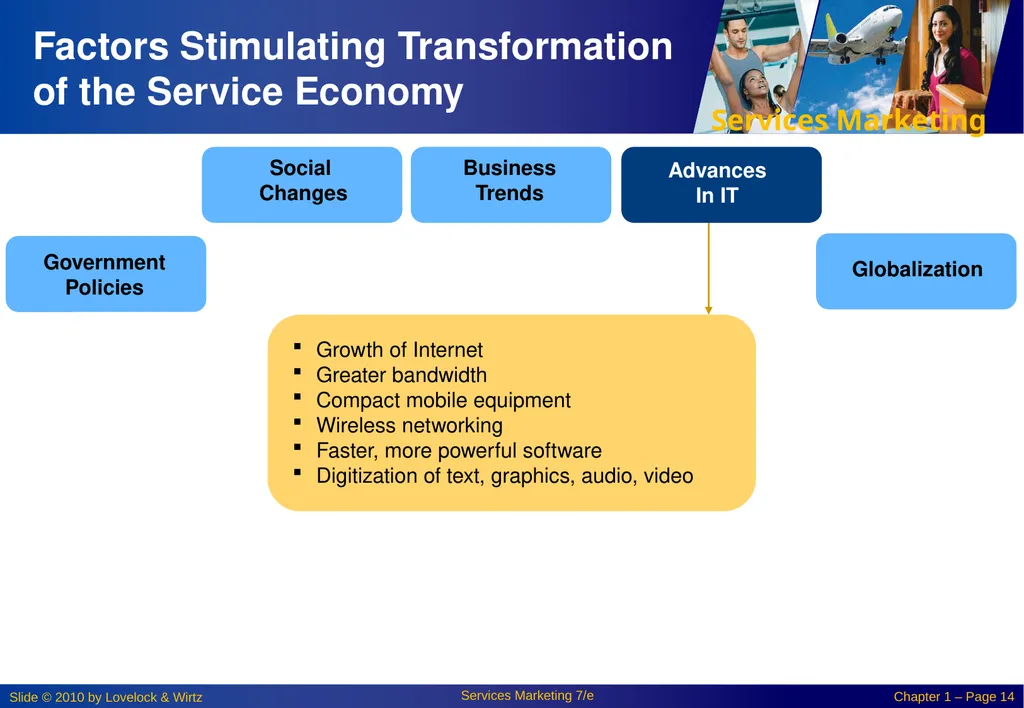
slide14. Factors Stimulating Transformation of the Service Economy Growth of Internet
Greater bandwidth
Compact mobile equipment
Wireless networking
Faster, more powerful software
Digitization of text, graphics, audio, video Government
Policies<br>
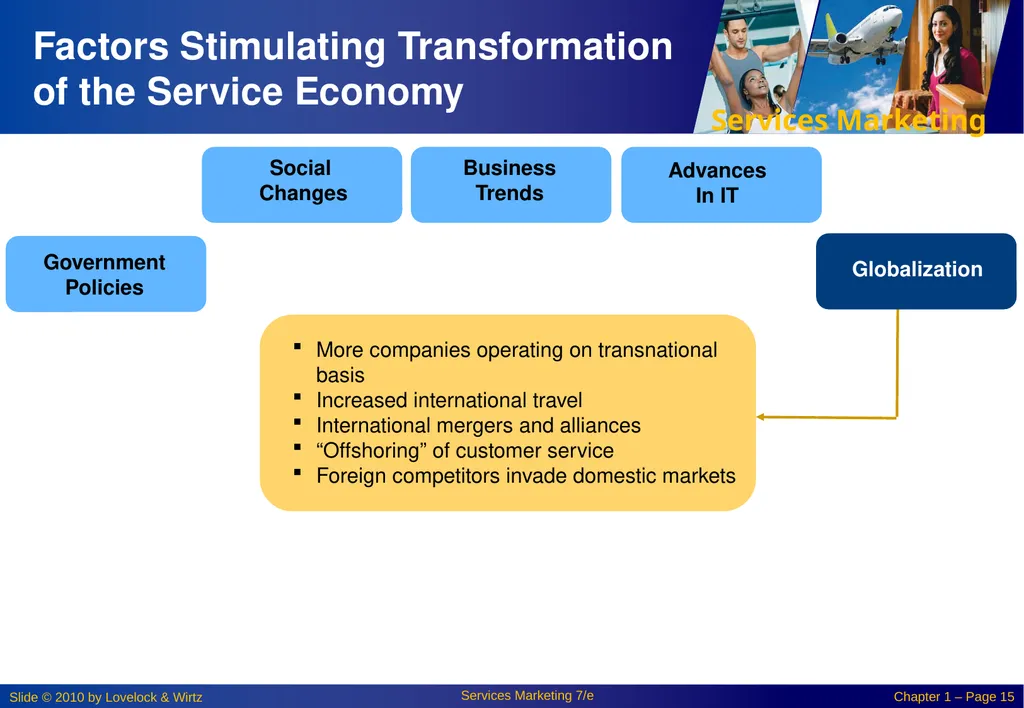
slide15. Factors Stimulating Transformation of the Service Economy More companies operating on transnational basis
Increased international travel
International mergers and alliances
“Offshoring” of customer service
Foreign competitors invade domestic markets Government
Policies<br>
slide16. What are Services?<br>
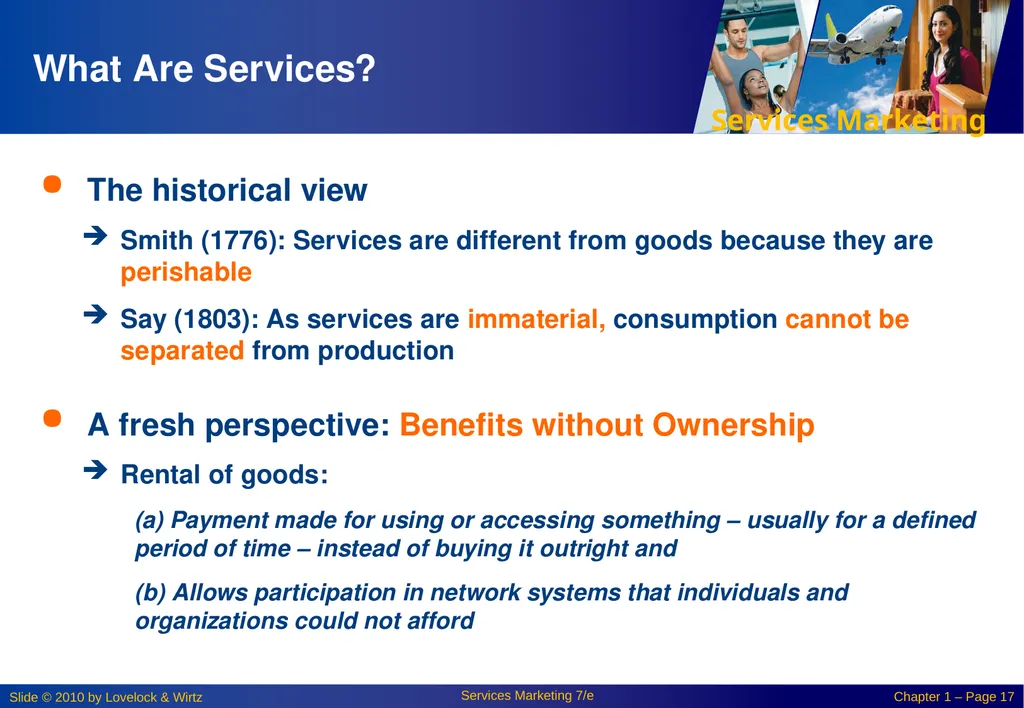
slide17. What Are Services? The historical view
Smith (1776): Services are different from goods because they are perishable
Say (1803): As services are immaterial, consumption cannot be separated from production
A fresh perspective: Benefits without Ownership
Rental of goods:
(a) Payment made for using or accessing something – usually for a defined period of time – instead of buying it outright and
(b) Allows participation in network systems that individuals and organizations could not afford<br>
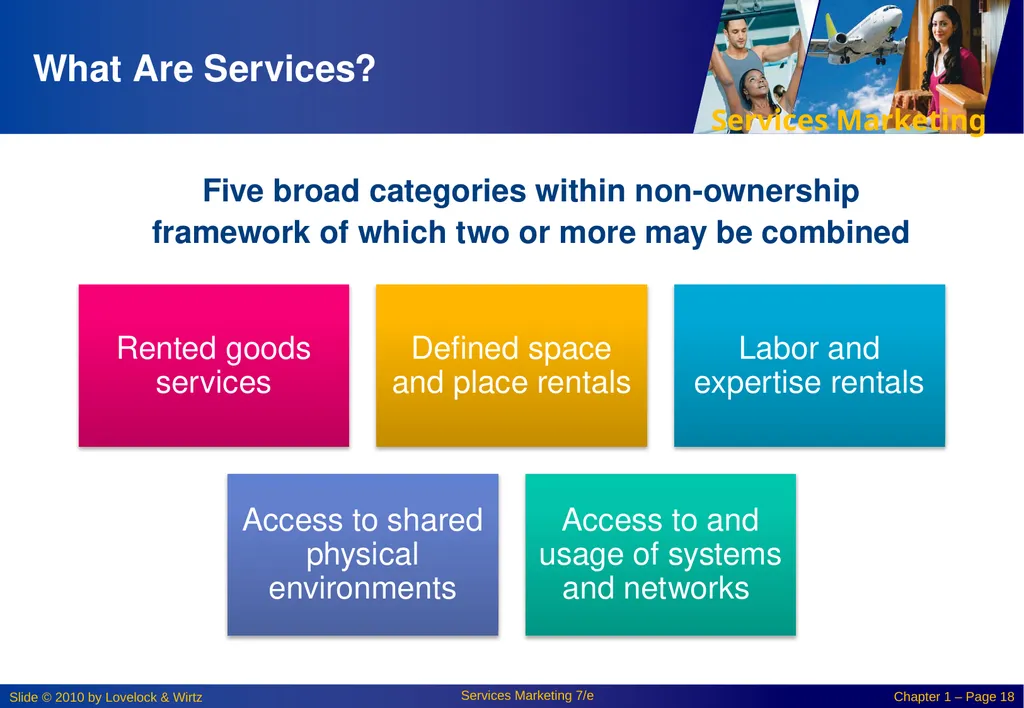
slide18. What Are Services? Five broad categories within non-ownership framework of which two or more may be combined<br>
slide19. Definition of Services In another word, Services are a form of product that consists of activities, benefits, or satisfactions offered for sale that are essentially intangible and do not result in the ownership of anything.<br>
slide20. Service Products vs. Customer Service & After-Sales Service A firm’s market offerings are divided into core product elements and supplementary service elements
Need to distinguish between:
Marketing of services – when service is the core product
Marketing through service – when good service increases the value of a core physical good
Manufacturing firms are reformulating and enhancing existing added-value services to market them as stand-alone core products<br>
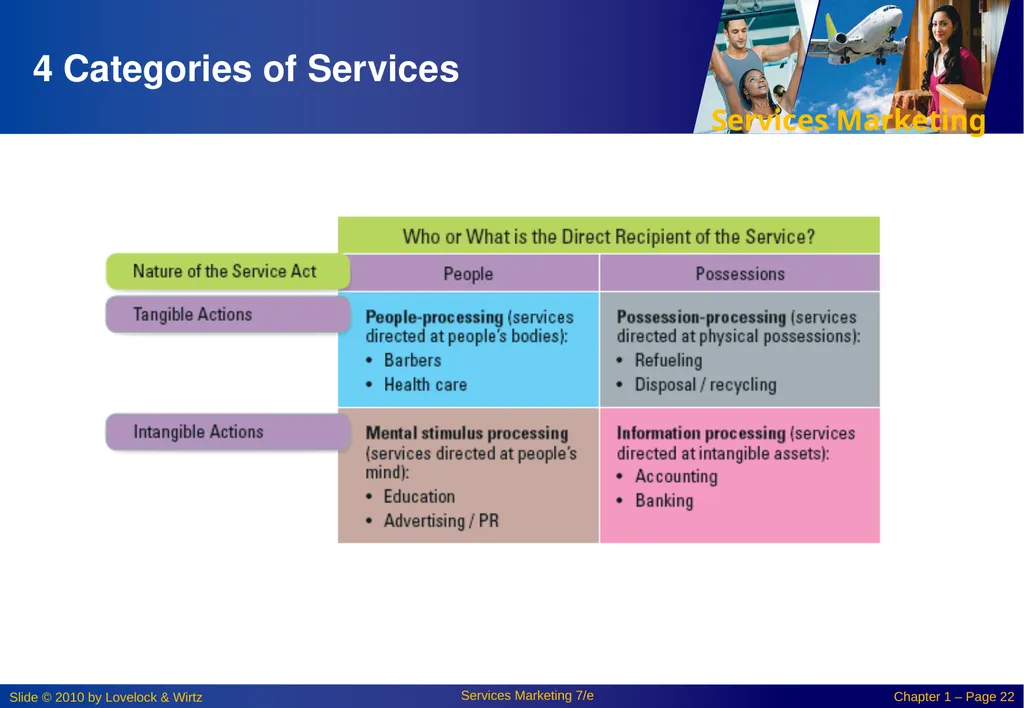
slide21. Service – A Process Perspective Differences exist amongst services depending on what is being processed
Classification of services into
People processing
Possession processing
Mental stimulus processing
Information processing<br>
slide22. 4 Categories of Services<br>
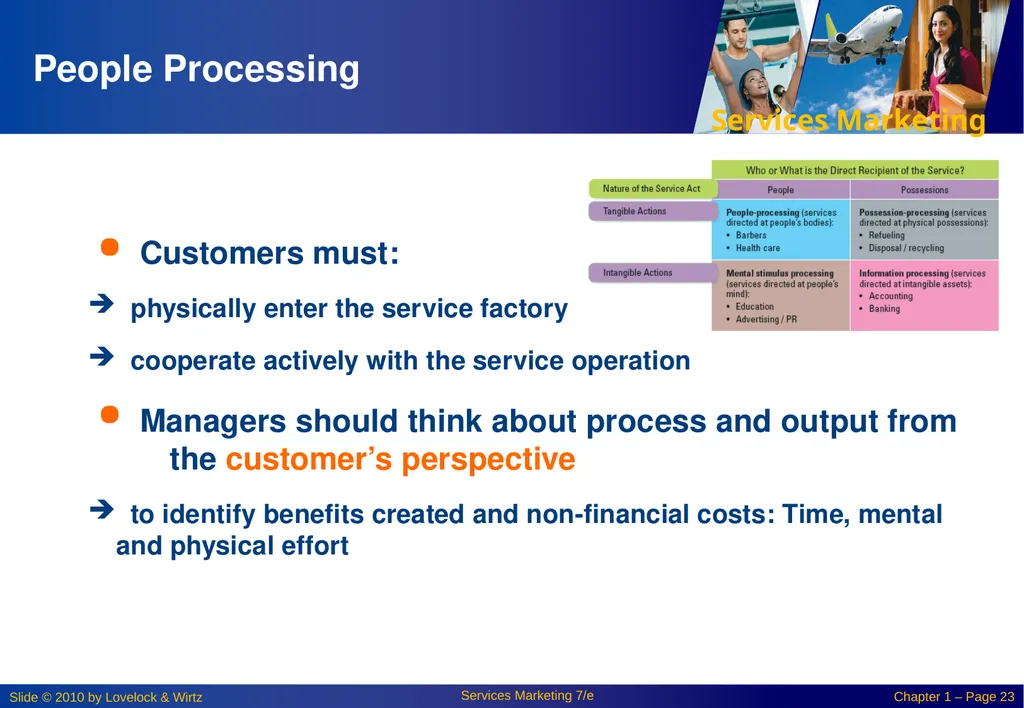
slide23. People Processing Customers must:
physically enter the service factory
cooperate actively with the service operation
Managers should think about process and output from the customer’s perspective
to identify benefits created and non-financial costs: Time, mental and physical effort<br>
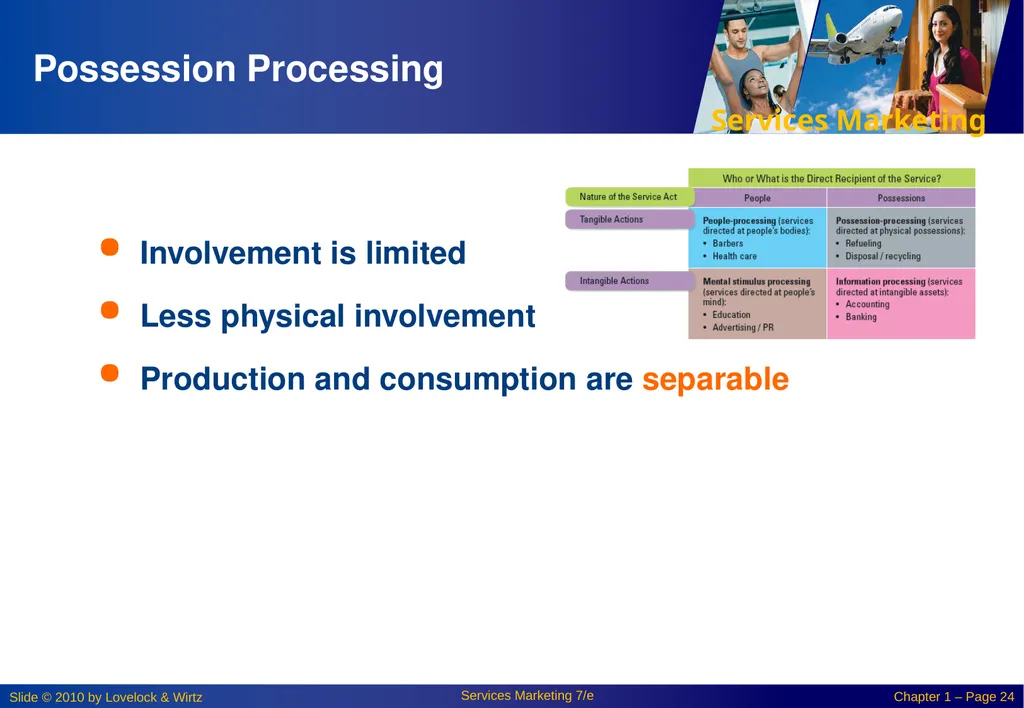
slide24. Possession Processing Involvement is limited
Less physical involvement
Production and consumption are separable<br>
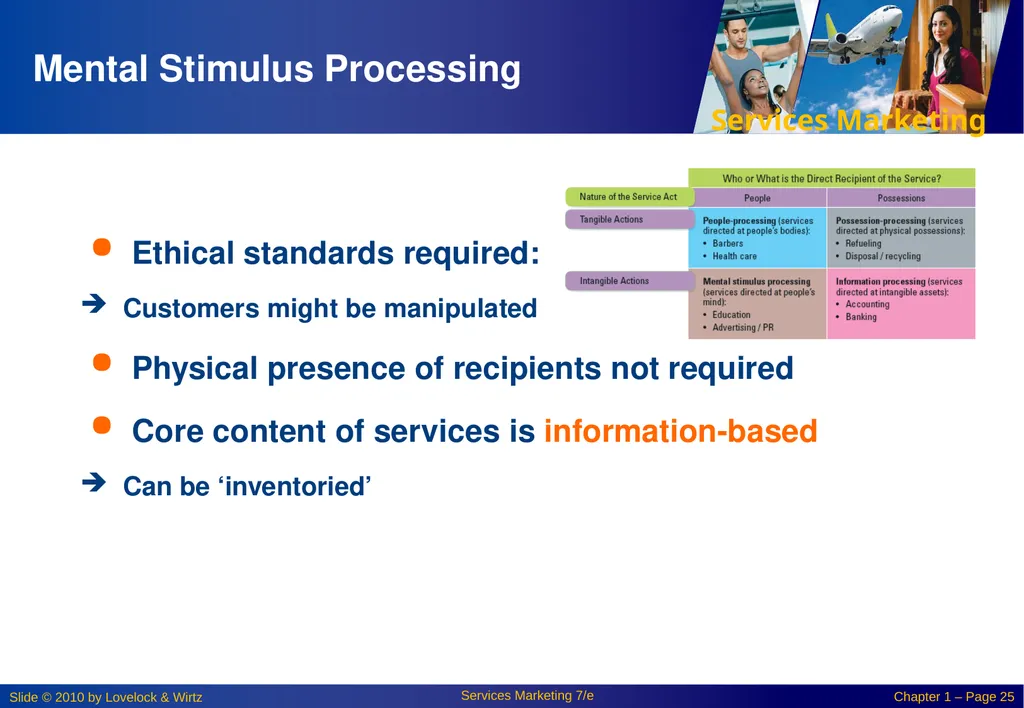
slide25. Mental Stimulus Processing Ethical standards required:
Customers might be manipulated
Physical presence of recipients not required
Core content of services is information-based
Can be ‘inventoried’<br>
slide26. Extended Marketing Mix for Services<br>
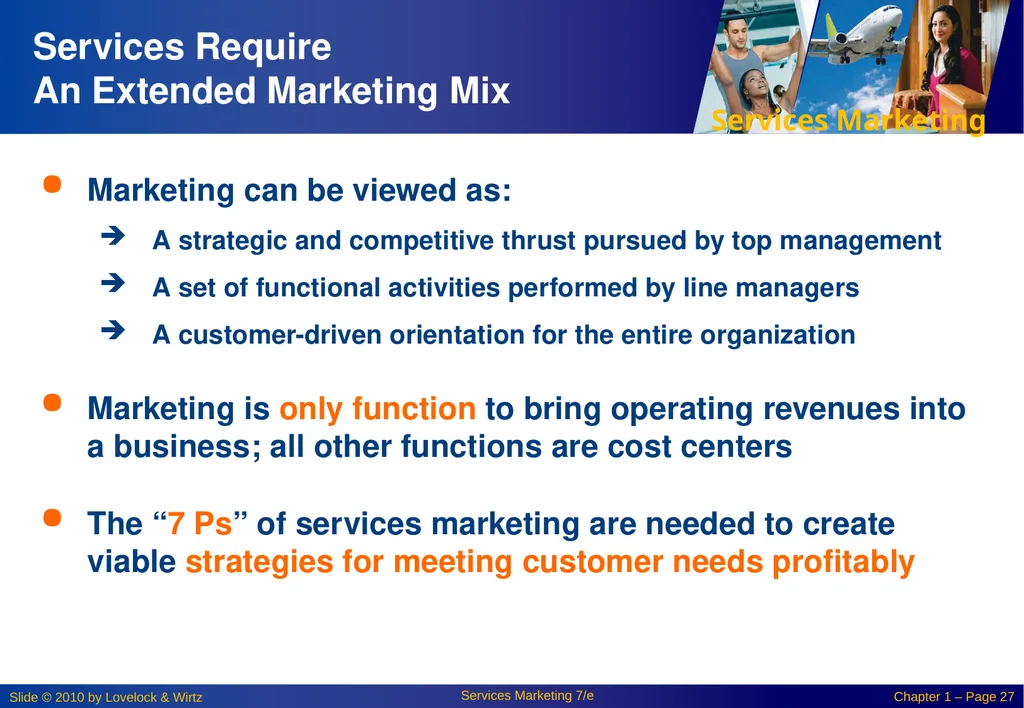
slide27. Services Require An Extended Marketing Mix Marketing can be viewed as:
A strategic and competitive thrust pursued by top management
A set of functional activities performed by line managers
A customer-driven orientation for the entire organization
Marketing is only function to bring operating revenues into a business; all other functions are cost centers
The “7 Ps” of services marketing are needed to create viable strategies for meeting customer needs profitably<br>
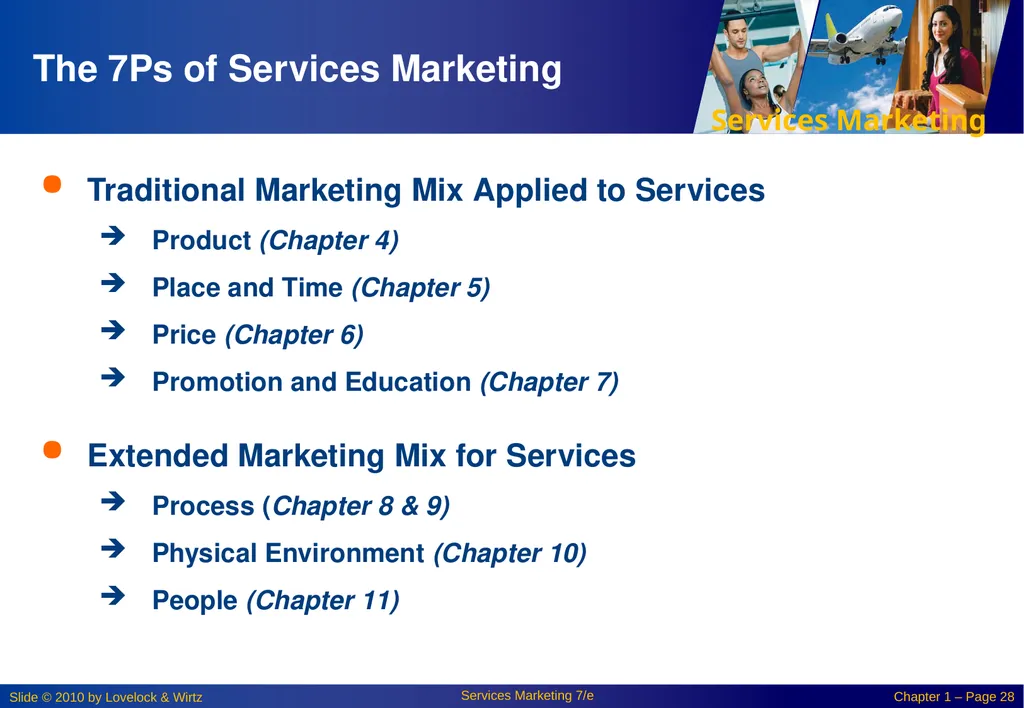
slide28. The 7Ps of Services Marketing Traditional Marketing Mix Applied to Services
Product (Chapter 4)
Place and Time (Chapter 5)
Price (Chapter 6)
Promotion and Education (Chapter 7)
Extended Marketing Mix for Services
Process (Chapter 8 & 9)
Physical Environment (Chapter 10)
People (Chapter 11)<br>
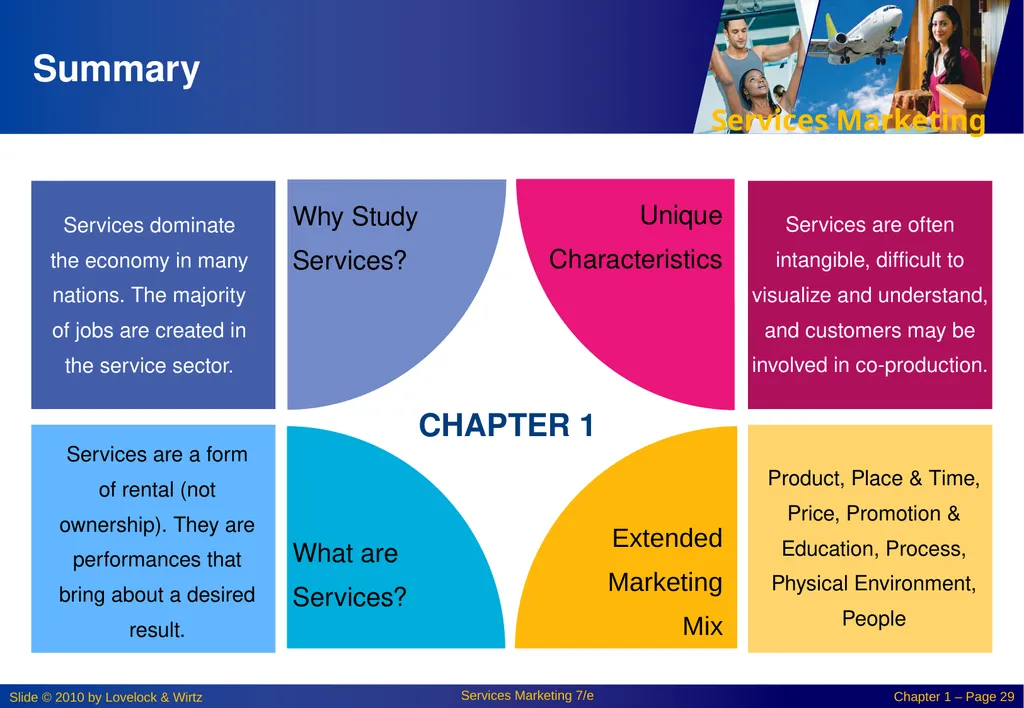
slide29. Summary Services dominate the economy in many nations. The majority of jobs are created in the service sector. Services are often intangible, difficult to visualize and understand, and customers may be involved in co-production. Unique Characteristics Why Study Services? Extended Marketing Mix What are Services? Services are a form of rental (not ownership). They are performances that bring about a desired result. Product, Place & Time, Price, Promotion & Education, Process, Physical Environment, People CHAPTER 1<br>

New Perspectives On
Marketing in the
Service Economy<br>
slide2. Overview of Chapter 1 Why Study Services?
What are Services?
Marketing Challenges Posed by Services
Extended Marketing Mix Required for Services
Integration of Marketing with Other Management Functions
Developing Effective Service Marketing Strategies<br>
slide3. Why Study Services?<br>
slide4. Why Study Services? Services dominate most economies and are growing rapidly:
Services account for more than 60% of GDP worldwide
Almost all economies have a substantial service sector
Most new employment is provided by services
Strongest growth area for marketing
Understanding services offers you a personal competitive advantage<br>
slide5. Services Dominate the Global Economy Contribution of Service Industries to GDP Globally Source: The World Factbook 2008, Central Intelligence Agency Services 64% Agriculture 4% Manufacturing 32%<br>
slide6. SERVICES Business Services 12% Transport, Utilities & Communications
9% Wholesale & Retail Trade 12% Source: US Bureau of Economic Analysis, Industry Economics Accounts, 2007 Value Added by Service Industry Categories to U.S. GDP<br>
slide7. HMO Medical Centers
Industrial Design Services
Investment Banking and Securities Dealing
Management Consulting Services
Satellite Telecommunications
Telemarketing Bureaus
Temporary Help Services Casino Hotels
Continuing Care Retirement Communities
Diagnostic Imaging Centers
Diet and Weight Reducing Centers
Environmental Consulting
Golf Courses, Country Clubs
Hazardous Waste Collection NAICS Codes of Newer ServiceIndustries Not Profiled By SIC<br>
slide8. Why Study Services? Most new jobs are generated by services
Fastest growth expected in knowledge-based industries
Significant training and educational qualifications required, but employees will be more highly compensated
Will service jobs be lost to lower-cost countries? Yes, some service jobs can be exported<br>
slide9. Why Study Services? Powerful forces are transforming service markets
Government policies, social changes, business trends, advances in IT, internationalization
Forces that reshape:
Demand
Supply
The competitive landscape
Customers’ choices, power, and decision making<br>
slide10. Transformation of the Service Economy Success hinges on: Increased focus on services marketing and management<br>
slide11. Factors Stimulating Transformation of the Service Economy<br>
slide12. Factors Stimulating Transformation of the Service Economy Rising consumer expectations
More affluence
More people short of time
Increased desire for buying experiences vs. things
Rising consumer ownership of high tech equipment
Easier access to information
Immigration
Growing but aging population Government
Policies<br>
slide13. Factors Stimulating Transformation of the Service Economy Push to increase shareholder value
Emphasis on productivity and cost savings
Manufacturers add value through service and sell services
More strategic alliances and outsourcing
Focus on quality and customer satisfaction
Growth of franchising
Marketing emphasis by nonprofits Government
Policies<br>
slide14. Factors Stimulating Transformation of the Service Economy Growth of Internet
Greater bandwidth
Compact mobile equipment
Wireless networking
Faster, more powerful software
Digitization of text, graphics, audio, video Government
Policies<br>
slide15. Factors Stimulating Transformation of the Service Economy More companies operating on transnational basis
Increased international travel
International mergers and alliances
“Offshoring” of customer service
Foreign competitors invade domestic markets Government
Policies<br>
slide16. What are Services?<br>
slide17. What Are Services? The historical view
Smith (1776): Services are different from goods because they are perishable
Say (1803): As services are immaterial, consumption cannot be separated from production
A fresh perspective: Benefits without Ownership
Rental of goods:
(a) Payment made for using or accessing something – usually for a defined period of time – instead of buying it outright and
(b) Allows participation in network systems that individuals and organizations could not afford<br>
slide18. What Are Services? Five broad categories within non-ownership framework of which two or more may be combined<br>
slide19. Definition of Services In another word, Services are a form of product that consists of activities, benefits, or satisfactions offered for sale that are essentially intangible and do not result in the ownership of anything.<br>
slide20. Service Products vs. Customer Service & After-Sales Service A firm’s market offerings are divided into core product elements and supplementary service elements
Need to distinguish between:
Marketing of services – when service is the core product
Marketing through service – when good service increases the value of a core physical good
Manufacturing firms are reformulating and enhancing existing added-value services to market them as stand-alone core products<br>
slide21. Service – A Process Perspective Differences exist amongst services depending on what is being processed
Classification of services into
People processing
Possession processing
Mental stimulus processing
Information processing<br>
slide22. 4 Categories of Services<br>
slide23. People Processing Customers must:
physically enter the service factory
cooperate actively with the service operation
Managers should think about process and output from the customer’s perspective
to identify benefits created and non-financial costs: Time, mental and physical effort<br>
slide24. Possession Processing Involvement is limited
Less physical involvement
Production and consumption are separable<br>
slide25. Mental Stimulus Processing Ethical standards required:
Customers might be manipulated
Physical presence of recipients not required
Core content of services is information-based
Can be ‘inventoried’<br>
slide26. Extended Marketing Mix for Services<br>
slide27. Services Require An Extended Marketing Mix Marketing can be viewed as:
A strategic and competitive thrust pursued by top management
A set of functional activities performed by line managers
A customer-driven orientation for the entire organization
Marketing is only function to bring operating revenues into a business; all other functions are cost centers
The “7 Ps” of services marketing are needed to create viable strategies for meeting customer needs profitably<br>
slide28. The 7Ps of Services Marketing Traditional Marketing Mix Applied to Services
Product (Chapter 4)
Place and Time (Chapter 5)
Price (Chapter 6)
Promotion and Education (Chapter 7)
Extended Marketing Mix for Services
Process (Chapter 8 & 9)
Physical Environment (Chapter 10)
People (Chapter 11)<br>
slide29. Summary Services dominate the economy in many nations. The majority of jobs are created in the service sector. Services are often intangible, difficult to visualize and understand, and customers may be involved in co-production. Unique Characteristics Why Study Services? Extended Marketing Mix What are Services? Services are a form of rental (not ownership). They are performances that bring about a desired result. Product, Place & Time, Price, Promotion & Education, Process, Physical Environment, People CHAPTER 1<br>