
Chapter 1 Safety Practices and Quality in the
EM
Published · 44 slides · 0 views
1 / 1


Description
Chapter 1 Safety Practices and Quality in the Hematology Laboratory Introduction 1 Introduction 2 Procedures performed in the hematology laboratory: Complete blood cell count (CBC): evaluates number, morphology, and distribution of the
Related Topics
Share
Embed code
Download this presentation From Below
"Chapter 1 Safety Practices and Quality in the" is the property of its rightful owner. Permission is granted to download and print the materials on this website for personal, non-commercial use only, and to display it on your personal computer provided you do not modify the materials and that you retain all copyright notices contained in the materials. By downloading content from our website, you accept the terms of this agreement.
Presentation Transcript
01
Chapter 1
Safety Practices and Quality in the Hematology Laboratory<br>
02
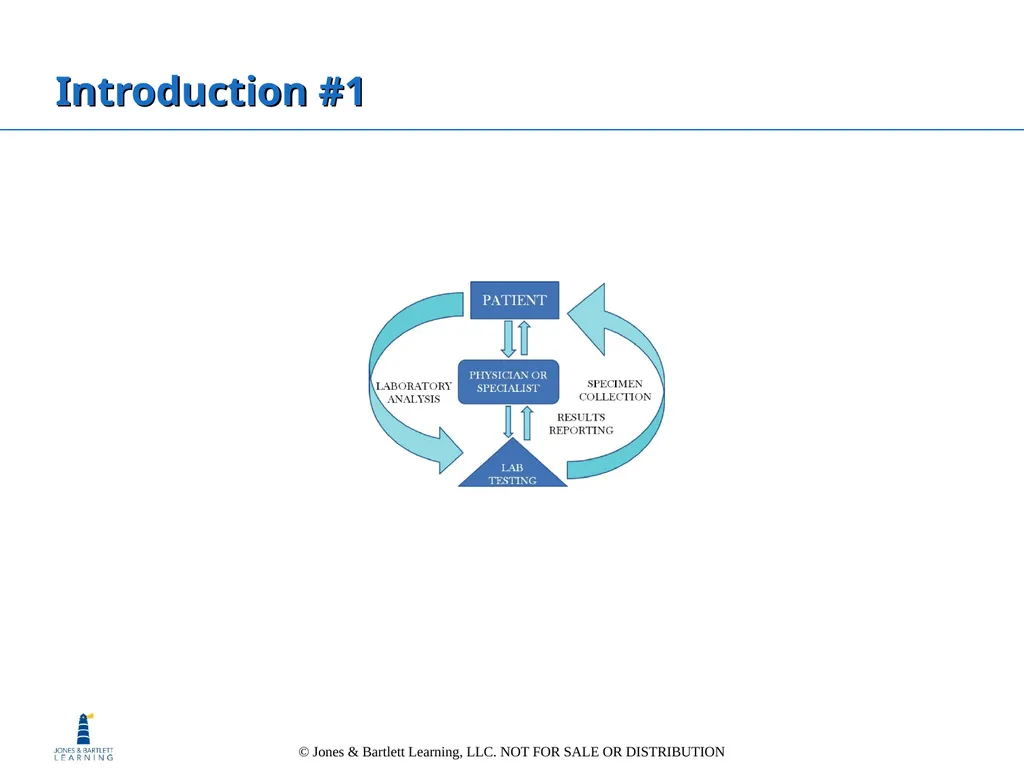
Introduction #1<br>
03
Introduction #2 Procedures performed in the hematology laboratory:
Complete blood cell count (CBC): evaluates number, morphology, and distribution of the cellular constituents of the blood
Erythrocyte count: red blood cells (RBCs)
Leukocyte count: white blood cells (WBCs)
Thrombocyte count: platelets (PLTs)
Differential: evaluates morphology and distribution
Erythrocyte sedimentation rate (ESR): evaluates inflammation
Blood coagulation—hemostasis and thrombosis: evaluates clotting and bleeding tendencies and monitors anticoagulant therapy
Specialized testing for confirmation of hematologic disorders<br>
Complete blood cell count (CBC): evaluates number, morphology, and distribution of the cellular constituents of the blood
Erythrocyte count: red blood cells (RBCs)
Leukocyte count: white blood cells (WBCs)
Thrombocyte count: platelets (PLTs)
Differential: evaluates morphology and distribution
Erythrocyte sedimentation rate (ESR): evaluates inflammation
Blood coagulation—hemostasis and thrombosis: evaluates clotting and bleeding tendencies and monitors anticoagulant therapy
Specialized testing for confirmation of hematologic disorders<br>
04
Functions of the Hematology Laboratory #1 Personnel:
Medical laboratory scientists, medical laboratory technicians, laboratory assistants, and phlebotomists employed in the hematology laboratory play a major role in patient care.
Personnel are highly trained, having studied in accredited programs at the certificate, associates, bachelors, masters, and doctoral levels at both university-based and hospital-based programs.
All personnel are certified as medical laboratory scientists, medical laboratory technicians, or phlebotomists and in some states are licensed to practice.<br>
Medical laboratory scientists, medical laboratory technicians, laboratory assistants, and phlebotomists employed in the hematology laboratory play a major role in patient care.
Personnel are highly trained, having studied in accredited programs at the certificate, associates, bachelors, masters, and doctoral levels at both university-based and hospital-based programs.
All personnel are certified as medical laboratory scientists, medical laboratory technicians, or phlebotomists and in some states are licensed to practice.<br>
05
Functions of the Hematology Laboratory #2 Assays and examinations performed in the laboratory can do the following:
Establish a diagnosis or rule out a diagnosis
Confirm a physician’s clinical impression of a possible hematological disorder
Detect an unsuspected disorder when appropriate testing is performed
Monitor the effects of therapy
Detect minimal residual disease following therapy<br>
Establish a diagnosis or rule out a diagnosis
Confirm a physician’s clinical impression of a possible hematological disorder
Detect an unsuspected disorder when appropriate testing is performed
Monitor the effects of therapy
Detect minimal residual disease following therapy<br>
06
Patient Safety The Joint Commission’s National Patient Safety Goals include the following:
Correct patient identification: at least two personal identifiers that can include: the patient’s name, an assigned ID number, or date of birth
Improved staff communication: includes communicating patient issues that impact laboratory testing as well as communicating panic or critical values in a timely manner to the clinician.
Reduce the risk of hospital-acquired infections (HAI). Also known as nosocomial infections. This includes handwashing guidelines from the CDC or the WHO.<br>
Correct patient identification: at least two personal identifiers that can include: the patient’s name, an assigned ID number, or date of birth
Improved staff communication: includes communicating patient issues that impact laboratory testing as well as communicating panic or critical values in a timely manner to the clinician.
Reduce the risk of hospital-acquired infections (HAI). Also known as nosocomial infections. This includes handwashing guidelines from the CDC or the WHO.<br>
07
Safety in the Hematology Laboratory Safety standards for patients and clinical laboratories are initiated, governed, and reviewed by governmental agencies and professional organizations such as OSHA, CLSI, CDC, DHHS, and CAP.
The safety officer has many duties affecting staff including compliance with existing regulations affecting the laboratory and staff, for example, labeling of chemicals and providing supplies for the proper handling and disposal of biohazardous materials.
Occupational Safety and Health Administration (OSHA) Acts and Standards ensure safe and healthful working conditions for workers.<br>
The safety officer has many duties affecting staff including compliance with existing regulations affecting the laboratory and staff, for example, labeling of chemicals and providing supplies for the proper handling and disposal of biohazardous materials.
Occupational Safety and Health Administration (OSHA) Acts and Standards ensure safe and healthful working conditions for workers.<br>
08
Safety in the Clinical Laboratory Safety in the clinical laboratory includes the following:
A formal safety program
Specifically mandated plans (e.g., chemical hygiene, bloodborne pathogens)
Identification of various hazards (e.g., chemical, biological)<br>
A formal safety program
Specifically mandated plans (e.g., chemical hygiene, bloodborne pathogens)
Identification of various hazards (e.g., chemical, biological)<br>
09
Occupational Safety and Health Administration (OSHA) Acts and Standards The OSHA standards include provisions for
Warning labels or other appropriate forms of warning to alert all workers to potential hazards
Suitable protective equipment
Exposure control procedures
Implementation of training and education programs<br>
Warning labels or other appropriate forms of warning to alert all workers to potential hazards
Suitable protective equipment
Exposure control procedures
Implementation of training and education programs<br>
10
Chemical Hygiene Plan All clinical laboratories are mandated to implement a chemical hygiene plan (CHP) and an exposure control plan.
Chemical hygiene plan ensures that laboratory workers are fully aware of the hazards associated with chemicals in their workplaces, which is outlined in the Hazard Communication Standard (HCS).
The Safety Data Sheets (SDS; formerly MSDS) describes hazards, safe handling, storage, and disposal of hazardous chemicals.
OSHA’s HCS is aligning with the Globally Harmonized System of Classification and Labeling of Chemicals (GHS) to better improve the working standards.<br>
Chemical hygiene plan ensures that laboratory workers are fully aware of the hazards associated with chemicals in their workplaces, which is outlined in the Hazard Communication Standard (HCS).
The Safety Data Sheets (SDS; formerly MSDS) describes hazards, safe handling, storage, and disposal of hazardous chemicals.
OSHA’s HCS is aligning with the Globally Harmonized System of Classification and Labeling of Chemicals (GHS) to better improve the working standards.<br>
11
Occupational Exposure to Bloodborne Pathogens Chief regulation is through OSHA:
Requires that laboratories develop, implement, and comply with a plan that ensures the protective safety of laboratory staff to potential infectious bloodborne pathogens, hepatitis B virus (HBV), and human immunodeficiency virus (HIV).
The law further specifies the rules for managing and handling medical waste in a safe and effective manner.
Supplemental recommendations:
CDC also recommends using standard precautions when handling all patient specimens.
CLSI has issued guidelines for protection of the laboratory worker from bloodborne pathogens.
CDC also provides recommendations for treatment after occupational exposure.<br>
Requires that laboratories develop, implement, and comply with a plan that ensures the protective safety of laboratory staff to potential infectious bloodborne pathogens, hepatitis B virus (HBV), and human immunodeficiency virus (HIV).
The law further specifies the rules for managing and handling medical waste in a safe and effective manner.
Supplemental recommendations:
CDC also recommends using standard precautions when handling all patient specimens.
CLSI has issued guidelines for protection of the laboratory worker from bloodborne pathogens.
CDC also provides recommendations for treatment after occupational exposure.<br>
12
Avoiding Transmission of Infectious Diseases The purpose of standards for bloodborne pathogens and occupational exposure is to provide a safe work environment. OSHA mandates that an employer:
Educate and train all health care workers in standard precautions and in preventing bloodborne infections
Provide proper equipment and supplies, for example, gloves
Monitor compliance with the protective biosafety policies<br>
Educate and train all health care workers in standard precautions and in preventing bloodborne infections
Provide proper equipment and supplies, for example, gloves
Monitor compliance with the protective biosafety policies<br>
13
Preventing Occupational Transmission of HBV, HCV, and HIV #1 Occupational Exposure: Percutaneous injury
HIV transmission is highest with:
A deep injury
Late-stage HIV in the source patient
Visible blood on the puncture device
Injury with the needle that was placed in the source patient’s artery or vein
Transmission can also be influenced by:
Amount of infected blood in exposure
Length of contact with infectious material
Viral load of source patient
Presence of skin lesions or abrasions<br>
HIV transmission is highest with:
A deep injury
Late-stage HIV in the source patient
Visible blood on the puncture device
Injury with the needle that was placed in the source patient’s artery or vein
Transmission can also be influenced by:
Amount of infected blood in exposure
Length of contact with infectious material
Viral load of source patient
Presence of skin lesions or abrasions<br>
14
Preventing Occupational Transmission of HBV, HCV, and HIV #2 HBV and HCV risk of exposure is much higher than HIV
Risk of HBV has declined tremendously since HBV vaccination was mandated in laboratory workers.
Viral penetrance of HBV is quite high, staying at elevated concentrations in the blood, stable on dried blood for up to 7 days at room temperature.
Transmission is dependent on HBe antigen:
If positive, risk of infection is 22% to 30%.
If negative, risk of infection is 1% to 6%.
Not much is known about HCV infection, but it is considered a bloodborne pathogen
Risk of infection is 1.8%.<br>
Risk of HBV has declined tremendously since HBV vaccination was mandated in laboratory workers.
Viral penetrance of HBV is quite high, staying at elevated concentrations in the blood, stable on dried blood for up to 7 days at room temperature.
Transmission is dependent on HBe antigen:
If positive, risk of infection is 22% to 30%.
If negative, risk of infection is 1% to 6%.
Not much is known about HCV infection, but it is considered a bloodborne pathogen
Risk of infection is 1.8%.<br>
15
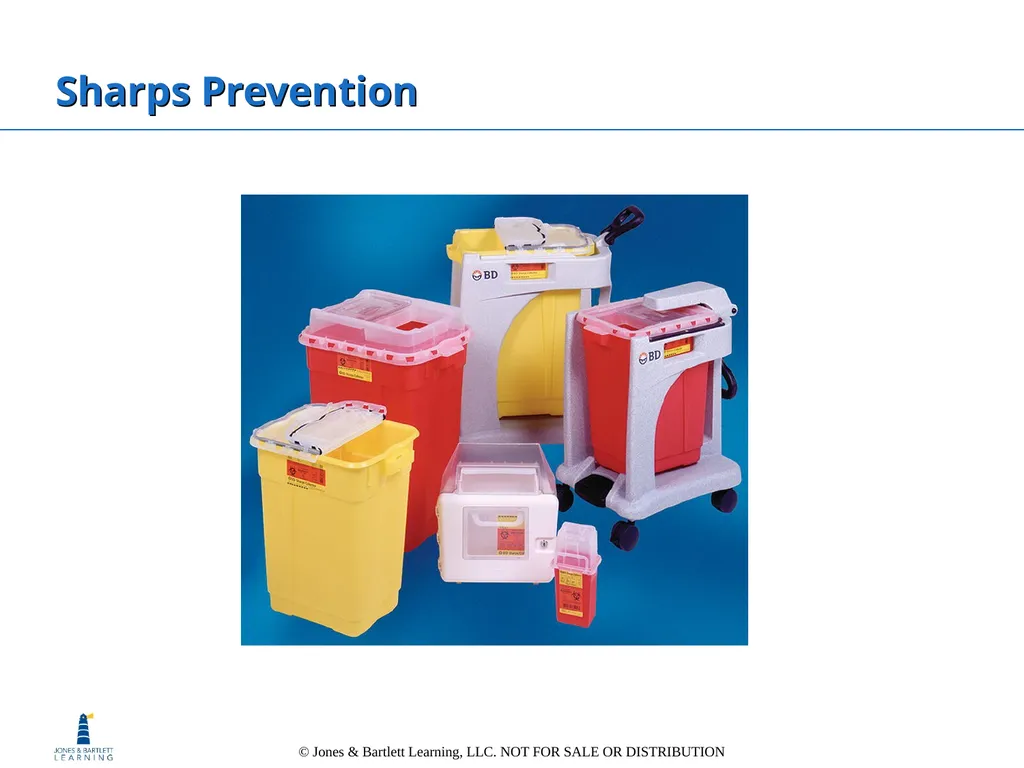
Sharps Prevention<br>
16
Immune Status: Screening and Vaccination Screening of employees
Tuberculosis—purified protein derivative (PPD, Mantoux) skin test
Rubella
Hepatitis B surface antigen
Vaccination of employees<br>
Tuberculosis—purified protein derivative (PPD, Mantoux) skin test
Rubella
Hepatitis B surface antigen
Vaccination of employees<br>
17
Safe Work Practices and Protective Techniques for Infection Control Safety manual, policies, and practices
Standard precautions to prevent occupational exposures to bloodborne pathogens
Handwashing
Personal protective equipment
Selection and use of gloves<br>
Standard precautions to prevent occupational exposures to bloodborne pathogens
Handwashing
Personal protective equipment
Selection and use of gloves<br>
18
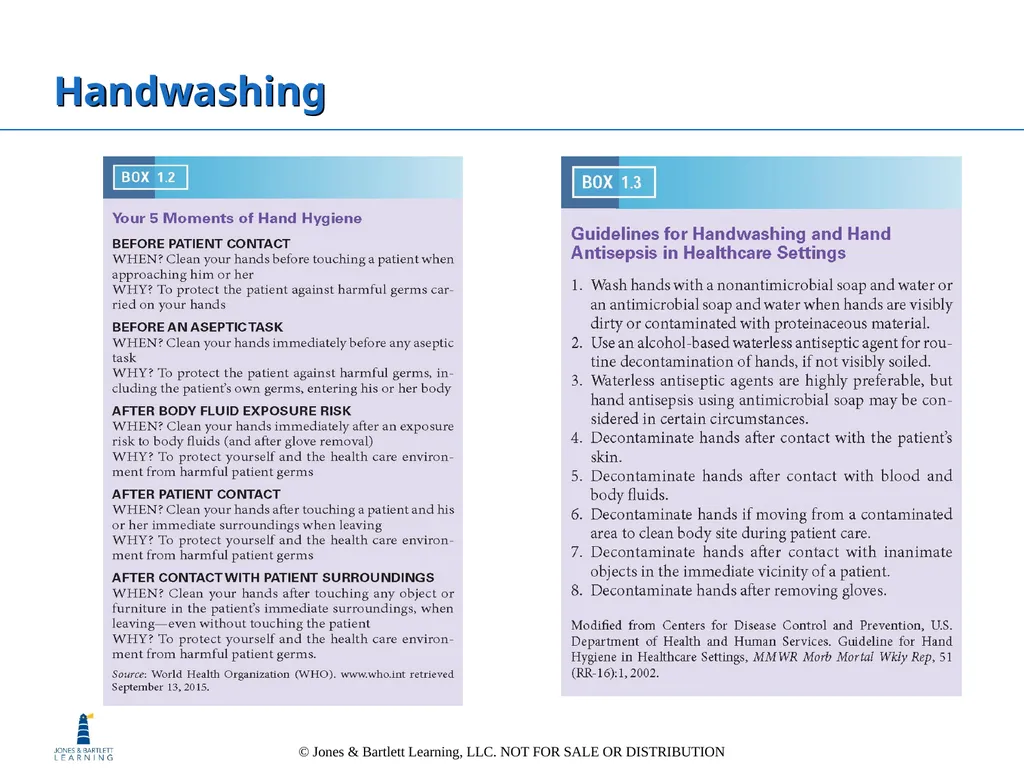
Handwashing<br>
19
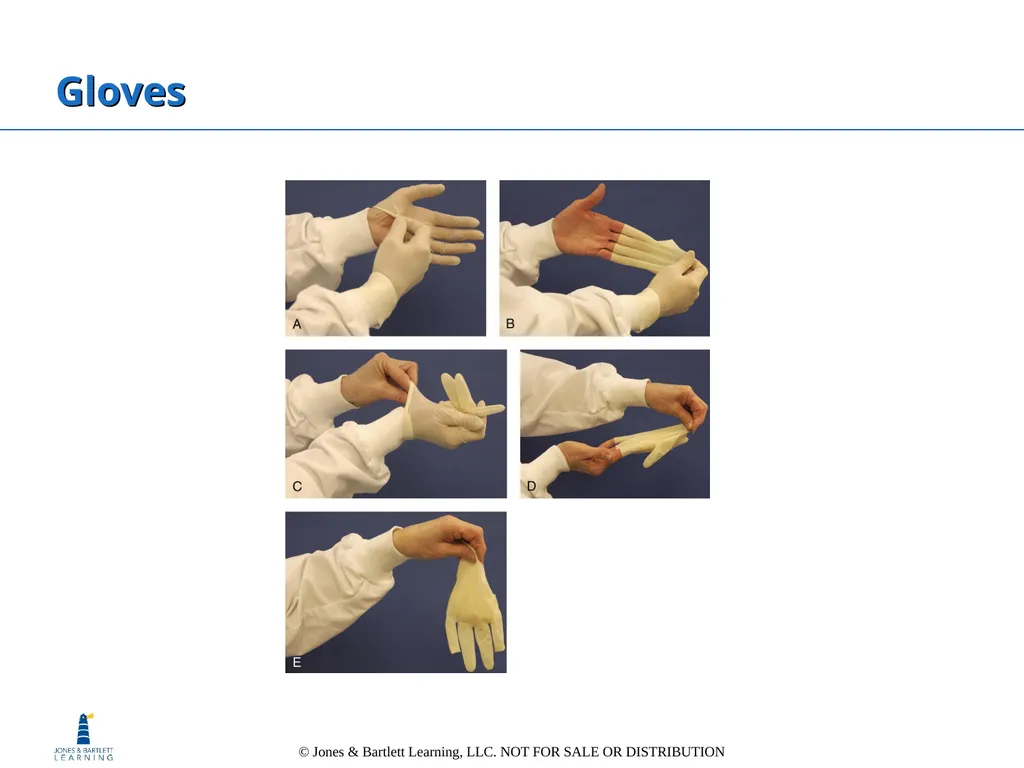
Gloves<br>
20
Guidelines for the Use of Gloves During Phlebotomy Procedures Must be worn when performing fingersticks or heelsticks on infants and children
Must be worn when receiving phlebotomy training
Should be changed between each patient contact
Must be worn when processing specimens<br>
Must be worn when receiving phlebotomy training
Should be changed between each patient contact
Must be worn when processing specimens<br>
21
Decontamination of Work Surfaces,
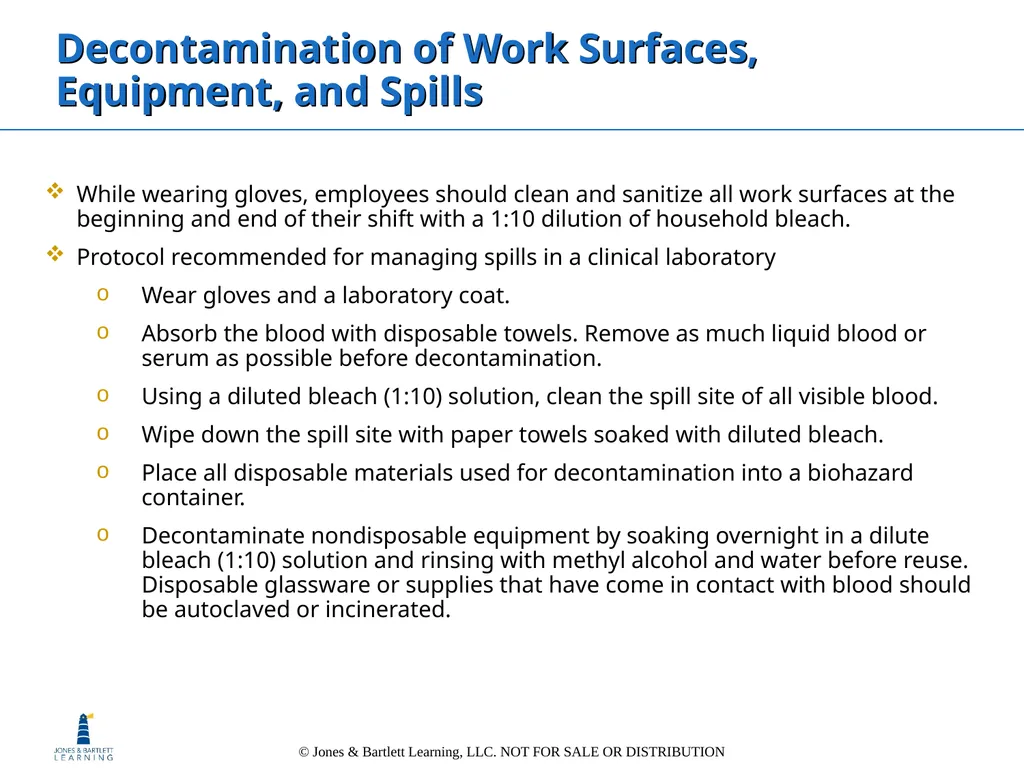
Equipment, and Spills While wearing gloves, employees should clean and sanitize all work surfaces at the beginning and end of their shift with a 1:10 dilution of household bleach.
Protocol recommended for managing spills in a clinical laboratory
Wear gloves and a laboratory coat.
Absorb the blood with disposable towels. Remove as much liquid blood or serum as possible before decontamination.
Using a diluted bleach (1:10) solution, clean the spill site of all visible blood.
Wipe down the spill site with paper towels soaked with diluted bleach.
Place all disposable materials used for decontamination into a biohazard container.
Decontaminate nondisposable equipment by soaking overnight in a dilute bleach (1:10) solution and rinsing with methyl alcohol and water before reuse. Disposable glassware or supplies that have come in contact with blood should be autoclaved or incinerated.<br>
Protocol recommended for managing spills in a clinical laboratory
Wear gloves and a laboratory coat.
Absorb the blood with disposable towels. Remove as much liquid blood or serum as possible before decontamination.
Using a diluted bleach (1:10) solution, clean the spill site of all visible blood.
Wipe down the spill site with paper towels soaked with diluted bleach.
Place all disposable materials used for decontamination into a biohazard container.
Decontaminate nondisposable equipment by soaking overnight in a dilute bleach (1:10) solution and rinsing with methyl alcohol and water before reuse. Disposable glassware or supplies that have come in contact with blood should be autoclaved or incinerated.<br>
22
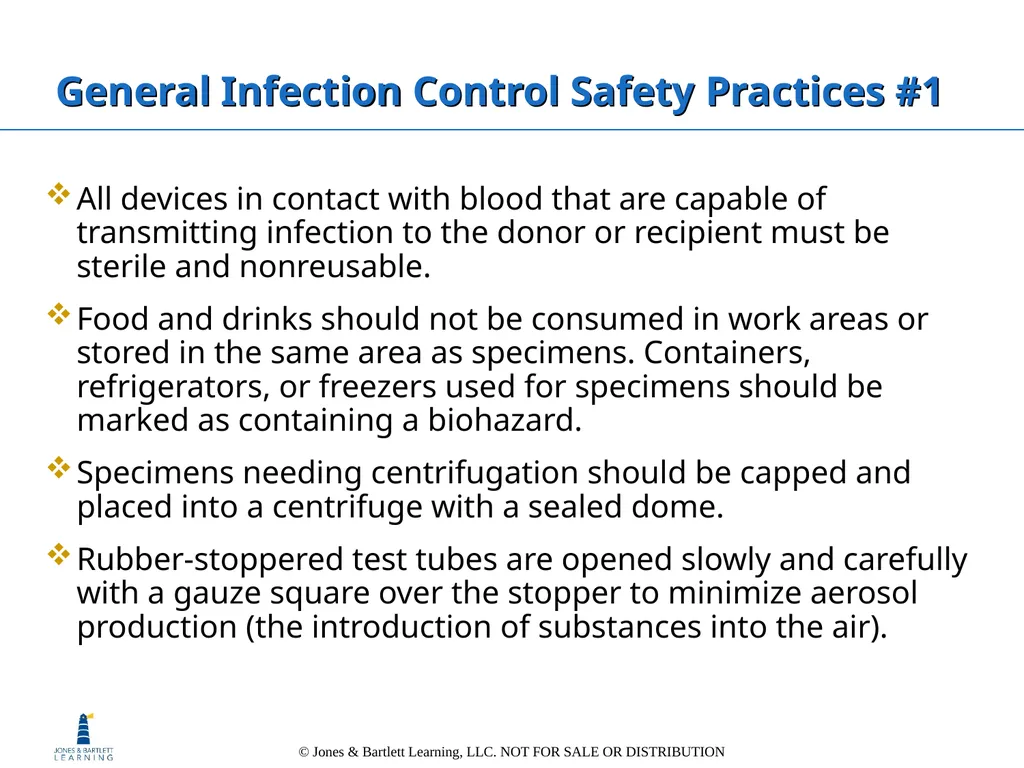
General Infection Control Safety Practices #1 All devices in contact with blood that are capable of transmitting infection to the donor or recipient must be sterile and nonreusable.
Food and drinks should not be consumed in work areas or stored in the same area as specimens. Containers, refrigerators, or freezers used for specimens should be marked as containing a biohazard.
Specimens needing centrifugation should be capped and placed into a centrifuge with a sealed dome.
Rubber-stoppered test tubes are opened slowly and carefully with a gauze square over the stopper to minimize aerosol production (the introduction of substances into the air).<br>
Food and drinks should not be consumed in work areas or stored in the same area as specimens. Containers, refrigerators, or freezers used for specimens should be marked as containing a biohazard.
Specimens needing centrifugation should be capped and placed into a centrifuge with a sealed dome.
Rubber-stoppered test tubes are opened slowly and carefully with a gauze square over the stopper to minimize aerosol production (the introduction of substances into the air).<br>
23
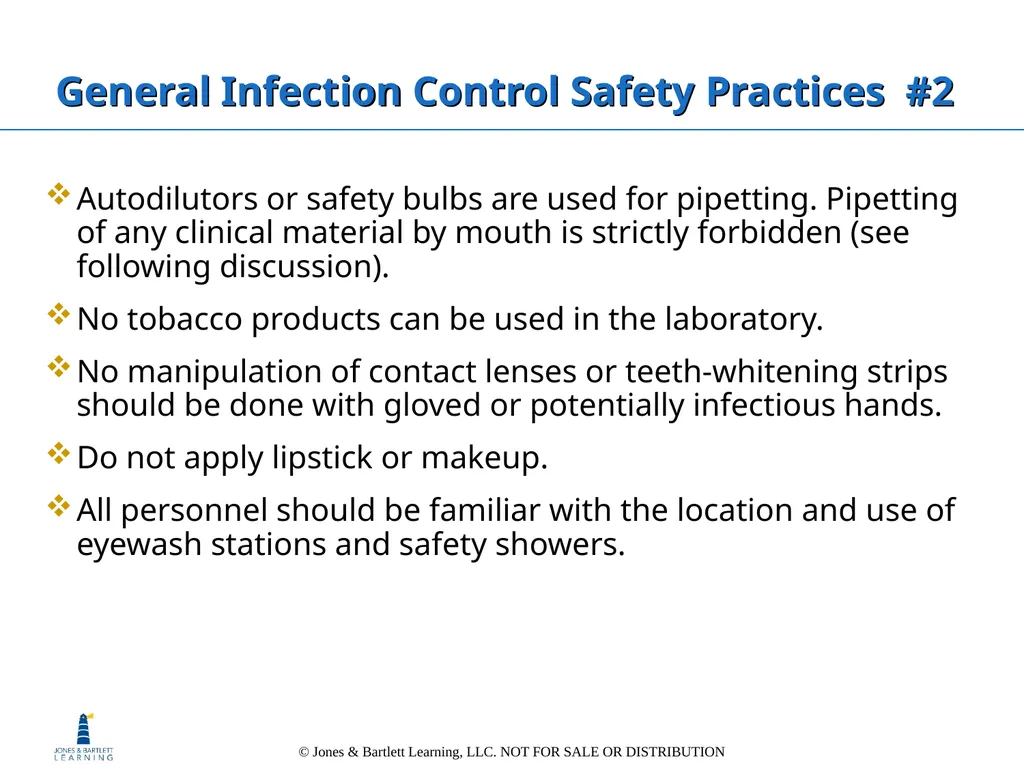
General Infection Control Safety Practices #2 Autodilutors or safety bulbs are used for pipetting. Pipetting of any clinical material by mouth is strictly forbidden (see following discussion).
No tobacco products can be used in the laboratory.
No manipulation of contact lenses or teeth-whitening strips should be done with gloved or potentially infectious hands.
Do not apply lipstick or makeup.
All personnel should be familiar with the location and use of eyewash stations and safety showers.<br>
No tobacco products can be used in the laboratory.
No manipulation of contact lenses or teeth-whitening strips should be done with gloved or potentially infectious hands.
Do not apply lipstick or makeup.
All personnel should be familiar with the location and use of eyewash stations and safety showers.<br>
24
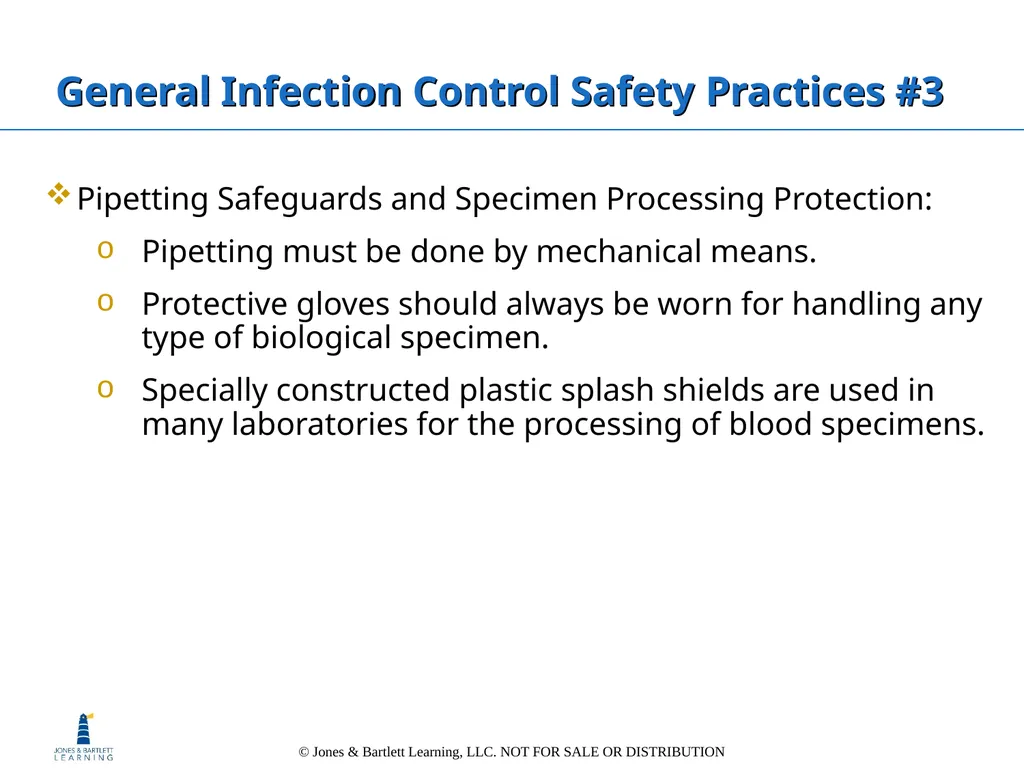
General Infection Control Safety Practices #3 Pipetting Safeguards and Specimen Processing Protection:
Pipetting must be done by mechanical means.
Protective gloves should always be worn for handling any type of biological specimen.
Specially constructed plastic splash shields are used in many laboratories for the processing of blood specimens.<br>
Pipetting must be done by mechanical means.
Protective gloves should always be worn for handling any type of biological specimen.
Specially constructed plastic splash shields are used in many laboratories for the processing of blood specimens.<br>
25
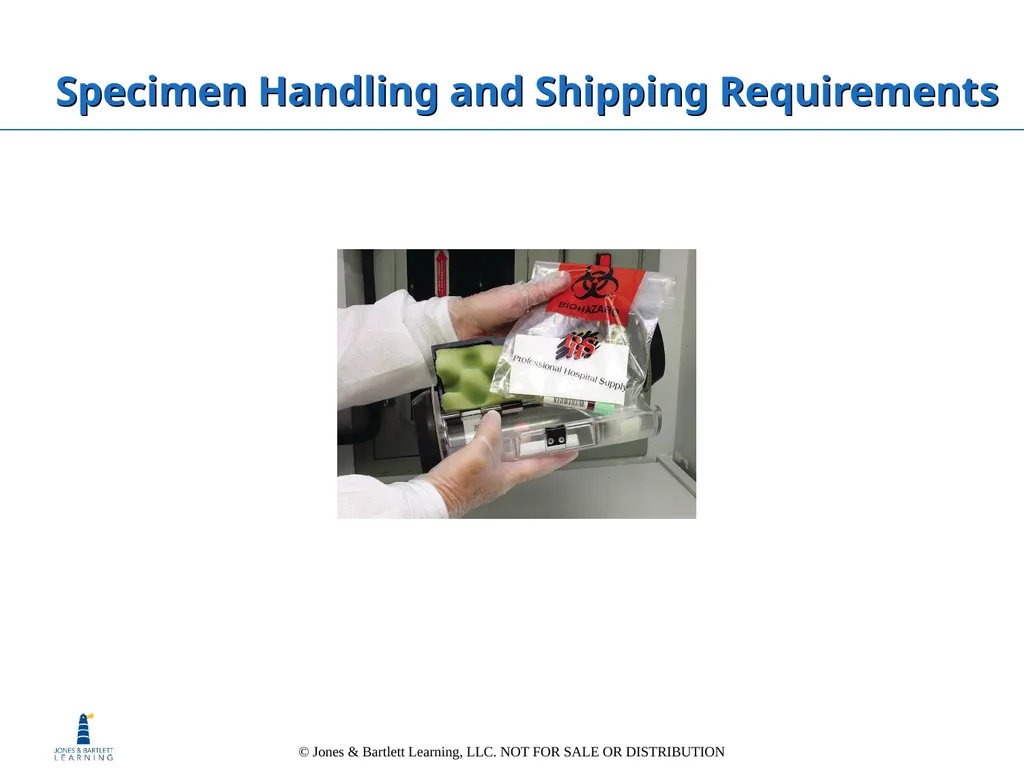
Specimen Handling and Shipping Requirements<br>
26
Storage of Processed Specimens Some specimens must be analyzed immediately after they reach the laboratory.
Blood specimens for hematology studies can be stored in the refrigerator for 2 hours before being used in testing. After storage, anticoagulated blood must be thoroughly mixed after it has reached room temperature.
Plasma and serum often can be frozen and preserved satisfactorily until a determination can be performed.<br>
Blood specimens for hematology studies can be stored in the refrigerator for 2 hours before being used in testing. After storage, anticoagulated blood must be thoroughly mixed after it has reached room temperature.
Plasma and serum often can be frozen and preserved satisfactorily until a determination can be performed.<br>
27
OSHA Medical Waste Standards On the federal level, the storage and management of medical waste is primarily regulated by OSHA.
Laws and statutes are defined by The Occupational Health and Safety Act and The Clean Air Act.<br>
Laws and statutes are defined by The Occupational Health and Safety Act and The Clean Air Act.<br>
28
Quality Assessment in the Hematology Laboratory Quality assessment programs monitor the following:
Test request procedures
Patient identification
Specimen procurement
Specimen labeling
Specimen transportation and processing procedures
Laboratory personnel performance
Laboratory instrumentation, reagents, and analytical test procedures
Turnaround times
Accuracy of the final result<br>
Test request procedures
Patient identification
Specimen procurement
Specimen labeling
Specimen transportation and processing procedures
Laboratory personnel performance
Laboratory instrumentation, reagents, and analytical test procedures
Turnaround times
Accuracy of the final result<br>
29
Clinical Laboratory Improvement Amendments CLIA established a minimum threshold for all aspects of clinical laboratory testing. CLIA’88 also incorporates proficiency testing in the regulations.
The final CLIA rule, Laboratory Requirements Relating to Quality Systems and Certain Personnel Qualifications was published in the Federal Register on January 24, 2003.<br>
The final CLIA rule, Laboratory Requirements Relating to Quality Systems and Certain Personnel Qualifications was published in the Federal Register on January 24, 2003.<br>
30
Voluntary Accrediting Organizations International Organization for Standardization (ISO) bridges the public and private sectors
ISO 15189 standard was created with the input from CAP and is mandated in Australia, Ontario, Canada, and many European countries. It remains optional in the US
Components of quality assessment
The total testing process (TTP) is defined by activities in three distinct phases related to workflow outside and inside the laboratory
Preanalytical (preexamination)
Analytical (examination)
Postanalytical (postexamination)<br>
ISO 15189 standard was created with the input from CAP and is mandated in Australia, Ontario, Canada, and many European countries. It remains optional in the US
Components of quality assessment
The total testing process (TTP) is defined by activities in three distinct phases related to workflow outside and inside the laboratory
Preanalytical (preexamination)
Analytical (examination)
Postanalytical (postexamination)<br>
31
Nonanalytical Factors in
Quality Assessment Nonanalytical factors that support quality testing include:
Qualified personnel
Laboratory policies
Laboratory procedure manual
Test requisitioning
Patient identification and specimen procurement and labeling
Specimen collection, transport, processing, and storage
Preventive maintenance of equipment
Appropriate methodology
Accuracy in reporting results and documentation<br>
Qualified personnel
Laboratory policies
Laboratory procedure manual
Test requisitioning
Patient identification and specimen procurement and labeling
Specimen collection, transport, processing, and storage
Preventive maintenance of equipment
Appropriate methodology
Accuracy in reporting results and documentation<br>
32
Quality Control in the Hematology Laboratory The purpose of quality control is to detect errors that result from
Test system failure
Adverse environmental conditions
Variance, a general term that describes the factors or fluctuations that affect the measurement, in operator performance<br>
Test system failure
Adverse environmental conditions
Variance, a general term that describes the factors or fluctuations that affect the measurement, in operator performance<br>
33
Terms Used in Clinical Quality Control Accuracy—how close a test result is to the true value
Calibration—comparison of an instrument measurement to a known physical constant
Control specimen—specimen that is similar in composition to patient specimens with a known value, performed exactly as a patient would be
Precision—reproducibility of the test result
Proficiency testing—to ensure testing is performed according to standards
Standards—highly purified substances of a known composition that does not have to be similar in composition to the patient nor performed in the same way a patient would be
Quality control—a monitoring process of accuracy and precision<br>
Calibration—comparison of an instrument measurement to a known physical constant
Control specimen—specimen that is similar in composition to patient specimens with a known value, performed exactly as a patient would be
Precision—reproducibility of the test result
Proficiency testing—to ensure testing is performed according to standards
Standards—highly purified substances of a known composition that does not have to be similar in composition to the patient nor performed in the same way a patient would be
Quality control—a monitoring process of accuracy and precision<br>
34
Functions of a Quality Control Program Providing a guide to the functioning of equipment, reagents, and individual technique
Confirming the accuracy of testing when compared with reference values
Detecting an increase in the frequency of both high and low minimally acceptable values (dispersion)
Detecting any progressive drift of values to one side of the average value for at least 3 days (trends)
Demonstrating an abrupt shift or change from the established average value for 3 days in a row (shift)<br>
Confirming the accuracy of testing when compared with reference values
Detecting an increase in the frequency of both high and low minimally acceptable values (dispersion)
Detecting any progressive drift of values to one side of the average value for at least 3 days (trends)
Demonstrating an abrupt shift or change from the established average value for 3 days in a row (shift)<br>
35
Analysis of Quantitative Data Terms
Average = sum of the test results divided by the number of tests (the arithmetic mean value)
Mean = average or arithmetic mean
Median = the middle value of a set of numbers arranged according to their magnitude
Mode = the number or value that occurs with the greatest frequency<br>
Average = sum of the test results divided by the number of tests (the arithmetic mean value)
Mean = average or arithmetic mean
Median = the middle value of a set of numbers arranged according to their magnitude
Mode = the number or value that occurs with the greatest frequency<br>
36
Measurements of Variation Range = the difference between the highest and lowest measurement in a series
Variance = expression of the position of each observation or test result in relationship to the mean of the values
Standard deviation (SD) = expresses the degree to which the test data tend to vary around the mean
Coefficient of variation (CV) = related standard deviation; compares variability in nonidentical data sets<br>
Variance = expression of the position of each observation or test result in relationship to the mean of the values
Standard deviation (SD) = expresses the degree to which the test data tend to vary around the mean
Coefficient of variation (CV) = related standard deviation; compares variability in nonidentical data sets<br>
37
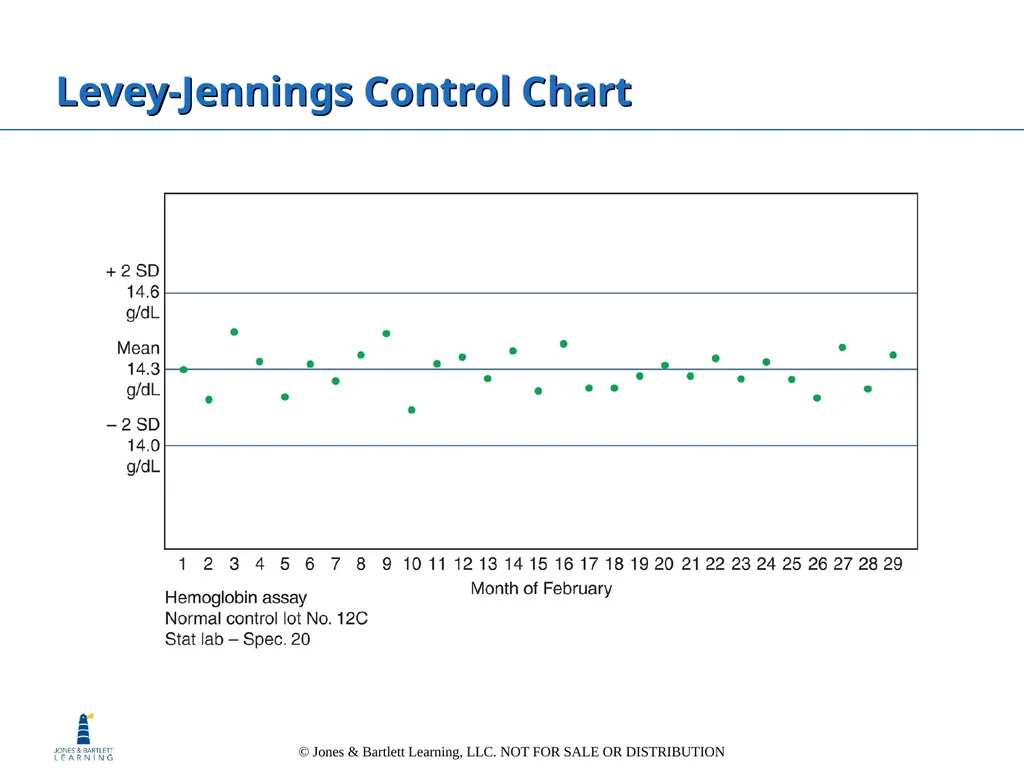
Using Statistical Analysis of Results in Quality Assurance The Levey-Jennings chart
The cumulative sum (Cusum) method
Trend line analysis
Power functions<br>
The cumulative sum (Cusum) method
Trend line analysis
Power functions<br>
38
Levey-Jennings Control Chart<br>
39
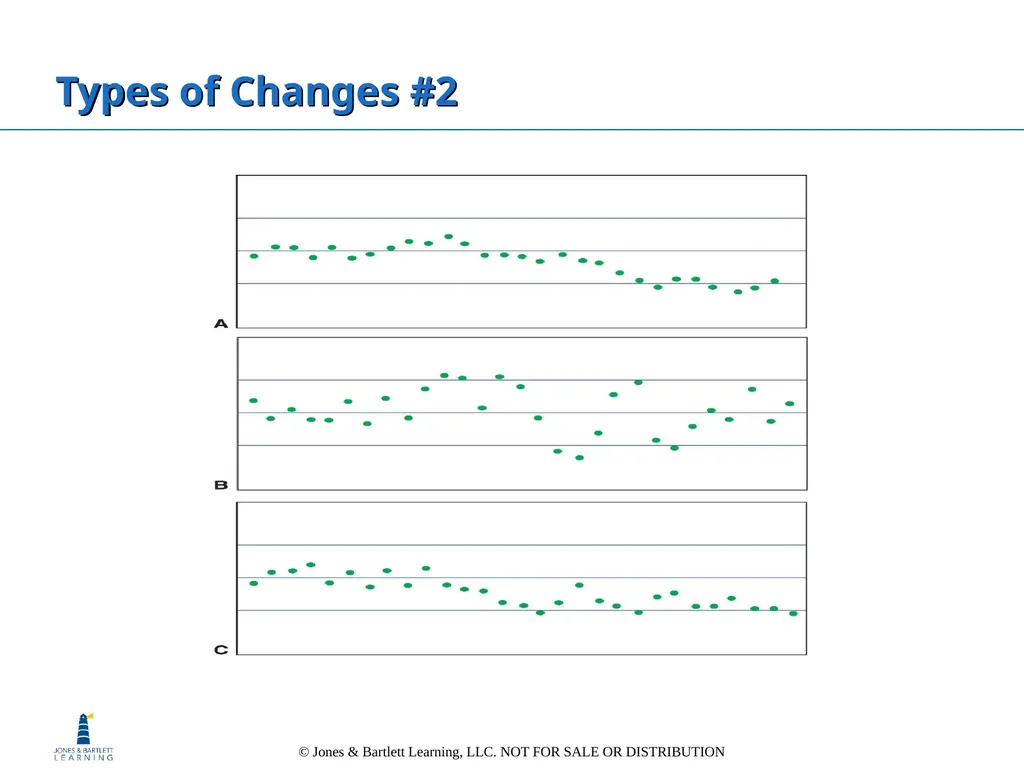
Types of Changes #1 The classification of changes in a quality control system is important because different kinds of changes suggest different sources. Three types of changes are commonly observed in the Levey-Jennings quality control approach
Systematic drift
Increased dispersion of results
Shift or abrupt change in results<br>
Systematic drift
Increased dispersion of results
Shift or abrupt change in results<br>
40
Types of Changes #2<br>
41
Computed-Based Control Systems Cumulative sum (Cusum) method—it allows for the rapid detection of trends and shifts from the mean
Trend line analysis—observed daily results of either the control value or the change in the SD introduced by the control value are tracked
Power functions—these are a means of displaying the performance of a quality control rule by plotting the probability for rejection versus the size of the analytical error<br>
Trend line analysis—observed daily results of either the control value or the change in the SD introduced by the control value are tracked
Power functions—these are a means of displaying the performance of a quality control rule by plotting the probability for rejection versus the size of the analytical error<br>
42
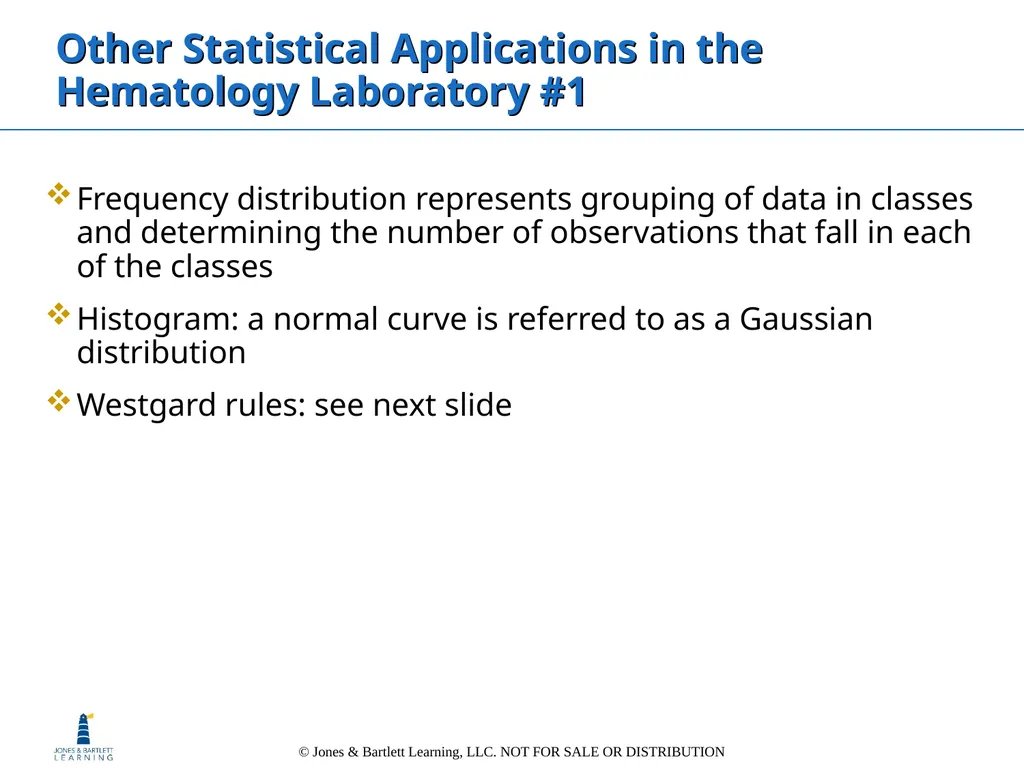
Other Statistical Applications in the Hematology Laboratory #1 Frequency distribution represents grouping of data in classes and determining the number of observations that fall in each of the classes
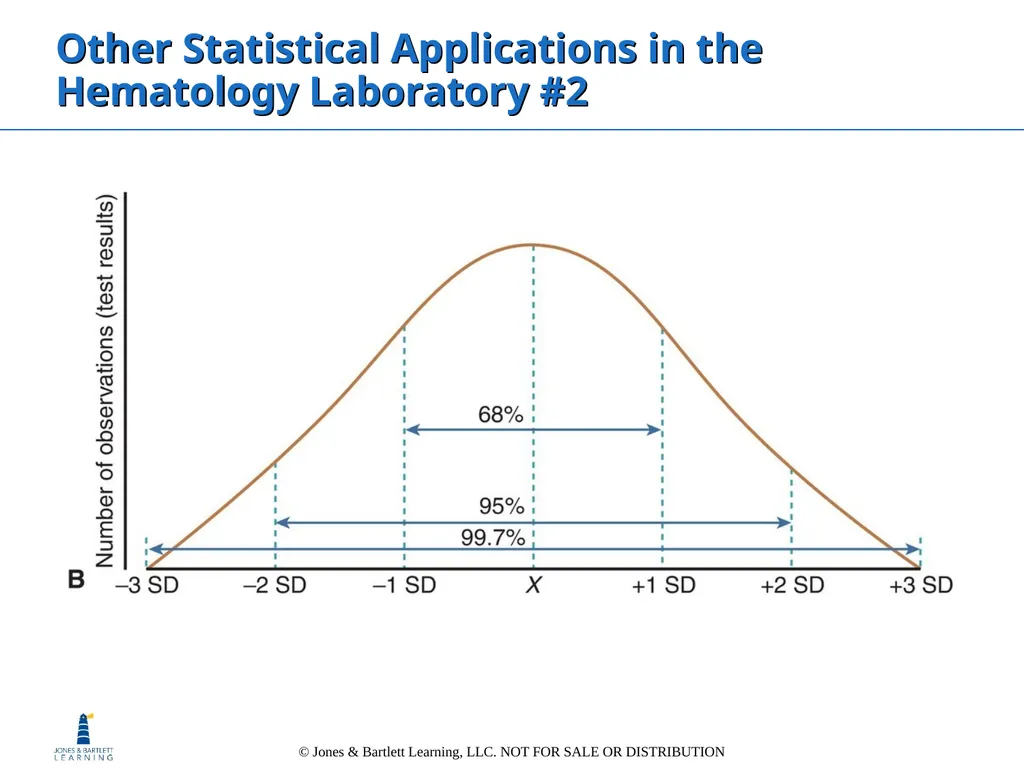
Histogram: a normal curve is referred to as a Gaussian distribution
Westgard rules: see next slide<br>
Histogram: a normal curve is referred to as a Gaussian distribution
Westgard rules: see next slide<br>
43
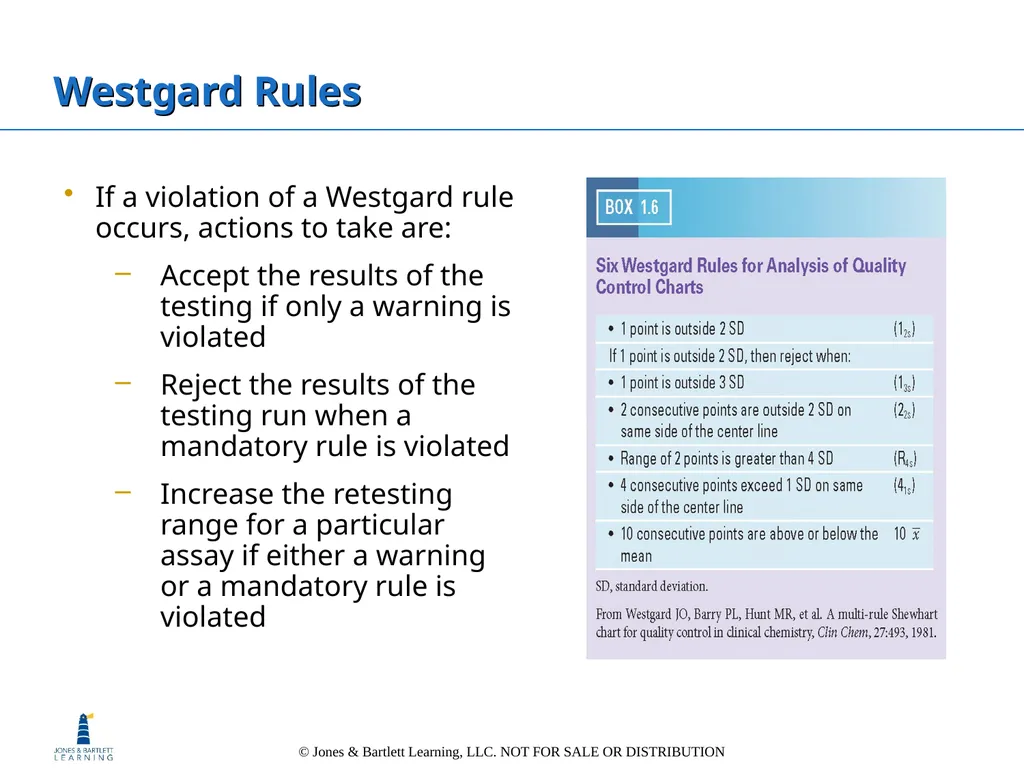
Westgard Rules If a violation of a Westgard rule occurs, actions to take are:
Accept the results of the testing if only a warning is violated
Reject the results of the testing run when a mandatory rule is violated
Increase the retesting range for a particular assay if either a warning or a mandatory rule is violated<br>
Accept the results of the testing if only a warning is violated
Reject the results of the testing run when a mandatory rule is violated
Increase the retesting range for a particular assay if either a warning or a mandatory rule is violated<br>
44
Other Statistical Applications in the Hematology Laboratory #2<br>