
CHAPTER 19 Environmental Emergencies Introduction
Description: CHAPTER 19 Environmental Emergencies Introduction Environmental emergencies are defined as any medical condition that is caused or worsened by weather, terrain, or unique atmospheric conditions Can occur anywhere Critical care transport
Related Topics
Download Presentation
"CHAPTER 19 Environmental Emergencies Introduction" is the property of its rightful owner. Permission is granted to download and print the materials on this website for personal, non-commercial use only, and to display it on your personal computer provided you do not modify the materials and that you retain all copyright notices contained in the materials. By downloading content from our website, you accept the terms of this agreement.
Presentation Transcript
slide1. CHAPTER 19 Environmental Emergencies<br>
slide2. Introduction Environmental emergencies are defined as any medical condition that is caused or worsened by weather, terrain, or unique atmospheric conditions
Can occur anywhere
Critical care transport professionals (CCTPs) are often involved in transporting patients between facilities<br>
slide3. Risk Factors Age (young and old at greatest risk)
Medications
Preexisting medical conditions
Diabetes
Cardiovascular disease
Restrictive lung disease
Thyroid disease
Psychiatric illnesses<br>
slide4. Thermoregulation (1 of 11) Ability to acclimatize is part of the homeostatic process
Thermoregulation is the body’s natural ability to maintain temperature
Thermogenesis: heat production
Thermolysis: heat elimination
Normal temperature is 98.6ºF (37ºC)<br>
slide5. Thermoregulation (2 of 11) Hypothalamo-hypophyseal portal system
Hypothalamus sends stimulating or inhibiting factor to pituitary gland
Interaction between hypothalamus and pituitary gland is called the hypothalamic-pituitary axis<br>
slide6. Thermoregulation (3 of 11) Hypothalamus serves as the body’s “master thermostat” through negative feedback control
Rise in core body temperature elicits signals to shut off thermogenesis
Fall in core body temperature results in heat production and limits thermolysis mechanisms<br>
slide7. Thermoregulation (4 of 11) Negative feedback system has three major components:
Temperature receptors
Effector organ systems
Integratory or controller<br>
slide8. Thermoregulation (5 of 11) Heat response
Blood vessels in skin dilate, resulting in transfer of heat to skin surface
Perspiration is increased to 10 times normal
Increases in muscle activity, including shivering, are inhibited<br>
slide9. Thermoregulation (6 of 11) Cold response
Stimulation of posterior hypothalamus causes a constriction of blood vessels
Hypothalamic stimulation causes an increase in muscle activity, including shivering
Hypothalamic stimulation of piloerector muscles in skin causes “goosebumps” and body hair to “stand on end”<br>
slide10. Thermoregulation (7 of 11) Basal metabolic rate (BMR)
At rest, the chief source of heat production is the metabolism of nutrients
BMR is the number of calories metabolized per square inch of body surface area per hour
Average BMR for a 154-lb (70-kg) adult is 60–70 kcal/h.<br>
slide11. Thermoregulation (8 of 11) Heat transfer
Radiation: transfer of heat through electromagnetic waves
Conduction: transfer of heat through direct contact with a cooler object
Convection: loss of heat carried away from the body by currents of air or water<br>
slide12. Thermoregulation (9 of 11) Heat transfer (cont'd)
Evaporation: loss of heat carried away as liquid converts to gas
Respiration: loss of heat as warm air is exhaled and cooler air is inhaled
Absorption: body gains heat when surrounding environment is hotter than the body<br>
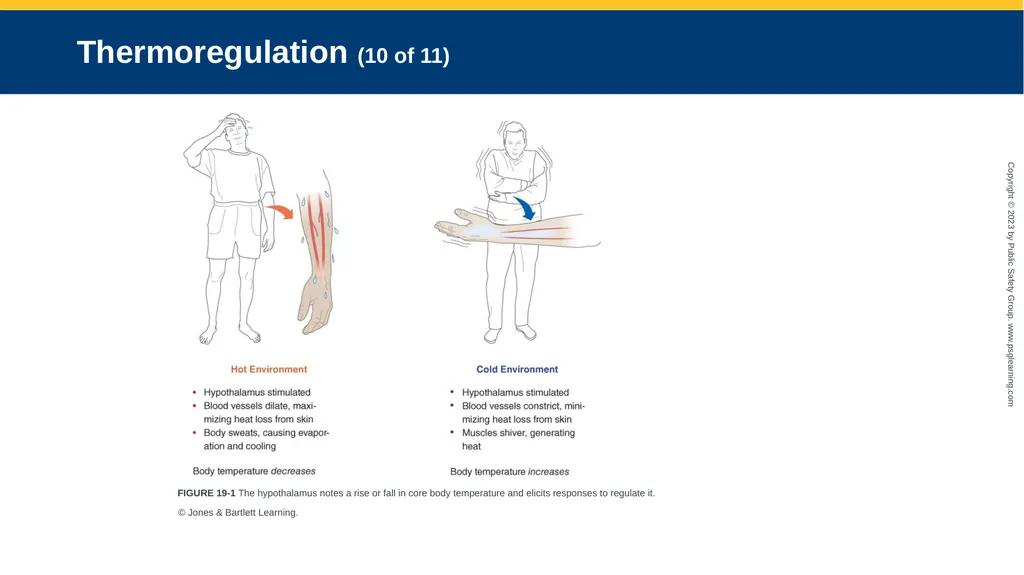
slide13. Thermoregulation (10 of 11) FIGURE 19-1 The hypothalamus notes a rise or fall in core body temperature and elicits responses to regulate it. © Jones & Bartlett Learning.<br>
slide14. Thermoregulation (11 of 11) Expecting the unexpected
A person can have a temperature-related emergency in any environment
CCTPs must be aware of patient’s inability to self-regulate temperature and take steps to maintain warmth or prevent overheating<br>
slide15. Heat Emergencies (1 of 5) An increase in core body temperature as a result of inadequate thermolysis
According to US Centers for Disease Control and Prevention, heat-related illness is a major public health concern
More than 700 heat-related deaths in the United States each year<br>
slide16. Heat Emergencies (2 of 5) Risk factors:
General state of health
Age
Use of certain medications
Amount of clothing
Mobility
Surroundings<br>
slide17. Heat Emergencies (3 of 5) Medications that cause or aggravate heat illness
Alcohol and barbiturates
Central nervous system depressants
Stimulant medications
Cocaine, amphetamines, and other sympathomimetics<br>
slide18. Heat Emergencies (4 of 5) Medications that cause or aggravate heat illness (cont’d)
Beta blockers, calcium channel blockers, and diuretics
Antihistamines, tricyclic antidepressants, and anticholinergics<br>
slide19. Heat Emergencies (5 of 5) If thermoregulation mechanisms fail, the core body temperature can rise to 106ºF (41.1ºF) in less than 15 minutes
Older persons and young children are at greatest risk of heat-related illness<br>
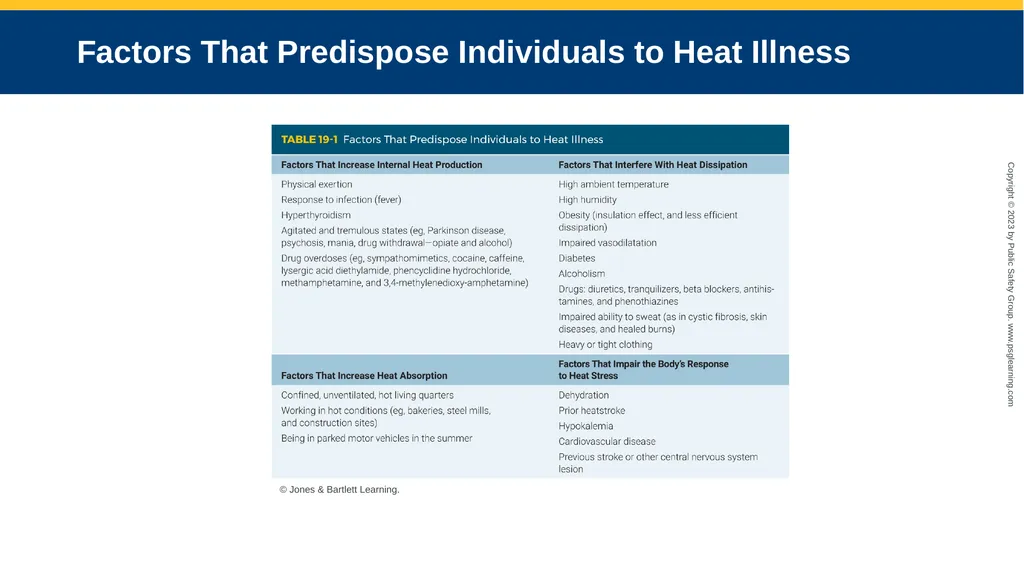
slide20. Factors That Predispose Individuals to Heat Illness © Jones & Bartlett Learning.<br>
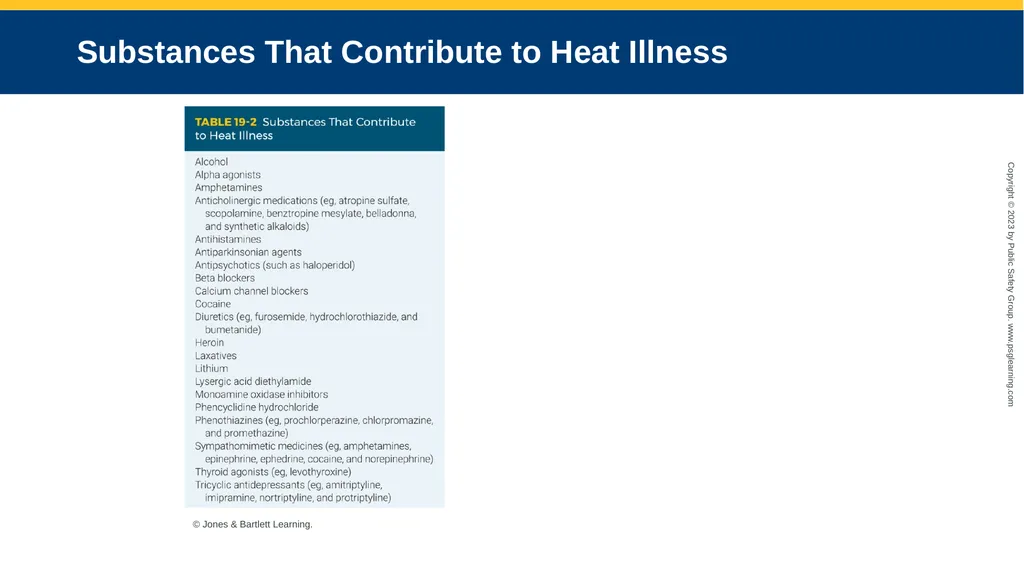
slide21. Substances That Contribute to Heat Illness © Jones & Bartlett Learning.<br>
slide22. Exertional Heatstroke Occurs during physical activity in a warm environment and is influenced by:
Exercise intensity
Environmental conditions
Clothing
Equipment
Individual health factors
A leading cause of death among high school athletes in the United States<br>
slide23. Heat Cramps (1 of 3) Involuntary muscle pains, usually in abdomen and/or lower extremities, as a result of profuse sweating and loss of sodium
Person may attempt to quench thirst by drinking excessive amounts of water, causing water intoxication<br>
slide24. Heat Cramps (2 of 3) Treatment usually involves cooling and replacing lost fluids
Remove patient from hot environment
Patient may need emergency care in case of hyponatremia (severe loss of salts)
CCTPs should administer intravenous (IV) fluids after adequate patient evaluation and/or laboratory studies<br>
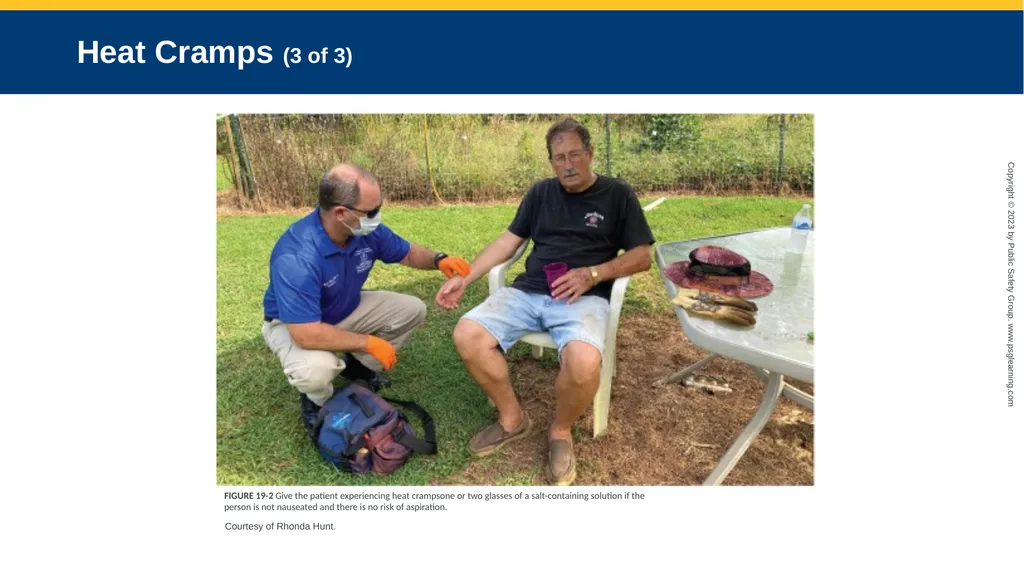
slide25. Heat Cramps (3 of 3) FIGURE 19-2 Give the patient experiencing heat crampsone or two glasses of a salt-containing solution if the
person is not nauseated and there is no risk of aspiration. Courtesy of Rhonda Hunt.<br>
slide26. Hyponatremia (Water Intoxication) (1 of 3) Dilutional hyponatremia
Overconsumption of water pushes body’s balance of sodium outside of safe limits
Exercise-associated hyponatremia (EAH)
Serum sodium of less than 135 mmol/L within 24 hours of activity, lasting 4 hours or longer
Seen in endurance athletes<br>
slide27. Hyponatremia (Water Intoxication) (2 of 3) Signs and symptoms
Weakness
Dizziness
Peripheral edema
Headache, lethargy
Nausea/vomiting
Key sign: significant weight gain (over 6.6 lb) from start of event to its completion<br>
slide28. Hyponatremia (Water Intoxication) (3 of 3) Mild cases treated with restriction of hypotonic fluids and consumption of salty oral solutions
Severe cases can be given IV hypotonic saline or sodium bicarbonate
Generally, an increase of 4 to 6 mmol/L serum sodium will correct symptoms<br>
slide29. Heat Syncope Collapse or near collapse that occurs in nonacclimatized persons
Often seen at outdoor events where crowds are standing for long periods
Place patient in a supine position, move to a cooler environment, and give fluids
Suspect heat exhaustion or stroke if patient does not recover quickly<br>
slide30. Heat Exhaustion (1 of 3) Water-depleted exhaustion occurs in older adults, active younger workers, and athletes who do not replenish fluids in a hot environment
Sodium-depleted exhaustion results from excessive losses of sodium from sweating<br>
slide31. Heat Exhaustion (2 of 3) Signs and symptoms
Headache
Fatigue, weakness
Dizziness
Nausea and vomiting
Abdominal cramps
Profuse sweating
Pale, clammy skin
Elevated heart rate and respiration<br>
slide32. Heat Exhaustion (3 of 3) Treatment
Move patient to cooler environment
Remove excess clothing
Place in supine position, legs elevated
Rehydrate
Obtain blood samples
Closely monitor electrocardiogram (ECG) for arrhythmia
Cool the patient<br>
slide33. Heatstroke (1 of 5) Least common but most deadly heat illness
Severe disturbance of body’s thermoregulation
Mortality rate from heatstroke in treated patients can be as high as 10%
Body temperature of more than 104ºF (40ºC)
Critical thermal maximum is reached when core body temperature exceeds 109.4ºF (43ºC)<br>
slide34. Heatstroke (2 of 5) Classic
Occurs during heat waves
Affects very old, very young, and bedridden
Also affects chronically ill, alcoholics, and people on certain medications
Exertional
Affects young, healthy people who overexert themselves in hot environments<br>
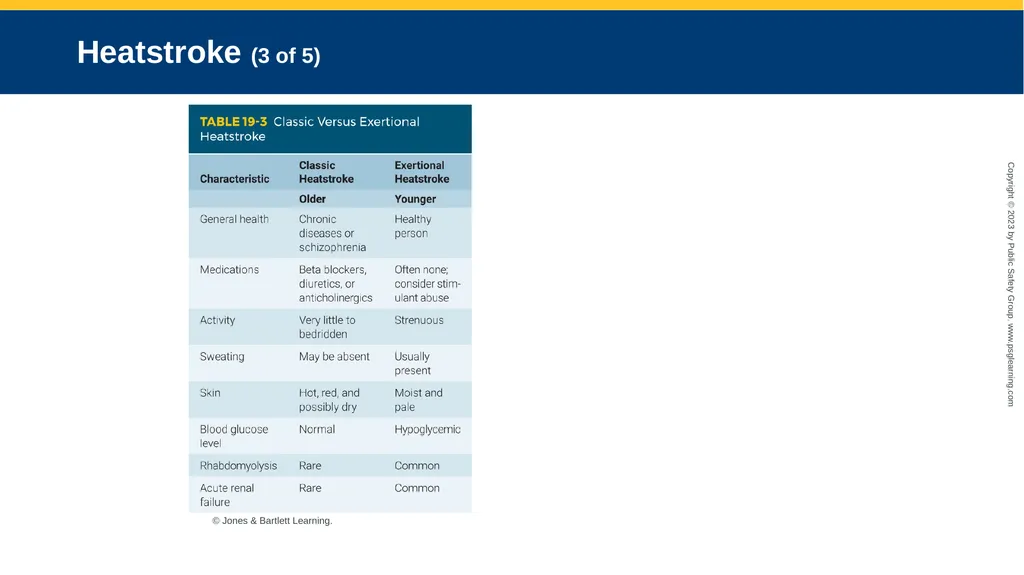
slide35. Heatstroke (3 of 5) © Jones & Bartlett Learning.<br>
slide36. Heatstroke (4 of 5) Signs and symptoms
Altered mental status
Confusion
Irritability
Bizarre behavior
Combativeness
Hallucinations
Elevated core body temperature
Tachycardia<br>
slide37. Heatstroke (5 of 5) Signs and symptoms (cont’d)
Tachypnea, with ETCO2 values of less than 20 mm Hg
Hot, red skin
Normal or decreased blood pressure
Seizure<br>
slide38. Treatment (1 of 2) Lower core body temperature
Evaluate airway, breathing, and circulation
Remove excess clothing and move patient to a cooler area
Cold-water immersion (preferred treatment)<br>
slide39. Treatment (2 of 2) Evaporative cooling until core body temperature is below 102ºF (38.8ºC)
IV line of isotonic fluid, obtain blood samples
Monitor closely for signs of pulmonary edema
Closely monitor ECG, vital signs, and ETCO2
Be prepared to treat seizure with benzodiazepine<br>
slide40. Signs Expecting the unexpected
With older adults of elevated temperature, CCTPs should pay attention to signs of poor skin turgor
Other conditions may mimic heatstroke<br>
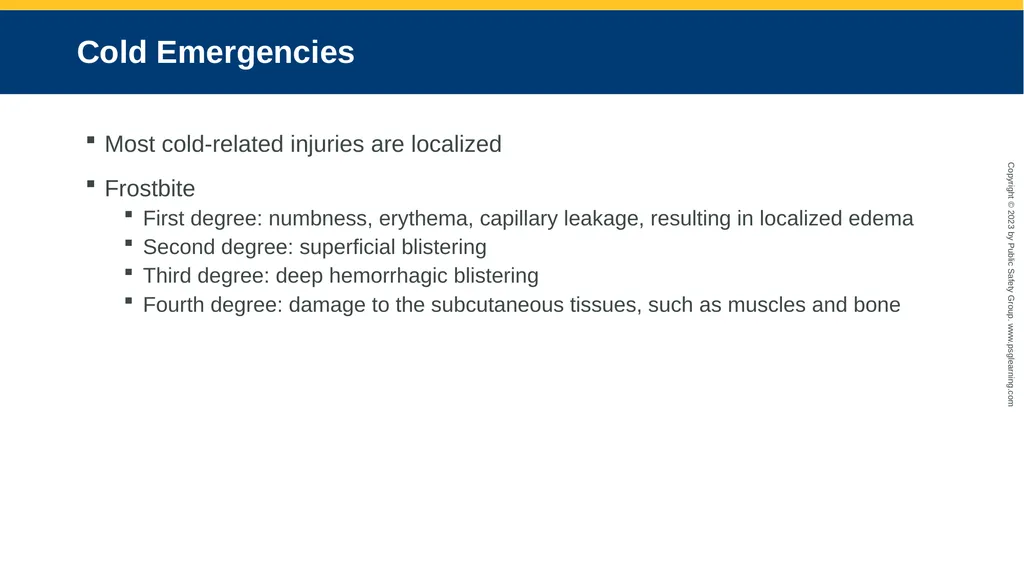
slide41. Cold Emergencies Most cold-related injuries are localized
Frostbite
First degree: numbness, erythema, capillary leakage, resulting in localized edema
Second degree: superficial blistering
Third degree: deep hemorrhagic blistering
Fourth degree: damage to the subcutaneous tissues, such as muscles and bone<br>
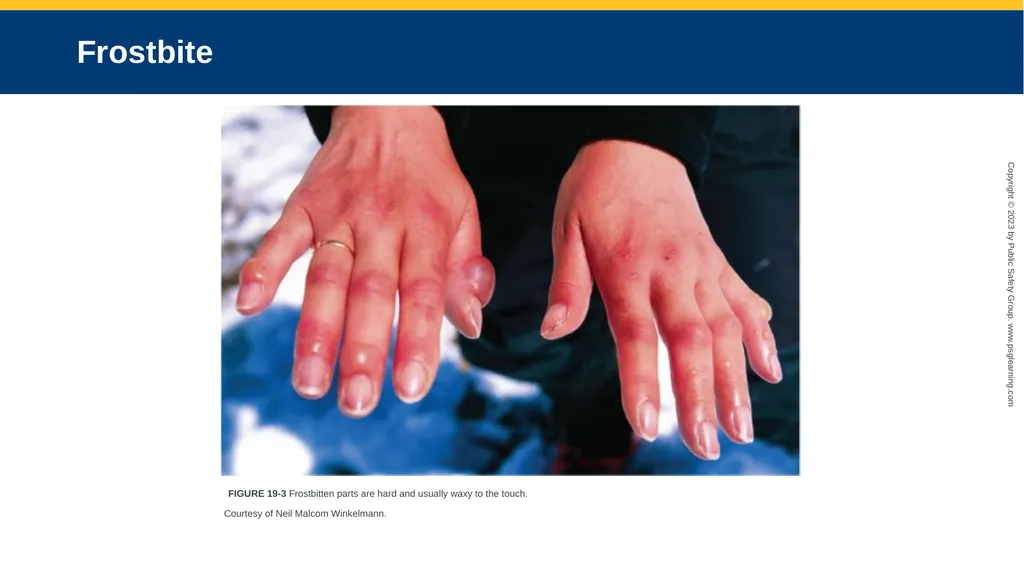
slide42. Frostbite FIGURE 19-3 Frostbitten parts are hard and usually waxy to the touch. Courtesy of Neil Malcom Winkelmann.<br>
slide43. Treatment for Deep Frostbite (1 of 2) If transport time is less than 1 hour, the part should be kept frozen
Contact medical control if the tissue is partially thawed or transport will take more than 1 hour
Part should be padded with dry dressings to avoid further injury<br>
slide44. Treatment for Deep Frostbite (2 of 2) The affected tissue should be immersed completely in water between 98.6ºF and 102.2ºF (37ºC and 39ºC)
An IV line should be established for the administration of pain control medication (such as fentanyl or ketamine)
The water temperature should be monitored to maintain it in the therapeutic range<br>
slide45. Hypothermia (1 of 5) Defined as a decrease in core body temperature to 95ºF (35ºC) or less
Can occur in any season
Alcohol is a contributing factor
Hypothyroidism, liver disease, and malnutrition can predispose someone to hypothermia
Trauma, hypovolemia, and hypotension are contributing factors<br>
slide46. Hypothermia (2 of 5) Mild hypothermia
Core body temperature between 90ºF and 95ºF (32.2ºC and 35ºC)
Body compensates with increased thermogenesis and interrupted thermolysis
Shivering
Stumbles, mumbles, fumbles, and grumbles
Elevated heart rate, blood pressure, and cardiac output<br>
slide47. Hypothermia (3 of 5) Moderate hypothermia
Core body temperature between 82ºF and 90ºF (27.7ºC and 32.2ºC)
Mental status is markedly decreased; patient likely conscious
Shivering present, but less vigorous
Warming with an external heat source is necessary<br>
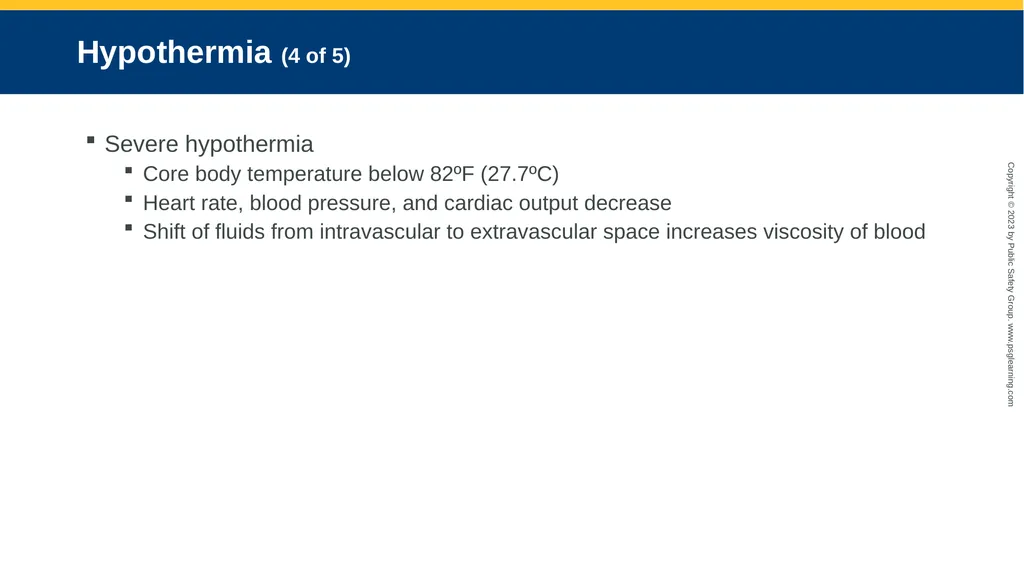
slide48. Hypothermia (4 of 5) Severe hypothermia
Core body temperature below 82ºF (27.7ºC)
Heart rate, blood pressure, and cardiac output decrease
Shift of fluids from intravascular to extravascular space increases viscosity of blood<br>
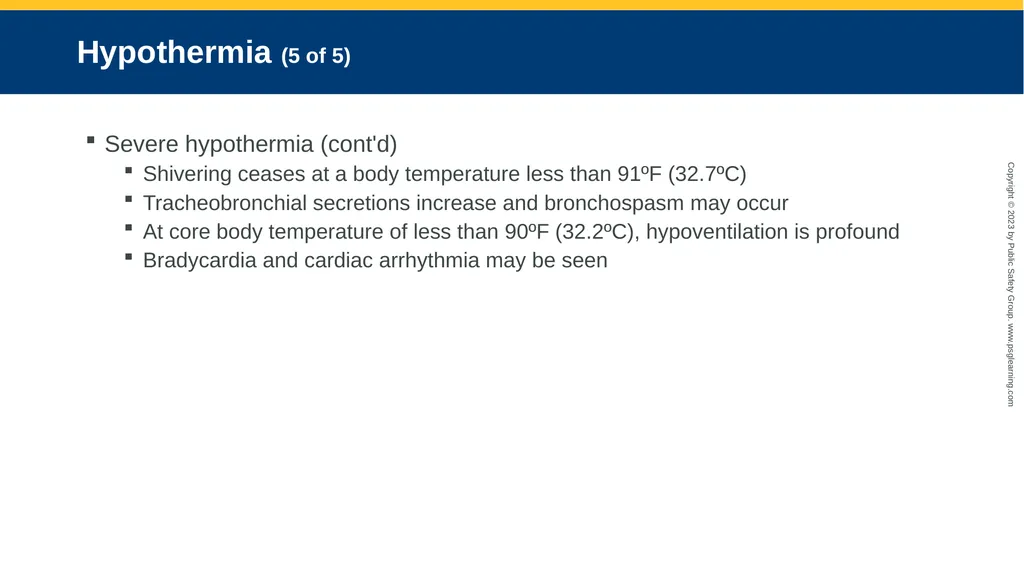
slide49. Hypothermia (5 of 5) Severe hypothermia (cont'd)
Shivering ceases at a body temperature less than 91ºF (32.7ºC)
Tracheobronchial secretions increase and bronchospasm may occur
At core body temperature of less than 90ºF (32.2ºC), hypoventilation is profound
Bradycardia and cardiac arrhythmia may be seen<br>
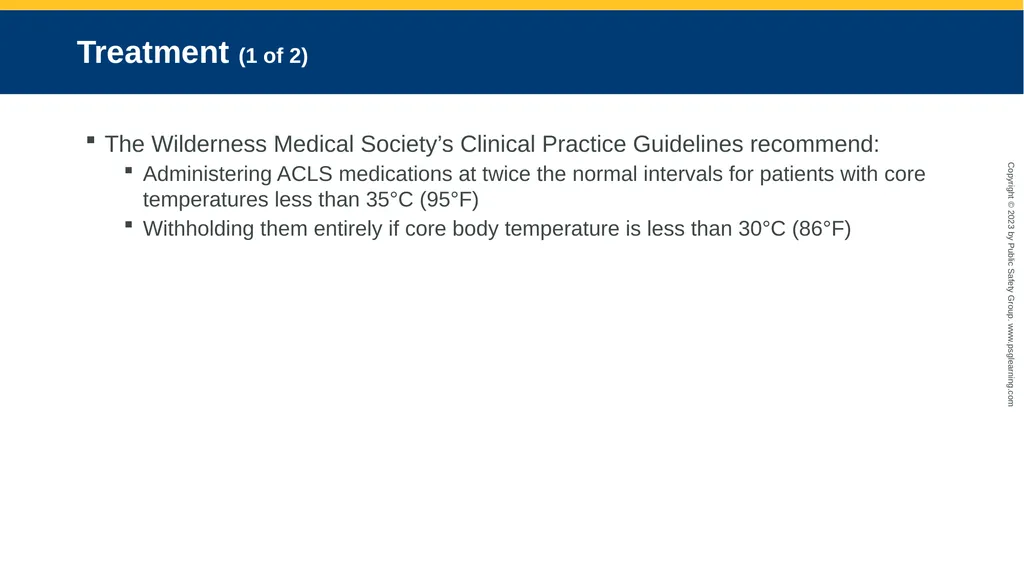
slide50. Treatment (1 of 2) The Wilderness Medical Society’s Clinical Practice Guidelines recommend:
Administering ACLS medications at twice the normal intervals for patients with core temperatures less than 35°C (95°F)
Withholding them entirely if core body temperature is less than 30°C (86°F)<br>
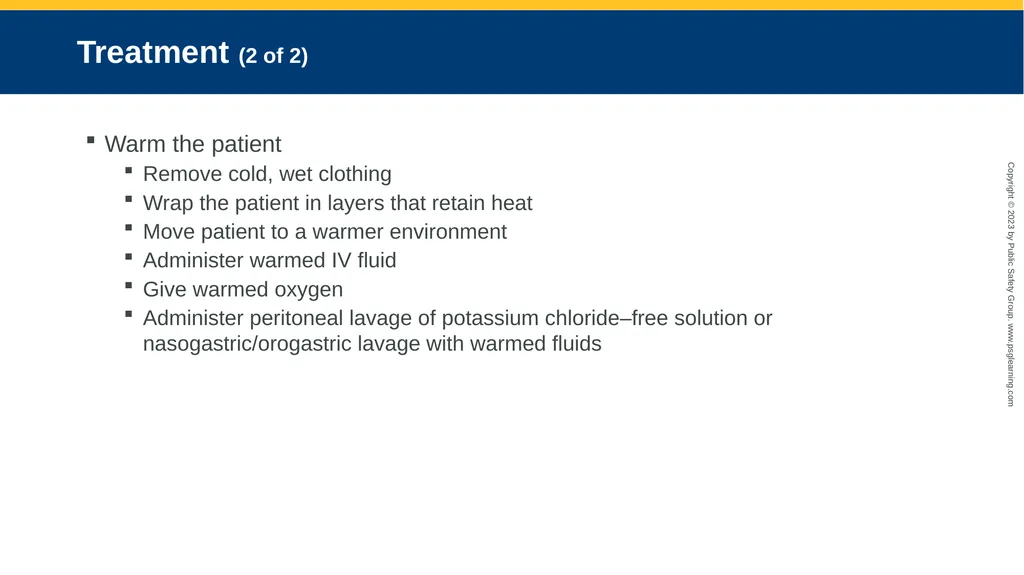
slide51. Treatment (2 of 2) Warm the patient
Remove cold, wet clothing
Wrap the patient in layers that retain heat
Move patient to a warmer environment
Administer warmed IV fluid
Give warmed oxygen
Administer peritoneal lavage of potassium chloride–free solution or nasogastric/orogastric lavage with warmed fluids<br>
slide52. Transport Expecting the unexpected
Transport can cause or worsen hypothermia
Even brief exposure (ie, from vehicle to hospital) can undermine warming efforts
CCTPs must sacrifice their own comfort for the benefit of the patient<br>
slide53. Drowning Every day, 10 people die from drowning
Leading cause of unintentional injury-related death in the United States for children 1–4 years
More than 50% of drowning patients in emergency departments require hospitalization or transfer for further care<br>
slide54. Treatment (1 of 2) Spine motion restriction if person was seen diving or if alcohol use is suspected
Initiate ventilation immediately if needed
Advanced airway management
Provide positive end-expiratory pressure (PEEP)<br>
slide55. Treatment (2 of 2) Nasogastric tube may be used to decompress stomach
Bronchospasm and tracheobronchial irritation may be treated with a beta-2-adrenergic agonist<br>
slide56. Complications Acute respiratory distress syndrome
Chemical or bacterial pneumonitis
Renal failure<br>
slide57. Diving Injuries and Decompression Sickness Can happen at any level of experience
For every 33.9 feet of depth, pressure on the body increases by 1 atmosphere (atm) or 14.7 lb per square inch
Most common effect is on nitrogen levels
Nitrogen narcosis
Nitrogen gas bubbles expand, causing pain in joints and intestinal tract<br>
slide58. Decompression Sickness (1 of 2) Respiratory disturbances (chokes)
Neurologic impairment (staggers)
Skin sensation abnormalities (creeps or skin bends)<br>
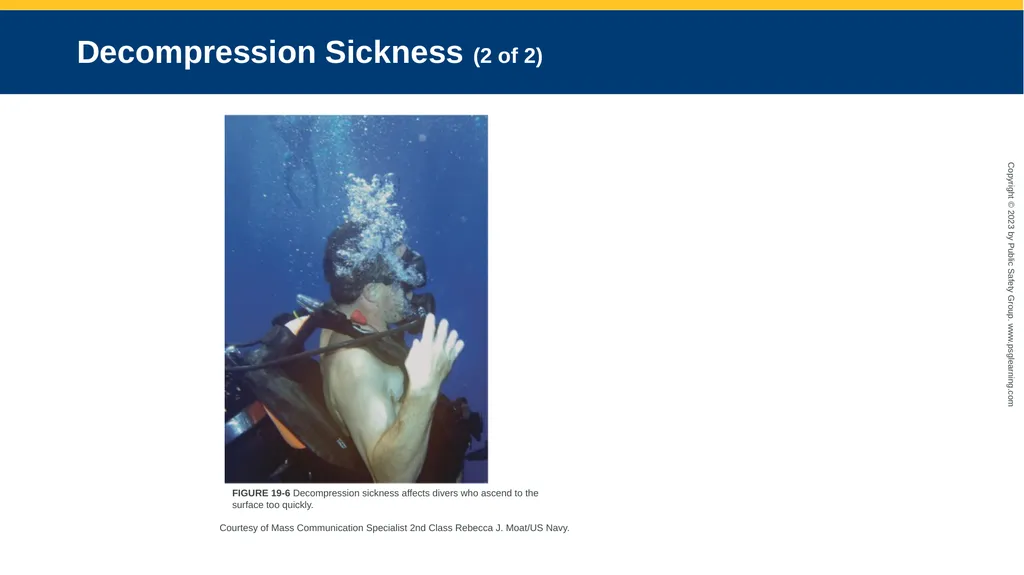
slide59. Decompression Sickness (2 of 2) FIGURE 19-6 Decompression sickness affects divers who ascend to the surface too quickly. Courtesy of Mass Communication Specialist 2nd Class Rebecca J. Moat/US Navy.<br>
slide60. Barotraumas Can occur during ascent or descent
Gases in the body expand or contract during changes in elevation
Lungs, ears, and gastrointestinal tract are susceptible to injury<br>
slide61. Pulmonary Overpressurization Syndrome Pulmonary overpressurization syndrome (POPS)
Gases in the lungs expand rapidly as pressure decreases
Risk of pneumothorax or subcutaneous emphysema
Arterial gas embolism may be caused by air bubbles escaping ruptured alveoli
May cause acute myocardial infarction or stroke<br>
slide62. Treatment (1 of 2) Rapid transport and oxygenation
Administer 100% oxygen to promote nitrogen washout from the lungs
Divers Alert Network can guide CCTP
Closely monitor patients even if they begin to show signs of recovery<br>
slide63. Treatment (2 of 2) Patients should be transported in the supine position at the lowest cabin altitude possible
Other interventions
Aspirin
Thoracostomy (chest tube)
Aggressive IV resuscitation
ACLS protocols<br>
slide64. Hyperbaric Oxygen Therapy Patient is placed in a specially designed chamber
Pressure in the chamber is higher than in surrounding air
Helps decrease tissue edema and offsets vasoconstriction<br>
slide65. Flight Considerations Aircraft should not fly at elevation greater than 800 unless required to do so
Patient should be placed in lateral recumbent position or recovery position<br>
slide66. Altitude Illness (1 of 3) Affects experienced mountain climbers pushing limits as well as people who travel from lower to higher elevations in everyday life
People with preexisting medical conditions, extremes of age, sedentary lifestyles, and people with unhealthy lifestyles at increased risk<br>
slide67. Altitude Illness (2 of 3) Symptoms can range from imperceptible tachypnea or sleep disturbances to life-threatening pulmonary edema, cerebral edema, and hypoxia
Altitude sickness is most commonly associated with mountain climbing and skiing at elevations of 3,000–8,000 above sea level<br>
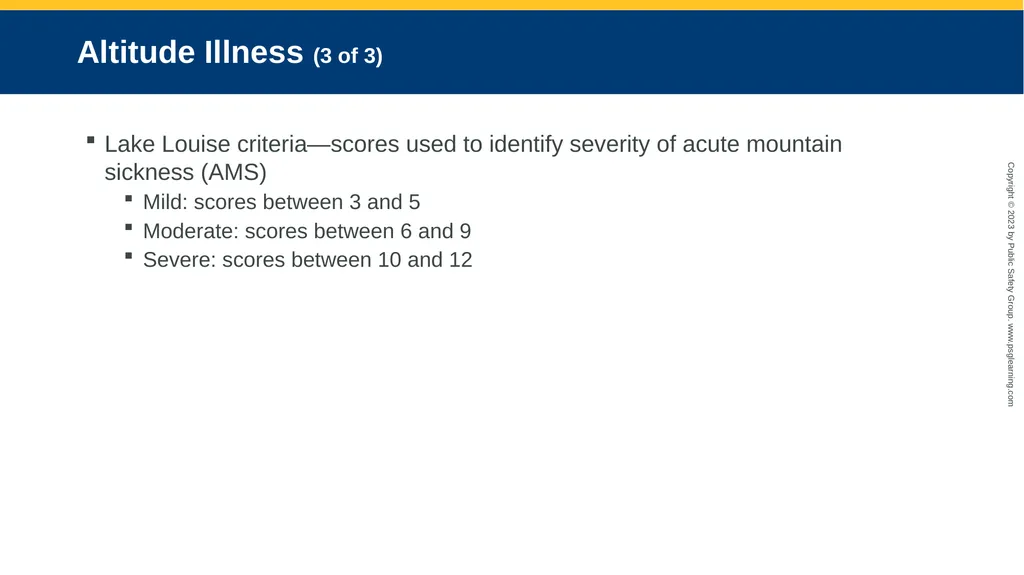
slide68. Altitude Illness (3 of 3) Lake Louise criteria—scores used to identify severity of acute mountain sickness (AMS)
Mild: scores between 3 and 5
Moderate: scores between 6 and 9
Severe: scores between 10 and 12<br>
slide69. High-Altitude Pulmonary Edema (1 of 2) High-altitude pulmonary edema (HAPE)
People who change altitudes frequently are at highest risk
Symptoms
Cough
Respiratory distress
Chest tightness
Fatigue
Fever<br>
slide70. High-Altitude Pulmonary Edema (2 of 2) Implications
Pulmonary hypertension from alveolar hypoxia
Localized inflammation
Capillary or arterial thromboses
Rapid descent is the preferred treatment
Give supplemental oxygen
Give nifedipine and salmeterol
Continuous positive airway pressure (CPAP) may also play a role in management<br>
slide71. High-Altitude Cerebral Edema High-altitude cerebral edema (HACE)
Life threatening
Suspect in any person who experiences a significant increase in altitude and has a mental status change or ataxia
Thought to result from vasodilation from hypoxia<br>
slide72. Flight Considerations CCTPs may be asked to perform a rescue or evacuation function
Locations may be hazardous for ground transport and aircraft
CCTPs should carefully consider safety issues such as training, experience of personnel, capabilities and condition of equipment, and severity of illness of patient<br>
slide2. Introduction Environmental emergencies are defined as any medical condition that is caused or worsened by weather, terrain, or unique atmospheric conditions
Can occur anywhere
Critical care transport professionals (CCTPs) are often involved in transporting patients between facilities<br>
slide3. Risk Factors Age (young and old at greatest risk)
Medications
Preexisting medical conditions
Diabetes
Cardiovascular disease
Restrictive lung disease
Thyroid disease
Psychiatric illnesses<br>
slide4. Thermoregulation (1 of 11) Ability to acclimatize is part of the homeostatic process
Thermoregulation is the body’s natural ability to maintain temperature
Thermogenesis: heat production
Thermolysis: heat elimination
Normal temperature is 98.6ºF (37ºC)<br>
slide5. Thermoregulation (2 of 11) Hypothalamo-hypophyseal portal system
Hypothalamus sends stimulating or inhibiting factor to pituitary gland
Interaction between hypothalamus and pituitary gland is called the hypothalamic-pituitary axis<br>
slide6. Thermoregulation (3 of 11) Hypothalamus serves as the body’s “master thermostat” through negative feedback control
Rise in core body temperature elicits signals to shut off thermogenesis
Fall in core body temperature results in heat production and limits thermolysis mechanisms<br>
slide7. Thermoregulation (4 of 11) Negative feedback system has three major components:
Temperature receptors
Effector organ systems
Integratory or controller<br>
slide8. Thermoregulation (5 of 11) Heat response
Blood vessels in skin dilate, resulting in transfer of heat to skin surface
Perspiration is increased to 10 times normal
Increases in muscle activity, including shivering, are inhibited<br>
slide9. Thermoregulation (6 of 11) Cold response
Stimulation of posterior hypothalamus causes a constriction of blood vessels
Hypothalamic stimulation causes an increase in muscle activity, including shivering
Hypothalamic stimulation of piloerector muscles in skin causes “goosebumps” and body hair to “stand on end”<br>
slide10. Thermoregulation (7 of 11) Basal metabolic rate (BMR)
At rest, the chief source of heat production is the metabolism of nutrients
BMR is the number of calories metabolized per square inch of body surface area per hour
Average BMR for a 154-lb (70-kg) adult is 60–70 kcal/h.<br>
slide11. Thermoregulation (8 of 11) Heat transfer
Radiation: transfer of heat through electromagnetic waves
Conduction: transfer of heat through direct contact with a cooler object
Convection: loss of heat carried away from the body by currents of air or water<br>
slide12. Thermoregulation (9 of 11) Heat transfer (cont'd)
Evaporation: loss of heat carried away as liquid converts to gas
Respiration: loss of heat as warm air is exhaled and cooler air is inhaled
Absorption: body gains heat when surrounding environment is hotter than the body<br>
slide13. Thermoregulation (10 of 11) FIGURE 19-1 The hypothalamus notes a rise or fall in core body temperature and elicits responses to regulate it. © Jones & Bartlett Learning.<br>
slide14. Thermoregulation (11 of 11) Expecting the unexpected
A person can have a temperature-related emergency in any environment
CCTPs must be aware of patient’s inability to self-regulate temperature and take steps to maintain warmth or prevent overheating<br>
slide15. Heat Emergencies (1 of 5) An increase in core body temperature as a result of inadequate thermolysis
According to US Centers for Disease Control and Prevention, heat-related illness is a major public health concern
More than 700 heat-related deaths in the United States each year<br>
slide16. Heat Emergencies (2 of 5) Risk factors:
General state of health
Age
Use of certain medications
Amount of clothing
Mobility
Surroundings<br>
slide17. Heat Emergencies (3 of 5) Medications that cause or aggravate heat illness
Alcohol and barbiturates
Central nervous system depressants
Stimulant medications
Cocaine, amphetamines, and other sympathomimetics<br>
slide18. Heat Emergencies (4 of 5) Medications that cause or aggravate heat illness (cont’d)
Beta blockers, calcium channel blockers, and diuretics
Antihistamines, tricyclic antidepressants, and anticholinergics<br>
slide19. Heat Emergencies (5 of 5) If thermoregulation mechanisms fail, the core body temperature can rise to 106ºF (41.1ºF) in less than 15 minutes
Older persons and young children are at greatest risk of heat-related illness<br>
slide20. Factors That Predispose Individuals to Heat Illness © Jones & Bartlett Learning.<br>
slide21. Substances That Contribute to Heat Illness © Jones & Bartlett Learning.<br>
slide22. Exertional Heatstroke Occurs during physical activity in a warm environment and is influenced by:
Exercise intensity
Environmental conditions
Clothing
Equipment
Individual health factors
A leading cause of death among high school athletes in the United States<br>
slide23. Heat Cramps (1 of 3) Involuntary muscle pains, usually in abdomen and/or lower extremities, as a result of profuse sweating and loss of sodium
Person may attempt to quench thirst by drinking excessive amounts of water, causing water intoxication<br>
slide24. Heat Cramps (2 of 3) Treatment usually involves cooling and replacing lost fluids
Remove patient from hot environment
Patient may need emergency care in case of hyponatremia (severe loss of salts)
CCTPs should administer intravenous (IV) fluids after adequate patient evaluation and/or laboratory studies<br>
slide25. Heat Cramps (3 of 3) FIGURE 19-2 Give the patient experiencing heat crampsone or two glasses of a salt-containing solution if the
person is not nauseated and there is no risk of aspiration. Courtesy of Rhonda Hunt.<br>
slide26. Hyponatremia (Water Intoxication) (1 of 3) Dilutional hyponatremia
Overconsumption of water pushes body’s balance of sodium outside of safe limits
Exercise-associated hyponatremia (EAH)
Serum sodium of less than 135 mmol/L within 24 hours of activity, lasting 4 hours or longer
Seen in endurance athletes<br>
slide27. Hyponatremia (Water Intoxication) (2 of 3) Signs and symptoms
Weakness
Dizziness
Peripheral edema
Headache, lethargy
Nausea/vomiting
Key sign: significant weight gain (over 6.6 lb) from start of event to its completion<br>
slide28. Hyponatremia (Water Intoxication) (3 of 3) Mild cases treated with restriction of hypotonic fluids and consumption of salty oral solutions
Severe cases can be given IV hypotonic saline or sodium bicarbonate
Generally, an increase of 4 to 6 mmol/L serum sodium will correct symptoms<br>
slide29. Heat Syncope Collapse or near collapse that occurs in nonacclimatized persons
Often seen at outdoor events where crowds are standing for long periods
Place patient in a supine position, move to a cooler environment, and give fluids
Suspect heat exhaustion or stroke if patient does not recover quickly<br>
slide30. Heat Exhaustion (1 of 3) Water-depleted exhaustion occurs in older adults, active younger workers, and athletes who do not replenish fluids in a hot environment
Sodium-depleted exhaustion results from excessive losses of sodium from sweating<br>
slide31. Heat Exhaustion (2 of 3) Signs and symptoms
Headache
Fatigue, weakness
Dizziness
Nausea and vomiting
Abdominal cramps
Profuse sweating
Pale, clammy skin
Elevated heart rate and respiration<br>
slide32. Heat Exhaustion (3 of 3) Treatment
Move patient to cooler environment
Remove excess clothing
Place in supine position, legs elevated
Rehydrate
Obtain blood samples
Closely monitor electrocardiogram (ECG) for arrhythmia
Cool the patient<br>
slide33. Heatstroke (1 of 5) Least common but most deadly heat illness
Severe disturbance of body’s thermoregulation
Mortality rate from heatstroke in treated patients can be as high as 10%
Body temperature of more than 104ºF (40ºC)
Critical thermal maximum is reached when core body temperature exceeds 109.4ºF (43ºC)<br>
slide34. Heatstroke (2 of 5) Classic
Occurs during heat waves
Affects very old, very young, and bedridden
Also affects chronically ill, alcoholics, and people on certain medications
Exertional
Affects young, healthy people who overexert themselves in hot environments<br>
slide35. Heatstroke (3 of 5) © Jones & Bartlett Learning.<br>
slide36. Heatstroke (4 of 5) Signs and symptoms
Altered mental status
Confusion
Irritability
Bizarre behavior
Combativeness
Hallucinations
Elevated core body temperature
Tachycardia<br>
slide37. Heatstroke (5 of 5) Signs and symptoms (cont’d)
Tachypnea, with ETCO2 values of less than 20 mm Hg
Hot, red skin
Normal or decreased blood pressure
Seizure<br>
slide38. Treatment (1 of 2) Lower core body temperature
Evaluate airway, breathing, and circulation
Remove excess clothing and move patient to a cooler area
Cold-water immersion (preferred treatment)<br>
slide39. Treatment (2 of 2) Evaporative cooling until core body temperature is below 102ºF (38.8ºC)
IV line of isotonic fluid, obtain blood samples
Monitor closely for signs of pulmonary edema
Closely monitor ECG, vital signs, and ETCO2
Be prepared to treat seizure with benzodiazepine<br>
slide40. Signs Expecting the unexpected
With older adults of elevated temperature, CCTPs should pay attention to signs of poor skin turgor
Other conditions may mimic heatstroke<br>
slide41. Cold Emergencies Most cold-related injuries are localized
Frostbite
First degree: numbness, erythema, capillary leakage, resulting in localized edema
Second degree: superficial blistering
Third degree: deep hemorrhagic blistering
Fourth degree: damage to the subcutaneous tissues, such as muscles and bone<br>
slide42. Frostbite FIGURE 19-3 Frostbitten parts are hard and usually waxy to the touch. Courtesy of Neil Malcom Winkelmann.<br>
slide43. Treatment for Deep Frostbite (1 of 2) If transport time is less than 1 hour, the part should be kept frozen
Contact medical control if the tissue is partially thawed or transport will take more than 1 hour
Part should be padded with dry dressings to avoid further injury<br>
slide44. Treatment for Deep Frostbite (2 of 2) The affected tissue should be immersed completely in water between 98.6ºF and 102.2ºF (37ºC and 39ºC)
An IV line should be established for the administration of pain control medication (such as fentanyl or ketamine)
The water temperature should be monitored to maintain it in the therapeutic range<br>
slide45. Hypothermia (1 of 5) Defined as a decrease in core body temperature to 95ºF (35ºC) or less
Can occur in any season
Alcohol is a contributing factor
Hypothyroidism, liver disease, and malnutrition can predispose someone to hypothermia
Trauma, hypovolemia, and hypotension are contributing factors<br>
slide46. Hypothermia (2 of 5) Mild hypothermia
Core body temperature between 90ºF and 95ºF (32.2ºC and 35ºC)
Body compensates with increased thermogenesis and interrupted thermolysis
Shivering
Stumbles, mumbles, fumbles, and grumbles
Elevated heart rate, blood pressure, and cardiac output<br>
slide47. Hypothermia (3 of 5) Moderate hypothermia
Core body temperature between 82ºF and 90ºF (27.7ºC and 32.2ºC)
Mental status is markedly decreased; patient likely conscious
Shivering present, but less vigorous
Warming with an external heat source is necessary<br>
slide48. Hypothermia (4 of 5) Severe hypothermia
Core body temperature below 82ºF (27.7ºC)
Heart rate, blood pressure, and cardiac output decrease
Shift of fluids from intravascular to extravascular space increases viscosity of blood<br>
slide49. Hypothermia (5 of 5) Severe hypothermia (cont'd)
Shivering ceases at a body temperature less than 91ºF (32.7ºC)
Tracheobronchial secretions increase and bronchospasm may occur
At core body temperature of less than 90ºF (32.2ºC), hypoventilation is profound
Bradycardia and cardiac arrhythmia may be seen<br>
slide50. Treatment (1 of 2) The Wilderness Medical Society’s Clinical Practice Guidelines recommend:
Administering ACLS medications at twice the normal intervals for patients with core temperatures less than 35°C (95°F)
Withholding them entirely if core body temperature is less than 30°C (86°F)<br>
slide51. Treatment (2 of 2) Warm the patient
Remove cold, wet clothing
Wrap the patient in layers that retain heat
Move patient to a warmer environment
Administer warmed IV fluid
Give warmed oxygen
Administer peritoneal lavage of potassium chloride–free solution or nasogastric/orogastric lavage with warmed fluids<br>
slide52. Transport Expecting the unexpected
Transport can cause or worsen hypothermia
Even brief exposure (ie, from vehicle to hospital) can undermine warming efforts
CCTPs must sacrifice their own comfort for the benefit of the patient<br>
slide53. Drowning Every day, 10 people die from drowning
Leading cause of unintentional injury-related death in the United States for children 1–4 years
More than 50% of drowning patients in emergency departments require hospitalization or transfer for further care<br>
slide54. Treatment (1 of 2) Spine motion restriction if person was seen diving or if alcohol use is suspected
Initiate ventilation immediately if needed
Advanced airway management
Provide positive end-expiratory pressure (PEEP)<br>
slide55. Treatment (2 of 2) Nasogastric tube may be used to decompress stomach
Bronchospasm and tracheobronchial irritation may be treated with a beta-2-adrenergic agonist<br>
slide56. Complications Acute respiratory distress syndrome
Chemical or bacterial pneumonitis
Renal failure<br>
slide57. Diving Injuries and Decompression Sickness Can happen at any level of experience
For every 33.9 feet of depth, pressure on the body increases by 1 atmosphere (atm) or 14.7 lb per square inch
Most common effect is on nitrogen levels
Nitrogen narcosis
Nitrogen gas bubbles expand, causing pain in joints and intestinal tract<br>
slide58. Decompression Sickness (1 of 2) Respiratory disturbances (chokes)
Neurologic impairment (staggers)
Skin sensation abnormalities (creeps or skin bends)<br>
slide59. Decompression Sickness (2 of 2) FIGURE 19-6 Decompression sickness affects divers who ascend to the surface too quickly. Courtesy of Mass Communication Specialist 2nd Class Rebecca J. Moat/US Navy.<br>
slide60. Barotraumas Can occur during ascent or descent
Gases in the body expand or contract during changes in elevation
Lungs, ears, and gastrointestinal tract are susceptible to injury<br>
slide61. Pulmonary Overpressurization Syndrome Pulmonary overpressurization syndrome (POPS)
Gases in the lungs expand rapidly as pressure decreases
Risk of pneumothorax or subcutaneous emphysema
Arterial gas embolism may be caused by air bubbles escaping ruptured alveoli
May cause acute myocardial infarction or stroke<br>
slide62. Treatment (1 of 2) Rapid transport and oxygenation
Administer 100% oxygen to promote nitrogen washout from the lungs
Divers Alert Network can guide CCTP
Closely monitor patients even if they begin to show signs of recovery<br>
slide63. Treatment (2 of 2) Patients should be transported in the supine position at the lowest cabin altitude possible
Other interventions
Aspirin
Thoracostomy (chest tube)
Aggressive IV resuscitation
ACLS protocols<br>
slide64. Hyperbaric Oxygen Therapy Patient is placed in a specially designed chamber
Pressure in the chamber is higher than in surrounding air
Helps decrease tissue edema and offsets vasoconstriction<br>
slide65. Flight Considerations Aircraft should not fly at elevation greater than 800 unless required to do so
Patient should be placed in lateral recumbent position or recovery position<br>
slide66. Altitude Illness (1 of 3) Affects experienced mountain climbers pushing limits as well as people who travel from lower to higher elevations in everyday life
People with preexisting medical conditions, extremes of age, sedentary lifestyles, and people with unhealthy lifestyles at increased risk<br>
slide67. Altitude Illness (2 of 3) Symptoms can range from imperceptible tachypnea or sleep disturbances to life-threatening pulmonary edema, cerebral edema, and hypoxia
Altitude sickness is most commonly associated with mountain climbing and skiing at elevations of 3,000–8,000 above sea level<br>
slide68. Altitude Illness (3 of 3) Lake Louise criteria—scores used to identify severity of acute mountain sickness (AMS)
Mild: scores between 3 and 5
Moderate: scores between 6 and 9
Severe: scores between 10 and 12<br>
slide69. High-Altitude Pulmonary Edema (1 of 2) High-altitude pulmonary edema (HAPE)
People who change altitudes frequently are at highest risk
Symptoms
Cough
Respiratory distress
Chest tightness
Fatigue
Fever<br>
slide70. High-Altitude Pulmonary Edema (2 of 2) Implications
Pulmonary hypertension from alveolar hypoxia
Localized inflammation
Capillary or arterial thromboses
Rapid descent is the preferred treatment
Give supplemental oxygen
Give nifedipine and salmeterol
Continuous positive airway pressure (CPAP) may also play a role in management<br>
slide71. High-Altitude Cerebral Edema High-altitude cerebral edema (HACE)
Life threatening
Suspect in any person who experiences a significant increase in altitude and has a mental status change or ataxia
Thought to result from vasodilation from hypoxia<br>
slide72. Flight Considerations CCTPs may be asked to perform a rescue or evacuation function
Locations may be hazardous for ground transport and aircraft
CCTPs should carefully consider safety issues such as training, experience of personnel, capabilities and condition of equipment, and severity of illness of patient<br>