CHAPTER - 2 PERFORMANCE MANAGEMENT PROCESS TYBMS SEMESTER V By Prof. Muskan Jeswani DEFINITION: PERFORMANCE PLANNING IS A PROCESS IN WHICH EMPLOYEE AND MANAGER WORK TOGETHER TO DETERMINE WHAT THE EMPLOYEE SHOULD BE DOING IN THE NEXT YEAR
"CHAPTER - 2 PERFORMANCE MANAGEMENT PROCESS TYBMS" is the property of its rightful owner. Permission is granted to
download and print the materials on this website for personal, non-commercial use only, and to display it
on your personal computer provided you do not modify the materials and that you retain all copyright
notices contained in the materials. By downloading content from our website, you accept the terms of this
agreement.
Presentation Transcript
01
CHAPTER - 2 PERFORMANCE MANAGEMENT PROCESS TYBMS
SEMESTER V
By Prof. Muskan Jeswani<br>
02
DEFINITION: “PERFORMANCE PLANNING IS A PROCESS IN WHICH EMPLOYEE AND MANAGER WORK TOGETHER TO DETERMINE WHAT THE EMPLOYEE SHOULD BE DOING IN THE NEXT YEAR AND WHAT SUCCESSFUL PERFORMANCE MEANS.”<br>
03
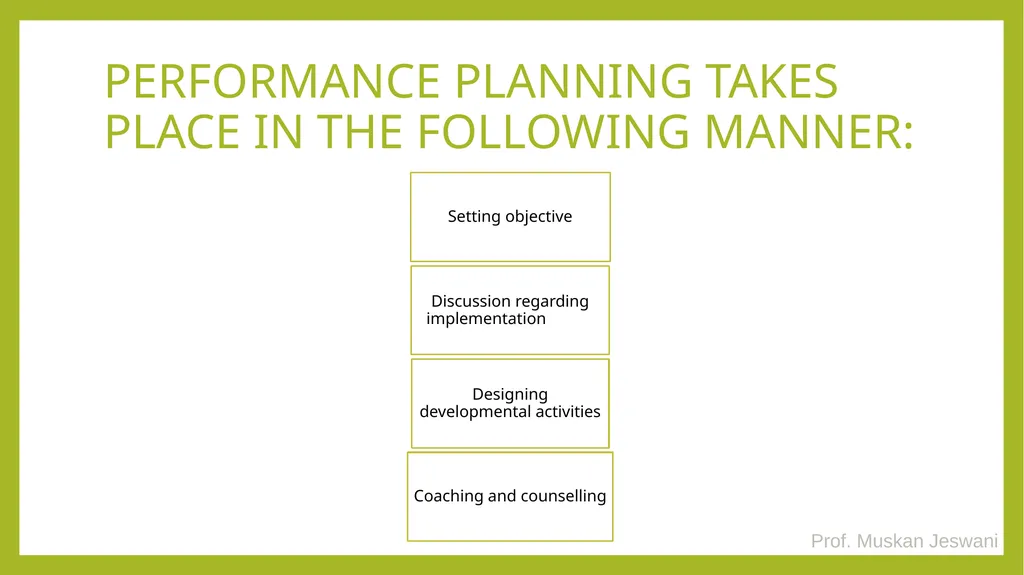
PERFORMANCE PLANNING TAKES PLACE IN THE FOLLOWING MANNER:<br>
04
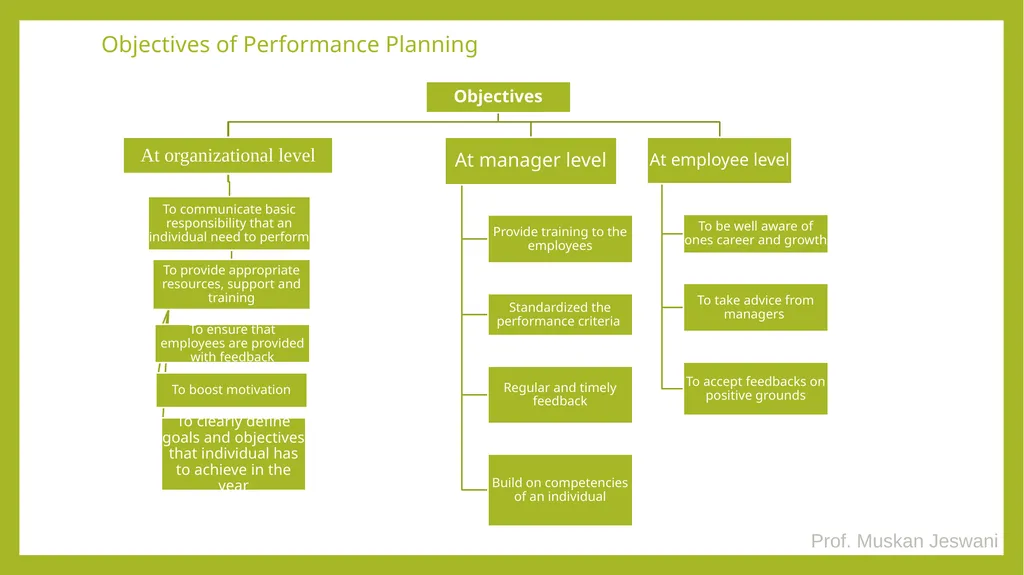
Objectives of Performance Planning<br>
05
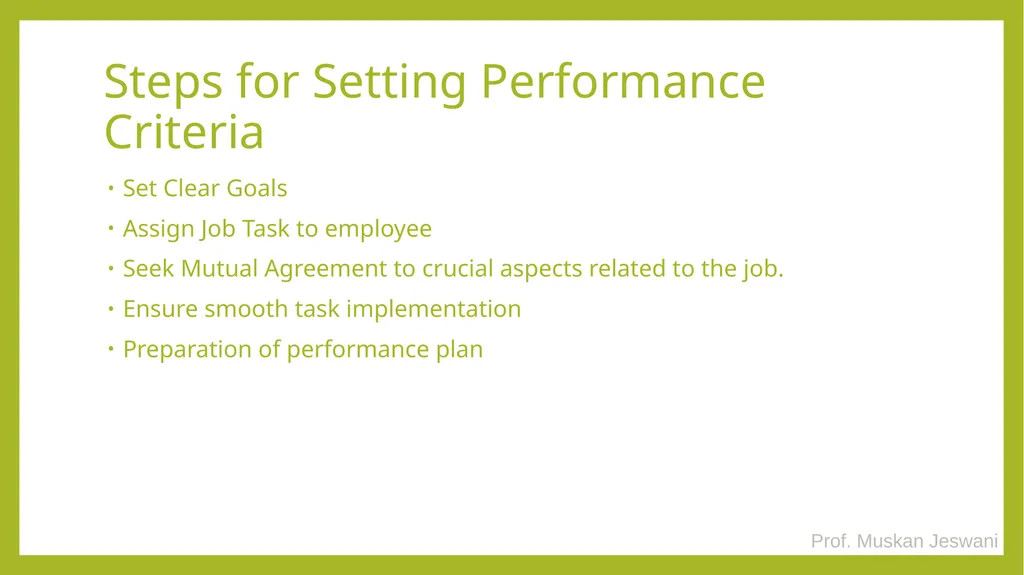
Steps for Setting Performance Criteria Set Clear Goals
Assign Job Task to employee
Seek Mutual Agreement to crucial aspects related to the job.
Ensure smooth task implementation
Preparation of performance plan<br>
06
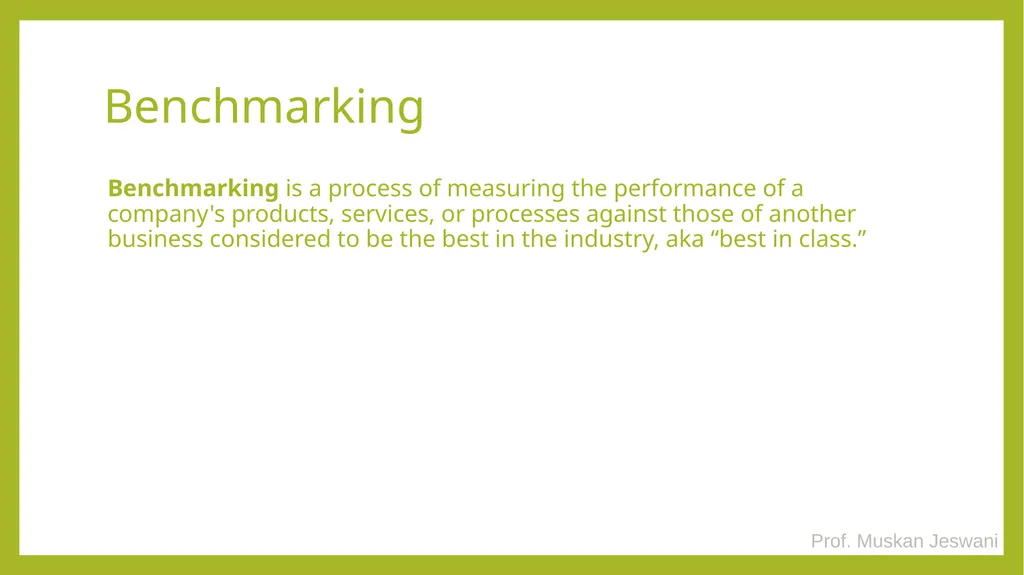
Benchmarking Benchmarking is a process of measuring the performance of a company's products, services, or processes against those of another business considered to be the best in the industry, aka “best in class.”<br>
07
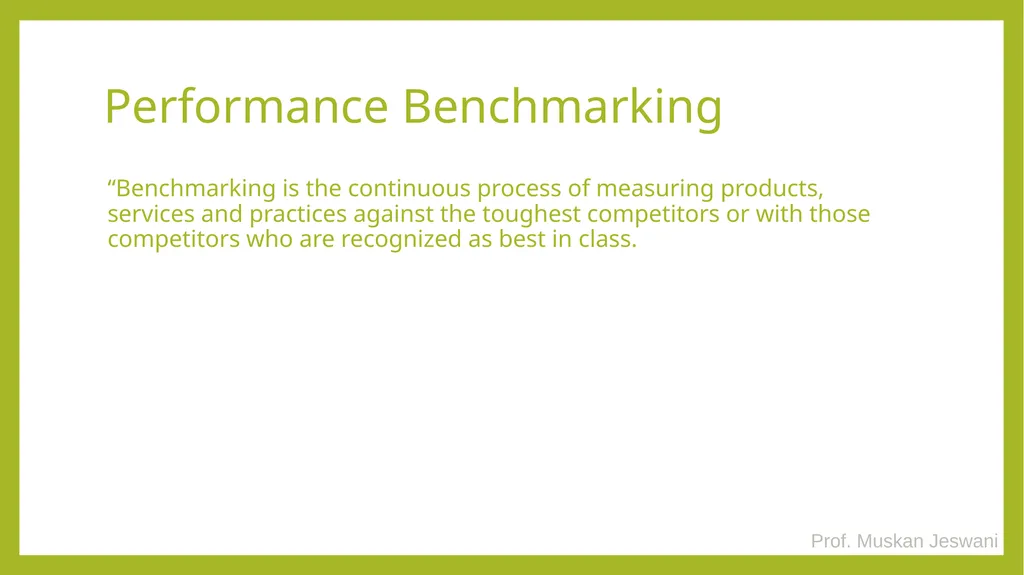
Performance Benchmarking “Benchmarking is the continuous process of measuring products, services and practices against the toughest competitors or with those competitors who are recognized as best in class.<br>
08
Performance benchmarking focuses on three specific areas: Operational efficiency
Quality of service
Business benefits<br>
09
Methods of setting benchmarking Metric
Diagnostic
Process Benefits of benchmarking Sharing Key Performance factors
Goal Setting
Networking
Continuous improvement<br>
10
Performance Managing It is an integral part of the work that all managers perform throughout the year
This is what the line managers do continuously not an HR directed annual procedure.<br>
11
What needs to be managed? Communicating the aims of performance management
The performance agreement process
The performance review process
Personal development planning
Skill development
Monitoring and evaluation<br>
12
How should performance be managed? Managing performance depends upon the context which includes culture, management style, and approach etc.
The main activity in managing performance are providing feedback and continuous learning.<br>
13
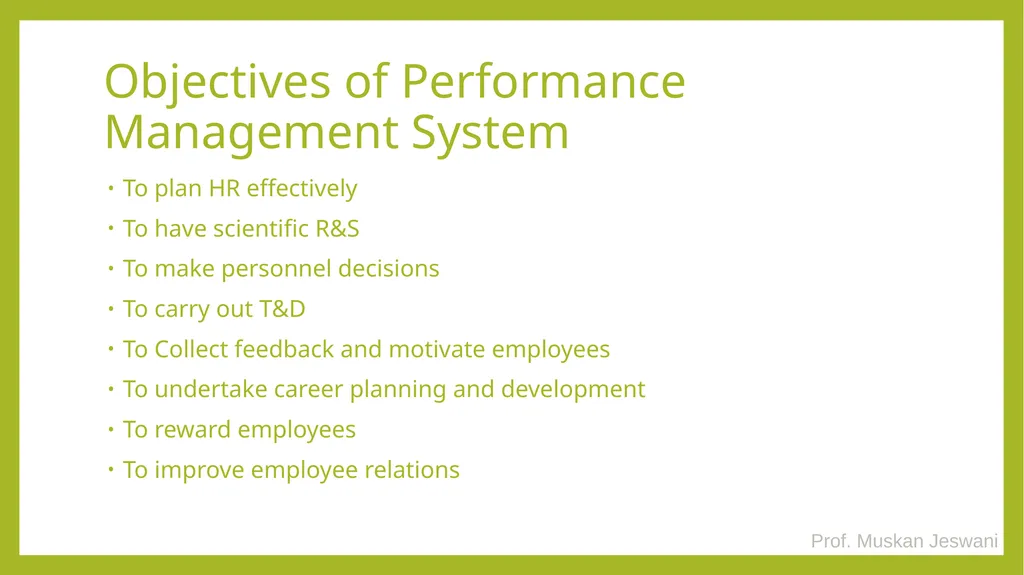
Objectives of Performance Management System To plan HR effectively
To have scientific R&S
To make personnel decisions
To carry out T&D
To Collect feedback and motivate employees
To undertake career planning and development
To reward employees
To improve employee relations<br>
14
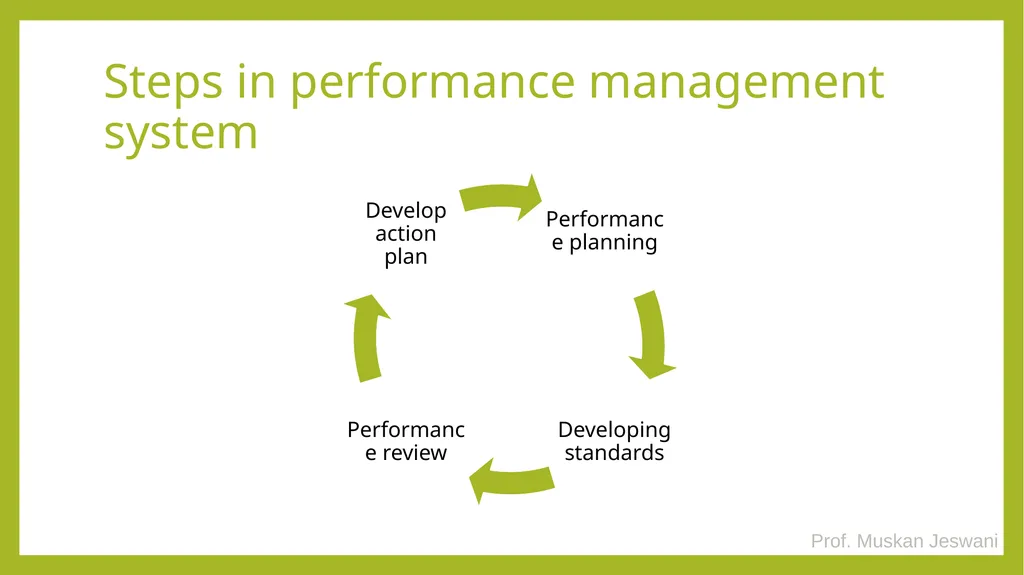
Steps in performance management system<br>
15
Performance appraisal Definition by Edward flippo – “performance appraisal is the systematic periodic and impartial rating of an employee’s excellence in matters pertaining to his present job and his potential for a better job.”<br>
16
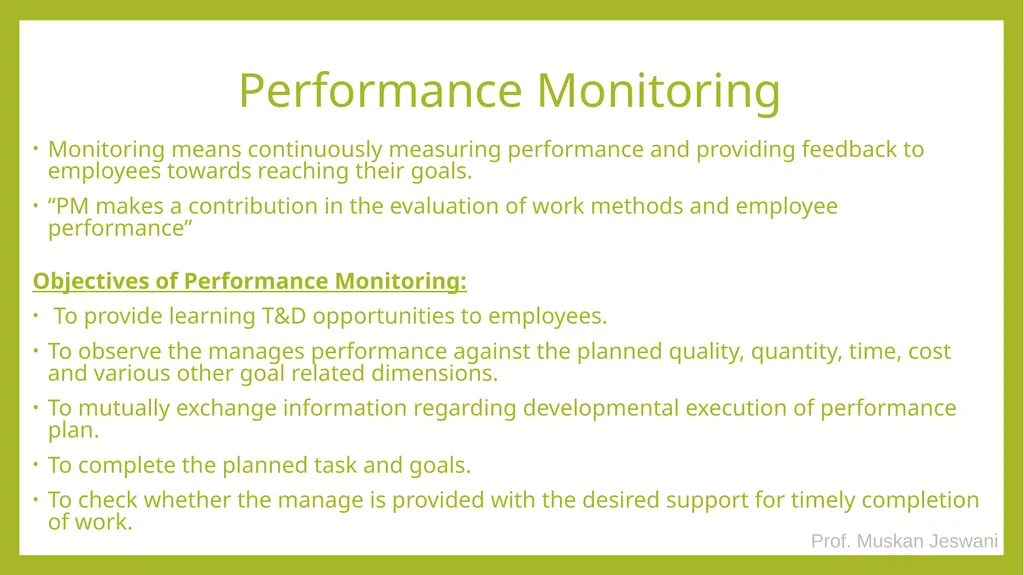
Performance Monitoring Monitoring means continuously measuring performance and providing feedback to employees towards reaching their goals.
“PM makes a contribution in the evaluation of work methods and employee performance”
Objectives of Performance Monitoring:
To provide learning T&D opportunities to employees.
To observe the manages performance against the planned quality, quantity, time, cost and various other goal related dimensions.
To mutually exchange information regarding developmental execution of performance plan.
To complete the planned task and goals.
To check whether the manage is provided with the desired support for timely completion of work.<br>
17
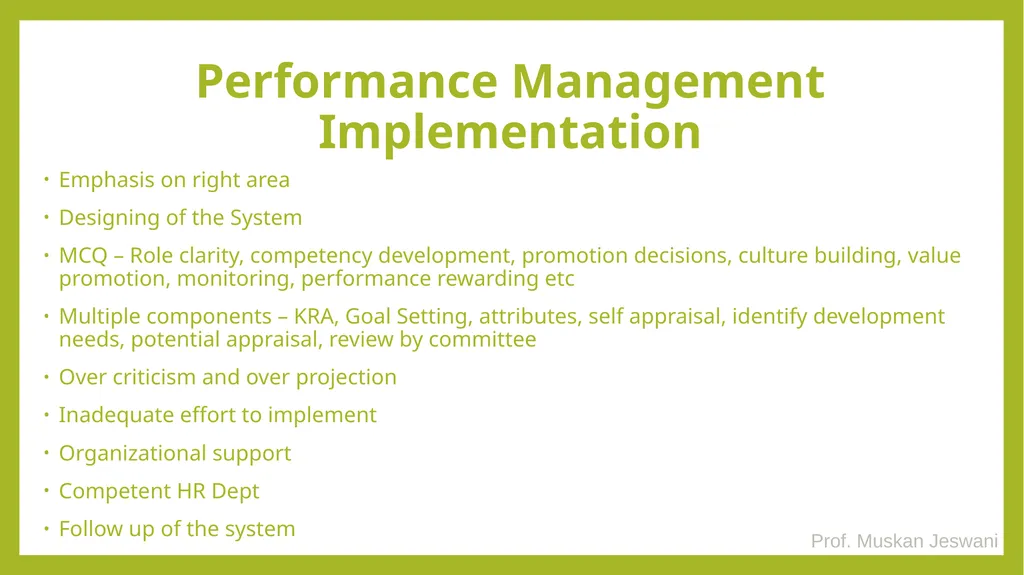
Performance Management Implementation Emphasis on right area
Designing of the System
MCQ – Role clarity, competency development, promotion decisions, culture building, value promotion, monitoring, performance rewarding etc
Multiple components – KRA, Goal Setting, attributes, self appraisal, identify development needs, potential appraisal, review by committee
Over criticism and over projection
Inadequate effort to implement
Organizational support
Competent HR Dept
Follow up of the system<br>
18
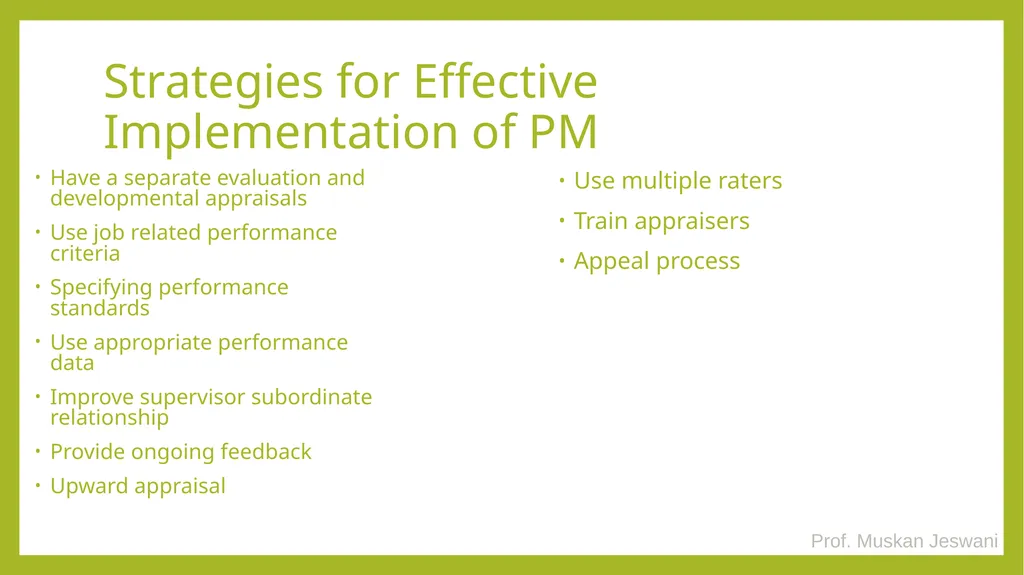
Strategies for Effective Implementation of PM Have a separate evaluation and developmental appraisals
Use job related performance criteria
Specifying performance standards
Use appropriate performance data
Improve supervisor subordinate relationship
Provide ongoing feedback
Upward appraisal Use multiple raters
Train appraisers
Appeal process<br>