
Chapter 2 PSYCHOLOGICAL RESEARCH PowerPoint Image
DJ
Published · 34 slides · 0 views
1 / 1
Description
Chapter 2 PSYCHOLOGICAL RESEARCH PowerPoint Image Slideshow Psychology 2e How does television content impact childrens behavior? (credit: modification of work by antisocialtoryFlickr) Why is research important? Figure 2.2 Some of our
Related Topics
Share
Embed code
Download this presentation From Below
"Chapter 2 PSYCHOLOGICAL RESEARCH PowerPoint Image" is the property of its rightful owner. Permission is granted to download and print the materials on this website for personal, non-commercial use only, and to display it on your personal computer provided you do not modify the materials and that you retain all copyright notices contained in the materials. By downloading content from our website, you accept the terms of this agreement.
Presentation Transcript
01
Chapter 2 PSYCHOLOGICAL RESEARCH
PowerPoint Image Slideshow Psychology 2e<br>
PowerPoint Image Slideshow Psychology 2e<br>
02
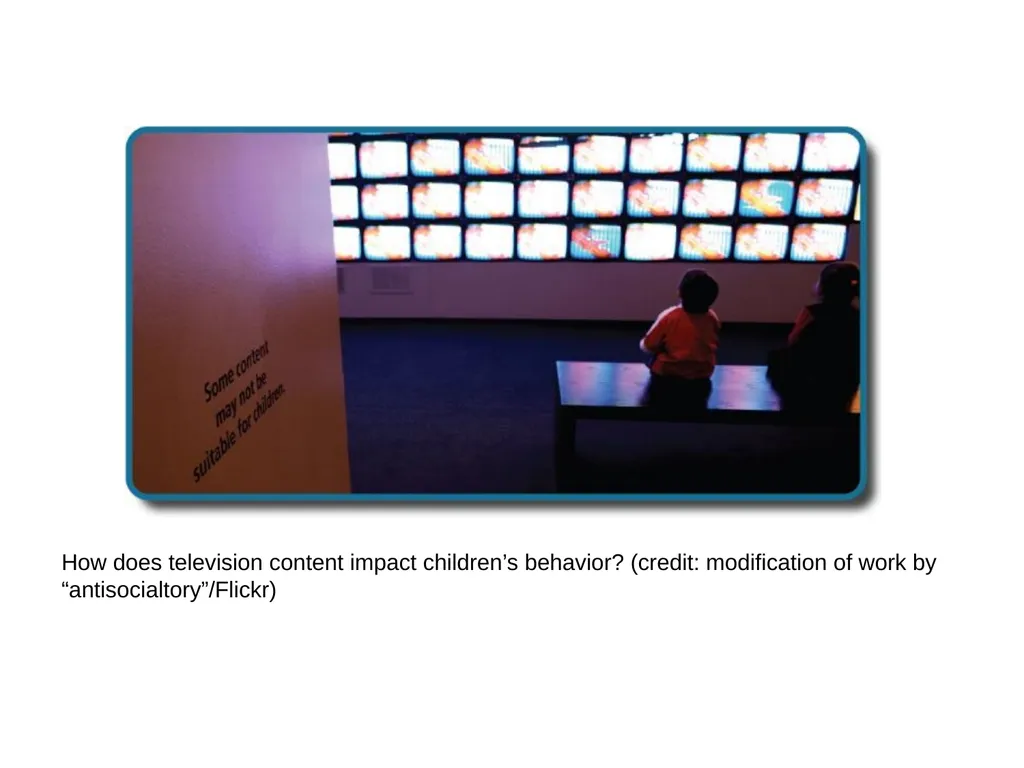
How does television content impact children’s behavior? (credit: modification of work by “antisocialtory”/Flickr)<br>
03
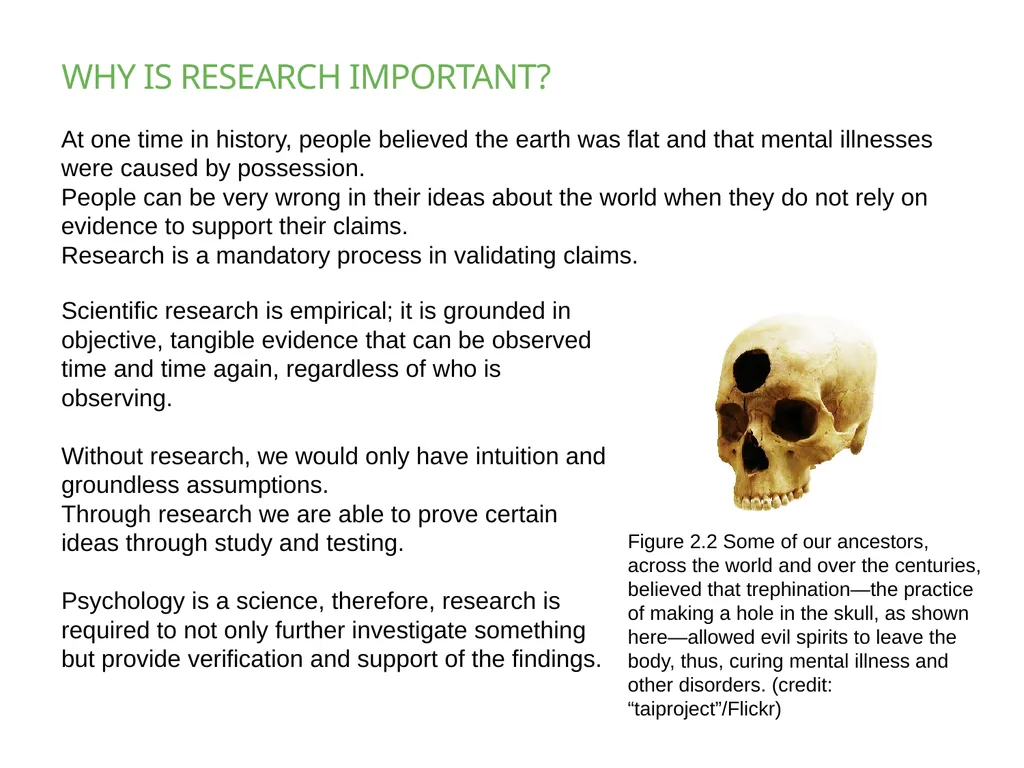
Why is research important? Figure 2.2 Some of our ancestors, across the world and over the centuries, believed that trephination—the practice of making a hole in the skull, as shown here—allowed evil spirits to leave the body, thus, curing mental illness and other disorders. (credit: “taiproject”/Flickr) At one time in history, people believed the earth was flat and that mental illnesses were caused by possession.
People can be very wrong in their ideas about the world when they do not rely on evidence to support their claims.
Research is a mandatory process in validating claims. Scientific research is empirical; it is grounded in objective, tangible evidence that can be observed time and time again, regardless of who is observing.
Without research, we would only have intuition and groundless assumptions.
Through research we are able to prove certain ideas through study and testing.
Psychology is a science, therefore, research is required to not only further investigate something but provide verification and support of the findings.<br>
People can be very wrong in their ideas about the world when they do not rely on evidence to support their claims.
Research is a mandatory process in validating claims. Scientific research is empirical; it is grounded in objective, tangible evidence that can be observed time and time again, regardless of who is observing.
Without research, we would only have intuition and groundless assumptions.
Through research we are able to prove certain ideas through study and testing.
Psychology is a science, therefore, research is required to not only further investigate something but provide verification and support of the findings.<br>
04
Use of research information Advertising campaigns often claim to be based on “scientific evidence” when in reality it is based off of belief. Thinking critically about claims:
What is the expertise of the person making the claim?
What might they gain if the claim is valid?
Does the claim seem justified given the evidence?
What do other researchers think of the claim?<br>
What is the expertise of the person making the claim?
What might they gain if the claim is valid?
Does the claim seem justified given the evidence?
What do other researchers think of the claim?<br>
05
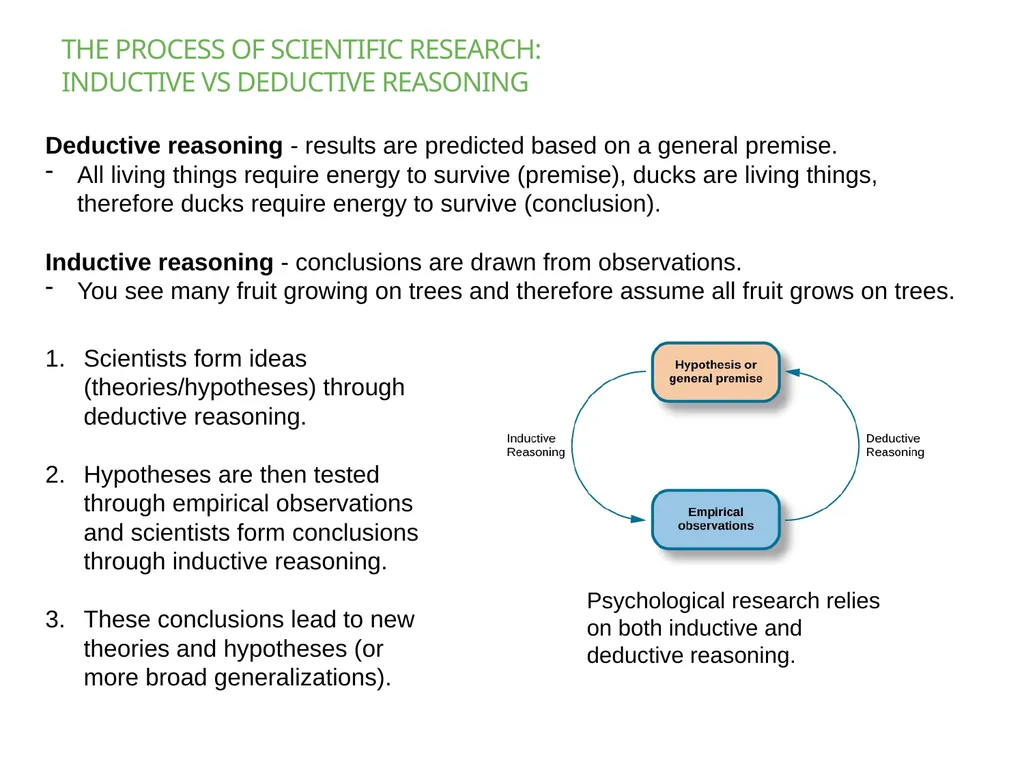
Psychological research relies on both inductive and deductive reasoning. The process of scientific research:
Inductive vs Deductive reasoning Deductive reasoning - results are predicted based on a general premise.
All living things require energy to survive (premise), ducks are living things, therefore ducks require energy to survive (conclusion).
Inductive reasoning - conclusions are drawn from observations.
You see many fruit growing on trees and therefore assume all fruit grows on trees. Scientists form ideas (theories/hypotheses) through deductive reasoning.
Hypotheses are then tested through empirical observations and scientists form conclusions through inductive reasoning.
These conclusions lead to new theories and hypotheses (or more broad generalizations).<br>
All living things require energy to survive (premise), ducks are living things, therefore ducks require energy to survive (conclusion).
Inductive reasoning - conclusions are drawn from observations.
You see many fruit growing on trees and therefore assume all fruit grows on trees. Scientists form ideas (theories/hypotheses) through deductive reasoning.
Hypotheses are then tested through empirical observations and scientists form conclusions through inductive reasoning.
These conclusions lead to new theories and hypotheses (or more broad generalizations).<br>
06
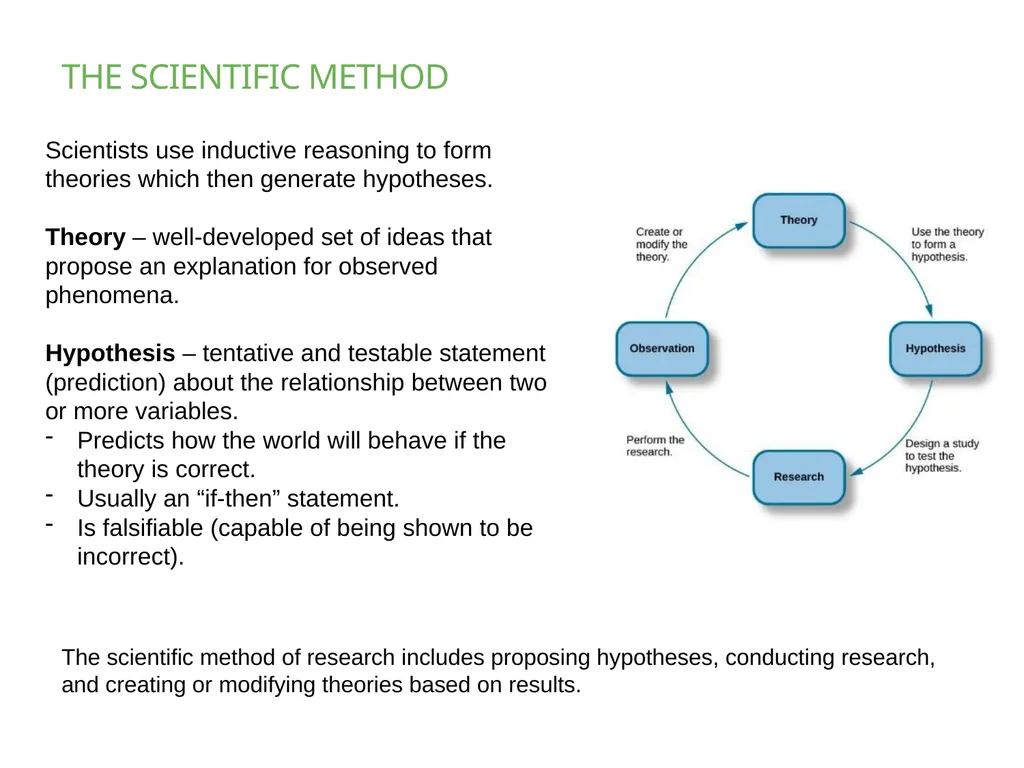
The scientific method of research includes proposing hypotheses, conducting research, and creating or modifying theories based on results. The scientific method Scientists use inductive reasoning to form theories which then generate hypotheses.
Theory – well-developed set of ideas that propose an explanation for observed phenomena.
Hypothesis – tentative and testable statement (prediction) about the relationship between two or more variables.
Predicts how the world will behave if the theory is correct.
Usually an “if-then” statement.
Is falsifiable (capable of being shown to be incorrect).<br>
Theory – well-developed set of ideas that propose an explanation for observed phenomena.
Hypothesis – tentative and testable statement (prediction) about the relationship between two or more variables.
Predicts how the world will behave if the theory is correct.
Usually an “if-then” statement.
Is falsifiable (capable of being shown to be incorrect).<br>
07
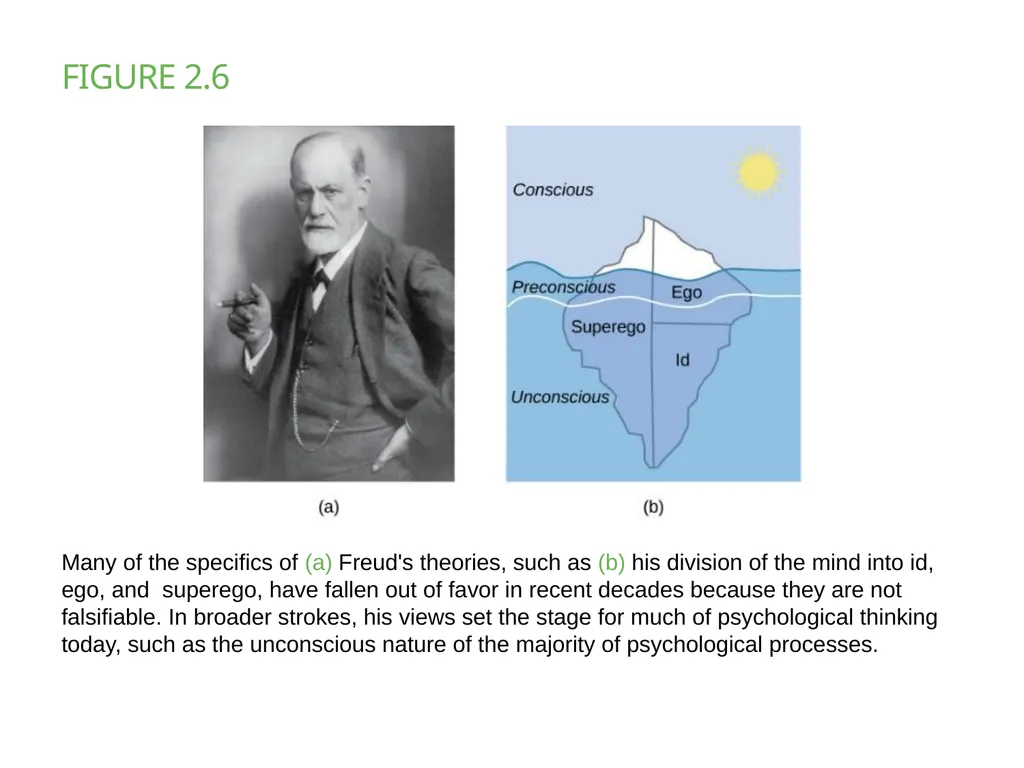
This OpenStax ancillary resource is © Rice University under a CC-BY 4.0 International license; it may be reproduced or modified but must be attributed to OpenStax, Rice University and any changes must be noted. Any images credited to other sources are similarly available for reproduction, but must be attributed to their sources. Many of the specifics of (a) Freud's theories, such as (b) his division of the mind into id, ego, and superego, have fallen out of favor in recent decades because they are not falsifiable. In broader strokes, his views set the stage for much of psychological thinking today, such as the unconscious nature of the majority of psychological processes. Figure 2.6<br>
08
2.2 Approaches to research Clinical or case studies
Naturalistic Observation
Surveys
Archival Research
Longitudinal and Cross-Sectional Research<br>
Naturalistic Observation
Surveys
Archival Research
Longitudinal and Cross-Sectional Research<br>
09
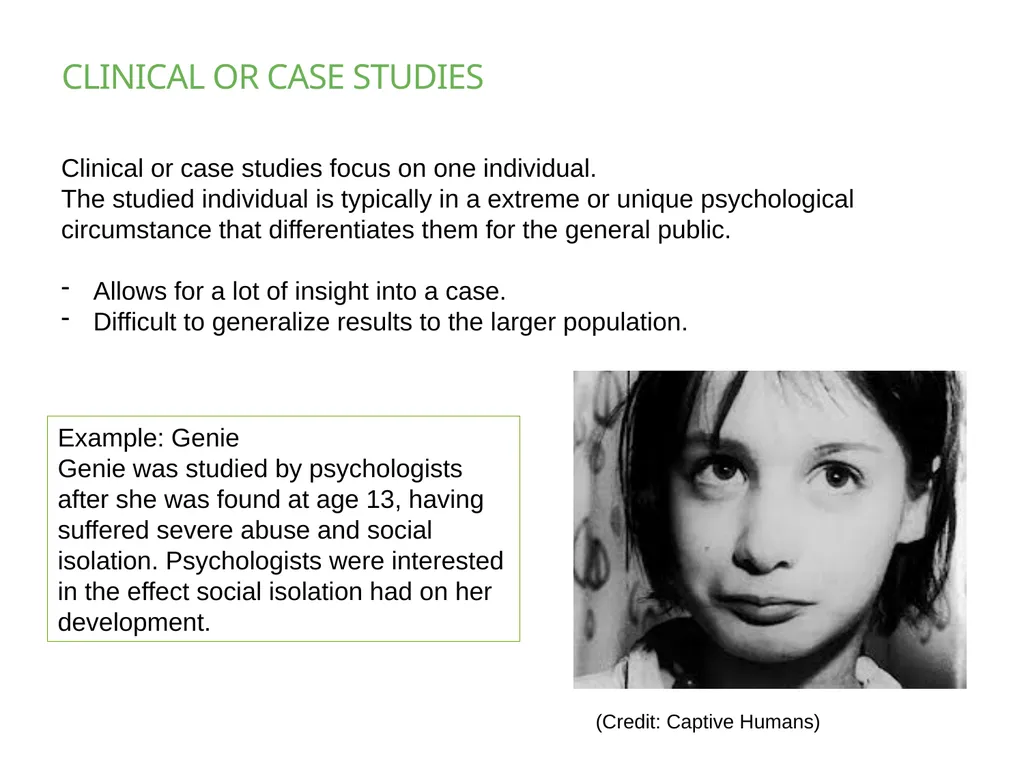
Clinical or case studies Clinical or case studies focus on one individual.
The studied individual is typically in a extreme or unique psychological circumstance that differentiates them for the general public.
Allows for a lot of insight into a case.
Difficult to generalize results to the larger population. Example: Genie
Genie was studied by psychologists after she was found at age 13, having suffered severe abuse and social isolation. Psychologists were interested in the effect social isolation had on her development. (Credit: Captive Humans)<br>
The studied individual is typically in a extreme or unique psychological circumstance that differentiates them for the general public.
Allows for a lot of insight into a case.
Difficult to generalize results to the larger population. Example: Genie
Genie was studied by psychologists after she was found at age 13, having suffered severe abuse and social isolation. Psychologists were interested in the effect social isolation had on her development. (Credit: Captive Humans)<br>
10
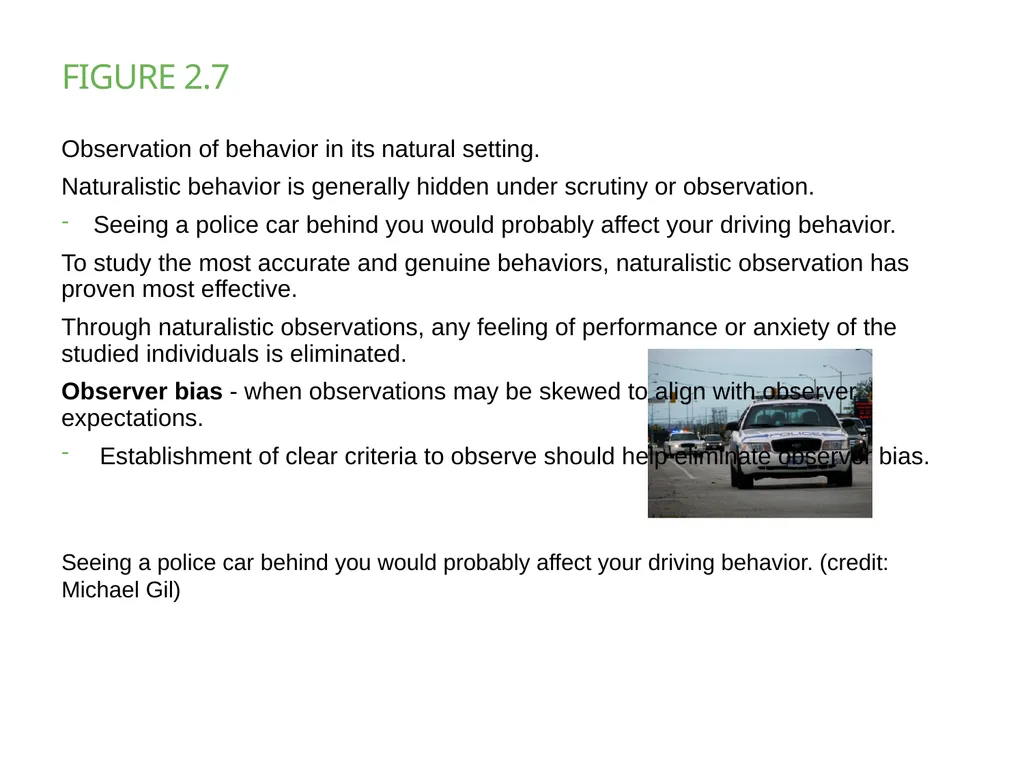
Seeing a police car behind you would probably affect your driving behavior. (credit: Michael Gil) Figure 2.7 Observation of behavior in its natural setting.
Naturalistic behavior is generally hidden under scrutiny or observation.
Seeing a police car behind you would probably affect your driving behavior.
To study the most accurate and genuine behaviors, naturalistic observation has proven most effective.
Through naturalistic observations, any feeling of performance or anxiety of the studied individuals is eliminated.
Observer bias - when observations may be skewed to align with observer expectations.
Establishment of clear criteria to observe should help eliminate observer bias.<br>
Naturalistic behavior is generally hidden under scrutiny or observation.
Seeing a police car behind you would probably affect your driving behavior.
To study the most accurate and genuine behaviors, naturalistic observation has proven most effective.
Through naturalistic observations, any feeling of performance or anxiety of the studied individuals is eliminated.
Observer bias - when observations may be skewed to align with observer expectations.
Establishment of clear criteria to observe should help eliminate observer bias.<br>
11
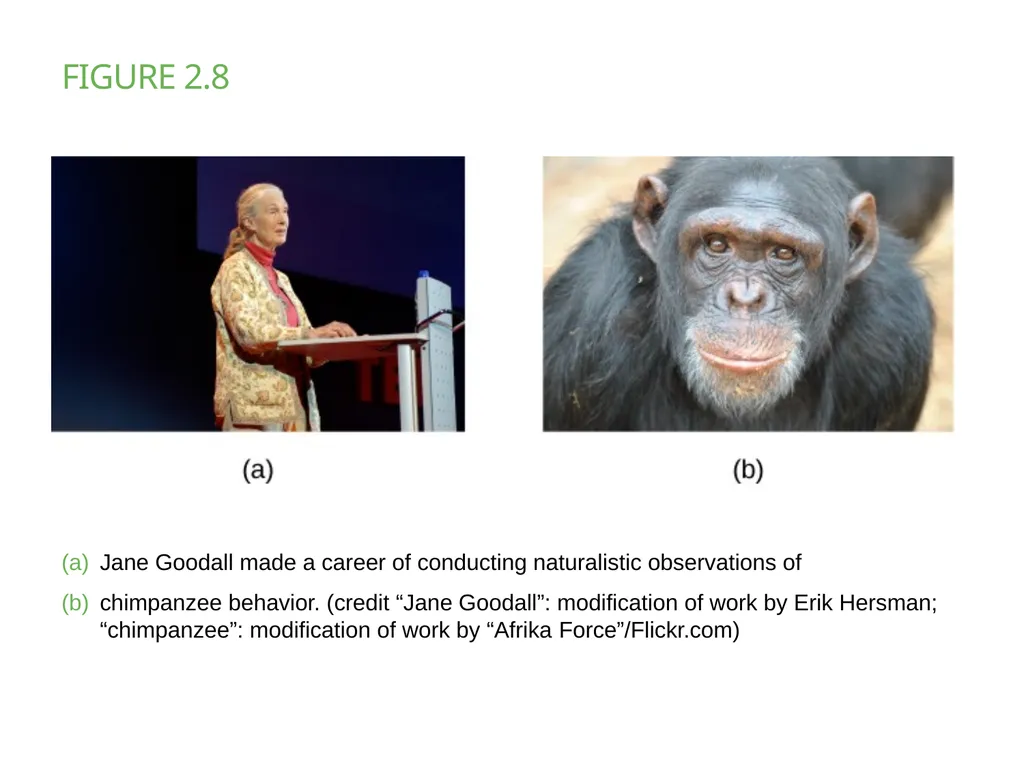
Jane Goodall made a career of conducting naturalistic observations of
chimpanzee behavior. (credit “Jane Goodall”: modification of work by Erik Hersman; “chimpanzee”: modification of work by “Afrika Force”/Flickr.com) Figure 2.8<br>
chimpanzee behavior. (credit “Jane Goodall”: modification of work by Erik Hersman; “chimpanzee”: modification of work by “Afrika Force”/Flickr.com) Figure 2.8<br>
12
surveys A list of questions that can be delivered in many ways:
Paper-and-pencil
Electronically
Verbally
Surveys can be used to gather a large amount of data from a sample (subset of individuals) from a larger population.
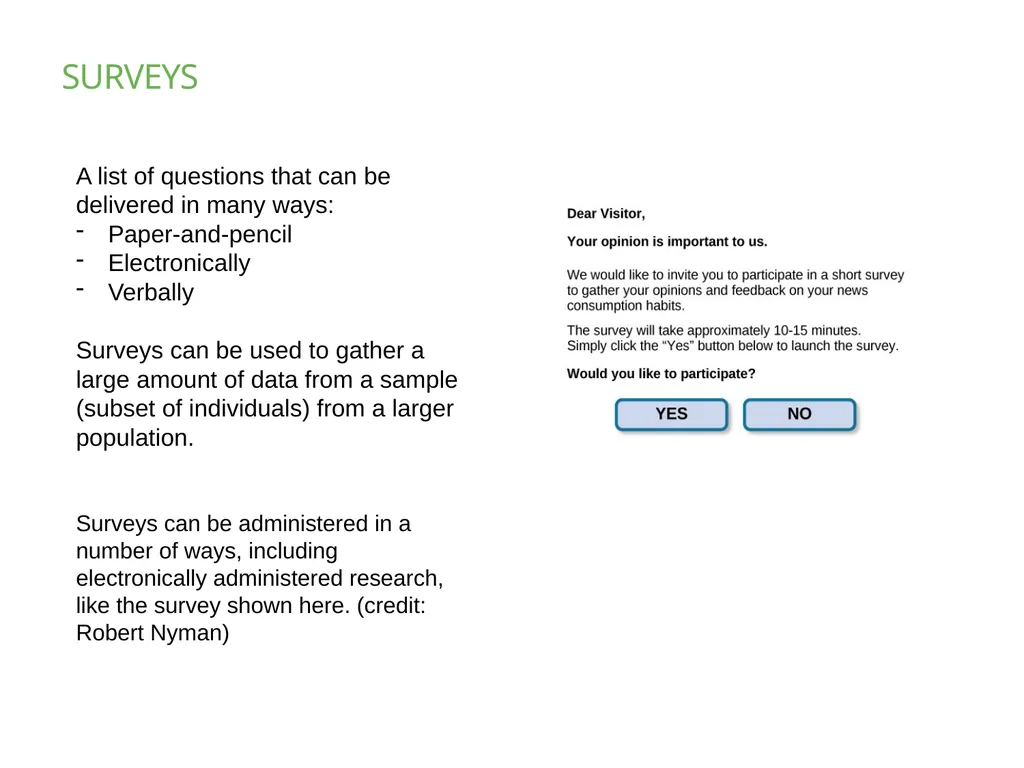
Surveys can be administered in a number of ways, including electronically administered research, like the survey shown here. (credit: Robert Nyman)<br>
Paper-and-pencil
Electronically
Verbally
Surveys can be used to gather a large amount of data from a sample (subset of individuals) from a larger population.
Surveys can be administered in a number of ways, including electronically administered research, like the survey shown here. (credit: Robert Nyman)<br>
13
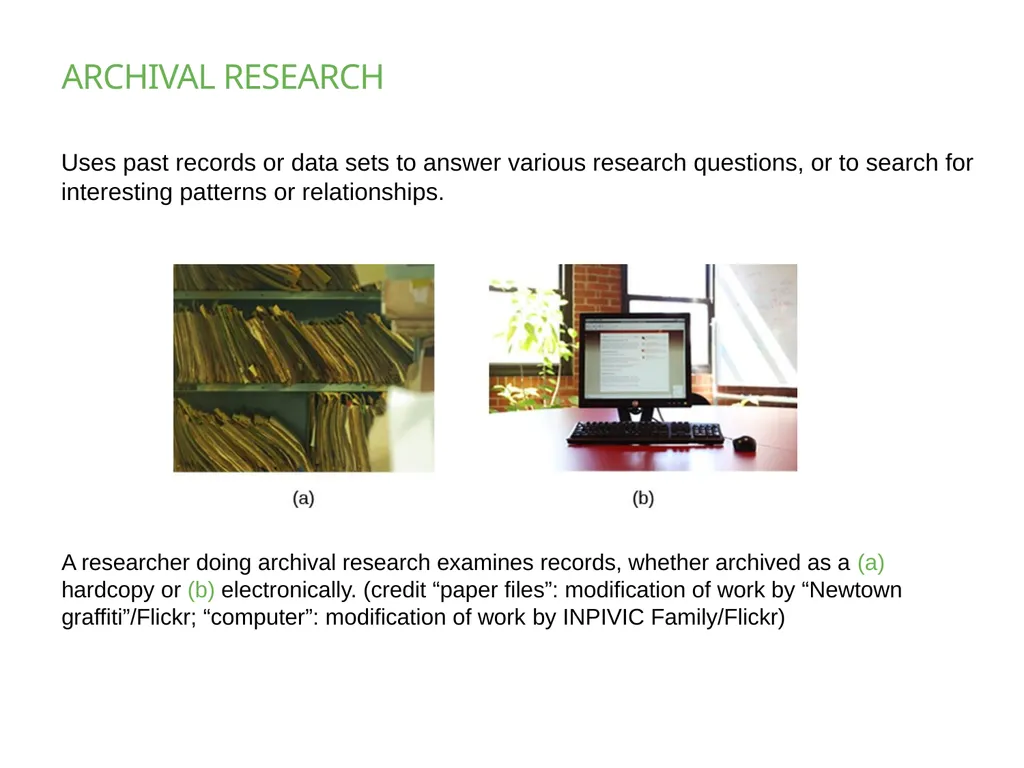
A researcher doing archival research examines records, whether archived as a (a) hardcopy or (b) electronically. (credit “paper files”: modification of work by “Newtown graffiti”/Flickr; “computer”: modification of work by INPIVIC Family/Flickr) Archival research Uses past records or data sets to answer various research questions, or to search for interesting patterns or relationships.<br>
14
This OpenStax ancillary resource is © Rice University under a CC-BY 4.0 International license; it may be reproduced or modified but must be attributed to OpenStax, Rice University and any changes must be noted. Any images credited to other sources are similarly available for reproduction, but must be attributed to their sources. Longitudinal research like the CPS-3 help us to better understand how smoking is associated with cancer and other diseases. (credit: CDC/Debora Cartagena) Longitudinal and Cross-Sectional
Research Cross-Sectional Research – Compares multiple segments of a population at a single time (such as different age groups).
Longitudinal - Studies in which the same group of individuals is surveyed or measured repeatedly over an extended period of time.
Researchers often expect some participants to drop out, particularly in this type of study and therefore often initially recruit a lot of participants.
Attrition - reduction in number of research participants as some drop out of the study over time.<br>
Longitudinal - Studies in which the same group of individuals is surveyed or measured repeatedly over an extended period of time.
Researchers often expect some participants to drop out, particularly in this type of study and therefore often initially recruit a lot of participants.
Attrition - reduction in number of research participants as some drop out of the study over time.<br>
15
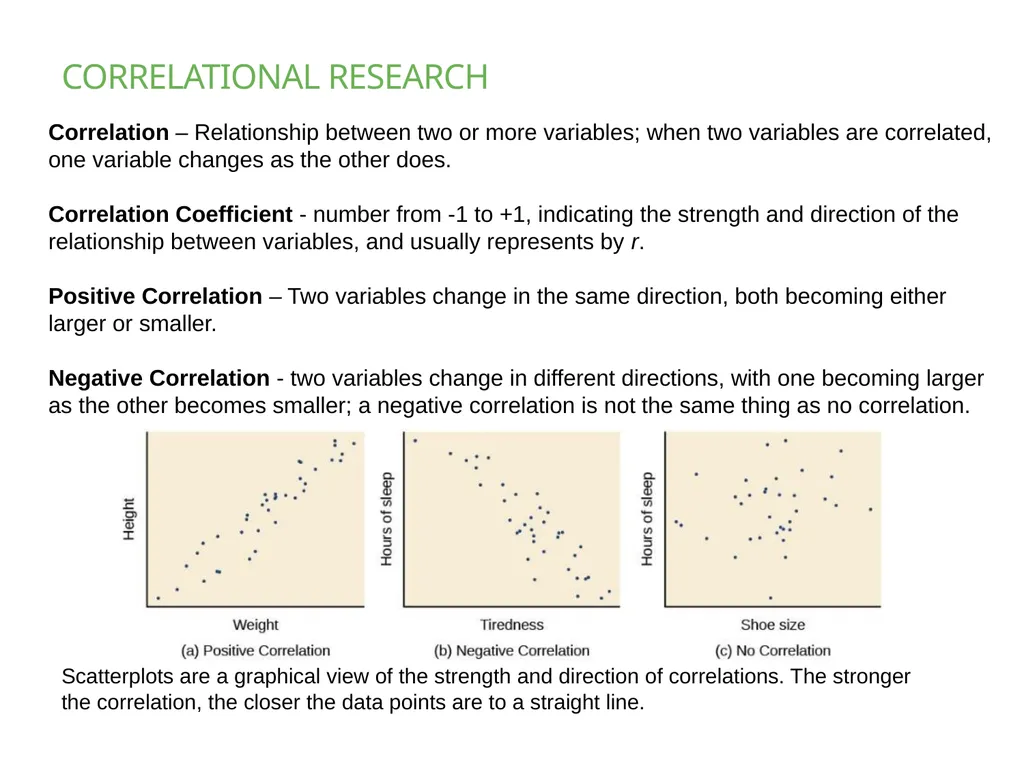
Scatterplots are a graphical view of the strength and direction of correlations. The stronger the correlation, the closer the data points are to a straight line. Correlational research Correlation – Relationship between two or more variables; when two variables are correlated, one variable changes as the other does.
Correlation Coefficient - number from -1 to +1, indicating the strength and direction of the relationship between variables, and usually represents by r.
Positive Correlation – Two variables change in the same direction, both becoming either larger or smaller.
Negative Correlation - two variables change in different directions, with one becoming larger as the other becomes smaller; a negative correlation is not the same thing as no correlation.<br>
Correlation Coefficient - number from -1 to +1, indicating the strength and direction of the relationship between variables, and usually represents by r.
Positive Correlation – Two variables change in the same direction, both becoming either larger or smaller.
Negative Correlation - two variables change in different directions, with one becoming larger as the other becomes smaller; a negative correlation is not the same thing as no correlation.<br>
16
Correlation does not indicate
causation Cause-and-effect relationship - changes in one variable cause the changes in the other variable; can be determined only through an experimental research design.
Confounding variable - unanticipated outside factor that affects both variables of interest, often giving the false impression that changes in one variable causes changes in the other variable.. Example:
As ice-cream sales increase, so does the overall rate in crime.
A relationship exists between ice-cream and crime but is it correlation or does one cause the other?
In this example, temperature is a confounding variable. As the temperature increases, ice-cream sales increase and people are more likely to be outside increasing crime rates.<br>
Confounding variable - unanticipated outside factor that affects both variables of interest, often giving the false impression that changes in one variable causes changes in the other variable.. Example:
As ice-cream sales increase, so does the overall rate in crime.
A relationship exists between ice-cream and crime but is it correlation or does one cause the other?
In this example, temperature is a confounding variable. As the temperature increases, ice-cream sales increase and people are more likely to be outside increasing crime rates.<br>
17
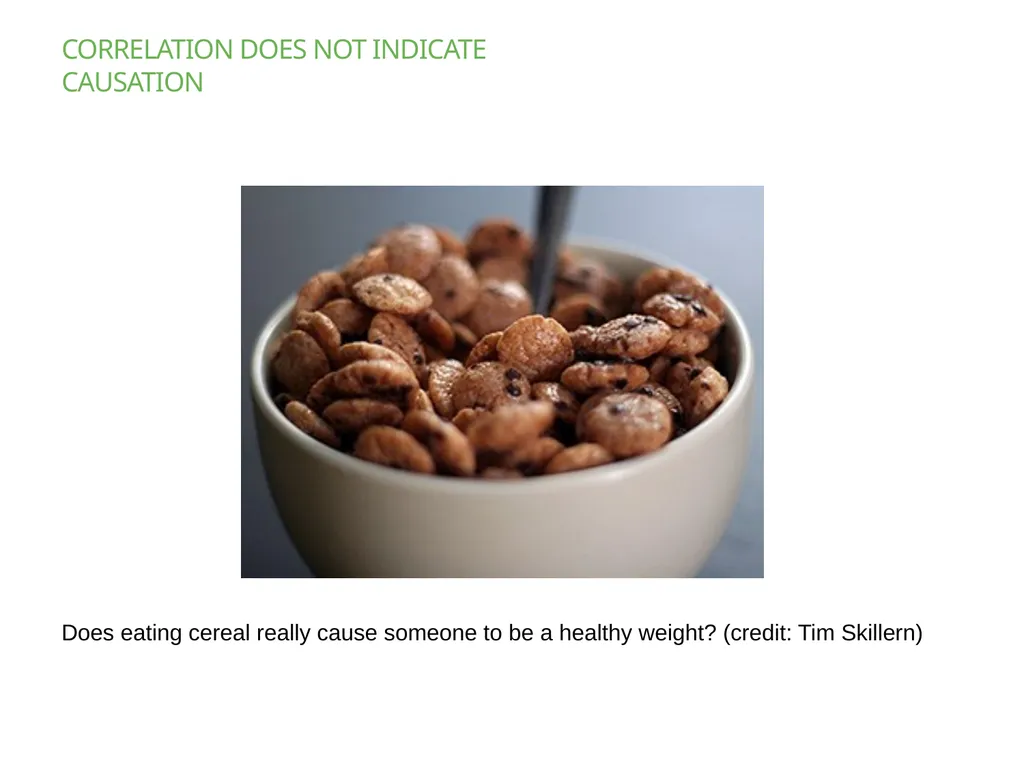
Does eating cereal really cause someone to be a healthy weight? (credit: Tim Skillern) Correlation does not indicate
causation<br>
18
Many people believe that a full moon makes people behave oddly. (credit: Cory Zanker) Illusory correlations As well as mistaking correlation for causation, people can also make false correlations.
Illusory Correlations - Seeing relationships between two things when in reality no such relationship exists.
Confirmation bias - tendency to ignore evidence that disproves ideas or beliefs.
Illusory correlations can be involved in the formation of prejudicial attitudes that can lead to discriminatory behavior.
Many people believe that a full moon makes people behave oddly. Research demonstrates that this relationship does not exist.<br>
Illusory Correlations - Seeing relationships between two things when in reality no such relationship exists.
Confirmation bias - tendency to ignore evidence that disproves ideas or beliefs.
Illusory correlations can be involved in the formation of prejudicial attitudes that can lead to discriminatory behavior.
Many people believe that a full moon makes people behave oddly. Research demonstrates that this relationship does not exist.<br>
19
Causality: conducting experiments
& using the data The only way to establish that there is a cause-and-effect relationship between two variables is to conduct a scientific experiment.
A scientific experiment has precise requirements for design and implementation.
THE EXPERIMENTAL HYPOTHESIS
Hypotheses can be formulated through:
Observation
After review of previous research<br>
A scientific experiment has precise requirements for design and implementation.
THE EXPERIMENTAL HYPOTHESIS
Hypotheses can be formulated through:
Observation
After review of previous research<br>
20
Designing an experiment EXPERIMENTAL AND CONTROL GROUPS
Experimental group - The participants that experience the manipulated variable (group designed to answer the research question).
Control group - Participants that do not experience the manipulated variable.
Serve as a basis for comparison and controls for chance factors that might influence the results of the study
Experimental manipulation is the only difference between the experimental and control groups, so any differences between the two are due to experimental manipulation rather than chance.
DEFINING VARIABLES AND HOW THEY WILL BE MEASURED
Operational definition - description of what actions and operations will be used to measure the dependent variables and manipulate the independent variables.<br>
Experimental group - The participants that experience the manipulated variable (group designed to answer the research question).
Control group - Participants that do not experience the manipulated variable.
Serve as a basis for comparison and controls for chance factors that might influence the results of the study
Experimental manipulation is the only difference between the experimental and control groups, so any differences between the two are due to experimental manipulation rather than chance.
DEFINING VARIABLES AND HOW THEY WILL BE MEASURED
Operational definition - description of what actions and operations will be used to measure the dependent variables and manipulate the independent variables.<br>
21
Designing an experiment AVOIDING BIAS AND THE PLACEBO EFFECT
Experimenter bias - researcher expectations skew the results of the study.
Participant bias – participant expectations skew the results of the study.
Single-blind study - experiment in which the researcher knows which participants are in the experimental group and which are in the control group but participants do not. (Controls for participant expectations).
Double-blind Study - experiment in which both the researchers and the participants are blind to group assignments. (Controls for both participant and experimenter expectations). Placebo effect - people’s expectations or beliefs influencing or determining their experience in a given situation.
When people are given a pill to improve their mood their mood may increase just because they believe it will.
To know if a medication is really having an effect or whether it us a placebo effect, the experimental group receive the medication and the control group receive a placebo treatment (a sugar pill). This is a double-blind study.
Any differences between the groups will be due to the medication.<br>
Experimenter bias - researcher expectations skew the results of the study.
Participant bias – participant expectations skew the results of the study.
Single-blind study - experiment in which the researcher knows which participants are in the experimental group and which are in the control group but participants do not. (Controls for participant expectations).
Double-blind Study - experiment in which both the researchers and the participants are blind to group assignments. (Controls for both participant and experimenter expectations). Placebo effect - people’s expectations or beliefs influencing or determining their experience in a given situation.
When people are given a pill to improve their mood their mood may increase just because they believe it will.
To know if a medication is really having an effect or whether it us a placebo effect, the experimental group receive the medication and the control group receive a placebo treatment (a sugar pill). This is a double-blind study.
Any differences between the groups will be due to the medication.<br>
22
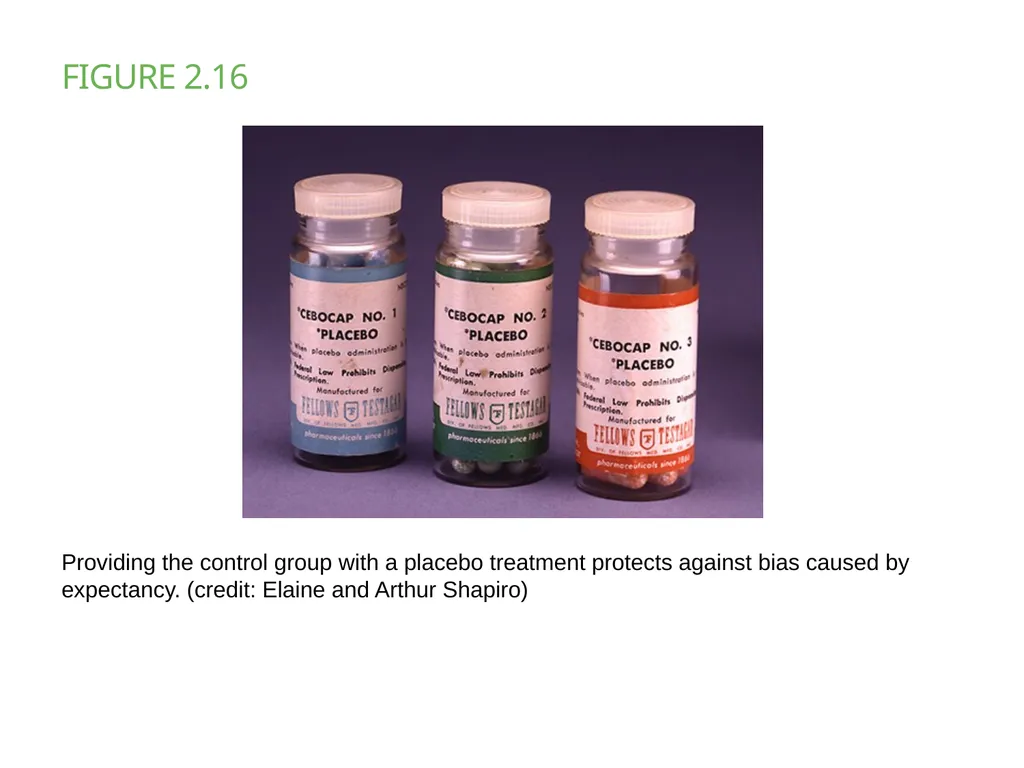
Providing the control group with a placebo treatment protects against bias caused by expectancy. (credit: Elaine and Arthur Shapiro) Figure 2.16<br>
23
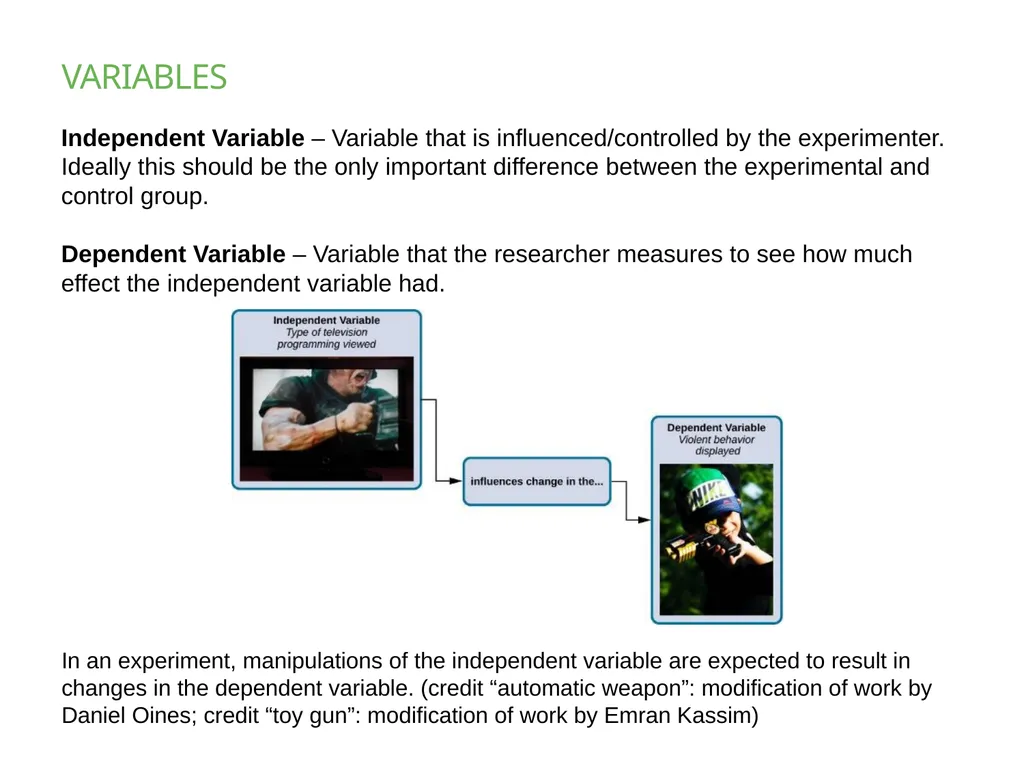
In an experiment, manipulations of the independent variable are expected to result in changes in the dependent variable. (credit “automatic weapon”: modification of work by Daniel Oines; credit “toy gun”: modification of work by Emran Kassim) variables Independent Variable – Variable that is influenced/controlled by the experimenter. Ideally this should be the only important difference between the experimental and control group.
Dependent Variable – Variable that the researcher measures to see how much effect the independent variable had.<br>
Dependent Variable – Variable that the researcher measures to see how much effect the independent variable had.<br>
24
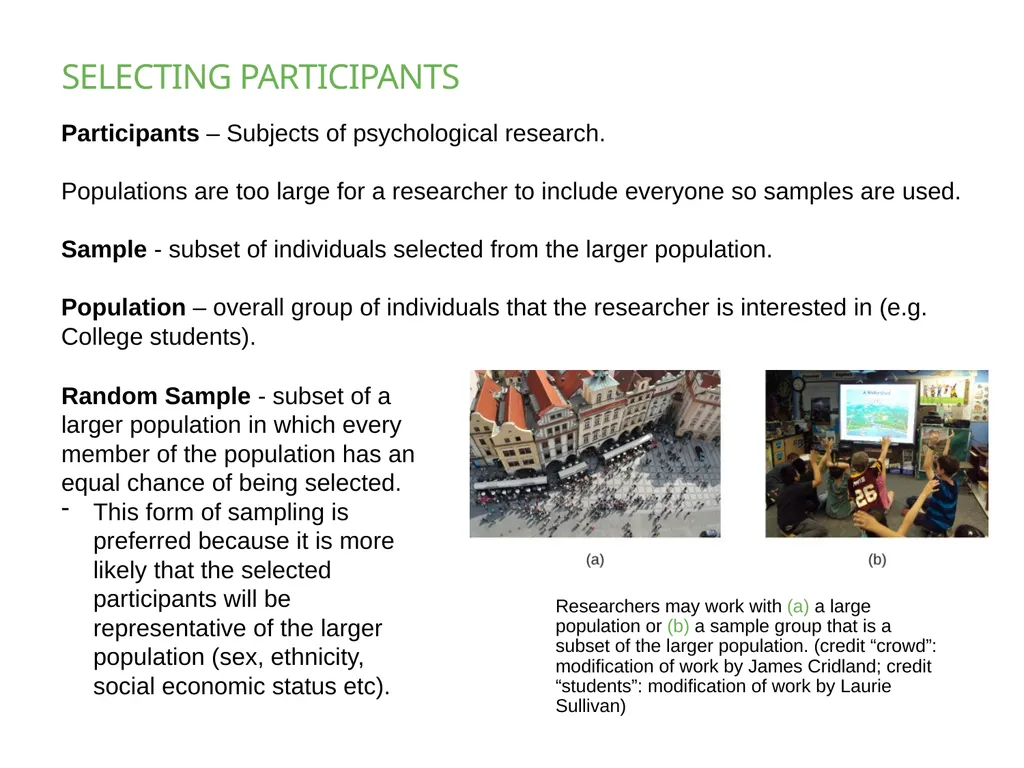
Researchers may work with (a) a large population or (b) a sample group that is a subset of the larger population. (credit “crowd”: modification of work by James Cridland; credit “students”: modification of work by Laurie Sullivan) Selecting participants Participants – Subjects of psychological research.
Populations are too large for a researcher to include everyone so samples are used.
Sample - subset of individuals selected from the larger population.
Population – overall group of individuals that the researcher is interested in (e.g. College students). Random Sample - subset of a larger population in which every member of the population has an equal chance of being selected.
This form of sampling is preferred because it is more likely that the selected participants will be representative of the larger population (sex, ethnicity, social economic status etc).<br>
Populations are too large for a researcher to include everyone so samples are used.
Sample - subset of individuals selected from the larger population.
Population – overall group of individuals that the researcher is interested in (e.g. College students). Random Sample - subset of a larger population in which every member of the population has an equal chance of being selected.
This form of sampling is preferred because it is more likely that the selected participants will be representative of the larger population (sex, ethnicity, social economic status etc).<br>
25
assigning participants TO GROUPS:
eXPERIMENTAL OR CONTROL Random Assignment – Method of experimental group assignment in which all participants have an equal chance of being assigned to either group.
Can be achieved using statistical software or by simply flipping a coin.
Prevents systematic differences between groups such as gender or age.
Without random assignment, an experiment cannot find a true cause-and-effect relationship. Any relationship could be due to preexisting differences between the groups.
Random assignment helps to avoid preexisting systematic differences so that any significant differences between groups can be said to be the result of the manipulation.<br>
Can be achieved using statistical software or by simply flipping a coin.
Prevents systematic differences between groups such as gender or age.
Without random assignment, an experiment cannot find a true cause-and-effect relationship. Any relationship could be due to preexisting differences between the groups.
Random assignment helps to avoid preexisting systematic differences so that any significant differences between groups can be said to be the result of the manipulation.<br>
26
Issues to consider MANIPULATING VARIABLES
As stated, random assignment is required to state causation. Once randomly assigned, each group is then manipulated in some way. However, some experimental designs are more complicated.
Example: The effect of sex (male/female) on spatial memory.
Sex (independent variable) cannot be manipulated.
Males and females cannot be randomly assigned.
This kind of an experiment is therefore called quasi-experimental.
A cause-and-effect relationship cannot be determined from this type of experiment.
ETHICS
Some questions cannot be answered using an experimental design because they would be unethical.
Example: The effect of experiencing abuse as a child on levels of self-esteem.
You cannot randomly assign participants to receive abuse.
This would need to be studied using other approaches such as case studies or surveys.<br>
As stated, random assignment is required to state causation. Once randomly assigned, each group is then manipulated in some way. However, some experimental designs are more complicated.
Example: The effect of sex (male/female) on spatial memory.
Sex (independent variable) cannot be manipulated.
Males and females cannot be randomly assigned.
This kind of an experiment is therefore called quasi-experimental.
A cause-and-effect relationship cannot be determined from this type of experiment.
ETHICS
Some questions cannot be answered using an experimental design because they would be unethical.
Example: The effect of experiencing abuse as a child on levels of self-esteem.
You cannot randomly assign participants to receive abuse.
This would need to be studied using other approaches such as case studies or surveys.<br>
27
Interpreting experimental findings Once data has been collected, a statistical analysis is conducted.
Statistical analysis - determines how likely any difference between experimental groups is due to chance.
Psychologists usually discuss results as significant or non-significant.
If the odds that the differences occurred by chance are 5% or less, then the results are significant.
A true experiment, including random assignment, manipulation of the independent variable and control of extraneous variables reduce the odds of results occurring by chance.<br>
Statistical analysis - determines how likely any difference between experimental groups is due to chance.
Psychologists usually discuss results as significant or non-significant.
If the odds that the differences occurred by chance are 5% or less, then the results are significant.
A true experiment, including random assignment, manipulation of the independent variable and control of extraneous variables reduce the odds of results occurring by chance.<br>
28
Reporting findings Research is usually reported in scientific journals.
Usually aimed at an audience of professionals/scholars.
Articles published are peer-reviewed journal articles.
Peer-reviewed journal article – article read by several other scientists (usually anonymously) with expertise in the subject matter, who provide feedback regarding the quality of the manuscript before it is accepted for publication.
Helps to weed out poorly conceived or executed studies.
Improves articles with suggested revisions.
Determines whether the research is described clearly enough to be replicated by other researchers.
Replication:
Determines reliability of original research design.
Can include additional measures that expand on the original findings.
Provide more evidence to support the original finding or to cast doubt on those findings.<br>
Usually aimed at an audience of professionals/scholars.
Articles published are peer-reviewed journal articles.
Peer-reviewed journal article – article read by several other scientists (usually anonymously) with expertise in the subject matter, who provide feedback regarding the quality of the manuscript before it is accepted for publication.
Helps to weed out poorly conceived or executed studies.
Improves articles with suggested revisions.
Determines whether the research is described clearly enough to be replicated by other researchers.
Replication:
Determines reliability of original research design.
Can include additional measures that expand on the original findings.
Provide more evidence to support the original finding or to cast doubt on those findings.<br>
29
Bad science & Retraction:
The vaccine-autism myth Many peer-reviewed publications published research making claims that routine childhood vaccines cause some children to develop autism.
Since these reports, large-scale research was carried out suggesting that vaccinations are not responsible for causing autism.
Many of the original studies have since been retracted.
It was found that the leading research in the original study had a financial interest in establishing a link between childhood vaccines and autism.
Unfortunately the initial claims were publicized and many people still think vaccinations cause autism.<br>
Since these reports, large-scale research was carried out suggesting that vaccinations are not responsible for causing autism.
Many of the original studies have since been retracted.
It was found that the leading research in the original study had a financial interest in establishing a link between childhood vaccines and autism.
Unfortunately the initial claims were publicized and many people still think vaccinations cause autism.<br>
30
Reliability and validity Reliability - consistency and reproducibility of a given result.
Would the same test give the same results every time?
Do the instruments/tools used to collect data do so in consistent, reproducible ways?
When a study involves observations by multiple people, it is important that they all make observations and record them in the same way.
Inter-rater reliability - measure of agreement among observers on how they record and classify a particular event.
A reliable, consistent measurement does not always meant that it is measuring something correctly.
Validity - accuracy of a given result in measuring what it is designed to measure.
Does a test measure what it is meant to measure?
A valid measure is always reliable but a reliable measure is not always valid.<br>
Would the same test give the same results every time?
Do the instruments/tools used to collect data do so in consistent, reproducible ways?
When a study involves observations by multiple people, it is important that they all make observations and record them in the same way.
Inter-rater reliability - measure of agreement among observers on how they record and classify a particular event.
A reliable, consistent measurement does not always meant that it is measuring something correctly.
Validity - accuracy of a given result in measuring what it is designed to measure.
Does a test measure what it is meant to measure?
A valid measure is always reliable but a reliable measure is not always valid.<br>
31
Ethics:
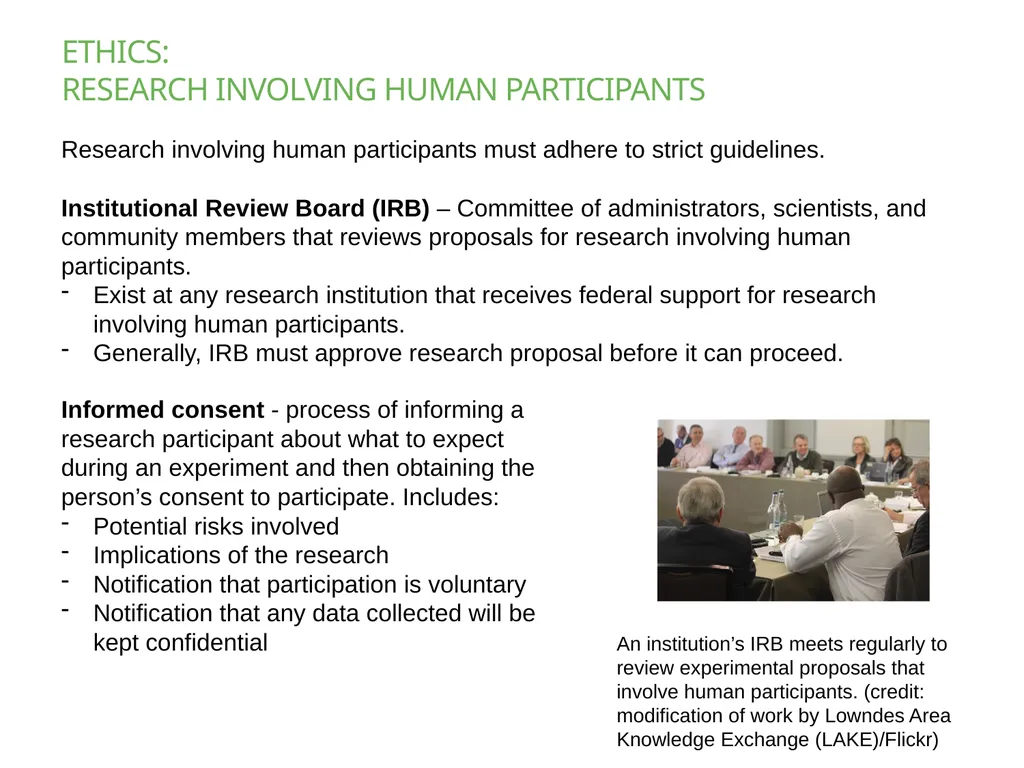
research involving human participants An institution’s IRB meets regularly to review experimental proposals that involve human participants. (credit: modification of work by Lowndes Area Knowledge Exchange (LAKE)/Flickr) Research involving human participants must adhere to strict guidelines.
Institutional Review Board (IRB) – Committee of administrators, scientists, and community members that reviews proposals for research involving human participants.
Exist at any research institution that receives federal support for research involving human participants.
Generally, IRB must approve research proposal before it can proceed. Informed consent - process of informing a research participant about what to expect during an experiment and then obtaining the person’s consent to participate. Includes:
Potential risks involved
Implications of the research
Notification that participation is voluntary
Notification that any data collected will be kept confidential<br>
Institutional Review Board (IRB) – Committee of administrators, scientists, and community members that reviews proposals for research involving human participants.
Exist at any research institution that receives federal support for research involving human participants.
Generally, IRB must approve research proposal before it can proceed. Informed consent - process of informing a research participant about what to expect during an experiment and then obtaining the person’s consent to participate. Includes:
Potential risks involved
Implications of the research
Notification that participation is voluntary
Notification that any data collected will be kept confidential<br>
32
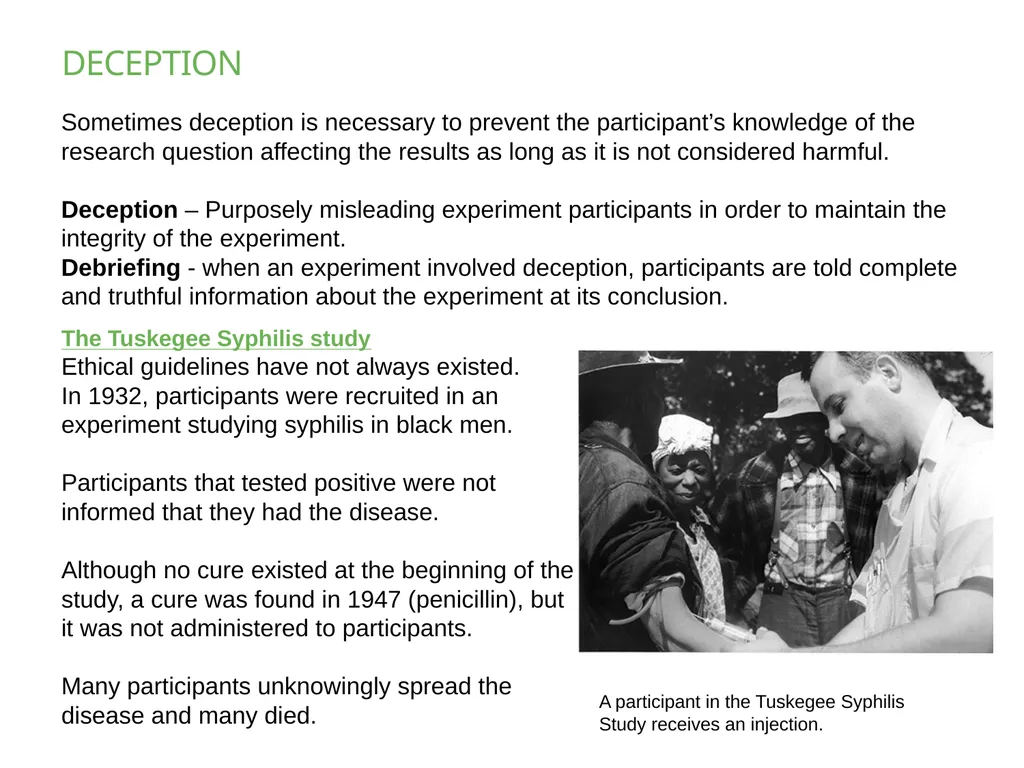
Deception A participant in the Tuskegee Syphilis Study receives an injection. Sometimes deception is necessary to prevent the participant’s knowledge of the research question affecting the results as long as it is not considered harmful.
Deception – Purposely misleading experiment participants in order to maintain the integrity of the experiment.
Debriefing - when an experiment involved deception, participants are told complete and truthful information about the experiment at its conclusion. The Tuskegee Syphilis study
Ethical guidelines have not always existed.
In 1932, participants were recruited in an experiment studying syphilis in black men.
Participants that tested positive were not informed that they had the disease.
Although no cure existed at the beginning of the study, a cure was found in 1947 (penicillin), but it was not administered to participants.
Many participants unknowingly spread the disease and many died.<br>
Deception – Purposely misleading experiment participants in order to maintain the integrity of the experiment.
Debriefing - when an experiment involved deception, participants are told complete and truthful information about the experiment at its conclusion. The Tuskegee Syphilis study
Ethical guidelines have not always existed.
In 1932, participants were recruited in an experiment studying syphilis in black men.
Participants that tested positive were not informed that they had the disease.
Although no cure existed at the beginning of the study, a cure was found in 1947 (penicillin), but it was not administered to participants.
Many participants unknowingly spread the disease and many died.<br>
33
Ethics:
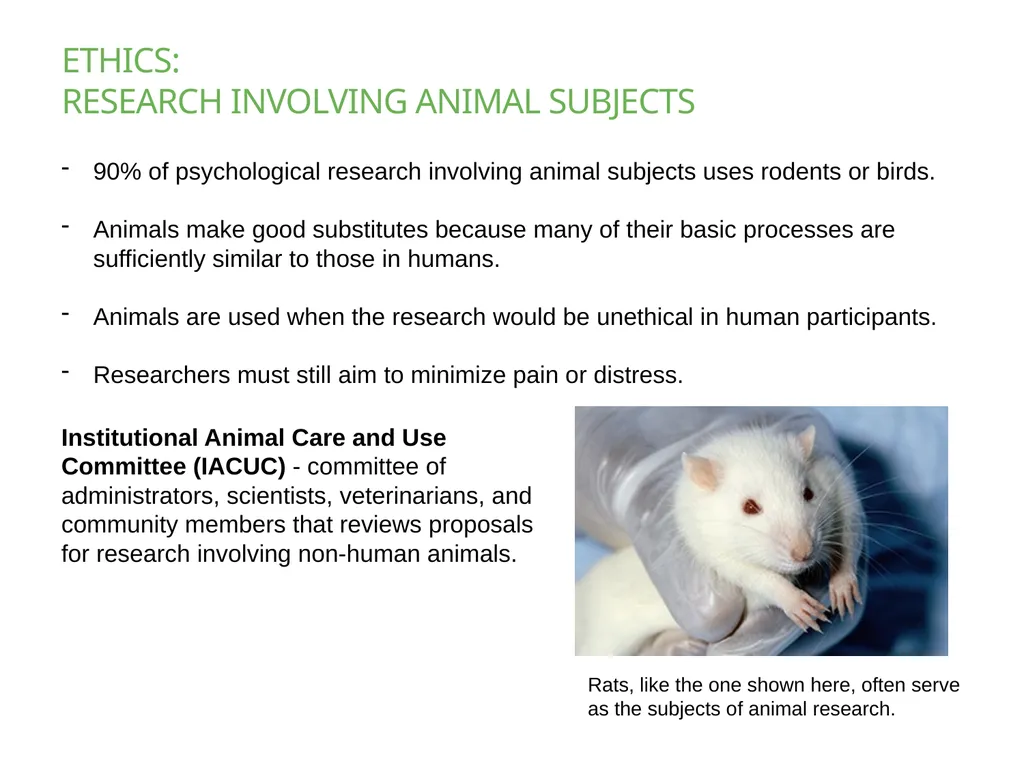
Research involving animal subjects Rats, like the one shown here, often serve as the subjects of animal research. Institutional Animal Care and Use Committee (IACUC) - committee of administrators, scientists, veterinarians, and community members that reviews proposals for research involving non-human animals. 90% of psychological research involving animal subjects uses rodents or birds.
Animals make good substitutes because many of their basic processes are sufficiently similar to those in humans.
Animals are used when the research would be unethical in human participants.
Researchers must still aim to minimize pain or distress.<br>
Animals make good substitutes because many of their basic processes are sufficiently similar to those in humans.
Animals are used when the research would be unethical in human participants.
Researchers must still aim to minimize pain or distress.<br>
34
This OpenStax ancillary resource is © Rice University under a CC-BY 4.0 International license; it may be reproduced or modified but must be attributed to OpenStax, Rice University and any changes must be noted. Any images credited to other sources are similarly available for reproduction, but must be attributed to their sources.<br>