Chapter 24: Writing a Business Plan Learning intentions Chapter 24 Textbook page reference: 283 In this chapter you will learn to: Carry out a SWOT analysis Outline the purpose of a business plan Identify the main headings in a business
"Chapter 24: Writing a Business Plan Learning" is the property of its rightful owner. Permission is granted to
download and print the materials on this website for personal, non-commercial use only, and to display it
on your personal computer provided you do not modify the materials and that you retain all copyright
notices contained in the materials. By downloading content from our website, you accept the terms of this
agreement.
Presentation Transcript
01
Chapter 24: Writing a Business Plan<br>
02
Learning intentions Chapter 24 Textbook page reference: 283 In this chapter you will learn to:
Carry out a SWOT analysis
Outline the purpose of a business plan
Identify the main headings in a business plan
Complete a business plan for a new or existing product or service.<br>
03
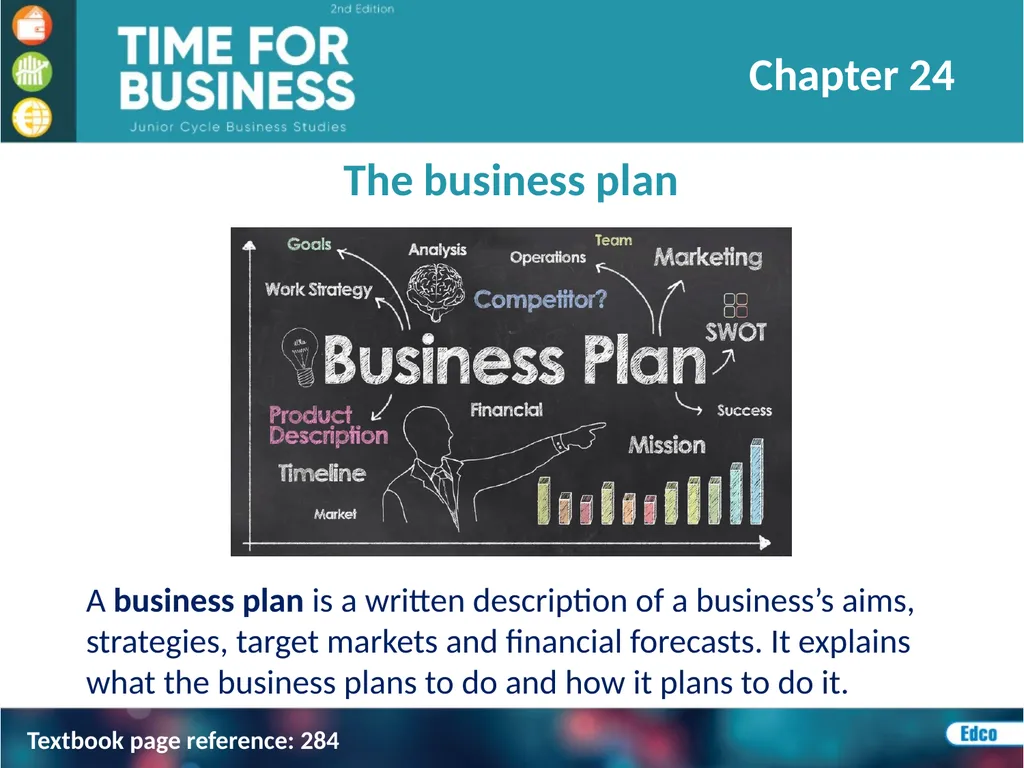
The business plan Chapter 24 Textbook page reference: 284 A business plan is a written description of a business’s aims, strategies, target markets and financial forecasts. It explains what the business plans to do and how it plans to do it.<br>
04
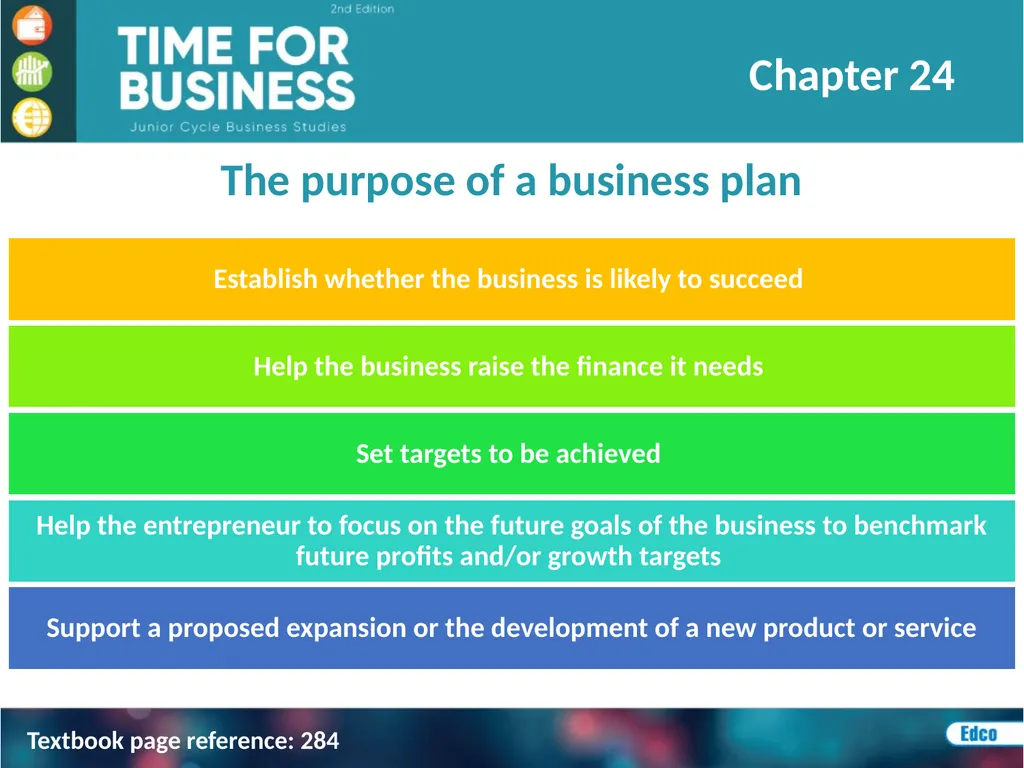
Chapter 24 Textbook page reference: 284 The purpose of a business plan<br>
05
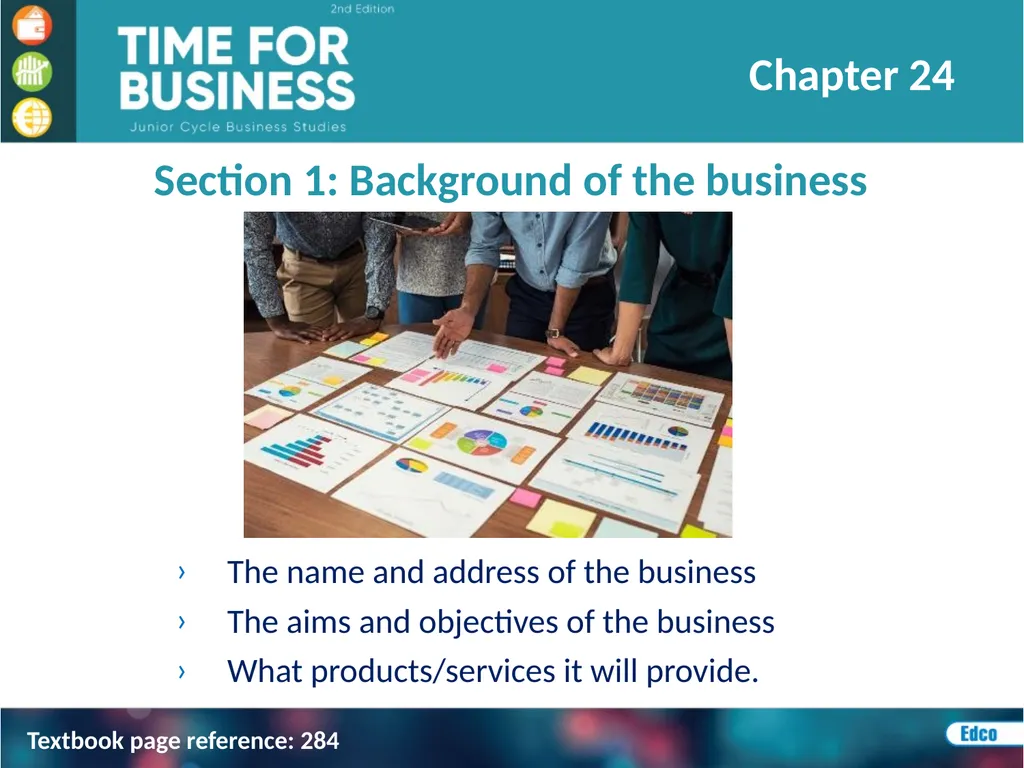
Chapter 24 Textbook page reference: 284 The name and address of the business
The aims and objectives of the business
What products/services it will provide. Section 1: Background of the business<br>
06
Chapter 24 Textbook page reference: 284 The people involved in the business, including their educational details and past experience. Section 2: The business team<br>
07
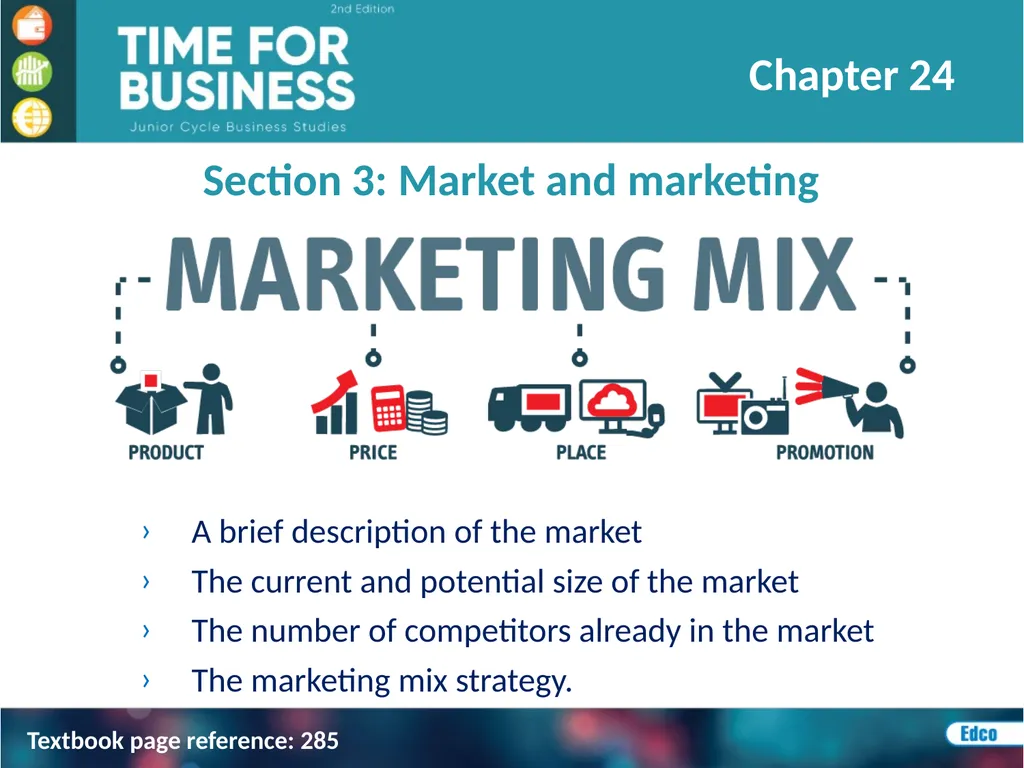
Chapter 24 Textbook page reference: 285 A brief description of the market
The current and potential size of the market
The number of competitors already in the market
The marketing mix strategy. Section 3: Market and marketing<br>
08
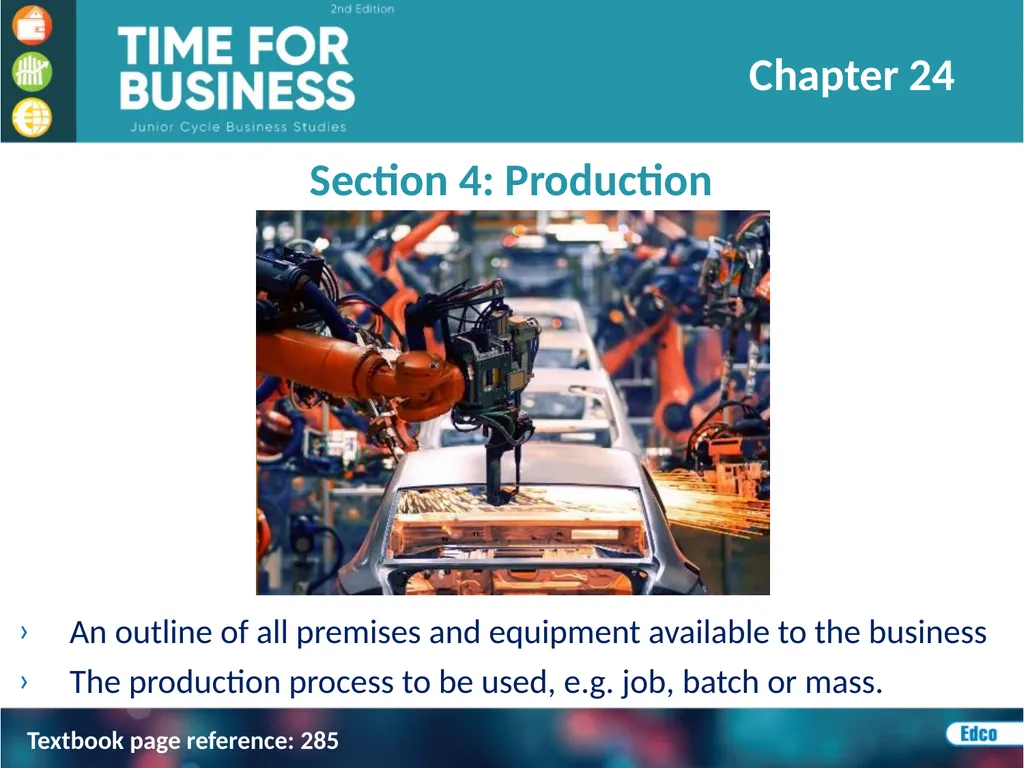
Chapter 24 Textbook page reference: 285 An outline of all premises and equipment available to the business
The production process to be used, e.g. job, batch or mass. Section 4: Production<br>
09
Chapter 24 Textbook page reference: 285 How much it costs to produce the item and what mark-up/profit margin will be added on to get the price it will be sold at
Details about any existing loans that the business has
The amount of finance required and the purpose for which it is needed
How the finance is to be repaid
Detailed cash flow forecasts and projected profits for two or three years. Section 5: Costings and finance<br>
10
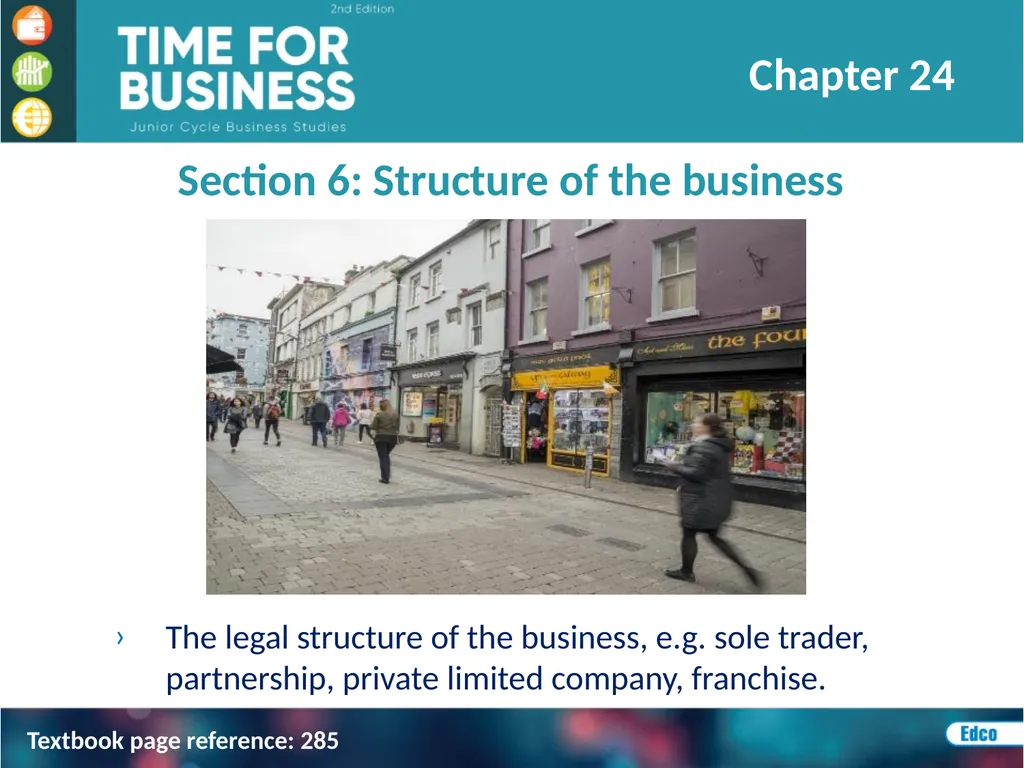
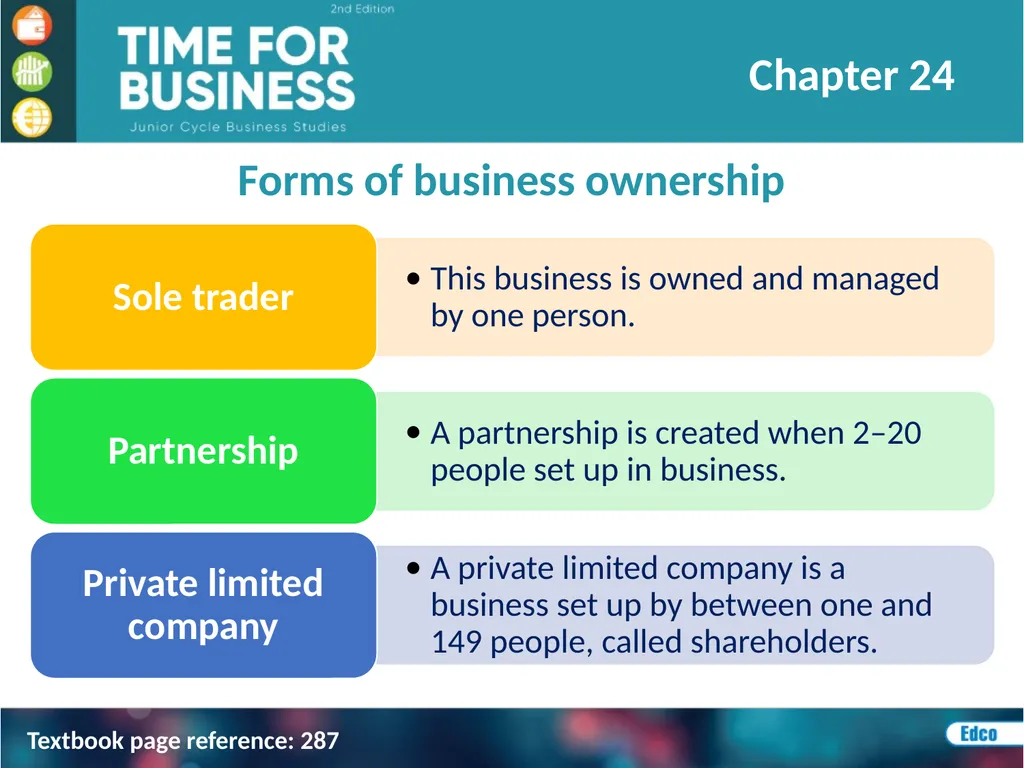
Chapter 24 Textbook page reference: 285 The legal structure of the business, e.g. sole trader, partnership, private limited company, franchise. Section 6: Structure of the business<br>
11
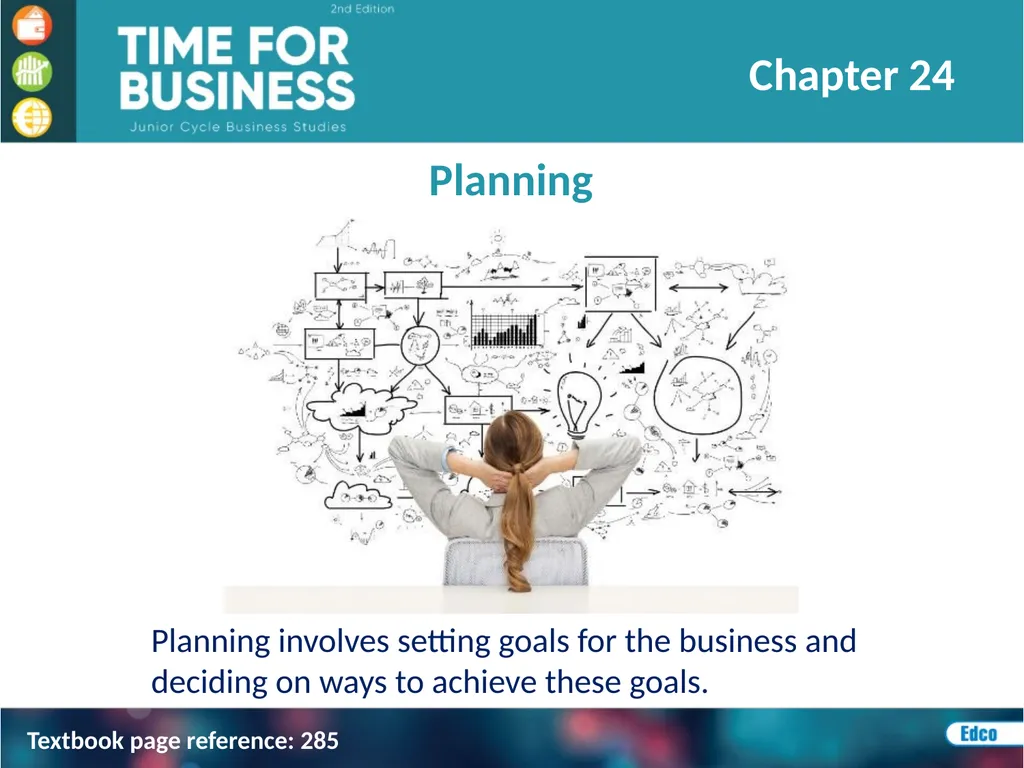
Chapter 24 Textbook page reference: 285 Planning involves setting goals for the business and deciding on ways to achieve these goals. Planning<br>
12
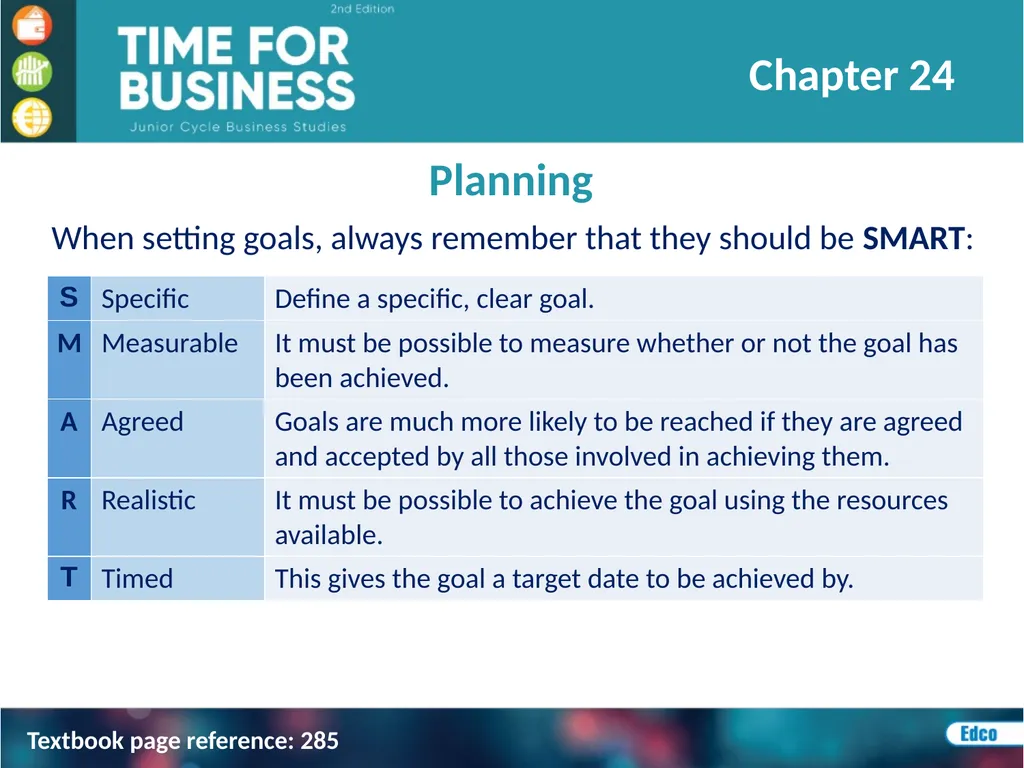
Chapter 24 Textbook page reference: 285 When setting goals, always remember that they should be SMART: Planning<br>
13
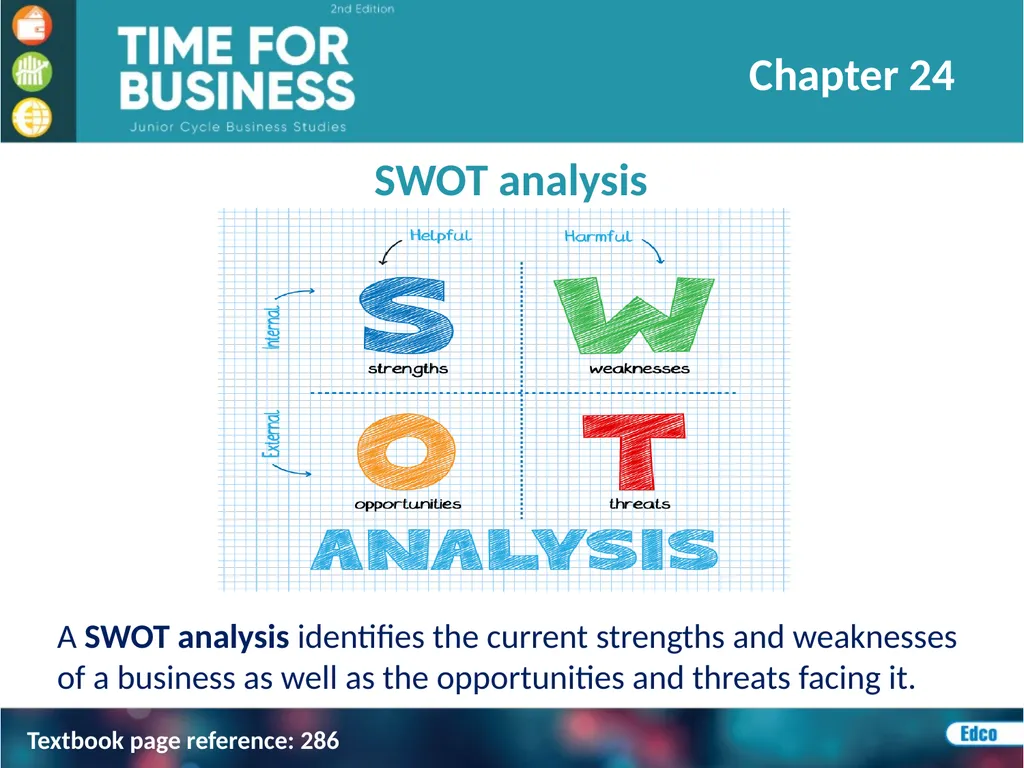
Chapter 24 Textbook page reference: 286 A SWOT analysis identifies the current strengths and weaknesses of a business as well as the opportunities and threats facing it. SWOT analysis<br>
14
Chapter 24 Textbook page reference: 287 Forms of business ownership<br>
15
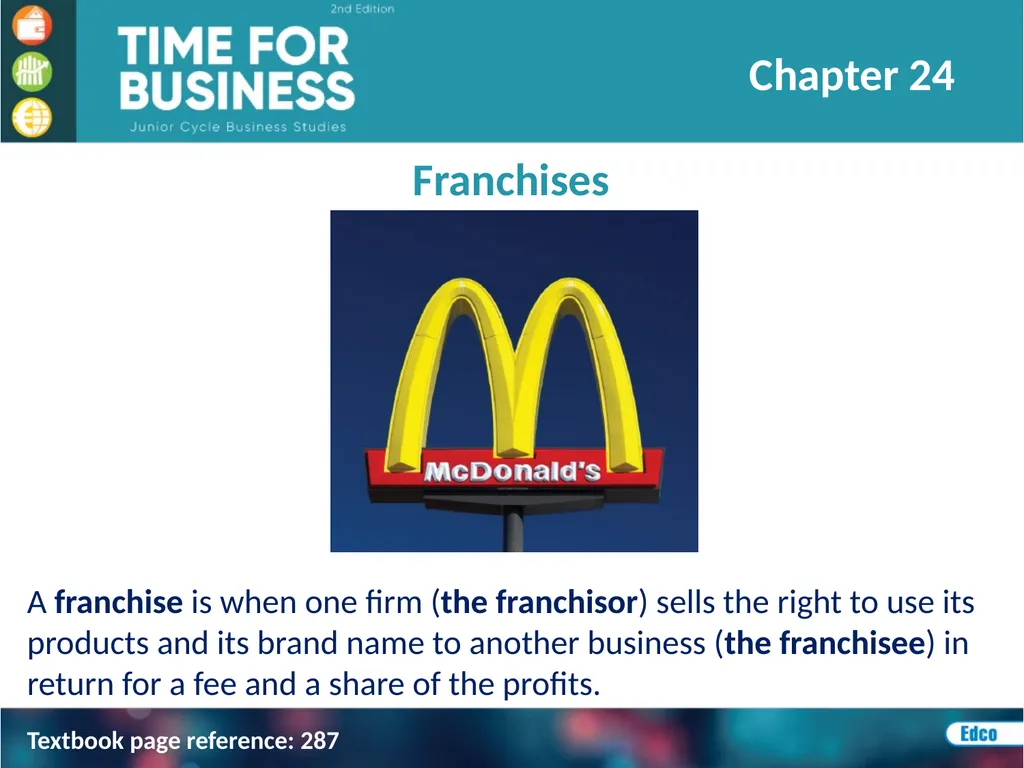
Chapter 24 Textbook page reference: 287 A franchise is when one firm (the franchisor) sells the right to use its products and its brand name to another business (the franchisee) in return for a fee and a share of the profits. Franchises<br>
16
Chapter 24 Textbook page reference: 288 The idea already exists, so the entrepreneur can look at the track record of the existing business and see if the product/service works
The brand name may be well established
The franchisor provides support and training, so the franchisee benefits from the franchisor’s guidance, training, products and equipment
Costs such as marketing can be shared between the franchisees. Advantages of franchises<br>
17
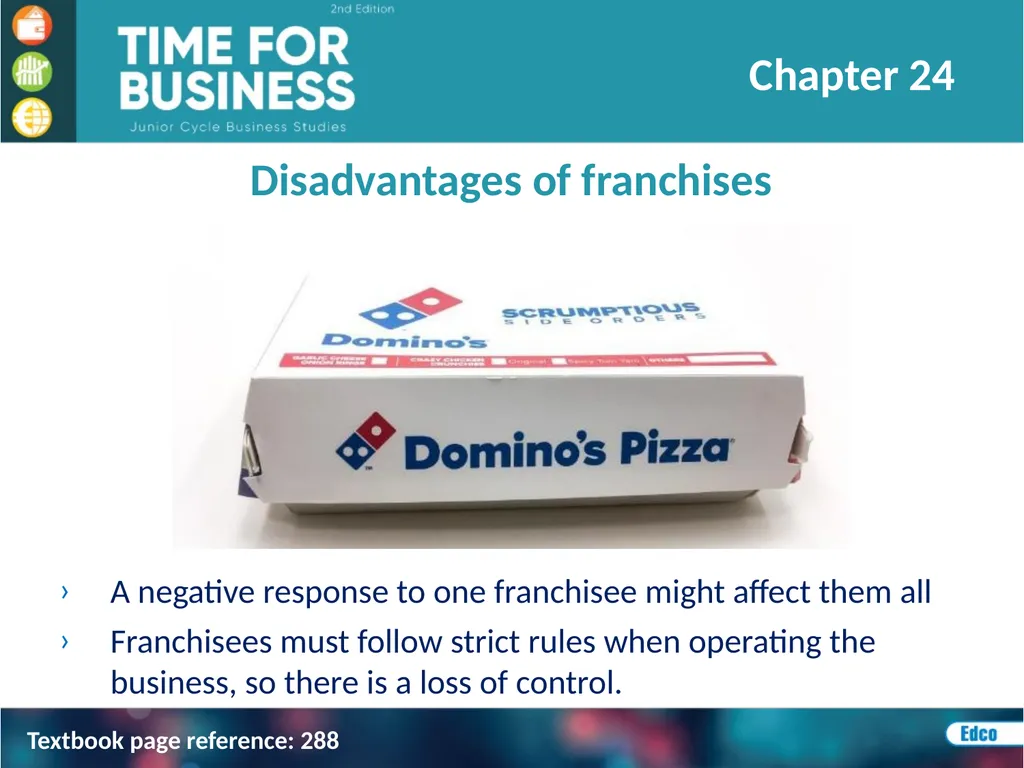
Chapter 24 Textbook page reference: 288 A negative response to one franchisee might affect them all
Franchisees must follow strict rules when operating the business, so there is a loss of control. Disadvantages of franchises<br>
18
Recap and review Chapter 24 Can you?
Carry out a SWOT analysis
Outline the purpose of a business plan
Identify the main headings in a business plan
Complete a business plan for a new or existing product or service.<br>