
Chapter 3 International Financial Markets Jeff
NS
Published · 47 slides · 0 views

1 / 1




Description
Chapter 3 International Financial Markets Jeff Madura, International Financial Management, 14th Edition. 2021 Cengage. All Rights Reserved. May not be scanned, copied or duplicated, or posted to a publicly accessible website, in whole or
Related Topics
Share
Embed code
Download this presentation From Below
"Chapter 3 International Financial Markets Jeff" is the property of its rightful owner. Permission is granted to download and print the materials on this website for personal, non-commercial use only, and to display it on your personal computer provided you do not modify the materials and that you retain all copyright notices contained in the materials. By downloading content from our website, you accept the terms of this agreement.
Presentation Transcript
01
Chapter 3 International Financial Markets Jeff Madura, International Financial Management, 14th Edition. © 2021 Cengage. All Rights Reserved. May not be scanned, copied or duplicated, or posted to a publicly accessible website, in whole or in part.<br>
02
Chapter Objectives Describe the background and corporate use of the following International Financial Markets:
Foreign exchange market
International money market
International credit market
International bond market
International stock markets 2<br>
Foreign exchange market
International money market
International credit market
International bond market
International stock markets 2<br>
03
Foreign Exchange Market (1 of 15) Allows for the exchange of one currency for another.
Exchange rate specifies the rate at which one currency can be exchanged for another. 3<br>
Exchange rate specifies the rate at which one currency can be exchanged for another. 3<br>
04
Foreign Exchange Market (2 of 15) History of Foreign Exchange
Gold Standard (18 76 – 19 13)
Each currency was convertible into gold at a specified rate. When World War I began in 19 14, the gold standard was suspended.
Agreements on Fixed Exchange Rates
Bretton Woods Agreement 19 44 – 19 71
Smithsonian Agreement 19 71 – 19 73
Floating Exchange Rate System
Widely traded currencies were allowed to fluctuate in accordance with market forces 4<br>
Gold Standard (18 76 – 19 13)
Each currency was convertible into gold at a specified rate. When World War I began in 19 14, the gold standard was suspended.
Agreements on Fixed Exchange Rates
Bretton Woods Agreement 19 44 – 19 71
Smithsonian Agreement 19 71 – 19 73
Floating Exchange Rate System
Widely traded currencies were allowed to fluctuate in accordance with market forces 4<br>
05
Foreign Exchange Market (3 of 15) Foreign Exchange Transactions
The over-the-counter market is the telecommunications network where companies normally exchange one currency for another.
Foreign exchange dealers serve as intermediaries in the foreign exchange market
Spot Market: A foreign exchange transaction for immediate exchange is said to trade in the spot market. The exchange rate in the spot market is the spot rate.
Spot Market Structure: Trading between banks occurs in the interbank market. 5<br>
The over-the-counter market is the telecommunications network where companies normally exchange one currency for another.
Foreign exchange dealers serve as intermediaries in the foreign exchange market
Spot Market: A foreign exchange transaction for immediate exchange is said to trade in the spot market. The exchange rate in the spot market is the spot rate.
Spot Market Structure: Trading between banks occurs in the interbank market. 5<br>
06
Foreign Exchange Market (4 of 15) Foreign Exchange Transactions (continued)
Use of the dollar in spot markets: The U.S. Dollar is the commonly accepted medium of exchange in the spot market. This is especially true in countries where the home currency is weak or subject to restrictions.
Spot market time zones: Foreign exchange trading is conducted only during normal business hours in a given location. Thus, at any given time on a weekday, somewhere around the world a bank is open and ready to accommodate foreign exchange requests.
Spot market liquidity: More buyers and sellers means more liquidity. 6<br>
Use of the dollar in spot markets: The U.S. Dollar is the commonly accepted medium of exchange in the spot market. This is especially true in countries where the home currency is weak or subject to restrictions.
Spot market time zones: Foreign exchange trading is conducted only during normal business hours in a given location. Thus, at any given time on a weekday, somewhere around the world a bank is open and ready to accommodate foreign exchange requests.
Spot market liquidity: More buyers and sellers means more liquidity. 6<br>
07
Foreign Exchange Market (5 of 15) Foreign Exchange Transactions (continued)
Attributes of Banks That Provide Foreign Exchange
Competitiveness of quote
Special relationship with the bank
Speed of execution
Advice about current market conditions
Forecasting advice 7<br>
Attributes of Banks That Provide Foreign Exchange
Competitiveness of quote
Special relationship with the bank
Speed of execution
Advice about current market conditions
Forecasting advice 7<br>
08
Foreign Exchange Market (6 of 15) Foreign Exchange Transactions (continued)
Bid/Ask Spread of Banks
At any given point in time, a bank’s bid (buy) quote for a foreign currency will be less than its ask (sell) quote.
Bid/Ask spread of banks: The bid/ask spread covers the bank’s cost of conducting foreign exchange transactions. 8<br>
Bid/Ask Spread of Banks
At any given point in time, a bank’s bid (buy) quote for a foreign currency will be less than its ask (sell) quote.
Bid/Ask spread of banks: The bid/ask spread covers the bank’s cost of conducting foreign exchange transactions. 8<br>
09
Foreign Exchange Market (7 of 15) Foreign Exchange Transactions (continued)
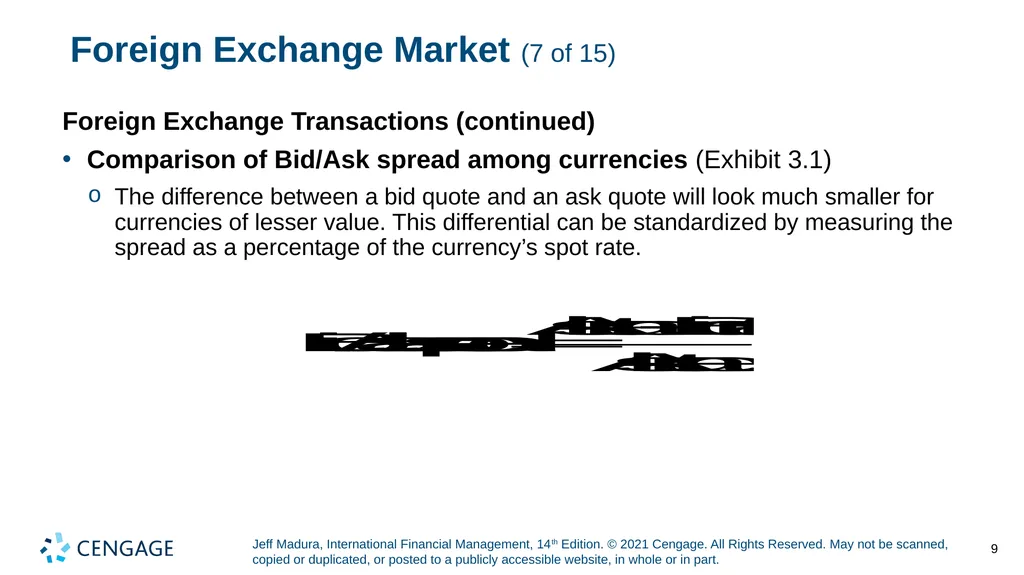
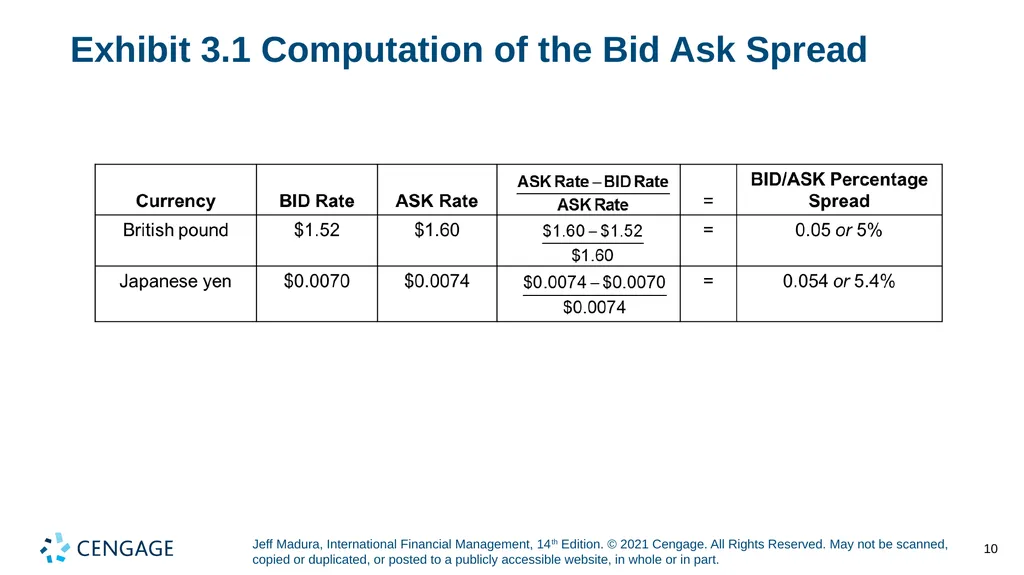
Comparison of Bid/Ask spread among currencies (Exhibit 3.1)
The difference between a bid quote and an ask quote will look much smaller for currencies of lesser value. This differential can be standardized by measuring the spread as a percentage of the currency’s spot rate. 9<br>
Comparison of Bid/Ask spread among currencies (Exhibit 3.1)
The difference between a bid quote and an ask quote will look much smaller for currencies of lesser value. This differential can be standardized by measuring the spread as a percentage of the currency’s spot rate. 9<br>
10
Exhibit 3.1 Computation of the Bid Ask Spread 10<br>
11
Foreign Exchange Market (8 of 15) Foreign Exchange Transactions (continued)
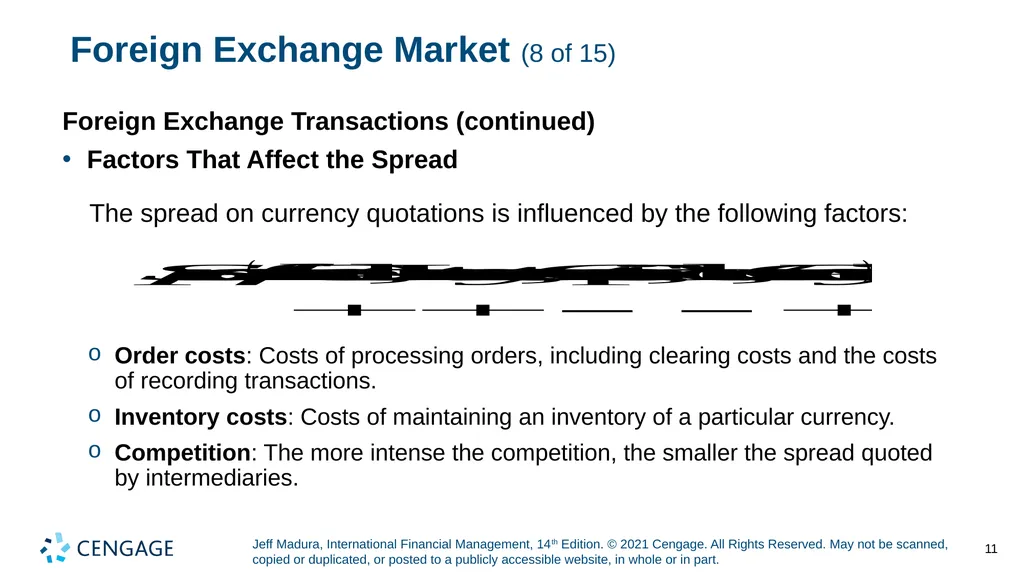
Factors That Affect the Spread The spread on currency quotations is influenced by the following factors: Order costs: Costs of processing orders, including clearing costs and the costs of recording transactions.
Inventory costs: Costs of maintaining an inventory of a particular currency.
Competition: The more intense the competition, the smaller the spread quoted by intermediaries. 11<br>
Factors That Affect the Spread The spread on currency quotations is influenced by the following factors: Order costs: Costs of processing orders, including clearing costs and the costs of recording transactions.
Inventory costs: Costs of maintaining an inventory of a particular currency.
Competition: The more intense the competition, the smaller the spread quoted by intermediaries. 11<br>
12
Foreign Exchange Market (9 of 15) Foreign Exchange Transactions (continued)
Factors That Affect the Spread (continued)
Volume: Currencies that have a large trading volume are more liquid because there are numerous buyers and sellers at any given time.
Currency risk: Economic or political conditions that cause the demand for and supply of the currency to change abruptly. 12<br>
Factors That Affect the Spread (continued)
Volume: Currencies that have a large trading volume are more liquid because there are numerous buyers and sellers at any given time.
Currency risk: Economic or political conditions that cause the demand for and supply of the currency to change abruptly. 12<br>
13
Foreign Exchange Market (10 of 15) Foreign Exchange Quotations
Direct versus indirect quotations at one point in time
Direct Quotation represents the value of a foreign currency in dollars (number of dollars per currency).
Example: 1 euro = x dollars
Indirect quotation represents the number of units of a foreign currency per dollar.
Example: 1 dollars = x euro
Indirect quotation = 1 / Direct quotation 13<br>
Direct versus indirect quotations at one point in time
Direct Quotation represents the value of a foreign currency in dollars (number of dollars per currency).
Example: 1 euro = x dollars
Indirect quotation represents the number of units of a foreign currency per dollar.
Example: 1 dollars = x euro
Indirect quotation = 1 / Direct quotation 13<br>
14
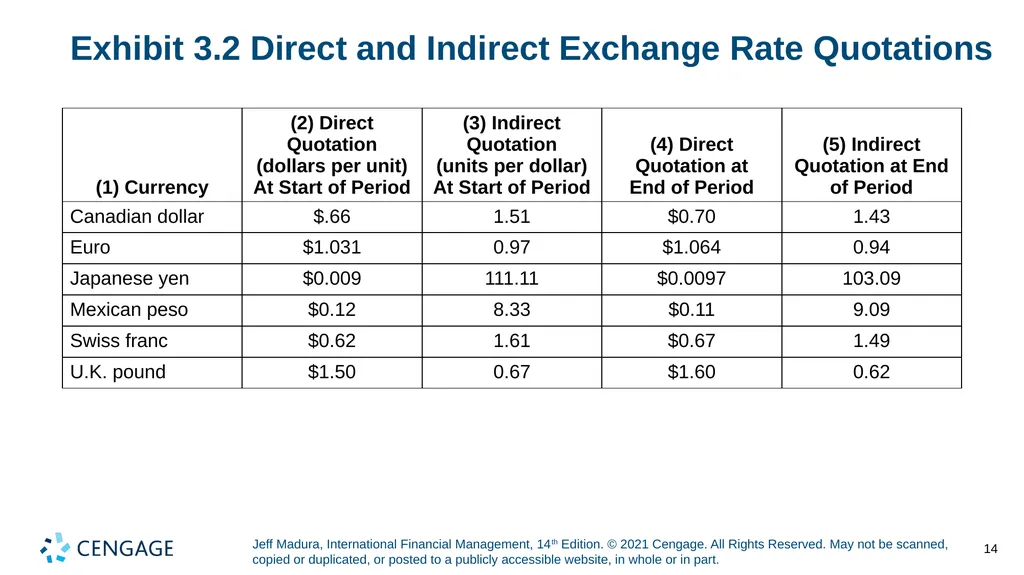
Exhibit 3.2 Direct and Indirect Exchange Rate Quotations 14<br>
15
Foreign Exchange Market (11 of 15) Foreign Exchange Quotations (continued)
Direct versus indirect exchange rate over time (Exhibit 3.2 and 3.3)
Exhibit 3.2 demonstrates that the indirect exchange rate is the inverse of the direct exchange rate and also shows relationship between direct exchange rate and indirect exchange rate.
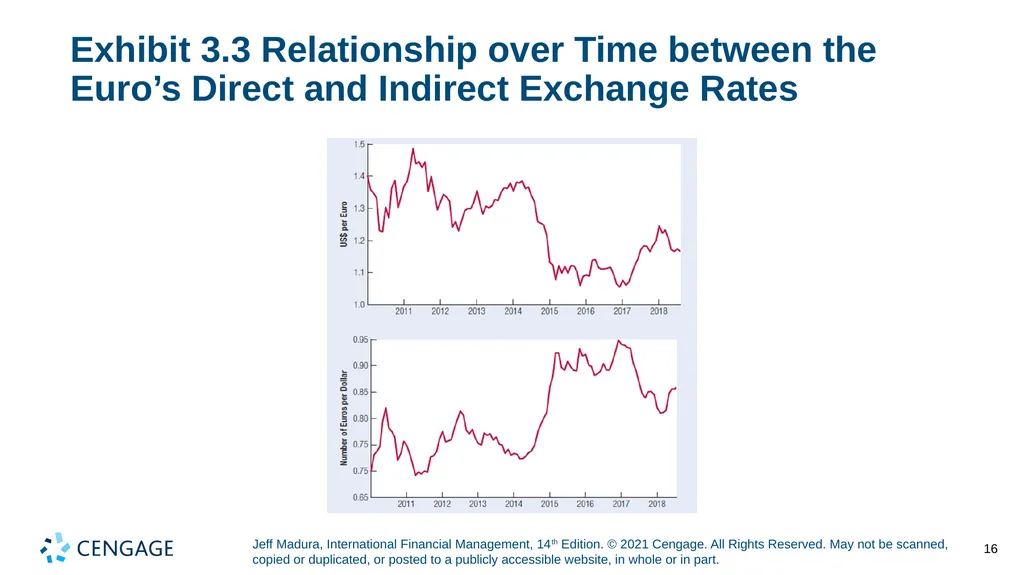
When the euro is appreciating against the dollar (based on an upward movement of the direct exchange rate of the euro), the indirect exchange rate of the euro is declining.
When the euro is depreciating (based on a downward movement of the direct exchange rate) against the dollar, the indirect exchange rate is rising. 15<br>
Direct versus indirect exchange rate over time (Exhibit 3.2 and 3.3)
Exhibit 3.2 demonstrates that the indirect exchange rate is the inverse of the direct exchange rate and also shows relationship between direct exchange rate and indirect exchange rate.
When the euro is appreciating against the dollar (based on an upward movement of the direct exchange rate of the euro), the indirect exchange rate of the euro is declining.
When the euro is depreciating (based on a downward movement of the direct exchange rate) against the dollar, the indirect exchange rate is rising. 15<br>
16
Exhibit 3.3 Relationship over Time between the Euro’s Direct and Indirect Exchange Rates 16<br>
17
Foreign Exchange Market (12 of 15) Foreign Exchange Quotations (continued)
Source of exchange rate quotations
Updated currency quotations are provided for several major currencies on Yahoo’s website (finance.yahoo.com/currency).
Exchange rate quotations are also provided by many other online sources, including oanda.com. 17<br>
Source of exchange rate quotations
Updated currency quotations are provided for several major currencies on Yahoo’s website (finance.yahoo.com/currency).
Exchange rate quotations are also provided by many other online sources, including oanda.com. 17<br>
18
Foreign Exchange Market (13 of 15) Foreign Exchange Quotations (continued)
Cross Exchange Rates
Cross exchange rate is the amount of one foreign currency per unit of another foreign currency
Example Value of peso = $0.11
Value of Canadian dollar = $0.70 Cross Exchange Rates over Time: As the exchange rates of two currencies change against the U.S. dollar over time, the cross exchange rate of these currencies can change as well. 18<br>
Cross Exchange Rates
Cross exchange rate is the amount of one foreign currency per unit of another foreign currency
Example Value of peso = $0.11
Value of Canadian dollar = $0.70 Cross Exchange Rates over Time: As the exchange rates of two currencies change against the U.S. dollar over time, the cross exchange rate of these currencies can change as well. 18<br>
19
Foreign Exchange Market (14 of 15) Derivative Contracts in the Foreign Exchange Market
Forward Contracts: agreements between a foreign exchange dealer and an M N C that specifies the currencies to be exchanged, the exchange rate, and the date at which the transaction will occur.
The forward rate is the exchange rate specified by the forward contract.
The forward market is the over-the-counter market where forward contracts are traded. 19<br>
Forward Contracts: agreements between a foreign exchange dealer and an M N C that specifies the currencies to be exchanged, the exchange rate, and the date at which the transaction will occur.
The forward rate is the exchange rate specified by the forward contract.
The forward market is the over-the-counter market where forward contracts are traded. 19<br>
20
Foreign Exchange Market (15 of 15) Derivative Contracts in the Foreign Exchange Market (continued)
Currency Futures Contracts: specifies a standard volume of a particular currency to be exchanged on a specific settlement date.
The Futures rate is the exchange rate at which an entity can purchase or sell a specified currency on the settlement date in accordance with the futures contract.
Currency Options Contracts currency options contracts can be classified as calls or puts.
A currency call option provides the right to buy a specific currency at a specific price within a specific period of time.
A currency put option provides the right to sell a specific currency at a specific price within a specific period of time. 20<br>
Currency Futures Contracts: specifies a standard volume of a particular currency to be exchanged on a specific settlement date.
The Futures rate is the exchange rate at which an entity can purchase or sell a specified currency on the settlement date in accordance with the futures contract.
Currency Options Contracts currency options contracts can be classified as calls or puts.
A currency call option provides the right to buy a specific currency at a specific price within a specific period of time.
A currency put option provides the right to sell a specific currency at a specific price within a specific period of time. 20<br>
21
International Money Market (1 of 4) Corporations or governments need short-term funds denominated in a currency different from their home currency.
The international money market has grown because firms:
May need to borrow funds to pay for imports denominated in a foreign currency.
May choose to borrow in a currency in which the interest rate is lower.
May choose to borrow in a currency that is expected to depreciate against their home currency 21<br>
The international money market has grown because firms:
May need to borrow funds to pay for imports denominated in a foreign currency.
May choose to borrow in a currency in which the interest rate is lower.
May choose to borrow in a currency that is expected to depreciate against their home currency 21<br>
22
International Money Market (2 of 4) Origins and Development
European Money Market: Dollar deposits in banks in Europe and other continents are called Eurodollars or Eurocurrency. Origins of the European money market can be traced to the Eurocurrency market that developed during the 19 60s and 19 70s.
Asian Money Market: Centered in Hong Kong and Singapore. Originated as a market involving mostly dollar-denominated deposits, and was originally known as the Asian dollar market. 22<br>
European Money Market: Dollar deposits in banks in Europe and other continents are called Eurodollars or Eurocurrency. Origins of the European money market can be traced to the Eurocurrency market that developed during the 19 60s and 19 70s.
Asian Money Market: Centered in Hong Kong and Singapore. Originated as a market involving mostly dollar-denominated deposits, and was originally known as the Asian dollar market. 22<br>
23
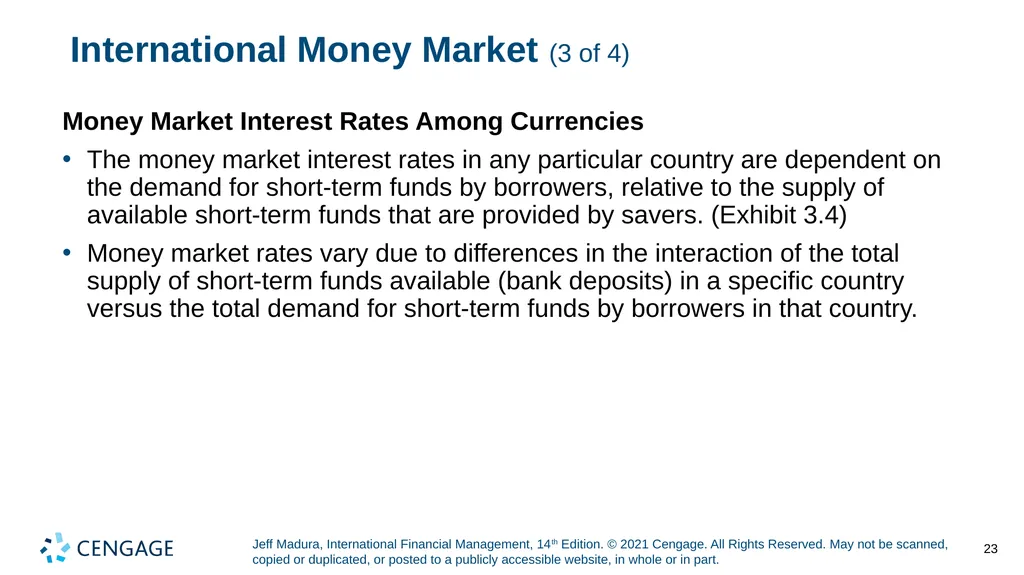
International Money Market (3 of 4) Money Market Interest Rates Among Currencies
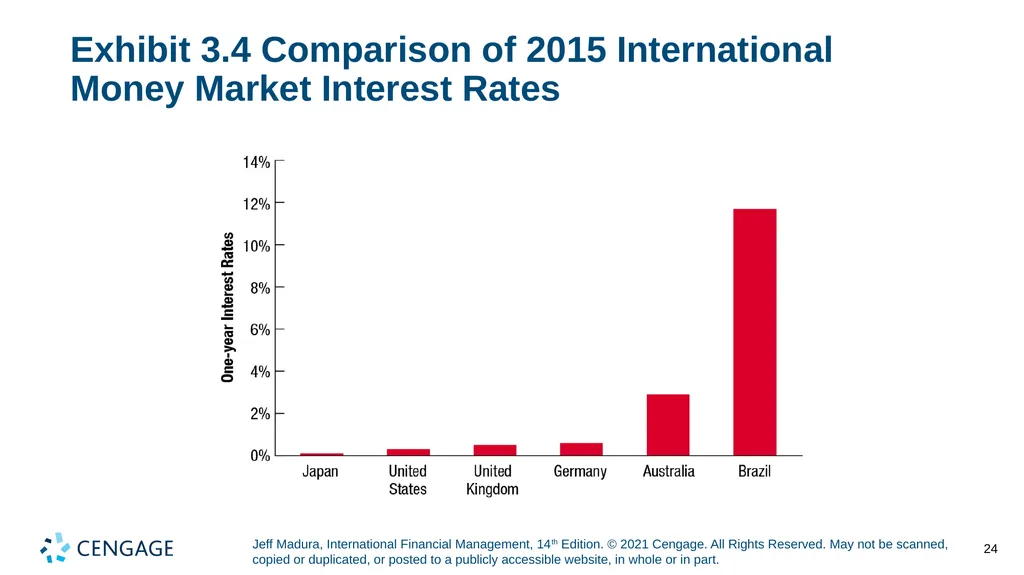
The money market interest rates in any particular country are dependent on the demand for short-term funds by borrowers, relative to the supply of available short-term funds that are provided by savers. (Exhibit 3.4)
Money market rates vary due to differences in the interaction of the total supply of short-term funds available (bank deposits) in a specific country versus the total demand for short-term funds by borrowers in that country. 23<br>
The money market interest rates in any particular country are dependent on the demand for short-term funds by borrowers, relative to the supply of available short-term funds that are provided by savers. (Exhibit 3.4)
Money market rates vary due to differences in the interaction of the total supply of short-term funds available (bank deposits) in a specific country versus the total demand for short-term funds by borrowers in that country. 23<br>
24
Exhibit 3.4 Comparison of 2015 International Money Market Interest Rates 24<br>
25
International Money Market (4 of 4) Money Market Interest Rates Among Currencies (continued)
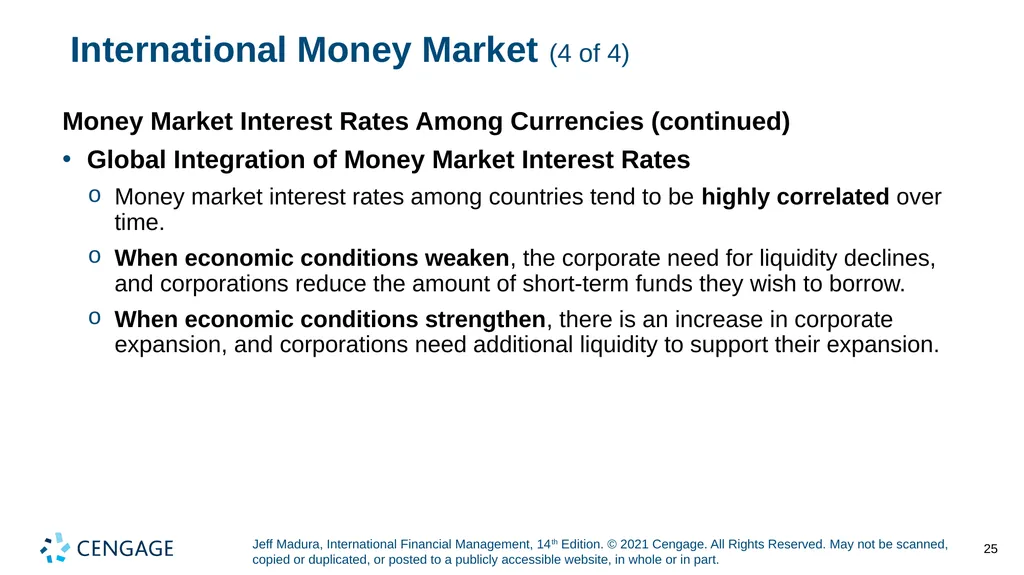
Global Integration of Money Market Interest Rates
Money market interest rates among countries tend to be highly correlated over time.
When economic conditions weaken, the corporate need for liquidity declines, and corporations reduce the amount of short-term funds they wish to borrow.
When economic conditions strengthen, there is an increase in corporate expansion, and corporations need additional liquidity to support their expansion. 25<br>
Global Integration of Money Market Interest Rates
Money market interest rates among countries tend to be highly correlated over time.
When economic conditions weaken, the corporate need for liquidity declines, and corporations reduce the amount of short-term funds they wish to borrow.
When economic conditions strengthen, there is an increase in corporate expansion, and corporations need additional liquidity to support their expansion. 25<br>
26
Risk of International Money Market Securities Money Market Interest Rates Among Currencies (continued)
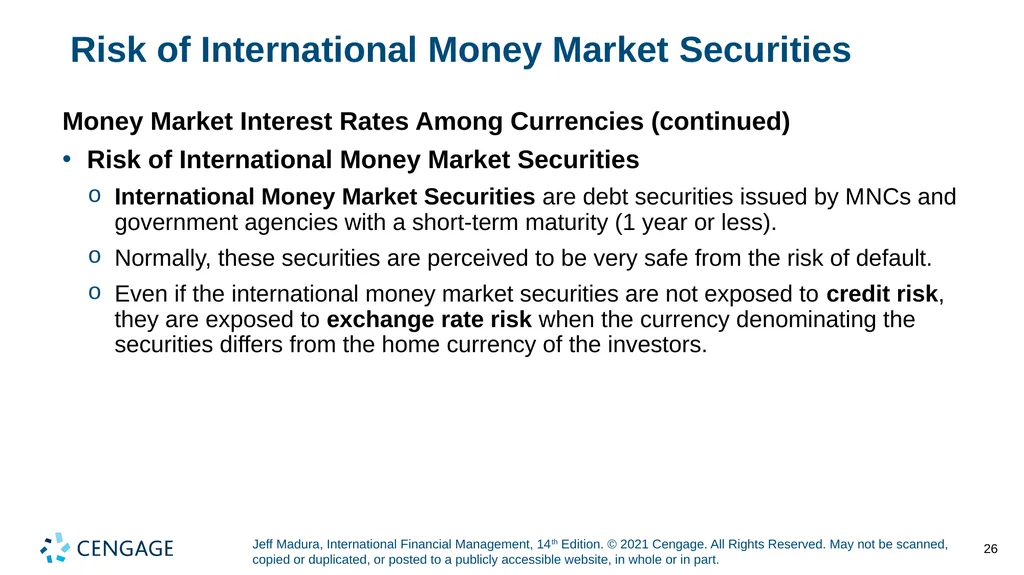
Risk of International Money Market Securities
International Money Market Securities are debt securities issued by M N Cs and government agencies with a short-term maturity (1 year or less).
Normally, these securities are perceived to be very safe from the risk of default.
Even if the international money market securities are not exposed to credit risk, they are exposed to exchange rate risk when the currency denominating the securities differs from the home currency of the investors. 26<br>
Risk of International Money Market Securities
International Money Market Securities are debt securities issued by M N Cs and government agencies with a short-term maturity (1 year or less).
Normally, these securities are perceived to be very safe from the risk of default.
Even if the international money market securities are not exposed to credit risk, they are exposed to exchange rate risk when the currency denominating the securities differs from the home currency of the investors. 26<br>
27
International Credit Market (1 of 5) M N Cs sometimes obtain medium-term funds through term loans from local financial institutions or through the issuance of notes (medium-term debt obligations) in their local markets.
Loans of 1 year or longer extended by banks to M N Cs or government agencies in Europe are commonly called Eurocredits or Eurocredit loans.
To avoid interest rate risk, banks commonly use floating rate loans with rates tied to the London Interbank Offer Rate (L I B O R). 27<br>
Loans of 1 year or longer extended by banks to M N Cs or government agencies in Europe are commonly called Eurocredits or Eurocredit loans.
To avoid interest rate risk, banks commonly use floating rate loans with rates tied to the London Interbank Offer Rate (L I B O R). 27<br>
28
International Credit Market (2 of 5) Syndicated Loans in the Credit Market
Sometimes a single bank is unwilling or unable to lend the amount needed by an M N C or government agency.
A syndicate of banks can be formed to underwrite the loans and the lead bank is responsible for negotiating the terms with the borrower. 28<br>
Sometimes a single bank is unwilling or unable to lend the amount needed by an M N C or government agency.
A syndicate of banks can be formed to underwrite the loans and the lead bank is responsible for negotiating the terms with the borrower. 28<br>
29
International Credit Market (3 of 5) Regulations in the Credit Market
Single European Act
Capital can flow freely throughout Europe.
Banks can offer a wide variety of lending, leasing, and securities activities in the E U.
Regulations regarding competition, mergers, and taxes are similar throughout the E U.
A bank established in any one of the E U countries has the right to expand into any or all of the other E U countries.
Basel Accord — Banks must maintain a high level of capital as a percent of their assets. For this purpose, banks’ assets are weighted by risk. 29<br>
Single European Act
Capital can flow freely throughout Europe.
Banks can offer a wide variety of lending, leasing, and securities activities in the E U.
Regulations regarding competition, mergers, and taxes are similar throughout the E U.
A bank established in any one of the E U countries has the right to expand into any or all of the other E U countries.
Basel Accord — Banks must maintain a high level of capital as a percent of their assets. For this purpose, banks’ assets are weighted by risk. 29<br>
30
International Credit Market (4 of 5) Regulations in the Credit Market (Continued)
Basel II Accord — Attempts to account for differences in collateral among banks. In addition, this accord encourages banks to improve their techniques for controlling operational risk, which could reduce failures in the banking system. Also plans to require banks to provide more information to existing and prospective shareholders about their exposure to different types of risk.
Basel III Accord — Called for new methods of estimating risk-weighted assets that would increase the level of risk-weighted assets, and therefore require banks to maintain higher levels of capital. 30<br>
Basel II Accord — Attempts to account for differences in collateral among banks. In addition, this accord encourages banks to improve their techniques for controlling operational risk, which could reduce failures in the banking system. Also plans to require banks to provide more information to existing and prospective shareholders about their exposure to different types of risk.
Basel III Accord — Called for new methods of estimating risk-weighted assets that would increase the level of risk-weighted assets, and therefore require banks to maintain higher levels of capital. 30<br>
31
International Credit Market (5 of 5) Impact of the Credit Crisis on the Credit Market
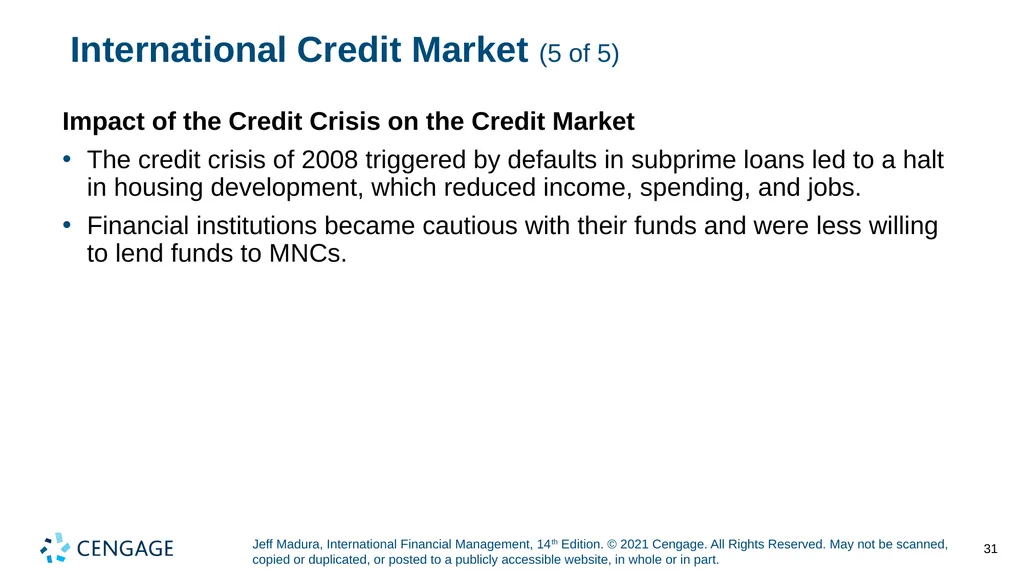
The credit crisis of 2008 triggered by defaults in subprime loans led to a halt in housing development, which reduced income, spending, and jobs.
Financial institutions became cautious with their funds and were less willing to lend funds to M N Cs. 31<br>
The credit crisis of 2008 triggered by defaults in subprime loans led to a halt in housing development, which reduced income, spending, and jobs.
Financial institutions became cautious with their funds and were less willing to lend funds to M N Cs. 31<br>
32
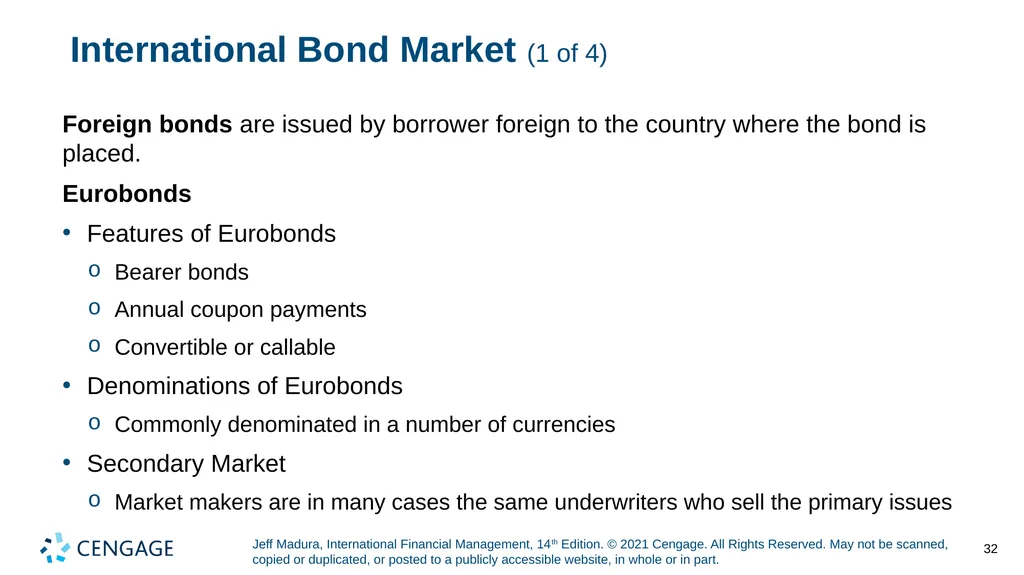
International Bond Market (1 of 4) Foreign bonds are issued by borrower foreign to the country where the bond is placed.
Eurobonds
Features of Eurobonds
Bearer bonds
Annual coupon payments
Convertible or callable
Denominations of Eurobonds
Commonly denominated in a number of currencies
Secondary Market
Market makers are in many cases the same underwriters who sell the primary issues 32<br>
Eurobonds
Features of Eurobonds
Bearer bonds
Annual coupon payments
Convertible or callable
Denominations of Eurobonds
Commonly denominated in a number of currencies
Secondary Market
Market makers are in many cases the same underwriters who sell the primary issues 32<br>
33
International Bond Market (2 of 4) Development of Other Bond Markets
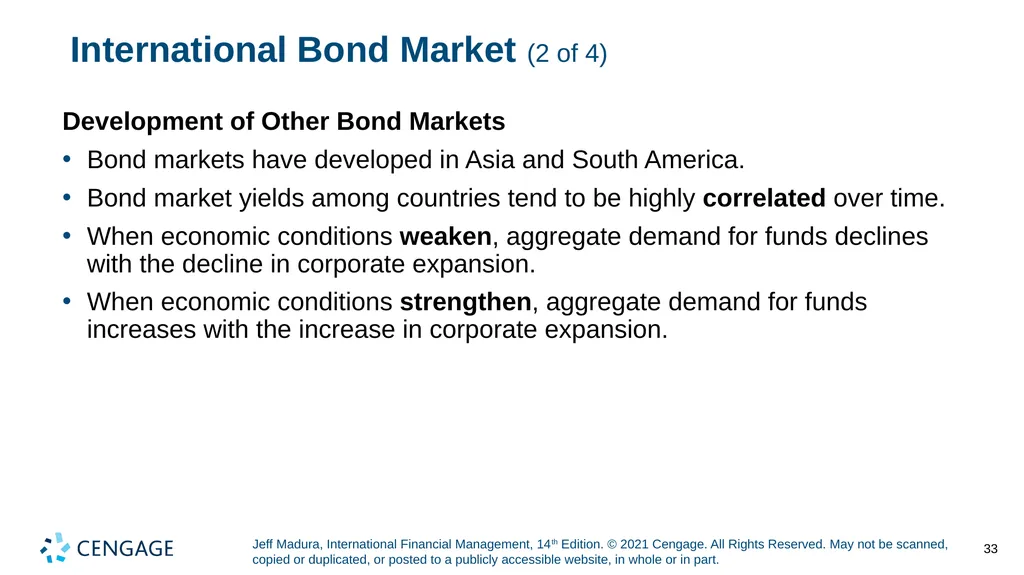
Bond markets have developed in Asia and South America.
Bond market yields among countries tend to be highly correlated over time.
When economic conditions weaken, aggregate demand for funds declines with the decline in corporate expansion.
When economic conditions strengthen, aggregate demand for funds increases with the increase in corporate expansion. 33<br>
Bond markets have developed in Asia and South America.
Bond market yields among countries tend to be highly correlated over time.
When economic conditions weaken, aggregate demand for funds declines with the decline in corporate expansion.
When economic conditions strengthen, aggregate demand for funds increases with the increase in corporate expansion. 33<br>
34
International Bond Market (3 of 4) Risk of International Bonds
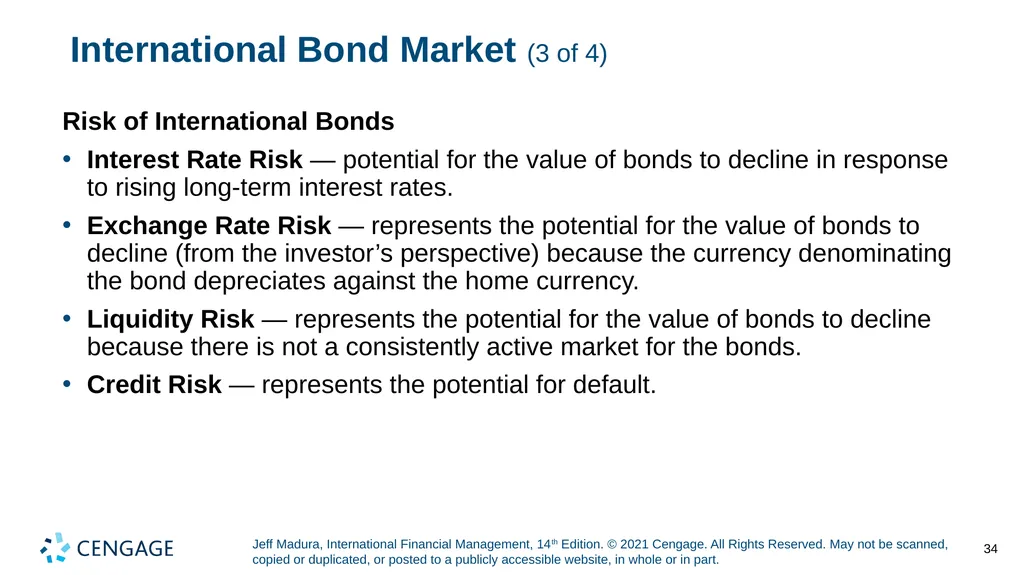
Interest Rate Risk — potential for the value of bonds to decline in response to rising long-term interest rates.
Exchange Rate Risk — represents the potential for the value of bonds to decline (from the investor’s perspective) because the currency denominating the bond depreciates against the home currency.
Liquidity Risk — represents the potential for the value of bonds to decline because there is not a consistently active market for the bonds.
Credit Risk — represents the potential for default. 34<br>
Interest Rate Risk — potential for the value of bonds to decline in response to rising long-term interest rates.
Exchange Rate Risk — represents the potential for the value of bonds to decline (from the investor’s perspective) because the currency denominating the bond depreciates against the home currency.
Liquidity Risk — represents the potential for the value of bonds to decline because there is not a consistently active market for the bonds.
Credit Risk — represents the potential for default. 34<br>
35
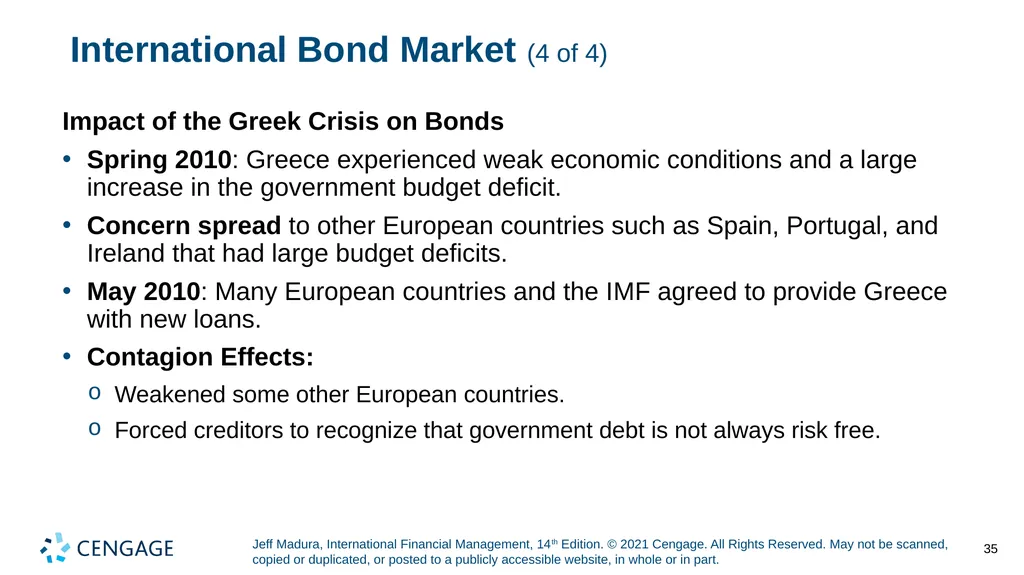
International Bond Market (4 of 4) Impact of the Greek Crisis on Bonds
Spring 2010: Greece experienced weak economic conditions and a large increase in the government budget deficit.
Concern spread to other European countries such as Spain, Portugal, and Ireland that had large budget deficits.
May 2010: Many European countries and the I M F agreed to provide Greece with new loans.
Contagion Effects:
Weakened some other European countries.
Forced creditors to recognize that government debt is not always risk free. 35<br>
Spring 2010: Greece experienced weak economic conditions and a large increase in the government budget deficit.
Concern spread to other European countries such as Spain, Portugal, and Ireland that had large budget deficits.
May 2010: Many European countries and the I M F agreed to provide Greece with new loans.
Contagion Effects:
Weakened some other European countries.
Forced creditors to recognize that government debt is not always risk free. 35<br>
36
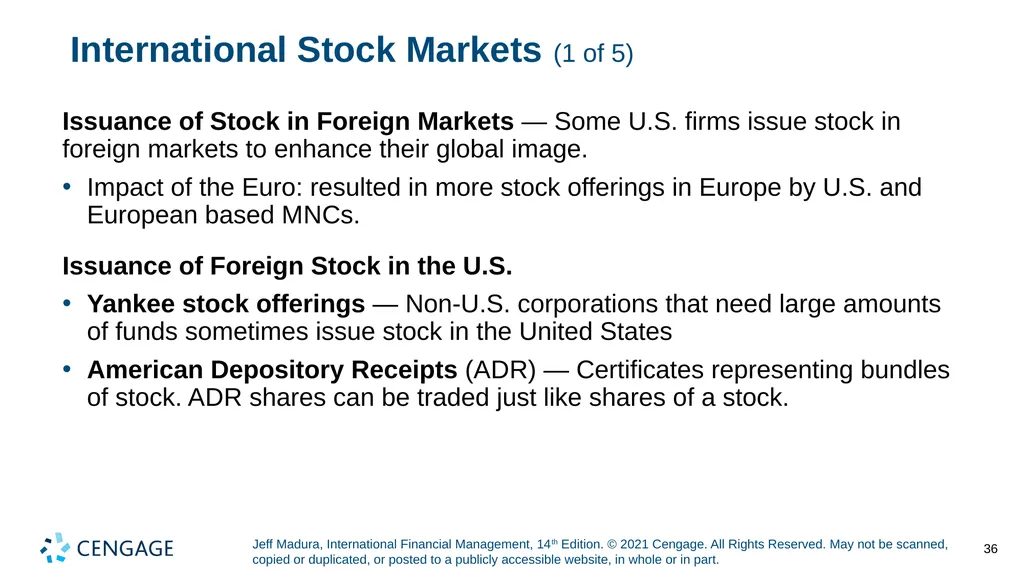
International Stock Markets (1 of 5) Issuance of Stock in Foreign Markets — Some U.S. firms issue stock in foreign markets to enhance their global image.
Impact of the Euro: resulted in more stock offerings in Europe by U.S. and European based M N Cs. Issuance of Foreign Stock in the U.S.
Yankee stock offerings — Non-U.S. corporations that need large amounts of funds sometimes issue stock in the United States
American Depository Receipts (A D R) — Certificates representing bundles of stock. A D R shares can be traded just like shares of a stock. 36<br>
Impact of the Euro: resulted in more stock offerings in Europe by U.S. and European based M N Cs. Issuance of Foreign Stock in the U.S.
Yankee stock offerings — Non-U.S. corporations that need large amounts of funds sometimes issue stock in the United States
American Depository Receipts (A D R) — Certificates representing bundles of stock. A D R shares can be traded just like shares of a stock. 36<br>
37
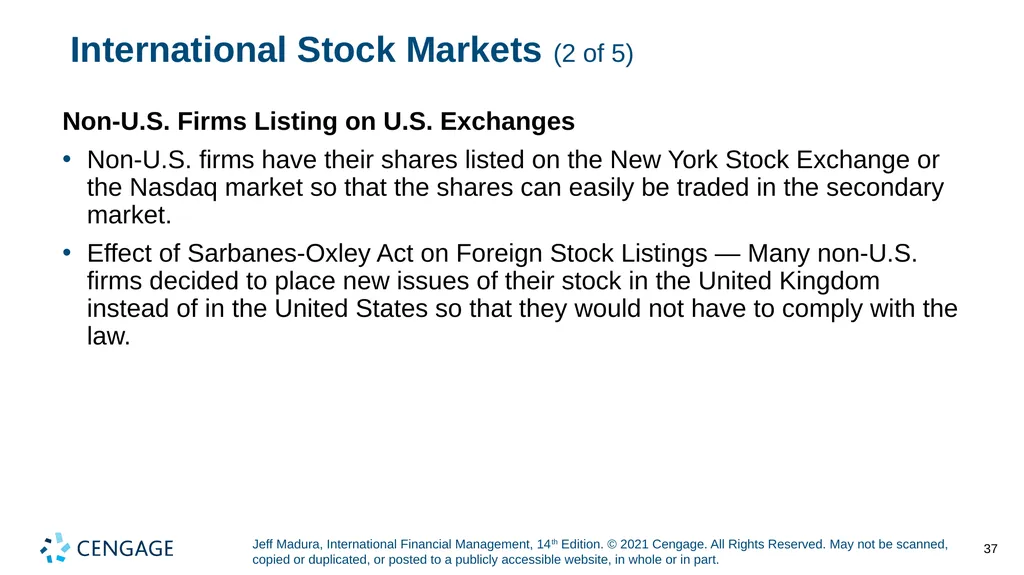
International Stock Markets (2 of 5) Non-U.S. Firms Listing on U.S. Exchanges
Non-U.S. firms have their shares listed on the New York Stock Exchange or the Nasdaq market so that the shares can easily be traded in the secondary market.
Effect of Sarbanes-Oxley Act on Foreign Stock Listings — Many non-U.S. firms decided to place new issues of their stock in the United Kingdom instead of in the United States so that they would not have to comply with the law. 37<br>
Non-U.S. firms have their shares listed on the New York Stock Exchange or the Nasdaq market so that the shares can easily be traded in the secondary market.
Effect of Sarbanes-Oxley Act on Foreign Stock Listings — Many non-U.S. firms decided to place new issues of their stock in the United Kingdom instead of in the United States so that they would not have to comply with the law. 37<br>
38
International Stock Markets (3 of 5) Investing in Foreign Stock Markets
Many investors purchase stocks outside of the home country.
Recently, firms outside the U.S. have been issuing stock more frequently.
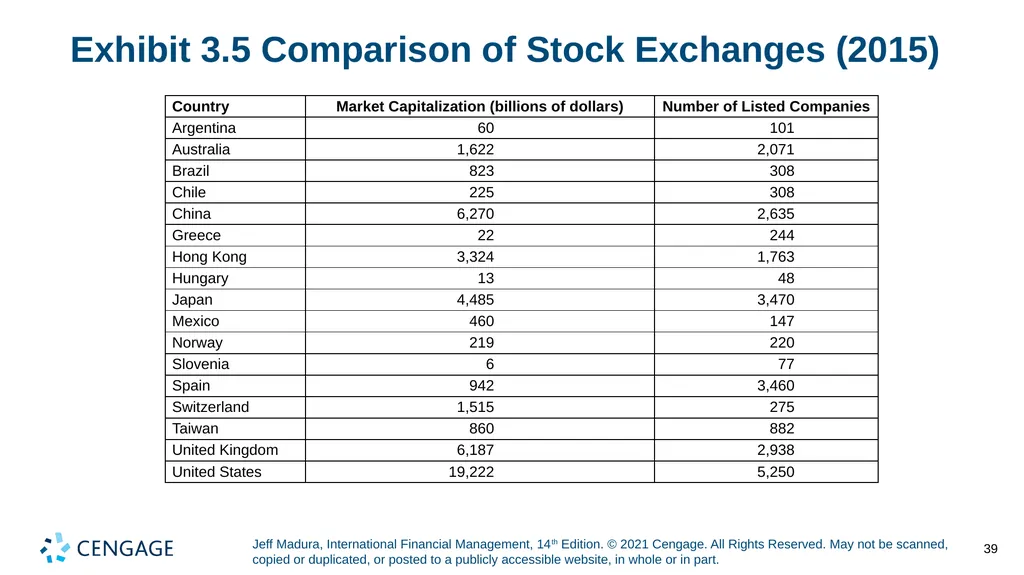
Comparing the size of stock markets (Exhibit 3.5) 38<br>
Many investors purchase stocks outside of the home country.
Recently, firms outside the U.S. have been issuing stock more frequently.
Comparing the size of stock markets (Exhibit 3.5) 38<br>
39
Exhibit 3.5 Comparison of Stock Exchanges (2015) 39<br>
40
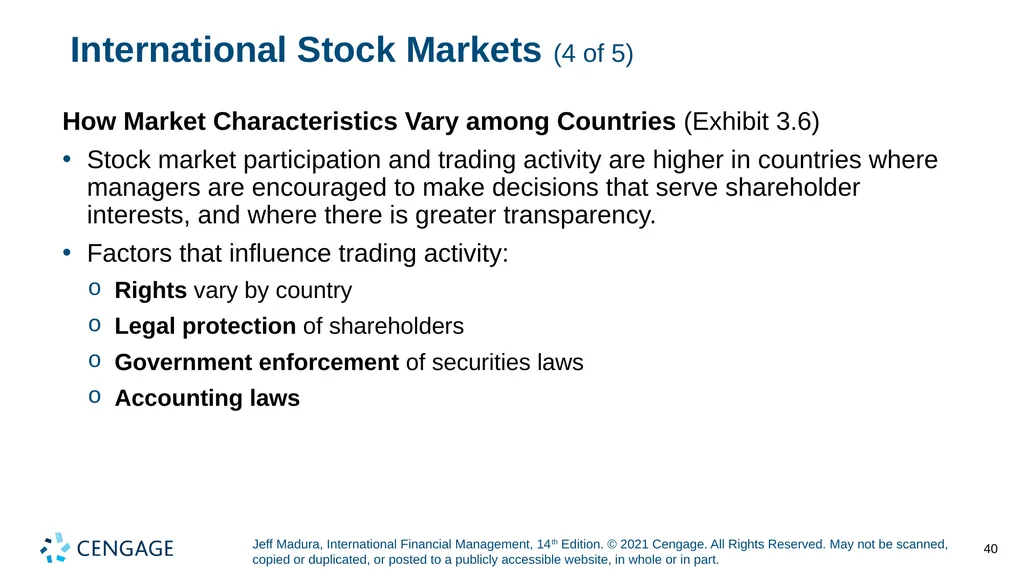
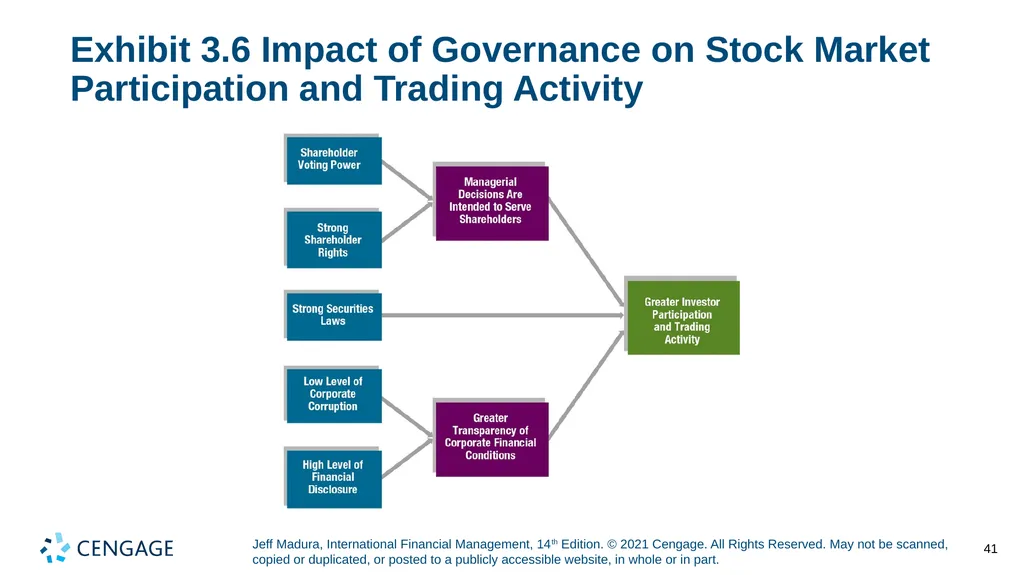
International Stock Markets (4 of 5) How Market Characteristics Vary among Countries (Exhibit 3.6)
Stock market participation and trading activity are higher in countries where managers are encouraged to make decisions that serve shareholder interests, and where there is greater transparency.
Factors that influence trading activity:
Rights vary by country
Legal protection of shareholders
Government enforcement of securities laws
Accounting laws 40<br>
Stock market participation and trading activity are higher in countries where managers are encouraged to make decisions that serve shareholder interests, and where there is greater transparency.
Factors that influence trading activity:
Rights vary by country
Legal protection of shareholders
Government enforcement of securities laws
Accounting laws 40<br>
41
Exhibit 3.6 Impact of Governance on Stock Market Participation and Trading Activity 41<br>
42
International Stock Markets (5 of 5) Integration of Stock Markets
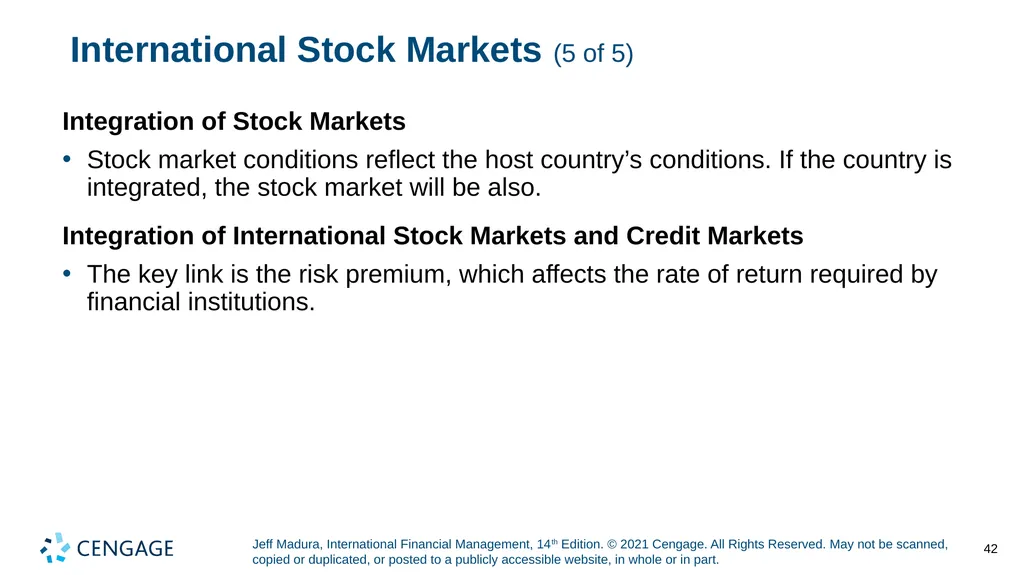
Stock market conditions reflect the host country’s conditions. If the country is integrated, the stock market will be also. Integration of International Stock Markets and Credit Markets
The key link is the risk premium, which affects the rate of return required by financial institutions. 42<br>
Stock market conditions reflect the host country’s conditions. If the country is integrated, the stock market will be also. Integration of International Stock Markets and Credit Markets
The key link is the risk premium, which affects the rate of return required by financial institutions. 42<br>
43
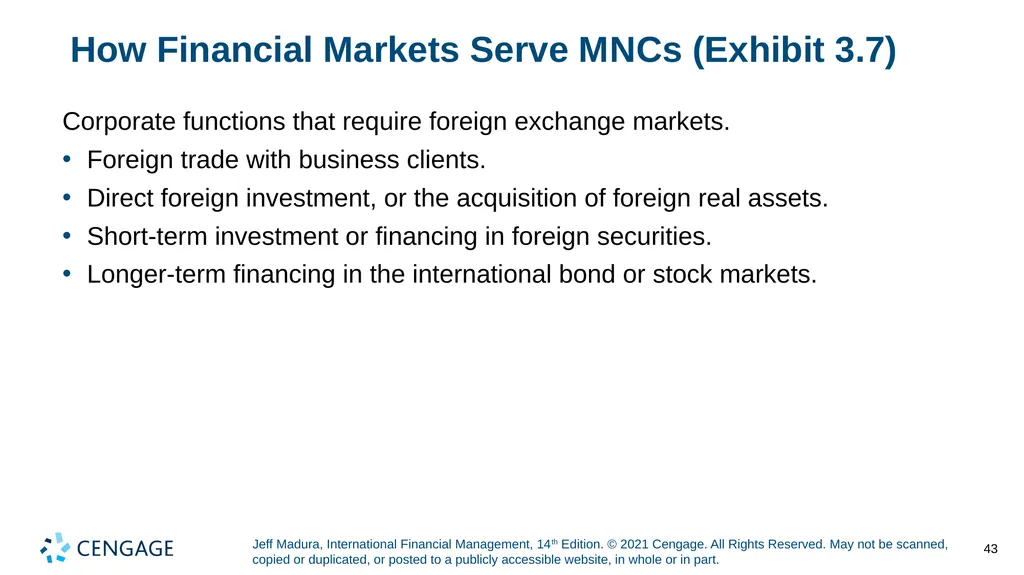
How Financial Markets Serve M N Cs (Exhibit 3.7) Corporate functions that require foreign exchange markets.
Foreign trade with business clients.
Direct foreign investment, or the acquisition of foreign real assets.
Short-term investment or financing in foreign securities.
Longer-term financing in the international bond or stock markets. 43<br>
Foreign trade with business clients.
Direct foreign investment, or the acquisition of foreign real assets.
Short-term investment or financing in foreign securities.
Longer-term financing in the international bond or stock markets. 43<br>
44
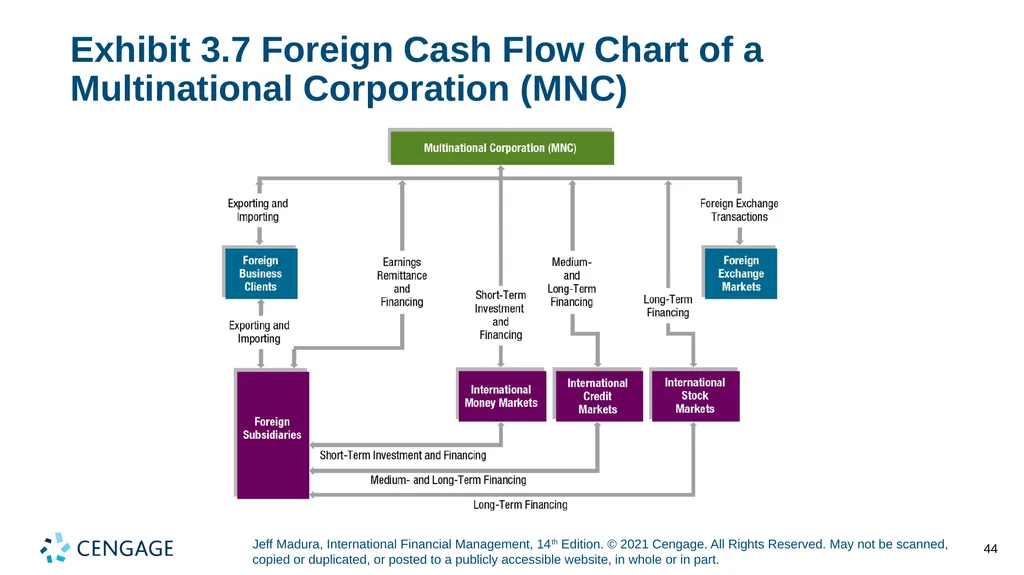
Exhibit 3.7 Foreign Cash Flow Chart of a Multinational Corporation (M N C) 44<br>
45
Summary (1 of 3) The foreign exchange market allows currencies to be exchanged in order to facilitate international trade or financial transactions. Commercial banks serve as financial intermediaries in this market. They stand ready to exchange currencies for immediate delivery in the spot market. In addition, they are also willing to negotiate forward contracts with M N Cs that wish to buy and/or sell currencies in the future. 45<br>
46
Summary (2 of 3) The international money markets are composed of several large banks that accept deposits and provide short-term loans in various currencies. This market is used primarily by governments and large corporations.
The international credit markets are composed of the same commercial banks that serve the international money market. These banks convert some of the deposits received into loans (for medium-term periods) to governments and large corporations. 46<br>
The international credit markets are composed of the same commercial banks that serve the international money market. These banks convert some of the deposits received into loans (for medium-term periods) to governments and large corporations. 46<br>
47
Summary (3 of 3) The international bond markets facilitate international transfers of long-term credit, thereby enabling governments and large corporations to borrow funds from various countries. The international bond market is facilitated by multinational syndicates of investment banks that help to place the bonds.
International stock markets enable firms to obtain equity financing in foreign countries. Thus, these markets help M N Cs finance their international expansion. 47<br>
International stock markets enable firms to obtain equity financing in foreign countries. Thus, these markets help M N Cs finance their international expansion. 47<br>