Chapter 4: Probability (Rosss Introductory Statistics) Sections 4.1 to 4.4 plus tree diagrams (not in Ross) Homework: New York City College of Technology MAT 1372, Prof Halleck Events will be denoted by the capital letters A, B, C, etc.
"Chapter 4: Probability (Ross’s Introductory" is the property of its rightful owner. Permission is granted to
download and print the materials on this website for personal, non-commercial use only, and to display it
on your personal computer provided you do not modify the materials and that you retain all copyright
notices contained in the materials. By downloading content from our website, you accept the terms of this
agreement.
Presentation Transcript
01
Chapter 4: Probability (Ross’s Introductory Statistics) Sections 4.1 to 4.4
plus tree diagrams (not in Ross)
Homework: New York City College of Technology MAT 1372, Prof Halleck<br>
02
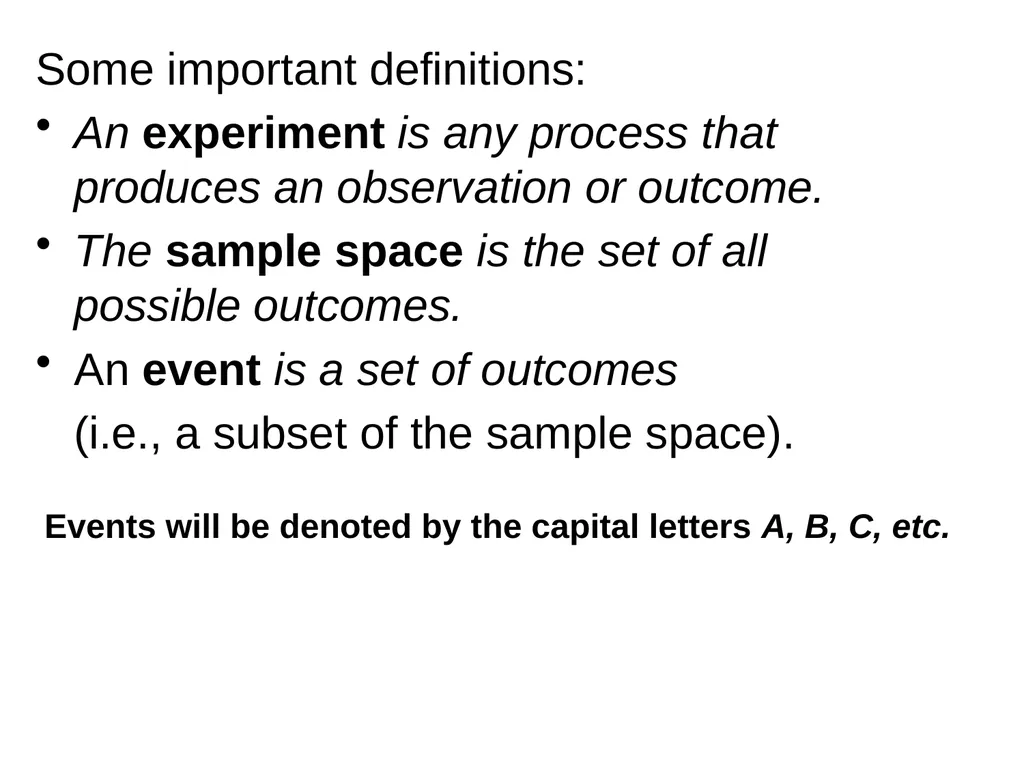
Events will be denoted by the capital letters A, B, C, etc. Some important definitions:
An experiment is any process that produces an observation or outcome.
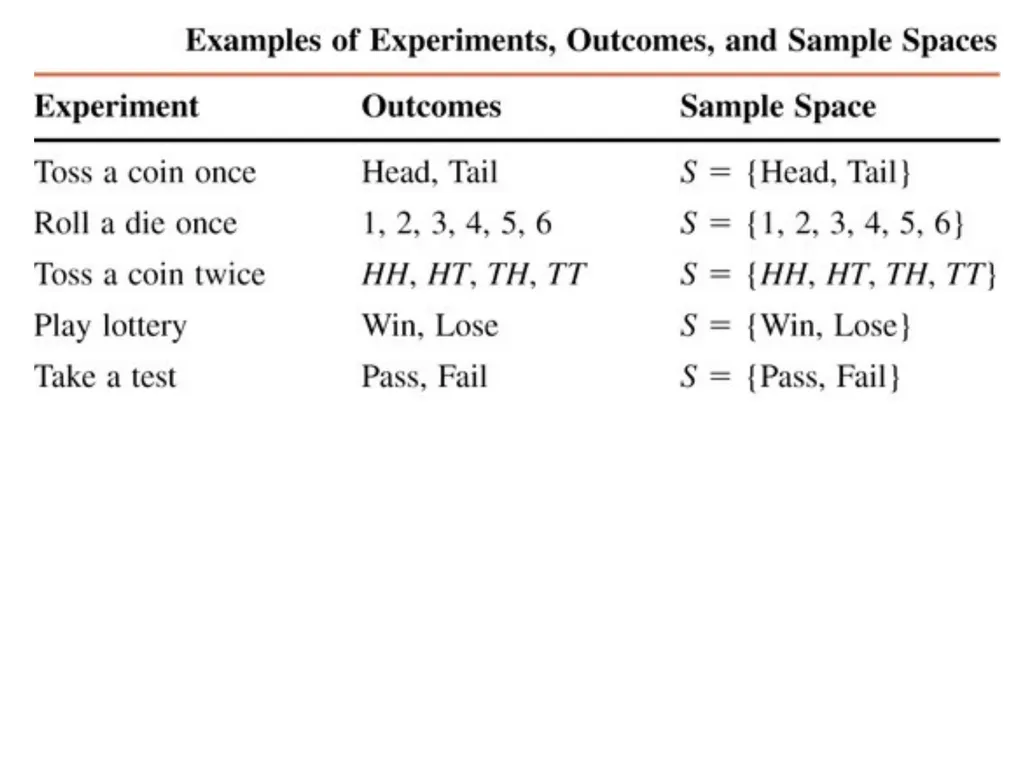
The sample space is the set of all possible outcomes.
An event is a set of outcomes
(i.e., a subset of the sample space).<br>
03
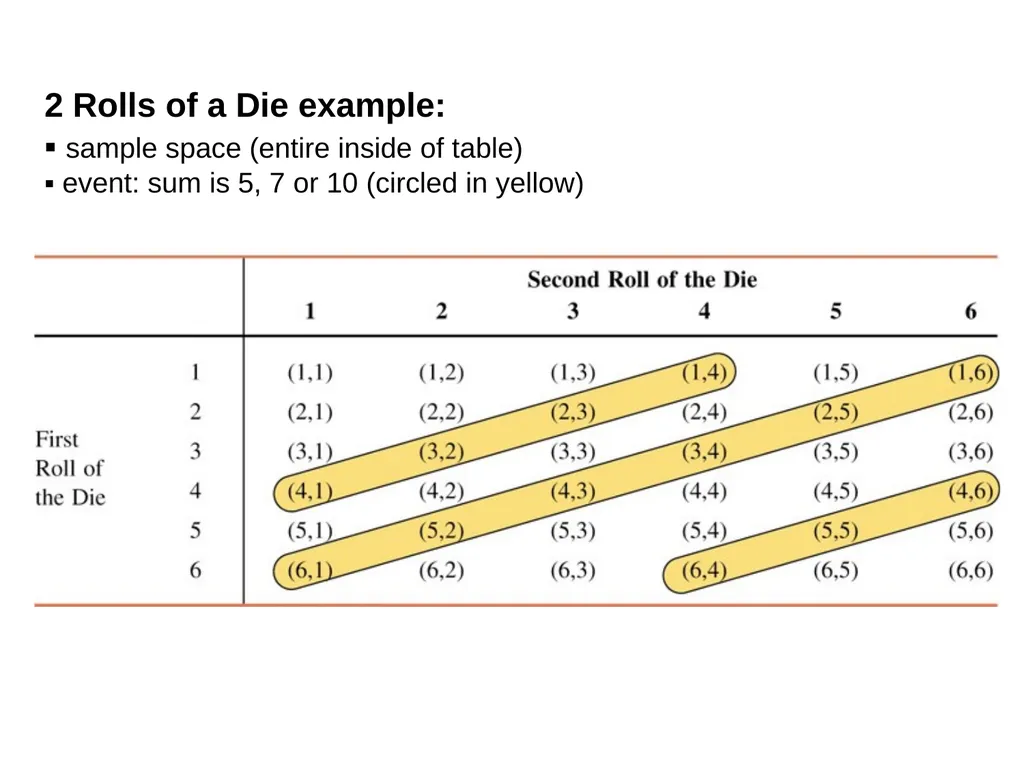
2 Rolls of a Die example: ▪ sample space (entire inside of table) ▪ event: sum is 5, 7 or 10 (circled in yellow)<br>
04
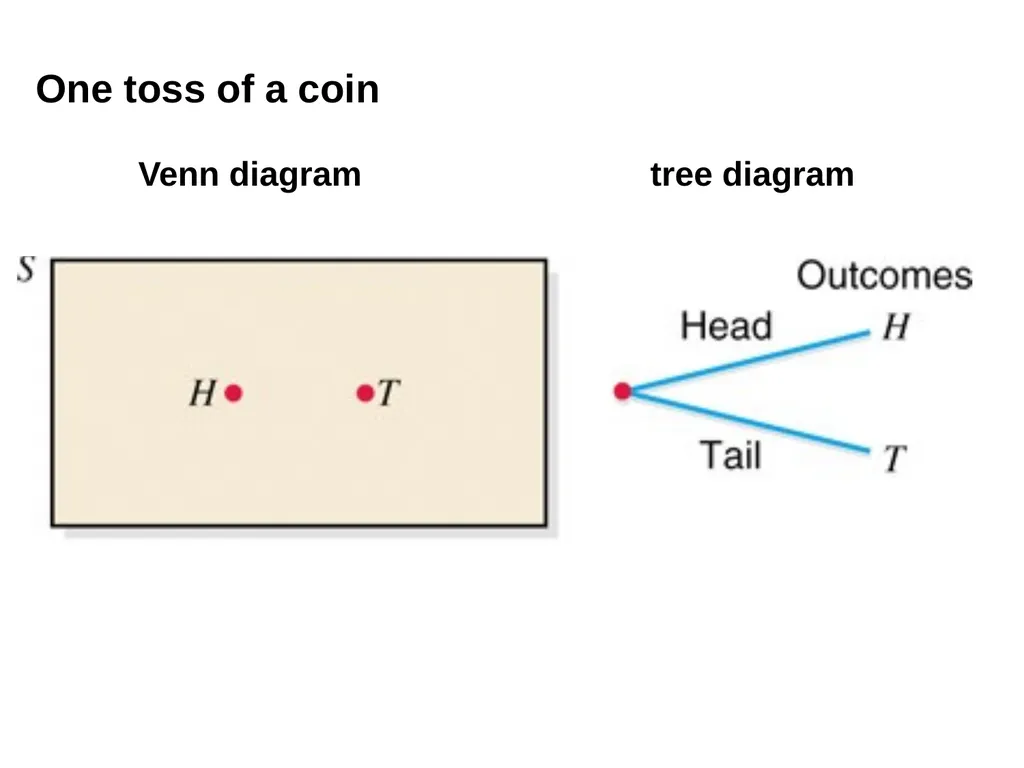
One toss of a coin Venn diagram tree diagram<br>
05
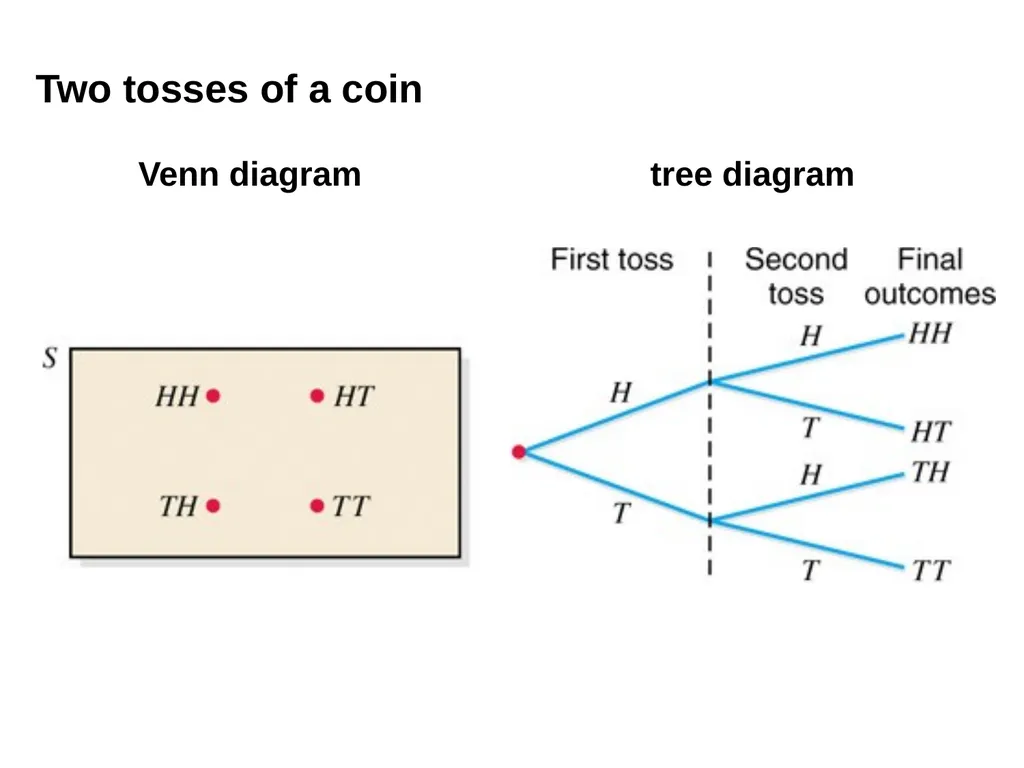
Two tosses of a coin Venn diagram tree diagram<br>
06
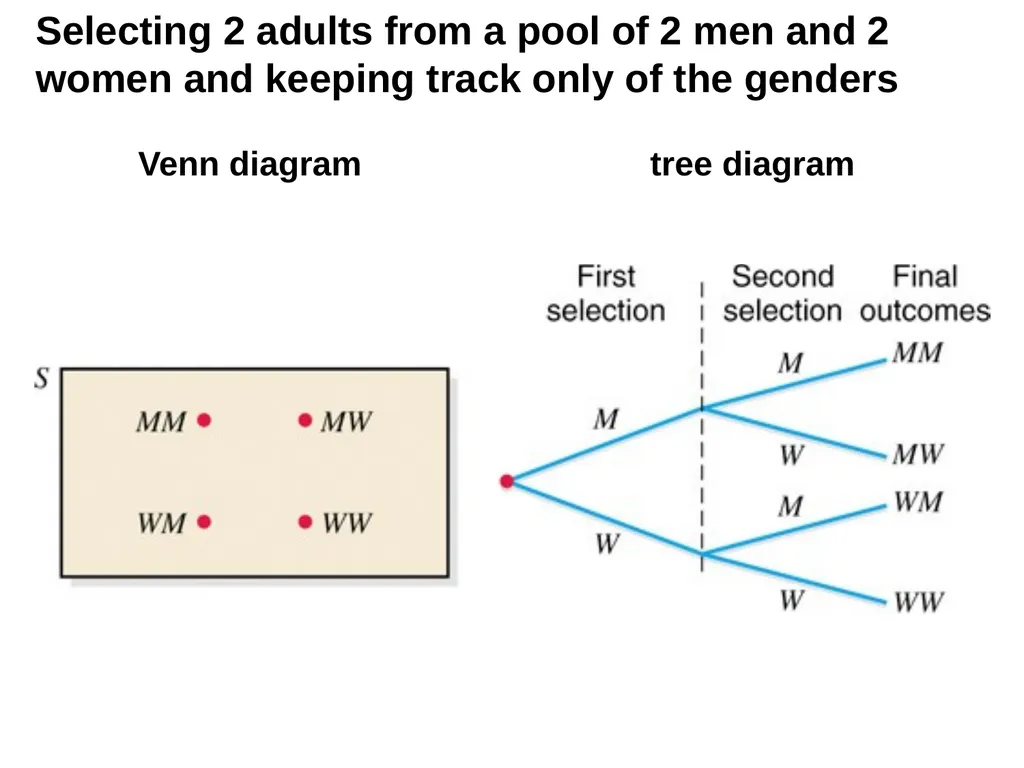
Selecting 2 adults from a pool of 2 men and 2 women and keeping track only of the genders Venn diagram tree diagram<br>
07
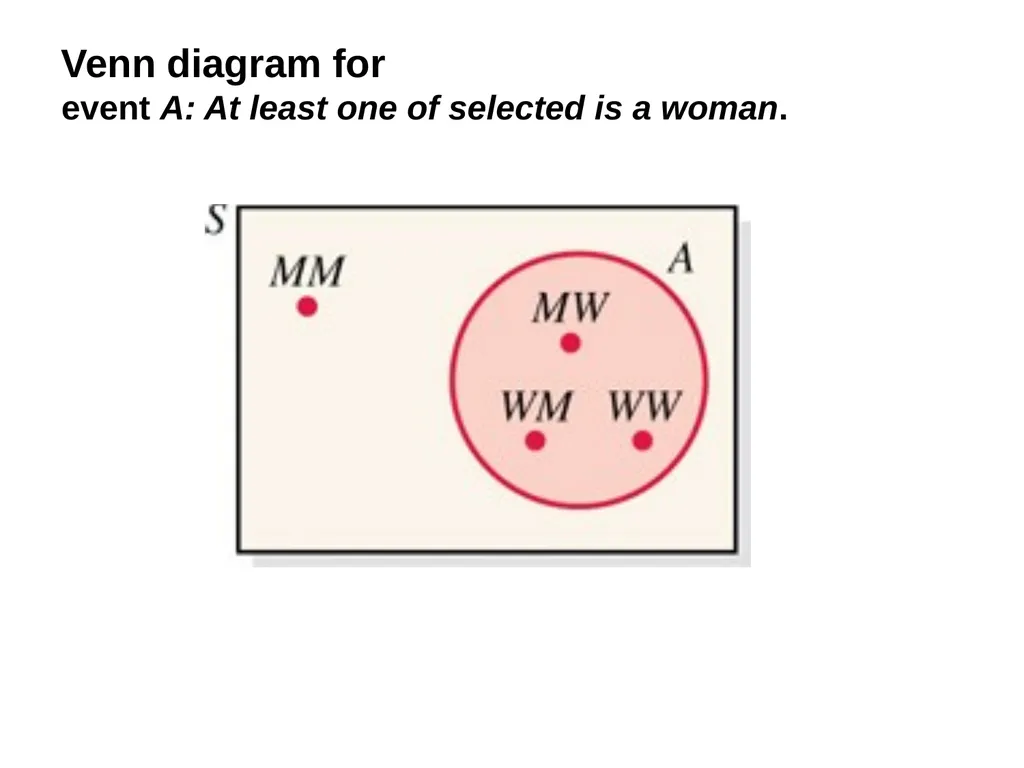
Venn diagram for
event A: At least one of selected is a woman.<br>
08
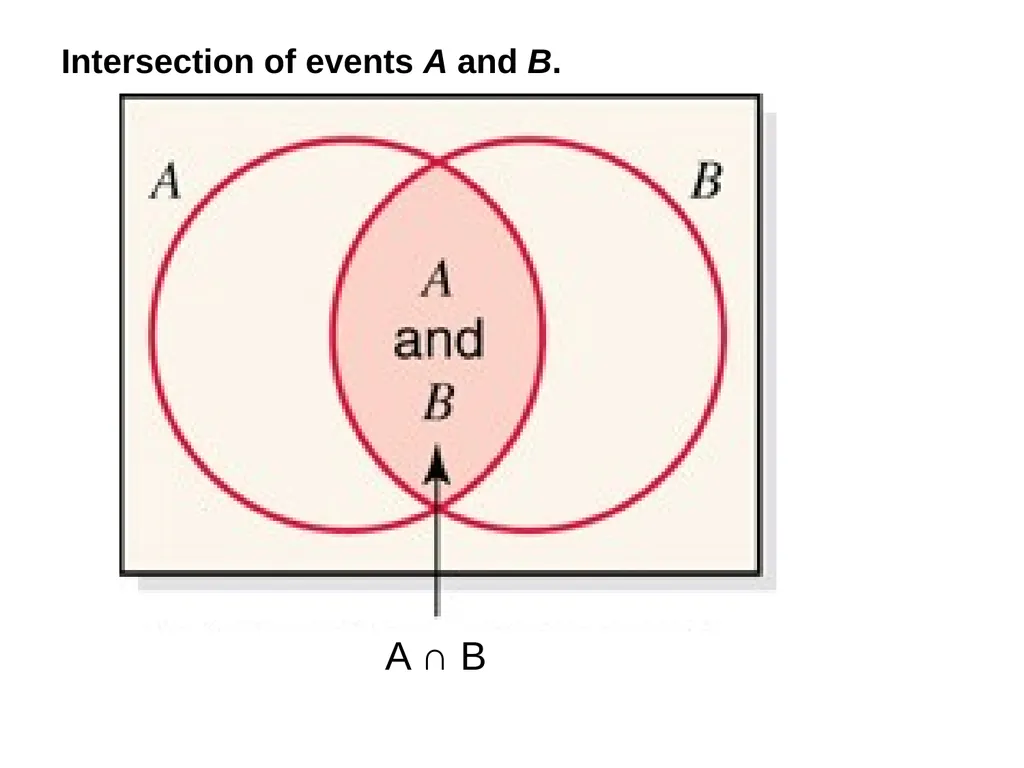
A ∩ B Intersection of events A and B.<br>
09
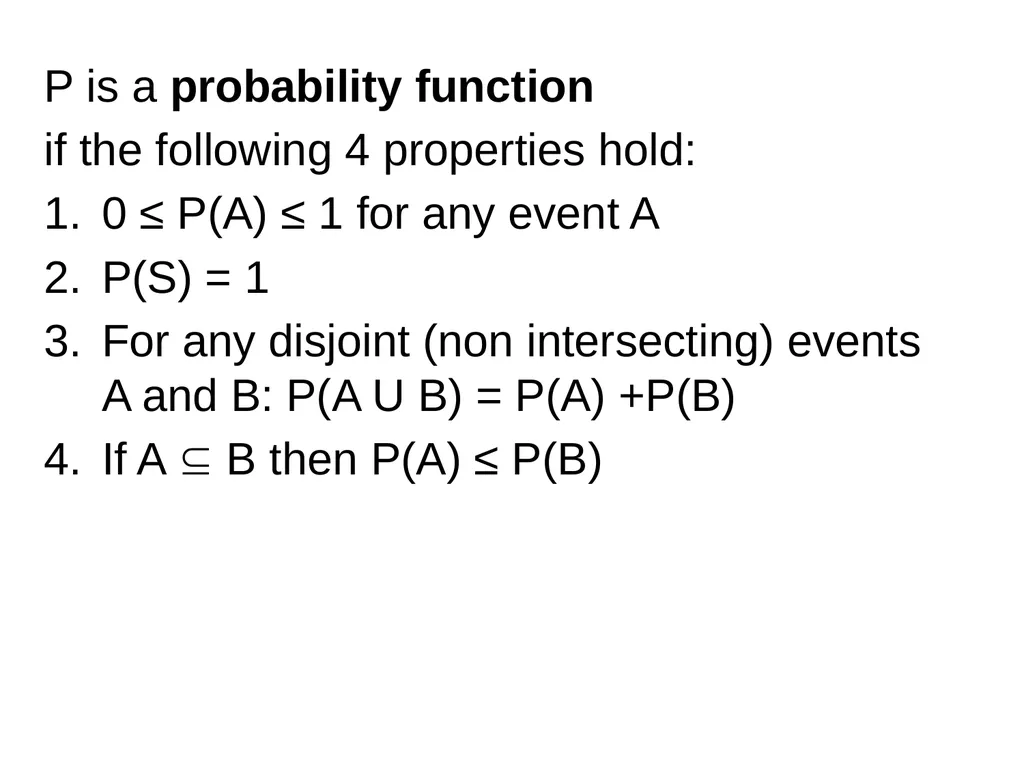
P is a probability function
if the following 4 properties hold:
0 ≤ P(A) ≤ 1 for any event A
P(S) = 1
For any disjoint (non intersecting) events A and B: P(A U B) = P(A) +P(B)
If A B then P(A) ≤ P(B)<br>
10
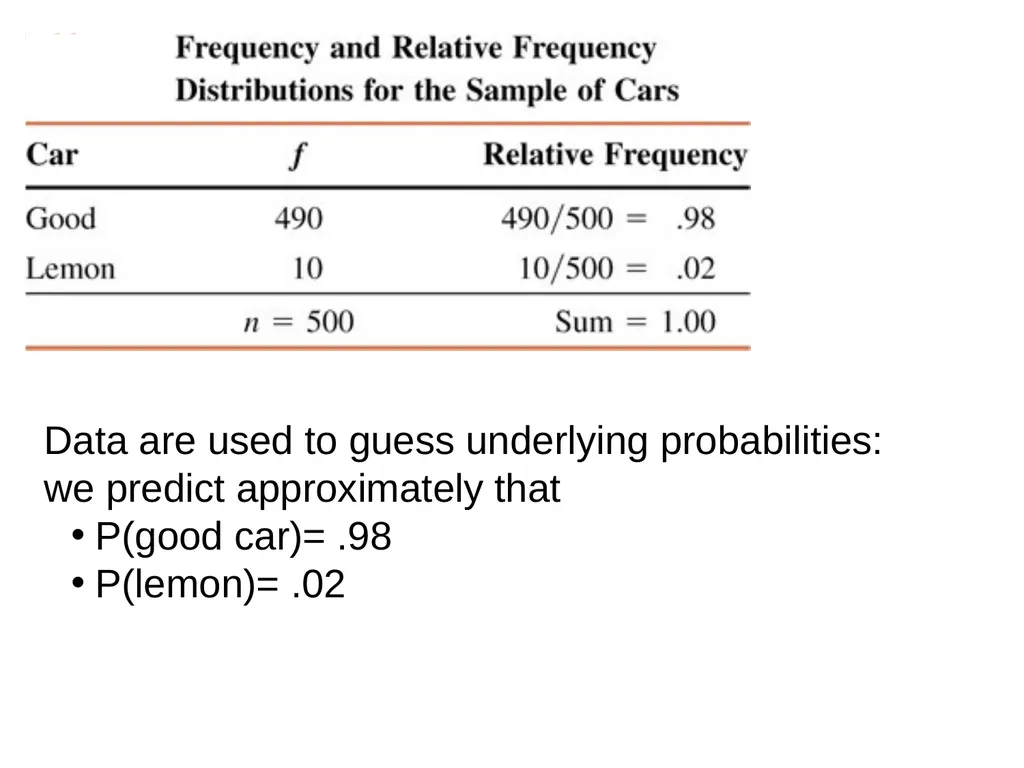
Data are used to guess underlying probabilities:
we predict approximately that
P(good car)= .98
P(lemon)= .02<br>
11
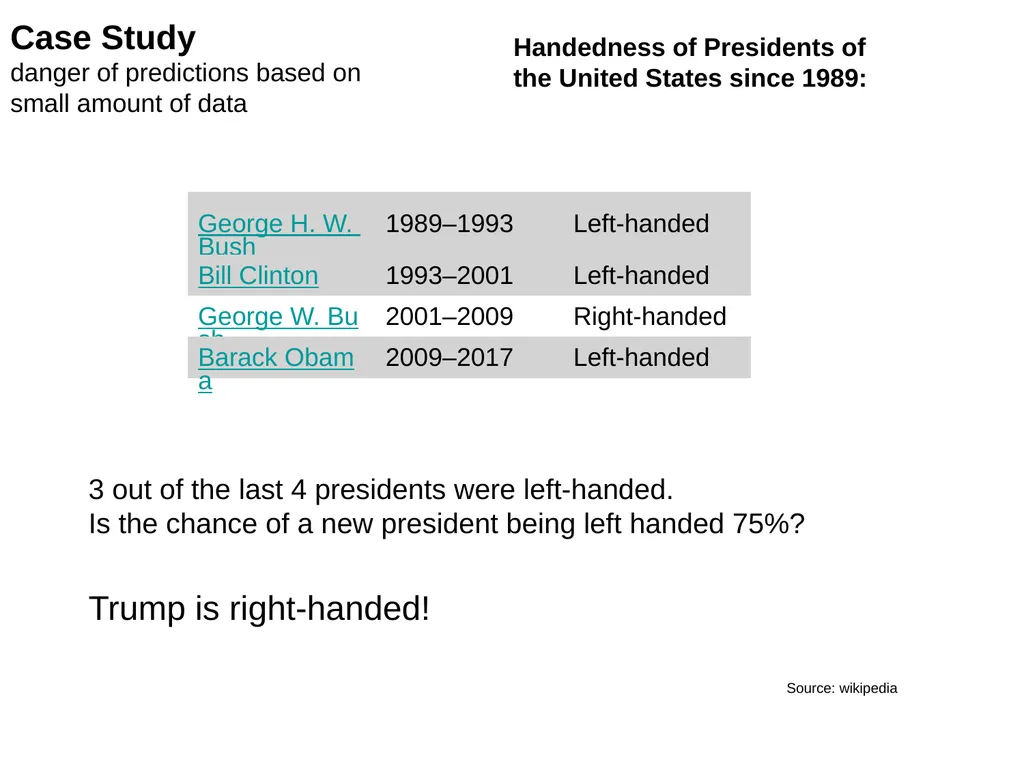
Case Study danger of predictions based on small amount of data Handedness of Presidents of the United States since 1989: 3 out of the last 4 presidents were left-handed.
Is the chance of a new president being left handed 75%? Source: wikipedia Trump is right-handed!<br>
12
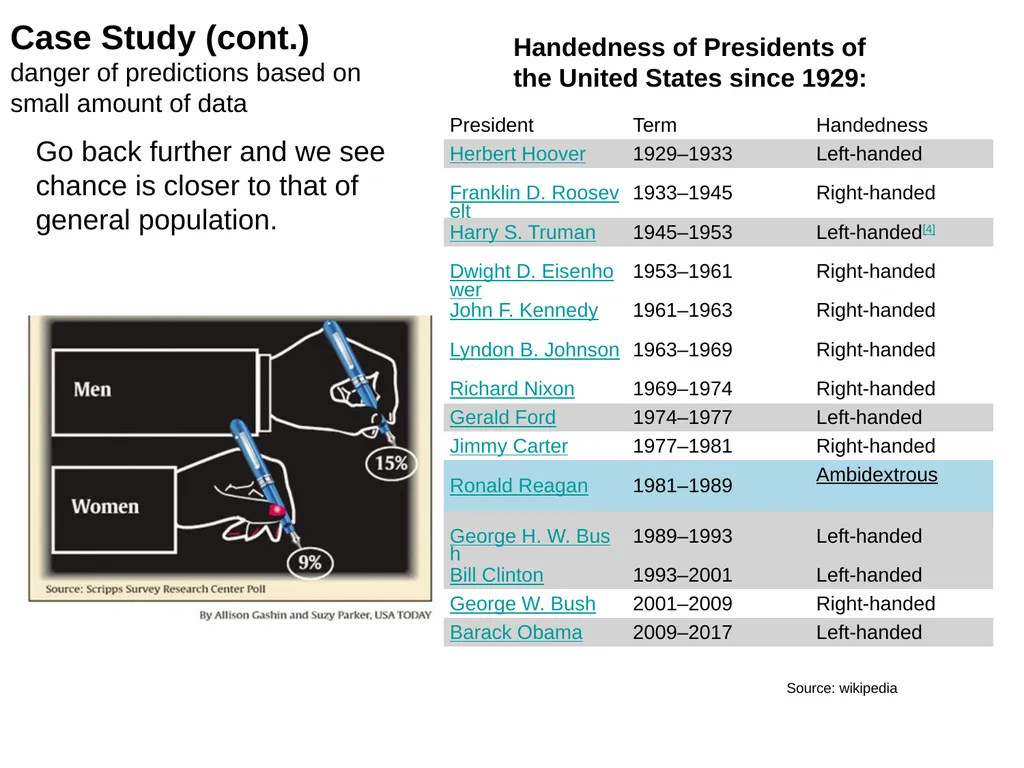
Case Study (cont.) danger of predictions based on small amount of data Handedness of Presidents of the United States since 1929: Go back further and we see chance is closer to that of general population. Source: wikipedia<br>
13
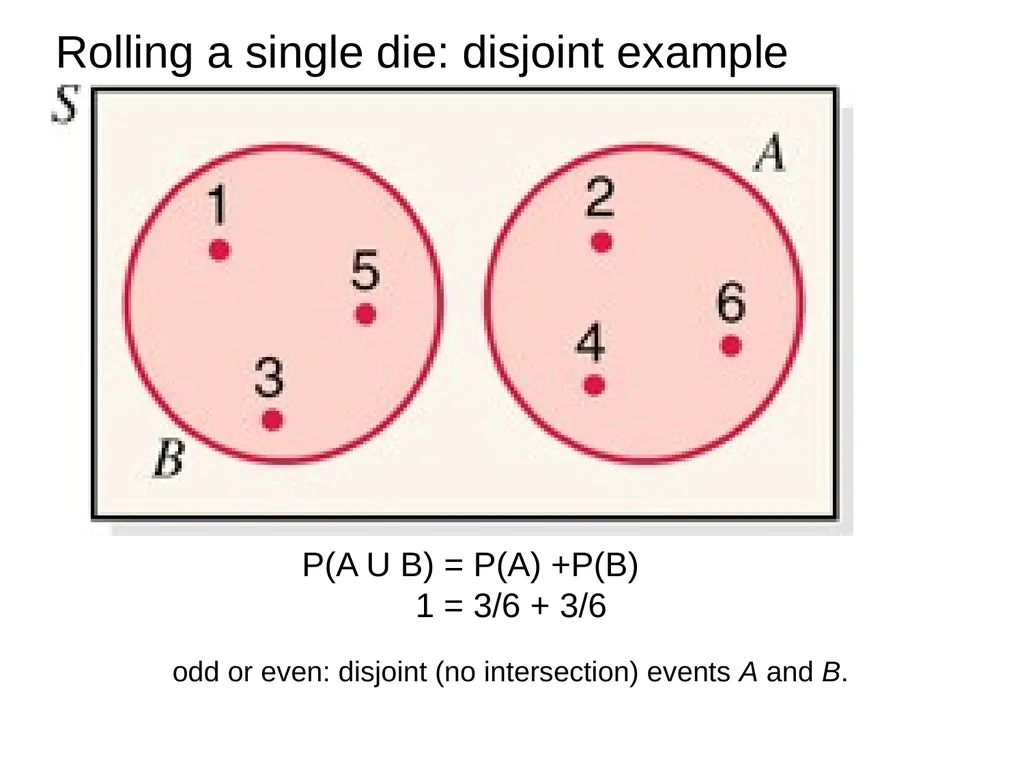
odd or even: disjoint (no intersection) events A and B. P(A U B) = P(A) +P(B)
1 = 3/6 + 3/6 Rolling a single die: disjoint example<br>
14
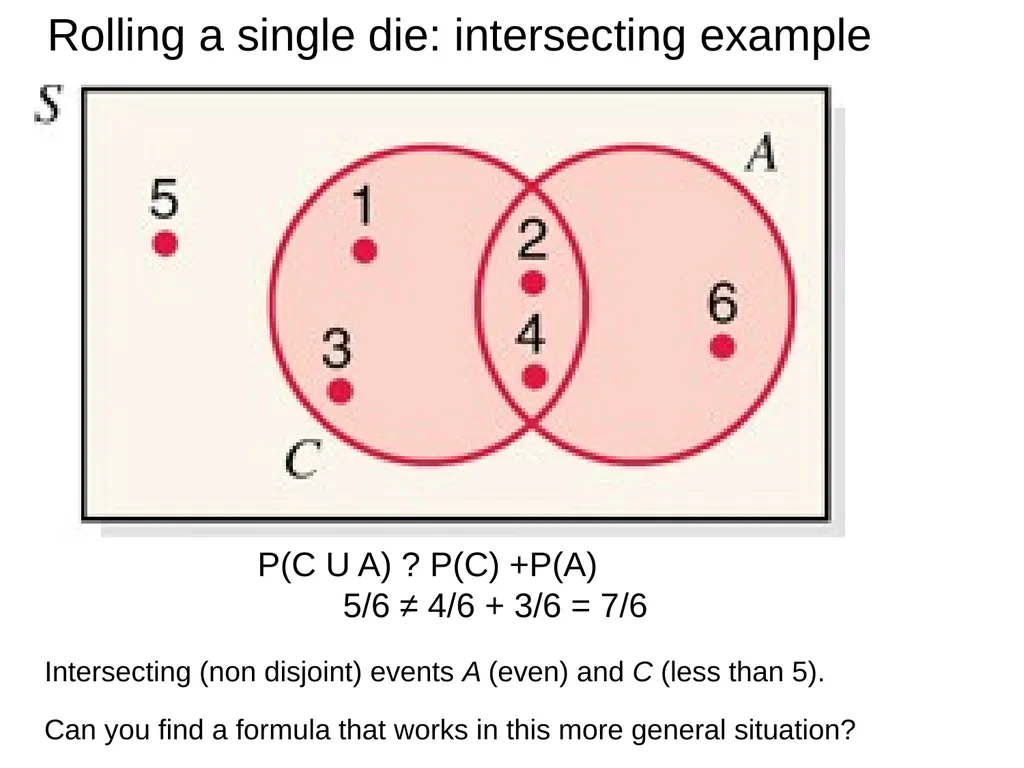
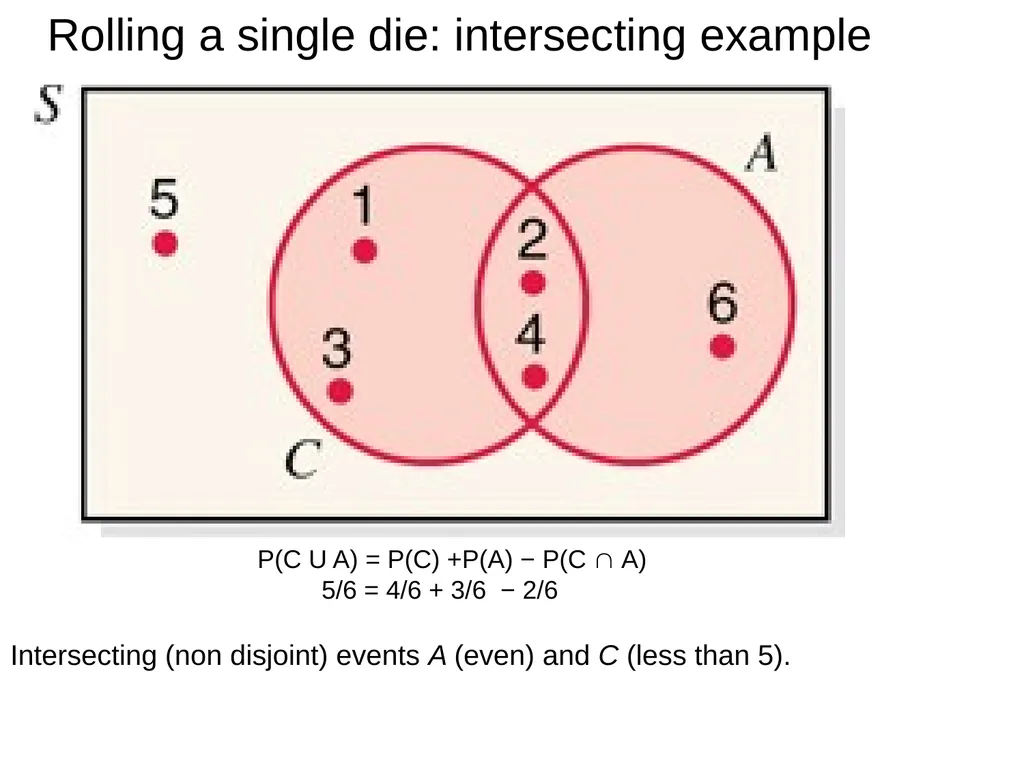
Intersecting (non disjoint) events A (even) and C (less than 5). P(C U A) ? P(C) +P(A)
5/6 ≠ 4/6 + 3/6 = 7/6 Rolling a single die: intersecting example Can you find a formula that works in this more general situation?<br>
15
Intersecting (non disjoint) events A (even) and C (less than 5). P(C U A) = P(C) +P(A) − P(C A)
5/6 = 4/6 + 3/6 − 2/6 Rolling a single die: intersecting example<br>
16
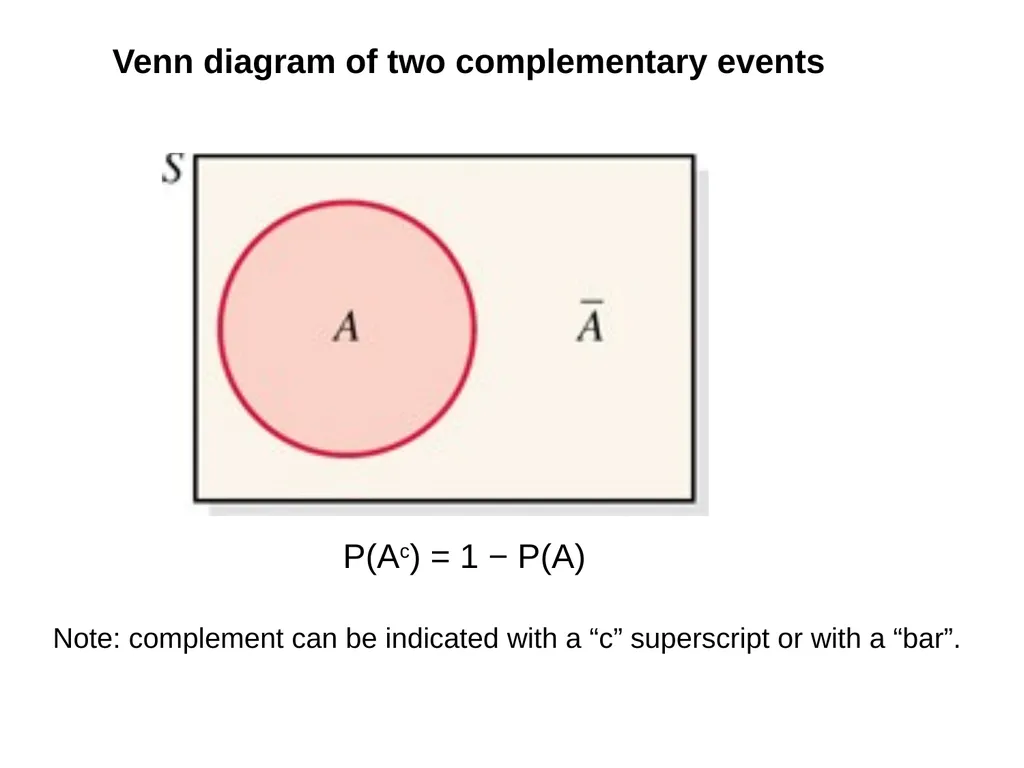
Note: complement can be indicated with a “c” superscript or with a “bar”. Venn diagram of two complementary events P(Ac) = 1 − P(A)<br>
17
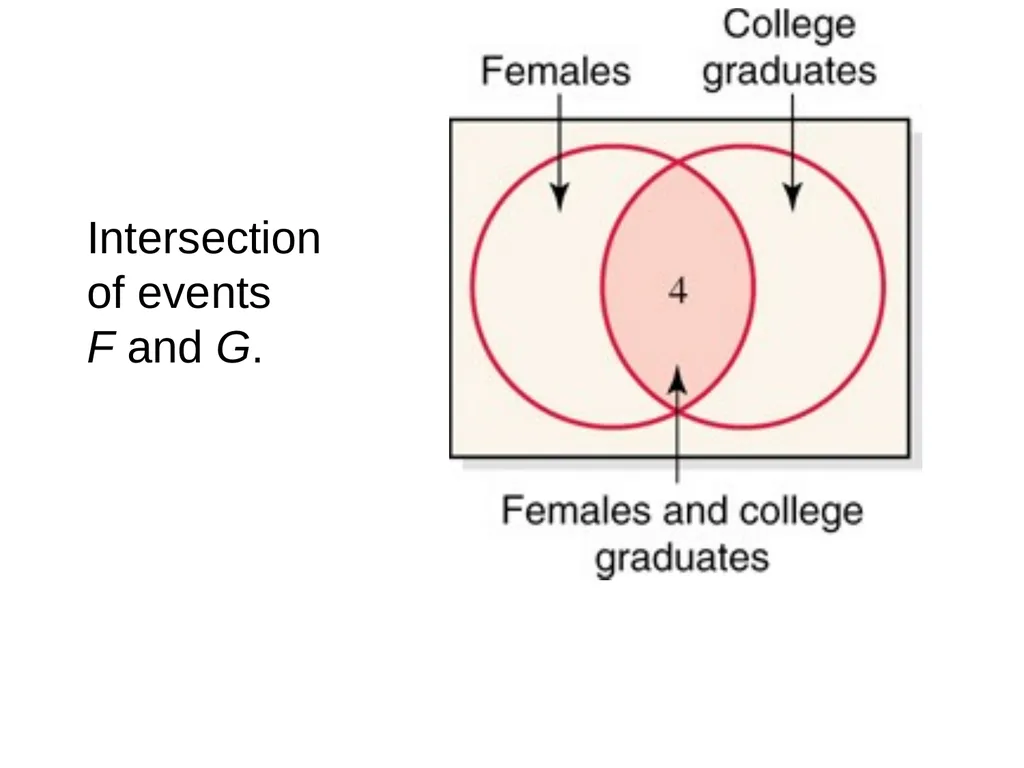
Intersection of events F and G.<br>
18
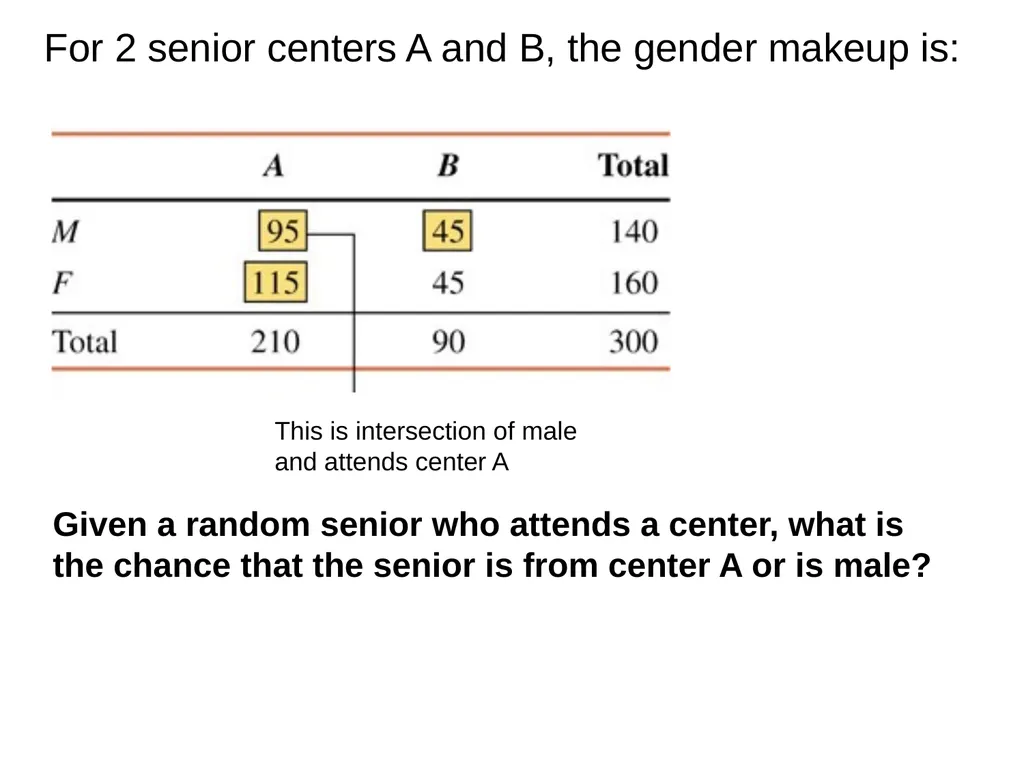
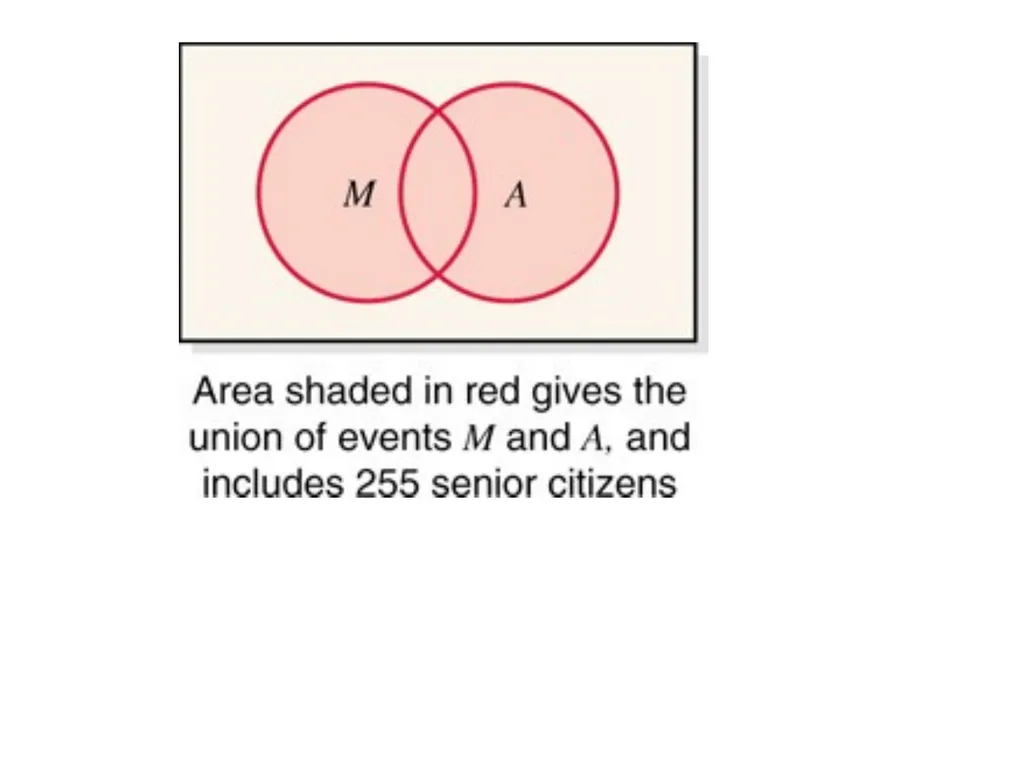
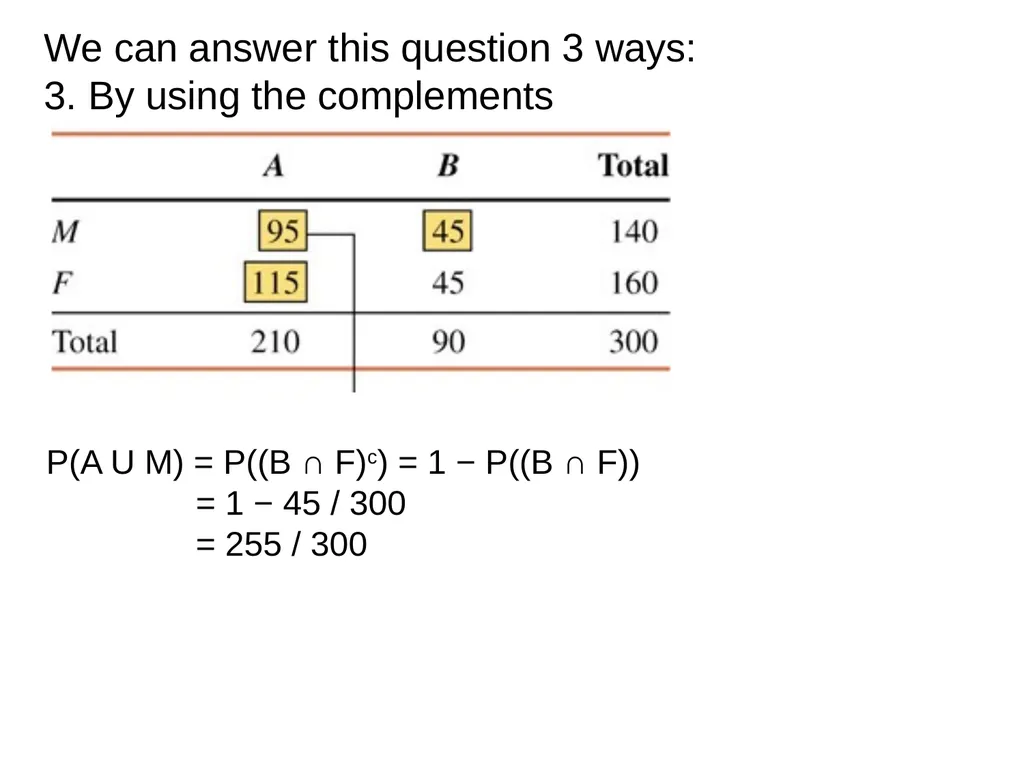
For 2 senior centers A and B, the gender makeup is: Given a random senior who attends a center, what is the chance that the senior is from center A or is male? This is intersection of male and attends center A<br>
19
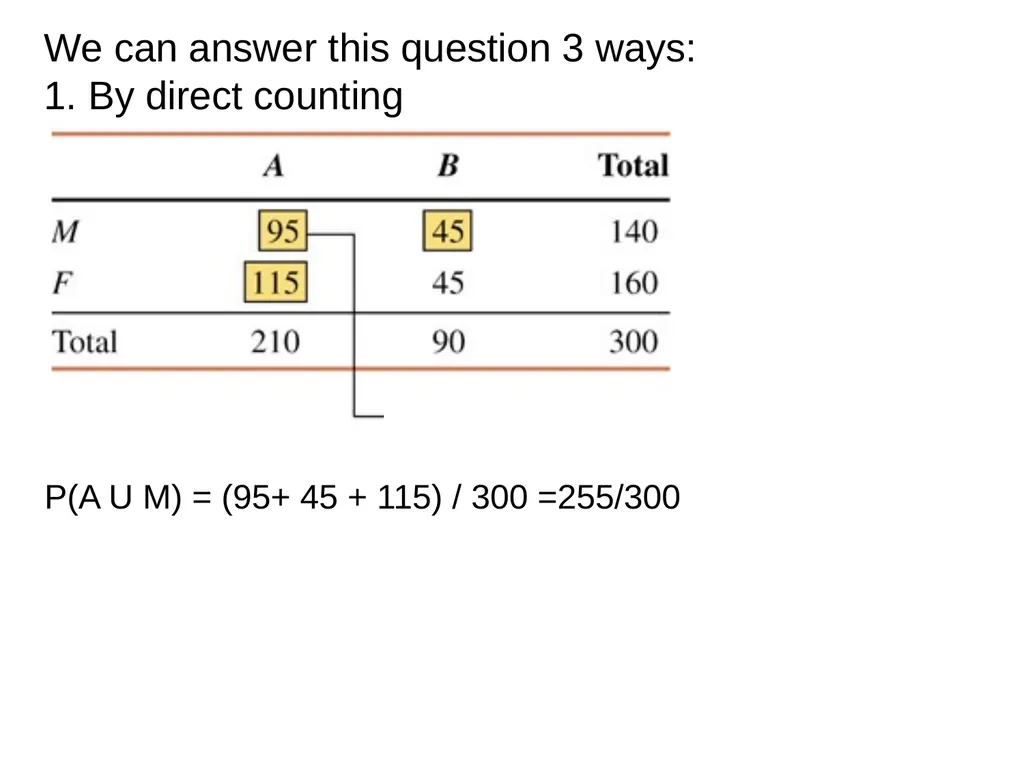
P(A U M) = (95+ 45 + 115) / 300 =255/300 We can answer this question 3 ways:
1. By direct counting<br>
20
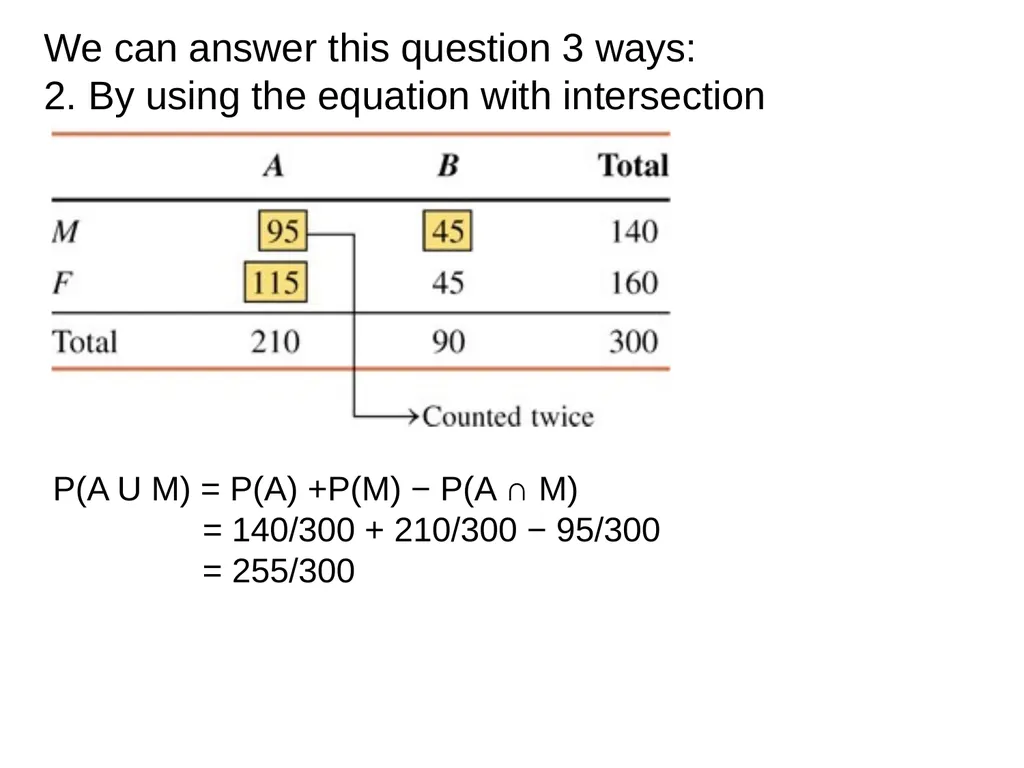
P(A U M) = P(A) +P(M) − P(A ∩ M)
= 140/300 + 210/300 − 95/300 = 255/300 We can answer this question 3 ways:
2. By using the equation with intersection<br>
21
P(A U M) = P((B ∩ F)c) = 1 − P((B ∩ F)) = 1 − 45 / 300 = 255 / 300 We can answer this question 3 ways:
3. By using the complements<br>