Chapter - 6 Training Initiation NIRD & PR Chapter-
Description: Chapter - 6 Training Initiation NIRD PR Chapter- 1 Introduction Chapter-3 Project Implementation Procedures Training Chapter 5 Training Centre Chapter- 6 Training Initiation Chapter-4 Training Design Planning Standard Operating
Related Topics
Download Presentation
"Chapter - 6 Training Initiation NIRD & PR Chapter-" is the property of its rightful owner. Permission is granted to download and print the materials on this website for personal, non-commercial use only, and to display it on your personal computer provided you do not modify the materials and that you retain all copyright notices contained in the materials. By downloading content from our website, you accept the terms of this agreement.
Presentation Transcript
slide1. Chapter - 6 Training Initiation NIRD & PR<br>
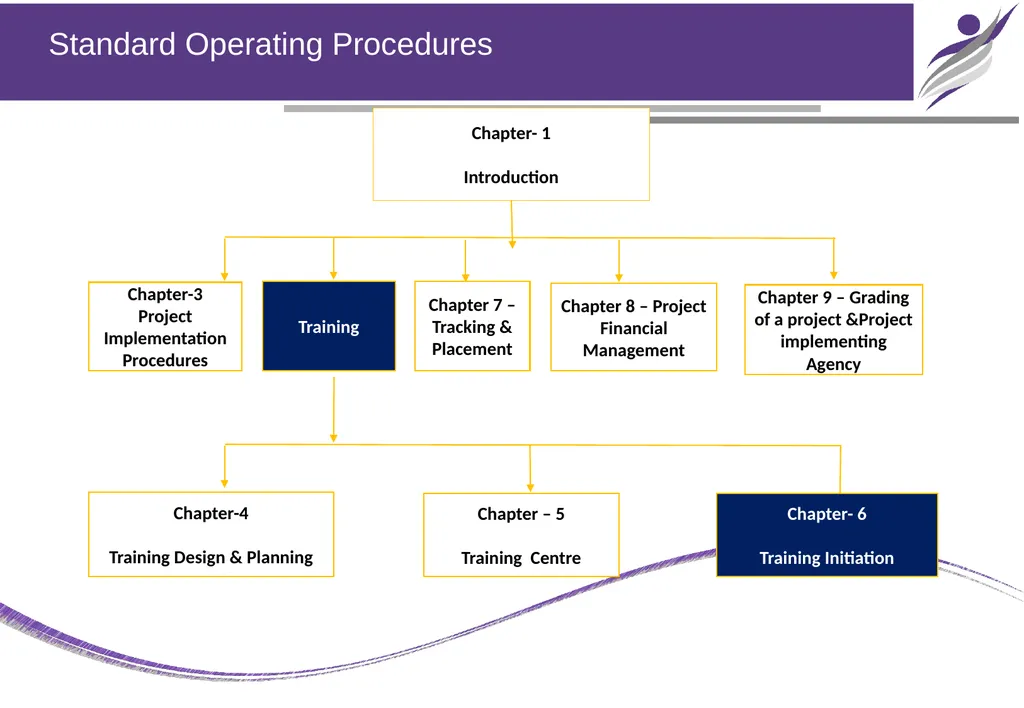
slide2. Chapter- 1
Introduction Chapter-3
Project Implementation Procedures Training Chapter – 5
Training Centre Chapter- 6
Training Initiation Chapter-4
Training Design & Planning Standard Operating Procedures Chapter 7 – Tracking & Placement Chapter 8 – Project Financial Management Chapter 9 – Grading of a project &Project implementing Agency<br>
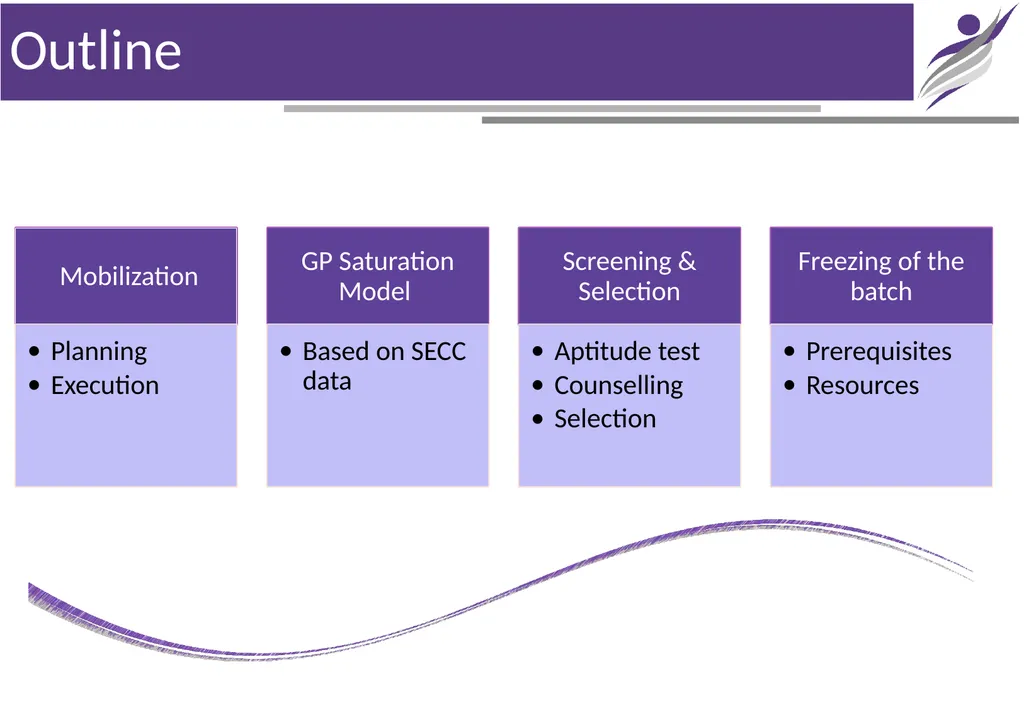
slide3. Outline<br>
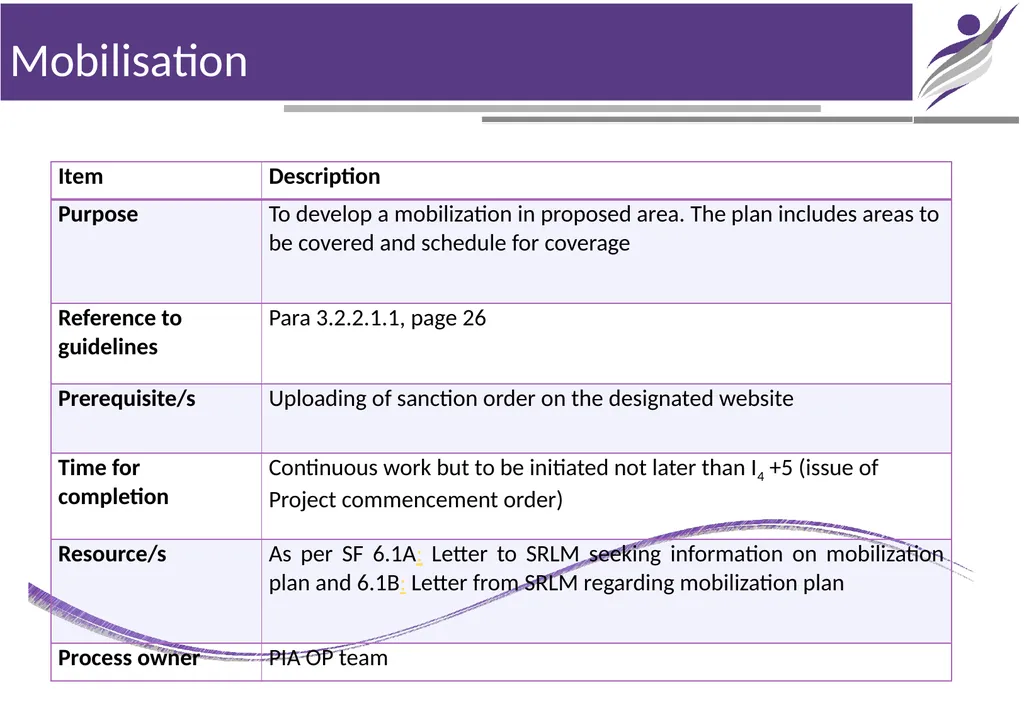
slide4. Mobilisation<br>
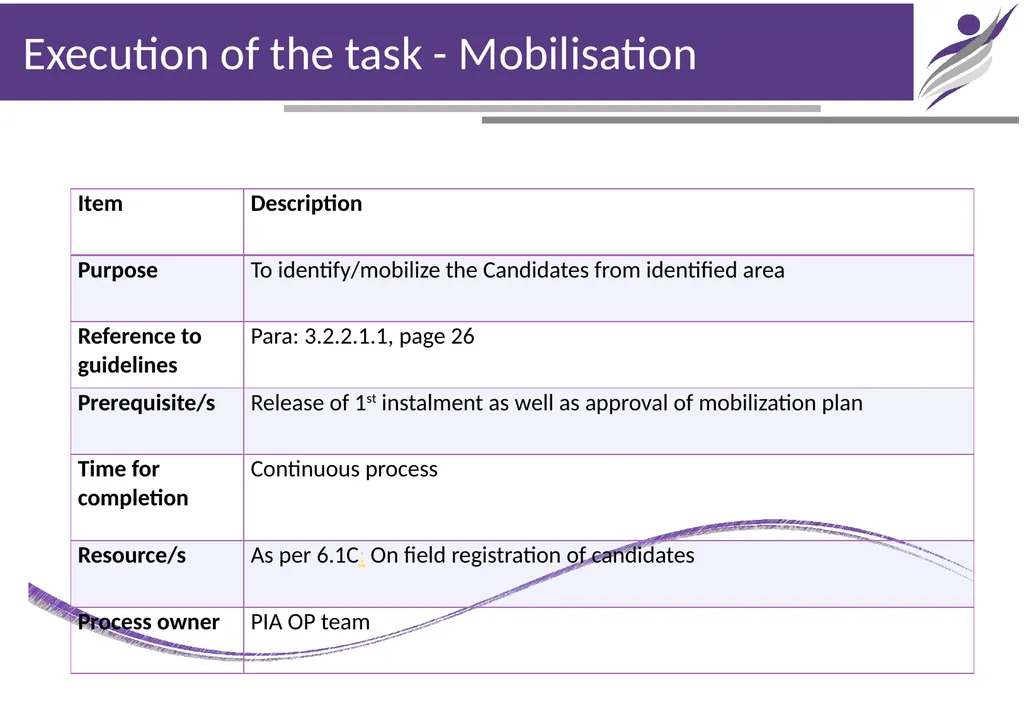
slide5. Execution of the task - Mobilisation<br>
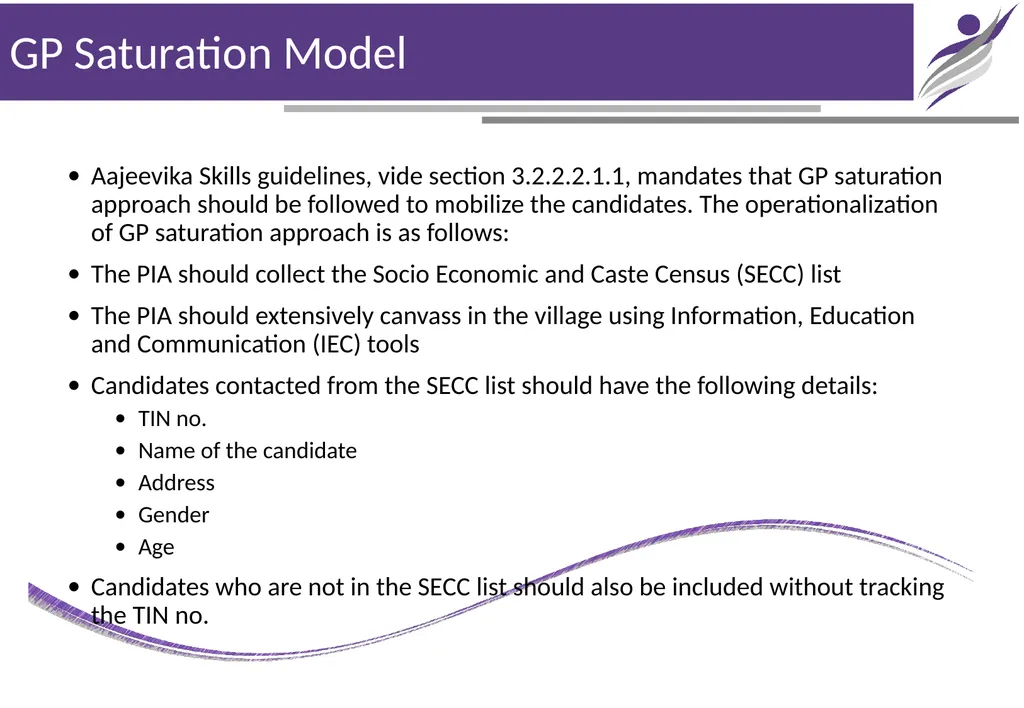
slide6. GP Saturation Model Aajeevika Skills guidelines, vide section 3.2.2.2.1.1, mandates that GP saturation approach should be followed to mobilize the candidates. The operationalization of GP saturation approach is as follows:
The PIA should collect the Socio Economic and Caste Census (SECC) list
The PIA should extensively canvass in the village using Information, Education and Communication (IEC) tools
Candidates contacted from the SECC list should have the following details:
TIN no.
Name of the candidate
Address
Gender
Age
Candidates who are not in the SECC list should also be included without tracking the TIN no.<br>
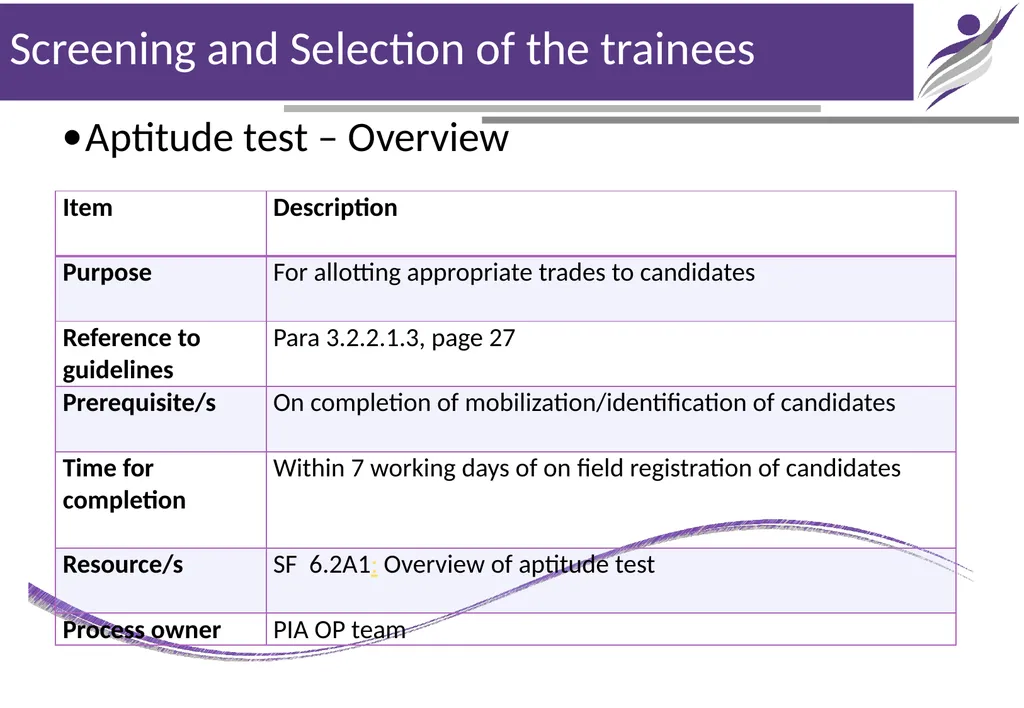
slide7. Screening and Selection of the trainees Aptitude test – Overview<br>
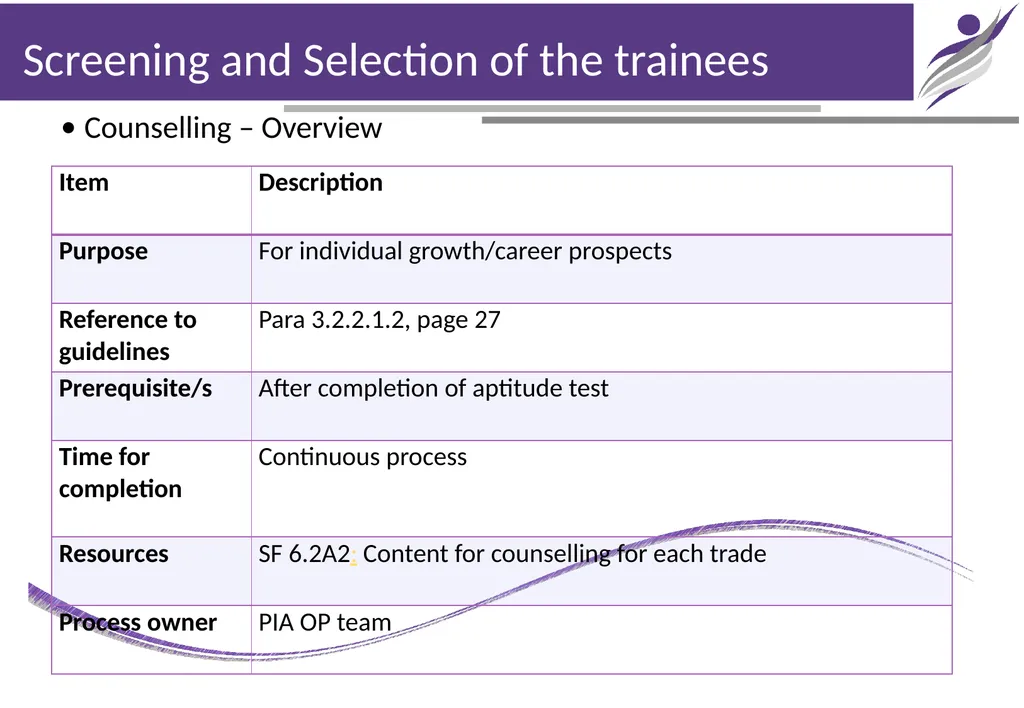
slide8. Screening and Selection of the trainees Counselling – Overview<br>
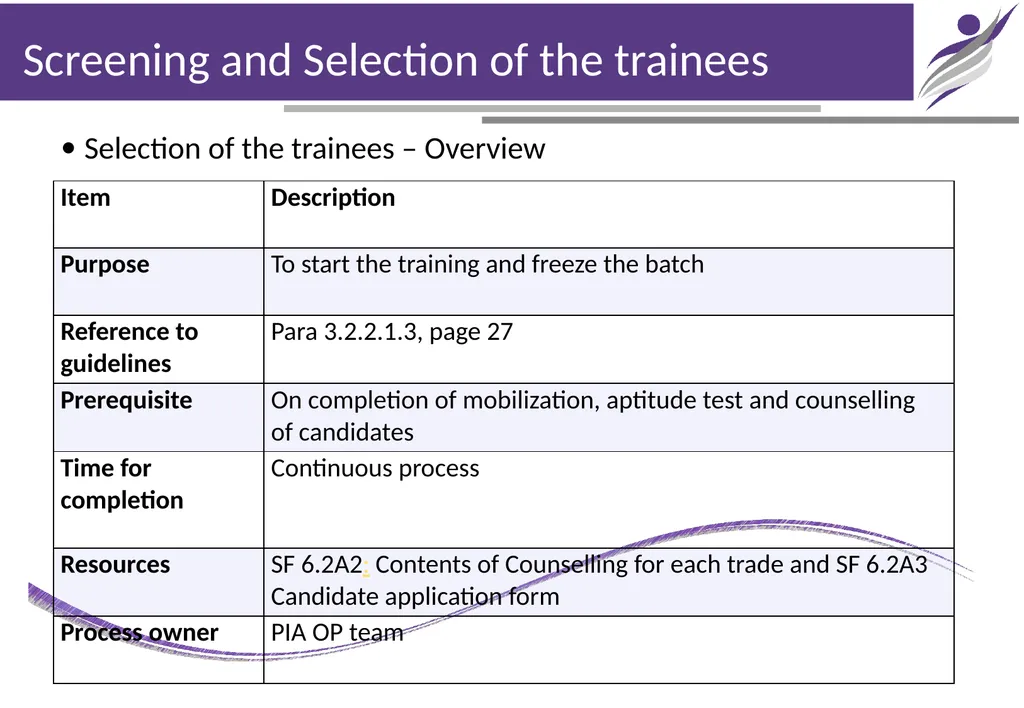
slide9. Screening and Selection of the trainees Selection of the trainees – Overview<br>
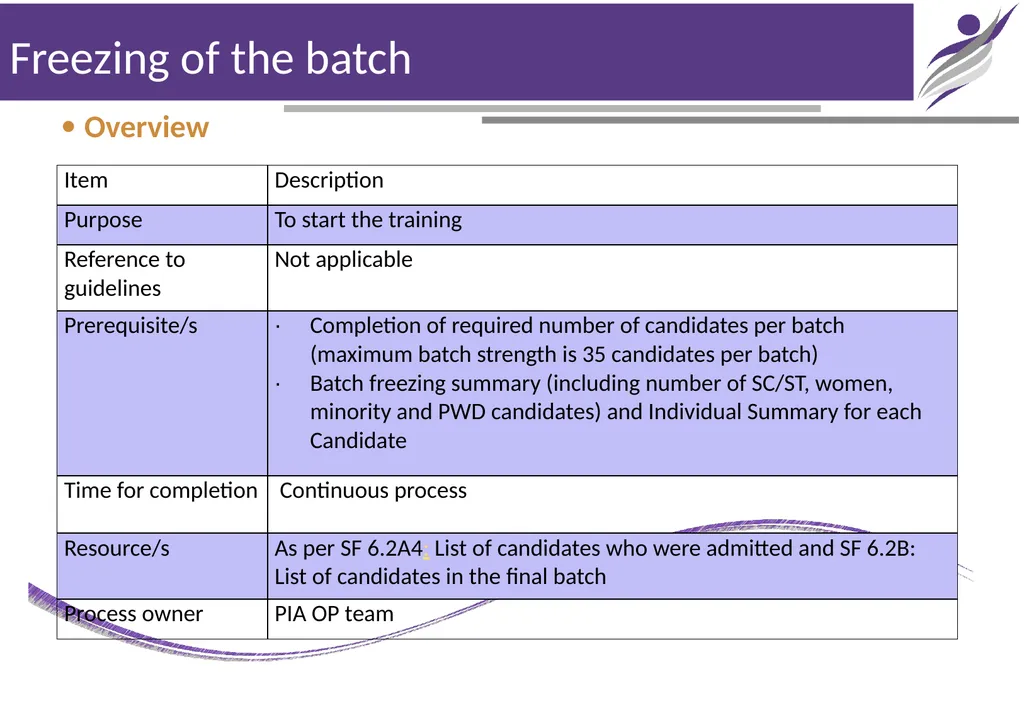
slide10. Freezing of the batch Overview<br>
slide11. THANK YOU 10<br>
slide2. Chapter- 1
Introduction Chapter-3
Project Implementation Procedures Training Chapter – 5
Training Centre Chapter- 6
Training Initiation Chapter-4
Training Design & Planning Standard Operating Procedures Chapter 7 – Tracking & Placement Chapter 8 – Project Financial Management Chapter 9 – Grading of a project &Project implementing Agency<br>
slide3. Outline<br>
slide4. Mobilisation<br>
slide5. Execution of the task - Mobilisation<br>
slide6. GP Saturation Model Aajeevika Skills guidelines, vide section 3.2.2.2.1.1, mandates that GP saturation approach should be followed to mobilize the candidates. The operationalization of GP saturation approach is as follows:
The PIA should collect the Socio Economic and Caste Census (SECC) list
The PIA should extensively canvass in the village using Information, Education and Communication (IEC) tools
Candidates contacted from the SECC list should have the following details:
TIN no.
Name of the candidate
Address
Gender
Age
Candidates who are not in the SECC list should also be included without tracking the TIN no.<br>
slide7. Screening and Selection of the trainees Aptitude test – Overview<br>
slide8. Screening and Selection of the trainees Counselling – Overview<br>
slide9. Screening and Selection of the trainees Selection of the trainees – Overview<br>
slide10. Freezing of the batch Overview<br>
slide11. THANK YOU 10<br>