
Chapter Eleven Managing Individual Differences &

Description: Chapter Eleven Managing Individual Differences Behavior: Supervising People as People McGraw-HillIrwin Copyright 2013 by The McGraw-Hill Companies, Inc. All rights reserved. Major Questions You Should Be Able to Answer 11.1 In the
Related Topics
Download Presentation
"Chapter Eleven Managing Individual Differences &" is the property of its rightful owner. Permission is granted to download and print the materials on this website for personal, non-commercial use only, and to display it on your personal computer provided you do not modify the materials and that you retain all copyright notices contained in the materials. By downloading content from our website, you accept the terms of this agreement.
Presentation Transcript
slide1. Chapter Eleven Managing Individual
Differences & Behavior:
Supervising People as People McGraw-Hill/Irwin Copyright © 2013 by The McGraw-Hill Companies, Inc. All rights reserved.<br>
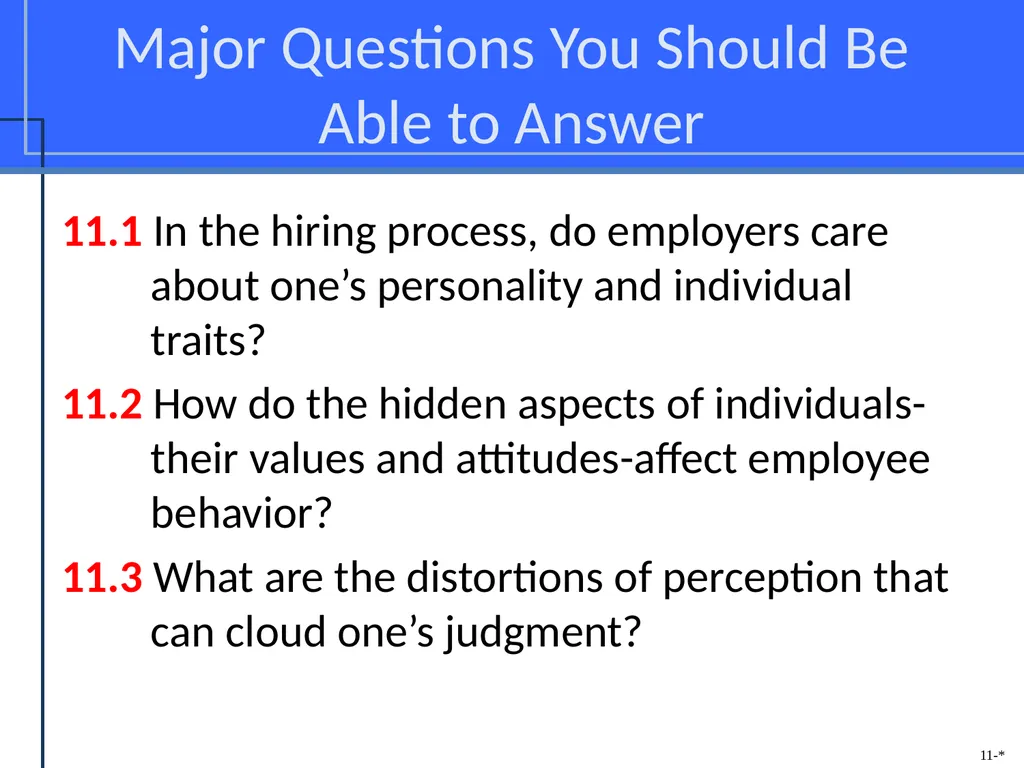
slide2. Major Questions You Should Be Able to Answer 11.1 In the hiring process, do employers care about one’s personality and individual traits?
11.2 How do the hidden aspects of individuals-their values and attitudes-affect employee behavior?
11.3 What are the distortions of perception that can cloud one’s judgment?<br>
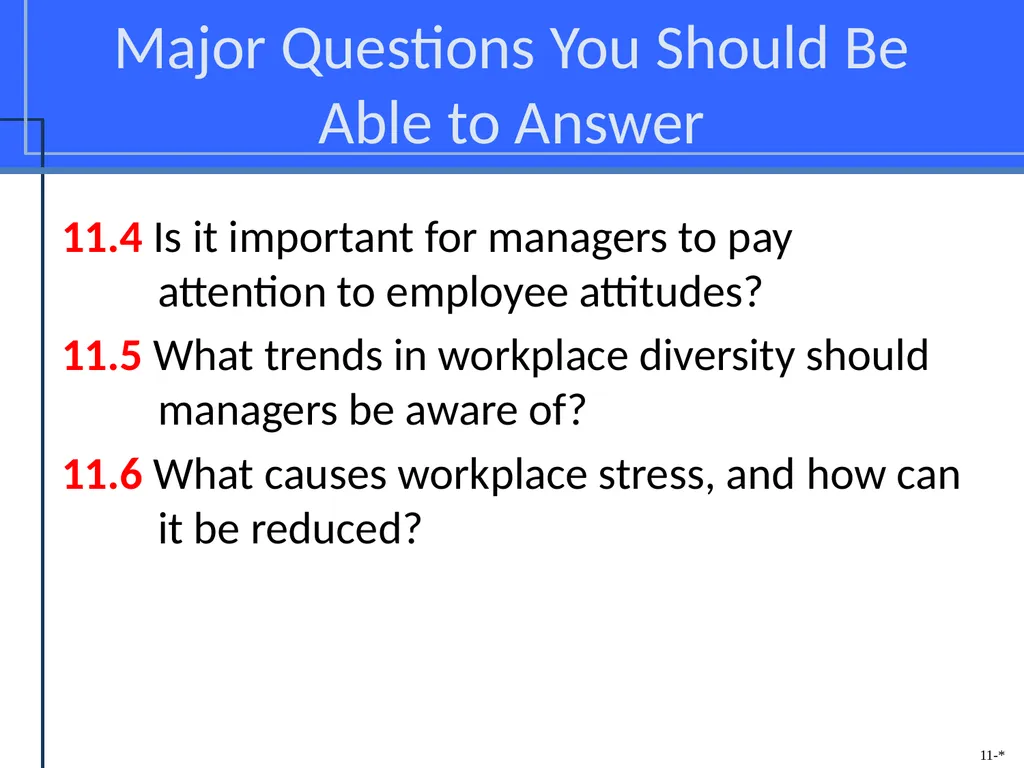
slide3. Major Questions You Should Be Able to Answer 11.4 Is it important for managers to pay attention to employee attitudes?
11.5 What trends in workplace diversity should managers be aware of?
11.6 What causes workplace stress, and how can it be reduced?<br>
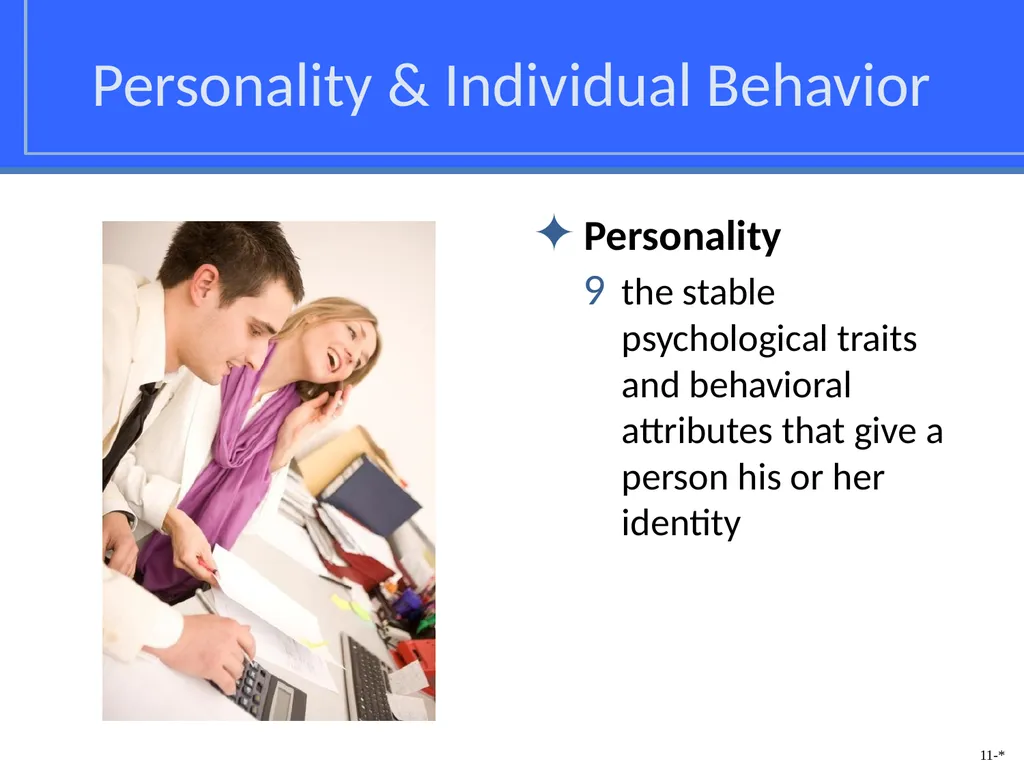
slide4. Personality & Individual Behavior Personality
the stable psychological traits and behavioral attributes that give a person his or her identity<br>
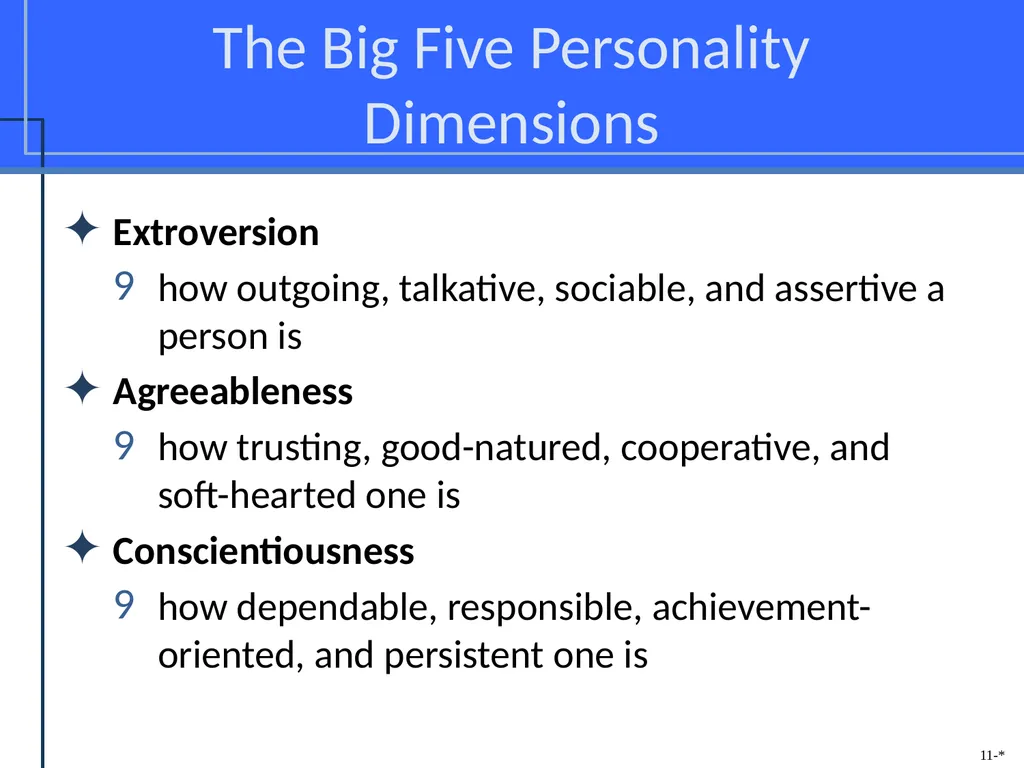
slide5. The Big Five Personality Dimensions Extroversion
how outgoing, talkative, sociable, and assertive a person is
Agreeableness
how trusting, good-natured, cooperative, and soft-hearted one is
Conscientiousness
how dependable, responsible, achievement-oriented, and persistent one is<br>
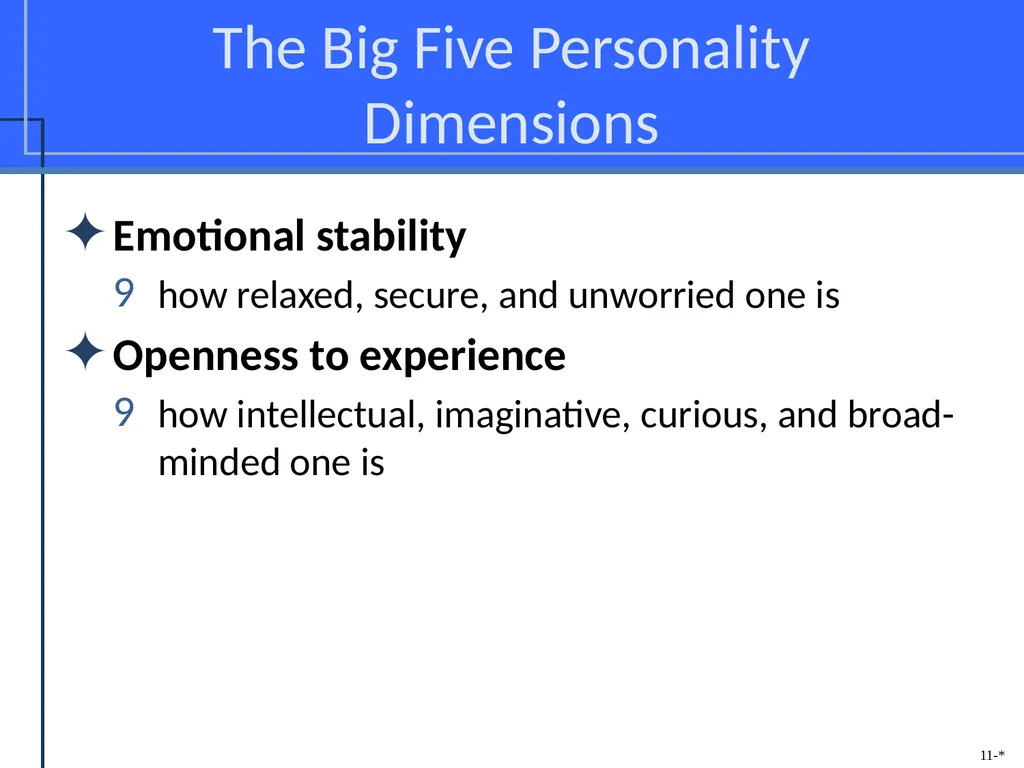
slide6. The Big Five Personality Dimensions Emotional stability
how relaxed, secure, and unworried one is
Openness to experience
how intellectual, imaginative, curious, and broad-minded one is<br>
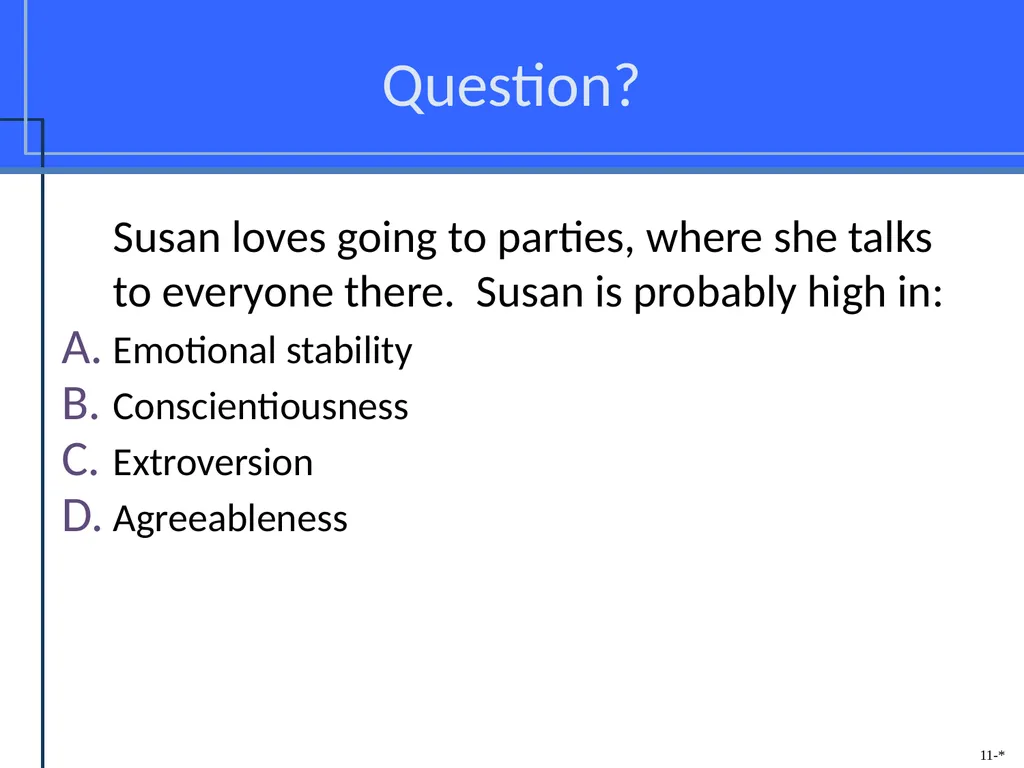
slide7. Question? Susan loves going to parties, where she talks to everyone there. Susan is probably high in:
Emotional stability
Conscientiousness
Extroversion
Agreeableness<br>
slide8. Do Personality Tests Work for the Workplace? Extroversion has been associated with success for managers and salespeople
Conscientiousness has been found to have the strongest positive correlation with job performance and training performance<br>
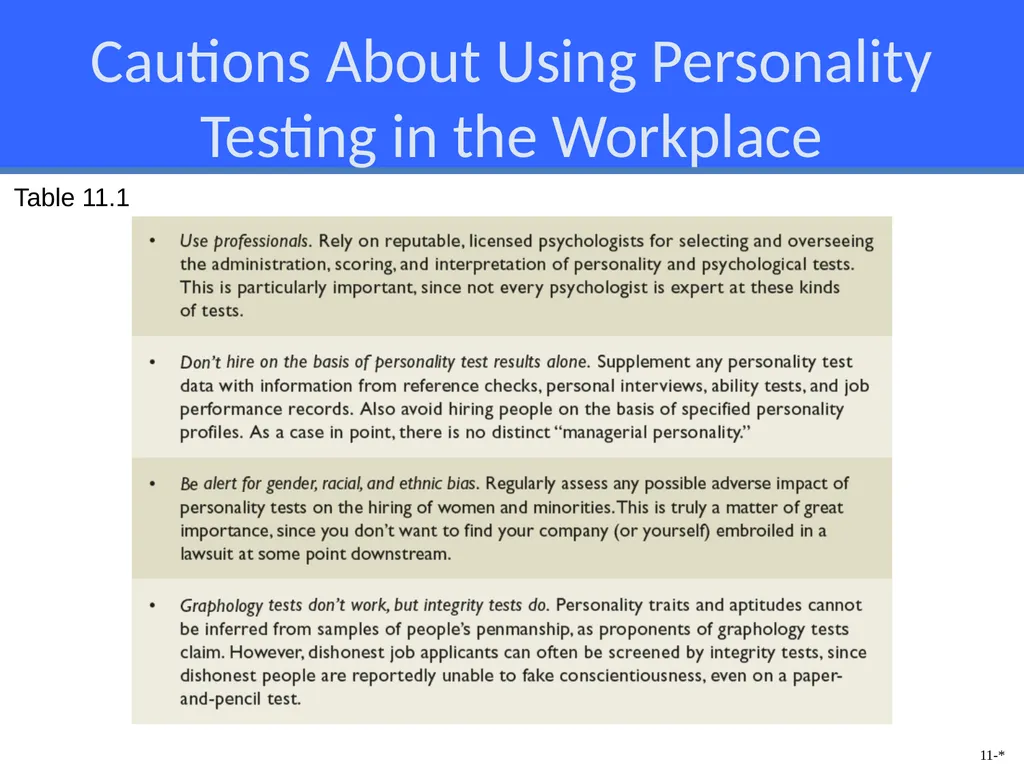
slide9. Cautions About Using Personality Testing in the Workplace Table 11.1<br>
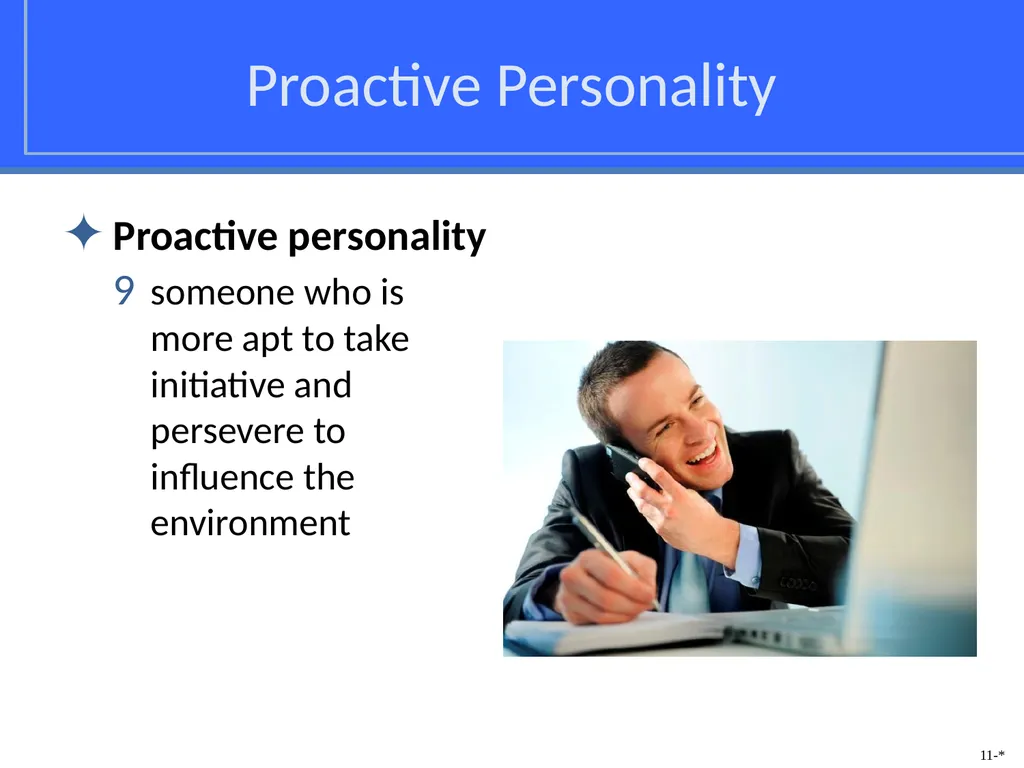
slide10. Proactive Personality Proactive personality
someone who is more apt to take initiative and persevere to influence the environment<br>
slide11. Five Traits Important in Organizations Locus of control
indicates how much people believe they control their fate through their own efforts
internal, external
Expect different degrees of structure and compliance for each type
Employ different reward systems for each type<br>
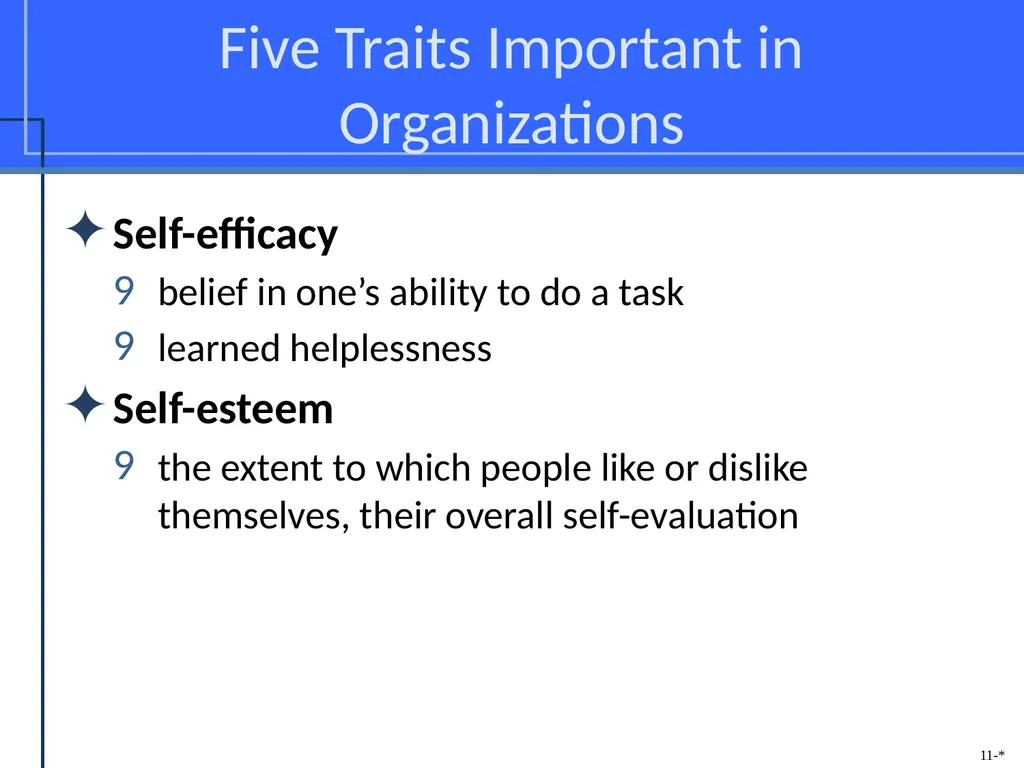
slide12. Five Traits Important in Organizations Self-efficacy
belief in one’s ability to do a task
learned helplessness
Self-esteem
the extent to which people like or dislike themselves, their overall self-evaluation<br>
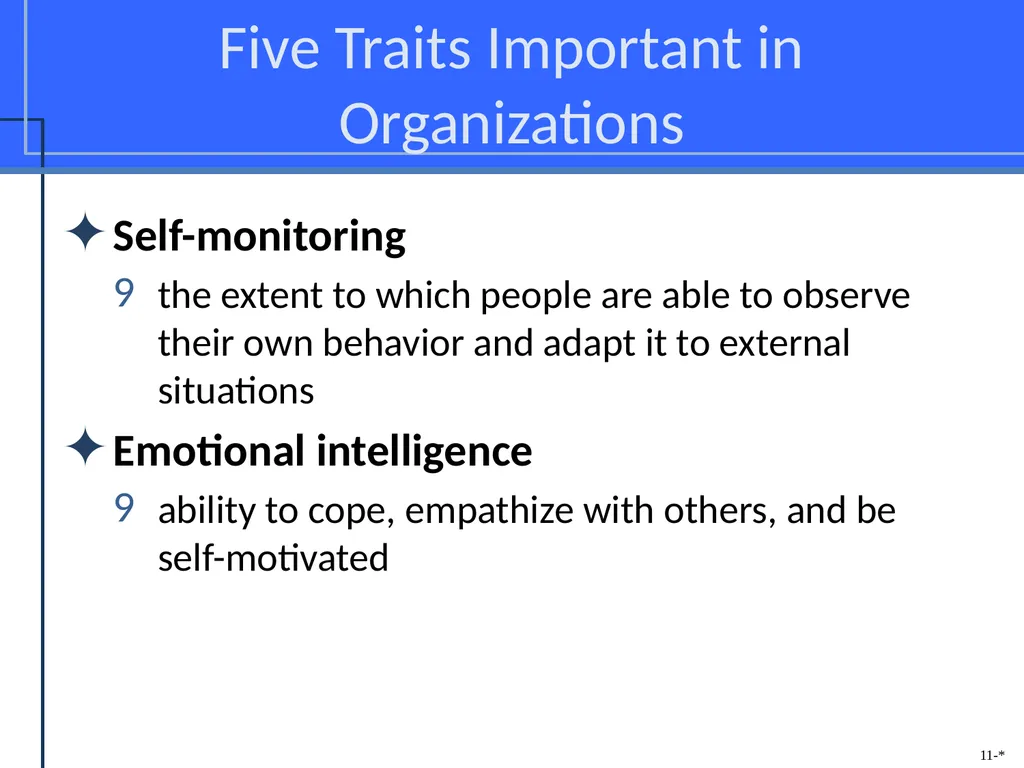
slide13. Five Traits Important in Organizations Self-monitoring
the extent to which people are able to observe their own behavior and adapt it to external situations
Emotional intelligence
ability to cope, empathize with others, and be self-motivated<br>
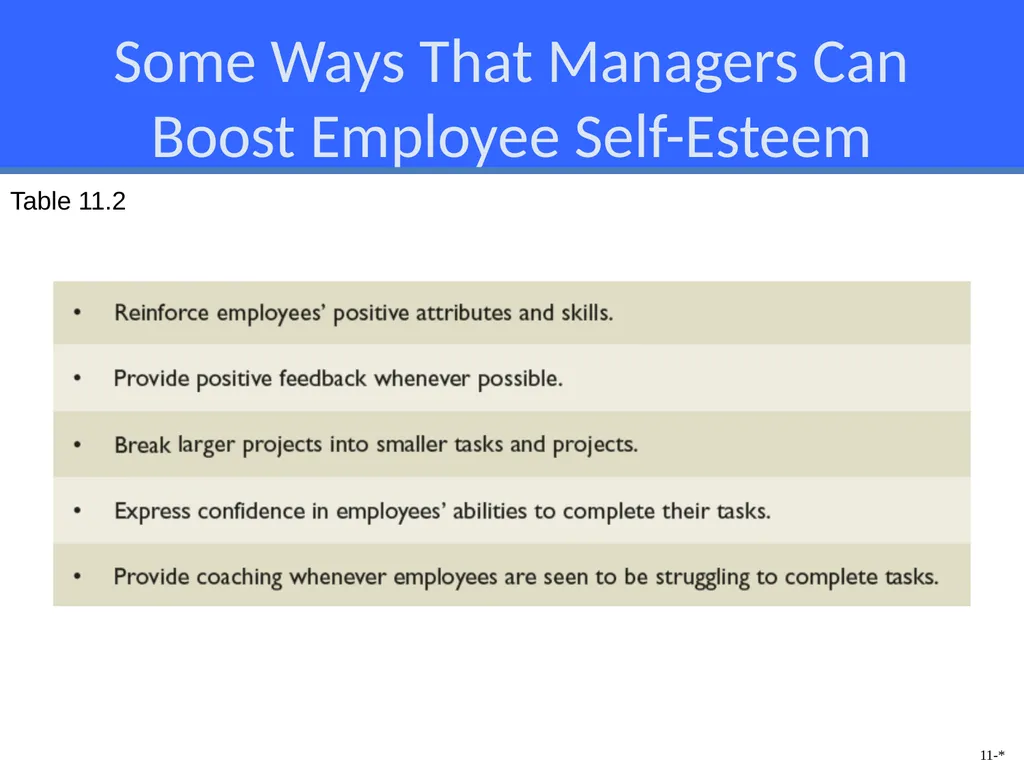
slide14. Some Ways That Managers Can Boost Employee Self-Esteem Table 11.2<br>
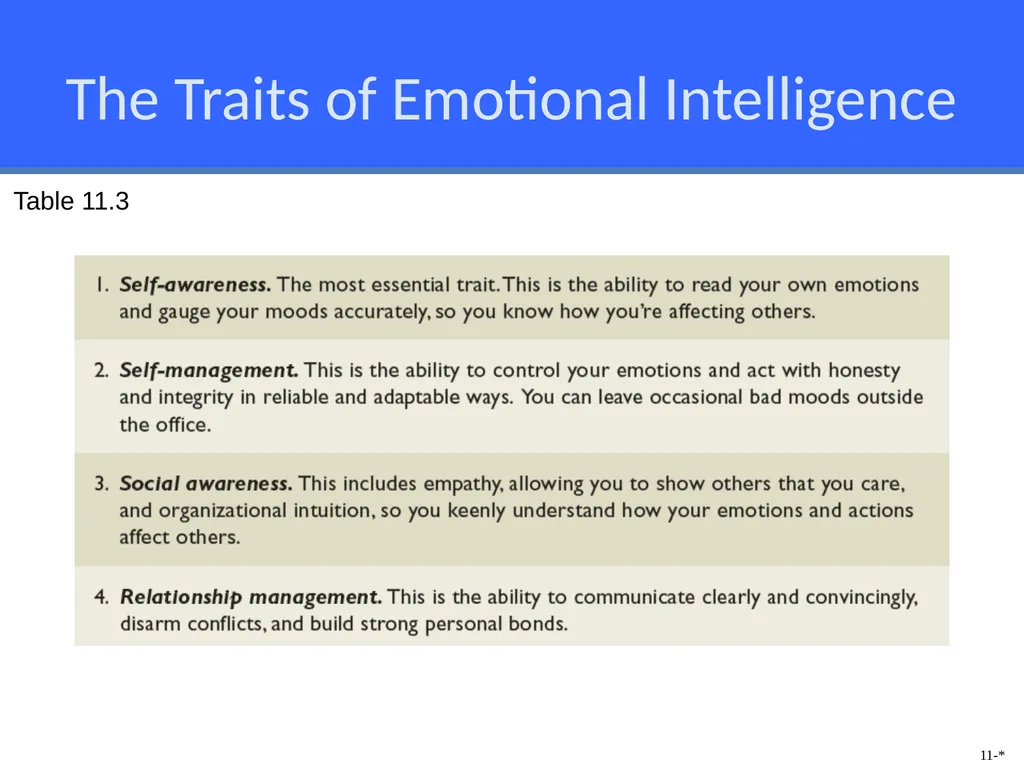
slide15. The Traits of Emotional Intelligence Table 11.3<br>
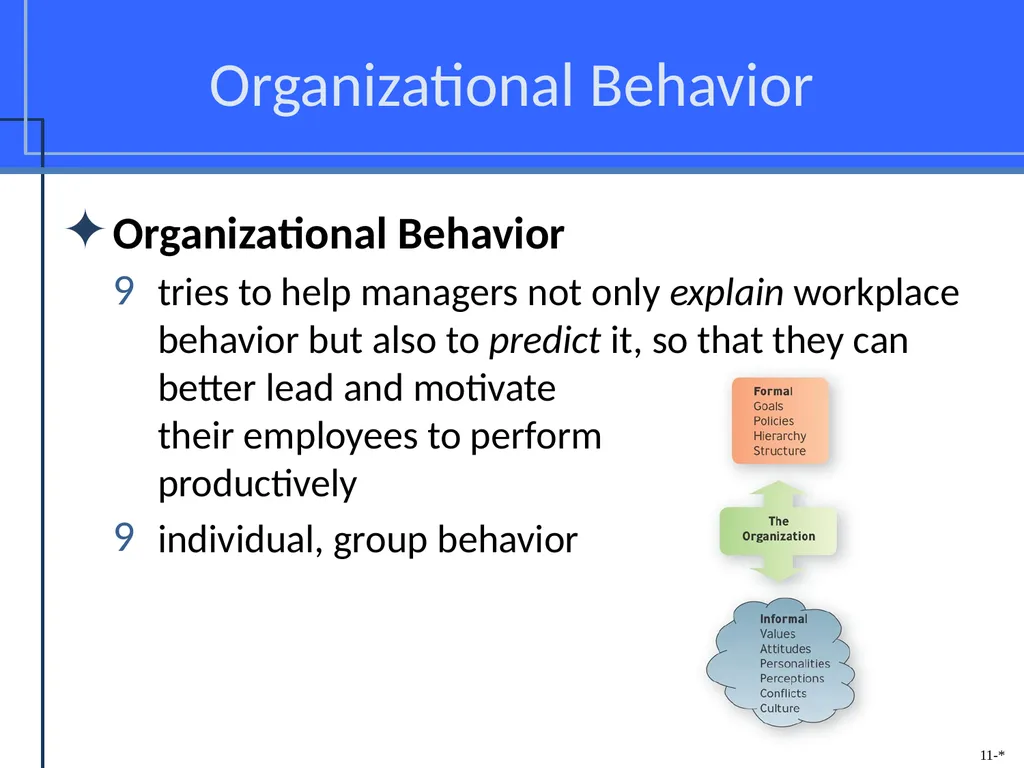
slide16. Organizational Behavior Organizational Behavior
tries to help managers not only explain workplace behavior but also to predict it, so that they can better lead and motivate their employees to perform productively
individual, group behavior<br>
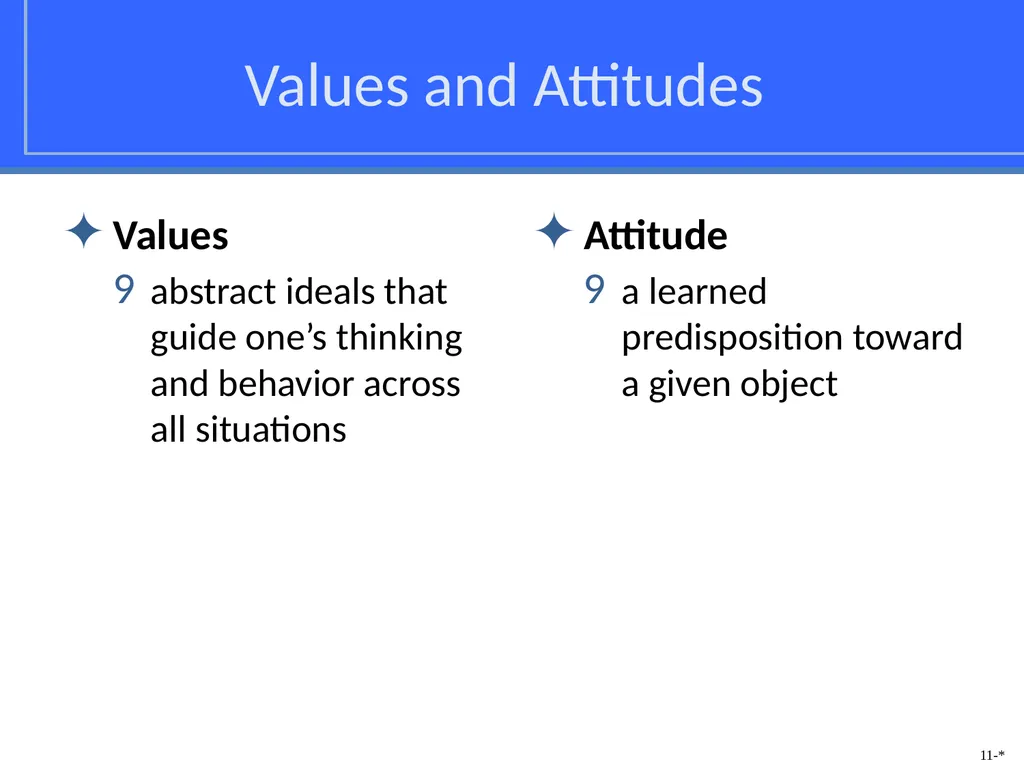
slide17. Values and Attitudes Values
abstract ideals that guide one’s thinking and behavior across all situations Attitude
a learned predisposition toward a given object<br>
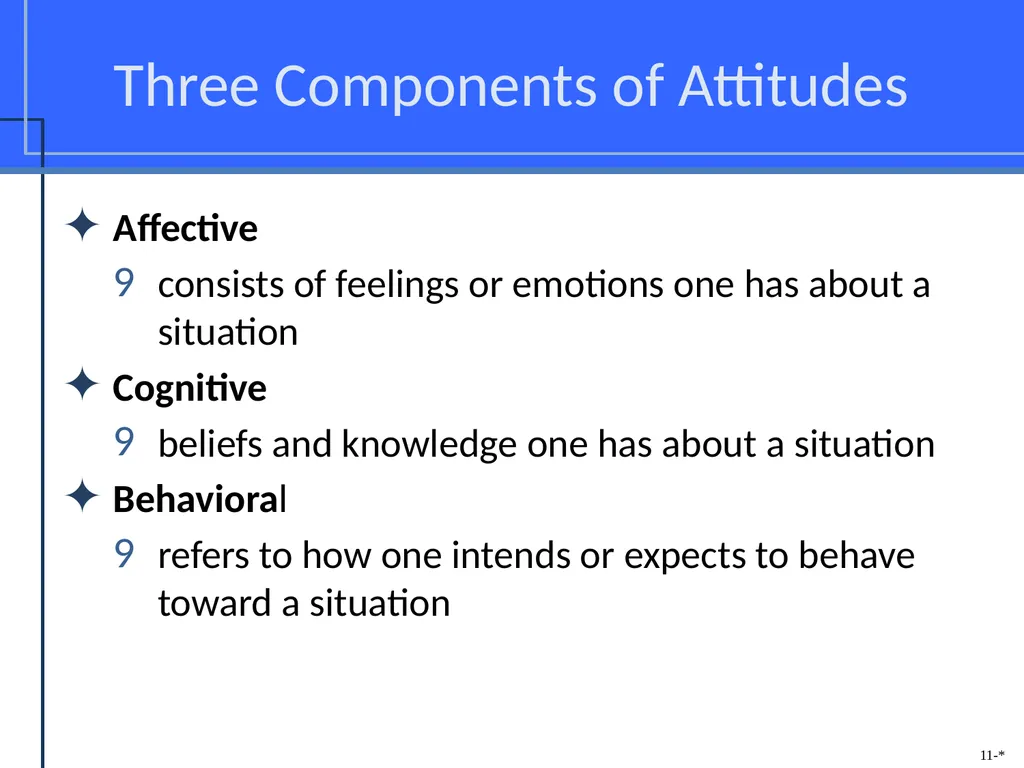
slide18. Three Components of Attitudes Affective
consists of feelings or emotions one has about a situation
Cognitive
beliefs and knowledge one has about a situation
Behavioral
refers to how one intends or expects to behave toward a situation<br>
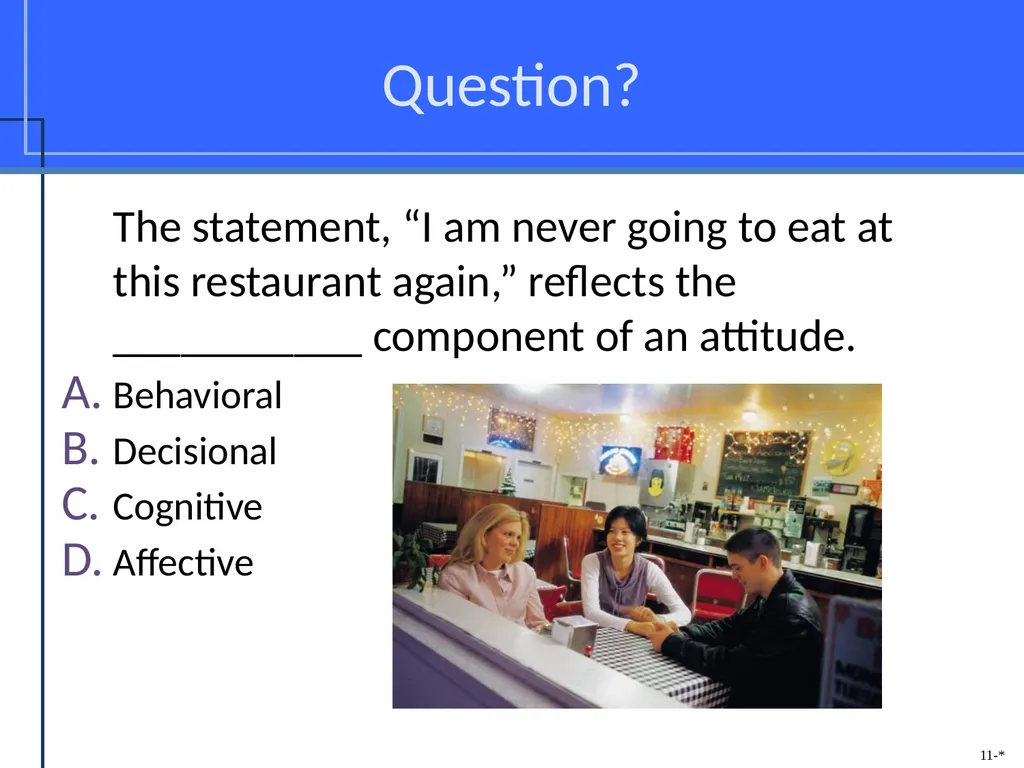
slide19. Question? The statement, “I am never going to eat at this restaurant again,” reflects the ___________ component of an attitude.
Behavioral
Decisional
Cognitive
Affective<br>
slide20. Attitudes Cognitive dissonance
the psychological discomfort a person experiences between his or her cognitive attitude and incompatible behavior
Importance, control, rewards<br>
slide21. Ways to Reduce Cognitive Dissonance Change attitude or behavior
Belittle importance of the inconsistent behavior
Find consonant elements that outweigh dissonant ones<br>
slide22. Example: Thinking Beyond Profit to Create Value for Society IBM celebrated its 100th anniversary in June 2011 by offering a global service day, with 300,000 IBM employees signing up to perform 2.6 million hours of service to the world
In West Africa Procter & Gamble set up Pampers mobile clinics<br>
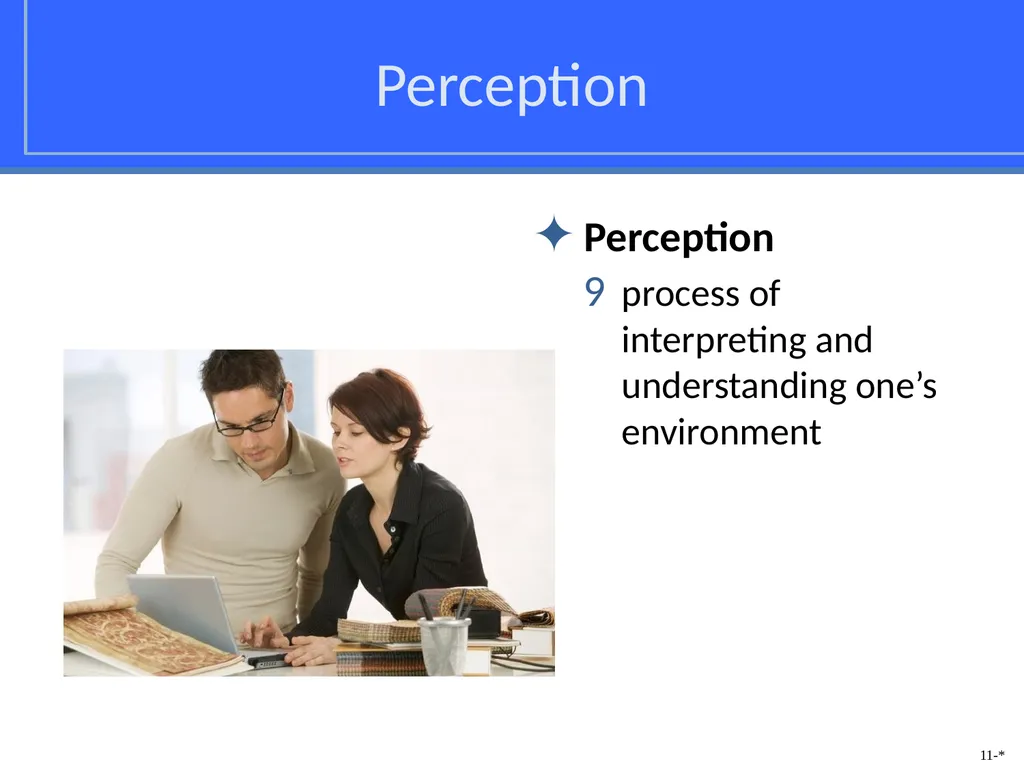
slide23. Perception Perception
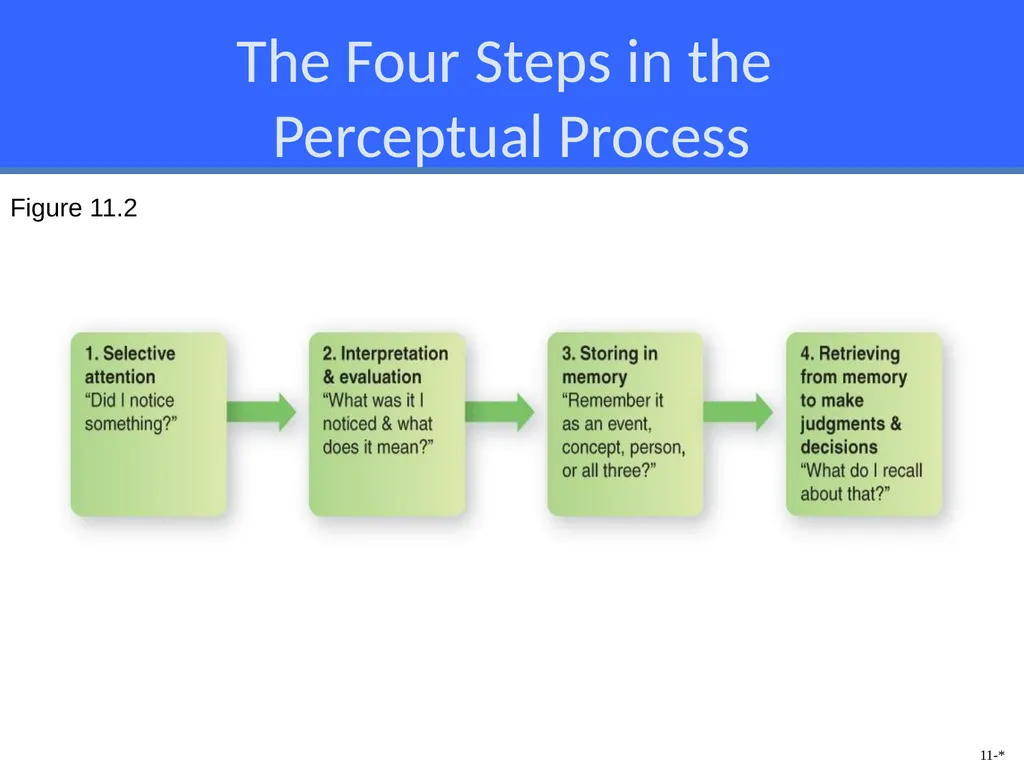
process of interpreting and understanding one’s environment<br>
slide24. The Four Steps in the Perceptual Process Figure 11.2<br>
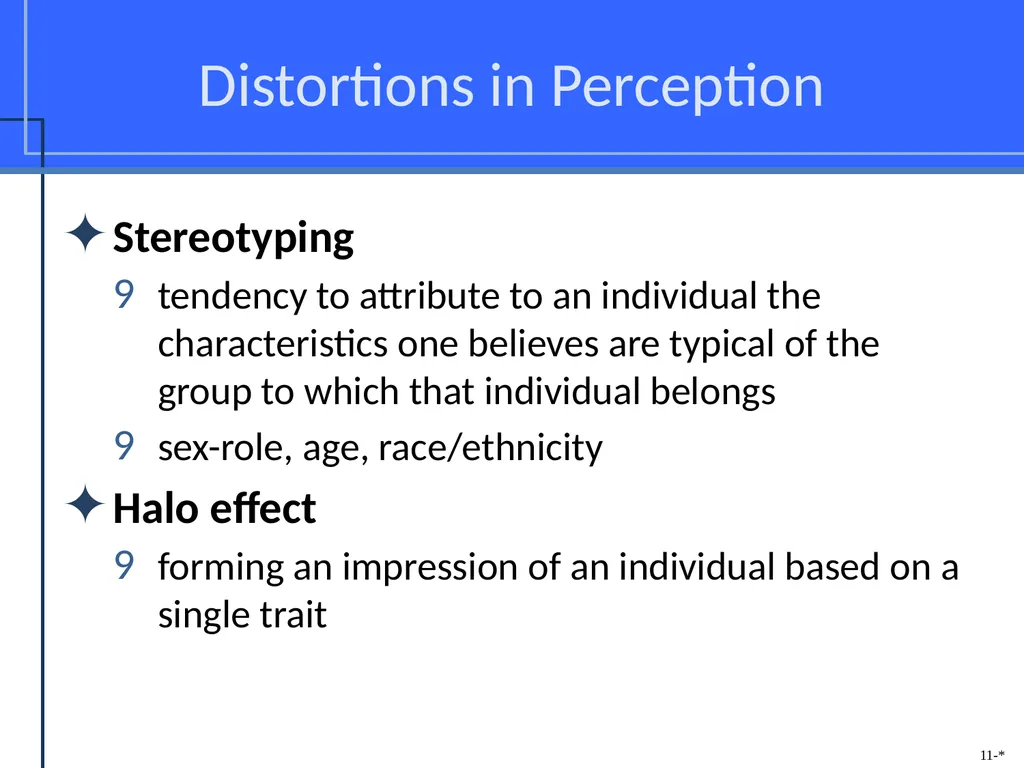
slide25. Distortions in Perception Stereotyping
tendency to attribute to an individual the characteristics one believes are typical of the group to which that individual belongs
sex-role, age, race/ethnicity
Halo effect
forming an impression of an individual based on a single trait<br>
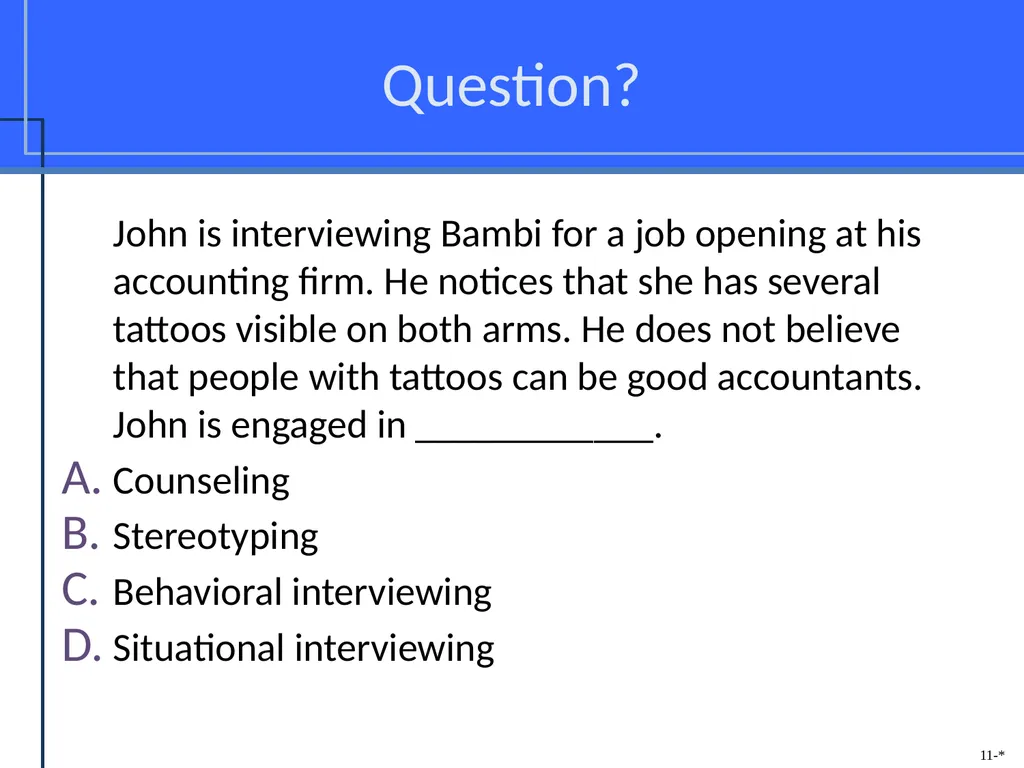
slide26. Question? John is interviewing Bambi for a job opening at his accounting firm. He notices that she has several tattoos visible on both arms. He does not believe that people with tattoos can be good accountants. John is engaged in ____________.
Counseling
Stereotyping
Behavioral interviewing
Situational interviewing<br>
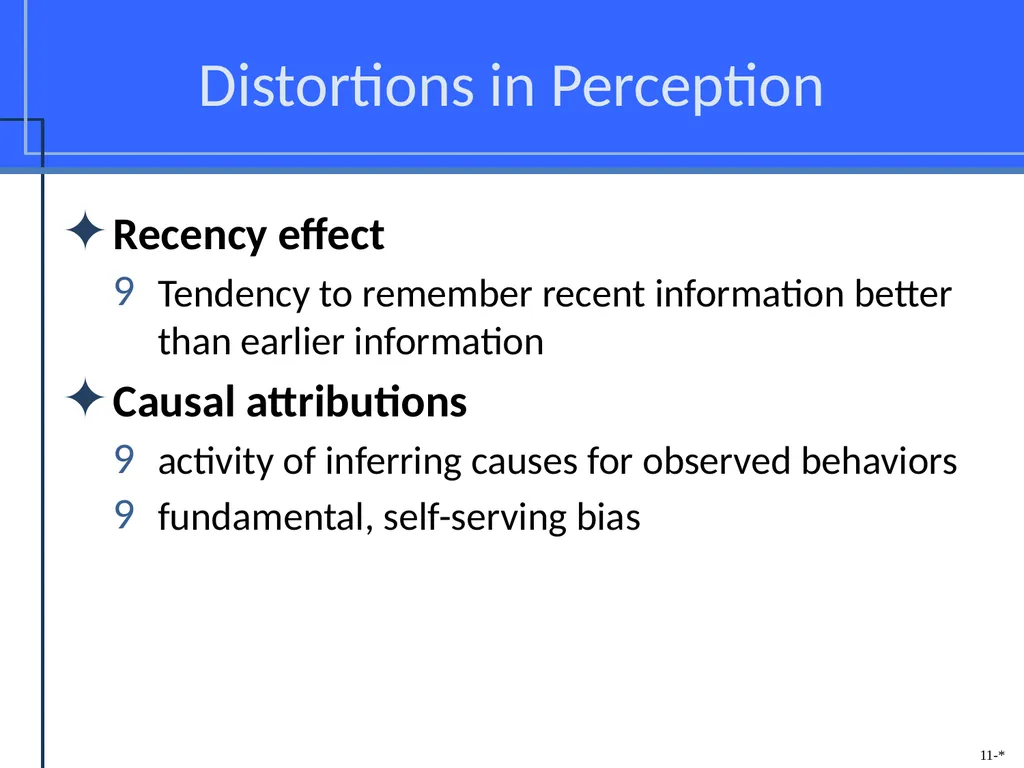
slide27. Distortions in Perception Recency effect
Tendency to remember recent information better than earlier information
Causal attributions
activity of inferring causes for observed behaviors
fundamental, self-serving bias<br>
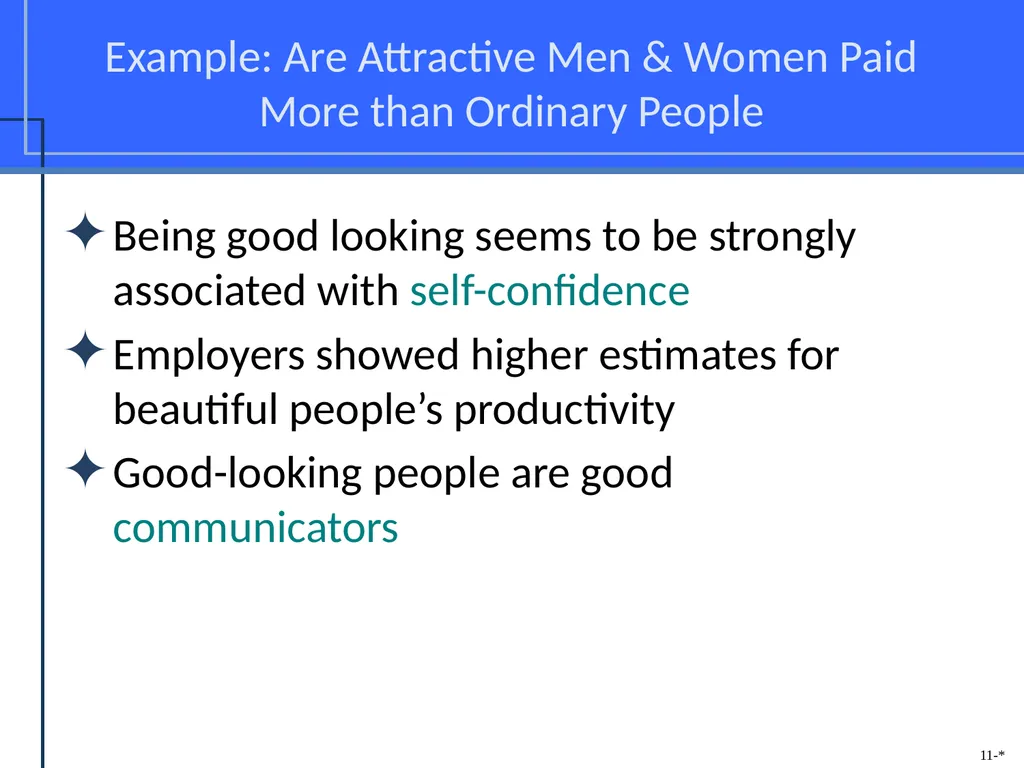
slide28. Example: Are Attractive Men & Women Paid More than Ordinary People Being good looking seems to be strongly associated with self-confidence
Employers showed higher estimates for beautiful people’s productivity
Good-looking people are good communicators<br>
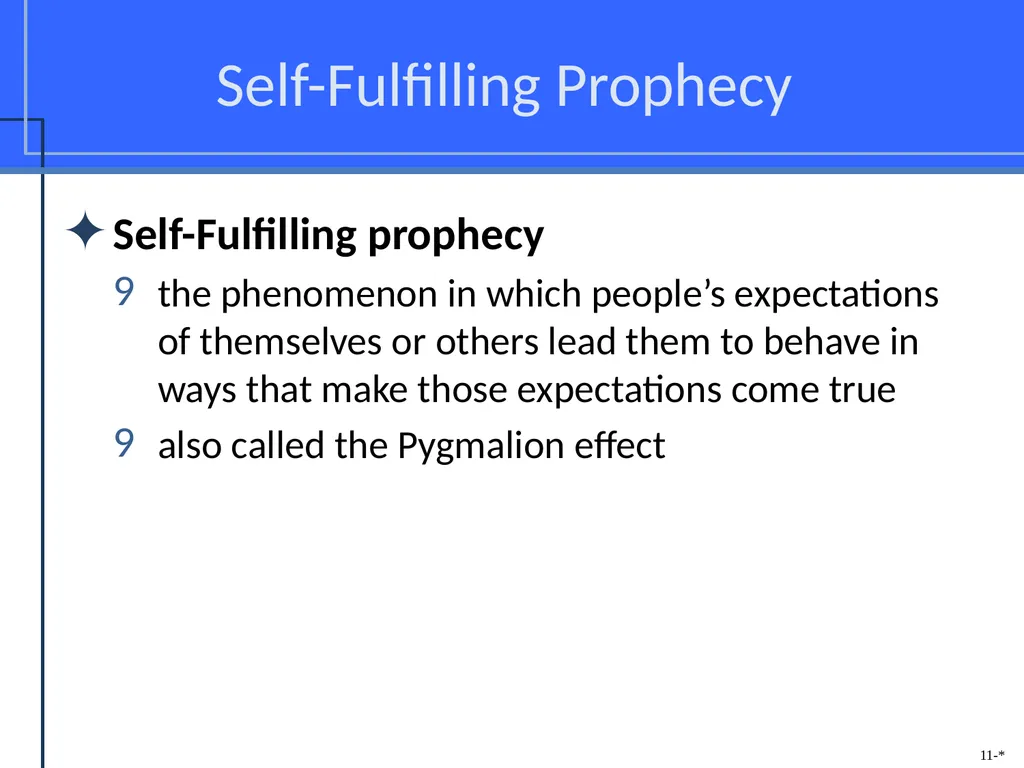
slide29. Self-Fulfilling Prophecy Self-Fulfilling prophecy
the phenomenon in which people’s expectations of themselves or others lead them to behave in ways that make those expectations come true
also called the Pygmalion effect<br>
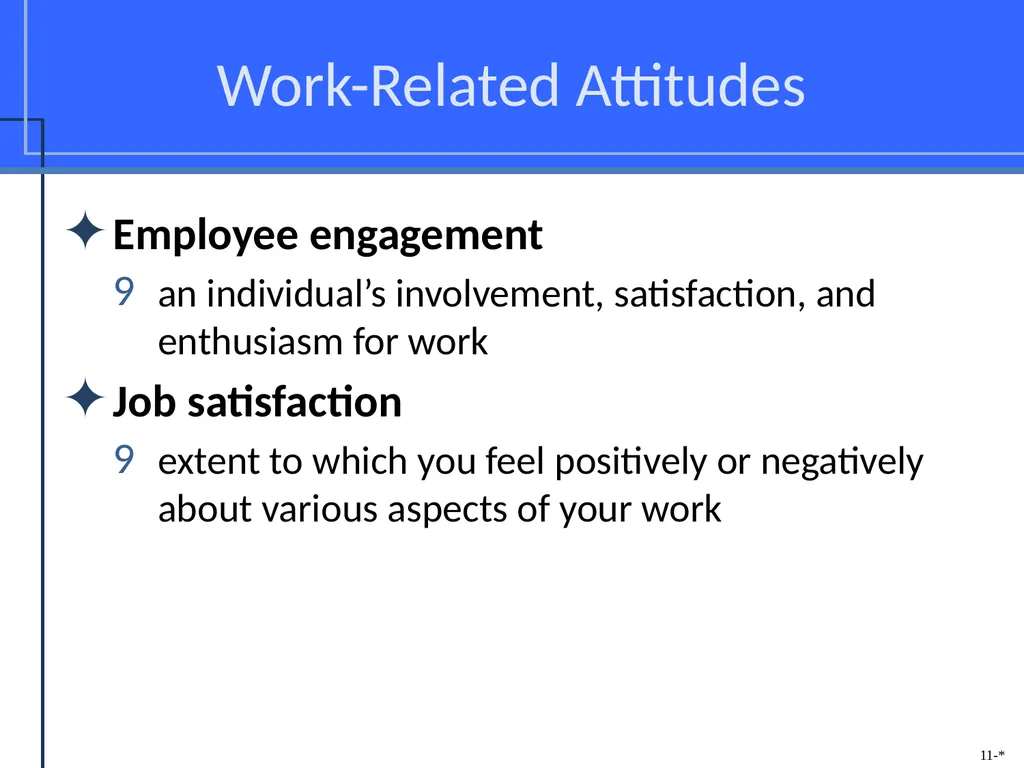
slide30. Work-Related Attitudes Employee engagement
an individual’s involvement, satisfaction, and enthusiasm for work
Job satisfaction
extent to which you feel positively or negatively about various aspects of your work<br>
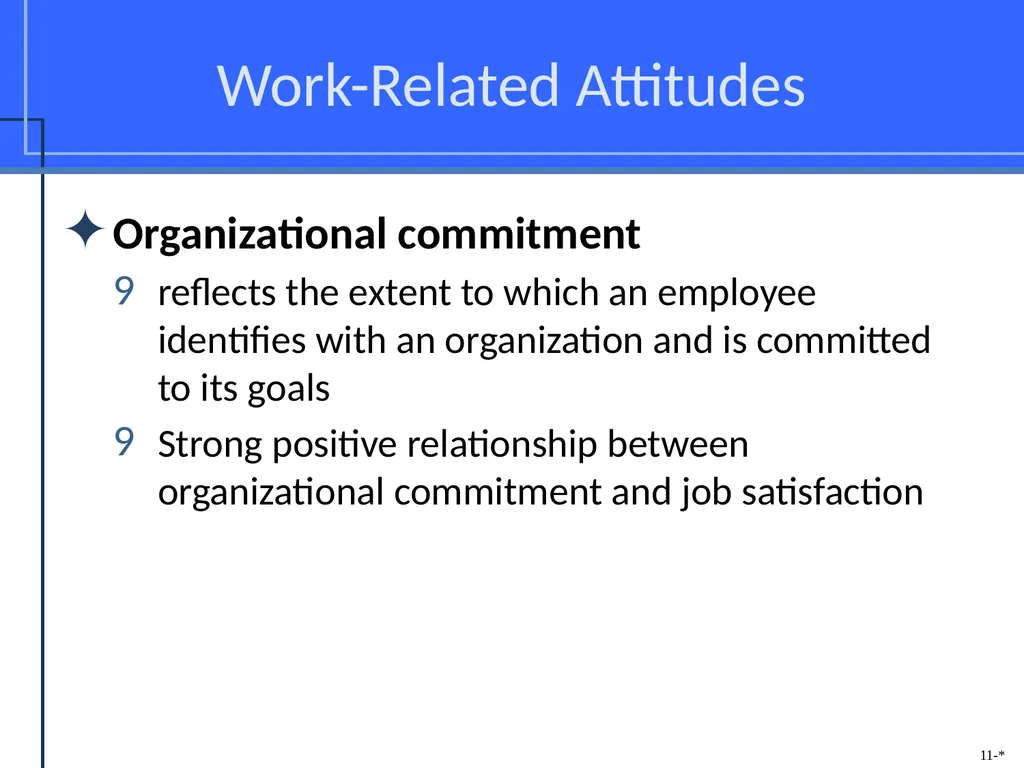
slide31. Work-Related Attitudes Organizational commitment
reflects the extent to which an employee identifies with an organization and is committed to its goals
Strong positive relationship between organizational commitment and job satisfaction<br>
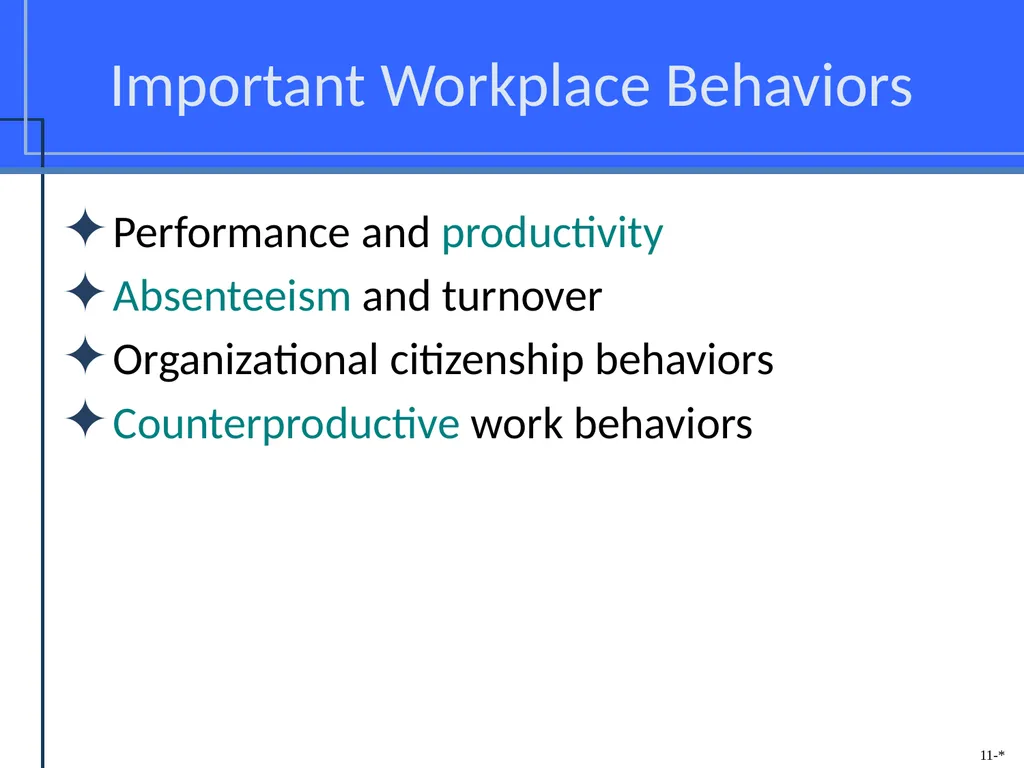
slide32. Important Workplace Behaviors Performance and productivity
Absenteeism and turnover
Organizational citizenship behaviors
Counterproductive work behaviors<br>
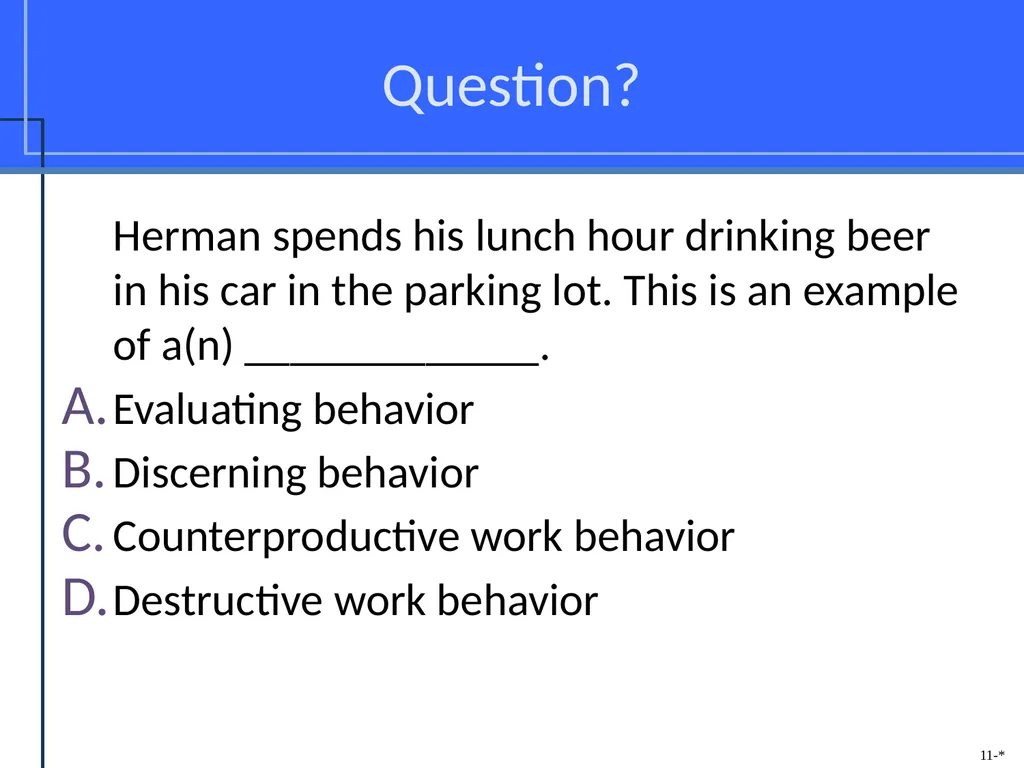
slide33. Question? Herman spends his lunch hour drinking beer in his car in the parking lot. This is an example of a(n) _____________.
Evaluating behavior
Discerning behavior
Counterproductive work behavior
Destructive work behavior<br>
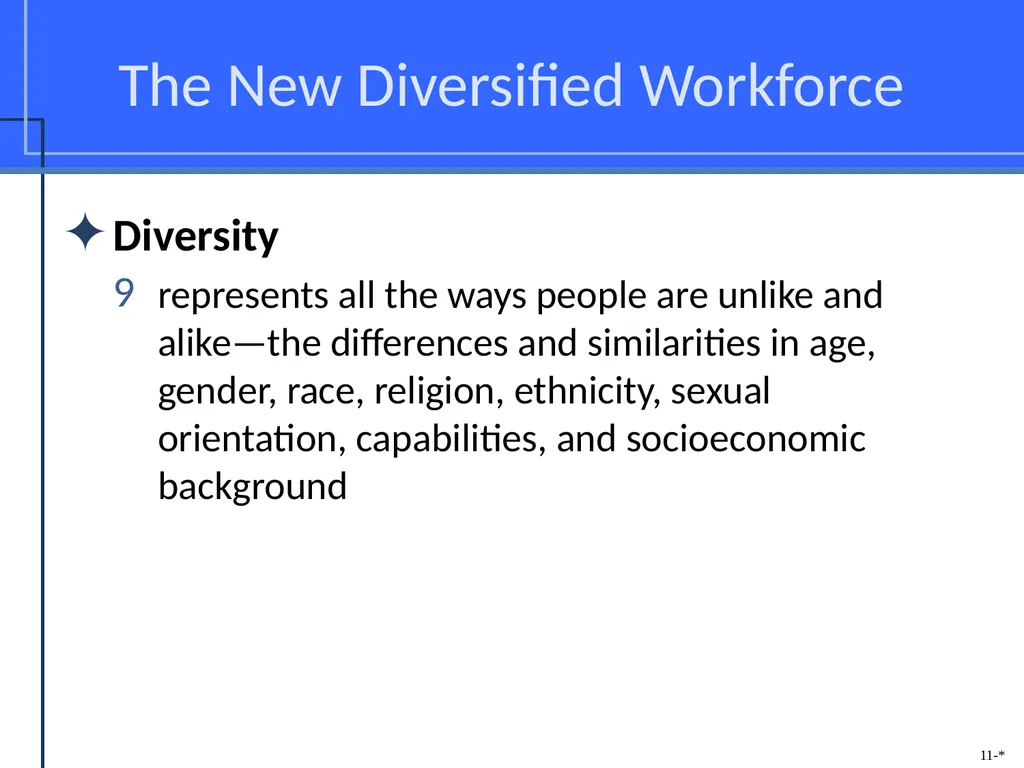
slide34. The New Diversified Workforce Diversity
represents all the ways people are unlike and alike—the differences and similarities in age, gender, race, religion, ethnicity, sexual orientation, capabilities, and socioeconomic background<br>
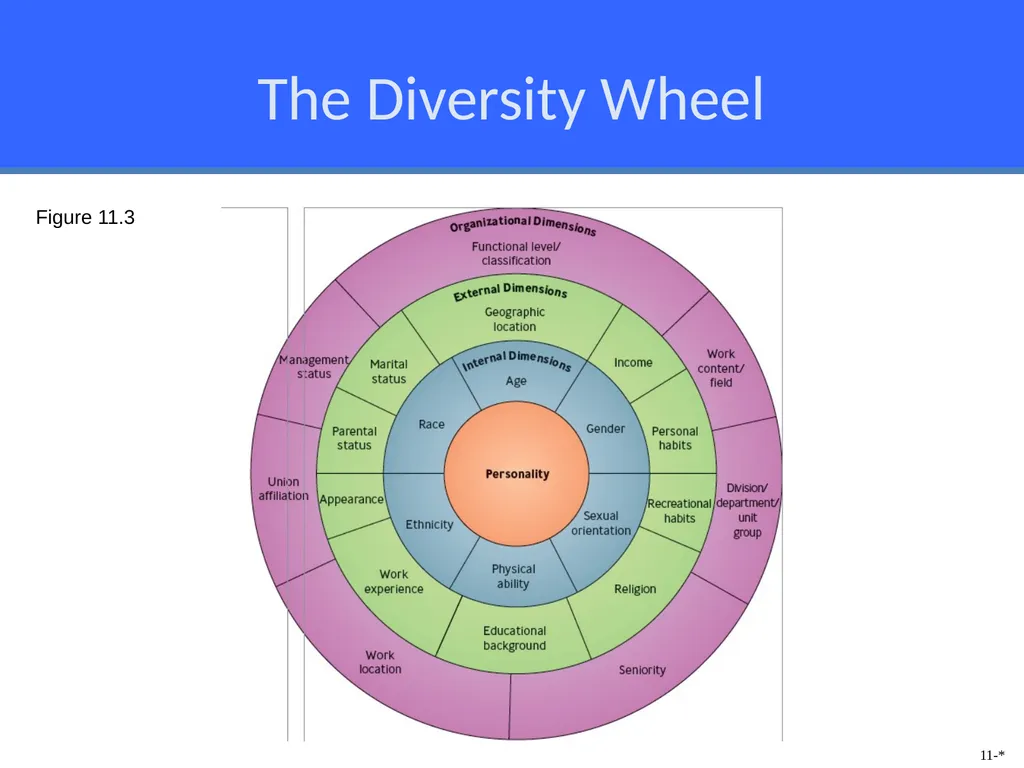
slide35. The Diversity Wheel Figure 11.3<br>
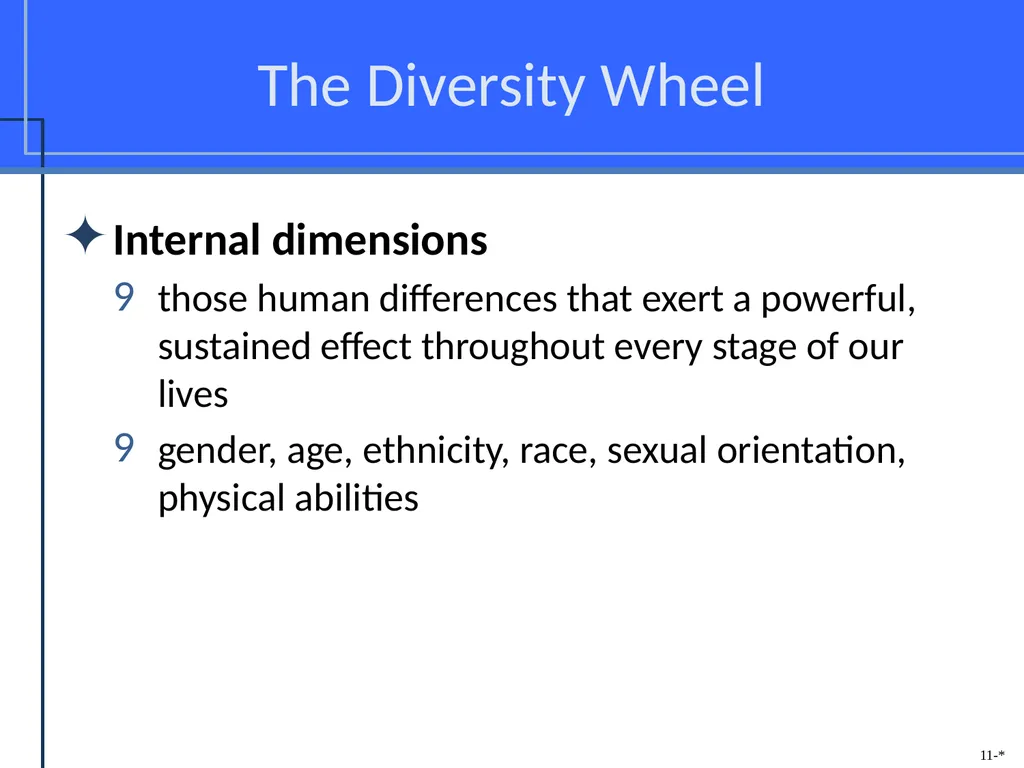
slide36. The Diversity Wheel Internal dimensions
those human differences that exert a powerful, sustained effect throughout every stage of our lives
gender, age, ethnicity, race, sexual orientation, physical abilities<br>
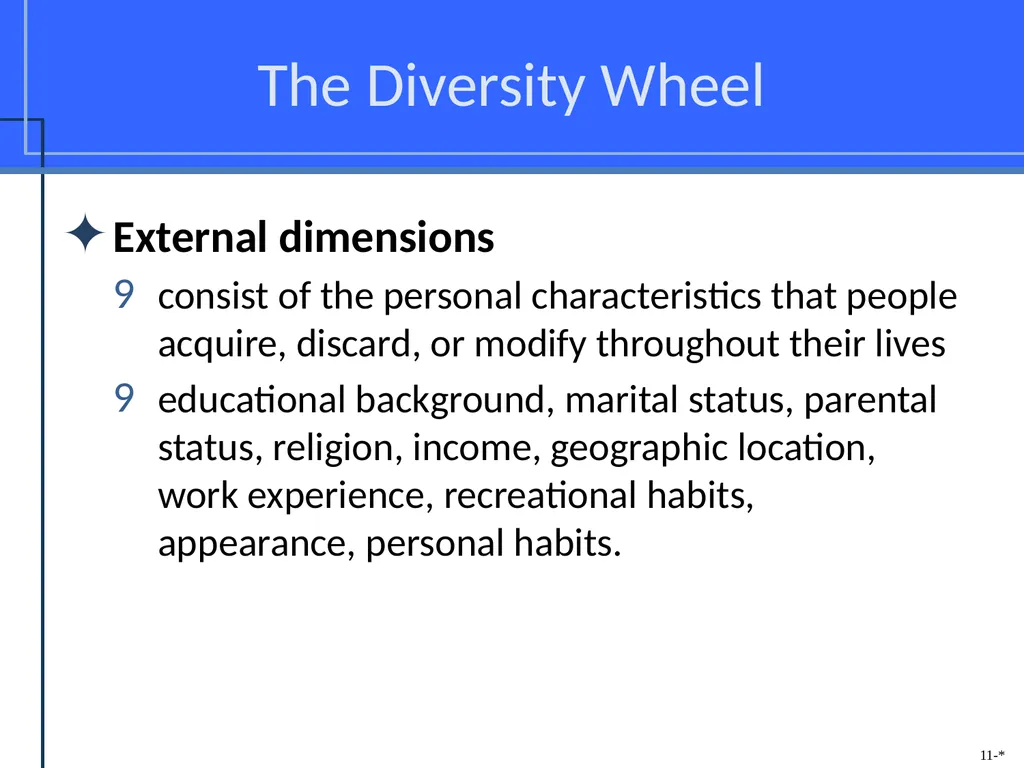
slide37. The Diversity Wheel External dimensions
consist of the personal characteristics that people acquire, discard, or modify throughout their lives
educational background, marital status, parental status, religion, income, geographic location, work experience, recreational habits, appearance, personal habits.<br>
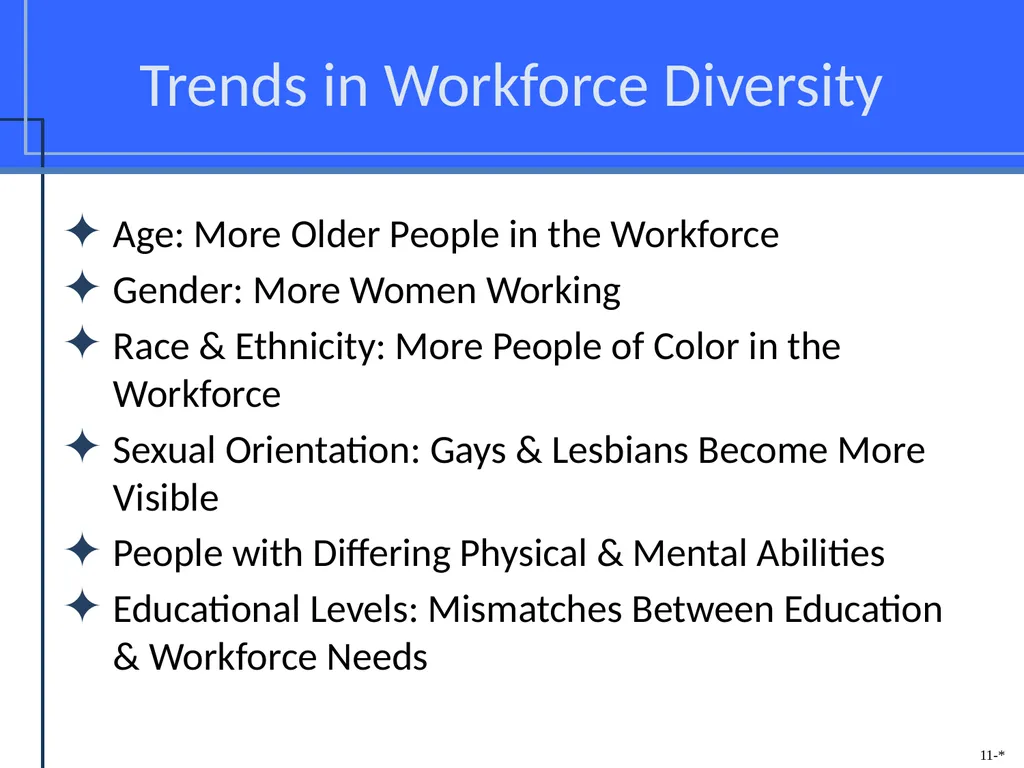
slide38. Trends in Workforce Diversity Age: More Older People in the Workforce
Gender: More Women Working
Race & Ethnicity: More People of Color in the Workforce
Sexual Orientation: Gays & Lesbians Become More Visible
People with Differing Physical & Mental Abilities
Educational Levels: Mismatches Between Education & Workforce Needs<br>
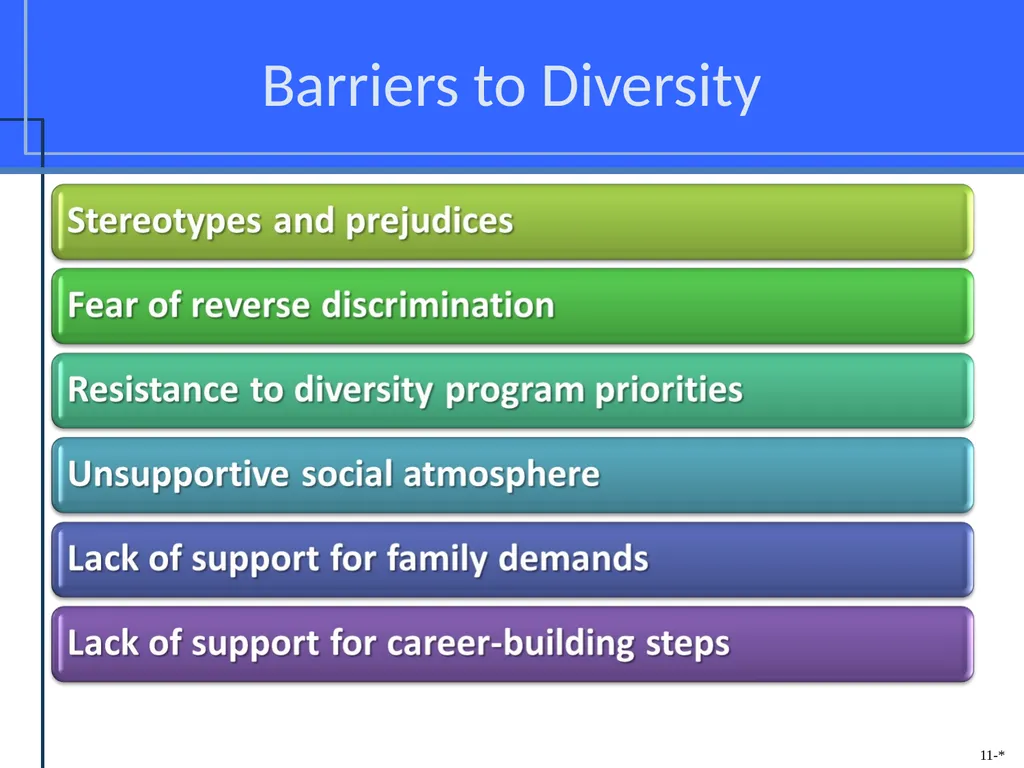
slide39. Barriers to Diversity<br>
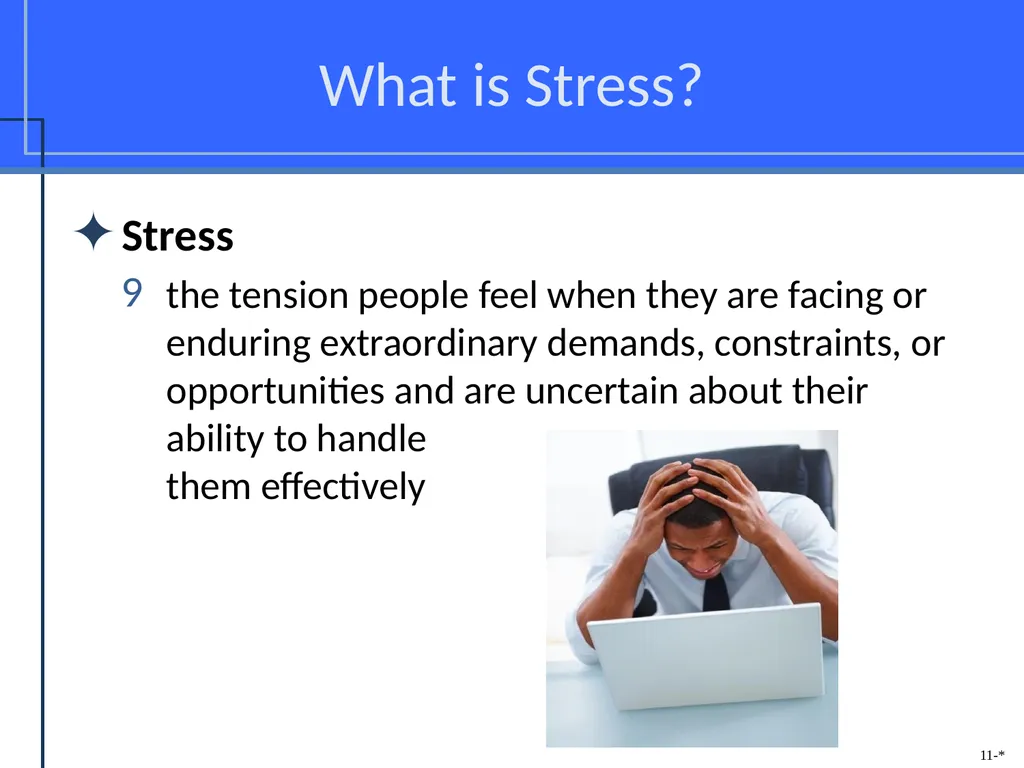
slide40. What is Stress? Stress
the tension people feel when they are facing or enduring extraordinary demands, constraints, or opportunities and are uncertain about their ability to handle them effectively<br>
slide41. Sources of Job-Related Stress Demands created by individual differences,
Individual task demands
Individual role demands
Group demands,
Organizational demands
Nonwork demands.<br>
slide42. Question? Your boss expects you to stay late to cover the workload of a coworker who is out sick, but you are supposed to help your mother with some work on her house tonight. You are suffering from:
Role overload
Role conflict
Role ambiguity
Burnout<br>
slide43. Symptom of Stress Physiological
backaches, headaches, sweaty palms, nausea
Psychological
boredom, irritability, nervousness, anger, anxiety, depression
Behavioral
sleeplessness, changes in eating habits, increased smoking/alcohol/drug abuse<br>
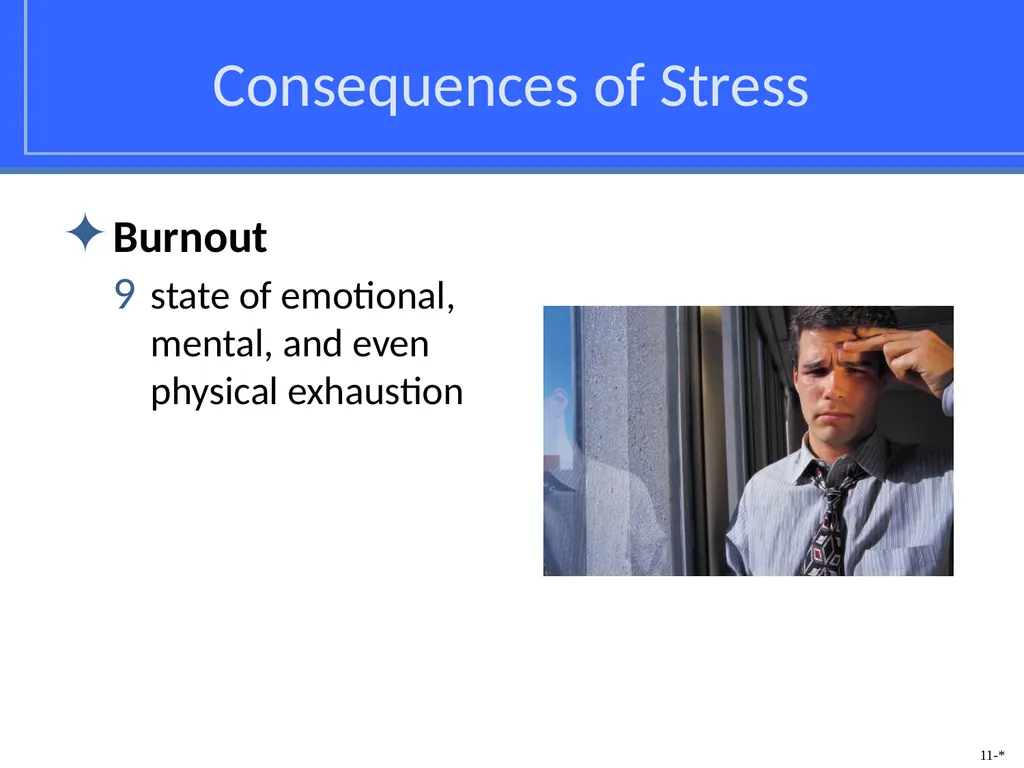
slide44. Consequences of Stress Burnout
state of emotional, mental, and even physical exhaustion<br>
slide45. Reducing Stressors in Organizations Roll out employee assistance programs
Recommend a holistic wellness approach
Create a supportive environment
Make jobs interesting
Make career counseling available<br>
Differences & Behavior:
Supervising People as People McGraw-Hill/Irwin Copyright © 2013 by The McGraw-Hill Companies, Inc. All rights reserved.<br>
slide2. Major Questions You Should Be Able to Answer 11.1 In the hiring process, do employers care about one’s personality and individual traits?
11.2 How do the hidden aspects of individuals-their values and attitudes-affect employee behavior?
11.3 What are the distortions of perception that can cloud one’s judgment?<br>
slide3. Major Questions You Should Be Able to Answer 11.4 Is it important for managers to pay attention to employee attitudes?
11.5 What trends in workplace diversity should managers be aware of?
11.6 What causes workplace stress, and how can it be reduced?<br>
slide4. Personality & Individual Behavior Personality
the stable psychological traits and behavioral attributes that give a person his or her identity<br>
slide5. The Big Five Personality Dimensions Extroversion
how outgoing, talkative, sociable, and assertive a person is
Agreeableness
how trusting, good-natured, cooperative, and soft-hearted one is
Conscientiousness
how dependable, responsible, achievement-oriented, and persistent one is<br>
slide6. The Big Five Personality Dimensions Emotional stability
how relaxed, secure, and unworried one is
Openness to experience
how intellectual, imaginative, curious, and broad-minded one is<br>
slide7. Question? Susan loves going to parties, where she talks to everyone there. Susan is probably high in:
Emotional stability
Conscientiousness
Extroversion
Agreeableness<br>
slide8. Do Personality Tests Work for the Workplace? Extroversion has been associated with success for managers and salespeople
Conscientiousness has been found to have the strongest positive correlation with job performance and training performance<br>
slide9. Cautions About Using Personality Testing in the Workplace Table 11.1<br>
slide10. Proactive Personality Proactive personality
someone who is more apt to take initiative and persevere to influence the environment<br>
slide11. Five Traits Important in Organizations Locus of control
indicates how much people believe they control their fate through their own efforts
internal, external
Expect different degrees of structure and compliance for each type
Employ different reward systems for each type<br>
slide12. Five Traits Important in Organizations Self-efficacy
belief in one’s ability to do a task
learned helplessness
Self-esteem
the extent to which people like or dislike themselves, their overall self-evaluation<br>
slide13. Five Traits Important in Organizations Self-monitoring
the extent to which people are able to observe their own behavior and adapt it to external situations
Emotional intelligence
ability to cope, empathize with others, and be self-motivated<br>
slide14. Some Ways That Managers Can Boost Employee Self-Esteem Table 11.2<br>
slide15. The Traits of Emotional Intelligence Table 11.3<br>
slide16. Organizational Behavior Organizational Behavior
tries to help managers not only explain workplace behavior but also to predict it, so that they can better lead and motivate their employees to perform productively
individual, group behavior<br>
slide17. Values and Attitudes Values
abstract ideals that guide one’s thinking and behavior across all situations Attitude
a learned predisposition toward a given object<br>
slide18. Three Components of Attitudes Affective
consists of feelings or emotions one has about a situation
Cognitive
beliefs and knowledge one has about a situation
Behavioral
refers to how one intends or expects to behave toward a situation<br>
slide19. Question? The statement, “I am never going to eat at this restaurant again,” reflects the ___________ component of an attitude.
Behavioral
Decisional
Cognitive
Affective<br>
slide20. Attitudes Cognitive dissonance
the psychological discomfort a person experiences between his or her cognitive attitude and incompatible behavior
Importance, control, rewards<br>
slide21. Ways to Reduce Cognitive Dissonance Change attitude or behavior
Belittle importance of the inconsistent behavior
Find consonant elements that outweigh dissonant ones<br>
slide22. Example: Thinking Beyond Profit to Create Value for Society IBM celebrated its 100th anniversary in June 2011 by offering a global service day, with 300,000 IBM employees signing up to perform 2.6 million hours of service to the world
In West Africa Procter & Gamble set up Pampers mobile clinics<br>
slide23. Perception Perception
process of interpreting and understanding one’s environment<br>
slide24. The Four Steps in the Perceptual Process Figure 11.2<br>
slide25. Distortions in Perception Stereotyping
tendency to attribute to an individual the characteristics one believes are typical of the group to which that individual belongs
sex-role, age, race/ethnicity
Halo effect
forming an impression of an individual based on a single trait<br>
slide26. Question? John is interviewing Bambi for a job opening at his accounting firm. He notices that she has several tattoos visible on both arms. He does not believe that people with tattoos can be good accountants. John is engaged in ____________.
Counseling
Stereotyping
Behavioral interviewing
Situational interviewing<br>
slide27. Distortions in Perception Recency effect
Tendency to remember recent information better than earlier information
Causal attributions
activity of inferring causes for observed behaviors
fundamental, self-serving bias<br>
slide28. Example: Are Attractive Men & Women Paid More than Ordinary People Being good looking seems to be strongly associated with self-confidence
Employers showed higher estimates for beautiful people’s productivity
Good-looking people are good communicators<br>
slide29. Self-Fulfilling Prophecy Self-Fulfilling prophecy
the phenomenon in which people’s expectations of themselves or others lead them to behave in ways that make those expectations come true
also called the Pygmalion effect<br>
slide30. Work-Related Attitudes Employee engagement
an individual’s involvement, satisfaction, and enthusiasm for work
Job satisfaction
extent to which you feel positively or negatively about various aspects of your work<br>
slide31. Work-Related Attitudes Organizational commitment
reflects the extent to which an employee identifies with an organization and is committed to its goals
Strong positive relationship between organizational commitment and job satisfaction<br>
slide32. Important Workplace Behaviors Performance and productivity
Absenteeism and turnover
Organizational citizenship behaviors
Counterproductive work behaviors<br>
slide33. Question? Herman spends his lunch hour drinking beer in his car in the parking lot. This is an example of a(n) _____________.
Evaluating behavior
Discerning behavior
Counterproductive work behavior
Destructive work behavior<br>
slide34. The New Diversified Workforce Diversity
represents all the ways people are unlike and alike—the differences and similarities in age, gender, race, religion, ethnicity, sexual orientation, capabilities, and socioeconomic background<br>
slide35. The Diversity Wheel Figure 11.3<br>
slide36. The Diversity Wheel Internal dimensions
those human differences that exert a powerful, sustained effect throughout every stage of our lives
gender, age, ethnicity, race, sexual orientation, physical abilities<br>
slide37. The Diversity Wheel External dimensions
consist of the personal characteristics that people acquire, discard, or modify throughout their lives
educational background, marital status, parental status, religion, income, geographic location, work experience, recreational habits, appearance, personal habits.<br>
slide38. Trends in Workforce Diversity Age: More Older People in the Workforce
Gender: More Women Working
Race & Ethnicity: More People of Color in the Workforce
Sexual Orientation: Gays & Lesbians Become More Visible
People with Differing Physical & Mental Abilities
Educational Levels: Mismatches Between Education & Workforce Needs<br>
slide39. Barriers to Diversity<br>
slide40. What is Stress? Stress
the tension people feel when they are facing or enduring extraordinary demands, constraints, or opportunities and are uncertain about their ability to handle them effectively<br>
slide41. Sources of Job-Related Stress Demands created by individual differences,
Individual task demands
Individual role demands
Group demands,
Organizational demands
Nonwork demands.<br>
slide42. Question? Your boss expects you to stay late to cover the workload of a coworker who is out sick, but you are supposed to help your mother with some work on her house tonight. You are suffering from:
Role overload
Role conflict
Role ambiguity
Burnout<br>
slide43. Symptom of Stress Physiological
backaches, headaches, sweaty palms, nausea
Psychological
boredom, irritability, nervousness, anger, anxiety, depression
Behavioral
sleeplessness, changes in eating habits, increased smoking/alcohol/drug abuse<br>
slide44. Consequences of Stress Burnout
state of emotional, mental, and even physical exhaustion<br>
slide45. Reducing Stressors in Organizations Roll out employee assistance programs
Recommend a holistic wellness approach
Create a supportive environment
Make jobs interesting
Make career counseling available<br>