
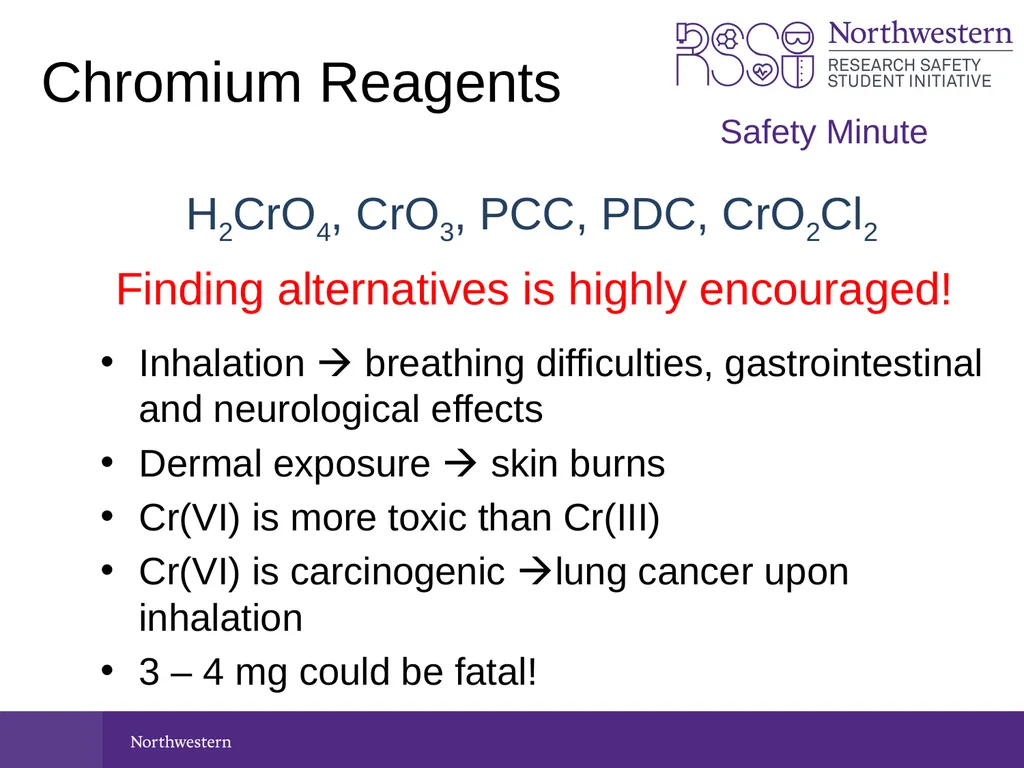
Chromium Reagents H2CrO4, CrO3, PCC, PDC, CrO2Cl2

Chromium Reagents H2CrO4, CrO3, PCC, PDC, CrO2Cl2
1 / 1
Chromium Reagents H2CrO4, CrO3, PCC, PDC, CrO2Cl2 - slide 1 of 3 Chromium Reagents H2CrO4, CrO3, PCC, PDC, CrO2Cl2 - slide 2 of 3 Chromium Reagents H2CrO4, CrO3, PCC, PDC, CrO2Cl2 - slide 3 of 3
Chromium Reagents H2CrO4, CrO3, PCC, PDC, CrO2Cl2 Finding alternatives is highly encouraged! Inhalation breathing difficulties, gastrointestinal and neurological effects Dermal exposure skin burns Cr(VI) is more toxic than Cr(III)

Related Topics

Download this presentation From Below

"Chromium Reagents H2CrO4, CrO3, PCC, PDC, CrO2Cl2" is the property of its rightful owner. Permission is granted to download and print the materials on this website for personal, non-commercial use only, and to display it on your personal computer provided you do not modify the materials and that you retain all copyright notices contained in the materials. By downloading content from our website, you accept the terms of this agreement.

Presentation Transcript

01
Chromium Reagents H2CrO4, CrO3, PCC, PDC, CrO2Cl2 Finding alternatives is highly encouraged! Inhalation  breathing difficulties, gastrointestinal and neurological effects
Dermal exposure  skin burns
Cr(VI) is more toxic than Cr(III)
Cr(VI) is carcinogenic lung cancer upon inhalation
3 – 4 mg could be fatal!<br>
02
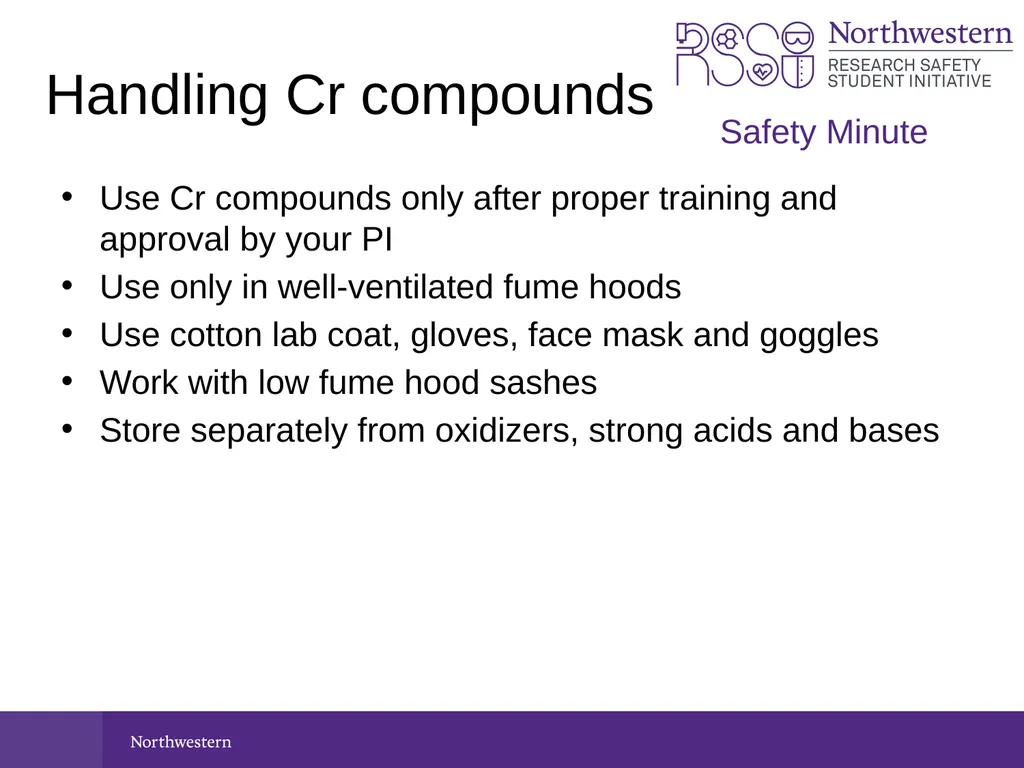
Handling Cr compounds Use Cr compounds only after proper training and approval by your PI
Use only in well-ventilated fume hoods
Use cotton lab coat, gloves, face mask and goggles
Work with low fume hood sashes
Store separately from oxidizers, strong acids and bases<br>
03
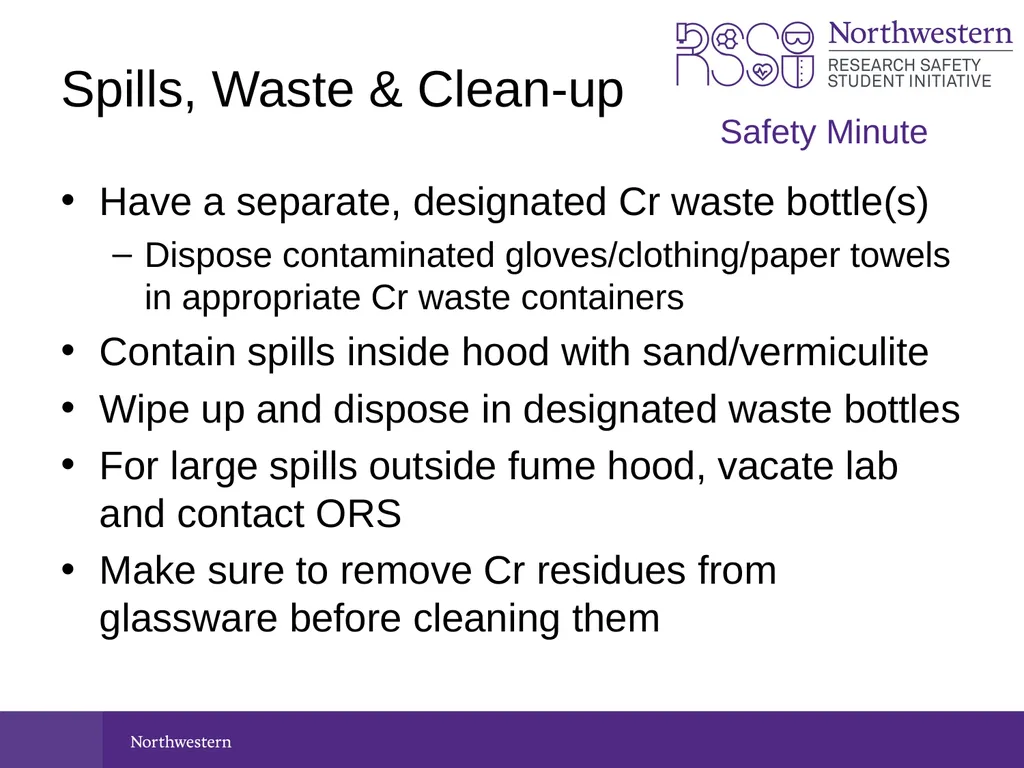
Spills, Waste & Clean-up Have a separate, designated Cr waste bottle(s)
Dispose contaminated gloves/clothing/paper towels in appropriate Cr waste containers
Contain spills inside hood with sand/vermiculite
Wipe up and dispose in designated waste bottles
For large spills outside fume hood, vacate lab and contact ORS
Make sure to remove Cr residues from glassware before cleaning them<br>