Circuits An electrical circuit will mainly change electrical energy into other forms of energy, usually heat, light or movement. An electronic circuit can process information and make a decision. In a washing machine the electrical circuit
"Circuits An electrical circuit will mainly change" is the property of its rightful owner. Permission is granted to
download and print the materials on this website for personal, non-commercial use only, and to display it
on your personal computer provided you do not modify the materials and that you retain all copyright
notices contained in the materials. By downloading content from our website, you accept the terms of this
agreement.
Presentation Transcript
01
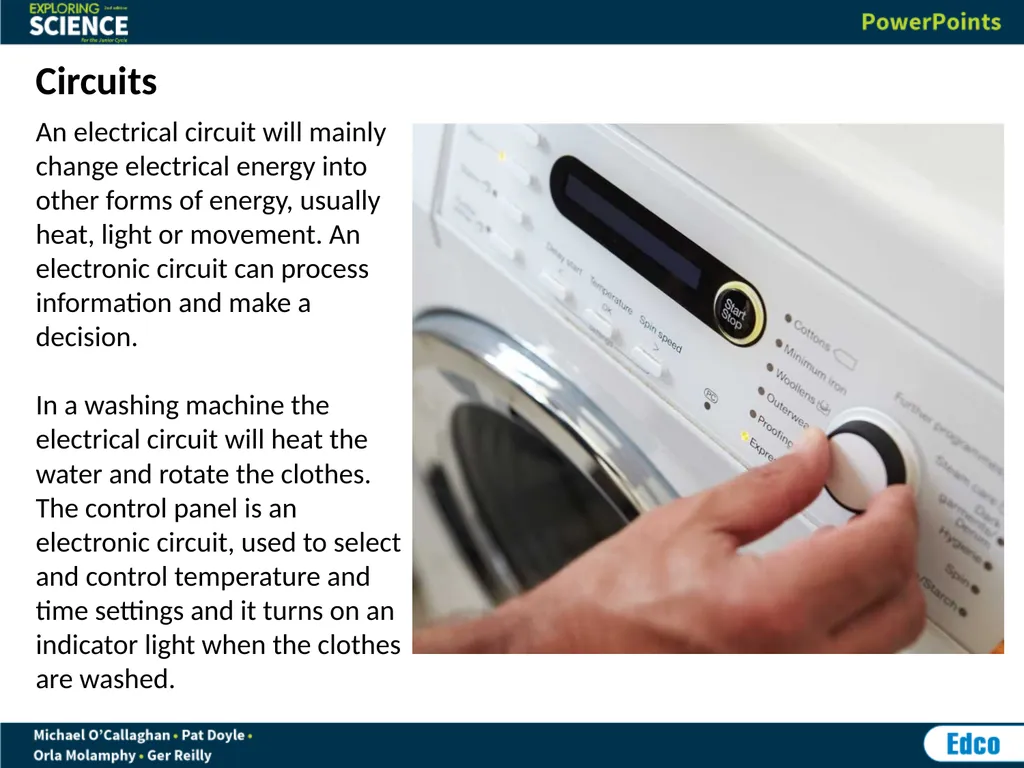
Circuits An electrical circuit will mainly change electrical energy into other forms of energy, usually heat, light or movement. An electronic circuit can process information and make a decision.
In a washing machine the electrical circuit will heat the water and rotate the clothes. The control panel is an electronic circuit, used to select and control temperature and time settings and it turns on an indicator light when the clothes are washed.<br>
02
What electronic components will we use? You will remember that we listed the devices that are used in electrical circuits in chapter 30. The list comprised: battery, filament bulb, switch, resistor, variable resistor, ammeter, voltmeter and ohmmeter. Here, we will look at some electronic devices, namely:
Buzzer
Diode
Light-emitting diode (LED)
Light-dependent resistor (LDR).<br>
03
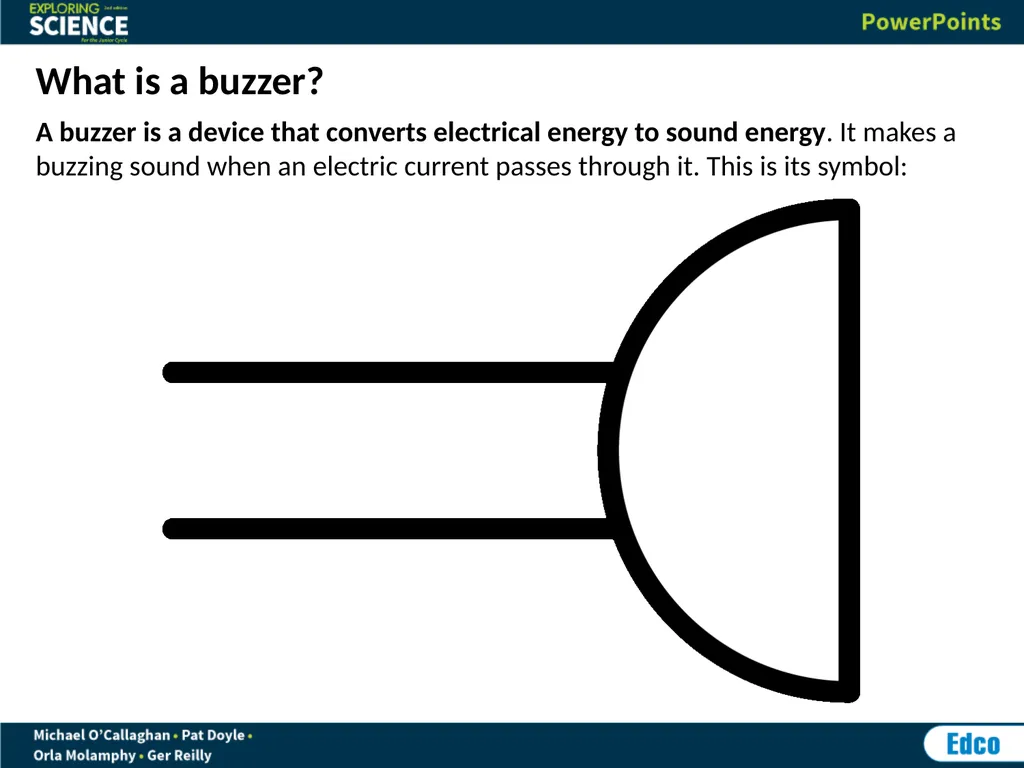
What is a buzzer? A buzzer is a device that converts electrical energy to sound energy. It makes a buzzing sound when an electric current passes through it. This is its symbol:<br>
04
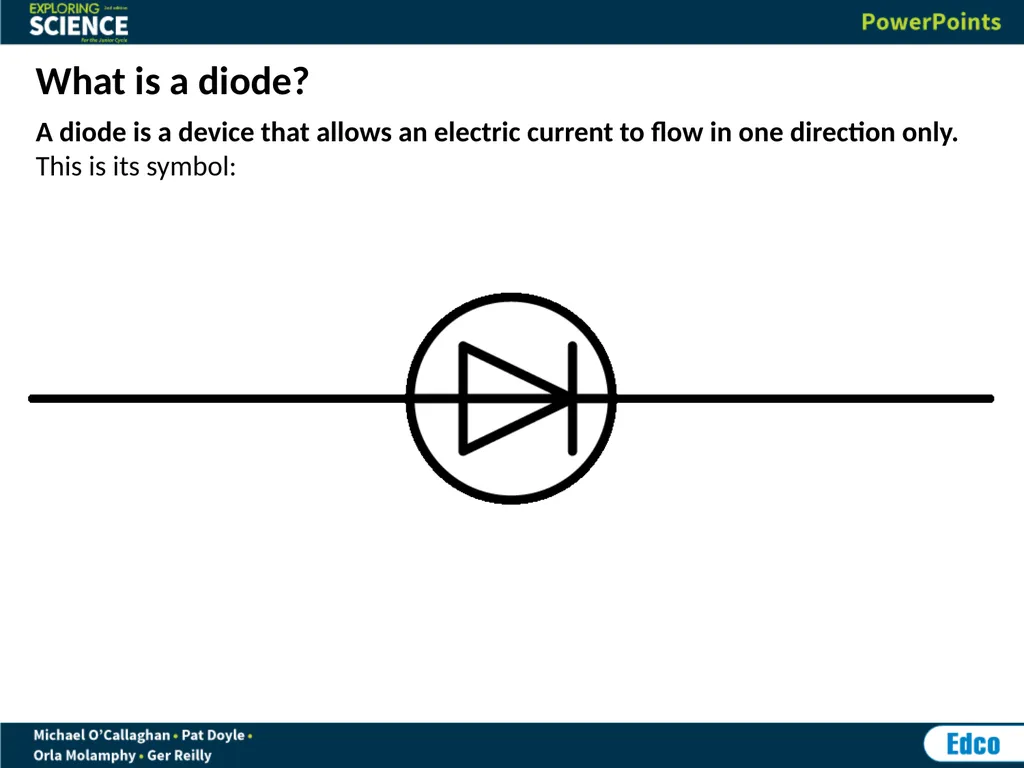
What is a diode? A diode is a device that allows an electric current to flow in one direction only. This is its symbol:<br>
05
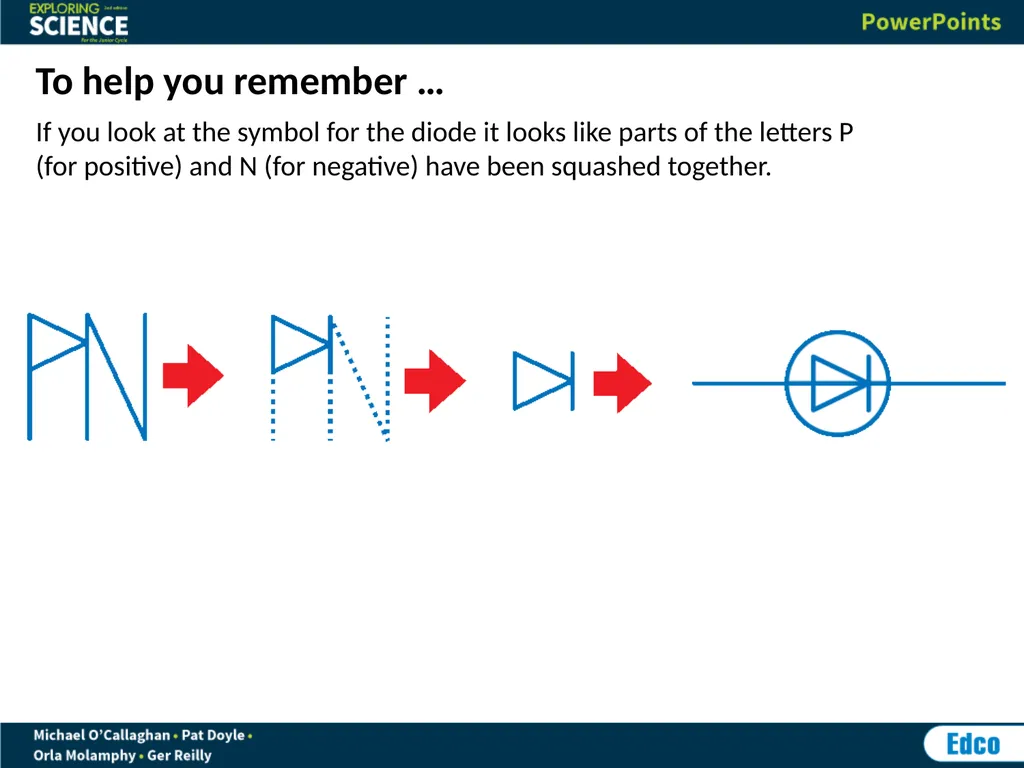
To help you remember … If you look at the symbol for the diode it looks like parts of the letters P (for positive) and N (for negative) have been squashed together.<br>
06
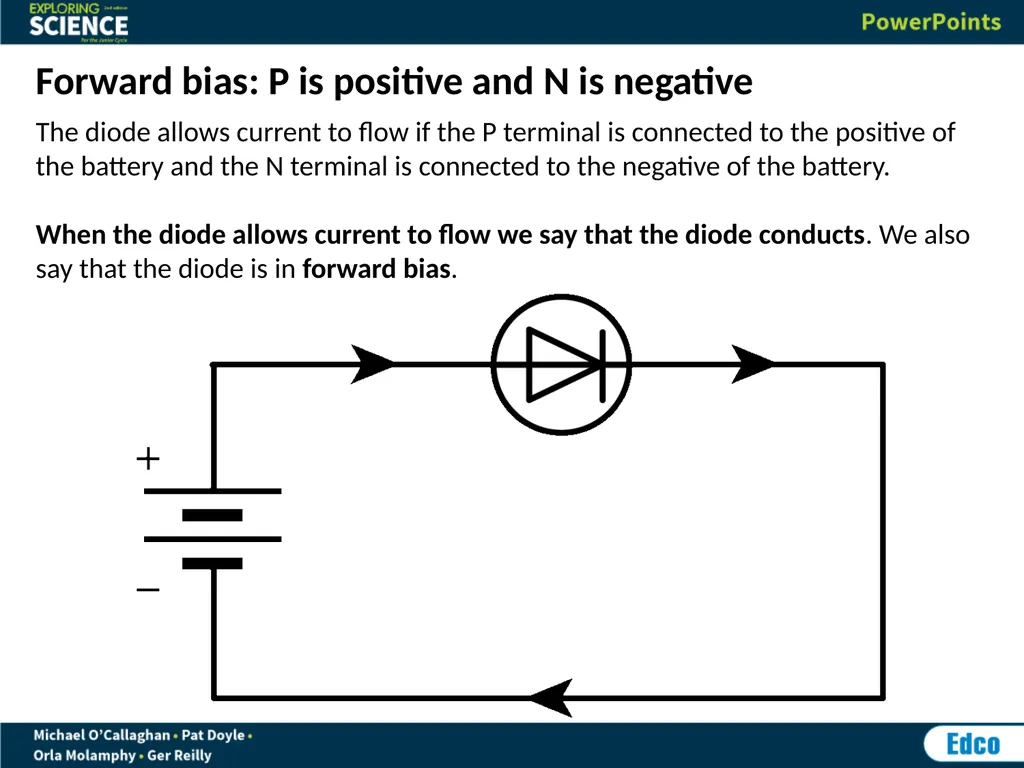
Forward bias: P is positive and N is negative The diode allows current to flow if the P terminal is connected to the positive of the battery and the N terminal is connected to the negative of the battery.
When the diode allows current to flow we say that the diode conducts. We also say that the diode is in forward bias.<br>
07
Reverse bias: N is positive and P is negative The diode will not allow current to flow if the P terminal is connected to the negative of the battery and the N terminal is connected to the positive of the battery.
When the diode does not allow current to flow we say that the diode does not conduct. We also say that the diode is in reverse bias.<br>
08
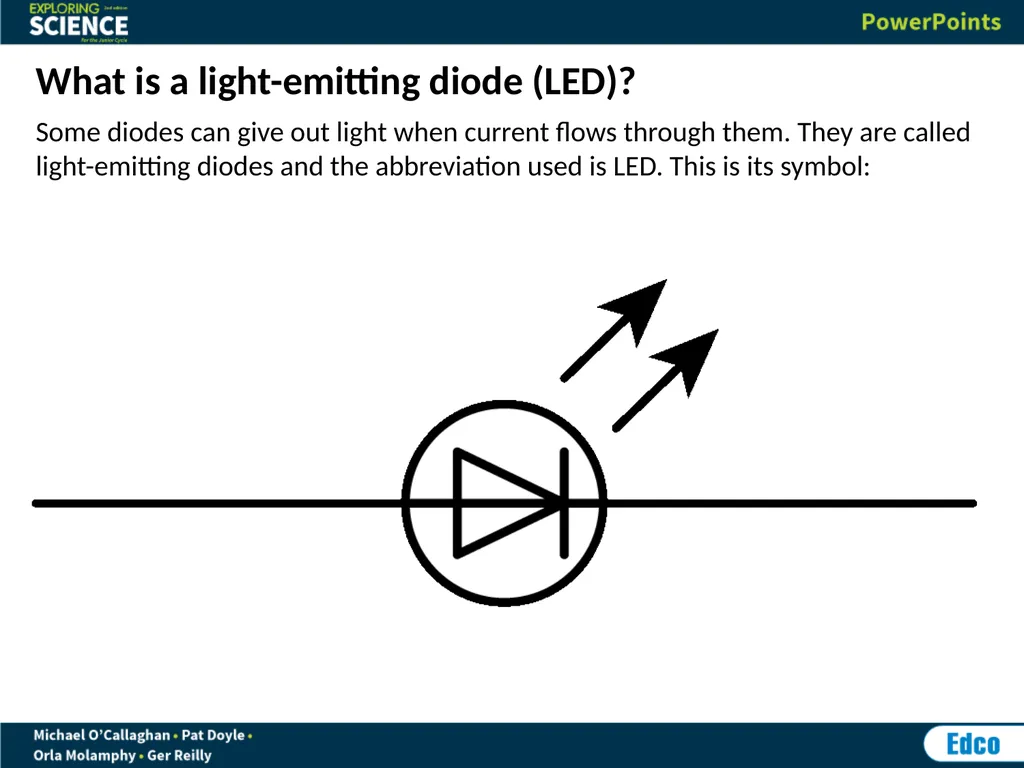
What is a light-emitting diode (LED)? Some diodes can give out light when current flows through them. They are called light-emitting diodes and the abbreviation used is LED. This is its symbol:<br>
09
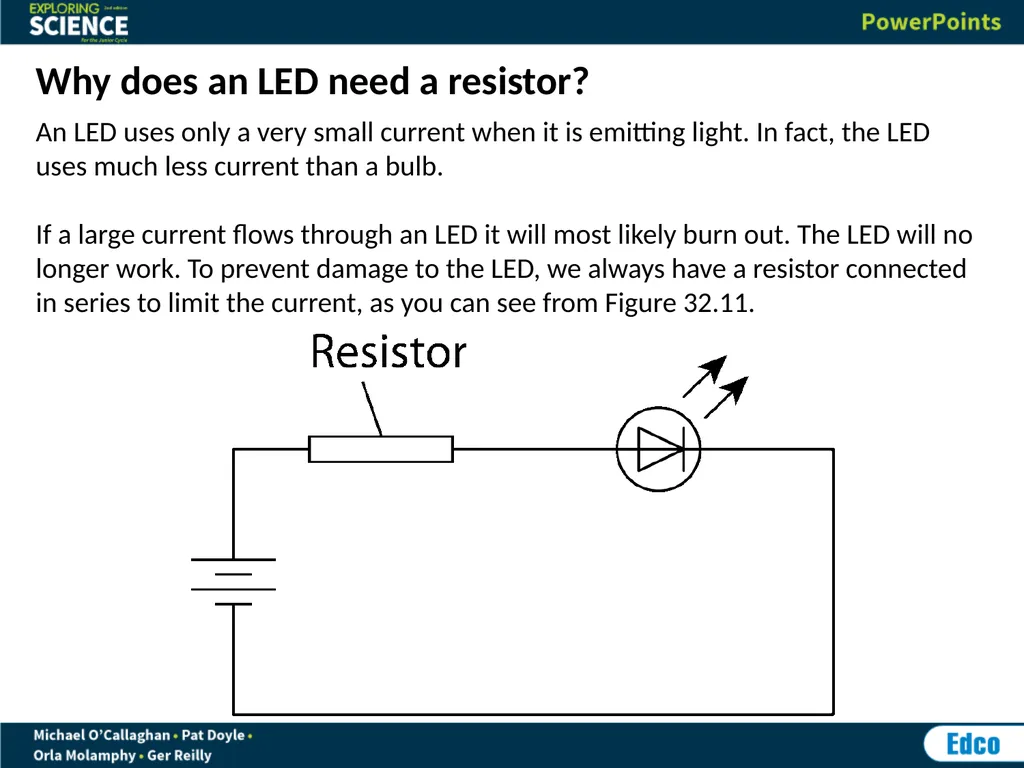
Why does an LED need a resistor? An LED uses only a very small current when it is emitting light. In fact, the LED uses much less current than a bulb.
If a large current flows through an LED it will most likely burn out. The LED will no longer work. To prevent damage to the LED, we always have a resistor connected in series to limit the current, as you can see from Figure 32.11.<br>
10
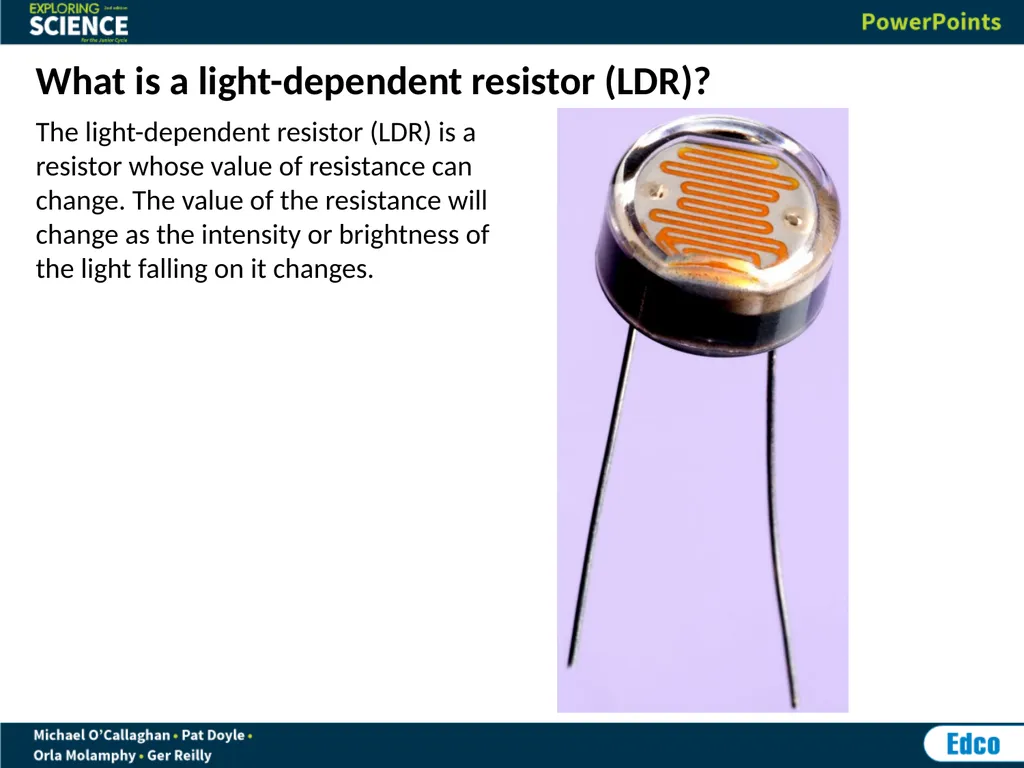
What is a light-dependent resistor (LDR)? The light-dependent resistor (LDR) is a resistor whose value of resistance can change. The value of the resistance will change as the intensity or brightness of the light falling on it changes.<br>
11
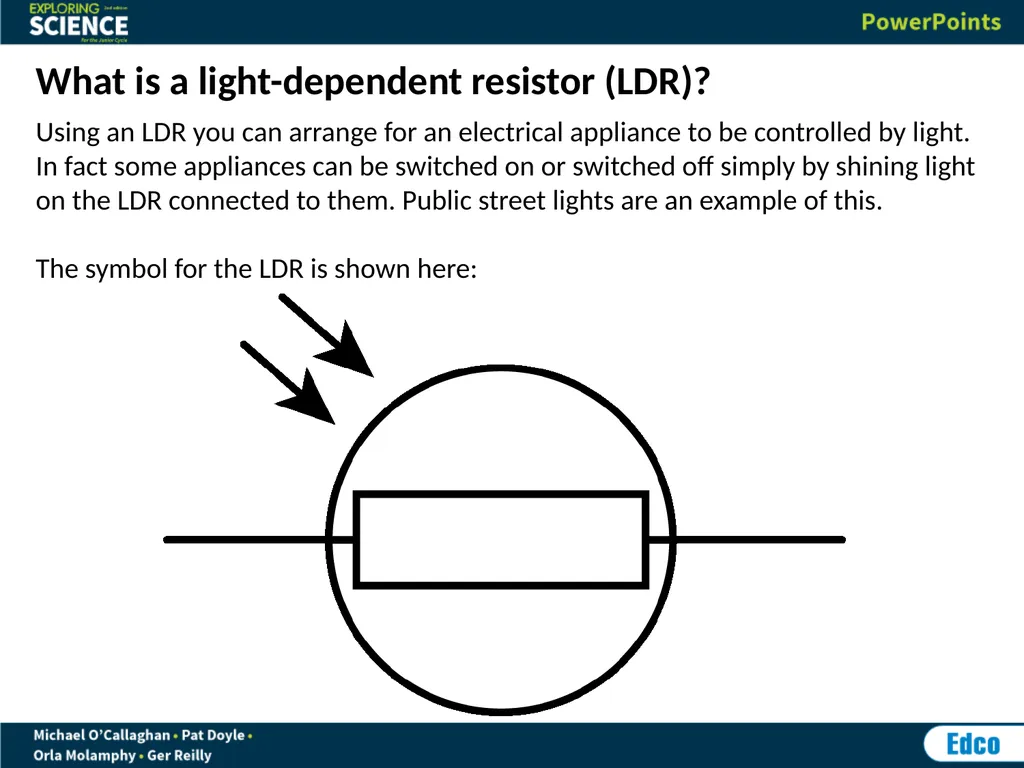
What is a light-dependent resistor (LDR)? Using an LDR you can arrange for an electrical appliance to be controlled by light. In fact some appliances can be switched on or switched off simply by shining light on the LDR connected to them. Public street lights are an example of this.
The symbol for the LDR is shown here:<br>
12
Photo credits Shutterstock
Michael Philips
QBS
Martyn F Chillmain/Science Photo Library<br>