
Classification of the Research Design: Research

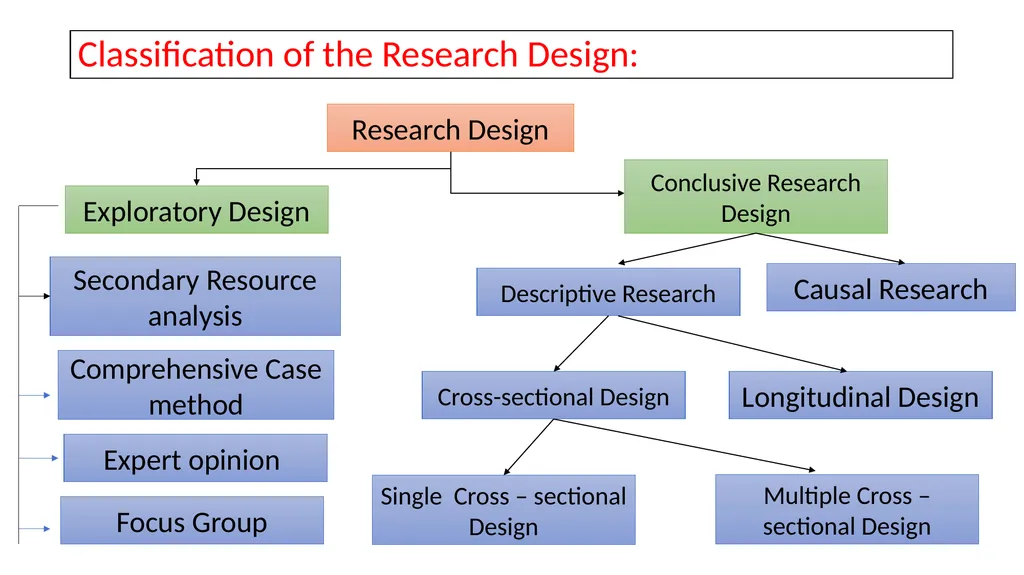
Description: Classification of the Research Design: Research Design Exploratory Design Conclusive Research Design Causal Research Descriptive Research Longitudinal Design Cross-sectional Design Multiple Cross sectional Design Single Cross sectional
Related Topics
Download Presentation
"Classification of the Research Design: Research" is the property of its rightful owner. Permission is granted to download and print the materials on this website for personal, non-commercial use only, and to display it on your personal computer provided you do not modify the materials and that you retain all copyright notices contained in the materials. By downloading content from our website, you accept the terms of this agreement.
Presentation Transcript
slide1. Classification of the Research Design: Research Design Exploratory Design Conclusive Research Design Causal Research Descriptive Research Longitudinal Design Cross-sectional Design Multiple Cross – sectional Design Single Cross – sectional Design Secondary Resource analysis Comprehensive Case method Expert opinion Focus Group<br>
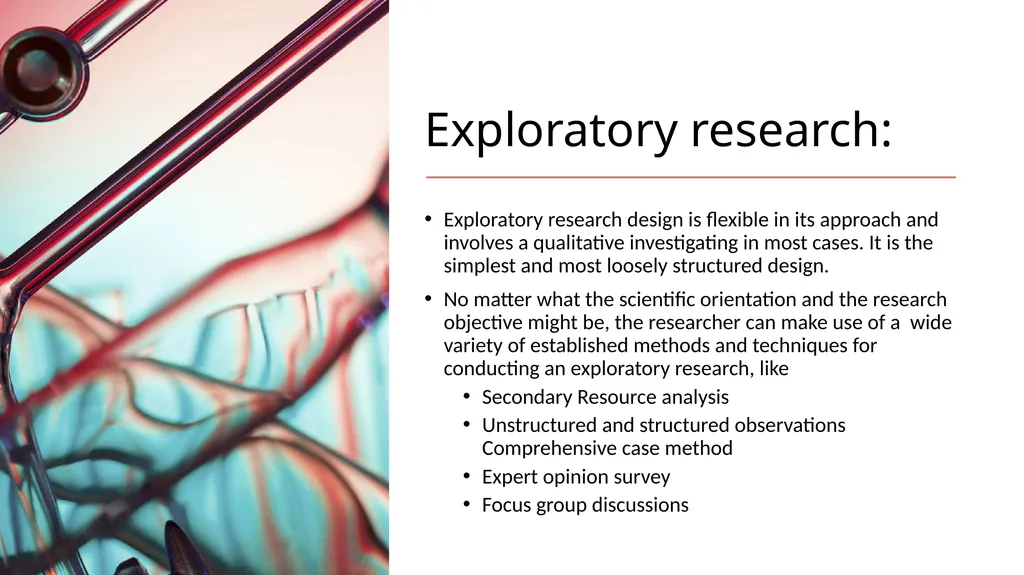
slide2. Exploratory research: Exploratory research design is flexible in its approach and involves a qualitative investigating in most cases. It is the simplest and most loosely structured design.
No matter what the scientific orientation and the research objective might be, the researcher can make use of a wide variety of established methods and techniques for conducting an exploratory research, like
Secondary Resource analysis
Unstructured and structured observations Comprehensive case method
Expert opinion survey
Focus group discussions<br>
slide3. Exploratory Research Design: Exploratory designs as stated earlier, are the simplest and most loosely structured designs.
The basic objective of the study is to explore and obtain clarity about the problem situation.
It is flexible in its approach and it mostly involves a qualitative investigation.
The sample size is not strictly representative and at times it involves unstructured interviews with the couple of subject experts.<br>
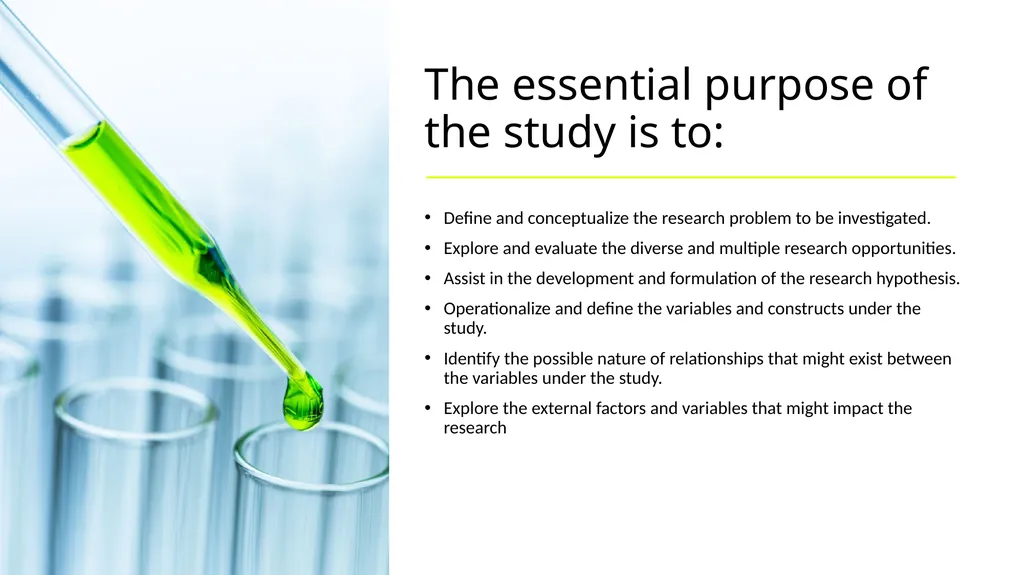
slide4. The essential purpose of the study is to: Define and conceptualize the research problem to be investigated.
Explore and evaluate the diverse and multiple research opportunities.
Assist in the development and formulation of the research hypothesis.
Operationalize and define the variables and constructs under the study.
Identify the possible nature of relationships that might exist between the variables under the study.
Explore the external factors and variables that might impact the research<br>
slide5. Secondary resource analysis:<br>
slide6. Comprehensive case study:<br>
slide7. Expert Opinion Survey: It is conducted when no previous information or data is available on a topic of research.
It is formal and structured in general.
The approach of collecting particulars from significant and erudite people is referred as expert opinion survey.
It is advisable to quiz different expert sources as no expert, no matter how learned or erudite, can be solely relied upon to arrive at any conclusions.<br>
slide8. Focus Group discussions: This technique is originally rooted in sociology and is most staunchly advocated and used for consumer and motivational research studies.
In a typical focus group, there is a carefully selected small set of individual representative of the large respondents population under study.
It is called a focus group as the selected members discuss the concerned topic for the duration of 90 minutes to 2 hours.<br>
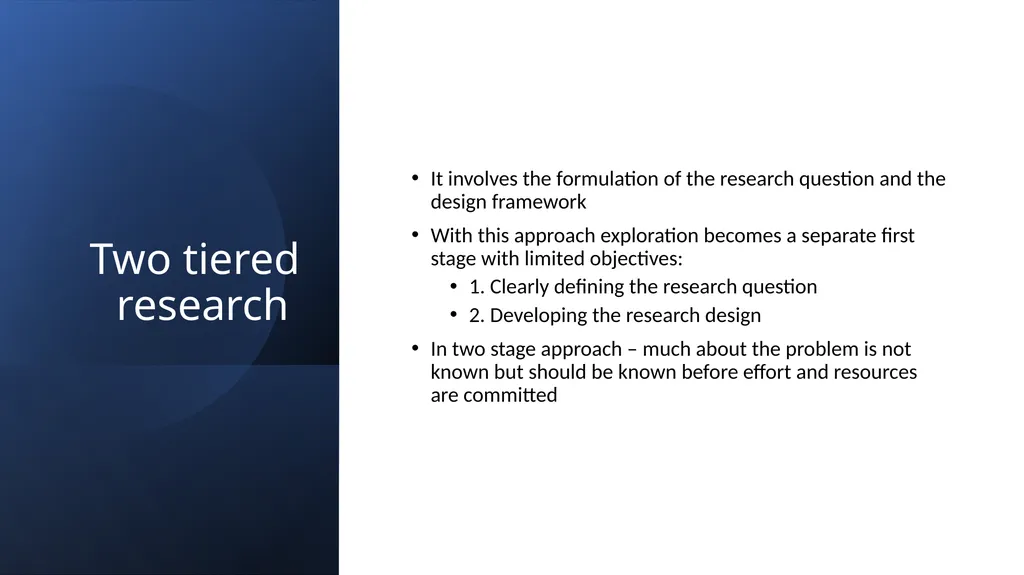
slide9. Two tiered research It involves the formulation of the research question and the design framework
With this approach exploration becomes a separate first stage with limited objectives:
1. Clearly defining the research question
2. Developing the research design
In two stage approach – much about the problem is not known but should be known before effort and resources are committed<br>
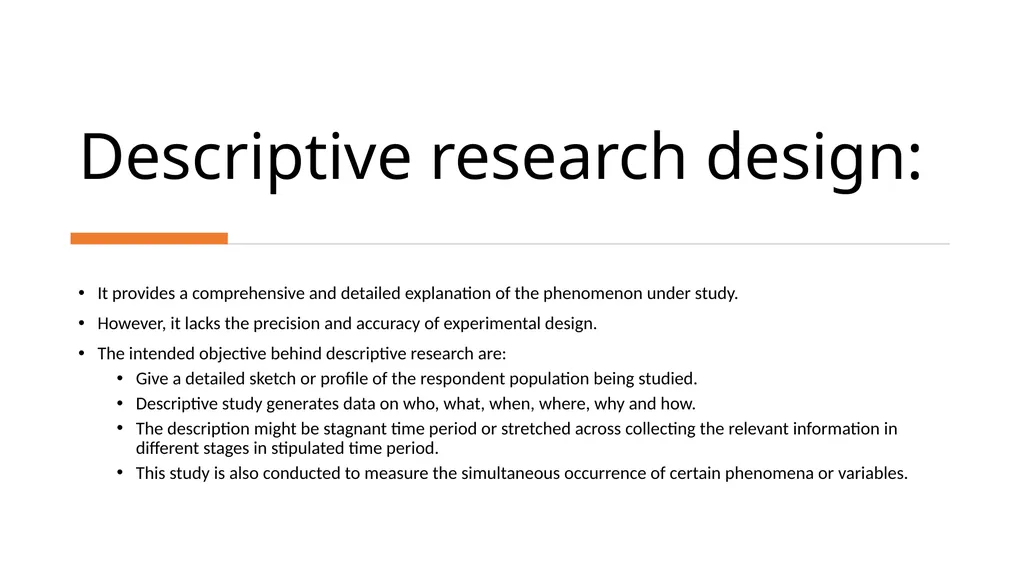
slide10. Descriptive research design: It provides a comprehensive and detailed explanation of the phenomenon under study.
However, it lacks the precision and accuracy of experimental design.
The intended objective behind descriptive research are:
Give a detailed sketch or profile of the respondent population being studied.
Descriptive study generates data on who, what, when, where, why and how.
The description might be stagnant time period or stretched across collecting the relevant information in different stages in stipulated time period.
This study is also conducted to measure the simultaneous occurrence of certain phenomena or variables.<br>
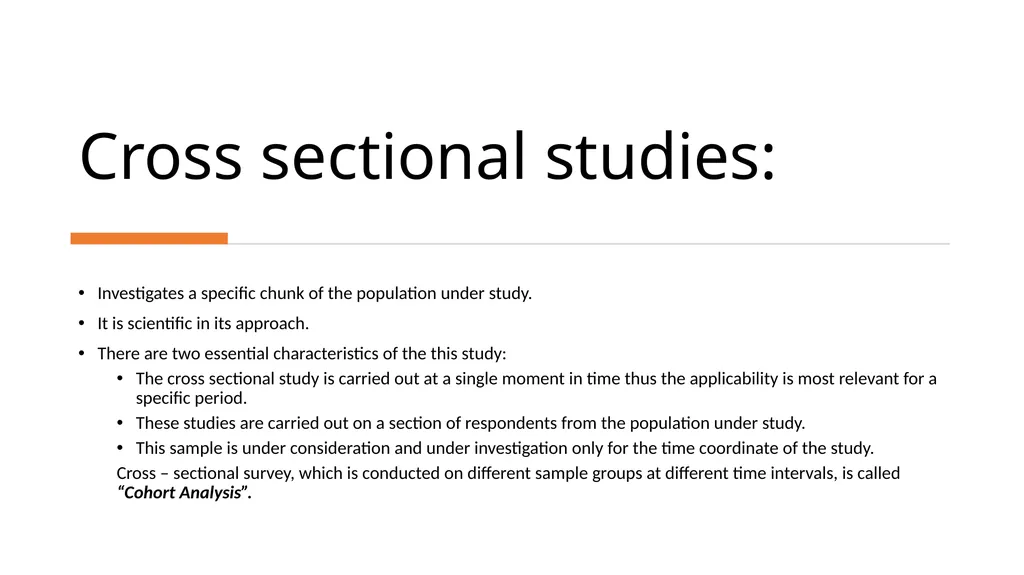
slide11. Cross sectional studies: Investigates a specific chunk of the population under study.
It is scientific in its approach.
There are two essential characteristics of the this study:
The cross sectional study is carried out at a single moment in time thus the applicability is most relevant for a specific period.
These studies are carried out on a section of respondents from the population under study.
This sample is under consideration and under investigation only for the time coordinate of the study.
Cross – sectional survey, which is conducted on different sample groups at different time intervals, is called “Cohort Analysis”.<br>
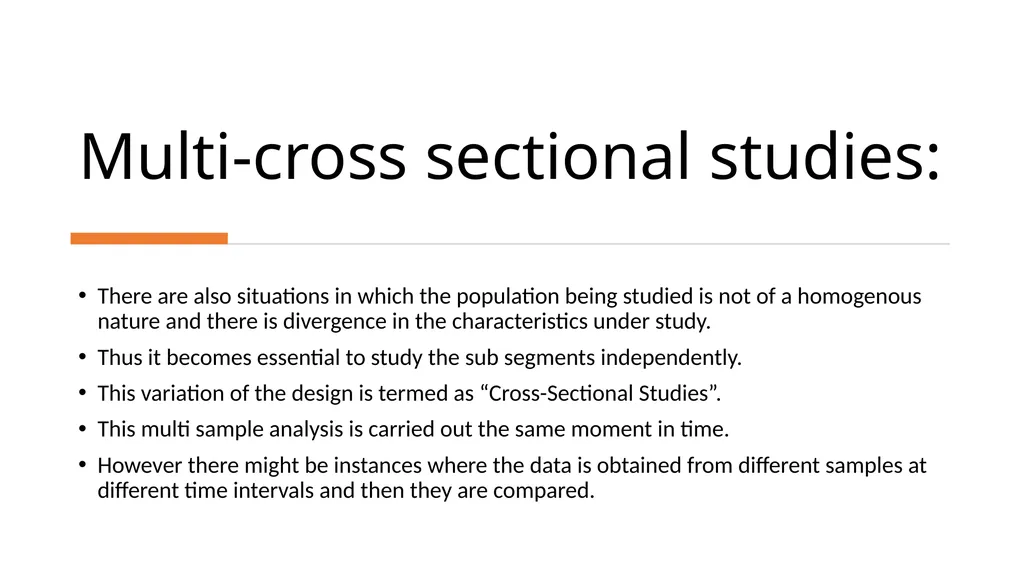
slide12. Multi-cross sectional studies: There are also situations in which the population being studied is not of a homogenous nature and there is divergence in the characteristics under study.
Thus it becomes essential to study the sub segments independently.
This variation of the design is termed as “Cross-Sectional Studies”.
This multi sample analysis is carried out the same moment in time.
However there might be instances where the data is obtained from different samples at different time intervals and then they are compared.<br>
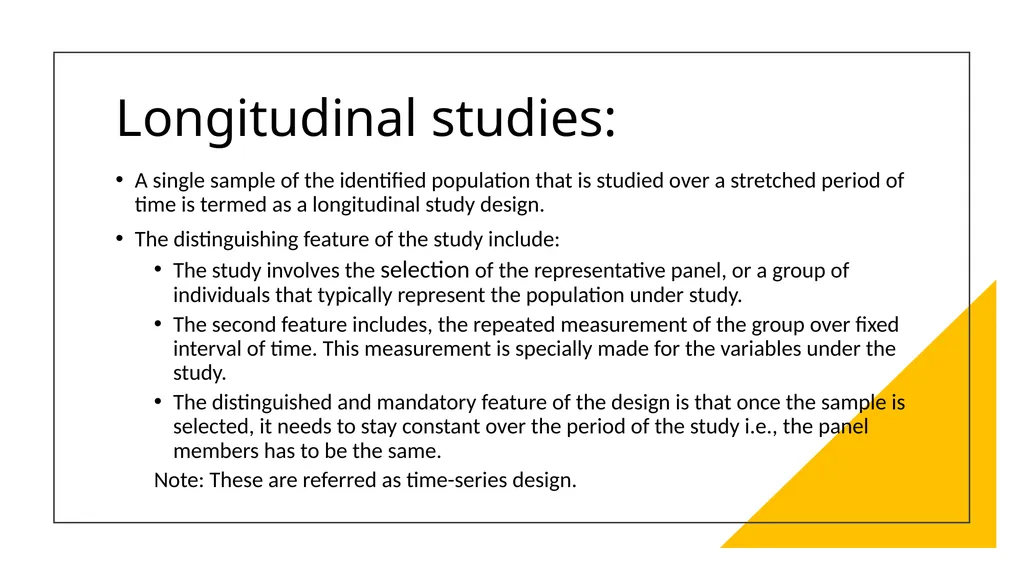
slide13. Longitudinal studies: A single sample of the identified population that is studied over a stretched period of time is termed as a longitudinal study design.
The distinguishing feature of the study include:
The study involves the selection of the representative panel, or a group of individuals that typically represent the population under study.
The second feature includes, the repeated measurement of the group over fixed interval of time. This measurement is specially made for the variables under the study.
The distinguished and mandatory feature of the design is that once the sample is selected, it needs to stay constant over the period of the study i.e., the panel members has to be the same.
Note: These are referred as time-series design.<br>
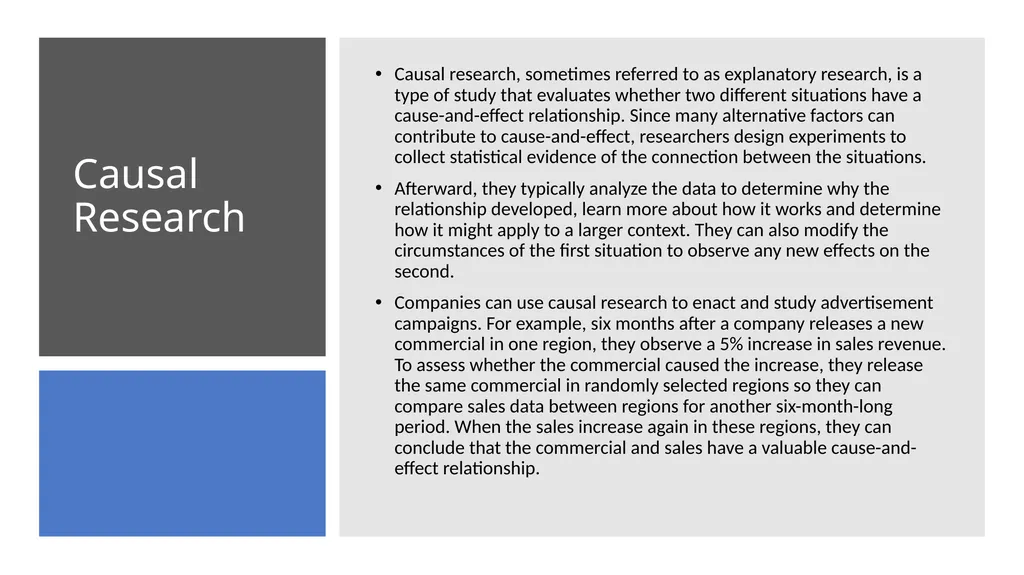
slide14. Causal Research Causal research, sometimes referred to as explanatory research, is a type of study that evaluates whether two different situations have a cause-and-effect relationship. Since many alternative factors can contribute to cause-and-effect, researchers design experiments to collect statistical evidence of the connection between the situations.
Afterward, they typically analyze the data to determine why the relationship developed, learn more about how it works and determine how it might apply to a larger context. They can also modify the circumstances of the first situation to observe any new effects on the second.
Companies can use causal research to enact and study advertisement campaigns. For example, six months after a company releases a new commercial in one region, they observe a 5% increase in sales revenue. To assess whether the commercial caused the increase, they release the same commercial in randomly selected regions so they can compare sales data between regions for another six-month-long period. When the sales increase again in these regions, they can conclude that the commercial and sales have a valuable cause-and-effect relationship.<br>
slide2. Exploratory research: Exploratory research design is flexible in its approach and involves a qualitative investigating in most cases. It is the simplest and most loosely structured design.
No matter what the scientific orientation and the research objective might be, the researcher can make use of a wide variety of established methods and techniques for conducting an exploratory research, like
Secondary Resource analysis
Unstructured and structured observations Comprehensive case method
Expert opinion survey
Focus group discussions<br>
slide3. Exploratory Research Design: Exploratory designs as stated earlier, are the simplest and most loosely structured designs.
The basic objective of the study is to explore and obtain clarity about the problem situation.
It is flexible in its approach and it mostly involves a qualitative investigation.
The sample size is not strictly representative and at times it involves unstructured interviews with the couple of subject experts.<br>
slide4. The essential purpose of the study is to: Define and conceptualize the research problem to be investigated.
Explore and evaluate the diverse and multiple research opportunities.
Assist in the development and formulation of the research hypothesis.
Operationalize and define the variables and constructs under the study.
Identify the possible nature of relationships that might exist between the variables under the study.
Explore the external factors and variables that might impact the research<br>
slide5. Secondary resource analysis:<br>
slide6. Comprehensive case study:<br>
slide7. Expert Opinion Survey: It is conducted when no previous information or data is available on a topic of research.
It is formal and structured in general.
The approach of collecting particulars from significant and erudite people is referred as expert opinion survey.
It is advisable to quiz different expert sources as no expert, no matter how learned or erudite, can be solely relied upon to arrive at any conclusions.<br>
slide8. Focus Group discussions: This technique is originally rooted in sociology and is most staunchly advocated and used for consumer and motivational research studies.
In a typical focus group, there is a carefully selected small set of individual representative of the large respondents population under study.
It is called a focus group as the selected members discuss the concerned topic for the duration of 90 minutes to 2 hours.<br>
slide9. Two tiered research It involves the formulation of the research question and the design framework
With this approach exploration becomes a separate first stage with limited objectives:
1. Clearly defining the research question
2. Developing the research design
In two stage approach – much about the problem is not known but should be known before effort and resources are committed<br>
slide10. Descriptive research design: It provides a comprehensive and detailed explanation of the phenomenon under study.
However, it lacks the precision and accuracy of experimental design.
The intended objective behind descriptive research are:
Give a detailed sketch or profile of the respondent population being studied.
Descriptive study generates data on who, what, when, where, why and how.
The description might be stagnant time period or stretched across collecting the relevant information in different stages in stipulated time period.
This study is also conducted to measure the simultaneous occurrence of certain phenomena or variables.<br>
slide11. Cross sectional studies: Investigates a specific chunk of the population under study.
It is scientific in its approach.
There are two essential characteristics of the this study:
The cross sectional study is carried out at a single moment in time thus the applicability is most relevant for a specific period.
These studies are carried out on a section of respondents from the population under study.
This sample is under consideration and under investigation only for the time coordinate of the study.
Cross – sectional survey, which is conducted on different sample groups at different time intervals, is called “Cohort Analysis”.<br>
slide12. Multi-cross sectional studies: There are also situations in which the population being studied is not of a homogenous nature and there is divergence in the characteristics under study.
Thus it becomes essential to study the sub segments independently.
This variation of the design is termed as “Cross-Sectional Studies”.
This multi sample analysis is carried out the same moment in time.
However there might be instances where the data is obtained from different samples at different time intervals and then they are compared.<br>
slide13. Longitudinal studies: A single sample of the identified population that is studied over a stretched period of time is termed as a longitudinal study design.
The distinguishing feature of the study include:
The study involves the selection of the representative panel, or a group of individuals that typically represent the population under study.
The second feature includes, the repeated measurement of the group over fixed interval of time. This measurement is specially made for the variables under the study.
The distinguished and mandatory feature of the design is that once the sample is selected, it needs to stay constant over the period of the study i.e., the panel members has to be the same.
Note: These are referred as time-series design.<br>
slide14. Causal Research Causal research, sometimes referred to as explanatory research, is a type of study that evaluates whether two different situations have a cause-and-effect relationship. Since many alternative factors can contribute to cause-and-effect, researchers design experiments to collect statistical evidence of the connection between the situations.
Afterward, they typically analyze the data to determine why the relationship developed, learn more about how it works and determine how it might apply to a larger context. They can also modify the circumstances of the first situation to observe any new effects on the second.
Companies can use causal research to enact and study advertisement campaigns. For example, six months after a company releases a new commercial in one region, they observe a 5% increase in sales revenue. To assess whether the commercial caused the increase, they release the same commercial in randomly selected regions so they can compare sales data between regions for another six-month-long period. When the sales increase again in these regions, they can conclude that the commercial and sales have a valuable cause-and-effect relationship.<br>