© Classroom Secrets Limited 2019 LIFE/work balance

© Classroom Secrets Limited 2019 LIFE/work balance
1 / 1
© Classroom Secrets Limited 2019 LIFE/work balance - slide 1 of 21 © Classroom Secrets Limited 2019 LIFE/work balance - slide 2 of 21 © Classroom Secrets Limited 2019 LIFE/work balance - slide 3 of 21 © Classroom Secrets Limited 2019 LIFE/work balance - slide 4 of 21 © Classroom Secrets Limited 2019 LIFE/work balance - slide 5 of 21 © Classroom Secrets Limited 2019 LIFE/work balance - slide 6 of 21 © Classroom Secrets Limited 2019 LIFE/work balance - slide 7 of 21 © Classroom Secrets Limited 2019 LIFE/work balance - slide 8 of 21 © Classroom Secrets Limited 2019 LIFE/work balance - slide 9 of 21 © Classroom Secrets Limited 2019 LIFE/work balance - slide 10 of 21 © Classroom Secrets Limited 2019 LIFE/work balance - slide 11 of 21 © Classroom Secrets Limited 2019 LIFE/work balance - slide 12 of 21 © Classroom Secrets Limited 2019 LIFE/work balance - slide 13 of 21 © Classroom Secrets Limited 2019 LIFE/work balance - slide 14 of 21 © Classroom Secrets Limited 2019 LIFE/work balance - slide 15 of 21 © Classroom Secrets Limited 2019 LIFE/work balance - slide 16 of 21 © Classroom Secrets Limited 2019 LIFE/work balance - slide 17 of 21 © Classroom Secrets Limited 2019 LIFE/work balance - slide 18 of 21 © Classroom Secrets Limited 2019 LIFE/work balance - slide 19 of 21 © Classroom Secrets Limited 2019 LIFE/work balance - slide 20 of 21 © Classroom Secrets Limited 2019 LIFE/work balance - slide 21 of 21
Classroom Secrets Limited 2019 LIFEwork balance We have started a LIFEworkbalance campaign and we need your help to complete our LIFEwork balance survey. We hope to publish the results soon, so please give 15 minutes of your time to

Related Topics

Download this presentation From Below

"© Classroom Secrets Limited 2019 LIFE/work balance" is the property of its rightful owner. Permission is granted to download and print the materials on this website for personal, non-commercial use only, and to display it on your personal computer provided you do not modify the materials and that you retain all copyright notices contained in the materials. By downloading content from our website, you accept the terms of this agreement.

Presentation Transcript

01
© Classroom Secrets Limited 2019 LIFE/work balance


We have started a #LIFEworkbalance campaign and we need your help to complete our LIFE/work balance survey.

We hope to publish the results soon, so please give 15 minutes of your time to help us get a true picture of school life.


Want to be a part of this campaign? Take the survey on our website and share it with your colleagues!<br>
02
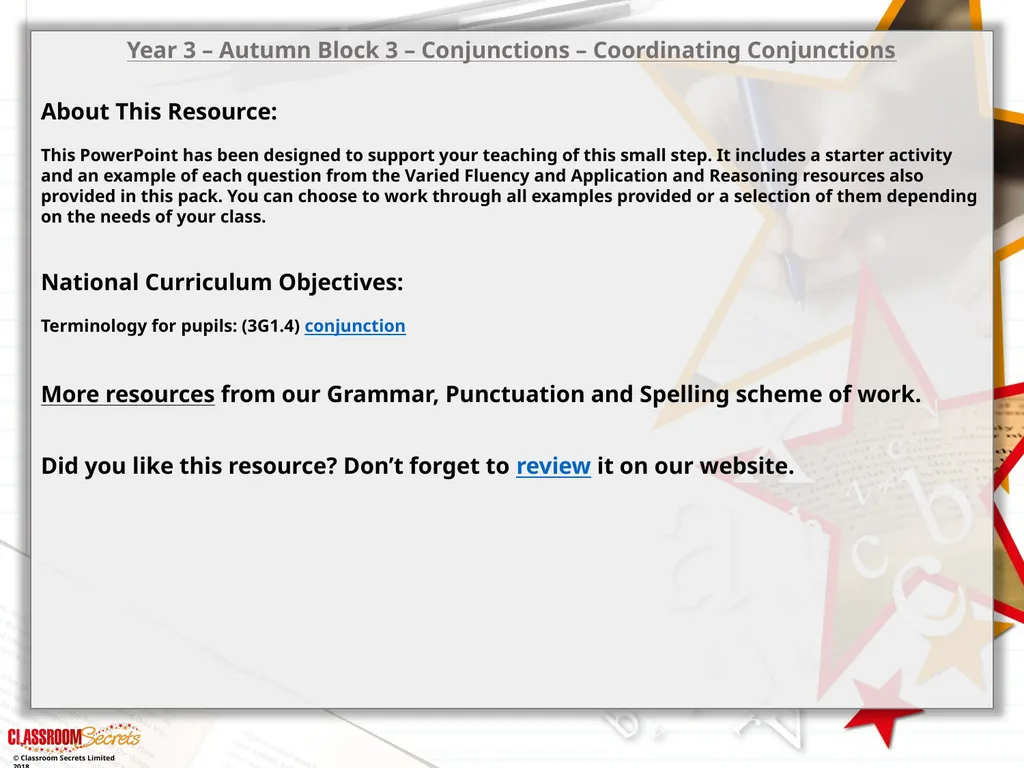
Year 3 – Autumn Block 3 – Conjunctions – Coordinating Conjunctions

About This Resource:

This PowerPoint has been designed to support your teaching of this small step. It includes a starter activity and an example of each question from the Varied Fluency and Application and Reasoning resources also provided in this pack. You can choose to work through all examples provided or a selection of them depending on the needs of your class.


National Curriculum Objectives:

Terminology for pupils: (3G1.4) conjunction


More resources from our Grammar, Punctuation and Spelling scheme of work.


Did you like this resource? Don’t forget to review it on our website. © Classroom Secrets Limited 2018<br>
03
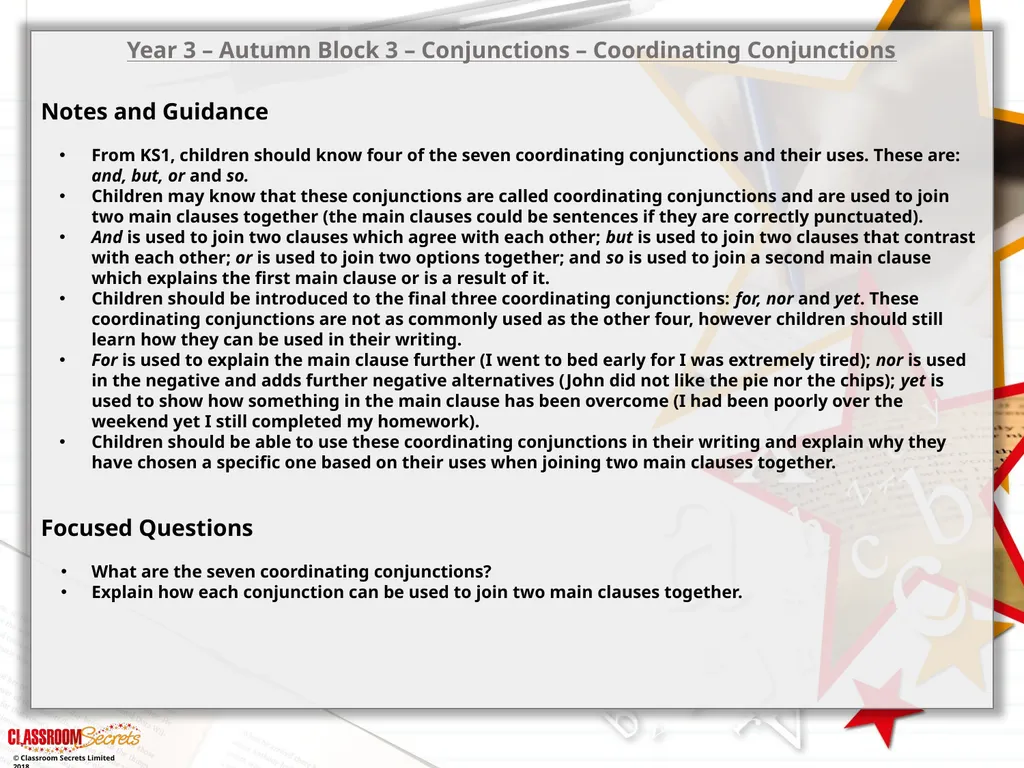
Year 3 – Autumn Block 3 – Conjunctions – Coordinating Conjunctions

Notes and Guidance

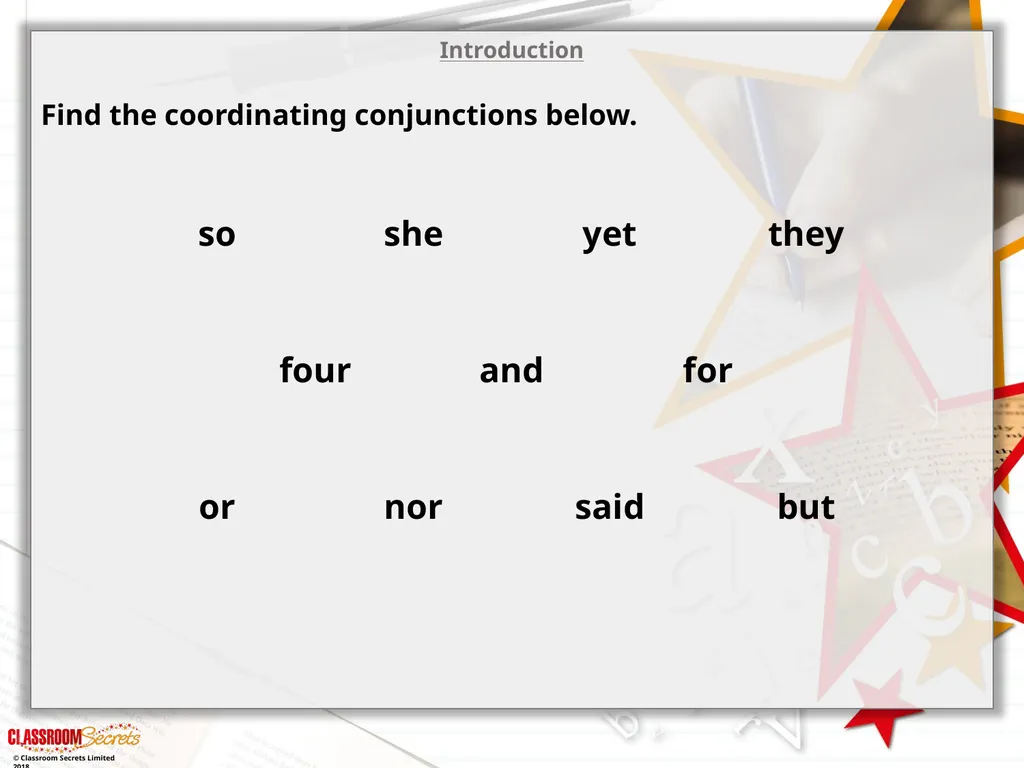
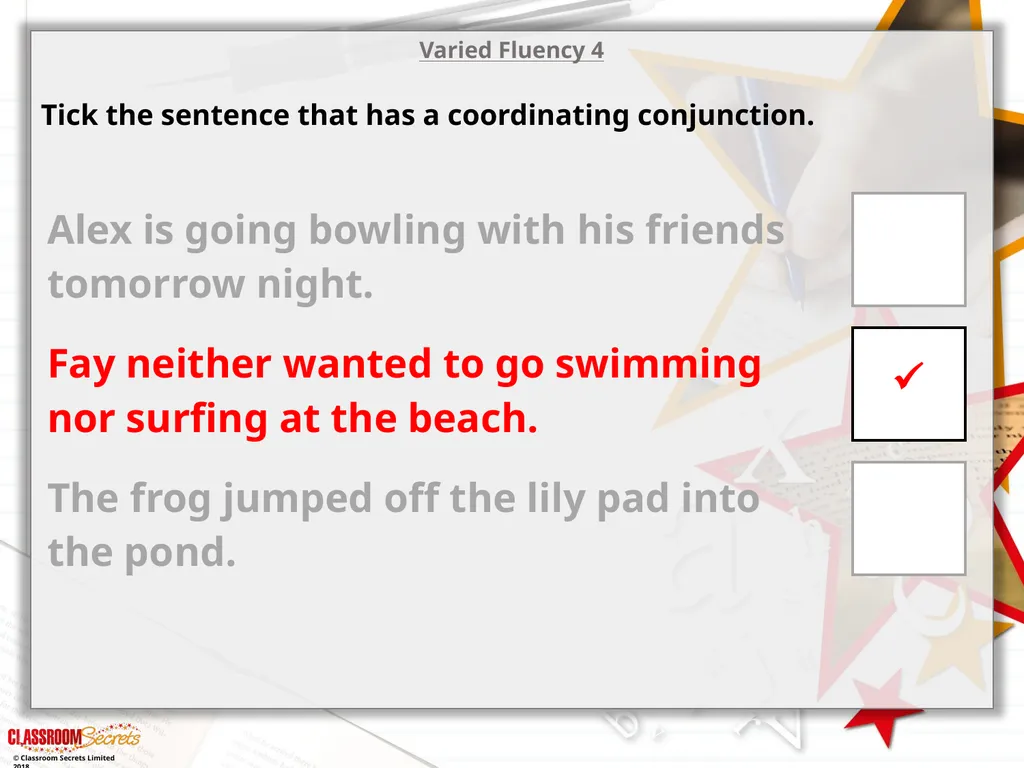
From KS1, children should know four of the seven coordinating conjunctions and their uses. These are: and, but, or and so.
Children may know that these conjunctions are called coordinating conjunctions and are used to join two main clauses together (the main clauses could be sentences if they are correctly punctuated).
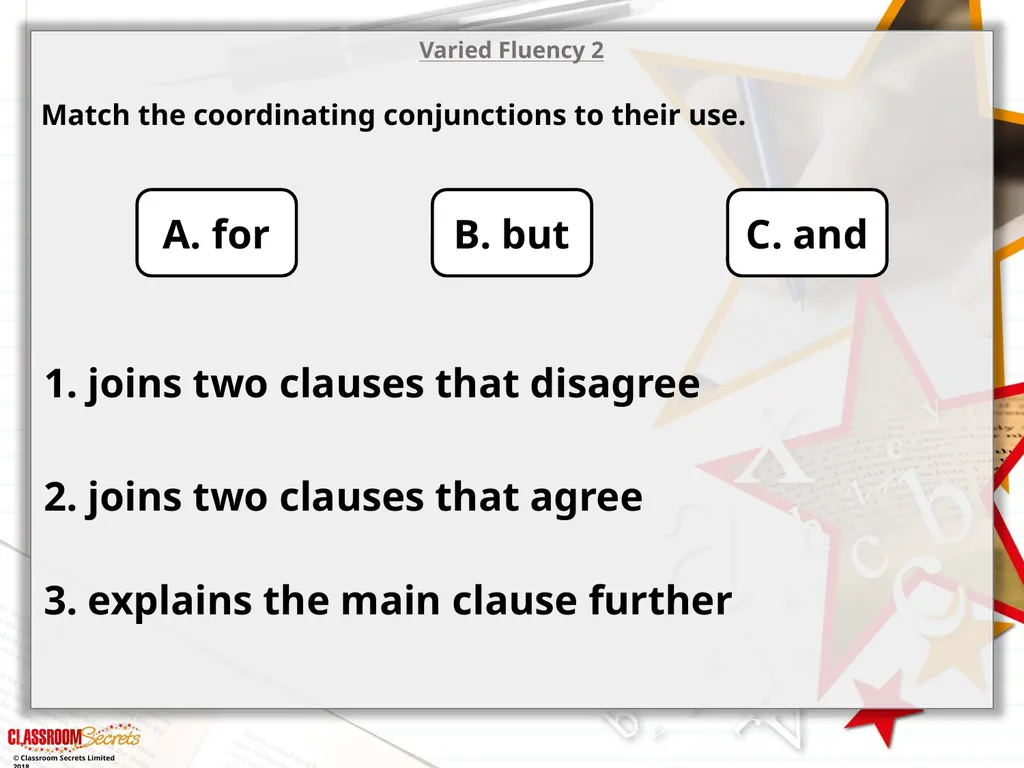
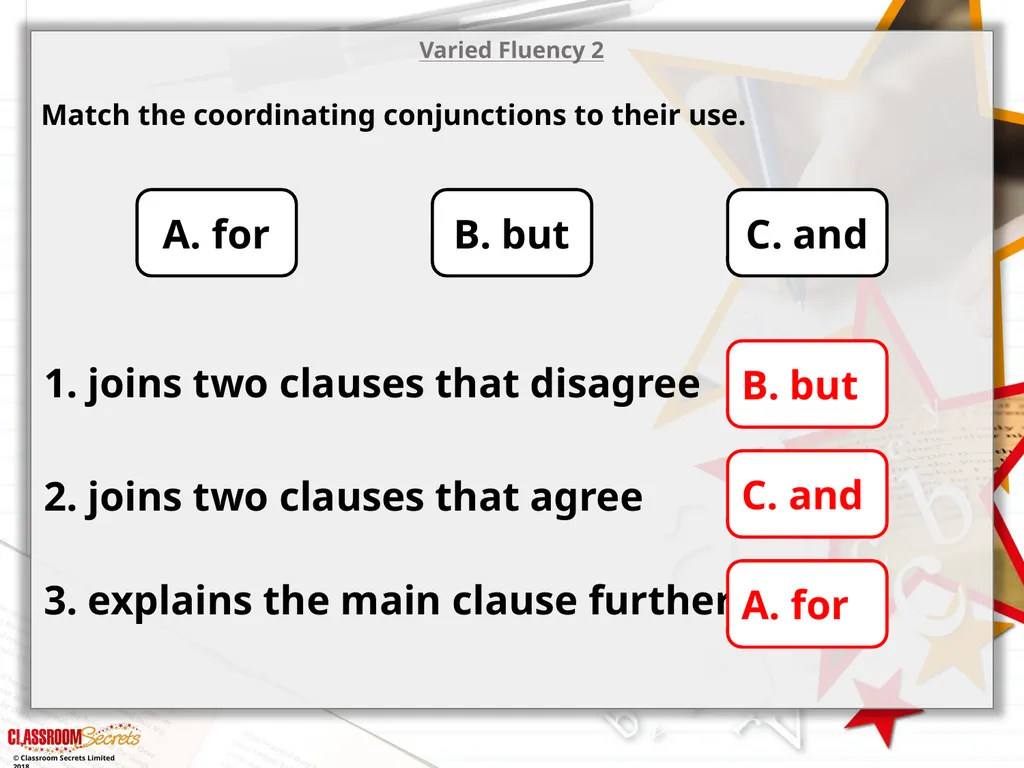
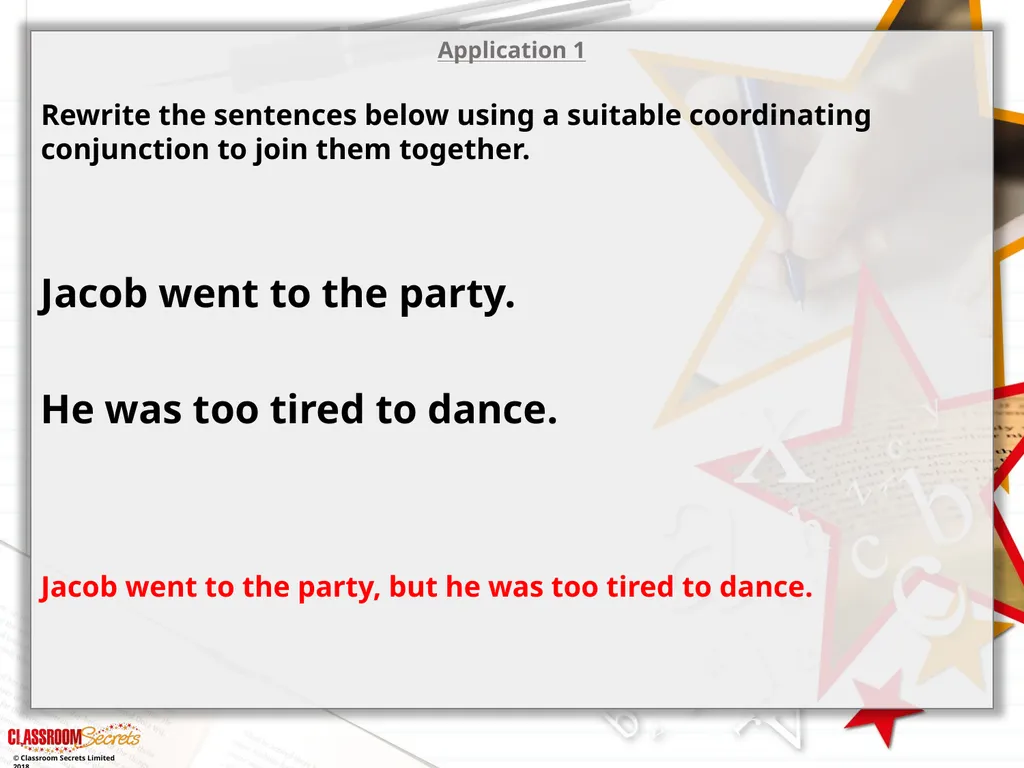
And is used to join two clauses which agree with each other; but is used to join two clauses that contrast with each other; or is used to join two options together; and so is used to join a second main clause which explains the first main clause or is a result of it.
Children should be introduced to the final three coordinating conjunctions: for, nor and yet. These coordinating conjunctions are not as commonly used as the other four, however children should still learn how they can be used in their writing.
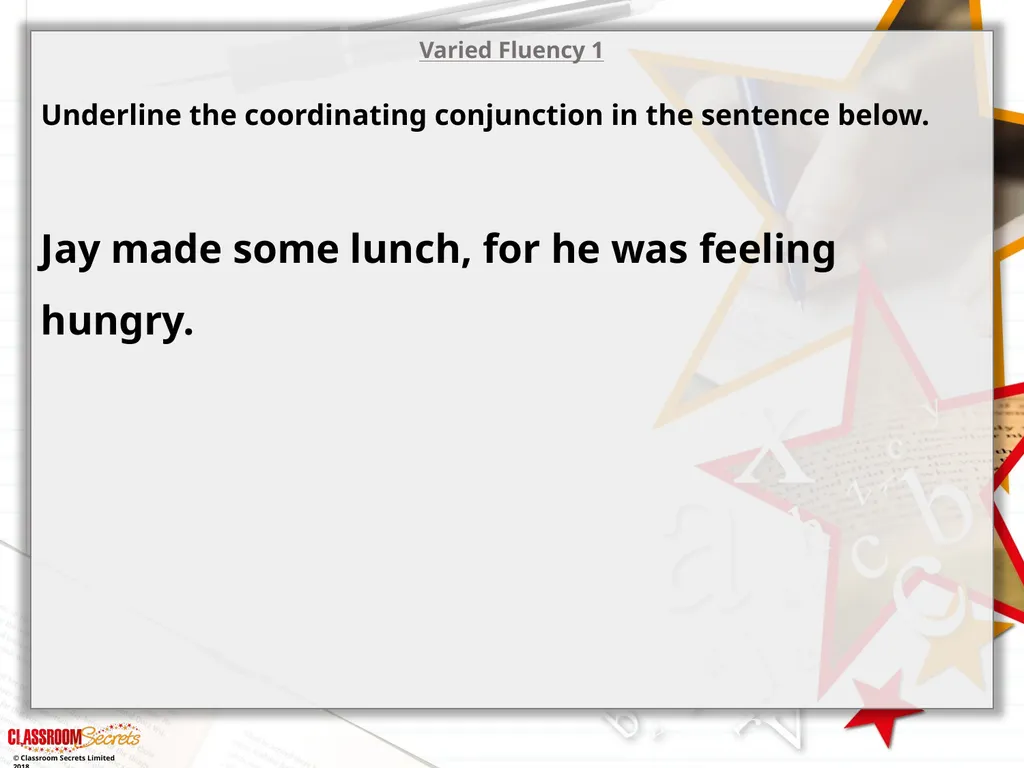
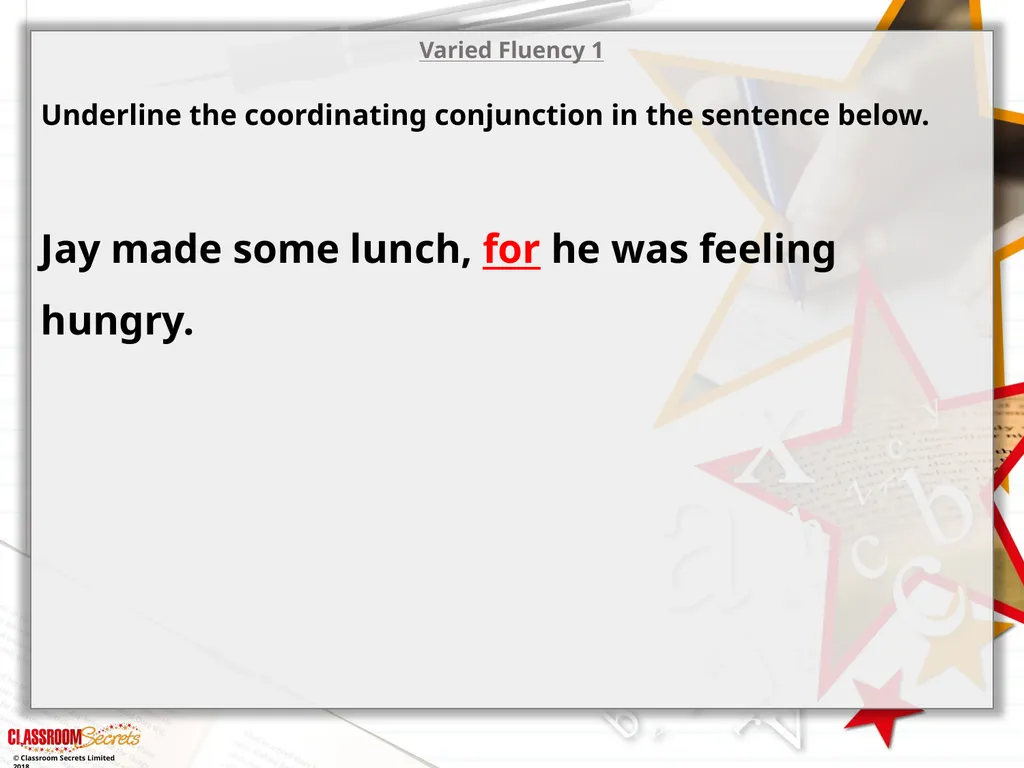
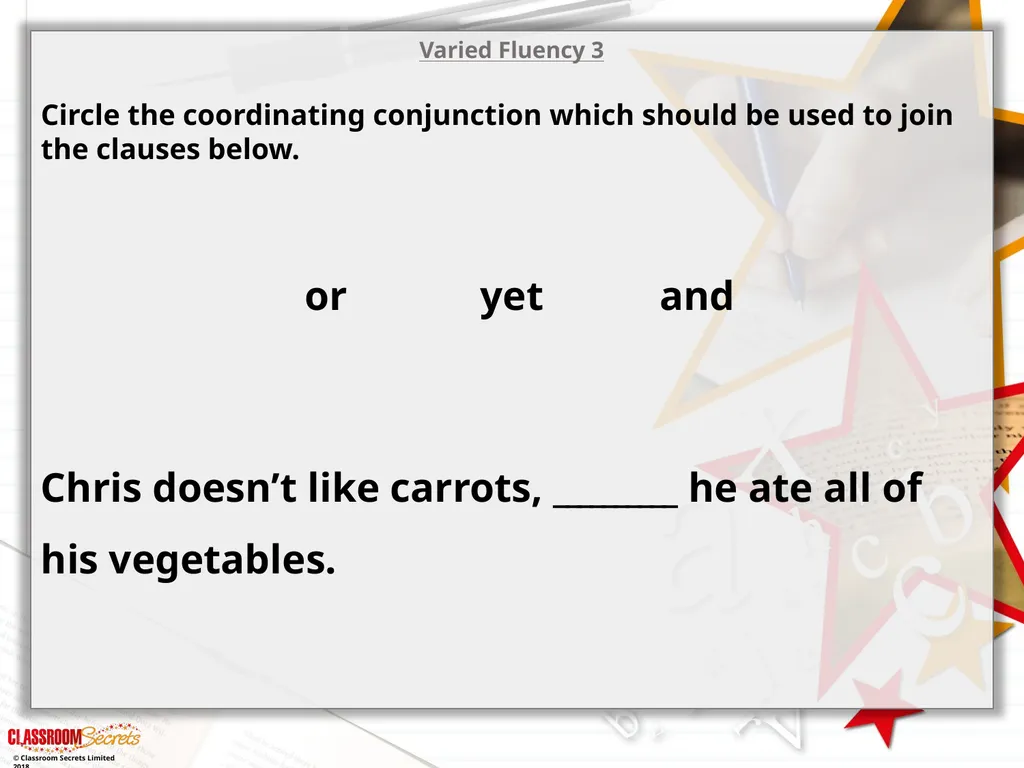
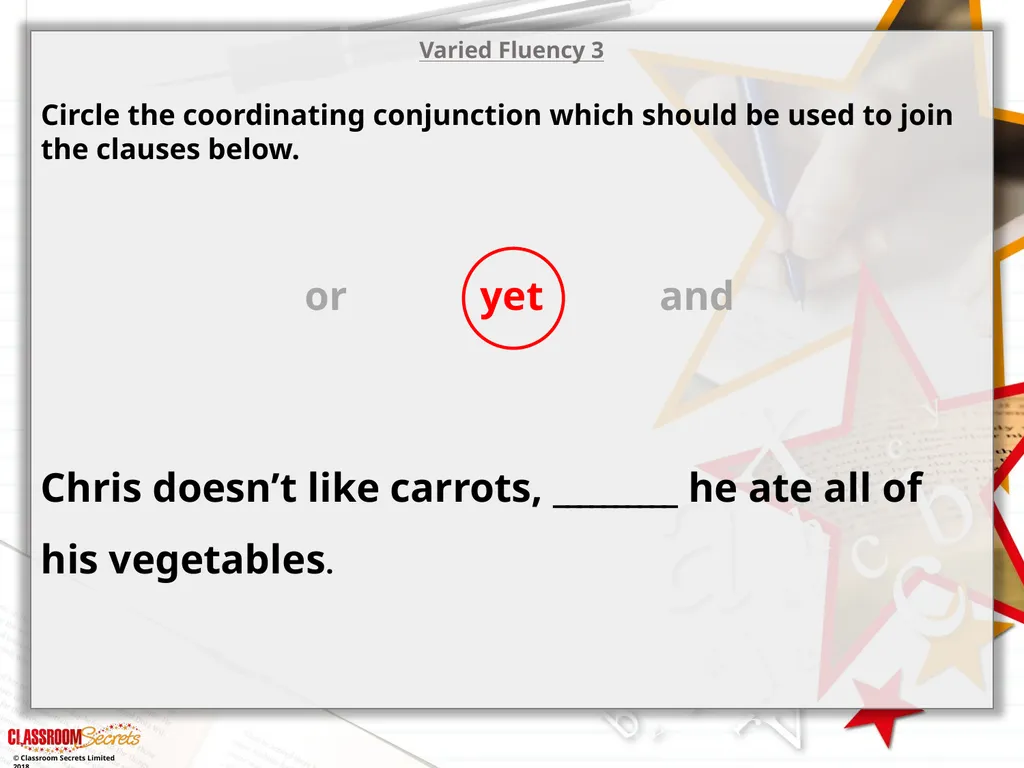
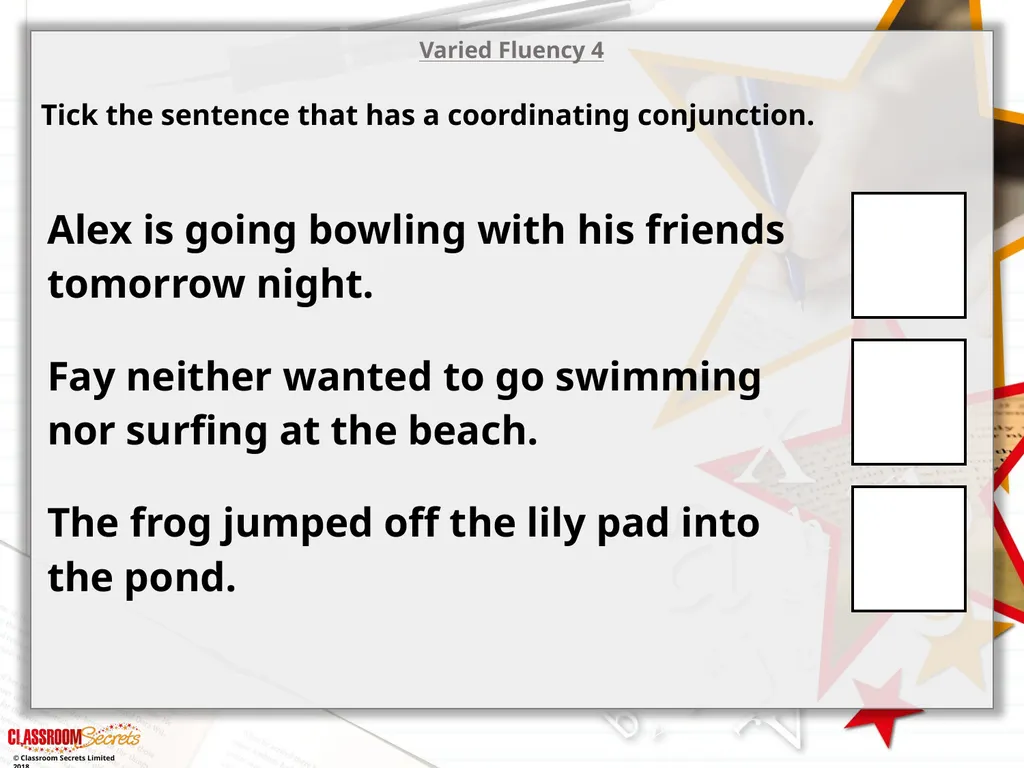
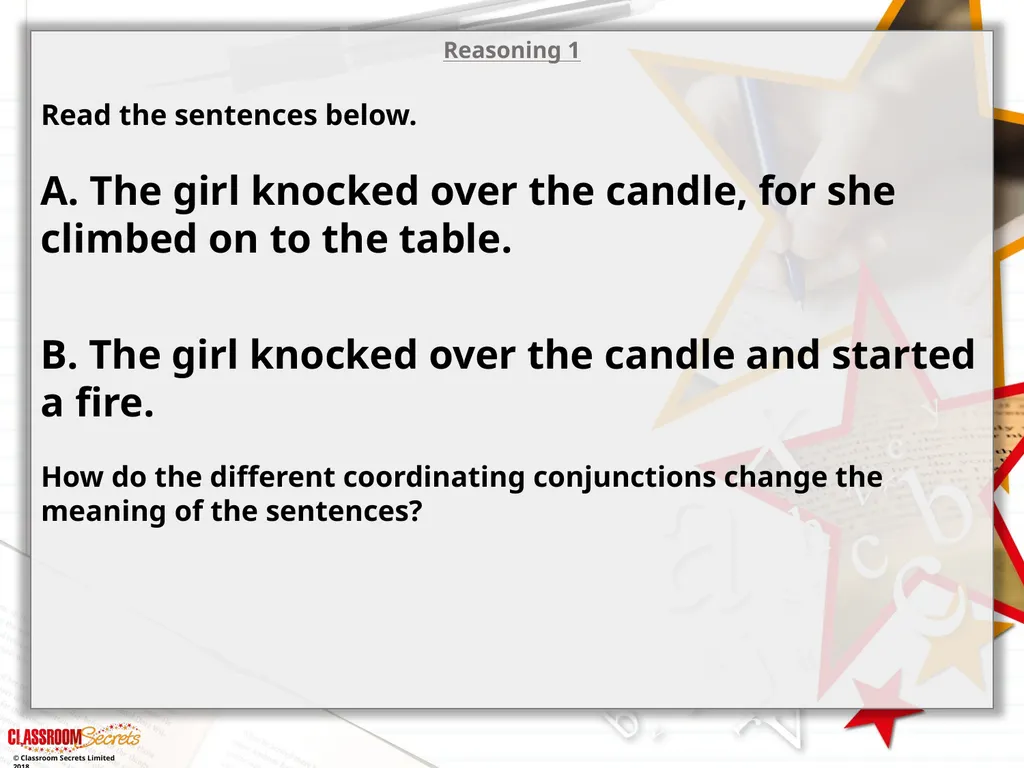
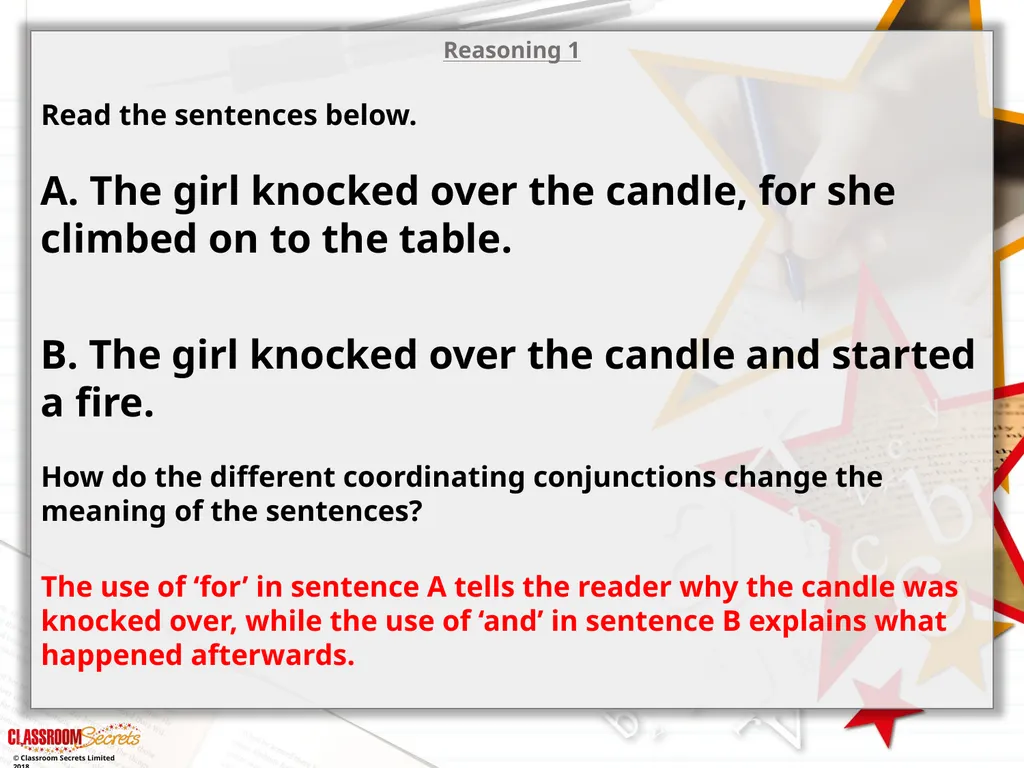
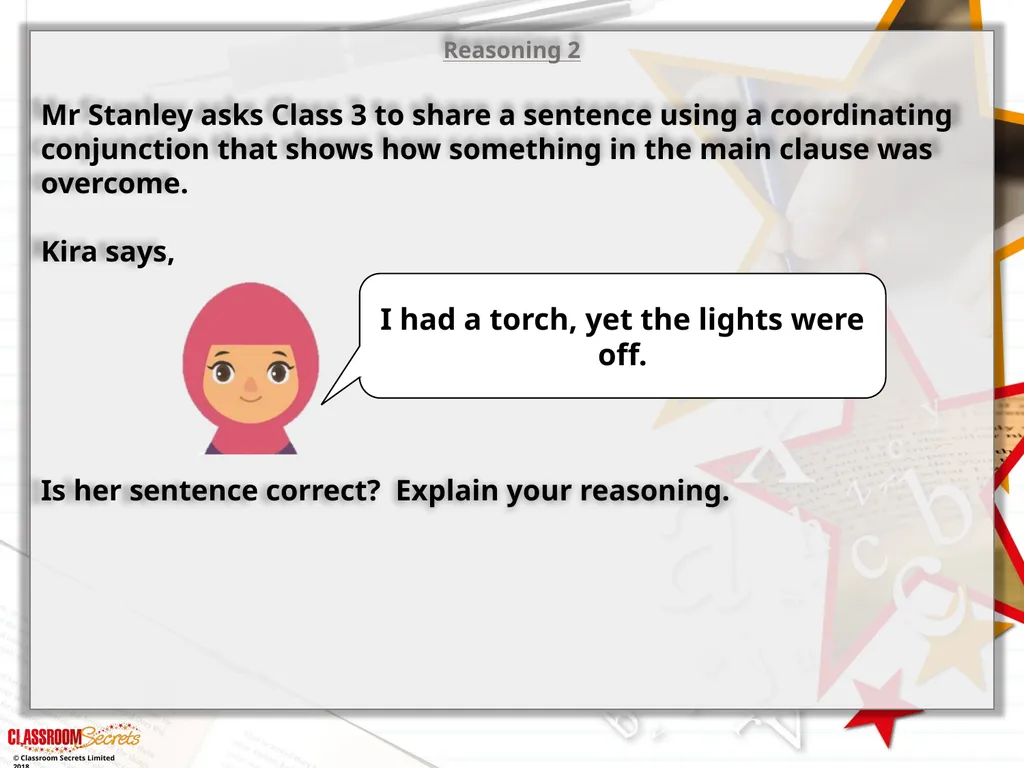
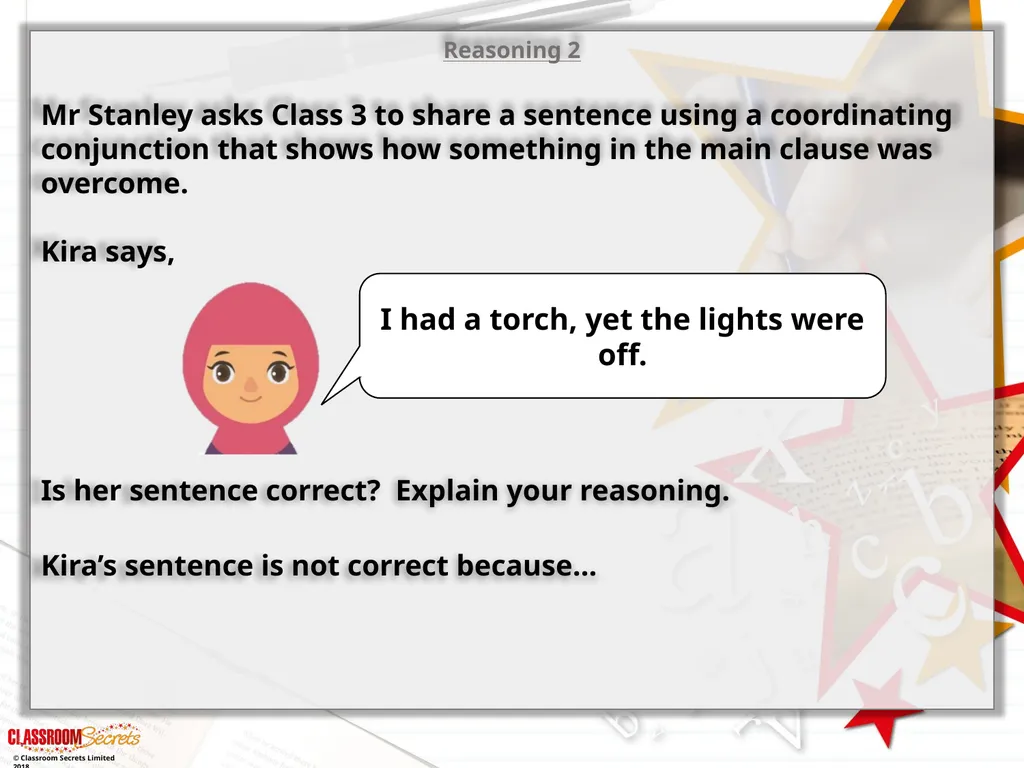
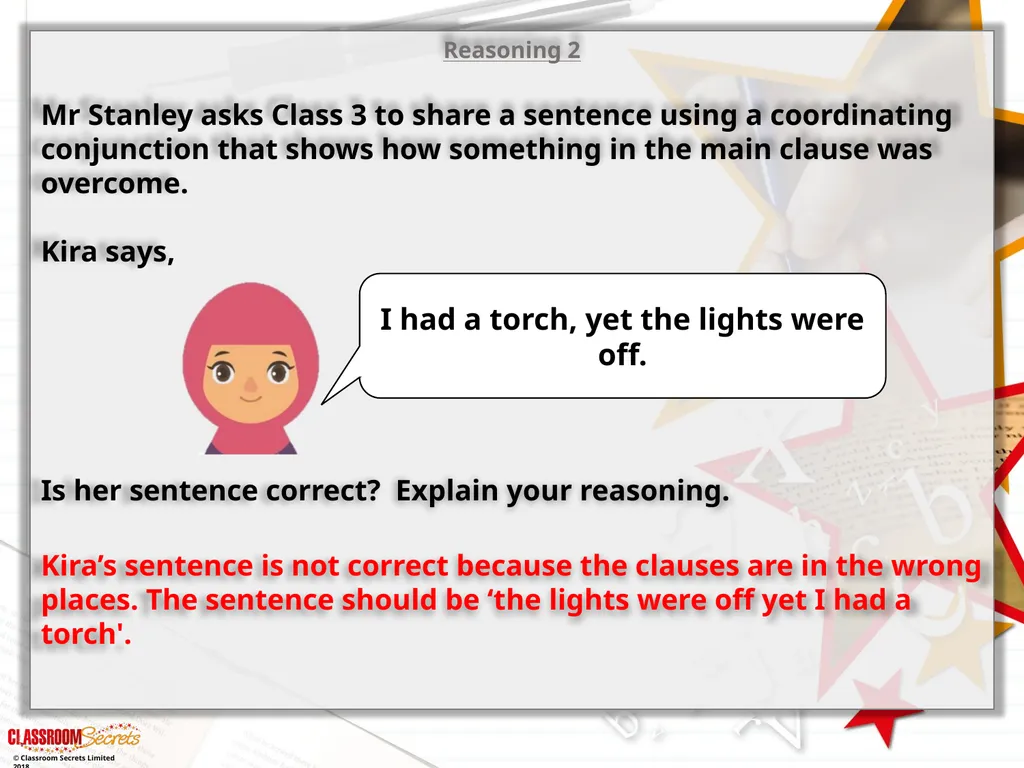
For is used to explain the main clause further (I went to bed early for I was extremely tired); nor is used in the negative and adds further negative alternatives (John did not like the pie nor the chips); yet is used to show how something in the main clause has been overcome (I had been poorly over the weekend yet I still completed my homework).
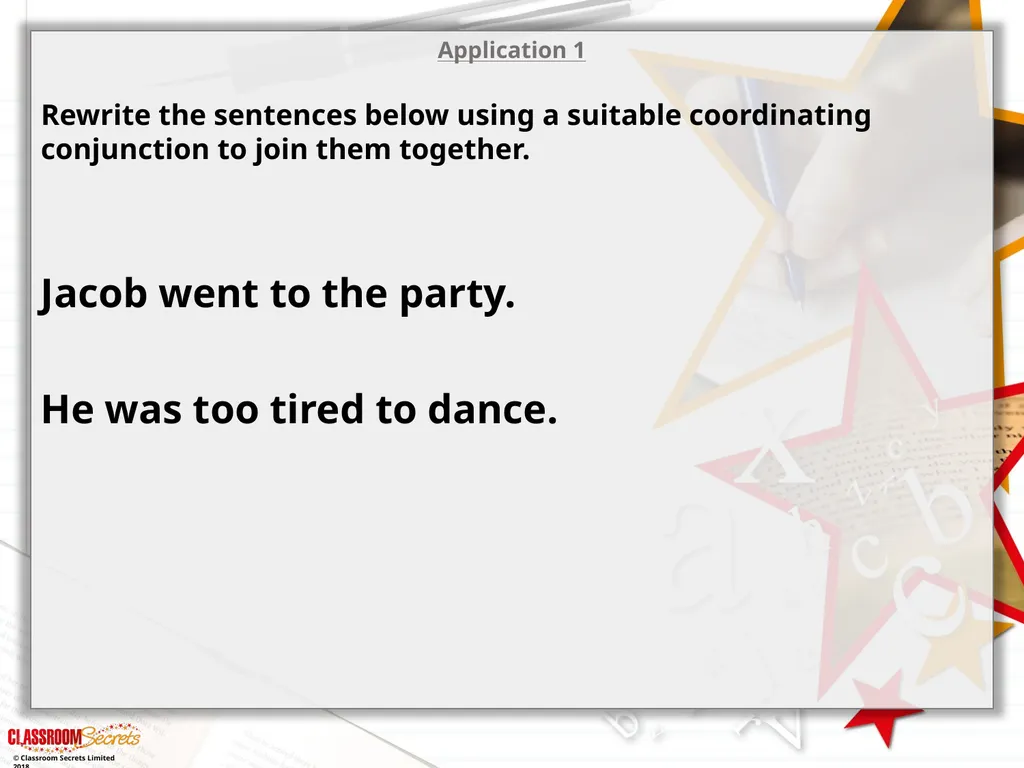
Children should be able to use these coordinating conjunctions in their writing and explain why they have chosen a specific one based on their uses when joining two main clauses together.


Focused Questions

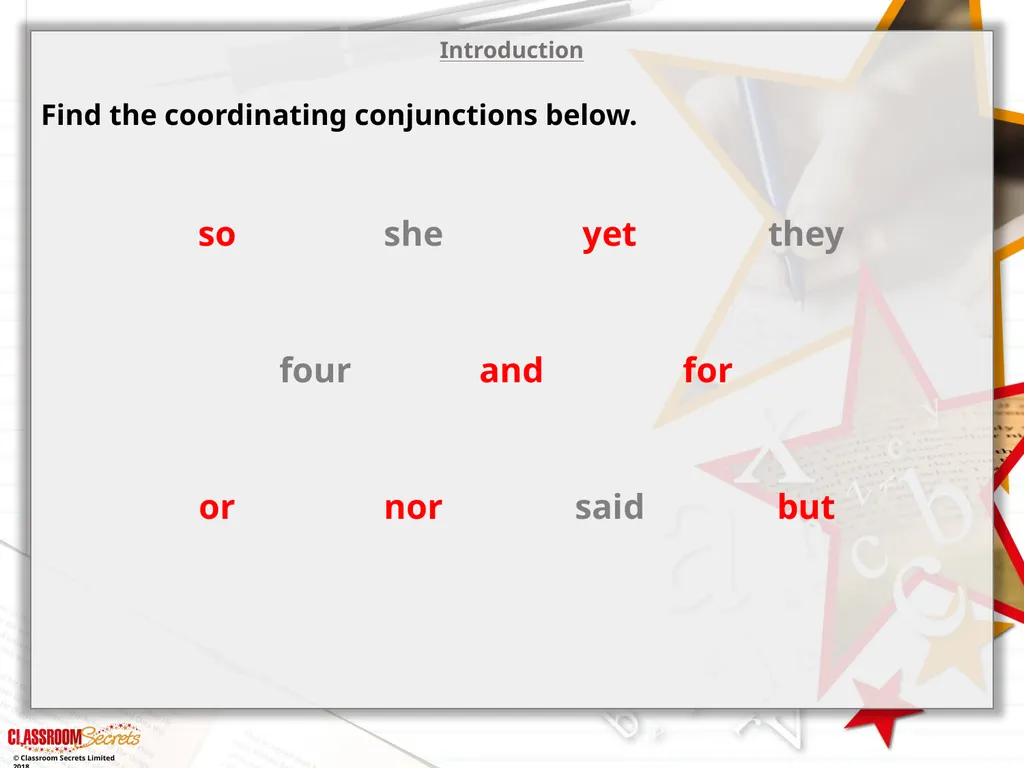
What are the seven coordinating conjunctions?
Explain how each conjunction can be used to join two main clauses together. © Classroom Secrets Limited 2018<br>