Click anywhere to get started Lithium Battery Safety Factors of severity Battery size Chemistry Construction and battery state of charge (soc) Significant Battery Reaction Produce Hazardous Components : Flammable by products (e.g.
"Click anywhere to get started… Lithium Battery" is the property of its rightful owner. Permission is granted to
download and print the materials on this website for personal, non-commercial use only, and to display it
on your personal computer provided you do not modify the materials and that you retain all copyright
notices contained in the materials. By downloading content from our website, you accept the terms of this
agreement.
Share
Embed code
Presentation Transcript
01
Click anywhere to get started…<br>
02
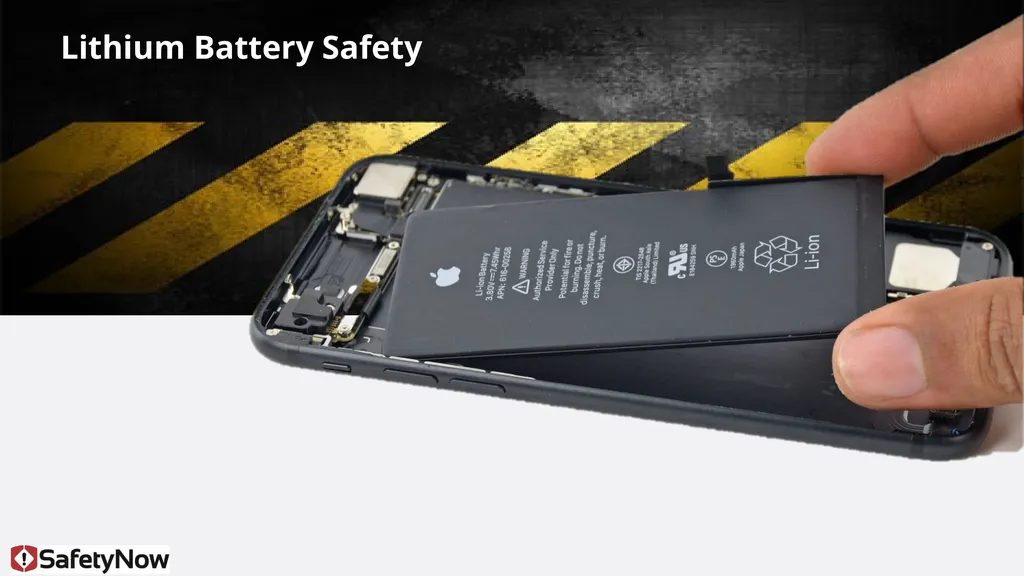
Lithium Battery Safety<br>
03
Factors of severity
Battery size
Chemistry
Construction and battery state of charge (soc)
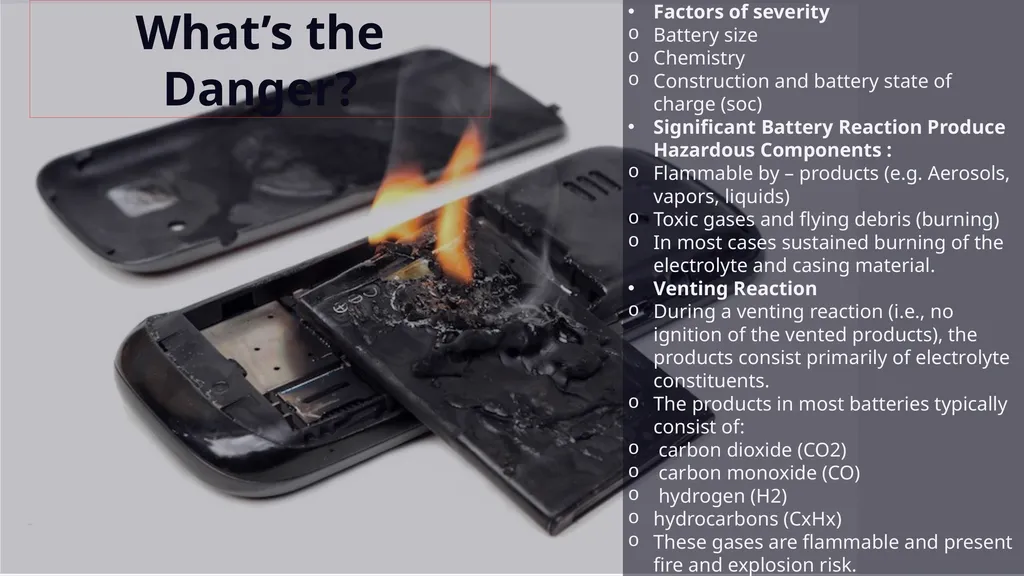
Significant Battery Reaction Produce Hazardous Components :
Flammable by – products (e.g. Aerosols, vapors, liquids)
Toxic gases and flying debris (burning)
In most cases sustained burning of the electrolyte and casing material.
Venting Reaction
During a venting reaction (i.e., no ignition of the vented products), the products consist primarily of electrolyte constituents.
The products in most batteries typically consist of:
carbon dioxide (CO2)
carbon monoxide (CO)
hydrogen (H2)
hydrocarbons (CxHx)
These gases are flammable and present fire and explosion risk. What’s the Danger?<br>
04
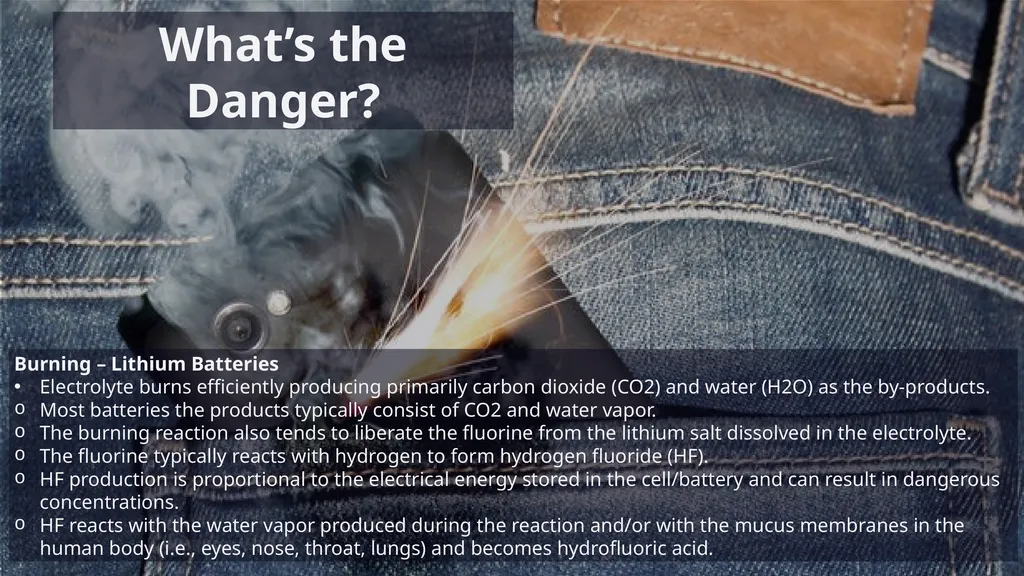
Burning – Lithium Batteries
Electrolyte burns efficiently producing primarily carbon dioxide (CO2) and water (H2O) as the by-products.
Most batteries the products typically consist of CO2 and water vapor.
The burning reaction also tends to liberate the fluorine from the lithium salt dissolved in the electrolyte.
The fluorine typically reacts with hydrogen to form hydrogen fluoride (HF).
HF production is proportional to the electrical energy stored in the cell/battery and can result in dangerous concentrations.
HF reacts with the water vapor produced during the reaction and/or with the mucus membranes in the human body (i.e., eyes, nose, throat, lungs) and becomes hydrofluoric acid. What’s the Danger?<br>
05
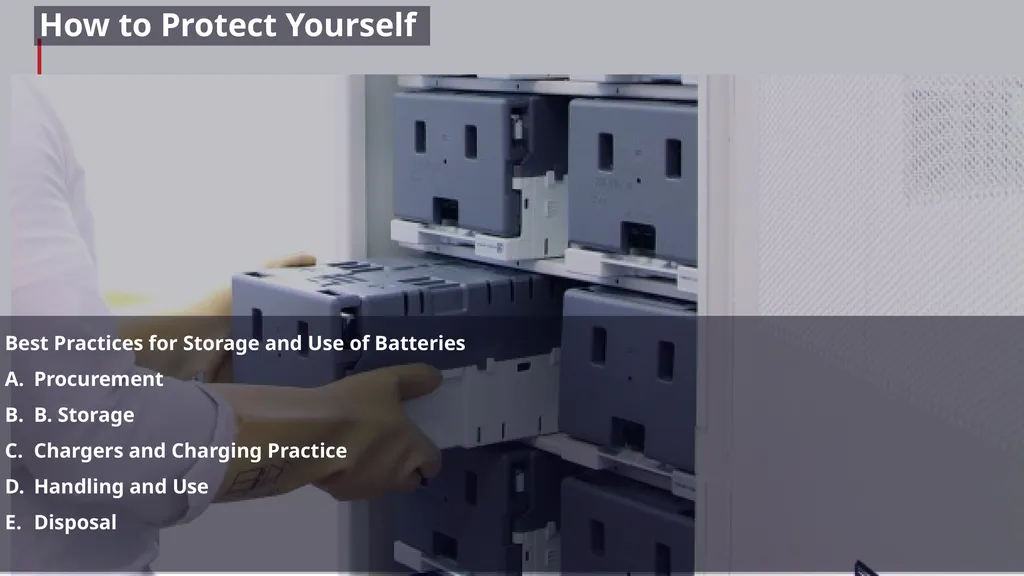
How to Protect Yourself Best Practices for Storage and Use of Batteries
Procurement
B. Storage
Chargers and Charging Practice
Handling and Use
Disposal<br>
06
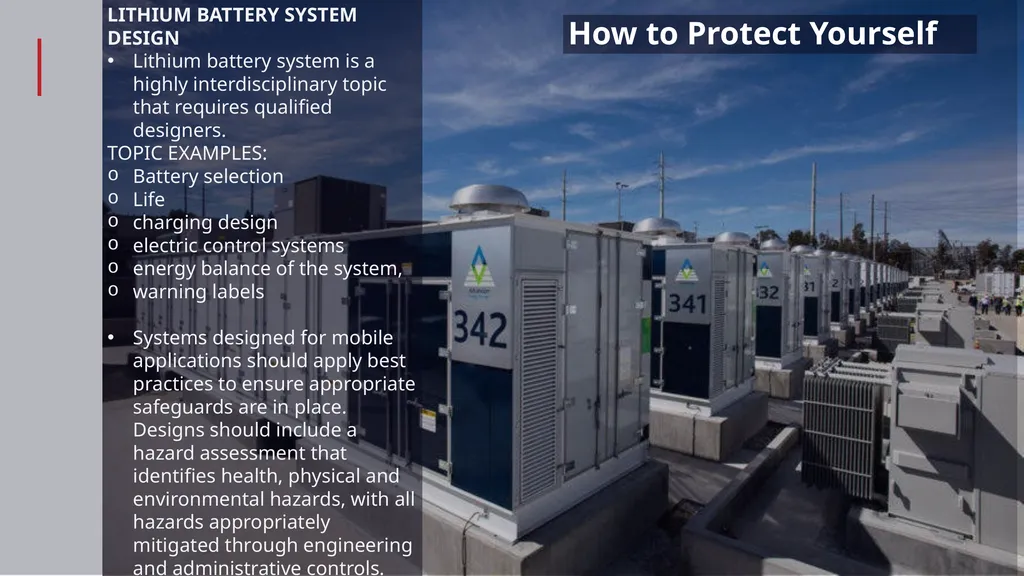
LITHIUM BATTERY SYSTEM DESIGN
Lithium battery system is a highly interdisciplinary topic that requires qualified designers.
TOPIC EXAMPLES:
Battery selection
Life
charging design
electric control systems
energy balance of the system,
warning labels
Systems designed for mobile applications should apply best practices to ensure appropriate safeguards are in place. Designs should include a hazard assessment that identifies health, physical and environmental hazards, with all hazards appropriately mitigated through engineering and administrative controls. How to Protect Yourself<br>
07
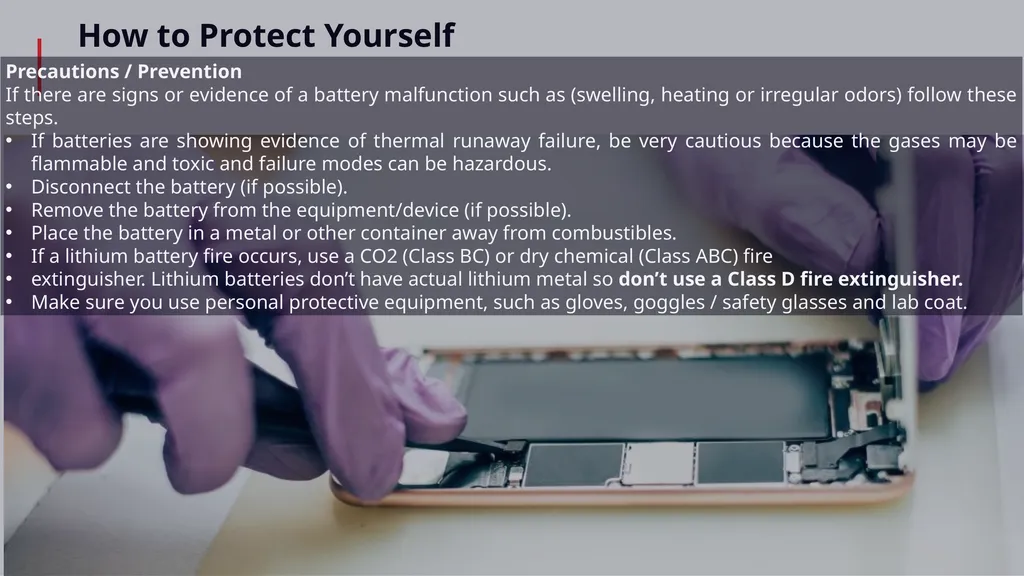
How to Protect Yourself Precautions / Prevention
If there are signs or evidence of a battery malfunction such as (swelling, heating or irregular odors) follow these steps.
If batteries are showing evidence of thermal runaway failure, be very cautious because the gases may be flammable and toxic and failure modes can be hazardous.
Disconnect the battery (if possible).
Remove the battery from the equipment/device (if possible).
Place the battery in a metal or other container away from combustibles.
If a lithium battery fire occurs, use a CO2 (Class BC) or dry chemical (Class ABC) fire
extinguisher. Lithium batteries don’t have actual lithium metal so don’t use a Class D fire extinguisher.
Make sure you use personal protective equipment, such as gloves, goggles / safety glasses and lab coat.<br>