Climate Change Vulnerability Assessment (CCVA) Why conduct vulnerability assessment? Vulnerability assessments help to identify who is most vulnerable , where they are located, and what risks they face . They are important input to planning
"Climate Change Vulnerability Assessment (CCVA) Why" is the property of its rightful owner. Permission is granted to
download and print the materials on this website for personal, non-commercial use only, and to display it
on your personal computer provided you do not modify the materials and that you retain all copyright
notices contained in the materials. By downloading content from our website, you accept the terms of this
agreement.
Why conduct vulnerability assessment? Vulnerability assessments help to identify who is most vulnerable , where they are located, and what risks they face . They are important input to planning for adaptation.
Source: Weadapt<br>
03
Goals of CCVAs Identify actions to:
reduce risks
reduce vulnerability
improve adaptation
Inform climate risk management decisions
Identify climate-related policy and economic options, as feasible<br>
04
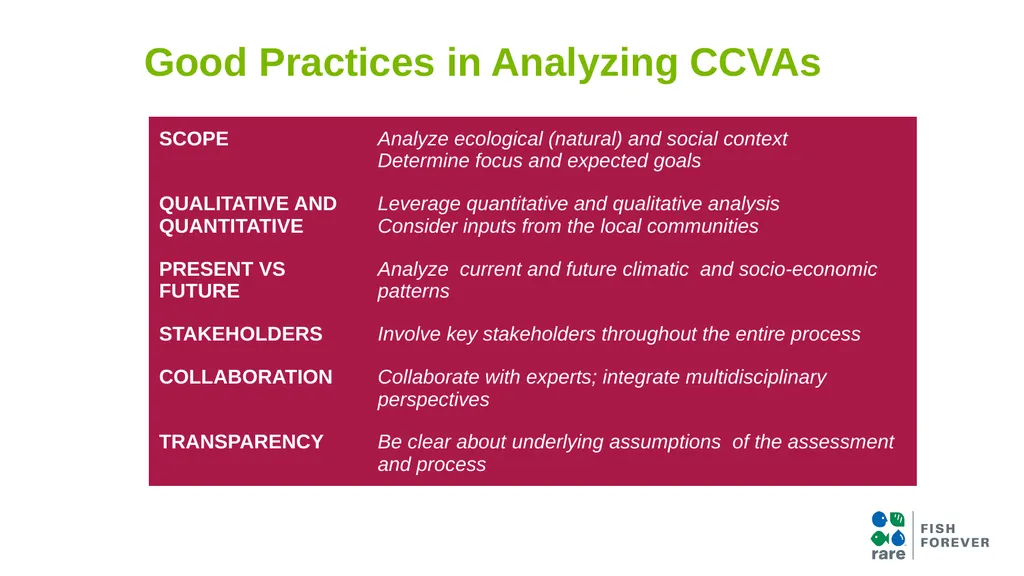
Good Practices in Analyzing CCVAs<br>
05
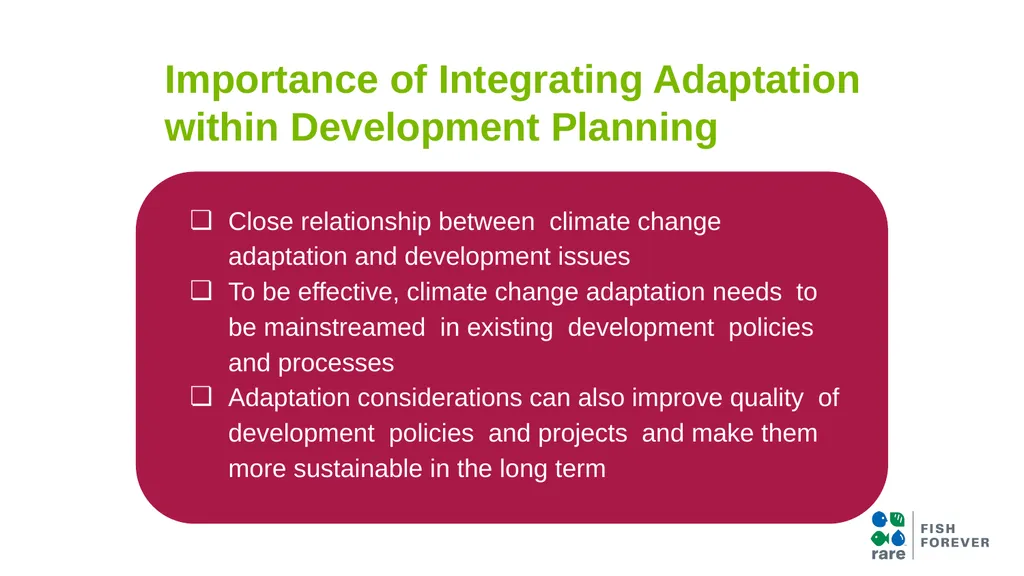
Importance of Integrating Adaptation within Development Planning Close relationship between climate change adaptation and development issues
To be effective, climate change adaptation needs to be mainstreamed in existing development policies and processes
Adaptation considerations can also improve quality of development policies and projects and make them more sustainable in the long term<br>
06
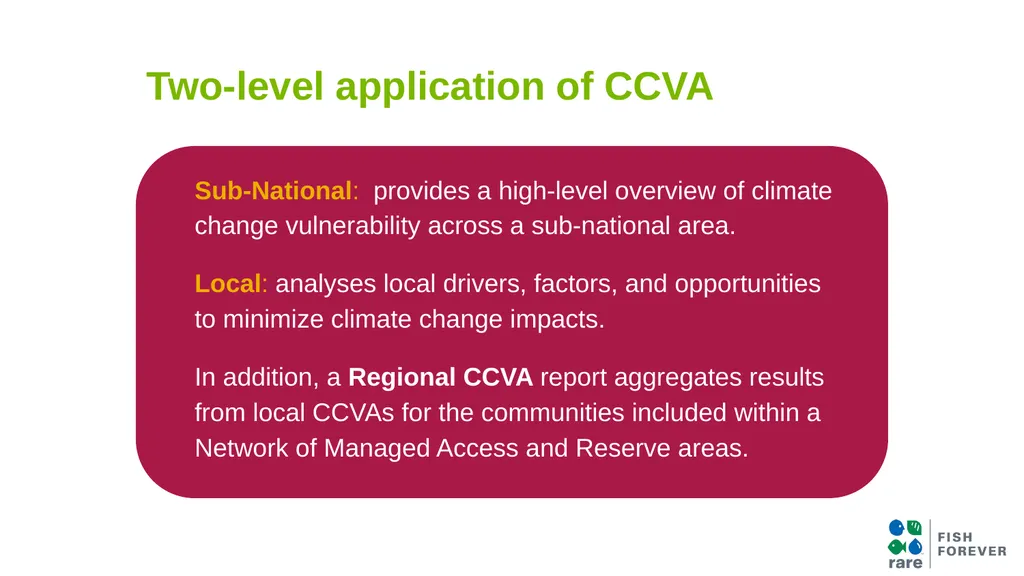
Two-level application of CCVA Sub-National: provides a high-level overview of climate change vulnerability across a sub-national area.
Local: analyses local drivers, factors, and opportunities to minimize climate change impacts.
In addition, a Regional CCVA report aggregates results from local CCVAs for the communities included within a Network of Managed Access and Reserve areas.<br>
07
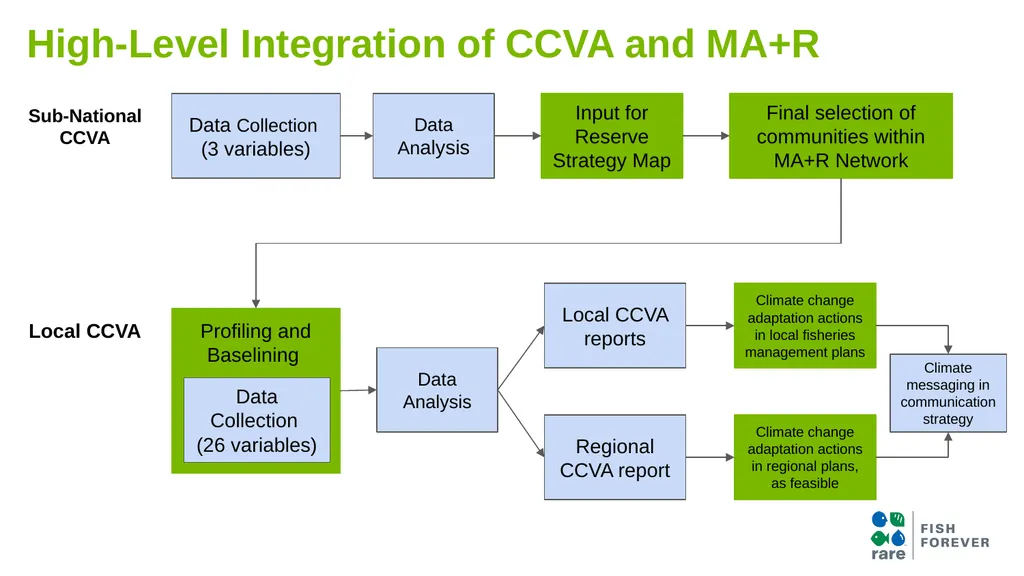
High-Level Integration of CCVA and MA+R Sub-National CCVA Local CCVA Local CCVA reports Regional CCVA report Data Collection
(3 variables) Data Analysis Input for Reserve Strategy Map Final selection of communities within MA+R Network Profiling and Baselining Data Analysis Climate change adaptation actions in regional plans, as feasible Data Collection
(26 variables) Climate change adaptation actions in local fisheries management plans Climate messaging in communication strategy<br>
08
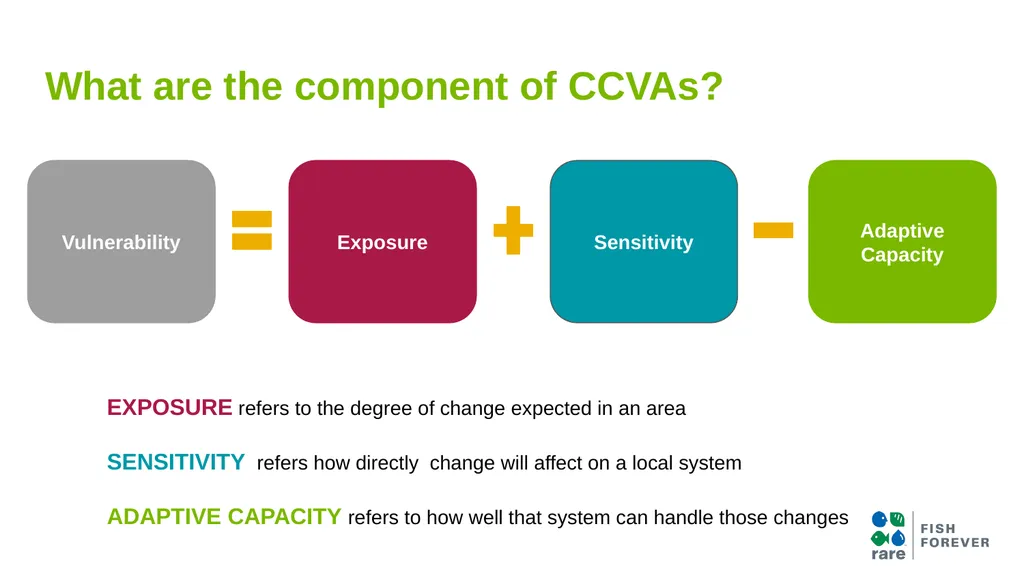
What are the component of CCVAs? Vulnerability Exposure Sensitivity Adaptive Capacity EXPOSURE refers to the degree of change expected in an area
SENSITIVITY refers how directly change will affect on a local system
ADAPTIVE CAPACITY refers to how well that system can handle those changes<br>
09
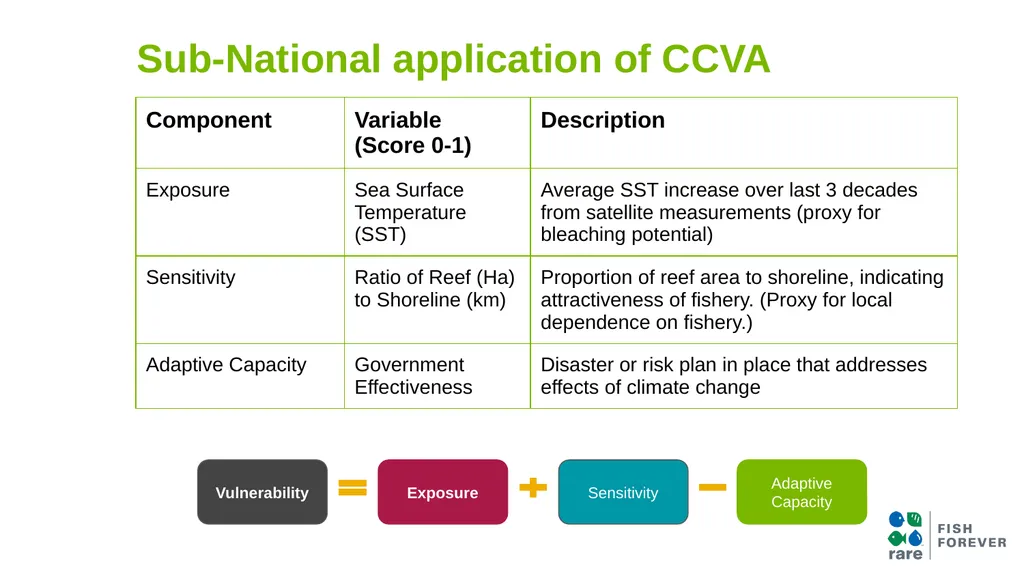
Sub-National application of CCVA Vulnerability Exposure Sensitivity Adaptive Capacity<br>
10
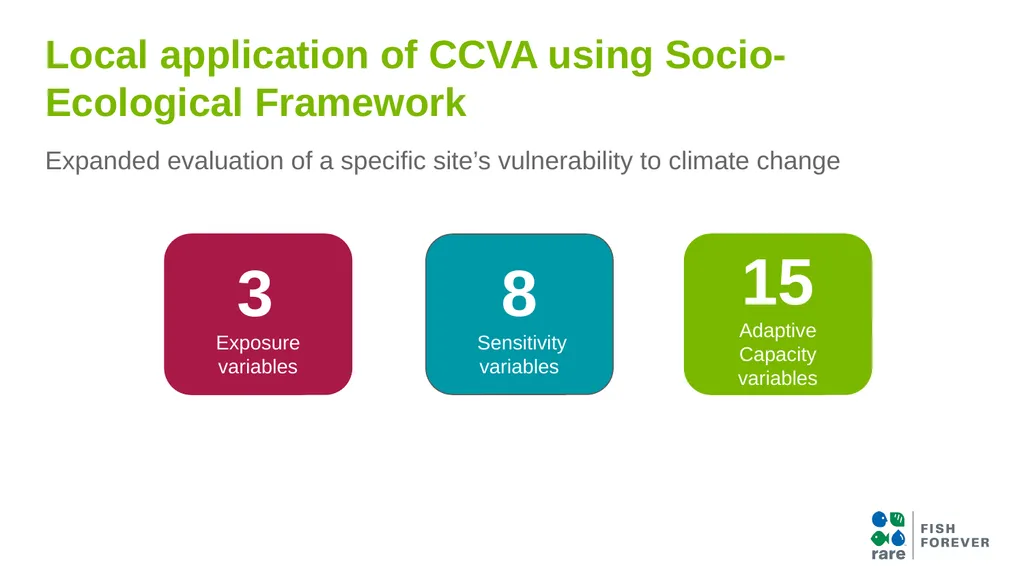
Local application of CCVA using Socio-Ecological Framework Expanded evaluation of a specific site’s vulnerability to climate change 3
Exposure variables 8
Sensitivity variables 15 Adaptive Capacity variables<br>
11
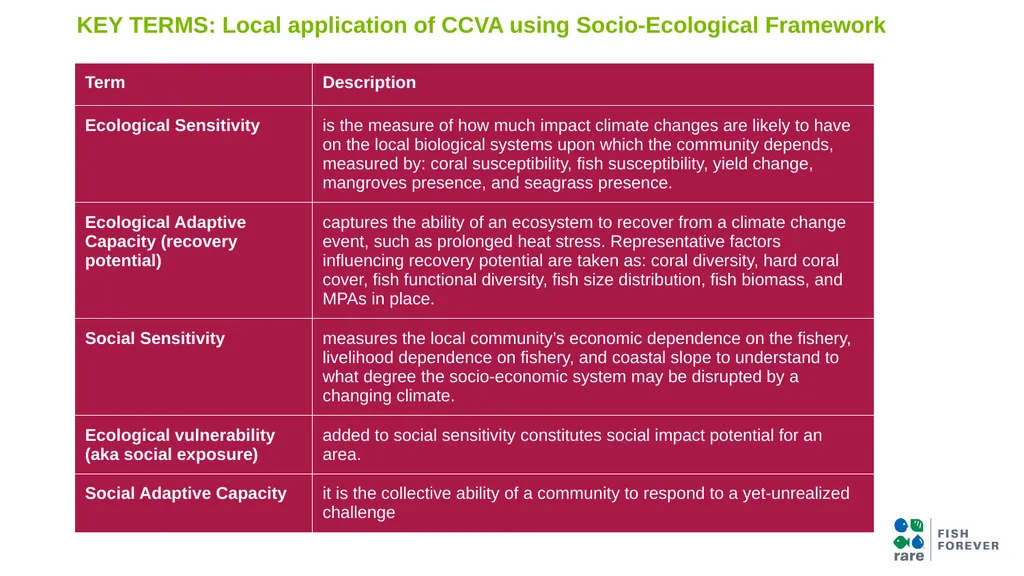
KEY TERMS: Local application of CCVA using Socio-Ecological Framework<br>
12
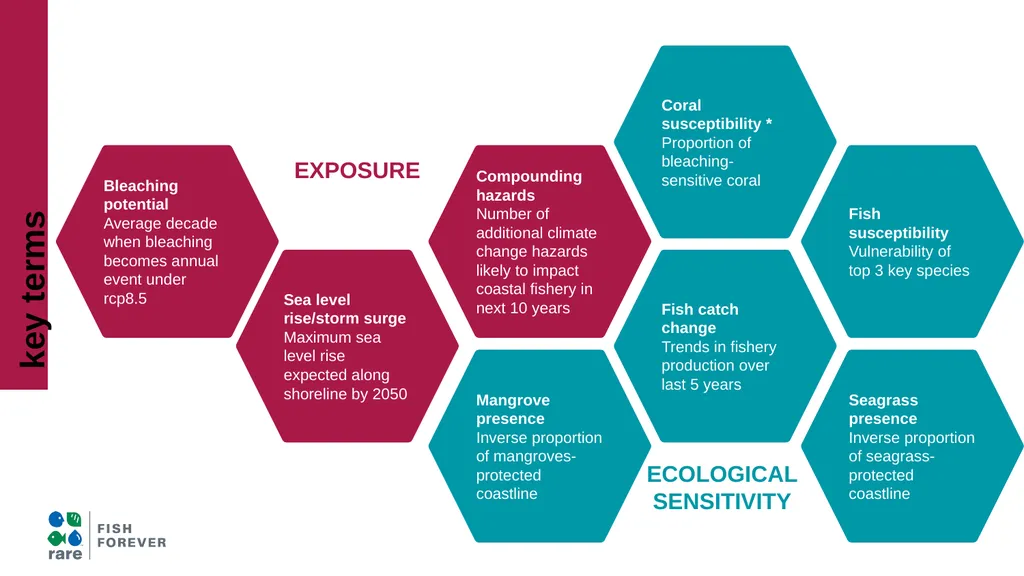
Bleaching potential
Average decade when bleaching becomes annual event under rcp8.5 Sea level rise/storm surge
Maximum sea level rise expected along shoreline by 2050 Compounding hazards
Number of additional climate change hazards likely to impact coastal fishery in next 10 years Mangrove presence
Inverse proportion of mangroves-protected coastline Fish catch change
Trends in fishery production over last 5 years Fish susceptibility
Vulnerability of top 3 key species Seagrass presence
Inverse proportion of seagrass-protected coastline Coral susceptibility *
Proportion of bleaching-sensitive coral EXPOSURE ECOLOGICAL SENSITIVITY key terms<br>
13
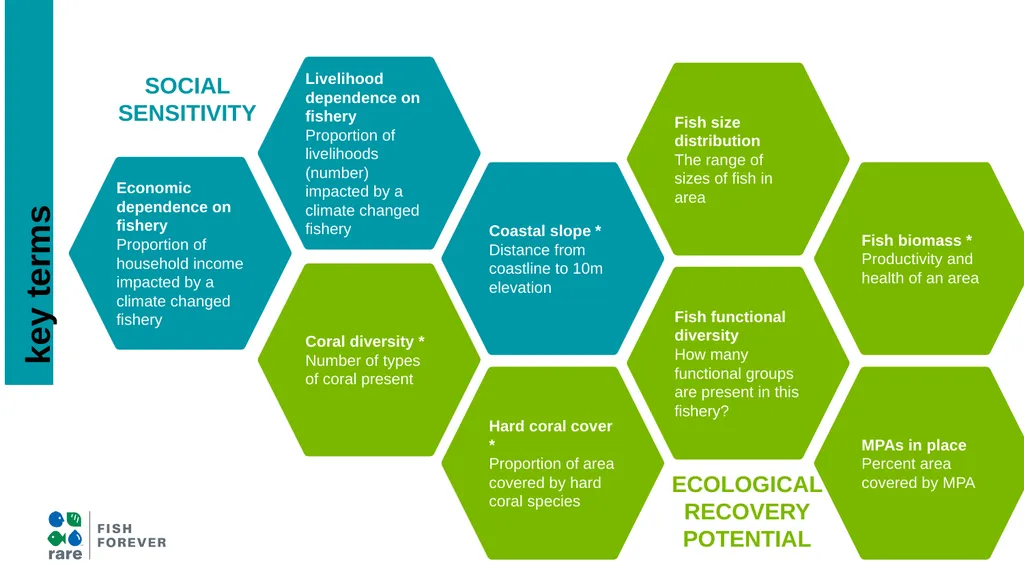
key terms Economic dependence on fishery
Proportion of household income impacted by a climate changed fishery Livelihood dependence on fishery
Proportion of livelihoods (number) impacted by a climate changed fishery Coastal slope *
Distance from coastline to 10m elevation Hard coral cover *
Proportion of area covered by hard coral species Fish functional diversity
How many functional groups are present in this fishery? Fish biomass *
Productivity and health of an area MPAs in place
Percent area covered by MPA Fish size distribution
The range of sizes of fish in area Coral diversity *
Number of types of coral present SOCIAL SENSITIVITY ECOLOGICAL RECOVERY POTENTIAL<br>
14
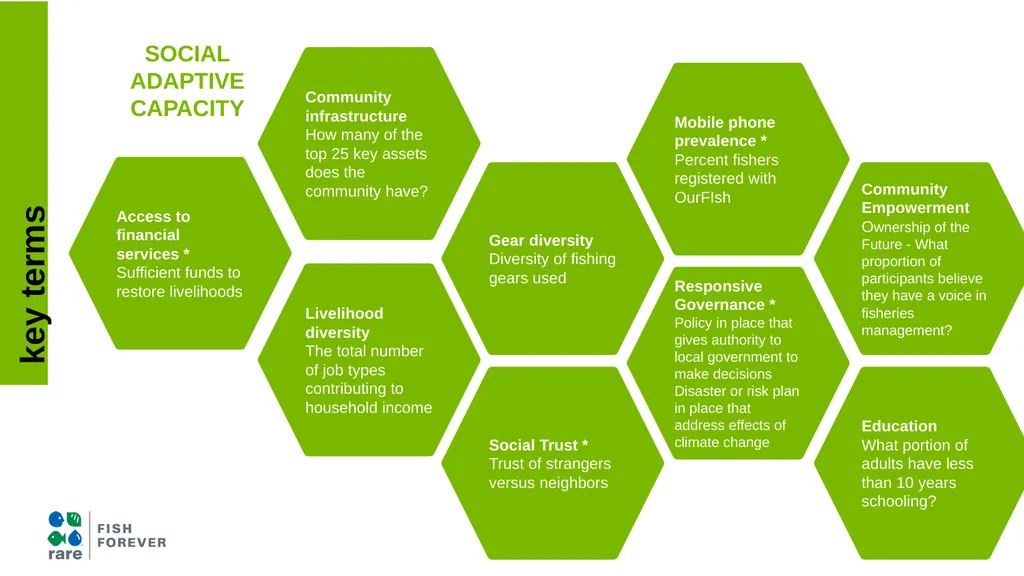
key terms Access to financial services *
Sufficient funds to restore livelihoods Community infrastructure
How many of the top 25 key assets does the community have? Gear diversity
Diversity of fishing gears used Social Trust *
Trust of strangers versus neighbors Responsive Governance *
Policy in place that gives authority to local government to make decisions Disaster or risk plan in place that address effects of climate change Community Empowerment
Ownership of the Future - What proportion of participants believe they have a voice in fisheries management? Education
What portion of adults have less than 10 years schooling? Mobile phone prevalence *
Percent fishers registered with OurFIsh Livelihood diversity
The total number of job types contributing to household income SOCIAL ADAPTIVE CAPACITY<br>