01
Coastal Processes Science Outreach<br>
02
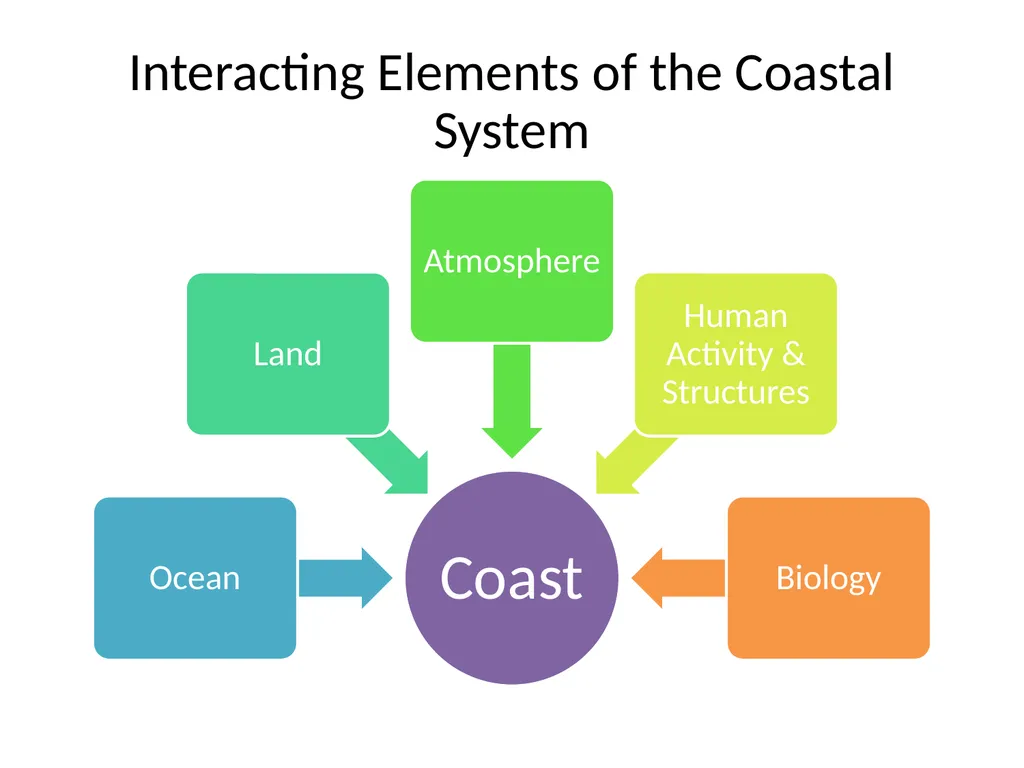
Interacting Elements of the Coastal System<br>
03
Types of Coastlines in NZ Rocky shorelines
Form on high energy coasts where the ocean meets mountains or sea cliffs
Sandy beaches
Mainland, pocket and barrier beaches
Coastal wetlands
Swamps, tidal flats, marshes
Rich habitat for wildlife<br>
04
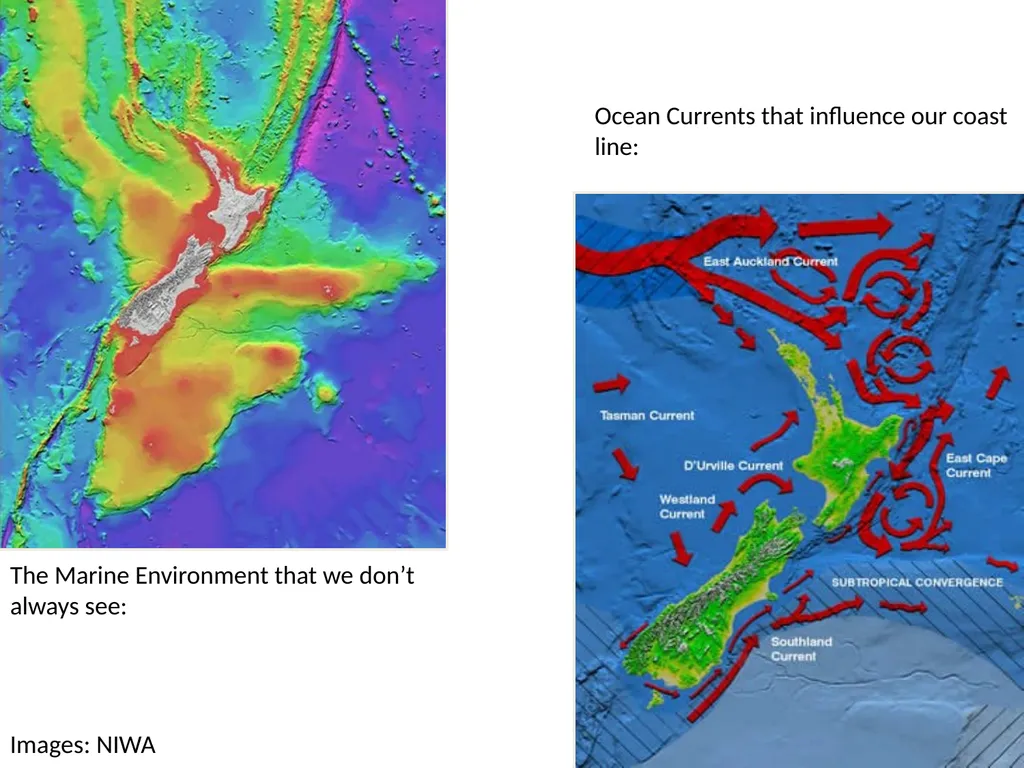
The Marine Environment that we don’t always see: Ocean Currents that influence our coast line: Images: NIWA<br>
05
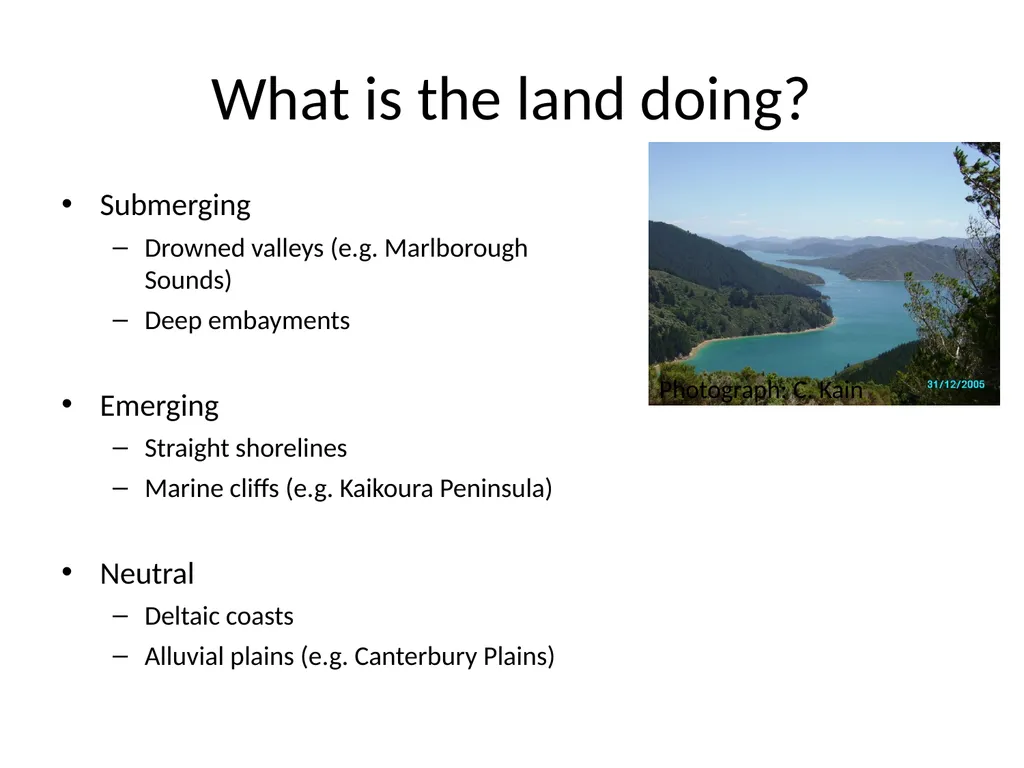
What is the land doing? Submerging
Drowned valleys (e.g. MarlboroughSounds)
Deep embayments
Emerging
Straight shorelines
Marine cliffs (e.g. Kaikoura Peninsula)
Neutral
Deltaic coasts
Alluvial plains (e.g. Canterbury Plains) Photograph: C. Kain<br>
06
Agents of coastal change Base level change
Tectonics
Sea level change
Sediment supply
Lithology (type of sediment)
Delivery
Human actions
Modify process
Modify morphology
Modify linkages<br>
07
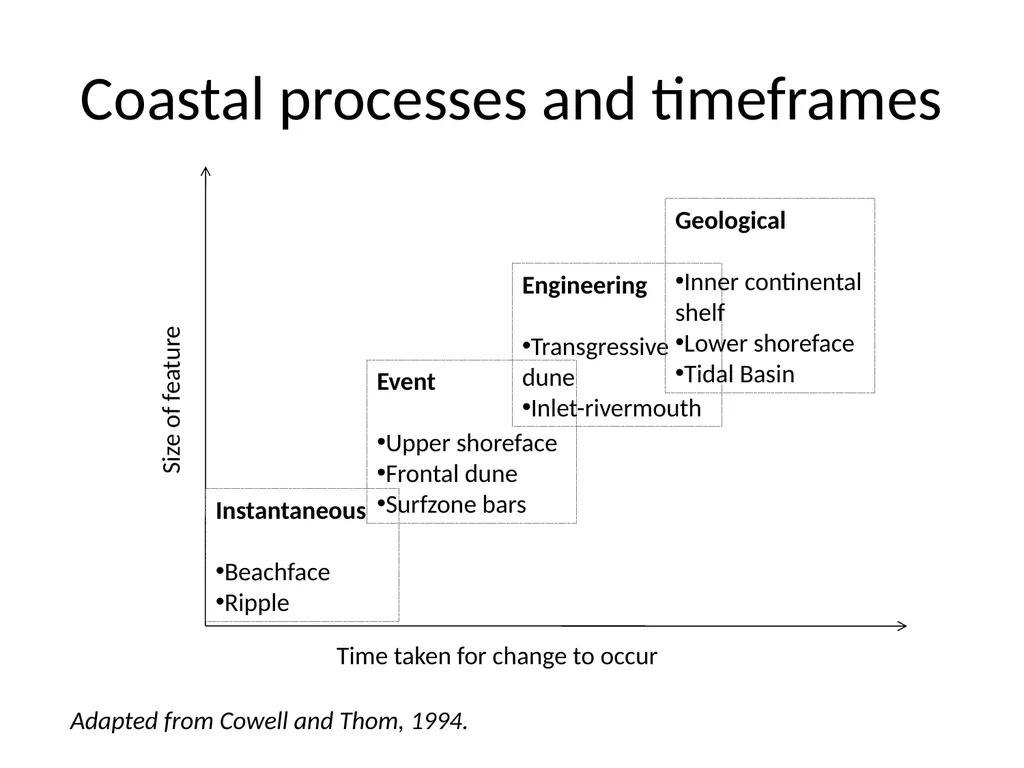
Coastal processes and timeframes Instantaneous
Beachface
Ripple Event
Upper shoreface
Frontal dune
Surfzone bars Engineering
Transgressive dune
Inlet-rivermouth Geological
Inner continental shelf
Lower shoreface
Tidal Basin Time taken for change to occur Size of feature Adapted from Cowell and Thom, 1994.<br>
08
Beaches What is a beach?
A beach occurs at the MARGIN of a water body where wave action is the principal agent of change.
Why study beaches?
To understand the processes, identify danger and manage hazards<br>
09
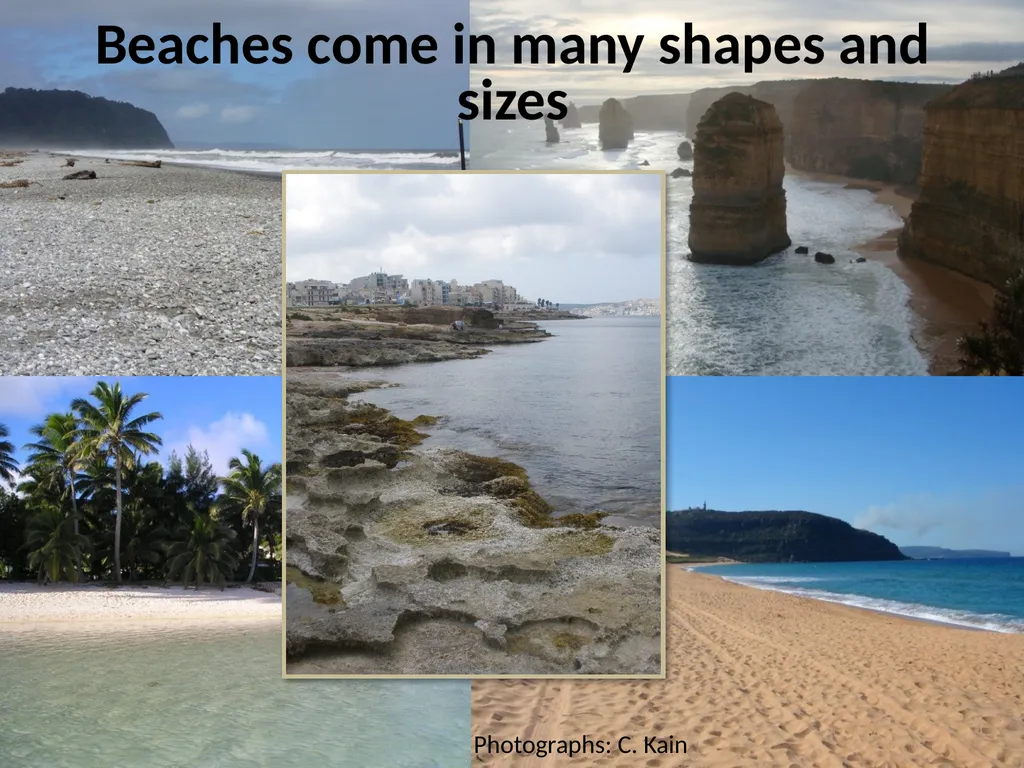
Beaches come in many shapes and sizes Photographs: C. Kain<br>
10
The Dynamic Beach Each beach is different
Beaches respond to changes in wave energy (try to reach an equilibrium)
Beaches dissipate energy through the movement of sediment (primarily by waves and wind)
Beaches are natural barriers (they protect us!)<br>
11
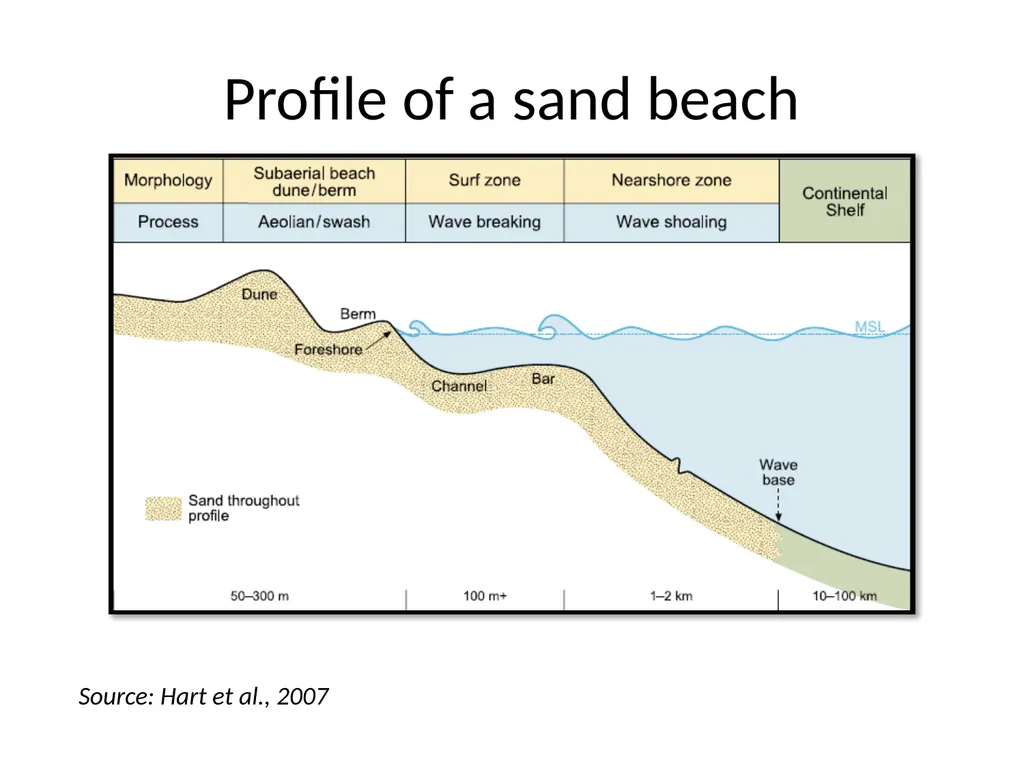
Profile of a sand beach Source: Hart et al., 2007<br>
12
During a storm... Large waves travel a long way up the beach, causing erosion
Sand is removed from the dune and deposited in a bar offshore
The bar helps dissipate wave energy by making waves break further offshore, reducing erosion
Once the storm is over, the sand is slowly brought back to the beach by the waves and deposited on the dunes by wind<br>
13
Human interaction with coasts We like to live there – coasts are attractive and rich in resources.
Coastal structures that can affect our coasts include:
Ports/harbours
Sea walls and other protection structures
Marine farms
Piers
Boat ramps
Infrastructure (e.g. Stormwater, roads, power poles)<br>
14
Indirect human effects on the coast If rivers are dammed, then sediment can’t reach the coast.
If too much water is taken out of the river, its capacity to transport sediment is reduced.
If a river can no longer bring sufficient sediment to the coast - erosion will occur.
If sand dunes are cut down so people can see the sea - there is no longer any coastal protection in times of storm or tsunami.
Structures change the morphology of the beach and affect sediment moving along it (e.g. New Brighton Pier).<br>
15
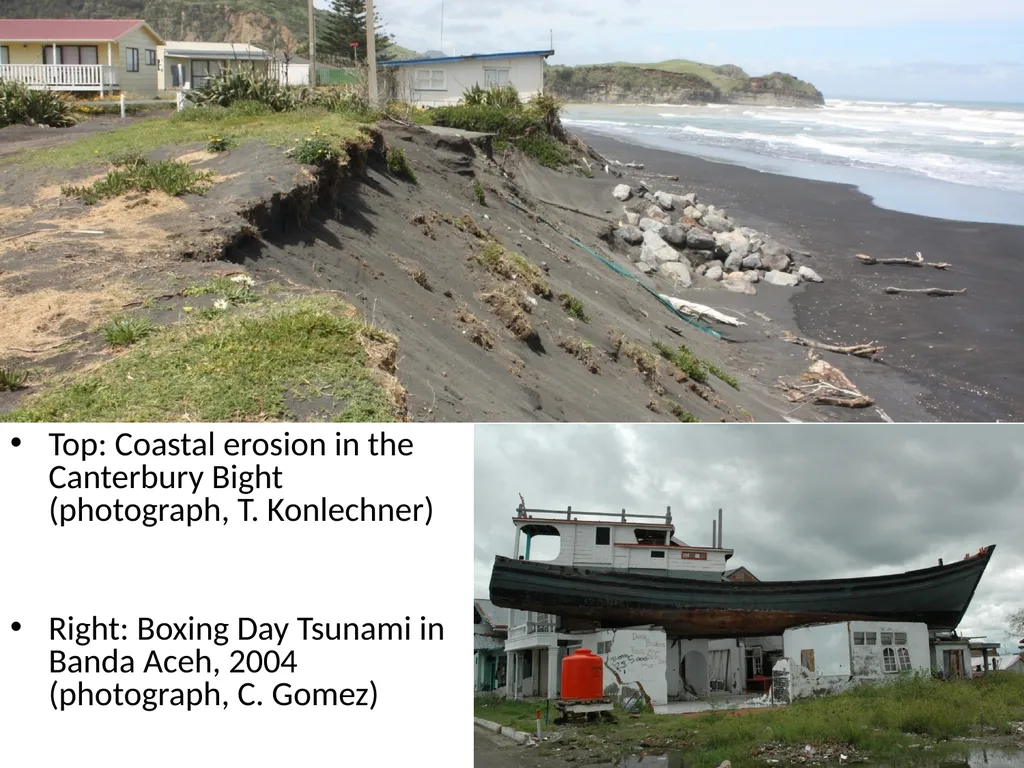
Coastal hazards Occur when people and the coast meet. A natural process is not a hazard until people or infrastructure are threatened!
Coastal erosion and coastal flooding are the main coastal hazards.
Affect people and buildings located within the zone of natural shoreline change.
Coastal flooding will increase due to sea level rise caused by global warming
Others include: wind erosion, storms and tsunami<br>
16
hd Top: Coastal erosion in the Canterbury Bight (photograph, T. Konlechner)
Right: Boxing Day Tsunami in Banda Aceh, 2004 (photograph, C. Gomez)<br>
17
Options for erosion management Do nothing
Works well where coasts are relatively free from development
Avoid
Prevent development in the first place
Accommodate
Change land use, building codes, insurance premiums...
Retreat
Move your house/village – most sustainable option long term
Protect
Use engineered options. This is never a permanent fix. (e.g. Amberley Beach)<br>
18
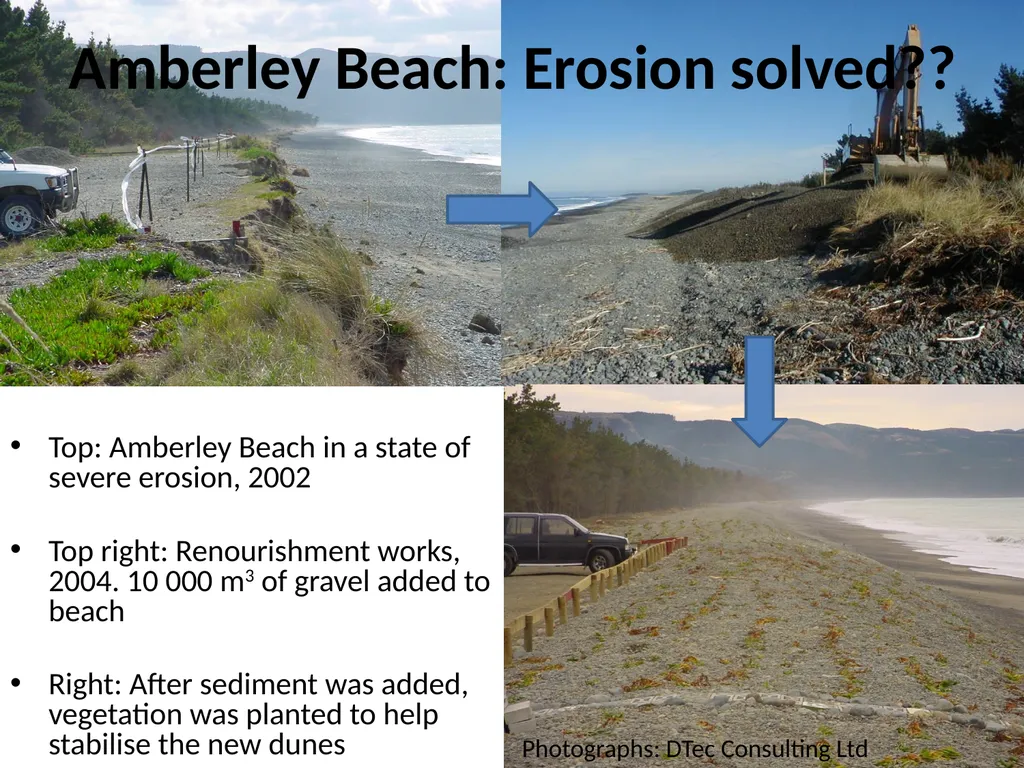
Amberley Beach: Erosion solved?? Photographs: DTec Consulting Ltd Top: Amberley Beach in a state of severe erosion, 2002
Top right: Renourishment works, 2004. 10 000 m3 of gravel added to beach
Right: After sediment was added, vegetation was planted to help stabilise the new dunes<br>
19
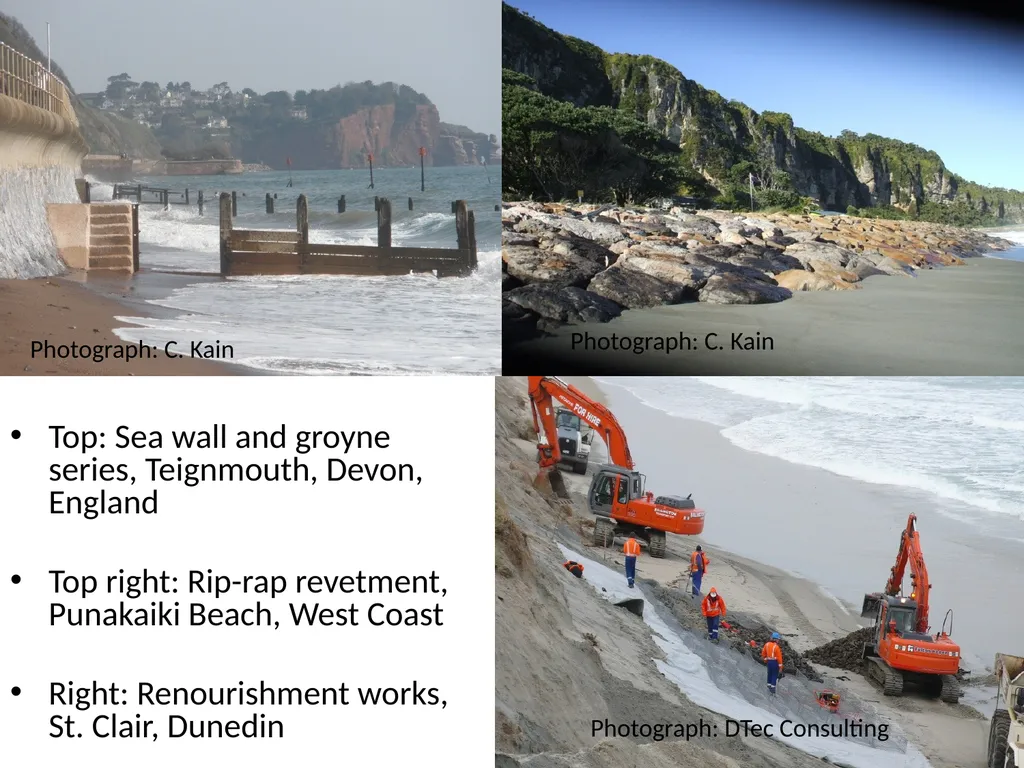
Photograph: C. Kain Photograph: DTec Consulting Photograph: C. Kain Top: Sea wall and groyne series, Teignmouth, Devon, England
Top right: Rip-rap revetment, Punakaiki Beach, West Coast
Right: Renourishment works, St. Clair, Dunedin<br>
20
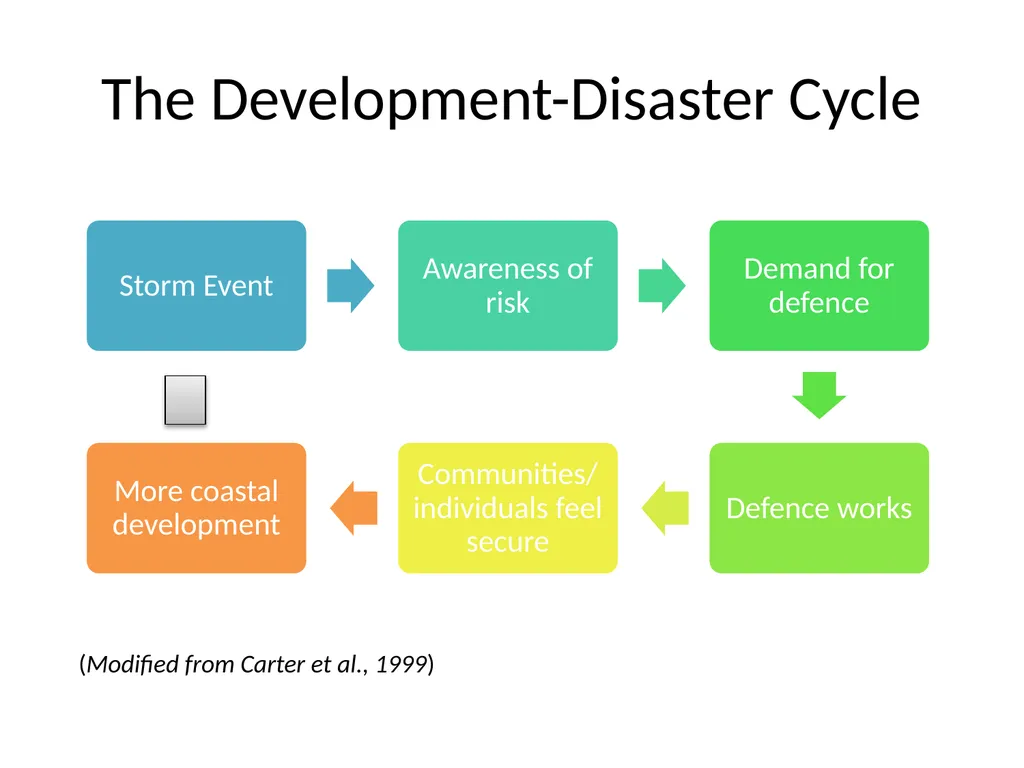
The Development-Disaster Cycle (Modified from Carter et al., 1999)<br>
21
The future of the world’s coasts Coastlines have been changing shape since the beginning of time – this is not a new phenomenon!
Sea level rise, increased storminess and changing weather patterns (due to climate change) will cause a lot of change in coming years
This leads to an increase in coastal hazards for us as coastal users<br>
22
Conclusion Coasts are dynamic - they are sensitive to changes
Coastal change can result from changes in natural processes, human actions or a mixture of both
Coastal change is ongoing
We must try to understand this change in order to work with it<br>
23
For more info on available Geography courses at the University of Canterbury:
www.geog.canterbury.ac.nz<br>
Show all 23 slides