
Collecting Extant Data Online Janet Salmons, PhD

Description: Collecting Extant Data Online Janet Salmons, PhD Chapter 7 Objectives After reading and reflecting on Chapter 7, you will be able to: Distinguish between types of extant data. Explain modes of collecting extant data and the position and
Related Topics
Download Presentation
"Collecting Extant Data Online Janet Salmons, PhD" is the property of its rightful owner. Permission is granted to download and print the materials on this website for personal, non-commercial use only, and to display it on your personal computer provided you do not modify the materials and that you retain all copyright notices contained in the materials. By downloading content from our website, you accept the terms of this agreement.
Presentation Transcript
slide1. Collecting Extant Data Online Janet Salmons, PhD Chapter 7<br>
slide2. Objectives After reading and reflecting on Chapter 7, you will be able to:
Distinguish between types of extant data.
Explain modes of collecting extant data and the position and role of the researcher in planning and conducting research using extant data.
Analyze ways in which extant data might be employed to achieve the purpose of the study.
Consider how decisions made about the type of data collection relate to other design decisions for the online study.<br>
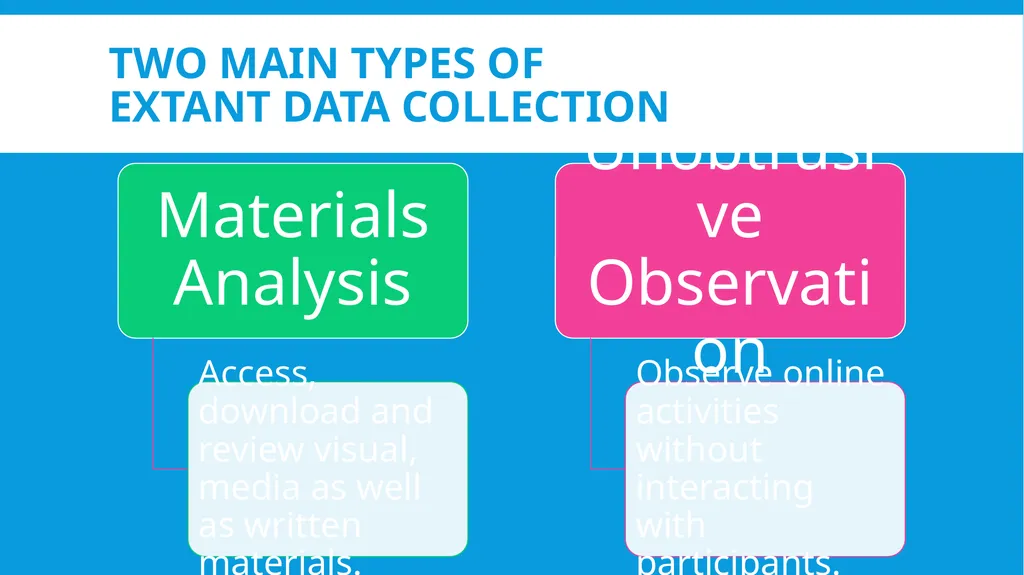
slide3. Two main Types of Extant Data Collection<br>
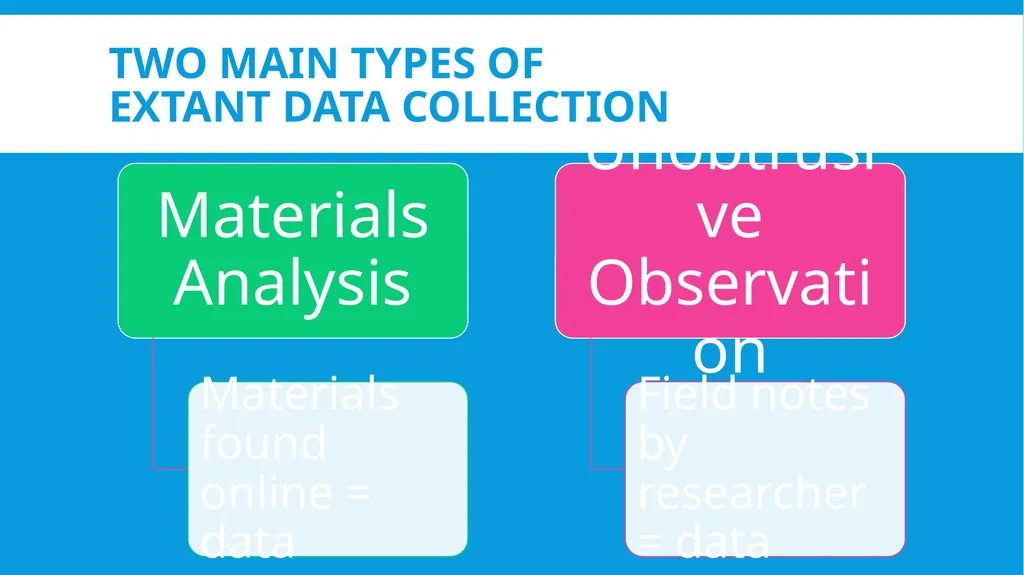
slide4. Two main Types of Extant Data Collection<br>
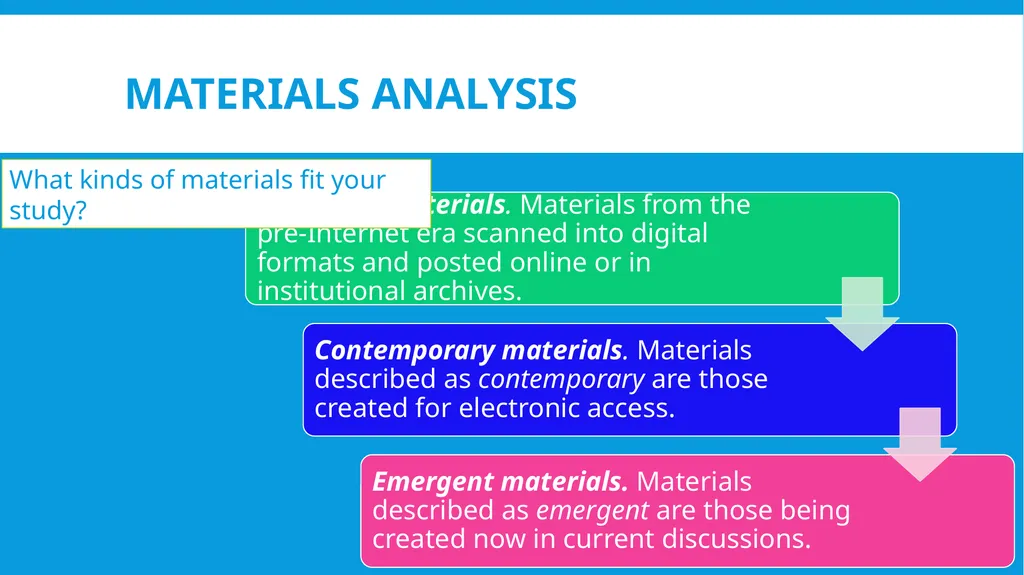
slide5. Materials Analysis What kinds of materials fit your study?<br>
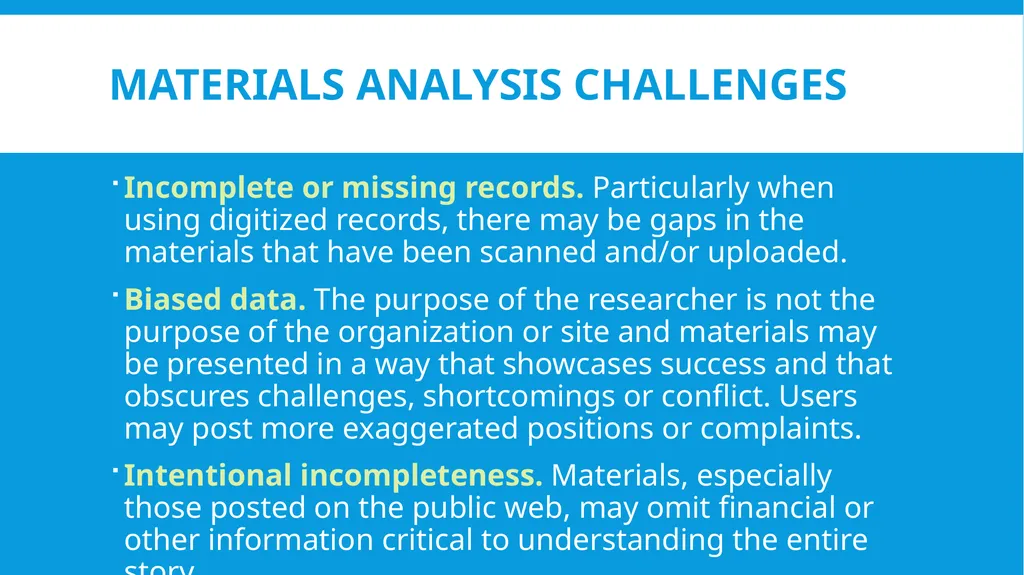
slide6. Materials Analysis Challenges Incomplete or missing records. Particularly when using digitized records, there may be gaps in the materials that have been scanned and/or uploaded.
Biased data. The purpose of the researcher is not the purpose of the organization or site and materials may be presented in a way that showcases success and that obscures challenges, shortcomings or conflict. Users may post more exaggerated positions or complaints.
Intentional incompleteness. Materials, especially those posted on the public web, may omit financial or other information critical to understanding the entire story.<br>
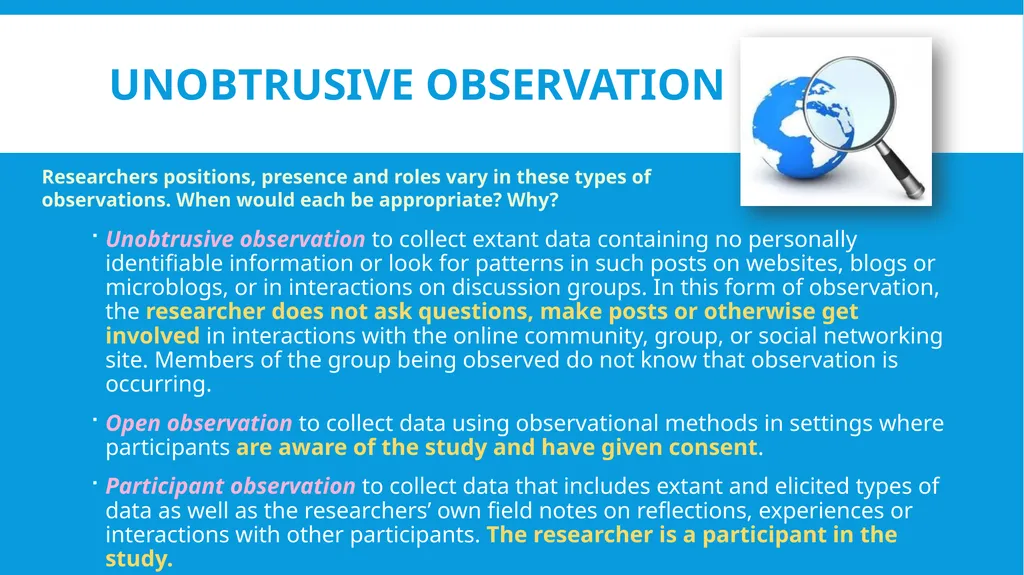
slide7. Unobtrusive Observation Unobtrusive observation to collect extant data containing no personally identifiable information or look for patterns in such posts on websites, blogs or microblogs, or in interactions on discussion groups. In this form of observation, the researcher does not ask questions, make posts or otherwise get involved in interactions with the online community, group, or social networking site. Members of the group being observed do not know that observation is occurring.
Open observation to collect data using observational methods in settings where participants are aware of the study and have given consent.
Participant observation to collect data that includes extant and elicited types of data as well as the researchers’ own field notes on reflections, experiences or interactions with other participants. The researcher is a participant in the study. Researchers positions, presence and roles vary in these types of observations. When would each be appropriate? Why?<br>
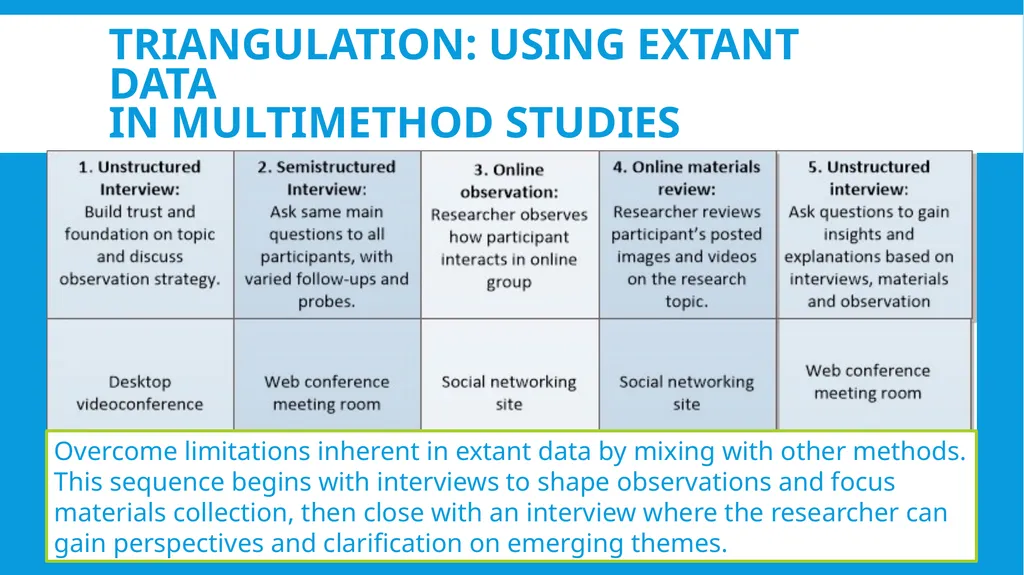
slide8. Triangulation: Using Extant Data in Multimethod Studies Overcome limitations inherent in extant data by mixing with other methods. This sequence begins with interviews to shape observations and focus materials collection, then close with an interview where the researcher can gain perspectives and clarification on emerging themes.<br>
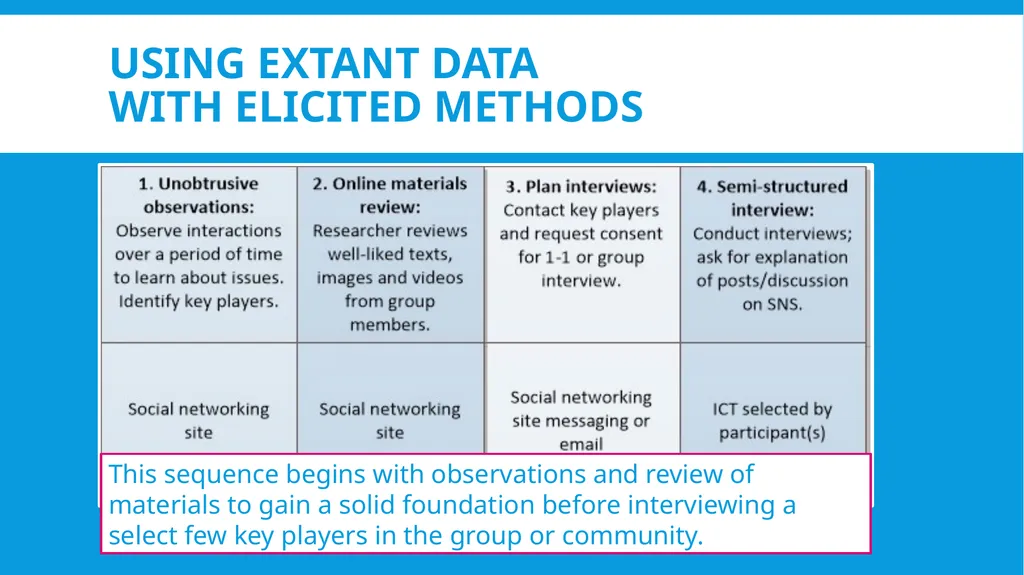
slide9. Using extant data with elicited methods This sequence begins with observations and review of materials to gain a solid foundation before interviewing a select few key players in the group or community.<br>
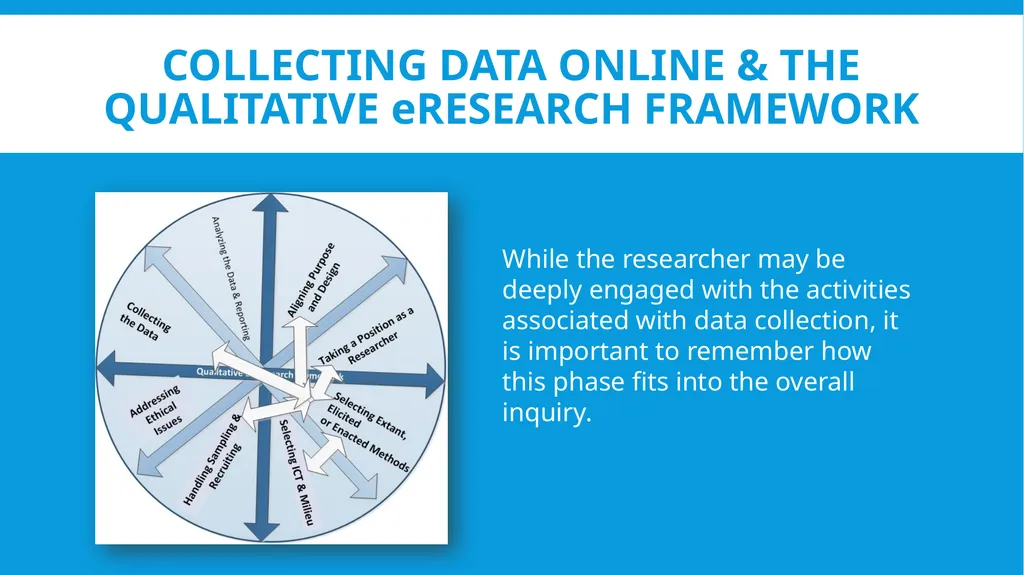
slide10. Collecting Data Online & the Qualitative eResearch framework While the researcher may be deeply engaged with the activities associated with data collection, it is important to remember how this phase fits into the overall inquiry.<br>
slide2. Objectives After reading and reflecting on Chapter 7, you will be able to:
Distinguish between types of extant data.
Explain modes of collecting extant data and the position and role of the researcher in planning and conducting research using extant data.
Analyze ways in which extant data might be employed to achieve the purpose of the study.
Consider how decisions made about the type of data collection relate to other design decisions for the online study.<br>
slide3. Two main Types of Extant Data Collection<br>
slide4. Two main Types of Extant Data Collection<br>
slide5. Materials Analysis What kinds of materials fit your study?<br>
slide6. Materials Analysis Challenges Incomplete or missing records. Particularly when using digitized records, there may be gaps in the materials that have been scanned and/or uploaded.
Biased data. The purpose of the researcher is not the purpose of the organization or site and materials may be presented in a way that showcases success and that obscures challenges, shortcomings or conflict. Users may post more exaggerated positions or complaints.
Intentional incompleteness. Materials, especially those posted on the public web, may omit financial or other information critical to understanding the entire story.<br>
slide7. Unobtrusive Observation Unobtrusive observation to collect extant data containing no personally identifiable information or look for patterns in such posts on websites, blogs or microblogs, or in interactions on discussion groups. In this form of observation, the researcher does not ask questions, make posts or otherwise get involved in interactions with the online community, group, or social networking site. Members of the group being observed do not know that observation is occurring.
Open observation to collect data using observational methods in settings where participants are aware of the study and have given consent.
Participant observation to collect data that includes extant and elicited types of data as well as the researchers’ own field notes on reflections, experiences or interactions with other participants. The researcher is a participant in the study. Researchers positions, presence and roles vary in these types of observations. When would each be appropriate? Why?<br>
slide8. Triangulation: Using Extant Data in Multimethod Studies Overcome limitations inherent in extant data by mixing with other methods. This sequence begins with interviews to shape observations and focus materials collection, then close with an interview where the researcher can gain perspectives and clarification on emerging themes.<br>
slide9. Using extant data with elicited methods This sequence begins with observations and review of materials to gain a solid foundation before interviewing a select few key players in the group or community.<br>
slide10. Collecting Data Online & the Qualitative eResearch framework While the researcher may be deeply engaged with the activities associated with data collection, it is important to remember how this phase fits into the overall inquiry.<br>