
Colour Harmony Colour Harmony or Colour Scheme
Description: Colour Harmony Colour Harmony or Colour Scheme describes the visual effect derived from the combination of colours present in the colour wheel, in a prescribed manner. Colour combination that have certain aesthetically pleasing colours are
Related Topics
Download Presentation
"Colour Harmony Colour Harmony or Colour Scheme" is the property of its rightful owner. Permission is granted to download and print the materials on this website for personal, non-commercial use only, and to display it on your personal computer provided you do not modify the materials and that you retain all copyright notices contained in the materials. By downloading content from our website, you accept the terms of this agreement.
Presentation Transcript
slide1. Colour Harmony Colour Harmony or Colour Scheme describes the visual effect derived from the combination of colours present in the colour wheel, in a prescribed manner. Colour combination that have certain aesthetically pleasing colours are referred to as a harmonious colour. In other words, Colour Harmony shows the relationship of hues present in the Colour Wheel. There are many types of Colour Harmonies. They are as follows -<br>
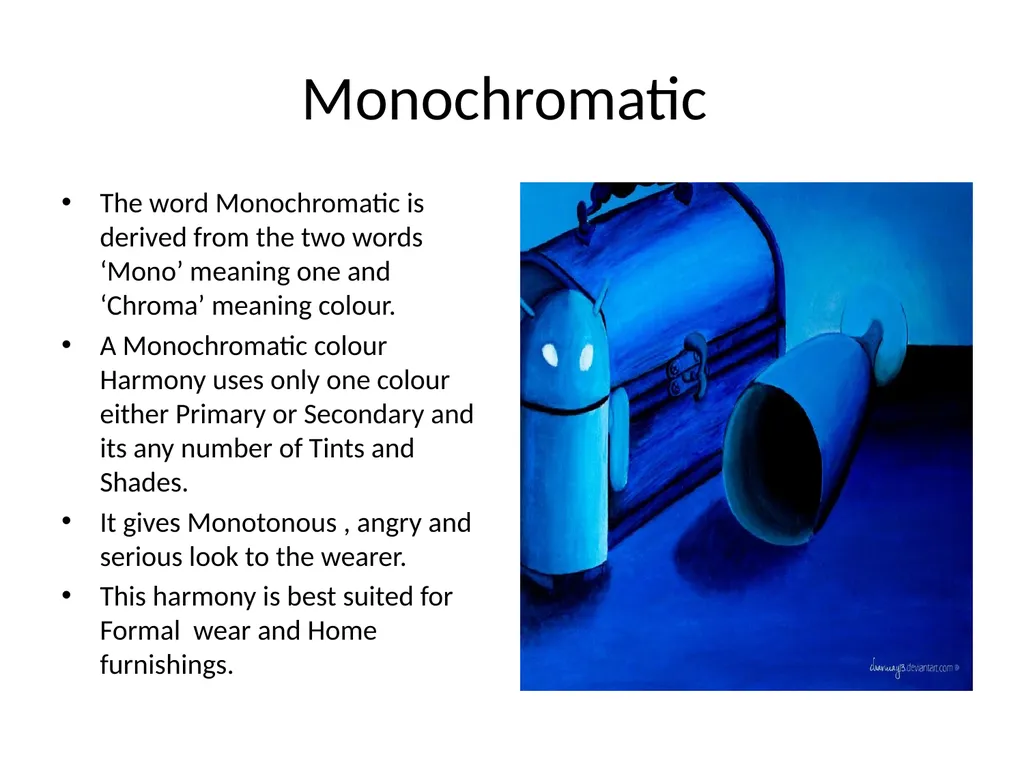
slide2. Monochromatic The word Monochromatic is derived from the two words ‘Mono’ meaning one and ‘Chroma’ meaning colour.
A Monochromatic colour Harmony uses only one colour either Primary or Secondary and its any number of Tints and Shades.
It gives Monotonous , angry and serious look to the wearer.
This harmony is best suited for Formal wear and Home furnishings.<br>
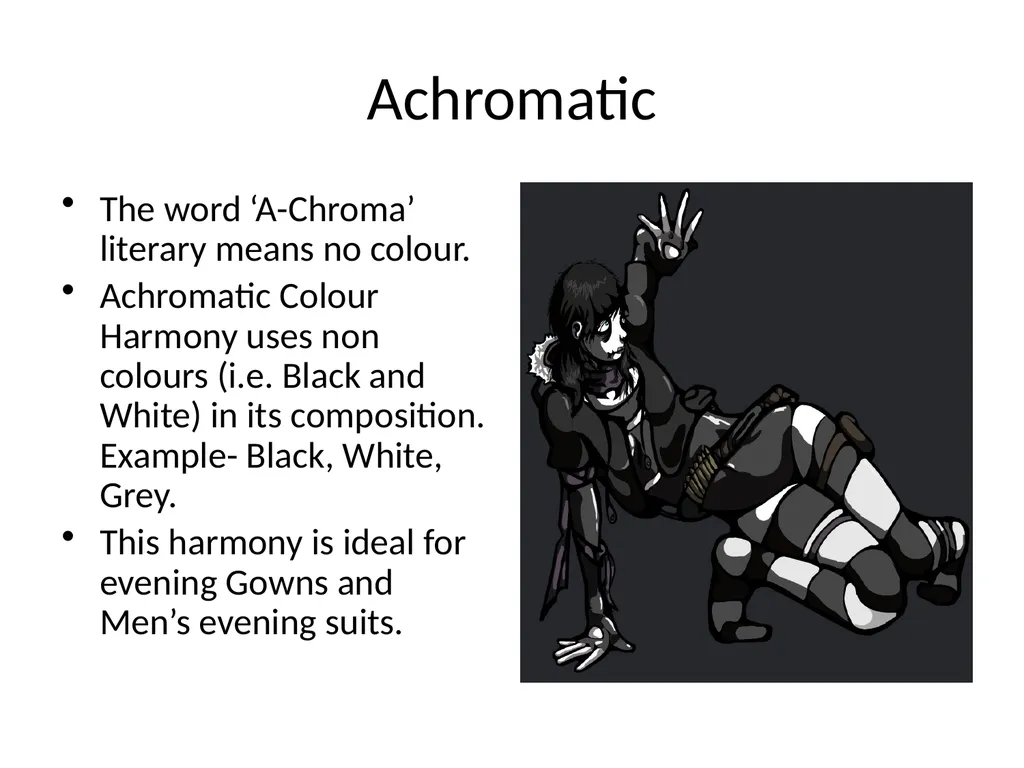
slide3. Achromatic The word ‘A-Chroma’ literary means no colour.
Achromatic Colour Harmony uses non colours (i.e. Black and White) in its composition. Example- Black, White, Grey.
This harmony is ideal for evening Gowns and Men’s evening suits.<br>
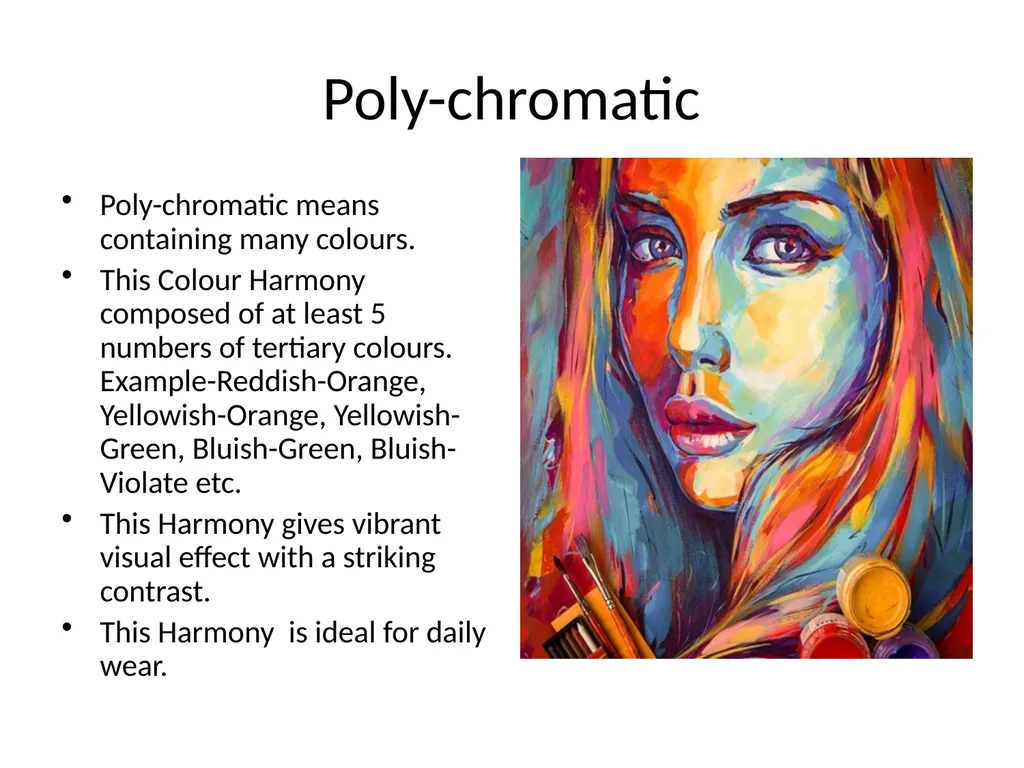
slide4. Poly-chromatic Poly-chromatic means containing many colours.
This Colour Harmony composed of at least 5 numbers of tertiary colours. Example-Reddish-Orange, Yellowish-Orange, Yellowish-Green, Bluish-Green, Bluish-Violate etc.
This Harmony gives vibrant visual effect with a striking contrast.
This Harmony is ideal for daily wear.<br>
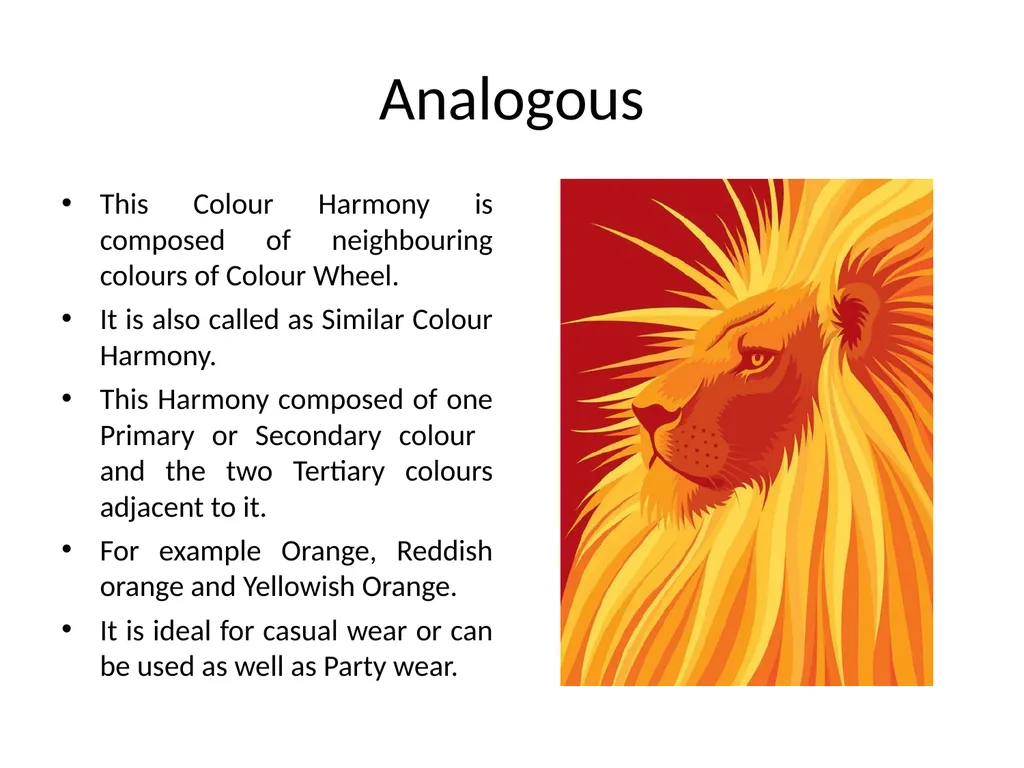
slide5. Analogous This Colour Harmony is composed of neighbouring colours of Colour Wheel.
It is also called as Similar Colour Harmony.
This Harmony composed of one Primary or Secondary colour and the two Tertiary colours adjacent to it.
For example Orange, Reddish orange and Yellowish Orange.
It is ideal for casual wear or can be used as well as Party wear.<br>
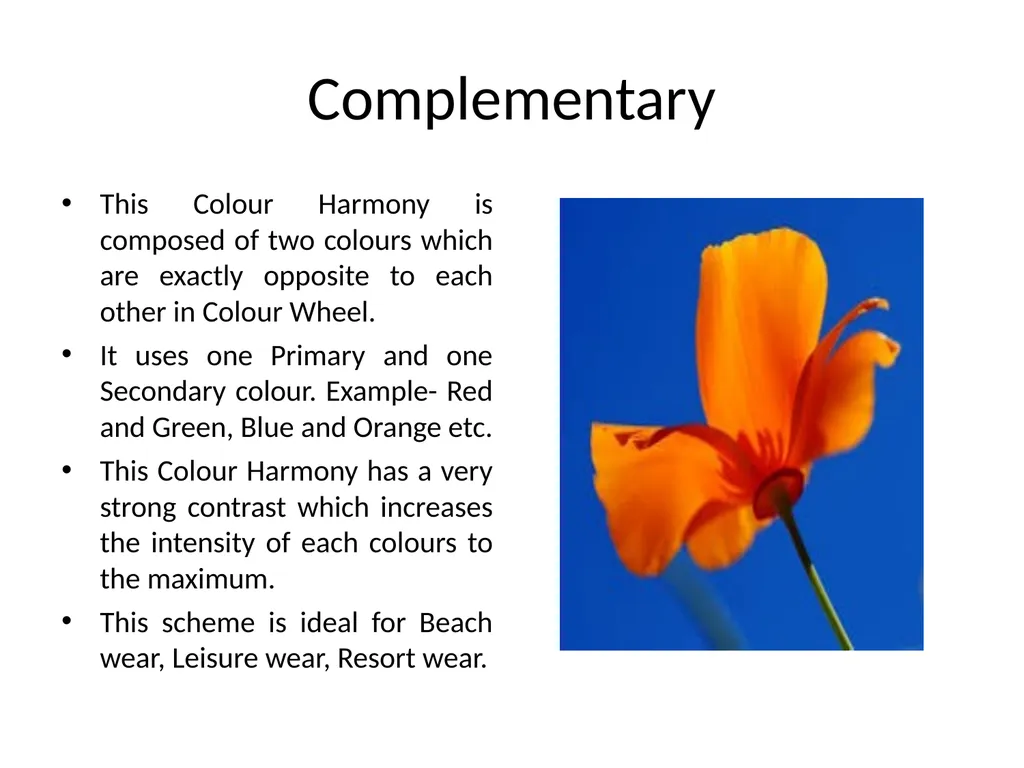
slide6. Complementary This Colour Harmony is composed of two colours which are exactly opposite to each other in Colour Wheel.
It uses one Primary and one Secondary colour. Example- Red and Green, Blue and Orange etc.
This Colour Harmony has a very strong contrast which increases the intensity of each colours to the maximum.
This scheme is ideal for Beach wear, Leisure wear, Resort wear.<br>
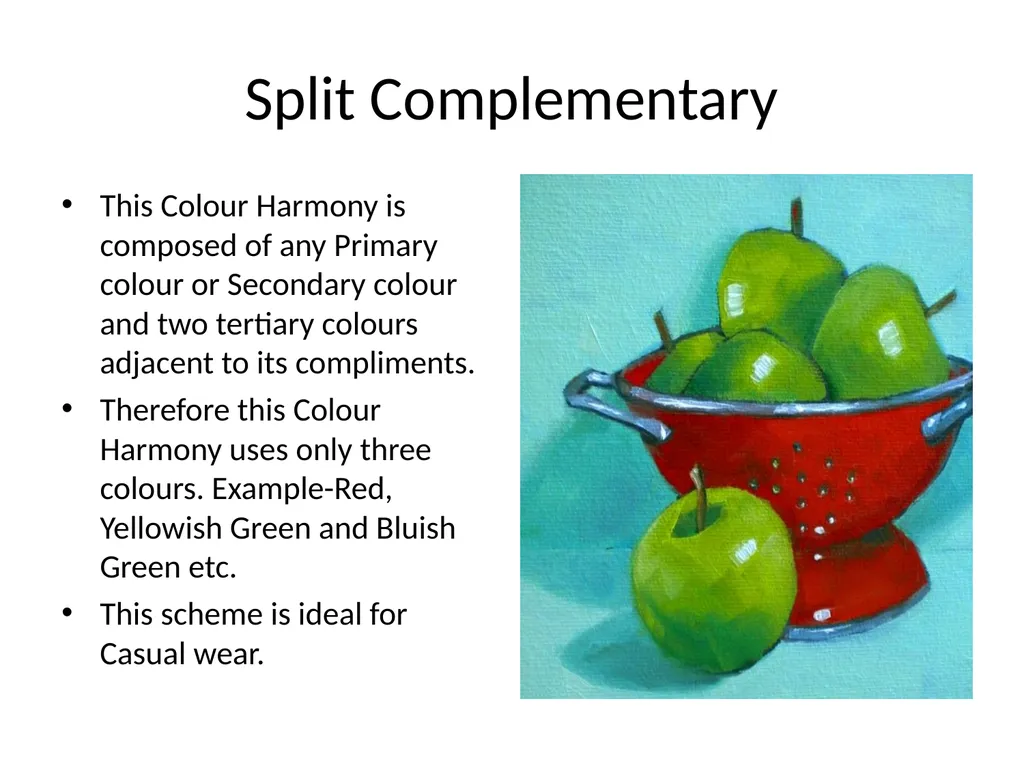
slide7. Split Complementary This Colour Harmony is composed of any Primary colour or Secondary colour and two tertiary colours adjacent to its compliments.
Therefore this Colour Harmony uses only three colours. Example-Red, Yellowish Green and Bluish Green etc.
This scheme is ideal for Casual wear.<br>
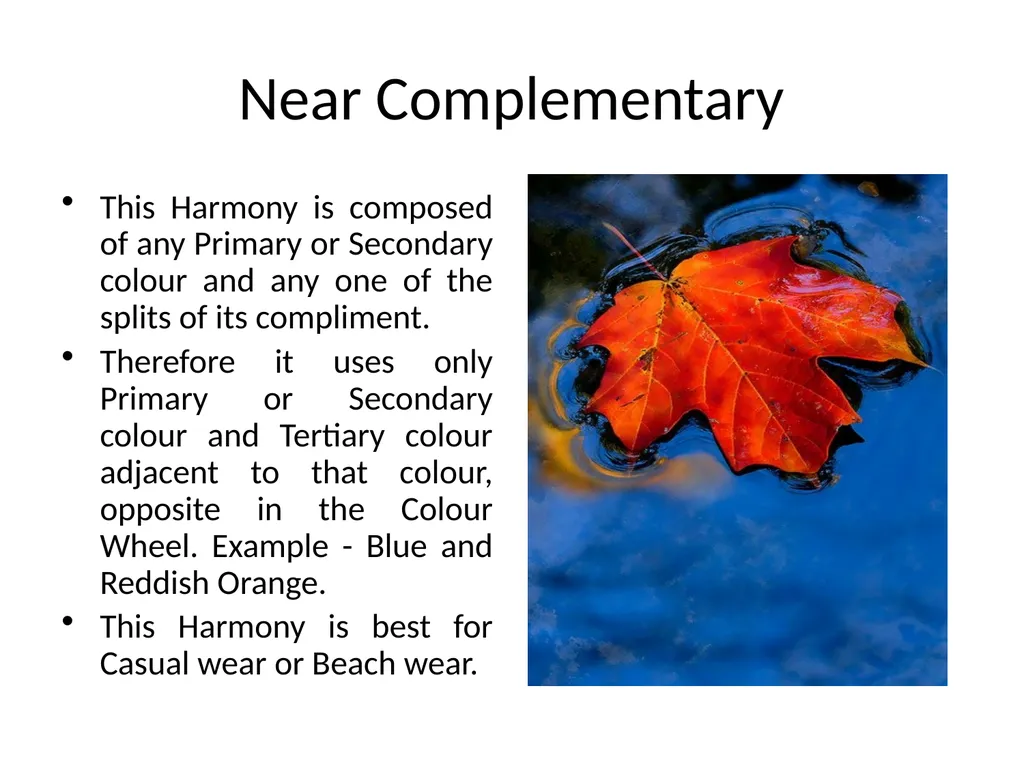
slide8. Near Complementary This Harmony is composed of any Primary or Secondary colour and any one of the splits of its compliment.
Therefore it uses only Primary or Secondary colour and Tertiary colour adjacent to that colour, opposite in the Colour Wheel. Example - Blue and Reddish Orange.
This Harmony is best for Casual wear or Beach wear.<br>
slide2. Monochromatic The word Monochromatic is derived from the two words ‘Mono’ meaning one and ‘Chroma’ meaning colour.
A Monochromatic colour Harmony uses only one colour either Primary or Secondary and its any number of Tints and Shades.
It gives Monotonous , angry and serious look to the wearer.
This harmony is best suited for Formal wear and Home furnishings.<br>
slide3. Achromatic The word ‘A-Chroma’ literary means no colour.
Achromatic Colour Harmony uses non colours (i.e. Black and White) in its composition. Example- Black, White, Grey.
This harmony is ideal for evening Gowns and Men’s evening suits.<br>
slide4. Poly-chromatic Poly-chromatic means containing many colours.
This Colour Harmony composed of at least 5 numbers of tertiary colours. Example-Reddish-Orange, Yellowish-Orange, Yellowish-Green, Bluish-Green, Bluish-Violate etc.
This Harmony gives vibrant visual effect with a striking contrast.
This Harmony is ideal for daily wear.<br>
slide5. Analogous This Colour Harmony is composed of neighbouring colours of Colour Wheel.
It is also called as Similar Colour Harmony.
This Harmony composed of one Primary or Secondary colour and the two Tertiary colours adjacent to it.
For example Orange, Reddish orange and Yellowish Orange.
It is ideal for casual wear or can be used as well as Party wear.<br>
slide6. Complementary This Colour Harmony is composed of two colours which are exactly opposite to each other in Colour Wheel.
It uses one Primary and one Secondary colour. Example- Red and Green, Blue and Orange etc.
This Colour Harmony has a very strong contrast which increases the intensity of each colours to the maximum.
This scheme is ideal for Beach wear, Leisure wear, Resort wear.<br>
slide7. Split Complementary This Colour Harmony is composed of any Primary colour or Secondary colour and two tertiary colours adjacent to its compliments.
Therefore this Colour Harmony uses only three colours. Example-Red, Yellowish Green and Bluish Green etc.
This scheme is ideal for Casual wear.<br>
slide8. Near Complementary This Harmony is composed of any Primary or Secondary colour and any one of the splits of its compliment.
Therefore it uses only Primary or Secondary colour and Tertiary colour adjacent to that colour, opposite in the Colour Wheel. Example - Blue and Reddish Orange.
This Harmony is best for Casual wear or Beach wear.<br>