Compassion Fatigue: Its Time to Talk For Atrium Health Internal and Regional USE ONLY Definition A state of tension, stress, andor preoccupation with an individual or cumulative trauma of patients which is manifested in one or more ways
"Compassion Fatigue: It’s Time to Talk For Atrium" is the property of its rightful owner. Permission is granted to
download and print the materials on this website for personal, non-commercial use only, and to display it
on your personal computer provided you do not modify the materials and that you retain all copyright
notices contained in the materials. By downloading content from our website, you accept the terms of this
agreement.
Presentation Transcript
01
Compassion Fatigue: It’s Time to Talk For Atrium Health Internal and Regional USE ONLY<br>
02
Definition A state of tension, stress, and/or preoccupation with an individual or cumulative trauma of patients which is manifested in one or more ways including re-experiencing the traumatic event, avoidance or numbing of reminders of the event, and persistent stress.
It is the natural consequence of stress resulting from caring for and helping traumatized or suffering people or animals.<br>
03
A Further Definition Compassion Fatigue is also known as secondary traumatic stress (STS).
When we put our compassionate hearts out for others along with our skills and have them stepped on or spat upon, there will be a gradual lessening of compassion over time. Our hearts withdraw understandably.
Compassion Fatigue also occurs when we have a strong identification with the one suffering and/or going through trauma.
Empathy combined with a perceived sense that it is impossible to affect positive change can result in negative attitudes and increasing lack of caring.<br>
04
Symptoms Hopelessness/Despair
Decrease of pleasure
Persistent stress and anxiety
Sleeplessness, too much sleep, nightmares
Pervasive negative attitude
Decrease in productivity
Inability to focus
Feelings of incompetency
Increased self questioning/self doubt<br>
05
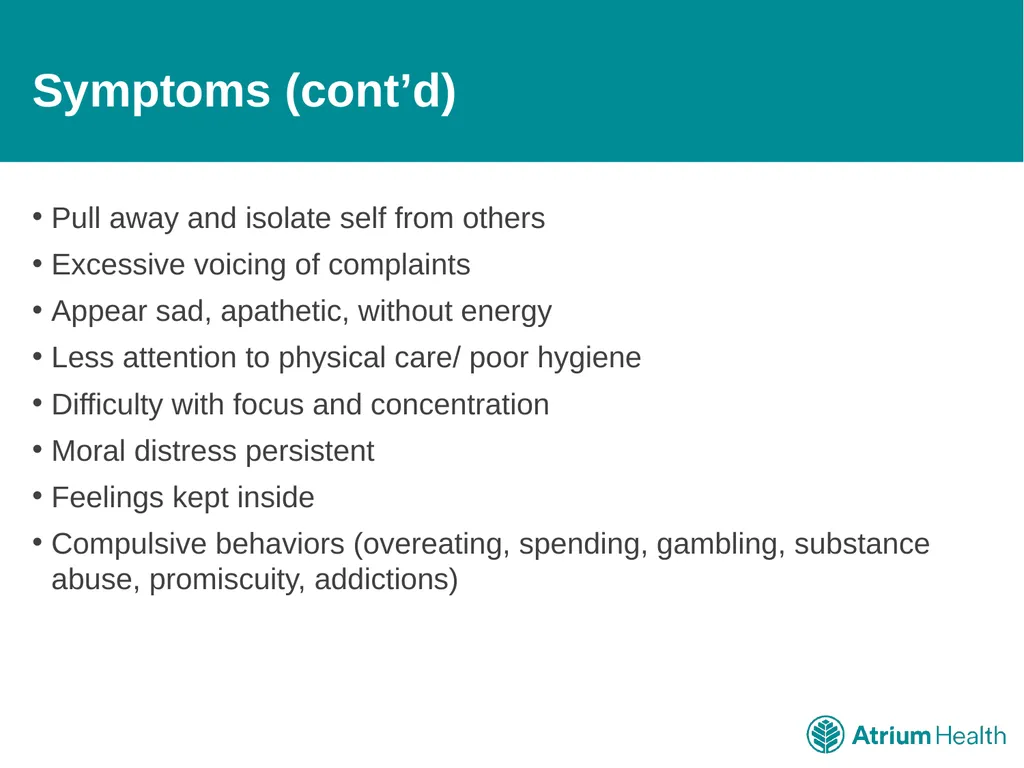
Symptoms (cont’d) Pull away and isolate self from others
Excessive voicing of complaints
Appear sad, apathetic, without energy
Less attention to physical care/ poor hygiene
Difficulty with focus and concentration
Moral distress persistent
Feelings kept inside
Compulsive behaviors (overeating, spending, gambling, substance abuse, promiscuity, addictions)<br>
06
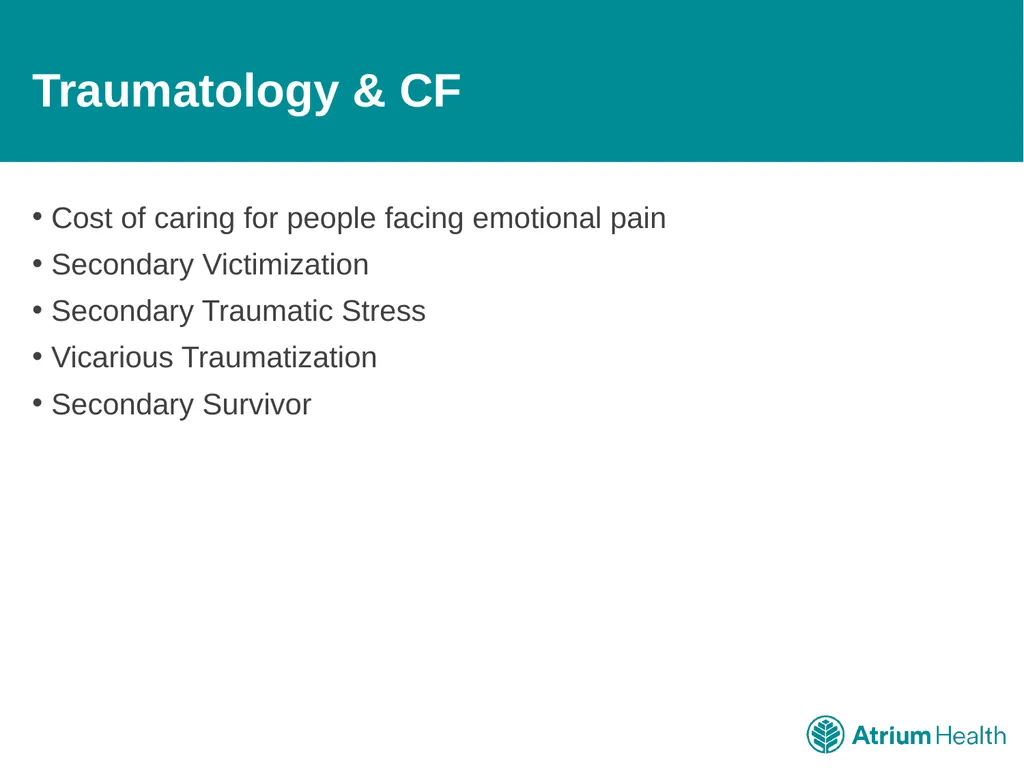
Traumatology & CF Cost of caring for people facing emotional pain
Secondary Victimization
Secondary Traumatic Stress
Vicarious Traumatization
Secondary Survivor<br>
07
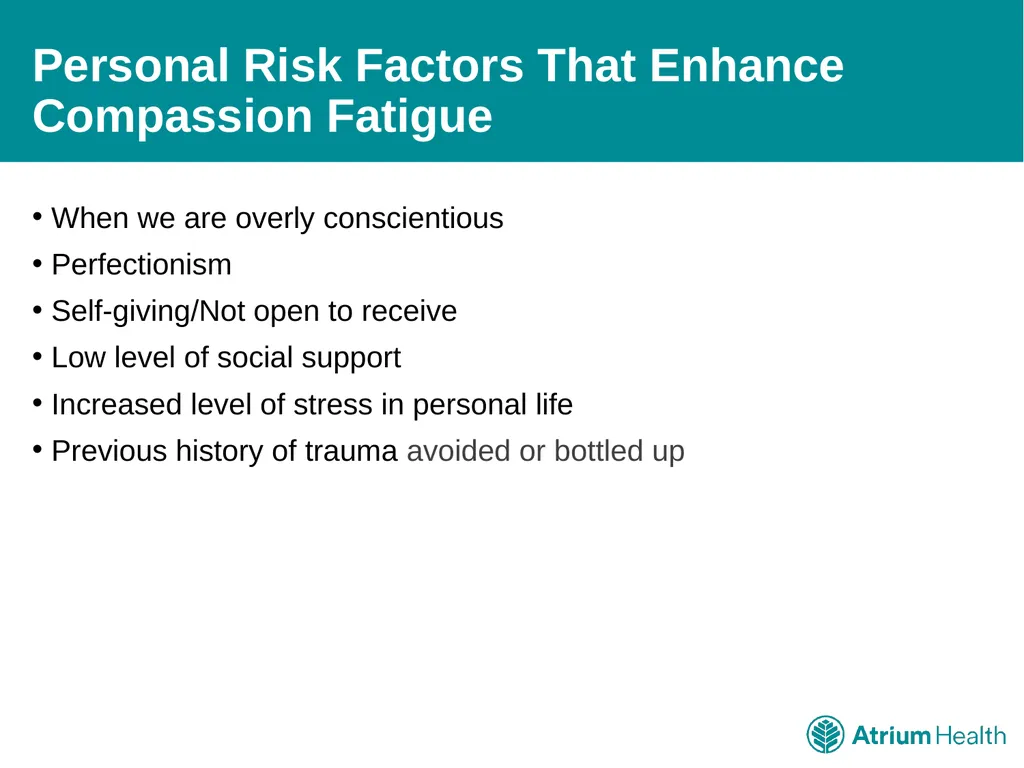
Personal Risk Factors That Enhance Compassion Fatigue When we are overly conscientious
Perfectionism
Self-giving/Not open to receive
Low level of social support
Increased level of stress in personal life
Previous history of trauma avoided or bottled up<br>
08
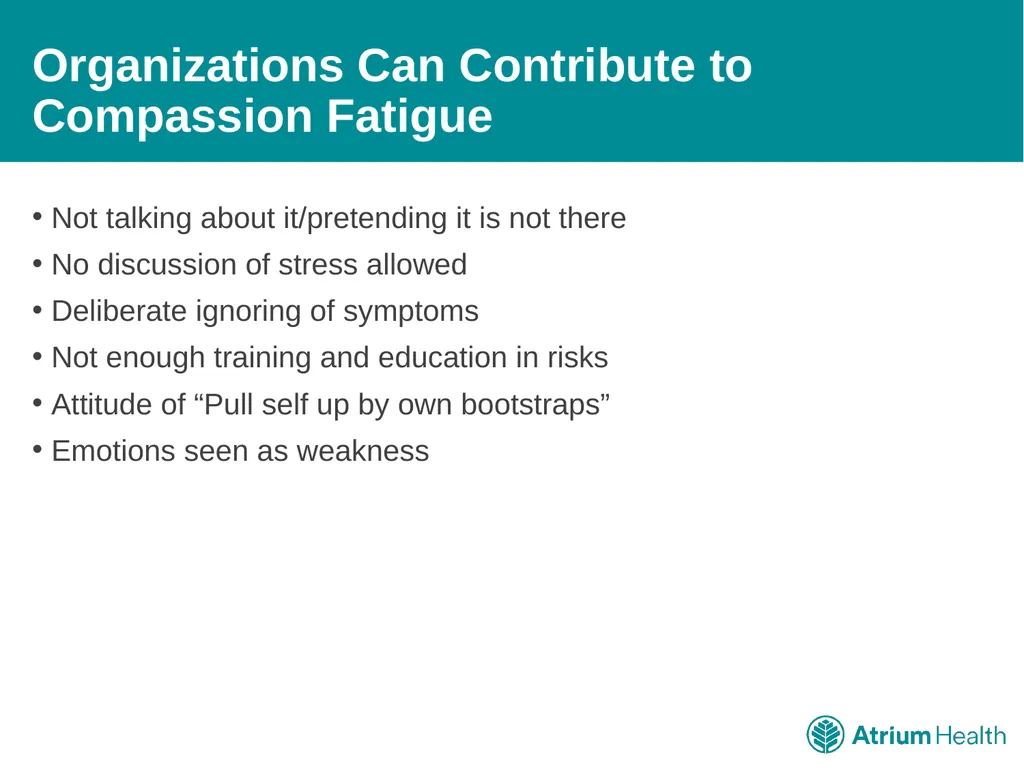
Organizations Can Contribute to Compassion Fatigue Not talking about it/pretending it is not there
No discussion of stress allowed
Deliberate ignoring of symptoms
Not enough training and education in risks
Attitude of “Pull self up by own bootstraps”
Emotions seen as weakness<br>
09
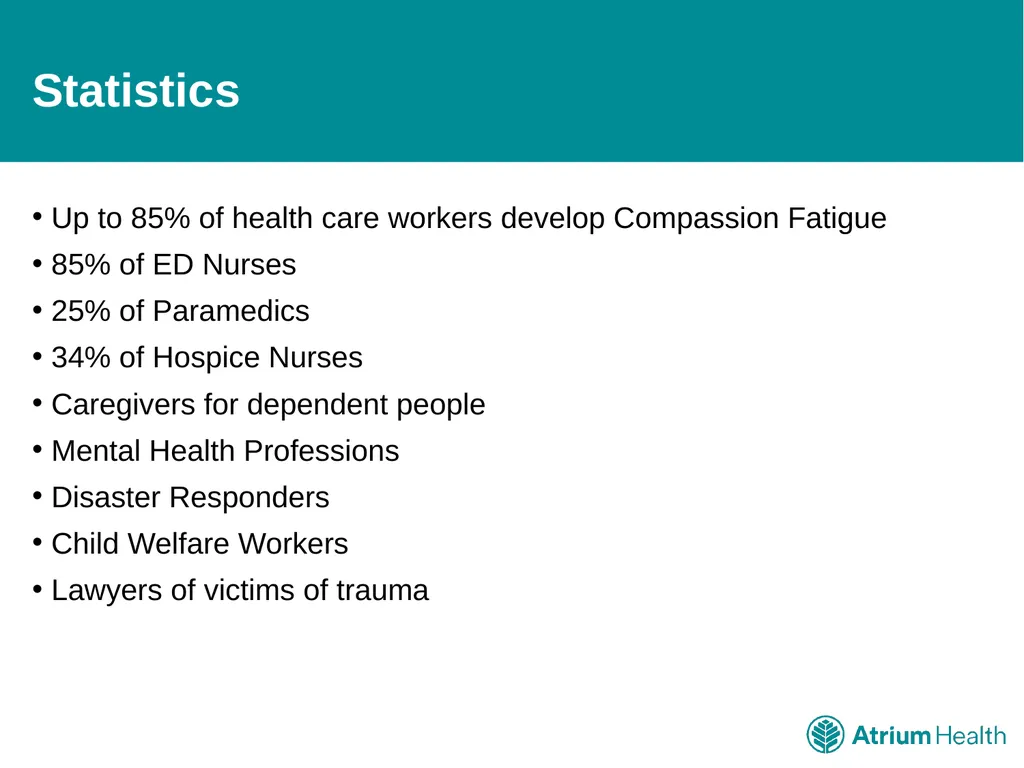
Statistics Up to 85% of health care workers develop Compassion Fatigue
85% of ED Nurses
25% of Paramedics
34% of Hospice Nurses
Caregivers for dependent people
Mental Health Professions
Disaster Responders
Child Welfare Workers
Lawyers of victims of trauma<br>
10
Jean Watson’s Caring Science reminds us That the power of caring for self is essential to creating a caring, harmonious workforce environment…and
That discovering or rediscovering the caring self is an important source of nourishment for the emergence of creative, caring energy.<br>
11
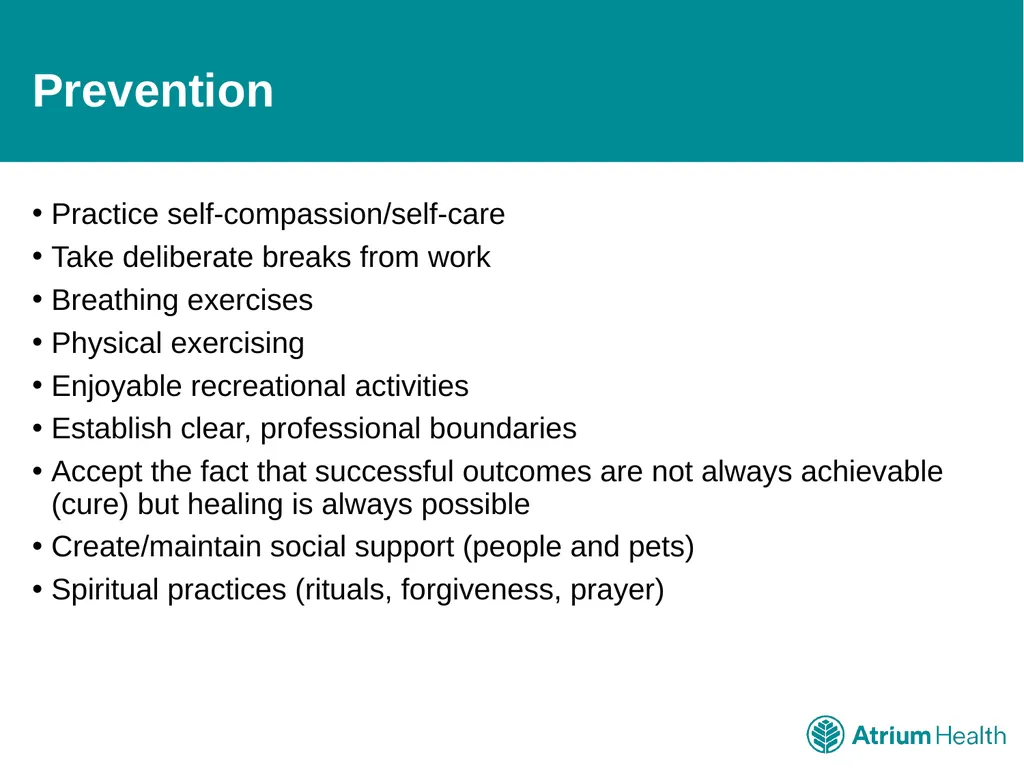
Prevention Practice self-compassion/self-care
Take deliberate breaks from work
Breathing exercises
Physical exercising
Enjoyable recreational activities
Establish clear, professional boundaries
Accept the fact that successful outcomes are not always achievable (cure) but healing is always possible
Create/maintain social support (people and pets)
Spiritual practices (rituals, forgiveness, prayer)<br>
12
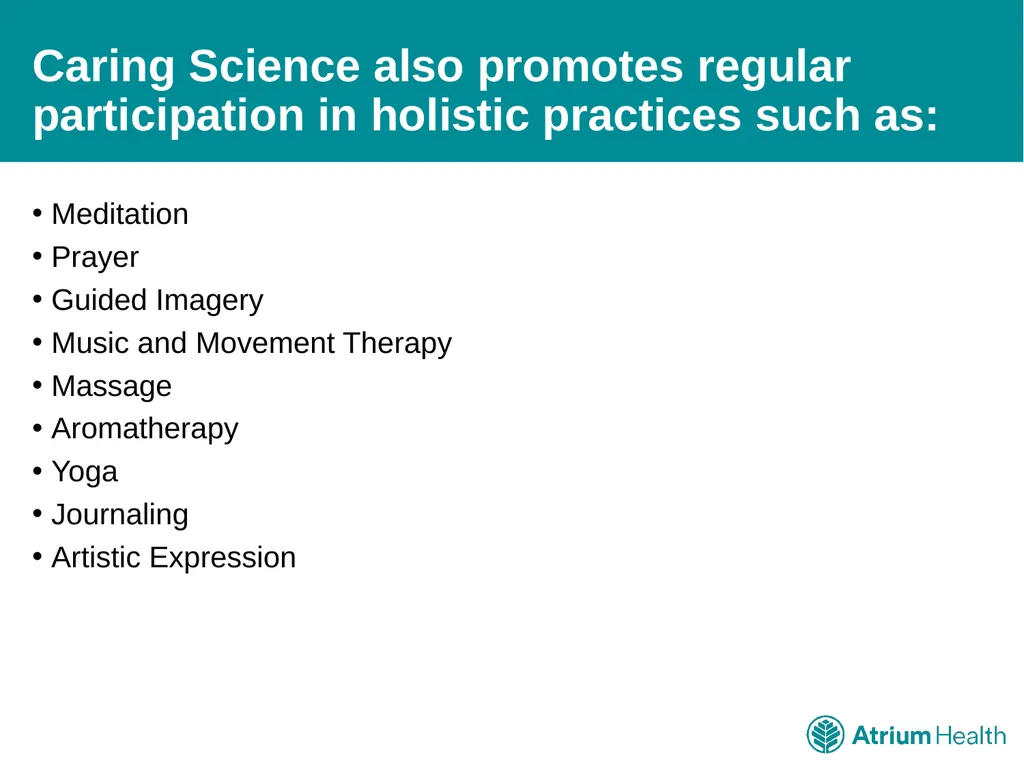
Caring Science also promotes regular participation in holistic practices such as: Meditation
Prayer
Guided Imagery
Music and Movement Therapy
Massage
Aromatherapy
Yoga
Journaling
Artistic Expression<br>
13
Practical Approaches Pause
Take a breath
Check in and be observant with colleagues (“Are you doing OK?”)
Debrief emotions as well as clinical process in review
Talk / Don’t isolate or suppress
Seek out a confidant
EAP and Chaplains are resources<br>
14
What Caring Sciences Teaches Us … Technologies come from outside and teach us “how to do”…
Values come from inside and teach us “how to be”…
The artistry of practicing compassion is in maintaining the balance<br>
15
Questions/Responses For Atrium Health Internal and Regional USE ONLY<br>