
Compassionate Education March 2022 Compassionate



Description: Compassionate Education March 2022 Compassionate Education Traditional focus on education and developing proficiency in academic, clinical, skills and knowledge Help educators to develop compassionate approach to training and the workplace
Related Topics
Download Presentation
"Compassionate Education March 2022 Compassionate" is the property of its rightful owner. Permission is granted to download and print the materials on this website for personal, non-commercial use only, and to display it on your personal computer provided you do not modify the materials and that you retain all copyright notices contained in the materials. By downloading content from our website, you accept the terms of this agreement.
Presentation Transcript
slide1. Compassionate Education
March 2022<br>
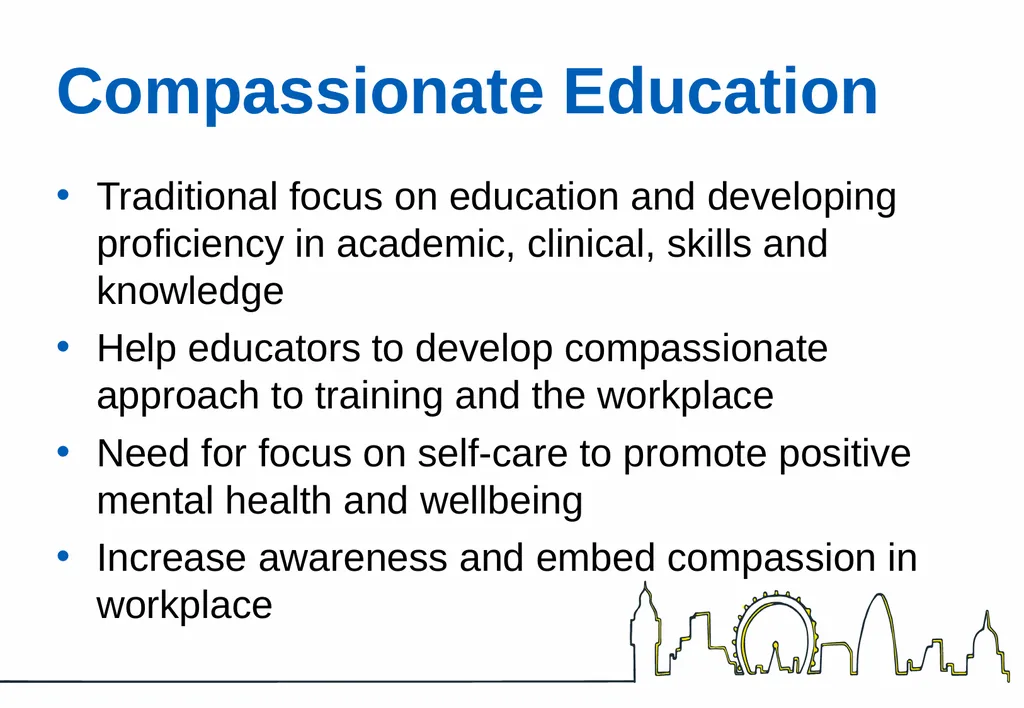
slide2. Compassionate Education Traditional focus on education and developing proficiency in academic, clinical, skills and knowledge
Help educators to develop compassionate approach to training and the workplace
Need for focus on self-care to promote positive mental health and wellbeing
Increase awareness and embed compassion in workplace<br>
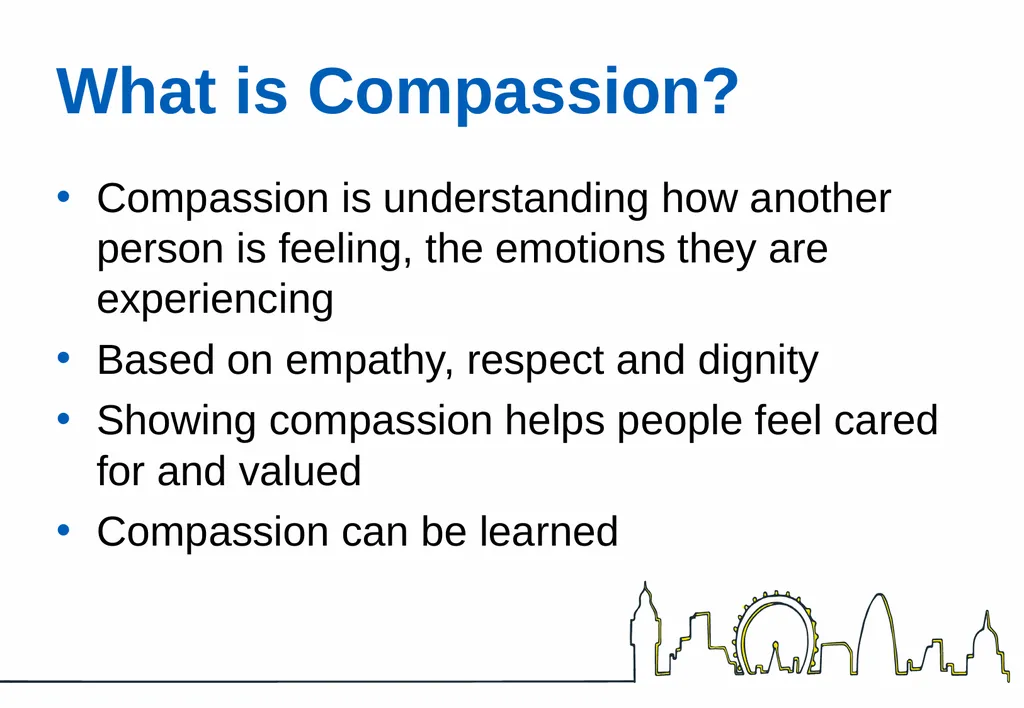
slide3. What is Compassion? Compassion is understanding how another person is feeling, the emotions they are experiencing
Based on empathy, respect and dignity
Showing compassion helps people feel cared for and valued
Compassion can be learned<br>
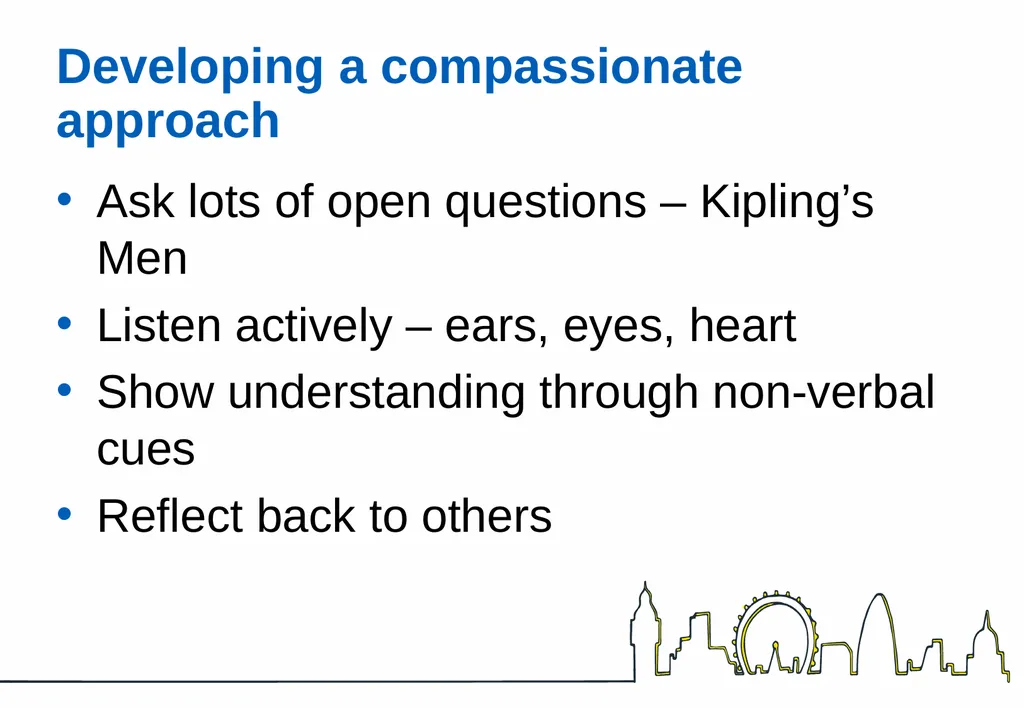
slide4. Developing a compassionate approach Ask lots of open questions – Kipling’s Men
Listen actively – ears, eyes, heart
Show understanding through non-verbal cues
Reflect back to others<br>
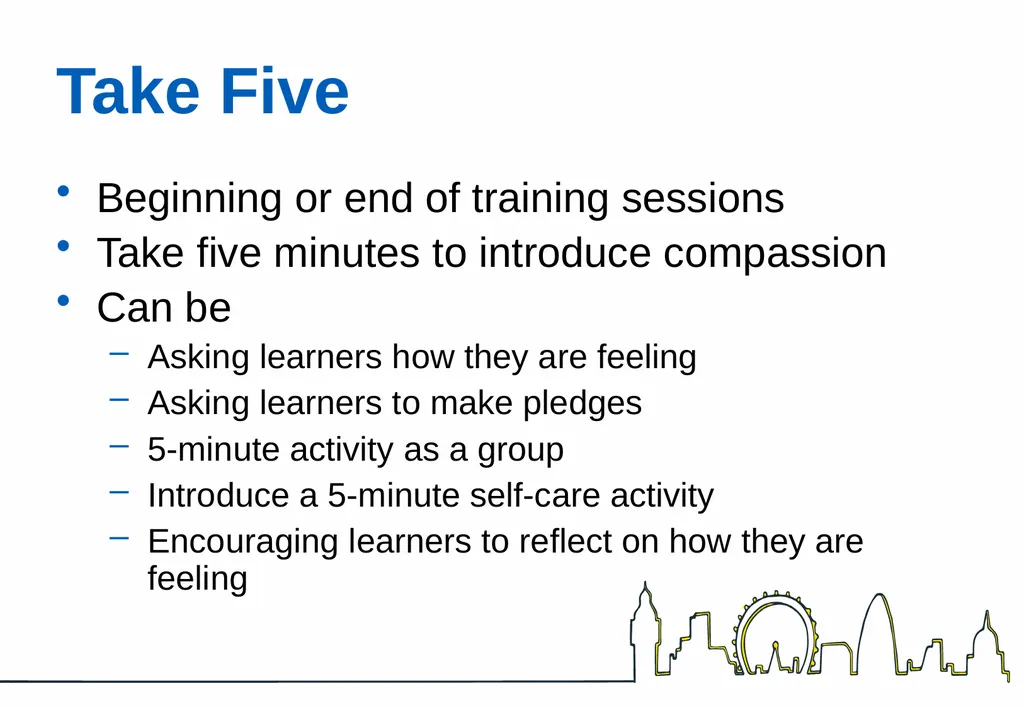
slide5. Take Five Beginning or end of training sessions
Take five minutes to introduce compassion
Can be
Asking learners how they are feeling
Asking learners to make pledges
5-minute activity as a group
Introduce a 5-minute self-care activity
Encouraging learners to reflect on how they are feeling<br>
slide6. Techniques Everyone is different
Different techniques help different people
Activities in two groups:
Grounding techniques
Refocusing techniques<br>
slide7. Grounding Techniques<br>
slide8. “Look deep into nature and you will understand everything better”
Albert Einstein<br>
slide9. FOFBOC Feet on Floor, Body On Chair
Sit on a chair with feet resting on the floor
Feel your body on the chair
Now feel your feet on the floor
Think about your legs and how they feel moving onto lower body
Focus on your belly, then your breathing
Sit and relax for just a couple of minutes tuned into an awareness of your body<br>
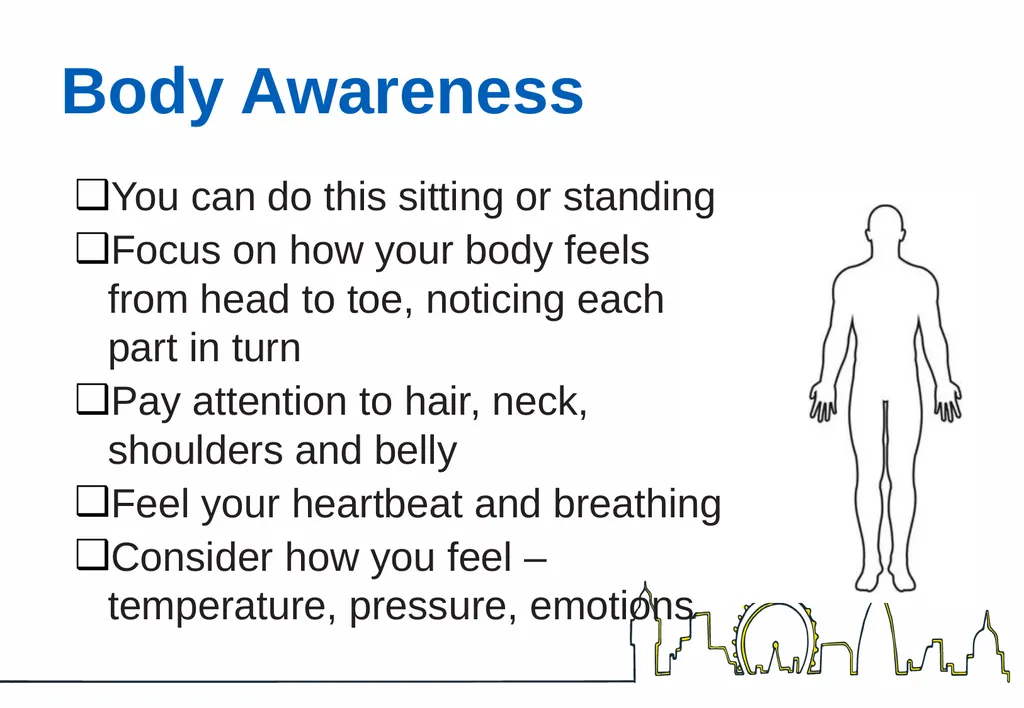
slide10. Body Awareness You can do this sitting or standing
Focus on how your body feels from head to toe, noticing each part in turn
Pay attention to hair, neck, shoulders and belly
Feel your heartbeat and breathing
Consider how you feel – temperature, pressure, emotions<br>
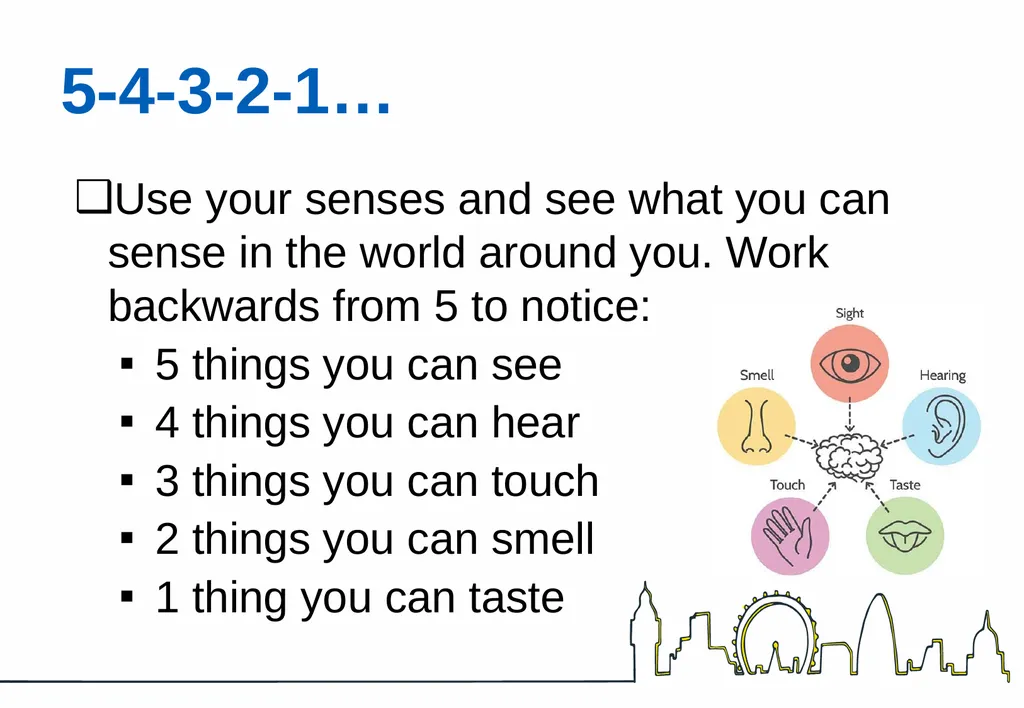
slide11. 5-4-3-2-1… Use your senses and see what you can sense in the world around you. Work backwards from 5 to notice:
5 things you can see
4 things you can hear
3 things you can touch
2 things you can smell
1 thing you can taste<br>
slide12. Guided Meditation Short podcasts or video clips
Help to disassociate from stressors
Three to five minutes
https://www.youtube.com/watch?v=TsSbCntmMHo<br>
slide13. 3-4-5 Breathing Breathe in for three seconds
Hold your breath for four seconds
Breathe out for five seconds
Repeat for a few minutes<br>
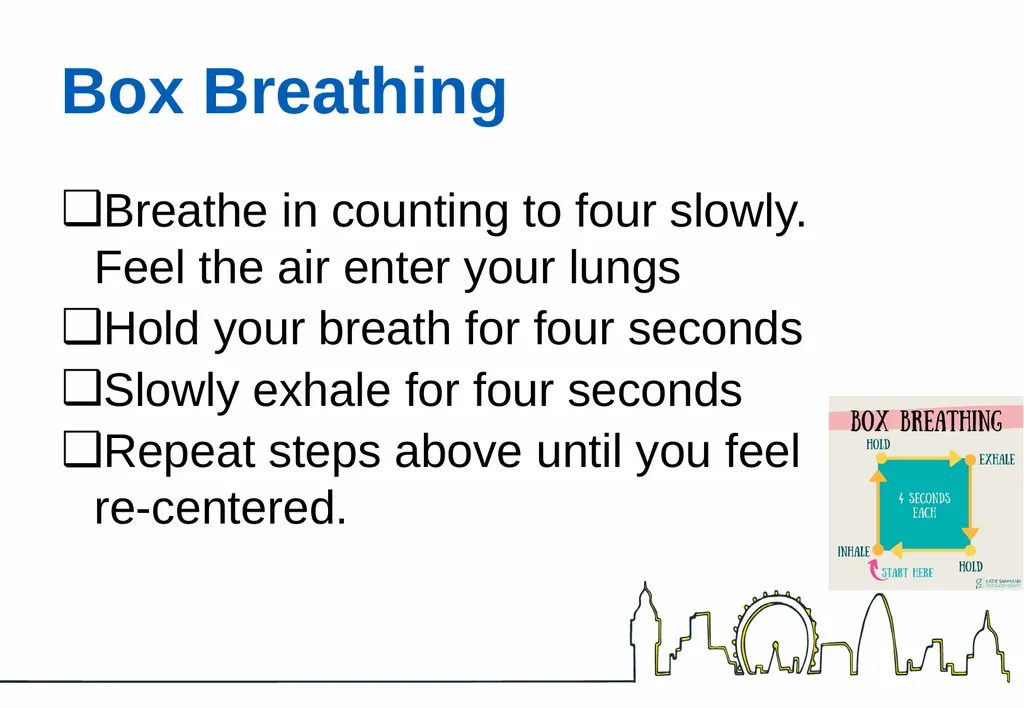
slide14. Box Breathing Breathe in counting to four slowly. Feel the air enter your lungs
Hold your breath for four seconds
Slowly exhale for four seconds
Repeat steps above until you feel re-centered.<br>
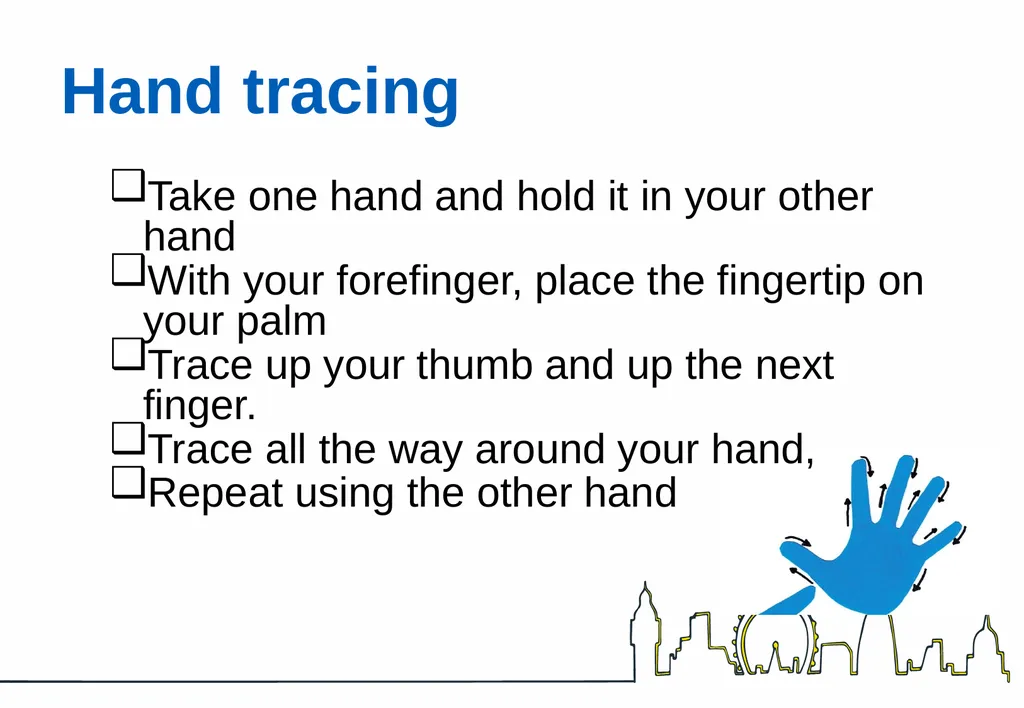
slide15. Hand tracing Take one hand and hold it in your other hand
With your forefinger, place the fingertip on your palm
Trace up your thumb and up the next finger.
Trace all the way around your hand,
Repeat using the other hand<br>
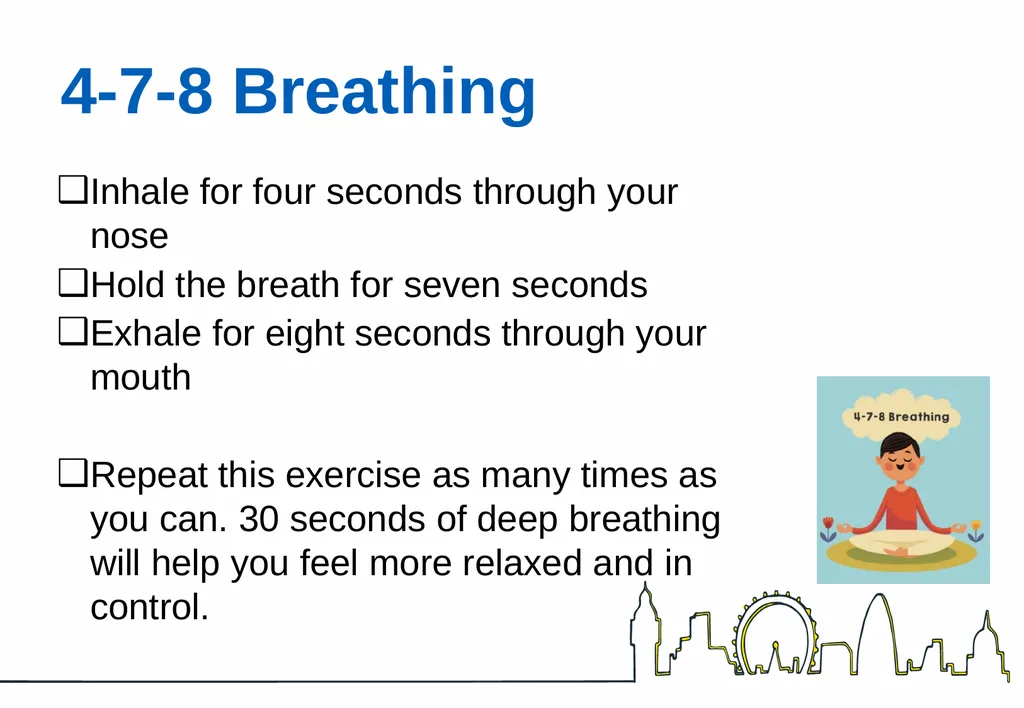
slide16. 4-7-8 Breathing Inhale for four seconds through your nose
Hold the breath for seven seconds
Exhale for eight seconds through your mouth
Repeat this exercise as many times as you can. 30 seconds of deep breathing will help you feel more relaxed and in control.<br>
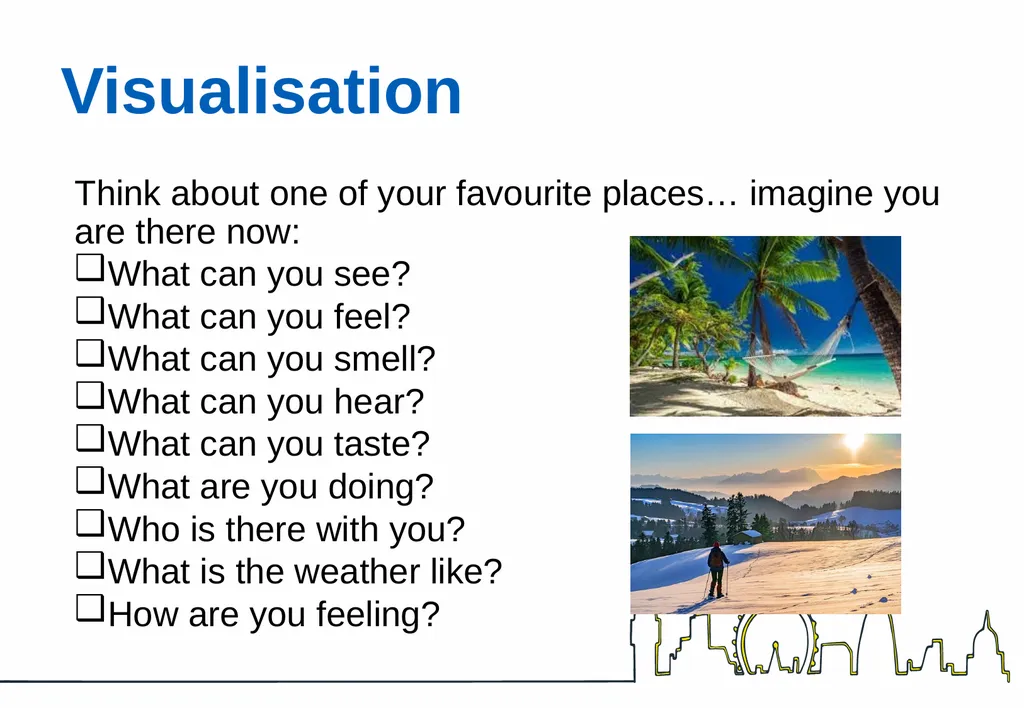
slide17. Visualisation Think about one of your favourite places… imagine you are there now:
What can you see?
What can you feel?
What can you smell?
What can you hear?
What can you taste?
What are you doing?
Who is there with you?
What is the weather like?
How are you feeling?<br>
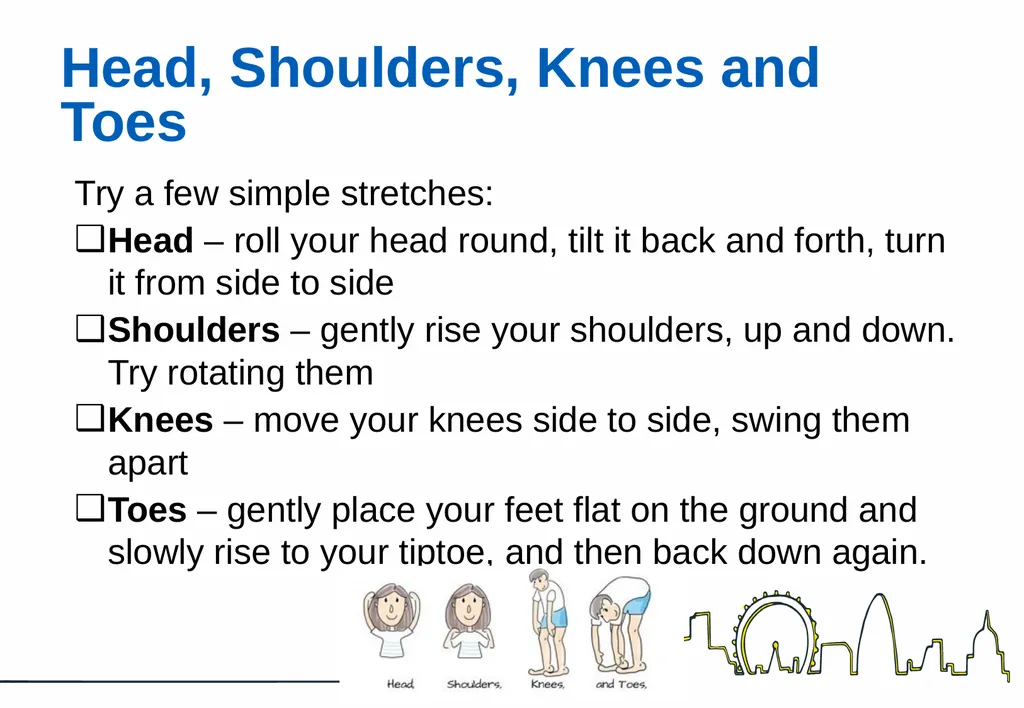
slide18. Head, Shoulders, Knees and Toes Try a few simple stretches:
Head – roll your head round, tilt it back and forth, turn it from side to side
Shoulders – gently rise your shoulders, up and down. Try rotating them
Knees – move your knees side to side, swing them apart
Toes – gently place your feet flat on the ground and slowly rise to your tiptoe, and then back down again.<br>
slide19. Refocusing Techniques<br>
slide20. Mindful Moments Begin your session with a slide showing a photo of nature
Ask delegates to focus on the picture, what they see and how they feel for two minutes<br>
slide21. Pledges Ask learners to make a pledge for self-care
These should be written and may be shared
Focus on doing something for themselves
Providing pretty paper for them may help<br>
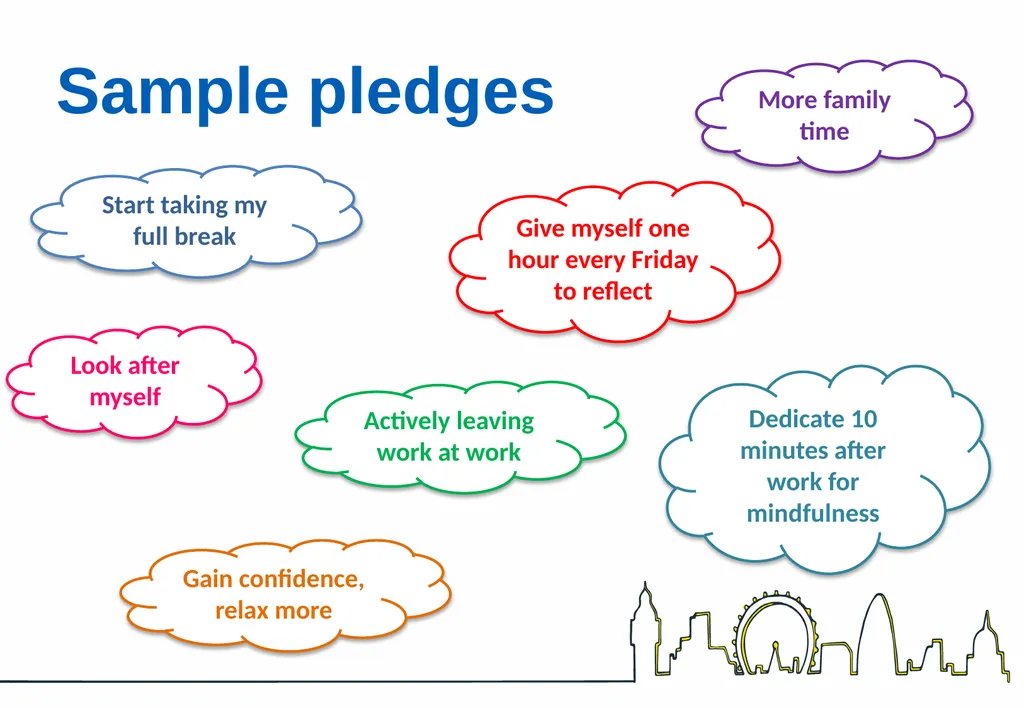
slide22. Sample pledges Start taking my full break Dedicate 10 minutes after work for mindfulness Gain confidence, relax more Actively leaving work at work Give myself one hour every Friday to reflect More family time Look after myself<br>
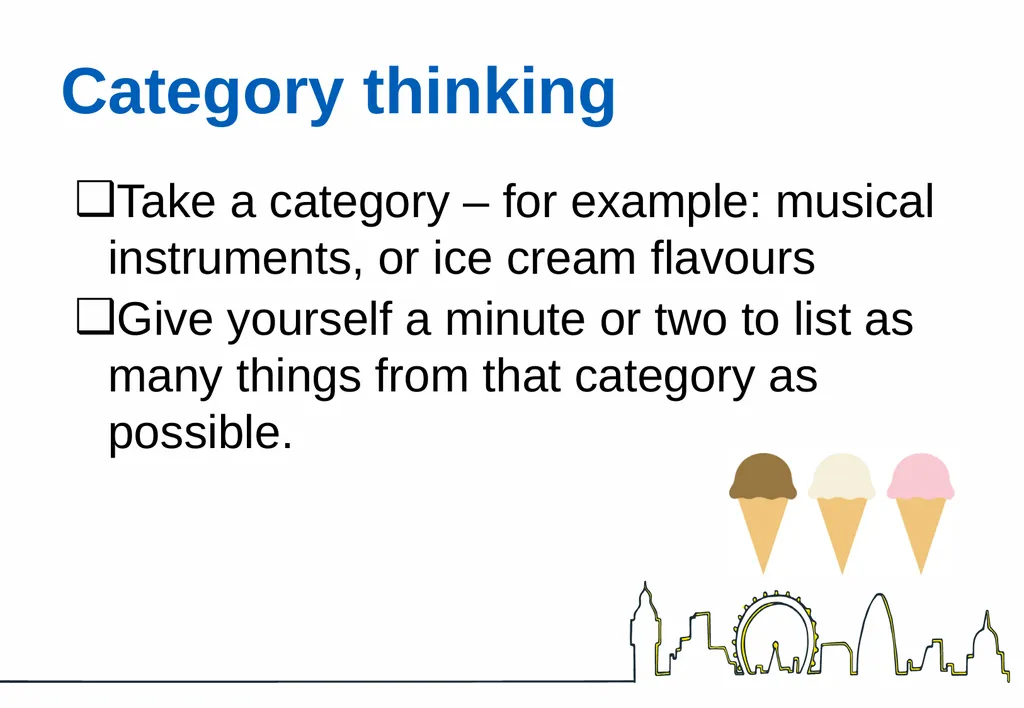
slide23. Category thinking Take a category – for example: musical instruments, or ice cream flavours
Give yourself a minute or two to list as many things from that category as possible.<br>
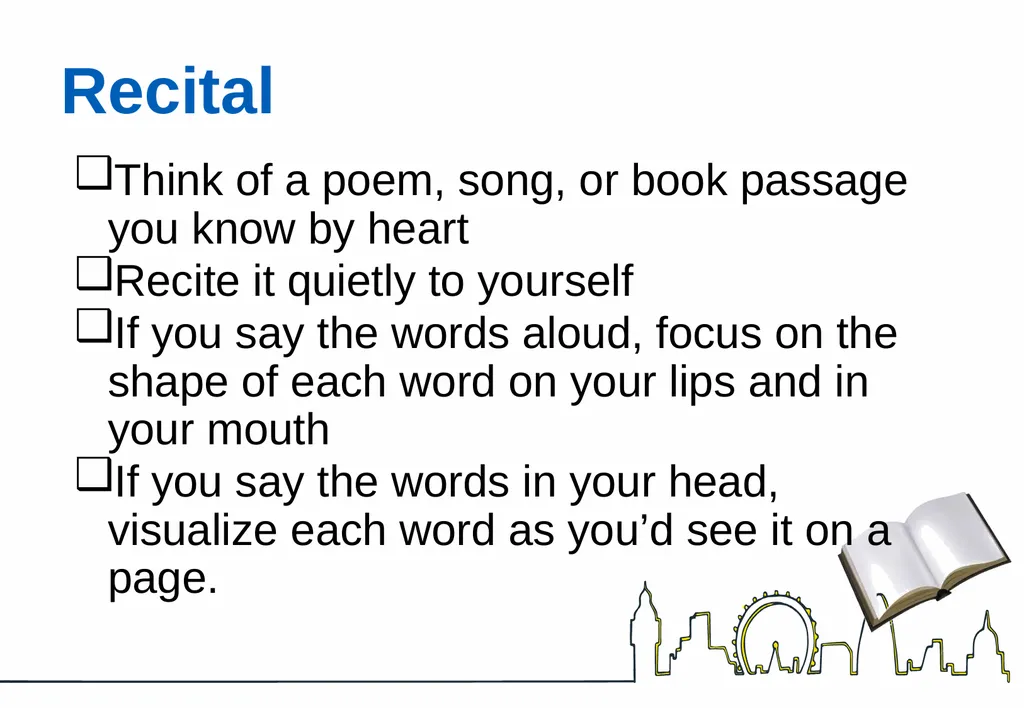
slide24. Recital Think of a poem, song, or book passage you know by heart
Recite it quietly to yourself
If you say the words aloud, focus on the shape of each word on your lips and in your mouth
If you say the words in your head, visualize each word as you’d see it on a page.<br>
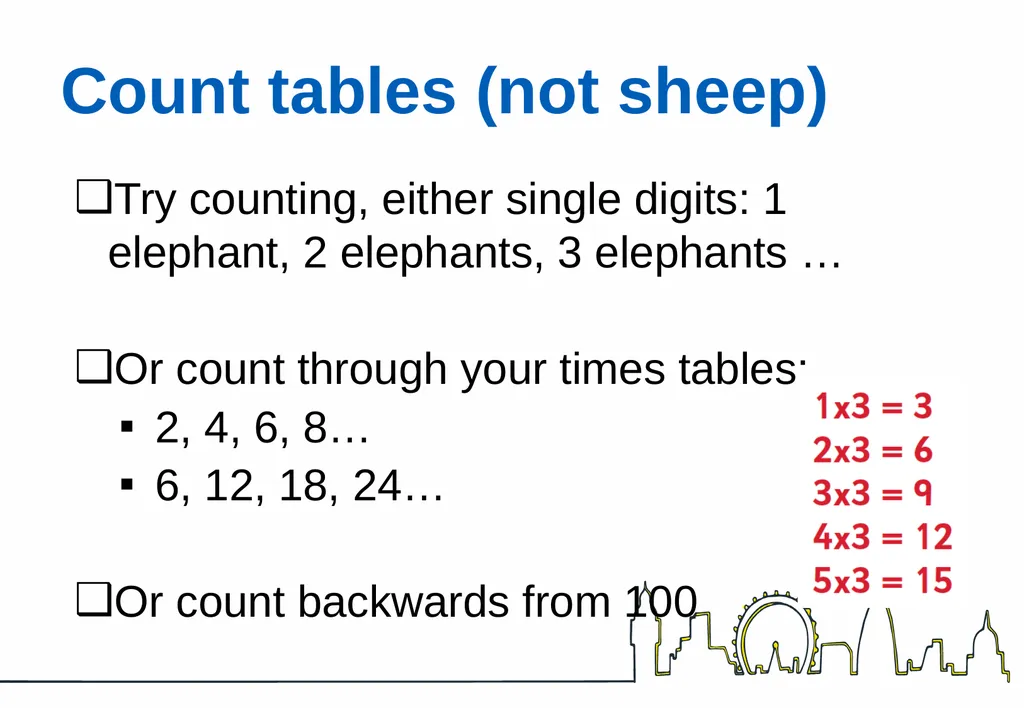
slide25. Count tables (not sheep) Try counting, either single digits: 1 elephant, 2 elephants, 3 elephants …
Or count through your times tables:
2, 4, 6, 8…
6, 12, 18, 24…
Or count backwards from 100<br>
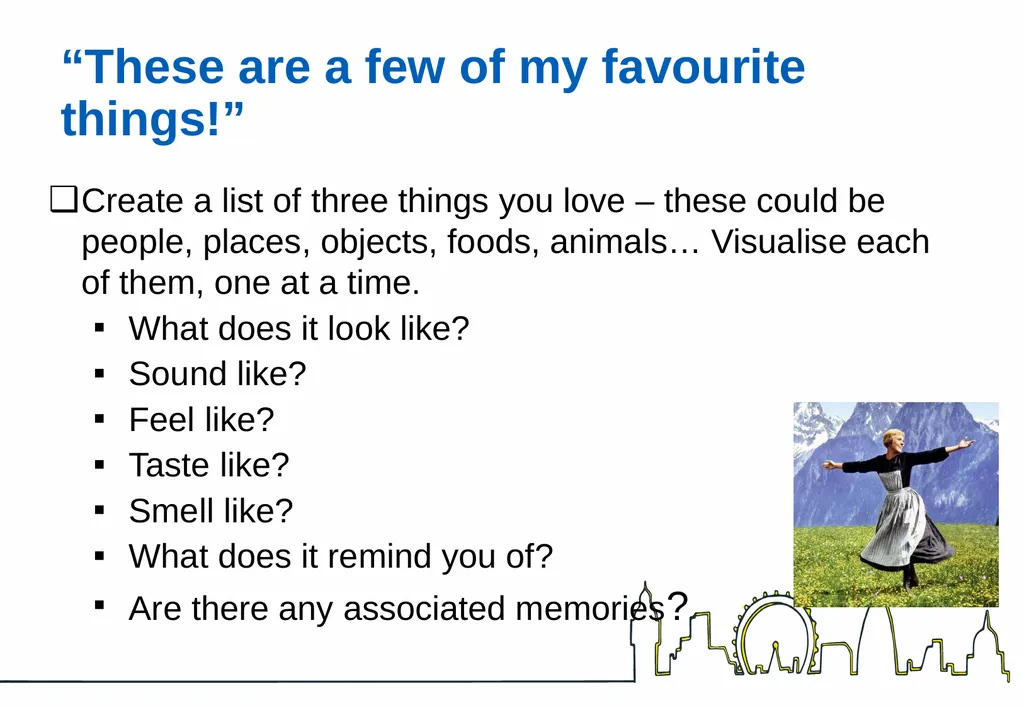
slide26. “These are a few of my favourite things!” Create a list of three things you love – these could be people, places, objects, foods, animals… Visualise each of them, one at a time.
What does it look like?
Sound like?
Feel like?
Taste like?
Smell like?
What does it remind you of?
Are there any associated memories?<br>
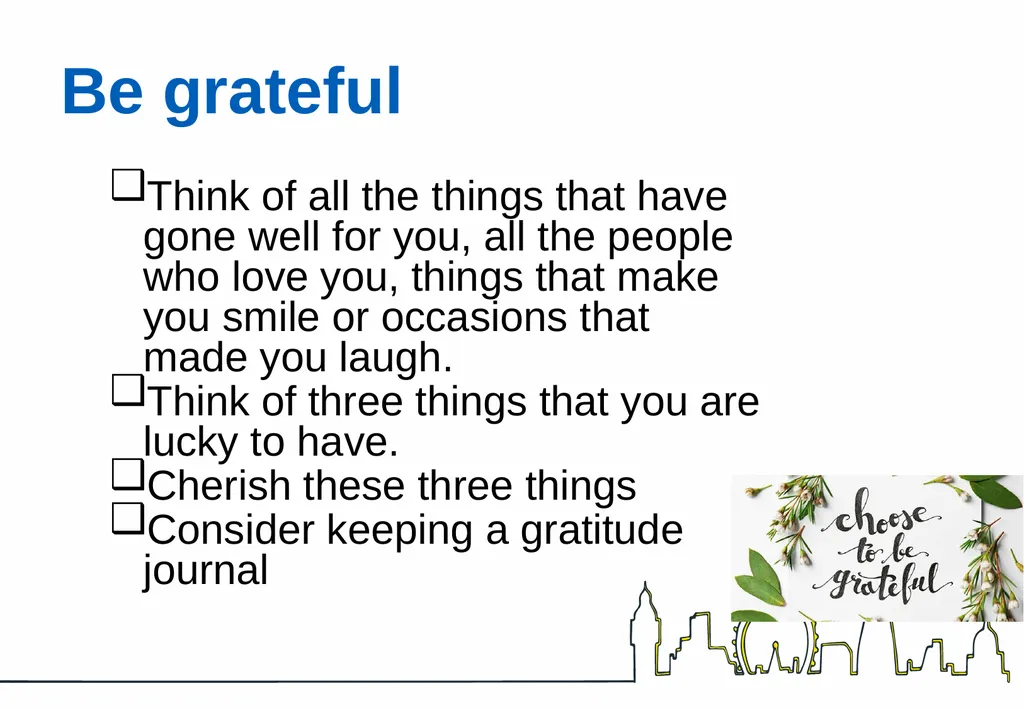
slide27. Be grateful Think of all the things that have gone well for you, all the people who love you, things that make you smile or occasions that made you laugh.
Think of three things that you are lucky to have.
Cherish these three things
Consider keeping a gratitude journal<br>
slide28. I remember, I remember… ‘I remember, I remember,
The house where I was born,
The little window where the sun
Came peeping in at morn…’
Choose a happy memory.
Close your eyes and remember:
What are you doing?
Where are you?
Who’s with you?
What can you feel?<br>
slide29. 'My hope is that, one day, formal education will pay attention to what I call education of the heart’
– Dalai Lama<br>
slide30. Authors Developed by
Desiree Cox, CapitalNurse
Tracey Coyne, LNWH
James Clay, CNWL
Riina Hilton, NELFT
References and additional resources available in accompanying document<br>
March 2022<br>
slide2. Compassionate Education Traditional focus on education and developing proficiency in academic, clinical, skills and knowledge
Help educators to develop compassionate approach to training and the workplace
Need for focus on self-care to promote positive mental health and wellbeing
Increase awareness and embed compassion in workplace<br>
slide3. What is Compassion? Compassion is understanding how another person is feeling, the emotions they are experiencing
Based on empathy, respect and dignity
Showing compassion helps people feel cared for and valued
Compassion can be learned<br>
slide4. Developing a compassionate approach Ask lots of open questions – Kipling’s Men
Listen actively – ears, eyes, heart
Show understanding through non-verbal cues
Reflect back to others<br>
slide5. Take Five Beginning or end of training sessions
Take five minutes to introduce compassion
Can be
Asking learners how they are feeling
Asking learners to make pledges
5-minute activity as a group
Introduce a 5-minute self-care activity
Encouraging learners to reflect on how they are feeling<br>
slide6. Techniques Everyone is different
Different techniques help different people
Activities in two groups:
Grounding techniques
Refocusing techniques<br>
slide7. Grounding Techniques<br>
slide8. “Look deep into nature and you will understand everything better”
Albert Einstein<br>
slide9. FOFBOC Feet on Floor, Body On Chair
Sit on a chair with feet resting on the floor
Feel your body on the chair
Now feel your feet on the floor
Think about your legs and how they feel moving onto lower body
Focus on your belly, then your breathing
Sit and relax for just a couple of minutes tuned into an awareness of your body<br>
slide10. Body Awareness You can do this sitting or standing
Focus on how your body feels from head to toe, noticing each part in turn
Pay attention to hair, neck, shoulders and belly
Feel your heartbeat and breathing
Consider how you feel – temperature, pressure, emotions<br>
slide11. 5-4-3-2-1… Use your senses and see what you can sense in the world around you. Work backwards from 5 to notice:
5 things you can see
4 things you can hear
3 things you can touch
2 things you can smell
1 thing you can taste<br>
slide12. Guided Meditation Short podcasts or video clips
Help to disassociate from stressors
Three to five minutes
https://www.youtube.com/watch?v=TsSbCntmMHo<br>
slide13. 3-4-5 Breathing Breathe in for three seconds
Hold your breath for four seconds
Breathe out for five seconds
Repeat for a few minutes<br>
slide14. Box Breathing Breathe in counting to four slowly. Feel the air enter your lungs
Hold your breath for four seconds
Slowly exhale for four seconds
Repeat steps above until you feel re-centered.<br>
slide15. Hand tracing Take one hand and hold it in your other hand
With your forefinger, place the fingertip on your palm
Trace up your thumb and up the next finger.
Trace all the way around your hand,
Repeat using the other hand<br>
slide16. 4-7-8 Breathing Inhale for four seconds through your nose
Hold the breath for seven seconds
Exhale for eight seconds through your mouth
Repeat this exercise as many times as you can. 30 seconds of deep breathing will help you feel more relaxed and in control.<br>
slide17. Visualisation Think about one of your favourite places… imagine you are there now:
What can you see?
What can you feel?
What can you smell?
What can you hear?
What can you taste?
What are you doing?
Who is there with you?
What is the weather like?
How are you feeling?<br>
slide18. Head, Shoulders, Knees and Toes Try a few simple stretches:
Head – roll your head round, tilt it back and forth, turn it from side to side
Shoulders – gently rise your shoulders, up and down. Try rotating them
Knees – move your knees side to side, swing them apart
Toes – gently place your feet flat on the ground and slowly rise to your tiptoe, and then back down again.<br>
slide19. Refocusing Techniques<br>
slide20. Mindful Moments Begin your session with a slide showing a photo of nature
Ask delegates to focus on the picture, what they see and how they feel for two minutes<br>
slide21. Pledges Ask learners to make a pledge for self-care
These should be written and may be shared
Focus on doing something for themselves
Providing pretty paper for them may help<br>
slide22. Sample pledges Start taking my full break Dedicate 10 minutes after work for mindfulness Gain confidence, relax more Actively leaving work at work Give myself one hour every Friday to reflect More family time Look after myself<br>
slide23. Category thinking Take a category – for example: musical instruments, or ice cream flavours
Give yourself a minute or two to list as many things from that category as possible.<br>
slide24. Recital Think of a poem, song, or book passage you know by heart
Recite it quietly to yourself
If you say the words aloud, focus on the shape of each word on your lips and in your mouth
If you say the words in your head, visualize each word as you’d see it on a page.<br>
slide25. Count tables (not sheep) Try counting, either single digits: 1 elephant, 2 elephants, 3 elephants …
Or count through your times tables:
2, 4, 6, 8…
6, 12, 18, 24…
Or count backwards from 100<br>
slide26. “These are a few of my favourite things!” Create a list of three things you love – these could be people, places, objects, foods, animals… Visualise each of them, one at a time.
What does it look like?
Sound like?
Feel like?
Taste like?
Smell like?
What does it remind you of?
Are there any associated memories?<br>
slide27. Be grateful Think of all the things that have gone well for you, all the people who love you, things that make you smile or occasions that made you laugh.
Think of three things that you are lucky to have.
Cherish these three things
Consider keeping a gratitude journal<br>
slide28. I remember, I remember… ‘I remember, I remember,
The house where I was born,
The little window where the sun
Came peeping in at morn…’
Choose a happy memory.
Close your eyes and remember:
What are you doing?
Where are you?
Who’s with you?
What can you feel?<br>
slide29. 'My hope is that, one day, formal education will pay attention to what I call education of the heart’
– Dalai Lama<br>
slide30. Authors Developed by
Desiree Cox, CapitalNurse
Tracey Coyne, LNWH
James Clay, CNWL
Riina Hilton, NELFT
References and additional resources available in accompanying document<br>