
Competition Law/Policy and the Consequences for


Description: Competition LawPolicy and the Consequences for Access and Innovation for MedicinesHealthcare Globalising Asia: Health Law, Governance, and Policy Issues, Approaches, and Gaps! Bangkok 16-18 April, 2012 Scheme Gaps in policy direction
Related Topics
Download Presentation
"Competition Law/Policy and the Consequences for" is the property of its rightful owner. Permission is granted to download and print the materials on this website for personal, non-commercial use only, and to display it on your personal computer provided you do not modify the materials and that you retain all copyright notices contained in the materials. By downloading content from our website, you accept the terms of this agreement.
Presentation Transcript
slide1. Competition Law/Policy and the Consequences for Access and Innovation for Medicines/Healthcare Globalising Asia: Health Law, Governance, and Policy – Issues, Approaches, and Gaps!
Bangkok 16-18 April, 2012<br>
slide2. Scheme Gaps in policy direction
Understanding competition law/policy (CL/P)
CL/P interface with health sector and related issues
Attempts at global level on competition law/policy
Conclusions / recommendations<br>
slide3. Gaps in Policy Direction (1) [Right to health takes precedence over commercial interest]
IGWG-GSPA-PHI Negotiations<br>
slide4. Gaps in Policy Direction (2) “Development” remaining a undefined term<br>
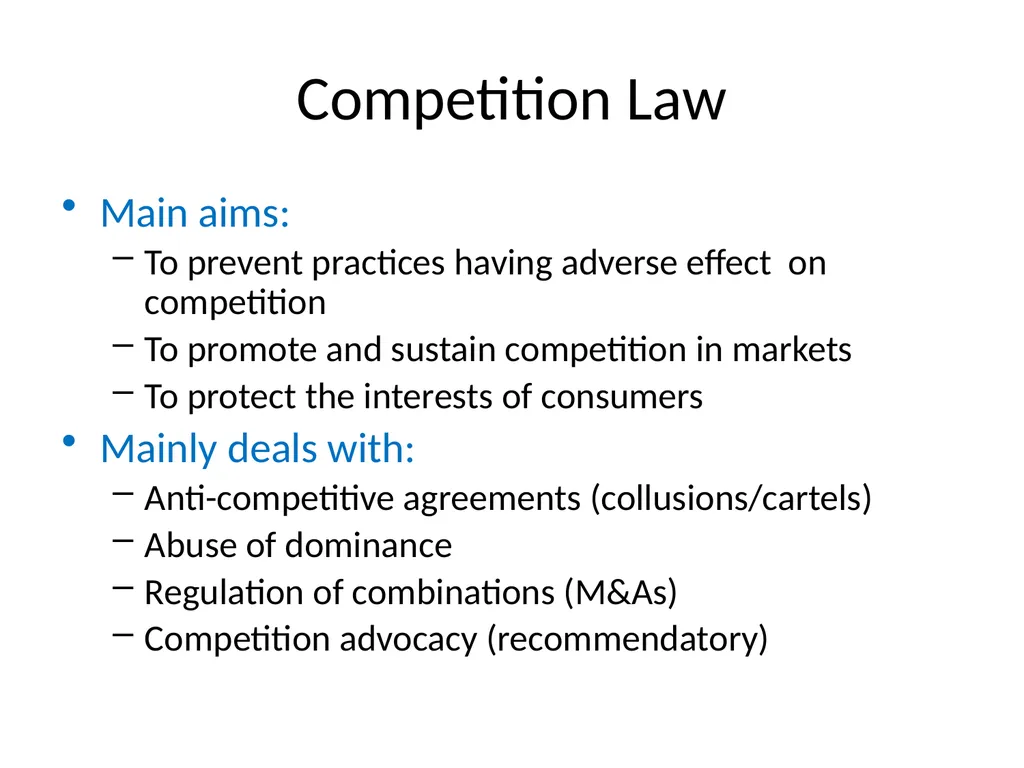
slide5. Competition Law Main aims:
To prevent practices having adverse effect on competition
To promote and sustain competition in markets
To protect the interests of consumers
Mainly deals with:
Anti-competitive agreements (collusions/cartels)
Abuse of dominance
Regulation of combinations (M&As)
Competition advocacy (recommendatory)<br>
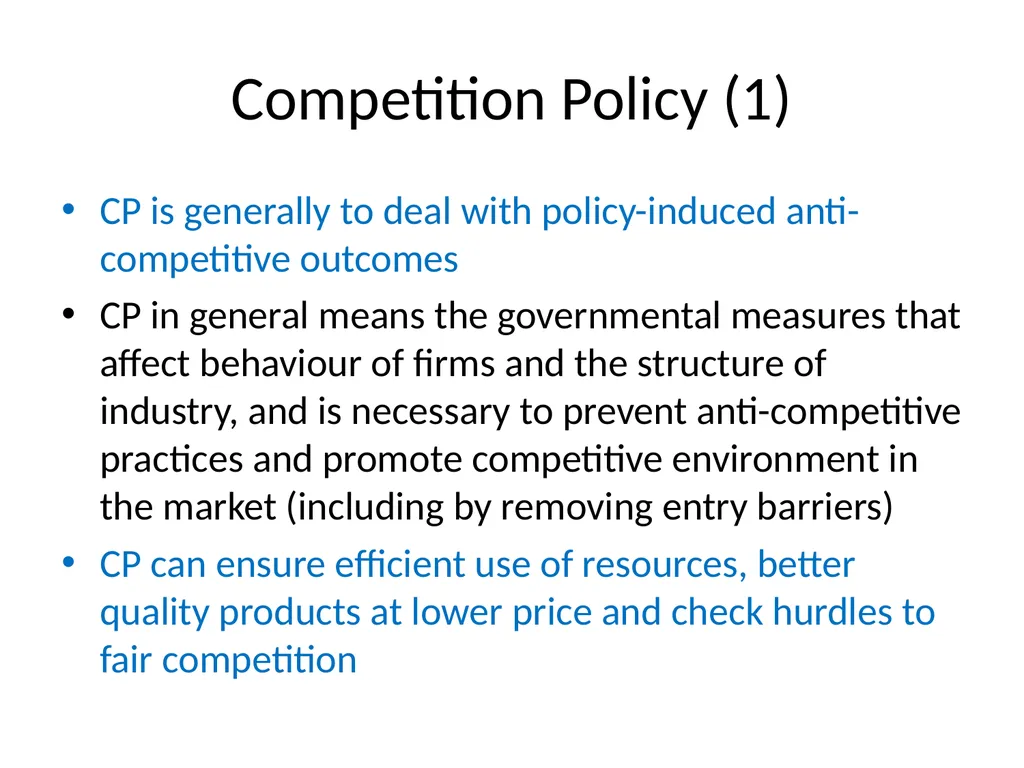
slide6. Competition Policy (1) CP is generally to deal with policy-induced anti-competitive outcomes
CP in general means the governmental measures that affect behaviour of firms and the structure of industry, and is necessary to prevent anti-competitive practices and promote competitive environment in the market (including by removing entry barriers)
CP can ensure efficient use of resources, better quality products at lower price and check hurdles to fair competition<br>
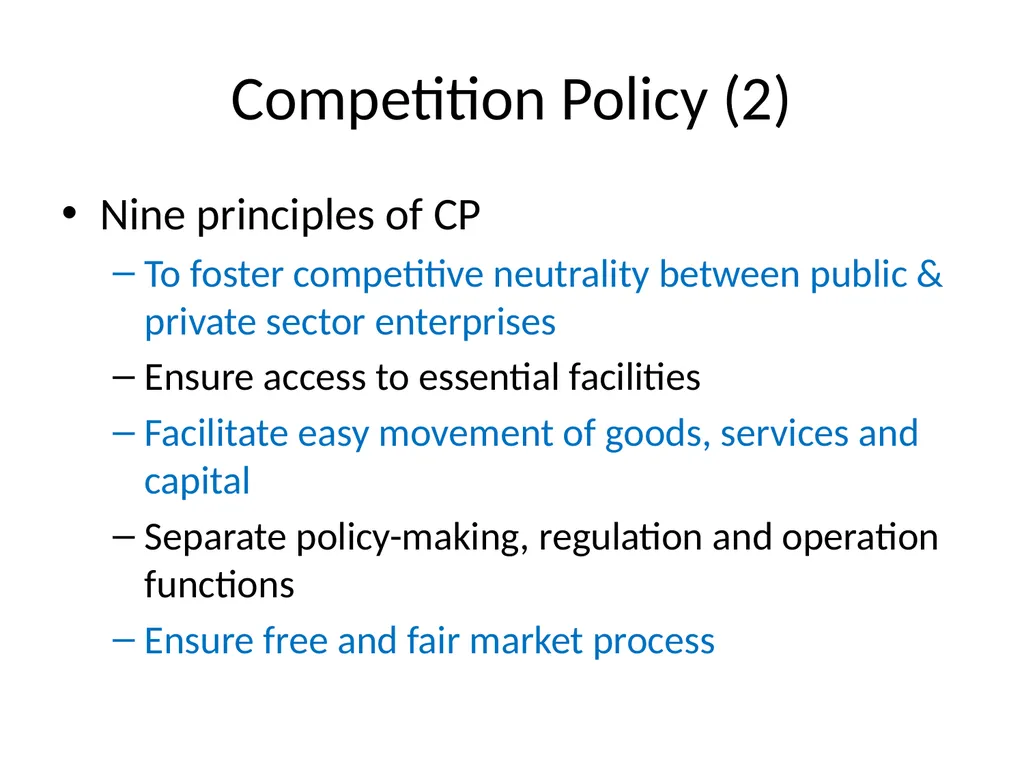
slide7. Competition Policy (2) Nine principles of CP
To foster competitive neutrality between public & private sector enterprises
Ensure access to essential facilities
Facilitate easy movement of goods, services and capital
Separate policy-making, regulation and operation functions
Ensure free and fair market process<br>
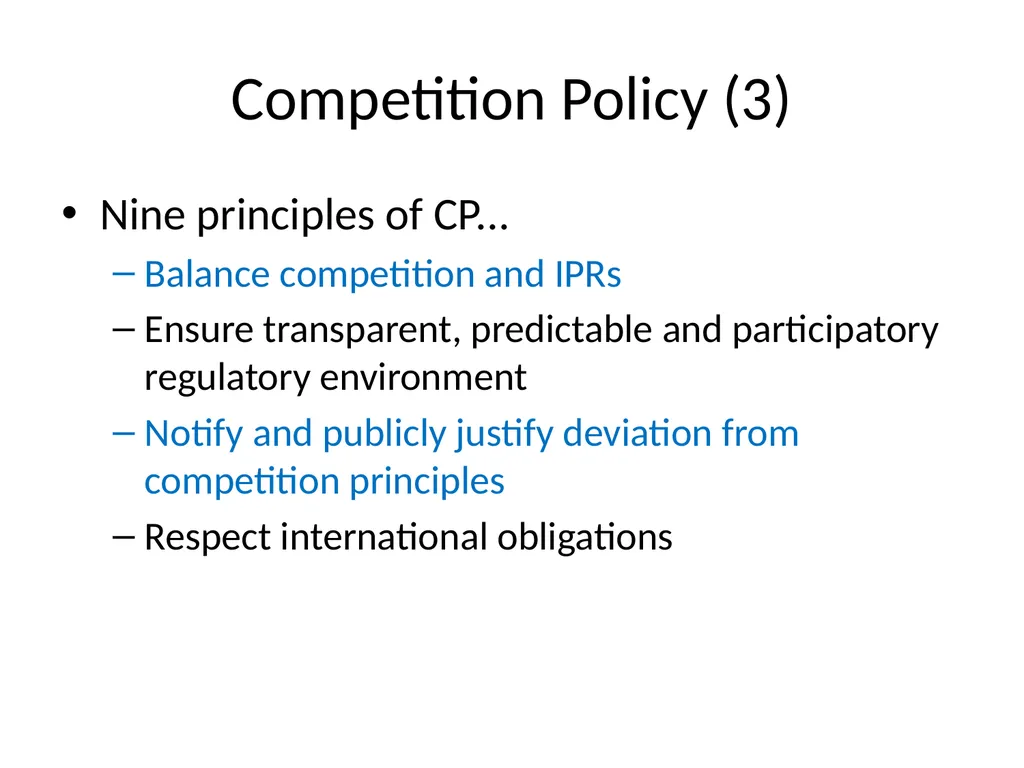
slide8. Competition Policy (3) Nine principles of CP...
Balance competition and IPRs
Ensure transparent, predictable and participatory regulatory environment
Notify and publicly justify deviation from competition principles
Respect international obligations<br>
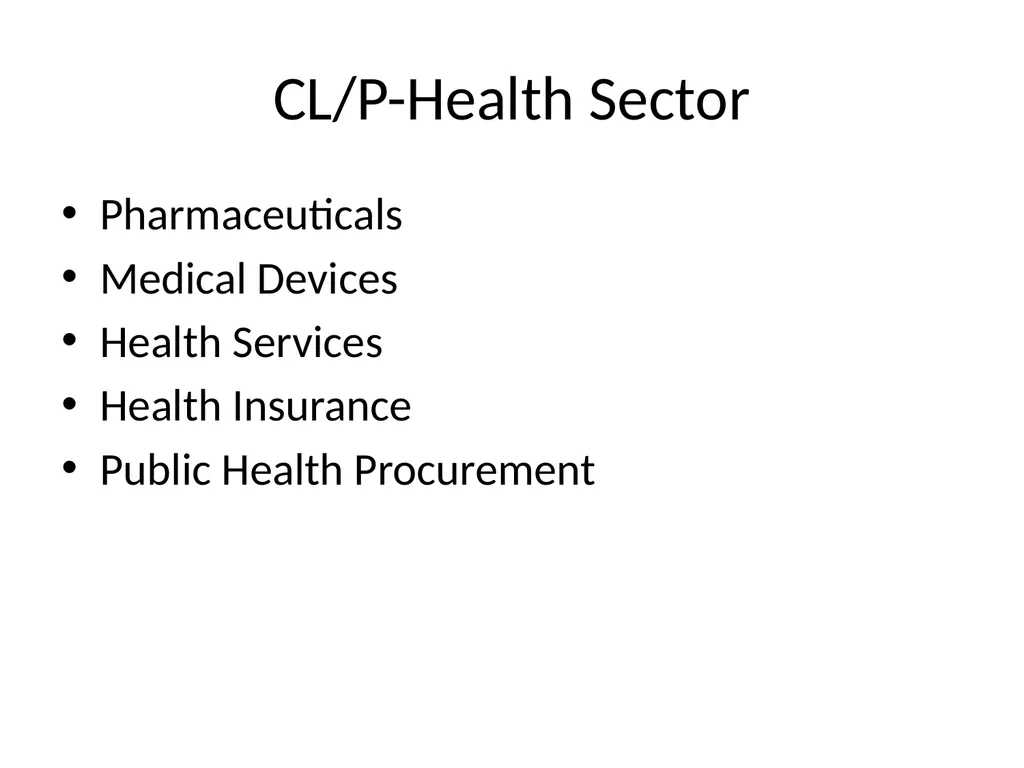
slide9. CL/P-Health Sector Pharmaceuticals
Medical Devices
Health Services
Health Insurance
Public Health Procurement<br>
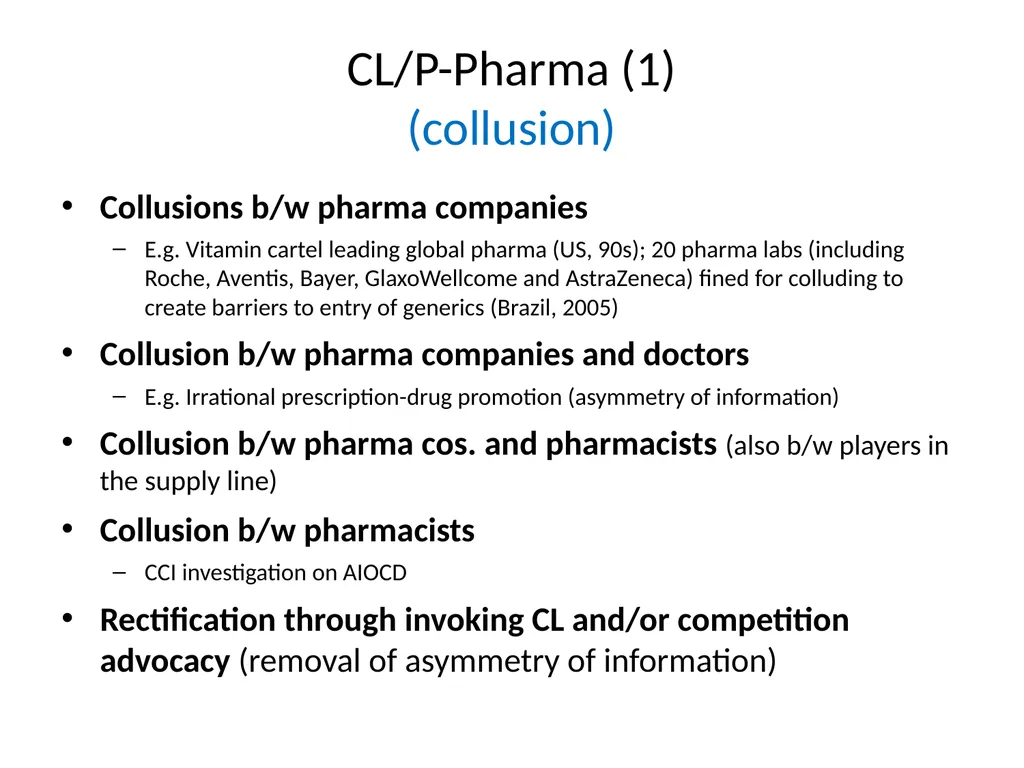
slide10. CL/P-Pharma (1) (collusion) Collusions b/w pharma companies
E.g. Vitamin cartel leading global pharma (US, 90s); 20 pharma labs (including Roche, Aventis, Bayer, GlaxoWellcome and AstraZeneca) fined for colluding to create barriers to entry of generics (Brazil, 2005)
Collusion b/w pharma companies and doctors
E.g. Irrational prescription-drug promotion (asymmetry of information)
Collusion b/w pharma cos. and pharmacists (also b/w players in the supply line)
Collusion b/w pharmacists
CCI investigation on AIOCD
Rectification through invoking CL and/or competition advocacy (removal of asymmetry of information)<br>
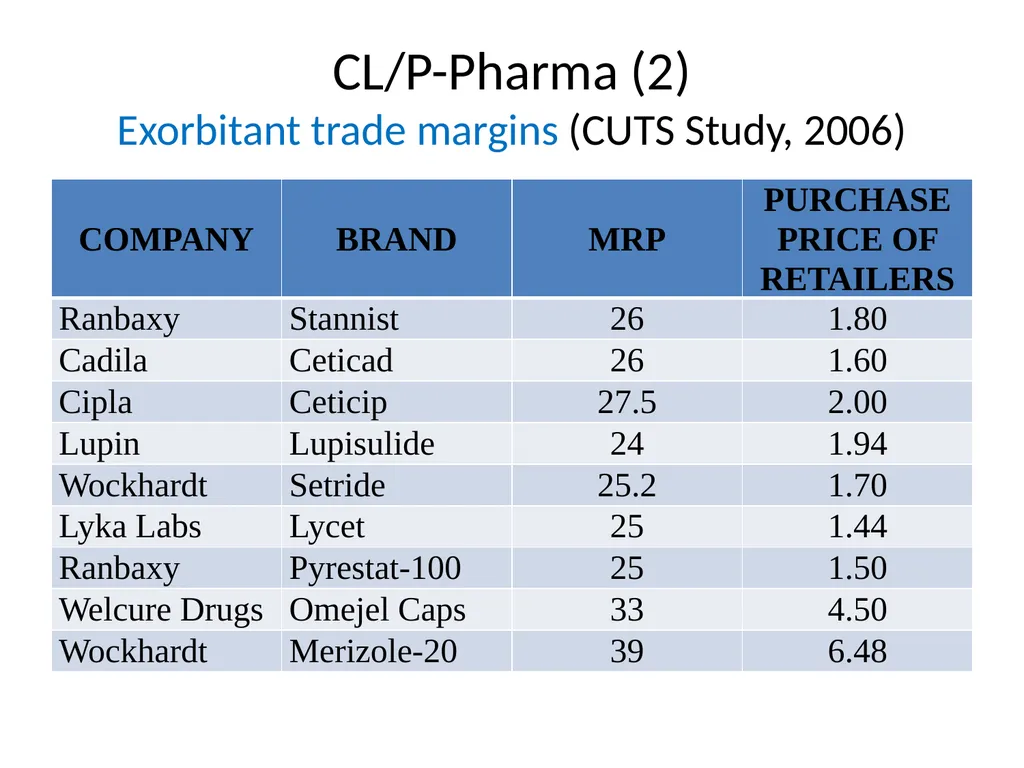
slide11. CL/P-Pharma (2) Exorbitant trade margins (CUTS Study, 2006)<br>
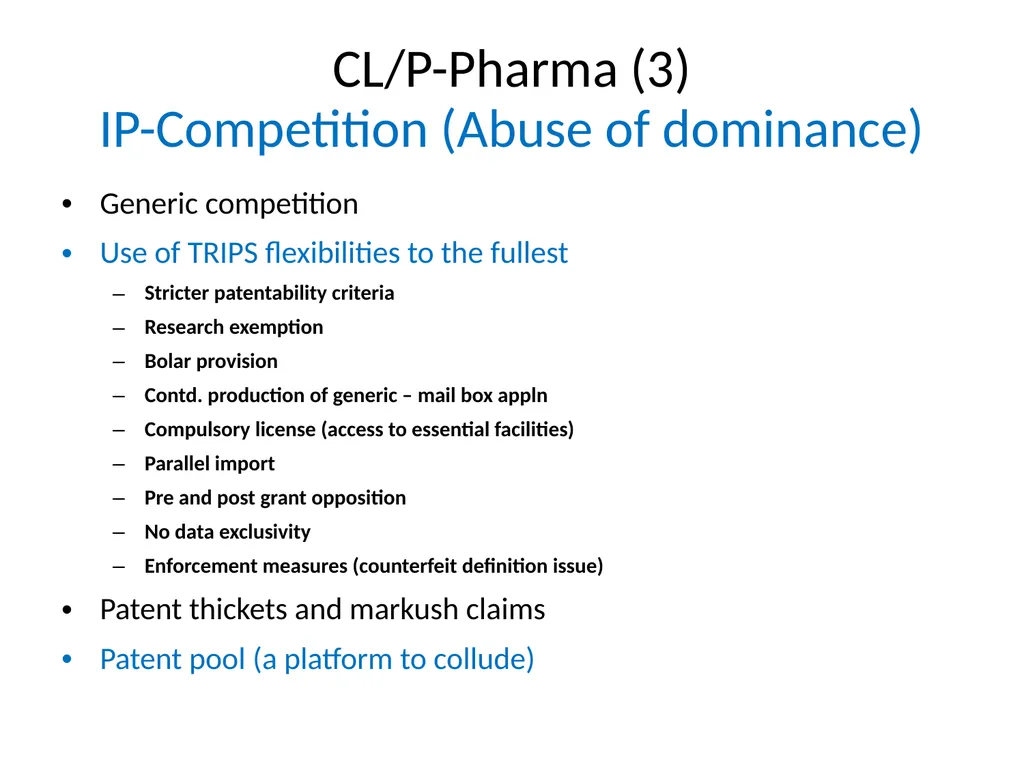
slide12. CL/P-Pharma (3) IP-Competition (Abuse of dominance) Generic competition
Use of TRIPS flexibilities to the fullest
Stricter patentability criteria
Research exemption
Bolar provision
Contd. production of generic – mail box appln
Compulsory license (access to essential facilities)
Parallel import
Pre and post grant opposition
No data exclusivity
Enforcement measures (counterfeit definition issue)
Patent thickets and markush claims
Patent pool (a platform to collude)<br>
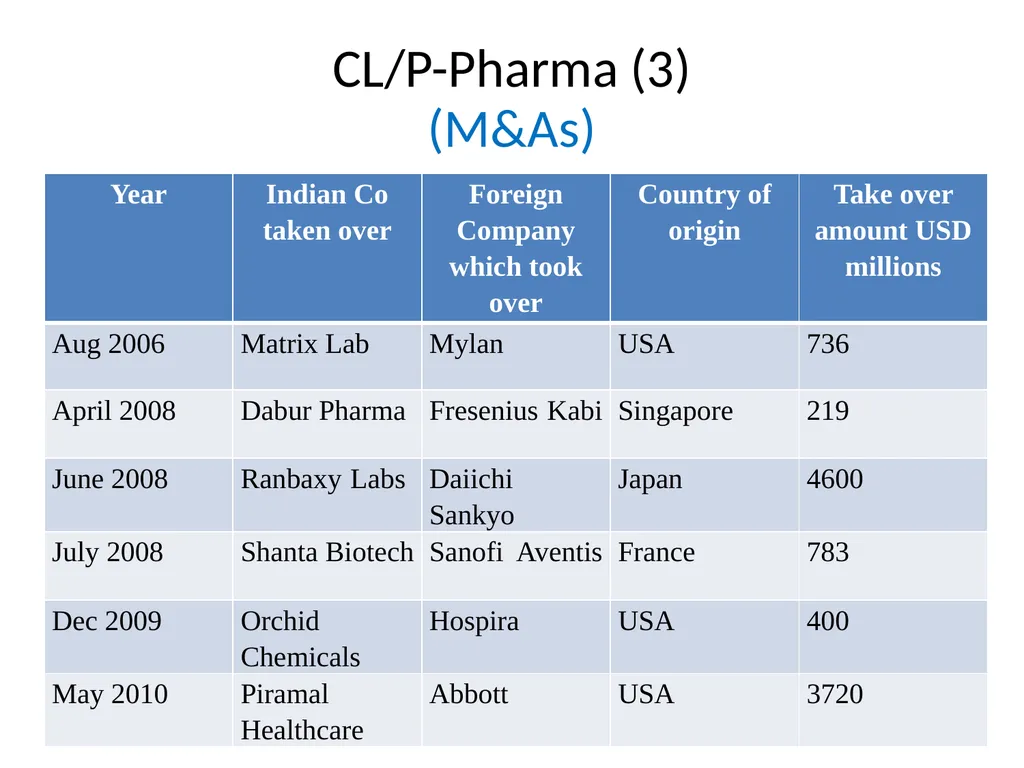
slide13. CL/P-Pharma (3) (M&As)<br>
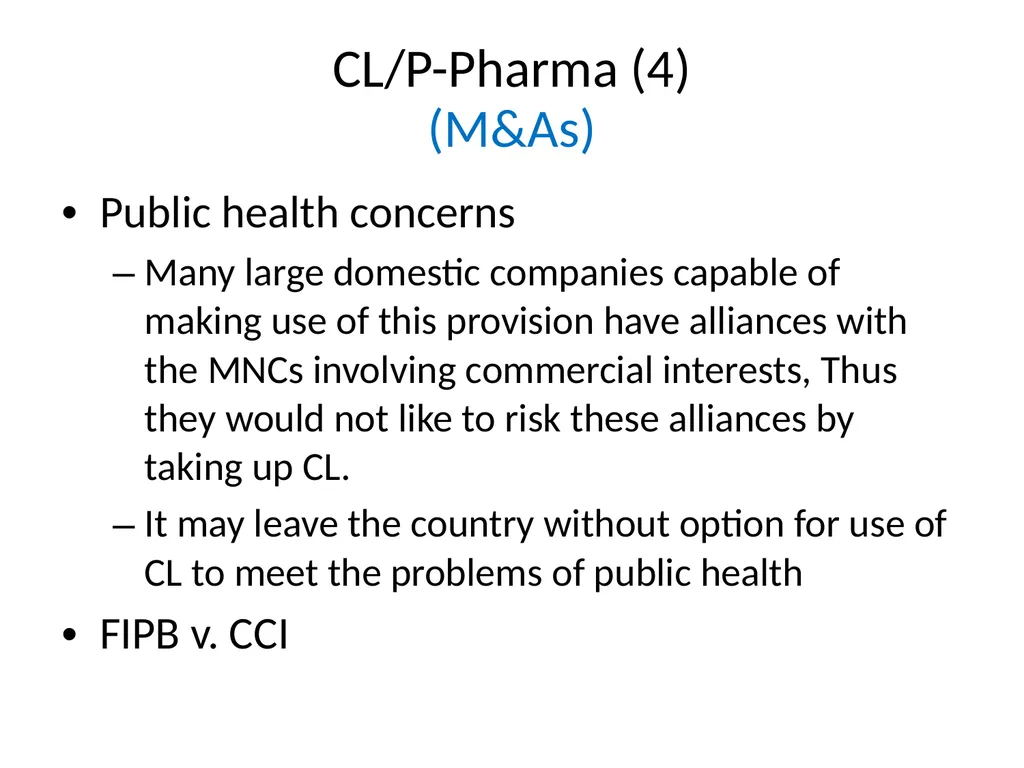
slide14. CL/P-Pharma (4) (M&As) Public health concerns
Many large domestic companies capable of making use of this provision have alliances with the MNCs involving commercial interests, Thus they would not like to risk these alliances by taking up CL.
It may leave the country without option for use of CL to meet the problems of public health
FIPB v. CCI<br>
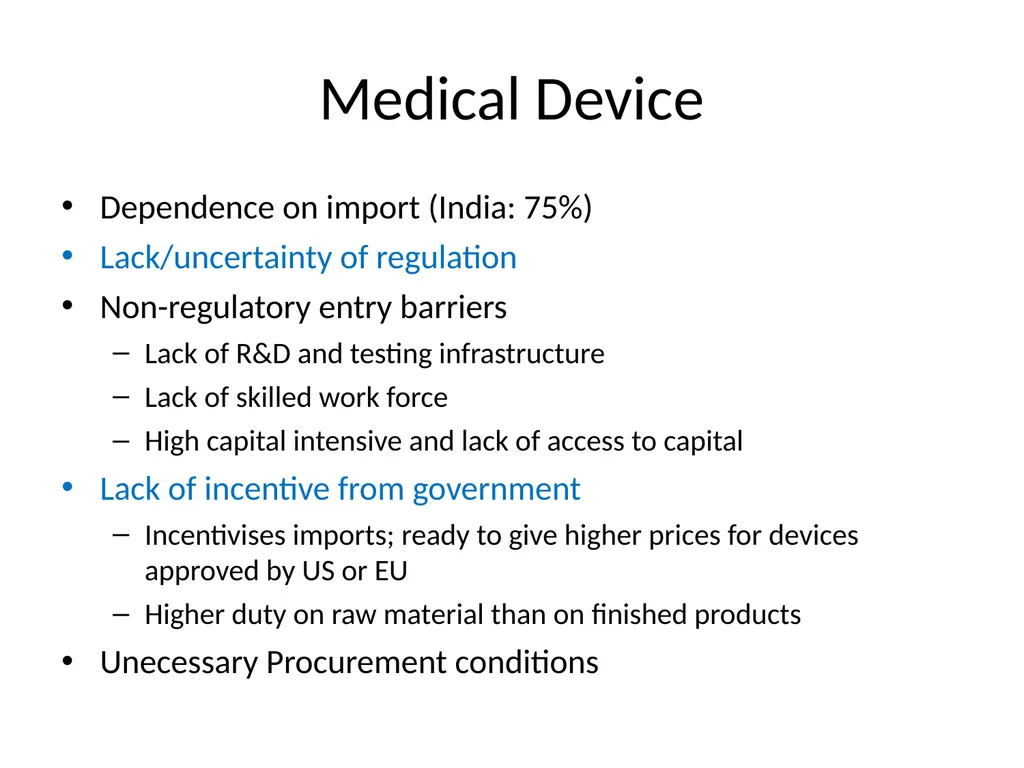
slide15. Medical Device Dependence on import (India: 75%)
Lack/uncertainty of regulation
Non-regulatory entry barriers
Lack of R&D and testing infrastructure
Lack of skilled work force
High capital intensive and lack of access to capital
Lack of incentive from government
Incentivises imports; ready to give higher prices for devices approved by US or EU
Higher duty on raw material than on finished products
Unecessary Procurement conditions<br>
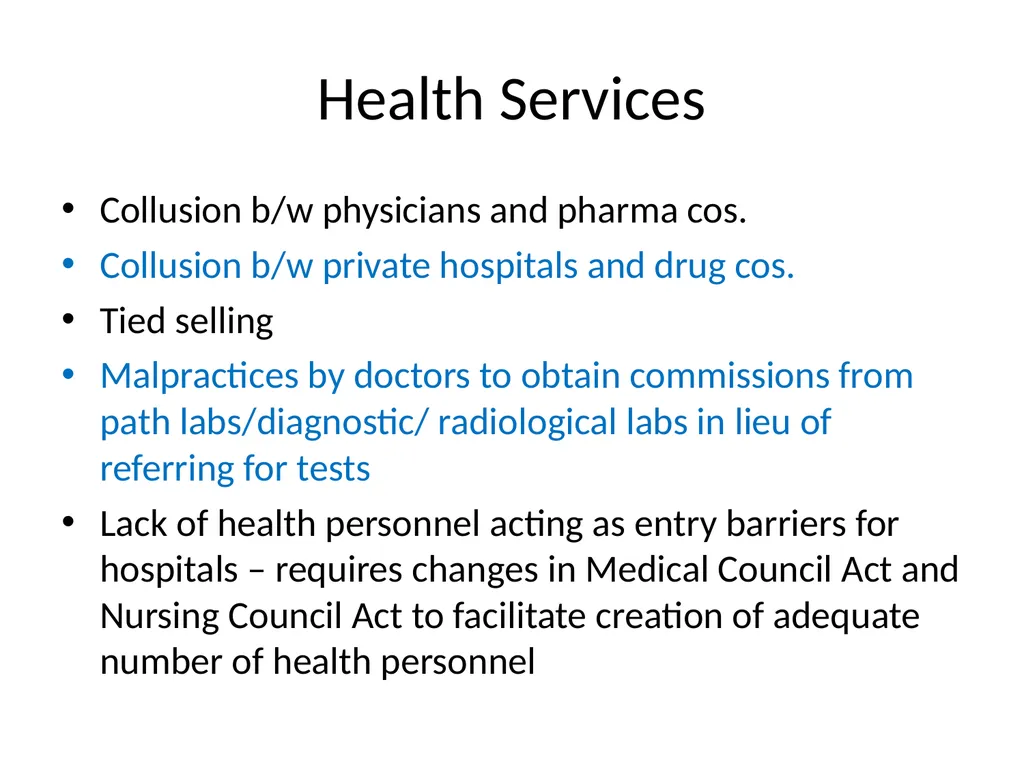
slide16. Health Services Collusion b/w physicians and pharma cos.
Collusion b/w private hospitals and drug cos.
Tied selling
Malpractices by doctors to obtain commissions from path labs/diagnostic/ radiological labs in lieu of referring for tests
Lack of health personnel acting as entry barriers for hospitals – requires changes in Medical Council Act and Nursing Council Act to facilitate creation of adequate number of health personnel<br>
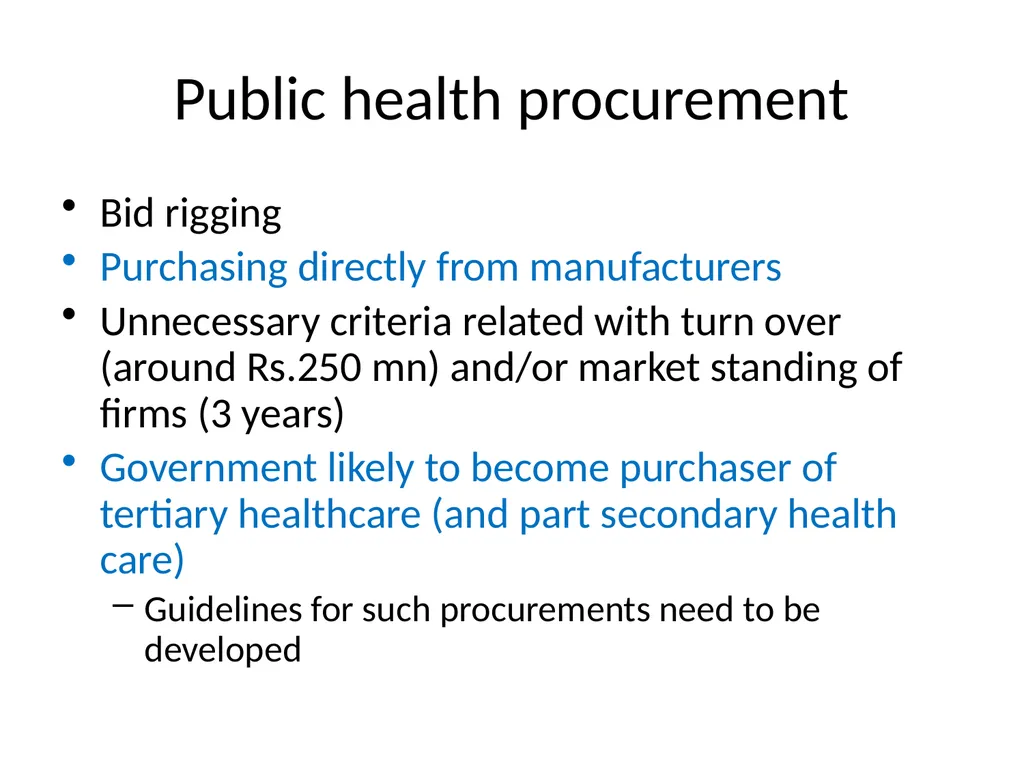
slide17. Public health procurement Bid rigging
Purchasing directly from manufacturers
Unnecessary criteria related with turn over (around Rs.250 mn) and/or market standing of firms (3 years)
Government likely to become purchaser of tertiary healthcare (and part secondary health care)
Guidelines for such procurements need to be developed<br>
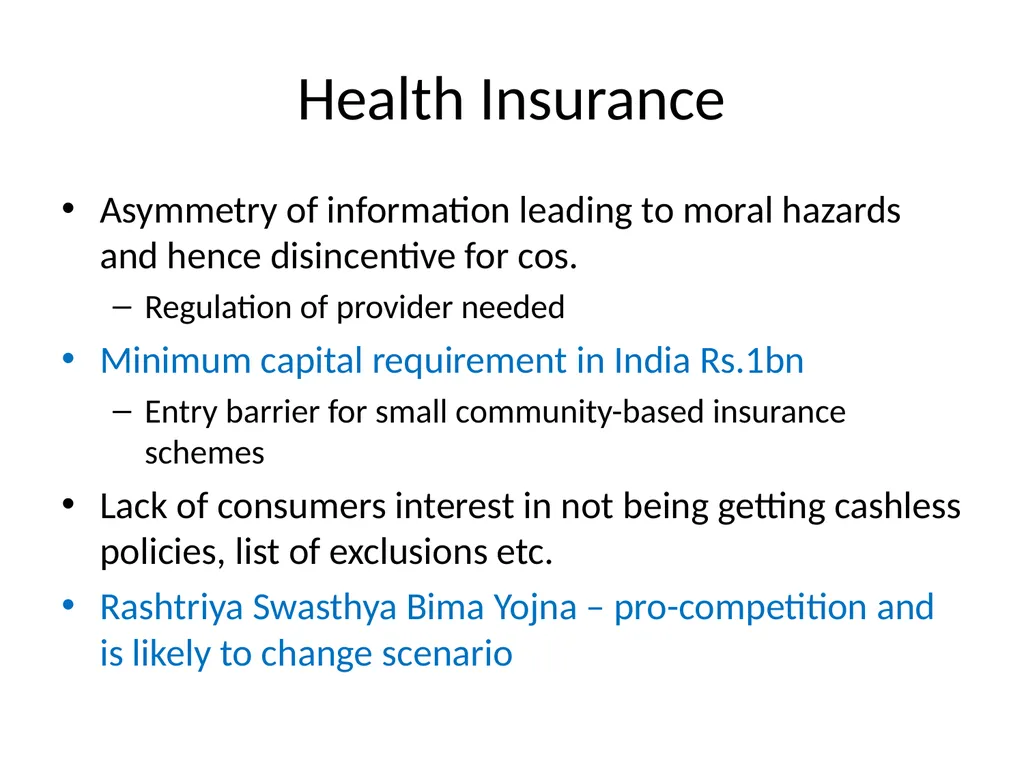
slide18. Health Insurance Asymmetry of information leading to moral hazards and hence disincentive for cos.
Regulation of provider needed
Minimum capital requirement in India Rs.1bn
Entry barrier for small community-based insurance schemes
Lack of consumers interest in not being getting cashless policies, list of exclusions etc.
Rashtriya Swasthya Bima Yojna – pro-competition and is likely to change scenario<br>
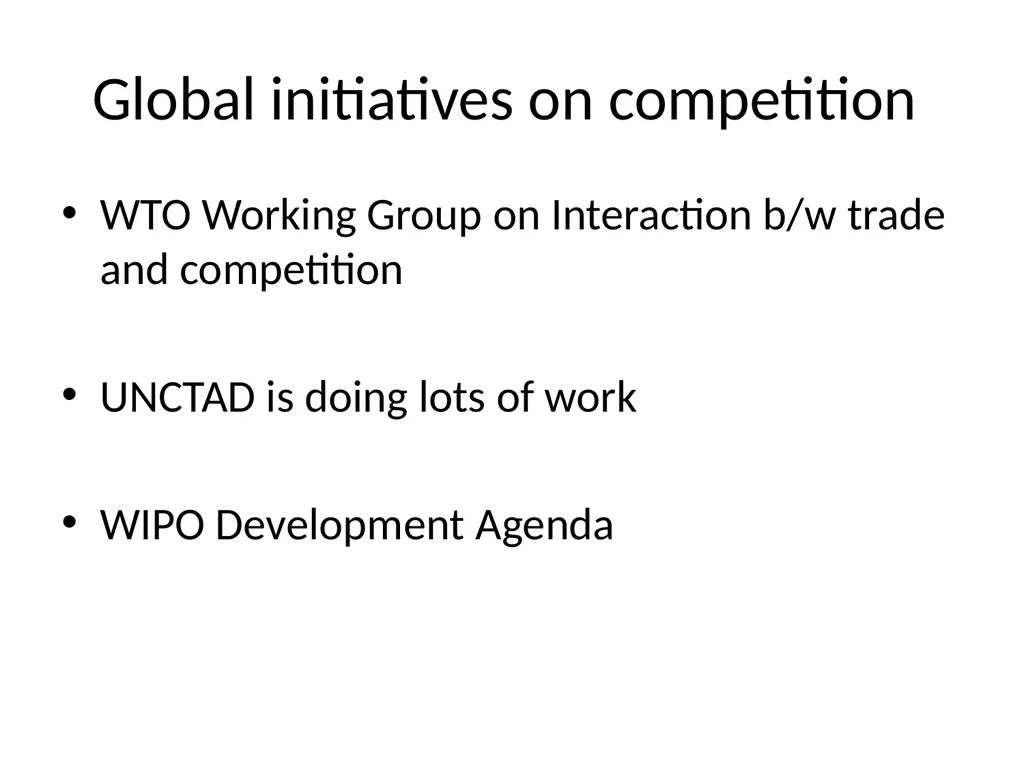
slide19. Global initiatives on competition WTO Working Group on Interaction b/w trade and competition
UNCTAD is doing lots of work
WIPO Development Agenda<br>
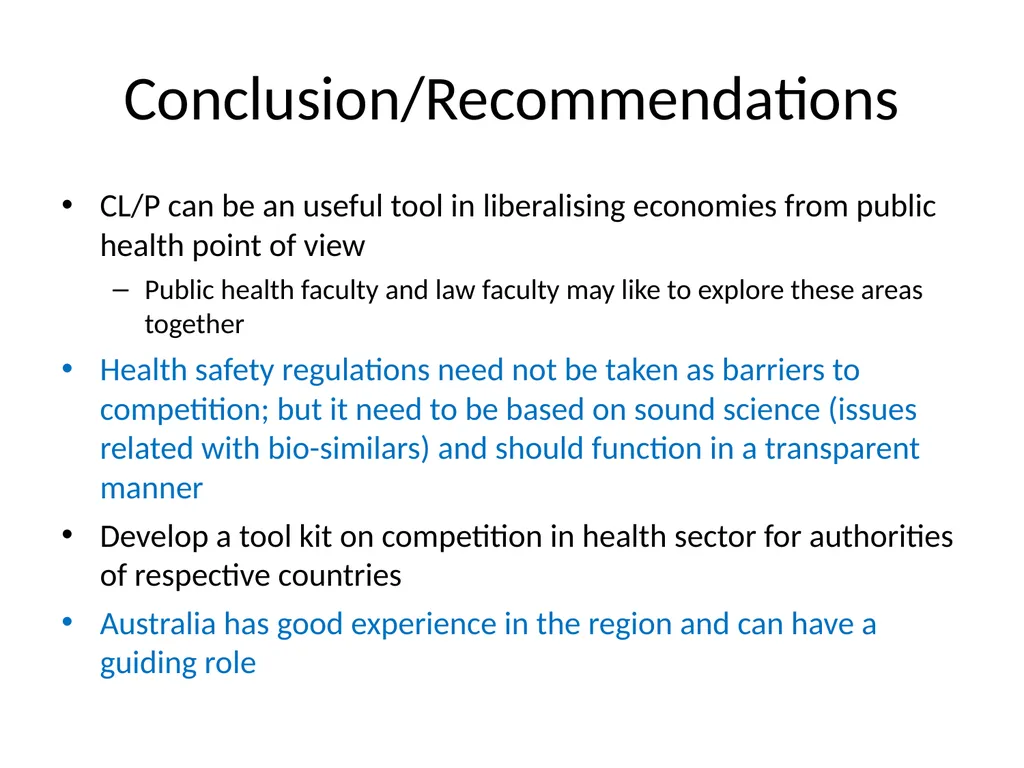
slide20. Conclusion/Recommendations CL/P can be an useful tool in liberalising economies from public health point of view
Public health faculty and law faculty may like to explore these areas together
Health safety regulations need not be taken as barriers to competition; but it need to be based on sound science (issues related with bio-similars) and should function in a transparent manner
Develop a tool kit on competition in health sector for authorities of respective countries
Australia has good experience in the region and can have a guiding role<br>
slide21. THANK YOU
ujjumish@hotmail.com
Above all do not compete – Lao Tsu<br>
Bangkok 16-18 April, 2012<br>
slide2. Scheme Gaps in policy direction
Understanding competition law/policy (CL/P)
CL/P interface with health sector and related issues
Attempts at global level on competition law/policy
Conclusions / recommendations<br>
slide3. Gaps in Policy Direction (1) [Right to health takes precedence over commercial interest]
IGWG-GSPA-PHI Negotiations<br>
slide4. Gaps in Policy Direction (2) “Development” remaining a undefined term<br>
slide5. Competition Law Main aims:
To prevent practices having adverse effect on competition
To promote and sustain competition in markets
To protect the interests of consumers
Mainly deals with:
Anti-competitive agreements (collusions/cartels)
Abuse of dominance
Regulation of combinations (M&As)
Competition advocacy (recommendatory)<br>
slide6. Competition Policy (1) CP is generally to deal with policy-induced anti-competitive outcomes
CP in general means the governmental measures that affect behaviour of firms and the structure of industry, and is necessary to prevent anti-competitive practices and promote competitive environment in the market (including by removing entry barriers)
CP can ensure efficient use of resources, better quality products at lower price and check hurdles to fair competition<br>
slide7. Competition Policy (2) Nine principles of CP
To foster competitive neutrality between public & private sector enterprises
Ensure access to essential facilities
Facilitate easy movement of goods, services and capital
Separate policy-making, regulation and operation functions
Ensure free and fair market process<br>
slide8. Competition Policy (3) Nine principles of CP...
Balance competition and IPRs
Ensure transparent, predictable and participatory regulatory environment
Notify and publicly justify deviation from competition principles
Respect international obligations<br>
slide9. CL/P-Health Sector Pharmaceuticals
Medical Devices
Health Services
Health Insurance
Public Health Procurement<br>
slide10. CL/P-Pharma (1) (collusion) Collusions b/w pharma companies
E.g. Vitamin cartel leading global pharma (US, 90s); 20 pharma labs (including Roche, Aventis, Bayer, GlaxoWellcome and AstraZeneca) fined for colluding to create barriers to entry of generics (Brazil, 2005)
Collusion b/w pharma companies and doctors
E.g. Irrational prescription-drug promotion (asymmetry of information)
Collusion b/w pharma cos. and pharmacists (also b/w players in the supply line)
Collusion b/w pharmacists
CCI investigation on AIOCD
Rectification through invoking CL and/or competition advocacy (removal of asymmetry of information)<br>
slide11. CL/P-Pharma (2) Exorbitant trade margins (CUTS Study, 2006)<br>
slide12. CL/P-Pharma (3) IP-Competition (Abuse of dominance) Generic competition
Use of TRIPS flexibilities to the fullest
Stricter patentability criteria
Research exemption
Bolar provision
Contd. production of generic – mail box appln
Compulsory license (access to essential facilities)
Parallel import
Pre and post grant opposition
No data exclusivity
Enforcement measures (counterfeit definition issue)
Patent thickets and markush claims
Patent pool (a platform to collude)<br>
slide13. CL/P-Pharma (3) (M&As)<br>
slide14. CL/P-Pharma (4) (M&As) Public health concerns
Many large domestic companies capable of making use of this provision have alliances with the MNCs involving commercial interests, Thus they would not like to risk these alliances by taking up CL.
It may leave the country without option for use of CL to meet the problems of public health
FIPB v. CCI<br>
slide15. Medical Device Dependence on import (India: 75%)
Lack/uncertainty of regulation
Non-regulatory entry barriers
Lack of R&D and testing infrastructure
Lack of skilled work force
High capital intensive and lack of access to capital
Lack of incentive from government
Incentivises imports; ready to give higher prices for devices approved by US or EU
Higher duty on raw material than on finished products
Unecessary Procurement conditions<br>
slide16. Health Services Collusion b/w physicians and pharma cos.
Collusion b/w private hospitals and drug cos.
Tied selling
Malpractices by doctors to obtain commissions from path labs/diagnostic/ radiological labs in lieu of referring for tests
Lack of health personnel acting as entry barriers for hospitals – requires changes in Medical Council Act and Nursing Council Act to facilitate creation of adequate number of health personnel<br>
slide17. Public health procurement Bid rigging
Purchasing directly from manufacturers
Unnecessary criteria related with turn over (around Rs.250 mn) and/or market standing of firms (3 years)
Government likely to become purchaser of tertiary healthcare (and part secondary health care)
Guidelines for such procurements need to be developed<br>
slide18. Health Insurance Asymmetry of information leading to moral hazards and hence disincentive for cos.
Regulation of provider needed
Minimum capital requirement in India Rs.1bn
Entry barrier for small community-based insurance schemes
Lack of consumers interest in not being getting cashless policies, list of exclusions etc.
Rashtriya Swasthya Bima Yojna – pro-competition and is likely to change scenario<br>
slide19. Global initiatives on competition WTO Working Group on Interaction b/w trade and competition
UNCTAD is doing lots of work
WIPO Development Agenda<br>
slide20. Conclusion/Recommendations CL/P can be an useful tool in liberalising economies from public health point of view
Public health faculty and law faculty may like to explore these areas together
Health safety regulations need not be taken as barriers to competition; but it need to be based on sound science (issues related with bio-similars) and should function in a transparent manner
Develop a tool kit on competition in health sector for authorities of respective countries
Australia has good experience in the region and can have a guiding role<br>
slide21. THANK YOU
ujjumish@hotmail.com
Above all do not compete – Lao Tsu<br>